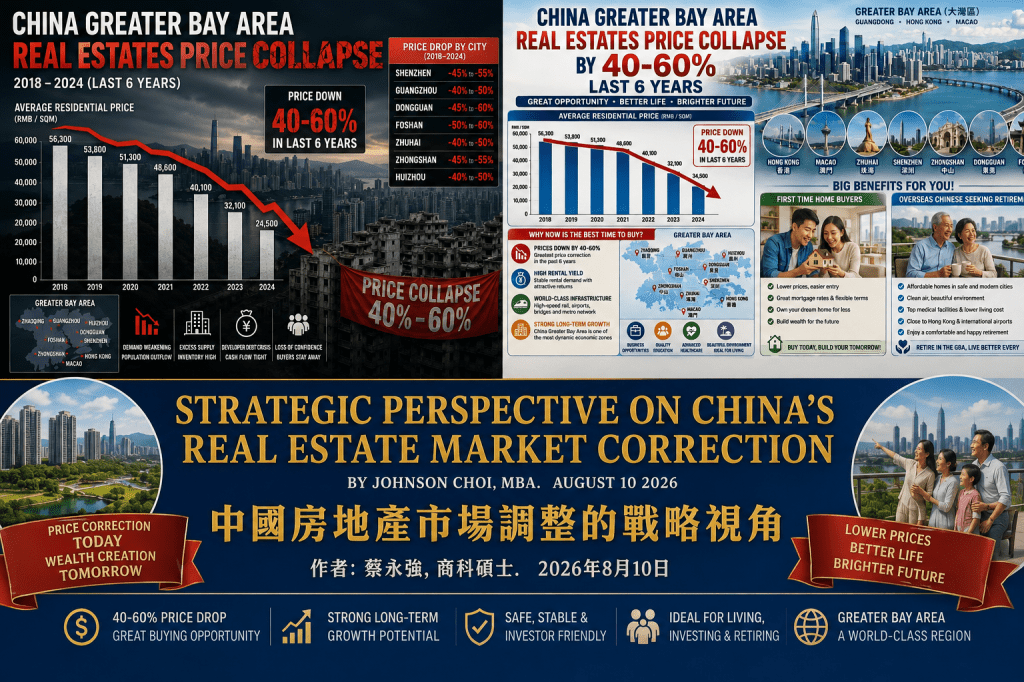
Strategic Perspective on China’s Real Estate Market Correction. By Johnson Choi, MBA. August 10 2026

Strategic Perspective on China’s Real Estate Market Correction. By Johnson Choi, MBA. August 10 2026
中國房地產市場調整的戰略視角. 作者: 蔡永强, 商科碩士. 2026年8月10日

https://www.tiktok.com/t/ZP8n4k9kE/
https://m.facebook.com/story.php?story_fbid=pfbid02QfpfdEYABqD56BL6KdumaAA1Z4AvWSPumPts6PRbT8S8ndwg9wDtxbBvK7iJhjE7l&id=100036400039778&mibextid=wwXIfr

https://weixin.qq.com/sph/AcFhqisZsP

Executive Summary
The current downward price correction in China’s real estate sector—particularly within the Greater Bay Area—should be interpreted as a structural recalibration rather than a market failure. While this shift has alarmed speculative investors and certain developers, it signals a pivotal long-term opportunity for genuine end-users and reinforces Beijing’s commitment to sustainable socioeconomic stability.

The Speculator vs. End-User Dynamic
Undoubtedly, a 40–60% devaluation from peak pricing represents a significant capital loss for short-term speculators and leveraged developers. However, adverse conditions for speculative capital often translate into favorable entry points for strategic buyers. For first-time domestic purchasers—including recent graduates—and overseas Chinese seeking retirement properties, the current environment offers a substantive discount compared to valuations observed five to six years ago. For these demographics, the correction transforms a historically overheated market into an accessible, value-driven asset class.

Contrasting Political-Economic Frameworks
It is instructive to examine the divergent governance models underlying these market conditions:

· In the United States, the political economy operates with a high degree of corporate influence. Through legally institutionalized mechanisms such as campaign financing and the regulatory “revolving door,” private enterprises—including real estate conglomerates—exert considerable leverage over federal, state, and municipal policy. This dynamic frequently subordinates long-term public welfare to the preservation of entrenched financial interests, thereby constraining policy measures that might disadvantage the top percentile of wealth holders. Consequently, structural reforms aimed at enhancing the standard of living for the broader population often face significant institutional friction.
· In contrast, China’s governance framework maintains a clear demarcation between commercial interests and policy formulation. Private enterprises and state-owned entities operate within a regulatory environment where macroeconomic directives are determined centrally, without corporate interference. Beijing’s explicit mandate that “housing is for living, not for speculation” has been rigorously enforced, prioritizing affordable homeownership and demographic stability over short-term asset inflation. This policy continuity provides a predictable, long-term horizon for bona fide residential buyers.

Strategic Implications for Overseas Chinese Buyers
For overseas Chinese nationals evaluating a property purchase, the prevailing market conditions align with a classic value-investment thesis. Acquiring residential assets at a market trough—regardless of one’s professional or geographical background—remains a prudent, time-tested strategy for wealth preservation and lifestyle planning.

A Cautionary Note on Market Speculation
With capital flows redirected from real estate, we are observing increased retail participation in equity markets. While some investors celebrate short-term gains, it is crucial to recognize the inherent asymmetries within these financial ecosystems. Speculative bubbles, by their nature, are transient. When corrections occur, institutional insiders and connected stakeholders are historically positioned to exit prior to public dissemination of negative information, leaving retail investors disproportionately exposed to systemic risk. This informational disparity underscores the perils of treating volatile asset classes as substitutes for sustainable income.

Conclusion
In summary, the current real estate correction is not a detriment to the Chinese economy; rather, it is a deliberate and constructive realignment with long-term national objectives. For end-users and overseas retirees, it presents a rare window of affordability. For speculators, it serves as a definitive market lesson. As always, prudent investors should focus on intrinsic value and regulatory fundamentals rather than chasing short-term volatility.

執行摘要
中國房地產業當前的下行價格調整——特別是在大灣區內——應被解讀為結構性的重新校準,而非市場失靈。儘管此一轉變已令投機投資者與部分開發商感到不安,但對真正的終端用戶而言,它卻標誌著一個關鍵的長期機會,同時也強化了北京當局對可持續社會經濟穩定的承諾。

投機者與終端用戶之動態
無庸置疑,從峰值價格下跌40%至60%,對短期投機者與高槓桿開發商而言,代表著重大的資本損失。然而,對投機資本不利的條件,往往轉化為策略性買家的有利進場點。對於首購的國內買家——包括應屆畢業生——以及尋求退休房產的海外華人來說,當前環境相較於五、六年前的估值,提供了實質性的折價。對這些族群而言,此次調整將一個過去過熱的市場,轉變為可負擔且具價值驅動的資產類別。

政治經濟框架的對比
檢視這些市場狀況背後的不同治理模式,頗具啟發意義:

· 在美國,政治經濟運作深受企業影響。透過競選融資和監管「旋轉門」等制度化法律機制,私人企業——包括房地產集團——對聯邦、州及各級地方政策施加相當大的影響力。這種動態經常將長期公共福祉置於鞏固既得金融利益之下,從而限制了可能不利於頂層1%財富持有者的政策措施。其結果是,旨在提升廣大民眾生活水準的結構性改革,往往面臨重大的制度性阻力。
· 相比之下,中國的治理框架在商業利益與政策制定之間保持著明確的界線。私人企業與國有實體在一個宏觀經濟指令由中央決定、且不受企業干預的監管環境中運作。北京當局明確宣示的「房住不炒」方針已得到嚴格執行,將可負擔的住房所有權與人口穩定置於短期資產膨脹之上。此一政策的連續性,為真正的自住買家提供了可預測且長期的展望。

對海外華人買家的戰略意涵
對於正在評估購房的海外華人來說,當前的市場狀況符合經典的價值投資邏輯。無論其職業或地域背景如何,在市場低谷時期購入住宅資產,對於財富保值與生活規劃而言,依然是一項審慎且經得起時間考驗的策略。

對市場投機的警示
隨著資金流向從房地產轉出,我們觀察到散戶參與股市的程度正在增加。儘管部分投資人為短期獲利而歡欣鼓舞,但關鍵在於要認清這些金融生態系統中固有的不對稱性。投機泡沫本質上是短暫的。當修正來臨時,機構內線人士與相關利益方在歷史上有能力在負面資訊公開揭露前先行離場,使散戶投資人不成比例地暴露於系統性風險之中。這種資訊差異凸顯了將波動性資產類別視為可持續收入替代品的危險性。

結論
總而言之,當前的房地產調整並非中國經濟的減損;相反地,它是一項與長期國家目標一致且具建設性的審慎調整。對終端用戶與海外退休人士而言,這提供了一個難得的可負擔購屋窗口。對投機者而言,這是一個明確的市場教訓。一如既往,審慎的投資人應專注於內在價值與監管基本面,而非追逐短期波動。
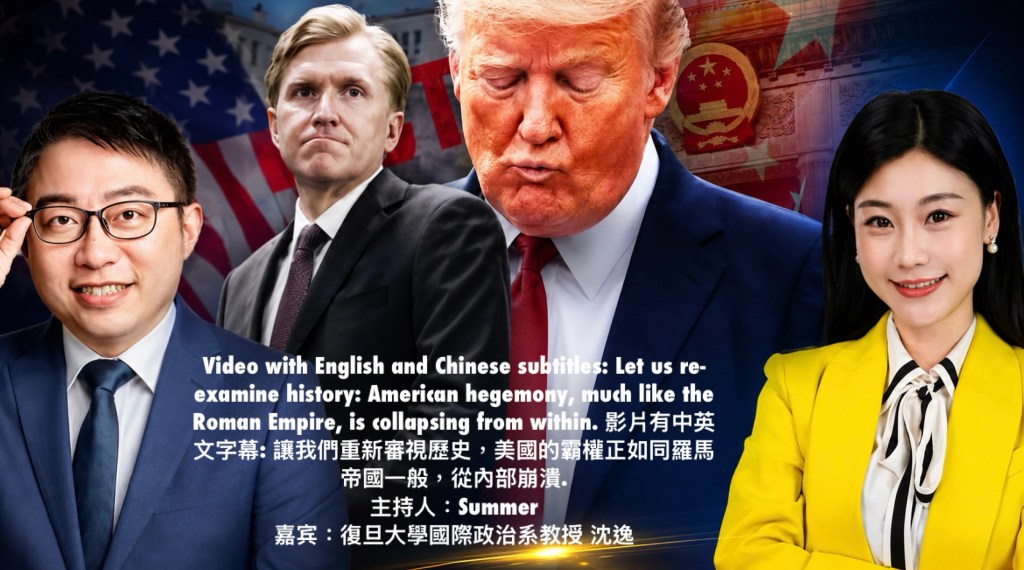
Video with English and Chinese subtitles: Let us re-examine history: American hegemony, much like the Roman Empire, is collapsing from within

Video with English and Chinese subtitles: Let us re-examine history: American hegemony, much like the Roman Empire, is collapsing from within. 影片有中英文字幕: 讓我們重新審視歷史,美國的霸權正如同羅馬帝國一般,從內部崩潰.
主持人:Summer
嘉宾:復旦大學國際政治系教授 沈逸
https://rumble.com/v7dza52-american-hegemony-much-like-the-roman-empire-is-collapsing-from-within.html
https://www.tiktok.com/t/ZP8n4dfPu/
https://weixin.qq.com/sph/AvpAQzvG7x
https://m.facebook.com/story.php?story_fbid=pfbid02aqSwPSMNTNmfv3Qexo69Sfcdf4kARPEqWcsCeTX2T7PTSDLVD6WfMGjjwHHWaK7wl&id=100036400039778&mibextid=wwXIfr

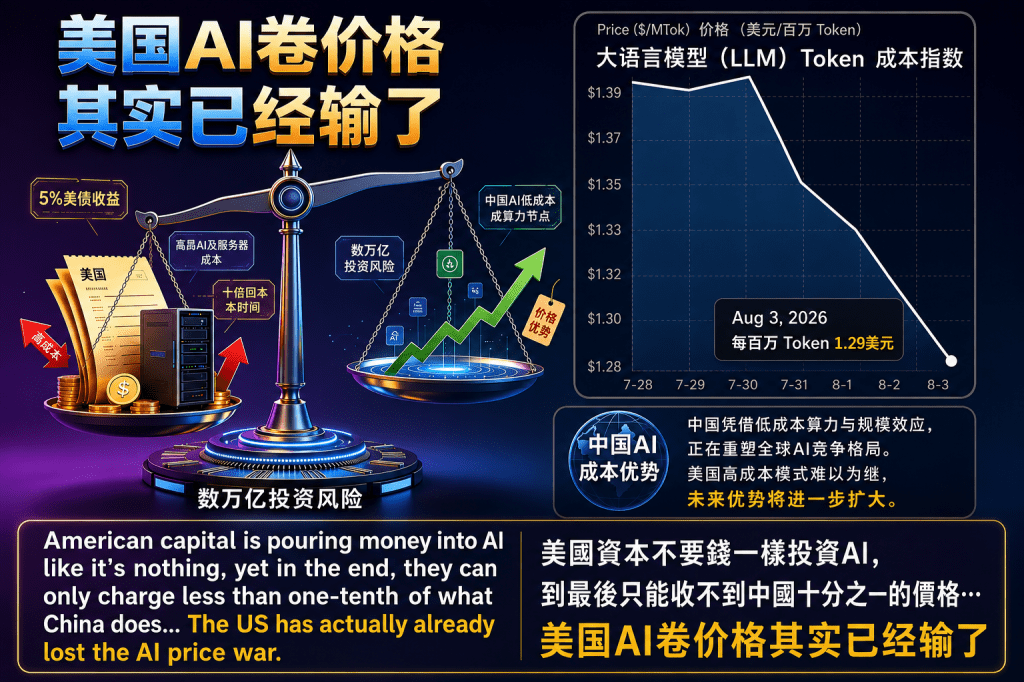
American capital is pouring money into AI like it’s nothing, yet in the end, they can only charge less than one-tenth of what China does… The US has actually already lost the AI price war

American capital is pouring money into AI like it’s nothing, yet in the end, they can only charge less than one-tenth of what China does… The US has actually already lost the AI price war. 美國資本不要錢一樣投資AI,到最後只能收不到中國十分之一的價格…美国AI卷价格其实已经输了

https://weixin.qq.com/sph/AKohYq4CxZ
https://www.tiktok.com/t/ZP8nHobAK/
https://m.facebook.com/story.php?story_fbid=pfbid0hzSt5Zc1rGqHaqp2ipoM27yPwuXG9AL4TR7TLsSmjhkFgjuQvf1tYpcWNpvCfHGpl&id=100036400039778&mibextid=wwXIfr

就算雙方利潤一致,請問美國人耗得起用中國十倍的時間收回成本嗎?去投資美債每年都能穩賺5%呢,美國AI領域按現在這個模式下去,數萬億投資到最後只能像前陣子爆倉的華爾街股神、AI先知利奧波德·阿申布倫納一樣血本無歸!

7月底以來,AI Token的價格出現了歷史性的暴跌,從OpenAI到Gemini,美國各大AI模型都在被迫加入這場價格戰中。7月30日,GPT-5.6斷崖式大降價震驚了全球,降幅達到了80%。早在7月24日,Anthropic的Claude系列已經大幅調價,性能對標Fable 5的Claude Opus 5定價腰斬,主打輕量日常的Claude Haiku 4.5綜合調用成本下調35%!全新的Google Gemini Flash也捲入降價狂潮,全系下調40%~60%!

👉X上用戶的留言也堪稱經典:

網友A:讓老外感受一下外賣大戰般打法的威力。

網友B:有中國人的地方就有價格戰,中國人是價值毀滅者。

網友C:Token價格暴跌,但算力需求反而在漲,說明降價不是因為沒人用,而是因為價格太貴。

網友D:美國AI科技股的崩盤估計就在眼前了。

網友E:這價格戰真打瘋了,中國模型一出直接把Token干到地板價,OpenAI都得跟着降。

網友F:跟中國卷價格說明美國的AI已經輸了,美國資本不會投錢給需要一直投錢的AI項目。以前的那種價格,這些美國AI公司都不能給背後的資本帶來利益,現在還降低價格,那更完蛋。資本是逐利的,不是來發善心的,AI泡沫已經差不多要破了。

網友H:中國模型一出手,全球AI Token價格直接從“貴族消費”打成“白菜價”。

比較有意思的是,日語區有很多網友留言感謝老中,要不是老中,他們的AI賬單會是現在的好幾倍。看來唯一讓大家不滿的,是讓日本人也享受到了中國帶來的地板價Token!

👉這個大家就不要在意了,現在的關鍵是擊敗美國AI的敘事邏輯。誰讓他們把AI圈起來收高價,還在高端顯卡領域制裁中國呢?要是當初好好商量,咱中國和美國聯合起來收割全世界不就好了?非得鬧到現在中國以極為優秀的算法搞出了大模型!

老中心善,見不得掙幾千倍的利潤,只能掙個5~6倍拉倒了。你們大美的稠密模型算力消耗大,這沒辦法啊,你們的Token費用打骨折價都比不上中國的Token單價。但問題是你們打骨折價還能掙錢嗎?中國大模型給的價格,可是還有錢掙的!

DeepSeek V4-Flash給出的單價是百萬Token費用,緩存命中是0.02美元,誰能跟啊?而且性能還不弱,能達到80%的性能、1.5倍的速度,還支持私有部署。輕量化模型,幾萬塊個人就能跑起來了,機構生產也不過50~100萬。比起那些動輒幾千萬部署的模型,門檻直降兩個數量級。請問有多少私有模型會搶走美國閉源大模型的API訂閱大單?還有多少全球各行業客戶會轉而訂閱中國的AI大模型API?

6月26日,主打郵件自動處理、日程管理、CRM客戶自動化的舊金山AI初創公司Lindy,其創始人Flo Crivello宣布將全部生產流量遷移至DeepSeek-V4!Flo Crivello在接受NPR採訪時表示,公司最大成本支出就是Anthropic的API訂閱,這次遷移就是Lindy的生存級選擇!

加密貨幣交易所Coinbase在調用AI大模型上使用了智能路由分層調度,全體工程師研發場景優先調用Kimi K2.7、智譜GLM5.2,只有極限複雜的任務才會轉向GPT。效果是API費用降低50%,91%的工程師日常工作無需切換回美國閉源模型,體驗幾乎無感。

👉美國AI產業當年沒有給中國活路,現在中國的“AI共產主義”席捲全世界,各國客戶用腳投票轉向中國大模型。美國AI產業不是沒有出路,而是當初就選了一條錯路,現在他們需要回歸理性,回歸平價,回到與中國同一水平上競爭!

至於幾萬億美元的投資能不能收得回,那不是咱們考慮的問題。美國在豪賭,輸了賭注當然會被收走,但是算力資源還在,以後租給中國大模型搞計算不是挺好的嘛,兩邊合作再次收割全世界啊,這個也算是“東數西算”落地了。

所以,“DeepSeek的斬殺線”只會斬殺那些妄想收高價的模型,對於美國的硬件投資沒有威脅,反而很有機會達成合作!

Why only certain categories of Chinese love America? There are others find ways to leave US with absolutely no regrets

Why only certain categories of Chinese love America? There are others find ways to leave US with absolutely no regrets. Those that left are not looking back. Who are these people? By Johnson Choi, MBA. Aug 8 2026 為何只有某些類別的中國人喜愛美國? 但有些人想盡辦法要離開美國,而且離開美國後毫無遺憾。他們絕不回頭。這些人是誰?作者: 蔡永强,商科碩士,2026年8月8日

https://weixin.qq.com/sph/Axl5NZQ4Qo
https://www.tiktok.com/t/ZP8nHNnbE/
https://m.facebook.com/story.php?story_fbid=pfbid027tKgSBYw2AA9Hk9tRtkoqJRqjCeBgow4xeVmxkxeN3vk4mUpPcELg9Dv2tP9jsX8l&id=100036400039778&mibextid=wwXIfr

Let’s start with the rich:

1) Less than 10 millions in assets probably with hidden foreign income and assets. It is not legal but common.

Since they are here in US to enjoy life. They usually lives in more exclusive neighborhoods without dealing with racism, discrimination, unsafe neighborhoods, homeless, drugs (some are actually active users) etc.

2) Corrupt Governments Officials and Business Persons

US Government attitude is citizens of enemy is American’s friends especially when they bring millions with them

These two categories of people love America and in many instances helping US Government engaging in propaganda to demonize Chinese and China.

3) People come here that learn to take full benefit of US Federal and State Government such as food stamps, free medical, subsidies rental, cash payments. These are FREE benefits worth US$35-60,000 per year based on family size.

In other words these people can be laying flat to obtain government benefits till they died.

4) The young educated with high EQ and IQ between the age 25-35.

They don’t see any future staying in the US. They don’t expect to see Social Security in their current form when they reach retirement age. With the already bankrupt social security, their retirement age will probably increase from currently 67 to probably 72-75. They plan to move to cities like Hong Kong and Singapore with combined tax rates about 1/4 of that of the United States. Most whether they were born in US or not will give up their US citizenship.

The above is a quick recap of the latest developments focus on the last 10 years on new immigrants coming to US from China.

My advice is if you are rich worth US$10 millions+, you should move to Hong Kong and Singapore, definitely not USA.

The other dark side of US if you are so rich, unlike HK and Singapore just packed up and moved. In US you need to pay a ransom to the Internal Revenue Service, money got locked up for 10 years to ensure future tax payments.

Imagine you bring US$40 millions to US, 5 years later you decided to give up your US citizenship. You could be forced to put part of your US$40 on hold by the Internal Revenue Service!

You need to blame only yourself without consulting with international knowledgeable lawyers and CPA. The biggest problem is most just following their friends or relatives, fools leading fools!

先從有錢人說起:

1)資產低於一千萬美元,大部分有隱藏海外收入者。這雖不合法,但頗為普遍。

由於他們來美國是為了享受生活,通常會住在較為高檔的社區,不會接觸到種族歧視、歧視性對待、不安全社區、遊民、毒品(雖然有些人的確是活躍使用者)等問題。

2)腐敗的政府官員與商人

美國政府的態度是:敵國的腐敗公民就是美國的好朋友,尤其是當他們帶著數百萬美元前來時。

這兩類人熱愛美國,且在大多數情況下會進行宣傳,醜化中國及中國人。

3)來美國後學會充分利用美國聯邦與州政府福利的人,例如糧食券、免費醫療、租房補貼、現金補助。這些免費福利依家庭規模計算,每年價值約3.5萬至6萬美元。

換句話說,這些人可以在躺平狀態下領取政府福利,直到終老!

4)年齡介於25至35歲之間、受過良好教育且具備高情商與高智商的年輕人。

他們看不到留在美國有什麼未來。他們預期自己到達退休年齡時,現行的社會安全制度恐怕已不存在。由於社安金早已瀕臨破產,他們的退休年齡可能會從目前的67歲提高到72至75歲。他們計劃搬到香港或新加坡這類城市,因為那裡的綜合稅率約僅為美國的四分之一。大多數人,無論是否在美國出生,很多都會選擇放棄美國公民身份。

以上是針對過去十年中國赴美新移民最新動態的快速回顧。

我的建議是:如果你身價超過一千萬美元,你應該搬到香港或新加坡,絕對不是美國。

美國的另一個黑暗面是,如果你真的那麼有錢,不像在香港或新加坡可以說走就走。在美國,你必須向國稅局支付一筆「贖金」,錢會被鎖住十年,以確保未來稅款的繳納。

想像一下,你帶了四千萬美元到美國,五年後決定放棄美國公民身份。你有可能被迫讓國稅局凍結你四千萬美元中的一部分!

你只能怪自己沒有諮詢具國際經驗的律師和會計師。最大的問題是,大多數人只是跟著無知朋友或親戚走,簡直是瞎子領瞎子!

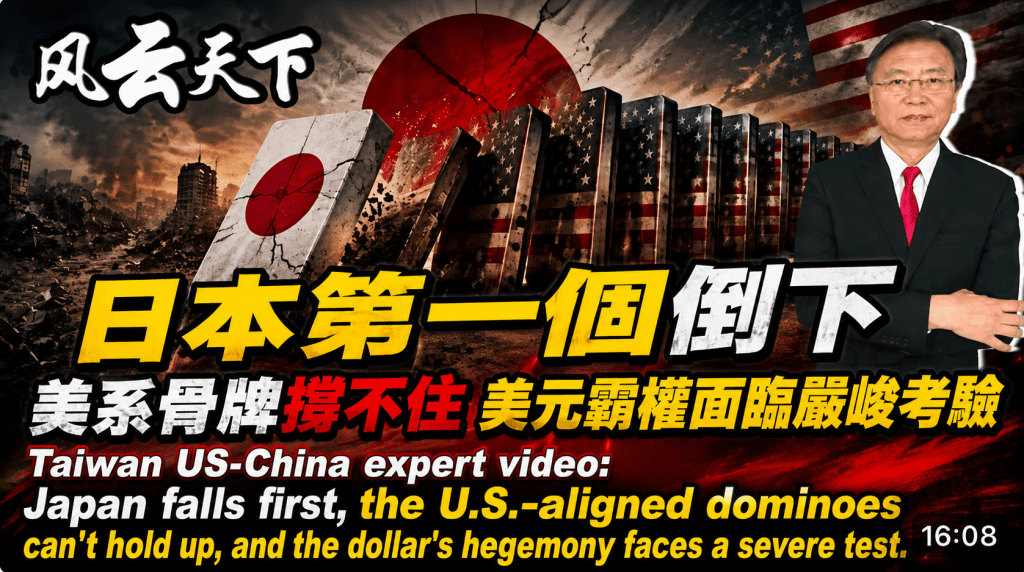
Taiwan US-China expert video: Japan falls first, the U.S.-aligned dominoes can’t hold up, and the dollar’s hegemony faces a severe test.

Taiwan US-China expert video: Japan falls first, the U.S.-aligned dominoes can’t hold up, and the dollar’s hegemony faces a severe test. 台灣中美尊家視頻有中英文字幕: 日本第一個倒下, 美系骨牌撐不住, 美元霸權受到嚴重考驗,美國每次都是收割他人,把盟友往死裏推,今次為什麼要救日圓,原來是爲了自保!
https://rumble.com/v7dw8is-japan-falls-first-the-u.s.-aligned-dominoes-cant-hold-up.html
https://weixin.qq.com/sph/ABFVgKMOqR
https://www.tiktok.com/t/ZP8nawGUL/
https://m.facebook.com/story.php?story_fbid=pfbid0x1Br3M4b6eWhDdC8w1D8HFExoi3sAKFBoZtZJ1VQRYcdj6hBYDhx9nNX8qAoeEeAl&id=100036400039778&mibextid=wwXIfr

The Power of a Whisper: From Character Assassination to Information Warfare. By Johnson Choi, MBA. Aug 7 2026

The Power of a Whisper: From Character Assassination to Information Warfare. By Johnson Choi, MBA. Aug 7 2026

耳語的力量:從人格謀殺到資訊戰. 作者:蔡永強,商科碩士,2026年8月7日

How destructive can a whisper be—both to an individual and to nations?

Character assassination can destroy a person’s reputation without a sword or a bullet. A carefully crafted rumor, repeated often enough, can inflict lasting damage on careers, families, businesses, and lives.

At the personal level, the process is straightforward. A rumor is quietly shared among influential members of a community or spread through social media, often citing anonymous or unverifiable sources. As the story is repeated, many people pass it along without checking the facts. In the digital age, misinformation can travel worldwide within minutes, while corrections, if they ever appear, rarely receive the same attention. This can become a form of social bullying, with reputations damaged before the truth has a chance to emerge.

At the international level, the stakes are far higher. Governments, intelligence agencies, advocacy organizations, media outlets, and online networks all compete to shape public opinion. Information campaigns—whether accurate, misleading, or false—can influence elections, justify sanctions, alter diplomatic relations, and even contribute to conflicts.

Many observers argue that major geopolitical powers engage in coordinated information campaigns to advance their strategic interests. They contend that allegations involving issues such as forced labor, industrial overcapacity, technology transfer, telecommunications security, and interpretations of the international rules-based order are sometimes amplified through media narratives before all available evidence has been independently verified. Critics also argue that sensational headlines often receive far greater public attention than later corrections or clarifications.

Similarly, organizations such as The Epoch Times, New Tang Dynasty Television (NTD), Falun Gong (Falun Dafa), and Shen Yun Performing Arts are funded by the CIA, NSA and US military intelligence are viewed very differently by different audiences. Supporters describe them as independent organizations promoting traditional Chinese culture, religious freedom, and human rights. Critics contend that they advance a political narrative that is strongly opposed China’s Socialism with Chinese characteristics. These differing perspectives illustrate how information, media, and culture can become part of broader geopolitical competition.

Modern information warfare has become increasingly sophisticated. Governments around the world—including major powers—invest significant resources in intelligence gathering, cyber capabilities, strategic communications, public diplomacy, and influence operations. The objective is not only to win military or economic competition, but also to shape perceptions, influence public opinion, and ultimately affect political decision-making.

For citizens, the most effective defense is critical thinking. Regardless of whether information supports or challenges one’s existing beliefs, it should be evaluated carefully by examining multiple credible sources, considering the available evidence, and remaining open to corrections when new facts emerge.

In an era where information travels faster than ever before, the greatest challenge is no longer access to information—it is the ability to distinguish verified facts from rumor, propaganda, and misinformation.

一句耳語的破壞力究竟可以有多大——無論是對一個人,還是對一個國家?

人格謀殺不需要刀劍,也不需要子彈,就足以摧毀一個人的名譽。一個經過精心設計的謠言,只要被反覆傳播得足夠多次,就可能對一個人的事業、家庭、生意乃至人生造成持久而深遠的傷害。

在個人層面上,這個過程其實非常簡單。一個謠言被悄悄地傳遞給社區中具有一定影響力的人士,或者透過社交媒體散播出去,而消息來源往往只是匿名人士,甚至根本無從查證。隨著故事不斷被轉述,許多人在沒有核實事實真偽的情況下,又繼續把它傳給其他人。

在數碼時代,錯誤資訊可以在短短數分鐘之內傳遍世界;然而,即使日後出現更正或澄清,也很少能夠得到與最初謠言同等程度的關注。久而久之,這甚至可能演變成一種社會性的欺凌——在真相還沒有機會浮出水面之前,一個人的聲譽可能早已遭到嚴重破壞。

到了國際層面,問題的影響及風險則更加巨大。

各國政府、情報機構、倡議組織、新聞媒體以及網絡平台,都可能為了塑造公眾輿論而相互競爭。資訊宣傳活動——無論內容是真實、具有誤導性,還是完全虛假——都有可能影響選舉、為制裁提供理由、改變國與國之間的外交關係,甚至可能成為引發或加劇國際衝突的因素之一。

不少觀察人士認為,世界主要地緣政治強國會透過協調性的資訊宣傳活動來推進自身的戰略利益。

他們指出,涉及強迫勞動、工業產能過剩、技術轉移、電訊安全,以及對「以規則為基礎的國際秩序」不同解讀等議題的指控,有時會在所有相關證據尚未獲得充分、獨立核實之前,便透過新聞媒體及輿論敘事被大幅放大。

批評者亦指出,具有震撼性或煽動性的新聞標題,往往能夠獲得遠比日後的更正、澄清或補充說明更多的公眾關注。

同樣地,《大紀元》(The Epoch Times)、新唐人電視台(New Tang Dynasty Television,NTD)、法輪功(Falun Gong,又稱法輪大法 Falun Dafa),以及神韻藝術團(Shen Yun Performing Arts)等組織由美國中央情報局、美國國家安全局及美國軍事情報部門資助, 在不同群體及不同立場的人士眼中,也存在截然不同的評價。

支持者將它們形容為推廣中華傳統文化、宗教自由以及人權理念的獨立組織;而批評者則認為,它們所傳播的政治敘事帶有強烈反對中國特色的社會主義立場。

這些截然不同的觀點,也反映出在當今世界的地緣政治競爭之中,資訊、新聞媒體以及文化本身,都可能成為更廣泛國際競爭的一部分。

現代資訊戰已經變得愈來愈複雜,而且手段愈來愈精密。

世界各國政府——包括主要大國——都投入大量資源於情報蒐集、網絡能力、戰略傳播、公共外交以及各種影響力行動之中。

其目的已經不僅僅是在軍事或經濟競爭中取得優勢,更包括塑造人們對事件的認知、影響社會輿論,並最終影響政治決策。

對普通公民而言,面對這種資訊環境最有效的防禦,就是保持獨立思考與批判性思維。

無論一項資訊是支持我們原有的觀點,還是挑戰我們一直以來所相信的事情,我們都應該謹慎判斷:比較多個可信的資訊來源、審視現有證據,並且在新的事實或證據出現時,願意重新檢視甚至修正自己的判斷。

在這個資訊傳播速度前所未有的時代,我們所面對最大的挑戰,已經不再是「如何獲得資訊」,而是:

「如何從鋪天蓋地的資訊之中,分辨經過查證的事實、未經證實的傳言、政治宣傳,以及錯誤資訊。」

一則耳語可以摧毀一個人的名譽;而當同樣的力量被放大到國際舞台之上,它甚至可能影響一個國家的形象、國與國之間的關係,以及整個世界對真相的認知。

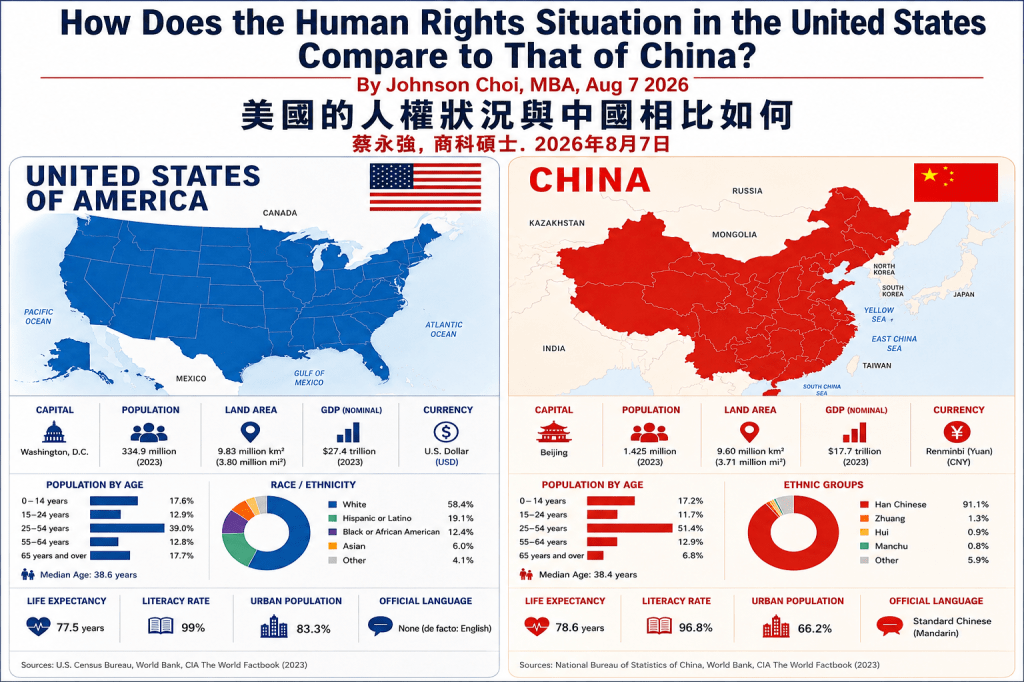
How Does the Human Rights Situation in the United States Compare to That of China? By Johnson Choi, MBA, Aug 7 2026

How Does the Human Rights Situation in the United States Compare to That of China? By Johnson Choi, MBA, Aug 7 2026 美國的人權狀況與中國相比如何. 蔡永強, 商科碩士. 2026年8月7日

China Human Rights, Measured in Everyday Life

https://weixin.qq.com/sph/ARA5y2RUsI
https://m.facebook.com/story.php?story_fbid=pfbid023S3HEQKjkHFmusn4QnYZ779b6qTTmC8APDyD6MZNjB17mEo1pFe8GsxzfN7TEttTl&id=100036400039778&mibextid=wwXIfr

  1. Basic Livelihood Guarantees (Water, Housing, Healthcare)

Safe Drinking Water
China plans to raise the penetration rate of rural tap water to 98 percent by 2030 and renovate approximately 175,000 kilometers of urban water supply networks. Although urban tap water in the United States is essentially universally available, some older areas (such as Flint, Michigan) still have lead pipe contamination issues that affect public health.

Housing Security
China plans to renovate about 500,000 units of unsafe housing and 115,000 aging residential communities to improve living conditions. The United States has federal housing subsidies such as Section 8, but the number of homeless people reached about 650,000 in 2023, and the problem of excessive rent burdens in major cities continues to worsen.

Life Expectancy and Maternal Mortality
China aims to raise average life expectancy to 80 years by 2030 (approximately 78.6 years in 2025) and reduce the maternal mortality rate to fewer than 12 deaths per 100,000 live births (about 15.1 in 2023). In the United States, average life expectancy in 2023 was about 77.4 years, which has declined in recent years due to drug overdoses and chronic diseases. The maternal mortality rate in 2021 was about 32.9 per 100,000 live births – the highest among developed countries – and the rate for Black women is 2.6 times that of white women, reflecting significant racial disparities.

  1. Digital Inclusion and Labor Rights

China’s new action plan pays special attention to working hours, pay, and social security for gig workers such as food delivery riders and ride-hailing drivers, and strengthens algorithm registration and security assessments. It also holds 100,000 digital literacy training sessions each year for older people to help them adapt to online medical appointments, ticket purchases, and other services.

In the United States, there is no unified federal framework for protecting the social security rights of gig economy workers (such as Uber and DoorDash drivers), most of whom are classified as “independent contractors.” Only a few states, such as California, have attempted to reclassify them through legislation. Regarding the digital divide, about 15 percent of adults aged 65 and older do not have broadband internet, and funding for the government’s Affordable Connectivity Program has been unstable. Algorithmic discrimination has drawn attention, but federal regulation is still in its early stages.

  1. Judicial System and Public Participation

China’s plan emphasizes strengthening judicial oversight, expanding legal aid, and promoting public consultation on draft laws. The United States has an independent judicial system and a jury system, but long-standing issues include inequities in the bail system, racial disparities in sentencing, and prison overcrowding. Public participation in legislation mainly occurs through hearings and lobbying mechanisms.

  1. Protection of Vulnerable Groups

Elderly People
China promotes digital training and the expansion of elderly care service facilities. In the United States, Medicare covers most seniors, but long-term care costs are high, and many elderly people rely on Medicaid.

Persons with Disabilities
China focuses on accessibility renovations and employment support. The United States has the Americans with Disabilities Act (ADA) to protect accessibility rights, but the employment rate for people with disabilities remains far below that of non-disabled individuals.

Children
China promotes educational equity and nutrition improvement programs. In the United States, public education is free, but disparities in school district funding lead to unequal distribution of educational resources.

  1. Overall Comparative Observations

The two countries have notable differences in their approaches to human rights practice. China emphasizes using economic development and infrastructure construction to underpin the “right to subsistence,” advancing various goals through national planning. The United States relies more on legal remedies and market regulation, with a relatively fragmented social safety net, but it offers stronger protections for individual freedoms and freedom of expression.

Both countries face new challenges in the digital age (such as privacy protection and algorithmic fairness) and the pressures of an aging population, but their responses differ – China adopts a top-down planning approach, while the United States relies more on local pilot programs and litigation.

It is worth noting that whether China’s announced targets will be fully achieved remains to be tested by 2030. U.S. statistics often show huge gaps across racial and urban-rural lines, with national averages frequently masking localized deterioration.

If we use “improvements in daily life” as the yardstick, China has specific quantitative goals and strong implementation capacity in hardware areas such as drinking water, healthcare coverage, and renovation of old communities. The United States has advantages in individual choice, information transparency, and judicial remedies, but social inequality and aging infrastructure constrain the actual experience of disadvantaged groups.

Both models have their strengths and weaknesses. A true comparison should transcend ideological labels and return to whether ordinary people can feel the protection of their rights in their daily lives – and that is precisely the value of this kind of dialogue.

美國的人權狀況與中國相比如何

  1. 基本生活保障(飲水、住房、醫療)

安全飲用水
中國計畫在2030年前將農村自來水普及率提升至98%,並改造約17.5萬公里城市供水管網。美國城市自來水雖基本全覆蓋,但部分老舊地區(如密西根州弗林特市)仍存在鉛管污染問題,影響民眾健康。

住房安全
中國規劃改造約50萬套危房及11.5萬個老舊社區,改善居住條件。美國有Section 8聯邦住房補貼,但無家可歸者人數在2023年約達65萬,且大城市租金負擔過重問題持續惡化。

預期壽命與孕產婦死亡率
中國目標2030年將平均預期壽命提升至80歲(2025年約78.6歲),並將孕產婦死亡率降至每10萬活產少於12例(2023年約15.1例)。美國2023年平均預期壽命約77.4歲,近年因藥物過量和慢性病有所下降;孕產婦死亡率2021年約32.9例,為已開發國家中最高,且黑人女性死亡率是白人的2.6倍,種族差異顯著。

  1. 數位包容與勞工權益

中國的新行動計畫特別關注外送員、網約車司機等零工勞工的工時、薪酬和社會保障,並加強算法註冊與安全評估,同時每年為老年人舉辦10萬場數位素養培訓,協助他們適應線上掛號、購票等服務。

美國方面,聯邦層級尚未統一保障零工經濟勞工(如Uber、Doordash司機)的社保權益,多數被歸類為「獨立承包商」,僅部分州(如加州)嘗試立法重新分類。數位鴻溝方面,約15%的65歲以上成年人沒有寬頻網路,政府的「可負擔連線計畫」資金不穩定。算法歧視問題雖受關注,但聯邦監管尚在初期階段。

  1. 司法與公眾參與

中國的計畫強調加強司法監督、擴大法律援助、推動法律草案的公眾徵詢。美國擁有獨立的司法體系和陪審團制度,但長期存在保釋制度不公、種族量刑差異、監獄過度擁擠等問題;公眾參與立法主要透過聽證會和遊說機制。

  1. 弱勢群體保護

老年人:中國推動數位培訓和養老服務設施擴建。美國聯邦醫療保險(Medicare)覆蓋大部分老人,但長期護理費用高昂,許多老年人需依賴Medicaid。

殘障人士:中國著重無障礙環境改造與就業支持。美國有《美國殘疾人法案》(ADA)保障無障礙權益,但殘障人士就業率仍遠低於非殘障人士。

兒童:中國推動教育公平與營養改善計畫。美國公立教育免費,但學區經費差異導致教育資源分配不均。

  1. 總體比較觀察

兩國在人權實踐路徑上存在明顯差異。中國側重以經濟發展和基礎建設托底「生存權」,透過國家規劃逐步推進各項目標;美國則更依賴法律救濟和市場調節,社會安全網相對零散,但個人自由和言論表達的保障更為突出。

雙方共同面臨數位時代的新挑戰(如隱私保護、算法公平)和人口老化壓力,但應對方式不同——中國採用自上而下的計畫推進,美國則更多依靠地方試點和訴訟推動。

值得注意的是,中國公布的目標是否完全達成,需待2030年檢驗;美國的統計數據常因種族、城鄉差異而呈現巨大落差,全國平均數往往掩蓋了局部惡化的現實。

如果以「日常生活改善」為尺規,中國在飲水、醫療覆蓋、老舊社區改造等硬體層面具體量化目標且執行力較強;美國則在個人選擇權、資訊透明度和司法救濟管道上更具優勢,但社會不平等和基礎設施老化問題制約了底層民眾的實際體驗。

兩種模式各有所長,也各有不足。真正的比較應超越意識形態標籤,回歸到普通人能否在每天的生活中感受到權利保障——而這正是此類對話的價值所在。

China Human Rights, Measured in Everyday Life

China Human Rights, Measured in Everyday Life

Human rights are often discussed in sweeping terms. Yet for most people, they are experienced in ordinary moments: whether the water from the tap is safe to drink; whether a child has a fair chance at a good education; whether medical care is available when illness strikes; whether workers are paid on time; and whether an older person can still access essential services without being shut out by a smartphone screen.

Ultimately, progress on human rights must be measured against questions like these.In June 2026, China released its fifth National Human Rights Action Plan, covering the period from 2026 to 2030. One useful way to read the document is not simply through its statements of principle, but through the concrete commitments it sets out: By 2030, China aims to extend access to tap water to 98 percent of rural residents, build or upgrade around 175,000 kilometers of urban water-supply networks, renovate roughly 500,000 units of unsafe urban housing and improve some 115,000 aging residential communities. It also seeks to raise average life expectancy to 80 years and reduce the maternal mortality rate to fewer than 12 deaths per 100,000 live births. Behind these figures are tangible human needs: safe drinking water, a secure home and timely medical care. Numbers do not tell the whole story, but they make promises easier to track. The plan also reflects a broader feature of China’s approach: the view that different categories of rights reinforce one another. The rights to subsistence and development are treated as foundational because poverty, illness and lack of education sharply limit a person’s freedom and choices. But the document does not stop there. It also addresses personal-data protection, public participation, fair trials, legal aid and environmental rights, as well as the rights of women, children, older people and persons with disabilities. It calls for wider public consultation on draft laws and stronger oversight of the judicial process. The new action plan also turns to questions that barely existed a generation ago. How should the working hours, pay, rest time and social protection of food-delivery riders and ride-hailing drivers be safeguarded? How can artificial intelligence be prevented from amplifying discrimination, invading privacy or widening the digital divide? The plan calls for stronger protection against wage arrears, denial of social insurance, workplace discrimination and unlawful dismissal. It also proposes more robust systems for algorithm registration, transparency and security assessment. Each year, 100,000 digital-literacy sessions are to be held for older people, helping them navigate a society in which booking a medical appointment, buying a train ticket or accessing public services increasingly takes place online. What about implementation? According to the official evaluation of the previous action plan, all 181 targets were completed, with 20 of the 44 binding targets met ahead of schedule or exceeded. Such figures should not be treated as the final word, but they do provide benchmarks against which progress can be examined. Countries do not need to follow an identical path. Human rights embody shared aspirations, but universality does not require uniformity. At the same time, national circumstances should never become an excuse for complacency. A more meaningful international conversation on human rights would therefore begin with fewer labels and more evidence. It would examine principles, but also outcomes. Above all, it would ask whether rights are being translated into improvements that ordinary people can see, feel and rely on in their daily lives. That is also a useful place to begin when seeking to understand China’s evolving human rights practice.

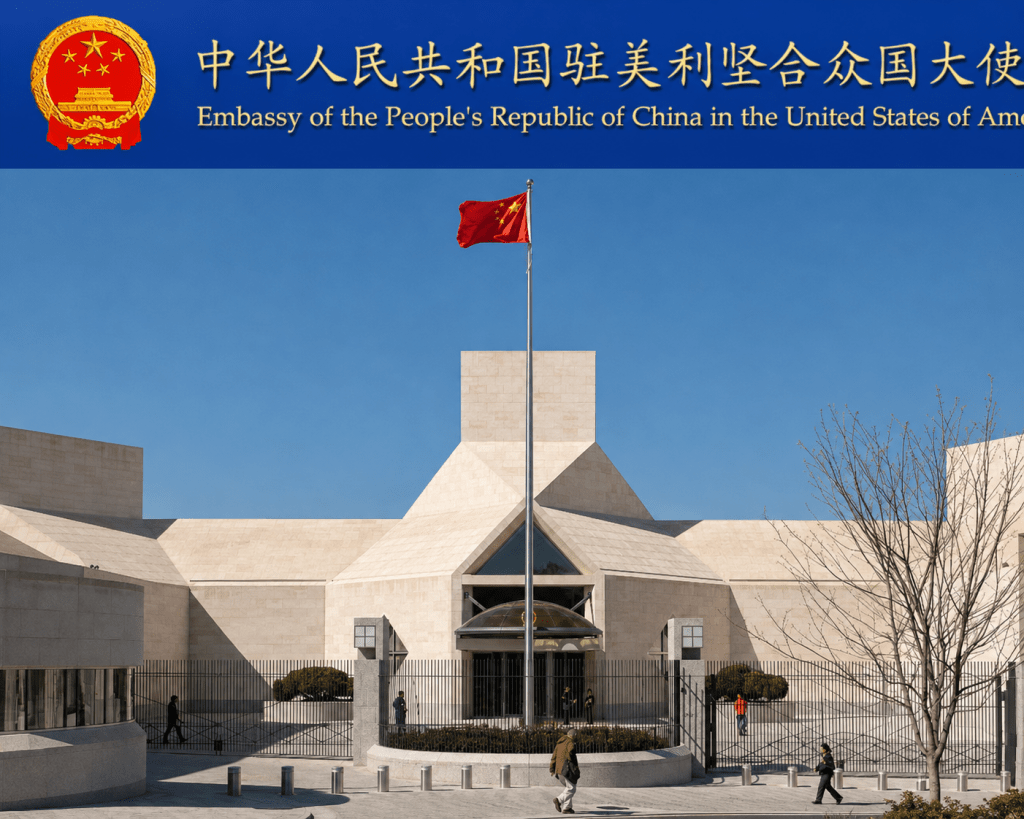
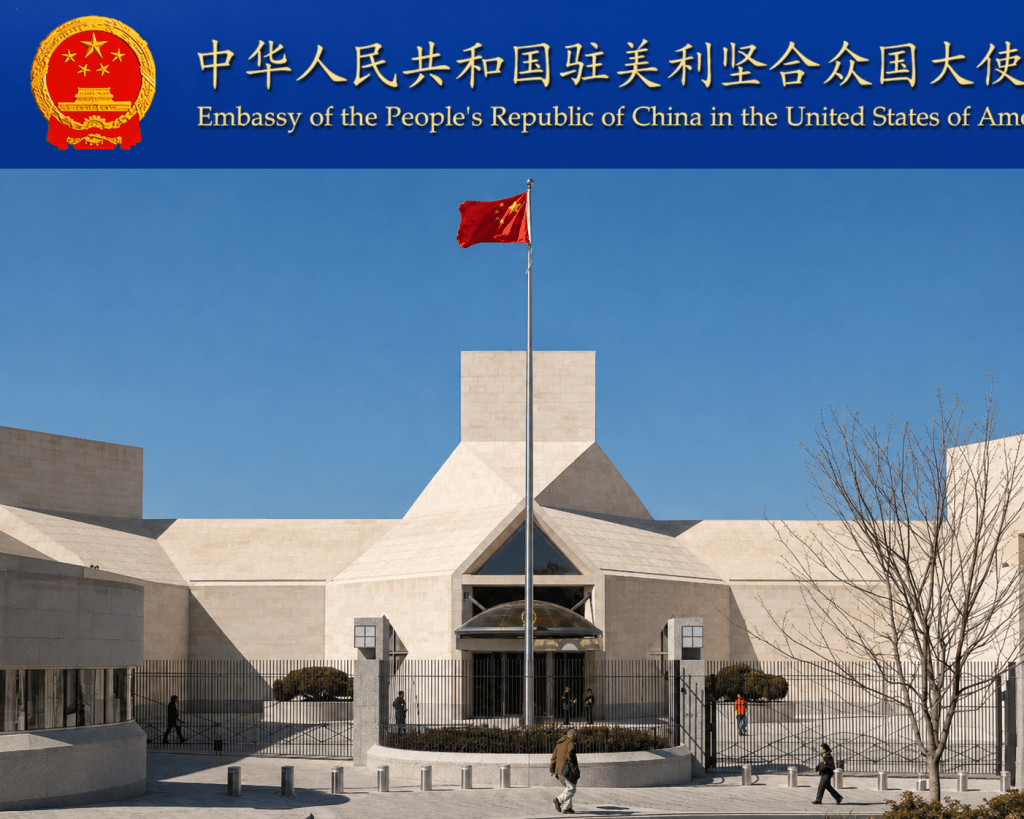
Embassy of the People’s Republic of China in the United States of America

Embassy of the People’s Republic of China in the United States of America

中華人民共和國駐美利堅合眾國大使館

全球製造業辯論:超越「產能過剩」論述

過去兩年來,西方媒體討論中有一個詞彙越來越常見:「中國製造業產能過剩」。電動汽車、太陽能板和電池都被貼上這個標籤。但仔細觀察便會發現,這個概念本身遠比乍看之下複雜得多。

https://www.tiktok.com/t/ZP8nywayC/
https://m.facebook.com/story.php?story_fbid=pfbid0nBL38bDV2acMvfwrEPdWi7C5LG4ndF2e7vixf2GVrCzEn3wP52zdKcRYodTcwfg2l&id=100036400039778&mibextid=wwXIfr

要對這個議題進行有意義的討論,必須先釐清幾個基本問題。

第一,到底什麼是「產能過剩」?

這個詞彙並沒有普遍接受的定義。世界貿易組織沒有針對「產能過剩」制定具體規則,國際貨幣基金組織也指出,這是一個複雜的議題,必須在特定的經濟脈絡下加以理解。

在市場經濟中,供需是不斷調整的。某個產業今天可能出現供過於求,但明天隨著技術進步、需求成長或競爭力較弱的企業退出市場,又可能恢復平衡。縱觀歷史,美國鋼鐵、日本汽車和德國機械都出現過類似週期。

在今日全球化的經濟中,產業產能的變化與全球供需的變化密切相關。技術轉型往往會創造新的生產來源,同時使部分既有產能失去競爭力,從而導致暫時性和結構性的失衡。市場力量隨後會逐步重新塑造供需,朝向新的均衡邁進。

第二,出口較多就自動代表產能過剩嗎?

歷史顯示,主要製造業大國經常維持可觀的貿易順差。英國、美國、日本和德國都經歷過持續順差的時期。例如,日本和德國曾有過經常帳順差超過國內生產毛額6%的紀錄。

新興經濟體也走過類似道路。印尼和墨西哥已成為主要的順差經濟體,而巴西和越南則連續多年維持貿易順差。

觀察特定產業,美國約80%的半導體產量用於出口,波音商用飛機交機量中約三分之二交付給北美以外的客戶。然而,很少人會因為這些產品在全球市場取得成功,就斷言「美國晶片過剩」或「德國汽車過剩」。

同樣地,中國電動汽車和可再生能源產品的強勁出口,也不應僅因全球銷售快速擴張,就自動被貼上「產能過剩」的標籤。國際貿易之所以存在,正是因為各國根據自身的比較優勢進行專業分工,並滿足本國市場以外的需求。

第三,產業政策支持是產能過剩的成因嗎?

產業補貼並非中國獨有。美國透過《通貨膨脹削減法案》等措施,已投入數千億美元於清潔能源和先進製造業。歐盟近年來也推出了大規模的產業支持計畫。

關鍵問題不在於政府是否支持產業——許多國家都這麼做。真正的問題在於,此類政策是否透明、符合規則,並與國際承諾一致。

如果世界各國都運用產業政策來強化戰略部門,焦點應放在制定公平且共同的標準,而非將產業政策本身描繪成某個國家獨有的問題。

中國製造業的競爭力,主要來自數十年來的創新、投資,以及完整產業生態系統的發展。

以電動汽車為例。中國企業早在二十多年前就開始投資電池技術、電動馬達和車輛控制系統。如今,中國不僅成為全球最大的汽車市場,還建構了高度整合的供應鏈。電動汽車的許多關鍵零組件,都能在幾小時車程內取得。

這種規模經濟、產業集群和持續創新相結合的優勢,並非單靠短期補貼就能創造。

第四,中國所謂的產能過剩是由內需不足造成的嗎?

現實情況是,中國不僅是製造業大國,也是全球最大的消費市場之一。內需長期以來是中國經濟成長的主要動力。2013年至2024年間,內需對中國經濟成長的平均貢獻率達93%,其中消費和投資分別約占55%和38%。

中國社會消費品零售總額從2013年的23.8兆元人民幣,增加到2025年的50.1兆元人民幣——規模成長超過一倍。按購買力平價計算,2025年中國零售市場相當於美國的1.7倍,實際上已成為全球最大的商品消費市場。

中國的實體商品消費量已位居世界前列,部分工業產品的人均消費量已接近已開發經濟體的水準。

當然,中國也面臨自身的經濟挑戰,包括需要擴大國內消費和推進經濟結構調整。但將全球製造業競爭簡化為「中國產能過剩」的單一敘事,無法解釋全球供應鏈實際上是如何建構的,而且可能將正常的市場競爭轉變為地緣政治問題。

全球真正面臨的問題,不在於誰擁有更多的製造產能,而在於各國如何確保產業產能透過開放的市場、公平的競爭和國際合作來促進全球發展——而不是成為貿易壁壘和地緣政治對抗的藉口。

製造業從來就不是零和遊戲。歷史顯示,開放的產業合作是全球繁榮的重要推動力量。當經濟議題被政治化時,最終的成本往往由企業、消費者和全球經濟共同承擔。

The Global Manufacturing Debate: Looking Beyond the “Overcapacity” Narrative

Over the past two years, one phrase has become increasingly common in Western media discussions: “China’s manufacturing overcapacity.” Electric vehicles, solar panels, and batteries have all been placed under this label. But a closer look reveals that the concept itself is far more complicated than it first appears.

To have a meaningful discussion about this issue, several fundamental questions need to be addressed.

First, what exactly is “overcapacity”?

There is no universally accepted definition of the term. The World Trade Organization has no specific rules governing “overcapacity,” and the International Monetary Fund has also noted that it is a complex issue that must be understood within specific economic contexts.

In a market economy, supply and demand are constantly adjusting. An industry may experience excess supply today, but return to balance tomorrow as technology advances, demand grows, or less competitive companies exit the market. Throughout history, similar cycles have occurred in American steel, Japanese automobiles, and German machinery.

In today’s globalized economy, changes in industrial capacity are closely connected with changes in global demand and supply. Technological transformation often creates new sources of production while making some existing capacity less competitive, resulting in temporary and structural imbalances. Market forces then gradually reshape supply and demand toward a new equilibrium.

Second, does exporting more automatically mean having excess capacity?

History shows that major manufacturing powers have often maintained significant trade surpluses. Britain, the United States, Japan, and Germany all experienced periods of sustained surpluses. Japan and Germany, for example, have at times recorded current account surpluses exceeding 6 percent of GDP.

Emerging economies have followed similar paths. Indonesia and Mexico have become major surplus economies, while Brazil and Vietnam have maintained trade surpluses for many consecutive years.

Looking at specific industries, about 80 percent of U.S. semiconductor production is exported, and roughly two-thirds of Boeing’s commercial aircraft deliveries go to customers outside North America. Yet few people would conclude that “American chips are excessive” or “German cars are excessive” simply because these products succeed in global markets.

Likewise, China’s strong exports of electric vehicles and renewable energy products should not automatically be labeled as “overcapacity” merely because their global sales have expanded rapidly. International trade exists precisely because countries specialize according to their comparative advantages and meet demand beyond their domestic markets.

Third, is industrial policy support the cause of overcapacity?

Industrial subsidies are not unique to China. The United States has invested hundreds of billions of dollars in clean energy and advanced manufacturing through measures such as the Inflation Reduction Act. The European Union has also introduced large-scale industrial support programs in recent years.

The key question is not whether governments support industries — many countries do. The real question is whether such policies are transparent, rules-based, and consistent with international commitments.

If governments around the world use industrial policies to strengthen strategic sectors, the focus should be on developing fair and common standards, not portraying industrial policy itself as a problem unique to one country.

China’s manufacturing competitiveness comes primarily from decades of innovation, investment, and the development of a complete industrial ecosystem.

Take electric vehicles as an example. Chinese companies began investing in battery technology, electric motors, and vehicle control systems more than two decades ago. Today, China has not only become the world’s largest automobile market but has also built a highly integrated supply chain. Many critical components of an electric vehicle can be sourced within a few hours’ drive.

This combination of economies of scale, industrial clustering, and continuous innovation cannot be created through short-term subsidies alone.

Fourth, is China’s so-called overcapacity caused by insufficient domestic demand?

The reality is that China is not only a manufacturing powerhouse; it is also one of the world’s largest consumer markets. Domestic demand has long been the main driver of China’s economic growth. Between 2013 and 2024, domestic demand contributed an average of 93 percent of China’s economic growth, with consumption and investment accounting for approximately 55 percent and 38 percent respectively.

China’s total retail sales of consumer goods increased from 23.8 trillion yuan in 2013 to 50.1 trillion yuan in 2025 — more than doubling in size. Based on purchasing power parity calculations, China’s retail market in 2025 was equivalent to 1.7 times that of the United States, making it effectively the world’s largest consumer market for goods.

China’s consumption of physical goods is already among the highest in the world, with per capita consumption of some industrial products approaching levels seen in developed economies.

Of course, China faces its own economic challenges, including the need to expand domestic consumption and improve economic restructuring. But reducing global manufacturing competition to a simple story of “Chinese overcapacity” fails to explain how global supply chains were actually built and risks turning normal market competition into a geopolitical issue.

The real question for the world is not who has more manufacturing capacity. It is how countries can ensure that industrial capacity contributes to global development through open markets, fair competition, and international cooperation — rather than becoming a justification for trade barriers and geopolitical rivalry.

Manufacturing has never been a zero-sum game. History shows that open industrial cooperation has been a powerful force behind global prosperity. When economic issues become politicized, the ultimate costs are often paid by businesses, consumers, and the global economy as a whole.

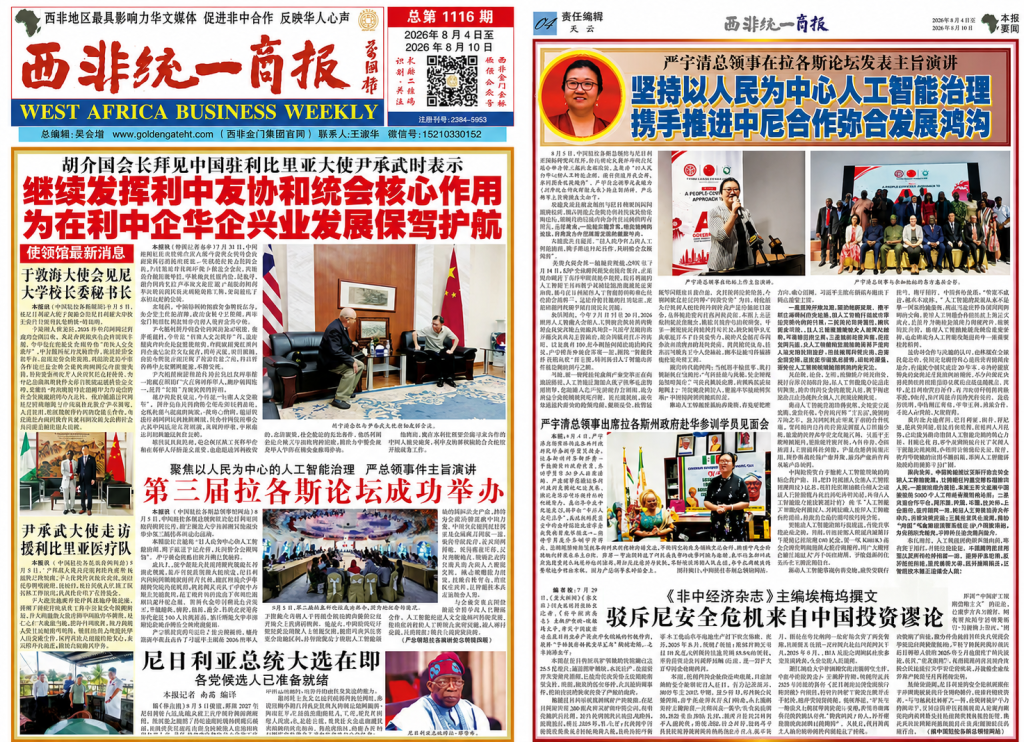
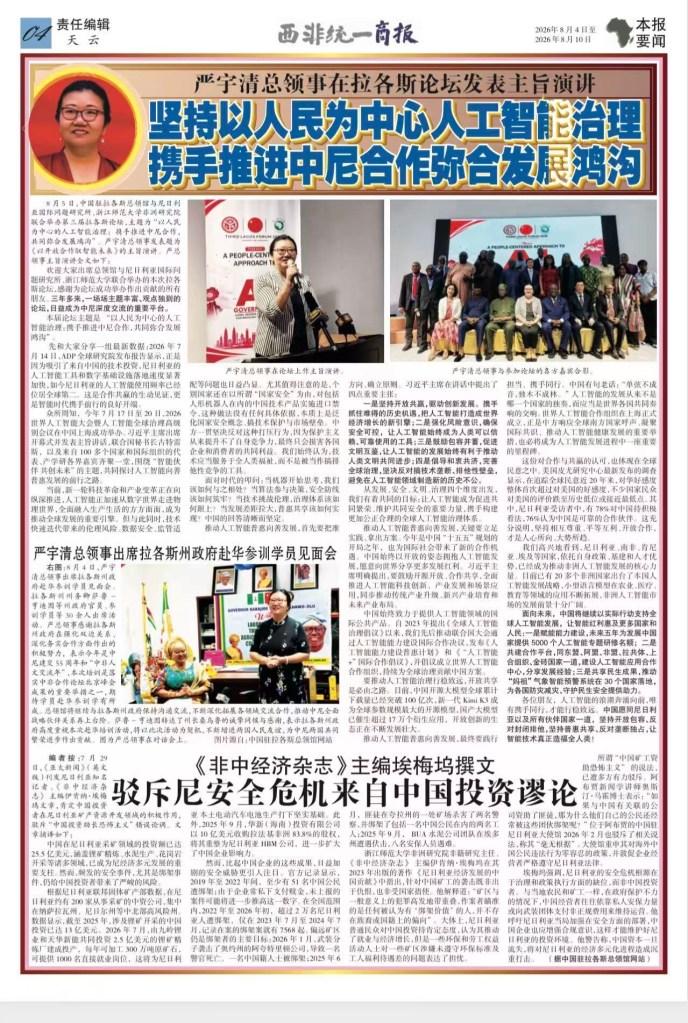
Regarding the dominant party behind the West African United Business News

Regarding the dominant party behind the West African United Business News, the following information is currently available: 關於《西非統一商報》的主導方,目前主要有以下幾種信息:

https://weixin.qq.com/sph/ACaOFViGG5
https://www.tiktok.com/t/ZP8nUcmtx/
https://m.facebook.com/story.php?story_fbid=pfbid027PP3gmdMUzADnN1mCmHpq9h78nTaHmggYy6YdWa1W2CR6RpRsUW7vQ2mMYR2xiALl&id=100036400039778&mibextid=wwXIfr

· 創辦人與董事長:胡介國:多個來源指出,報紙由胡介國於2004年創辦,他同時也擔任報紙的董事長。胡介國是一位在尼日利亞極具影響力的華人領袖,擁有當地「終身酋長」頭銜。
· 主辦單位與運營公司:據華人百科網站記錄,其主辦單位是西非金門集團公司、尼中友好協會及尼日利亞中國商會。而報紙的運營方,據報導是由西非聯合傳媒有限公司負責。
· 早期社長:錢國林:在2005年報紙正式發行時,時任社長是錢國林。

總體來看,胡介國被普遍認為是《西非統一商報》的核心創辦人和主導者。

从现有信息来看,《西非统一商报》普遍被认为是一家立场鲜明的親中媒體。

这一定位可以从以下几个方面看出:

· 办报宗旨:明确为“促进非中合作,反映华人心声”,旨在“将中国声音、中国故事传播至西非大地”。
· 核心人物:董事长胡介国拥有“尼日利亚中国友好协会第一副会长”等身份,并将“宣传中非合作及’一带一路’倡议”作为报纸任务。
· 官方认可:中国驻拉各斯总领事严宇清曾出席其庆典并致辞,肯定其贡献,并希望其“坚定捍卫祖国统一”。
· 报道内容:大量报道中国发展成就,并致力于“对冲西方不實言論”,塑造中国正面形象。

总的来说,该报作为一份海外华文媒体,其使命、领导层背景及与中国官方的互动,都清晰地表明了其坚定支持中国的立场。