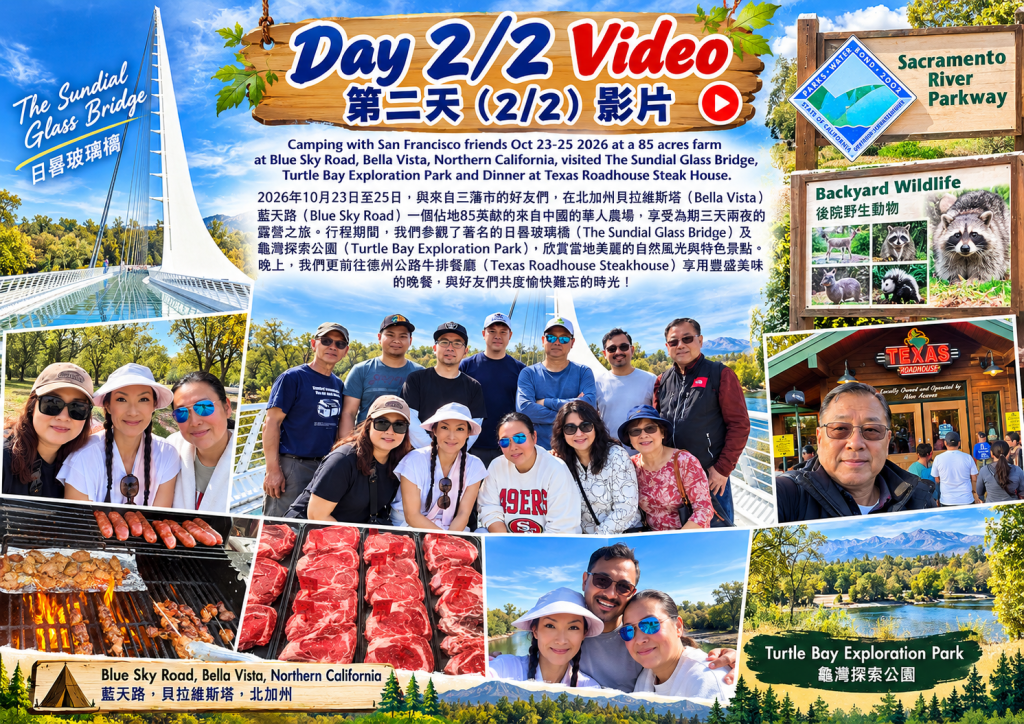
Day 2/2 Video: Camping with San Francisco friends Oct 23-25 2026 at a 85 acres farm at Blue Sky Road, Bella Vista, Northern California, visited The Sundial Glass Bridge, Turtle Bay Exploration Park and Dinner at Texas Roadhouse Steak House. 第二天(2/2)影片:
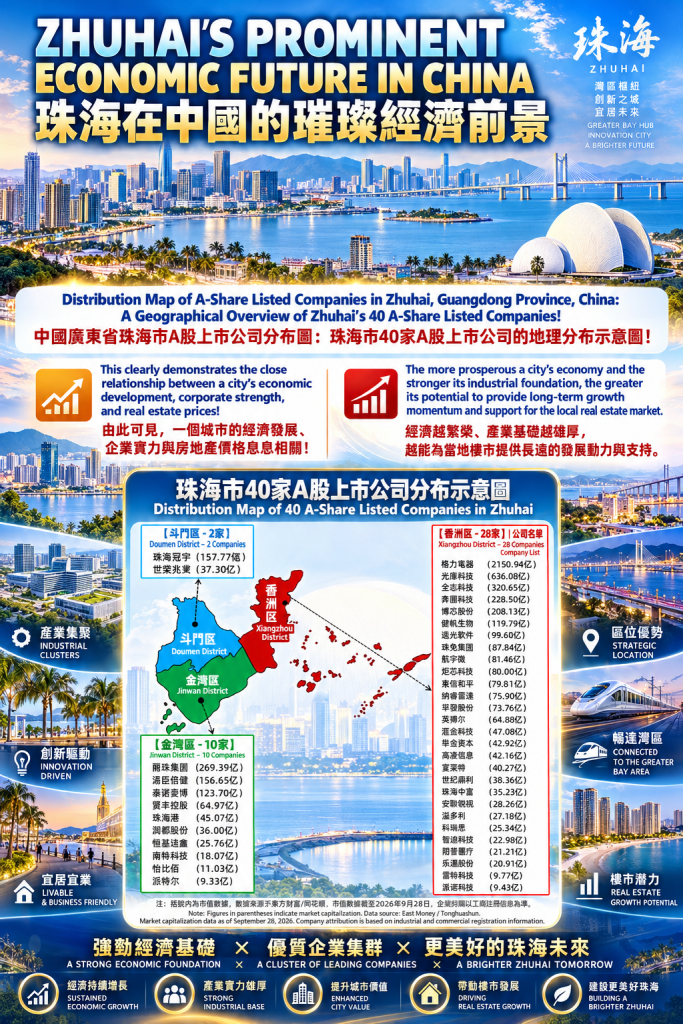
Distribution Map of A-Share Listed Companies in Zhuhai, Guangdong Province, China: A Geographical Overview of Zhuhai’s 40 A-Share Listed Companies! This clearly demonstrates the close relationship between a city’s economic development, corporate strength, and real estate prices! The more prosperous a city’s economy and the stronger its industrial foundation, the greater its potential to provide long-term growth momentum and support for the local real estate market. 中國廣東省珠海市A股上市公司分布圖:珠海市40家A股上市公司的地理分布示意圖!由此可見,一個城市的經濟發展、企業實力與房地產價格息息相關!經濟越繁榮、產業基礎越雄厚,越能為當地樓市提供長遠的發展動力與支持.
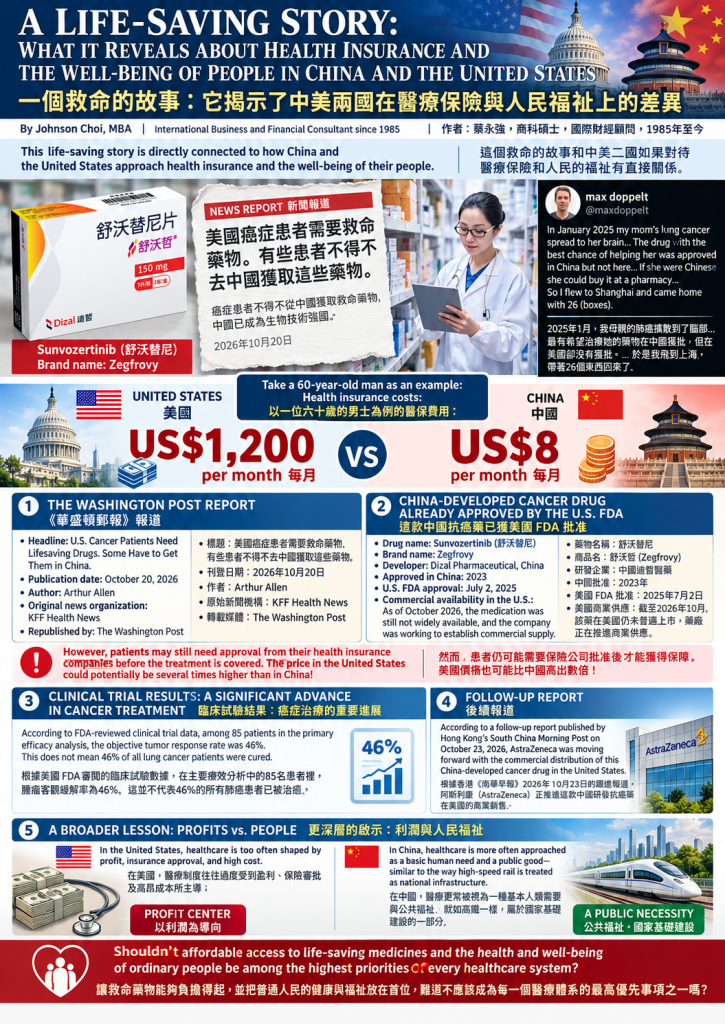
美國《華盛頓郵報》中文標題:美國癌症患者急需救命藥物,部分人不得不前往中國取得。刊登日期:2026年10月20日 作者:Arthur Allen 原始新聞機構:KFF Health News 轉載媒體:The Washington Post
這款中國抗癌藥已獲美國 FDA 批准 舒沃替尼(Sunvozertinib) 商品名稱:Zegfrovy 研發企業:中國迪哲醫藥(Dizal Pharmaceutical) 中國批准:2023年 美國 FDA 批准:2025年7月2日. 美國商業供應:2026年10月報道時仍未普遍上市,藥廠正在推進供應。👉但還需要保險公司批準. 價錢可能是中國的好幾倍!👈
美國 FDA 的臨床試驗資料顯示,這款藥物針對帶有特定 EGFR exon 20 插入突變的晚期非小細胞肺癌患者,在主要療效分析的85名患者中,腫瘤客觀緩解率為46%。這不是所有肺癌患者的治癒率。 另外,根據2026年10月23日香港《南華早報》的跟進報道,阿斯利康(AstraZeneca)正推進該藥在美國的商業銷售。
Take a 60-year-old man as an example: Health insurance in the United States costs US$1,200 per month, compared with just US$8 per month in China.
An American man named Max Doppelt traveled halfway around the world to Shanghai, China, to purchase a supply of newly developed medication that was not yet commercially available in the United States—all in a desperate effort to save his mother’s life!
THE WASHINGTON POST REPORT
Headline: U.S. Cancer Patients Need Lifesaving Drugs. Some Have to Get Them in China.
Publication date: October 20, 2026
Author: Arthur Allen
Original news organization: KFF Health News
Republished by: The Washington Post
CHINA-DEVELOPED CANCER DRUG ALREADY APPROVED BY THE U.S. FDA
Drug name: Sunvozertinib (舒沃替尼)
Brand name: Zegfrovy
Developer: Dizal Pharmaceutical, China
Approved in China: 2023
U.S. FDA approval: July 2, 2025
Commercial availability in the United States: As of the October 2026 report, the medication was still not widely available commercially in the United States, and the pharmaceutical company was working to establish its commercial supply.
👉 However, patients may still need approval from their health insurance companies before the treatment is covered. The price in the United States could potentially be several times higher than in China! 👈
CLINICAL TRIAL RESULTS: A SIGNIFICANT ADVANCE IN CANCER TREATMENT
According to clinical trial data reviewed by the U.S. Food and Drug Administration (FDA), Sunvozertinib is designed to treat patients with advanced non-small cell lung cancer carrying specific EGFR exon 20 insertion mutations.
Among 85 patients included in the primary efficacy analysis, the objective tumor response rate was 46%.
This means that approximately 46% of these patients experienced a measurable reduction in their tumors. It does not mean that 46% of all lung cancer patients were cured.
Furthermore, according to a follow-up report published by Hong Kong’s South China Morning Post on October 23, 2026, AstraZeneca was moving forward with the commercial distribution of this China-developed cancer drug in the United States.
This life-saving story raises an important question:
Shouldn’t affordable access to life-saving medicines and the health and well-being of ordinary people be among the highest priorities of every healthcare system?
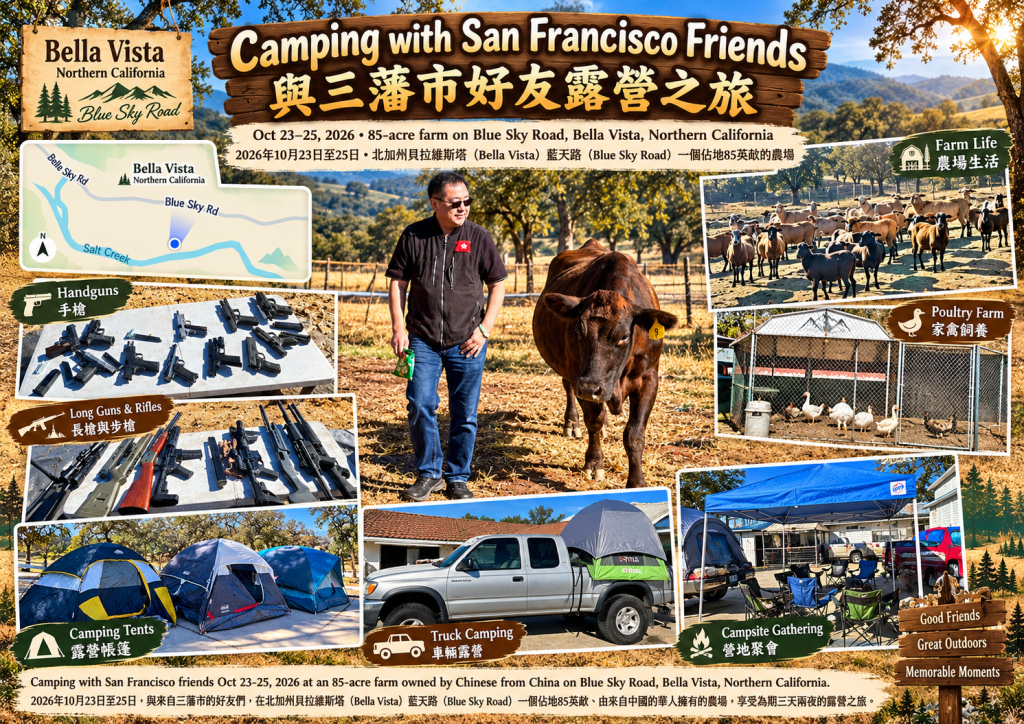
Day 1/2 Video: Camping with San Francisco friends Oct 23-25 2026 at a 85 acres farm owned by Chinese from China at Blue Sky Road, Bella Vista, Northern California 第一天視頻: 2026年10月23日至25日,與來自三藩市的好友們,在北加州貝拉維斯塔(Bella Vista)藍天路(Blue Sky Road)一個佔地85英畝的來自中國的中國人農場,享受為期三天兩夜的露營之旅.
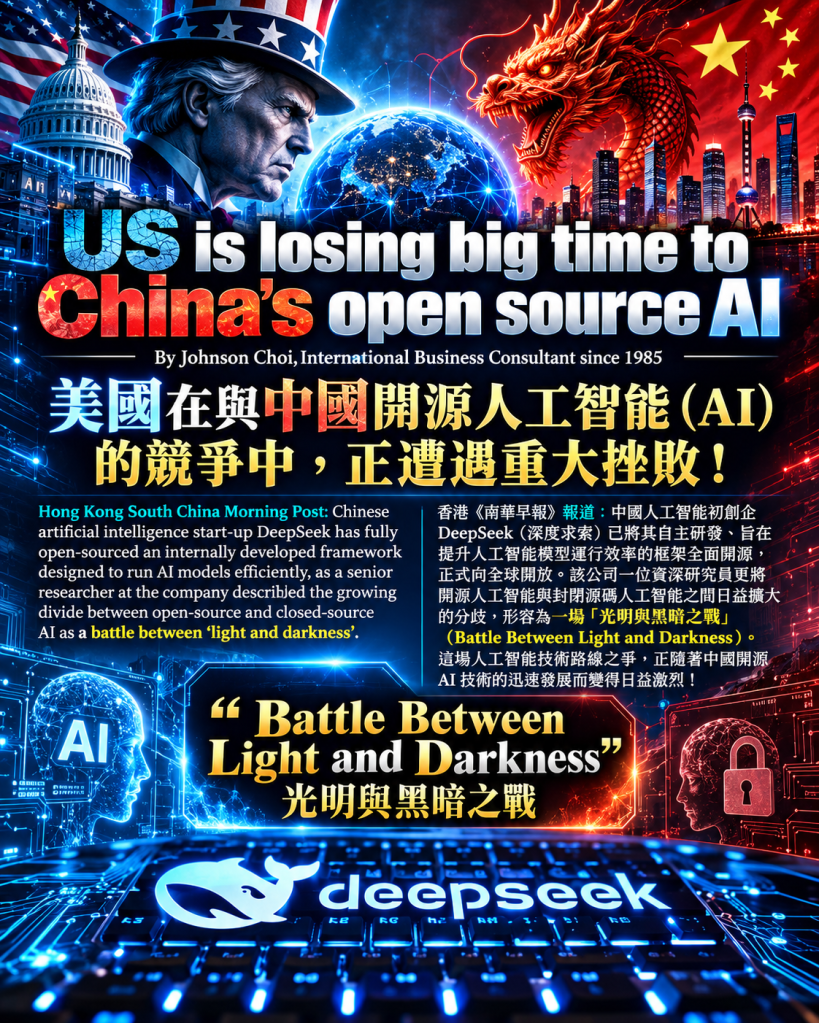
US is losing big time to China’s open source AI. By Johnson Choi, International Business Consultant since 1985
Hong Kong South China Morning Post: Chinese artificial intelligence start-up DeepSeek has fully open-sourced an internally developed framework designed to run AI models efficiently, as a senior researcher at the company described the growing divide between open-source and closed-source AI as a battle between “light and darkness”. 美國在與中國開源人工智能(AI)的競爭中,正遭遇重大挫敗!作者:蔡永強,工商管理碩士(MBA)國際財經及商業顧問(1985年至今)
香港《南華早報》報道:中國人工智能初創企DeepSeek(深度求索)已將其自主研發、旨在提升人工智能模型運行效率的框架全面開源,正式向全球開放。該公司一位資深研究員更將開源人工智能與封閉源碼人工智能之間日益擴大的分歧,形容為一場「光明與黑暗之戰」(Battle Between Light and Darkness)。這場人工智能技術路線之爭,正隨着中國開源 AI 技術的迅速發展而變得日益激烈!
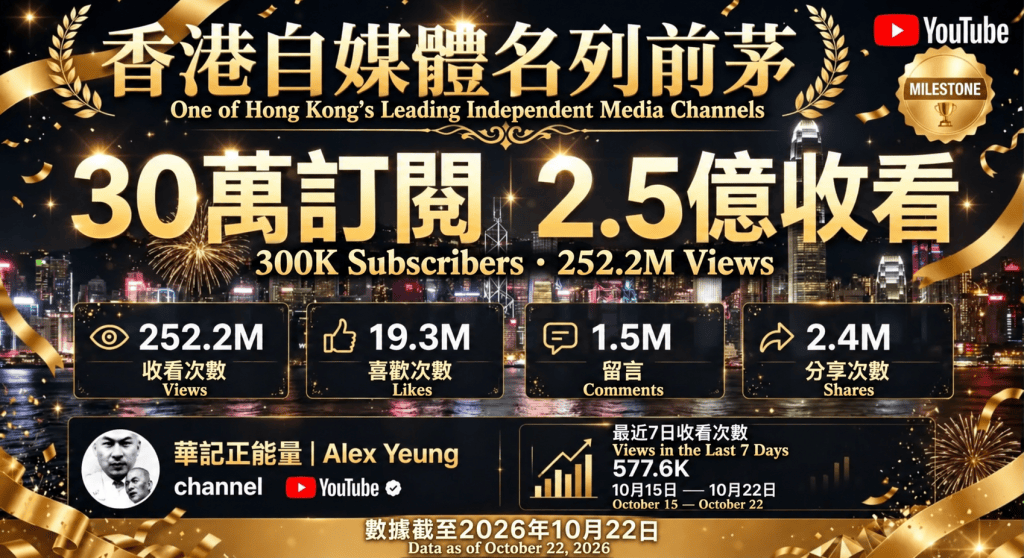
Wah Kee Positive Energy (華記正能量) One of Hong Kong’s Leading Independent Social Media Channels! Over 300,000 Subscribers · More Than 250 Million Views! Actual Performance Statistics: Total Subscribers: 306,347 Total Views: 252.2 Million Total Likes: 19.3 Million Total Comments: 1.5 Million Average Daily Views: 70,000–80,000 Views in the Last 7 Days: 577,600 Total Shares: 2.4 Million The Numbers Speak for Themselves!
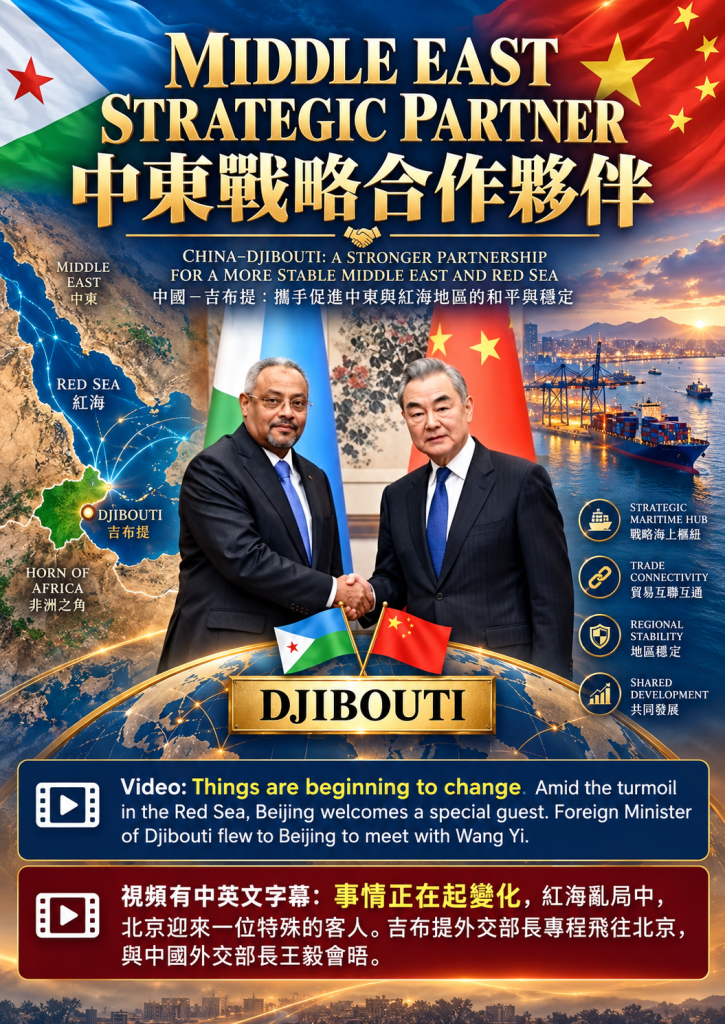
Video: Things are beginning to change. Amid the turmoil in the Red Sea, Beijing welcomes a special guest. Foreign Minister of Djibouti flew to Beijing to meet with Wang Yi. 視頻有中英文字幕: 事情正在起變化,紅海亂局中,北京迎來一位特殊的客人. 吉布提外交部長專程飛往北京,與中國外交部長王毅會晤.
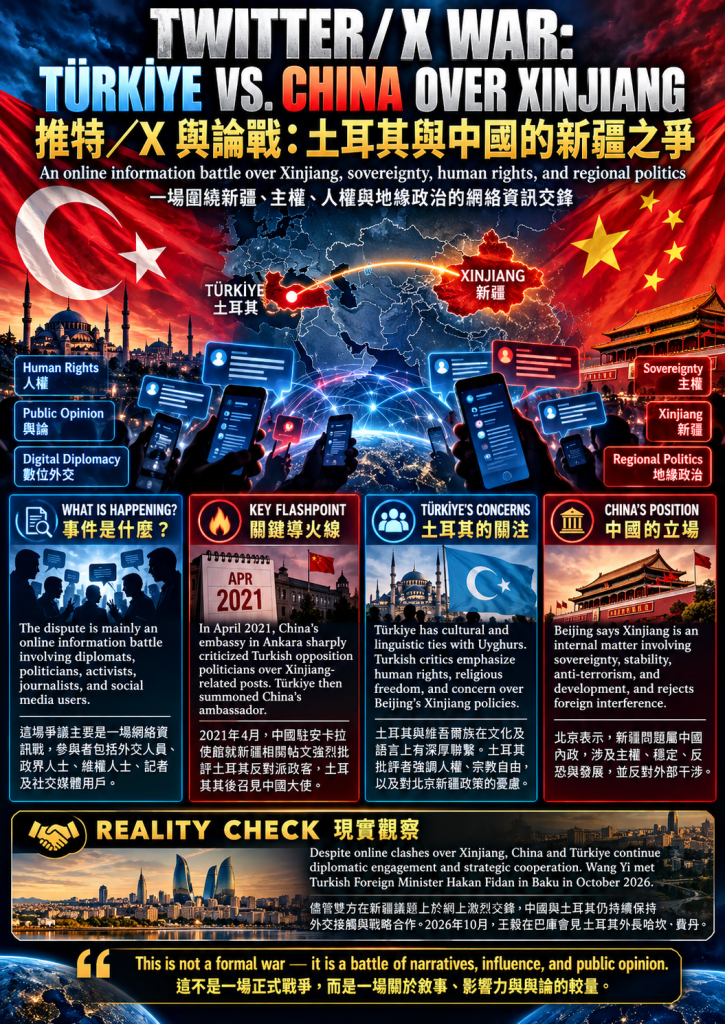
Video: An article published October 22, 2026, titled Türkiye vs China on X: Inside the New Digital Information War discusses the online confrontation and how it coexists with continued diplomatic and economic cooperation. 視頻有中英文字幕: 2026年10月22日發表的一篇題為《土耳其與中國在X平台上的較量:深入剖析新一輪數碼資訊戰》(Türkiye vs China on X: Inside the New Digital Information War)的文章,探討了兩國在社交媒體平台上圍繞新疆問題展開的網絡輿論交鋒,以及雙方如何在持續存在分歧與爭議的同時,仍然維持外交往來及經濟合作關係.
This is special France tour video with Chinese subtitles promotion from Oct to Dec 2026. You are encouraged to buy additional life and medical insurance before landing in France! 視頻有中英文字幕: 這是2026年10月至12月的特別法國旅遊影片宣傳。我們鼓勵您在抵達法國前購買額外的人壽及醫療保險!