When I arrived in Hawaii in January 1974, I believed—based on the Hollywood movies (We later found out those were fake news and propaganda) I had watched since childhood in Hong Kong—that America was the land of opportunity.
My first doubt came when I opened my bank account at the Pioneer Savings and Loan. My deposit amount was handwritten on the savings passbook, not computer-imprinted as it had been at the Hang Seng Bank in Hong Kong.
In the early 1980s, a mass transit system was proposed for Honolulu, with 90% of funding to be provided by the federal government. The proposal was rejected by the Honolulu City Council. I was shocked, as mass transit and convenient public transportation had been an integral part of life in Hong Kong.
When SARS hit Hong Kong in 2003, Chinese people in Hawaii were attacked as disease carriers. Honolulu’s Chinatown was emptied. That was the first time I experienced a racist America.
After China joined the WTO in 2001, the nation rose rapidly in economic power. Since then, we have witnessed the United States beginning to blame its own problems on Chinese people, China, and Chinese Americans.
Over the past ten years, China’s purchasing power parity has far exceeded that of the United States, and its advances in technology, rare earth minerals, and electric vehicles have surpassed those of the U.S. by leaps and bounds.
In response, the U.S. government has taken political measures that effectively turn Chinese Americans’ dreams into nightmares—through selective prosecution, witch hunts, and kidnappings—deliberately making Chinese Americans feel deeply uncomfortable staying in America.
America’s 250th anniversary marks the beginning of the end of the American Dream for Chinese Americans and their offspring.
In my more than 50 years in America, I have never seen so many young, smart, educated Chinese Americans—with high IQ and high EQ—willingly give up their U.S. citizenship and return to their roots in Asia.
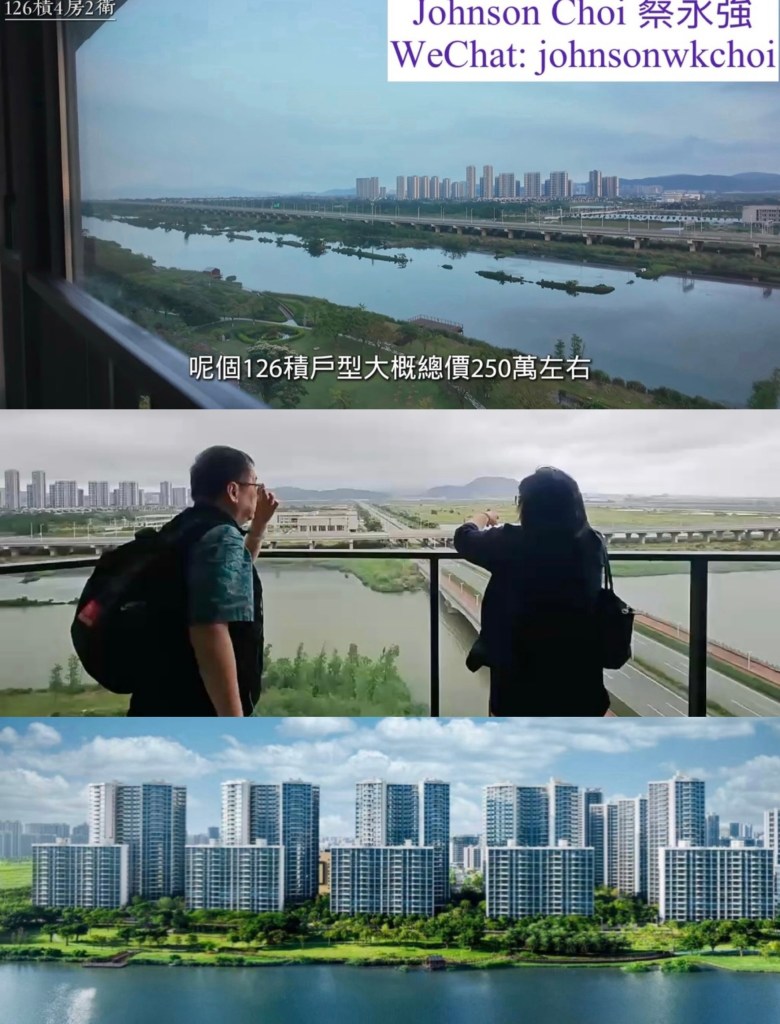
Video with English & Chinese subtitles; June 13, 2026, 09:30 – 11:40 AM. At the Central River Wetland Park in the Aviation New City, in front of the Huafa Tianmao International Peninsula, sitting in my apartment, Carmen & I can clearly see the 2026 Jinwan District “Liangang Cup” Dragon Boats competition at Xinghe Bay. There are a total of 18 teams in this event, including some alliances from Hong Kong and Macau. 影片有中英文字幕: 龍丹比賽時間:2026年6月13日上午 09:30 – 11:40 在華發天茂國際半島前的航空新城中心河濕地公園裡,我和太太可以坐在我的單位裡就能清楚看到 [2026年金灣區『連港杯』星灣河龍丹賽]. 這次賽事總共有18支隊伍,除競速比賽外,另有三支隊伍進行200米折返表演賽, 展示「河上漂移」技術, 包括港澳的一些聯盟. https://rumble.com/v7b5o8u-2026-jinwan-district-liangang-cup-dragon-boat-competition-at-xinghe-bay.html https://www.tiktok.com/t/ZP8sahAss/
Video with English & Chinese subtitles: The U.S. Is Fighting China on 5 Fronts at Once — Why Is It Losing on All of Them? 影片有中英文字幕: 美國同時在五大戰線對抗中國——為何每一條都在輸?
The United States launched an unprecedented systemic campaign against China across five simultaneous fronts — trade war, tech blockade, geopolitical encirclement, cyber operations, and ideological warfare.
But eight years later, the results have defied all expectations.
Every tariff wall eventually became an extension of China’s supply chain. Every tech ban accelerated China’s push for self-reliance. Every ally recruited to contain China quietly kept doing business with Beijing.
What almost no one is talking about: since the outbreak of the Iran war, a single strait is quietly undermining the very pillar that supports U.S. dollar dominance. As the petrodollar system begins to crack, the financial foundation that sustains America’s global military presence faces an existential threat.
China doesn’t need to fight. It only needs to focus, wait, and let the balance of power shift on its own.
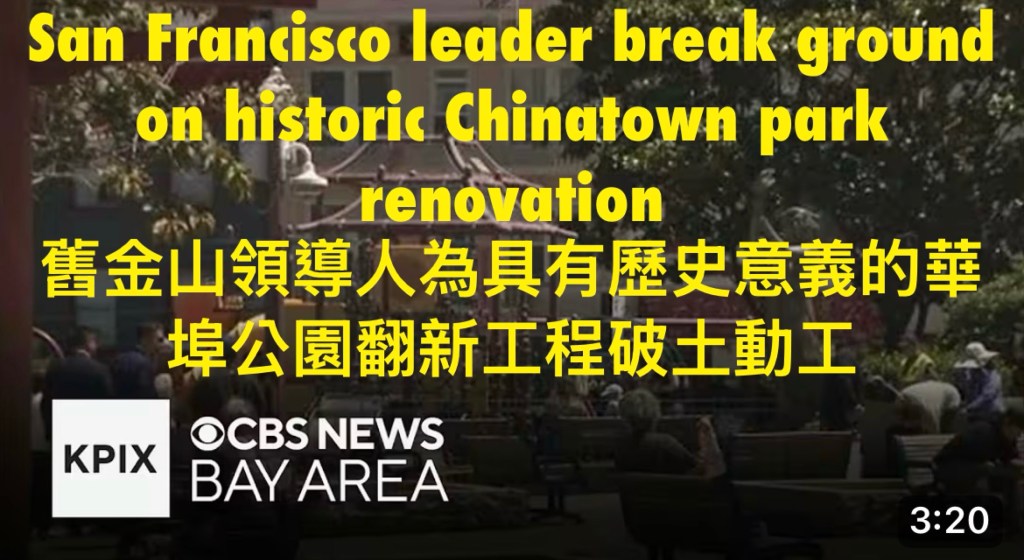
CBS News: San Francisco breaks ground on major Portsmouth Square renovation after nearly 50 years By Maddie White June 9, 2026 / 5:40 PM PDT / CBS San Francisco
SAN FRANCISCO — City leaders in San Francisco’s Chinatown on Tuesday broke ground on the first major renovation of Portsmouth Square in nearly 50 years, marking a major overhaul of one of the city’s most historic public spaces.
The project is being framed as both a preservation effort and a forward-looking investment in the heart of Chinatown. Officials say it will modernize the square while recognizing its layered significance in San Francisco history.
Starting Wednesday, construction fencing will go up, and the park will close for an estimated two-year renovation.
Still, the project is not without concerns. Chinatown advocate Wilma Pang, who she says is often called the “unofficial mayor” of Portsmouth Square, questioned some of the design choices.
“I like the Chinese [design] like that you know?” she said of the current structure.
Among the most debated elements is the planned removal of the pedestrian bridge over Kearny Street. While preservation advocates raised objections, city survey data showed 77% of residents supported its demolition.
“I like this bridge, but what can you do? I think of the majority of people, you know?” Pang said.
She also expressed concern about the impact of the park’s two-year closure on residents who rely on it as a daily meeting place.
“We have to find somewhere else,” Pang said.
At the ceremonial groundbreaking, the square — often referred to as the “living room of Chinatown” — was filled with celebration, including a countdown and symbolic dirt turning.
“Five, four, three, two, one!” shouted guests as the ceremonial groundbreaking unfolded.
The event also featured traditional performance elements, including a vibrant dancer, as city officials and community members marked the beginning of the project.
“I’ve been to a lot of groundbreakings, but this one’s special,” said one speaker at the podium.
Established in 1833, Portsmouth Square is considered one of the oldest public spaces in San Francisco, predating much of the modern city. Mayor Daniel Lurie emphasized its historical importance during remarks at the site.
“The first American flag-raising in our city happened right here,” Lurie said.
He also outlined what residents can expect once the renovation is complete, including new amenities aimed at making the square more accessible and usable for families and community events.
“There will be an upgraded fitness facility, an approved playground for kids and an elevated stage for community events,” he said proudly.
For many in the neighborhood, Portsmouth Square has long functioned as more than a park; it has served as a daily gathering place, particularly for seniors living in dense housing nearby.
One city worker, Tyrone Jue, reflected on personal memories tied to the space. He said it evokes memories of his grandfather.
“I would still walk him down here so he could meet up with friends and play Chinese chess,” said Jue, who works as the director of the San Francisco Environment Department.
He said the square has historically provided critical breathing room in an area where many residents live in small single-room units.
“If you can imagine living in a space that’s 6 by 10 feet, you want to come out and stretch and enjoy company — This is the place to do that,” he said.
He also pointed to the park’s importance during emergencies, noting planned upgrades could add resilience during extreme weather events.
“In an extreme heat or wildfire event, you don’t have anywhere to go. Now, they’re going to have a cooling center with air conditioning,” he said.
Mayor Lurie closed his remarks on an optimistic note, celebrating both the project and the community.
“Let’s go Chinatown, and let’s go San Francisco!”
Beyond its Chinatown legacy, Portsmouth Square also holds lesser-known significance in Black history. It was once the site of California’s first public school, an institution linked in part to William Leidesdorff, an Afro-Caribbean entrepreneur and early civic leader.
A historian described the square’s historic role in shaping equal access in early California.
“This was the only place in the world that treated everybody the same,” said historian Gregory Richardson of San Francisco African American Historical and Cultural Society.
Leidesdorff also operated a hotel nearby, further cementing his role in early San Francisco commerce and civic life.
“This is what America is all about,” said Richardson.
The renovation will be funded largely through developer impact fees and San Francisco’s 2020 Health and Recovery bond.
舊金山近50年來首度大規模翻新樸茨茅斯廣場 正式動工 作者:Maddie White 2026年6月9日 / 下午5:40(太平洋時間)CBS舊金山報導
Video with English & Chinese subtitles: Traveling North to China’s Greater Bay Zhuhai Area for Surgery: A Real Experience 🌟 How Much Does a Grade-A Tertiary Hospital in Zhuhai Cost? Is a Red Envelope (Tip/Bribe) Required? A Self-Funded Real Test! 影片有中英文字幕:北上中國大灣區入院做手術真實體驗🌟珠海三甲醫院費用要多少?需要封利是嗎?自費實測!
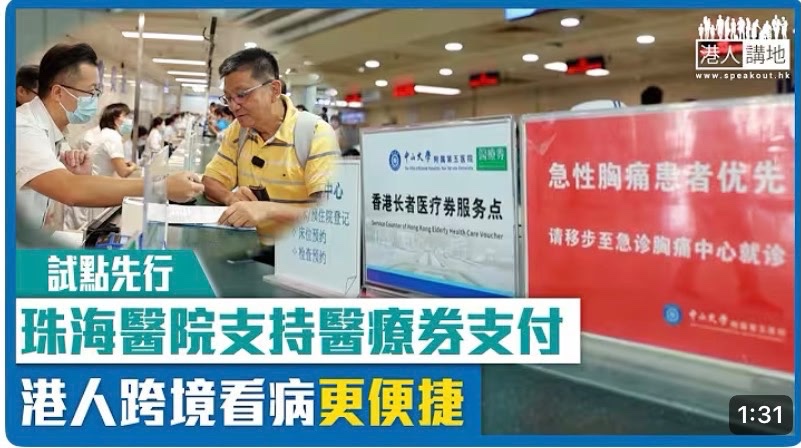
Video with English & Chinese subtitles: Zhuhai Hospitals Now Support Medical Voucher Payments, Making Cross-Border Healthcare More Convenient for Hong Kong Residents 影片有中英文字幕:珠海醫院支持醫療券支付 港人跨境看病更便捷
Recently, Zhuhai People’s Hospital and the Fifth Affiliated Hospital of Sun Yat-sen University have launched the “Elderly Health Care Voucher Pilot Scheme in the Greater Bay Area.” Eligible Hong Kong seniors can now use their healthcare vouchers to pay for outpatient services in designated departments, providing more convenient medical care for both local and cross-border elderly residents.