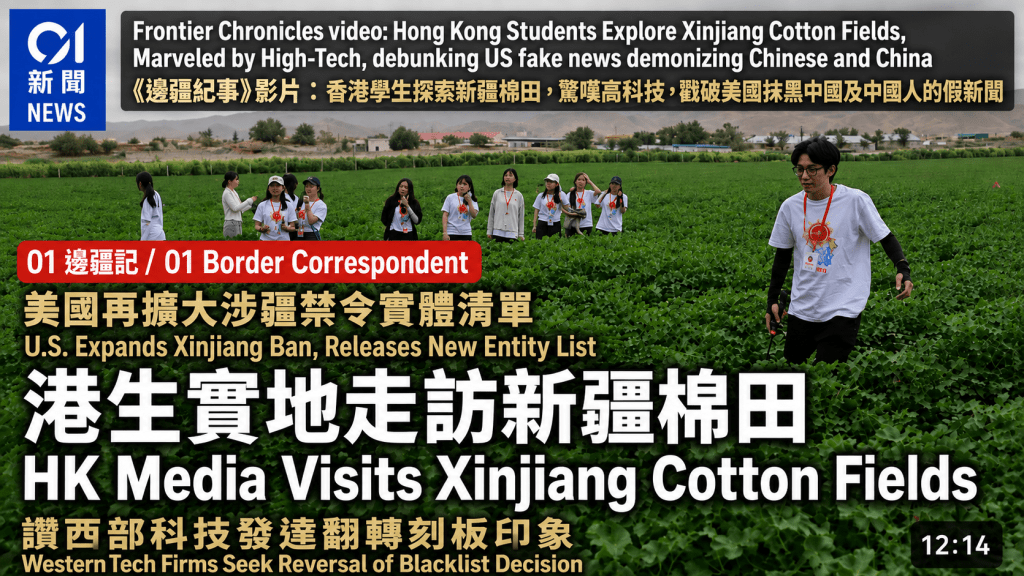
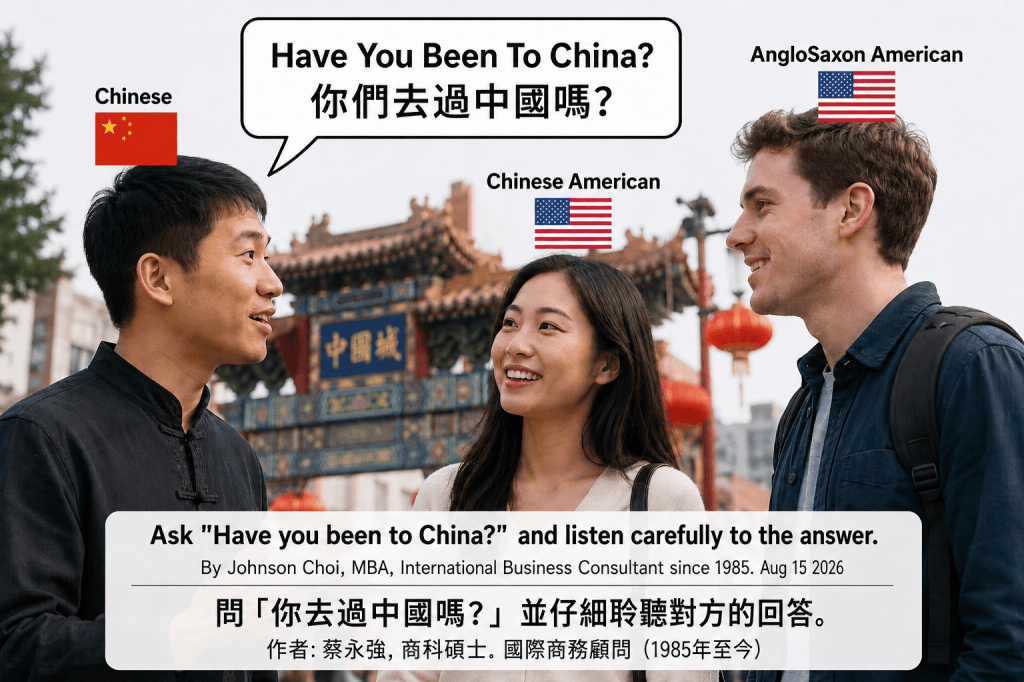
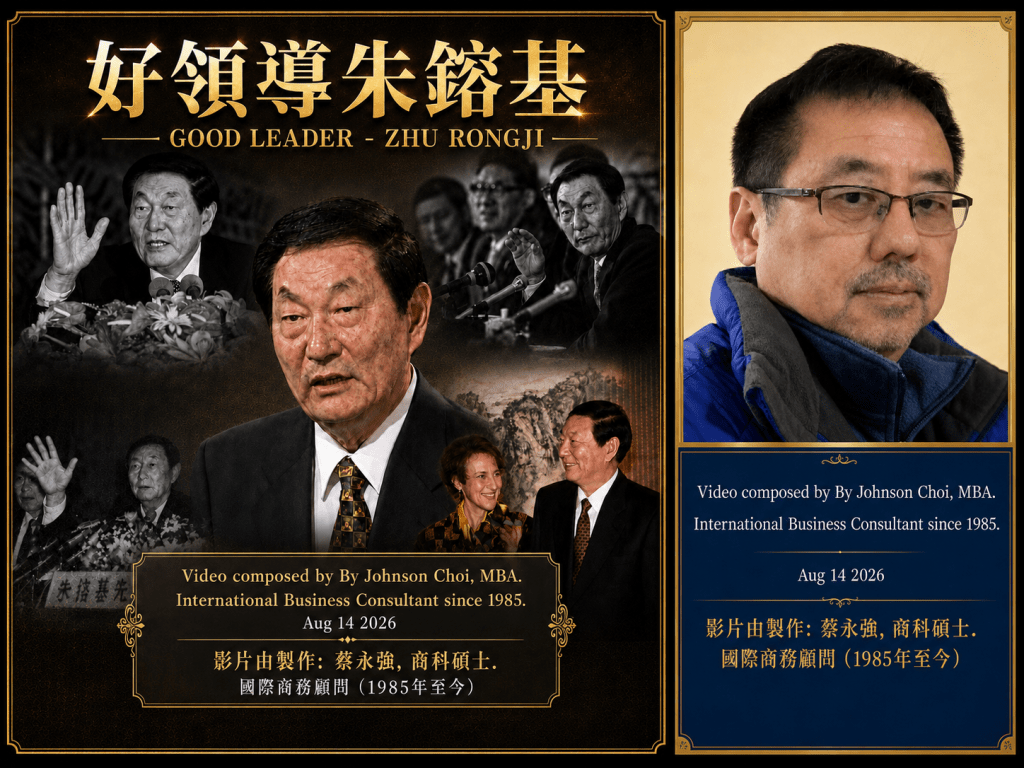
English Video: China Just POPPED The US AI Bubble!

English Video: China Just POPPED The US AI Bubble! (China AI maybe 6 months behind but 90% Cheaper that won’t break your bank) Silicon Valley Panics. 影片有中英文字幕: 中國剛剛戳破了美國的AI泡沫!(中國AI或許落後6個月,但便宜90%,不會讓你破產)矽谷陷入恐慌

https://rumble.com/v7c96em-china-just-popped-the-us-ai-bubble.html
https://www.tiktok.com/t/ZP8GyC9Wb/
https://m.facebook.com/story.php?story_fbid=pfbid034oCPiXpec3RoukdJNmr1UyMqpsy1s6jssv51YbrBx1i37dtibDgMdiuUau4VvKeul&id=100036400039778&mibextid=wwXIfr

影片描述:

矽谷面臨著一個數萬億美元的大麻煩,這不是因為缺乏「安全性」——而是他們正在被開源技術打敗。今天,我們要來談談AI格局的巨變,中國全新的GLM 5.2模型以極低的成本,達到了美國頂尖技術的水準。

正當華盛頓試圖透過出口管制來「監管數學」時,中國正在將未來開源。我們將深入探討美國封鎖自己公司的荒謬諷刺,為什麼像凱文·歐萊利(Kevin O’Leary)這樣的人物要用「早餐麥片」式的恐嚇手段來保護數據中心的投資,以及一個不可否認的經濟現實:80%的美國小型企業已經在選擇中國的AI。

美國真的在「打敗」中國嗎?還是我們只是在看著一個數位壟斷帝國的圍牆崩塌?

本片重點:

· 「打敗中國」的迷思:為什麼「打敗中國」只是為了壟斷定價而喊出的行銷口號。
· 寓言5的諷刺:美國的出口管制如何為中國模型創造了完美的真空區。
· 凱文·歐萊利的恐嚇手段:揭露「中國威脅」論述背後的財務利益。
· 性價比的現實:為什麼Airbnb、Coinbase和Notion正轉向採用中國AI。
· 馬斯克200美元的預算:美國AI商業模式難以永續的現實。

你認為哪一種AI哲學最終會勝出?是「增強」還是「取代」?歡迎在留言區告訴我。

Silicon Valley has a multi-trillion dollar problem, and it’s not a lack of “safety”—it’s that they are being outcompeted by open source. Today, we react to the massive shift in the AI landscape as China’s new GLM 5.2 model matches the best American tech at a fraction of the cost.

While Washington tries to “regulate the math” with export controls, China is open-sourcing the future. We dive into the spectacular irony of the US embargoing its own companies, why figures like Kevin O’Leary are using “breakfast cereal” scare tactics to protect data center investments, and the undeniable economic reality: 80% of US small businesses are already choosing Chinese AI.

Is the US “beating” China, or are we just watching the walls of a digital monopoly crumble?

In this video:

The “Beating China” Delusion: Why “beating China” is a marketing slogan for monopoly pricing.
The Fable 5 Irony: How US export controls created a perfect vacuum for Chinese models.
Kevin O’Leary’s Scare Tactics: Exposing the financial interests behind the “China threat” narrative.
Price-to-Performance Reality: Why Airbnb, Coinbase, and Notion are switching to Chinese AI.
Elon’s $200 Budget: The unsustainable reality of the US AI business model.
Which AI philosophy do you think wins in the long run? Enhancement or Replacement? Let me know in the comments.

Video: Is the U.S. AI boom ultimately working in China’s favor?

Video: Is the U.S. AI boom ultimately working in China’s favor? 影片有中英文字幕:美國Ai 到頭來 幫中國作嫁?
https://rumble.com/v7c9078-is-the-u.s.-ai-boom-ultimately-working-in-chinas-favor.html
https://www.tiktok.com/t/ZP8Gyugke/
https://m.facebook.com/story.php?story_fbid=pfbid04YM4bQydDAd5KsEKLKKqj9mbfmejhaqe3a8kZfTSjyxs8QdFMZN2CtZZNiea5fWcl&id=100036400039778&mibextid=wwXIfr

For many Native Americans, July 4th is a painful reminder of genocide, land dispossession, and the racist depiction of Indigenous peoples

For many Native Americans, July 4th is a painful reminder of genocide, land dispossession, and the racist depiction of Indigenous peoples as “merciless Indian savages” in the Declaration of Independence. Instead of celebrating, many Indigenous communities use the holiday as a solemn day of mourning, reflection, and resistance 對許多美洲原住民而言,七月四日是對種族滅絕、土地掠奪,以及《獨立宣言》中將原住民族描繪為「殘酷無情的印第安野蠻人」此種種族主義描述的沉痛提醒。許多原住民族社群非但沒有慶祝,反而將這一天視為莊嚴的哀悼、反思與抵抗之日
https://www.tiktok.com/t/ZP8GUwqwk/
https://m.facebook.com/story.php?story_fbid=pfbid027bNieiW8fY9XzKcrPEqT4du4oxsP47vt19ZNQUkgJ9E5yaaqGuH6BAYr16Cfe6fzl&id=100036400039778&mibextid=wwXIfr

This may be the perfect time for Chinese American to return to their motherland. The foster home in US no longer welcome them!

This may be the perfect time for Chinese American to return to their motherland. The foster home in US no longer welcome them! South China Morning Post: A new Chinese Exclusion era in the US: what’s the future for Chinese-Americans? 這可能是美籍華人回歸祖國的最佳時機。美國這個寄養家庭不再歡迎他們《南華早報》:美國迎來新的排華時代:美籍華人的未來何去何從?By Ling Xin

This week I was in Las Vegas, where nearly 1,000 Chinese-Americans from 41 states gathered under the shimmering desert heat for a high-stakes summit. 這週我人在拉斯維加斯,來自41個州的近千名美籍華人聚集在閃爍的沙漠熱浪下,參加一場高風險峰會。

Inside the massive Caesars Palace conference centre, the Chinese American Convention 2026 was under way. Civil rights lawyers, entrepreneurs, researchers, educators and artists all packed the same halls. The corridors hummed with Mandarin in various regional accents, a comforting kind of chaos. 在龐大的凱撒宮會議中心內,2026年美籍華人大會正在進行。民權律師、企業家、研究人員、教育工作者和藝術家齊聚一堂。走廊裡迴盪著夾雜各地口音的普通話,呈現出一種令人安心的混亂氛圍。

Attendees from 41 US states arrive at the grand opening of the 5th Chinese American Convention at Caesars Palace, Las Vegas, on June 29. 

But beneath the warm reunion vibe was real anxiety: as America approaches its 250th anniversary, what does the future hold for its Chinese diaspora?

From the stage, though, the news was largely grim. Speaker after speaker described how Chinese-Americans have become political scapegoats – increasingly singled out and restricted from buying property, running businesses or even holding certain jobs. Some are calling it the start of a new Chinese Exclusion era.

It’s already happening. Florida and Texas have banned Chinese citizens who lack green cards from buying property near military bases and critical infrastructure, or any real estate beyond a single-family home.

In Iowa, a law taking effect today explicitly bars any citizen of the People’s Republic of China, including green card holders, from “owning, establishing, or operating healthcare facilities”.

“The lawmakers in Iowa offered no justification for this,” Haipei Shue, president of the United Chinese Americans (UCA), told me at the conference. “If they can lock us out of healthcare, how long before the bans extend to agriculture, construction or any other sector? What’s left for us?”

These bills don’t even pretend to be subtle. Another proposed Iowa bill sought to ban Chinese H-1B visa holders from teaching at any public, private or community college.

Community organisations showcase activism and history books while artists and entrepreneurs connect.

When Shue and other advocates went to the State Capitol to challenge it, lawmakers told them bluntly: “We do not trust CCP-educated kids to teach our kids.”

That bill was eventually killed after hundreds of professors from the University of Iowa and Iowa State signed protest letters and marched on the statehouse. But the sentiment behind it hasn’t gone anywhere.

Lawmakers justify most of this with “national security”, and the arguments quickly become absurd. 

Keynote data: nearly half of the Chinese-Americans surveyed said they carry legal documents daily due to federal scrutiny fears.

Nearly 30 states have now banned Chinese nationals from buying private farmland. Texas State Representative Gene Wu pointed to one of the wilder theories floating around statehouses: that Chinese buyers will hoard land and refuse to grow corn, threatening the US food supply.

It’s economically absurd, Wu said. Corn is a globally traded commodity; the US is a massive net food exporter and one unplanted plot isn’t going to threaten anyone’s dinner. But logic doesn’t stand much of a chance against a good scapegoat.

On the second morning, news broke that a controversial executive attempt by the Trump administration to end birthright citizenship had been struck down. The meeting room erupted.

Outside the conference rooms: a glimpse of the sprawling Caesars Palace pool complex and the shimmering Las Vegas desert heat.

From the podium, the moderator reminded everyone: birthright citizenship’s landmark legal precedent traced back to a Chinese-American man – the 1898 case United States v. Wong Kim Ark.

While Wong Kim Ark made just one dollar a day as a cook, San Francisco Chinatown’s Zhonghua Huiguan – the unofficial city hall of the Chinese-American community – stepped in to fund his astronomical $10,000 legal battle, turning a single man’s fight into a collective effort that built a lasting civil rights milestone for the nation.

That history cuts against a belief common in the diaspora: that civil rights were something Black and Hispanic communities fought for and won, while Chinese-Americans just quietly benefited. 

Cross-community solidarity in the desert: Chinese, African, Jewish and Indian leaders explore preserving cultural roots at a panel discussion. 

As Paula Madison, a member of the Committee of 100 and a former NBC journalist whose grandfather was Hakka, said, the Confucian humility of “keep your head down, don’t make waves” does not work in American society.

When your rights can be legislated away, staying quiet won’t protect you. Only showing up will. Representatives from 61 Chinese-American organisations and over 200 youth leaders at the Vegas conference made one thing clear: staying quiet is no longer an option.

As California-based civil rights attorney Clay Zhu put it: “We must stand up and speak up in one voice – this is our land. We belong here.”

Also happening in fabulous Las Vegas: iconic casinos hum with life just steps away from the summit. 

來自美國41個州的與會者於6月29日出席在拉斯維加斯凱撒宮舉行的第五屆美籍華人大會開幕式。

然而,在溫馨的重聚氛圍之下,隱藏著真實的焦慮:在美國即將迎來建國250週年之際,其華裔 diaspora 的未來究竟何去何從?

不過,從舞台上傳來的消息多半令人沮喪。一位又一位演講者描述美籍華人如何成為政治代罪羔羊——越來越常被針對,在購置房產、經營企業,甚至從事某些工作方面都受到限制。有些人稱這是一個新排華時代的開端。

這已經在發生了。佛羅里達州和德克薩斯州已禁止缺乏綠卡的中國公民在軍事基地和關鍵基礎設施附近購買房產,或購買獨棟住宅以外的任何不動產。

在愛荷華州,一項於今日生效的法律明確禁止任何中華人民共和國公民——包括綠卡持有者——「擁有、設立或經營醫療保健設施」。

「愛荷華州的立法者對此沒有提出任何正當理由,」美國華人聯合會(UCA)會長薛海培在大會上告訴我。「如果他們能把我們排除在醫療保健之外,那麼禁令要過多久才會擴展到農業、建築或任何其他行業?我們還剩下什麼?」

這些法案甚至連裝模作樣都懶得裝。愛荷華州另一項擬議中的法案試圖禁止中國H-1B簽證持有者在任何公立、私立或社區大學任教。

社區組織展示行動主義與歷史書籍,藝術家和企業家在此交流。

當薛海培和其他倡權人士前往州議會大廈挑戰該法案時,立法者直白地告訴他們:「我們不信任受中共教育的孩子來教我們的孩子。」

該法案最終在數百名愛荷華大學和愛荷華州立大學教授簽署抗議信並在州議會大廈遊行後被否決。但背後的那種情緒並未消失。

立法者大多以「國家安全」為由來為此辯護,而這些論點很快就變得荒謬。

主題數據:近半數受訪美籍華人表示,由於擔心聯邦政府的審查,他們每天隨身攜帶法律文件。

目前已有近30個州禁止中國公民購買私人農地。德州州眾議員吳元之提到州議會流傳的一種更離譜的說法:中國買家會囤積土地且拒絕種植玉米,從而威脅美國的糧食供應。

吳元之說,這在經濟上是荒謬的。玉米是全球交易的商品;美國是龐大的糧食淨出口國,一塊未種植的土地不會威脅任何人的晚餐。但在一個好用的代罪羔羊面前,邏輯幾乎沒有勝算。

第二天早上,川普政府一項終止出生公民權的爭議性行政嘗試被駁回的消息傳出。會議室頓時沸騰。

會議廳外:一窺廣闊的凱撒宮泳池園區與拉斯維加斯閃爍的沙漠熱浪。

在講台上,主持人提醒大家:出生公民權的標誌性法律先例可追溯至一位美籍華人——1898年的「美國訴黃金德案」。

儘管黃金德當時只是個日薪一美元的廚師,舊金山唐人街的中華會館——美籍華人社區的非官方市政廳——卻出面資助了他高達一萬美元的訴訟費用,將一個人的抗爭轉化為集體行動,為這個國家樹立了一座持久的民權里程碑。

那段歷史打破了 diaspora 中一種普遍認知:即民權是黑人和西語裔社區奮鬥得來的,而美籍華人只是默默受益。

跨社區團結在沙漠中:非洲裔、猶太裔、印度裔領袖與華裔領袖在一場座談中探討如何保存文化根源。

正如百人會成員、前NBC記者、祖母為客家人的 Madison Paula 所說,「低調、不惹事」的儒家謙遜在美國社會行不通。

當你的權利可以透過立法被剝奪時,保持沉默並不會保護你。只有站出來才有用。來自61個美籍華人組織的代表和超過200位青年領袖在拉斯維加斯會議上明確表示:保持沉默不再是選項。

正如加州民權律師朱偉所說:「我們必須團結一致,大聲發聲——這是我們的土地。我們屬於這裡。」

同樣在華麗的拉斯維加斯:標誌性的賭場在峰會咫尺之外熙熙攘攘,生機勃勃。

Video: Why cancer patients are flying to China for treatment

BBC News video: Why cancer patients are flying to China for treatment – Australian MD seek cancer treatments in China and was successful cost US$64,000. Same treatments in US, Canada & EU would cost 10x more or US$640,000 and it would takes much longer! BBC新聞影片有中英文字幕:為何癌症病患飛往中國求醫 – 澳洲一名醫生赴中國尋求癌症治療,結果成功治癒,花費6萬4千美元。同樣的療程在美國、加拿大及歐盟,費用會高出10倍,達到64萬美元,而且等待時間也會長得多!

https://rumble.com/v7c70fc-why-cancer-patients-are-flying-to-china-for-treatment.html
https://www.tiktok.com/t/ZP8GD81hh/
https://m.facebook.com/story.php?story_fbid=pfbid02uUAosHE3cwHhMXuouDhTLXDM7pXn8tEDo7hVBc8h3HwVsNHHU9DVYDyyFR3GYcgVl&id=100036400039778&mibextid=wwXIfr

中國正崛起為醫療旅遊目的地,提供尖端的CAR-T細胞療法,其速度更快、價格更低,且比許多西方國家更容易獲得。

多年來,亞洲的醫療旅遊一向與泰國、南韓等目的地畫上等號。

但如今,愈來愈多病患前往中國尋求先進癌症治療,費用往往僅是他們本國的一小部分。

中國正迅速開發新型CAR-T細胞療法,這是一種透過改造患者免疫細胞,使其更有效地發現並攻擊癌細胞的治療方式。

該療法最初在美國研發,主要用於化療等一線治療後仍復發的血液癌症。

中國現今在CAR-T細胞療法的臨床試驗數量上領先全球,其生技公司也已開發出能大幅加快療程進度的方法。

在本集Asia Specific中,主持人Mariko Oi訪談了Amanda Harvey——一位澳洲籍患者同時也是醫師,她在接受多輪多發性骨髓瘤化療後,前往上海接受CAR-T療法。

Mariko也邀請到彭博社健康記者Karoline Kan,她一直報導中國在先進醫療照護方面日益增長的聲譽,一同探討中國如何成為CAR-T療法的領導者、為何治療費用能便宜這麼多,以及中國是否能在未來幾年間成為主要的醫療旅遊樞紐。

本播客討論癌症治療與患者經驗,僅供參考。內容不應視為醫療建議。若您對自身健康或治療選項有疑慮,請尋求合格醫療專業人員的指導。

China is emerging as a medical tourism destination offering cutting-edge CAR-T cell therapy that can be faster, cheaper and more accessible than many Western countries.

For years, Asian medical tourism has been associated with destinations such as Thailand and South Korea.

But a growing number of patients are now travelling to China for advanced cancer treatment, often at a fraction of the cost than in their home countries.

China is rapidly developing new CAR-T cell therapies, a type of treatment that involves modifying a patient’s immune cells to find and attack cancer cells more effectively.

Originally developed in the United States, the therapy has primarily been used for blood cancers that return despite frontline treatments like chemotherapy.

China now leads the world in the number of CAR T-cell clinical trials and its biotech companies have developed ways to rapidly speed up the process.

In this episode of Asia Specific, host Mariko Oi speaks to Amanda Harvey, an Australian patient and doctor who travelled to Shanghai for CAR-T therapy after several rounds of chemotherapy treatment for multiple myeloma.

Mariko is also joined by Bloomberg Health reporter Karoline Kan, who has been reporting on China’s growing reputation for advanced medical care to discuss how China became a leader in CAR-T therapy, why treatment can be much cheaper, and whether China could become a major medical tourism hub in the years ahead.

This podcast discusses cancer treatment and patient experiences and is for information only. It should not be considered medical advice. If you have concerns about your health or treatment options, please seek guidance from a qualified healthcare professional.

Huafa Tianmao International Peninsula, Jinhui Road, Jinwan District, Zhuhai, Guangdong, China

Huafa Tianmao International Peninsula, Jinhui Road, Jinwan District, Zhuhai, Guangdong, China. 華發天茂國際半島, 中國广东省珠海市金湾区金辉路.
https://rumble.com/v7c6h9c-huafa-tianmao-international-peninsula-jinhui-road-jinwan-district-zhuhai-gu.html
https://www.tiktok.com/t/ZP8GAgrbA/
https://m.facebook.com/story.php?story_fbid=pfbid0WUAkwgQ3BHWzgW2fkwwYDgCWWuwifDDUAfgJ2KsZd5QCmHHhoDgr79maCqp8Jw6ul&id=100036400039778&mibextid=wwXIfr

THE US CHIP WAR WITH CHINA IS FAILING. But it’s not for the reasons Washington thinks.

THE US CHIP WAR WITH CHINA IS FAILING. But it’s not for the reasons Washington thinks. 美國對中國的晶片戰正走向失敗,但原因並非華府所想. By Imran Khalid on June 30, 2026

https://m.facebook.com/story.php?story_fbid=pfbid02CikfA7NEwJBUJfC9m1x7MpwYAofNpC2XXZ3jkXAskzJwKxcCeL13gcuyjuZx7y9Pl&id=100036400039778&mibextid=wwXIfr

Three years ago, Washington bet that restricting China’s access to advanced semiconductors would preserve American technological dominance. That bet is not paying off the way its architects imagined. A February 2026 analysis in American Affairs Journal found that China’s semiconductor manufacturing equipment sector has reached a level of maturity that would have seemed implausible just a few years ago.

Huawei is building advanced fabrication facilities in Shenzhen targeting 7-nanometer commercial-scale production as early as this year. SMIC, the state-backed foundry, has repeatedly pushed foreign equipment past its rated specifications to achieve manufacturing nodes that the export controls were specifically designed to prevent. This is the uncomfortable logic of economic coercion: the more you restrict, the more you incentivize the other side to build what you’re withholding.

To be clear, the export controls imposed since 2022, and progressively tightened through 2025, have had real effects. They disrupted China’s semiconductor supply chains, caused price spikes, and delayed access to the most advanced fabrication nodes by multiple years. Independent analysts broadly agree that the United States retains a meaningful lead in frontier chip design and production.

But a May 2026 CSIS assessment found a consistent pattern: every tightening of restrictions has prompted China to double down on state-backed domestic investment. China’s target is roughly 50 percent self-sufficiency in semiconductor equipment by 2025, up from 13.6 percent in 2024. Export controls have not halted that trajectory. By some measures, they’ve accelerated it.

Semiconductors generated $627.6 billion in global sales in 2024. China is one of the largest single markets. American chipmakers barred from selling there lose revenue that would otherwise fund the research and development cycles that keep them ahead. The Information Technology and Innovation Foundation’s economic modeling found that sustained revenue losses reduce R&D investment, slow innovation cycles, and weaken the long-term competitive position of US firms. The controls are designed to protect American technological leadership. But by cutting into the revenues that fund American chip research, overly broad restrictions may erode the very lead they claim to be defending.

China’s state-backed firms do not face the same constraint. Beijing can backstop losses that market forces would punish. This is not a neutral observation. It points to a structural asymmetry in how the two sides are playing the game, where blanket commercial restrictions impose real costs on private firms while doing relatively little to slow a state-directed industrial policy with a decades-long time horizon.

Washington has begun to recognize this. A December 2025 policy reversal included a significant concession: allowing NVIDIA to resume shipping H200-class chips to China under a case-by-case licensing review, reversing the blanket denial posture that had been in place. National security hardliners objected. But the move reflects a pragmatic acknowledgment that restricting commercially available chips with broad civilian applications carries limited security benefit while imposing real costs on American industry.

What the walk-back reveals is that the original policy was not as carefully calibrated as its architects suggested. Controls that made sense for cutting-edge military-relevant systems were bundled with restrictions on hardware with legitimate commercial uses. The result was a blunt instrument presented as precision policy.

The semiconductor question does not exist in isolation. In healthcare, Chinese manufacturing is deeply embedded in supply chains for medical devices, pharmaceutical ingredients, and diagnostic equipment. A 2025 disruption in active pharmaceutical ingredient supply underscored just how much of American drug manufacturing depends on Chinese chemical production. No export control regime has addressed this dependency.

In AI and digital infrastructure, Chinese firms are deploying sector-specific models in logistics, healthcare diagnostics, and manufacturing across Southeast Asia and other fast-growing markets. They are competing not on headline model performance, but on embedded, industry-specific integration. The technology competition is not only about who has the largest model. It is about whose systems are most deeply woven into the infrastructure of the world’s fastest-growing economies. No chip export control addresses that either.

If the goal is genuinely to protect American technological capacity—rather than to perform strategic anxiety through trade restrictions—three things need to change. First, export controls should be calibrated by actual security risk, not by the nationality of the buyer. A Chinese civil engineering firm purchasing legacy semiconductors for infrastructure control is not the same security concern as the People’s Liberation Army acquiring GPU clusters for weapons simulation. Policy that treats them identically is not rigorous but reflexive.

Second, domestic investment in research capacity needs to be sustained—and scaled. CHIPS Act funding was a meaningful start. But it cannot substitute for the revenue base being eroded by overbroad restrictions on the very firms it is meant to support. One cannot simultaneously cut the funding streams and promise to out-innovate.

Third, the framework needs to distinguish between managed engagement and capitulation. In legacy semiconductors, industrial AI, and healthcare technology, U.S. and Chinese capabilities are often genuinely complementary. Treating all technology trade as an extension of military competition forecloses arrangements that could serve both economic and stability interests.

The semiconductor rivalry between the United States and China is real, consequential, and will shape the technological landscape for the next decade at minimum. CSIS analysts argue that the United States holds genuine leads in frontier chip design, advanced manufacturing equipment, and the research ecosystem that generates next-generation capabilities. The question worth asking is whether current policy is protecting that lead—or gradually undermining it by cutting revenues, accelerating Chinese domestic investment, and conflating commercial competition with existential threat.

A November 2026 policy deadline offers an opening to move from reactive restriction to something more strategic: a framework that distinguishes between the technologies and transactions that genuinely threaten security and those that simply compete. The difference matters. So far, U.S. policy has not consistently made such a distinction.

Video: Is AI Really Crashing? No — This Is a Smoke Screen Big Money Is Dropping Before They Buy

Video: Is AI Really Crashing? No — This Is a Smoke Screen Big Money Is Dropping Before They Buy. Day Traders may love this video as it enforces the ideas that AI stocks prices continue to go up indefinitely despite losing 10s of billions every month! 視頻有中英文字幕: AI真的在崩盤嗎?不, 這是一道煙幕,是大錢在進場前刻意放出的迷霧. 當沖交易者可能會喜歡這部影片,因為它強化了這樣的想法:即使每個月虧損數百億美元,AI 股價仍會持續無限上漲!

https://rumble.com/v7c5edq-is-ai-really-crashing-no-this-is-a-smoke-screen-big-money-is-dropping-befor.html
https://www.tiktok.com/t/ZP8GSdksn/
https://m.facebook.com/story.php?story_fbid=pfbid0i8ci31E5VysQTCRZgV6JPF8GG1aEM7MsfMwNWqgsDdYQJv8B4yZXkuFEizMDZWPpl&id=100036400039778&mibextid=wwXIfr

每個人都在喊AI泡沫。聲音越來越大,論點聽起來也很有說服力。

但沒有人告訴你真相

這波AI崩盤的敘事背後,其實是華爾街精心策劃的煙幕彈。

大資金在下一波反彈之前,必須做一件事:甩掉散戶,把籌碼接回來。

而現在,你正完美地照著他們的劇本走。

在這支影片中,我們會談三件事:

第一,為什麼看空AI的論點聽起來很合理——但結論完全錯誤

第二,美國已經把AI變成一場國運賭注——而這對市場的真正意義是什麼

第三,真正的風險在哪裡,以及你現在應該如何實際佈局AI相關資產

到這支影片的最後,你會用一種大多數人永遠無法看到的角度,來看待當前的AI市場。

Everyone is calling out the AI bubble. The voices are getting louder, and the arguments sound convincing.

But nobody is telling you the truth——

Behind this AI crash narrative is a carefully engineered smoke screen designed by Wall Street.

Big money needs to do one thing before the next rally: shake out retail investors and take back the chips.

And right now, you are following their script perfectly.

In this video, we cover three things:

First, why the bearish case on AI sounds logical — but the conclusion is completely wrong

Second, the US has turned AI into a national destiny bet — and what that really means for the market

Third, where the real risks are, and how you should actually position yourself around AI assets right now

By the end of this video, you will see the current AI market in a way most people never will.

China’s remarkable contribution to the clean energy movement was highlighted in a new chart by Jostein Hauge of Cambridge University in the UK, released last night

China’s remarkable contribution to the clean energy movement was highlighted in a new chart by Jostein Hauge of Cambridge University in the UK, released last night.

“China now manufactures 89% of the world’s solar panels, 70% of the world’s wind turbines, 83% of the world’s batteries, and 75% of the world’s electric vehicles — all at a lower cost than the West,” he said.

After posting the chart on X, he received the usual hostile comments that China still uses coal.

The simple response to that is that every major economy still uses coal – the question is whether they are following targets to ween themselves off it and create alternative energy sources.

China, clearly, is.

Other countries? Well, some have spotty records, while others are going in reverse.

People concerned about the future of the environment will recall the works of Rachel Carson, a scientist-author credited with triggering the start of widespread awareness of these issues, with a 1961 book called Silent Spring.

The movement she inspired grew in the west in the 1960s, and is now global. Everyone has now heard of the need to move to cleaner energy.

But some do a lot of talking, while others actually make the switch.

After the overeating last few days, I cooked something simple, 3 dishes, soup and dry scallops congee for dinner tonight

After the overeating last few days, I cooked something simple, 3 dishes, soup and dry scallops congee for dinner tonight. 前幾天大魚大肉之後,今晚我簡單煮了一頓,有三道菜、一碗湯和乾貝粥作為晚餐。

My boss (Carmen) tells me how many coming to dinner tonight, all I have to say is yes boss! Anyone been to Chef competition in Asia! The best are invited, usually 10-15. The host right before the competition tell them to prepare their best dishes! They have to work with the ingredients provided. Therefore you need to be very creative and quick thinkers! You also working within a restricted time frame, usually 2 hours! I was honored with the best chef in Asia, the best judges and the Dean of UH hotel school. Carmen was with me. We were put up at the Mandarin Oriental Hotel. After the competition, we were hosted by at least 10 best restaurants only open the very exclusive clientele. French Laundry in SF is nothing in comparison! We met with the head of tourism and many VIPs! In terms of the best of the best! US is a 3rd world country.

我的老闆(太太)跟我說今晚有多少人來吃飯,我只需要回一句:好的,老闆!有人去過亞洲的廚師大賽嗎?受邀的都是頂尖好手,通常有10到15位。主辦方會在比賽前一刻才告訴參賽者要準備自己的拿手菜!他們必須運用現場提供的食材來創作。所以,你必須非常有創意且反應迅速!而且還有時間限制,通常是2小時!我曾榮幸地與亞洲最佳廚師、頂尖評審,以及夏威夷大學酒店管理學院的院長一同與會,太太也陪著我。我們下榻於文華東方酒店。賽後,至少有10家僅對頂級貴賓開放的頂級餐廳招待了我們。舊金山的French Laundry跟這些比起來根本不算什麼!我們還見到了觀光局長官和許多VIP!若論頂尖中的頂尖,美國簡直就像是第三世界國家。