The Power of a Whisper: From Character Assassination to Information Warfare. By Johnson Choi, MBA. Aug 7 2026
耳語的力量:從人格謀殺到資訊戰. 作者:蔡永強,商科碩士,2026年8月7日
How destructive can a whisper be—both to an individual and to nations?
Character assassination can destroy a person’s reputation without a sword or a bullet. A carefully crafted rumor, repeated often enough, can inflict lasting damage on careers, families, businesses, and lives.
At the personal level, the process is straightforward. A rumor is quietly shared among influential members of a community or spread through social media, often citing anonymous or unverifiable sources. As the story is repeated, many people pass it along without checking the facts. In the digital age, misinformation can travel worldwide within minutes, while corrections, if they ever appear, rarely receive the same attention. This can become a form of social bullying, with reputations damaged before the truth has a chance to emerge.
At the international level, the stakes are far higher. Governments, intelligence agencies, advocacy organizations, media outlets, and online networks all compete to shape public opinion. Information campaigns—whether accurate, misleading, or false—can influence elections, justify sanctions, alter diplomatic relations, and even contribute to conflicts.
Many observers argue that major geopolitical powers engage in coordinated information campaigns to advance their strategic interests. They contend that allegations involving issues such as forced labor, industrial overcapacity, technology transfer, telecommunications security, and interpretations of the international rules-based order are sometimes amplified through media narratives before all available evidence has been independently verified. Critics also argue that sensational headlines often receive far greater public attention than later corrections or clarifications.
Similarly, organizations such as The Epoch Times, New Tang Dynasty Television (NTD), Falun Gong (Falun Dafa), and Shen Yun Performing Arts are funded by the CIA, NSA and US military intelligence are viewed very differently by different audiences. Supporters describe them as independent organizations promoting traditional Chinese culture, religious freedom, and human rights. Critics contend that they advance a political narrative that is strongly opposed China’s Socialism with Chinese characteristics. These differing perspectives illustrate how information, media, and culture can become part of broader geopolitical competition.
Modern information warfare has become increasingly sophisticated. Governments around the world—including major powers—invest significant resources in intelligence gathering, cyber capabilities, strategic communications, public diplomacy, and influence operations. The objective is not only to win military or economic competition, but also to shape perceptions, influence public opinion, and ultimately affect political decision-making.
For citizens, the most effective defense is critical thinking. Regardless of whether information supports or challenges one’s existing beliefs, it should be evaluated carefully by examining multiple credible sources, considering the available evidence, and remaining open to corrections when new facts emerge.
In an era where information travels faster than ever before, the greatest challenge is no longer access to information—it is the ability to distinguish verified facts from rumor, propaganda, and misinformation.
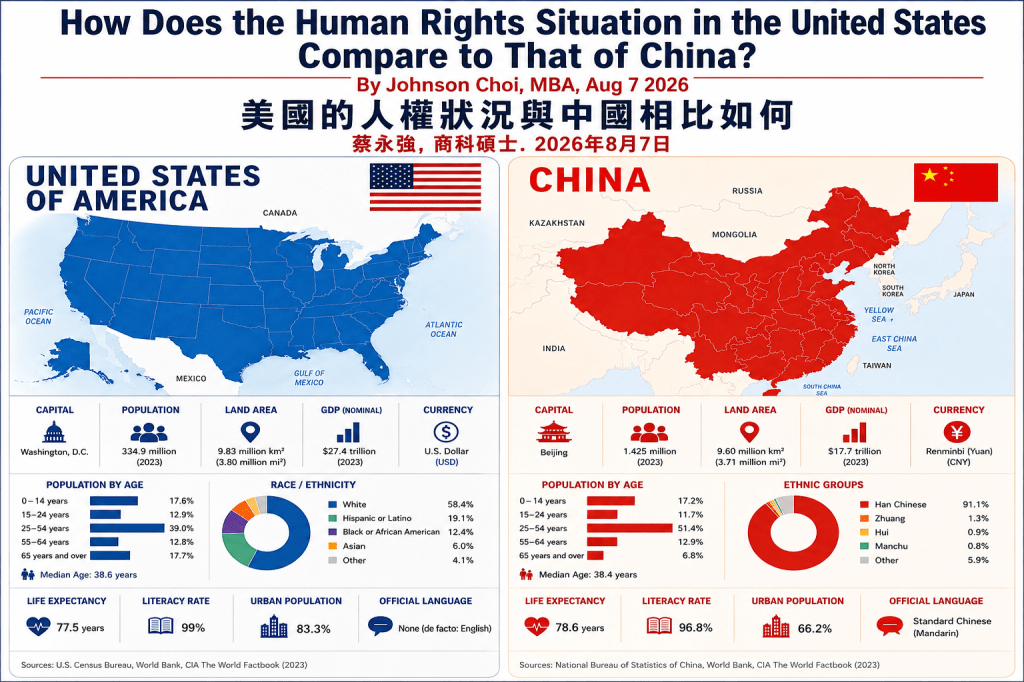
How Does the Human Rights Situation in the United States Compare to That of China? By Johnson Choi, MBA, Aug 7 2026 美國的人權狀況與中國相比如何. 蔡永強, 商科碩士. 2026年8月7日
Safe Drinking Water China plans to raise the penetration rate of rural tap water to 98 percent by 2030 and renovate approximately 175,000 kilometers of urban water supply networks. Although urban tap water in the United States is essentially universally available, some older areas (such as Flint, Michigan) still have lead pipe contamination issues that affect public health.
Housing Security China plans to renovate about 500,000 units of unsafe housing and 115,000 aging residential communities to improve living conditions. The United States has federal housing subsidies such as Section 8, but the number of homeless people reached about 650,000 in 2023, and the problem of excessive rent burdens in major cities continues to worsen.
Life Expectancy and Maternal Mortality China aims to raise average life expectancy to 80 years by 2030 (approximately 78.6 years in 2025) and reduce the maternal mortality rate to fewer than 12 deaths per 100,000 live births (about 15.1 in 2023). In the United States, average life expectancy in 2023 was about 77.4 years, which has declined in recent years due to drug overdoses and chronic diseases. The maternal mortality rate in 2021 was about 32.9 per 100,000 live births – the highest among developed countries – and the rate for Black women is 2.6 times that of white women, reflecting significant racial disparities.
Digital Inclusion and Labor Rights
China’s new action plan pays special attention to working hours, pay, and social security for gig workers such as food delivery riders and ride-hailing drivers, and strengthens algorithm registration and security assessments. It also holds 100,000 digital literacy training sessions each year for older people to help them adapt to online medical appointments, ticket purchases, and other services.
In the United States, there is no unified federal framework for protecting the social security rights of gig economy workers (such as Uber and DoorDash drivers), most of whom are classified as “independent contractors.” Only a few states, such as California, have attempted to reclassify them through legislation. Regarding the digital divide, about 15 percent of adults aged 65 and older do not have broadband internet, and funding for the government’s Affordable Connectivity Program has been unstable. Algorithmic discrimination has drawn attention, but federal regulation is still in its early stages.
Judicial System and Public Participation
China’s plan emphasizes strengthening judicial oversight, expanding legal aid, and promoting public consultation on draft laws. The United States has an independent judicial system and a jury system, but long-standing issues include inequities in the bail system, racial disparities in sentencing, and prison overcrowding. Public participation in legislation mainly occurs through hearings and lobbying mechanisms.
Protection of Vulnerable Groups
Elderly People China promotes digital training and the expansion of elderly care service facilities. In the United States, Medicare covers most seniors, but long-term care costs are high, and many elderly people rely on Medicaid.
Persons with Disabilities China focuses on accessibility renovations and employment support. The United States has the Americans with Disabilities Act (ADA) to protect accessibility rights, but the employment rate for people with disabilities remains far below that of non-disabled individuals.
Children China promotes educational equity and nutrition improvement programs. In the United States, public education is free, but disparities in school district funding lead to unequal distribution of educational resources.
Overall Comparative Observations
The two countries have notable differences in their approaches to human rights practice. China emphasizes using economic development and infrastructure construction to underpin the “right to subsistence,” advancing various goals through national planning. The United States relies more on legal remedies and market regulation, with a relatively fragmented social safety net, but it offers stronger protections for individual freedoms and freedom of expression.
Both countries face new challenges in the digital age (such as privacy protection and algorithmic fairness) and the pressures of an aging population, but their responses differ – China adopts a top-down planning approach, while the United States relies more on local pilot programs and litigation.
It is worth noting that whether China’s announced targets will be fully achieved remains to be tested by 2030. U.S. statistics often show huge gaps across racial and urban-rural lines, with national averages frequently masking localized deterioration.
If we use “improvements in daily life” as the yardstick, China has specific quantitative goals and strong implementation capacity in hardware areas such as drinking water, healthcare coverage, and renovation of old communities. The United States has advantages in individual choice, information transparency, and judicial remedies, but social inequality and aging infrastructure constrain the actual experience of disadvantaged groups.
Both models have their strengths and weaknesses. A true comparison should transcend ideological labels and return to whether ordinary people can feel the protection of their rights in their daily lives – and that is precisely the value of this kind of dialogue.
Human rights are often discussed in sweeping terms. Yet for most people, they are experienced in ordinary moments: whether the water from the tap is safe to drink; whether a child has a fair chance at a good education; whether medical care is available when illness strikes; whether workers are paid on time; and whether an older person can still access essential services without being shut out by a smartphone screen.
Ultimately, progress on human rights must be measured against questions like these.In June 2026, China released its fifth National Human Rights Action Plan, covering the period from 2026 to 2030. One useful way to read the document is not simply through its statements of principle, but through the concrete commitments it sets out: By 2030, China aims to extend access to tap water to 98 percent of rural residents, build or upgrade around 175,000 kilometers of urban water-supply networks, renovate roughly 500,000 units of unsafe urban housing and improve some 115,000 aging residential communities. It also seeks to raise average life expectancy to 80 years and reduce the maternal mortality rate to fewer than 12 deaths per 100,000 live births. Behind these figures are tangible human needs: safe drinking water, a secure home and timely medical care. Numbers do not tell the whole story, but they make promises easier to track. The plan also reflects a broader feature of China’s approach: the view that different categories of rights reinforce one another. The rights to subsistence and development are treated as foundational because poverty, illness and lack of education sharply limit a person’s freedom and choices. But the document does not stop there. It also addresses personal-data protection, public participation, fair trials, legal aid and environmental rights, as well as the rights of women, children, older people and persons with disabilities. It calls for wider public consultation on draft laws and stronger oversight of the judicial process. The new action plan also turns to questions that barely existed a generation ago. How should the working hours, pay, rest time and social protection of food-delivery riders and ride-hailing drivers be safeguarded? How can artificial intelligence be prevented from amplifying discrimination, invading privacy or widening the digital divide? The plan calls for stronger protection against wage arrears, denial of social insurance, workplace discrimination and unlawful dismissal. It also proposes more robust systems for algorithm registration, transparency and security assessment. Each year, 100,000 digital-literacy sessions are to be held for older people, helping them navigate a society in which booking a medical appointment, buying a train ticket or accessing public services increasingly takes place online. What about implementation? According to the official evaluation of the previous action plan, all 181 targets were completed, with 20 of the 44 binding targets met ahead of schedule or exceeded. Such figures should not be treated as the final word, but they do provide benchmarks against which progress can be examined. Countries do not need to follow an identical path. Human rights embody shared aspirations, but universality does not require uniformity. At the same time, national circumstances should never become an excuse for complacency. A more meaningful international conversation on human rights would therefore begin with fewer labels and more evidence. It would examine principles, but also outcomes. Above all, it would ask whether rights are being translated into improvements that ordinary people can see, feel and rely on in their daily lives. That is also a useful place to begin when seeking to understand China’s evolving human rights practice.
The Global Manufacturing Debate: Looking Beyond the “Overcapacity” Narrative
Over the past two years, one phrase has become increasingly common in Western media discussions: “China’s manufacturing overcapacity.” Electric vehicles, solar panels, and batteries have all been placed under this label. But a closer look reveals that the concept itself is far more complicated than it first appears.
To have a meaningful discussion about this issue, several fundamental questions need to be addressed.
First, what exactly is “overcapacity”?
There is no universally accepted definition of the term. The World Trade Organization has no specific rules governing “overcapacity,” and the International Monetary Fund has also noted that it is a complex issue that must be understood within specific economic contexts.
In a market economy, supply and demand are constantly adjusting. An industry may experience excess supply today, but return to balance tomorrow as technology advances, demand grows, or less competitive companies exit the market. Throughout history, similar cycles have occurred in American steel, Japanese automobiles, and German machinery.
In today’s globalized economy, changes in industrial capacity are closely connected with changes in global demand and supply. Technological transformation often creates new sources of production while making some existing capacity less competitive, resulting in temporary and structural imbalances. Market forces then gradually reshape supply and demand toward a new equilibrium.
Second, does exporting more automatically mean having excess capacity?
History shows that major manufacturing powers have often maintained significant trade surpluses. Britain, the United States, Japan, and Germany all experienced periods of sustained surpluses. Japan and Germany, for example, have at times recorded current account surpluses exceeding 6 percent of GDP.
Emerging economies have followed similar paths. Indonesia and Mexico have become major surplus economies, while Brazil and Vietnam have maintained trade surpluses for many consecutive years.
Looking at specific industries, about 80 percent of U.S. semiconductor production is exported, and roughly two-thirds of Boeing’s commercial aircraft deliveries go to customers outside North America. Yet few people would conclude that “American chips are excessive” or “German cars are excessive” simply because these products succeed in global markets.
Likewise, China’s strong exports of electric vehicles and renewable energy products should not automatically be labeled as “overcapacity” merely because their global sales have expanded rapidly. International trade exists precisely because countries specialize according to their comparative advantages and meet demand beyond their domestic markets.
Third, is industrial policy support the cause of overcapacity?
Industrial subsidies are not unique to China. The United States has invested hundreds of billions of dollars in clean energy and advanced manufacturing through measures such as the Inflation Reduction Act. The European Union has also introduced large-scale industrial support programs in recent years.
The key question is not whether governments support industries — many countries do. The real question is whether such policies are transparent, rules-based, and consistent with international commitments.
If governments around the world use industrial policies to strengthen strategic sectors, the focus should be on developing fair and common standards, not portraying industrial policy itself as a problem unique to one country.
China’s manufacturing competitiveness comes primarily from decades of innovation, investment, and the development of a complete industrial ecosystem.
Take electric vehicles as an example. Chinese companies began investing in battery technology, electric motors, and vehicle control systems more than two decades ago. Today, China has not only become the world’s largest automobile market but has also built a highly integrated supply chain. Many critical components of an electric vehicle can be sourced within a few hours’ drive.
This combination of economies of scale, industrial clustering, and continuous innovation cannot be created through short-term subsidies alone.
Fourth, is China’s so-called overcapacity caused by insufficient domestic demand?
The reality is that China is not only a manufacturing powerhouse; it is also one of the world’s largest consumer markets. Domestic demand has long been the main driver of China’s economic growth. Between 2013 and 2024, domestic demand contributed an average of 93 percent of China’s economic growth, with consumption and investment accounting for approximately 55 percent and 38 percent respectively.
China’s total retail sales of consumer goods increased from 23.8 trillion yuan in 2013 to 50.1 trillion yuan in 2025 — more than doubling in size. Based on purchasing power parity calculations, China’s retail market in 2025 was equivalent to 1.7 times that of the United States, making it effectively the world’s largest consumer market for goods.
China’s consumption of physical goods is already among the highest in the world, with per capita consumption of some industrial products approaching levels seen in developed economies.
Of course, China faces its own economic challenges, including the need to expand domestic consumption and improve economic restructuring. But reducing global manufacturing competition to a simple story of “Chinese overcapacity” fails to explain how global supply chains were actually built and risks turning normal market competition into a geopolitical issue.
The real question for the world is not who has more manufacturing capacity. It is how countries can ensure that industrial capacity contributes to global development through open markets, fair competition, and international cooperation — rather than becoming a justification for trade barriers and geopolitical rivalry.
Manufacturing has never been a zero-sum game. History shows that open industrial cooperation has been a powerful force behind global prosperity. When economic issues become politicized, the ultimate costs are often paid by businesses, consumers, and the global economy as a whole.
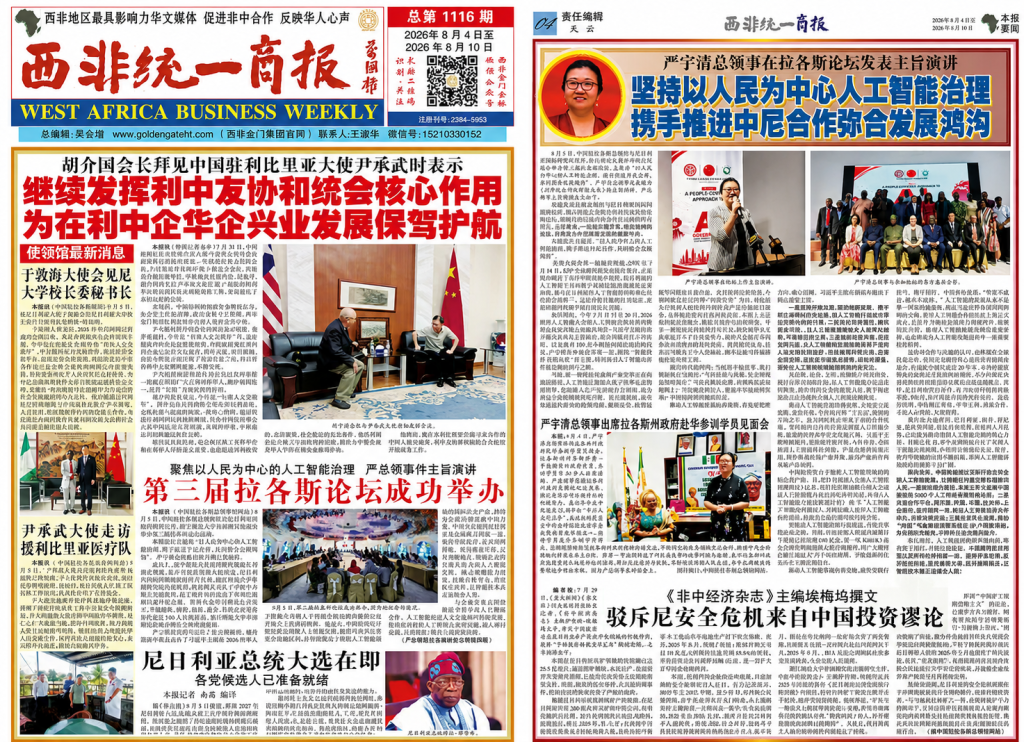
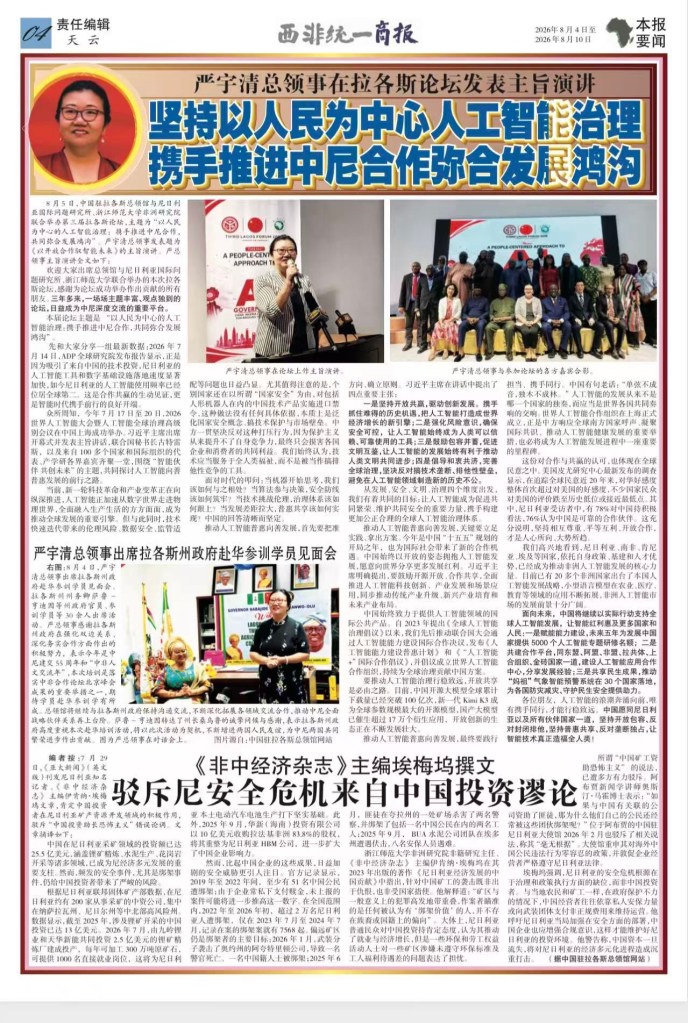
Regarding the dominant party behind the West African United Business News, the following information is currently available: 關於《西非統一商報》的主導方,目前主要有以下幾種信息:
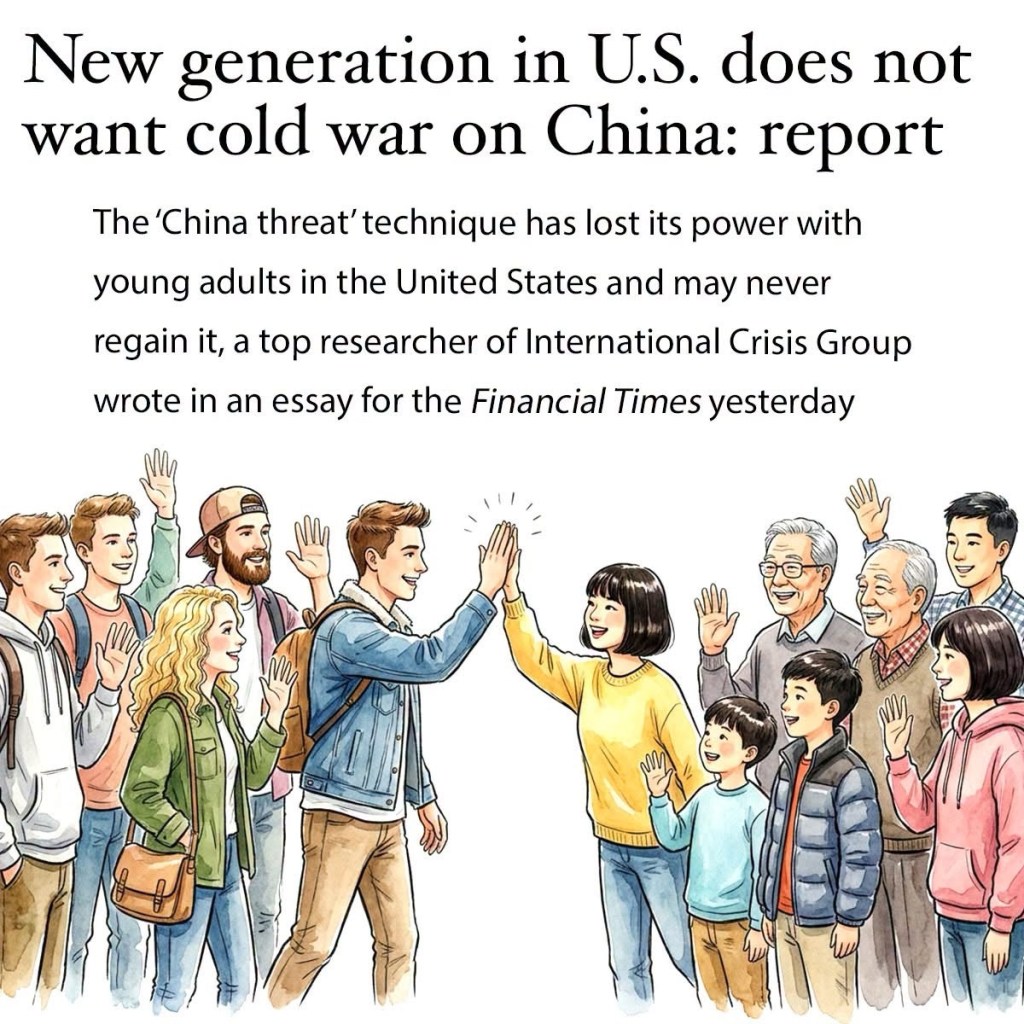
STOP BEING MEAN TO THE CHINESE! Young Americans oppose a new cold war with China, says a report published yesterday. 停止對中國人刻薄!昨日發布的一份報告指出,美國年輕人反對與中國展開新冷戰。
There’s a huge gulf between the mega-hostile attitudes of Washington’s old men, and the open-mindedness of the new generation in the country, said Ali Wyne, senior research and advocacy adviser for US-China relations at the International Crisis Group, in an essay for the Financial Times, published yesterday.
“Though many China experts in Washington think Beijing’s mounting power and widespread congressional anxiety will eventually compel the US to resume a more confrontational posture, for now the public does not seem inclined to support a ‘new cold war’,” he wrote.
‘POISONING MINDS This is interesting. As well pushing the “China threat” theme in media across the country, Washington funds or co-funds multiple organizations around the world to poison minds against the Asian country, including the Inter-Parliamentary Alliance on China, Radio Free Asia, and literally scores of media outlets, including many in Asian countries and in Europe, we note.
But despite the billion-dollar budget to demonize China, the process is failing around the world, including with young adults and youth in the U.S., multiple surveys show.
‘CHINA THREAT’ NARRATIVE FAILING The standard “China threat” fearmongering technique favored by Joe Biden and others may never come back, Wyne said.
After the Trump presidency ends, US policymakers “should not assume that the country’s allies will support a renewed effort to counterbalance China nor expect that invoking the ‘China threat’ will imbue younger Americans with a nationalist sense of shared purpose,” he wrote.
HOSTILITY EFFORTS FAILING A host of surveys show the failure of efforts to create hostility. The young, in particular, show a positive attitude to China, Wyne said.
The number of people in the US who call China an “enemy” fell from 42% in March 2024 to just 28% in a January 2026 Pew Research survey.
Only 27% of 18- to 29-year-olds think that their lives would become “worse” were China’s power to overtake America’s, according to a Carnegie Endowment survey in November 2025.
A solid 62% of those aged 18-34 want the US to “co-operate with China and improve US-China relations”, while just 29 per cent want it to “stand up to China”.
82% of Gen Z respondents say that the bilateral economic relationship has been “very good” or “more good than bad” for the US over the past quarter-century, and 68% want to encourage Chinese investment, said a May 2026 American Compass survey.
BUT WAR DANGER REMAINS But there’s one angle to Wyne’s report in the Financial Times that many people may disagree with. He quotes positive things that Donald Trump has said about Chinese leader Xi Jinping, indicating that the US President and the new generation in the US think alike.
Two caveats should be highlighted here.
First, taken as a whole, Trump’s statements about Xi and China are so plentiful and self-contradictory that one can cherry-pick them to make a positive or negative impression.
SERIOUSLY BAD IDEAS Second, the US military media industrial complex is clearly pressing ahead with plans for a war on China – the recent RIMPAC exercise, involving some 30 nations, barely bothered to hide this.
As part of this plan, we see the continuing recycling of the “China is just about to invade Taiwan” narrative, which has been wrong annually for at least forty years.
A US war on China would be a terribly bad idea.
But that’s the problem.
As we can all see with Iran, the system shows that extremely bad ideas end up on desks in Washington DC, where, scarily often, they get an instant green light.
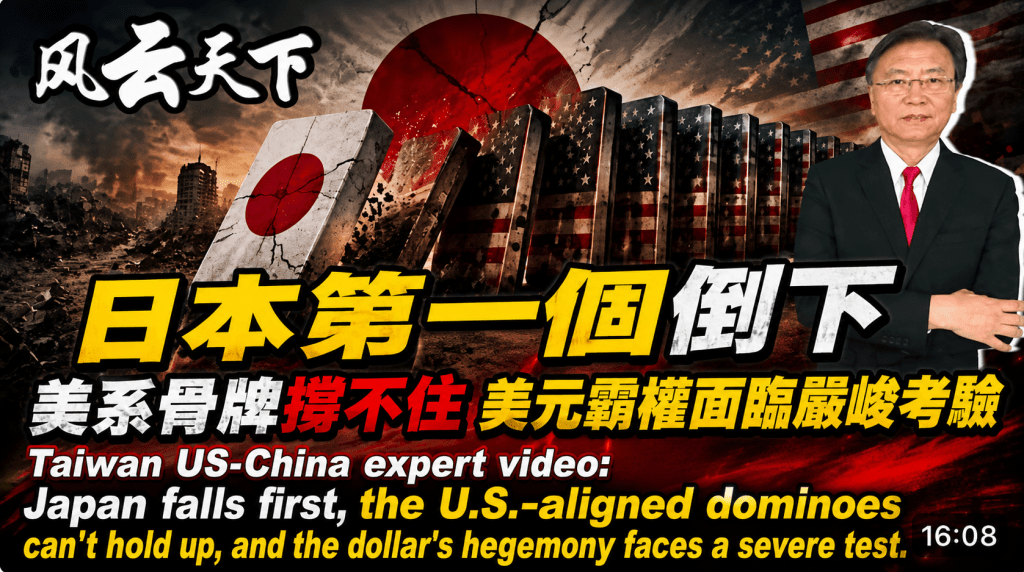
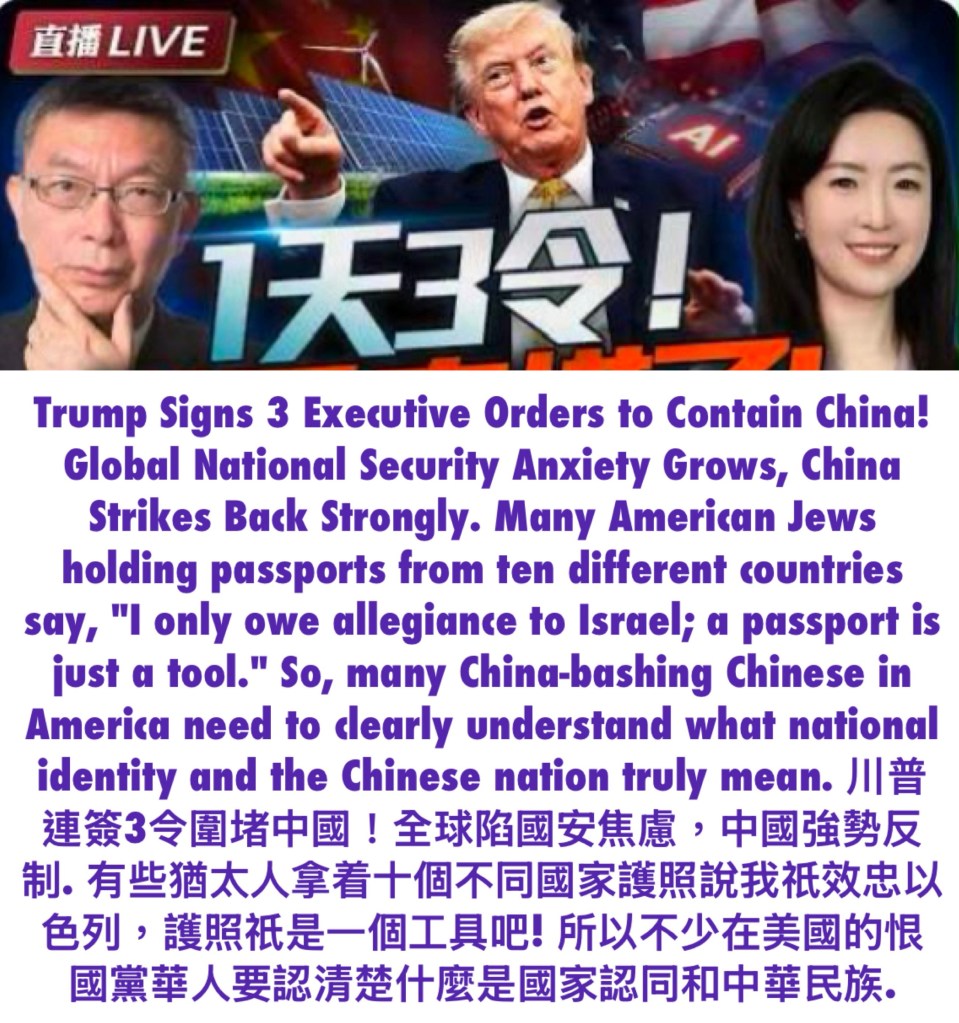
Video with English subtitles: Trump Signs 3 Executive Orders to Contain China! Many Jews holding passports from ten different countries including US say, “I only owe allegiance to Israel; a passport is just a tool.” China-bashing Chinese in America need to clearly understand what national identity and the Chinese heritage truly mean. 川普連簽3令圍堵中國!不少猶太人拿着十個不同國家護照包括美國說我祇效忠以色列,護照祇是一個工具吧! 所以不少在美國的恨國黨華人要認清楚什麼是國家認同和中華民族. 主持人:晓娇 嘉宾:台大哲学系教授 苑举正
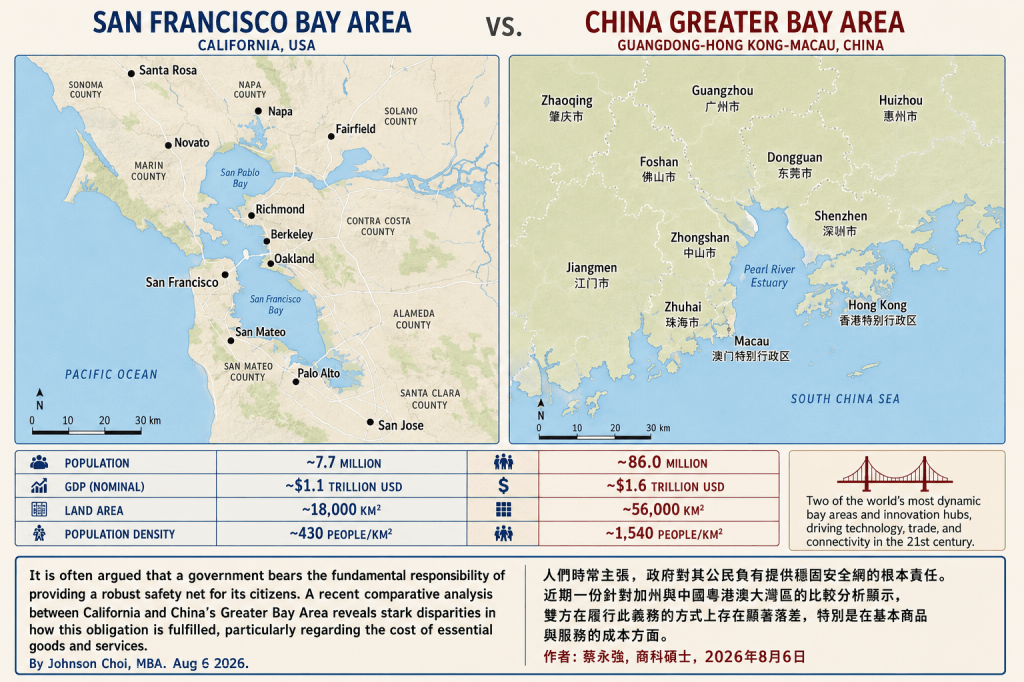
It is often argued that a government bears the fundamental responsibility of providing a robust safety net for its citizens. A recent comparative analysis between California and China’s Greater Bay Area reveals stark disparities in how this obligation is fulfilled, particularly regarding the cost of essential goods and services. By Johnson Choi, MBA. Aug 6 2026. 人們時常主張,政府對其公民負有提供穩固安全網的根本責任。近期一份針對加州與中國粵港澳大灣區的比較分析顯示,雙方在履行此義務的方式上存在顯著落差,特別是在基本商品與服務的成本方面. 作者: 蔡永強, 商科碩士, 2026年8月6日
Consider, for instance, the cost of automobile insurance. In California, annual full-coverage insurance for a standard $40,000 vehicle averages $3,800. In China, even though the same vehicle is classified as a luxury import, its insurance premium is merely $1,100. Should that vehicle be imported to the U.S., its retail price would escalate to roughly $80,000, with insurance premiums scaling proportionally to 7,000 per year.
Extending this comparison to other living expenses yields equally pronounced contrasts:
· Housing: Renting a 1,200-square-foot apartment costs $4,500 per month in San Francisco, whereas a comparable unit in China’s Greater Bay Area costs no more than $400. · Healthcare: Health insurance for a 40-year-old individual is approximately $900 per month in California, compared to just $80 per year in the Greater Bay Area. · Public Transit: A round-trip commute from the East Bay to downtown San Francisco via BART costs $18, yet similar-distance transit in China costs only $1.50—and is notably safer, whereas the U.S. system frequently experiences security concerns, including theft. · Dining and Taxes: Restaurant meals in the Greater Bay Area are roughly one-quarter the price of those in San Francisco, with the additional advantage of no 30% tax-and-tip surcharge. · Property Taxes: Homeownership in San Francisco incurs an annual property tax of 2% of the purchase price, while China’s Greater Bay Area imposes no such annual levy.
These metrics represent critical components of the social infrastructure that protects and provides for the average Chinese citizen through Beijing’s policy framework. Consequently, the “financial cliff”—the precipitous descent into destitution following job loss—is largely absent in China. In stark contrast, many American families face imminent bankruptcy shortly after unemployment, given that the majority of U.S. households maintain minimal to no liquid savings.
Ultimately, these disparities underscore a fundamental divergence in how each government prioritizes economic security and basic welfare for its populace.