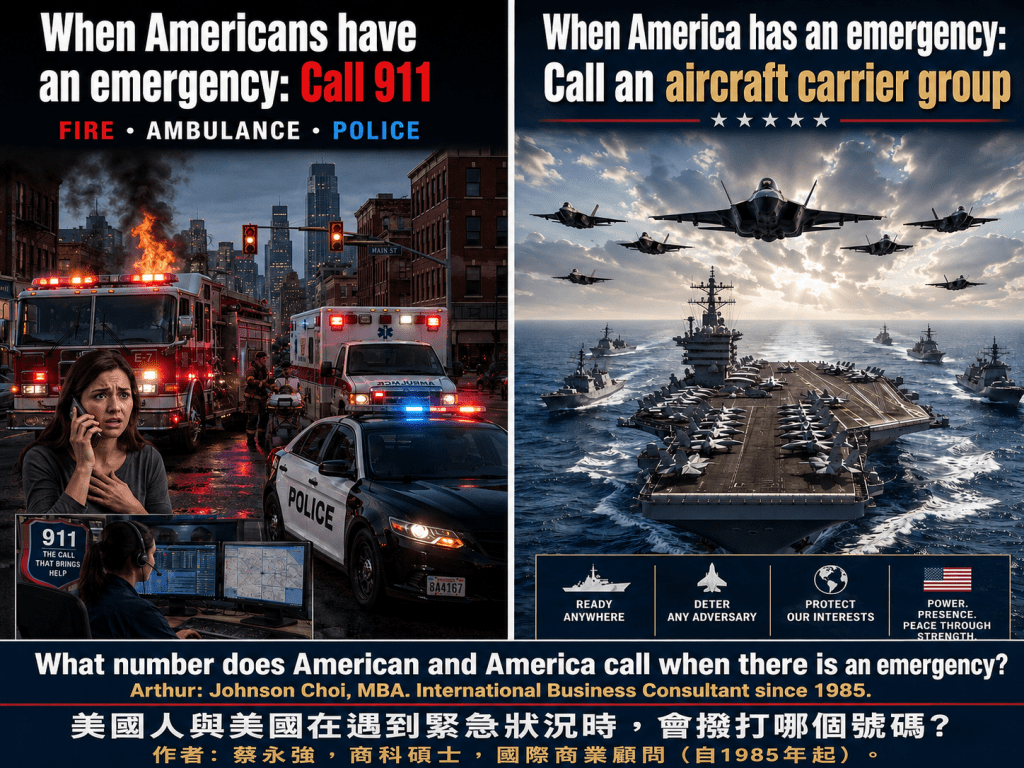
What number does American and America call when there is an emergency? Arthur: Johnson Choi, MBA. International Business Consultant since 1985. 美國人與美國在遇到緊急狀況時,會撥打哪個號碼? 作者: 蔡永強,商科碩士,國際商業顧問(自1985年起).
For most Americans, dialing 911 is an instinctive lifeline to firefighters, police, and paramedics. But when the nation itself perceives a threat, that same three-digit number takes on a vastly different meaning: the rapid deployment of a U.S. Aircraft Carrier Strike Group to the world’s flashpoints.
Historically, the question “Where are the carriers?” was the President’s first ask in a crisis—a guaranteed show of force. Today, however, that rapid-response mechanism is severely compromised. Out of the Navy’s 11 nuclear-powered supercarriers, more than half are languishing in extended maintenance backlogs, trapped in overcrowded shipyards with critical labor shortages and overhauls that now stretch years beyond schedule.
To make matters worse, this hull shortage is compounded by a logistics network that is dangerously buckling. The immense supply chain required to keep even one carrier group operational—spanning jet fuel, precision-guided munitions, spare avionics, and daily provisions for 5,000 sailors—is fraying under the weight of global commitments.
Nowhere is this crisis more visible than in the Middle East, where the few deployable carriers are forced into grueling, back-to-back deployments with no relief in sight. The vessels patrolling those strategic waters are showing unmistakable signs of wear: delayed overhauls, corroded systems, and exhausted crews pulling 8-month patrols just to maintain a bare presence. The sorry state of these ships is no longer just a maintenance failure—it’s a strategic vulnerability.
America’s “9-1-1” for global emergencies is running on fumes, leaving a superpower with fewer lifelines precisely when the world needs them most.
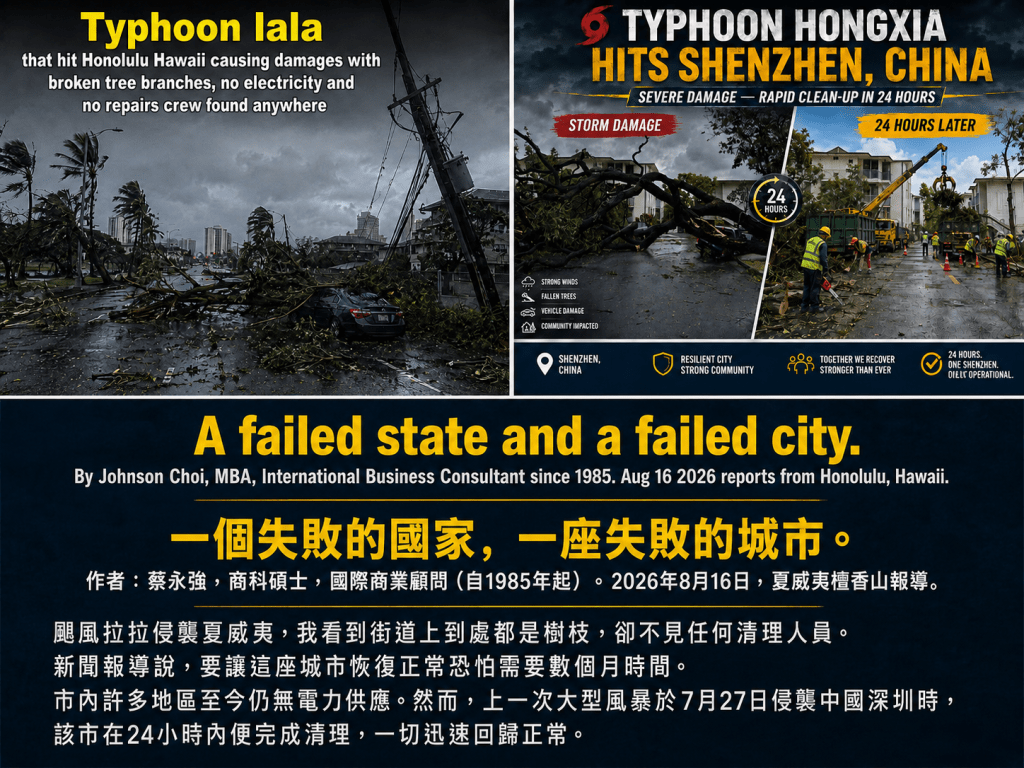
A failed state and a failed city. By Johnson Choi, MBA, International Business Consultant since 1985. Aug 16 2026 reports from Honolulu, Hawaii. 一個失敗的國家,一座失敗的城市。 作者:蔡永強,商科碩士,國際商業顧問(自1985年起)。2026年8月16日,夏威夷檀香山報導。
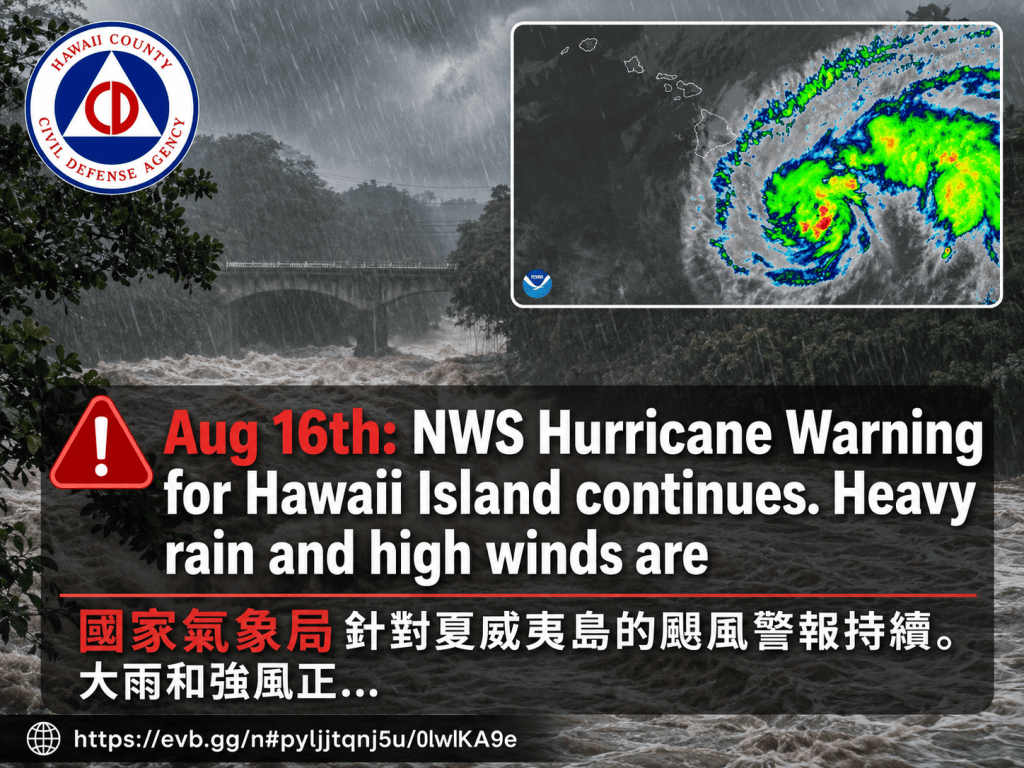
Hurricane Lala hit Hawaii, and I saw tree branches all over the street and no cleanup crews. News reports said it would take months to bring the city back to normal. Many parts of the city are still without power. But when the last major storm hit Shenzhen, China, on July 27th, the city got cleaned up in 24 hours and things went back to normal.
Typhoon Hongxia (the 12th typhoon of 2026), which made landfall near Shenzhen on July 26, 2026.
The city’s rapid recovery was the result of a massive, coordinated effort:
· Pre-Storm Preparation: Over 23,000 people and 21,000 sets of equipment were pre-positioned for emergency response. More than 103,000 people were evacuated, and 921 shelters were opened. · Around-the-Clock Cleanup: Crews worked through the night to clear fallen trees and debris. By the morning of July 26, hundreds of damaged trees had been removed, and roads were cleared. · Rapid Restoration: By the morning of July 26, the Shenzhen Metro had resumed operations, and transportation, production, and daily life were quickly back to normal.
Essentially, the city activated a well-rehearsed emergency plan, with teams working 24-hour shifts to clear damage and restore order.
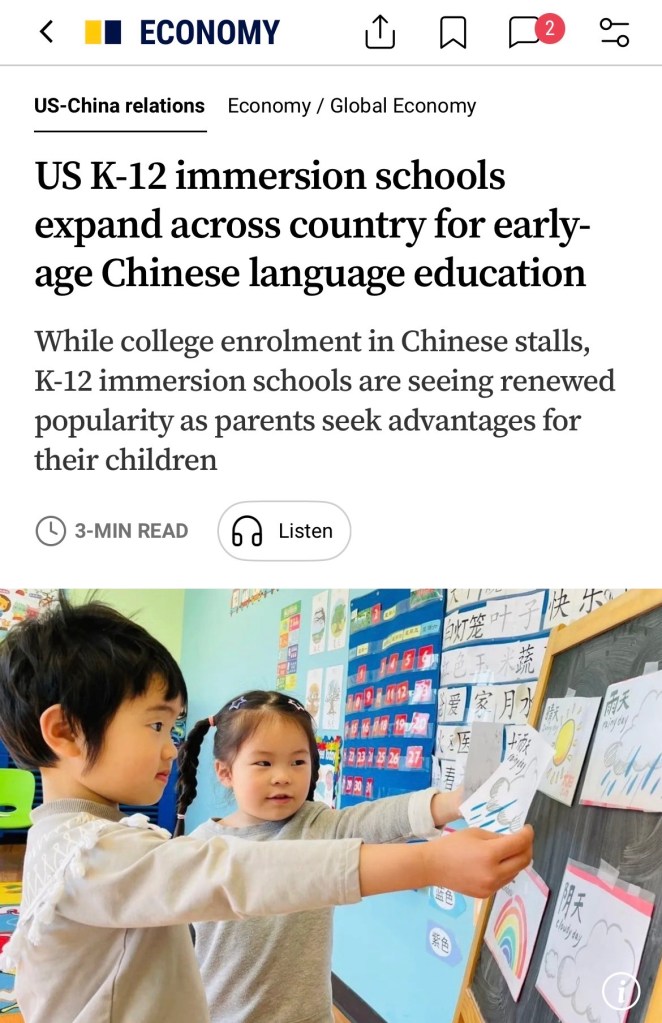
Speaking and reading Chinese is critical for your children’s future. US K-12 immersion schools expand across country for early-age Chinese language education” by Ralph Jennings, published by the South China Morning Post on August 15, 2026. 說和讀中文對您孩子的未來至關重要。美國K-12沉浸式學校在全國擴展,推動幼兒中文教育
US K-12 immersion schools expand across country for early-age Chinese language education
While college enrolment in Chinese stalls, K-12 immersion schools are seeing renewed popularity as parents seek advantages for their children
Ralph Jennings in Portland, Oregon
At the Goodtime Chinese School in the Bethany suburb of Portland, Oregon, an American child stops school director Zhou Yanzhuo, of China, in the hallway to ask a question in English. She requests that he speak in Chinese and the third grader, who has no Chinese heritage, handily switches languages.
The child is one of several dozen students attending rigorous summer classes for Chinese language instruction at an age when experts believe language acquisition is easiest.
While American universities report that Chinese language enrolment is flat, Chinese language immersion courses at the K-12 level are growing. The families of students without Chinese backgrounds cite long-term professional value or a chance to sharpen overall ability to learn languages as their motivations for enrolment.
“Chinese is a major language, meaning that it’s an advantage to their children’s future development,” said Shu Bingyi, Zhou’s husband and founder of the school, a K-5 campus that charges US$14,000 per year for full-time immersion classes. The couple said more than half of their current cohort of 100 kindergarteners have no Chinese background, a record for the school.
The number of Chinese language immersion schools for students between kindergarten and high school reached a record this year since the first one opened in 1981, and that there were now 397 across the US, according to Elizabeth Weise, who runs a blog for parents of children in Chinese language immersion instruction.
Weise said that though Chinese had lost favour in the US over geopolitical tensions, families still see studying the language, which is complex for native English speakers, as a way to sharpen learning skills. “Relations between China and the US are not great, but they will get better,” Weise said.
Chinese immersion schools in the US initially gained popularity in the 1980s after funding was provided by the US government, following the normalisation of US-China relations in the 1970s. The schools recaptured that popularity in the early 2000s when Chinese language was a “hot” teaching subject across the globe, said Cornelius Kubler, a professor of Asian studies at Williams College in Massachusetts.
This year, universities surveyed by the South China Morning Post reported either minimal change or a decline in enrolment in the language. The University of Alaska Fairbanks noted a drop in Chinese enrolment since 2022. Reed College in Portland said enrolment in introductory Chinese language courses had been “basically static” since 2023.
At Cornell University, Chinese had remained the third most popular language after Spanish and French for the past two years, said Liu Rui, a teaching professor in the university’s Asian studies department.
“I’ve asked the parents and they say China’s economy is getting stronger, so studying the language means more opportunities,” said Zhou, the school director, on a busy morning at the campus earlier this month.
Some educators believe that immersion schools are over-concentrated at the primary school level. They say middle and high school students may forget the Chinese language they learned as younger children. Heritage schools, which hold weekend or after-school programmes and were originally designed for American-born Chinese, may fill the gap.
Parents may consider high school Chinese language education after their children take the language in kindergarten and primary school, said Wendy Zhen, interim principal at the Chinese Consolidated Benevolent Association. “Some parents think about the future,” she said, and plan for their children to take the AP Chinese Language and Culture Exam in high school.
For Nilanjan Narayan, 18, who graduated from high school this year after attending several heritage Chinese schools in California from age 2 to 18, he considers himself extra prepared to major in global studies at the University of California, Los Angeles from this fall. Born in the US to Indian parents, Nilanjan is fluent in Chinese and credits the immersion schools. “They would help me a lot because they knew no one was speaking Chinese with me at home,” he recalled. “If I asked, they’d give me extra review time.”
Video with English and Chinese subtitles: How US & Japan promotes fake news to demonize Chinese and China, and why so many overseas Chinese are so happy to be part of it? 視頻有中英文字幕: 美國與日本如何散佈假新聞以妖魔化中國人及中國,以及為何那麼多海外華人樂於參與其中? 中國製造 張雪機車揚威海外!外網徹底炸鍋!法國車手薦比斯首度來華看清真實的中國,直言歐媒造謠誤導大眾絕不盲從!
“Made in China! Zhang Xue’s motorcycles triumph overseas! Foreign social media has completely exploded! Jianbisi visits China for the first time to see the truth and buy Chinese products, openly stating that European media spreads rumors and misleads the public—and he absolutely will not blindly follow!”
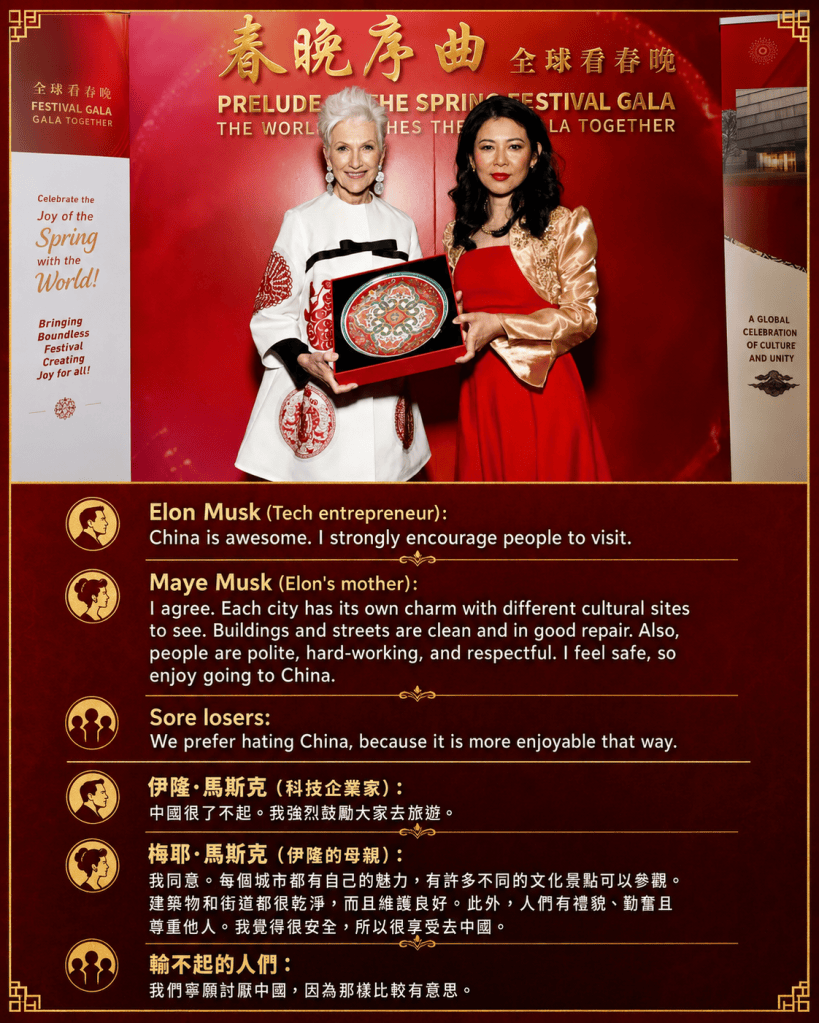
Maye Musk (Elon’s mother): I agree. Each city has its own charm with different cultural sites to see. Buildings and streets are clean and in good repair. Also, people are polite, hard-working, and respectful. I feel safe, so enjoy going to China.
Sore losers: We prefer hating China, because it is more enjoyable that way.