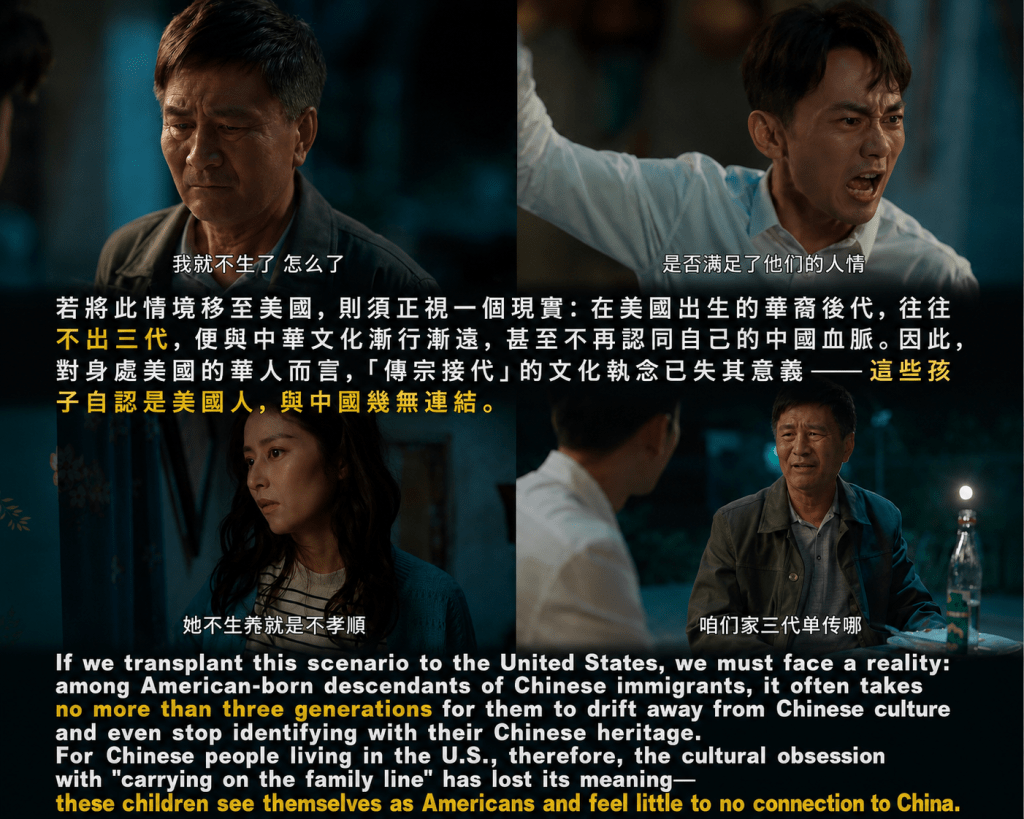
In the drama series Sweeping Anti-Corruption, there is a scene where a father berates his son, demanding to know why his wife refuses to have children. He has the responsibility carrying on the family line! The son explains that he loves his wife deeply, and the doctor has told him that pregnancy and childbirth would put her life at grave risk. 在劇集《掃黑反貪》中,有一幕父親怒斥兒子,質問為何妻子不願生育。他有責任傳宗接代! 兒子解釋,因深愛妻子,而醫生告知,若懷孕生產,妻子將面臨生命危險。
If we transplant this scenario to the United States, we must face a reality: among American‑born descendants of Chinese immigrants, it often takes no more than three generations for them to drift away from Chinese culture and even stop identifying with their Chinese heritage. For Chinese people living in the U.S., therefore, the cultural obsession with “carrying on the family line” has lost its meaning—these children see themselves as Americans and feel little to no connection to China.
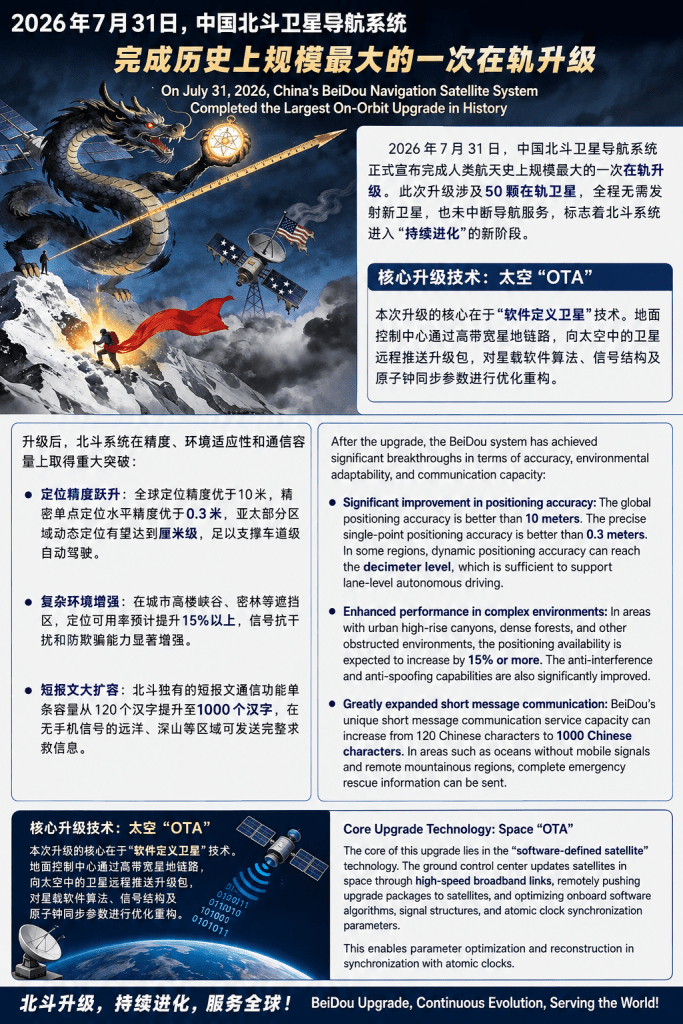
BeiDou ushers in a major upgrade, and this time, the significance is on an entirely different level! On July 31, CCTV News and People’s Daily simultaneously made the blockbuster official announcement that the BeiDou Navigation Satellite System has completed a comprehensive in-orbit upgrade. 北斗迎來重大升級,這次意義完全不一樣!7月31日,央視新聞與人民日報同步重磅官宣,北斗衛星導航系統完成全面在軌升級。
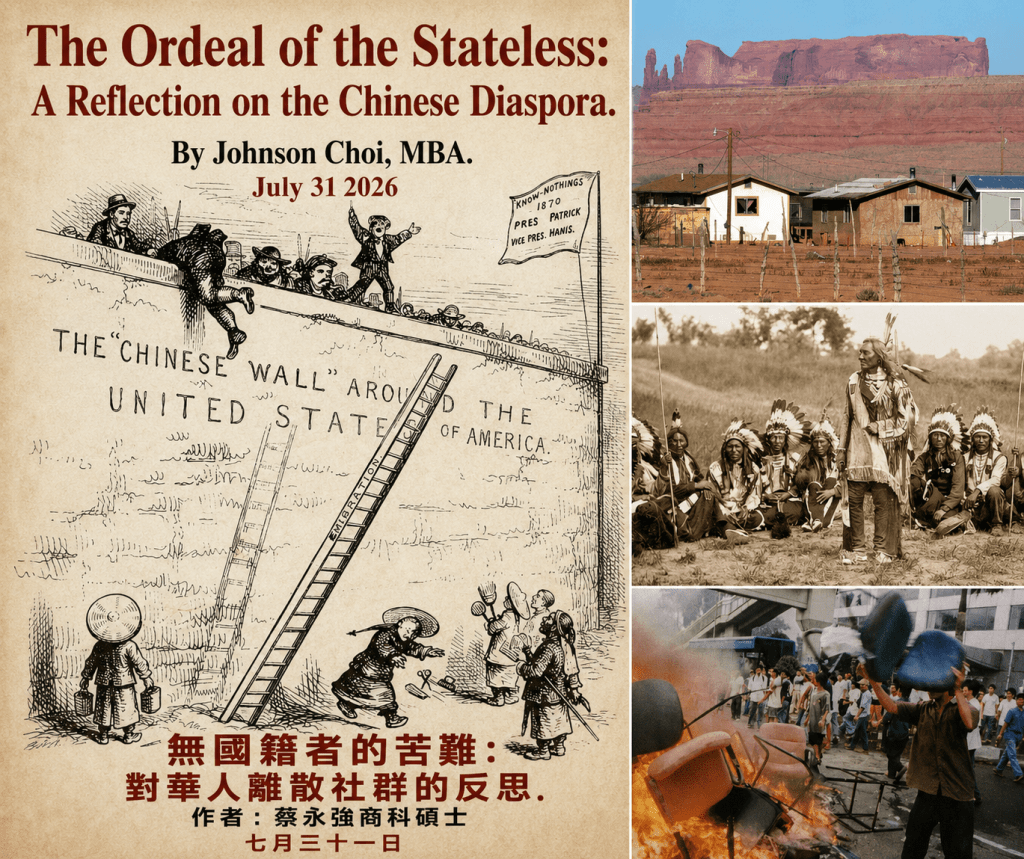
In my childhood, my father often spoke of the profound grief inherent in being an orphan. Yet, he maintained that there was a fate even more tragic: to be a Chinese national with no homeland to return to, relegated to a stateless existence across foster homes in Southeast Asia, the United States, and Canada.
Over the past two centuries, countless overseas Chinese endured systemic abuse, humiliation, and mass casualty—all consequences of a weakened and vulnerable China. Today, the nation’s resurgence has noticeably diminished, though not entirely eradicated, the political persecution and racial discrimination faced by its diaspora.
Nevertheless, in the United States, Chinese Americans continue to endure attacks, harassment, and undue legal scrutiny, often targeted simply for their ethnic heritage. Some argue that residing in cities with dense Asian populations—such as Honolulu or San Francisco—offers a buffer against this hostility. However, this line of reasoning evokes an uncomfortable parallel to the reservation system imposed on Native Americans. It suggests a form of de facto segregation, effectively creating an invisible prison without walls.
The historical irony remains stark: on May 6, 1882, the United States passed the Chinese Exclusion Act, effectively punishing the very Chinese laborers whose back-breaking, slave-like conditions built the Transcontinental Railroad.
Despite these adversities, overseas Chinese may not fully recognize their relative fortune compared to the Filipino and Indian diasporas. Those communities often lack the option of repatriation when their home countries descend into chaos—paralyzed by corrupt governance and performative democracy, where partisan infighting persistently supersedes the will of the electorate. Tragically, this dysfunction is not unique to those regions; it has regrettably become a hallmark of contemporary American politics as well.
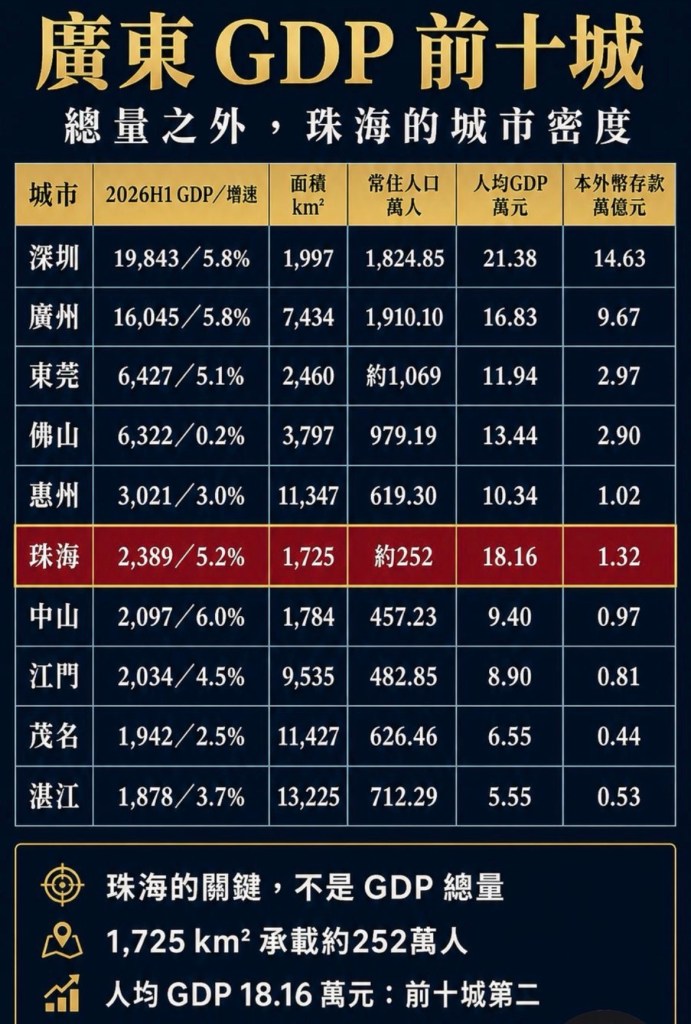
This is why Zhuhai is my future home! Zhuhai ranks only sixth in total GDP — but look at this indicator, and Zhuhai absolutely crushes it! GDP總量珠海只排第六;但看這個指標,珠海殺瘋了!
👀 When it comes to “money-making” power, Zhuhai is the true hidden gem.
1️⃣ Per capita GDP reaches 181,600 yuan, surpassing Guangzhou and Dongguan, firmly securing second place in Guangdong! (Second only to Shenzhen) 2️⃣ With an area of just 1,725 km² — a quarter the size of Guangzhou and half the size of Foshan — it still generates 238.9 billion yuan in GDP, with a growth rate of 5.2%, outperforming the provincial average. 3️⃣ Local and foreign currency deposits stand at 1.32 trillion yuan — a staggering capital density for such a small city.
🗺️ What does this mean? This is a classic case of “small city, big energy” — valuable land, a lean and capable population, and exceptionally high per capita output.
Some say Zhuhai’s property prices are high? But after looking at its per capita output and capital aggregation, you might just understand the underlying logic behind it.
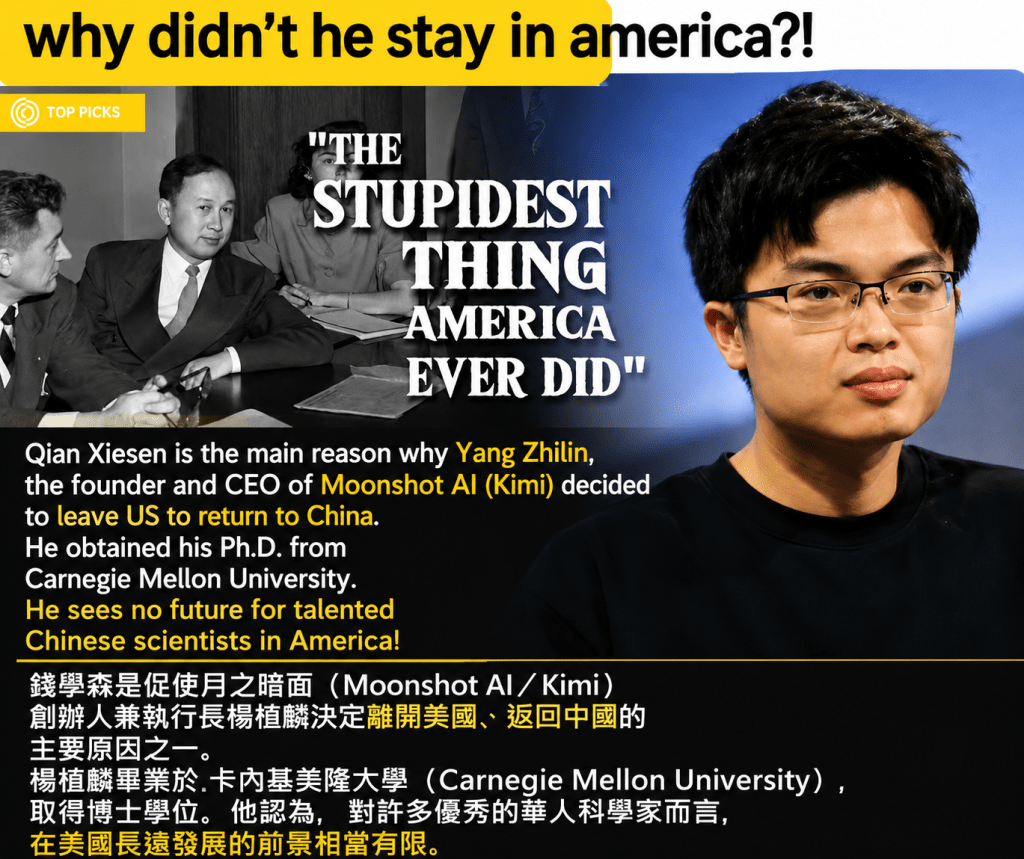
English video with Chinese subtitles: Qian Xiesen is the main reason why Yang Zhilin, the founder and CEO of Moonshot AI (Kimi) decided to leave US to return to China. He obtained his Ph.D. from Carnegie Mellon University. He sees no future for talented Chinese scientists in America! 視頻有中英文字幕: 錢學森是促使月之暗面(Moonshot AI/Kimi)創辦人兼執行長楊植麟決定離開美國、返回中國的主要原因之一。 楊植麟畢業於卡內基美隆大學, 取得博士學位。他認為,對許多優秀的華人科學家而言,在美國長遠發展的前景相當有限.
錢學森的經歷至今仍經常被引用,作為美國失去一位傑出科學家的典型案例。前美國海軍部長丹.A.金博爾(Dan A. Kimball)曾廣為流傳地表示,迫使錢學森離開美國,是「這個國家有史以來做過最愚蠢的一件事。」
China’s AI ecosystem: He saw China’s massive talent pool and favorable market environment as a huge advantage for recruiting and scaling a startup.
The Man U.S. Casted Away Built China’s NASA and today US still mistrust all Chinese scientists.
Qian Xuesen helped pioneer America’s early rocket program and later became a central figure in China’s missile and space programs. In between came one of the strangest episodes of the Cold War: the U.S. branded him a security risk, ordered him deported—then stopped him from leaving for five years because officials feared he knew too much.
This is the story of how America lost one of its most valuable scientists, a decision former Navy Secretary Dan Kimball later called “the stupidest thing this country ever did.”
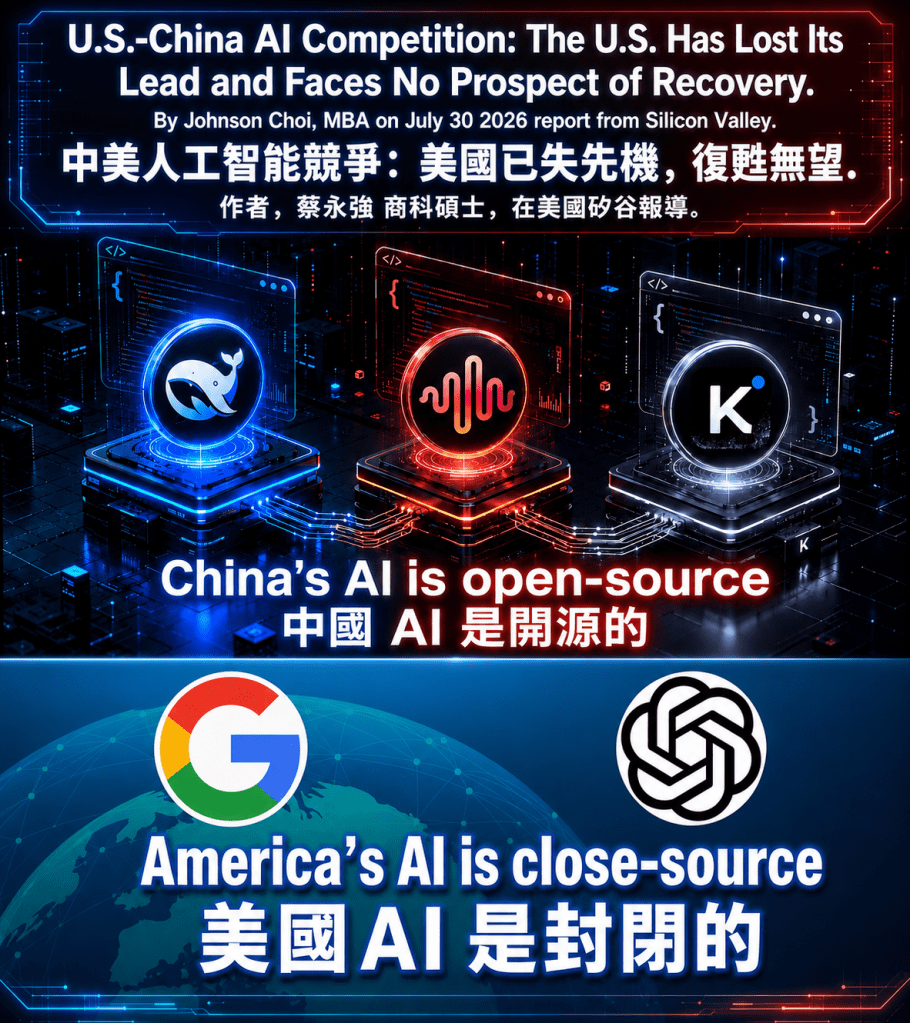
U.S.-China AI Competition: The U.S. Has Lost Its Lead and Faces No Prospect of Recovery. By Johnson Choi, MBA on July 30 2026 report from Silicon Valley. 中美人工智能競爭:美國已失先機,復甦無望. 作者,蔡永強 商科碩士,在美國矽谷報導.
Wall Street, tech giants, and the White House have recently been touting America’s chip advantages. However, advanced semiconductors are only one component of AI infrastructure; the real bottlenecks lie in the energy and water resources needed to support massive data centers. Just as a top-tier racing car requires sufficient fuel to compete over long distances, the sustained operation of AI computing power depends on stable and affordable electricity and cooling water.
In reality, many regions in the U.S. are already grappling with structural challenges such as insufficient grid capacity and water scarcity. Even where supply can be secured, industrial electricity and water costs are four to five times higher than in China, directly undermining the operational economics of data centers and making long‑term, large‑scale deployment unsustainable.
By contrast, China’s AI development path emphasizes an open‑source ecosystem, allowing companies to freely download, modify, and deploy models—significantly lowering the barriers to entry. In the U.S., mainstream AI solutions tend to adopt closed‑source business models, which not only command high licensing fees but also cost 50 to 100 times more than comparable Chinese open‑source offerings.
This price gap is particularly crippling for startups. With limited resources, U.S. startups find it difficult to afford expensive closed‑source AI services, so turning to Chinese open‑source models has become a widespread trend. Industry observations suggest that roughly 70% of U.S. startups now use Chinese open‑source AI technologies in their products or processes. Should such options be restricted, most of these companies would face skyrocketing operational costs, loss of competitiveness, and even forced closures or relocation abroad.
In summary, America’s lag in the AI race stems not merely from technology or chips, but more fundamentally from deep‑seated disadvantages in infrastructure costs and business models. Under the twin pressures of the open‑source wave and resource constraints, the U.S. is unlikely to regain a dominant position—time is no longer on its side.
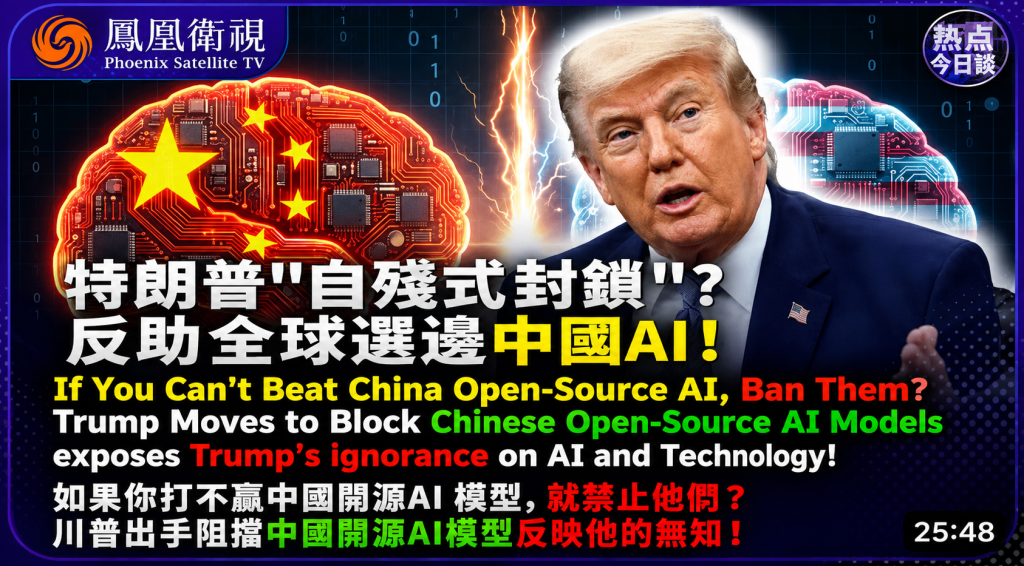
Video: If You Can’t Beat China Open-Source AI, Ban Them? Trump Moves to Block Chinese Open-Source AI Models exposes Trump’s ignorance on AI and Technology! 視頻有中英文字幕: 如果你打不贏中國開源AI 模型,就禁止他們?川普出手阻擋中國開源AI模型反映他的無知!
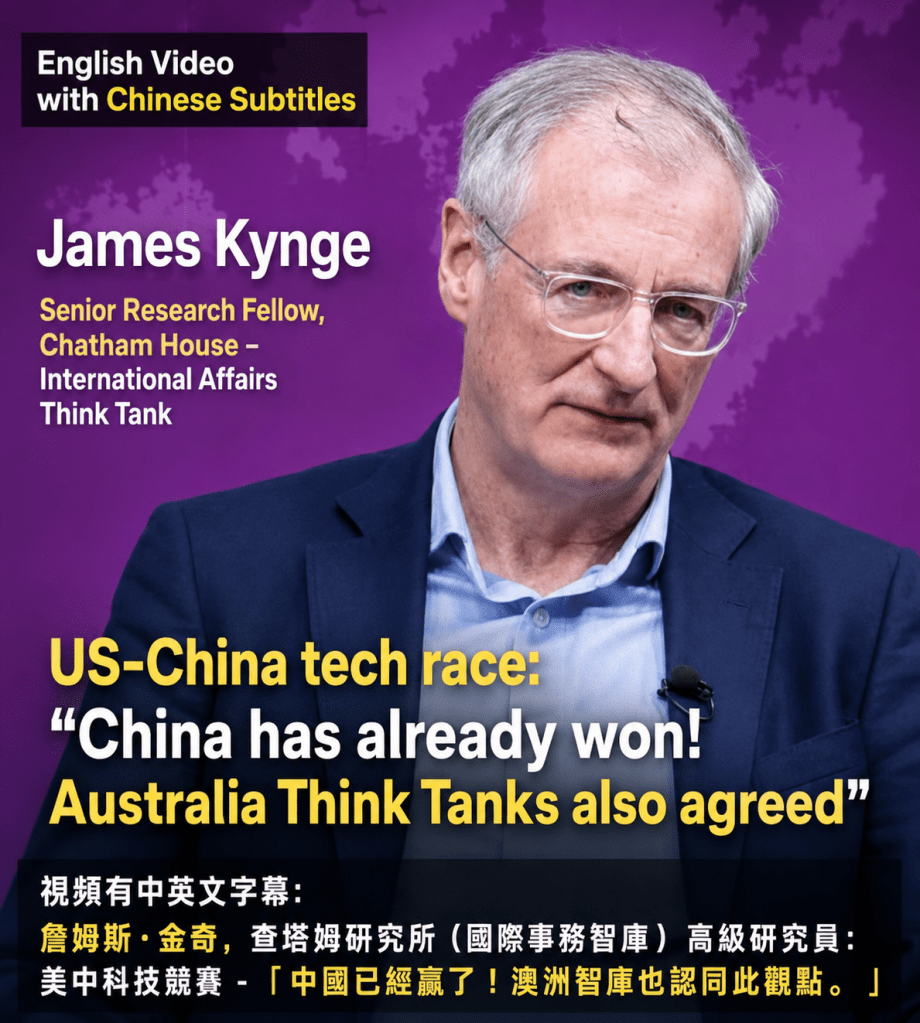
cent Pew Research Center poll shows that over 30% of American respondents believe China has surpassed the US to lead global artificial intelligence development. Recently, the Chinese company Dark Side of the Moon launched a new AI model, once again shaking the US market after DeepSeek. Meanwhile, US media reported that the US government is considering banning Chinese AI models. Nearly 200 US startups, hearing rumors, jointly wrote to the Trump administration opposing the ban, warning the White House that such a move would not stop the global spread of Chinese models but would instead bankrupt some American companies. Why does the US government want to ban Chinese AI? Will Trump listen to the opposition from these companies?

 Johnson Choi Biz