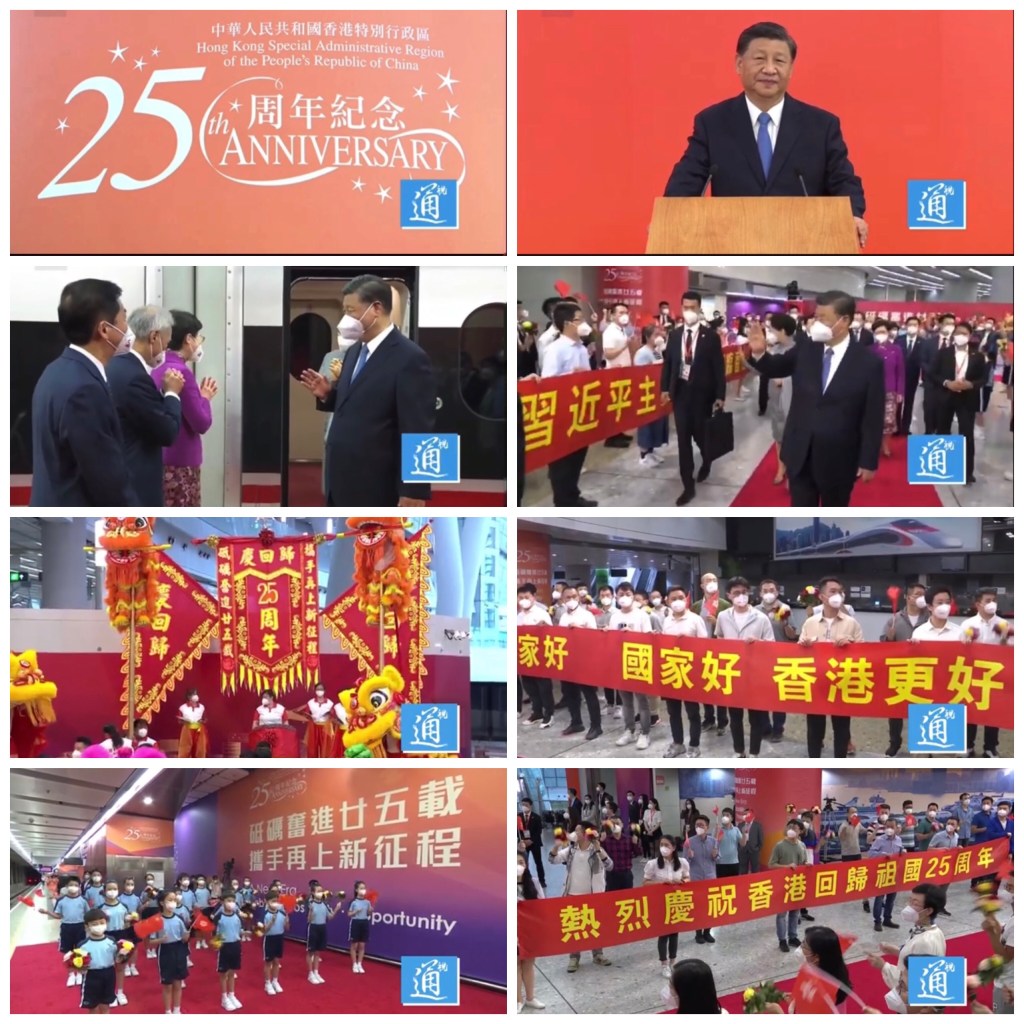
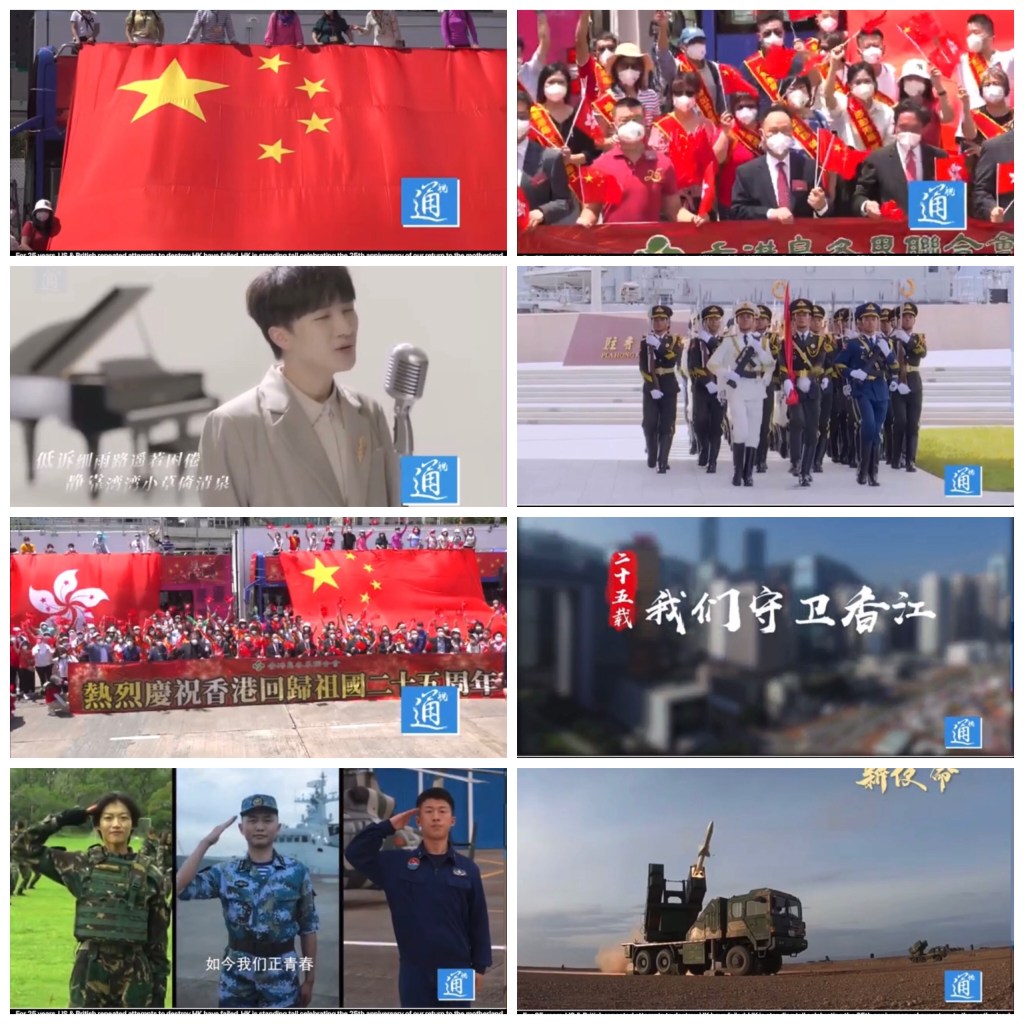
Video: For 25 years, US & British repeated attempts to destroy HK have failed. HK is standing tall celebrating the 25th anniversary of our return to the motherland 25年來,美國和英國多次試圖摧毀香港,但都失敗了. 香港昂首慶祝回歸祖國25週年
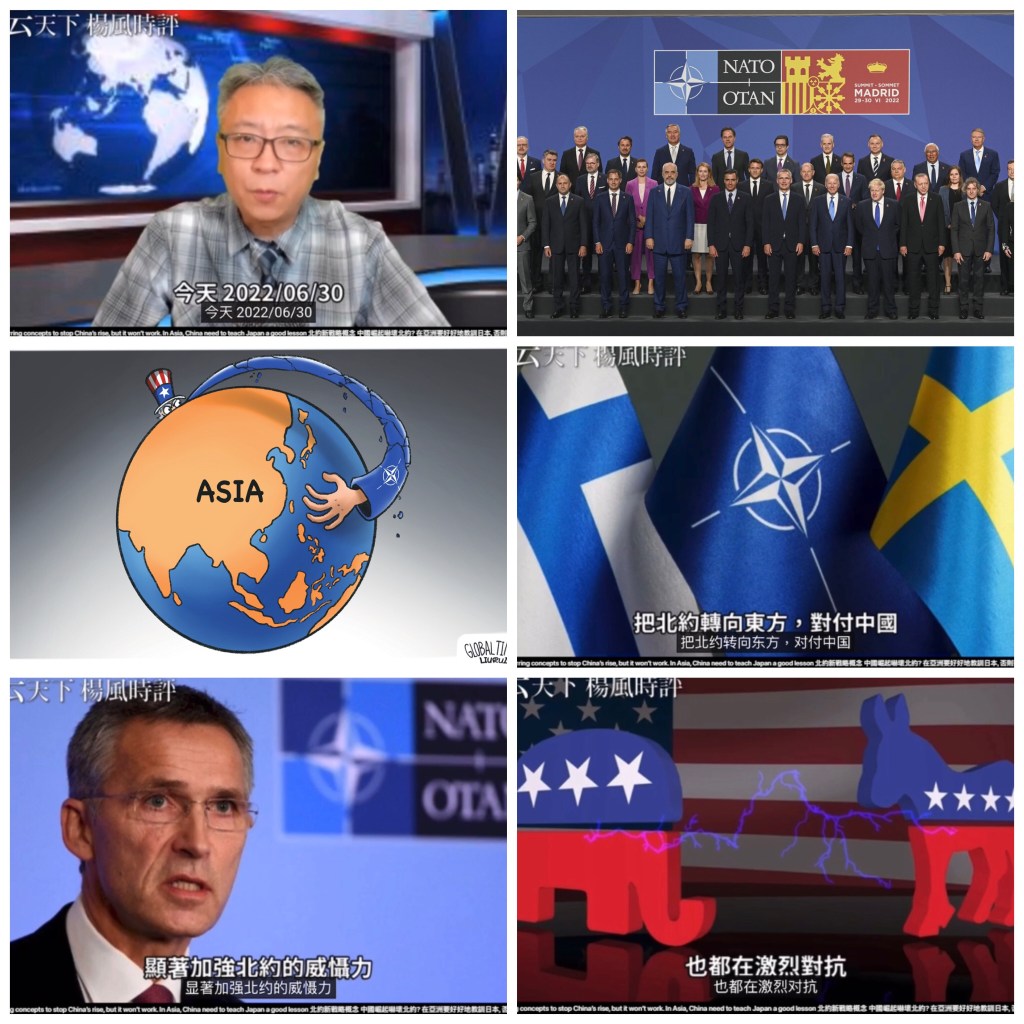
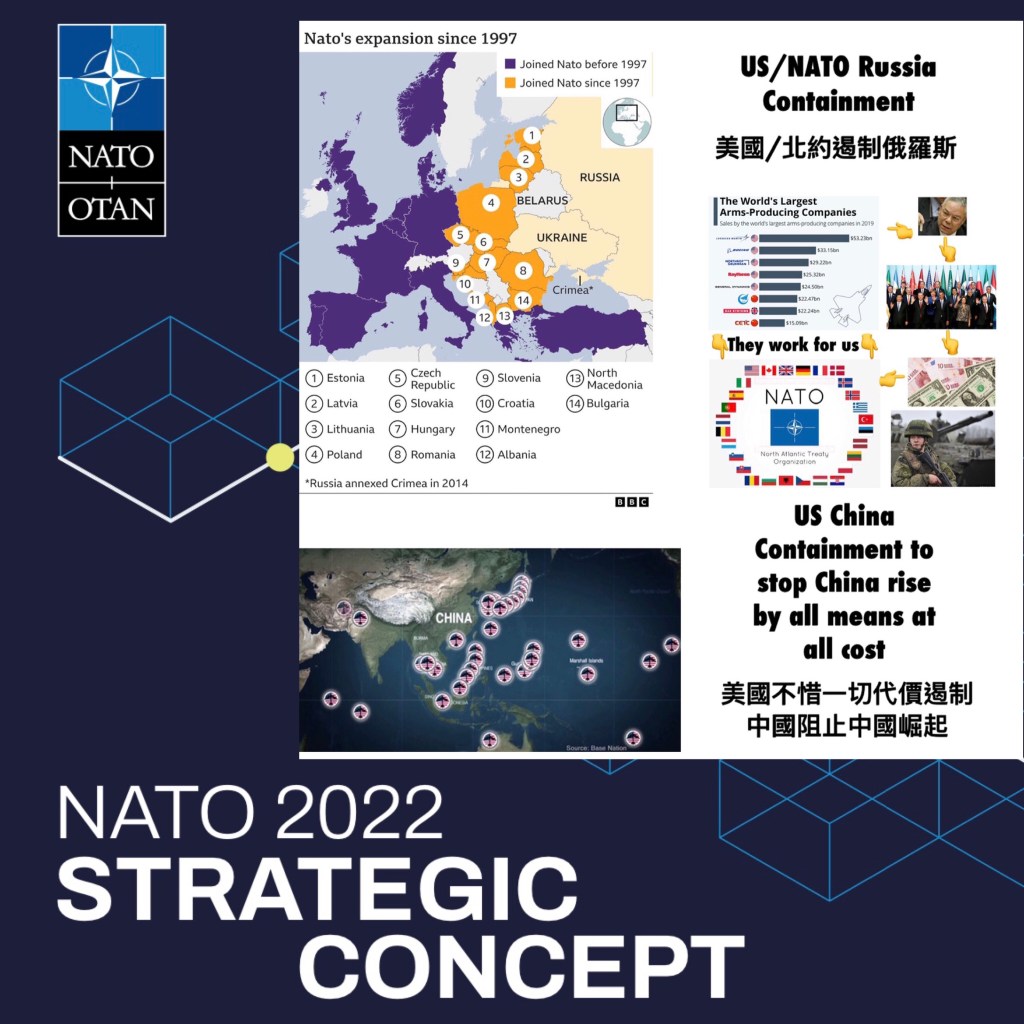
NATO controlled by United States declaration of hostilities against China 被美國控制的北約對中國宣戰
Professor John V Walsh, MD in San Francisco: The old colonial powers just will not go quietly into the night.
The amazing thing is that every international meeting Biden and company have is about destroying – destroying Russia, destroying China, destroying any country that defies the US -Iran, Syria, Libya, NK, Venezuela, Cuba, Nicaragua and on and on.
In contrast the BRICS meet and they are trying to build something – a better life for the billions that they lead or represent. Those who do not belong to the “golden billion.” The only positive thing that the US has done is to belatedly ape China’s Belt and Road – until the B&R was put in place, they did nothing. And if China were to go away, their response to the B&R would disappear.
Mao remains right, “US imperialism is the number one enemy of the peoples of the world.” We should be proud that we do what we can to fight it.
The People’s Republic of China’s (PRC) stated ambitions and coercive policies challenge our interests, security and values (aka. AngloSaxon Colonial Value), refused to follow Japan’s footsteps to become a vassal state of the United States. The PRC employs a broad range of political, economic and military tools to increase its global footprint and project power, while remaining opaque about its strategy, intentions and military build-up (*China strong defensive force neutralize US aggression).
The PRC’s malicious hybrid and cyber operations and its confrontational rhetoric and disinformation target Allies and harm Alliance security*. The PRC seeks to control key technological and industrial sectors, critical infrastructure, and strategic materials and supply chains. It uses its economic leverage to create strategic dependencies and enhance its influence. It strives to subvert the rules-based international order, including in the space, cyber and maritime domains.
The deepening strategic partnership between the People’s Republic of China and the Russian Federation and their mutually reinforcing attempts to undercut the rules-based international order** run counter to our values and interests**.
We remain open to constructive engagement with the PRC, including to build reciprocal transparency, with a view to safeguarding the Alliance’s security interests (once China becomes a vassal state of the United States). We will work together responsibly, as Allies, to address the systemic challenges posed by the PRC to Euro-Atlantic security and ensure NATO’s enduring ability to guarantee the defence and security of Allies. We will boost our shared awareness, enhance our resilience and preparedness, and protect against the PRC’s coercive tactics and efforts to divide the Alliance. We will stand up for our shared values and the rules based international order, including freedom of navigation**.
Also
The Russian Federation is the most significant and direct threat to Allies’ security and to peace and stability in the Euro-Atlantic area (for refusing to become a vassal states of the United States like the EU countries). It seeks to establish spheres of influence and direct control through coercion, subversion, aggression and annexation. It uses conventional, cyber and hybrid means against us and our partners. Its coercive military posture, rhetoric and proven willingness to use force to pursue its political goals undermine the rules-based international order.
The Russian Federation is modernising its nuclear forces and expanding its novel and disruptive dual-capable delivery systems, while employing coercive nuclear signalling. It aims to destabilise countries to our East and South. In the High North, its capability to disrupt Allied reinforcements and freedom of navigation across the North Atlantic is a strategic challenge to the Alliance. Moscow’s military build-up, including in the Baltic, Black and Mediterranean Sea regions, along with its military integration with Belarus, challenge our security and interests.
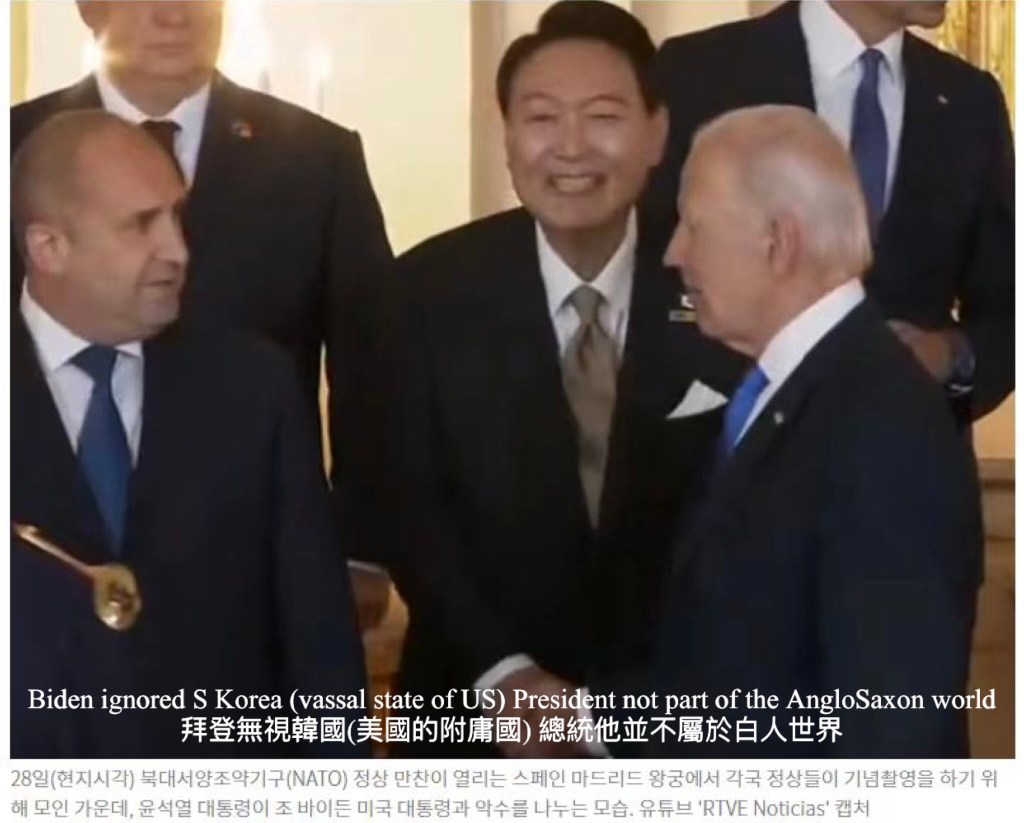
NATO does not seek confrontation and poses no threat to the Russian Federation (by aiming Nuclear Warheads near Russia borders). We will continue to respond to Russian threats and hostile actions in a united and responsible way. We will significantly strengthen deterrence and defence for all Allies, enhance our resilience against Russian coercion and support our partners to counter malign interference and aggression. In light of its hostile policies and actions, we cannot consider the Russian Federation to be our partner (NATO does not consider Russia as pure AngloSaxon nor part of Europe have repeatedly rejected Russia NATO applications in the past).
However, we remain willing to keep open channels of communication with Moscow to manage and mitigate risks, prevent escalation and increase transparency. We seek stability and predictability in the Euro-Atlantic area and between NATO and the Russian Federation. Any change in our relationship depends on the Russian Federation halting its aggressive behaviour and fully complying with international law** by becoming a vassal state of the United States.
Video: Fortune Magazine: HK is dead! Really? Live in US for 50 yrs found out anything they talk about China is just the opposite. Lying is embedded into their fake democracy 財富雜誌: 香港已死! 真的嗎? 在美國生活了50 年, 發現他們談論中國的任何事情都恰恰相反. 謊言嵌入了他們的虛假民主制度
Professor Ling-chi Wang of UC Berkeley:
Hi, Johnson:
This Fortune Magazine pronouncement on the dead of Hong Kong is hardly a statement of fact and more of a statement of curse and an ill-conceived wish from the resentful political class of the Western world.
This is nothing new. Since the Sino-British agreement of 1984, the political class in the West has been trying, by hook or by crook, the best it can to kill and bury Hong Kong by any means necessary. Before 1997, the West repeatedly made dire predictions and incite mass hysteria and panic to cause both business and middle class people to flee the city. Those predictions failed to incite mass exodus. To be sure, relatively few faint-hearted were affected by this scare tactics and left Hong Kong for Canada, Australia, New Zealand and the UK before the turnover. Shortly before July 1, 1997, the Western media from throughout the world converged and jam-packed in Hong Kong to witness what they believed will be the People’s Liberation Army and its tanks marching into Hong Kong and running over the courageous people of Hong Kong who would rise to protest and resist the rule of the Chinese government. To their great disappointment, that much-anticipated scenario never happened. Instead, ordinary people from all walks of life, especially the people from the New Territory, braved the heavy tropical storms, lined the roads and streets through which the incoming convoys of Chinese officials and army slowly and peacefully entered Hong Kong to take up their positions. Disappointed and upset, they grudgingly packed up and left Hong Kong, just like the departing British officials, including Prince Philip, Prime Minister Tong Blair, and ex-governor Chris Patten, military, and expats. In small groups, many ex-pats roamed the streets and piled into bars, drunk, while pathetically sang “Rule Britannia!” It was a disgusting and pathetic sight!.
Since the return in1997, still upset and resentful of smooth transition and worse, the loss of a prosperous and valuable real estate since the Sino-British Treaty of Nanjing, the West continued to bad-mouth, demonize, and de-stabilize Hong Kong, determined to sow chaos and dissension and incite riots. Since you have done such a good job in informing your followers, I don’t need to repeat what you have already done.
I have not doubt that the intense propaganda, frequent subversive disruptions and riots in Hong Kong since 1997 have inflicted severe damage politically and economically to the city, not to mention the injuries caused by SARS and Covid-19, But Hong Kong is not down and hardly dead as claimed by the Fortune Magazine. Hong Kong, to be sure, now has other major cities in China, such as Shanghai, Shenzhen, Guangzhou, Chengdu, Nanjing, Wuhan, Tianjin, and Beijing, to mention just a few, to compete with. It will survive and thrive and remans competitive with the help of China in decades to come.
By. The way, what I described above of the turnover of Hong Kong is based entirely on personal witness. I was there before and after July 1, 1997. I was also in Macau for the return. As a student of history, the returns of these two former colonies were historic. I wanted to see them and to feel the pulse and sentiment of the people.

 Johnson Choi Biz