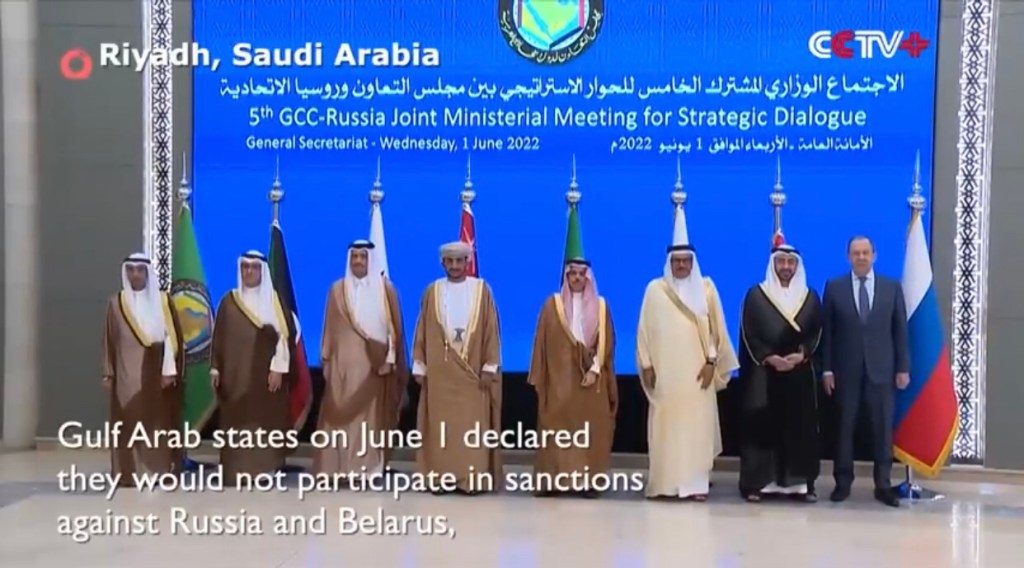
Video: Gulf Arab States do not agreed with US Hegemony will not sanction Russia 海灣阿拉伯國家不認同美國霸權地位 不會制裁俄羅斯 https://youtu.be/jFl9uCRjLmc Gulf Arab states declared they would not participate in sanctions against Russia and Belarus after Russian FM Sergei Lavrov met with member states of Cooperation Council for the Arab States of the Gulf (GCC) in Riyadh, Saudi Arabia.
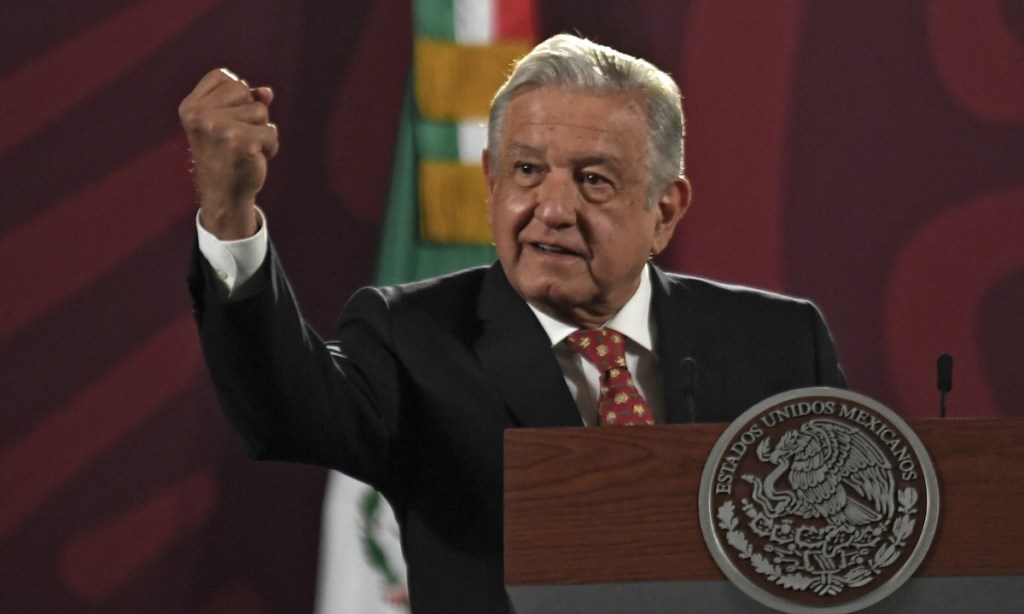
Latin America finally has the guts to stand tall to give US the mid_dle finger: ‘No longer US’ backyard,’ sends united message. Mexico’s President Andres Manuel Lopez Obrador will not attend the Summit of Americas as the US did not invite all the governments of the region Jun 06 2022
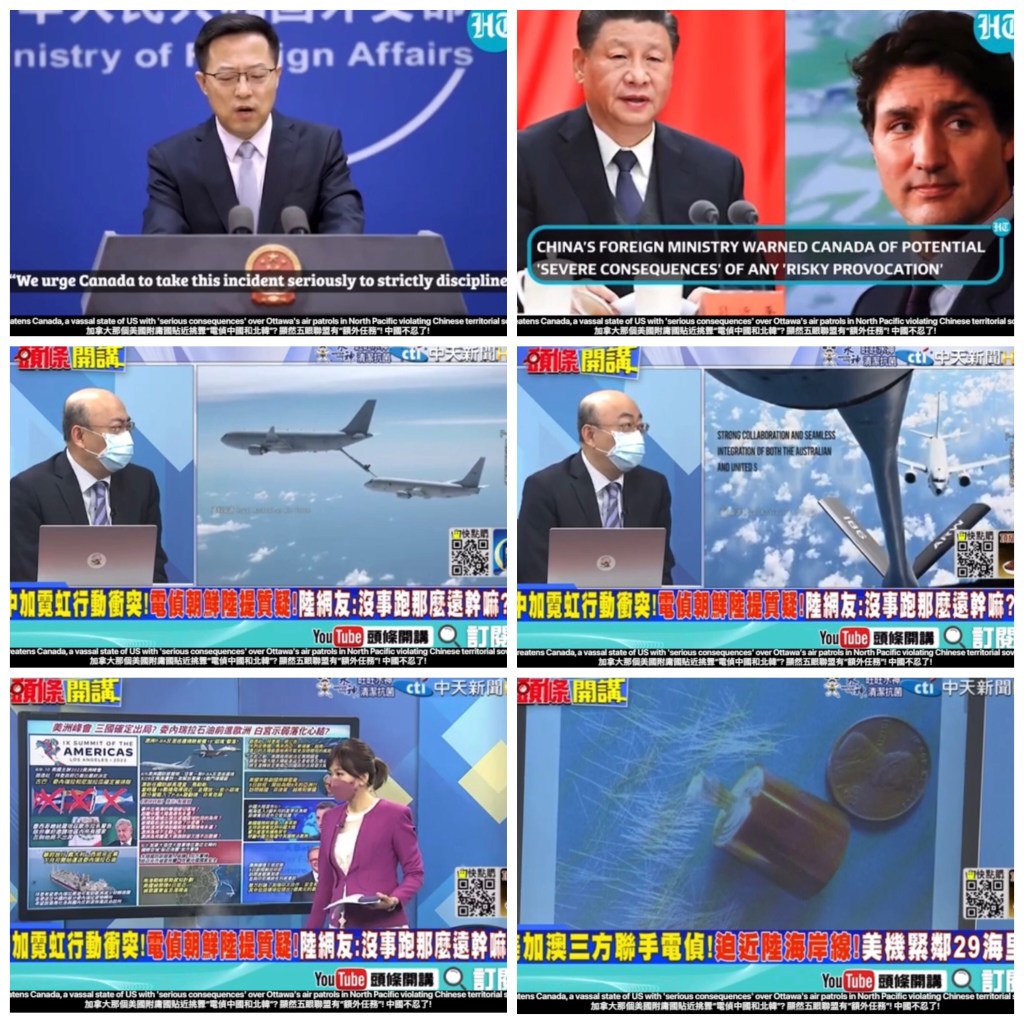
Video: China threatens Canada, a vassal state of US with ‘serious consequences’ over Ottawa’s air patrols in North Pacific violating Chinese territorial sovereignty 加拿大那個美國附庸國貼近挑釁“電偵中國和北韓”? 顯然五眼聯盟有“額外任務”! 中國不忍了!
China’s foreign ministry warned Canada of potential “severe consequences” of any “risky provocation”. This comes after Canada’s military last week accused Chinese warplanes of harassing its patrol aircraft in Asia pacific. “We urge Canada to take this incident seriously to strictly discipline its frontline military personnel and not exercise any provocation otherwise it has to bear all the consequences, ” said Chinese Foreign Ministry spokesperson Zhao Lijian.
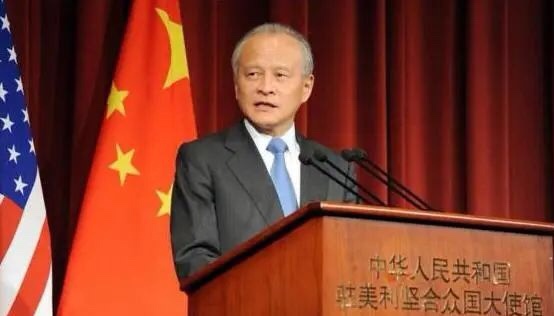
Video: Cui Tiankai, the former Chinese ambassador to the United States, gave a speech that caused a sensation all over the world! American Silence with comments by Professor Ling-chi Wang of UC Berkeley 前中国驻美大使崔天凯演讲,轰动全世界!全美沉默
Professor Ling-chi Wang of UC Berkeley: This is a more realistic assessment of US-China relations from the former Chinese Ambassador to the U.S. Tsui Tiankai. Since 2008, China has been practicing Tai Chi with the U.S., hoping that its calm, patience and willingness to endure heavy blows, including insults, from the U.S. will win over respect and cooperation. This posture is captured well in 28 Chinese words in 7 phrases, by Deng Xiaoping’s famous dictum: “冷静观察、稳住阵脚、沉着应付、韬光养晦、善于藏拙、决不当头、有所作为.” I think his wise advise has served China well. However, as China rises, the U.S. rose, the U.S. saw China as a threat to its global hegemony and a need to abort China’s inevitable growth by political, economic, and military means, a policy started by Obama, reinforced by Trump, and turned into a worldwide full-court press, including military encirclement reinforced by alliances along the periphery of China, by Biden. Suddenly the Deng Xiaoping approach is seen as a weakness of China, vulnerable to U.S. aggression and exploitation. On the surface, the U.S. repeatedly said there has been no change in U.S. relations and policies toward China. But in reality, the U.S. has been systematically dismantling the policy of engagement and cooperation with China since Nixon. Xi Jinping saw through U.S. hypocrisy and duplicity and began to take steps toward defending China’s sovereignty, interests, and relations with countries throughout the world.
I think Ambassador Tsui’s speech and Yang Jiechi’s Alaska lecture to Blinken and Sullivan, are reflections of Xi’s departure from Deng’s 韬光养晦 and the end of China’s 苦肉计。 Those good old days are over. What the U.S. fears most is China becoming the American bully worldwide and start pushing the U.S. around just like we have been doing to the rest of the world without resistance. That fear is. Unfounded and has no evidence to support it. China has no interest in becoming and acting like the U.S. and bullying everyone in its way. That is not China.
More gun violence, more gun sales, more money to US elected officials to guarantee no gun control law passed. 更多的槍支暴力,更多的槍支銷售,給美國民選官員更多的錢,以保證不會通過槍支管制法.
There were at least 10 mass shootings in the US since Friday, following several back-to-back massacres in recent weeks. In Philadelphia, three people died and 11 others were injured over the weekend after gunfire rang out at a popular entertainment district, officials said. Three others were killed and at least 14 were injured in a shooting in Chattanooga, Tennessee. Eight people were shot at a high school graduation party in Summerton, South Carolina, with one person killed. Several other shootings forced various law enforcement entities to remain on alert across the country. This comes as bipartisan talks on gun legislation are ongoing — but previous attempts in Congress to pass major gun regulation measures have either stalled or failed.
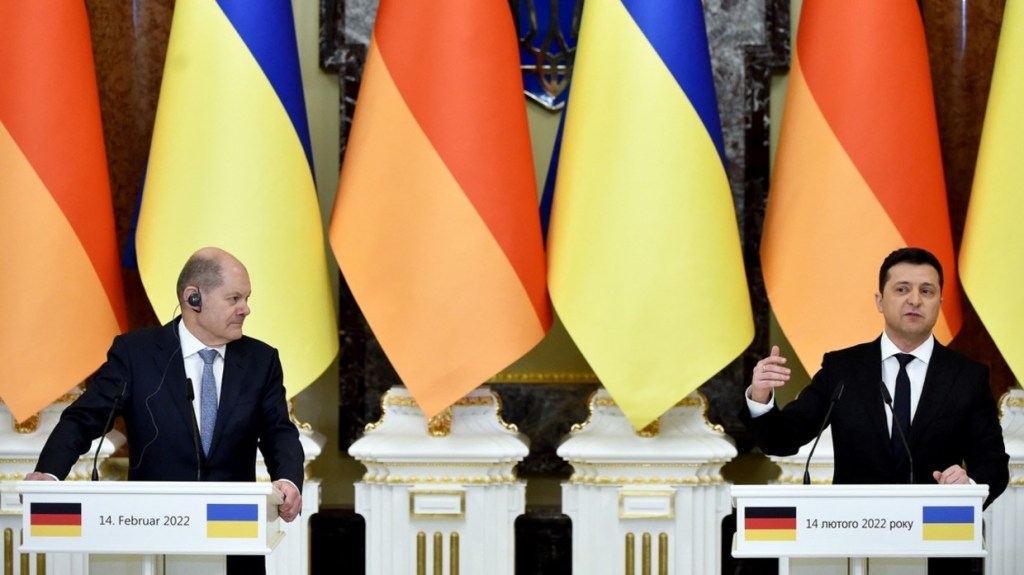
Germany doesn’t trust Zelensky, the comedian and a US puppet – Der Spiegel. Berlin has reportedly been slow in sending weapons to Ukraine to support US proxy war against Russia, fearing military success could prompt it to attack Russia. 德國不信任澤連斯基、喜劇演員和美國傀儡 – 明鏡周刊。 據報導,柏林在向烏克蘭運送武器以支持美國對俄羅斯的代理人戰爭方面進展緩慢,擔心軍事成功可能會促使其攻擊俄羅斯



 Johnson Choi Biz