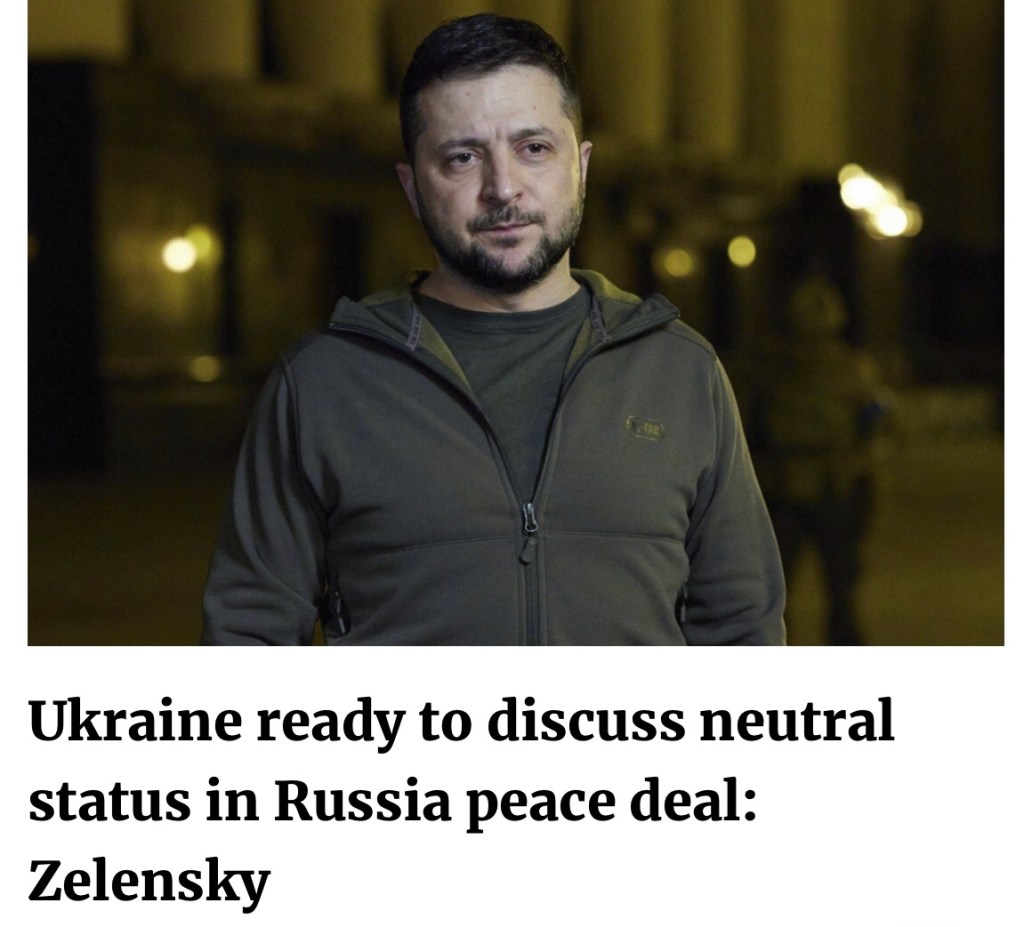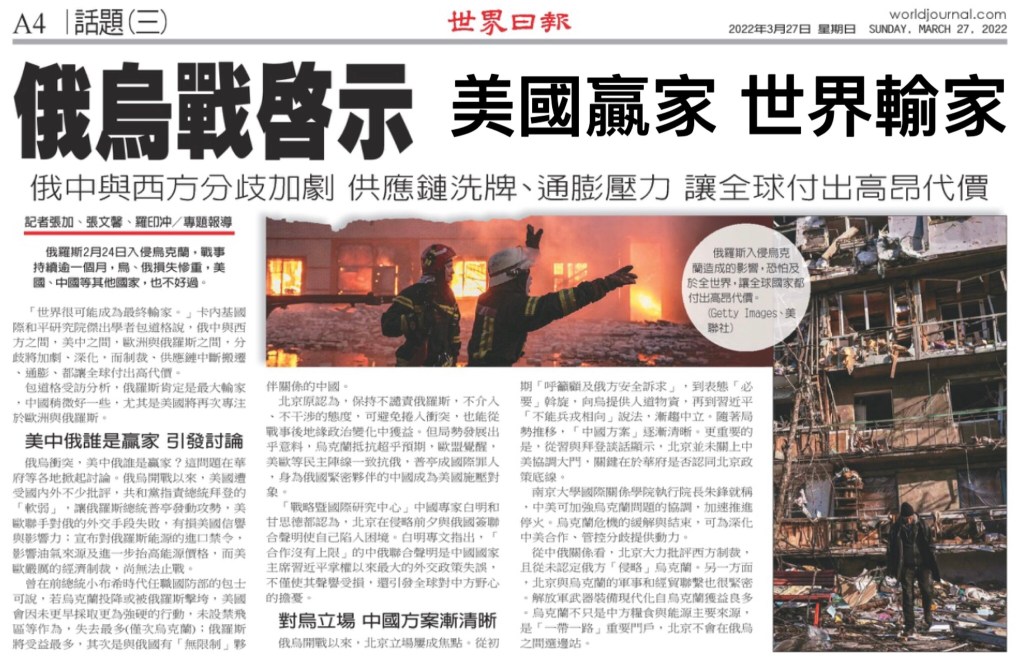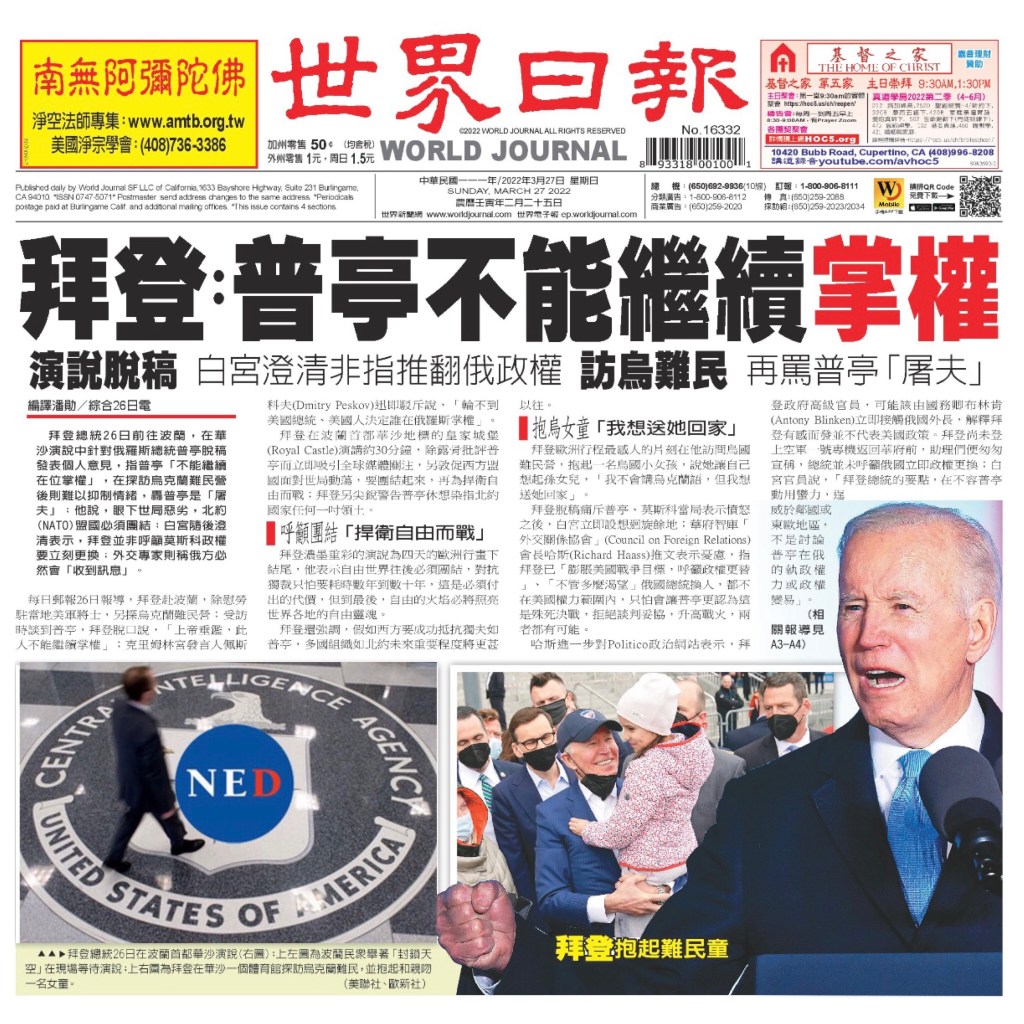
Readout of President Joseph R. Biden Jr. Call with President Xi Jinping of the People’s Republic of China

Readout of President Joseph R. Biden Jr. Call with President Xi Jinping of the People’s Republic of China

MARCH 18, 2022

STATEMENTS AND RELEASES
President Joseph R. Biden, Jr. spoke today with President Xi Jinping of the People’s Republic of China (PRC). The conversation focused on Russia’s UNPROVOKED😂👈 invasion of Ukraine. President Biden outlined the views of the United States and our Allies and partners on this crisis. President Biden detailed our efforts to prevent and then respond to the invasion, including by imposing costs on Russia. He described the implications and consequences if China provides material support to Russia as it conducts brutal attacks against Ukrainian cities and civilians. The President underscored his support for a diplomatic resolution to the crisis. The two leaders also agreed on the importance of maintaining open lines of communication, to manage the competition between our two countries. The President reiterated that U.S. policy on Taiwan has not changed, and emphasized that the United States continues to oppose any unilateral changes to the status quo. The two leaders tasked their teams to follow up on today’s conversation in the critical period ahead.

President Xi Jinping Has a Video Call with US President Joe Biden 2022-03-19

President Xi Jinping Has a Video Call with US President Joe Biden 2022-03-19

From China’s foreign ministry:

On the evening of 18 March, President Xi Jinping had a video call with US President Joe Biden at the request of the latter. The two Presidents had a candid and in-depth exchange of views on China-US relations, the situation in Ukraine, and other issues of mutual interest.

President Biden said that 50 years ago, the US and China made the important choice of issuing the Shanghai Communiqué. Fifty years on, the US-China relationship has once again come to a critical time. How this relationship develops will shape the world in the 21st century. Biden reiterated that the US does not seek a new Cold War with China; it does not aim to change China’s system; the revitalization of its alliances is not targeted at China; the US does not support “Taiwan independence”; and it has no intention to seek a conflict with China. The US is ready to have candid dialogue and closer cooperation with China, stay committed to the one-China policy, and effectively manage competition and disagreements to ensure the steady growth of the relationship. President Biden expressed readiness to stay in close touch with President Xi to set the direction for the US-China relationship.

President Xi noted the new major developments in the international landscape since their first virtual meeting last November. The prevailing trend of peace and development is facing serious challenges. The world is neither tranquil nor stable. As permanent members of the UN Security Council and the world’s two leading economies, China and the US must not only guide their relations forward along the right track, but also shoulder their share of international responsibilities and work for world peace and tranquility.

President Xi stressed that he and President Biden share the view that China and the US need to respect each other, coexist in peace and avoid confrontation, and that the two sides should increase communication and dialogue at all levels and in all fields. President Biden has just reiterated that the US does not seek to have a new Cold War with China, to change China’s system, or to revitalize alliances against China, and that the US does not support “Taiwan independence” or intend to seek a conflict with China. “I take these remarks very seriously,” said President Xi.

President Xi pointed out that the China-US relationship, instead of getting out of the predicament created by the previous US administration, has encountered a growing number of challenges. What’s worth noting in particular is that some people in the US have sent a wrong signal to “Taiwan independence” forces. This is very dangerous. Mishandling of the Taiwan question will have a disruptive impact on the bilateral ties. China hopes that the US will give due attention to this issue. The direct cause for the current situation in the China-US relationship is that some people on the US side have not followed through on the important common understanding reached by the two Presidents and have not acted on President Biden’s positive statements. The US has misperceived and miscalculated China’s strategic intention.

President Xi underscored that there have been and will continue to be differences between China and the US. What matters is to keep such differences under control. A steadily growing relationship is in the interest of both sides.

The two sides exchanged views on the situation in Ukraine.

President Biden expounded on the US position, and expressed readiness for communication with China to prevent the situation from exacerbating.

President Xi pointed out that China does not want to see the situation in Ukraine to come to this. China stands for peace and opposes war. This is embedded in China’s history and culture. China makes a conclusion independently based on the merits of each matter. China advocates upholding international law and universally recognized norms governing international relations. China adheres to the UN Charter and promotes the vision of common, comprehensive, cooperative and sustainable security. These are the major principles that underpin China’s approach to the Ukraine crisis. China has put forward a six-point initiative on the humanitarian situation in Ukraine, and is ready to provide further humanitarian assistance to Ukraine and other affected countries. All sides need to jointly support Russia and Ukraine in having dialogue and negotiation that will produce results and lead to peace. The US and NATO should also have dialogue with Russia to address the crux of the Ukraine crisis and ease the security concerns of both Russia and Ukraine.

President Xi stressed that with the need to fight COVID-19 on the one hand and protect the economy and people’s livelihood on the other, things are already very difficult for countries around the world. As leaders of major countries, we need to think about how to properly address global hotspot issues and, more importantly, keep in mind global stability and the work and life of billions of people. Sweeping and indiscriminate sanctions would only make the people suffer. If further escalated, they could trigger serious crises in global economy and trade, finance, energy, food, and industrial and supply chains, crippling the already languishing world economy and causing irrevocable losses. The more complex the situation, the greater the need to remain cool-headed and rational. Whatever the circumstances, there is always a need for political courage to create space for peace and leave room for political settlement. As two Chinese sayings go, “It takes two hands to clap.” “He who tied the bell to the tiger must take it off.” It is imperative that the parties involved demonstrate political will and find a proper settlement in view of both immediate and long-term needs. Other parties can and should create conditions to that end. The pressing priority is to keep the dialogue and negotiation going, avoid civilian casualties, prevent a humanitarian crisis, and cease hostilities as soon as possible. An enduring solution would be for major countries to respect each other, reject the Cold War mentality, refrain from bloc confrontation, and build step by step a balanced, effective and sustainable security architecture for the region and for the world. China has been doing its best for peace and will continue to play a constructive role.

The two Presidents agreed that the video call is constructive. They directed their teams to promptly follow up and take concrete actions to put China-US relations back on the track of steady development, and make respective efforts for the proper settlement of the Ukraine crisis.

Old poster alerting Chinese Citizens to seek protection on US engaged in germ warfare during Korean War

Old poster alerting Chinese Citizens to seek protection on US engaged in germ warfare during Korean War in the 1950s testing new acquisition from Japanese Unit 731 on Chinese now housed in US bio labs. 舊海報提醒中國人民尋求保護美國在1950 年代朝鮮戰爭期間使用細菌來測試從現在位於美國生物實驗室內的日本731 細菌部隊在二戰期間用中國人作人體實驗.

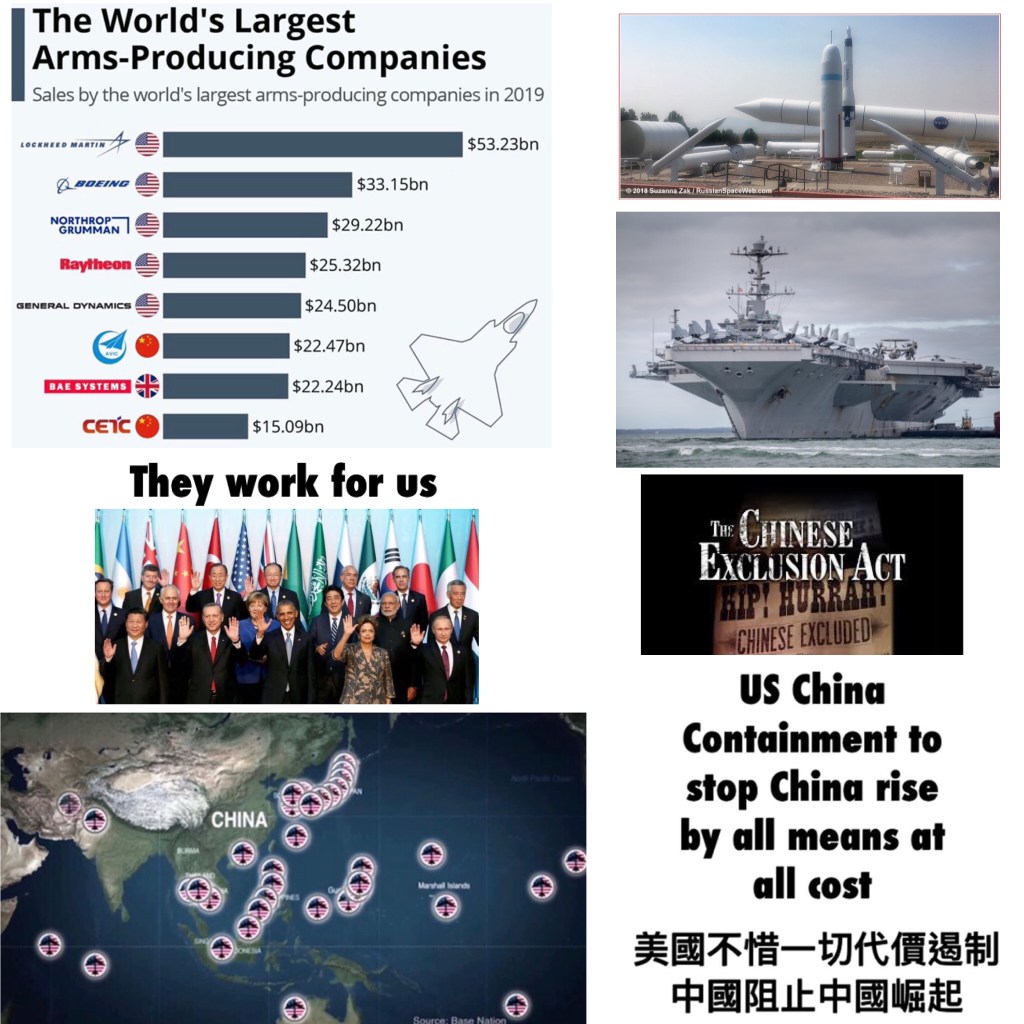
US need enemies real or imaginary in order to support our huge war machines. Nothing has changed

US Senator Daniel Inouye from Hawaii was a highly decorated WWII Veteran Unit 442 said 20 years ago that US need enemies real or imaginary in order to support our huge war machines. Nothing has changed! 來自夏威夷的美國參議員丹尼爾·井上是一名二戰老兵442 部隊,他20年前說美國需要真實或虛構的敵人以支持我們巨大的戰爭機器, 今天也是一樣!

Video: Americans got a 60 second summation propaganda by cable news thought knew everything about Ukraine since the 1400s

Video: The war fever stoked by the media in the US. Americans got a 60 second summation propaganda by cable news thought knew everything about Ukraine since the 1400s 美國媒體引發的戰爭熱潮。 美國人看了60秒有線電視新聞的總結宣傳,他們就認為自1400 年代的烏克蘭的一切都瞭如指掌, 極天真無知.
https://rumble.com/vxqd84-americans-got-a-60-second-summation-propaganda-by-cable-news-thought-knew-e.html
https://www.facebook.com/100036400039778/posts/675495547007107/?d=n

Ukraine offers Taiwan a wake-up call and lessons?

Ukraine offers Taiwan a wake-up call and lessons? English Tsai will have the F16 to escort her plane loaded with Diamonds, US treasury bonds and US$ to the international air space and continue on to Hawaii just like Marco from Philippines did. 烏克蘭給台灣敲響警鐘和教訓? 蔡英文將讓 F16 護送她滿載鑽石、美國債卷和美元的飛機前往國際空域,並像前菲律賓總統馬可思一樣逃往夏威夷.

https://breakingdefense.sites.breakingmedia.com/2022/03/ukraine-offers-taiwan-a-wake-up-call-and-lessons-in-resistance/

At 15:09 Beijing time on March 17, the CZ-4C Y47 rocket carrying the Yaogan 34-02 remote sensing satellite lifted off from the Jiuquan Satellite Launch Center.

At 15:09 Beijing time on March 17, the CZ-4C Y47 rocket carrying the Yaogan 34-02 remote sensing satellite lifted off from the Jiuquan Satellite Launch Center.

3月17日15:09,在酒泉卫星发射中心,长征4号丙遥47火箭成功将遥感34号02星送入预定轨道。

该星将与已在轨的01星和后续卫星组网运行,和以往一样,我们说是“农业星”,用于国土普查、城市规划、土地确权、路网设计等,并为“一带一路”提供信息保障。

在任务海域待命的远望6号船顺利完成了火箭入轨、卫星定轨等的测控支持,这是远望6号本年度的首次任务。今儿恰逢“国际航海日”,航天航海一家亲!

本发火箭安装了2M中继设备,当飞到地面测控站遥测范围之外时,中继设备会将数据传至中继卫星,中继卫星再传回地面。这样的中继测控减少了火箭发射轨道设计的约束,大幅延长了火箭信号的接收时段,以后还将降低远望号测量船出航的成本。

这是长征系列运载火箭的第411次飞行。

French Embassy in China enrages Chinese netizens over inappropriate post amid Ukraine crisis

French Embassy in China enrages Chinese netizens over inappropriate post amid Ukraine crisis 法國駐華大使館因烏克蘭危機發帖不當激怒中國網民 By Global Times Mar 17, 2022

Screenshot of French Embassy’s post on Sina Weibo quotes Chinese writer Lu Xun

Screenshot of French Embassy’s post on Sina Weibo that quotes Chinese writer Lu Xun

Since the outbreak of the Russia-Ukraine conflict, Western diplomatic agencies have been conducting public diplomacy on the Chinese internet, with many insinuating China’s inaction during the conflict, although they know the cause of the crisis was NATO’s eastward expansion.

A post from the French Embassy’s official Weibo account on Tuesday quoted Lu Xun, a well-known anti-imperialist Chinese writer, as saying that “lies written in ink can never disguise facts written in blood.”

The comment drew backlash among netizens, given the historical background of Lu Xun’s quote – the March 18 massacre, a tragedy in which Chinese civilians were killed and injured opposing the ultimatum from the eight nations to invade China amid an anti-imperialist demonstration.

As one of the participants in the ultimatum from the eight nations, France also played a disgraceful role in the imperialist exploitation of China.

Many Chinese netizens believed that the post intended to criticize Russia amid the Ukraine crisis. “An imperialist should not use the anti-imperialist writer’s quote to criticize others,” one Weibo user wrote in response to the French Embassy’s post.

“I am often amazed by the shame of some Western countries, after so much genocide, trafficking, colonization, slavery, invasion, and slaughter, they can still talk about righteousness and morality in a dignified manner,” wrote one netizen.

Global Times

U.S. threatens nuclear war or sanctionsBy Sara Flounders

U.S. threatens nuclear war or sanctions
By Sara Flounders March 16, 2022

A seismic shift is sending shock waves through the global economy.

The well-established capitalist disorder, dominated by U.S. imperialism and in place since World War II, is on shaky ground. Extreme economic sanctions imposed on Russia are dragging the whole world into a war that started long before the Russian intervention in Ukraine on Feb. 24.

A big calculation is which countries will be forced to accept the onerous economic sanctions imposed on Russia by the U.S. Countries representing a majority of the world’s population are not willing to tie their sovereignty to total Wall Street control. To the shock of U.S. war strategists, almost all of Latin America, the Caribbean, many countries in Africa, and most of Asia have rejected the sanctions on Russia.

The open defiance by so many countries and major trading blocs is a stunning confirmation of the weakening hold of U.S. economic power.

U.S. dominance challenged

It is well recognized that U.S. economic dominance in Europe, and globally, has been challenged by increased European Union trade with Russia and China. The growing integration of the Eurasian bloc of countries, stretching from China and South Asia through Central Asia and Russia to Europe, gives a huge economic advantage to the countries involved.

The growing integration of EU trade and investment with Russia and China threatens both the domination of U.S. corporate power in Europe and U.S. global hegemony. It is in the interest of corporate power in the U.S. to cynically provoke a conflict where it is the least affected, but doing so in a region where its capitalist rivals in the EU will carry the heaviest burden.

U.S. threatens nuclear war to get sanctions

The U.S. has instigated a crisis by encircling Russia with NATO bases, organizing constant military operations and supplying heavy weapons to Ukraine to fire on Russia’s borders.

The United States is the only country to have ever used nuclear weapons. It incinerated two entire cities — Hiroshima and Nagasaki — in 1945. It is the only country that refuses to agree to a “No First Use” nuclear policy.

By placing nuclear weapons in Europe and setting up nuclear-capable weaponry on Russia’s borders, it has been openly provoking Russia to strike in self-defense. The U.S. used the nuclear threat not only on Russia but to impel the European Union to impose harsh sanctions on Russia, even though it was against EU interests to cut economic ties with Moscow.

With the EU, and especially Germany, unwilling to impose sanctions that would break all relations with Russia, the U.S. played hardball. President Joe Biden threatened the EU on Feb. 26, two days after Russia began its military operation in Ukraine, that the only alternative to going along with the U.S. sanctions “would be the Third World War.”

“You have two options. Start a Third World War, go to war with Russia, physically. Or, two, make sure that the country that acts so contrary to international law ends up paying a price for having done it. . . . I know these sanctions are the broadest sanctions in history, and economic sanctions and political sanctions.”

In an interview with blogger Brian Tyler Cohen, Biden said his “goal from the very beginning” was to keep NATO and the European Union “on the same page.” (tinyurl.com/22dbb5d7)

The EU, a bloc of capitalist economies dominated by Germany, is unable and unwilling to directly challenge U.S. hegemony, especially when they are threatened with nuclear war in Europe if they don’t comply. The EU imposed all the sanctions demanded by the U.S. Their sanctions mirror those imposed by Washington. However, they are still able to purchase some gas from Russia, based on an agreement with the U.S.

Sanctions were imposed on Russia in 2014 after the majority Russian population in Crimea voted to rejoin Russia. This followed a U.S.-supported fascist coup in the Ukrainian capital of Kiev. At that time, two regions in East Ukraine — Donetsk and the Lugansk People’s Republics — broke away from the fascist gangs in Kiev.

Since the 1999 U.S./NATO bombing of Yugoslavia, and despite constant warnings of danger even from its own political strategists, the policy of the U.S. government has been to keep absorbing more East European countries into NATO, building NATO bases around Russia, recruiting and training soldiers and mercenaries, creating provocations on the Russian border and using Ukraine as a pawn to destabilize the entire region.

These years of constant economic and military attacks on Russia are hidden from the public in the U.S. and the EU.

What is behind U.S. war policy?

Why is EU/Russian trade and integration so threatening to U.S. imperialism?

The EU is the biggest investor in Russia. A new and larger double pipeline, called Nord Stream 2, was built to carry cheap natural gas from Russia through the Baltic Sea and into Europe. It provides fuel for EU industries and heat for millions of homes. It provides a break from reliance on high-polluting coal and oil.

Energy comes to 62% of the EU imports from Russia. It costs much less than gas from the U.S., which is the largest exporter of fracked LNG gas. This is a challenge to opening new markets. With war and sanctions, U.S. gas and oil corporations will immediately profit from skyrocketing prices for fuel and guarantee their future control of the European market.

The clash is larger than just a gas pipeline. The U.S. economy is focused on military production. It is the largest exporter of weapons systems. But U.S. imperialism is unable to match China’s Belt and Road development plans. More than 138 countries have signed on for new ports, railroads, industrial hubs and low-interest loans.

China’s Belt and Road development loans are far more attractive than U.S. weapons systems and the harsh austerity plans that are attached to IMF and World Bank loans.

U.S. finance capital is alarmed that two-thirds of the member countries of the European Union have signed on as formal members of China’s Belt and Road Development projects. Port cities in Greece, Italy, Portugal and Hungary are being rebuilt. New energy projects are underway. Europe’s trade with China now exceeds its trade with the United States. (tinyurl.com/5bw7t6yv)

In the struggle to maintain its dominant position, U.S. imperialism has only one tool against these rapidly developing and sharply competing economic relations: war. Both military war and the economic war of sanctions.

Sanctions are war

Sanctions are not a deterrent to war or a substitute for war. They are in fact an escalation of the war.

Using the dominant role of the dollar in the world economy, Washington has imposed over 5,500 sanctions on Russia and is forcing other countries to reconfigure their economies to abide by these extreme economic penalties. The sanctions on Russia are the world’s most extreme economic war measures. (tinyurl.com/2p95893c)

Sanctions create hyperinflation, artificial famines, social upheavals and health crises that punish civilian populations. As deadly as bombs, sanctions are an act of war. They are correctly labeled a Crime Against Humanity.

Will sanctions succeed in restoring the position of U.S. imperialism? That is clearly the calculation.

International Monetary Fund senior deputy managing director Gita Gopinath gave an authoritative view of this expectation that financial sanctions will drive Russia into “deep recession,” and “shift global economic order. . . . It has implications for the global economic order as we know it.” (tinyurl.com/2chjw8fe) Other news articles predict that the Russian economy is “going down the ice chute,” will “tumble,” “go into free fall,” etc.

Several economists warn that it will impact the global economy. To the bankers and financiers, the pain of millions, even within the U.S., is of no concern, as long as they can pick up the pieces afterwards.

Speculators predict “defense” industries and energy companies will prosper. All financial predictions in the U.S. and Europe are that this will hit the European economy much harder.

Third of world sanctioned

Today more than 40 countries, encompassing one-third of the world’s population, already suffer under economic measures imposed by Washington. The U.S. has sanctioned Cuba, Venezuela, Nicaragua, China, Iran, Iraq, Syria, Palestine, Afghanistan, Zimbabwe, Ethiopia, Sudan and others. Countries that trade with targets of U.S. sanctions face heavy fines. This deadly form of economic warfare impacts all the surrounding countries and destroys regional development.

Many of these countries, however, are finding ways to survive through complex barter and exchange programs that are developing as the number of sanctioned countries grows.

Almost all of the countries hit by these harsh U.S. destabilizing measures and asset confiscations sanctions have signed up with China’s Belt and Road Initiative development programs. Many of the sanctioned countries, including Venezuela, Cuba and Syria receive reliable shipments of needed fuel and grain from Russia. These new forms of exchange, developed through necessity, are beginning to weaken the intended economic strangulation. Russia still has a strong market for its exports beyond the reach of U.S. sanctions.

Russia is also a member of the Shanghai Cooperation Organization. This is an economic and security alliance that is the world’s largest regional organization, covering approximately 60% of the area of Eurasia, 40% of the world’s population and more than 20% of global gross domestic product (GDP). Of the 14 members of this trading bloc, six are already under U.S. sanctions but continue normal economic relations.

Countries refuse to comply

To the shock of Washington’s war strategists, many countries not currently under U.S. sanctions are refusing to comply with the U.S. and EU sanctions imposed on Russia. To date India, Pakistan, Bangladesh, Indonesia, South Africa, Kenya, Tanzania, Turkey, United Arab Emirates, Saudi Arabia, Qatar, Brazil, Argentina, Bolivia, Mexico, and other countries with smaller economies have refused to comply with U.S. measures that damage their own trade relations.

These are nations with growing economies and large populations. Several countries that were formerly part of the Soviet Union and are now part of the Eurasian Economic Union (EAEU) — Belarus, Armenia, Kazakhstan and Kyrgyzstan — are not likely to comply.

Several countries, not willing to openly confront U.S. economic wrath, have vaguely stated they would only comply with sanctions imposed by the U.N. Security Council, where a Russian or Chinese veto would make such a vote unlikely.

U.S. economic and political pressure on all these countries to comply will intensify in the coming period.

Threatening China

China’s top banking regulator, Guo Shuqing, says: “We will not participate in such sanctions, and we continue to maintain normal economic and trade and financial exchanges with relevant parties.” (New York Times, March 11) After Mastercard and Visa stopped their operations, Russian banks turned to China’s UnionPay, which offers payment options in 180 countries.

China has not yet given economic or military assistance to Russia. It has simply refused to cut off its normal economic relations. This is infuriating the Biden administration.

The U.S. publicly threatened China for helping Russia evade sanctions. China was reminded that two of its biggest trading partners are the U.S. and European Union. China needs access to those markets.

White House national security adviser Jake Sullivan threatened China directly, stating: “We are communicating directly and privately to Beijing that there absolutely will be consequences” if China helps Russia “backfill” its losses from the sanctions. “We will not allow that to go forward and allow there to be a lifeline to Russia from these economic sanctions from any country anywhere in the world.”

Sullivan said China and all countries are on notice that they cannot “basically bail Russia out . . . give Russia a work-around to the sanctions,” with impunity. (tinyurl.com/j35ueywt)

If such brazen and insulting threats are being openly made to China, then harsher threats are being raised to other countries.

New forms of trade and exchange do challenge the hegemony power of the U.S. dollar. But extreme measures imposed on Russia will create intense economic pain of spiraling inflation and unemployment on a global scale.

The U.S. ruling class, the U.S. Congress and the U.S. corporate media are at this time unanimously in support of an economic war and even a military confrontation, regardless of how destructive they would be to human life, as long as they would break open new markets and destroy their rivals.

The Democrats quickly dropped Build Back Better promises and a COVID-19 health package in order to saturate Ukraine with weapons. Working people in both the U.S. and Europe will pay the price.

The growing danger is that a U.S. imperialist war on this scale, combined with the demand that the whole world participate, could dangerously escalate.

Design a site like this with WordPress.com
Get started