New Zealand TV Station video: China defines the rules, ‘the U.S. exhausts its authority’! Three layers of conflict spell a worrying future for bipolar diplomacy! Under a multi-system international order, the trend of China winning and the U.S. losing is set! The Taiwan Strait is no longer an issue!” 中國定義規則「美耗盡權威」!三層衝突令兩極外交未來堪憂!國際多體系之下,中贏美輸趨勢定!台海不再是問題! 回歸祖國可能在2027年發生!? 主持人:Summer 嘉宾:复旦大学国际政治系教授 沈逸
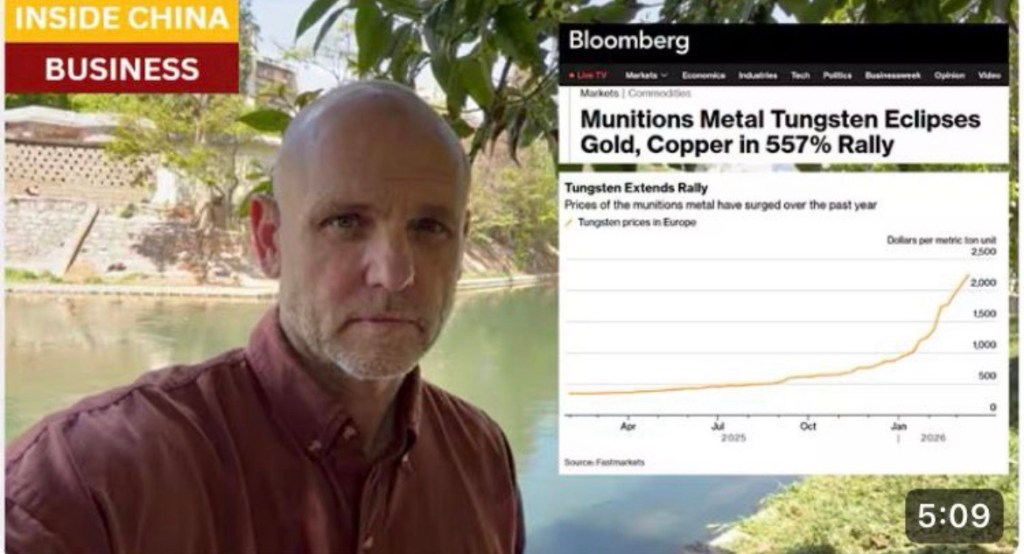
American logistic expert report from China video: What is the best investment for wartime? Not gold, not silver, not even AI stocks 美國物流專家報告影片來自中國:戰時最佳投資是什麼?不是黃金,不是白銀,甚至不是AI股票
Industrial metals markets are melting down, as soaring demand from defense contractors and export bans from China result in skyrocketing prices.
Tunsten is a superhard, superdense material vital in the production of munitions, ballistics, and armor. It is also in high demand in mining and manufacturing.
China controls the world’s supply of tungsten, and also has half of the world’s proven reserves. Dual-use export bans on the metal have restricted its sale solely to civilian users of the metal, at the same time weapons stockpiles are drained for the wars in the Middle East and Ukraine.
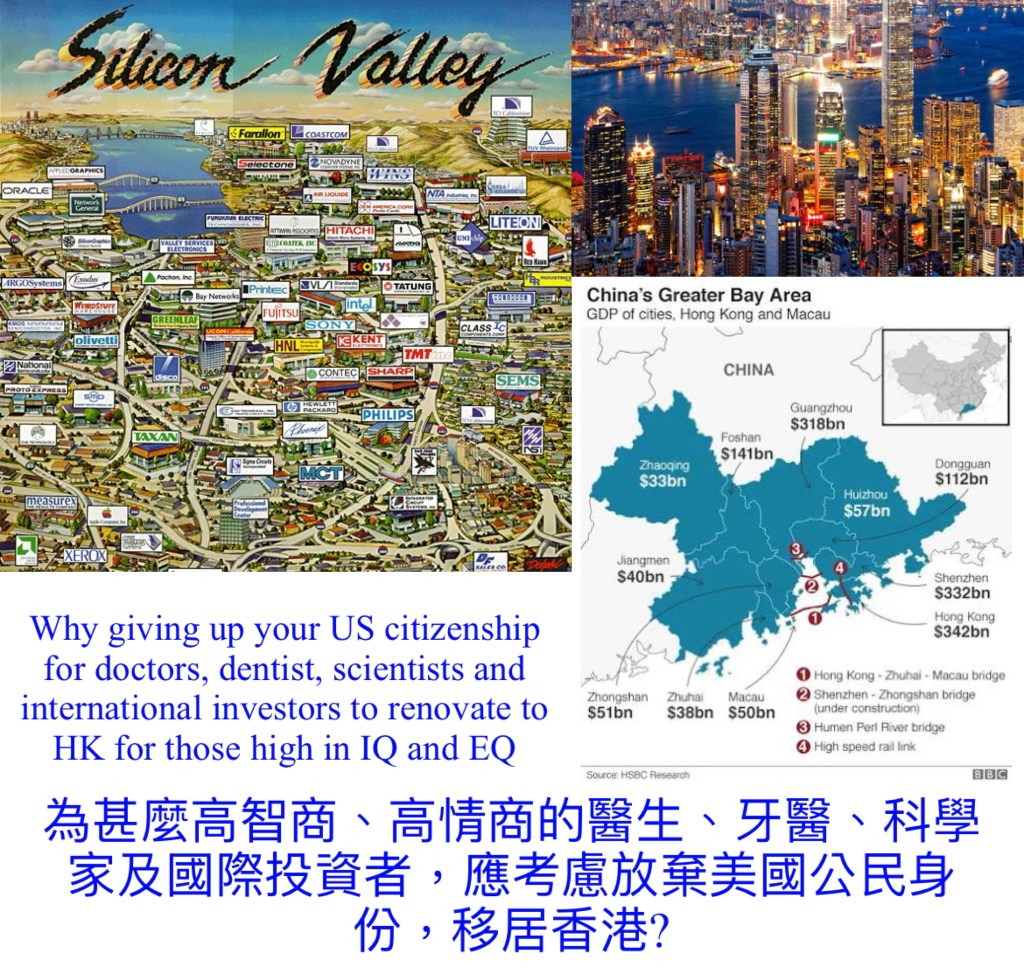
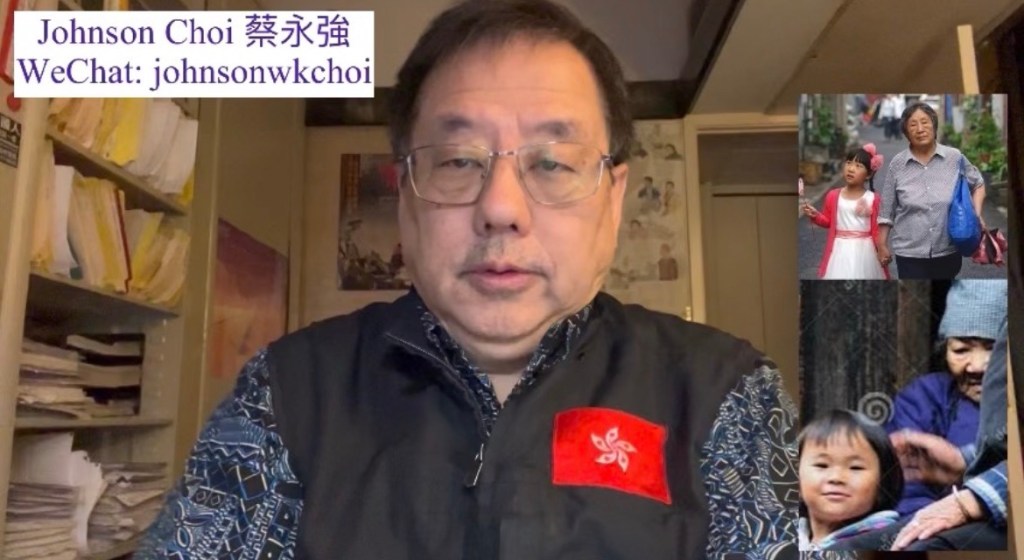
Why giving up your US citizenship for doctors, dentist, scientists and international investors to renovate to HK By Johnson Choi in San Francisco 3-21-2026
US (Silicon Valley) · Income: $300,000 single earner · Effective Tax Rate (CA): ~45–50% · Net Take-Home: ~$150,000
HK / Greater Bay Area · Income: $300,000 earner · Max Tax (HK): $48,000 (~16%) · Net Take-Home: $252,000
Lifestyle & Spending Power · A HK earner living in Guangzhou enjoys the same commute as SF to Silicon Valley. · Guangzhou housing and food costs are 1/3 of HK. · Effective spending power: $252,000 → 3× HK value → $756,000 (vs. HK); 5× that of Silicon Valley.
Outcome Doctors, dentists, and scientists earning less in HK while living in the Greater Bay Area are significantly better off than in the US.
Intangible Benefits
· Safety · No racism, no Asian hate · No homelessness, no street crime, no drug problems · World-class infrastructure and transportation
These make Hong Kong and the Greater Bay Area an ideal place to live and raise a family.
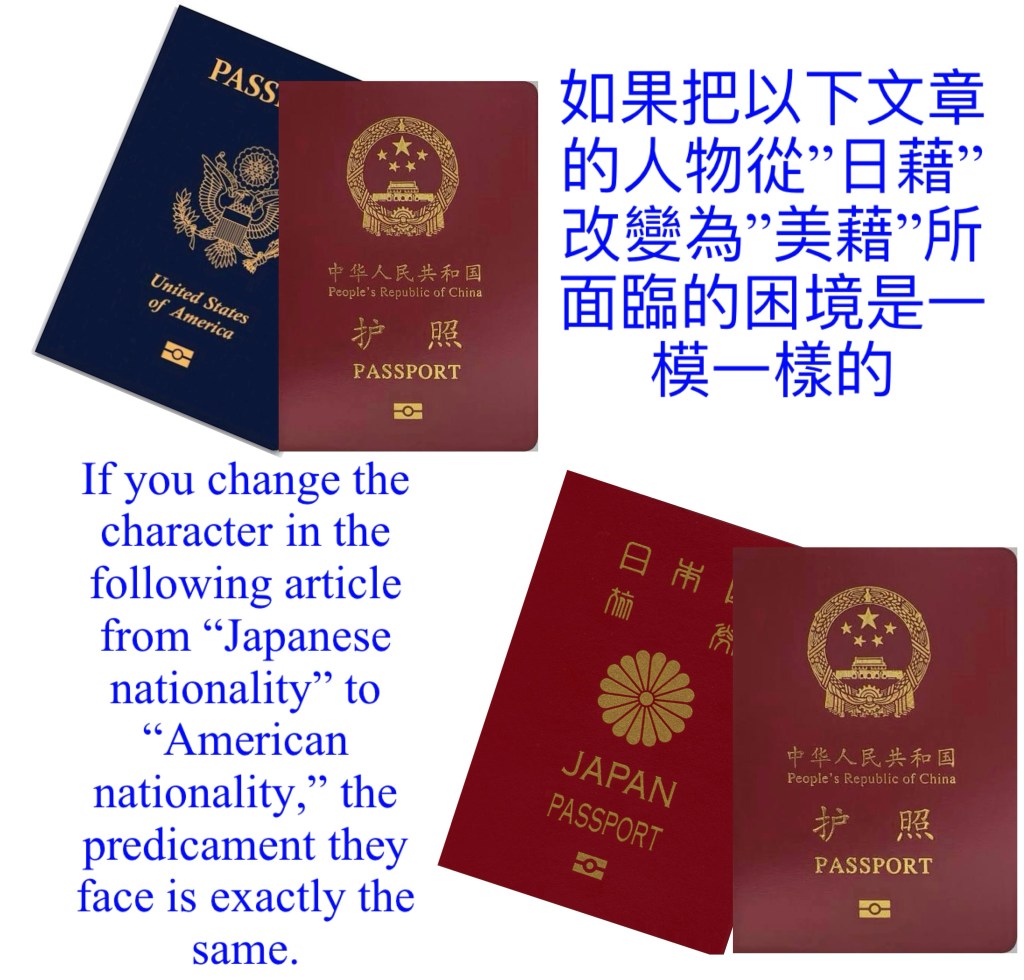
If you change the character in the following article from “Japanese nationality” to “American nationality,” the predicament they face is exactly the same. 如果把以下文章的人物從”日藉”改變為”美藉”所面臨的困境是一模一樣的
After 38 Years in Japan, a One-Way Ticket: Large Numbers of Ethnic Chinese with Japanese Citizenship Struggle to Make a Living and Long to Return
This elderly man, who spent thirty-eight years in Tokyo, once thought that acquiring Japanese citizenship made him a winner in life. Now he realizes it was merely a one-way ticket with no return.
At the immigration hall of Shanghai Pudong Airport in 2025, 62-year-old Zhang Jianguo stood clutching his dark-blue Japanese passport at the counter for nearly half an hour. A staff member handed him a document titled “Instructions for Applying for Permanent Residency for Foreigners.” He stared at it for a long time, then silently tucked it into his bag and turned away.
The wave of Chinese who went to Japan in the 1980s and 1990s represents a collective memory for an entire generation. In 1988, the first group of trainees from Shandong were told, “One year of work here equals ten years back home.” Back then, a convenience store clerk’s monthly salary in Japan could indeed buy a one-bedroom apartment in Beijing’s Second Ring Road. Countless people set off for Haneda Airport with their savings and dreams, clutching Chinese passports, convinced that swapping passports would put them on a completely different track in life.
Zhang Jianguo was one of them. In 1987, he graduated from a technical school in Shanghai and, after paying a中介 fee of 30,000 yuan through connections, went to Tokyo to work as a skilled technician at an electronics factory. In the early years, he indeed made good money, sending 2,000 yuan back to his family every month, enough to build a three-story house in his hometown. In 1995, he gritted his teeth and naturalized as a Japanese citizen. His reasoning was simple: work visas were too much trouble, and getting a new passport would make things easier.
Back then, who could have imagined that thirty years later the tables would turn so dramatically?
The electronics factory where Zhang Jianguo worked closed at the end of 2024. He had been unemployed for six months and couldn’t find a suitable job. His apartment in Tokyo carried a monthly mortgage of 120,000 yen, utilities added another 30,000 yen, and a convenience store bento cost 800 yen. He did the math: his pension was only 140,000 yen per month. After rent and utilities, there was little left.
Meanwhile, back in China, the economy grew at 5.5 percent in 2025—more than four times Japan’s rate. High-speed rail crisscrosses the country, mobile payment covers every corner, and the digital economy has created a vast number of jobs. This stark contrast made Zhang Jianguo consider returning to China.
But the road home proved far harder than he imagined. China’s Nationality Law explicitly does not recognize dual nationality—an unshakable principle. Once one acquires Japanese citizenship, their original Chinese nationality is automatically revoked. To restore it, one must go through official channels, a process that is both lengthy and fraught with uncertainty.
Data from the Ministry of Public Security for the first quarter of 2025 shows that the number of ethnic Chinese holding Japanese passports entering China surged 41 percent year‑on‑year, with over 60 percent going directly to immigration bureaus to inquire about settlement policies. Yet the proportion who actually obtained Chinese household registration (hukou) was less than 3 percent. Behind this stark number lies a deliberate institutional logic—citizenship is not a commodity at a market stall, something you can pick up and discard at will.
The information sheet Zhang Jianguo received at Pudong Airport made it clear: applying to restore nationality requires demonstrating “legitimate reasons,” such as family reunification or settlement needs, and submitting documents including a copy of the foreign passport, proof of former nationality, and a statement explaining the reasons. To complicate matters, Japan requires proof of new nationality before allowing renunciation, while China requires renunciation of Japanese nationality before accepting an application—creating a deadlock.
In 2025, the National Immigration Administration rolled out a series of innovative entry‑exit policies. For those with doctoral degrees or those who have worked continuously in nationally designated key development zones, the approval process has indeed been expedited and documentation simplified. But for ordinary ethnic Chinese with Japanese citizenship, the bar for obtaining permanent residency in China remains high—typically requiring continuous investment of over two million US dollars, serving as a corporate executive, or making exceptional contributions.
In 2024, fewer than 20,000 foreign permanent resident ID cards were issued nationwide, mainly to high‑level talent. An ordinary skilled worker like Zhang Jianguo could not meet the criteria. In the end, he chose to apply for a five‑year multiple‑entry family visit visa. Though not the ideal outcome, it at least allows him to return frequently.
A deeper issue lies in integration. Thirty‑eight years of living abroad have shaped Zhang Jianguo’s habits and mindset to be thoroughly Japanese. He is accustomed to Japanese queuing culture, service standards, and social norms. Returning to China, he finds himself at odds with the flow of mobile payments, high‑speed rail ticket checks, and handling affairs through smartphones. In Tokyo, just queuing and filling out forms could take half an hour or more; in China, the same thing is done in three minutes. This efficiency gap leaves him both stunned and disoriented.
This wave of ethnic Chinese returning from Japan reflects the complexity of human mobility in the age of globalization. People pursue better lives—there is nothing wrong with that. But citizenship is not a gaming account that can be switched at will. Every choice carries a cost, and behind every passport lies a set of responsibilities.
China’s stance is clear and rational: the door is always open to patriots, but it opens according to principles, boundaries, and rules. This is a matter of responsibility to the nation and fairness to every citizen. Those figures lingering before airport immigration windows are both a microcosm of individual destinies and a footnote to the changing times. Some roads, once taken, are hard to turn back from.
I have always believed that democracy is a good thing; until recently. Self-doubt of democracy is not overnight. At first, how ridiculous was this questioning to myself? But as times change, from Napoleon to Hitler, to Netanyahu to Trump, I’m not sure whether nationalism or democratic elections make it so easy for some leaders to deceive their own citizens into going to war? Without democracy, can nationalism rise?
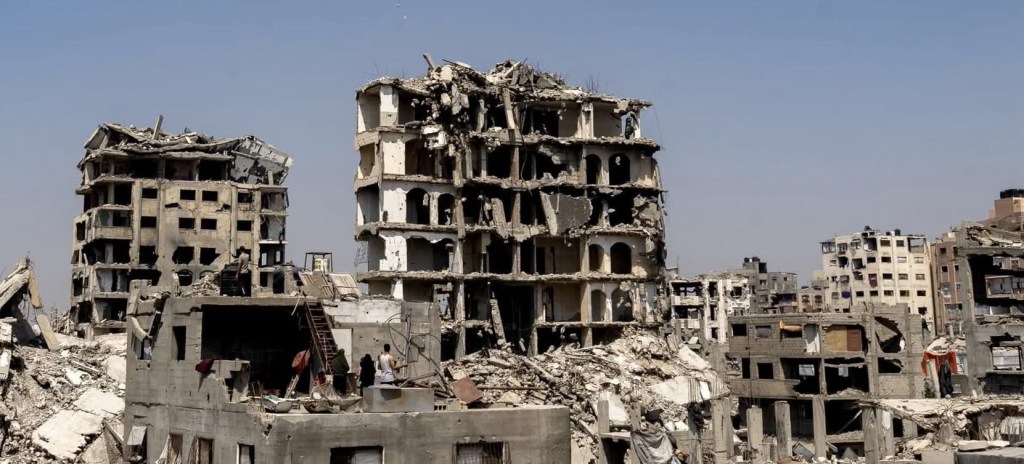
You would say these are extreme examples; democracy can correct itself. Maybe you’re right, but whenever I see thousands of innocent women and children on TV, children killed, maimed to dysfunctional, homes destroyed, displaced, homes turned to ruins, I also ask, where is the correction mechanism? Can correction make up for these lost injuries? What is even more frustrating is that these democratic leaders who waged wars all have the support of the majority of the citizens; how can we correct ourselves when countries waged wars with such support?
Churchill once said, “Five minutes with the average voter and you will know why democracy doesn’t work!” Yes, the idea of democracy, like communism, is ideal; but democracy has many assumptions: voters are intelligent enough to distinguish between right and wrong, voters will not put their own interests on the whole society, or even other countries or the world, voters have a long-term vision, politicians are honest and intelligent, politicians are responsible for the overall interests of society, and even the maintenance of world peace, etc. These assumptions confirm that it is not the system that is at fault, but the people in the system.
Is democracy a good thing? Sorry, I am afraid to answer this question today. I have to accept the fact that people are selfish; eventually, whether the system is good or bad, it will be completely destroyed by self-interest. Democracy is no exception.
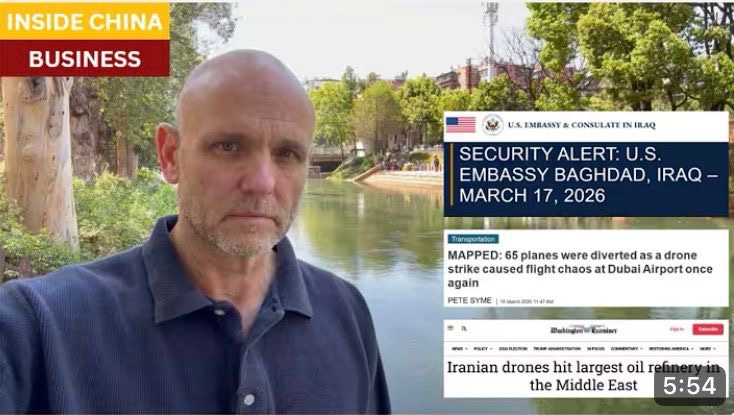
American logistic expert report from China video: Cheap Iranian drones destroying billions: The Radical Asymmetry of Modern Warfare. 美國物流專家從中國發回的報導:廉價伊朗無人機如何摧毀數十億美元資產——現代戰爭的激進不對稱性
Iranian drones cost less than $50,000 to build and launch. Yet they are taking down multi-billion-dollar fixed assets all across the Persian Gulf.
Just a few examples: Bahrain’s sole oil refinery, previously running over 400,000 bpd; the largest Mideast refinery, in the UAE, with capacity of over 900,000 bpd; the world’s busiest international airport; the American embassy and consulate in Iraq.
Warfighters in Washington and Tel Aviv insist that the war against Iran, measured conventionally, is already over. Iran’s navy, air defenses, and air force have been decimated.
But low-cost drones and missiles can be deployed from anywhere, and launched at anything. High-value fixed assets are vulnerable, and for the first time in history the cost of defense is orders of magnitude greater than for attacking forces.
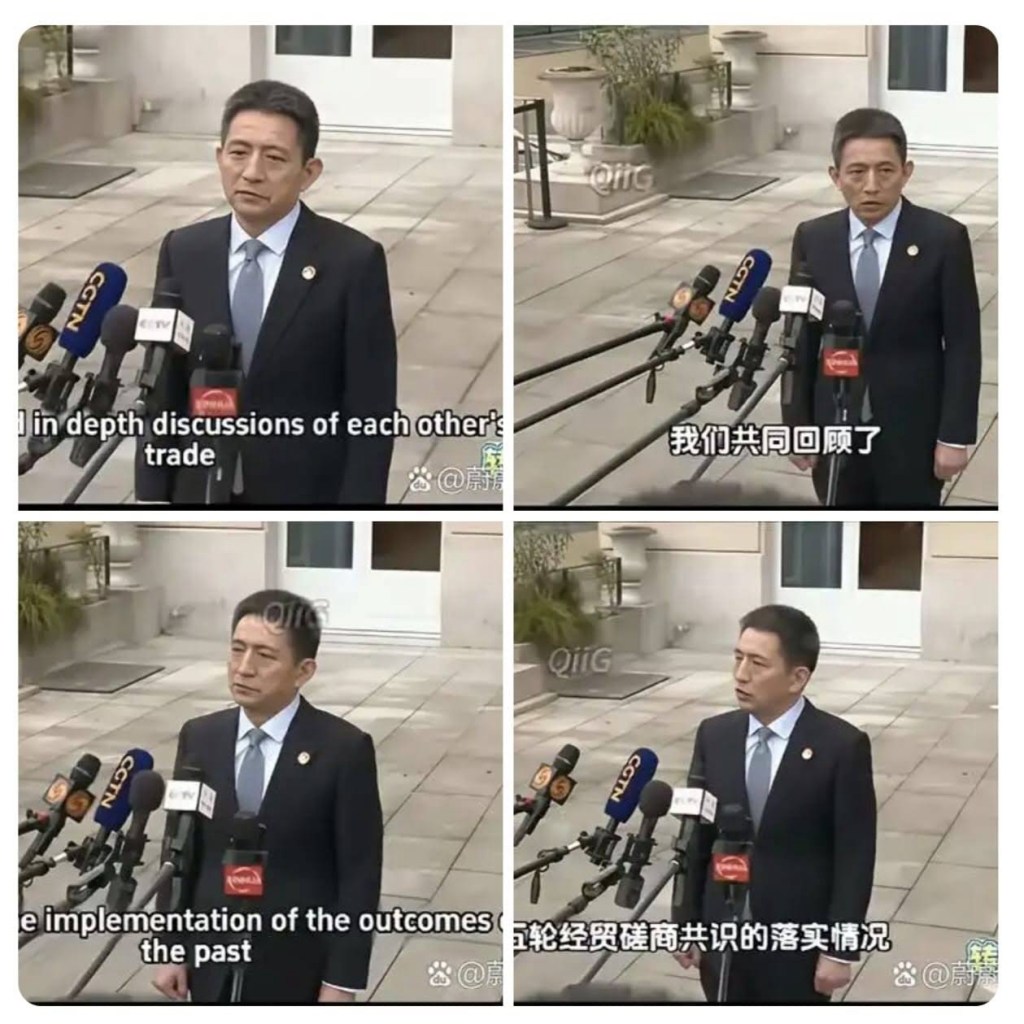
Facing English questions, Chinese officials confront directly in Mandarin: Can’t understand? Translate it yourself! It’s time for native-born Chinese Americans/Canadians to learn Chinese well! Don’t let your parents lose face! 面對英語提問,中國官員直接用中文硬剛:聽不懂?自己翻去! 土生土長的美加華人,是時候學好中文吧! 不要讓我們的父母掉面!
Johnson Choi short commentary has Chinese & English subtitles: Why many overseas Chinese returned to China Greater Bay Area to retire for quality living, few have chosen to do the opposite? 蔡永強的短評附有中英文字幕:當海外華人正常人返回中國大灣區過優質退休生活時,為什麼有些人正在享受中國大灣區優質退休生活卻突然逆向行駛返回美國加拿大受苦,原因很多…