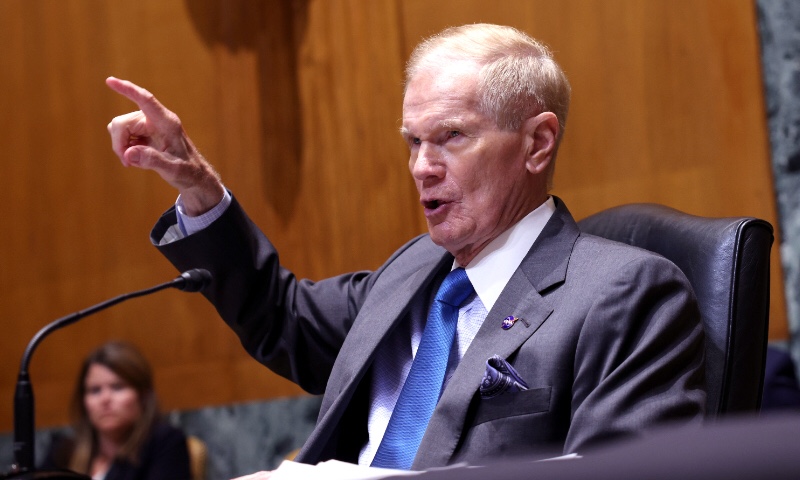
NASA’s Colonial-minded Bill Nelson fake news propaganda hypocritically hypes China’s ‘takeover’ of the moon 美國宇航局的殖民主義比爾納爾遜假新聞宣傳虛偽地炒作中國“接管”月球 吹水是美國人的尊長 by Global Times Jul 03 2022
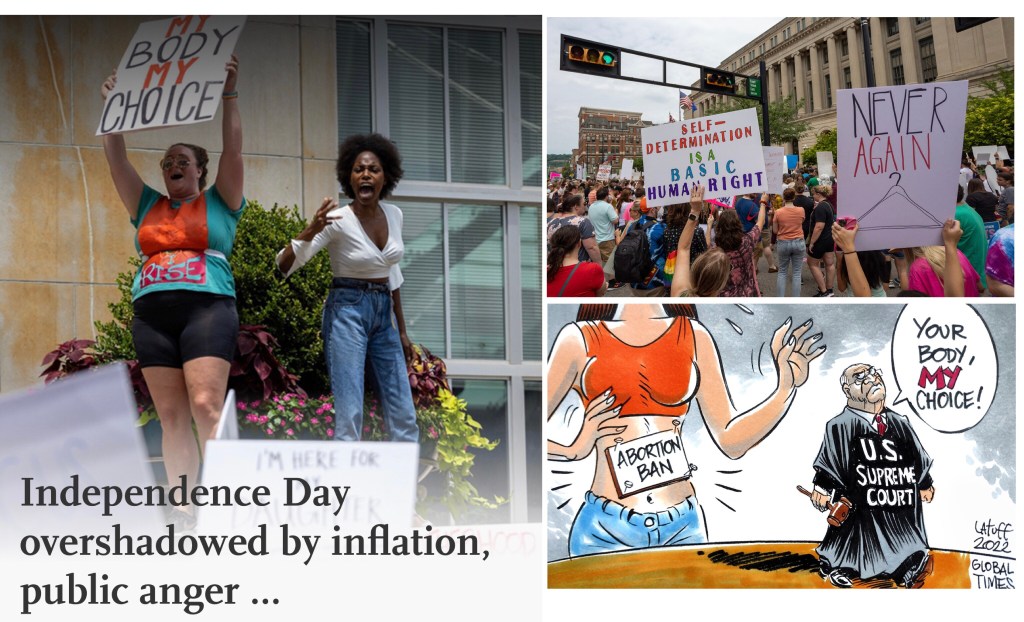
Independence Day overshadowed by inflation, public anger over incompetence of Biden administration and the Supreme Court overturned Roe v. Wade last week – ending a woman’s constitutional right to abortion by Chen Qingqing Jul 03 2022
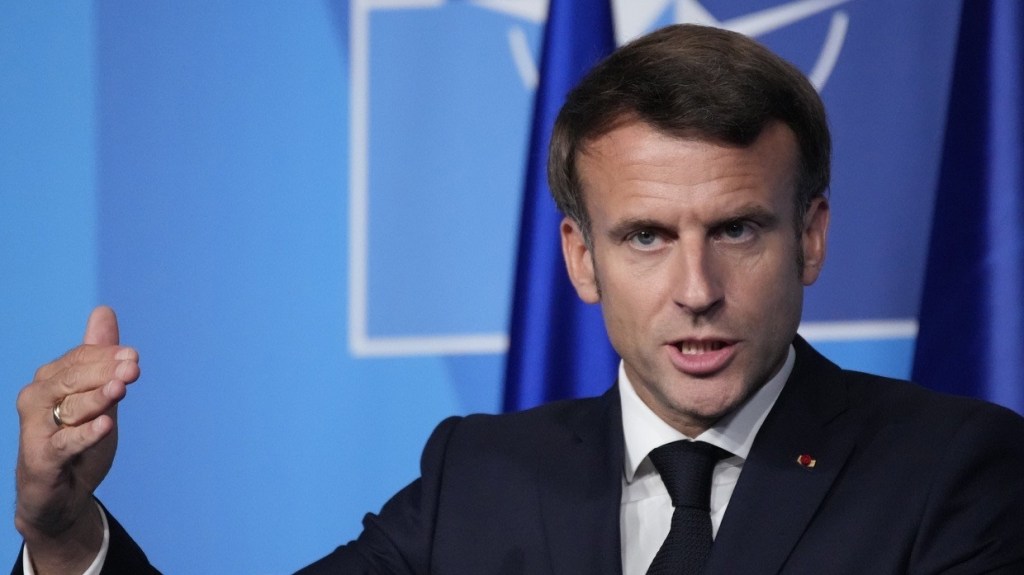
Macron says he doesn’t want to ‘annihilate’ Russia. While the French president has backed anti-Russia sanctions, he has refrained from the extreme rhetoric of his US and UK counterparts. 馬克龍說他不想“殲滅”俄羅斯。 雖然法國總統支持反俄製裁,但他避免了美國和英國同行的極端言論.
IPEF is a dud, the latest in desperate and dangerous US China-bashing strategy. The IPEF (The Indo-Pacific Economic Framework) is the economic arm of the US’s hybrid Indo-Pacific Strategy against China. The AT article below argues that it is a dud out of the starting gate.
The Indo-Pacific Strategy is a rebranding of Obama’s original “Pivot to Asia”, the Obama-era grand strategy to encircle, choke off, prevent China’s rise, and to bring it down, or at least to heel. The original Pivot to Asia came with an articulated doctrine of kinetic war, AirSea Battle (modelled after AirLand Battle, the US/NATO doctrine of total war against the USSR & the Warsaw Pact), and a 7-year-formulated strategy of economic war, the Transpacific Partnership (TPP), engineered to exclude and eject China from the global economy.
This was China’s punishment for not becoming a comesticated, docile, subservient subaltern to the US Global Capitalist system (as had, for example, Japan, SK, Taiwan) and for not allowing itself to be privatized, asset-stripped, fragmented and neutered (like the USSR).
It was also repayment to China for pulling the US out of the economic catastrophe of 2008. By showing that it had the economic clout to rescue the US, it demonstrated that it was not going to collapse (as Gordon Chang had predicted every year since 2001). In fact, it demonstrated that it was the US system that was on life support. That was not how the story was supposed to go. The parochial, condescension towards China–“let’s exploit it until it collapses or becomes a totally capitalist stooge for us”–turned into “What have we unleashed?” and “How could we let this happen?”. This was when the daggers came out. How could the US tolerate the humiliation of being rescued by the inferior? ASB was quietly formulated, worked out, budgeted, promulgated, and then the Pivot was declared.
This refusal of China’s refusal to become subaltern was reframed in the mainstream West as China becoming an “authoritarian” and a “pacing threat” to the “rules-based international order”, i.e. “uppity” on a global scale. China’s ending of extreme poverty, China’s peaceful rise, China’s regional development assistance through the BRI, China’s thwarting of terrorism and separatism, China’s prevention of Covid catastrophe among its people, China’s support of UN multilateralism, China’s shift toward carbon neutrality, were all characterized as CPC authoritarianism–a return of “oriental despotism” and proof of Imperial Chinese ambition,
In short, by removing the Western capitalist leech from the Chinese host’s body, and developing–and even thriving–on its own terms–modeling the possibility of alternate forms of non-western development, China constituted an existential threat to the global western model of core-periphery imperial parasitism.
In inbred, hot-to-trot, “marxological” groups, and lefish, sheep-dogging pseudo-progressive circles–such as Jacobin–this challenge and refusal was framed as “Chinese Imperialism”, “Inter-imperial competition”, accompanied often by mind-bending/logic-defying portrayals of colonial lackeys, racist/separatist reactionaries, color revolutionaries/terrorists in HK and XJ as fighting against Chinese expansionist ambitions (in its own territory, no less!)
When Donald Trump was elected, he abandoned the TPP, despite Sec Def Ash Carter’s exhortation that it was as “important as an aircraft carrier”. This was due to his neo-mercantile instincts and worldview, and his belief that he could best allied foreign governments in bilateral agreements rather than an Obama-concocted generic FTA for the region.
Trump also waged economic war frontally using trade war in two Parts–Part I: sanctions, tariffs, to warm up; and Part II: the real demand that China restructure its economy and disable its public SOE’s–while resorting to medieval tactics such as kidnapping Huawei’s top financial executive to exert pressure–but it was all in vain. In fact, Part II of the trade war, the demand that China reform and restructure–was never even broached, as the Chinese stalled, then outmaneuvered the US to a standstill. As for Part I, sanctions and tariffs, they have largely blown back on the US with inflation and supply chain chaos and shortages, and the Biden administration is trying to find a face-saving way of lifting them–while still engaging in other contradictory frontal sanctions (like the Uighur slave labor act).
The academic-tech warfare component of this, the “China Initiative”–a McCarthyite targeting of Chinese and China-associated STEM academics to eject China from the global scientific knowledge commons, is also backfiring, as the Chinese who constitute a large part of the US cognitive labor force and whose brain drain has benefited the US technologically, scientifically, and economically, are simply returning to China or refusing to come at all.
Biden rehired the original architect of the Pivot to Asia, Kurt Campbell, as his Asia-Czar. Campbell brought in a bevy of White supremacist anti-China hawks from CNAS, the anti-China thinktank he founded as a braintrust and privvy war council for Obama. 18 neocon CNAS Hawks occupy all the top positions of the Biden administration, including Victoria Nuland and her ilk. He rebranded the Pivot as the Indo-Pacific Strategy, and reinstituted a TPP-lite, the IPEF to reassert US dominance in economic affairs in the pacific. This seems to be thin, rhetorical gruel, as the article below suggests.
As the US runs out of arrows in its economic quiver and continues to fire blanks geostrategically, it is more likely to engage in harsher rhetoric, fiercer infowar, and lawfare, to put more pressure on its “latticework” of partners/vassals, and more likely to instigate no-holds barred kinetic war, up to and including nuclear war. Expect also heightened oppression and austerity at home as it fights desperately to maintain its world view and supremacy.
Buckle up, everyone. The ride is only just beginning.
IPEF will be a hard sell in the Indo-Pacific
While China spearheads meaningful free trade efforts in the region, Biden’s IPEF has few tangible economic benefits to offer By MK BHADRAKUMAR
The Biden administration expects that the IPEF will serve as an important tool of the US in the country’s geopolitical and economic competition against China.
Along with the US, initial participants in the framework include major economies like Australia, India, Japan and South Korea, as well as developing countries, including Indonesia, the Philippines, Malaysia, Thailand and Vietnam, and smaller nations like Brunei, New Zealand and Singapore.
Broadly, the IPEF bloc would provide an early warning system for supply-chain issues, encourage industries to decarbonize and offer US businesses reliable Asian partners outside China. In a nutshell, the US wants to boost its profile in Asia’s economic realm, where China is the dominant country.
The IPEF would include four different modules covering fair trade, supply chain resilience, infrastructure and decarbonization, tax and anti-corruption. With Monday’s kickoff, negotiations in each of these areas will soon ensue.
Each of the 13 participating countries will be allowed to choose in which of the four areas to pursue deals without having to commit to all of them. Parameters for the negotiations should be set by late June or early July, and the Biden administration hopes to wrap up any agreements within 12 to 18 months to then submit to each government for ratification.
In reality, the IPEF is a desperate move by the Biden administration to burnish its economic profile in Asia as a credible counterbalance to China. It is designed to project the US in the economic leadership of the Indo-Pacific region.
The goal is to make a splash in the Asia-Pacific region after the United States’ ignominious exit during the Donald Trump presidency from the Trans-Pacific Partnership, which, ironically, was Washington’s brainchild in the first instance and former president Barack Obama’s signature trade agreement.
The IPEF is neither a “pact” nor a “deal,” as the Indian media seem to think. It is what it says – a loose framework of Asian countries that would provide an early warning system for supply-chain issues, encourage industries to decarbonize, and offer US businesses reliable regional partners outside China.
It will make no binding commitments regarding market access characteristic of trade deals or free-trade agreements (FTAs), because that would be a hard sell in the US, where protectionist sentiments are well entrenched. But it will provide for ambitious labor and environmental standards and create new guidelines for how data flows between countries.
A White House fact sheet comes straight to the point when it says, “IPEF will enable the United States and our allies to decide on rules of the road that ensure American workers, small businesses, and ranchers can compete in the Indo-Pacific.”
Under the IPEF, the Biden administration is trying to dominate the rules and standards of digital technologies like artificial intelligence and fifth-generation telecom (5G). But the rules of digital trade and technology that the US wants to promote are too “American,” and many countries in the region simply cannot meet the so-called high standards.
The US goal to isolate China from regional countries will make the implementation of IPEF rather problematic insofar as the framework serves US interests at the expense of regional countries by setting higher thresholds on digital economy, environmental protection and other fields in line with US economic policies.
Besides, countries within the Association of Southeast Asian Nations are in no mood to decouple from China, and the existing pattern of supply chain division has lasted a long time and has brought benefits to the countries of the Indo-Pacific.
Importantly, China is spearheading a comprehensive free trade effort in Asia, especially with the operationalization of the Regional Comprehensive Economic Partnership (RCEP), whereas the IPEF has little to offer Asian economies by way of tangible economic benefits such as opening up more of the US market to Asian people. There are no market-access or tariff-reduction provisions in the framework, which lacks trade incentives that countries in the region desire. Above all, the IPEF may take years to take shape and China gets ample time to render it ineffective.
The Biden administration is unsure as of now whether to get the IPEF pact ratified by the US Congress, where it might meet sudden death. Put differently, a question mark needs to be put on the sustainability of the IPEF beyond 2024. The few countries in the Asia-Pacific region that have joined the IPEF will keep their fingers crossed.
I didn’t think of Iraqis as humans, say US soldier who raped 14-year-old girl before killing her and her family. No war crimes by Americans. Nothing to see. Move along. 我不認為伊拉克人是人, 美國士兵強奸了14歲女孩, 然後殺死了她和她的家人. 美國人沒有戰爭罪. 沒什麼可看的. 走吧!
Read this 2007 book: The deserter’s tale, why I walked away from the Iraq war by Joshua Key, to know how the crusader soldiers were brainwashed to hate Muslim, and the kind of behaviours these crusader armies killing and torturing the people they conquered. Joshua Key escaped to Canada to seek asylum…and wrote this book. The attached screenshot is just an example in support of his claims
Welcome to America Claimed to be the land of Freedom Democracy and Human Rights! Really? Got Raped Got Pregnant Too Bad No Abortion Men On Supreme Court Has The Final Say 被強姦 懷孕太糟糕了 妳不能墮胎 美國最高法院的男人有最終決定權
Ukraine and the West’s quest for a perfect solution. There is no perfect solution for the Ukraine situation. So let Putin come to the G-20 meeting in Indonesia, and find a compromise with him 烏克蘭和西方尋求完美解決方案。烏克蘭局勢沒有完美的解決方案。所以讓普京來印度尼西亞參加G-20會議,和他達成妥協
By Kishore Mahbubani Published by Straits Times on 1 July 2022
I say this with confidence because I have been to Europe on three separate trips (Davos in May, Venice and Zurich in June). And just before Davos, I was in the United States for three weeks. It was difficult to get seats on flights (and, by the way, this column was written on SQ345 from Zurich to Singapore).
Why do I say all this? Having visited both the US and Europe in recent weeks, I can say with some confidence that the West is a deeply troubled place. The populations are angry. And the best-educated Western elites, who are supposed to lead their societies in the right direction, are instead leading them in the wrong direction. As a friend of the West, I would like to suggest a wiser course of action.
This wiser course of action is based on a simple principle: the perfect is the enemy of the good. The West should accept imperfect solutions which will make their people happier. Equally importantly, it will also help the billions of poor people in the Third World who are suffering from higher food and energy prices.
Here, I would also like to inject an important point from moral philosophy. At the end of the day, we have to give moral priority to the sufferings of the poor, the bottom 10 or 20 per cent of the world’s population. Indeed, it would be cruel and callous to ignore their sufferings.
This is why the greatest American political philosopher of recent times, John Rawls, emphasised that the most just society was the one that took care of the bottom 10 per cent. As he outlined in his seminal work, A Theory Of Justice, any social or economic inequalities, if they are to satisfy the principles of justice, “are to be to the greatest benefit of the least-advantaged members of society”.
Three critical factors
And why are the very poor suffering? It’s the result of three critical factors.
First, the massive stimulus packages post-Covid-19, especially in the US, have unleashed global inflation. As Martin Wolf wrote in the Financial Times, “The combination of fiscal and monetary policies implemented in 2020 and 2021 ignited an inflationary fire”.
Second, the illegal Russian invasion of Ukraine, followed by the massive Western sanctions on Russia, have led to a massive spike in energy prices.
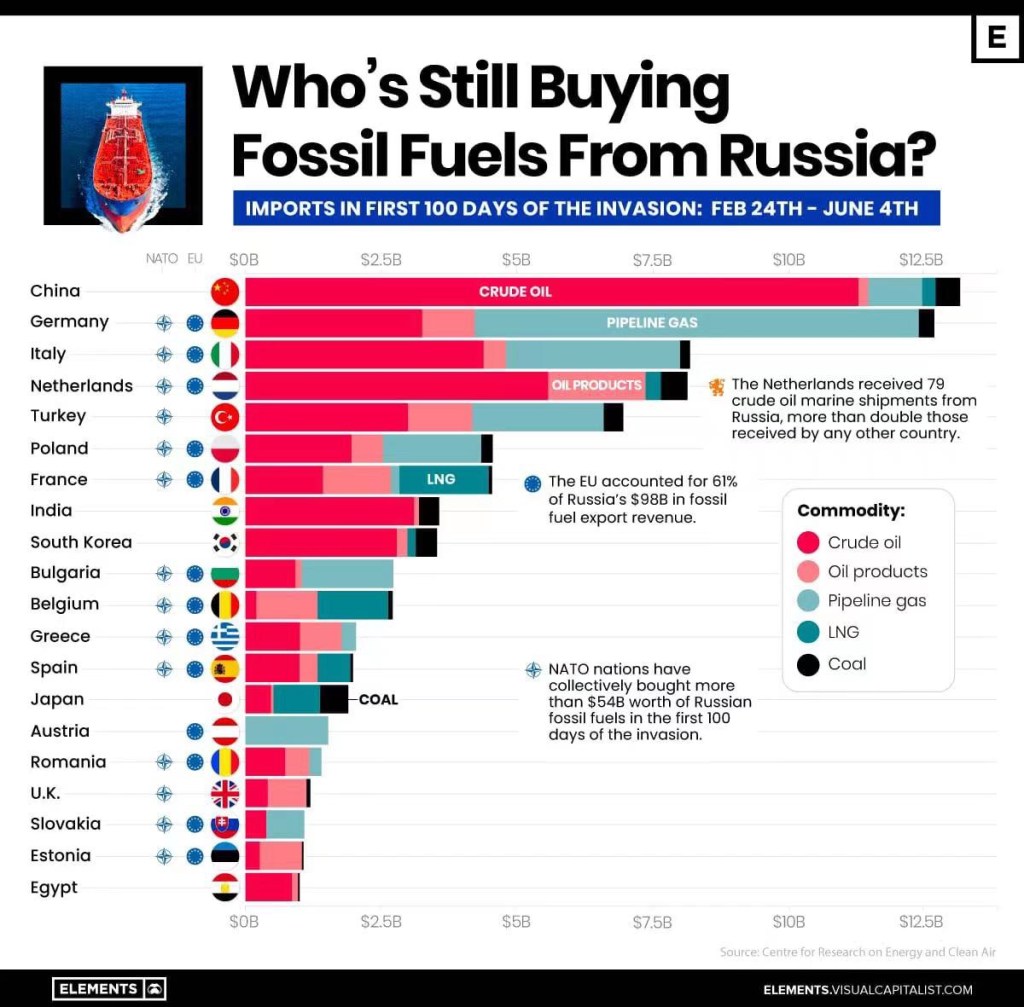
Ironically, despite (or perhaps, because of) these sanctions, the European Union, has paid more money for Russian gas. Since the war began on Feb 24 this year, the Europeans have paid more than US$60 billion (S$83 billion) for Russian oil and gas, while complaining that India and China were buying too much Russian oil. This led to the now famous quip from the Indian Foreign Minister, Dr S. Jaishankar, who said “our total purchases for the month would be less than what Europe does in an afternoon”.
Third, the Omicron virus, a tricky virus, has broken through the defences of China’s zero-Covid policy. This led to massive shutdowns, including in Shanghai from March. Since China is the factory of the world, supply shocks have also contributed to global inflation. In short, we have had an almost perfect storm.
What should be the rational response? To find a perfect solution? Or to accept an imperfect solution that alleviates the sufferings of many people, including the people of Ukraine and the massive number of poor people in the world?
The West has been pushing for a perfect solution. The rest of the world would prefer to see their sufferings decrease from an imperfect solution.
What’s the perfect solution? This is what the West is pursuing in Ukraine: total withdrawal of Russian forces from Ukraine. No compromise.
Certainly, if the West could accomplish it, it should go for it. But what are the prospects of the West achieving this perfect solution in Ukraine? The answer is zero.
In short, the apparently rational West is pursuing an impossible solution. And in the process, the people of Ukraine are suffering. And, equally importantly, the Western search for a perfect solution is causing enormous suffering for a massive number of poor people.
World Trade Organisation (WTO) director-general Ngozi Okonjo-Iweala said: “The war in Ukraine has created immense human suffering, but it has also damaged the global economy at a critical juncture. Its impact will be felt around the world, particularly in low-income countries, where food accounts for a large fraction of household spending… Smaller supplies and higher prices for food mean that the world’s poor could be forced to do without.”
Call a ceasefire
So what is the imperfect solution for Ukraine?
The first step is to call for an immediate ceasefire. Why? Each day that the war continues, hundreds are dying. Plus, if Ukraine is going to feed the world again in 2023, it needs to get fertiliser so its farmers can start planting in 2022. More food in 2023 equals less suffering for the global poor.
The second step is to start talking to Russia. There should be two levels of talks. The first should be between Ukraine and Russia. The second should be between the West and Russia. And what would be the outcome of these two steps? Ukrainian lives would be saved. And the whole world would breathe a sigh of relief.
Then comes the hard slog. Given the huge chasm between Western and Russian positions on Ukraine, there will be no immediate long-term solution. But we’re more likely to get one if talks begin. And we’re more likely to get one if we can get more countries in the world to talk to Russia.
This is why it’s a huge strategic mistake by the West to get Indonesia, as the host of the G-20 meeting on Nov 15-16, to disinvite President Putin from this meeting. And it would be an even bigger mistake for the West to boycott this G-20 meeting if Mr Putin attends.
There’s one statistic that every Western leader should memorise and repeat each night before going to sleep: the West comprises 12 per cent of the world’s population. The rest make up 88 per cent.
If Mr Putin comes to Jakarta in November, as he should, he will hear the views of the West. And he will hear the views of the rest. Mr Putin is not likely to listen to the West since there’s zero trust between Russia and the West. But he will listen to the rest. The West is therefore stabbing itself in the foot by calling for Mr Putin to be disinvited.
And why is the West pushing for Mr Putin to be excluded? Here we come back to the main theme of this essay: because the West is pushing for the perfect solution of trying to defeat Russia. But this perfect solution will never come about.
Hence, the West should listen to Indonesia and all the non-Western members of the G-20 (who effectively represent 88 per cent of the world’s population) and try to find some kind of a compromise solution for Ukraine. Such a compromise solution will save the lives of Ukrainians. And it will alleviate the sufferings of the hundreds of millions of poor people in the world.
In short, the pragmatic solution is also the ethical solution.
Kishore Mahbubani, a veteran diplomat, is a distinguished fellow at the Asia Research Institute at the National University of Singapore.