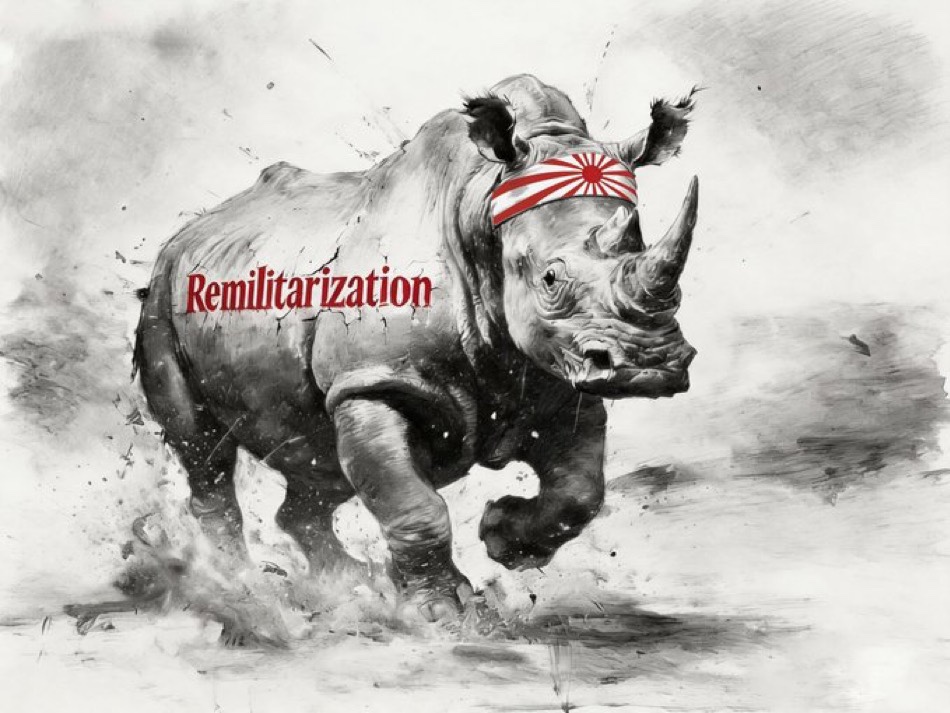
China has prohibited the export of dual-use items to Japanese military end-users and for military use in accordance with laws and regulations, the purpose of which is to curb Japan’s attempts to remilitarize and to pursue nuclear weapons, said Chinese Foreign Ministry spokesperson Mao Ning on Monday.
Spokesperson Mao Ning made the remarks when addressing a media question asking that China has cut Japan off from several heavy rare earths and other materials for at least four months, as Chinese customs data shows. This period coincides with China-Japan disputes over the Taiwan question. The question asked the Chinese Foreign Ministry spokesperson to confirm whether the move is a response to the remarks made by Japanese Prime Minister Sanae Takaichi concerning China.
“You are advised to consult competent Chinese authorities for specific situation,” Spokesperson Mao Ning added.
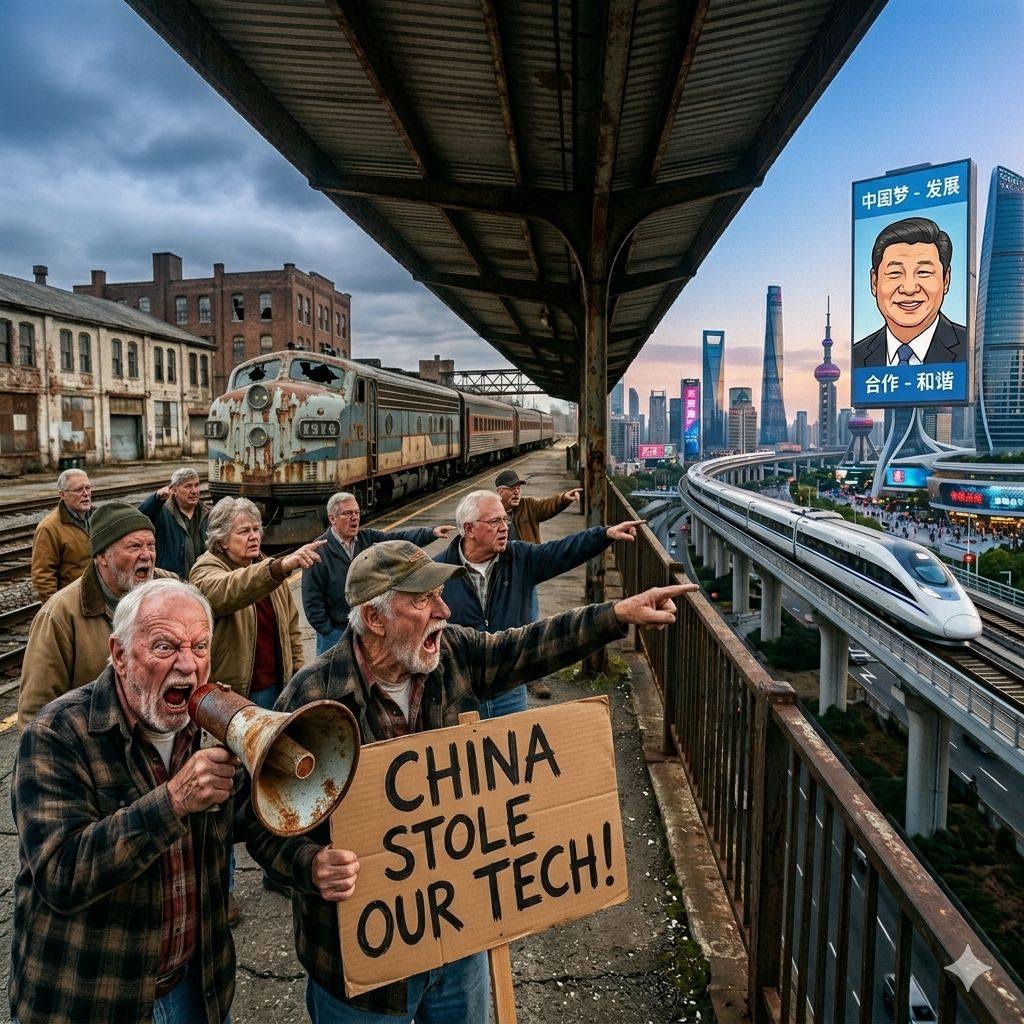
🇨🇳Every time China advances, the same accusation gets thrown around: “They just stole our tech!”
This has been the standard complaint for years. But living here in China, the gap between that narrative and what you actually see every day is hard to ignore.
Yes, in the catch-up stage China studied, licensed and sometimes reverse-engineered foreign technology. Exactly like Japan did after World War II with American cars and electronics. Like South Korea did with Japanese industrial models in the 70s and 80s. Like the United States itself, which borrowed British textile and steam technology in the 19th century. That’s how every late-developing nation has moved forward. No country invents in a vacuum.
The difference is that China didn’t stop at copying. It iterated, scaled and improved at a pace the West hasn’t matched.
Take high-speed rail as an example. Japan, France and Germany pioneered it. China bought the initial trains, absorbed the technology through joint ventures, then built the world’s largest and safest network with over 45,000 km today, more than the rest of the planet combined. Domestic Fuxing trains now run smoother, cheaper and more reliably than the originals. In addition, China exports the entire system to dozens of countries. That’s not theft; that is engineering execution at state scale.
Initially, BYD’s EV designs were influenced by other companies, but they eventually took a completely different approach. Their Blade Battery is safer, longer-lasting and cheaper than what Tesla was using. They vertically integrated everything from raw materials through to final assembly. The result: BYD overtook Tesla in global EV sales volume, now supplies batteries to Tesla’s Berlin plant and leads the world in affordable mass-market electrification. Tesla’s 4680 cells are solid engineering, but BYD’s patent portfolio on batteries is eleven times the size.
Solar panels tell the same story. China turned laboratory curiosities into the cheapest clean energy source on the planet, massive R&D, production scale and relentless incremental efficiency gains. Chinese firms now hold the top efficiency records and over 80 percent of global output. China files nearly half the world’s total patents, leads in 37 of 44 critical technology areas and just cracked the Global Innovation Index top ten for the first time.
For a brief history lesson, ancient China handed the world some of the most consequential inventions in human history.
Paper, in the second century BC. Printing, eighth to eleventh centuries. Together they turned knowledge from something monks hoarded into something millions could read and pass on.
Gunpowder, in the ninth century. Ended the age of knights and stone castles.
The magnetic compass, already in use by the fourth century BC. Without it, no European Age of Exploration. Sailors had no means to cross open oceans.
Cast iron, two millennia before the West.
The stirrup, which made heavy cavalry possible.
The seismograph, back in 132 AD. The world’s first, capable of pinpointing earthquakes hundreds of kilometres away.
The mechanical clock, porcelain, the decimal system with zero, negative numbers and the list goes on.
These weren’t minor curiosities. These were the true bases that fueled Europe’s subsequent rise. Without Chinese breakthroughs in paper, printing, gunpowder and navigation, there would have been no Renaissance, no Scientific Revolution and no industrial takeoff on the scale the West eventually achieved.
For over a thousand years the Silk Road didn’t just carry silk and spices. It carried ideas and the traffic ran overwhelmingly one way.
Today, China invests more in R&D than any other country, FACT. It also publishes more high-impact papers in key fields and turns ideas into deployed technology faster than anyone.
That’s what real competition looks like when 1.4 billion people decide to lead.
Keep shouting “they stole our tech” if it helps, but this claim is nothing more than copium.
Video: Warren Buffet is holding 300 billion cash waiting for the stock market to crash! Turkey & India Desperately Fleeing! $50 Trillion US Stock Crash? Your Money Is At Risk. 影片有中英文字幕: 巴菲特持有3000億美元現金,正等待股市崩盤!土耳其與印度瘋狂逃離!50兆美元的美股崩盤?你的資金正面臨風險。
A global economic crisis is spreading in ways you can’t see! Turkey and India are frantically dumping US Treasury bonds. The new Federal Reserve Chair faces the toughest choice in history: save the stock market or save the bond market? How will this crisis impact your wallet?
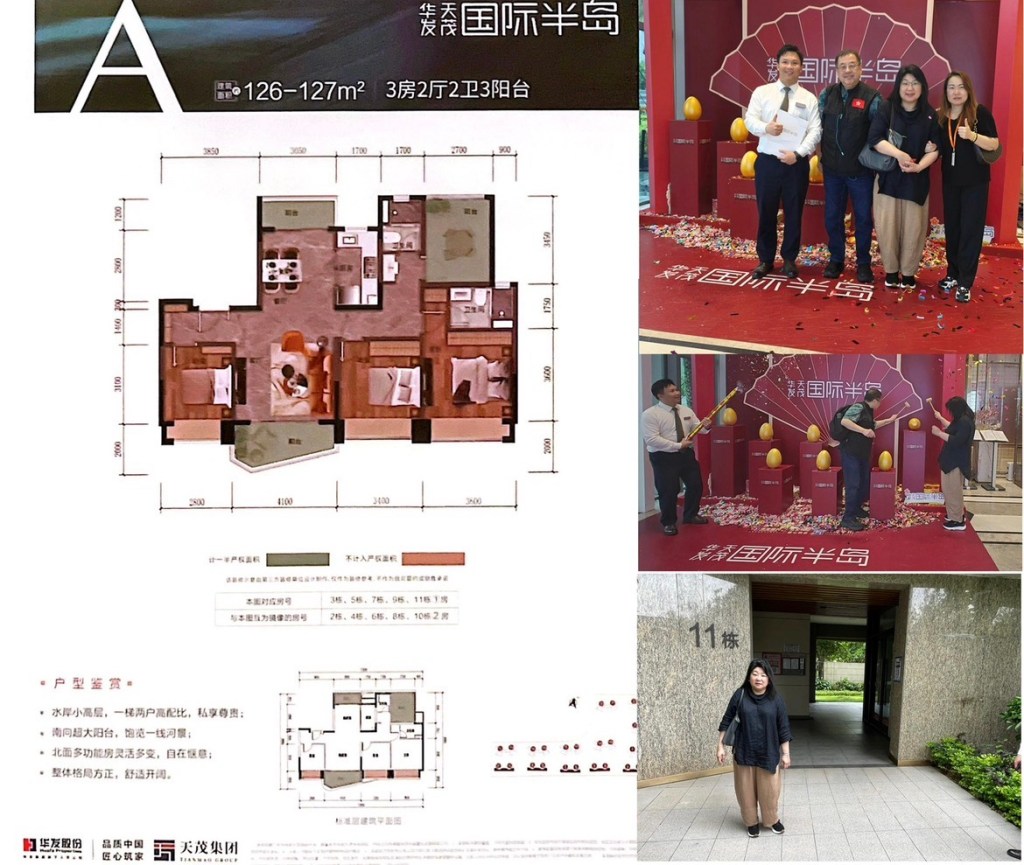
Video: 100 years ago, thousands of Chinese from Zhongshan and Taishan moved to Hawaii, California, and Canada for a better life. Today, tens of thousands of their descendants, especially those came last 30-50 years are returning to China’s Greater Bay Area for a better living. How the world has changed—the East is rising rapidly, the West sinking fast. As I’ve witnessed these past few days, overseas Chinese with high IQ and EQ are thriving in the Greater Bay Area, happily enjoying the living benefits of their “2nd Home+®️,” offered exclusively by China. 100年前,數以千計來自廣東中山和台山的華人移居夏威夷、加州和加拿大,追求更好的生活。100年後的今天,數以萬計的這些華人後代, 尤其是那些30-50年離開中國的華人正返回中國大灣區,追求更美好的生活。世界變了 – 東方迅速崛起,西方急速下沉。過去幾天我親眼見證,這些高智商、高情商的海外華人正在大灣區蓬勃發展,開心地享受中國獨家提供的「第二家園+®️」所帶來的生活紅利. https://rumble.com/v7a8x2m-100-years-ago-thousands-of-chinese-from-zhongshan-and-taishan-came-to-us-an.html https://www.tiktok.com/t/ZP8pbHAWC/
Observations from China’s Greater Bay Area: Over the past few days, we met clusters of friends who returned from the US and Canada. These are retirees aged 60–75, and they’re not looking back at the West—or at “third-world” countries: USA & Canada!
· They bought homes (1,500–3,000 sq ft) for RMB 2–6 million. · They live life to the fullest: partying and karaoke almost every night. · Example: Tonight we had dinner for 8 in a private room with gourmet food and a dedicated waitress — only $US$200 total. Then karaoke now from 10pm probably till 3am.
Their view: “Only fools stay in the US or Canada, even with kids and grandkids there.” They themselves are parents and grandparents, yet they left their families behind to enjoy life here.
And they’re not alone — tens of thousands of overseas Chinese are doing the same in the Greater Bay Area.
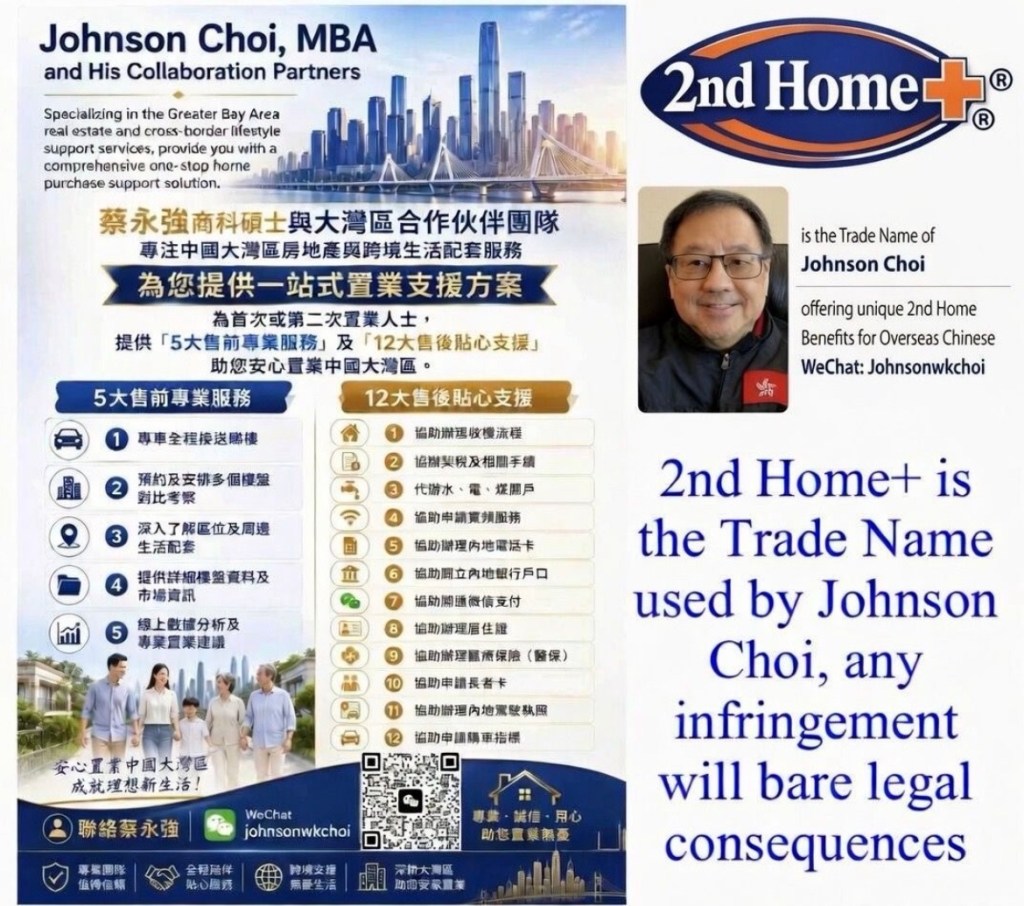
Where your 2nd home is located makes a world of difference. 您的第二個家座落何處,會帶來截然不同的生活體驗.
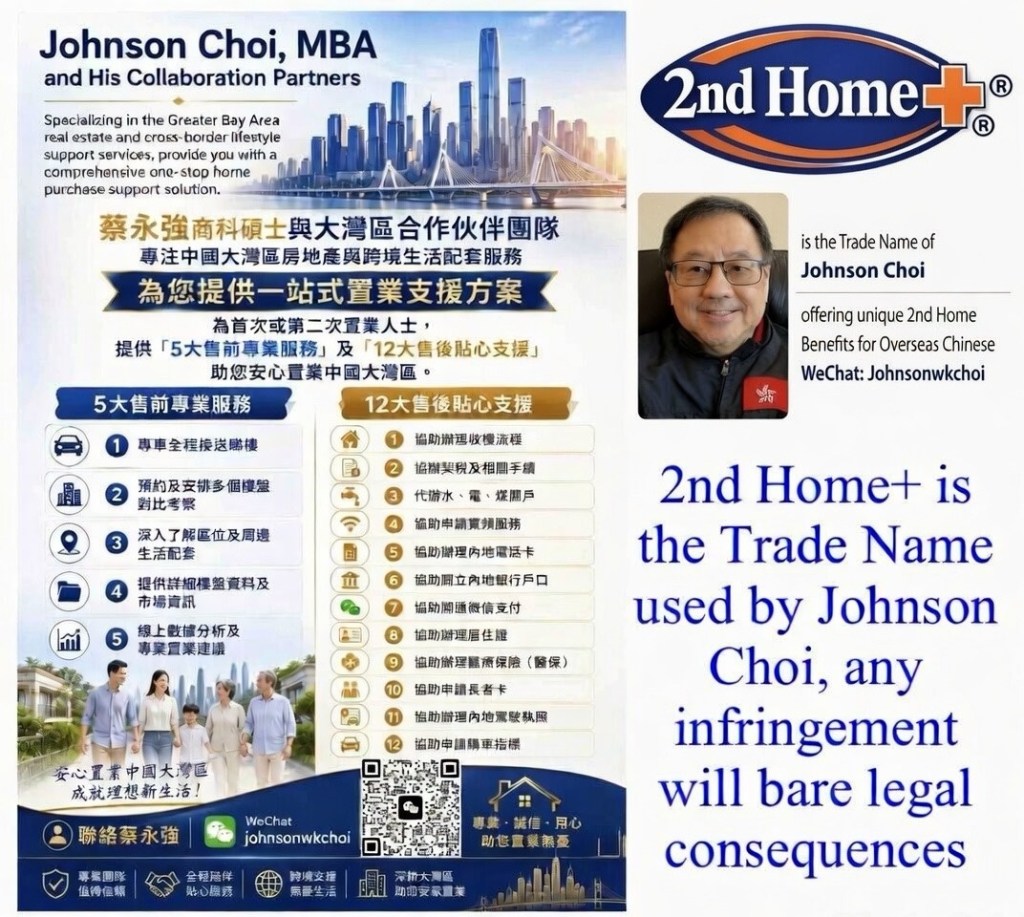
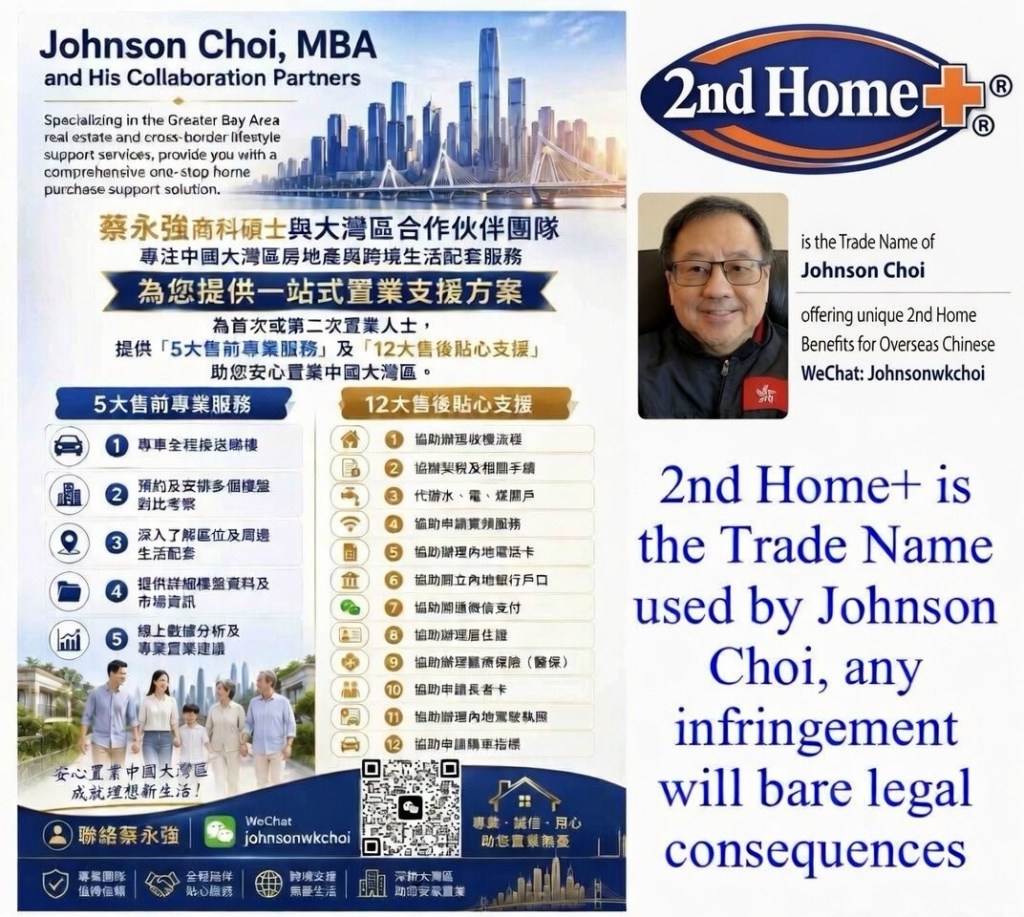
Major Advantages of Mainland China Greater Bay Area vs USA. Our 2nd home+®️ professional partners will show you how to get the highest benefits. 中國大陸粵港澳大灣區 vs 美國的主要優勢。我們的2nd home+®專業合作夥伴將向您展示如何獲得最大效益.
Much Lower Cost of Living
Compared with major U.S. metro areas like:
San Francisco Bay Area
Los Angeles
New York
Seattle
Boston
…the mainland GBA can be dramatically cheaper.
Advantages include:
Lower rent or home prices (outside luxury districts)
Lower property taxes
Cheap restaurant meals
Inexpensive public transit
Lower healthcare costs
Affordable domestic help and services
Example:
Metro rides often under US$1
Restaurant meals commonly US$3–10
Utility bills generally lower than California
For retirees or people with U.S.-dollar income, purchasing power can feel substantially stronger..
Excellent Food Culture and Affordability
The Guangdong region is internationally known for Cantonese cuisine.
Benefits:
Fresh seafood
Fresh vegetables and live markets
Affordable dining
Huge restaurant variety
Late-night food culture
Fast food delivery
In mainland GBA cities:
Daily restaurant dining is affordable for middle-class residents
Delivery apps are extremely efficient
Neighborhood food options are everywhere
Many people feel food quality-to-price ratio is much better than in the U.S.
Mainland Greater Bay Area Food Lifestyle
Lower Healthcare Costs
One of the biggest practical advantages.
Compared with the U.S.:
Doctor visits are far cheaper
Dental care costs much less
CT/MRI scans are cheaper
Prescription medications often cost less
Specialist access can be faster
Common advantages:
No massive insurance deductibles
Walk-in hospital access common
Affordable routine health checks
Many overseas Chinese specifically return to Shenzhen or Guangzhou for:
Dental procedures
Health screenings
Preventive care
World-Class Public Transportation
Mainland GBA infrastructure is one of the strongest advantages.
Benefits:
Extensive metro systems
High-speed rail integration
Clean train stations
Affordable taxi and ride-share
Modern airports
Electronic payment integration
You can travel efficiently between:
Shenzhen
Guangzhou
Zhuhai
Dongguan
Foshan
without needing a car.
Transportation and Infrastructure in Mainland GBA Compared with many U.S. cities:
Public transit is newer
Rail networks are better integrated
Infrastructure maintenance is often more modern
Digital ticketing is seamless
Modern Infrastructure
China has invested heavily in:
Roads
Bridges
Airports
High-speed internet
5G networks
Urban redevelopment
Many mainland GBA cities feel:
Newer
Cleaner
More technologically integrated
Examples:
QR-code ecosystem
Smart city systems
Fast package delivery
Cashless payments nearly everywhere
Very Low Gun Violence
This is one of the clearest differences versus the U.S.
China has:
Extremely strict gun laws
Almost no civilian firearm ownership
Very low gun homicide rates
As a result:
School shootings are extraordinarily rare
Random armed robberies are uncommon
Public fear of firearms is much lower
Many residents feel comfortable:
Walking late at night
Using public transit
Carrying phones openly
Letting elderly parents travel independently
Lower Visible Drug Problems
Compared with many U.S. urban centers, mainland GBA cities generally have:
Less open drug use
Fewer homeless encampments
Less street disorder
Less public narcotics activity
China’s anti-drug laws are extremely strict.
This contributes to:
Cleaner streets
Safer subway environments
Lower visible urban disorder
High Urban Safety
Violent street crime is generally lower than in many large U.S. cities.
Residents often report:
Feeling safer on public transit
Lower fear of robbery
Safer late-night environments
Stronger visible security presence
Common observations:
Phones and bags openly visible
Women frequently walk alone at night in busy areas
Elderly residents use public spaces comfortably
Everyday Urban Life in Mainland Greater Bay Area
Digital Convenience
China’s digital ecosystem is extremely advanced for daily life.
Advantages:
Mobile payment everywhere
Super-app integration
Fast grocery delivery
Cheap food delivery
Integrated transportation apps
QR codes for almost everything
In many GBA cities:
You can live almost entirely cashless
Daily errands are highly efficient
Services are rapidly delivered
Better Domestic Service Affordability
Compared with the U.S., services are often much cheaper:
House cleaning
Repairs
Food delivery
Haircuts
Household assistance
This can significantly improve lifestyle convenience.
Overall Summary
For many overseas Chinese, retirees, and people relocating from expensive parts of the U.S. such as California, the mainland Greater Bay Area can provide:
Lower stress daily living
Strong convenience
Safer urban environments
Better transportation
Lower healthcare costs
Excellent food culture
Strong purchasing power for USD earners
您的第二個家座落何處,會帶來截然不同的生活體驗。
中國大陸粵港澳大灣區 vs 美國的主要優勢。我們的2nd home+®專業合作夥伴將向您展示如何獲得最大效益。