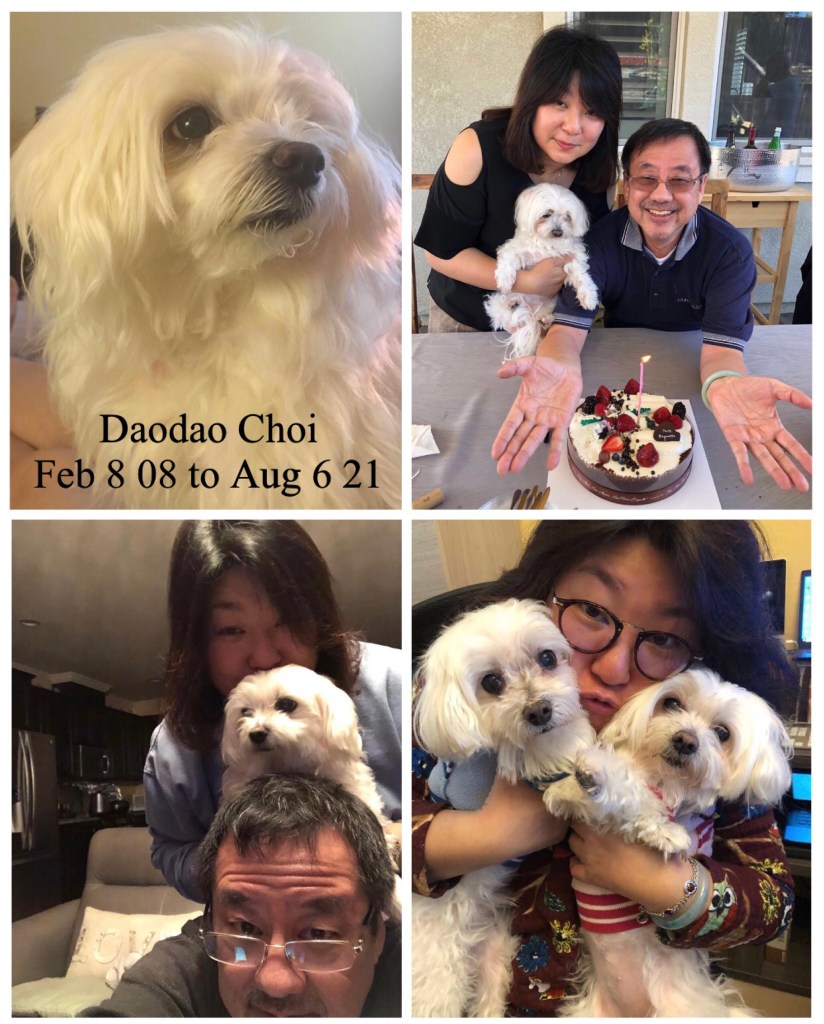
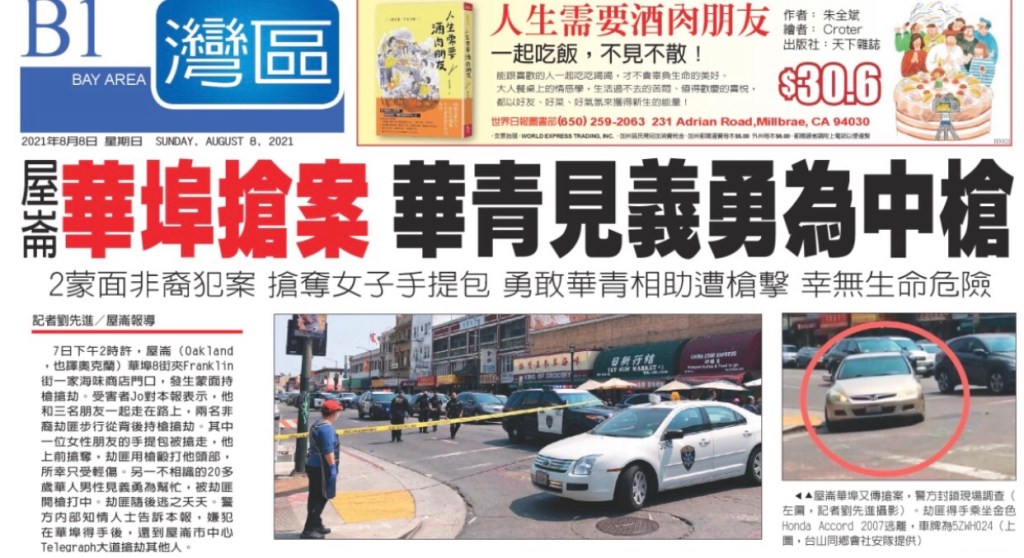
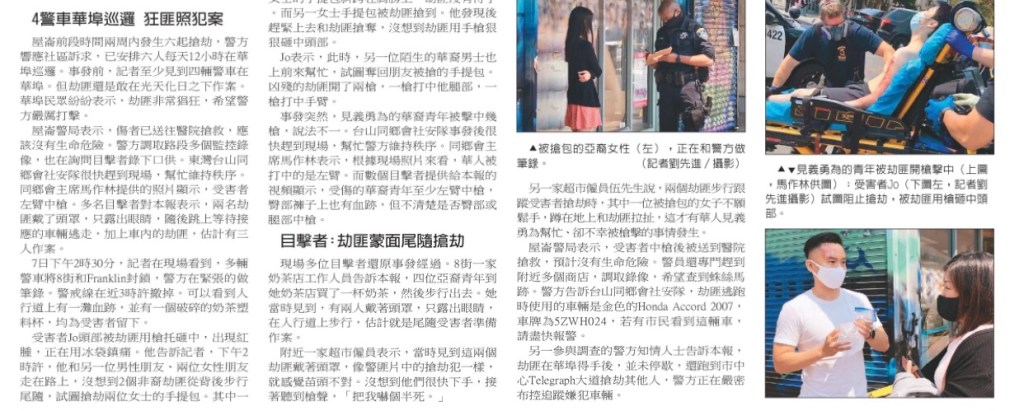
Video: Our beloved baby Daodao has passed away on Friday August 6 2021 (Feb 8 2008 – August 6 2021). She gave us all her love and affection cheering up our daily lives. She will be missed. 我們心愛的寶貝豆豆已於2021年8月6日星期五(2/8/08 – 8/6/21)回到極樂世界。 她給了我們她所有的愛和感情,讓我們的日常生活充滿活力。 我們永世不會忘記她, 乖乖女兒. Background Music: Great Compassion Mantra 大悲咒 https://vimeo.com/584671427 https://youtu.be/CStRU7jo6Q4
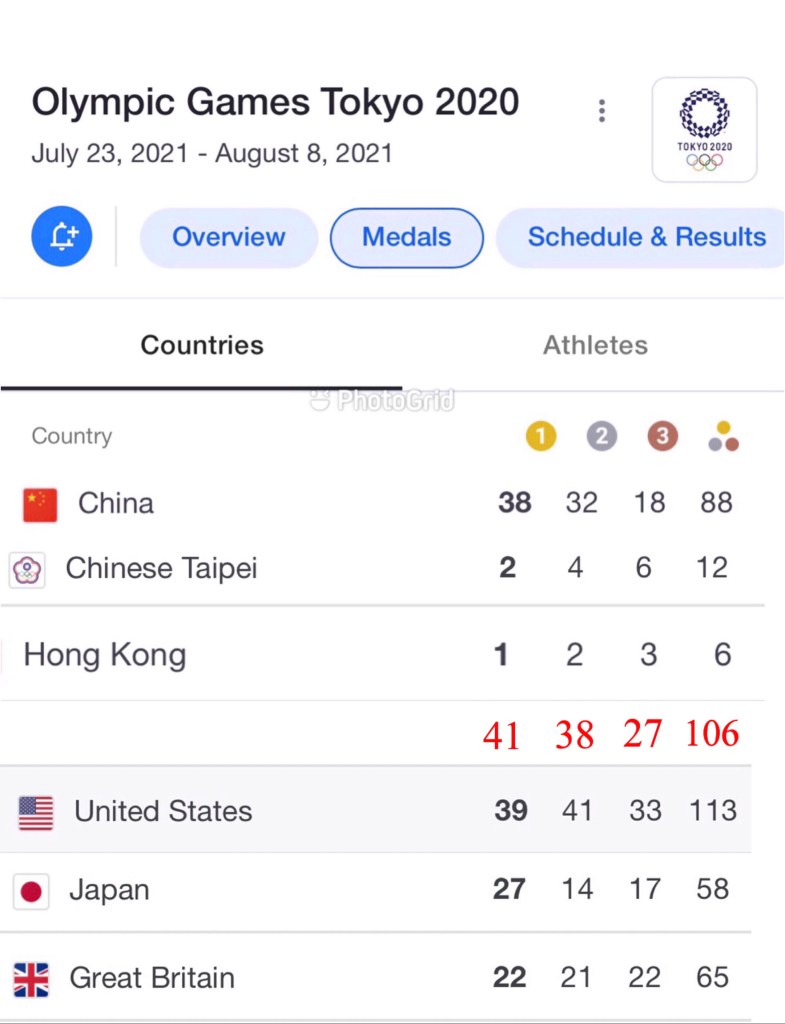
🇨🇳 China rank#1 (China, Chinese territories of Taiwan Province and Hong Kong SAR) got 41 Golds, 38 Silvers and 27 Bronze for a total of 106 Olympic Medals 🏅 Olympic ranking always based on Gold Medals (ignore New York Times and other US medias rankings, they are mouthpiece of US Government. it is not accurate)奧運中國排名#1 (中國, 台灣省和香港特區)一共拿下41金, 38銀和27銅合共106片獎牌.不要看紐約時報和其他美國媒體排名, 他們是美國政府的喉舌亂攪報導並不准確). When you add Hong Kong and Taiwan, both are Chinese territories, the total medals surpassed US by good margins. 加上香港和台灣,這兩個都是中國領土,獎牌總數遠遠超過美國. Now you understand why Western Empire want to engage in subversive activities and paying off HK foreign agents and English Tsai to break off Hong Kong and Taiwan Province from the motherland. 現在你明白為什麼西方帝國要搞顛覆活動,資助香港漢奸和台灣省蔡英文要把香港和台灣省從祖國分裂出外. China rise is inevitable and Unstoppable. 中國崛起是必然,勢不可擋.
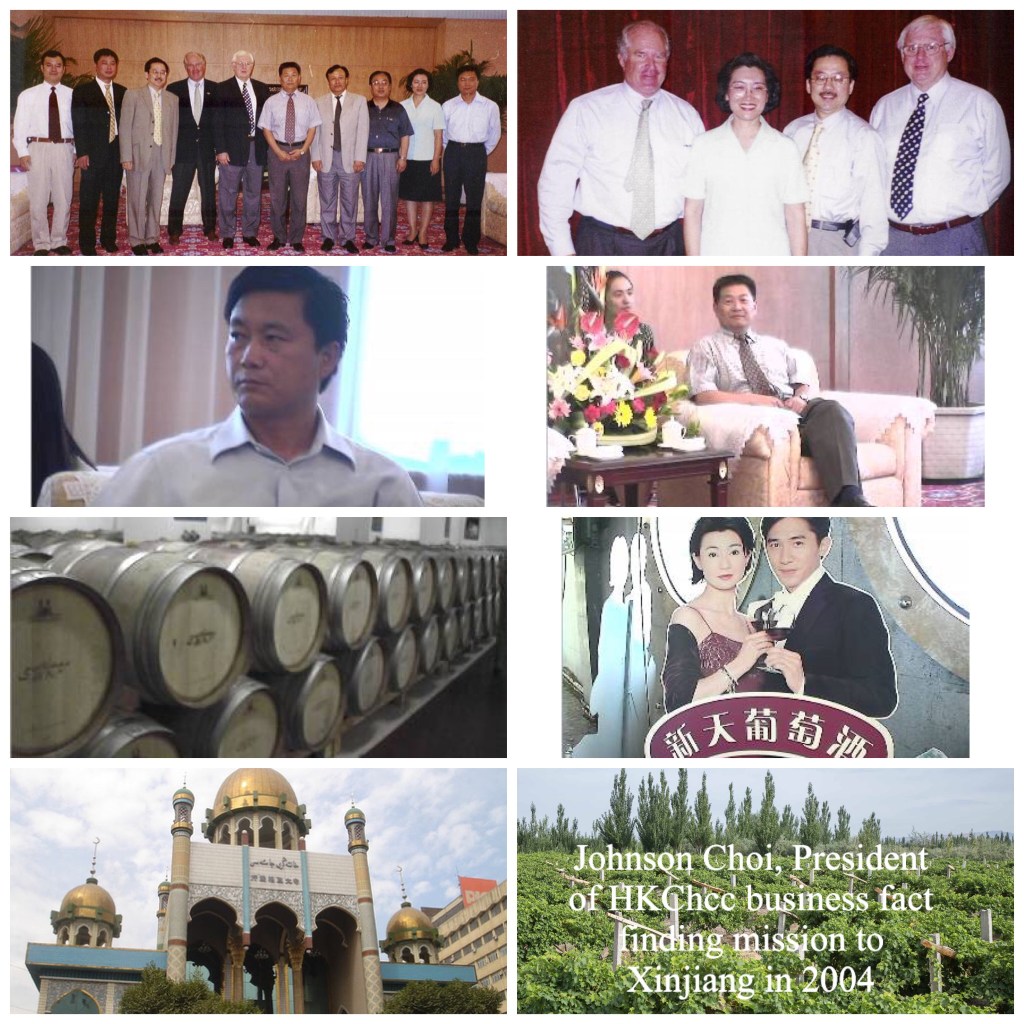
Video: Johnson Choi, President of HKChcc business fact finding mission to Xinjiang in 2004 蔡永強 – 中國夏威夷商會主席帶領商務訪問團到新疆考察商機和營商環境.
Our business delegation in 2004 did not find violations on freedom democracy human rights and rules of laws in Xinjiang. In fact Han Chinese lives in Xinjiang complains that Muslims got favorable treatments and perks like they can have as many kids as they want and extra points given for Government jobs and entering colleges. 2004年,中國夏威夷商會會長蔡永強帶領商務代表團在新疆沒有發現侵犯自由民主人權和法治的情況。 事實上,生活在新疆的漢族人抱怨穆斯林得到了優惠待遇和福利,比如他們沒有限制生多少個孩子,政府工作和上大學也有加分.
August 16, 2004: China Business Open Doors for American Firms – Johnson Choi – President of Hong Kong China Hawaii Chamber of Commerce (HKCHcc) is part of the International Business Delegation from Hawaii, California, Oklahoma, Hong Kong and Guangzhou visited Urumqi, Xinjiang China between Aug 10 – 15 to explore multi-million business opportunities in Real Estates, Wine, Meat Operation and Water Park worth RMB$400 millions. This successful business mission was lead by private sectors business leaders. There was no government official accompany the business delegation. During the 5 days visit, we have met with Honorable Wang Lequan – Full Politburo Members and Secretary of CCP Xinjiang Autonomous Region, Honorable Yang Gang – Secretary of CCP Wulumuqi City of Xinjiang Province, Honorable Shokrat Zakir – Mayor of Urumqi City of Xinjiang Province and Honorable Ms. Wang Jian Ling – Vice Major Urumqi City of Xinjiang Province. It was rare and exception for the top Officials from the Provincial and City level to receive the small but powerful business delegation to work on projects benefiting the City of Urumqi and the Province of Xinjiang.
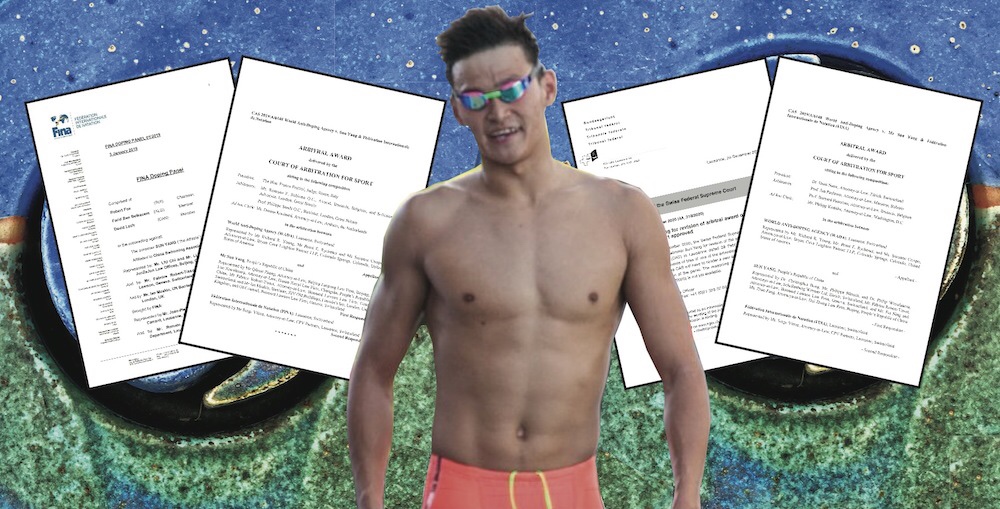
Why is the Top Chinese Swimmer not at the Tokyo Olympics ? How Sun Yang was eliminated 為什麼中國頂級游泳運動員沒有參加東京奧運會? 孫楊是怎麼被淘汰的 by Rick Sterling @ricksterling99 rsterling1@protonmail.com
Introduction
Why is the all-time greatest Chinese swimmer Sun Yang not at the Tokyo 2020 Olympics ? The short answer is that he has been banned from competitive swimming for four years by the Court of Arbitration for Sport (CAS). He has been banned for four years not for doping, but for an anti-doping rule violation (ADRV).
What lays behind this? What are the essential facts? Was the decision just, or biased? This article will review the case and offer suggestions to improve the process.
CAS Panel admission and decision The CAS decision about Sun Yang came recently, in mid-June. At the very end of the 88-page decision, there is a crucial acknowledgment:
‘The Panel considers it pertinent that there has been no allegation that the Athlete was doped on 4 September 2018. Indeed, given that Mr. Sun tested negative eight times in the prior two weeks, the likelihood that he would have tested positive, had the samples of 4–5 September 2018 been analyzed in Beijing, appears remote.’
Despite this acknowledgement, the CAS Panel decided that Sun Yang was guilty of an ADRV.
The controversial and aborted test The controversy involves an aborted attempt to take blood and urine samples from Sun Yang on the night of 4 September 2018. Sun Yang arrived home late at night after travelling all day from Jakarta, Indonesia, where he had competed at the Asian Games. He was about to commence a one-month vacation.
A doping test team from the Swedish American company, International Doping Tests & Management (IDTM), met Sun Yang and said they wished to take ‘out of competition’ blood and urine samples. There was a female Doping Control Officer (DCO), a female Blood Collection Officer (BCO) and male Doping Control Assistant (DCA).
There are conflicting reports about what transpired over the next few hours, but these are essential facts:
• After seeing the DCA surreptitiously taking photographs of him, Sun Yang became suspicious and asked to see the authorisation papers of the test team.
• The DCO did not have paper IDTM accreditation, but did have an image on her cell phone. The BCO and DCA had no proof of authorisation from IDTM. Nor did they have paperwork to authorise this specific out of competition test. All they had was a generic annual authorisation for IDTM to do testing for the International swimming federation (FINA).
• Sun Yang consulted his doctor and the Chinese swim team leader asking what to do. Both said the test should be stopped until the test team can provide proper documentation.
• The DCO consulted with her supervisor in Sweden. They then said to Sun Yang they could not leave the equipment behind. A member of Sun Yang’s group broke the container holding the blood vial so the IDTM team could leave with their equipment. The blood vial was preserved and is still under refrigeration at the doctor’s hospital.
• Over the next days, Sun Yang reported that the test was aborted because the test team lacked accreditation. The leader of the test team, the DCO, reported that Sun Yang had committed a ‘Refusal or Failure to Comply’ with the test.
The FINA Doping Panel FINA convened a Doping Panel to examine the events and determine whether Sun Yang had committed an ADRV. It held a hearing and issued its Decision in early January 2019. They determined that ‘Sun Yang has not committed an anti-doping rule violation’ because the test team did not have the required accreditation documentation to take blood and urine samples from the athlete.
The FINA Doping Panel also faulted the test team leader for not making Sun Yang aware that she would consider this incident to be a ‘Refusal or Failure to Comply’ and thus a potential ADRV.
WADA and CAS For whatever reasons, the Canada-based World Anti-Doping Agency (WADA) strongly objected to the FINA Doping Panel Decision. It filed an appeal with CAS against Sun Yang and FINA.
In November 2019, the first CAS Panel held a public hearing about the case. In February 2020, CAS issued its Decision that Sun Yang had committed an ADRV and was to be banned from swimming for eight years. Some western competitors and sports media cheered this Decision. Others were more objective and thoughtful. The Decision was criticised in articles here and here.
Based on evidence revealed in the article, ‘Why the Sun Yang Decision Should be Overturned‘, Sun Yang’s Attorneys won their appeal to the Swiss supreme court (SFT). There was compelling evidence the President of the CAS Panel was biased, if not racist.
As a consequence, the CAS Decision was set aside, and the SFT ruled that CAS would have to rehear the case. A new CAS Panel was created.
The second CAS Panel had new members, but a similar background. All three jurists were senior white western European men. Additionally, they all have ties to the United States. Although the second panelists claim they were not influenced by the decision of the first CAS Panel, their decision making was essentially the same: they say Sun Yang is guilty of an ADRV. With relaxed punishment requirements, he is now banned for four years and three months, beginning February 2020.
FINA Doping Panel vs. CAS Panels Why did the FINA Doping Panel conclude that Sun Yang did not commit an ADRV while the CAS ruled that he did? Here are the essential differences:
Was the test team legitimate?
CAS says they were, even though two of the three test team members had no proof that they were authorised by the test contractor, IDTM. CAS said that only the test team leader, the DCO, needed proof of accreditation.
The CAS Decision says: ‘ISTI imposes a specific threshold for notification. The threshold seeks to ensure that an athlete understand that a demand for his samples is legitimate and duly authorized—all the while avoiding the imposition of unnecessarily burdensome administrative criteria or the creation of yet more opportunities for gamesmanship by bad actors.’
In contrast, FINA said that all members of a test team need to be trained, accredited, and be able to provide proof of such. ‘FINA members (swimmers) must know with certainty under whose authority they are being tested and that every official attending at the sample collection session has been properly trained, appointed and authorized by the Sample Collection Agency’.
Which is right? The ISTI is ambiguous and can be interpreted both ways. ISTI Annex H says: ‘Sample Collection Personnel requirements start with the development of the necessary competencies for Sample Collection Personnel and end with the provision of identifiable accreditation’. There was debate over whether ‘personnel’ was singular or plural.
One thing is certain: the DCA was not properly trained. The controversy was sparked because he took personal photographs, which is a significant violation of protocol and the athlete’s privacy.
Did the test team show adequate proof they were authorised to conduct the test?
CAS says yes; it was sufficient to show the annual authorisation paper from FINA to IDTM, nothing more. FINA said no; there needs to be more than an annual authorisation. The test team must show evidence that they are authorised to carry out the specific mission.
Which is right? Again, the ISTI is ambiguous. It seems reasonable to require a test team entering a person’s personal space to show proof of the fact they have authorisation to collect bodily fluid samples from that individual at that time. The test team must have a mandate to go to the Athlete’s residence and collect the samples. Why not show it to the athlete to confirm this is a legitimate intrusion? Is an athlete right to be suspicious when all that is produced is an letter from an international federation (FINA) authorising a company (IDTM) to collect samples on its behalf, and proof that a DCO works for that company?
Was the Blood Collection Officer (BCO) qualified to draw blood from the athlete?
CAS says yes, even though the BCO only had an old junior nurse certificate in her possession. FINA said no. It explains, ‘What is certain is that she did not produce unequivocal evidence of her qualifications to draw blood from the athlete, as required in the ISTI’. In Annex E (see right), the ISTI clearly states the blood collection must meet local standards and regulatory requirements.
Did the DCO warn the athlete that his actions could be considered a Refusal to Comply as required?
FINA says no. The DCO did not make that clear and to further complicate things, she signed a statement of events written by Sun Yang’s doctor.
‘The ISTI is clear in Annex A 3.3.a) that the DCO must tell the Athlete, in a language he can understand, the consequences of a possible Failure to Comply. Explaining the risks that certain conduct might lead to a violation is not sufficient. The DCO must go further and clearly articulate that she is treating the Athlete’s conduct as a Failure to Comply and that the following consequences will apply.’
CAS says the DCO warned the athlete sufficiently. It claims that the DCO told the athlete the consequences of ‘Refusal to Comply’.
CAS says: ‘Nothing in Annex A.3.3(a) requires a DCO, on the spot, to proclaim a definitive anti-doping rule violation. The Panel therefore has no hesitation in disavowing this artificially high threshold. It is enough for Sample Collection Personnel to tell an athlete, in language he can understand, the consequences of a possible failure to comply. As to whether an actual violation has occurred, this is for the Testing Authority to determine and prosecute; such a proclamation is not within any DCO’s competence.’
Which is right? One thing is clear: the ISTI wording is poor and misleading. All athletes know that the consequence of a Refusal to Comply is an ADRV. This is comparable to a policeman telling a civilian the consequences of a crime (you go to prison) instead of telling them they are being charged with a crime.
Under ISTI regulations 5.4.8 and 7.4.6, the DCO is supposed to document what happened. The DCO did not document the events at the time, only afterwards. Promoting more confusion, she signed the statement by Sun Yang’s doctor. If she was only signing the statement as a witness, it seems that should have been explicitly indicated.
Summary of differences: FINA Doping Panel vs. CAS Panel In summary, the FINA Doping Panel emphasised that all test team members must be authorised. In contrast, the CAS Panel advocated fewer requirements for a doping test team. Only the test team leader needs to have credentials and they do not have to show proof that their specific visit is authorised. The blood collection nurse does not need to prove she is qualified. CAS expressed preference to avoid ‘burdensome administrative criteria’ and a concern for ‘gamesmanship by bad actors’.
The WADA Guidelines regarding Blood Collection support the position of Sun Yang in various respects. Dismissing this, CAS says: ‘Guidelines are recommendations, not law, and they do not alter the minimum requirements of the ISTI’. They ignore the fact that Blood Sample Collection Guidelines have ‘ISTI’ prominently printed on the cover.
Questions and observations about this case At the November 2019 public hearing, Sun Yang said he thought there were “dark forces” behind the effort to ban him. He did not say much more, but the suggestion was clear enough. Having studied this case in some depth, I believe his concerns are warranted.
If there is a ‘bad actor’ here, it might be the private test contractor, IDTM. At each step of the events, it seems to have provoked rather than resolved the dispute. They selected as DCO a person who Sun Yang had complained about when she was DCA in a previous testing mission. It brought an improperly trained DCA who proceeded to surreptitiously take photographs. They declined to get a substitute DCA. The CAS Decision outlines how it falsely claimed it needed to take the test equipment. It did not tell Sun Yang that it would file a Refusal to Comply charge.
The DCO was a Chinese woman who lives abroad. She was a DCO for less than a year. Her supervisor in Sweden, Romanian Tudor Popa, had only nine months experience at the time of the incident. He is now Vice President of International Testing at IDTM.
For the past 30 months, WADA has pursued this case against Sun Yang at great cost in time and resources. It is fair to ask why. It is not as though Sun Yang was avoiding being tested or making a habit of objecting. He is understood to be one of the most tested athletes in the world, tested once every two weeks, on average.
Nearly all the tests have been performed without any problem at all. Logic would dictate that Sun Yang had no motive to take prohibited substances. At the Asian Games, where he was tested six times, he won four Gold plus two Silver medals. It was not like he was a struggling swimmer who might be tempted to get some little extra advantage.
The bias of the first CAS Panel was acknowledged by the Swiss Federal Court. Given this, it is legitimate to question if WADA would have pursued this case if the swimmer had been American, British, Canadian, or Australian. It was a huge investment of time and resources. However, WADA has pursued other cases1 against athletes from other countries that appear to be more about protecting the system of rules that it has created, rather than convicting a doping cheat.
In the end, WADA ‘achieved’ the elimination of a Chinese athlete even though he had not doped. What kind of achievement is that?
Was the second CAS Panel any less biased? Their decision suggests no. At each critical point, they favour minimising requirements for the test team contractor. They hint that an athlete who is concerned with the test integrity may be a ‘bad actor’. They critique the FINA Doping Panel decision as showing ‘leniency’ towards Sun Yang and ‘stringency’ toward the testing process.
The CAS Panel considers that requiring each test team member to have identifiable credentials would be ‘unnecessarily burdensome administrative criteria’. Enforcing this requirement might give ‘opportunities for gamesmanship by bad actors’.
It should be noted that WADA had a serious conflict of interest in this case. It was the expert witness while also being the appellant.
Suggestions to improve the process WADA has become an influential force in global sport. It says it is ‘impartial, objective, balanced and transparent’. It publicly asks for feedback. Here are some suggestions considering the Sun Yang case:
• WADA documentation, including all Guidelines and the ISTI should be critically reviewed, and areas of ambiguity cleared up.
• A genuine mix of international athletes should review the requirements for a test team. Should it be confirmed that all members of a test team are trained, accredited, and have proof of such? Should it be confirmed that an ‘out of competition’ test team intruding into an athlete’s personal space needs to show authorisation for this mission?
• An athlete should be given a written warning if a test team is going to report a potential ‘Refusal to Comply’. There should be a standard ‘Refusal to Comply’ form. Such notices or warnings are standard in society. This simple measure would probably have avoided the entire costly controversy with Sun Yang.
• The composition of WADA should be more diverse to avoid appearing, or in fact being, biased.
Conclusion The FINA Doping Panel was correct and Sun Yang should be competing in the Tokyo Olympics .
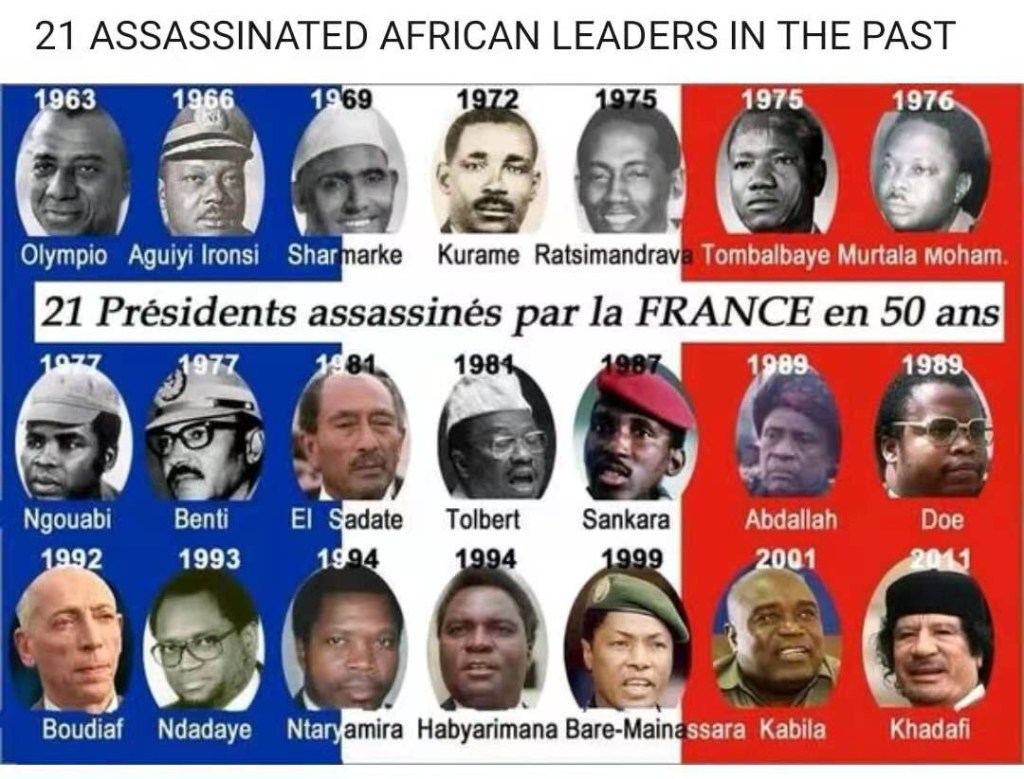
US and EU said will help African nations with COVID19 vaccines. Unlike China, US and EU expect a lot in return. If that is the way how it was done in the past (see picture). I think most African nations will say “no thanks”. That maybe the reason why when US and EU promote fake propaganda campaign against China, and China providing free to low cost COVID19 vaccines with absolutely no strings attached, most African Nations appreciates their 70 years of friendship with China that never robbed, steals or exploit them. History is the best witness. 美國和歐盟表示將幫助非洲國家提供新冠病毒疫苗。 與中國不同,美國和歐盟期望得到很多回報。 如果這是過去的做法(見圖)。 我認為大多數非洲國家會說“不,謝謝”。 這也許就是為什麼當美國和歐盟對中國進行虛假宣傳,中國免費提供低價或免費的新冠病毒疫苗時,絕對沒有任何附加條件,大多數非洲國家讚賞他們與中國 70 年的友誼,中國從未對他們國家或人民進行搶劫、偷竊或剝削他們 . 歷史是最好的見證.