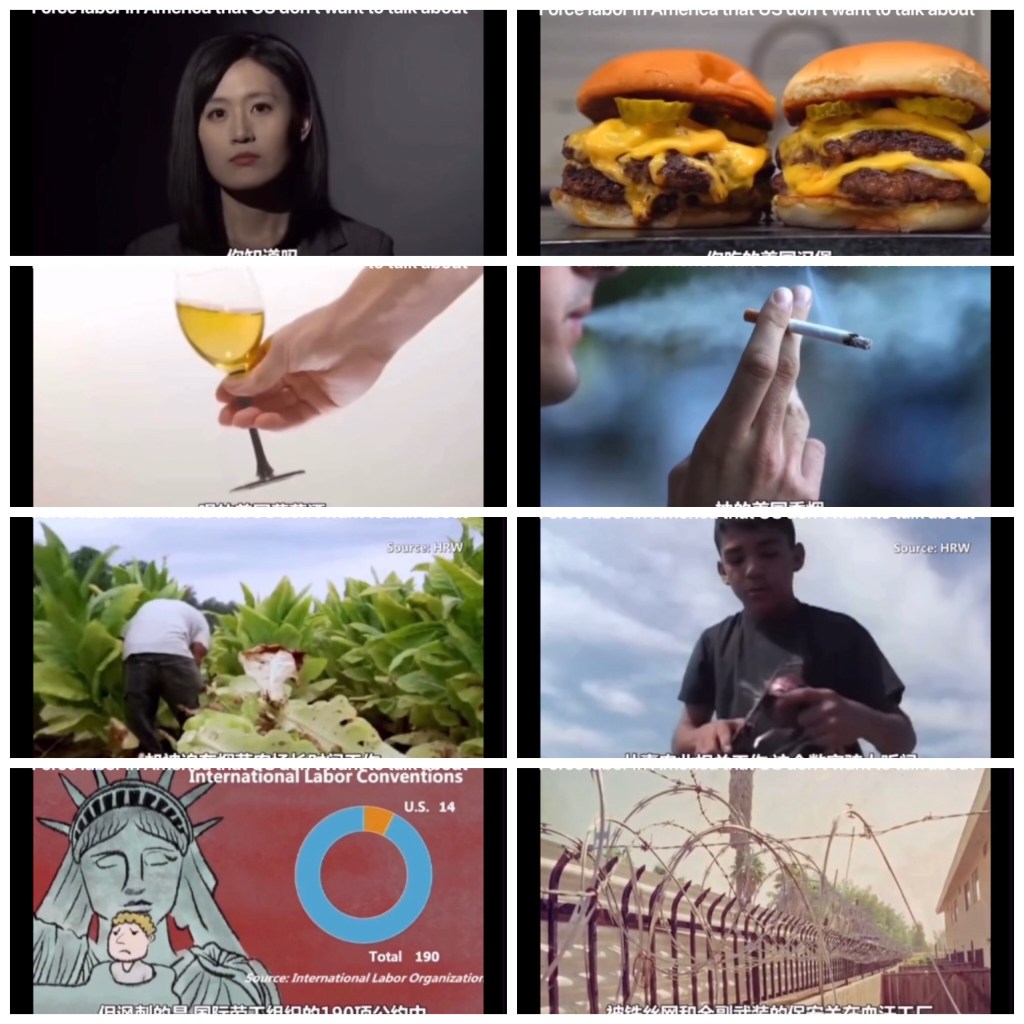
Video: Force labor in America that US don’t want to talk about 美國不願談論的美國強迫勞工
https://vimeo.com/611932242
https://youtu.be/FCr3Nx7D_Eg
https://www.facebook.com/100036400039778/posts/571467380743258/?d=n
Video: Force labor in America that US don’t want to talk about 美國不願談論的美國強迫勞工
https://vimeo.com/611932242
https://youtu.be/FCr3Nx7D_Eg
https://www.facebook.com/100036400039778/posts/571467380743258/?d=n
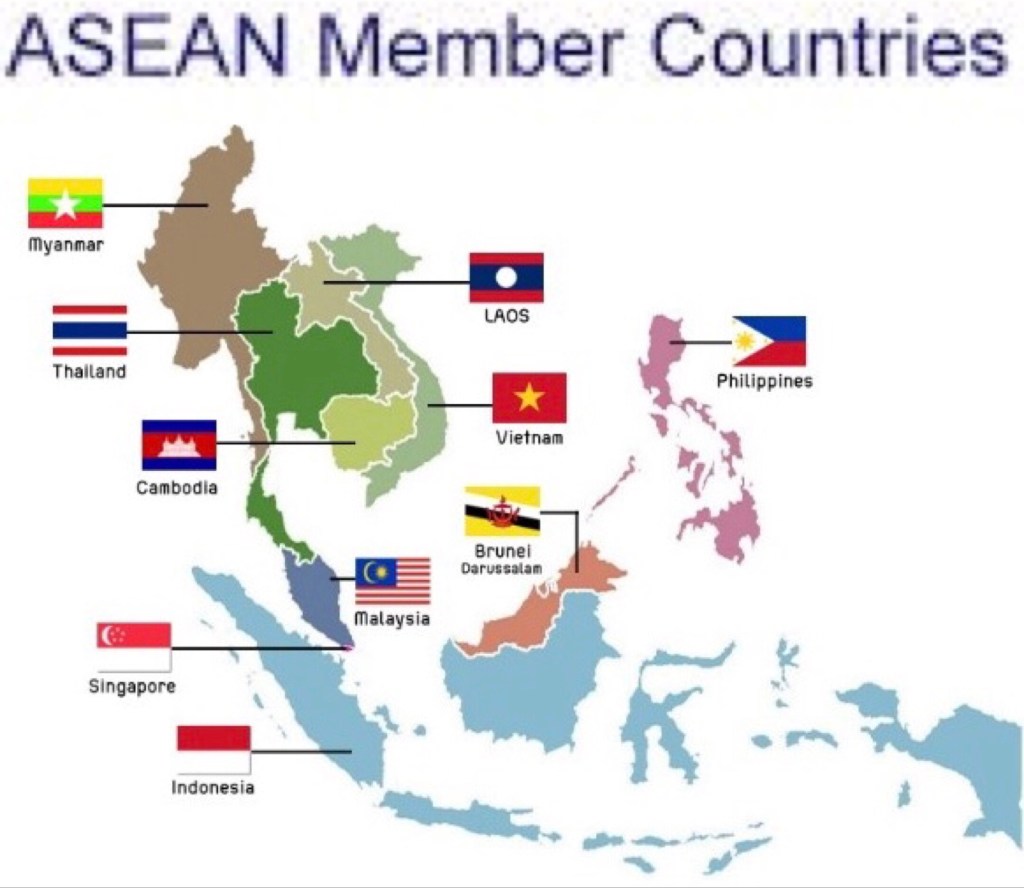
Why all ASEAN countries were victimized by the AngloSaxon empires last 200+ years still trusting the abusers.
I found this definition by NCADV useful. Don’t forget ASEAN nations are run by people. They all seems to have victims mentality including Japan except China. That maybe the only reason why China rising rapidly and the AngloSaxon empires want to destroy Chinese and China including promoting hatred by US politicians to victimize Asian and Chinese Americans. Hate crimes against Asians and Chinese in US has more than doubled last 18 months. 為什麼所有東盟國家在過去 200 多年裡都成為盎格魯撒克遜帝國的受害者,但仍然相信施虐者。我發現 NCADV 的這個定義很有用。不要忘記東盟國家是由人管理的。除了中國,他們似乎都有受害者心態,包括日本。這可能是中國迅速崛起和盎格魯撒克遜帝國想要摧毀中國人和中國的唯一原因,包括宣揚美國政客的仇恨以傷害亞裔和華裔美國人。過去 18 個月,針對亞洲人和中國人的仇恨犯罪增加了一倍多。
According to NCADV, A victim’s reasons for staying with their abusers are extremely complex and, in most cases, are based on the reality that their abuser will follow through with the threats they have used to keep them trapped: the abuser will hurt or kill them or if it is a country through regime change in the name of fake freedom democracy human rights and rules of laws to ruin or destroy their countries. 根據 NCADV 的說法,受害者與施虐者待在一起的原因極其複雜,並且在大多數情況下,基於這樣一個現實,即施虐者會繼續實施他們用來讓他們陷入困境的威脅:施虐者會傷害或殺死他們或者如果是一個國家以虛假的自由民主人權和法律規則的名義通過政權更迭來破壞或摧毀他們的國家。
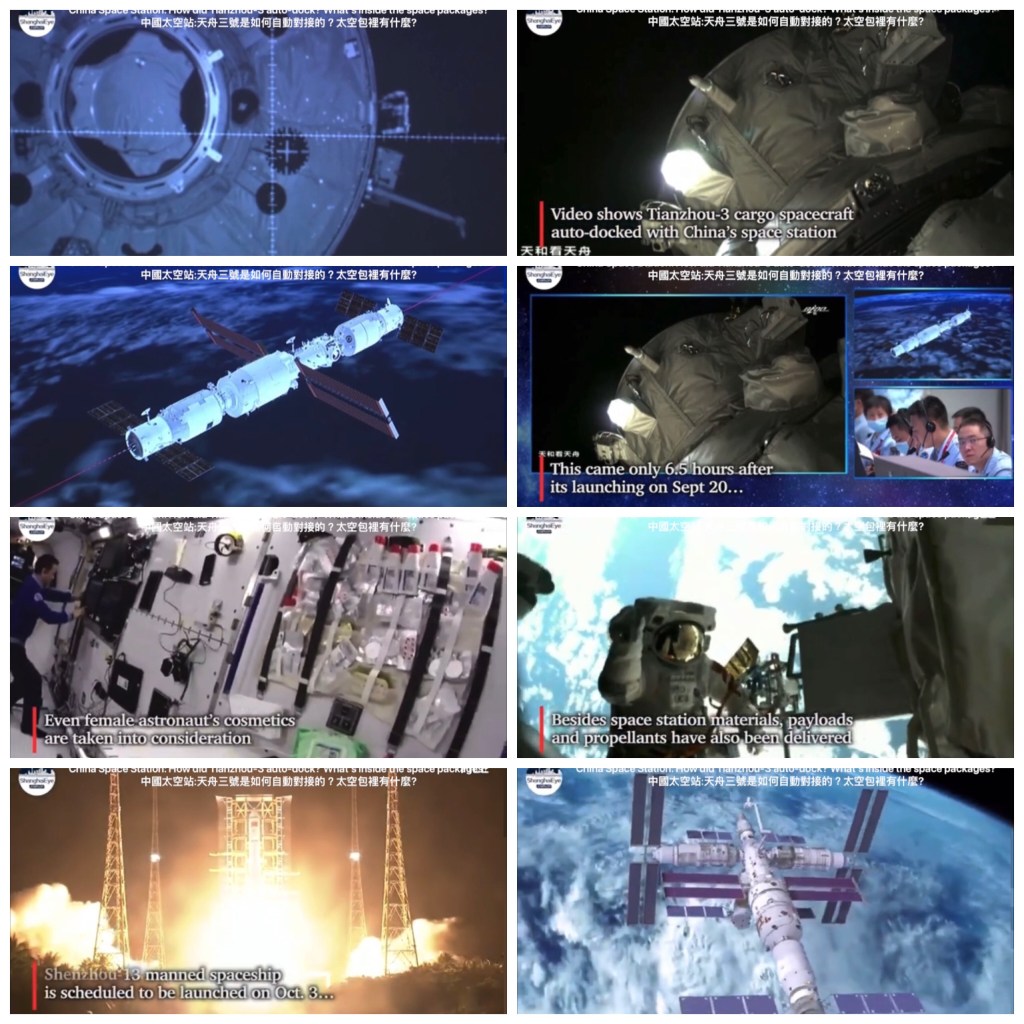
Video: China Space Station: How did Tianzhou-3 auto-dock? What’s inside the space packages? 中國太空站:天舟三號是如何自動對接的?太空包裡有什麼?
https://vimeo.com/611649786
https://youtu.be/11dDcmfZGgs
https://www.facebook.com/100036400039778/posts/571286200761376/?d=n
Video shows Tianzhou-3 cargo spacecraft auto-docked with China’s space station
This came only 6.5 hours after its launching on Sept 20 at least one hour faster than Tianzhou-2’s journey
All thanks to the cargo spacecraft system’s updates
As a key preparation step for the upcoming Shenzhou-13 crewed mission, Tianzhou-3 carries living supplies for the astronauts, EVA space suits and equipment
Even female astronaut’s cosmetics are taken into consideration
Besides space station materials, payloads and propellants have also been delivered
Astronauts can easily figure out the contents inside by the color of the package
The whole cargo, weighing six tons, can ensure three astronauts stay in orbit for six months
Shenzhou-13 manned spaceship is scheduled to be launched on Oct. 3…
the 3rd day of China’s week-long National Day holiday
With multiple launches, China is set to complete the construction of its space station within two years
Six more missions will come in 2022, including the launch of the Wentian and Mengtian lab modules two cargo spacecraft and two crewed spaceships
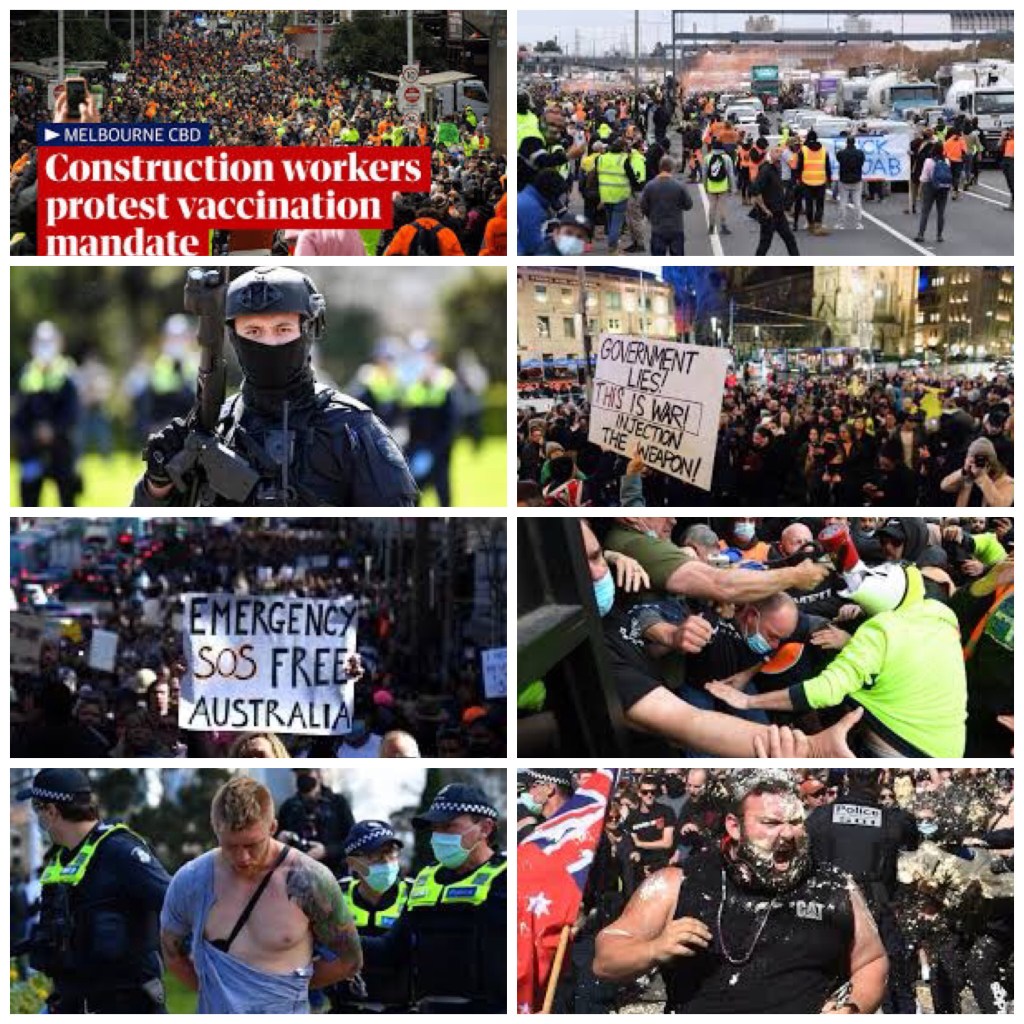
Video: Protesters against vaccine mandate in Melbourne Australia clash with police in the name of freedom democracy human rights and rules of law
澳大利亞墨爾本反對疫苗授權的抗議者以自由民主人權和法治的名義與警察發生衝突
https://vimeo.com/611590676
https://youtu.be/tF06MmPNHV4
https://www.facebook.com/100036400039778/posts/571239174099412/?d=n
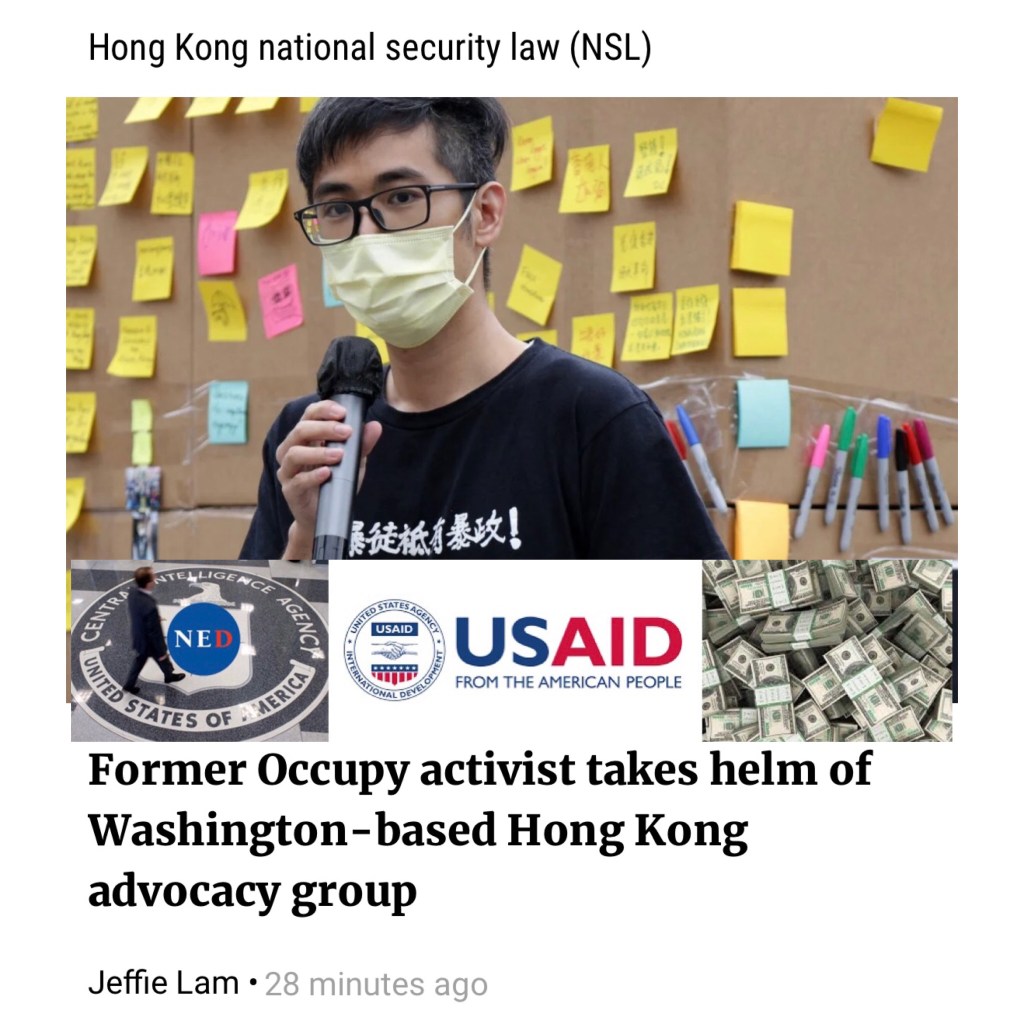
A former student leader who rose to prominence during the 2014 Occupy movement has taken the helm of a Washington-based advocacy group, arguing that foreign lobbying by US’s NED/CIA indispensable
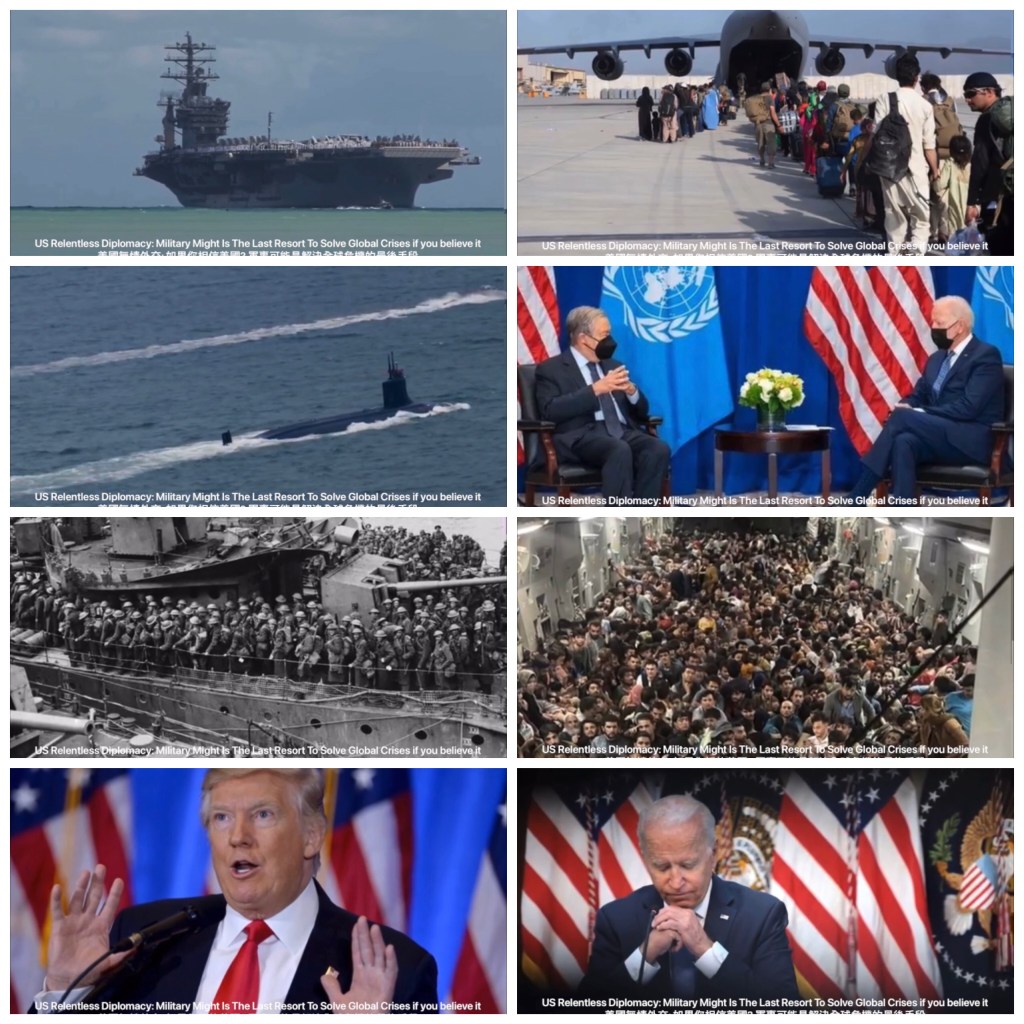
Video: US Relentless Diplomacy: Military Might Is The Last Resort To Solve Global Crises if you believe it 美國無情外交: 如果你相信美國? 軍事可能是解決全球危機的最後手段
https://youtu.be/40cqrsFVxMs
https://vimeo.com/611554387
https://www.facebook.com/100036400039778/posts/571208710769125/?d=n
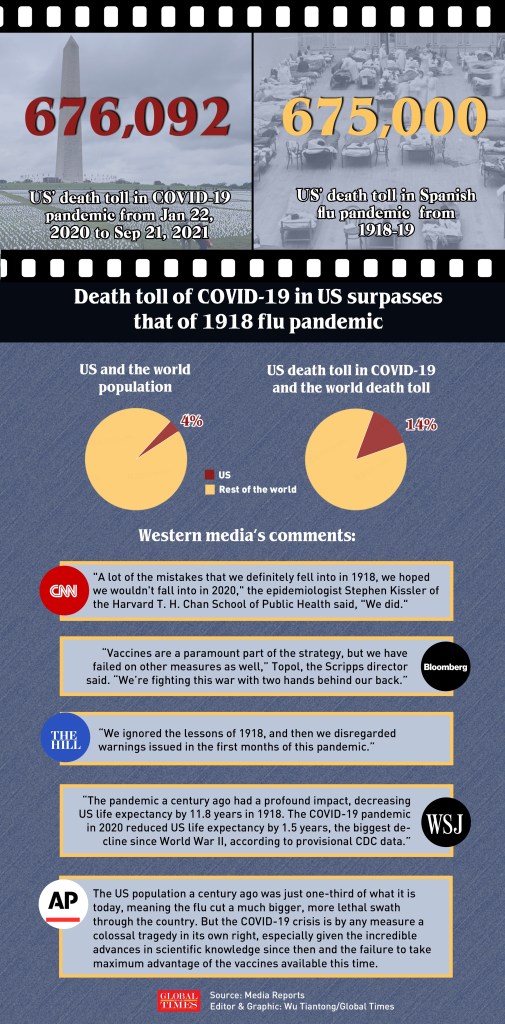
Death toll of COVID-19 in US surpasses that of 1918 flu pandemic by Wu Tiantong Sep 21 2021

Stab in the back by Liu Rui – have we not learn our lesson from Afghanistan?Sep 21 2021

End of an Empire – A spectre is haunting the United States — the spectre of decline. 帝國的終結 – 一個幽靈正在困擾著美國 – 衰落的幽靈 Written by Goutam Bhattacharya
Every kingdom is born to die. The 15th century belonged to the Portuguese, the 16th to Spain, 17th to the Dutch. France dominated the 18th and Britain the 19th. Bled white and left bankrupt by WWI, the British maintained a pretence of domination as late as 1935, when the empire reached its greatest geographical extent.
It wasn’t until the 1956 Suez debacle, when Britain was pressured by the U.S., the Soviet Union, and the United Nations to withdraw its forces from Egypt — which it had invaded along with Israel and France following Gamal Abdel Nasser’s seizure of the Suez Canal—that it became clear that its imperial days were over.
America’s debut on the world stage was epoch-making. By 1913, it was a major economic power, albeit one with little interest in global matters. This changed with its intervention in WWI on the side of the Allied Powers, ensuring their victory.
In 1940, America had a smaller army than Portugal or Bulgaria. Within 4 years, 18 million men and women would serve in uniform, with millions more working double shifts in mines and factories.
When the Japanese, within 6 weeks of Pearl Harbour, took control of 90% of the world’s rubber supply, the U.S. dropped the speed limit to 35 mph to protect tires, and, in 3 years, invented from scratch a synthetic-rubber industry that allowed Allied armies to roll over the Nazis. Shipyards spat out Liberty ships at a rate of two a day for four years; the record was a ship built in four-and-a-half days. A single American factory, Chrysler’s Detroit Arsenal, built more tanks than the whole of the Third Reich.
It was US industrial might and the blood of Russian soldiers that won the war.
After the end of WWII, the US gradually replaced the British Empire as a dominant power in much of the world. With but 6% of the world’s population, it accounted for half of the global economy, including the production of 93% of all automobiles. In under 50 years, America stood victorious, as USSR collapsed.
US domination was morally underpinned by its belief in “manifest destiny” and economically underpinned by the US dollar as the reserve currency, maintaining the massive gap between its economic might and its nearest rivals and its control of the airways and oil supply lines, and by its military might.
America boasted a vibrant middle class, a trade union movement that allowed a single breadwinner with limited education to own a home and a car, support a family, and send his kids to good schools. Affluence allowed for a truce between capital and labour, opportunity and declining income inequality, marked by high tax rates for the wealthy, who were by no means the only beneficiaries of a golden age of American capitalism.
But there was a dark side. America never stood down in the wake of victory in WWII. To this day, American troops are deployed in 150 countries. Since the 1970s, China has not once gone to war; the U.S. has not spent a day at peace. President Carter recently noted that in its 242-year history, America has enjoyed only 16 years of peace, making it “the most warlike nation in the history of the world”. Since 2001, the U.S. has spent over $6 trillion on military operations and war, money that might have been invested in the infrastructure of home. China, meanwhile, built its nation, pouring more cement every 3 years than America did in the entire 20th century.
The US military has become ever less able to win wars, even as its advantage in spending and in the amount and sophistication of its armaments has widened over its actual and potential rivals to an unprecedented level. America’s only unambiguous military victories since WWII came in the first Gulf War of 1991, a war with the strictly limited objective of expelling Iraq from Kuwait, and in various “police actions” against pathetically small and weak opponents in the Dominican Republic in 1965, Grenada in 1983 and Panama in 1989. America is unique among the world’s dominant powers of the past 500 years in its repeated failure to achieve military objectives over decades.
From the arrival at the airport to the high-speed train or subway trip into town, a visit to Europe and East Asia can seem to an American like a journey to a Tomorrowland, never to be realized in the United States outside of Disney World.
As America policed the world, the violence came home. On D-Day, June 6, 1944, the Allied death toll was 4,414; in 2019, domestic gun violence had killed that many Americans by the end of April. By June 2019, guns in the hands of ordinary Americans had caused more casualties than the Allies suffered in Normandy in the first month of a campaign that consumed the military strength of five nations.
Meanwhile, America lionised the individual at the expense of community and family. It was the sociological equivalent of splitting the atom. What was gained in terms of mobility and personal freedom came at the expense of common purpose. In wide swaths of America, the family as an institution lost its grounding. By the 1960s, 40% of marriages were ending in divorce. Only 6% of American homes had grandparents living beneath the same roof as grandchildren; elders were abandoned to retirement homes.
People exhausted themselves in jobs that only reinforced their isolation from their families. The nation consumes 69% of the world’s antidepressants. The collapse of the working-class family has been responsible for an opioid crisis that has displaced car accidents as the leading cause of death for Americans under 50.
Mountains of public and private debt is a ticking time bomb.
At the root of this dysfunctional dystopia is a widening chasm between the haves and the have-nots. When the promise of a good life for a working family is shattered as factories close and corporate leaders, growing richer by the day, ship jobs abroad, the social contract is irrevocably broken. For two generations, America has celebrated globalisation with iconic zeal, when, as a working person can see, it’s nothing more than capital on the prowl in search of cheap labour.
Black Americans, just 13% of the population, significantly outnumber whites in prisons.
In economic terms, USA of the 1950s resembled Denmark as much as the America of today. Marginal tax rates for the wealthy were 90%. The salaries of CEOs were, on average, just 20 times that of their mid-management employees.
Today, the pay of those at the top is 400 times that of their salaried staff, with many earning orders of magnitude more in stock options and perks. The elite 1% of Americans control $30 trillion of assets, while the bottom half have more debt than assets. The 3 richest Americans have more money than the poorest 160 million. 20% of American households have zero or negative net worth, a figure that rises to 37% for black families. The vast majority of Americans — white, black and brown — are two paychecks removed from bankruptcy. Though living in a nation that celebrates itself as the wealthiest in history, most Americans live on a high wire, with no safety net to brace a fall.
The unravelling of US domination has been mostly self-inflected. Its moral dimension started to come apart when the US invaded Iraq in 2003, disregarding the UN and propagating lies about Saddam Hussein’s WMD. The credibility of the economic order was damaged by financial meltdown of 2008, when major US financial institutions collapsed like a house of cards.
In the 2010s, the world witnessed the resurgence of Russia and the emergence of China as the global economic powerhouse, while signs of the internal socio-political crisis in America started to emerge, reflected in the rise of Trumpism, the growing racial injustice that triggered the Black Lives Matter movement and the collapse of the health system amid the COVID-19 pandemic.
With the COVID crisis, 40 million Americans lost their jobs, and 3.3 million businesses shut down. The pandemic simply revealed what had long been forsaken. A country that once turned out fighter planes by the hour could not manage to produce paper masks or cotton swabs. The nation that defeated smallpox and polio, and led the world for generations in medical innovation and discovery, was reduced to a laughing stock as an odious buffoon of a president advocated, like a carnival barker, the use of household disinfectants as a treatment for a disease that intellectually he could not begin to understand.
With less than 4% of the global population, the U.S. soon accounted for more than a fifth of COVID deaths.
For the first time, the international community felt compelled to send disaster relief to America. For more than two centuries, reported the Irish Times, “the United States has stirred a very wide range of feelings in the rest of the world: love and hatred, fear and hope, envy and contempt, awe and anger. But there is one emotion that has never been directed towards the U.S. until now: pity.” As American doctors and nurses eagerly awaited emergency airlifts of basic supplies from China, the hinge of history opened to the Asian century.
As America responded to the crisis like a corrupt tin pot dictatorship, tin pot dictators of the world seized the high ground, relishing a rare sense of moral superiority, especially in the wake of the killing of George Floyd. The autocratic leader of Chechnya, Ramzan Kadyrov, chastised America for “maliciously violating ordinary citizens’ rights”. North Korean newspapers objected to “police brutality” in America. Quoted in the Iranian press, Ayatollah Khamenei gloated, “America has begun the process of its own destruction.” When an American official raised the issue of human rights on Twitter, China’s Foreign Ministry spokesman, invoking the killing of George Floyd, replied, “I can’t breathe.”
The American political process made possible the ascendancy to the highest office in the land a national disgrace, a morally and ethically compromised demagogue. As a British writer quipped, “There have always been stupid people, and plenty of nasty people too. But rarely has stupidity been so nasty, or nastiness so stupid.”
Trump is less the cause of America’s decline than a product of its descent. In a complete abandonment of the collective good, U.S. laws define freedom as an individual’s inalienable right to own a personal arsenal of weaponry.
The American cult of the individual denies the very idea of society. What every prosperous democracy deems to be fundamental rights — universal health care, equal access to quality public education, a social safety net for the weak, elderly, and infirm — America dismisses as socialist indulgences. American politicians dismiss the Scandinavian model as creeping socialism, communism lite.
Asked what he thought of Western civilisation, Mahatma Gandhi famously replied, “I think that would be a good idea.” The remark accurately reflects the view of America as seen from the perspective of any modern social democracy. Oscar Wilde quipped that the United States was the only country to go from barbarism to decadence without passing through civilisation.
These are evidences of such terminal decadence.
In this perspective, the humiliating withdrawal from Afghanistan, one can say that the century of American dominance may well be coming to an end.
The US remains the biggest military power. The size and sway of its economy remains formidable. What has changed, however, is its appetite for direct and indirect conflict to maintain its power. Its allies – in Afghanistan and elsewhere – are the first to feel this growing American aversion to global dominance.
As Henry Kissinger said, “It may be dangerous to be America’s enemy, but to be America’s friend is fatal.”

USF and AmCham Shanghai presentation on China Business Report “US Business View on China” by AmCham Shanghai President Ker Gibbs in SF.
Thursday, Sept 23, 3-5:30pm San Francisco California USA via zoom – please register online https://bit.ly/3EpGtRV (complimentary)
It will be followed by panel discussion:
Hao Lin, Alibaba Cloud
Vivien Wang, Deloitte
Don Williams, Hogan Lovells Internatonal LLP
Peter Lorentzen, USF
Moderator: Xiaohua Yang, USF

 Johnson Choi Biz