65 countries express opposition to interference in China’s internal affairs at UN Human Rights Council by Global Times Sep 24 2021
The United Nations Human Rights Council assembly room.
Pakistan, on behalf of 65 countries, delivered a joint statement against interference in China’s internal affairs under the pretext of human rights at the 48th session of the Human Rights Council on Friday.
The joint statement stressed that respect for sovereignty, independence and territorial integrity of states and non-interference in internal affairs of sovereign states represent basic norms governing international relations. Hong Kong, Xinjiang and Tibet related issues are China’s internal affairs that brook no interference by any external forces. The joint statement reiterates support for China’s implementation of “one country, two systems” in the Hong Kong Special Administrative Region.
All parties should abide by the purposes and principles of the Charter of the United Nations and the principles of universality, impartiality, objectivity and non-selectivity, respect the right of the people of each state to choose independently the path for human rights development in accordance with their national conditions, and treat all human rights with the same emphasis, said the joint statement.
It also calls upon all states to uphold multilateralism, solidarity and collaboration, and to promote and protect human rights through constructive dialogue and cooperation.
The joint statement emphasizes that the 65 countries oppose politicization of human rights and double standards. They also oppose unfounded allegations against China out of political motivation and based on disinformation, and interference in China’s internal affairs under the pretext of human rights.
In addition, six member states of the Gulf Cooperation Council (GCC) issued a joint letter supporting China’s position. More than 20 countries expressed their support to China in their national statements. All together, nearly 100 countries expressed their understanding and support for China’s legitimate position.
Exclusive: China has taken reciprocal countermeasures against UK Parliament’s ban on ambassador, source says by Zhang Hui and Fan Lingzhi Sep 24 2021
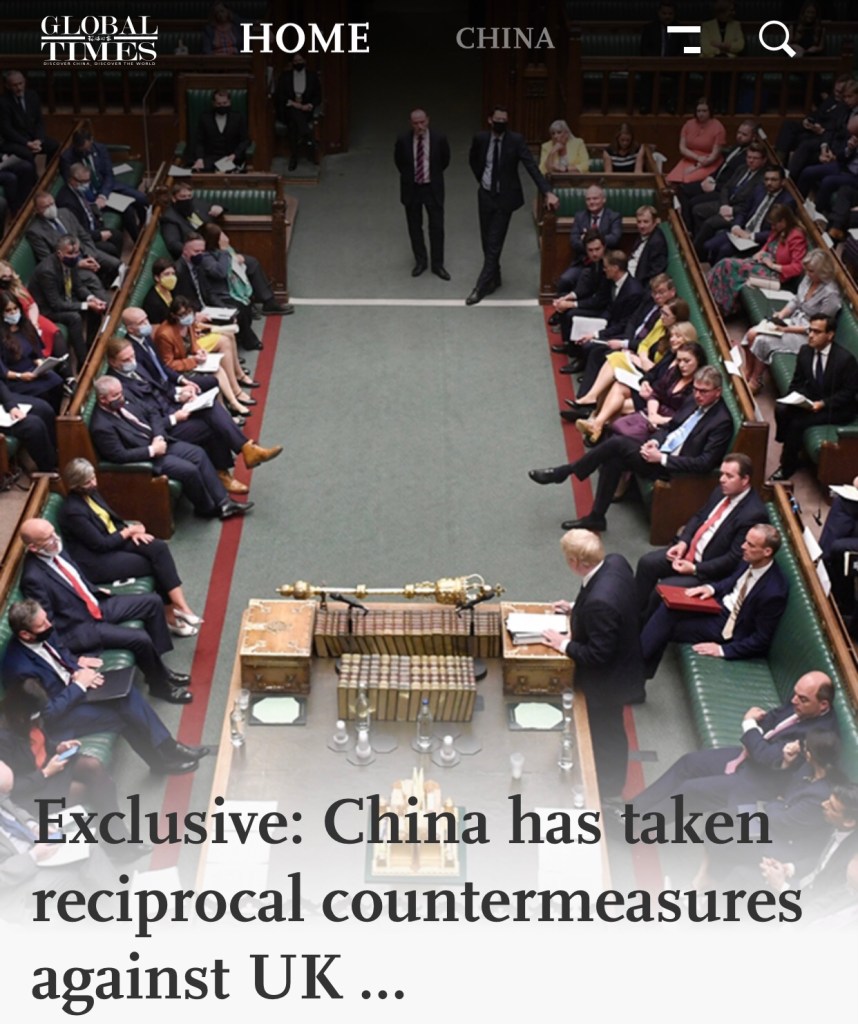
China has taken reciprocal countermeasures regarding the UK Parliament’s banning of Chinese ambassador from attending events in the Parliament last week, a source close to the matter told the Global Times exclusively on Friday.
The source said on the condition of anonymity that it is no surprise that China has taken reciprocal countermeasures as China today
is not the Qing Dynasty (1644-1911) and “no one should expect that China will swallow a bitter fruit against national dignity.”
The Britain’s wrongful actions will only harm its own image, undermine China-UK friendly exchanges and the common interests of the people of the two countries, the source said.
Previously, the Chinese Foreign Ministry and the Foreign Affairs Committee of the National People’s Congress both said that China would take necessary corresponding measures.
Speakers of the UK House of Commons and the House of Lords made the decision to ban Zheng Zeguang, China’s ambassador to the UK, from attending a summer reception of the All Party Parliamentary China Group, which was scheduled on September 15.
The reason given was that the Chinese side had earlier announced sanctions against seven UK parliamentarians.
Chinese analysts called the UK’s move rare and hysterical since Beijing and London established ties, and said it reflected the UK’s condescending attitude toward China, which is “I can slap whatever sanction on you, but you cannot slap me back.”
The UK should shake off its obsession about reviving its old glory and adjust its mindset to a rising China. Bungling bilateral relations with Beijing will only be an act of shooting itself in the foot, analysts said.
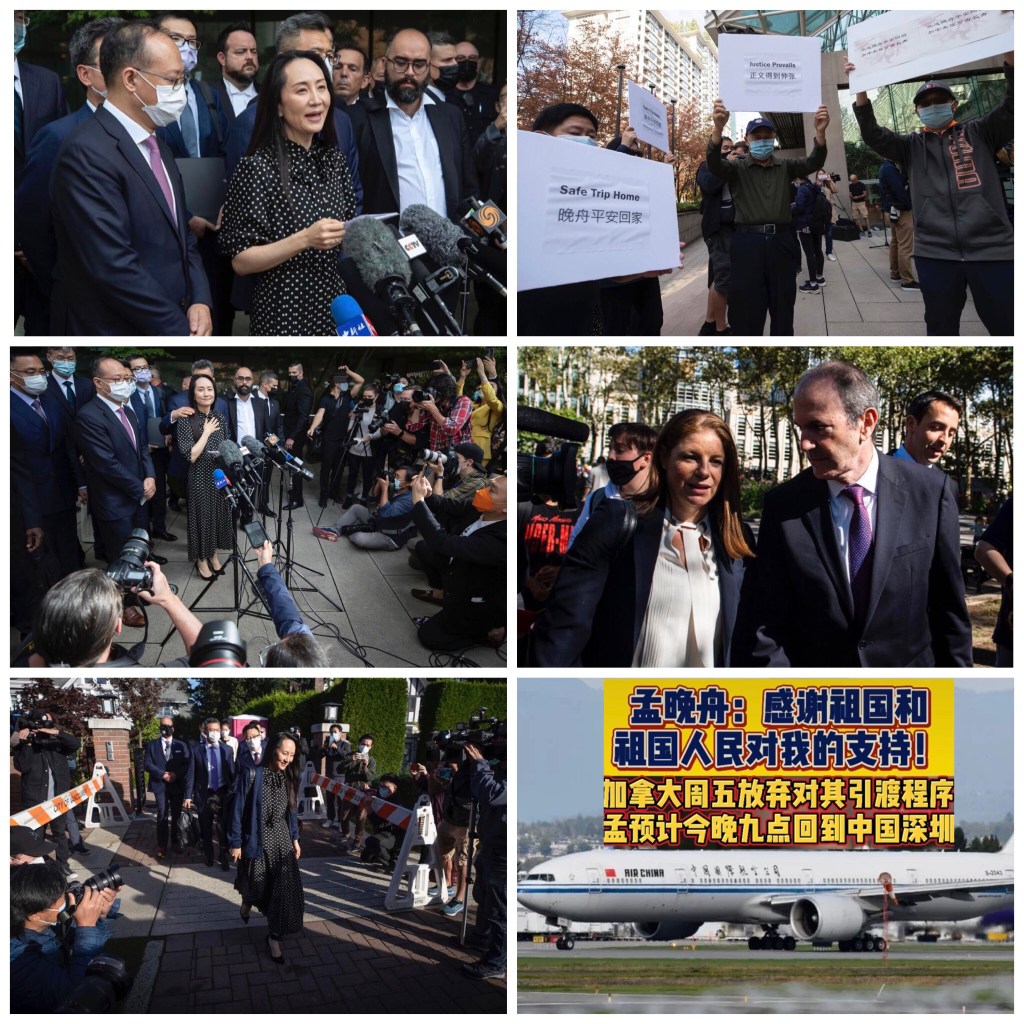
Video: US ends political prosecution – Meng Wenzhou Wins Her Freedom gave thanks to China. US Drops Extradition Charges Against Huawei Executive! 美國結束政治起訴以挽回面子。孟晚舟贏得自由- 特別感謝中國. 美國撤銷對華為高管的引渡指控!
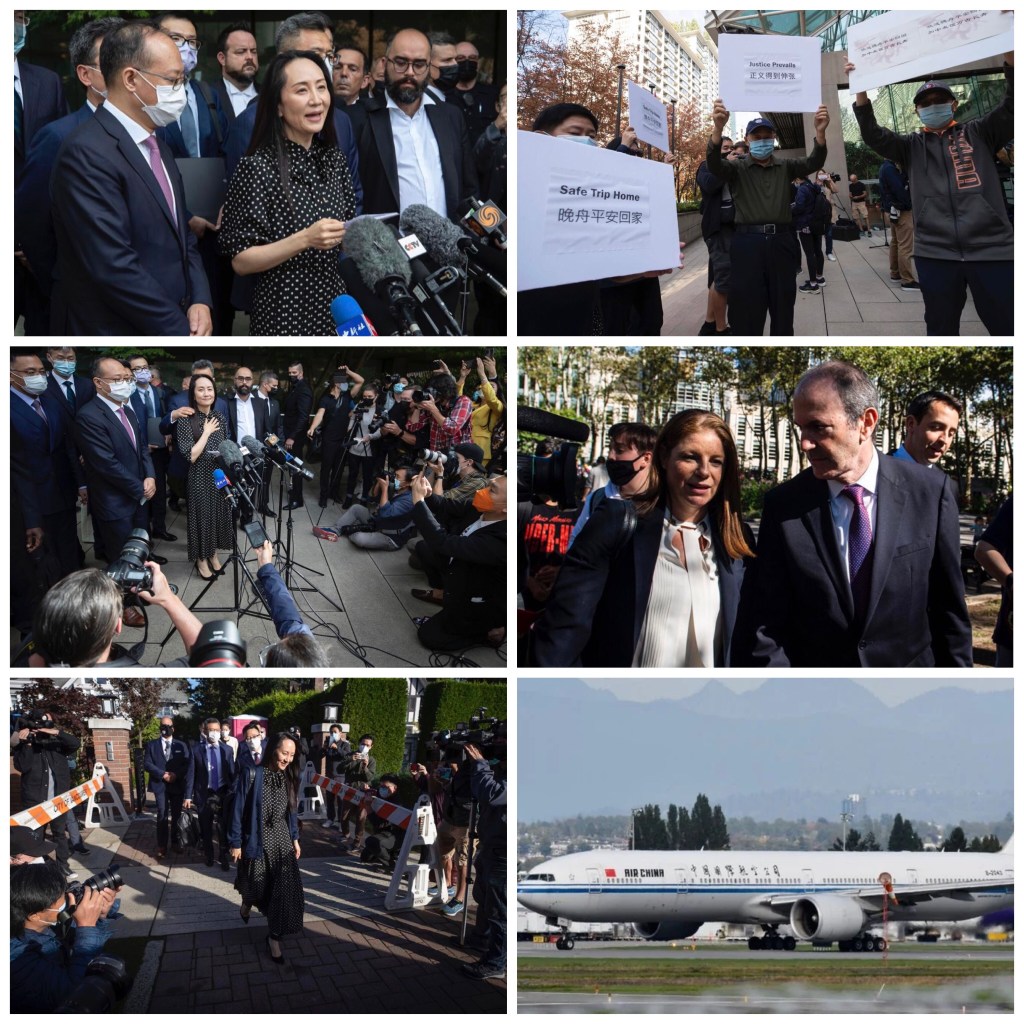
Video: US ends political prosecution to save face. Meng Wenzhou Wins Her Freedom! US Drops Extradition Charges Against Huawei Executive! 美國結束政治起訴以挽回面子。孟晚舟贏得自由!美國撤銷對華為高管的引渡指控!
Is US-Canada kidnapping and Extortion of Subrina WenZhou Meng coming to an end? Is that the Western Empire’s claimed so call rules of laws? Reuters: Huawei CFO’s U.S. extradition hearings in Canada end, date for ruling coming 美加綁架勒索孟晚舟案要結束了嗎?這就是西方帝國聲稱的所謂的法律規則嗎?路透社:華為首席財務官在加拿大的美國引渡聽證會結束,裁決日期即將到來?Oct. 21 By Moira Warburton
Attorney Edward Liu in San Francisco: After more than 1,000 days of U.S. extra-territorial over-reaching in clear violation of international law, and abuse of power, the news coming out from NYC federal court is that the Biden Justice Department federal prosecutors and Huawei’s Canadian legal team in Vancouver, Canada have reached a deal.
The deal, arranged by virtual appearance by Sabrina Meng WenZhou, chief financial officer of Huawei, is a “deferred prosecution agreement.”
What this means is that the U.S. federal prosecutor, i.e. the U.S. Attorney from the Justice Department based in NYC, will “defer” filing charges against Ms. Meng, on the trumped-up charges that she violated the U.S. trade sanctions against Iran, by arranging for the sale of Huawei telecommunications hardware equipment to Iran.
This long-arm stretch of American prosecutorial power is an abuse of Extradition Laws, under International Law….. and clearly, by Canadian authorities under Justin ” Bollywood” Trudeau holding in detention Ms. Meng, it is a travesty and abuse of power.
I am not privy to the deal reached between the U.S. and Ms. Meng’s attorneys in Brooklyn, NYC…… I hope that there is no admission of “guilt,” or even a “nolo contendre” (no contest) which in legal parlance, is an implicit admission of guilt, which is a de facto “guilty plea.”
For far too long, many Chinese overseas, including many Chinese mainlanders and Chinese-Americans (e.g. Wen Ho Lee’s case is a good example) snared and caught under the trap of U.S. legal prosecutorial over-reaching and abuses….. they have been “pussies,” and kept compromising and giving up fighting to the finish.
Why? Is this cultural thing?
Even Chinese president XJP is notoriously known for “being soft” when it comes to America and Americans….. by over-deferential meekness and “ke-qi,” not used to hardball and acting tough when bullied.
This happened during Trump’s tenure as POTUS…. four years of being “piled on;” doing very little after being insulted, subjected to trade sanctions, humiliating racist putdowns about “the Kung Flu,” “Wuhan Virus,” “China Contagion,” all the racist stereotyped of “Fu Manchu-ism.”
A major shift occurred during the summit in Anchorage, Alaska…. followed by the Tianjin meet-and-confer between China’s top diplomats and Biden’s diplomats.
Finally, the word, “DE-COUPLING,” accompanied by “Zilighengseng” (Self-Reliance,” “SHARED PROSPERITY,” “DEMOCRACY, Chinese-defined” have come out of the closet to assert China’s way, instead of playing passive… implicitly and docilely accepting America’s primacy as the “Supremo.”
The Huawei case of prosecutorial over-reaching is a lesson for all global Chinese as to who China’s friends and enemies are.
Even more important is the realization that white supremacy, racism, western imperialism and residual colonialism, put-downs of Chinese as “inferior or “second-class,” or “subhuman” today remain deeply-rooted in the “WELTANSCHAUUNG” (World View) of many in the West, specially in today’s elite America.
Today’s development will give Justin “Bollywood” Trudeau a sigh of relief. Justin Trudeau’ snap election has been disappointingly unconvincing about Trudeau’s leadership as the governing Premier of Canada.
The son is not the father (unlike father Pierre Trudeau, who boldly engaged China and established diplomatic relations with the PRC ahead of former POTUS Jimmy Carter).
Justin “Bollywood” Trudeau has mismanaged Canadian-China relations and destroyed decades of goodwill and trust, including much win-win bi-lateral trade and inbound Chinese investments into China. All that today are frozen.
Finally, the big question remains…..
ARE the TWO CANADIAN “MICHAELS” part of the three-way deal between the U.S.-Biden White House and XJP’s Beijing government and Canada-Trudeau and XJP’s Beijing government?
If so, what are the details?
What about the “Clawback” of corrupt Chinese officials’ “Loot” plundered from China, now “parked” in Canadian assets.
Some of you may not know this….. but both formerChinese Premier Zhu Rongji and former Chinese vice-premier Wang Qishan tried but failed to retrieve and recover many of the plundered loot today parked in “Canadian assets.”
Vice-Premier Wang Qishan failed in executing his much-publicized “SKYNET” campaign to claw back these corrupt Chinese officials which used Canada as safe haven.
So is the U.S. today a safe haven for corrupt Chinese money, including those stolen by Miles Kwok, aka Guo Wengui, aka Guo Haoyun, benefactor of Trump Svengali Steve Bannon, a crook, and notorious China basher who engineered Trump’s anti-China policy under the ambit of “the China Threat.”
TIME FOR WOLF-WARRIOR DIPLOMACY. No more SOFTBALL.
My advice to XJP: Decline any face-to-face, one-on-one meeting that Joe Biden desperately needs at the Glascow, Scotland G-20 Summit in November, 2021, in a little less than 2 months’ time.
Watch your back, XJP….. AUKUS Trilateral Alliance is up to no good.
Boris Johnson and Scott Morrison are both snakes. And Biden is a hypocrite and double-crosser. Don’t trust any of these leaders. And that bitch from the EU -Ursula von Der Leyen, president of the European Commission. This German bitch is an ideologue on Xinjiang separatism and a spokeswoman for ETIM.
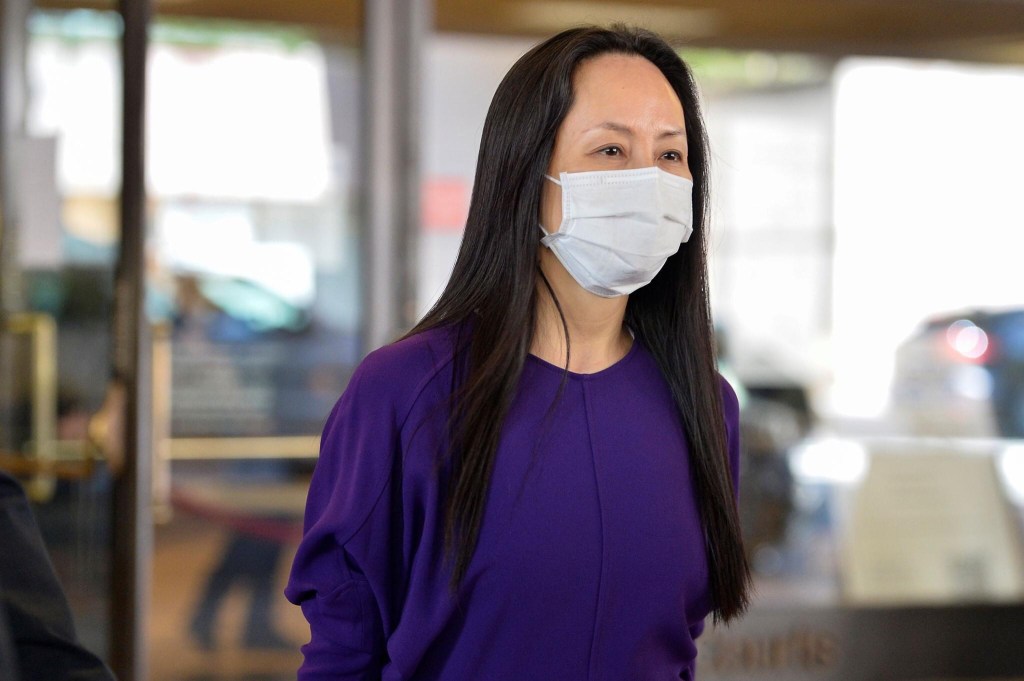
VANCOUVER, Aug 18 (Reuters) – Canadian prosecutors said the defense of Huawei Chief Financial Officer Meng Wanzhou failed on facts and law, as hearings in their bid to extradite her to the United States finished on Wednesday.
The Chinese tech-giant executive will now await the judge’s ruling in her case, the date for which will be set on Oct. 21.
Meng Wanzhou, 49, was arrested at Vancouver International Airport in December 2018 on a warrant from the United States, charging her with fraud for allegedly misleading HSBC (HSBA.L) about Huawei’s business dealings in Iran.
She has claimed innocence and is fighting the extradition, confined to Vancouver and monitored 24/7 by private security that she pays for as part of her bail agreement.
The defense fails “on the facts and they fail on the law. You should have no difficulty finding dishonesty sufficient to make … a case for fraud,” Canadian government prosecutor Robert Frater told the court.
“No one has received a fairer extradition hearing in this country than Ms. Meng,” he added.
Her lawyers have argued that her extradition should be stayed because the United States misled Canada when it summarized the evidence against Meng, that former President Donald Trump’s comments on her case poisoned any trial she might face, and that no real fraud took place, among other reasons. read more
Canadian prosecutors have maintained that the United States has a valid case against Meng and emphasized that the bar for extradition is low. read more
Associate Chief Justice Heather Holmes in British Columbia’s Supreme Court must decide based on whether the evidence would allow Meng’s trial to proceed in Canada.
If Holmes rules in favor of extradition, the final decision will then be made by Canada’s justice minister. Both decisions can be appealed by Meng’s legal team, which observers of the case have said means it could drag on for years.
Reporting by Moira Warburton in Vancouver; Editing by Steve Orlofsky
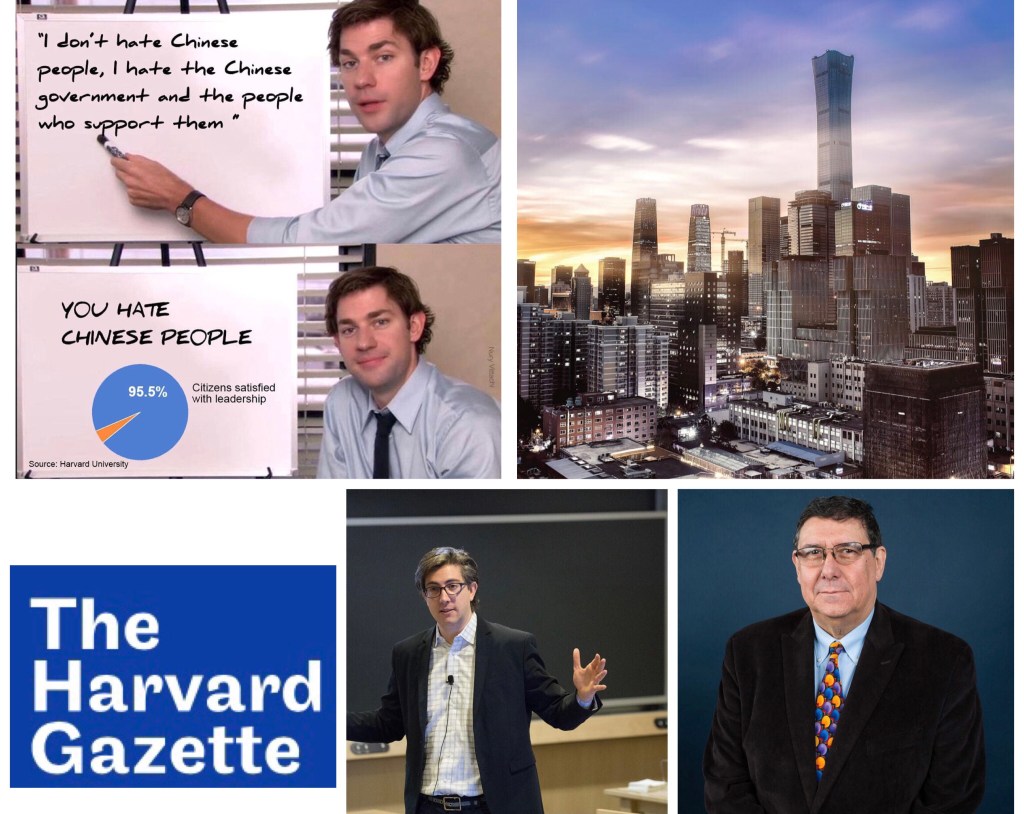
The Harvard Gazette: NATIONAL & WORLD AFFAIRS Taking China’s pulse – Ash Center research team unveils findings from long-term public opinion survey by Dan Harsha Ash Center Communications July 9, 2020
Understanding what Chinese citizens think about their own government has proven elusive to scholars, policymakers, and businesspeople alike outside of the country. Opinion polling in China is heavily scrutinized by the government, with foreign polling firms prohibited from directly conducting surveys.
Given China’s global rise in the economic, military, and diplomatic spheres, understanding public opinion there has arguably never been more important.
A new study from the Ash Center fills in this gap for the first time, providing a long-term view of how Chinese citizens view their government at the national, as well as the regional and local levels. What started as an exercise in building a set of teaching tools for an executive education class eventually transformed into the longest academic survey of Chinese public opinion conducted by a research institution outside of China.
“Gathering reliable, long-term opinion survey data from across the country is a real obstacle,” said Ash Center China Programs Director Edward Cunningham. “Rigorous and objective opinion polling is something that we take for granted in the U.S.”
While important work in this area has been accomplished by previous scholars — and their work shaped the analysis of the survey data collected — those other surveys were often short-term or infrequent.
Edward Cunningham teaching.
For Tony Saich, Daewoo Professor of International Affairs and director of the Ash Center, the quest to build a firmer understanding of Chinese public opinion has taken the better part of 15 years. It began with an attempt to develop a suite of curricular materials to inform a course on local government in China.
“We thought it would be helpful to know how satisfied citizens were with different levels of government, and in particular how satisfied they were with different kinds of government services,” said Saich.
The work began in 2003, and together with a leading private research and polling company in China, the team developed a series of questionnaires for in-person interviews. The surveys were conducted in eight waves from 2003 through 2016, and captured opinion data from 32,000 individual respondents.
“There’s nothing comparable done on this scale, over such a long period of time, and over a large geographic area,” said Jesse Turiel, a China public policy postdoctoral fellow and co-author who worked closely with Saich and Cunningham on the project’s analysis and subsequent publications.
The survey team set out to assess overall satisfaction levels with government among respondents from across the socioeconomic and geographic strata of China. “It is always a challenge to obtain a representative sample of the Chinese population, particularly from interior provinces,” said Turiel. “Our survey does not include migrant laborers, for example. But given the fact that the survey conducted in-person interviews with over 3,000 respondents per year in a purposive stratified sample, we are happy that the results include not just the coastal elites or large urban areas, but also poorer and less developed inland provinces.”
Levels of government and public opinion
The survey team found that compared to public opinion patterns in the U.S., in China there was very high satisfaction with the central government. In 2016, the last year the survey was conducted, 95.5 percent of respondents were either “relatively satisfied” or “highly satisfied” with Beijing. In contrast to these findings, Gallup reported in January of this year that their latest polling on U.S. citizen satisfaction with the American federal government revealed only 38 percent of respondents were satisfied with the federal government.
For the survey team, there are a number of possible explanations for why Chinese respondents view the central government in Beijing so favorably. According to Saich, a few factors include the proximity of central government from rural citizens, as well as highly positive news proliferated throughout the country.
This result supports the findings of more recent shorter-term surveys in China, and reinforces long-held patterns of citizens reporting local grievances to Beijing in hopes of central government action. “I think citizens often hear that the central government has introduced a raft of new policies, then get frustrated when they don’t always see the results of such policy proclamations, but they think it must be because of malfeasance or foot-dragging by the local government,” said Saich.
Tony Saich, Daewoo Professor of International Affairs and director of the Ash Center.
Compared to the relatively high satisfaction rates with Beijing, respondents held considerably less favorable views toward local government. At the township level, the lowest level of government surveyed, only 11.3 percent of respondents reported that they were “very satisfied.”
Again, the U.S. reveals quite a different story. “American trust surveys over time show a clear distinction between low levels of trust towards the federal government, but a strong belief and faith in the power of local government — at the most local level, those positions may be filled by part-time volunteers who are a part of your everyday life,” said Cunningham. This dichotomy is highlighted by a 2017 Gallup poll, where 70 percent of U.S. respondents had a “great” or “fair” amount of trust in local government.
Saich contends that the lack of trust in local governments in China is due to the fact that they provide the vast majority of services to the Chinese people. This trust deficit was compounded by the 1994 tax reforms, which garnered a substantially larger share of total national tax revenues for the central government. Local governments, despite being faced with declining revenues, were still on the hook for providing the bulk of public services throughout China.
“Local governments were caught between dropping tax revenue and rising expenditures,” Cunningham said. “Many local governments then had to turn to ad-hoc extra budgetary fees to close the budget gap. I think that has consistently undermined trust at the local level.”
Regional disparities
The research team was also keen to examine disparities in the responses of wealthy, predominantly urban and coastal areas of China and those of less developed interior provinces. “It didn’t surprise us that the wealthy coastal citizens who were the winners of globalization in many ways, and the winners of China’s domestic reform program, had a very high favorability rate of government overall, regardless of level of government examined,” said Cunningham.
The responses from survey participants in rural areas, however, surprised the researchers, particularly over time. “We did not anticipate how quickly both low-income citizens and people from less-developed regions in China closed the satisfaction gap with high-income citizens and people from the coastal areas,” Cunningham added.
The surveys found that rural residents, generally poorer than those in cities, had more optimistic attitudes about inequality than their wealthier urban counterparts. The team’s analysis ties the closing of this satisfaction gap between rich and poor, as well as coastal and hinterland populations, to several policies including local budget spent on healthcare, welfare and education, and paved roads per capita.
“We tend to forget that for many in China, and in their lived experience of the past four decades, each day was better than the next.”
— Tony Saich, Daewoo Professor of International Affairs and director of the Ash Center – Saich added that the findings “run counter to the general idea that these people are marginalized and disfavored by policies,” and therefore undermine the persistent notion that rising inequality, and dissatisfaction with corruption and local government, have created the potential for widespread unrest in China.
Observers have long predicted that China’s slowing economic growth coupled with a complacent, ineffective government bureaucracy could ultimately lead to the crumbling of Beijing’s political authority. While frustration with corruption and the quality of public services at the local level clearly exists, the Ash research team’s work has shown that the current political system in China appears remarkably resilient.
Inequality remains a key concern for policymakers and citizens alike in China, but the survey project found little to support the argument that those concerns among ordinary Chinese are translating into broader dissatisfaction with government. The final round of the survey in 2016 revealed that about one-third of respondents were much more likely to lodge complaints with the government or protest if they felt that air pollution had negatively impacted their own health or the health of their immediate family members.
In a new book, Belfer Center Director Graham Allison looks at how the lead-up to the Peloponnesian War offers important insights into the looming complexities as China threatens to displace the United States as the world superpower.
The troubling U.S.-China face-off
A key to the future is to avoid the trap of confrontation, Graham Allison says in new book
Harvard scholar discusses what broad new security law will mean – Although state censorship and propaganda are widespread in China, these findings highlight that citizen perceptions of governmental performance respond most to real, measurable changes in individuals’ material well-being. Satisfaction and support must be consistently reinforced. As a result, the data point to specific areas in which citizen satisfaction could decline in today’s era of slowing economic growth and continued environmental degradation.
For Cunningham, it’s important not to forget that many in China are only a generation removed from an era of chronic food shortages and significant social and economic instability. “Relative perspective is always important, as China is still a developing country,” he said.
“We tend to forget that for many in China, and in their lived experience of the past four decades, each day was better than the next,” Saich added. “Our surveys show that many in China therefore seem to be much more satisfied with government performance over time, despite rising inequality, corruption, and a range of other pressures that are the result of the reform era.”
Washington Post: Did the pandemic shake Chinese citizens’ trust in their government? We surveyed nearly 20,000 people to find out.
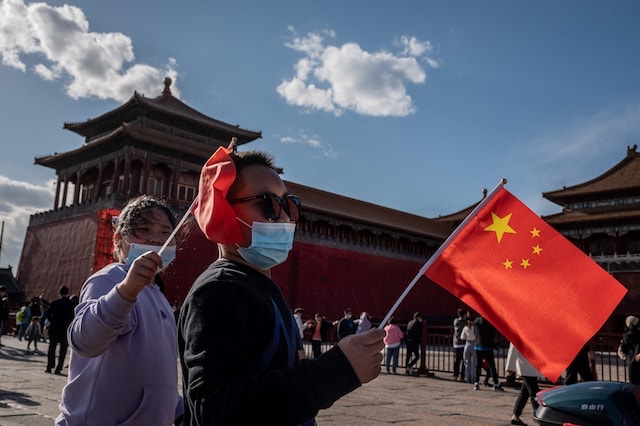
Children walk outside the Forbidden City during the Labor Day holiday in Beijing on Saturday. By Cary Wu May 5, 2021
More than a year into the coronavirus pandemic, the vast majority in many Western countries think China handled the outbreak poorly. Their views toward China have become overwhelmingly negative. U.S. citizens’ confidence in President Xi Jinping to do the right thing in world affairs has also significantly declined.
But has the pandemic shaken the long-standing support of Chinese citizens for their government? Empirical research, including mine, has shown that the Chinese government’s handling of the pandemic has actually boosted its legitimacy. Here’s what we found.
We surveyed nearly 20,000 people across China
I conducted a large-scale online survey in the immediate aftermath of the reopening of Wuhan in late April 2020. The survey differed from many other surveys that are simply posted through online platforms that yield no details on who has access and who has responded. I designed an innovative approach that captures aspects of face-to-face survey approaches.
In collaboration with 17 Chinese academics, we recruited more than 600 students from 53 universities across China to conduct one-on-one interviews online. This helped ensure that the survey was widely distributed across all regions. We assigned each team leader a unique access code for his or her survey link, so we could protect and monitor each survey. Respondents were assured that their responses would be anonymous.
In the end, we interviewed 19,816 individuals from 31 provinces or provincial-level administrative regions across China. The resulting sample was roughly comparable to the census in terms of age and urban-to-rural ratio, but it did have higher participation rates of female and more educated respondents.
Anti-Asian bias isn’t just an American problem
The pandemic boosted citizen trust in their government
The 2018 World Values Survey reported that 95 percent of Chinese citizens said that they have a great deal or quite a lot of trust in national government. Comparatively, about 69 percent felt the same way about their local government.
Since the Chinese government already enjoyed very high levels of trust from its citizens before the pandemic, did this trust increase? Our surveys asked about trust in government at five different levels — the township, county and city level as well as the provincial and national levels.
The data show that Chinese citizens’ trust in their national government increased to 98 percent. Their trust in local government also increased compared to 2018 levels — 91 percent of Chinese citizens surveyed now said they trust or trust completely the township-level government. Trust levels rose to 93 percent at the county level, 94 percent at the city level and 95 percent at the provincial level. These numbers suggest that Chinese citizens have become more trusting in all levels of government.
China’s coronavirus response could build public support for its government Our survey also asked respondents how their trust in government had changed since the outbreak. Nearly half of respondents (49 percent) said that they had become more trusting in the national government since the pandemic started, with 48 percent reporting no change and only about 3 percent said they had become less trusting. The vast majority (63 percent) reported no change in their trust in local government, 30 percent reported positive change, and just 6 percent reported they were now less trusting in their local government.
Chinese citizens often report hierarchical government trust — this means they trust national-level institutions more than institutions at the local level.
Despite the high levels of trust we recorded across all levels of government during the pandemic, this pattern holds: Trust drops from 98 percent at the national level to 95 percent at the provincial level and down to 91 percent at the township level. High levels of trust mean a lot.
So what does this all mean?
Understanding the impact of political trust requires making a distinction between diffuse and specific trust. Diffuse trust is moral, value-driven and reflects a deep-seated orientation toward political community as a whole. Specific trust, in contrast, is based on how citizens evaluate government outputs and performance.
Of course, survey respondents may have an individual response pattern that reflects their diffuse or specific orientation toward trust. Some respondents may trust all levels of government equally, some may trust some levels more than others, while others may distrust all levels of government.
The research shows the patterning of answers helps identify when trust denotes a critical evaluation of institutional performance. Critical trusters have variability in their answers — they’re making a specific assessment of the performance of each government level. In contrast, diffuse trusters trust all levels, while cynics distrust all levels.
Our data suggest that only about 1 percent of Chinese citizens have expressed cynicism about the government during the pandemic. About 55 percent of Chinese citizens are diffuse trusters and 44 percent are critical trusters.
Critical trust is based on citizens’ reasoned evaluation of the performance from each specific level of government during the pandemic. If trust is specific, then low trust might merely represent criticism and high trust could reflect citizens’ satisfaction with government performance.
Among the 44 percent of respondents who have placed more trust in some levels more than others, the mean level of trust is 89 percent. The fact that trust is high among Chinese citizens who look at government performance with a critical eye suggests that high government trust in China during the pandemic reflects Chinese citizens’ true satisfaction with their government performance.
Of course, caution is certainly warranted about how Chinese citizens rate their government. Still, the high levels of trust among Chinese citizens — and what we know about citizen surveys in China — suggest that these results cannot be simply reduced to a misrepresentation out of political fear. These findings are consistent with what other survey scholars have repeatedly shown. Experimental studies also show Chinese citizens do express their genuine attitudes toward their government without fear.
In China, like other countries, a crisis may activate collective angst that makes people “rally around existing institutions as a lifebuoy.” The increase in Chinese citizens’ trust in government I have shown here could indicate a rally ’round the flag phenomenon. To track how the pandemic may change how Chinese see their government over the long term, however, will require collecting more data.
Cary Wu is a sociology professor at York University in Ontario, Canada. Find him on Twitter @carywoo.
The Washington Times: Inside the Beltway: Ipsos poll reveals China is happiest nation on Earth
A new Ipsos poll concludes that China is now “the happiest” nation on Earth. The poll states 93% of Chinese people say they’re happy.” (Associated Press) A new Ipsos poll concludes that China is now “the happiest” nation on Earth. The poll states 93% of Chinese people say they’re happy.” (Associated Press) By Jennifer Harper – The Washington Times – Monday, October 12, 2020 Amid global turmoil and uncertainty, a massive new Ipsos poll of 19,516 adults in 27 countries reveals the happiest nation on the planet.
“The happiness leader in 2020 is China, where 93% say they are happy, up 11 percentage points from last year,” says the poll analysis, released Monday.
“The only country showing a significant increase in happiness since 2011 is China,” the analysis notes.
Netherlands is ranked second at 87%, followed by Saudi Arabia (80%), France and Canada, both at 78%. The U.S. ranked 11th on the list, with 70% of respondents indicating they are happy. On average, 63% of the global population agree.
“The incidence of happiness shows significant shifts in many countries: it has declined by eight percentage points or more in Peru, Chile, Mexico, India, the U.S., Australia, Canada, and Spain, while it has increased by more than eight percentage points in China, Russia, Malaysia, and Argentina,” Ipsos wrote.
The pollster measured 29 “drivers” of happiness, which range from physical health and well-being to family relations, personal safety, living conditions and meaningful employment. Social media, incidentally, brought the world population the least happiness, cited by just 11%.
In the last decade, the incidence of happiness has decreased sharply. The percentage of those saying they are happy has fallen by 14 percentage points globally. It is down by five percentage points or more in 17 out of 23 countries surveyed both years. Mexico, Turkey, South Africa, Argentina, Spain and India show drops of more than 20 points.
The poll of adults was conducted July 24-Aug. 7 in Australia, Belgium, Brazil, Britain, Canada, China (mainland), France, Germany, Italy, Japan, Spain, the U.S., Argentina, Chile, Hungary, India, Malaysia, Mexico, the Netherlands, Peru, Poland, Russia, Saudi Arabia, South Africa, South Korea, Sweden and Turkey.
THE POLITICS OF FEAR
“COVID-19: The Politics of Fear and the Power of Science” arrives Tuesday from Turner Books with a clear message. Manipulative forces have co-opted coronavirus and stolen the nation’s peace of mind.
And who or what are these forces? They are government, the news media and our own psyche, says author Dr. Marc Siegel, a clinical professor of medicine at New York University’s Grossman School of Medicine and a Fox News analyst whose fans include President Trump and Fox News heavyweights Tucker Carlson and Mark Levin.
“An attempt to put this pandemic in proper medical context was immediately overcome by politics,” writes Dr. Siegel, citing partisan infighting, apocalyptic headlines, riots, protests, fear mongering and lockdowns which has marred everyday life.
“The virus is dangerous. The virus provokes fear out of proportion to the risk. This fear is its own corrosive disease and causes us to jump to quick answers, often over-politicized by a media hoping for ratings and politicians anxious to control us. This fear leads to dogma and distrust, premature judgement, hypocrisy and pseudoscience,” Dr. Siegel tells Inside the Beltway.
“The solution? Trust science — which has been proceeding in an incredible rate both in terms of understanding the virus and treating it and vaccinating against it,” the author continues — offering one more doctor’s order.
“Exercise kindness to others, and courage. These emotions are processed by the same brain centers which process fear,” Dr. Siegel says.
REJECTING THE RELIGIOUS LITMUS TEST
Americans reject the notion that Judge Amy Coney Barrett‘s Catholic faith should be a factor in her confirmation as Supreme Court justice.
“Three-out-of-four voters say a candidate’s religious faith should not determine whether he or she can serve on the high court,” declares a new Rasmussen Reports survey which found finds that just 16% of likely U.S. voters think a nominee’s religion should be a deciding factor in determining who sits on the Supreme Court.
Another 77% reject the idea that Catholics should be barred from serving on the Supreme Court because of their abortion beliefs.
The survey of 1,000 likely voters was conducted Oct. 8-11.
‘CALIFORNIA-STYLE SINGLE-PARTY NATION’
What’s in store for the nation if Democratic presidential nominee Joseph R. Biden wins in three weeks?
“Here’s the game plan: Eliminate the filibuster so Democrats can pass whatever they want with a simple majority. Pack the Supreme Court with far-left liberals to overwhelm any conservative majority. Add four more Democratic Senate seats and 10 more Electoral College votes by making D.C. and Puerto Rico states,” says an Issues & Insights editorial.
“And voila, Democrats will have cleared the way for them to get their Green New Deal, Medicare for All, minimum-wage raising, pro-union, open-borders, tax-the-rich agenda enacted. They will have jammed the court with justices who won’t bat an eye at any Constitution-bending laws Democrats pass. And they will have made it far more difficult for Republicans to win the presidency or a Senate majority in the future,” the news organization says.
“Democrats will also be able to enact the ‘For the People Act,’ which was the first bill they introduced when they took control of the House. This legislation would dramatically expand government regulation of political speech, making it harder for Republicans to raise money, and it would federalize the election process — making it easier for Democrats to cheat,” the publications advises.
“In short, if Biden wins and Democrats gain control of the Senate, they will be in a position to turn us into a California-style single-party nation.”
POLL DU JOUR
• 39% of U.S. adults say Democratic vice presidential nominee Sen. Kamala Harris is “very liberal”; 82% of conservatives, 25% of moderates and 12% of liberals agree.
• 26% say she is “liberal”; 9% of conservatives, 27% of moderates and 51% of liberals agree.
• 20% say she is “moderate”; 3% of conservatives, 32% of moderates and 27% of liberals agree.
• 2% say she is “conservative”; 1% of conservatives, 3% of moderates and 1% of liberals agree.
• 14% are not sure of her ideology; 5% of conservatives, 12% of moderates and 9% of liberals agree.
Source: AN Economist/YouGov poll of 1,500 U.S. adults conducted Oct. 4-6.
• Kindly follow Jennifer Harper on Twitter @HarperBulletin.
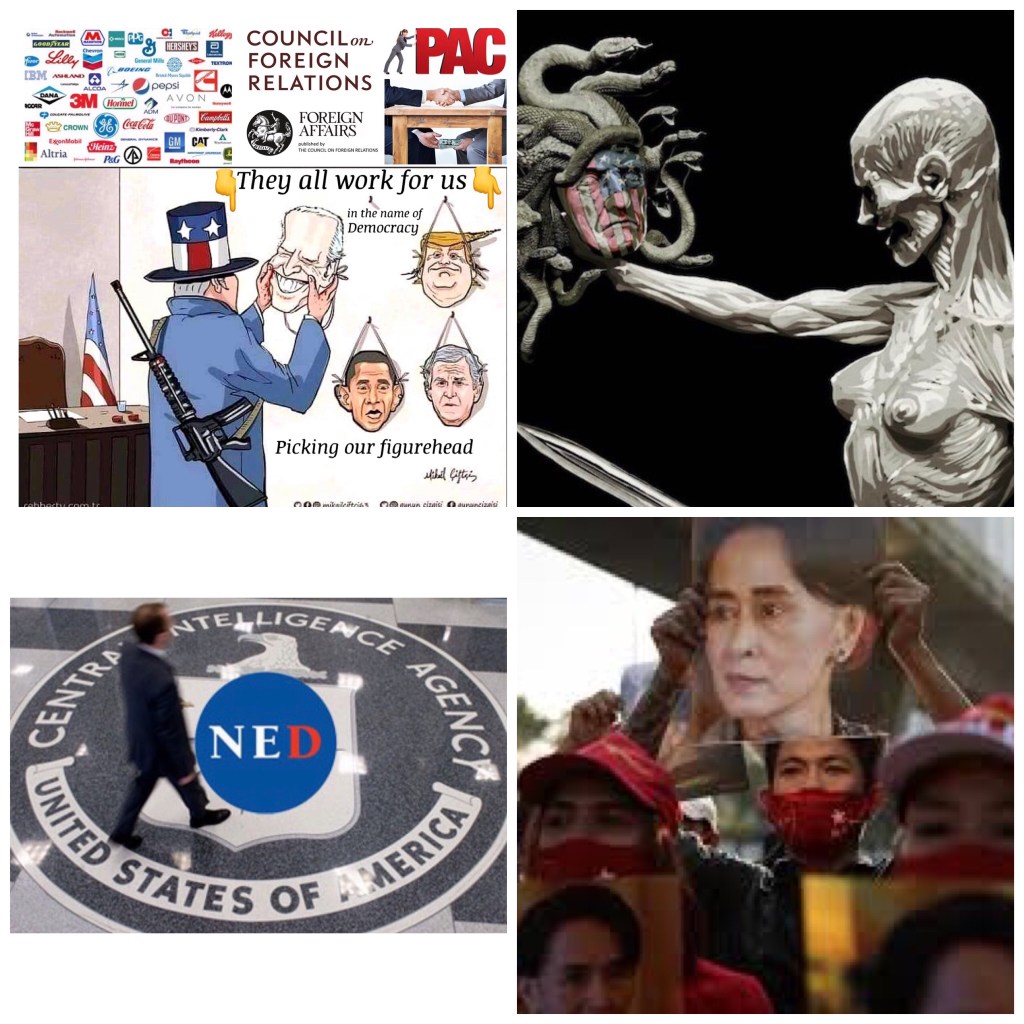
Myanmar’s US-backed opposition “National Unity Government” (NUG), after months of its so-called “People’s Defense Forces” carrying out nationwide terrorism, has “declared war” on its own nation.
The move puts Myanmar one step further down the path toward a Libya-style US intervention and inevitably the destabilization and destruction of the country and the advancement of US foreign policy objectives regarding the encirclement and containment of China.


 Johnson Choi Biz