Exclusive: US ‘Worker Rights Consortium’ extorts $300,000 from Chinese, US firms by fabricating Xinjiang ‘forced labor’ issue

Exclusive: US ‘Worker Rights Consortium’ extorts $300,000 from Chinese, US firms by fabricating Xinjiang ‘forced labor’ issue 獨家:美國“工人權益聯盟”捏造新疆“強迫勞動”問題,從中美企業勒索30萬美元 by Liu Xin, Fan Lingzhi and Yang Ruoyu Aug 06 2021

Editor’s Note:

Do “human rights” have a price? The answer is Yes, when they are used by the West and the US to interfere with other countries’ domestic affairs. The Global Times has learned exclusively from sources that the US-based nongovernmental organization (NGO) Worker Rights Consortium (WRC) blackmailed a Chinese company and its US cooperative partner for $300,000 by threatening to hype up fabricated “forced labor” issues related to China’s Xinjiang Uygur Autonomous Region.

Creating inflammatory topics

The Global Times learned exclusively from the national security department that on October 17, 2018, the legal representative of a garment manufacturing company in Hotan Prefecture of Xinjiang, which is affiliated to a company in Zhejiang Province, received a phone call from the Associated Press and The New York Times, asking him to explain on the company “using illegal labor to manufacture US brand clothes.” One day before, the company’s name appeared in local media reports for its contributions to local poverty alleviation work and the news also introduced the function of the vocational education and training centers in helping reduce poverty.

Although the legal representative refuted the claim that the company was using illegal labor, the AP released a report later, saying that the company hired people from “re-education camp” to make clothes, and it also cited untenable claims of “1 million Muslims are detained,” made up by anti-China scholars and separatists.

Nathan Ruser, a cyber-policy researcher at the Australian Strategic Policy Institute (ASPI), appeared in the AP report, claiming that by analyzing satellite images, he found that the Hotan-based apparel factory and a so-called government-run training camp were connected by a fenced path.

The AP story also targeted US-based Badger Sportswear, saying that according to US customs data, in April 2018, Badger began importing 100 percent polyester T-shirts and pants from the Hotan company, and the address on the shipping records is “the same as for the detention camp.”

The inflammatory report of the AP was later cited by other foreign media. Coincidentally, the Global Times noticed that Scott Nova, executive director of the WRC, released a statement almost at the same time when AP released its report, saying that it will “continue to seek further information from Badger concerning the production of its goods by internment camp detainees in Western China,” and that “simply announcing that it is ceasing placing orders with this particular factory is not an adequate response.”

Without any evidence, the WRC continued to hype the topic and pressure the Zhejiang company and even asked it to release the Hotan company employees’ personal information, including their gender, name, job title and salary.

On June 24, the WRC released an assessment, saying that “based on communication with Badger and with Chinese human rights researchers and on review of US Customs records and relevant corporate documents,” the WRC “was able to swiftly confirm” that Badger had been produced goods in plant with “forced labor” being used.

The WRC also noted in the assessment that its “investigation” involved reviews of satellite imagery, “a range of original documents, as well as secondary source material from other researchers.” It also admitted that it was unable to interview workers in Xinjiang but ascribed it to the “repressive environment” in Xinjiang.

The Global Times has tried to contact the legal representative of the Hotan company for an interview but was declined as the person did not want the company to be involved in media reports to avoid further trouble.

Nothing found in field survey

Is it true as the WRC claimed that there is no possibility to have field investigation in China’s Xinjiang? Or is it their tactics to give pre-set conclusions?

The Global Times has learned that pressured by the WRC and the US customs department, Badger turned to Ropes&Gray law firm to conduct an investigation and the latter contacted with the Hong Kong branch office of Alvarez&Marsal, a global professional service firm. The Hong Kong office then commissioned the task to its Shanghai office.

Without acquiring qualification for any domestic investigation, the Shanghai company sent employees in December 2018 to Xinjiang and Zhejiang to “investigate” on whether the Hotan company is located within the training center and whether there is forced labor.

On April 7, officials from the market supervision and statistical departments began actions against the Shanghai company’s illegal investigation. Meanwhile, police officers from national security department also told the Global Times that after receiving tip-off from local residents, they began to work on the case for its suspicion of jeopardizing national security.

The Global Times learned from police officers that during the investigation, employees of Shanghai Alvarez&Marsal said that they did not find any evidence of “human rights violations” and workers of the Hotan company enjoyed freedom with their salary being paid in accordance with market rates.

Employees from Shanghai Alvarez&Marsal expressed anger with the US for not admitting the result of their investigation and insisting on pressuring Chinese companies. “News in the US [on Xinjiang] is absurd… What they want is not what we saw… our report clearly did not meet their demands… they want something negative,” an employee who went to Xinjiang for the field survey said.

Alvarez&Marsa’s Shanghai office is not the only company that had conducted “investigations” on the case. Following the Western media’s continued hyping of “forced labor” topics about the Hotan company, in December 2018, Worldwide Responsible Accredited Production (WRAP) also denied human rights violations in the company after investigation.

In March 2019, Business Social Compliance Initiative also concluded after investigation that the Hotan company did not hire children as labor or use “forced labor.” In April 2019, WRAP’s third review also ended up with conclusion of no violation of human rights.

The WRC had turned blind eyes to the above investigations and conclusions. The Global Times has learned that during the year of 2019, the WRC kept pressuring the legal representative of the Hotan company and issued “assessment” to accuse the company of “forced labor” and “violations of human rights,” claiming the local government in Xinjiang was involved. The WRC also pressured Badger to end cooperation with companies owned by the legal representative and threatened to work with Western media to continue to play up the issue.

Despite Badger and the Hotan company’s continued communications with the WRC in regard to the third-party investigation result, the WRC insisted in working with the Human Rights Watch and other NGOs to pressure Badger not to source from the Hotan company.

Cash in self-deception

Why is WRC insisting in doing so? Its final purpose was unveiled – asking for $600,000 from Badger as “charitable donation.” After several negotiations with WRC’s Scott Nova, the final figure was set at $300,000. In order to maintain business and reduce losses, the Zhejiang company, which the Hotan company is affiliated to, agreed to split the fees with badger, the Global Times has learned.

According to documentation acquired by the Global Times, Badger agreed to make three contributions of $100,000 to human rights organizations “designated by Human Rights Watch (HRW),” with the first payment excepted to be made in November 2019. The document said that after Badger makes the first payment, it would deduct $6,250 on a monthly basis from the Zhejiang company open invoices over 24 months, totaling $150,000.

The Global Times also learned that the WRC used similar tactics to force an apparel company in Bangladesh to pay for “charitable fees.”

According to a report released on WRC’s website, although Badger reaffirmed there is no forced labor being used, it agreed with the “necessary remediate measures offered by the WRC, including the $300,000. According to minutes from an October 25, 2019 WRC meeting published on WRC’s website, the WRC director of strategic research Penelope Kyritsis and executive director Scott Nova gave Human Rights Watch the responsibility for identifying Uygur exile groups to receive the Badger money.

The HRW, an organization founded during the Cold War, has been found actively engaged in an anti-China campaign focusing on fabricating baseless rumors related to the Hong Kong Special Administrative Region (HKSAR) and the Xinjiang region.

In the end, where did the money finally go? The US independent website The Grayzone unveiled in a report in April that when asked by The Grayzone which “independent human rights organizations” received the payout by Badger, the WRC’s Kyritsis fumbled for an answer. “Um, there was one group in Kazakhstan,” she said, but claimed she could not recall its name.”

“There is no so-called forced labor in China’s Xinjiang. The WRC has no legal right to supervise companies. By hyping evidence-free allegations, it continues to harass companies and force them to make ‘donations.’ This is blackmail,”Li Wei, a research fellow at the China Institute of Contemporary International Relations and an expert on counter-terrorism, told the Global Times.

Li noted that using ridiculous excuses to deny access to Xinjiang, the WRC sent money to anti-China NGOs and a “Uygur exile” organization, including the World Uyghur Congress (WUC), which has been supporting terrorism.

WUC is a terror organization that stands behind many terror attacks in China’s Xinjiang region. It came from the World Uyghur Youth Congress (WUYC), which has been listed as a terror organization in China. WUC’s current leader, Dolkun Isa, is also a member of the WUYC. There is also evidence of WUC’s former leader and separatist Rebiya Kadeer’s talking over the phone with terrorists who led attacks in Urumqi on July 5, 2009, said Li.

The expert noted that one of the biggest problems for global counter-terrorism work is that “the more we fight, the more terrorism spreads,” and one reason is some countries adopt double standards on counter-terrorism.

“Under the excuse of human rights and charity, some NGOs also played a shameful role in blocking global counter-terrorism work. Instead of supervising these NGOs, the US and some Western countries are conniving at their illegal activities and using them to attack countries they dislike,” Li said.

Li said he was surprised to see NGOs blatantly blackmailing companies, which they used to do secretly. “This may be done together with the US’ efforts to hype Xinjiang-related topics to pressure China. Under this circumstance, more NGOs may follow. China’s national security department needs to take measures,” said Li.
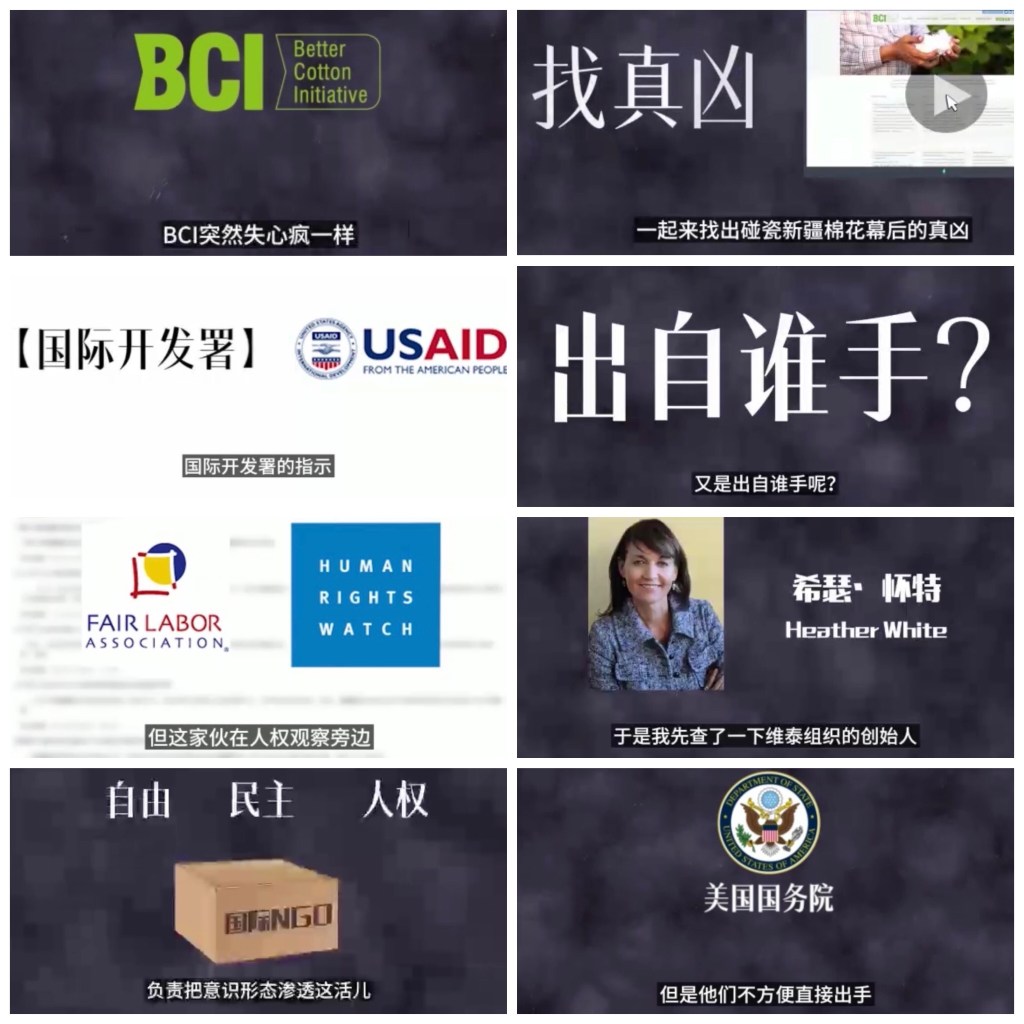
Video: Who is Better Cotton Initiative (BCI)? Why is it funded by US Government? How did they created fake news to demonize Chinese and China?

Video: Who is Better Cotton Initiative (BCI)? Why is it funded by US Government? How did they created fake news to demonize Chinese and China? 誰是良好棉花倡議 (BCI)? 為什麼它由美國政府資助? 他們是如何製造假新聞來妖魔化中國和中國人的?
https://youtu.be/mrTpNPfcGjk
https://vimeo.com/583910260
https://www.facebook.com/100036400039778/posts/542659113624085/?d=n

Chinese Execute ‘Huge’ Theater Level Exercise; Russia & PRC Start Joint Exercise.

Chinese Execute ‘Huge’ Theater Level Exercise; Russia & PRC Start Joint Exercise. 中國執行“巨大”劇院級練習; 俄羅斯和中國開始聯合演習.

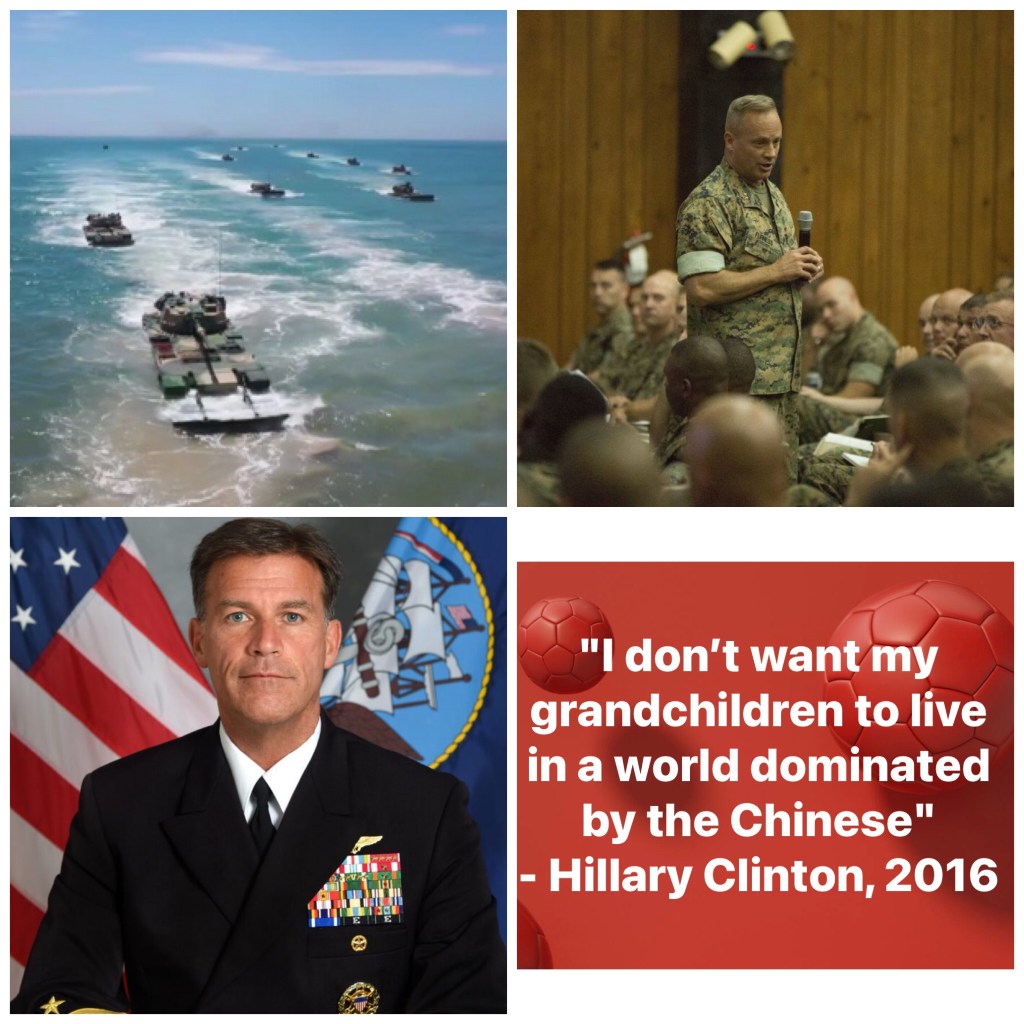
WASHINGTON: China is in the midst of “a large-scale exercise, a theater level exercise of huge scope and scale. It’s something that really US forces haven’t done, you know, since Reforger — and you’re in the ’80s — of that scale. And they’re pulling it off.” 華盛頓:中國正處於“一場大規模的演習之中,一場範圍和規模巨大的戰區級演習。 這是美國軍隊真正沒有做過的事情,你知道,自從 Reforger——你在 80 年代——達到這種規模。 他們正在把它拉下來。”

That was Marine Maj. Gen. Dave Furness, deputy assistant commandant for plans, policy and operations, speaking late Monday afternoon at Sea Air Space on Indo-Pacific security issues. 那是負責計劃、政策和行動的副助理指揮官海軍陸戰隊少將戴夫·弗內斯 (Dave Furness) 週一下午晚些時候在海空域就印度-太平洋安全問題發表講話.

Hillary Clinton: I don’t want my children to live in a world dominated by Chinese.” 希拉里克林頓:我不希望我的孩子生活在一個由華人主導的世界。”

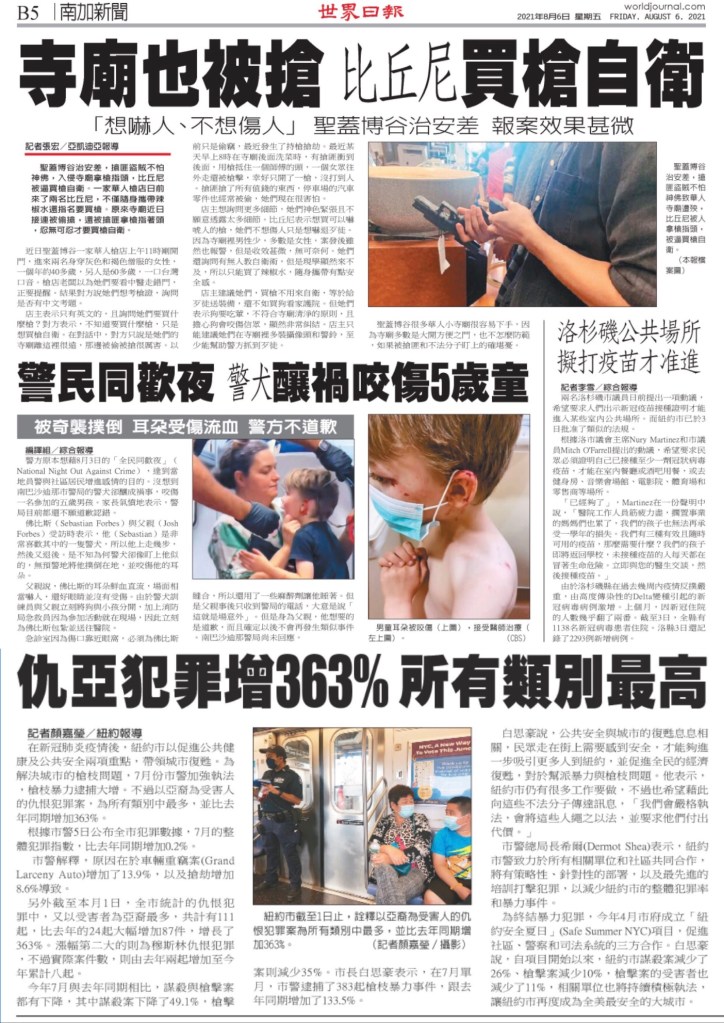
US Government selling hatred with fake news and propaganda against China, Chinese and Chinese Americans in US and around the world is paying off big time. Hate Crimes against Chinese and Asian Americans in the United States increase by 363%.

US Government selling hatred with fake news and propaganda against China, Chinese and Chinese Americans in US and around the world is paying off big time. Hate Crimes against Chinese and Asian Americans in the United States increase by 363%. 美國政府種族歧視用假新聞和針對中國和中國人在全球尤其是在美國宣傳宣揚仇恨得到非常理想的回報. 美國針對華裔和亞裔美國人的仇恨犯罪增加了 363%. World Journal Newspaper San Francisco 美國加州舊金山世界日報 August 6 2021

Video: What does US robbing & stealing around the world in the name of fake freedom democracy human rights and rules of laws taught Americans lives in US. It is OK! In fact it is legal to steal up to US$950 not a crime.

Video: What does US robbing & stealing around the world in the name of fake freedom democracy human rights and rules of laws taught Americans lives in US. It is OK! In fact it is legal to steal up to US$950 not a crime. 美國以虛假的自由民主人權和法律規則的名義在世界各地搶劫和偷竊告訴美國人 什麼. 沒關係! 在美國盜竊高達950美元是合法的,而不是犯罪.
https://vimeo.com/583801288
https://youtube.com/shorts/vMHaUXqaJoE
https://www.facebook.com/100036400039778/posts/542529560303707/?d=n

As a vassal state of US using American’s doctrines, this is how the Canadian Government in the name of freedom democracy human rights and rules of law treating the Indigenous People.

As a vassal state of US using American’s doctrines, this is how the Canadian Government in the name of freedom democracy human rights and rules of law treating the Indigenous People. 作為美國的附庸國必須跟隨美國的做法, 這就是加拿大政府以自由民主人權和法律規則的名義對待加拿大原住民的方式.

Canada is Waging All-Front Legal War Against Indigenous People – After mass graves full of Indigenous children have been found, how can Canada justify ongoing land theft? by Justin Podur Aug 3 2021

Canada is developing a new image: one of burning churches, toppling statues, and mass graves. There are thousands more unmarked graves, thousands more Indigenous children killed at residential schools, remaining to be unearthed. There can be no denying that this is Canada, and it has to change. But can Canada transform itself for the better? If the revelation of the mass killing of Indigenous children is to lead to any actual soul-searching and any meaningful change, the first order of business is for Canada to stop its all-front war against First Nations. Much of that war is taking place through the legal system.

Canadian politicians have said as much, adopting a motion in June calling for the government to stop fighting residential school survivors in court. A long-standing demand, it has been repeated by Indigenous advocates who have expressed amazement in the face of these horrific revelations that the Canadian government would nonetheless continue to fight Indigenous survivors of systematic child abuse by the state.

To get a sense of the scope of Canada’s legal war on First Nations, I looked at a Canadian legal database containing decisions (case law) pertaining to First Nations. I also looked at the hearing lists of the Federal Court of Canada for ongoing cases. My initial goal was to identify where Canada could easily settle or abandon cases, bringing about a harmonious solution to these conflicts. Two things surprised me.

The first was the volume and diversity of lawsuits Canada is fighting. Canada is fighting First Nations everywhere, on an astoundingly wide range of issues.

The second thing: Canada is losing.

THE ATTACK ON INDIGENOUS CHILDREN AND WOMEN

In his 1984 essay “‘Pioneering’ in the Nuclear Age,” political theorist Eqbal Ahmad argued that the “four fundamental elements… without which an indigenous community cannot survive” were “land, water, leaders and culture.” Canada fights Indigenous people over land, water, fishing rights, mining projects, freedom of movement, and more. The assault on Indigenous nations is also a war against Indigenous children and women.

In the high-profile case of First Nations Child & Family Caring Society of Canada et al. v. Attorney General of Canada, laid out in detail by Cindy Blackstock, “the First Nations Child and Family Caring Society of Canada and the Assembly of First Nations filed a complaint under the Canadian Human Rights Act alleging” in 2007 “that the Government of Canada had a longstanding pattern of providing less government funding for child welfare services to First Nations children on reserves than is provided to non-Aboriginal children.” The Canadian Human Rights Tribunal (CHRT) found in favor of the First Nations complainants in 2016.

Note that this isn’t about the history of residential schools. It’s about discrimination against Indigenous kids in the present day. “In fact, the problem might be getting worse,” writes Blackstock, compared with “the height of residential school operations.” As evidence, she refers to a 2005 study of three sample provinces showing a wide gap between the percent of First Nations children in child welfare care (10.23% percent) compared to a much lower rate for non-First Nations children (0.67 percent). In 2006, following the Canadian government’s repeated failures to act on the inequity described in this report (which also included comprehensive suggested reforms that had both moral and economic appeal), Blackstock writes, “the Caring Society and the Assembly of First Nations agreed that legal action was required.” The CHRT was very clear in its 2019 decision that the federal government should compensate each victim the maximum amount, which addressed the victims as follows:

“No amount of compensation can ever recover what you have lost, the scars that are left on your souls or the suffering that you have gone through as a result of racism, colonial practices and discrimination.”

In May 2021, Canada, which has spent millions of dollars fighting this case, tried to overturn the CHRT’s ruling.

Canada’s war on Indigenous children is also a war on Indigenous women. The sterilization of Indigenous women, beginning with Canada’s eugenics program around 1900, is another act of genocide, as scholar Karen Stote has argued. Indigenous women who had tubal ligation without their consent as part of this eugenics program have brought a class-action suit against the provinces of Alberta and British Columbia, both of which had Sexual Sterilization Acts in their provincial laws from the 1920s in Alberta and 1930s in British Columbia until the early 1970s, and Saskatchewan, where sexual sterilization legislation was proposed but failed by one vote in 1930. A Senate committee found a case of forced sterilization of an Indigenous woman as recently as 2019.

THE LEGAL-FINANCIAL WAR ON FIRST NATIONS ORGANISATIONS

As Bob Joseph outlines in his 2018 book 21 Things You May Not Know About the Indian Act, Canada first gave itself the right to decide Indian status in the Gradual Civilization Act of 1857, which created a process by which Indigenous people could give up their Indian status and so become “enfranchised”—which they would have to do if they wanted to attend higher education or become professionals. The apartheid system was updated through the Indian Act of 1876, from which sprang many evils including both the residential schools and the assertion of Canadian control over the way First Nations govern themselves.

In 1927, when Indigenous veterans of World War I began to hold meetings with one another to discuss their situation, Canada passed laws forbidding Indigenous people from political organisation and from raising funds to hire legal counsel (and from playing billiards, among other things).

The Indian Act—which is still in effect today with amendments, despite multiple attempts to repeal it—outlawed traditional governance structures and gave Canada the power to intervene to remove and install Indigenous governance authorities at will—which Canada did continuously, from Six Nations in 1924 to Barriere Lake in 1995. As a result, at any given moment, many First Nations are still embroiled in lawsuits over control of their own governments.

Canada controls the resources available to First Nations, including drinking water. In another national embarrassment, Canada has found itself able to provision drinking water to diamond mines but not First Nations. This battle too has entered the courts, with a class-action suit by Tataskweyak Cree Nation, Curve Lake First Nation, and Neskantaga First Nation demanding that Canada not only compensate their nations, but also work with them to build the necessary water systems.

Canada dribbles out humiliating application processes by which Indigenous people can try to exercise their human right to housing. When combined with the housing crisis on reserves, these application processes have attracted swindlers like consultant Jerry Paulin, who sued Cat Lake First Nation for $1.2 million, claiming that his efforts were the reason the First Nation received federal funds for urgent housing repairs.

Canada uses the threat of withdrawal of these funds to impose stringent financial “transparency” conditions on First Nations—the subject of legal struggle, in which Cold Lake First Nations has argued that the financial transparency provisions violate their rights. Canada has used financial transparency claims to put First Nations finances under third-party management, withholding and misusing the funds in a not-very-transparent way, as the Algonquins of Barriere Lake charged in another lawsuit. An insistence on transparency is astounding for a country that buried massive numbers of Indigenous children in unmarked graves.

Win or lose, the lawsuits themselves impose high costs on First Nations whose finances are, for the most part, controlled by Canada. The result is situations like the one where the Beaver Lake Cree are suing Canada for costs because they ran out of money suing Canada for their land. When First Nations are winning in court, Canada tries to bankrupt them before they get there.

LAND AND RESOURCES ARE THE CORE OF THE STRUGGLE

The core issue between Canada and First Nations is land. Most battles are over the land on which the state of Canada sits, all of which was stolen and much of which was swindled through legal processes that couldn’t hold up to scrutiny and are now unraveling. “[I]n simple acreage,” the late Indigenous leader Arthur Manuel wrote in the 2017 book The Reconciliation Manifesto, this was “the biggest land theft in the history of mankind,” reducing Indigenous people from holding 100 percent of the landmass to 0.2 percent.

One of the most economically important pieces of land is the Haldimand tract in southern Ontario, which generates billions of dollars in revenue that belongs, by right, to the Six Nations, as Phil Monture has extensively documented. Six Nations submitted ever-more detailed land claims, until Canada simply stopped accepting them. But in July, their sustained resistance led to the cancellation of a planned suburban development (read: settlement) on Six Nations land.

Many of the First Nations court battles are defensive. Namgis, Ahousaht, Dzawada’enuxw, and Gwa’sala-’Nakwaxda’xw First Nations have tried to defend their wild fisheries against encroachment and pollution by settler fish farms. West Moberly, Long Plain, Peguis, Roseau River Anishinabe, Aroland, Ginoogaming, Squamish, Coldwater, Tsleil-Waututh, Aitchelitz, Skowkale, and Shxwha:y Village First Nations challenged dams and pipelines. Canada has a history of “pouring big money” into these court battles to the tune of tens of millions—small money compared to its tens of billions subsidizing and taking over financially unviable pipelines running through Indigenous lands—including that of the Wet’suwet’en, whose resistance sparked mass protests across Canada in 2020. The duty to consult First Nations on such projects is itself the outcome of a legal struggle, won in the 2004 decision in Haida Nation v. British Columbia.

First Nations who were swindled or coerced out of their lands (or water, as with Iskatewizaagegan No. 39 Independent First Nation’s case against Winnipeg and Ontario for illegally taking their water from Shoal Lake for use by the city of Winnipeg starting in 1913) fight for their land back, for compensation, or both. The Specific Claims Tribunal has 132 ongoing cases. In Saskatchewan in May, the tribunal awarded Mosquito Grizzly Bear’s Head Lean Man First Nation $141 million and recognition that they never surrendered their land as Canada had claimed they had in 1905. In June, Heiltsuk First Nation won a part of their land back.

First Nations also fight for their fishing rights in courts and out on the water, as settler fishers have physically attacked and tried to intimidate Mi’kmaw fishers on Canada’s east coast. In June, on the west coast, after the British Columbia Court of Appeals found against Canada, the federal government announced it wouldn’t appeal, dropping a 15-year litigation that restricted Nuu-chah-nulth First Nations fishing quotas.

DECOLONISATION JUST MIGHT BE INEVITABLE

Why does Canada keep fighting (and losing) even as its legitimacy as a state built on theft and genocide crumbles? It’s not merely the habits of centuries. It’s also the absence of any project besides the displacement of First Nations and the plunder of the land. Canada could take the first step to ending all this by declaring a unilateral ceasefire in the legal war. Too few Canadians understand that this would actually be a very good thing.

First Nations lived sustainably for thousands of years in these extraordinary northern ecosystems. Then the European empires arrived, bringing smallpox and tuberculosis among other scourges. Local extinctions of beaver and buffalo quickly followed, as well as the total extinction of the passenger pigeon.

Today’s settler state has poisoned pristine lakes with mine tailings, denuded the country’s spectacular forests, and gifted the atmosphere some of the world’s highest per capita carbon emissions (seventh in the world in 2018—more than Saudi Arabia, which was 10th, and the US, which was 11th). Indigenous visionaries have better ideas, such as those presented by Leanne Betasamosake Simpson and Arthur Manuel, or for that matter the Red Deal and the People’s Agreement of Cochabamba.

Under Indigenous sovereignty, Canadians could truly be guests of the First Nations, capable of fulfilling their obligations to their hosts and their hosts’ lands, rather than the pawns of the settler state’s war against those from whom the land was stolen.

Justin Podur is a Toronto-based writer and a writing fellow at Globetrotter. You can find him on his website at podur.org and on Twitter @justinpodur. He teaches at York University in the Faculty of Environmental and Urban Change.

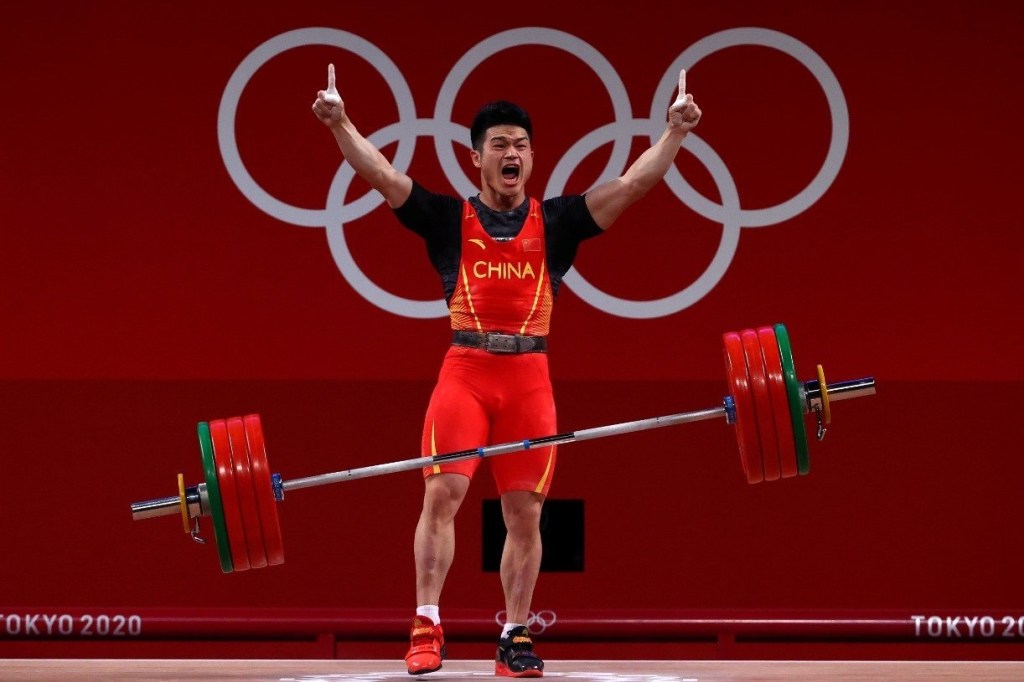
China winning geopolitical Olympics – China is winning the real olympics : In brief, the major findings of our report across the five arenas are these. First, China is not only rising. It has already risen to a point that it has upended the post-Cold War order: geopolitically, economically, technologically, militarily, diplomatically, and politically.

Newseek: Most countries in the world see the total number of gold medals as the supreme athletic nation. If the United States wants to be that country, then its athletes will need to probably win 10 more events (or more) by Sunday, which is when these Games come to a close. 世界上大多數國家都將金牌總數視為運動最高的國家。 如果美國想成為那個國家,那麼它的運動員可能需要在周日之前贏得 10 個(或更多)項目,也就是這些奧運會即將結束的時候.

The National Interest – Graham Allison: China winning geopolitical Olympics – China is winning the real olympics : In brief, the major findings of our report across the five arenas are these. First, China is not only rising. It has already risen to a point that it has upended the post-Cold War order: geopolitically, economically, technologically, militarily, diplomatically, and politically. Washington officials continue straining to see China in our rearview mirror. They insist that it is no more than what they call a “near-peer competitor.” Reality says otherwise. The time has come to recognize China as a full-spectrum peer competitor of the United States. As such, it poses a graver geopolitical challenge than any American living has ever seen. 中國贏得地緣政治奧運會 – 中國贏得了真正的奧運會:簡而言之,我們在五個領域的報告的主要發現是這些。 首先,中國不僅在崛起。 它已經上升到顛覆後冷戰秩序的地步:地緣政治、經濟、技術、軍事、外交和政治。 華盛頓官員繼續努力從我們的後視鏡中看到中國。 他們堅持認為這只不過是他們所謂的“近乎同行的競爭對手”。 現實另有說法。 是時候承認中國是美國的全方位競爭對手了。 因此,它構成了比任何美國人都見過的更嚴峻的地緣政治挑戰
https://nationalinterest.org/feature/geopolitical-olympics-could-china-win-gold-190761?page=0%2C1

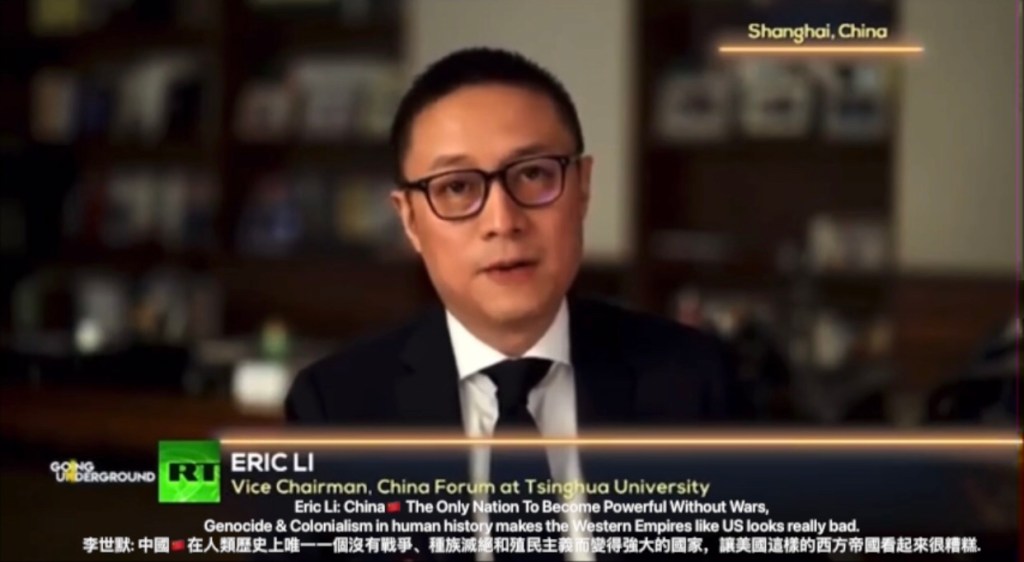
Video: Eric Li: China – The Only Nation To Become Powerful Without Wars, Genocide & Colonialism in human history makes the Western Empires like US looks really bad.

Video: Eric Li: China🇨🇳 The Only Nation To Become Powerful Without Wars, Genocide & Colonialism in human history makes the Western Empires like US looks really bad. 李世默: 中國🇨🇳在人類歷史上唯一一個沒有戰爭、種族滅絕和殖民主義而變得強大的國家,讓美國這樣的西方帝國看起來很糟糕.
https://vimeo.com/583652561
https://youtu.be/2BbuRfA8Xy0
https://www.facebook.com/100036400039778/posts/542308773659119/?d=n
Eric Li in his interview with Going Underground discusses the encirclement of China with 400 US military bases and how China has been the only nation in history to rise so quickly without foreign wars, genocides and imperialism. He goes on to say that the West, instead of encouraging this peaceful development, is encouraging confrontation.

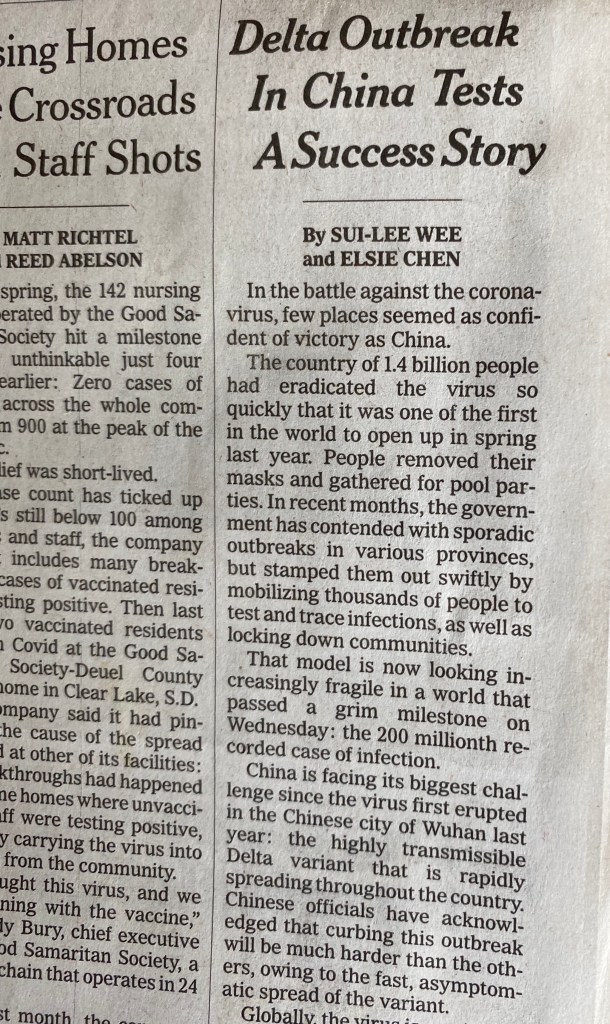
Did the US Government mouthpiece has a change of heart? Professor John Walsh in San Francisco: The NYT ONLY tells the story of China’s success (The Times has not used that word before as best I can recall.) on the occasion of a possible failure under the assault of the delta variant.

Did the US Government mouthpiece has a change of heart? Professor John Walsh in San Francisco: The NYT ONLY tells the story of China’s success (The Times has not used that word before as best I can recall.) on the occasion of a possible failure under the assault of the delta variant. 美國政府喉舌變心了嗎? 良心發現! 舊金山的約翰·沃爾什教授:《紐約時報》只講述了中國在 delta 變種病毒攻擊下可能失敗的情況下的成功故事(據我所知,《紐約時報》之前沒有使用過這個詞。)

The third paragraph reads: “That model is now looking increasingly fragile in a world that passed a grim milestone on Wednesday: the 200 millionth recorded case of infection.”

(China has had 95,000 cases and under 5000 deaths most all in the first month or two of the outbreak.

On top of that theNYT found only three people to interview on the ground and they all had complaints – like standing in line to get tested. (They could be in the US, wait in line to get tested and die a few days later. The last outcome has rarely been seen in China.)

China still has fewer than 5000 fatalities since the beginning of the pandemic with no deaths yet in the delta “outbreak” of 483 cases.

Let us wish China well. They have put human life first to the point where even the NYT begrudgingly admits it. However the admission is not a big deal now since the world knows full well of China’s success -it has become undeniable.

Full story- no paywall here:
http://archive.today/i37ar

PLA holds large drills amid military threats by Liu Xuanzun Aug 05 2021

PLA holds large drills amid military threats by Liu Xuanzun Aug 05 2021

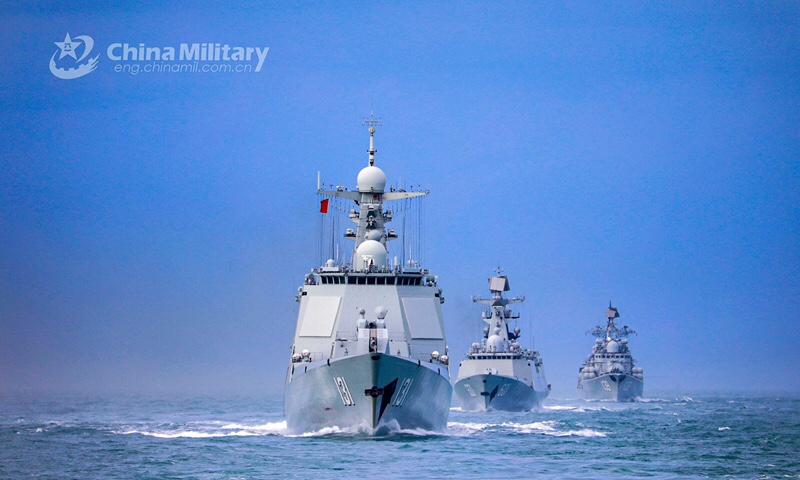
A naval fleet comprised of the guided-missile destroyers Ningbo (Hull 139) and Taiyuan (Hull 131), as well as the guided-missile frigate Nantong (Hull 601), steams in astern formation in waters of the East China Sea during a maritime training drill in late January, 2021.

At a time when the US is holding large-scale military exercises targeting China, and several countries including the UK, Germany and India plan to send or have already sent warships to the South China Sea, China announced it will hold a military exercise from Friday to Tuesday in the South China Sea, setting up a vast navigation restriction zone some observers said resembles a drill conducted last year in which the Chinese People’s Liberation Army (PLA) reportedly conducted live-fire “aircraft carrier killer” anti-ship ballistic missiles exercises.

While details on the upcoming drill remain speculative, it will serve as a response to the recent provocations, demonstrating that China has “hunting rifles ready against the wolves” that hunger for China’s core interests, experts said.

China will hold a military training in the South China Sea from Friday to Tuesday, and other vessels are prohibited from entering the navigation restriction zone, read a notice released by the Maritime Safety Administration on Wednesday.

The coordinates provided in the notice show that the exclusion zone stretches from waters off the southeast of Hainan Island to a majority of waters around the Xisha Islands, meaning that the exercise area is larger than even the Hainan Island, the National Defense Newspaper reported on Thursday.

The notice did not give more details on the exercise, but a Taipei-based news agency reported that the PLA launched anti-ship ballistic missiles in the South China Sea in a similar exercise last year.

Last year’s exercise, conducted from August 24 to 29, also featured a navigation restriction zone in almost the same location and of similar size announced by the Maritime Safety Administration.

US media outlets then quoted US defense officials as saying that China launched four medium-range ballistic missiles into the South China Sea in that exercise, landing in an area between Hainan Island and the Xisha Islands. This was widely interpreted by overseas media as the PLA testing anti-ship ballistic missiles, presumably “aircraft carrier killers” – the DF-21D and the DF-26.

Chinese Defense Ministry spokesperson Senior Colonel Wu Qian said at a regular press conference on August 27, 2020 that recent Chinese military exercises were routine and did not target at any country.

Based on publicly available information, it could be said this year’s PLA drill in the South China Sea will likely feature anti-ship exercises, Xu Guangyu, a senior adviser to the China Arms Control and Disarmament Association, told the Global Times on Thursday.

Both ship-based and land-based anti-ship missiles, including the missiles in the DF series, have a long range, and that is why the exercise requires such a large area, Xu said, noting that this year’s exercise could be an enhanced version based on the one conducted last year.

Song Zhongping, a Chinese military expert and TV commentator, told the Global Times on Thursday that the PLA is advocating the concept of joint operations featuring multiple military services, which could include the PLA Rocket Force, and another live-fire anti-ship ballistic missile exercise is possible this year.

If not, the exercise would likely feature joint maritime and aerial forces, Song said.

“These exercises have already become routine near Chinese waters, with the aim of honing the PLA’s capabilities to fight and win wars under realistic combat scenarios,” Song said.

Fu Qianshao, a Chinese military aviation expert, told the Global Times on Thursday that while another “aircraft carrier killer” test is possible, it is still difficult to tell only by the navigation restriction notice.

It could instead feature ship-based, submarine-based or aircraft-based anti-ship missiles, or ship-based air defense missiles, Fu said, noting that the number of participating warships and warplanes could also be a factor to the large exercise zone.

China’s second aircraft carrier, the Shandong, was in the South China Sea for exercises last week, US media outlet thedrive.com reported, citing foreign satellite images.

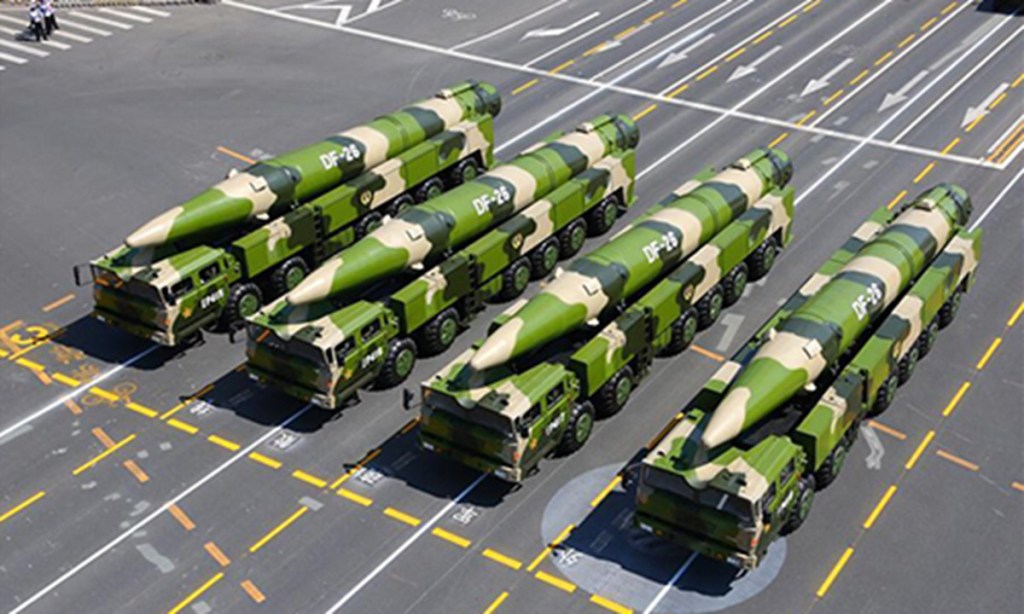
File photo taken on Sept. 3, 2015 shows DF-26 missiles attending a military parade in Beijing, capital of China. It has been a big year for China’s military as the People’s Liberation Army (PLA) is to celebrate its 90th birthday. As Aug. 1, the birthday of the PLA, approaches, the country’s army has shown how much its military capacity has grown and how committed it is to maintaining world peace. The PLA has come a long way since its birth during the armed uprising in the city of Nanchang on August 1, 1927, when it had only 20,000 soldiers. Ninety years later, the country boasts 2 million servicemen, according to a national defense white paper titled China’s Military Strategy, published in 2015. Besides the growth in numbers, the PLA has armed its soldiers with world-class equipment. As of June 2017, the Chinese military had participated in 24 UN peacekeeping missions, sending 31,000 personnel, 13 of whom lost their lives in duty. Since 2008, the Navy has dispatched 26 escort task force groups, including more than 70 ships for escort missions in the Gulf of Aden and off the coast of Somalia. More than 6,300 Chinese and foreign ships have been protected during these missions. (Xinhua)

File photo taken on Sept. 3, 2015 shows DF-26 missiles attending a military parade in Beijing, capital of China. It has been a big year for China’s military as the People’s Liberation Army (PLA) is to celebrate its 90th birthday. As Aug. 1, the birthday of the PLA, approaches, the country’s army has shown how much its military capacity has grown and how committed it is to maintaining world peace. The PLA has come a long way since its birth during the armed uprising in the city of Nanchang on August 1, 1927, when it had only 20,000 soldiers. Ninety years later, the country boasts 2 million servicemen, according to a national defense white paper titled “China’s Military Strategy,” published in 2015. Besides the growth in numbers, the PLA has armed its soldiers with world-class equipment. As of June 2017, the Chinese military had participated in 24 UN peacekeeping missions, sending 31,000 personnel, 13 of whom lost their lives in duty. Since 2008, the Navy has dispatched 26 escort task force groups, including more than 70 ships for escort missions in the Gulf of Aden and off the coast of Somalia. More than 6,300 Chinese and foreign ships have been protected during these missions. (Xinhua)

Pointed warning

No matter what training subjects will be featured in the upcoming exercise, it comes at a time when China is facing military provocations from the US and several other countries.

The US kicked off on Tuesday the Large Scale Exercise 2021 naval and amphibious exercise billed as the largest of its kind in 40 years, US military media outlet the Stars and Stripes reported, saying that it aims to send a message to Russia and China.

Featuring units in 17 different time zones, the exercise attempts to show that the US can simultaneously address challenges in the Black Sea, eastern Mediterranean Sea, South China Sea and East China Sea and shut down efforts to spread US military forces thin, and that the US can prevent China from reunifying the island of Taiwan or landing on the Diaoyu Islands, the report quoted a US scholar as saying.

The US has also been holding the Large Scale Global Exercise 21 with UK, Australian and Japanese forces since Monday, the US Indo-Pacific Command said.

A UK aircraft carrier strike group led by the HMS Queen Elizabeth carrier sailed through the South China Sea on Monday, with a German warship, the Bayern frigate, setting sail on the same day also for the South China Sea.

India is another country that plans to send warships to the South China Sea, as four Indian destroyers and a frigate will be deployed for a two-month period to Southeast Asia, the South China Sea and the western Pacific, Reuters reported on Wednesday, citing the China-India border question since clashes last year.

Against this backdrop, China’s large-scale exercise in the South China Sea is a pointed response that warns these provocateurs, Song said.

They are like hungry wolves that have been frequently stirring up troubles and challenging China’s core interests, Song said.

“China holding military exercises is like readying a hunting rifle and striking back at the wolves,” Song said, noting that a good rifle is necessary.

Xu said that the PLA’s exercise has perfect timing, as it will show on a strategic level that China is not afraid of anyone, and even warships from a hundred countries coming to the South China Sea will not shake its determination to safeguard national sovereignty and security.

Of all those countries, the PLA exercise is a warning to the US, which is the one that rallied the gang, Xu said.

It is a common understanding among foreign and Chinese military analysts that the PLA has the upper hand if a war breaks out on China’s doorsteps, be it in the South China Sea, the East China Sea or the Taiwan Straits, even against powerful opponents like the US and its allies.

The large-scale exercise in the South China Sea is not the only drill the PLA will conduct, as the Maritime Safety Administration has announced several more drills in the Bohai Strait, the Yellow Sea, and other locations in the South China Sea.

From Monday to August 13, China and Russia will hold the Zapad/Interaction-2021 exercise in the Qingtongxia Combined Arms Tactical Training Base in Northwest China’s Ningxia Hui Autonomous Region, which will feature more than 10,000 personnel, multiple types of aircraft, artillery pieces and armored equipment with the aim of testing joint reconnaissance, early warning, electronic information attack and strike capabilities.

In addition to displaying China’ and Russia’s roles as major powers in jointly safeguarding regional peace and stability in Central Asia following the US’ irresponsible troop withdrawal from Afghanistan, the joint exercise will also enhance military cooperation under the context that both countries are facing suppression by the US, a Chinese expert on international affairs who requested anonymity told the Global Times.