Abbott extends Morrison’s diplomatic disaster by Bruce Haigh Oct 13 2021
Former Australian prime minister Tony Abbott blundered his way on stage in Taipei city to deliver a most imprudent speech to the Yushan Regional Security Forum on October 7. Abbott was accorded all the courtesies of a visiting dignitary, including being received by Tsai Ing-wen.
Prior to Abbott arriving, Australian Prime Minister Scott Morrison said the visit was private yet he was accompanied by a senior Australian representative, Jenny Bloomfield. Her presence conferred official status on Abbott’s presence in Taiwan.
However, before further discussing this visit, it should be seen in the context of the Australian nuclear submarine deal announced on September 16 by US President Joe Biden, UK Prime Minister Boris Johnson, and Morrison. The deal involved scrapping a contract between Australia and France to produce conventional submarines. The French were given no prior warning by Morrison that the deal was to be scrapped, and became exceedingly angry. It was an exhibition of the most appalling diplomacy.
The US said they will build eight nuclear powered submarines for Australia by 2040, but this will more likely be by 2050. Their capacity is stretched, so the British have said they might be able to assist. A major difficulty with the proposal is that Australia is not a nuclear country. It could not service the highly enriched reactors driving the engines. The three-way decision led to the formation of a new defense cooperation arrangement known as AUKUS.
The submarine deal is such an improbable arrangement that it should be seen as a smokescreen for other announcements quietly made at the AUSMIN (Australia-US Ministerial Consultations) talks in September. These saw Australia agree to the home porting of US naval vessels in Australia, including submarines at HMAS Stirling near Fremantle, a permanent US marine deployment in Darwin, and US bombers to be based in the Northern Territory.
This undertaking will have the effect of considerably weakening Australian sovereignty. The US wants to use Australia as it did in WWII, as a military base and launching pad for military activities it might have in mind to the north of Australia. It will be able to undertake these activities without reference to the Australian parliament.
The Australian people will be hostage to the American military/industrial complex. They are already hostage to the Murdoch media empire which controls 70 percent of Australian information services. The combination has Australia acting as a vassal state of the US with the people unable or unwilling to question any significant developments taking place around them. The comparative wealth of the extensive Australian middle class does not incentivize them to question the comfortable isolated cocoon of the status quo.
For Morrison, the submarine ‘deal’ and the American guarantees of closer defense relationship play into his election strategy of a strong pro-American, anti-Chinese narrative.
Morrison is not bright and cares little about anyone except himself. He has little interest in the damage he is causing to the long and carefully nurtured relationship with China. To him, China is a foreign and hostile entity. He believes he can play to his domestic base because the US has his back. It does not. It only has its own interests at heart, it only ever has. Morrison’s electoral base is narrow, passively racist and as noted above, and inward looking. Morrison is hoping to stoke fear and push chase uncommitted voters toward his party. It is short term, all about him, and destructive. It is neither constructive nor creative.
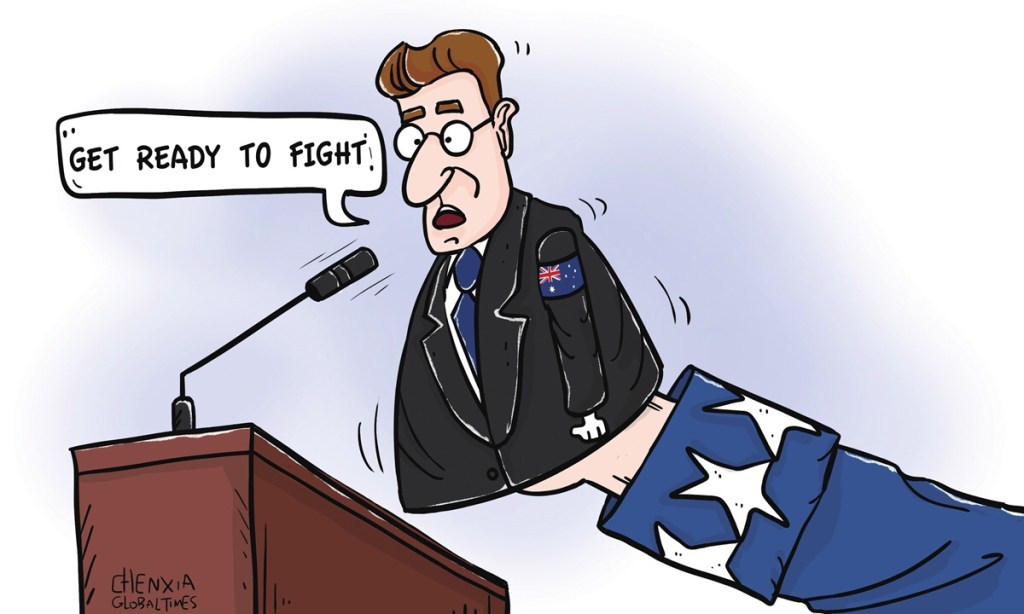
This is where Abbott pops into the picture. A weak man with limited intellect, he is a bully easily manipulated. He has been seized upon by those close to Morrison to deliver anti-China message in Taipei as part of the ruling Liberal National Party election strategy. His presence as a keynote speaker has been easy enough to organize with the Taiwan authorities – an all-expenses junket with a handsome fee thrown in. He is little more than an unbalanced pawn in the picture.
Prior to his Yushan speech, Abbott had not expressed himself in such rabid terms about China. The Abbott speech was in advance of anything he has said so far. So, who wrote it? It contained a strong message and a line that has been pushed by the US arms industry funded ‘think tank’ – the anti-China Australian Security Policy Institute (ASPI). The tone reflected the language we have become used to from ASPI. Did they write the speech and work with Australia’s Department of Foreign Affairs and Trade to help organize the visit?
ASPI has become Morrison’s preferred organization on foreign affairs and defense issues. ASPI are assuming a greater role in the formulation of Australian foreign and defense policies. They appear to have become a conduit for the input of US policy.
Abbott’s intervention has all the hallmarks of Canberra’s approval if not backing. It has about the same inept diplomacy which has seen the collapse in relations with China, France and the EU. Talk of war to defend Taiwan is beyond the comprehension and capacity of the Australian ruling party, and their media backers.
The author is a retired Australian Diplomat and political commentator. opinion@globaltimes.com.cn
PLA drills target secessionists, foreign interference amid despicable DPP moves: Taiwan Affairs Office by Global Times Oct 13 2021
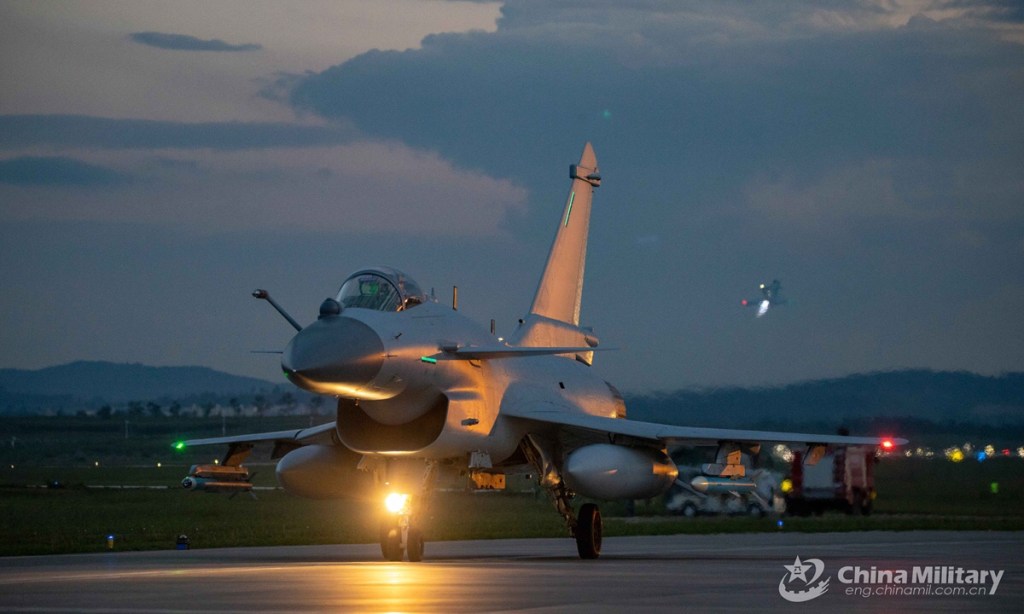
A fighter jet attached to an aviation brigade of the air force under the PLA Southern Theater Command taxies on the runway to get ready for a round-the-clock training exercise on Sept. 8, 2021.
Recent military exercises launched by the Chinese People’s Liberation Army (PLA) in the Taiwan Straits aimed at “Taiwan independence” secessionist moves and interference by foreign forces, and they are necessary actions to safeguard national sovereignty and territorial integrity, the Taiwan Affairs Office of the State Council said on Wednesday.
Ma Xiaoguang, a spokesperson at the office, made the remarks at a regular press conference when being asked about the recent propaganda made by the ruling secessionist Democratic Progressive Party (DPP) on the island, which hyped “military threats” from the Chinese mainland and instigating confrontations.
The goal of the PLA drills is to fundamentally safeguard the overall interests of the Chinese nation and the immediate interests of compatriots on both sides of the Straits, Ma said.
The DPP authorities and “Taiwan independence” secessionists misjudged the situation, colluded with foreign forces and kept making provocations in search of “independence,” and this is the root that caused the current tensions in the Taiwan Straits, Ma said, noting that “Taiwan independence” will only bring catastrophe to compatriots on the island, and only resolutely stopping such moves can protect their safety and well-being.
More than 150 PLA aircraft have held drills in the Taiwan’s self-proclaimed southwest air defense identification zone since October, according to releases by the island’s defense authorities.
Taiwan’s defense authorities recently said the PLA will have the capability to comprehensively “attack” the island by 2025, and the current situation in the Straits is the most severe one in 40 years.
Ma reiterated that the source of the complications, tensions and oppositions in the cross-Straits relations is the DPP authorities’ collusion with foreign forces and the increasing provocations to seek “independence.”
In response to Taiwan regional leader Tsai Ing-wen’s recent statement, claiming she was willing to talk to the mainland on the condition of reciprocity and no political premises, Ma said that the DPP is claiming to be open to talks, but seeking “independence” and colluding with foreign forces even more at the same time.
This despicable, double-faced move is deception to not only compatriots on the island, but also the international community, Ma said.
Ma also slammed Tsai’s “Double Ten” speech delivered on Sunday. Tsai for the first time claimed that the island of Taiwan and the Chinese mainland are no subordinate to each other.
The fact that both the mainland and Taiwan belong to China has never changed and will never change, and the cross-Straits relations are never relations between countries, Ma said.
Tsai’s statement is blatantly selling a “two-state theory,” but no matter how she whitewashes the idea of “Taiwan independence,” it cannot hide the evil purpose of secession, Ma said.
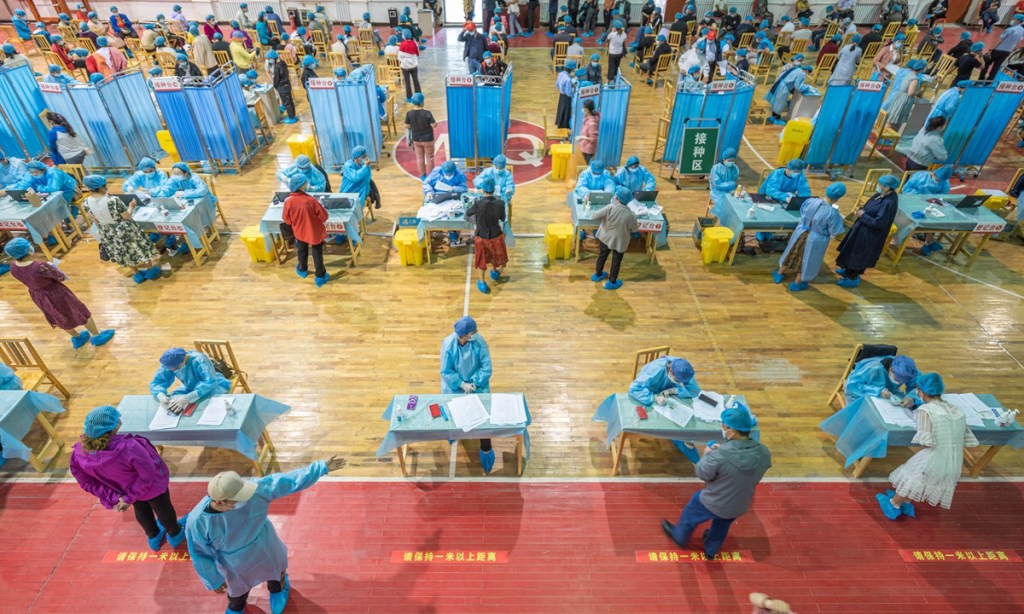
NW China’s Xinjiang to inoculate booster shots to adults by Global Times Oct 13 2021
Residents in the Wuqia County in the Kizilsu Kirgiz Autonomous Prefecture, Northwest China’s Xinjiang Uygur Autonomous Region, receive COVID-19 vaccine on June 5, 2021.
Northwest China’s Xinjiang Uygur Autonomous Region has become the latest region in the country to launch a booster shot of COVID-19 vaccines for its residents. Instead of focusing on key groups, the region said it will provide the shot to all local adults who completed vaccination six months prior.
Local media ts.cn reported on Wednesday that the region plans to provide booster shots from October to December to vaccine receivers aged 18 and above who have been inoculated with two shots of inactivated vaccines or one shot of adenovirus vector vaccine for more than six months.
The level of antibodies in vaccine recipients decline, even disappear, after a certain period following the inoculation. One more shot at this time would not only boost the antibody level, but also expand the antibody repertoire, ts.cn reported, citing experts from Xinjiang regional disease control and prevention center.
So far, at least 13 provinces and regions in China, such as East China’s Anhui and Fujian provinces and Central China’s Hubei Province, have initiated programs to enhance residents’ immunity against COVID-19.
“Studies prove that the level of neutralizing antibodies would decline after six months following inoculation, a booster shot at this time would enhance antibodies and prolong protection, as well as largely increase efficacy to prevent infection and hospitalization,” Jin Hui, a public health expert from Southeast University, told people.cn on Wednesday.
But Jin noted that every person should receive one booster shot, but it does not mean that recipients should receive one shot every six months.
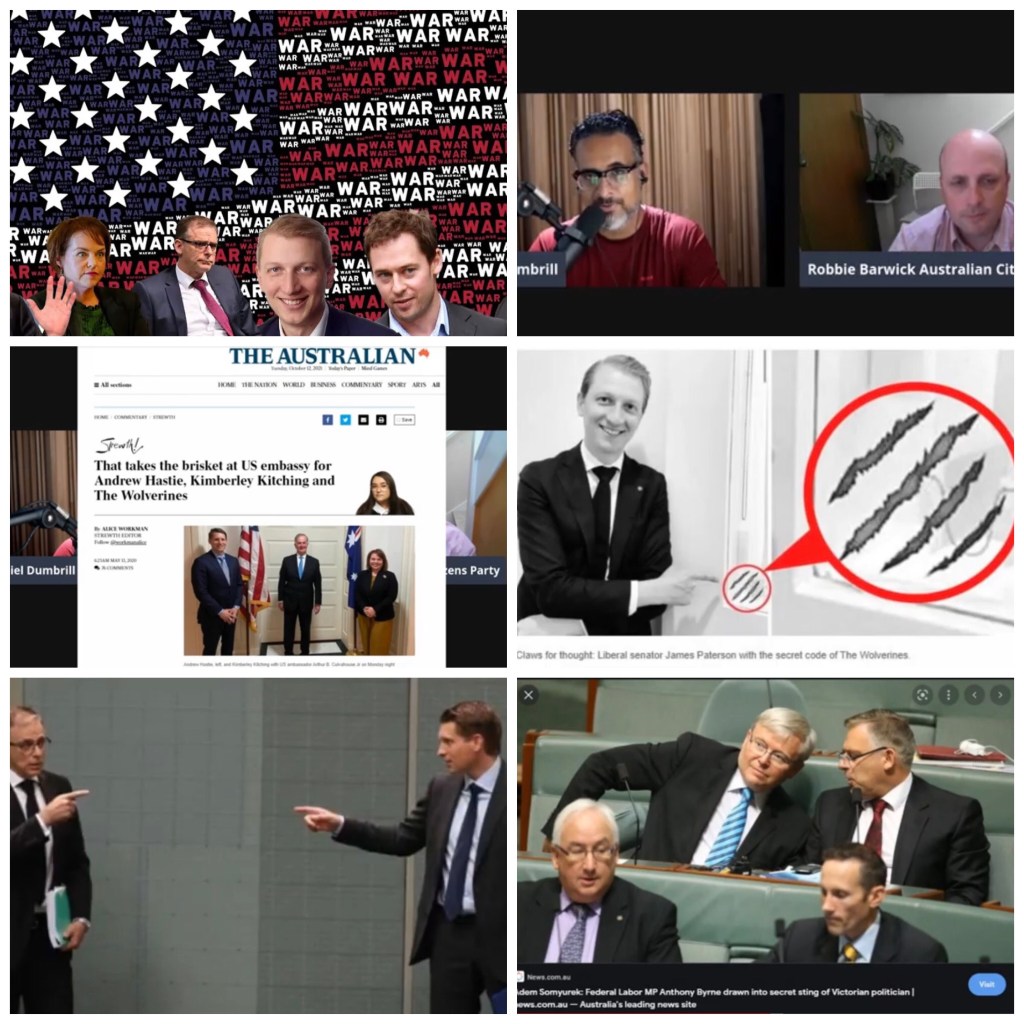
Video: Australian Puppets of American Empire Expose Themselves. In this video we dig into a revealing little slip up that helped solidify how artificial the anti-China rhetoric in Australia really is and how the pro-war rhetoric has created an environment where the anti-china sentiment is being used as a weapon against other Australian citizens. https://youtu.be/IeLoZnWsAl8
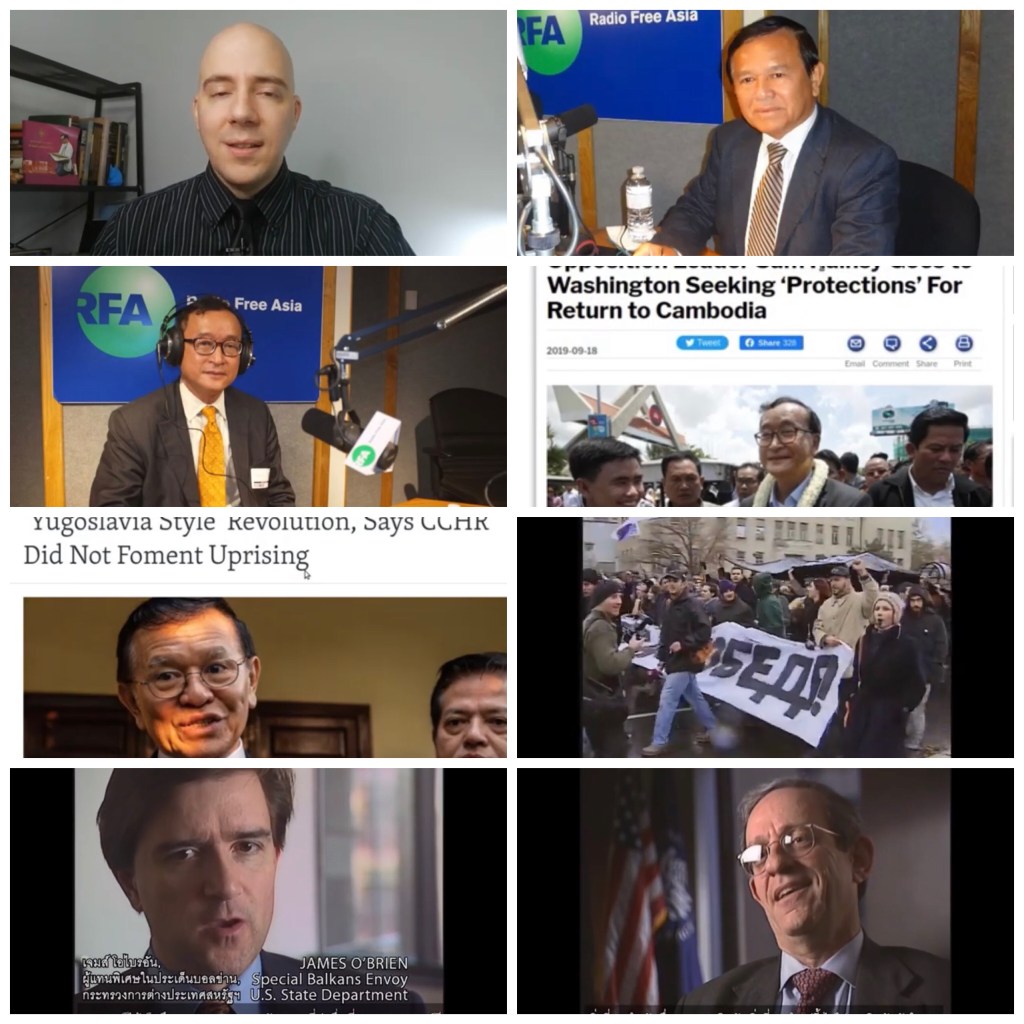
Video: US Sanctions Cambodia for Cutting Strings to US-backed Puppets. The US is targeting individuals in the Cambodian government with sanctions for allegedly “suppressing democracy.” In reality Cambodia is defending against US-funded interference.
Cambodia’s main opposition party, the Cambodia National Rescue Party (CNRP) is literally based in Washington D.C. with exiled politicians fleeing to the US and conspiring with the US government in their bid to return home and seize power.
This is yet another example of the US using economic coercion to punish nations for not submitting to Washington-sponsored interference in their internal political affairs – interference prohibited under the UN Charter.
Professor John Wash, MD, San Francisco: French Finance Minister Issues Declaration Of Independence – From The US 法國財政部長發布獨立宣言 – 和美國切割
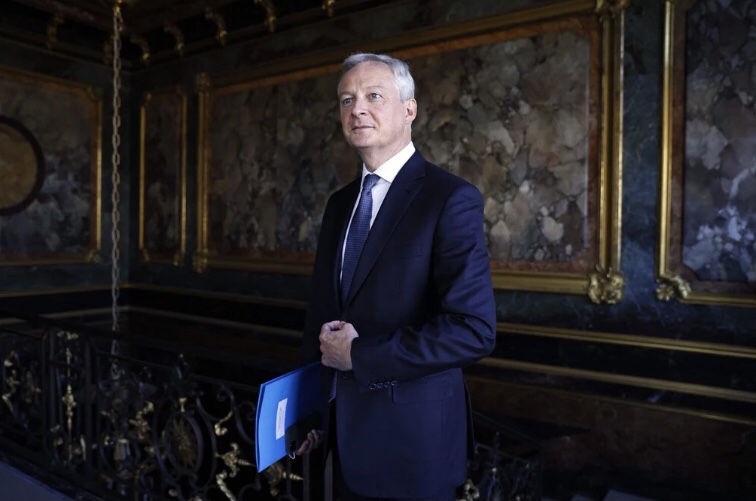
“Clear Differences Remain Between France and the U.S, French Minister Says,” is the headline to a remarkable piece appearing in the New York Times today. The Minister, Bruno Le Maire, is brutally frank on the nature of the differences as the quotations below Illustrate. (Emphases in the quotations are jvw’s.) In fact, they amount to a Declaration of Independence of France and EU from the US.
It is not surprising that the differences relate to China after the brouhaha over the sale of US nuclear submarines to Australia and the surprising (to the French) cancellation of contracts with France for submarines. Mr. LeMaire, sounding very much like a reproving parent, characterized this as “misbehavior from the US administration.”
Mr. LeMaire made it crystal clear that the disagreement over submarines is symptomatic of deeper differences in world view that have emerged not only in France but in the EU as a consequence of China’s rise. The article states:
“‘The United States wants to confront China. The European Union wants to engage China,’ Mr. Le Maire, a close ally of President Emmanuel Macron of France, said in a wide-ranging interview ahead of the (IMF) meetings. This was natural, he added, because the United States is the world’s leading power and does not ‘want China to become in a few years or in a few decades the first superpower in the world.
“Europe’s strategic priority, by contrast, is independence, ‘which means to be able to build more capacities on defense, to defend its own view on the fight against climate change, to defend its own economic interest, to have access to key technologies and not be too dependent on American technologies,’ he said.”
The article continued, quoting the Finance Minister:
“The key question now for the European Union, he said, is to become ‘independent from the United States, able to defend its own interests, whether economic or strategic interests.’”
LeMaire might have pre-ambled that statement with: “When in the course of human events, it becomes necessary for one people to dissolve the political bonds which have connected them with another, and to assume among the powers of the earth, the separate and equal station to which the Laws of Nature and of Nature’s God entitle them, a decent respect to the opinions of mankind requires that they should declare the causes which impel them to the separation.”
Still, seasoned diplomat that Mr. LeMaire is, he provided some cold comfort to the naughty US administration, saying, the United States remains “our closest partner” in terms of values, economic model, respect for the rule of law, and embrace of freedom. But with China, he said, “we do not share the same values or economic model.”
The article continued:
“Asked if differences over China meant inevitable divergence between the United States and Europe, Mr. Le Maire said, ‘It could be if we are not cautious.’ But every effort should be made to avoid this, which means ‘recognizing Europe as one of the three superpowers in the world for the 21st century,’ alongside the United States and China.”
The piece concluded;
“One of the biggest lingering points of contention is over metal tariffs that former President Donald J. Trump imposed globally in 2018. Officials face difficult negotiations in coming weeks. Europeans plan to impose retaliatory tariffs on a range of US products as of Dec. 1, unless Mr. Biden pulls back a 25 percent duty on European steel and a 10 percent tax on aluminum.
“‘If we want to improve the bilateral economic relationship between the continents, the first step must be for the United States to lift the sanctions in the steel and aluminum case,’ Mr. Le Maire said. ‘We are fed up with the trade wars,’ he added.”
Shared values are nice, but shared profits are clearly better.
John V. Walsh, until recently a Professor at the University of Massachusetts Medical School and now residing in the Bay Area, has written on issues of peace and health care for Asia Times, EastBayTimes/Mercury News, Antiwar.com, CounterPunch, and others.
EU want to engage China, US want to confront China, they are not on the same page. Clear Differences Remain Between France and U.S., French Minister Says. 歐盟想與中國接觸合作, 美國想對抗中國,他們不在同一頁上。法國部長說,法國和美國之間仍然存在明顯差異.
Finance Minister Bruno Le Maire says the two countries remain at odds over China and various security issues, even if they had effectively cooperated on overhauling the international tax system. By Liz Alderman and Roger Cohen Oct. 11, 2021
PARIS — As global finance leaders gather this week in Washington for the annual meetings of the International Monetary Fund, Bruno Le Maire, the finance minister of France, made clear that effective French-American cooperation on an overhaul of the international tax system could not mask stark differences on China and other issues.
“The United States wants to confront China. The European Union wants to engage China,” Mr. Le Maire, a close ally of President Emmanuel Macron of France, said in a wide-ranging interview ahead of the meetings. This was natural, he added, because the United States is the world’s leading power and does not “want China to become in a few years or in a few decades the first superpower in the world.”
Europe’s strategic priority, by contrast, is independence, “which means to be able to build more capacities on defense, to defend its own view on the fight against climate change, to defend its own economic interest, to have access to key technologies and not be too dependent on American technologies,” he said.
His remarks reflected unresolved tensions that came to the surface last month in a furious disagreement between France and the United States over President Biden’s decision to provide nuclear-powered submarines to Australia. The deal replaced an earlier French contract to sell Australia conventional submarines. Mr. Macron was not informed of Australia’s plans until the last minute.
“Clearly there has been at least an important misunderstanding between France and the United States, and there has also been, I would say, misbehavior from the U.S. administration,” Mr. Le Maire said.
The key question now for the European Union, he said, is to become “independent from the United States, able to defend its own interests, whether economic or strategic interests.” Still, he added, the United States remains “our closest partner” in terms of values, economic model, respect for the rule of law, and embrace of freedom.
But with China, he said, “we do not share the same values or economic model.”
Shanghai’s financial district. Mr. Le Maire says France and the United States disagree over confronting or engaging with China, and its surging economy.
Shanghai’s financial district. Mr. Le Maire says France and the United States disagree over confronting or engaging with China, and its surging economy. Credit…Hector Retamal/Agence France-Presse — Getty Images France and the United States are striving to repair the damage from the submarine deal, and the French ambassador, who was recalled to Paris in protest, has returned to Washington. Mr. Macron, who will meet Mr. Biden this month, wants to see a greater American commitment to independent European defense ambitions that he says would be complementary to NATO, as well as evidence of American respect for European strategic ambitions in the Indo-Pacific region. Asked if differences over China meant inevitable divergence between the United States and Europe, Mr. Le Maire said, “It could be if we are not cautious.” But every effort should be made to avoid this, which means “recognizing Europe as one of the three superpowers in the world for the 21st century,” alongside the United States and China.
An area where Europe and the United States have been working in lock step is on financial reform. Efforts to press the most sweeping overhaul of the international tax system in a century are nearing a breakthrough.
Finance ministers of the Group of 20 largest economies are expected to back an accord at the I.M.F. meetings as early as Wednesday, following a landmark deal last week by nearly 140 countries to create a 15 percent global minimum corporate tax and new rules that would force corporate and technology giants like Amazon and Facebook to pay an appropriate share of tax wherever they operate. The pact, intended to crack down on tax havens that have drained countries of much-needed revenue, follows months of negotiations that have included intense behind-the-scenes lobbying by Mr. Le Maire and the U.S. Treasury secretary, Janet Yellen.
Mr. Le Maire said that he had worked “very well with Janet Yellen on many key issues,” and was determined to improve the relationship between the two countries. “But it is also up to the United States to take some decisions in the right direction to restore confidence between the two continents and between the two countries.”
Treasury Secretary Janet Yellen and Mr. Le Maire at a meeting of Group of 7 finance ministers in London in June. Treasury Secretary Janet Yellen and Mr. Le Maire at a meeting of Group of 7 finance ministers in London in June.
One of the biggest lingering points of contention is over metal tariffs that former President Donald J. Trump imposed globally in 2018. Officials face difficult negotiations in coming weeks. Europeans plan to impose retaliatory tariffs on a range of U.S. products as of Dec. 1, unless Mr. Biden pulls back a 25 percent duty on European steel and a 10 percent tax on aluminum. “If we want to improve the bilateral economic relationship between the continents, the first step must be for the United States to lift the sanctions in the steel and aluminum case,” Mr. Le Maire said. “We are fed up with the trade wars,” he added. “It is clearly not in the interest of the United States and not in the interest of the E.U.”
Improving economic stability in the wake of the pandemic is crucial. Mr. Le Maire has overseen a massive aid program to steer France out of a historic recession that included generous state funding to prevent mass layoffs by subsidizing wages and relief for businesses struggling to pay their bills.
The support is now being wound down as the economy stabilizes amid widespread vaccinations. The economy is expected to grow 6.25 percent this year, while unemployment, a political lightning rod six months from a presidential election, is projected to fall to 7.6 percent by year-end, the lowest in over a decade.
The rebound is crucial as France gears up for its election in April. Mr. Le Maire said he is starting a political movement to back the re-election of President Macron.
The far right is presenting a strong challenge as Éric Zemmour, a writer and TV celebrity known for his anti-immigrant nationalism, gains ground in political polls by tapping into insecurity over immigration and fears of rising economic inequality from globalization.
“You have extremist parties rising everywhere in Europe and everywhere in the Western countries because many people are afraid of what is happening due to climate change, due to the technological revolution, due to the important moves of migration,” Mr. Le Maire said. “The best way to fight against extremist parties is to get results,” he said.
But in the country where the anti-elite Yellow Vest protest movement raged for many months, starting in 2018, Mr. Le Maire acknowledged that the frustrations that fueled the mass protests could flare again in France and spread to other European countries if inequality worsens as governments try to tackle climate change by shifting away from cheap fuel to renewable energy sources.
With the price of energy needed to bridge that transition hitting record highs, “climate transition remains a risk for all of us, for all democracies, because it will be very costly — far more costly than expected,” Mr. Le Maire said.
“I really think that a new Yellow Vest movement remains possible everywhere within Europe,” he added. Securing a global tax deal will be crucial to help avoid that by bringing governments a vital source of new revenue to reduce inequality divides, he said.
 Johnson Choi Biz