Filled with one-sided voices and fabricated stories of so-called “victims” that are hard to verify, Psuedo-court on Xinjiang “a farce”

Pseudo-court on Xinjiang ‘a farce’ by Liu Xin Jun 04 2021

Filled with one-sided voices and fabricated stories of so-called “victims” that are hard to verify, the latest farce that tries to label China for committing “genocide” in its Xinjiang Uygur Autonomous Region – the “Uyghur Tribunal” – began its “hearing” in London on Friday. Being neither a legitimate legal body nor having the authority to review “genocide” accusations against a country, the “tribunal” only exposes the malicious purpose of anti-China forces behind the event, analysts said.

Qelbinur Sidik, the first so-called victim from China’s Xinjiang, sat in front of a number of “counsels” and “experts,” telling her stories of being a “teacher” in the re-education center and “witnessing” almost all “crimes” that seem to fit the malicious imaginations of the West to the training centers in Xinjiang, from torturing to forced sterilization–and, of course, death.

With pictures of satellite images of “re-education” centers waiting for her to display and tissues putting ahead of Qelbinur’s “touching” narration, reasonable people will question “If people are strictly oppressed in the centers as Qelbinur claimed, how could she see all the torturing?”

Omir Bekali, another “victim,” brought a chain to the “hearing” and said [through translation] that it was the chain that was used on him in Xinjiang for seven months. But later after the chair questioned how he got the chain, Omir said he bought it online.

Like Qelbinur and Omir, many “victims” came to the Friday “tribunal” with their stories full of loopholes and contradictions. At a press conference on May 25, the Xinjiang regional government exposed the lies of these “victims.”

Established in September 2020 in the UK upon request of the World Uyghur Congress (WUC), a US-funded secessionist network, the “Uyghur Tribunal” is a “pseudo” one that follows the presumption of guilt and serves anti-China forces’ smears on Xinjiang, analysts said.

The “tribunal” is not a legitimate legal body nor does it have the right to review “genocide” accusations, Zhu Ying, deputy director of the National Human Rights Education and Training Base of Southwest University of Political Science and Law, told the Global Times.

As the most serious crime, genocide is a well-defined term under the UN Genocide Convention, international laws and related cases, and the most respected international tribunals have agreed that proof of the crime of genocide depends on an extremely convincing presentation of factual evidence.

After the Convention was established in 1948, main cases on genocide were judged by an international court established under the Convention or special court authorized by the UN Security Council, Zhu said.

“No judge or credible lawyer who cherish their reputations would be engaged in such a farce aimed at political hype,” Zhu said.

Geoffrey Nice, an anti-China British barrister, is the founder and chair of the tribunal. The Global Times also found out that the main members of the fake tribunal have working experience on the “China Tribunal,” which was commissioned by the International Coalition to End Transplant Abuse in China (ETAC). The ETAC is connected to Falun Gong, a cult banned by the Chinese government.

Zhu said that these anti-China groups are playing the tactics in processing some certain case under Anglo-American law system-setting a simulated trial to collect cases and testimonies, drawing public attention using various means, including shooting films or documentaries and pressing the official court to take part and make a final judgment.

Graham Perry, a British solicitor and international arbitrator, called the “tribunal” an anti-China event and people behind it want to convict China of the charge of genocide without even reviewing evidence.

Perry said that evidence is key to genocide cases. However, most of the evidence presented were from the WUC and Adrian Zenz, an uncredited and right-wing individual. Organizations that have supported Zenz have encouraged these independent testimonies.

There is no genocide, no forced labor and no sterilization in Xinjiang. The current “genocide” accusation on Xinjiang is about geopolitics played by white countries, the US and the West in particular, the British lawyer said.

“Despite the satellites flying overhead, they’ve got no evidence from Xinjiang… without a murder, without deaths, without crematoriums, without executions, without refugees, without a stream of people running away from Xinjiang seeking safety outside… they call this genocide?” Perry said.

He noted the previous legal opinion given by the Essex Court Chambers, which said China committed “genocide” in Xinjiang. “The evidence they offered is very poor” but Prime Minister Boris Johnson need it as a lever with China.

Johnson wants more of China – he wants more trade as he has pulled Britain out of the European Union and he is having trouble making a trade deal with America. Boris welcomes the opportunity of closer economic relations with China. But at the same time, he is being urged to stand up to China, it is said on the Uygur issue, Perry said.

Zhu said that the British government has taken a prudent and blurry attitude toward the “tribunal.” “When people from China criticize it for supporting an anti-China farce and undermining China-UK ties, it could shift responsibility to NGOs or individuals. But it is turning a blind eye to law violators.”

China has reportedly replaced Germany as the UK’s biggest single import market for the first time. Goods from China to the UK increased by 66% since the start of 2018 to £6.9 billion ($23.8 billion)in the first quarter of 2021, the Guardian reported.

The tribunal does not meet the criteria for a non-governmental organization either, as it does not conform to the UK’s Charities Act 2011. It claims to work for Uygurs amid the “Chinese governments’ violence,” but the goal is not based on verified facts, and the tribunal has no clear regulatory articles or trusteeship council. Those conditions prove the tribunal has no legal validity.

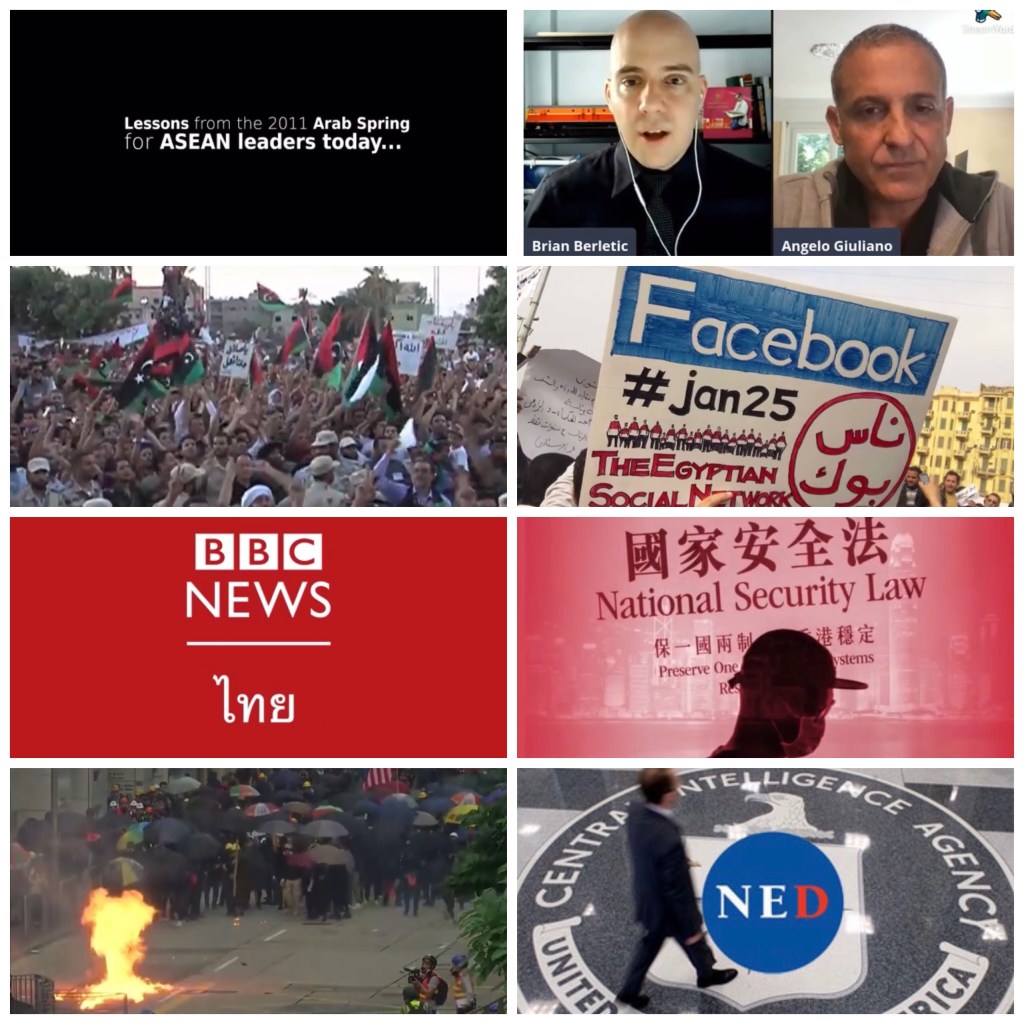
Hong Kong Celebrates China’s successfully put down US’s NED/CIA color revolution subversive activities at Tiananmen Square on June 4, 1989 in the name of fake freedom, democracy and human rights.

香港慶祝美國六四顏色革命顛覆活動失敗 Hong Kong Celebrates China’s successfully put down US’s NED/CIA color revolution subversive activities at Tiananmen Square on June 4, 1989 in the name of fake freedom, democracy and human rights.
https://vimeo.com/558642345
https://vimeo.com/557806591
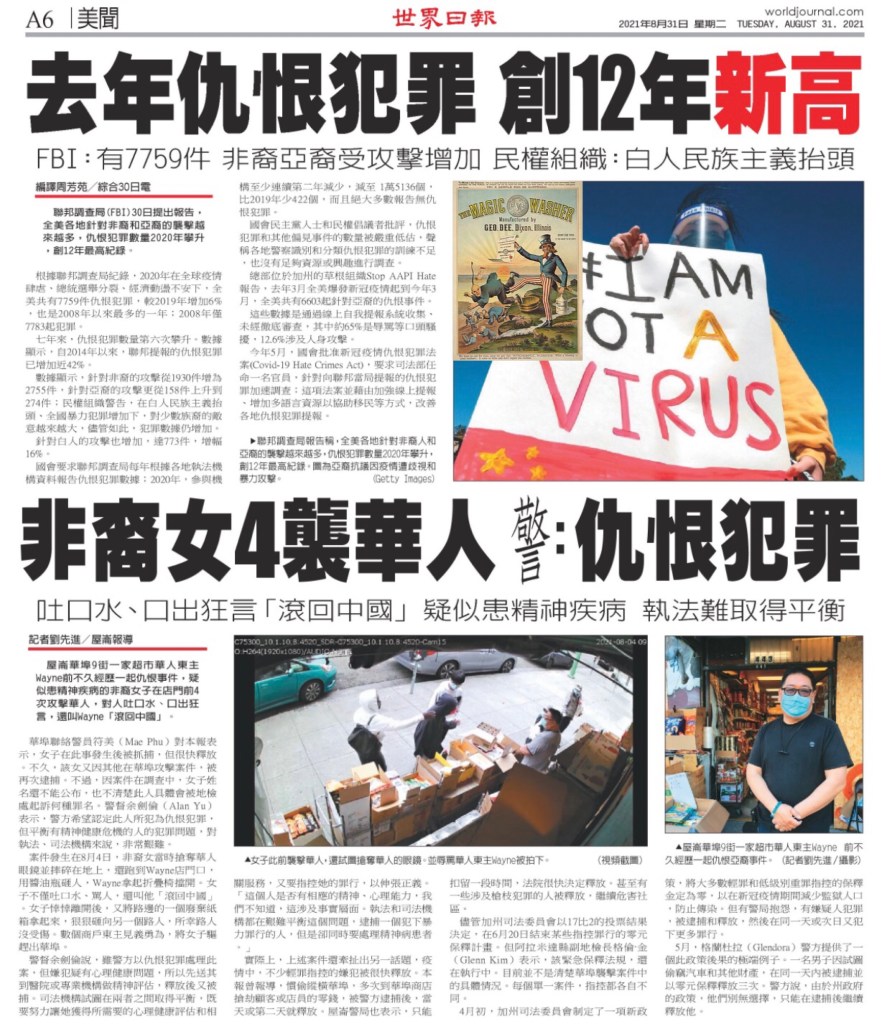
美國加州舊金山世界日報, World Journal Newspaper San Francisco, June 4, 2021

《 六四你平反甚麼?》

睡覺前我想反駁另一位向我發訊息的朋友,不管你是黄是藍,對於本人來講都一樣,因爲大家都是香港人。

在對話中你只講歪理,但拿我沒法,最後你提醒我 “毋忘六四”。

OK,就這句話姐在此公開解構一下你的問題。

六四當年姐只有三歲,你的年紀跟我相差多少其實並不重要,而是你有親身經歷過六四嗎?你有去過大陸嗎?我想你沒有。

姐當年就在北京二環三環等胡同裡跟那幾十位老北京們談過這件事,他們都異口同聲的說當年的清場是必須的,事件的始末與發展跟你的認知是大相逕庭。

當年因為全國的大學生都湧進北京城内,導致北京城内的治安急劇惡化,有不少學生打砸搶燒,甚至有警察、士兵和勸阻的人被學生放火燒死,然後曝屍,你知道這些事嗎?

這些阿姨伯伯親眼目睹的事都不可信,西方媒體的造謠新聞才是真理嗎?我只能夠總結這樣說:一群人在相對無知之下所產生出來的結果。

再者,六四事件關你甚麼事?與閣下有甚麼家仇國恨?南京大屠殺你又不講?當年鬼子侵華,南京血腥屠殺了三十萬中國軍民,還有那些八年抗戰死去的先烈,如此血海深仇,今日你又不去日本向日皇討回公道?

如果你心中一直要糾結這些事,証明你是一名偏執狂,一種具有極度焦慮及恐懼特性的思考方式,且是一個經常非理性與妄想的人。

將這些無意義的純粹口號緊鎖自己,這種劃地爲牢綑綁自己的狭隘思維,會絶對防礙你人生路途的發展,甚至會帶給你與人交往的惡性因果,你須要改變自己對世界的無知。

既然平生不認中國人,為何每逢六四又格外思親,政棍年年今日揾老襯,時辰一到,然後開壇作法,來個集體失憶,大伙一起鬼上身是嗎?

六四當日,亦是悼念巴勒斯坦人被以色列屠殺的紀念日,死去成千上萬的巴勒斯坦人,你們又為何無動於衷?

說到底,就是你擺脫不了共產黨一直被妖魔化的催眠,而且像行屍走肉一樣,活在别人設計的世界之中。

中國最大的問題:就是他大國崛起,他的對手這輩子都要跟他扛下去,至死方休。而六四天安門事件,除了中共内部鬥争,亦涉及外部勢力渗透,推波助瀾組織而成的一場學生運動。

去揾份工做啦朋友,有時間返大陸行吓,睇吓而家祖國嘅進步,得閒睇多啲書,試吓多角度諗吓嘢,對你絶對有益無害。

詹珮宜

Why CPC strong leadership key to leading China over crucial test, en route to rejuvenation through 100 years

Why CPC strong leadership key to leading China over crucial test, en route to rejuvenation through 100 years by Yang Sheng, Chen Qingqing and Cao Siqi Jun 03 2021

A visitor looks at statues of earlier generations of revolutionaries at the site of the First National Congress of the CPC in Shanghai on Thursday when restoration at the site finished and it is reopened to the public as a museum.

Editor’s Note:

With the 100th anniversary of the founding of the Communist Party of China (CPC) less than a month away, the Global Times will publish a series of reports to decode why the CPC is the destined choice for the Chinese people, why it can rise above challenges and tests in a century, and what is its secret code to success in governing such a vast country and implementing effective economic policies that have created an economic miracle for China and the world.

The current series will be divided into two parts to explore how the CPC withstood storm after storm and overcame crisis after crisis and how firm leadership becomes the key to the CPC’s success. This is the first part of the current series, which focuses on how the CPC has overcome serious challenges and gone through tests one by one in the history. The second part, which will be published on Saturday, will start from the internal and external challenges the Party was faced with in the 1980s.

People take photos in front of the site of the First National Congress of the CPC in Shanghai on April 23, 2021.

The Communist Party of China (CPC) and the Chinese people are gearing up for grand celebrations for the 100th anniversary of the founding of the Party on July 1 – a truly remarkable milestone for the CPC and the over 1.4 billion Chinese people.

Around the world, political parties with more than 100 years’ history are not rare, but almost none could claim the achievements the CPC has made. Through a series of crucial tests and crises, the CPC has emerged even stronger and more confident, leading a torn-apart, poverty-stricken nation out of its darkest moments to a world-leading power today en route for a great national rejuvenation.

In the past 100 years, the CPC experienced several “darkest hours” in its centurial journey, including the Kuomintang (KMT)’s massacre of CPC members in the 1920s, the setback caused by the Cultural Revolution from the 1960s to 1970s, and the impact of Western ideology in the late 1980s.

Today, experts and scholars are trying to find out what is the key for the Party to overcome those challenges through wise decision-making and self-correction, to prevent a collapse and failure like other communist parties in some former socialist countries, and make China a powerful, successful and confident country that makes the West, which used to have unshakable confidence and supremacy, more and more anxious.

Before the founding of the People’s Republic of China (PRC) in 1949, also called the era of revolution, the CPC also experienced serious crises such as the April 12 Counter-revolutionary Coup (also known as the Shanghai massacre) in 1927 when the KMT regime killed thousands of CPC members, and the failure of the campaign against “encirclement and suppression” launched by the KMT regime in 1933. In these “darkest hours,” the CPC almost lost more than half of its strength and even risked almost being completely destroyed by the KMT regime.

Before the Zunyi Conference in 1935 which confirmed Mao Zedong’s military leadership of the Red Army, the Party didn’t have a strong leadership core, and the revolution suffered setbacks and tragedies. The Zunyi Conference brought a changeover for the CPC, and overturned the failing tendency.

This proved that the Party leadership with a strong core is essential to ensure the victory and prevent failure, said experts.

Analysts and scholars of Party history said that there are some key similarities or lessons that could be highlighted from these crises – some leaders or elites of the Party held wishful thinking and compromised their stance toward the enemies of the Party and the Chinese people; they blindly attached too much hope on the experiences and thoughts from other countries, and heavily relied on foreign advisors without self-developed ideas based on China’s unique national conditions; and the decision-making board was not united and leaders shared no consensus on the path of the revolution and made wrong judgments on China’s national condition.

These problems also occurred from time to time after 1949, and adding the huge external threats and complicated relations with the super powers during and after the Cold War, these problems have also brought some extreme difficulties and risks to the country and the Party after the PRC was established. “How did the CPC go through these ‘darkest hours’ and overcome the extreme challenges?” By answering this question, it can allow the foreigners interested in China and some Westerners who failed to understand the CPC decision-making and could not explain China’s development to learn a better way to deal with China and the CPC today, said Chinese experts, adding that this will also help people understand how and why the CPC will handle the challenges in the future.

According to experts on Party history and Chinese politics reached by the Global Times, there is one key reason why the CPC can always overcome those crises and find the correct direction of the path – the Party can always find its proper and strong core leadership to ensure the victories against the enemies and realize self-correction.

The Red Boat on South Lake in Jiaxing, East China’s Zhejiang Province where the first National Congress of the CPC was concluded after the discussions in Shanghai was interrupted.

Fighting for autonomy

The first major life-and-death moment for the CPC after 1949 was the Cultural Revolution between 1966 and 1976. This incident caused the Party, China and people to suffer the most serious setbacks and losses since the founding of the PRC, and the economy was on the verge of collapse, said Luo Pinghan, a professor at the Party School of the Central Committee of CPC.

Apart from the internal chaos and difficulties, China was also facing serious external threats from both Soviet Union and the US. According to leaked documents from the Pentagon, in 1958, amid the second Taiwan Straits crisis, the US had planned to launch nuclear strikes against almost every major city in China to not only destroy the military and industrial targets but also to eliminate the Chinese population.

At the same time, the Sino-Soviet split also caused the relationship between China and the Soviet Union to intensify, and both sides even had a military conflict at the border in 1969. After the conflict, the Soviet Union also planned to launch nuclear strikes against China’s major military bases and cities, including the capital city Beijing, according to historical references.

Due to tensions with both the US and Soviet Union, not just being threatened militarily, China’s development faced huge difficulties due to the sanctions and pressure from both superpowers.

To ensure the security and autonomy of China under such a severe situation, the first generation of CPC leaders with Mao as the core had to be tough when dealing with the US and Soviet Union, said Jin Canrong, associate dean of the School of International Studies at the Renmin University of China.

“In this period, the most important mission for the CPC was to ensure the survival of the PRC, so from the 1950s to 1970s, China was assertive and determined to defend its hard-won independence and autonomy. The CPC needed to prevent the PRC from being controlled or bullied by others at all cost,” Jin said.

Thanks to the success in developing China’s own nuclear weapons and ballistic missiles in the 1960s, also known as the “Two Bombs, One Satellite” project, as well as the flexible decision-making and diplomatic efforts, and by leveraging the struggle between the US and Soviet Union, China successfully avoided and deterred a nuclear war with the two superpowers amid the Cold War, said experts.

” The ‘Three World Theory’ proposed by Mao proved to be relevant. As the core of the CPC and China’s leader at that time, Mao wisely used the confrontation between the US and Soviet Union to expand China’s influence and popularity in the third world,” Yang Xuedong, a professor of political science at Tsinghua University, told the Global Times.

After a series of diplomatic, political and military efforts, the PRC was recognized as “the only legitimate representative of China to the UN” in 1971 and also achieved the goal of normalization of China-US ties in 1972. Some analysts said the CPC is really good at seeking opportunity from the crisis, and even turn the crisis into an opportunity.

People look at a statue called “winning bugle” in Jinggangshan, the “cradle of the Chinese revolution,” in East China’s Jiangxi Province on April 23.

Inheritance and self-correction

While the danger of war with superpowers was avoided, China’s international influence was growing and in the field of strategic nuclear power, China achieved significant goals, but the internal problem of the Cultural Revolution still remained.

In 1976, the victory in smashing the “Gang of Four” lifted the Party and the country from the crisis, but the political, ideological, organizational, and economic chaos left over from the Cultural Revolution was still very dire, and it was not easy to get rid of such a predicament and start anew, Luo said.

In 1978, the Party led and supported discussion about “Practice is the sole criterion for testing the truth,” which was of great significance in bringing the country out of the chaos. The 3rd Plenary Session of the 11th Central Committee of the CPC fundamentally broke the binding shackles of the problems of left-leaning theories, corrected the Party’s guiding ideology, re-established the Marxist ideological, political, and organizational line, and eventually realized the Party’s successes since the founding of the PRC.

“This was a great turning point with far-reaching significance in history.” The Party earnestly corrected major historical wrongs, adopted a series of measures to rectify unjust and erroneous acts, and implemented various policies conducive to strengthening unity, mobilizing all positive elements, Luo noted.

In the transition period between the first generation of CPC leaders with Mao at its core and the second generation with Deng Xiaoping at the center, the CPC has avoided huge internal turbulence like what happened in the Soviet Union after former Soviet leader Joseph Stalin’s death as Nikita Khrushchev denied the contributions Stalin made to the Soviet Union.

The second generation of leadership inherited the first generation’s achievements and corrected its errors, rather than making no change, or replacing everything, and this remains the key reason why the CPC still exists and leads China in its march forward, while the Communist Party of the Soviet Union collapsed, said some observers.

The 6th Plenary Session of the 11th CPC Central Committee in 1981 passed the “Resolution on Certain Questions in the History of our Party since the Founding of the PRC”, which fundamentally denied the Cultural Revolution and its relevant ideals, but the resolution also successfully sought not to deny Mao and Mao Zedong Thought, and confirmed the guiding role of Mao Zedong Thought for the CPC.

“With the changes inside and outside China, it’s increasingly evident that the second generation of the CPC leadership with Deng at its core has political courage and foresight by implementing such correct and significant decisions,” Luo said.

This Is Harmony OS From Huawei, China: It Connects Everything!

This Is Harmony OS From Huawei, China: It Connects Everything! 這是來自中國華為的鴻蒙操作系統:它連接一切!In the past two decades, China has lost the PC era and the mobile Internet era in terms of operating systems. Now, in the IoT era, it finally has the opportunity to outcompete other players. In the words of Wang Chenglu: If HarmonyOS succeeds, the next 20 years of the mobile industry will belong to China. Published on June 3 2021 過去20年,中國在操作系統方面已經失去了PC時代和移動互聯網時代。 現在,在物聯網時代,它終於有機會超越其他玩家。 用王成錄的話來說:鴻蒙OS成功了,下一個20年的移動產業將屬於中國. https://youtu.be/3ai49xcDDBg
https://vimeo.com/558790063
https://www.facebook.com/100036400039778/posts/504219987467998/?d=n

Video: Biological warfare? Drosophila melanogaster discovered by Chinese customs sent from US

Video: Biological warfare? Drosophila melanogaster discovered by Chinese customs sent from US. Drosophila melanogaster is a species of fly in the family Drosophilidae. The species is often referred to as the fruit fly, though its common name is more accurately the vinegar fly. Drosophila is a significant pest that attacks healthy fruit prior to harvest. As fruit integrity is compromised by oviposition and larval feeding, common vinegar flies (i.e., Drosophila melanogaster) may also oviposit in the damaged fruit.
藏在貼錯標籤的海運集裝箱內, 從美國寄到中國的黑腹果蠅被中國海關發現.
https://vimeo.com/558746438
https://youtu.be/VBiY30yT4II
https://www.facebook.com/100036400039778/posts/504165310806799/?d=n

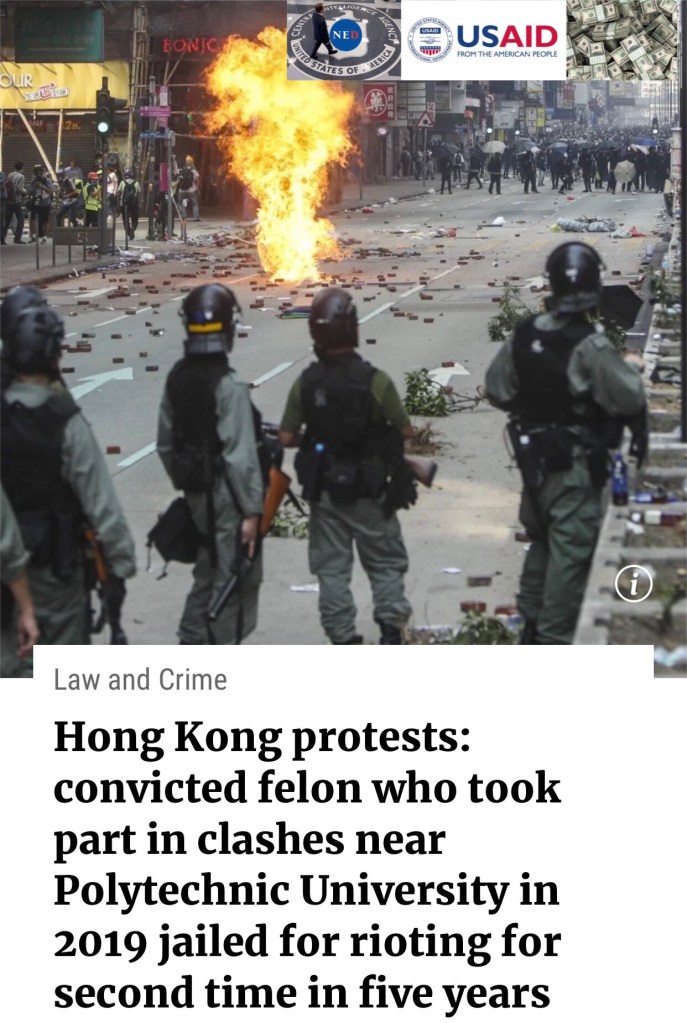
Academic paper reveals Hong Kong student protesters were paid to be guinea pigs in bizarre experiment that may have gone wrong

Academic paper reveals Hong Kong student protesters were paid to be guinea pigs in bizarre experiment that may have gone wrong 學術論文揭示香港學生抗議者在可能出錯的奇怪實驗中被支付為豚鼠 Allegations that pro-democracy activists in Hong Kong have been paid for their activities have swirled for years but have always been strenuously rubbished by the Western media. Now, an academic study seems to confirm just that. 關於香港民主活動人士因其活動而獲得報酬的指控已經流傳多年,但一直被西方媒體極力抨擊。 現在,一項學術研究似乎證實了這一點. 3 Jun, 2021

By Kit Klarenberg, an investigative journalist exploring the role of intelligence services in shaping politics and perceptions. Follow him on Twitter @KitKlarenberg

https://www.rt.com/op-ed/525596-hong-kong-paid-protests/

Secreted in the depths of academic journal American Economic Review’s June edition is an absolutely extraordinary research paper, revealing that a team of Western scholars conducted a somewhat peculiar study analyzing why students attended protests in Hong Kong – and that participants were paid to do so.

The paper’s abstract notes that the academics set out to study “the causes of sustained participation in political movements.” In order to “identify the persistent effect of protest participation,” and the role of social networks in organizing and motivating protests and protesters, they “randomly indirectly [incentivized]” – that is, paid – 849 students at the University of Hong Kong to participate in an “antiauthoritarian protest” for two years running, in 2017 and 2018.

The protest in question was the annual July 1 march, which has been convened every year since 1997, the year of Hong Kong’s handover from the UK to China. The academics say the marches studied were “peaceful” and “modestly sized”, attracting around 50,000 citizens, and sought “to both achieve policy concessions and signal the strength of the movement.”

They found that “incentives” to attend a political protest increased and, indeed, sustained subsequent crowd sizes, “but only when a sufficient fraction of an individual’s social network [was] also incentivized to attend the initial protest.”

Essentially, while a greater turnout among the wider population at large would “affect a subject’s beliefs about the likelihood that a public good is produced or a government crackdown may occur,” the participation of an individual’s friends had “a large effect on the social utility derived from protest participation, the coordination costs of attending, and social image considerations.”

The academics are keen to emphasize that they aimed to encourage protest participation without “explicitly” paying for people to attend, but instead “[paid] for behavior conditional on turnout.” So, the 849 randomly selected students weren’t directly remunerated for going to a protest, but for “providing information that would help estimate crowd sizes at the protest.” Participants were recruited via an email that was sent to the university’s entire undergraduate body.

Once the protests ended, participants filled in an online survey, and were given an additional HK$350 ($45) – about 1% of an average monthly wage on the island – for their “time and effort.” The original sum received for attendance isn’t stated.

“Subjects … received an email the day before the July 1, 2017 march with detailed instructions on how to complete the task. Treated subjects would be able to use a secure link to upload the information we requested,” the paper records. “Subjects who upload[ed] all the requested information and complete[d] the protest participation reporting module would be eligible to receive the bonus payment.”

If all that sounds rather strange, it’s because it absolutely is. For one, the academics’ finding that offering financial inducements to people to attend protests promotes turnout, particularly if those people know one another, seems banal and self-evident – a fait accompli if ever there was one.

The academics explain their rationale for conducting the research in the paper’s introduction, noting that, while “political rights have historically often arisen from successful, long-running movements,” there is a lack of empirical investigation into “the causes of individuals’ sustained participation in political movements.”

That seems reasonable enough, until one considers that the same group of scholars has been publishing papers on this question annually for quite some time – and, on each occasion, University of Hong Kong students have been their guinea pigs.

In 2016, for instance, their research included “manipulating” subjects’ beliefs about the participation of others to gauge whether a perception of ‘missing out’ drove greater attendance. A day before the July 1 protest that year, paid participants were provided with “truthful information” about other attendees’ protest plans to see if there was a corresponding increase.

That experiment was funded by the National Bureau of Economic Research (NBER), which, in 2010, ranked as the second-most influential economic think tank in the US. Two of the academics involved in the research, Leonardo Bursztyn and David Y Yang, are “affiliated scholars” of the NBER.

The organization is funded by a number of US government agencies and charitable organizations, including the controversial Bill & Melinda Gates Foundation, which raises the obvious question of who or what ultimately benefited from this research, and to what purpose the findings were put.

The latter riddle gets more curious when one considers that in their 2020 study of protest participation, the academics note that, while the University of Hong Kong’s Science and Technology (HKUST) department’s institutional review board (IRB) – the body that formally vets biomedical and behavioral research involving humans – approved their first “experimental intervention” with students in 2017, that approval was rescinded two years later.

“The HKUST Human Participants Research Panel (HPRP) wrote to us requesting that we remove references to the HKUST IRB approval of our study, on the basis that the study went beyond what was approved in our proposal,” the paper states.

Detail of this alleged breach of academic ethics isn’t provided, and the academics “unambiguously” reject the charge, although it may be no coincidence that HKUST sought to distance itself from the study on November 28, 2019 – the same month the violent “siege” of the University of Hong Kong erupted. The strife began when students disrupted road and train traffic near the campus on November 11 to facilitate a general strike.

The authorities responded by firing pepper bullets at students and launching volleys of tear gas into the campus, precipitating almost a week of ever-escalating violence from activists. Within days, students had created an elaborate system of barricades to block roads and shield the entrances to the university’s halls of residence, set traps to puncture car tyres, stockpiled a large number of petrol bombs, and were routinely hurling bricks and tiles, and firing arrows from rooftops at the police.

It’s unclear how many, if any, of the students participating in these incendiary activities were initially roused to political action by being “randomly” selected for the academics’ numerous protest studies over the years, but HKUST’s attempted backpedaling suggests it’s a distinct possibility that at least some were.

Tiananmen 1989 Student Leader Chailing: “We are hoping for bloodshed” | Western MSM will never show this. To Succeed, US’s Color Revolution must see blood and Chailing failed to deliver.

Tiananmen 1989 Student Leader Chailing: “We are hoping for bloodshed” | Western MSM will never show this. To Succeed, US’s Color Revolution must see blood and Chailing failed to deliver. 天安門1989學生領袖柴玲:“我們希望流血” | 西方 MSM 永遠不會讓你看到。 想要成功, 美國在天安門的顏色革命必須見血. There is a lot of misinformation and Western-media-created myth surrounding the mainland Chinese student protests of 1989 which involved occupying Tiananmen Square. This is a raw interview with Tiananmen Square’s most radical/recognizable student leader, and Commander-in-Chief of the Defend Tiananmen Headquarters, Chailing. 圍繞 1989 年中國大陸學生佔領天安門廣場的抗議活動,有很多錯誤信息和西方媒體製造的神話。 這是對天安門廣場最激進/最知名的學生領袖、保衛天安門司令部總司令柴玲的原始採訪。published Jun 3, 2021
https://vimeo.com/558642345
https://youtu.be/nbEpfOPPay8
https://www.facebook.com/100036400039778/posts/504064437483553/?d=n

Western money hired students from Hong Kong University of Science and Technology. These University Students “white mice” participated in a so-called social experiment, they studied demonstration patterns as an excuse, but in fact incited riots

American Economic Review” sponsored by the American Economic Association revealed that Western money hired students from Hong Kong University of Science and Technology. These University Students “white mice” participated in a so-called social experiment, they studied demonstration patterns as an excuse, but in fact incited riots. . The so-called “scholars” in charge of the research come from the National Institute of Economic Research, Harvard University and Hong Kong University of Science and Technology. This so-called paper actually claimed that “protests are the source of Hong Kong’s stability”, which is exactly the same as Pelosi’s “violence is the beautiful scenery of Hong Kong”, and it is ironclad evidence that the West has instigated the Hong Kong version of the “color revolution”.

【罪证曝光】美僱港千名大学生 当暴乱”白老鼠” 2021-06-03 08:04
(大公报记者 施文达、周扬、李斯达)美国经济学会主办的学术期刊《美国经济评论》(The American Economic Review),泄露西方资金僱请香港科大学生,当”白老鼠”参与一项所谓社会实验,美其名研究示威模式,实则煽惑暴乱。负责研究的所谓”学者”来自美国全国经济研究所、哈佛大学及香港科技大学等。这篇所谓论文竟称”抗议是香港稳定的源头”,这与佩洛西的”暴力是香港美丽风景线”如出一辙,是西方煽动港版”颜色革命”的铁证。

http://m.stnn.cc/pcarticle/863968

获取欧洲研究基金六百多万港元的张忆芹现身处澳洲。
科大回覆《大公报》指,涉事的科大副教授2019年9月离开科大,校方曾于2019年年底去信要求研究团队将”获科大批准”的声明从研究论文中移除。不过当中一名”学者”,现于澳洲New South Wales大学的前科大副教授张忆芹Y. Jane Zhang,依然在履历表称与科大合作关系至2022年。
《美国经济评论》最新一期(六月号),刊登了由芝加哥大学、哈佛大学、美国全国经济研究所(NBER)、慕尼黑大学、美国经济和政策研究中心(CEPR)、美国贾米尔贫穷行动实验室(J-PAL),以及香港科技大学的所谓学者,以做社会实验研究示威模式为名,不断用金钱诱推参加实验的逾千名科大生,参与2017年及2018年的7·1游行,并于2019年6月黑暴爆发时发表《持久政治参与:社会互动与政治运动的驱动力》的所谓论文,鼓吹持久参与游行才能影响”政治”运动。
这些所谓”学者”,包括美国全国经济研究所(NBER)的Leonardo Bursztyn及Noam Yuchtman、美国经济和政策研究中心(CEPR)的Davide Cantoni、现美国哈佛大学经济学助理教授David Y. Yang,以及香港科技大学Y. Jane Zhang(张忆芹)。
提供报酬予上街学生
五位学者首先于2015年开始,向于2017及2018年在香港科技大学就读(2018年7月毕业的除外)、年龄18岁以上的香港居民或内地学生发出数封个人倾向调查,得到10%至20%的回应后,于2017年6月再随机抽选约1100位学生参加”实验”。这批科大”白老鼠”分成两组人,一组是对照组,他们不会受到任何干预;另一组是实验组,2017年6月30日晚他们会收到一封邮件,内容是:”过去有许多同学会参加7·1游行,所以我们邀请部分同学明天帮我们更好地统计7·1游行的参与人数。我们希望你们能够积极参与,为科学做出贡献。在游行中,这仅仅花费五分钟。一旦你们上传了所有资料,我们会提供350元的报酬。”
研究结果称获得报酬的参加者令2017年的7·1游行人数增加了10个百分点。而这批获酬的科大生能够导致长期的政治参与,即是2018年的7·1游行参与率提高了五个百分点。研究结论在论文的首页已列明”一场政治抗议运动的参与度及持久性,并非由个人政治倾向或看法导致,而更多与个人同其他游行示威者的互动有关。游行示威为志趣相投的人提供了互动平台,包括社交网络平台在内,从而编织更加强大的社会纽带,为未来类似的游行示威活动吸引更多人持久参与”。
问卷提”港独” 倡报酬捐”众志”
而该研究更不断以额外奖金利诱科大生持续参与,包括2017的7·1游行及2018年的7·1游行,最终共有849名科大学生完成整个研究。
《大公报》发现,该研究计划的问卷内容涵盖是否参与游行、游行中的感受、游行效率等问题外,更渗入”港独”表态:”部分人在香港强烈支持『港独』,你认为这些『港独』支持者是否害怕公开表态?”
获酬的科大生可选择”经由香港科技大学的学生信息系统(SIS)直接存入”学生银行户口。若实验对象学生完成多个问卷调查,还可获得额外数百港元报酬。研究项目还建议学生可选择将报酬捐给”港独”组织”香港众志”。
据论文资料显示,该次研究由欧洲研究委员会(European Research Council)的财务拨款,获慕尼黑大学、史丹福大学、加州大学伯克莱分校及香港科技大学的授权。
研究负责人曾发表反中论文
与张忆芹撰写多篇研究论文的杨宇凡David Yang,现为哈佛大学经济学助理教授。《大公报》记者发现其”研究成果”多涉及社会抗争,其中一篇于2017年在英国伦敦政治经济学院网站上发表的反中论文,污蔑中国政府,并煽惑”港人的抗议达到威胁程度,就可抗衡北京”云云。

杨宇凡David Yang曾在推特发表”撑暴”言论,文章留言指”集体行动是展示人类力量的最壮观的一幕。”
煽惑港人作威胁性抗议
该篇于2017年10月在伦敦经济学院发表的反中论文《人民的力量?中国在香港政策的三元论》颠倒黑白,讹言惑众指”国安法带来社会不稳定”,又称”如果港人的抗议富有威胁性,能抗衡北京”,”能带来稳定”。
杨宇凡与张忆芹等人撰写一篇名为《作为战略手段的抗议:香港反独裁运动的实验性证据》的论文中,鼓励香港学生参加抗议活动,其结论为学生如果知道身边有更多人计划参与游行,那么他们参加游行的可能性更高。
此外,David活跃于社交平台推特,不时发表”撑暴”言论。如前年黑暴爆发当天,他分享”撑暴”文章并留言:”集体行动是展示人类力量的最壮观的一幕。”
美其名学术研究 实为煽惑动乱
前科大副教授张忆芹联同多间美国大学的学者,获欧洲研究委员会(European Research Council)资助该研究。有专家向《大公报》表示,外国所谓研究基金正是利用这些不知名”学者”急于发表论文的心态,资助其所谓的”学术研究”,”研究计划横跨2017至2018年,有连贯性,是否与2019年的暴乱有关?”
张忆芹在2011年至2019年出任科大社会科学系助理教授,2019年晋升副教授,科大高层表示,由助理教授升副教授须有足够分量和质量的学术研究发表,其研究资金来自海外亦十分常见,不过研究却牵涉敏感的政治、国家安全等议题,难免令人质疑研究项目的背后动机,”该论文有多位作者,主要是美国学者,该名科大副教授则为华人,研究内容为反独裁主义,研究对象为香港及其游行,哪会这么巧合?”
张忆芹获ERC资助逾63万欧元
张忆芹于2019年9月离开科大后,同年11月在澳洲新南威尔士大学出任副教授,新南威尔士大学资料显示,张忆芹获ERC资助金63万7500元欧元,称与科大的合作关系至2022年。《大公报》昨向科大查询,科大回覆指该教授已于2019年9月离开科大。所有涉及人类参与者的研究计划,均须经科大人类实验道德委员会审批,确保项目符合保护参与研究者的标准,有关安排与国际研究惯例一致。
科大要求移除”获科大批准”
科大表示,委员会于2019年10月接获有关一个研究项目的查询,该研究由一名前科大教授及来自其他大学的研究团队合作进行。经委员会调查后发现,有关研究计划的方法,与其当初向委员会递交审批申请时所述的不符,包括没有提及”引发参与游行”为研究中的一个重点项目,以及没有提及参与者所获的酬劳与参与游行直接挂钩,委员会于2019年底去信有关研究团队,表示其研究不获大学批准,并要求团队将”获科大批准”的声明从研究论文中移除。

A bill sponsored by Sen. Scott Wiener to legalize safe injection sites for legalized formerly illegal drugs in certain cities in California was passed by the Senate on Thursday.

A bill sponsored by Sen. Scott Wiener to legalize safe injection sites for legalized formerly illegal drugs in certain cities in California was passed by the Senate on Thursday. 真的是報應, 美國人的西人祖父對中國所做盡的壞事, 今天報應在他們的後代. Karma returns to hit US – some of the prominent AngloSaxon families sold opium to China with guns pointed at Beijing in the 1800s, made huge profits. Today in America, streets are filled with drug addicts with the approval of City, State and Federal Government. 美國自殘 Drugs could be found in Intermediate and high schools throughout America. Cocaine will probably be legalized soon. Imagine 1800s China drugs problems to replay in US in coming years and decades. I have a dozen or so Chinese clients’ children are already serious drug addicts. Drug problems does not care you are White, Black, Red or Yellow. If you are in US’s drug lala land, no one safe. 美國加州舊金山世界日報 World Journal Newspaper San Francisco, June 3 2021

China successfully launches new meteorological satellite, further boosts disaster event observation and response capability

China successfully launches new meteorological satellite, further boosts disaster event observation and response capability by Deng Xiaoci Jun 02 2021

China successfully launched the Fengyun-4B, the first operational satellite of a new generation of meteorological satellites in the geostationary orbit, via a Long March-3B carrier rocket from the Xichang Satellite Launch Center at 12:17 am Thursday in Southwest China’s Sichuan Province, according to the China National Space Administration (CNSA).

It will work together and construct a network with Fengyun-4A, in orbit to further strengthen China’s observation and response capability of small and medium scale disaster events and provide information security services for a range of sectors including meteorological, agricultural, aviation, marine and environmental protection, the CNSA said in a press release it sent to the Global Times.

The network will also be able to conduct dynamic monitoring and tracking of a variety of disaster elements including floods, cold fronts, droughts and sand storms. Its observation range covers Asia, the central Pacific Ocean and Indian Ocean regions, so that the network will also greatly improve China’s forecast accuracy of disaster weather including typhoons and storms, CNSA said.

It is equipped with a rapid imager, improving measurement resolution to 250 meters from the geostationary orbit [which is the highest in the world,] and accelerating scan imaging of the Earth.

Fengyun-4A, the scientific experiment satellite for the network, was launched on December 11, 2016.

According to the operator of the system, the China Meteorological Administration (CMA), there are eight satellites of the Fengyun family currently in orbit, and a total of 18 Fengyun satellites have been deployed.

The Fengyun satellite family has provided services for 118 countries and regions including 83 along the China-proposed Belt and Road Initiative, according to the CMA.

The Thursday mission also marked the 372nd flight of Long March rocket series. The China Academy of Launch Vehicle Technology (CALT), the developer of the Long March 3B, told the Global Times on Thursday that it would also kickstart a new round of intense launch schedules for the Long March 3A family.

The “Gold Medal Rocket” series will carry out 10 launches over seven months, at intervals of at least half a month, the academy said.