Highlights of Xi’s speech at a meeting marking the 110th anniversary of 1911 Revolution by Xu Zihe Oct 09 2021
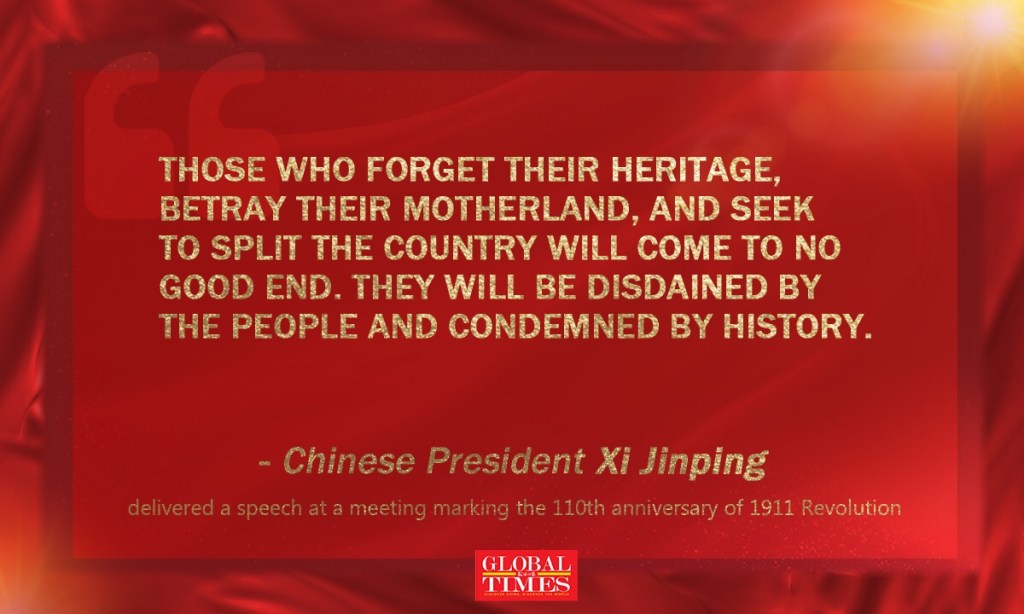
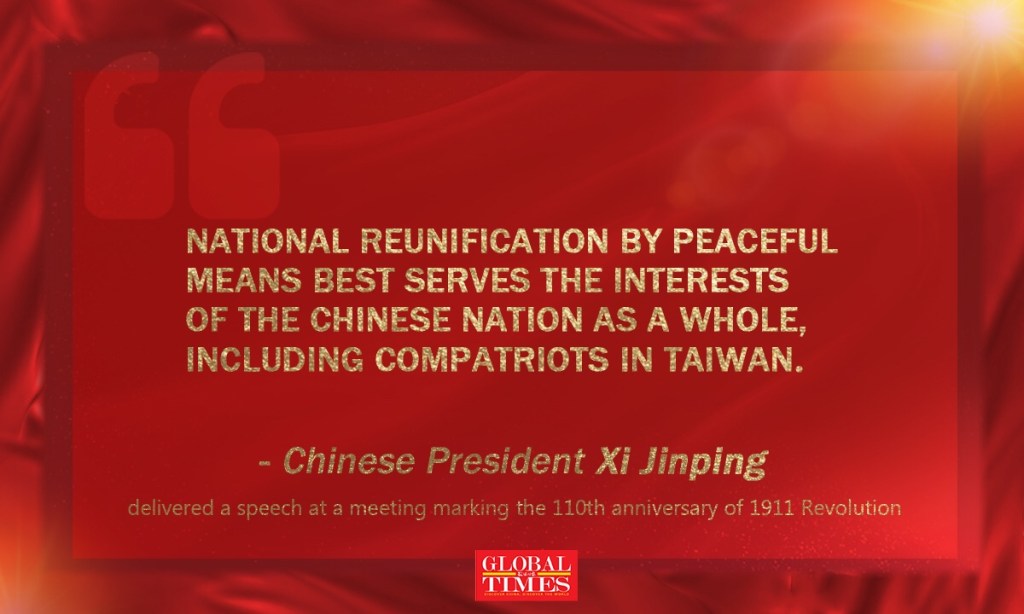
Highlights of Xi’s speech at a meeting marking the 110th anniversary of 1911 Revolution by Xu Zihe Oct 09 2021
Time to call the US out for making Chinese nationals targets of prosecution by Gal Luft Oct 11 2021
Now that Huawei’s CFO Meng Wanzhou has returned to China after reaching a deal with the US Justice Department, it is time to reflect about her possible “successors”, not in Huawei’s boardroom but on the list of targets of America’s long arm jurisdiction.
Just days before the US Department of Justice (DOJ) dropped Meng’s extradition request allowing her departure from Vancouver, FBI Director Christopher Wray reportedly told a Senate Homeland Security Committee hearing on threats to the US that the bureau opens new probes into China “every 12 hours”.
The US has bilateral extradition treaties with about 120 countries. Those treaties allow for the extradition for traditional crimes like fraud, hacking, and money laundering but not for crimes of a political nature, like failure to register as a foreign agent, espionage, or in Meng’s case, violations of US sanctions.
The DOJ’s China Initiative established in 2018 by the Trump administration has given the FBI and US prosecutors special incentives to pursue cases related to China. To clear the extradition threshold, US authorities often mask political crimes as ordinary by withholding from courts relevant information pertaining to the political context of the case.
In Meng’s case, the official charge was bank fraud even though the motivation for the prosecution was political and aimed at sabotaging Huawei’s global 5G leadership position.
Had Meng been extradited and faced trial, her fate would have been decided by a jury of 12 from New York who were expected to be impartial. But it is hard to see how, with growing anti-China sentiment in America, such an impartial jury could even be found.
This means that in the era of US-China rivalry every legal case involving China brought before a US court, let alone a high-profile case like Meng’s, could be easily turned into a political circus. This is not to say that Chinese citizens should be immune from US legal actions but that countries receiving extradition requests must apply new standards of scrutiny when reviewing extradition cases involving China and the US.
The targeting of foreign citizens by the US government is not always done within the framework of the law.
Recently, an investigative report posted by Yahoo News revealed troubling information about how the CIA planned to kill or kidnap Wikileaks founder Julian Assange whose organization exposed US war crimes in Iraq and Afghanistan as well as other embarrassing details about the workings of the US intelligence community. When the plan was rejected, Assange was charged with hacking into US military databases, an extraditable crime under the US-UK extradition treaty. In January, Assange’s extradition was blocked by the British judge but the US government appealed the decision. His case could drag on for years and he might linger in prison.
Time and again the US government has sought to extradite and imprison foreign nationals for political reasons, weaponizing its legal system to advance its geopolitical agenda. Under some extradition agreements the US does not have to provide detailed evidence against the accused. In other words, the court does not need to be sure that the individual could be convicted at the end of a trial.
National courts in such countries must therefore be extra scrupulous and demand a more substantial body of evidence against defendants, especially when it comes to Chinese nationals before they rule in favor of extradition.
They should also consider that as the US-China rivalry intensifies it will become impossible for defendants to enjoy fair treatment in jury trials. The international community should call upon the Biden administration to shut down the China Initiative. China is the only country in the entire global justice system to be singled out as a target of prosecution and the prosecutorial zeal of DOJ attorneys has already ruined many innocent lives. A country that touts the rule of law and the rules-based international order should be called out for using its legal system as a political tool in a mean manner.
The author is professor at Ostim Technical University and co-director of the Institute for the Analysis of Global Security. bizopinion@globaltimes.com.cn
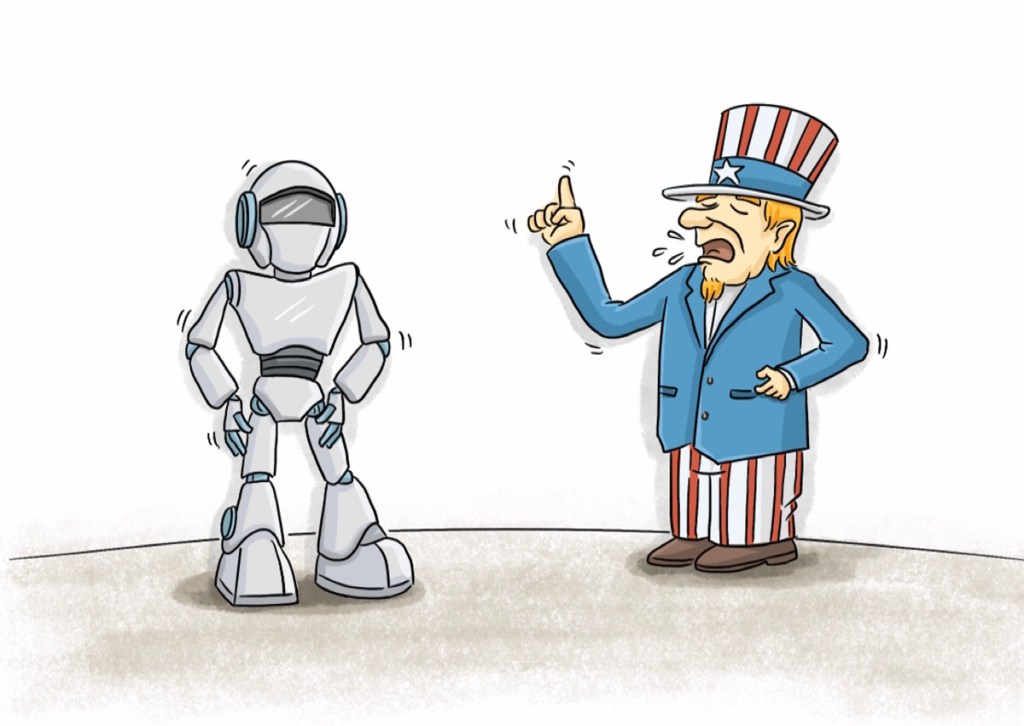
AI contest hype will only create barrier to industry cooperation by Ma Jihua
04:53 Oct 11 2021
The Pentagon’s former chief software officer Nicolas Chaillan said that the US has already lost artificial intelligence (AI) competition to China. In an interview with the Financial Times shortly after his resignation, Chaillan said there was “good reason to be angry,” because “the US has no competing fighting chance against China in 15 to 20 years.”
The first chief software officer for the US Air Force, who spent three years on a Pentagon-wide effort to boost cyber security, told American media that he plans to testify to the US Congress about the Chinese cyber threat to US supremacy.
There is no doubt that the US takes a leading position in the AI field, where China is catching up rapidly. The advantages of the US can be reflected in some high-end and core innovations of AI. China has achieved an advanced position in applications such as speech recognition. The number of patents in China, the scale of investment and the growth of the industry, are also growing at a speed exceeding many people’s expectations.
As for whether China has surpassed the US in AI, it is believed that the international scientific communities should be able to offer an objective conclusion after doing their evaluation. However, it should be pointed out that although China is ratcheting up investment on AI and other technologies, its purpose is not to surpass any specific country.
No matter how accurate the ex-Pentagon software chief’s assessment is, overly hyping an “AI contest” will only add up barriers between the two countries’ technological cooperation. Taking such a view full of pathologically competitive mentality is also likely to intensify US’ hostility against China, and may push more US tech companies to abandon mutually beneficial cooperation with Chinese companies.
The rapid development of a country’s science and technology is inseparable from open cooperation and exchanges with global partners, but the US has not been able to rationally view the rise of China’s science and technology levels. The US government has long been doing its utmost to stifle Chinese technology companies and contain China’s technological development.
For instance, the previous Trump administration launched a relentless attack against Chinese 5G giant Huawei. Washington imposed a strict sales ban on Huawei, while lobbying its allies to exclude Huawei from their 5G construction plans. The Biden administration has kept on such suppression. The Wall Street Journal blatantly claimed in an article on Monday that “Washington’s campaign has used some of the most destructive tools in its arsenal, and they have succeeded.”
On the technology front, Biden has intensified the contest, namely by blocking the US from sharing leading technology with Chinese companies. The Biden administration in March reportedly amended licensing arrangements for companies to sell to Huawei, further restricting companies from supplying items that can be used to produce Huawei’s 5G devices. The White House’s chip summit in April with many multinational companies excluded all key players from the Chinese mainland.
Instead of strangling China’s technology development, the US’ decoupling approach has disrupted the global research and development of science and technology, while slowing down the pace of technological progress in the US too. The reasons for the current global chip supply shortage are complex, but one of the most important artificial factors is the so-called decoupling measures taken by the US.
When asked about economic “decoupling” from China, Biden’s trade representative Katherine Tai last week said it was not realistic for the world’s two largest economies to stop trading with each other. Tai said the US is looking for a kind of “recoupling.” It is hoped that the US can readjust its science and technology policy, and engage in conscientious competition and cooperation with China, instead of continuing to harm others and disadvantage itself.
The author is a veteran telecommunications industry analyst. bizopinion@globaltimes.com.cn
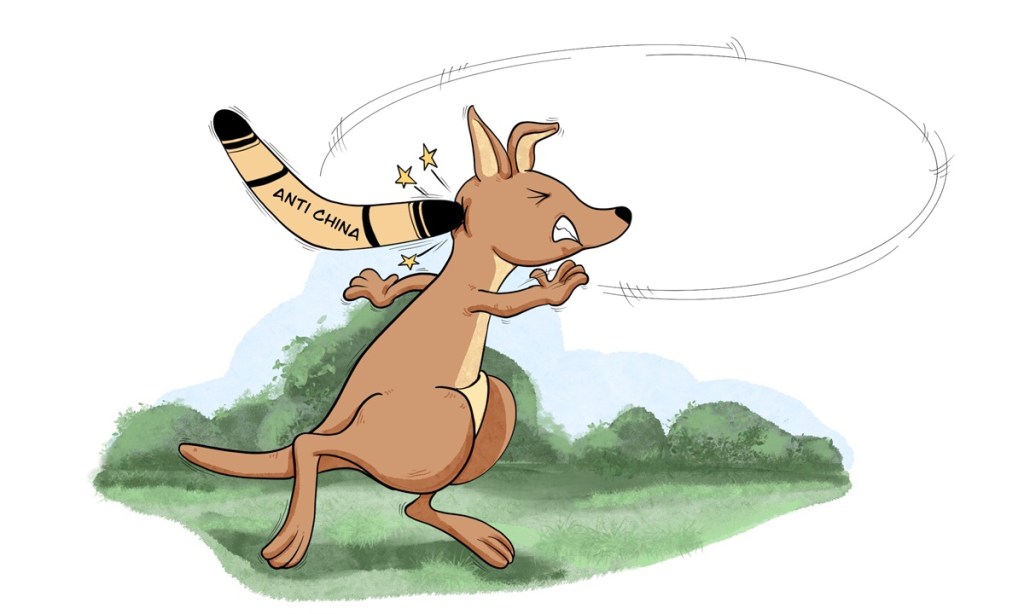
Abbott an ‘Australian Pompeo’ used by Taiwan secessionists by Lin Lan Oct 10 2021
Former Australian prime minister Tony Abbott, also regarded by some Chinese analysts as the “Australian version of Mike Pompeo,” has acted as a “vanguard” of the US, pathetically becoming Washington’s cannon fodder and a tool taken advantage of by Taiwan secessionists. Abbott made a series of clownish attacks against the Chinese mainland during his visit to the island of Taiwan, which was harshly criticized by the Chinese embassy in Australia.
“Tony Abbott is a failed and pitiful politician. His recent despicable and insane performance in Taiwan fully exposed his hideous anti-China features. This will only further discredit him,” said the spokesperson of the Chinese embassy in Australia on Saturday.
Abbott arrived in Taiwan on Tuesday. During his visit, he wantonly criticized China’s “belligerence” and “crackdown” in Hong Kong and Northwest China’s Xinjiang Uygur Autonomous Region. Abbott sensationally raised fears that Beijing “could lash out disastrously very soon” against Taiwan, accusing the Chinese mainland of being a “bully” and expressing his support for Taiwan secessionists. Trying to instigate Washington, he also said he did not believe the US “could stand by” and watch Taiwan be “swallowed up” by the Chinese mainland.
“Abbott is like an Australian version of Mike Pompeo. His words are one of the most ferocious and outrageous attacks against Beijing by Australian politicians since the establishment of China-Australia diplomatic relations. Abbott is a representative of the extreme right, trying to interfere in China’s political system and other internal affairs. But now, his scheme has obviously failed,” Chen Hong, a professor and director of the Australian Studies Centre, East China Normal University, told the Global Times.
Abbott’s all-out attack against the Chinese mainland was not extensively echoed inside Australia. For example, The Sydney Morning Herald commented on Friday that “Abbott’s comments will put the Morrison government in a difficult position.” In recent years, Canberra has brought a lot of damage to China-Australia relations. As the two countries’ ties have already reached a low point, Abbott was adding fuel to the flames. It will be Australia itself that suffers eventually.
Besides, a few proactive speeches against Beijing will never help the island of Taiwan end its “international isolation” as Abbott claimed. Nor will they bring any actual support to Taiwan secessionists. Just the opposite, Abbott’s visit shows that Taiwan secessionists have almost come to the end of their rope. To a large extent, they can only take advantage of such former politicians who cannot represent mainstream political strategy in their own countries.
Although Abbott clamored that he did not believe the US “could stand by” on the Taiwan question, he cannot change the fact that extreme Australian anti-China forces are in an awkward dilemma. They have closely followed Washington’s suit to oppose Beijing, but Washington may never fulfill their wish at the expense of a complete breakdown of China-US relations.
This year marks the 110th anniversary of the 1911 Revolution, whose historical mission was to end the thousands-years-long absolute monarchy, establish a republic and realize the great rejuvenation of the Chinese nation. The Kuomintang reactionaries were eventually given up by people, defeated in the Chinese mainland and retreated to Taiwan. But today, Taiwan’s ruling interest groups have abandoned the primal purpose of the revolution, turning to external forces to confront the mainland.
It is pitiful and ridiculous that former Australian prime minister has become an anti-China vanguard used by Taiwan secessionists. One after another, Taiwan has lost its “allies,” which shows that China’s complete reunification is an unstoppable trend. Extreme politicians like Abbott and their positions will be eventually abandoned by history.

Beijing finds coronavirus in imported pork, fruits by Global Times Oct 10 2021
Staff at a center for disease control and prevention in Qinhuangdao, North China’s Hebei Province, take cold-chain samples at a pharmaceutical warehouse. COVID-19 has been found on the packaging of a growing number of cold-chain products.
Beijing has reported a weak-positive coronavirus testing result in mixed samples of imported pork and fruits at a store in the city’s Xicheng district, local health authorities said on Sunday. Emergency response was immediately launched, finding all related personnel and environment samples returning negative COVID-19 results.
The samples include a piece of pork, longan, dragon fruit, navel orange and kiwi fruit, which are all imported from overseas, according to the latest notice of Xicheng district health authority.
The district immediately launched emergency response, and carried out laboratory review, epidemiological investigation, sampling and testing of relevant items and the environment, personnel control and environmental disinfection.
Multiple batches of fruit and meat samples have since been collected, as well as samples from the store’s environment and related personnel, all of which returned negative test results.
The pork products in question, which have not been sold so far, have been taken off the shelves, and the store is temporarily closed, the notice said.
Experts believe that the risk of spreading the epidemic through the products is relatively low.
Meanwhile, the Xicheng disease prevention and control center has urged all residents who bought the fruits in question to report to their communities as soon as possible.
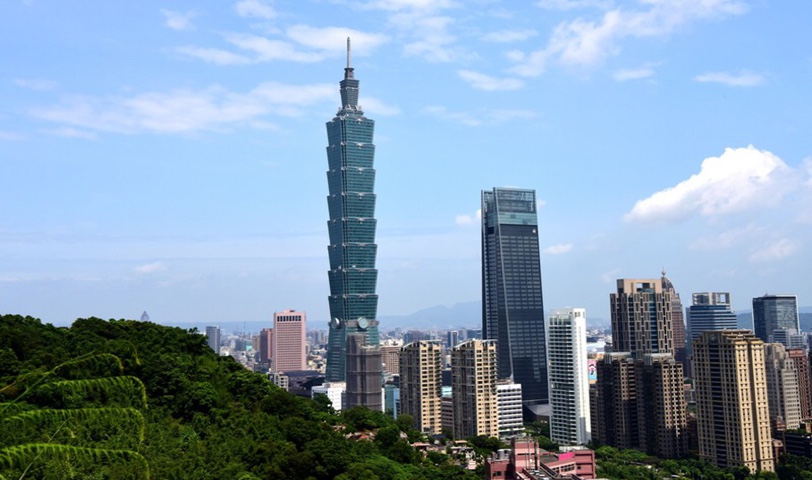
Exclusive: DPP bribes Somaliland politicians for a long time in exchange for political support: source by Fan Lingzhi Oct 10 2021
The Democratic Progressive Party (DPP), the ruling party on the island of Taiwan, has been bribing some Somaliland politicians and families for a long time in exchange for support to sell “Taiwan secessionism” advocacy on international platforms, a source told the Global Times.
According to the source, huge bribes were conveyed via so-called representative offices on each side. And Taiwan island is tunneling profits to certain Somaliland personnel via cooperative projects such as the digitalization plan of the Somaliland government and a Somaliland innovation park project, the source said.
Somaliland is located in the northwest of the Federal Republic of Somalia and is one of the autonomous regions of the country. In 1969, Mohamed Siad Barre launched military coup and established the Somali Democratic Republic. In January 1991, the Barre administration was overthrown and the place fell into civil war. Four months later, Northern Somali announced “independence” and “the Republic of Somaliland” was established, but it has not been recognized any member of the Union Nations.
The DPP set up a so-called representative office in Somaliland in August 2020. In response, Chinese Foreign Ministry spokesperson Zhao Lijian stressed at a routine press conference on August 18, 2020 that there is only one China in the world and Taiwan is an inalienable part of China.
The one-China principle is a universally recognized norm governing international relations and the consensus of the international community. China firmly opposes the establishment of official institutions or any form of official exchanges between Taiwan and Somaliland, Zhao said.
“The DPP’s frantic search for support for its separatist activities in the international arena will never succeed,” Zhao noted.
In fact, it is an old trick of the DPP to bribe and make up lies in the international community. The American Prospect reported previously that the Taipei Economic and Cultural Representative Office (TECRO) in the US provides funds to five US think tanks – the Brookings Institution, the Center for American Progress, the Center for a New American Security, the Center for Strategic and International Studies, and the Hudson Institute – every year. In 2019, TECRO provided between $250,000 and $499,999 to Brookings, the report said.
But none of their researchers disclose the potential conflict of interest between Taiwan funding and advocating for more security guarantees for and trade with Taiwan, The American Prospect said.
“What the source disclosed this time proved the DPP’s dirty tricks again. The DPP would do anything to seek independence, there is no bottom line in their behavior and speeches,” a related expert told the Global Times on condition of anonymity.
For a long time, the DPP has been bribing and drawing over international think tanks under the guise of academic exchanges to help them spread groundless “Taiwan secessionism” speeches and deceive the international community, the expert said, calling on the international community and Taiwan residents to reject the DPP’s secessionist plot and insist on the one-China principle.
“Bribing and lies will not save the DPP from a destined failure, but will only harm the interests of the 23 million residents on the island and their dignity as Chinese in the international community,” the expert said.
US spy ship conducts extensive activities in S.China Sea, ‘aims to collect data to support submarine warfare against China’ by Liu Xuanzun Oct 11 2021
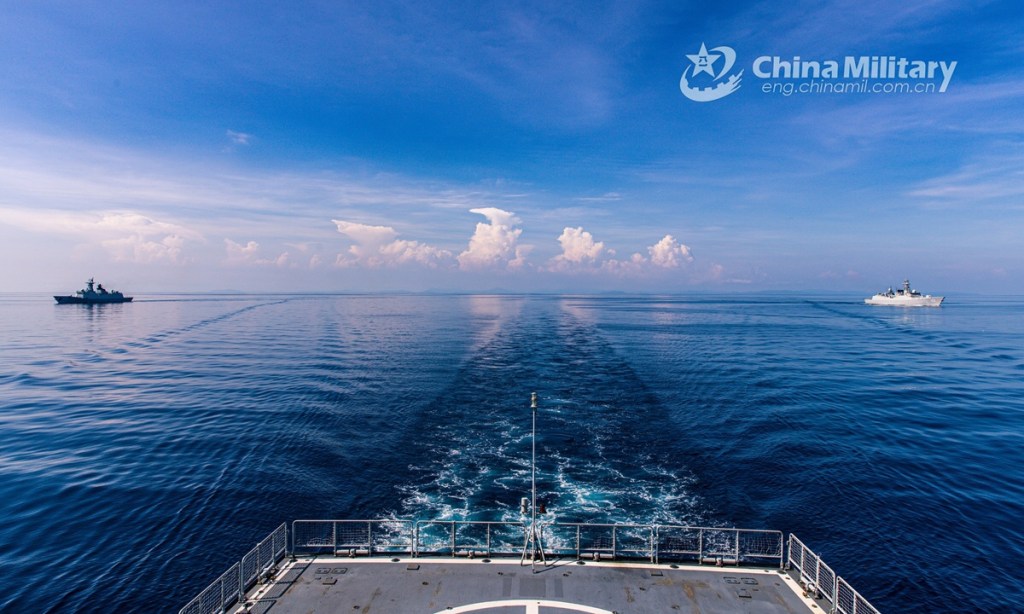
The guided-missile destroyers Hohhot (Hull 161) and Wuhan (Hull 169), together with the guided-missile frigate Hengyang (Hull 568), steam in formation in an undisclosed sea area during a 4-day maritime real-combat training exercise on September 2, 2020. All the warships are attached to a naval destroyer flotilla under the PLA Southern Theater Command. (eng.chinamil.com.cn/Photo by Li Wei)
A US Navy oceanographic survey ship has been conducting extensive activities in a large area of the South China Sea since late September, which Chinese military experts said aims to collect underwater geographical and hydrological data to support its submarine warfare in the region against China.
This situation also drew attention from some military observers after a US nuclear-powered attack submarine struck an unidentified underwater object in the South China Sea earlier this month, which again highlighted the US Navy’s need to learn more about the region.
The USNS Mary Sears (T-AGS 65), a Pathfinder-class oceanographic survey ship, entered the South China Sea on September 26 and started extensive surveys, the South China Sea Strategic Situation Probing Initiative (SCSPI), a Beijing-based think tank, revealed on Sunday.
From October 1 to 4, the ship operated in waters south of China’s Hainan Island, from October 5 to 9, it approached the coastline of Vietnam, and by Sunday it had arrived in waters near the Nansha Islands, according to the monitoring of the SCSPI.
Having operated in the South China Sea many times in the past, the Pathfinder-class oceanographic survey ship is specialized in the detection and surveying of underwater terrain, meteorology and hydrology, the SCSPI said, noting that this time, the ship covered a very large area in a short time, which is rare.
While the ship seems to be conducting scientific research, its true mission is to support submarine and anti-submarine warfare, as it can draw underwater maps that can help navigate friendly submarines, or place detection devices to help locate hostile submarines, a Beijing-based military expert told the Global Times on Monday on condition of anonymity.
The US Navy wants to always have updated, accurate maps of the South China Sea so its submarines can safely navigate without using their active sonar devices, making themselves stealthier, or they can find good locations for an ambush, the expert said.
While the USNS Mary Sears was operating in the South China Sea, the USS Connecticut, a Seawolf-class nuclear-powered attack submarine, struck an underwater object in the region on October 2, CNN reported on Friday.
While the object the submarine struck remains unknown, experts said the likely candidates include terrain, a whale, floating debris or another underwater vessel.
If the submarine indeed hit terrain, it means the sea map the submarine was using was outdated, and new terrain has formed without the US Navy’s knowledge, analysts said, noting that the work of oceanographic survey ships could have avoided the accident.
Both the USNS Mary Sears’ recent activities and the USS Connecticut’s accident showed that the US’ intensive submarine activities in the South China Sea, on China’s doorstep, are a threat not only to the Chinese Navy if a conflict breaks out, but also to normal, civilian activities in peacetime, the expert said.
Zhao Lijian, a spokesperson of China’s Foreign Ministry, said at Monday’s regular press conference that the US should explain where exactly the submarine accident took place, whether it caused a nuclear leak or polluted the environment, and whether it would affect navigation and fishing safety.
“I want to stress that the root cause of the incident, which also poses a serious threat and significant risk to regional peace and stability, is the US’ constant stirring up of trouble in the South China Sea over a long period of time,” Zhao noted at Friday’s press briefing.
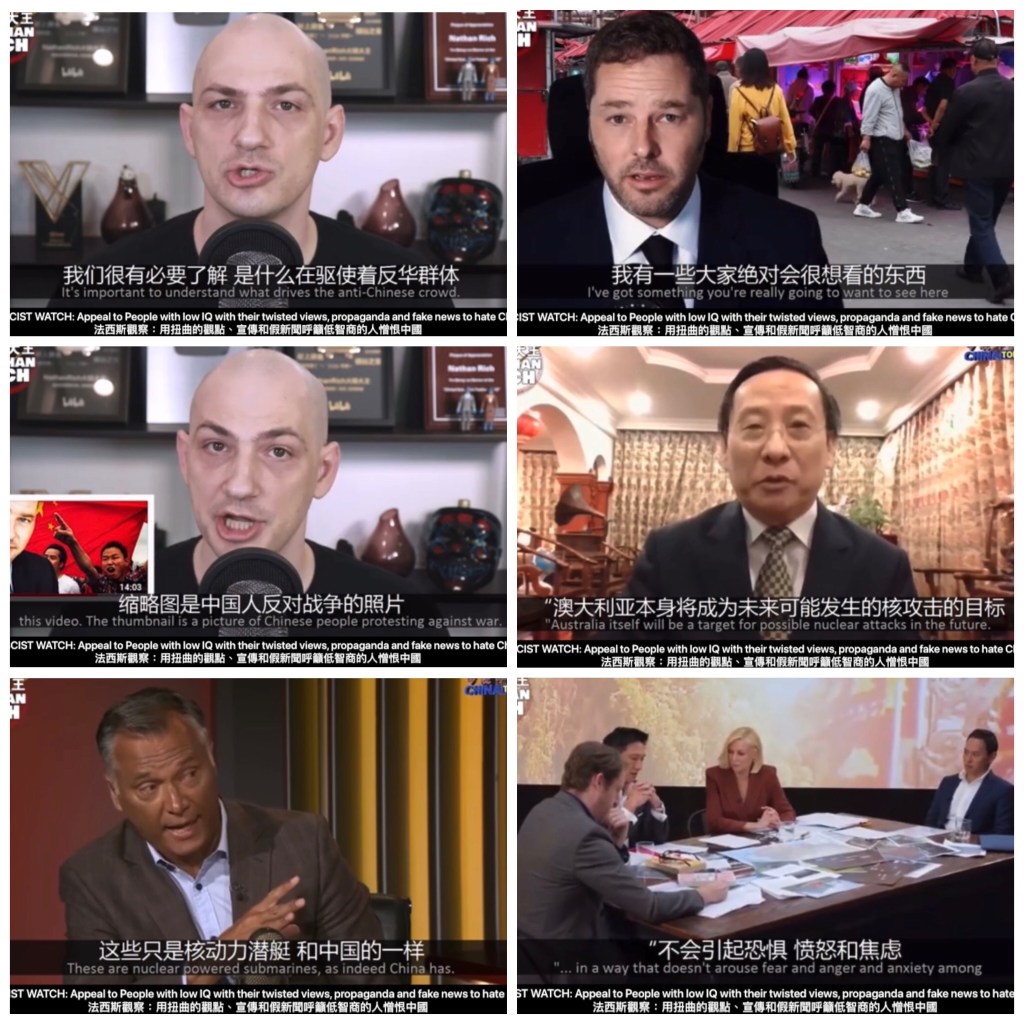
Video: FASCIST WATCH: Appeal to People with low IQ with their twisted views, propaganda and fake news to hate China 法西斯觀察:用扭曲的觀點、宣傳和假新聞呼籲低智商的人憎恨中國SerpentZA wants to start killing Chinese people because they have access to the news. Let’s explore how this English teacher lied to the Chinese people, and now wants them dead. His juvenile, hateful rhetoric is fueled by a craving to enforce inequality (fascism).
https://vimeo.com/628769361
https://youtu.be/vrwjVEj40GI
https://www.facebook.com/100036400039778/posts/582916499598346/?d=n
New plan to bolster China’s standard-setting ability in crucial technologies by Global Times Oct 10 2021
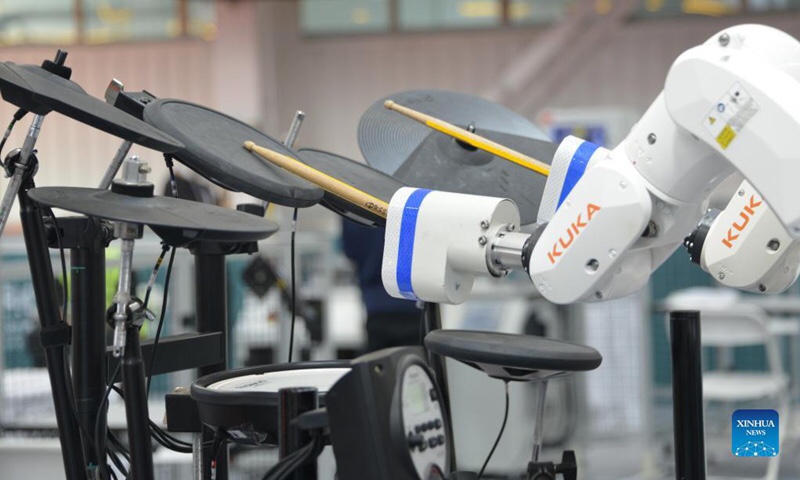
Photo taken on Sept. 10, 2021 shows a musical robot displayed at the World Robot Conference held in Beijing, capital of China. The 2021 World Robot Conference is held in Beijing from Sept. 10 to 13. More than 110 enterprises and scientific research institutions brought over 500 products to the exhibition.
China aims to boost standard-setting in many crucial technological sectors, including high-speed rail, new-energy and smart vehicles and robots, as part of efforts to bolster innovation, opening-up and high-quality growth, according to a development plan jointly issued by the Central Committee of the Communist Party of China and the State Council, the cabinet, released on Sunday.
Analysts said the plan is conducive to China’s strategy of high-quality development, and it will make China’s standardization work more internationalized. It will also pave the way for a greater role for Chinese companies in the global markets once the issue of differences among standards is ironed out, they said.
By 2035, China’s standardization work will be an open and integrated system driven by market forces and guided by the government, with full participation by companies and the public.
The development plan calls for scientific and research fruits in 50 percent of all projects concerned with shared key technologies and applied science and technology, and for the time required for setting national standards to be reduced to under 18 months from currently two years.
The blueprint envisions greater transparency for standardization work, and hugely improved convergence in key technical indicators between national and international standards, and it calls for 85 percent of national standards to be converted into international standards.
An industry analyst surnamed Cong told the Global Times on Sunday that more concerted efforts by the Chinese government will result in improved governance in standardization work. When the gap of differing standards is bridged, Chinese products will become more compatible in the global markets, he said.
“In aspects where China has a technological lead, better standardization work will give Chinese companies first-mover advantage in international competition,�?Cong said, noting that 5G and some information technologies belong in this category.
Under the plan, more than 50 national technical standards innovation centers will be established by 2025 to serve as standardization infrastructure to certify standards, together with a number of national labs and internationally acclaimed research institutions.
The blueprint calls for intensified efforts on studying standardization work in key areas with focused research in the fields of artificial intelligence, quantum information, biotechnology and other fields.
Synchronized development of technology research, standard-setting and technology commercialization is to be achieved in the fields of the integration of industrialization and informatization, next-generation information technology, big data, blockchain, healthcare, new energy, new-energy vehicles (NEVs) and other fields.
The plan also calls for researching and formulating key standards for intelligent vessels, high-speed rail systems, NEVs, internet-connected automobiles, and robots to promote industrial transformation.
Standardization work will be carried out in biological research and molecular breeding, and autonomous driving will be formulated and perfected in a timely fashion.
The plan also called for faster standardization work to facilitate carbon neutrality, revising and tightening standards on energy-saving and carbon emissions, and perfecting those governing renewable energy sources.
Chinese CDC Director: COVID-19 still expanding its host range; necessary for multi-point screening globally by Huang Lanlan Oct 09 2021
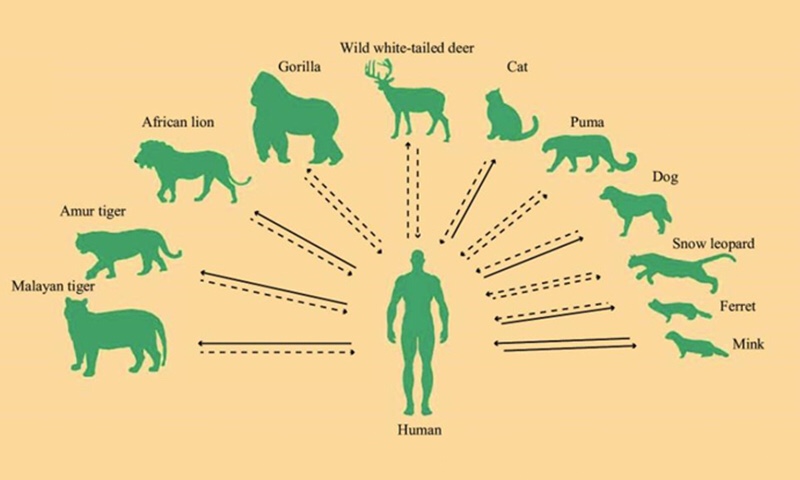
Species that have been reported to be infected by SARS-CoV-2 in nature
The potential for the SARS-CoV-2 to expand into more animal hosts is not over, warned Gao Fu, head of the Chinese Center for Disease Control and Prevention (China CDC), calling for large-scale SARS-CoV-2 screening for global wildlife, especially the most susceptible ones.
This once again proves the complexity of COVID-19 origins and transmissions and the absurdity of the “COVID-19 came from China” notion, said Chinese virologists and epidemiologists reached by the Global Times on Sunday. They noted the necessity of conducting origins-tracing work in multiple places across the world.
Several types of mammals could be a reservoir for SARS-CoV-2 apart from humans which could lead to spillback to humans, according to the article published on English-language website China CDC Weekly on Friday, of which Gao was one of the authors.
It said that natural infection of SARS-CoV-2 has been found in several species of mammals via contact with COVID-19 patients, such as cats and dogs, or lions and tigers in zoos, minks and ferrets.
In nature, snow leopards, pumas and gorillas also have been found to be infected with SARS-CoV-2, it added.
The article cites serosurveillance by the US Department of Agriculture in early 2021, with results published in July, that showed that antibodies against SARS-CoV-2 were found in 40 percent of 600 samples of wild white-tailed deer (Odocoileus virginianus) from the US in 2021.
By contrast, antibodies were detected in only one and three white-tailed deer samples from 2019 and 2020, respectively.
“Due to the wide geographic distribution and large population (approximately 30 million) of wild white-tailed deer in North America, it increased the risk that SARS-CoV-2 from wildlife would spillback to humans,” the article said.
The expansion of SARS-CoV-2 in the wild would lead to other animals being infected with SARS-CoV-2 via direct or indirect contact with wild white-tailed deer or even infected patients, according to the article.
Experimental studies have demonstrated several animals could be susceptible to SARS-CoV-2, such as Egyptian fruit bats (Rousettus aegyptiacus) and North American deer mice (Peromyscus maniculatus), it said.
“However, these are just the tip of the iceberg,” it said, noting susceptibility of most terrestrial wild animals to SARS-CoV-2 “has not been tested.”
So far, the mysteries of the route through which SARS-CoV-2-related coronaviruses were transmitted from bats to humans and if bats were the original reservoir “still remain unsolved,” it said.
Various studies conducted by scientists worldwide have shown that COVID-19, though firstly reported in Central China’s Wuhan city at the end of 2019, had earlier shown up in places across the world, virologists pointed out.
It is impossible that in the early stages COVID-19 appeared only in China, said Yang Zhanqiu, a virologist from Wuhan University. “The virus was highly likely to have emerged in other places, but was not tested,” Yang told the Global Times.
Global scientists have proved that COVID-19 was unlikely leaked from a Chinese lab, refuting the lab-leak conspiracy theory that some US politicians utilize to politicalize the pandemic and smear China.
In an article included by SienceDirect, a bibliographic database of scientific and medical publications, French researchers proved the irrelevance between SARS-CoV-2 and RaTG13, a virus that was collected in a mine in Mojiang, Southwest China’s Yunnan Province.
“SARS-CoV-2 does not originate from the Mojiang mine,” the article said, refuting an argument put forward by two Indian scientists that the virus came from Mojiang. “The Mojiang mine theory is not valid.”
COVID-19 may have been silently spreading in the US as early as September 2019, suggested a research paper released last month on ChinaXiv, a preprint platform developed by the Chinese Academy of Sciences (CAS), authored by researchers from the University of Science and Technology of China and the University of Chinese Academy of Sciences.
The multi-point outbreaks of COVID-19 prove that carrying out origins-tracing work globally is essential and scientific, Yang noted, appealing to the WHO to conduct related investigations in areas with early transmissions including the US and Europe.
Gao also mentioned in his report the current shortage of the research on susceptibility of marine wildlife, especially marine mammals to SARS-CoV-2.
“Worse, SARS-CoV-2 might spread in the marine ecosystem, which may lead to the generation of some novel SARS-CoV-2 variants with unknown threats to humans,” it warned.
Taking the continuing expansion of SARS-CoV-2 into account, the article emphasized it is necessary to carry out large-scale screening of terrestrial and marine wildlife, to monitor the status of infection and mutation of virus in wild animals, “so as to formulate further prevention and control strategies.”

 Johnson Choi Biz