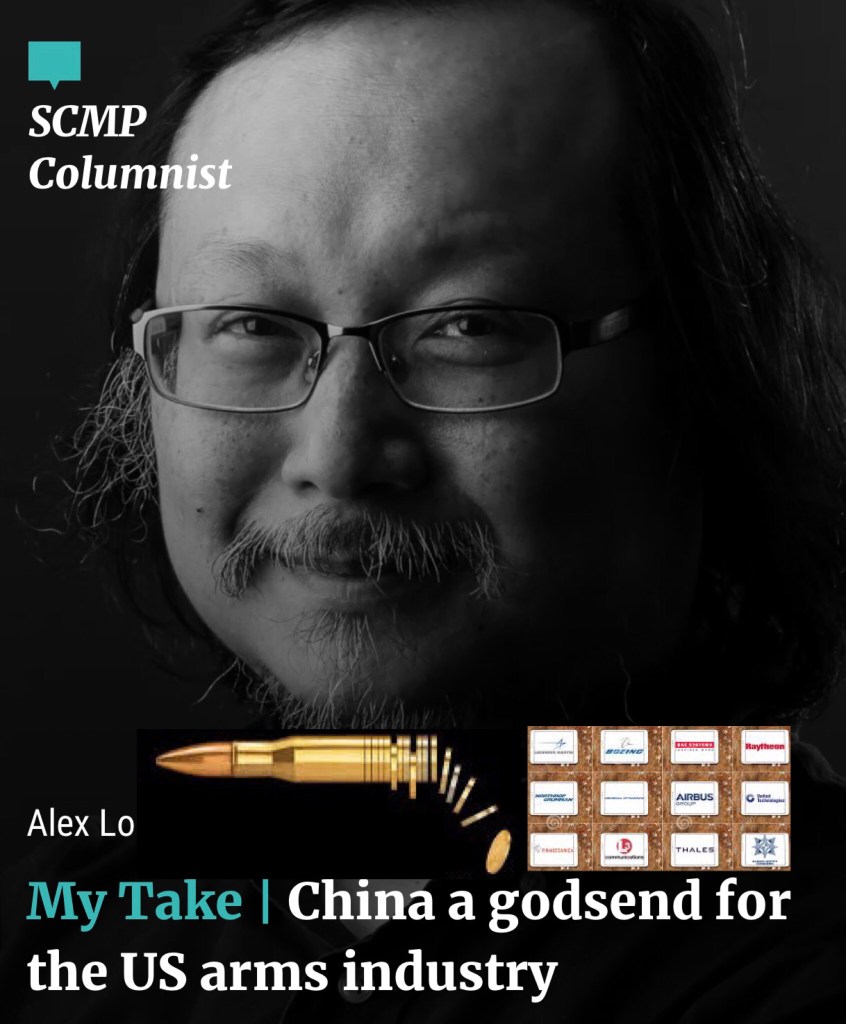
In short, China has been a godsend for the US arms industry. 簡而言之,中國一直是美國軍火工業的天賜之物. 作為國會授權的國防戰略委員會,該委員會 12 名成員中有 9 名與軍火工業有直接或間接聯繫.
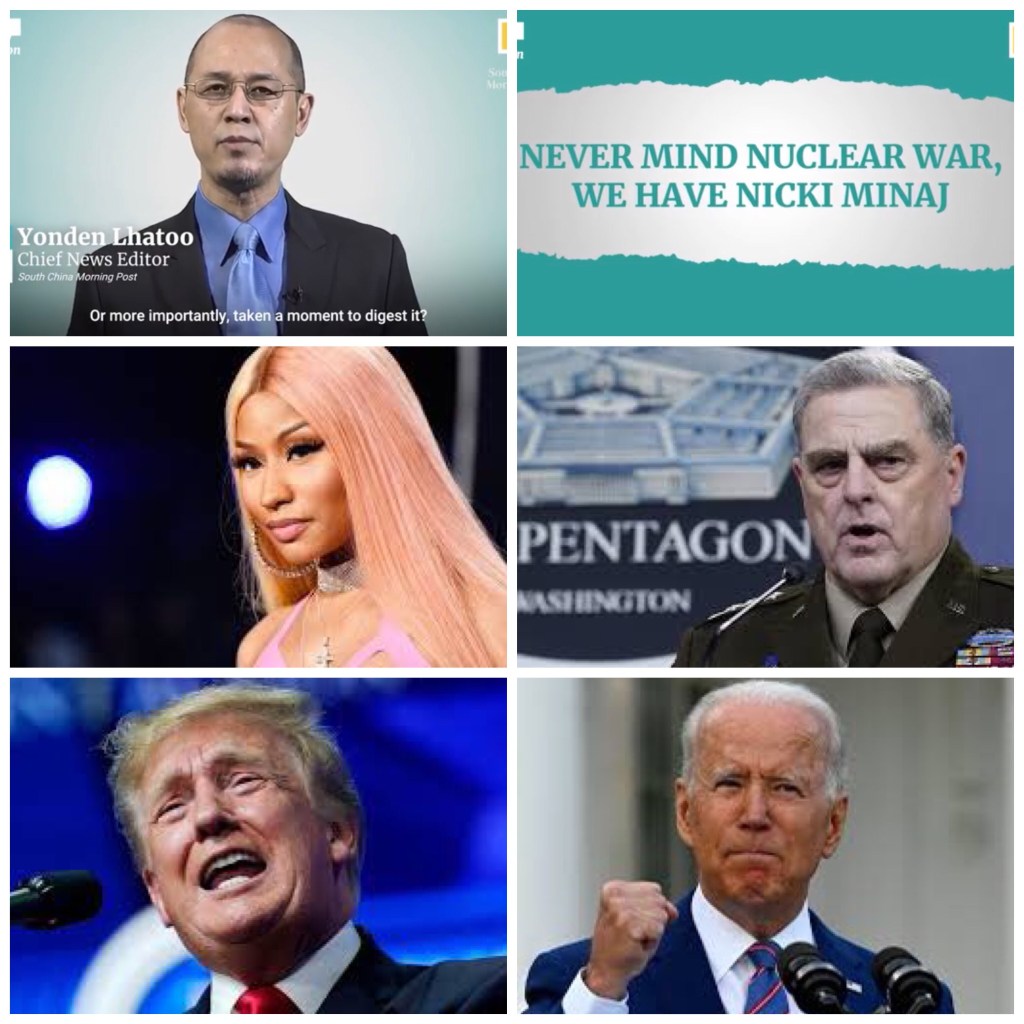
“The Congressionally mandated National Defence Strategy Commission … rang an even louder alarm bell about the purported threat from China and proposed 3 to 5 per cent annual growth in the Pentagon budget to address it … 9 of the 12 members of the commission had direct or indirect ties to the arms industry, a reality that no doubt had some influence over their deliberations and conclusions.”
Since the start of the US war in Afghanistan in 2001, the Pentagon has been handed a total of more than US$14 trillion, one-third to one-half of which went directly to defence contractors. That’s the total Pentagon expenditures for all purposes since 2001, which include the oft-quoted US$2 trillion spent on Afghanistan.
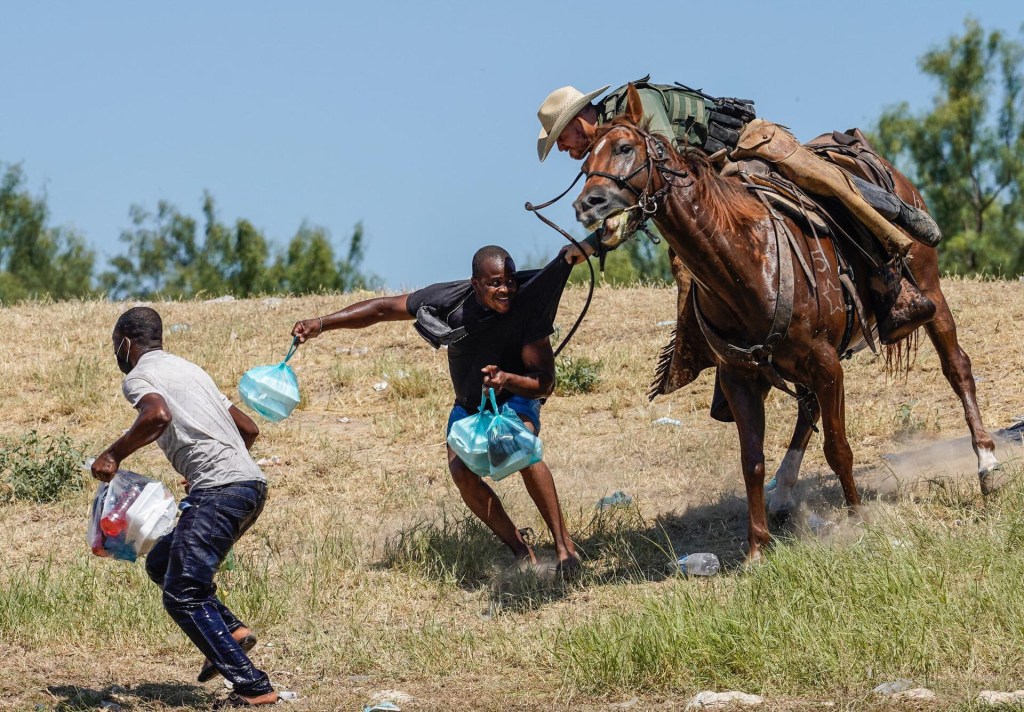
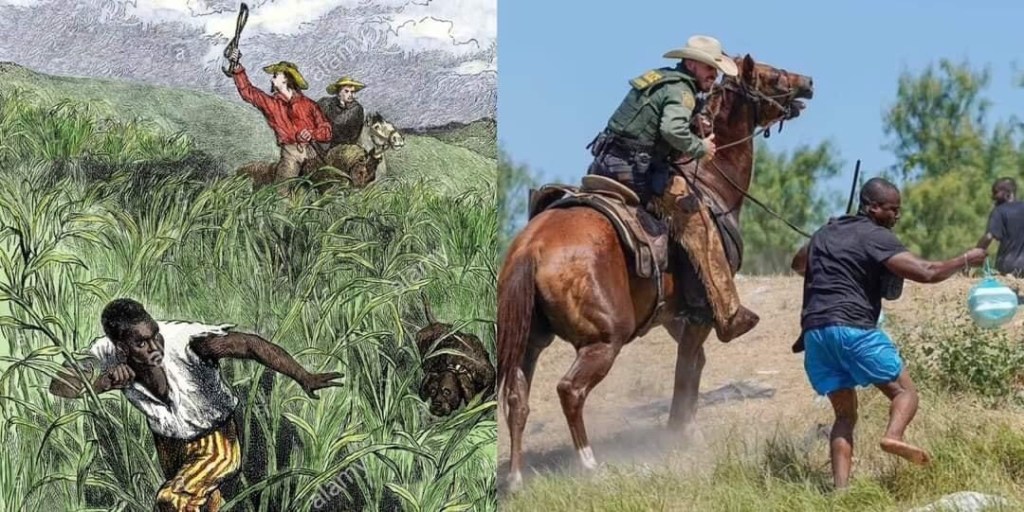
US fake freedom democracy human rights and rules of laws – I Remembered the old John Wayne movie beating up the Native Americans on horseback – U.S. BORDER AGENTS ON HORSEBACK CHASE HAITIAN MIGRANTS, CRACKING WHIPS 我記得約翰·韋恩 (John Wayne) 的老電影在馬背上毆打美洲原住民 – 美國邊境特工騎馬追逐海地移民,敲碎鞭子
Photos that appear to show Border Patrol agents on horseback cracking whips and pushing Haitian migrants from the border town of Del Rio, Texas, are drawing outrage. White House spokesperson Jen Psaki called the images “horrific.” The U.S. is rounding up the migrants and sending them back to Haiti.
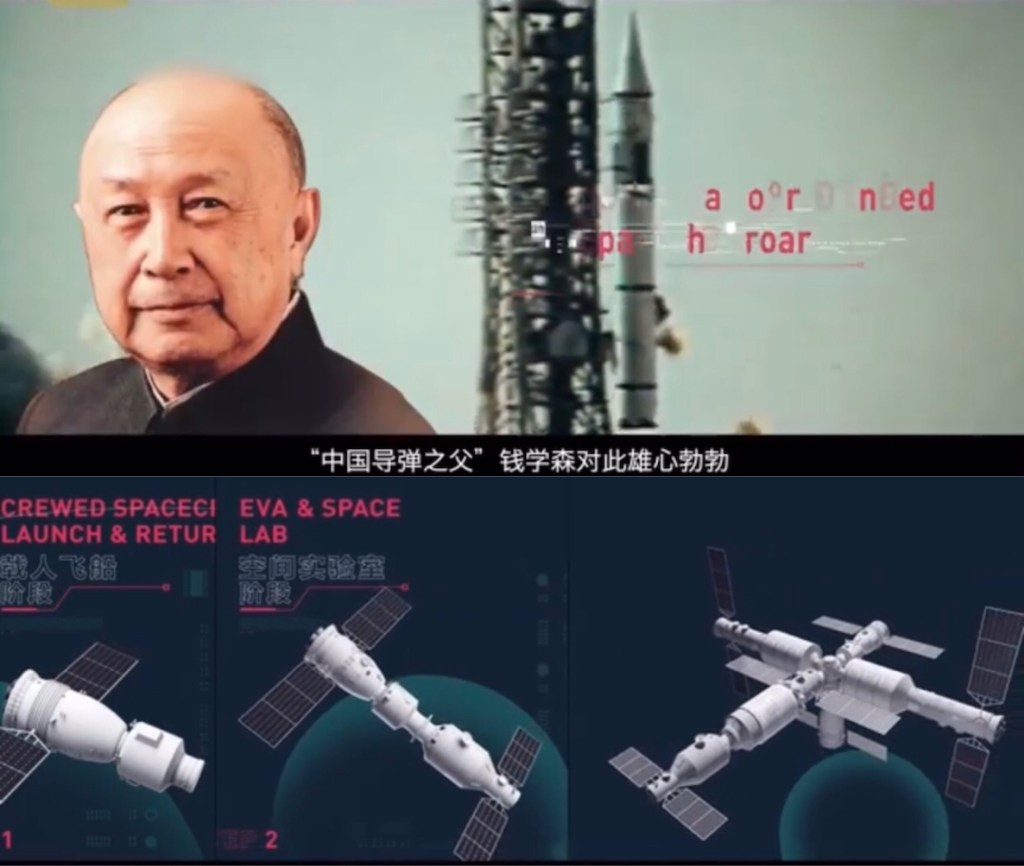
Video: How China starts its manned space exploration 中國如何開始載人航天探索In 1969, Neil Armstrong delivered his famous words from the Moon, “That’s one small step for a man, one giant leap for mankind.” By this time, China had already been working on its first manned spacecraft research for two years. That spacecraft was called Shuguang – or first light of dawn. From Shuguang to Tiangong, what has China experienced in its space exploration program? https://vimeo.com/610361616 https://youtu.be/uz96Bdlgsu4 https://www.facebook.com/100036400039778/posts/570442760845720/?d=n
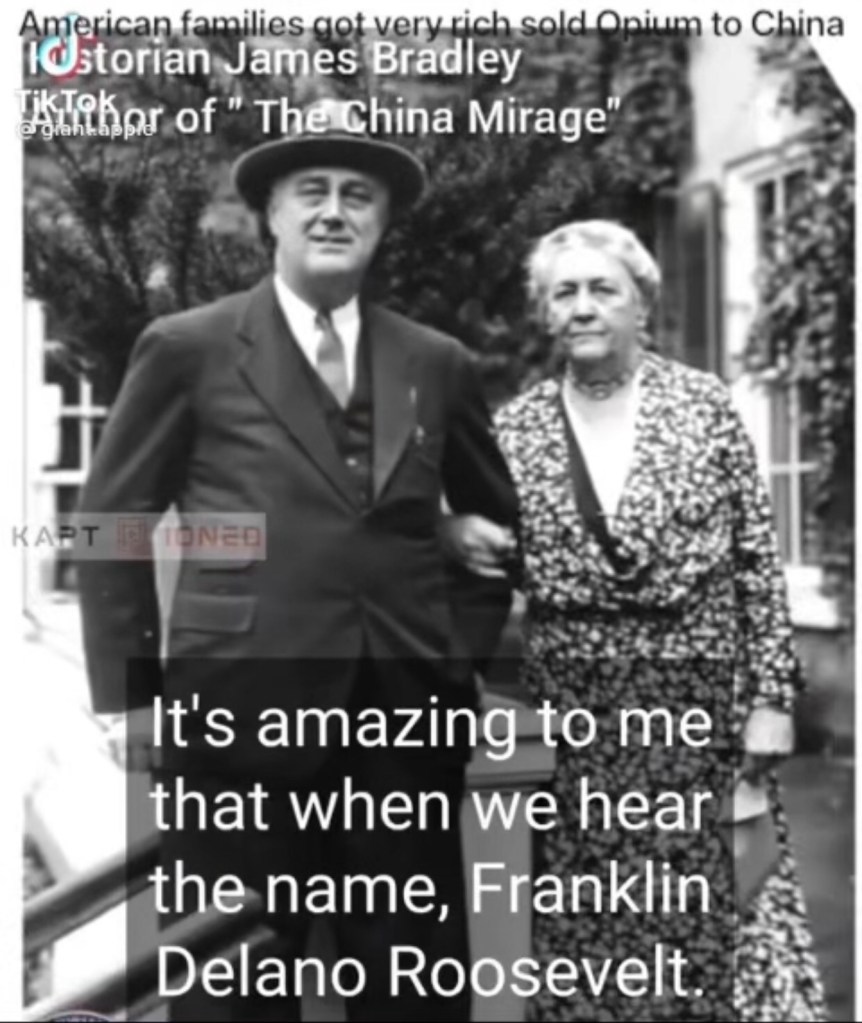
Video: American families got very rich by selling Opium to China 美國家族通過向中國出售鴉片而致富
Professor Kenneth Hammond: The Forbes family, as in John Forbes Kerry, were also great drug profiteers. New England Brahmins dominated the American branch of the opium trade. They sourced their drugs from the Ottoman Empire rather than India. The US Marines were organized to provide security for American drug dealers sailing through the Mediterranean at the end of the 18th & beginning of the 19th century. Local rulers on the North African coast sought to charge transit fees for passage through their waters, which the Americans portrayed as extortion (the Barbary Pirates), so the federal government created a military force to protect drug profits. “From the Halls of Montezuma to the shores of Tripoli.” https://vimeo.com/610254445 https://youtu.be/lPEbIoq2qWg https://www.facebook.com/100036400039778/posts/570333517523311/?d=n
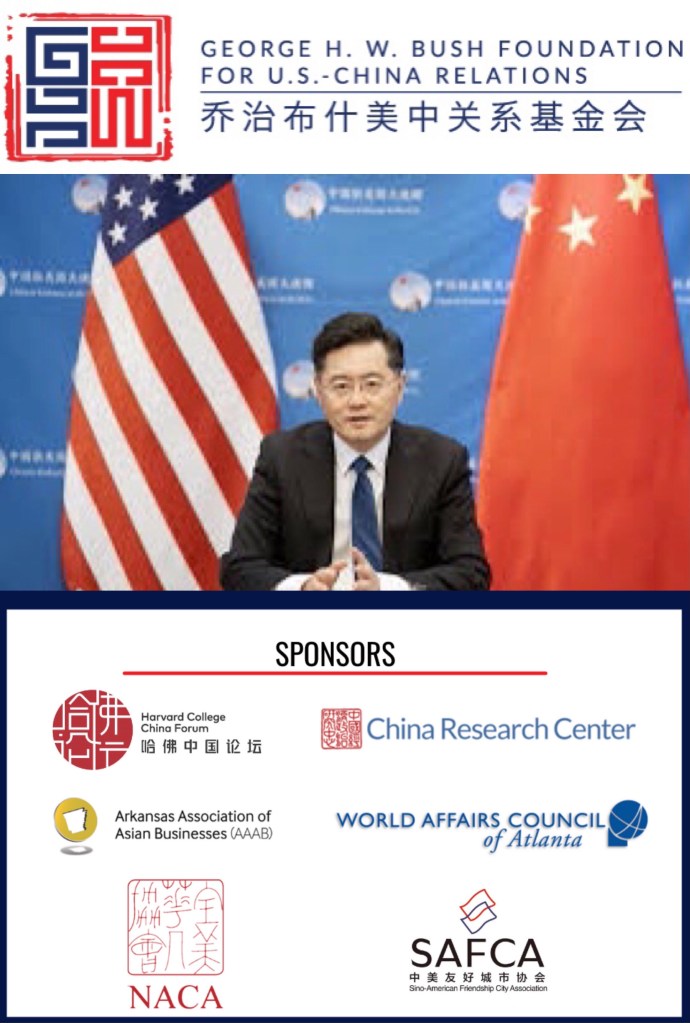
Charting a New Course in U.S.-China Relations: A Conversation with Ambassador Qin Gang – Sep 22, 2021 03:30 PM Eastern Time (US and Canada) Webinar ID 825 9753 6943 Register here https://us02web.zoom.us/webinar/register/WN_IbNR_tIHRjeG-1BO6GjmRA This online dialogue with China’s new ambassador to the United States of America Qin Gang is jointly organized by the Carter Center and the George H. W. Bush Foundation for U.S.-China Relations. Ambassador Qin arrived in Washington D.C. in late July and this is his first public conversation with American organizations and people who would like to see the bilateral relationship stabilized and improved. It is sponsored by many other organizations including the World Affairs Council of Atlanta, the National Association of Chinese Americans and the China Research Center of Atlanta.
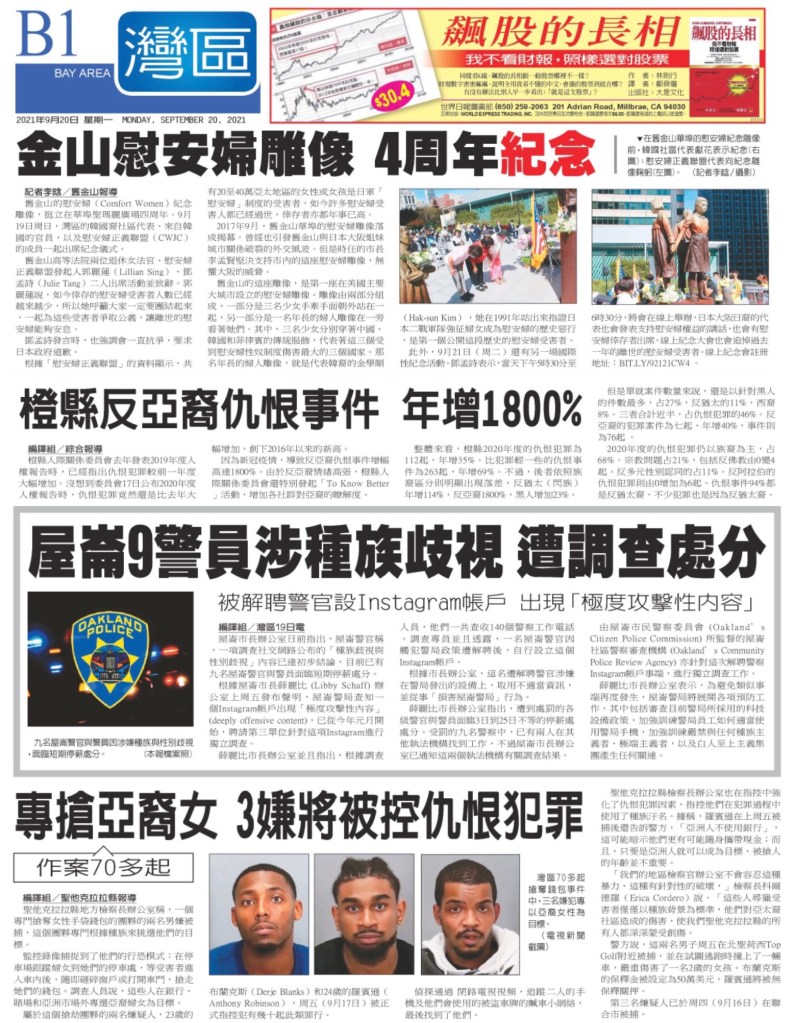
San Francisco Comfort Women Memorial Statue 4th Anniversary, US Politicians promote hatred towards Chinese – Asians and China score high points at Orange County – hate crimes increased by 1,800%, Oakland Police under investigation on racial discrimination, 3 African American being sued for hate crimes against Asians 美國加州舊金山世界日報 World Journal Newspaper San Francisco, September 20 2021
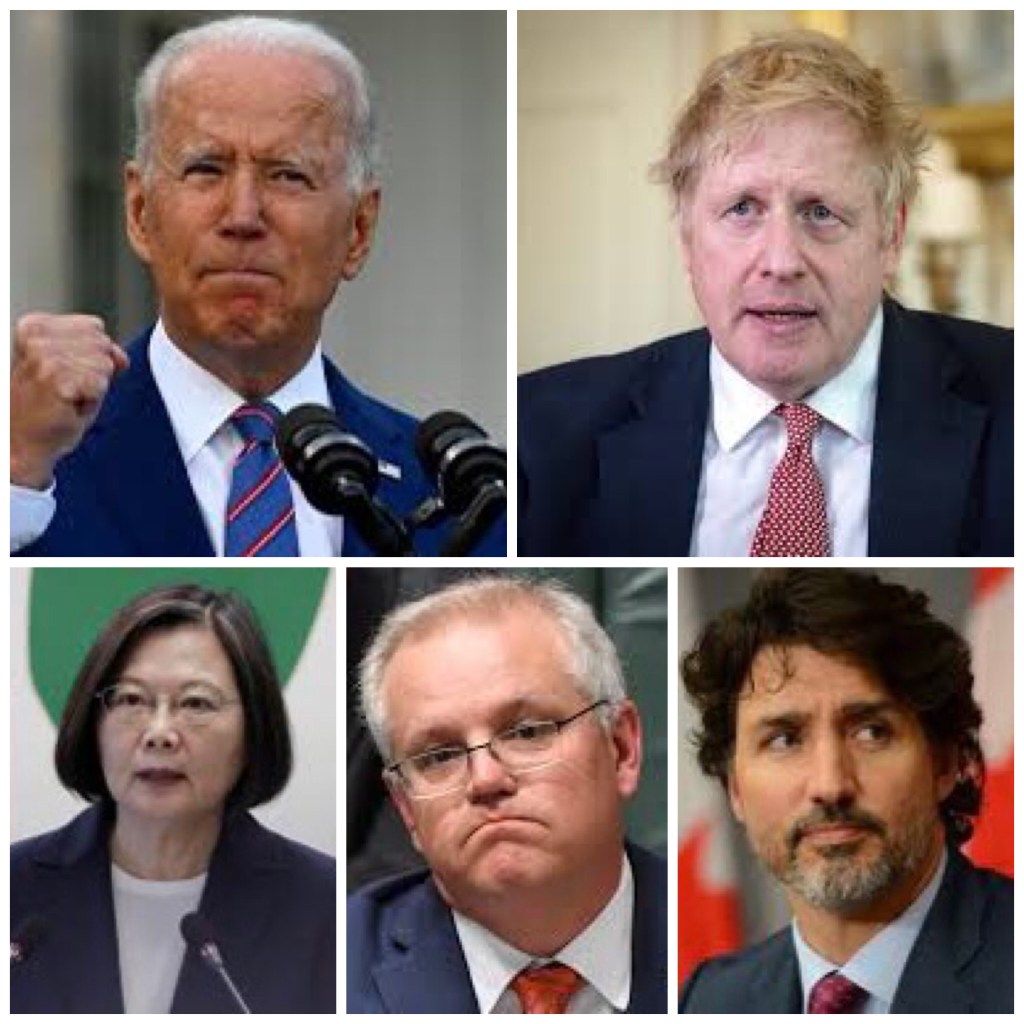
US, Taiwan, UK, Australia and Canada are suffering psychotic disorder facing China. What is psychotic disorder? A mental disorder characterized by a disconnection from reality. 美國、台灣、英國、澳大利亞和加拿大面對中國時出現精神障礙, 精神分裂症. 什麼是精神障礙, 精神分裂症?一種以與現實脫節為特徵的精神障礙.
Psychosis may occur as a result of a psychiatric illness like schizophrenia. In other instances, it may be caused by a health condition (Deficits), medications (Military industrial complex cash overdose), or drug use (Sinophobia uncontrolled daily consumption) 精神病可能是精神分裂症等精神疾病的結果. 在其他情況下,它可能是由健康狀況(嚴重赤字)、藥物(軍事工業綜合體現金賄賂毒品)或藥物使用(仇中禁藥)引起的.
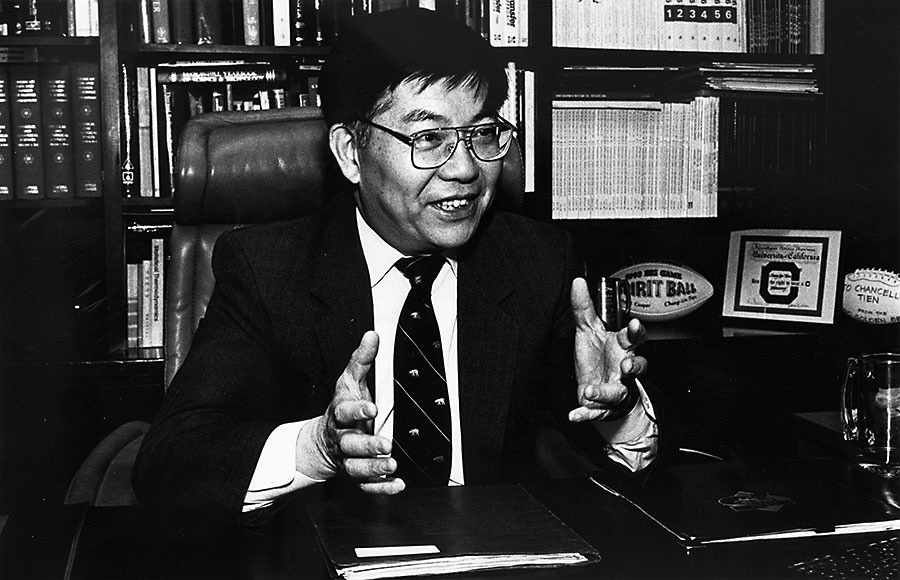
Tracking UC Berkeley’s former chancellor from 1990-1997 Chang-Lin Tien – FBI documents, interviews show nation’s first Asian American chancellor fell victim to United States’ fear of China. 追踪 1990 年至 1997 年加州大學伯克利分校前任校長 Chang-Lin Tien – FBI 文件,採訪顯示,美國第一位亞裔美國校長因美國對中國的恐懼而成為受害者
For a moment in 1996, a political milestone for Asian Americans was within Chang-Lin Tien’s reach. Former president Bill Clinton had placed him on the shortlist to be Secretary of Energy, and the chance to be the first Asian American to serve on a U.S. Cabinet was almost his.
But just days before Clinton’s official announcement, the White House called to tell Tien, then chancellor of UC Berkeley, that the president had removed him from the running. A breaking campaign finance scandal had evoked fear nationwide that China had influenced the election. Suddenly, Tien’s appointment became politically impossible.
“He didn’t try to blame anybody,” said Tien’s former chief of staff John Cummins, who added that Tien — in typical fashion — took the loss with “great magnanimity.”
Tien had gotten caught up in something larger than himself. UC Berkeley’s beloved chancellor had become, not for the first or last time, a token of the geopolitical tension between the United States and China.
Today, 10 years after Tien’s death, recently obtained FBI documents and interviews with some of his family and closest associates show that though Tien opened doors for minorities with his enormous success as a scientist and an educator, he was nevertheless a lightning rod for a fear of China that consumed the United States in the latter half of the 20th century.
“He’s a symbol of Chinese-American success and contribution in this country, and it’s almost in spite of xenophobia that this country has about China … an example of somebody rising above the barrier,” said George Koo, a member of the Committee of 100, an organization dedicated to improving the political stature of Asian Americans and the United States’ relationship with China.
Suspicions of communism
After coming to the United States from Taiwan in 1956, Tien finished two master’s degrees and a doctorate in just three years. He joined UC Berkeley’s department of mechanical engineering in 1959 and became the subject of FBI scrutiny just as he began to rise to prominence.
An FBI memo from 1973 describes Tien as “a very pro-Chinese Communist,” and an internal letter from 1975 explains suspicions that Tien could “attract favorable attention and interest by the (People’s Republic of China).”
These memos are just a few among hundreds of pages of documents that detail how the FBI tracked Tien early in his career. The agency monitored every trip he took to China, called hotels in Washington, D.C. he stayed at to make sure he had really checked in, tailed him on the road while he drove Chinese officials in San Francisco and once even posed as as long-lost friend looking for someone at the University of Michigan. And all of Tien’s files from this period are labelled “105” — the FBI’s code indicating foreign counterintelligence matters.
“Tien’s FBI files reflect the bureau’s general concern about Chinese espionage and collection of sensitive technological data in the United States,” said Seth Rosenfeld, a journalist who recently wrote “Subversives,” a book based on FBI records.
Tien, a Chinese-born immigrant, was just the kind of highly successful scientist the FBI was worried about. He was the youngest assistant professor ever hired in his department and at age 26 became the youngest professor to receive a Distinguished Teaching Award. In 1974, he was promoted to chair of his department. “Walking down the streets of Taipei with Tien is like walking down the streets of Chicago with Michael Jordan,” said Dan Mote, Tien’s former colleague and close friend.
It was Tien’s trips to Taiwan and mainland China that attracted the FBI’s attention. Every time Tien traveled to a research conference or abroad, the FBI reopened his file, worried that he was sharing sensitive information, and investigated him without his knowledge — until 1975, when the agency decided to interview him.
In that interview, Tien explained to an agent that he supported China’s communist government and thought it had actually “rooted out many of the social problems of that country.” He added that he did “not promote the communist system as being of benefit to the United States or anyone else.”
Later in the same interview, the FBI proceeded to try to make Tien an informant, apparently as part of a program involving Chinese scientists. A letter from FBI headquarters to the San Francisco FBI field office prior to the interview suggests that Tien and another scientist whose name is redacted who traveled to China with Tien in 1974 “could logically be approached under the Chinese scientist program.”
Although the FBI had interviewed the other scientist before and described him as “cooperative,” Tien said in 1975 that he was not interested in working for the agency — what the FBI called “operationally involved.” Soon after, the agency appeared to lose interest in him, noting that the “subject does not appear to have any potential at this time.”
This interview summary describes Tien as “very friendly,” but the the response the FBI received in 1979 when it interviewed him inquiring about visiting scholars to UC Berkeley from China was quite different.
“Professor Tien stated he did not desire to have any contact with the FBI and questioned the FBI’s right to ask questions about (People’s Republic of China) scholars, stating that they were all legitimate scholars involved in purely academic pursuits. He expressed his belief that the FBI was continuing to harass Chinese academicians like himself just as was done during the 1950s,” a report of the interview reads.
The FBI declined to comment on Tien’s files.
The agency’s documents provide no indication that Tien was ever engaged in any activity counter to U.S. interests, and the FBI eventually stopped contacting him.
A leader undeterred
Although Tien’s ethnicity attracted unwanted attention from the FBI, his authentic persona, including his heavy Chinese accent, won him over with everyone on campus.
Long before he ran UC Berkeley, Tien confided to a colleague his ambitions to someday become chancellor of the campus. Mote, also a mechanical engineering professor, remembers questioning how Tien could achieve the position with his accent, to which Tien responded, “I’ve got this figured out. It’s going to work.”
In 1990, Tien became the first Asian American chancellor of a major research university and went on to preside over some of the most successful years UC Berkeley had ever seen. Legend has it that Tien, proud of his accent, refused to use a speech coach despite suggestions to do so. It was exactly that unassuming and positive attitude that endeared him to students.
He sometimes went into the locker room during football games to give the team a pep talk, took cookies to students in the library at midnight during finals week, drove students he saw waiting at the bus stop home and once even walked to a student’s apartment to return a wallet he had found on campus.
Melany Hunt, one of Tien’s doctoral students in the 1980s, met her future husband in Tien’s lab. “He led the Conga line through the kitchen at the wedding reception,” she said.
“He was the first chancellor where students would routinely come up to him, want their picture taken with him, want an autograph from him,” Cummins said. “It was because the students knew how much he really cared for them.”
Secretary of Energy
For all his charm, Tien remained a subject of controversy because of his ethnicity, even as U.S.-China relations improved.
In December 1996, less than a year before Tien planned to step down as chancellor, president Bill Clinton was on the search for a new Secretary of Energy, and Tien was up for the job.
At the time, Tien was actively soliciting donations for the East Asian Library, creating a donor list that would eventually comprise hundreds of names of Chinese expatriates. One major contributor was Mochtar Riady, a Chinese businessman who lived in Indonesia. Today, a plaque with Riady’s name inscribed in gold letters is displayed within the Chang-Lin Tien Center for East Asian Studies at UC Berkeley.
As a donor, Riady appeared to have some sway on the campus. Prior to late 1996, one of Riady’s relatives had been admitted to the UC Berkeley even though she had submitted her test scores after the deadline, which, in any other circumstance, would have barred her from admission.
Nationally, Riady was also embroiled in a scandal brewing within the Clinton campaign in which the media suspected Asian donors of giving money illegally to influence the president’s China policies.
Just as the so-called “Chinagate” scandal was mounting, the Washington Post published an article that revealed that UC Berkeley had admitted Riady’s relatives to the campus in spite of the late test score and that Tien had once met Riady during a fundraising trip to Indonesia.
A week later, the chancellor’s candidacy was over.
Ling-Chi Wang, a UC Berkeley Asian American studies professor emeritus, said that based on his own research, there was no intervention on the part of Tien in the admissions decisions for Riady’s relatives. Nevertheless, the damage was done.
“Chancellor Tien’s reputation was smeared,” said Wang, who added that Tien fell victim to a broader wave of political persecution of Asian Americans.
In the ensuing months, the U.S. Senate investigated hundreds of campaign contributions, drawing no distinction, critics claimed, between Asians with U.S. citizenship and foreign nationals. Many Asian Americans felt hesitant to donate. “Why would I make a contribution? I’ll get investigated because of my race,” Wang said.
A cautious opportunity
Everyone who knew Tien remembers the Chinese calligraphy of the word “weiji” that he had on the wall of his office.
The two characters that form the word translate as “crisis” and “opportunity,” generally interpreted as an optimistic sentiment. But Tien, according to his friend Mote, also saw in it “caution during times of opportunity.”
Accordingly, Tien’s son Norman said that though his father was disappointed that Clinton did not grant him what he saw as a “tremendous opportunity,” he graciously accepted the missed chance.
“He wanted to make an impact,” said Norman Tien, who is now dean of engineering at Hong Kong University. “Period. It was not necessarily so much about the position or the title.”
In 1998, Clinton announced that Tien would be appointed to the prestigious board that oversees the U.S. National Science Foundation, the country’s agency that supports research and education in science.
It may have been a consolation prize, but it was a victory nonetheless.
Tien’s FBI file includes a background check for this seat and, though it contains a note from the 1970s about Communist sympathies, Tien received clearance.
Meanwhile, in the wake of the 1996 campaign finance scandal, Asian Americans around the country continued to fight to regain their reputation, forming a movement to gain a political voice.
“We were nameless and faceless and powerless,” Wang said.
But just as the efforts to grow a defined Asian American voting population for the 2000 presidential election picked up speed, another political scandal broke that induced a severe distrust of China.
In 1999, Wen Ho Lee, a scientist who worked for the University of California’s Los Alamos National Laboratory, was indicted for stealing secrets about the United States’ nuclear arsenal for China.
The case sparked outrage among many Asian Americans, both because Lee was put in solitary confinement during the investigation and because there was little evidence against him. Eventually, Lee was only convicted on one charge, and Clinton issued a public apology to him.
Henry S. Tang, the chair of Committee of 100 — of which Tien was a member — spoke out against Lee’s imprisonment, echoing what Tien had said years before about the FBI’s suspicions of Chinese scientists: “No matter how accomplished, no matter how educated, no matter how wealthy, no matter how loyal, (an Asian American) could still become suspected of activities counter to the interests of this country.”
Tien himself called Lee’s release from jail “long overdue.”
Although a huge gaffe on the part of the media and the government, the Wen Ho Lee incident invigorated Asian Americans, and progress followed.
Tien began his position on the U.S. National Science Board in July 1999 in the midst of the Wen Ho Lee case, and Clinton — playing on Tien’s role as a symbol of Asian Americans’ success — included a thinly veiled apology for the Wen Ho Lee debacle in his statement on Tien’s first day.
“Security matters are of the highest priority in my Administration, but history has shown the damage to the lives of our citizens and to our society that results from the destructive grip of prejudice, suspicion and discrimination,” Clinton said.
The statement went on to say, “Professor Tien carries on the principles and cherished traditions of Asian Pacific Americans who have helped build and strengthen our nation with diligence and determination.”
A little more than a year later, Tien was diagnosed with a brain tumor and suffered a stroke during surgery. He stepped down from his duties the following year and died on Oct. 29, 2002, at age 67.
But even now, exactly 10 years after his death, Tien’s contributions are still remembered.
Steven Chu, a Chinese-American and director of the university’s Lawrence Berkeley National Laboratory, became Secretary of Energy in 2009, building upon the promise that began when Tien was nothing more than a bright young professor suspected of having communist sympathies.

 Johnson Choi Biz