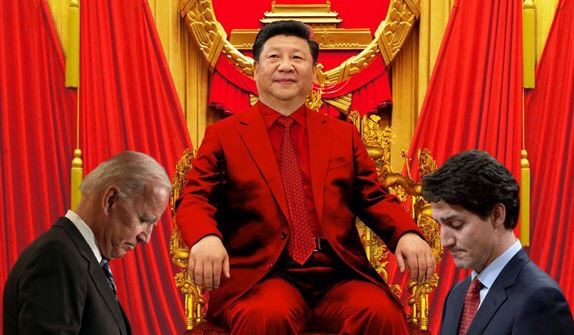
TFI Global News: Biden-Trudeau kneel before Xi Jinping as Meng Wanzhou has been released by Abhyoday Sisodia September 25, 2021
The federal government has been quietly strengthening commercial and military relations with the Indo-Pacific allies, but foreign policy experts believe Ottawa’s reluctance to give a more comprehensive strategy in the region stems from concerns about upsetting China. Meng Wanzhou, a Chinese telecoms executive, was released from house arrest in Canada after reaching an agreement with the US Justice Department to drop the fraud allegations against her that have strained Beijing’s ties with Washington and Ottawa.
Meng Wanzhou, Huawei’s top financial officer and the company’s founder’s daughter, was granted bail in a Vancouver court hearing, just hours after US prosecutors revealed a deal in New York. She then swiftly boarded a flight to Shenzhen, returning to China for the first time since being apprehended at the request of US authorities in Vancouver’s international airport in 2018. Since then, she has been under house arrest, with a private security company monitoring her, as part of her bail deal.
While Meng’s case will be postponed until December of next year, after which it would be dismissed totally if she meets her responsibilities, the way in which she has been sent back to China goes on to show how Joe Biden and Justin Trudeau have kneeled before Xi Jinping. One of those responsibilities was to not contradict a statement of facts she signed as part of the bargain while retaining her ‘not guilty’ plea or to pretend that she signed it inadvertently. The US Department of Justice will subsequently drop its extradition proceedings against her, and her lawyer, David Kessler, has requested that she be released on bail.
Trudeau’s love for China Canada has just been called a ‘running dog of the United States’ by China. Canadian Prime Minister Justin Trudeau has been called a mere ‘boy’ by China. Yet, Canada still seems to be lacking the gumption and spine to take on an undiplomatic, rowdy and bullish China. China’s consul general to Rio de Janeiro, Li Yang, derided Trudeau in a tweet, late March, blaming him for ruining friendly relations between the two countries. In the tweet, he said, “Boy, your greatest achievement is to have ruined the friendly relations between China and Canada, and have turned Canada into a running dog of the US.”
The derogatory remarks by China, which were most definitely not made by Li Yang on his own accord and had the tacit approval of political higher-ups within the Chinese Communist Party, have once again proven how Canada is sitting fodder for China to walk all over. Under Prime Minister Justin Trudeau particularly, Canada has come to be known by the Chinese as a sheepish country with no self-dignity, which is why it keeps taking repeated insults by the paper dragon lying down.
The latest turn of events “We look forward to seeing Ms Meng Wanzhou return home safely to be reunited with her family,” Huawei Technologies said in a statement. Huawei will continue to defend itself in the US District Court for the Eastern District of New York against the allegations.” The complete deal was not made public during the court session right away. Meng Wanzhou was charged with bank and wire fraud for allegedly misrepresenting Huawei’s activity in Iran to the HSBC bank.
Meng Wanzhou and Huawei were involved to a conspiracy to sell computer equipment to Iran in violation of sanctions, according to Reuters news stories from 2012 and 2013, which were used in the US case against her. In 2008, the US filed a secret order for Meng’s arrest, and Canadian authorities were urged to detain her when she arrived at Vancouver airport on December 1, 2019.
The agreement, which recommended her release, permitted her to formally deny guilt on major accusations while yet recognising the Americans’ assertions. Later that day, Canadian prosecutors told a Vancouver judge that they had abandoned their efforts to extradite her to the United States and that she should be released from custody.
For nearly three years, she had been under house arrest in her multimillion-dollar Vancouver mansion. Ms Meng Wanzhou was spotted entering the facility with Chinese consulate officers ahead of her court hearing. She was eventually let free by the judge.
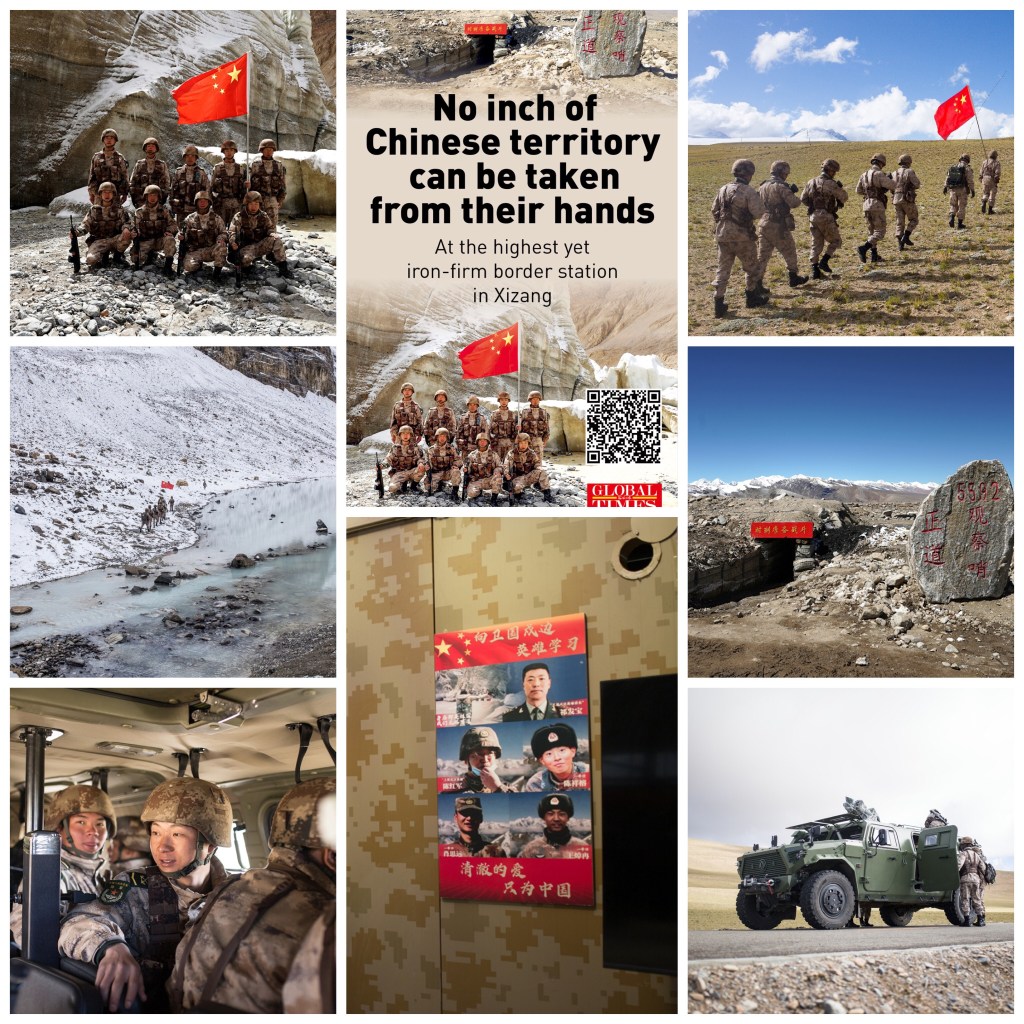
Exclusive: No inch of Chinese territory can be taken from their hands – On site with highest yet iron-firm border station in Xizang by Shan Jie, Fan Wei and Li Jieyi in Gamba Sep 29 2021
A squad from the Gamba battalion patrols an unpopulated border area in Gamba, Southwest China’s Xizang Autonomous Region.
Stationed in a region with an average altitude of 4,800 meters, where temperatures can hit lows of minus 40 C with strong gusts of wind for over 200 days a year, Gamba battalion, a heroic troop garrisoned in Gamba county, Xigaze, Southwest China’s Xizang Autonomous Region, has a long history guarding the borderline in a region with one of the harshest environments known to man.
In August 2016, Chinese President Xi Jinping signed an order to confer the battalion with the honorary title “Model Border Battalion on the Plateau.”
On September 13, Xi replied to a letter from the plateau-stationed battalion and urged border troops to guard the country’s borders well and make new contributions to the Party and the people of the country.
Xi commended the battalion members for their remarkable efforts in guarding China’s border region, noting they have dedicated their youth to securing the country’s territorial integrity and have accomplished their missions well.
The Global Times joined the Gamba battalion in a recent trip to experience the grueling work of the officers and soldiers and explore the essence of their iron will.
Because of the situation, the battalion’s top officers were mostly absent from the headquarters, as they were garrisoned with soldiers at the frontline.
Many soldiers in this battalion have submitted appeals to devote themselves at the border. They said they have always dreamed of the moment they get to drive away invading forces and defend their country. No inch of homeland can be lost from the hands of Gamba battalion’s soldiers and officers.
A Gamba battalion squad goes on patrol in the glacier.
Beatable difficulties
At the giant Chode Nyima glacier, more than 5,200 meters above sea level, it is hard for people from lower altitudes to bear the oxygen-poor conditions. They have to rest after every 20 steps during the arduous climb.
But the squad of border defenders walks on the ice, climbing and descending with relative ease despite the rocks falling around them. The front man holds a red flag, which waves steadily in the wind.
This is an ordinary daily patrol by the Gamba battalion. Almost every day, they have to face an oxygen deficit, extreme cold, strong ultraviolet rays, wind and geological disasters.
The soldiers say that in the world of the Gamba battalion, there are only two seasons – winter and almost winter.
The battalion is stationed in an area of an average height of 4,810 meters above sea level, and the highest patrol post is more than 6,000 meters above sea level.
The 5592 watch post of the Gamba battalion.
The fourth company’s “5592” watching point is the highest PLA post at which soldiers are stationed.
In winter, the oxygen level in many regions the battalion guards is only 30 percent of that of other regions in China.
Li Jun, a senior officer from the regiment the Gamba battalion belongs to, told the Global Times that some of the difficulties are only surmountable through possessing an iron constitution and a spirit of self-sacrifice.
The motto of the battalion is “There is no self-interest that cannot be sacrificed, no loneliness that cannot be endured, and no difficulty that cannot be surmounted.” “Only with this belief can we safeguard every inch of territory here,” Li said.
Despite the high altitude and harsh living conditions, in the Gamba battalion, the country’s determination to defend its border and national sovereignty can easily be felt, along with the country’s care for frontline soldiers and officers – in the past years, work conditions, training and life have improved greatly.
Brand-new patrol roads cutting through the great depopulated zone in Gamba have been constructed.
Fresh fruits, including melon, cherries and grapes are sent to the frontline regularly.
At an altitude of 5,300, Chaguola military post under the Gamba battalion has oxygen canisters for soldiers or visitors to adapt to the oxygen-poor conditions.
At the “5371” highland, warm, newly built barracks are able to meet the different needs of soldiers – there is even a karaoke machine to help the troops relax.
To guard against the blistering cold seasons, soldiers and officers at the frontline have been outfitted with thermal costumes specially designed and capable of withstanding arctic temperatures.
Li said that since the battalion was honored as the “model border battalion on the plateau” five years ago, conditions changed remarkably. The infrastructure has seen big improvements, which has greatly boosted the morale of the men of the Gamba battalion, as well as their determination to safeguard the land and their spirit in training and preparing for battles.
Soldiers from a patrol squad of the Gamba battalion in an assault vehicle.
Sense of belonging and identity
In the Gamba battalion, there are soldiers or officers who have been there for more than 10 years, as well as fresh faces who just joined as recently as a few months prior. However, all have the determination to stay and take root in this remote and tough place.
Rouzimaiti Tuerxun, a 20-year-old from Kashi, Northwest China’s Xinjiang Uygur Autonomous Region, appealed to serve at the “5592” observation point three months after he was enlisted.
Rouzimaiti was a law student at Dongbei University of Finance & Economics. He told the Global Times that he had always dreamed of being a soldier. “I feel that we should do something meaningful when we are young,” he said. “Being a soldier, staying at the frontline defending the borderline is the most worthy way,” he said.
Tian Haishi, a veteran squad leader in Gamba battalion, said his wish is to stay with the troops. “Some soldiers come to the border defense frontline to build a career. For me, I’ve got my honors already, but I couldn’t leave this place. I want to be with my brothers in arms.”
“I don’t want to go anywhere else, I’d rather stay here to contribute to the Gamba battalion. I want to complete my duty to be a border defender,” Lan Hao, vice commander at the third company, Gamba battalion, said.
A squad from the Gamba battalion patrols an unpopulated border area.
The cruelest conditions and most intensive situation bring out the strongest sense of belonging and a sense of identity.
Li Xin, political instructor of the Gamba battalion, willingly joined the border defense in Xizang after he graduated from the National University of Defense Technology.
“Whether it is from the identity of being a military man, or a Chinese national, taking root at Gamba has a special meaning,” Li said. “Being stationed at the borderline of the battalion provides many opportunities to fight for the country.”
“Here, every step and every roar is to defend the homeland,” Li said. “Like many people have said – Where I stand is China.”
In the past six decades since the Gamba battalion was founded, 31 officers and soldiers have sacrificed their lives at their posts or while patrolling. Their devotion has made the land they sacrificed their youth and lives for far more precious.
A patrol squad from the Gamba battalion have a photo taken during a task.
‘My body is the boundary marker’
Most parts of the more than 100-kilometer border guarded by the Gamba battalion have not been demarcated, nor are there any physical markers denoting China and the neighboring country, which brings great pressure for border management and control.
Wang Fatao, the information assurance staff officer at the Gamba battalion, always brings gasoline and a Chinese national flag while on a mission. He said that if he were to fall someday, he would use the gasoline to burn any illegal marker made by enemies at the border front and he would put the national flag on his body to declare the claim to the land.
Wang is known as one of the “Five knives of Gamba.” A student of international relations, he came to Xizang in 2017 and devoted himself to the border region. He often serves as an interpreter at the frontline and is respected by his brothers for his bravery.
Li Xin, the political instructor, said “the soldiers and officers at Gamba battalion understand that the borderline that is demarcated and under dispute calls for us to remain grounded there. We cannot step back one step.”
“If we step back a centimeter today, it means the shrinkage of the national territory, This is absolutely unacceptable!” Li said.
This spirit has been deeply instilled into the minds of men of the Gamba battalion.
“I appeal to go to a place without a boundary marker. I will use my body as the boundary marker,” read an appeal letter by a soldier from the “5592” observation post.
“We are a gate and a wall for the motherland. If there is an enemy who wants to invade our territory or sovereignty, he would have to step over my dead body!” Huang Xinyu, a young soldier from Heze, East China’s Shandong Province, told the Global Times.
In Gamba battalion, this determination and belief is embodied in all aspects, and engraved on the mountain and stone here.
Photos of the fighting heroes from the Galwan Valley clash in June 2020 are posted on the wall inside a company barrack in Gamba.
In each company of the Gamba battalion, there is a map of China made up of red stones by officers and soldiers on the mountain next to the barracks with slogans such as “the motherland is in my heart.”
On the “5592” highland, the tunnel leading to the observation post is adorned with slogans like “I would rather die 10 steps forward, rather than live half a step backward” and “Behind us are thousands of peaceful lights of families, and we have no way to retreat.”
At the “5371” post, the reply letter from President Xi and the photos of the fighting heroes in the Galwan Valley clash in June 2020 are posted on the wall. There are also appeals from the soldiers of the Gamba battalion who ask for assignment to the frontline.
One of them wrote “For the peace of the motherland, I am ready to sacrifice everything.”
All these demonstrate to the people why no inch of Chinese territory can be lost from the hands of the Gamba battalion.
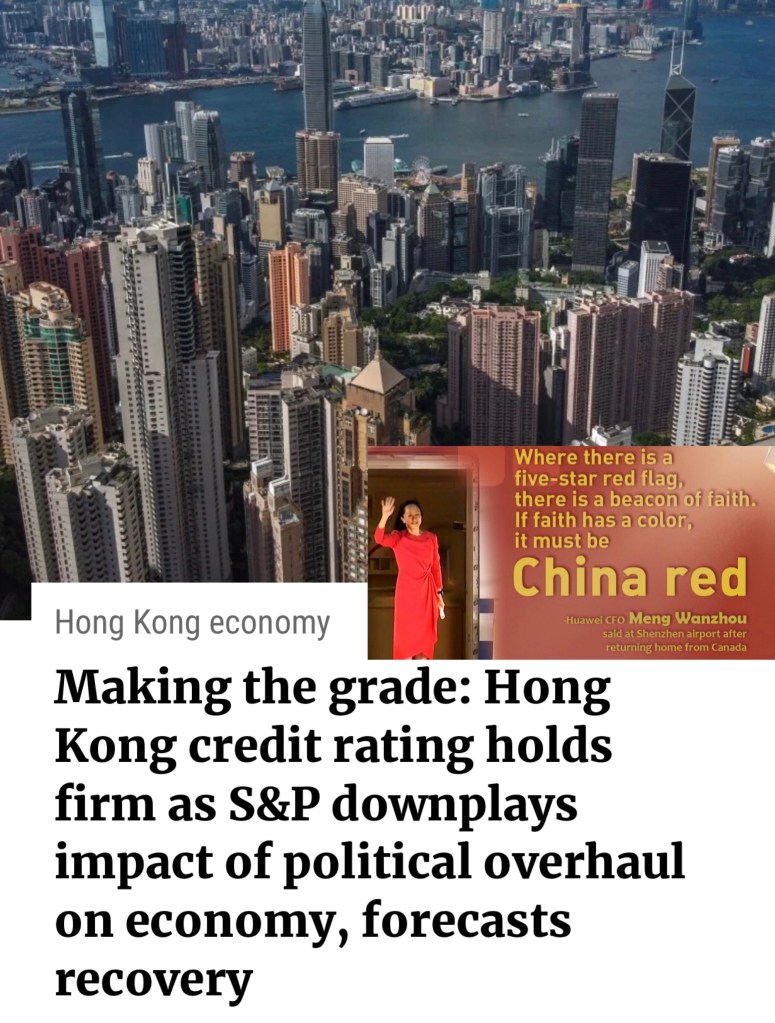
SCMP: America’s largest credit rating agency has affirmed Hong Kong’s upper-tier ranking, predicting stability after passing the homeland security laws on the back of a sustained economic recovery and sweeping political changes will have relatively little impact on the city’s fiscal autonomy.
Asia Times: Lessons from Meng Wanzhou case for Joe Biden – The US president should now see the folly of following his predecessor Trump’s footsteps on China policy By GEORGE KOO SEPTEMBER 29, 2021
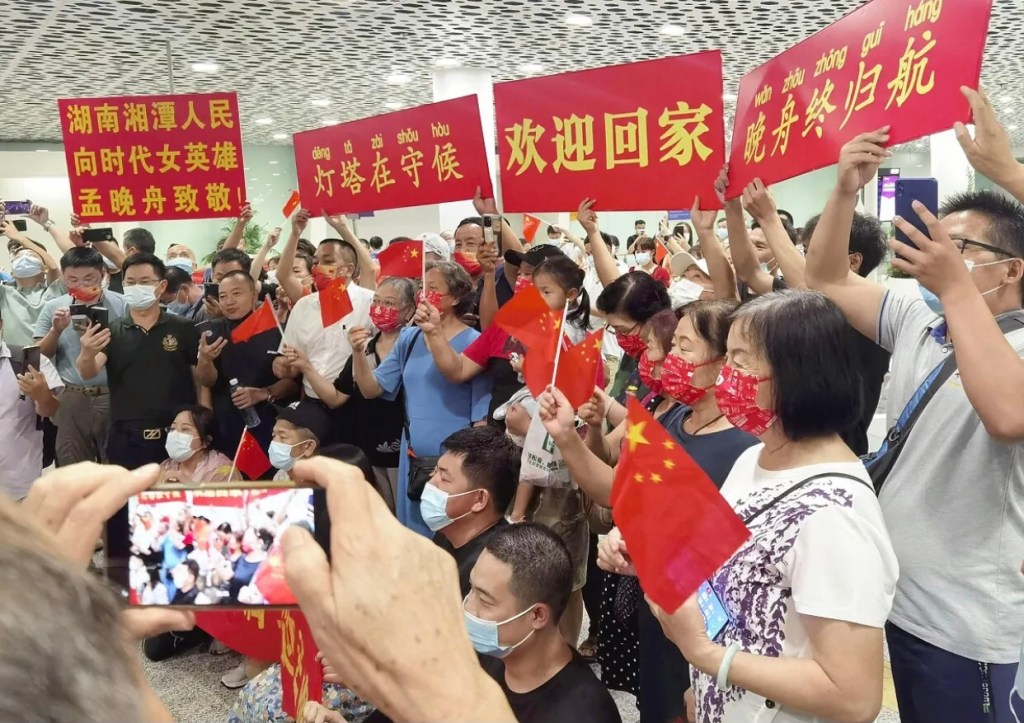
People celebrate the arrival home of Huawei CFO Meng Wanzhou at Shenzhen International Airport.
The sudden release of Meng Wanzhou caught many people by surprise, and a flurry of analysis and speculations has followed since her uneventful arrival in Shenzhen, China. For residents of Sleepy Hollow and others who might wonder what the excitement was all about, it’s time for a refresher review.
Shenzhen is the home base for Huawei, China’s and the world’s leading telecommunications company. Meng is the chief financial officer of this giant company and she also happens to be the daughter of Ren Zhengfei, the founder and chairman of Huawei.
More than thousand days ago, Meng was detained by the Royal Canadian Mounted Police while in transit at the international airport of Vancouver, British Columbia. The arrest was made at the request of the US Department of Justice, when Donald Trump was president of the United States.
The US alleged that Meng had misrepresented Huawei’s business dealings with Iran to HSBC, thus causing the bank to violate US sanctions imposed on Iran.
In 2015, the five members of the UN Security Council (China, France, Russia, UK and US) plus Germany had struck a long-term deal with Iran on its nuclear program. The deal was created after much effort by all parties to ensure stability in the Middle East.
When Trump became president, he flatly opposed anything Barack Obama, his predecessor, had stood for. Thus he unilaterally reneged on the agreement known as Joint Comprehensive Plan of Action and imposed sanctions on Iran on the pretext that he could get a better deal than the JCPOA. Trump, of course, did not bother to consult with the other five nations that had co-signed the original agreement with Iran.
Meng detained on flimsy charges
As I summarized the Meng affair nearly a year ago, Washington cobbled together a flimsy set of charges to justify her arrest. Basically, a Chinese citizen doing business with a British bank was accused of violating American sanctions on Iran that neither China nor the UK had anything to do with. Subsequent examination revealed that even those accusations were on shaky grounds.
Trump had conned Justin Trudeau, the prime minister of Canada, into caving into Washington’s wishes to make the arrest. By taking Ren’s daughter hostage, Trump had hoped to blackmail Ren in some way that only Trump could have dreamed up.
Two years after the arrest, it became increasingly obvious that America’s long arm of extraterritorial reach was becoming a source of embarrassment for Washington and Ottawa. The US DOJ then resorted to its usual trick and offered to release Meng if she would plead guilty to a lesser charge. She stood fast and refused.
Historically, the American scale of justice has always been tilted in favor of the government. Even when the DOJ is clearly in the wrong, as it was in the case of Wen Ho Lee, he had to plead guilty to computer downloading in violation of laboratory rules in exchange for time served, which was a harsh 10 months of solitary confinement.
Recent history is replete with examples of miscarriages of justice meted out by the DOJ against Chinese-Americans. The US government has virtually infinite resources to wear down the hapless accused. But it didn’t work against Meng because she was not American and she had the resources of Huawei and China to back her stance.
Biden missed doing the right thing
Then Joe Biden became the US president. He could have immediately ordered dropping the American request to extradite Meng and get Trudeau off the hook, and Canada from being the country caught awkwardly in the middle. But Biden did not. He was under the influence of his China team.
Whether it was China’s first meeting with Secretary of State Antony Blinken in Anchorage, Alaska, or subsequently with visiting Deputy State Secretary Wendy Sherman or with special envoy John Kerry, Beijing’s message remained the same: China would not let the US pick and choose which issues to cooperate on and which issues to compete and confront China on.
From Beijing’s point of view, the Biden administration cannot go around the world lying about China’s conduct and recruiting allies to oppose China as if engaged in another cold war, and still expect collaboration on selected global issues. Without mutual respect, there will be no trust nor confidence in each other on doing the right thing.
Beijing handed each visiting American envoy a list of demands to be met if Washington wished to repair bilateral relations.
Interestingly, as the South China Morning Post reported, John Thornton was a visitor in China for six weeks shortly before the release of Meng. Thornton has a deep China background. He is a professor at Tsinghua University and the chairman of the board of trustees at the Brookings Institution, where the China Center is named after him.
Unlike the official envoys from Washington who were not invited to visit Beijing, Thornton met with Vice-Premier Han Zheng in the national capital. They discussed what it would take to resume bilateral talks, and then Thornton was allowed to visit Xinjiang for a week.
It’s hard to know the exact role Thornton played in triggering the release of Meng and whether the release represents a real first step toward normalizing relations and the abandonment of Trump’s confrontation with China.
The face-saving deal that allowed the DOJ to cancel the extradition request and secure Meng’s release was a device called a deferred prosecution agreement. The agreement did not require any admission of guilt by Meng.
Within an hour of Meng’s final release by the Canadian court, she got on a Chinese airliner and flew home to Shenzhen. As a show of the lack of trust and to avoid unpleasant surprises (in case Washington suffered seller’s remorse), the airliner skirted around Alaska airspace when it flew over the Arctic circle.
Since Washington insisted on designating China as an adversary, only the Biden White House can decide when and if China should no longer be considered an adversary but a powerful collaborator that the US could work with to resolve all the challenges facing the world. Perhaps a trusted intermediary like Thornton could help persuade Biden that following Trump on China policy has been a road to disaster.
George Koo retired from a global advisory services firm where he advised clients on their China strategies and business operations. Educated at MIT, Stevens Institute and Santa Clara University, he is the founder and former managing director of International Strategic Alliances. He is currently a board member of Freschfield’s, a novel green building platform.
Science News: Why does China want to build a kilometre-long spacecraft? And is it even possible? Buoyed on by its recent successful Moon missions, the Asian superpower has launched a five-year study to investigate the possibility of building the biggest spacecraft the world has ever seen. By Stuart Clark 28th September, 2021
The Chinese space programme has been raising eyebrows again – this time because of its proposal to study how to build a large spacecraft, at least one kilometre in length.
To put that into perspective, the International Space Station (ISS) is just 109 metres across, yet it cost $150 billion (£110 billion) and took thirty missions over the course of a decade to build. China’s proposal is for a spacecraft 10 times the size of the ISS. It may sound crazy but don’t make the mistake of dismissing it just yet.
“It’s about ambition, long-term thinking and instilling a sense of purpose. Such long-haul thinking does not fit in well with shorter-term western thinking, which might mistakenly dismiss this as propaganda,” says space writer Brian Harvey, author of the book China in Space: The Great Leap Forward.
There no doubt China has been making serious strides in space exploration recently. It has returned lunar rock samples to Earth for analysis, making it the third country behind the USA and Russia to do so; it has landed a rover on Mars, a feat that only the USA had previously managed; and it has made the world’s first landing on the lunar far side. On top of this, China is now building the Tiangong space station, which was inhabited for 90 days this year, and is designed to eventually rival the ISS.
Thinking about the future, Harvey points to a Chinese report published in 2009 called Roadmap 2050, which is the blueprint for how China plans to become the world’s leading space-faring nation by the middle of the century. “The horizon to Chinese spaceflight is not years or decades but half-centuries,” he says.
How the upcoming missions to Venus could reveal how life on Earth will end How humanity will return to the Moon: The future of lunar exploration
In other words, this most recent announcement is the beginning of China thinking about how to build such a spacecraft in the future, rather than a declaration that it intends to begin construction.
The idea was floated in a wider call for research proposals from the National Science Foundation of China – a funding agency managed by the country’s Ministry of Science and Technology. It is offering 15 million yuan (£1.7 million) for a five-year feasibility study into new, lightweight designs and materials, and construction techniques in space.
But why would China want a spacecraft ten times larger than anything that has previously been built? The answer could be artificial gravity. A space station that features artificial gravity could help astronauts stave off some of the most damaging effects of weightlessness, such as muscle wastage and the loss of bone density.
For long duration spaceflights to Mars or beyond, artificial gravity could make a dramatic difference in keeping the crew healthy.
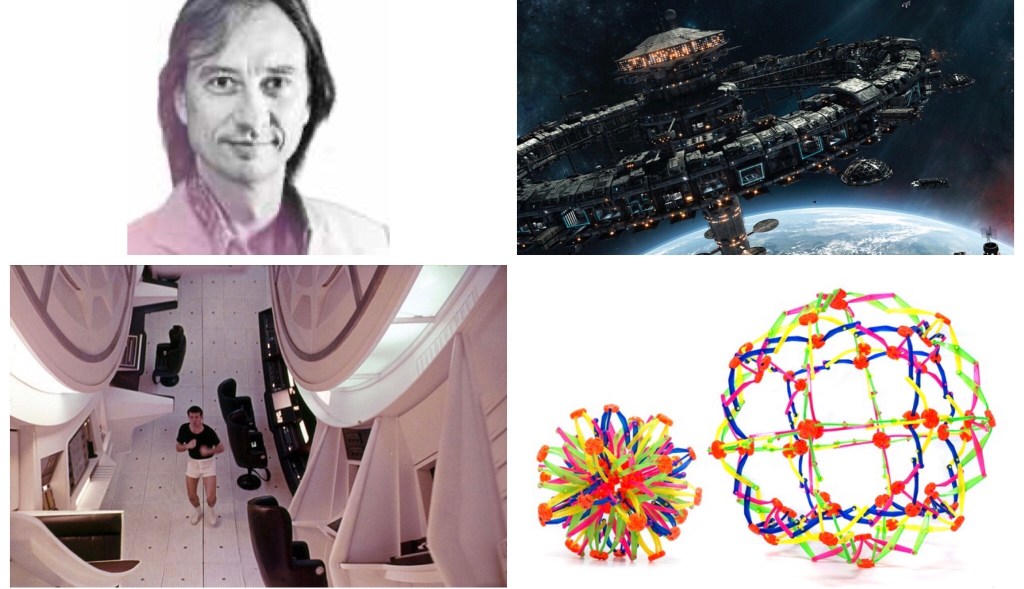
Stanley Kubrick’s 2001: A Space Odyssey famously depicted a rotating space station
“Artificial gravity has been this ‘science fictiony’ holy grail thing for human spaceflight for a century, and the primary way to do it is a large spinning structure,” says Zachary Manchester an assistant professor at the robotics institute of Carnegie Mellon University, Pennsylvania.
Inside a spinning structure, the centrifugal force makes things move outwards. If the structures spins at the correct rate, this can create a force that mimics the effects of gravity.
The problem with this is that humans are very susceptible to rotation rates. If you spin faster than a couple of revolutions per minute, the average person will start to suffer from motion sickness.
However, experiments have shown that these effects virtually disappear at rotation rates of one to two revolutions per minute. So how large would a spacecraft have to be in order to create Earth’s gravity by spinning at a leisurely 1-2 rpm?
“Turns out you need a structure that’s about a kilometre across,” says Manchester, who received a grant from NASA in February this year so that he and colleagues could study a construction scenario for a one-kilometre-long spacecraft.
Whereas China appears to be looking at how to build something huge in orbit after launching numerous components into space, Manchester is studying whether it would be possible to build a complete structure that would fold into the nose cone of a single large rocket, a SpaceX Falcon Heavy for example. It would then hugely expand once deployed in space.
The key to this idea is utilising something known as mechanical meta-materials. These use scissor-like joints to fold down to a fraction of their deployed size. The most familiar example of such a mechanical meta-material is the Hoberman Sphere. This child’s toy resembles a small spiky ball in its resting state but can expand into a large sphere many times its original diameter.
The Hoberman Sphere, a children’s toy, is an example of a meta-material that may help engineers to design gigantic space stations
“Turns out, there’s some really interesting mechanisms that you can put together, that can achieve very, very high expansion ratios,” says Manchester.
The structures he is studying can expand to hundreds of times their original size. Science ‘fictiony’ indeed! Only time will tell if either design will work out, but it’s now very clear that the world’s major space faring powers are looking forward to the creation of spacecraft much larger than any we have created to date.
Dr Stuart Clark is an astronomy writer with a PhD in astrophysics.
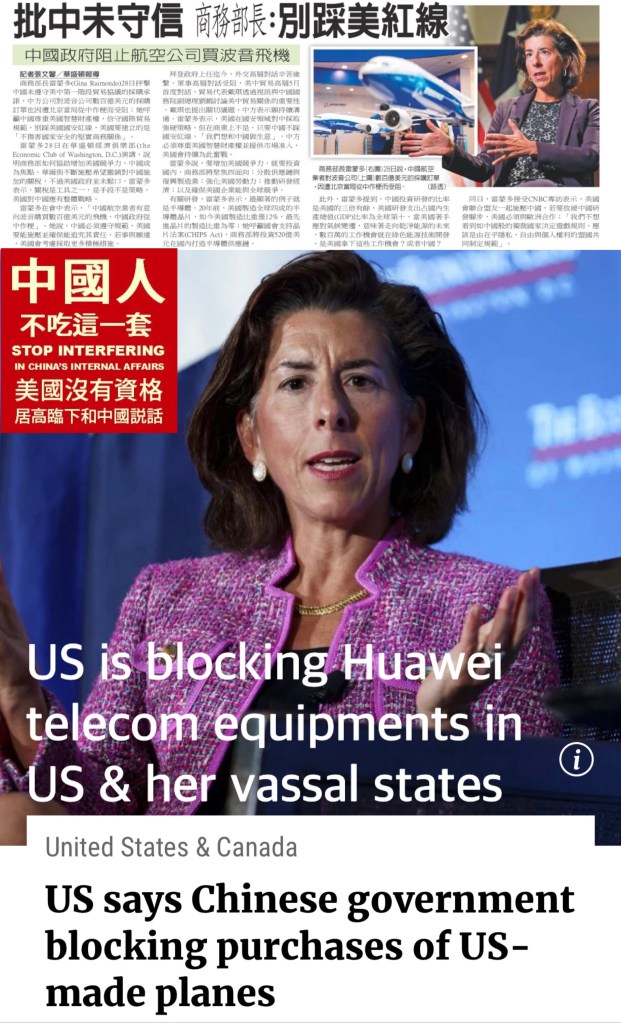
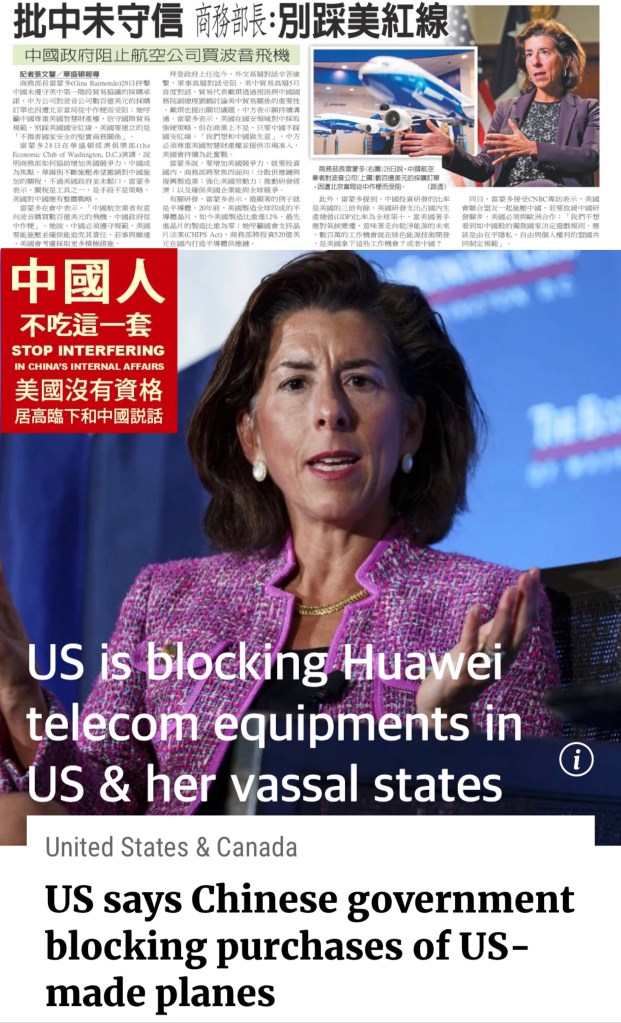
US is blocking Huawei telecom equipments in US & her vassal states. US Commerce Secretary Gina Raimondo said on Tuesday the Chinese government is preventing its domestic airlines from buying “tens of billions of dollars” of US-manufactured planes.
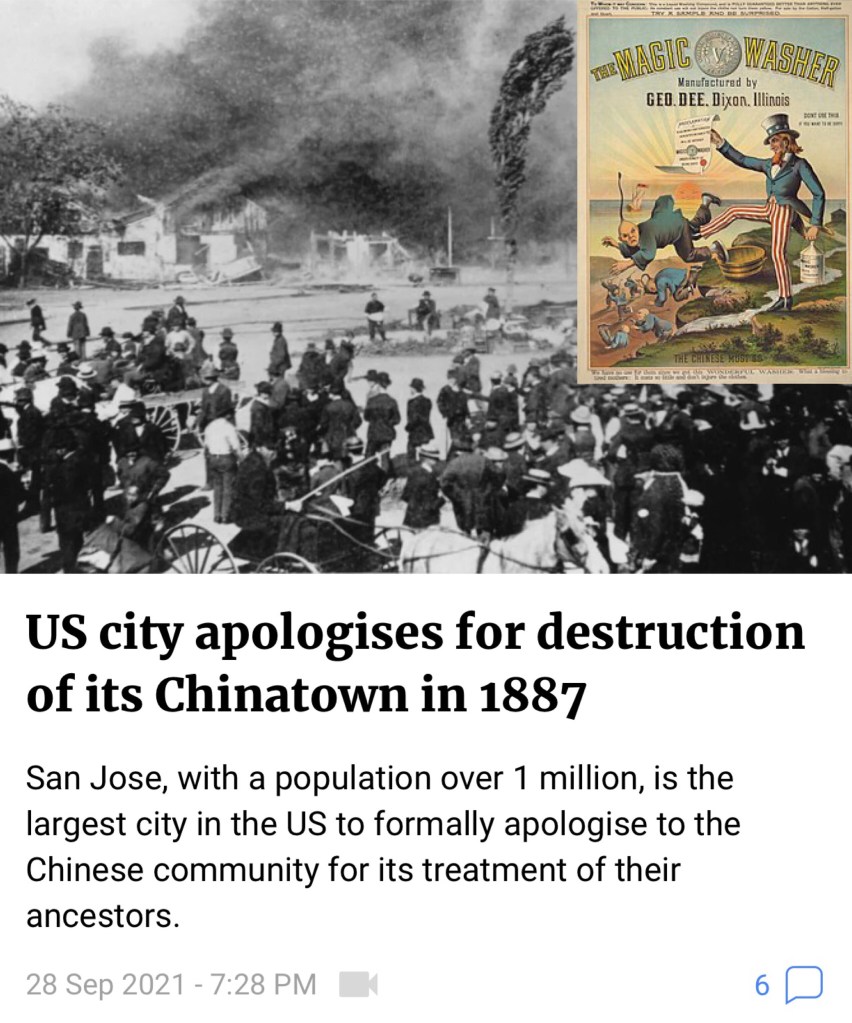
The US city of San Jose California was once home to one of the largest Chinatowns in California. In the heart of downtown, it was the centre of life for Chinese immigrants who worked on nearby farms and orchards.
 Johnson Choi Biz