
Blinken said will defend Taiwan just like Afghanistan (300,000 strong local defense forces collapsed in 7 days) 布林肯稱將像阿富汗一樣保衛台灣(7天30萬強大的地方防衛力量瓦解)
Blinken said will defend Taiwan just like Afghanistan (300,000 strong local defense forces collapsed in 7 days) 布林肯稱將像阿富汗一樣保衛台灣(7天30萬強大的地方防衛力量瓦解)
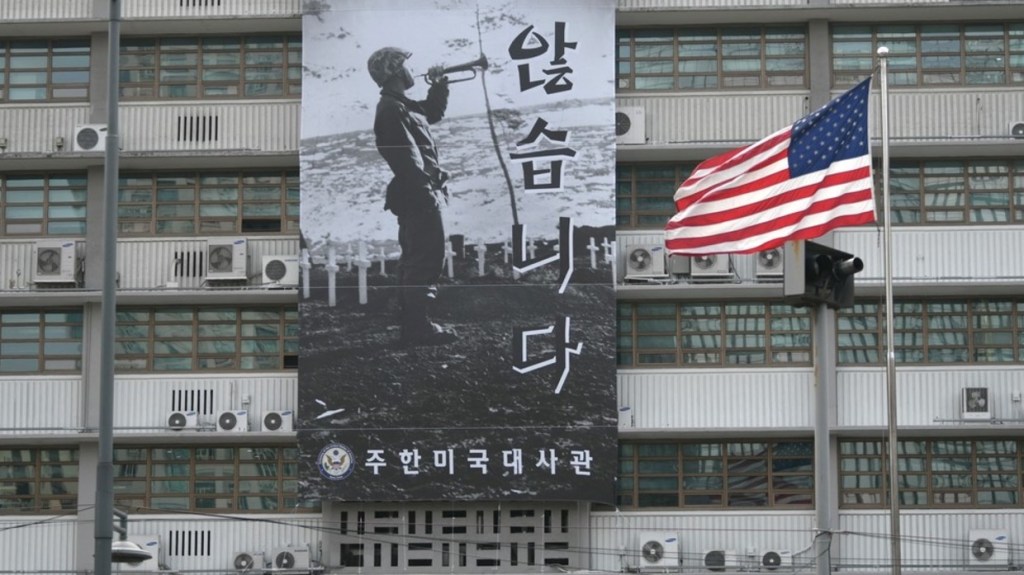
An American diplomat in Seoul has fled the scene after a suspected hit-and-run incident and is now hiding from the police at a US military base, South Korean law enforcement has complained.
Professor Kiji Noh: By art. 29 of the Vienna convention, a legitimate diplomat would be immune from prosecution, as would be a US soldier, but the failure to even stop and share information speaks volumes about the rogue state of mind of this US official.
Also, Why does the US still have a base in Seoul at Yongsan?
Yongsan Garrison in Seoul was the site of the 8th Army Garrison for decades. It is a huge compound, nearly the size of NY’s Central Park. Like NY’s central Park, it is smack in the center of the city of Seoul. Imagine if Central Park were not a municipal park, but a foreign military garrison off limits to the citizens, surrounded by barbed wire and armed guards, with an adjacent slum full of thousands of trafficked prostitutes serving the troops. That gives you a sense of the occupied colonial status of South Korea.
Yongsan Garrison was supposed to be returned to the Korean government by 2019. (This was because the US decided that its troops were vulnerable to a massive NK artillery attack). The Garrison was moved to Camp Humphreys, Pyeongtaek, about 40 miles further south. This was a castling maneuver, combined with the installation of THAAD missile batteries. The SK government paid 10 B for the construction of this new base for the Americans, which includes two golf courses, a water park (essential for any military installation), and 72,000 sq ft mall. It will house 45,000 troops and their dependents, occupying over 3000 acres. It is considered “the largest force projection platform in the pacific”, and has the busiest military airport in the world. Thousands of farmers were removed from their rice fields during the base expansion, over a brutal 10 year battle, in order to clear space for the base (a single golf course occupies the land that could produce rice to feed up to 10,000 people).
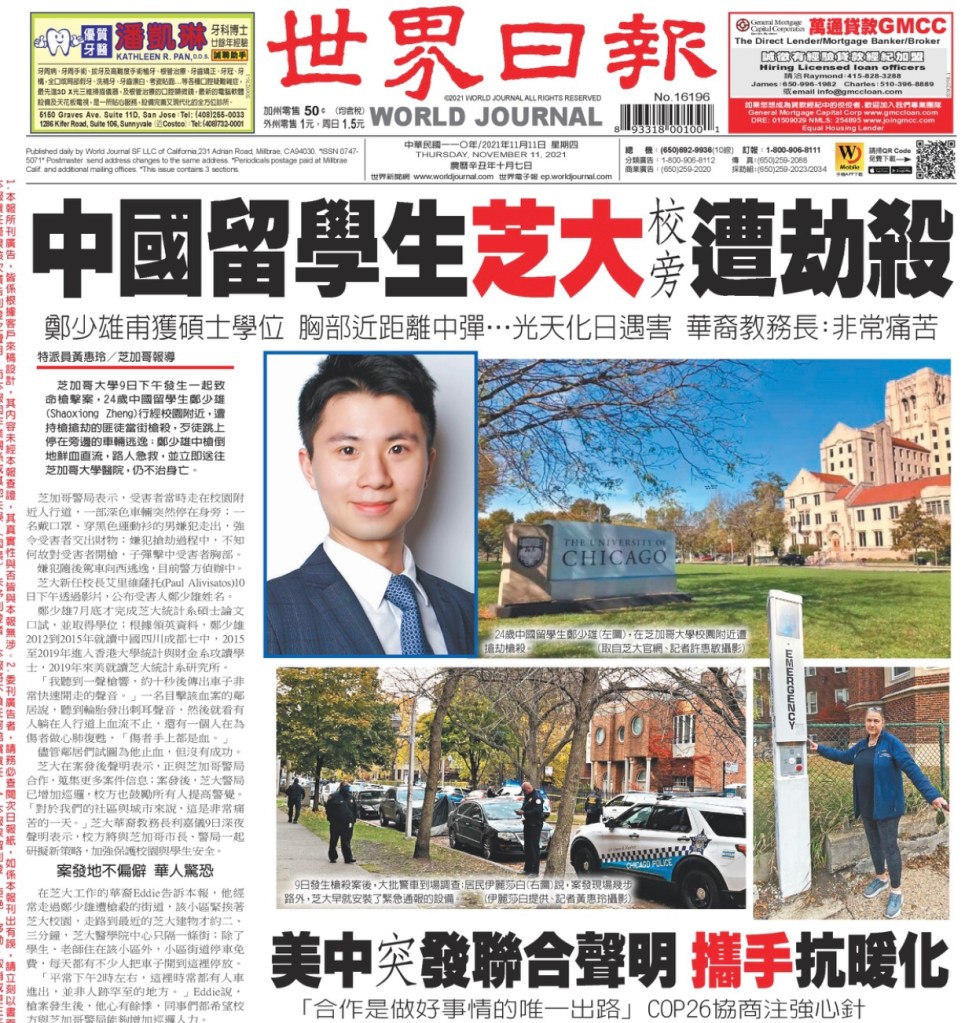
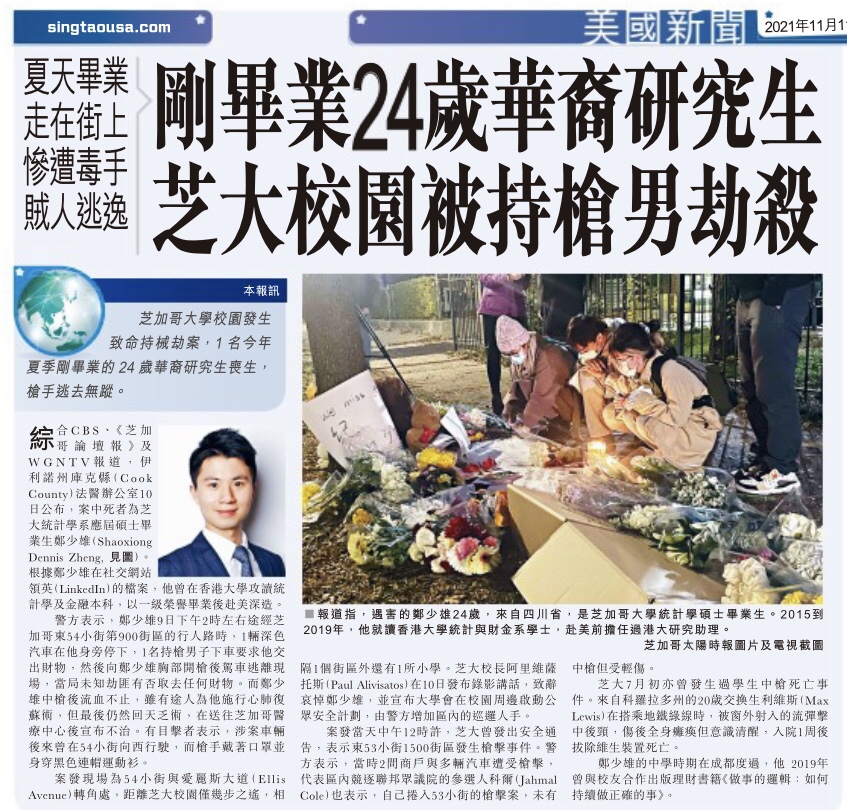
Lives and die in the United States! If the criminals don’t gets you. US Government will make sure you lives miserably everyday in the United States by promoting hatred against Chinese, Chinese Americans and China.
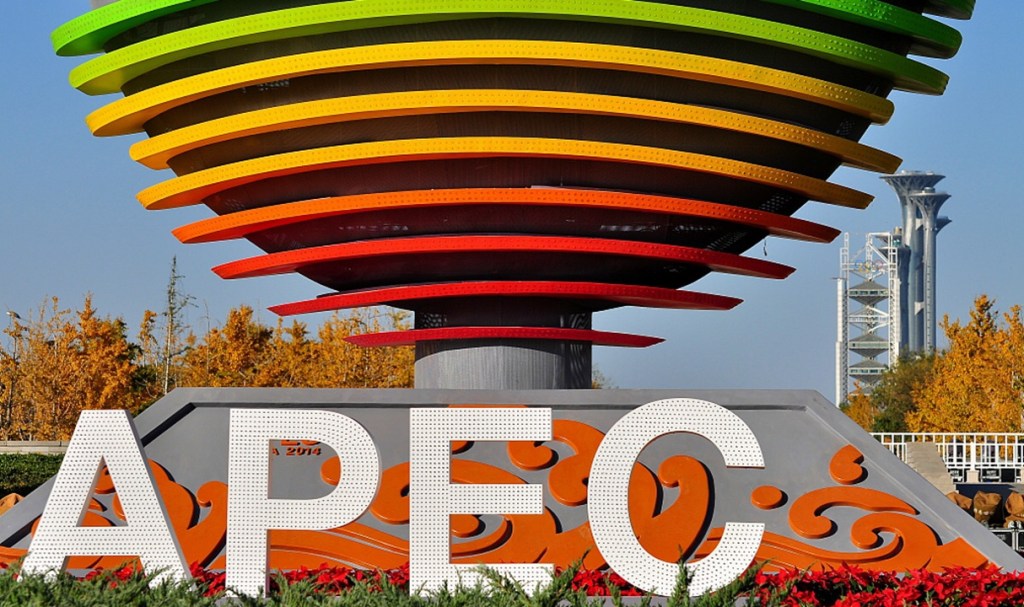
Xi to attend APEC leaders’ meeting, reflects China’s commitment to regional economic integration by GT staff reporters Nov 10 2021
Chinese President Xi Jinping will attend the 28th Asia-Pacific Economic Cooperation (APEC) Economic Leaders’ Meeting in Beijing via video link on Friday and deliver an important speech, and will on Thursday attend the APEC CEO Summit through a prerecorded video and deliver a keynote speech, China’s Foreign Ministry announced on Wednesday.
Analysts said Xi’s virtual attendance at the two APEC events shows China values regional economic integration and is willing to play an active and leading role in facilitating the process to inject new vitality to post-virus economic recovery and trade liberalization in the Asia-Pacific region. It also comes on the heels of important junctions including China’s application to join the Comprehensive Progressive Trans-Pacific Partnership (CPTPP) earlier this year and ahead of the Regional Comprehensive Economic Partnership (RCEP) being implemented next year.
While vaccine cooperation could be another highlight of the meeting, APEC will also provide a platform for member countries, such as China and New Zealand, to strengthen communication, increase consensus and promote mutual trust, according to analysts. And such closer ties are of vital importance to tackle mounting global challenges and uncertainties.
Xi’s attendance at Friday’s Economic Leaders’ Meeting is at the invitation of New Zealand Prime Minister Jacinda Ardern, Foreign Ministry spokesperson Hua Chunying said.
China’s Vice Minister for Commerce and Deputy China International Trade Representative Wang Shouwen attended the 32th APEC Ministerial Meeting from Monday to Tuesday, according to a statement on the website of the Ministry of Commerce (MOFCOM).
The meeting, which discussed accelerating economic recovery through trade and economic technological cooperation, will prepare for the APEC Leaders’ Meeting on Friday, the statement said.
During the meeting, Wang highlighted China’s continuing efforts to open up the economy and reduce trade barriers. According to Wang, China’s average tariff has been reduced to 7.4 percent, significantly lower than other developing nations. And China has been slashing the negative list for foreign investment since 2017.
“China is willing to work with other members to implement APEC Putrajaya Vision 2040 after being approved by Chinese leaders, providing help to regional economic recovery,” Wang was quoted as saying in the statement.
Song Guoyou, deputy director of the Center for American Studies at Fudan University, told the Global Times on Tuesday that the Chinese top leadership attaches great importance to APEC and has never been absent from the regional cooperation mechanism, which underscores China’s firm commitment to promoting trade liberalization in the Asia-Pacific region.
According to Wang, China has applied to join CPTPP and the Digital Economy Partnership Agreement, and is willing to promote regional economic integration with other members to “accumulate favorable conditions for building Free Trade Area in the Asia-Pacific.”
“Beijing displayed great sincerity and willingness to make policy adjustments to speed up the process,” Song said.
The integration of the Asia-Pacific region, on the other hand, will also create better conditions to implement RCEP and CPTPP, Wang Yiwei, director of the institute of international affairs at the Renmin University of China, told the Global Times on Wednesday.
The APEC Leaders’ Summit will focus on the region’s economic recovery from the coronavirus pandemic, emphasizing supply chain support and decarbonizing economies, according to media reports.
On Friday, Xi had a phone conversation with Ardern of New Zealand. During the call, Xi said that China and New Zealand should safeguard and practice true multilateralism, and join hands to promote regional economic integration, the Xinhua News Agency reported.
Noting that the next year marks the 50th anniversary of their diplomatic relations, Xi said the two sides should summarize successful experiences, strengthen strategic communication, and not allow a cloud to block their views.
“The Leaders’ Summit is also a good opportunity for China and other APEC members to cement bilateral relations, especially for countries that take a neutral view toward China, support Chinese policies and are already on a trajectory of spiraling upward ties with China,” Song said.
While Australia has followed the US, igniting anti-China rhetoric over a range of issues from human rights to the Taiwan question, New Zealand has been acting more politically independent.
Last week, Ardern said during a TV interview that New Zealand has “mature” ties with China that allow for disagreements, and the country will pursue a policy of integrity with China.
According to the APEC Regional Trends Analysis issued on Monday, the economy of the APEC region is expected to grow by 6 percent in 2021 and will settle at 4.9 percent in 2022 in anticipation of the unwinding of fiscal and monetary support measures.
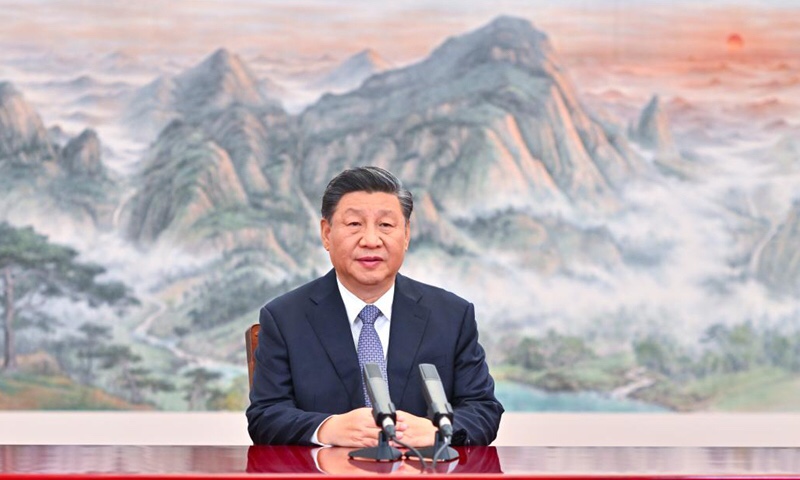
Chinese President Xi Jinping delivers a keynote speech at the Asia-Pacific Economic Cooperation (APEC) CEO Summit via video, in Beijing, capital of China, November 11, 2021.
Pursuing sustainable development in a concerted effort to build an Asia-Pacific community with a shared future
Keynote Speech by H.E. Xi Jinping
President of the People’s Republic of China At the APEC CEO Summit
11 November 2021
Leaders of the Business Community,
Ladies and Gentlemen,
Dear Friends,
I am very glad to meet you again. At present, COVID-19 is still ravaging the world, and the journey to global economic recovery remains a difficult and tortuous one. The Asia-Pacific has all along been an important engine driving the global economy. Indeed, it is among the first to regain the momentum of recovery in this crisis. At this historical juncture, it is important that we in the Asia-Pacific face up to the responsibility of the times, be in the driver’s seat, and strive hard to meet the goal of building an Asia-Pacific community with a shared future.
First, we need to make all-out efforts to fight COVID-19. To emerge from the shadow of the pandemic and achieve steady economic recovery at an early date is the most pressing task for us in the Asia-Pacific. At this trying time, it is all the more important that we should stay confident, keep a steady hand on the tiller, and forge ahead with determination. Over the past decades, we in the Asia-Pacific have been able to make advances by overcoming crises and achieve success by meeting challenges. In the face of this once-in-a-century test that is crucial to the future of humanity, we the Asia-Pacific economies as well as various sectors should put our people and their lives first, follow the guidance of science, pull together with solidarity, extend assistance to each other, and fight to beat the pandemic.
We should support each other in fighting COVID-19 and step up cooperation in areas such as testing methods, treatment medicine and the research, development, production and mutual recognition of vaccines to truly create synergy against COVID-19. We should translate the consensus that vaccines are a global public good into concrete actions, ensure their fair and equitable distribution as well as their accessibility and affordability in developing countries, and thus work together to close the immunization gap.
Second, we need to uphold openness and cooperation. Openness is the sure way for realizing human prosperity and progress. Over the past 30-plus years, thanks to our concerted efforts such as the adoption of the Bogor Goals and the Putrajaya Vision as well as macroeconomic policy coordination and the building of high-standard free trade areas, we in the Asia-Pacific have succeeded in sustaining fast development for a fairly long period of time. Ultimately, this has become possible because we have endeavored to create an open economic architecture and forge an Asia-Pacific partnership based on mutual trust, inclusiveness and win-win cooperation.
No matter how global developments may evolve, the Asia-Pacific economy will keep its strengths of being resilient and robust. We should all be broad-minded, follow the underlying trend of the times and proactively expand opening-up. We should advance trade and investment liberalization and facilitation, keep industrial and supply chains stable and functioning, and promote the orderly flow of resources and inputs to boost economic recovery and achieve interconnected development. We should be forward-looking, move ahead and reject practices of discrimination and exclusion of others. Attempts to draw ideological lines or form small circles on geopolitical grounds are bound to fail. The Asia-Pacific region cannot and should not relapse into the confrontation and division of the Cold War era.
Third, we need to promote green transition. A sound eco-environment is the most basic public good that benefits all. We in the Asia-Pacific should make its post-pandemic recovery a green one and take the lead in making a science-based response to climate change. We need to follow the principle of common but differentiated responsibilities and deliver on what was agreed upon in the Paris Agreement on climate change and at the 15th Meeting of the Conference of the Parties to the Convention on Biological Diversity. Developed economies should act on a sense of being in the same community with other economies, provide developing economies with funding and technological support and help them enhance their capacity to conduct environmental governance. Working together, all of us can embark on a path of green, low-carbon and sustainable development.
Green and low-carbon transition is a systemic project that must be pursued across the board and in a coordinated way. In the Asia-Pacific, over 100 million people still live in abject poverty. Some economies are still plagued by inadequate infrastructure development, education and health care, and they are weak in food security and energy supply. Without development, it will be impossible to pool the economic strength necessary for achieving green transition. Neglecting people’s livelihood means loss of social support for pursuing green transition. We need to gain an accurate understanding of what sustainable development means, put the people first, and strike a balance between economic growth, ensuring people’s well-being, and energy conservation and emissions reduction. This will enable us to catalyze green transition in the course of economic development and achieve greater development through green transition.
Fourth, we need to actively promote innovation. Innovation is an important force driving human progress. I have often stressed that a country or region cannot prosper without innovation or even with slow innovation. The Asia-Pacific has distinctive intellectual resources and a long tradition of innovation. Having created many new technologies, new industries and new mechanisms, this region of ours has always been a global pacesetter of innovation-driven development. Today, a new round of technological revolution and industrial transformation is well underway, and information technology, biotechnology and manufacturing technology are developing rapidly. This has positioned us well to promote economic growth and respond to challenges such as major diseases, climate change and natural disasters.
We need to speed up scientific and technological innovation and institutional innovation, promote the commercialization of scientific and technological advances, and foster new drivers of growth so that innovation will boost both economic development and green transition. We need to scale up cooperation between member economies of the Asia-Pacific on scientific and technological innovation, and foster an open, fair, equitable and non-discriminatory environment for the development of science and technology. The business community, standing at the forefront of scientific and technological innovation, should strive to be a major force of increasing input in research and development and applying research outcomes.
Ladies and Gentlemen,
Friends,
Over the years, China’s economic development has been an integral part of the Asia-Pacific cooperation process. China has attained the goal of fully building a moderately prosperous society within the set time frame, secured a historic success in eradicating absolute poverty, and embarked on a new journey toward fully building itself into a modern socialist country. This will create greater opportunities for our region.
— China will remain firm in advancing reform and opening-up so as to add impetus to economic development in the Asia-Pacific. China is committed to building a high-standard market system and will work to make new progress in reforming important areas and key links. China will pursue high-standard institutional opening-up, continue to improve its business environment, and promote innovation-driven development of pilot free trade zones. China has ratified the Regional Comprehensive Economic Partnership (RCEP), and it has applied for joining the Comprehensive and Progressive Agreement for Trans-Pacific Partnership (CPTPP). In the course of RCEP implementation and CPTPP negotiation, China will continue to shorten the negative list on foreign investment, promote all-round opening-up of its agricultural and manufacturing sectors, expand the opening of the service sector, and treat domestic and foreign businesses as equals in accordance with law.
As a Chinese saying goes, “To get things right at the end, one needs to lay a sound foundation; to achieve a good result, one needs to be prudent from the start.” Recently, the competent Chinese government departments are improving and better enforcing anti-monopoly laws and regulations, and strengthening regulation over some sectors. This is called for to promote the sound development of the market economy in China. As a matter of fact, it is also a common practice in other countries. We will unswervingly consolidate and develop the public sector, and unswervingly encourage, support and guide the development of the non-public sector. We treat all types of market entities on an equal basis, and we are working to develop a unified, open, competitive and orderly market system. This will enable us to cement the foundation for long-term development of the Chinese economy and better support businesses from both the Asia-Pacific and the wider world in investing and operating in China.
— China will advance green transition on all fronts and make its due contribution to boosting ecological conservation in the Asia-Pacific and beyond. For many years, I used to live in a small village on the Loess Plateau, at a time when its eco-environment was undermined and its people were poverty-stricken. It had come to me that harms done to nature will eventually harm ourselves. China will actively promote ecological conservation. To us, lucid waters and lush mountains are invaluable assets. We will intensify comprehensive efforts to stem soil erosion and win the critical battle of pollution prevention and control. China will fully implement its national strategy on climate change response. Since I announced the goals of carbon peak and carbon neutrality last year, China has formulated an Action Plan for Carbon Dioxide Peaking Before 2030, and moved faster to put in place a “1+N” policy framework. Here, “1” stands for the guiding principle and top-level design for carbon peak and carbon neutrality, and “N” refers to implementation plans for key areas and industries, including the action for green energy transition, the action for peaking carbon dioxide emissions in the industrial sector, the action for promoting green and low-carbon transportation, and the action for promoting circular economy for decarbonization purposes. China will strike a balance between low-carbon transition and ensuring the living needs of its people, and between development and carbon reduction, and will achieve carbon peak and carbon neutrality within the time frame we set.
China’s carbon reduction action is a profound economic and social transformation. However formidable the task may be, we will work tirelessly to make our contribution to promoting global green transition. Our carbon reduction action will also require massive investment, thus creating huge market opportunities and room for cooperation. The business communities across the Asia-Pacific are warmly welcome to join us in this endeavor. Together, we can usher in a future of green development.
— China will stay committed to promoting win-win cooperation and contribute to the economic development of the Asia-Pacific. China has all along been actively involved in regional cooperation in the Asia-Pacific, and it has endeavored to advance openness and cooperation in the region. China will continue to practice true multilateralism, uphold the WTO-centered multilateral trading system, take an active part in global economic governance and promote the building of an open world economy. China will steadfastly advance high-quality Belt and Road cooperation, facilitate connectivity in the Asia-Pacific, ensure stable and smooth functioning of industrial and supply chains in the region, and deepen cooperation with all stakeholders in such areas as e-commerce and digital logistics. With these efforts, we can inject impetus into economic recovery and sustainable development in our region.
At this year’s United Nations General Assembly, I proposed a Global Development Initiative, calling for meeting the development needs of developing countries, ensuring their development opportunities and thus achieving a more robust, greener and more balanced global development. China will continue playing its role as a responsible major country. It will promote closer cooperation in areas such as global poverty reduction, food security and development financing, and earnestly implement the UN 2030 Agenda for Sustainable Development, thus building a global community of development with a shared future.
Ladies and Gentlemen,
Friends,
Over the years, as business leaders, you have witnessed and participated in China’s development. I hope that you will continue to take a keen interest in and support China’s development, and achieve win-win in our cooperation. Working together, let us all be promoters of and contributors to unity and prosperity of the Asia-Pacific family.
Thank you all.

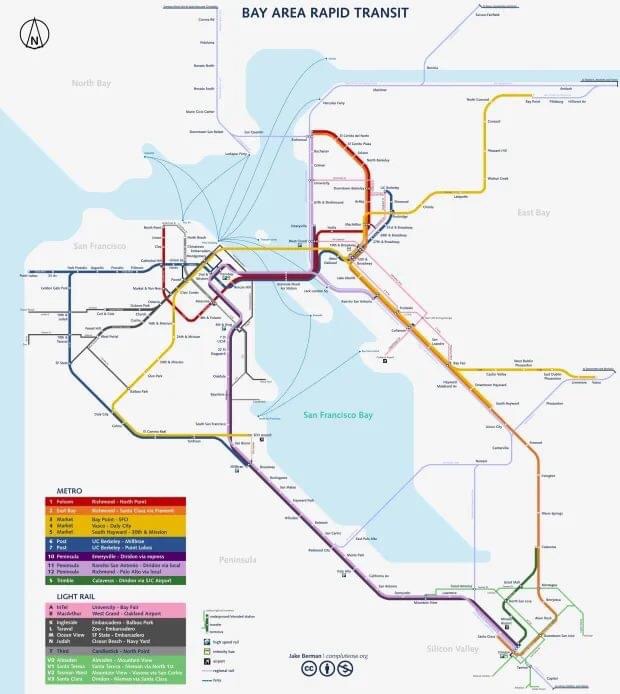
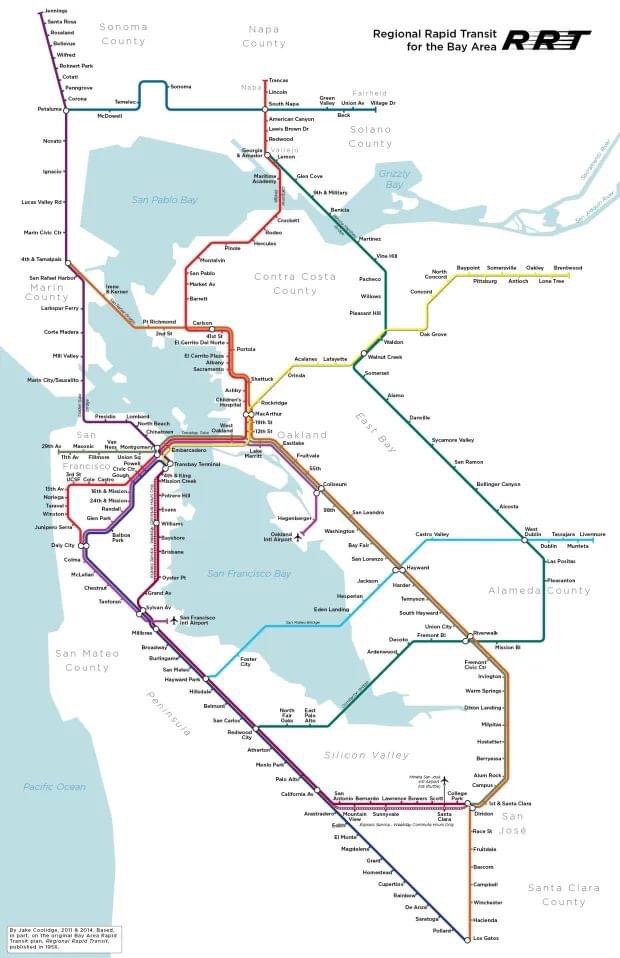
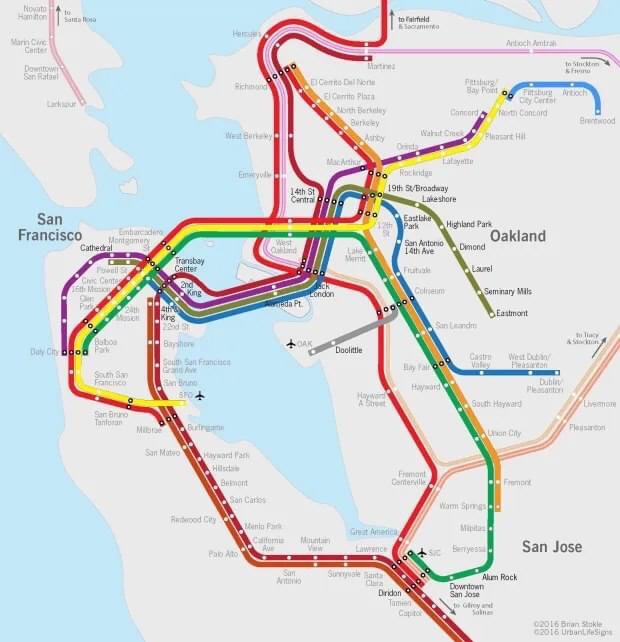
Horace Lim: Fantasy transit maps: World’s centre of technology, Silicon Valley is the wealthiest part of USA, yet a public transport train system to improve the lives of citizens which makes perfect sense (is still) just a fantasy.
But spending 20 years in Afghanistan blowing shit up & killing brown bearded barbarians at a cost of several trillion is no problem? It’s ALL about how Government chooses to spend money & the lobbying power of the Military Industrial Complex.
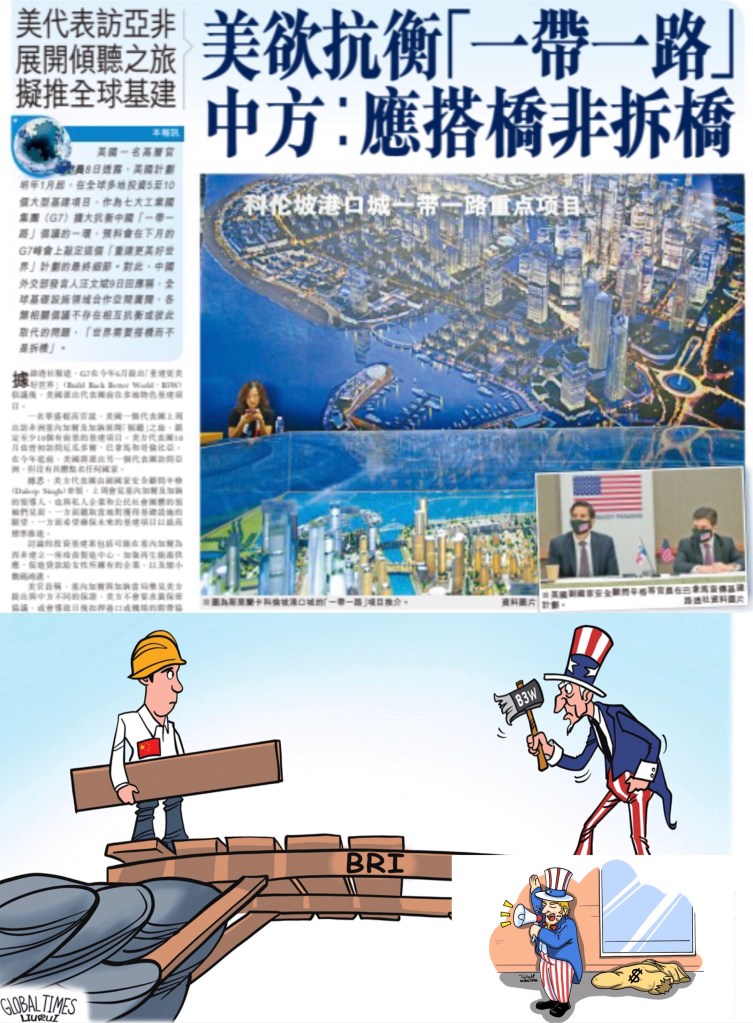
China’s belts and roads is building bridges for the human race. US’s belts and roads is to dismantle bridges built by China for self interest only to benefit 1% of American elite and military establishments complex.
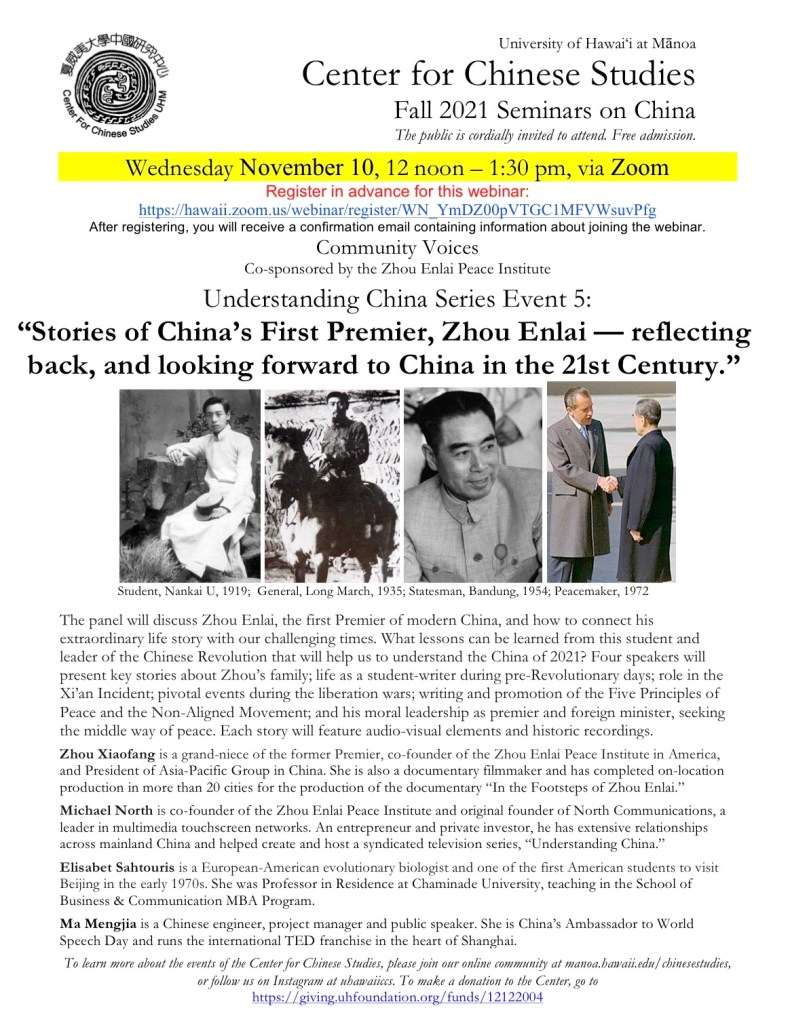
Reminder: UH Wednesday Nov 10th 12noon Hawaii/10:00am SFwebinar “Stories of China’s First Premier, Zhou Enlai — reflecting back, and looking forward to China in the 21st Century” Register: https://hawaii.zoom.us/webinar/register/WN_YmDZ00pVTGC1MFVWsuvPfg

Bevin Chu: YELLOWSTONE TV SERIES – Several episodes expose the fraud that is America’s “rules-based order”: I make the rules and you follow my orders.
American drama television series created by Taylor Sheridan and John Linson. It stars Kevin Costner and follows the conflicts along the shared borders of a large cattle ranch, a Native reservation, and land developers.
Season 3 Episode 10
Native American land rights champion Angela Blue Thunder admonishes Chief Thomas Rainwater for being a slave to the white man’s rules and tells him that the land must be retaken by force if necessary.
Angela Blue Thunder: You have an opportunity to free that land of him. And it will look like everyone but you who did it.
Chief Thomas Rainwater: I’m not a criminal.
Angela Blue Thunder: It’s only a crime by their laws. By our laws, which have outlasted an ice age, it is duty. To protect our land and preserve our way of life. It is religion. Or did you buy into their religion when you bought into their laws?
Chief Thomas Rainwater: I will beat them with their own rules.
Angela Blue Thunder: They make their rules to be broken. The United States has broken every rule it has ever made. From its first treaty with France to every treaty with us, to their last treaty with Iran. They only hold others to their rules. They make war when they want, where they want, they take what they want, then make rules that keep you from taking it back. They make rules for the slave and they make rules for the masters. You’re following the slave rules.
…
黃石
由泰勒·謝里丹和約翰·林森創作的美國戲劇電視連續劇。它由凱文·科斯特納 (Kevin Costner) 主演,講述了大型牧場、土著保留地和土地開發商的共同邊界發生的衝突。
第 3 季第 10 集
美國原住民土地權利冠軍安吉拉·藍雷告誡托馬斯·雷沃特酋長是白人規則的奴隸,並告訴他,如果有必要,必須用武力奪回土地。
安吉拉藍雷:你有機會解放他的那片土地。它看起來像除你之外的每個人。
托馬斯·雷沃特酋長:我不是罪犯。
安吉拉·藍雷:按照他們的法律,這只是犯罪。根據我們已經超過冰河時代的法律,這是義務。保護我們的土地,保護我們的生活方式。它是宗教。或者當你認同他們的法律時,你是否認同他們的宗教?
托馬斯·雷沃特酋長:我會用他們自己的規則打敗他們。
安吉拉·藍雷:他們讓規則被打破。美國打破了它曾經制定的每一條規則。從它與法國的第一個條約到與我們的每一個條約,再到他們與伊朗的最後一個條約。他們只會讓別人遵守他們的規則。他們在他們想要的時候發動戰爭,他們想要的地方,他們拿走他們想要的東西,然後製定規則來阻止你收回它。他們為奴隸制定規則,他們為主人制定規則。你在遵守奴隸規則。
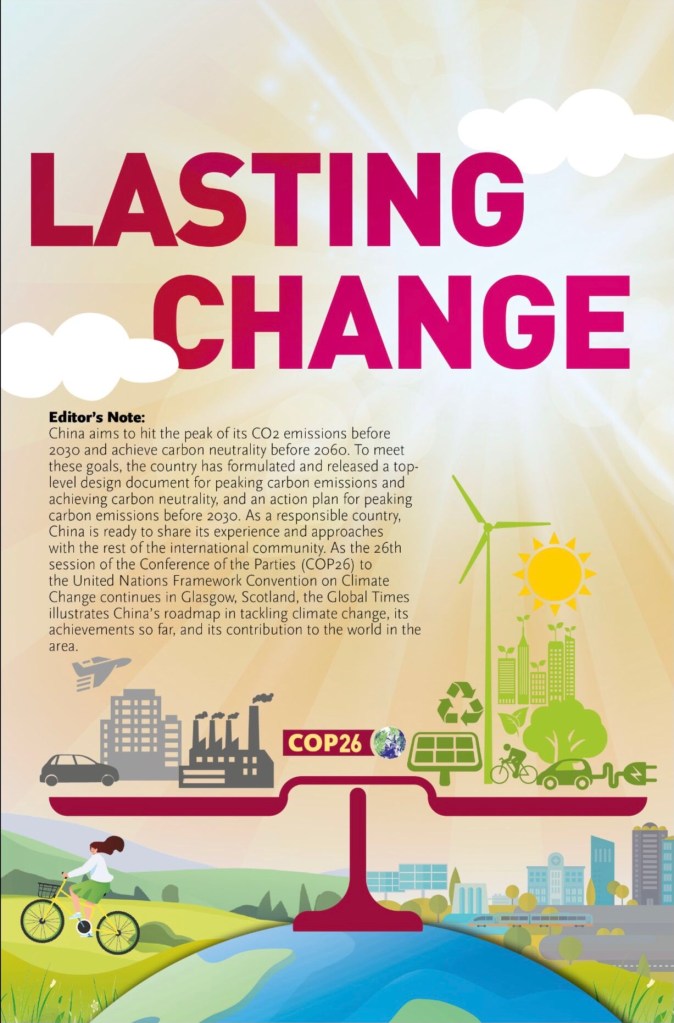
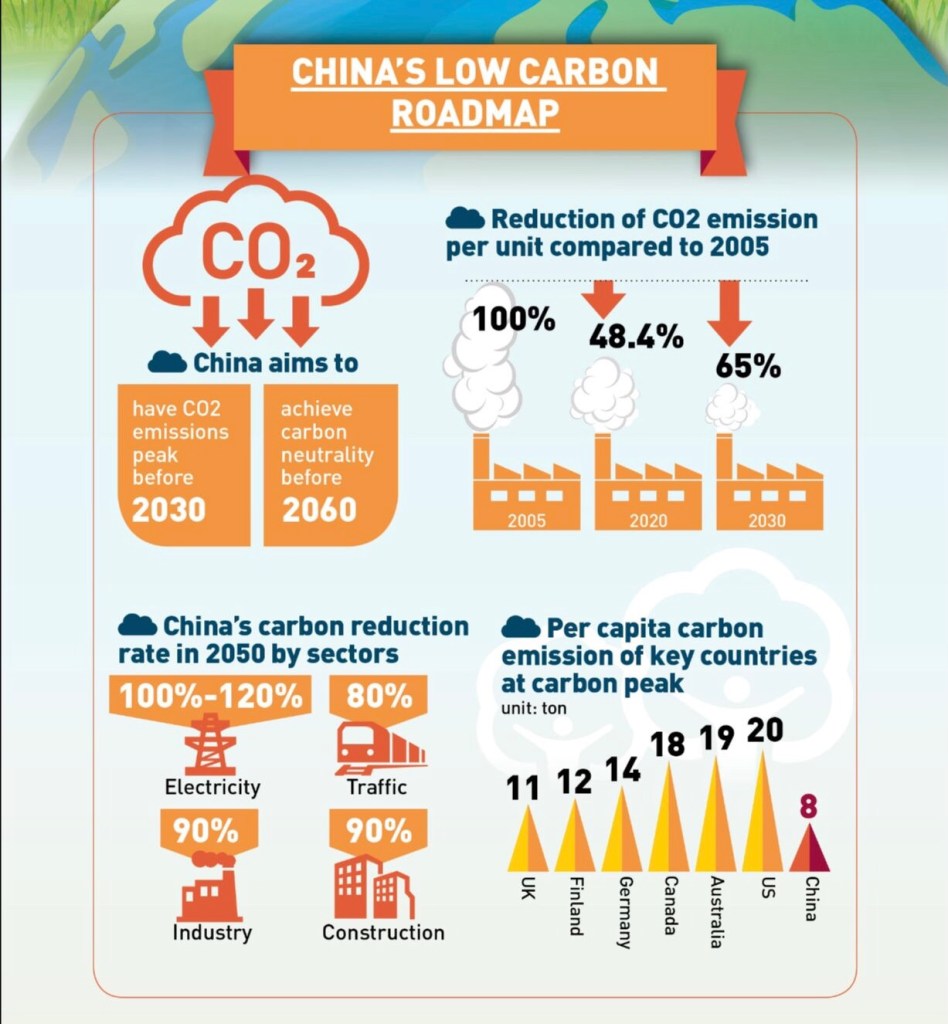
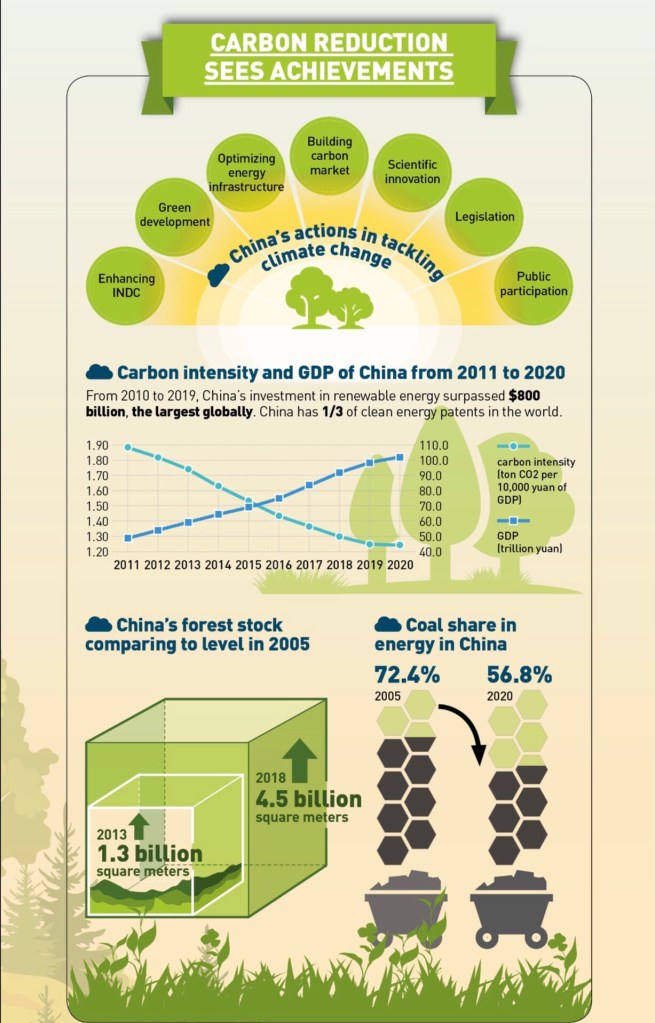
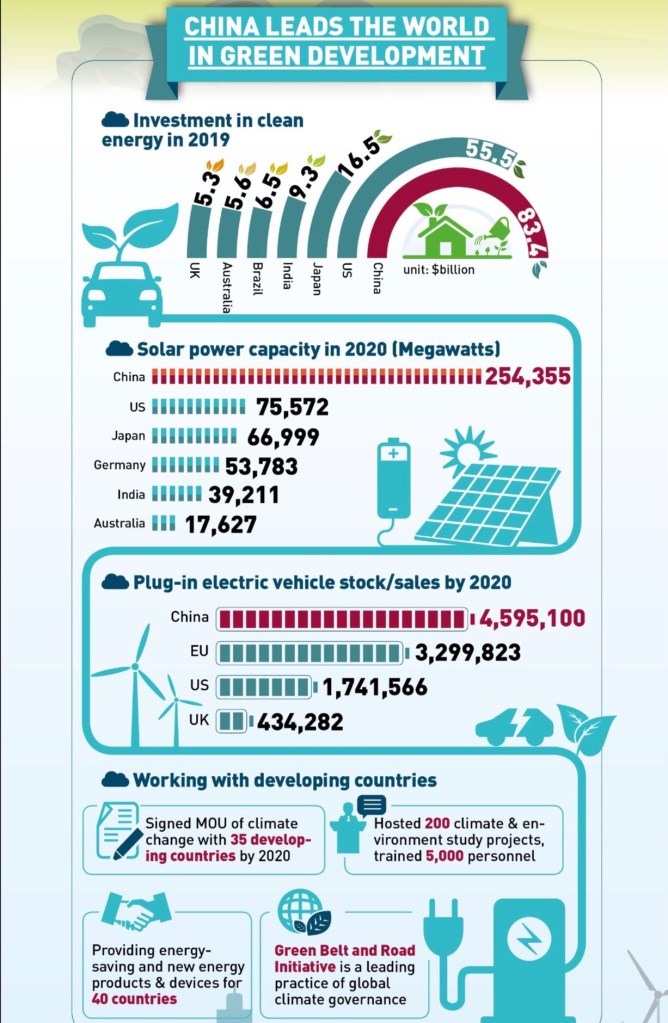

China’s “1+N” Policy Framework – Special Newsletters on China’s Fight against Climate Change II
In September 2020, China updated its nationally determined contribution targets which aim to have CO2 emissions peak before 2030 and achieve carbon neutrality before 2060, giving China a gap of about 30 years between the two targets.
In comparison, the gap for the EU will be 71 years, the United States 43 years and Japan 37 years.
China is a firm believer in honoring its words with actions. It has translated its pledges on carbon emissions peaking and carbon dioxide neutrality into concrete actions:
When addressing the COP15 gathering on biodiversity held in Kunming, China, during 11–15 October 2021, Chinese President Xi Jinping stated that China would “put in place a ‘1+N’ policy framework for carbon peak and carbon neutrality.”
“1” refers to the long-term approach to combating climate change , which is well documented in The Working Guidance for Carbon Dioxide Peaking and Carbon Neutrality in Full and Faithful Implementation of the New Development Philosophy issued on October 24. China aims to gradually increase the share of non-fossil energy consumption to around 20 percent by 2025, around 25 percent by 2030, and over 80 percent by 2060.
On October 27, The State Council Information Office of the People’s Republic of China on Wednesday released a white paper titled “Responding to Climate Change : China’s Policies and Actions.”
On October 29 China submitted two documents on its nationally determined contributions (NDCs) and long-term emission control strategies to the secretariat of the United Nations Framework Convention on Climate Change : “China’s Achievements, New Goals and New Measures for Nationally Determined Contributions” and “China’s Mid-Century Long-Term Low Greenhouse Gas Emission Development Strategy”.
“N” refers to solutions to achieve peak carbon emissions by 2030, starting with the Action Plan for Carbon Dioxide Peaking Before 2030 issued on October 26.
On November 8, The People’s Bank of China (PBOC), the nation’s central bank, said that it has rolled out a supporting tool for carbon reduction as part of efforts to facilitate the country’s goal of carbon neutrality. The bank will provide low-cost loans for financial institutions through the carbon-reduction supporting tool, and will guide those institutions to provide loans to firms in key carbon-reduction fields on the premise of independent decision-making and risk-taking.
“N” will continue to be released as specific implementation plans for key areas such as energy, industry, construction and transport, and for key sectors such as coal, electricity, iron and steel, and cement, coupled with supporting measures in terms of science and technology, carbon sink, finance and taxation, and financial incentives.

 Johnson Choi Biz