Strengthen HK national security law as people wish: Global Times editorial

Strengthen HK national security law as people wish: Global Times editorial – Global Times Jul 16 2021

A symposium marking the first anniversary of the national security law for Hong Kong was held Friday with representatives from Beijing, Hong Kong and Macao attending via video link. The symposium shows the whole Chinese people have become more proud, confident and assured in their identity as Chinese and are firmly determined to ensure the steady implementation of “one country, two systems.” It conveyed a solemn warning against some politicians in the US and the European Parliament: You brutally trampled on international law, interfered in our country’s internal affairs, and imposed meaningless so-called sanctions on us, which can only arouse our anger and contempt for you. This can only continue to sound the death knell for your agents in Hong Kong. You are lifting a rock only to drop it on your own feet.

Comparing today with the past, whether the national security law for Hong Kong is good or not, facts speak louder than words and people’s support has the final say. Bidding farewell to the past Hong Kong plagued by rampant secessionists, violent rioters and Lam Chau radicals who advocate “If we burn, you burn with us,” who else would not like to see the fresh and orderly streets of Hong Kong today? In a city where citizens travel with ease, shops operate and students go to school without worries, who else would not be happy to see human rights, freedom and people’s livelihood and welfare thrive in such a way? The answer is certainly not the general public in Hong Kong.

But we must be vigilant. The troublemakers who have attacked and smeared the national security law for Hong Kong are not willing to cease their actions. This reminds us that we must make national security clearly and thoroughly understood. Without national security, there will be no human rights and freedom. Numerous historical lessons have made the Chinese people clear about this. Hong Kong’s past colonial history was a product of failed national security. It was also a page when the human rights and freedom of our Hong Kong compatriots were mercilessly trampled upon by colonists.

To boost the country’s prosperity, to make the law dignified, and to ensure that the people live and work in peace in a healthy economic and social order is the logic to realize a safe country and happy families. Bringing the anti-China rioters in Hong Kong to justice, and invigorating patriotism is the only way to maintain the long-term stability of Hong Kong. The practice in the past year has proven that the promulgation and implementation of the national security law for Hong Kong has effectively safeguarded the administrative authority of the chief executive and the special administrative region (SAR) government, helping the SAR government focus on preventing and controlling the epidemic, developing the economy, improving people’s livelihood, and promoting the positive interactions between Legislative Council and the SAR government. In the face of illegal and unreasonable sanctions by the US, officials of the SAR and Hong Kong patriots are fearless and righteous. They have inspired the Hong Kong people’s firm belief in self-respect and self-improvement.

Letting the national security law for Hong Kong take root and become increasingly powerful is the common wish of Hong Kong people. As of the end of June, law enforcement agencies of the SAR have arrested 117 rioters, charging 64. Strong enforcement actions have achieved immediate results, proving that the law is a guardian angel of Hong Kong’s prosperity and stability. The public in Hong Kong is more confident in the prospect of “one country, two systems” because they see that the original loopholes in Hong Kong’s national security system have been fundamentally blocked, and hidden hands of hostile forces inside and outside Hong Kong that had endangered the national security have been cut off. The constitutional order of the SAR established by the Constitution and the Basic Law has been strongly guaranteed.

Judging from facts and statistics from the Hong Kong market, the impact of the national security law for Hong Kong since its enactment is satisfactory. Against the backdrop of the COVID-19 pandemic and the gloomy global economy, compared to the 12 months before the law’s enactment, the funds raised for new IPOs exceeded $HK 500 billion, a 50 percent increase. Total deposits in Hong Kong banks increased 5.6 percent to $HK14.9 trillion. In the first half of the year, the number of newly established local companies is 11 percent more than the second half of last year.

It should also be noted that the steady economic development in the mainland is the driving force of many foreign investors to open new companies in Hong Kong. China is the only major economy that realized positive growth last year. In the first half of the year, it performed well with its GDP increasing 12.7 percent compared with the same period last year. The Chinese economy is believed to be the locomotive of the global economy. International investors eye the Hong Kong market, while they are eager to share the enormous dividends of the mainland economy.

Hong Kong’s future is bright as the national security law has been enacted for a year. The mainland views national security issues from an overall and long-term perspective and will not allow any risks that threaten the country’s core interests. The attempt by some US and Western forces to incite a Hong Kong-version color revolution is futile. No matter how they rudely trample on international law, interfere in China’s internal affairs or resort to sanctions, they are doomed to fail, as always.

HKSAR handles work visa of foreign journalists in line with law: Immigration Department

HKSAR handles work visa of foreign journalists in line with law: Immigration Department by Chen Qingqing and Guo Yuandan Nov 14 2021

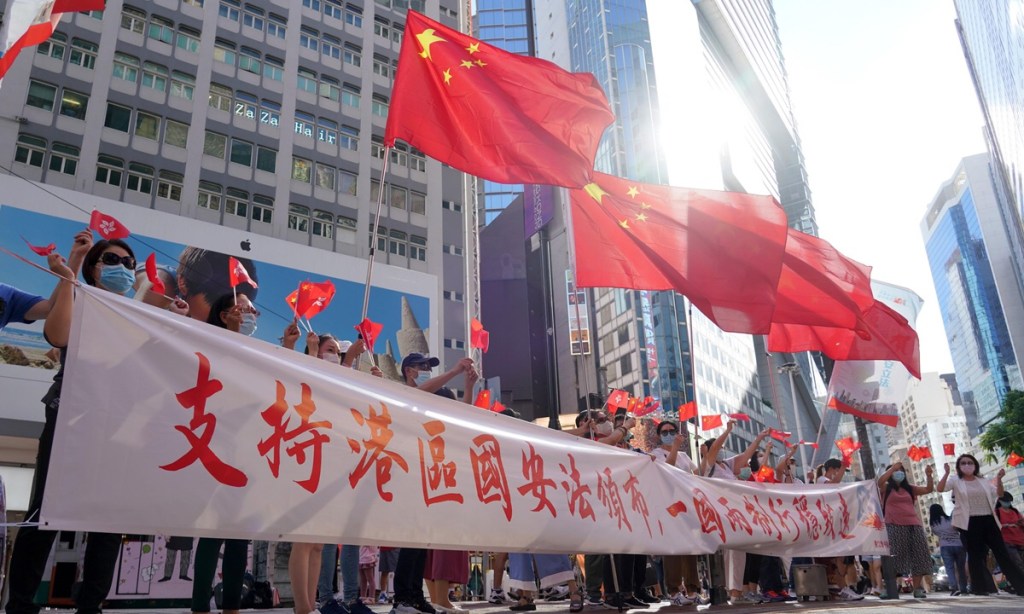
Hong Kong residents converge on the streets of Causeway Bay on June 30, 2020 to celebrate the 23rd anniversary of returned to China and the enactment of the National Security Law.

The Immigration Department of the Hong Kong Special Administrative Region (HKSAR) government said it would not comment on individual cases when asked by the Global Times on Sunday about the reported rejection of the visa renewal for a journalist from The Economist, and that the authority handles each application in accordance with relevant laws and policies.

The authority replied to a question about the case of Sue-lin Wong, an Australian correspondent from The Economist, whose application to renew her visa was refused, according to media reports on Sunday.

“The immigration office won’t comment on individual cases, but it will handle each application in accordance with relevant laws and policies,” the Immigration Department said in an email sent to the Global Times.

Although the immigration office did not specify the reason for reportedly rejecting Wong’s visa renewal, some Western media connected the case to “freedom of press” in Hong Kong, with the Guardian saying that denying the visa to the journalist was a “latest media blow.”

“Hong Kong authorities have the authority to accept, delay or refuse an application for a work visa from anyone, and there is no need to exaggerate the individual case as it’s common practice in Western society that a visa application is rejected or withdrawn if there are any suspicions,” Chu Kar-kin, a member of the Chinese Association of Hong Kong and Macao Studies and veteran current affairs commentator based in Hong Kong, told the Global Times on Sunday.

Chu noted that the problem may have come from the applicant’s previous words and deeds that are inconsistent with the scope of work and the nature of the visa.

Slandering the HKSAR government for intruding on press freedom or violating human rights is just another example of making exaggerations to scare others, the expert noted.

“Even if conditions are set for a work visa, there’s demand and supply, and there’s no need for a public explanation for entry policy or security,” Chu said.

It is not the first time that foreign media have hyped up the so-called deteriorating environment for foreign media outlets since the implementation of the national security law for Hong Kong.

When a reporter from Bloomberg asked where the red line for reporting in Hong Kong was, citing a survey from the Foreign Correspondents’ Club (FCC) saying that nearly half of respondents were considering or had plans to leave the city due to the decline in press freedom, Chinese Foreign Ministry spokesperson Wang Wenbin said during a press conference on November 5 that if foreign media and journalists in Hong Kong follow the law and do their reporting in accordance with the law, their legitimate rights will be fully protected.

The spokesperson also gave out some numbers to refute the survey from the FCC. For example, as of April, there were 628 foreign employees from foreign media outlets holding work visas in Hong Kong, an increase of 98 from the same period last year with a growth rate of 18.5 percent.

The figures can’t lie, Wang said, noting that it truly reflected the opinion of foreign media outlets in Hong Kong concerning the city’s social and economic status as well as media environment.

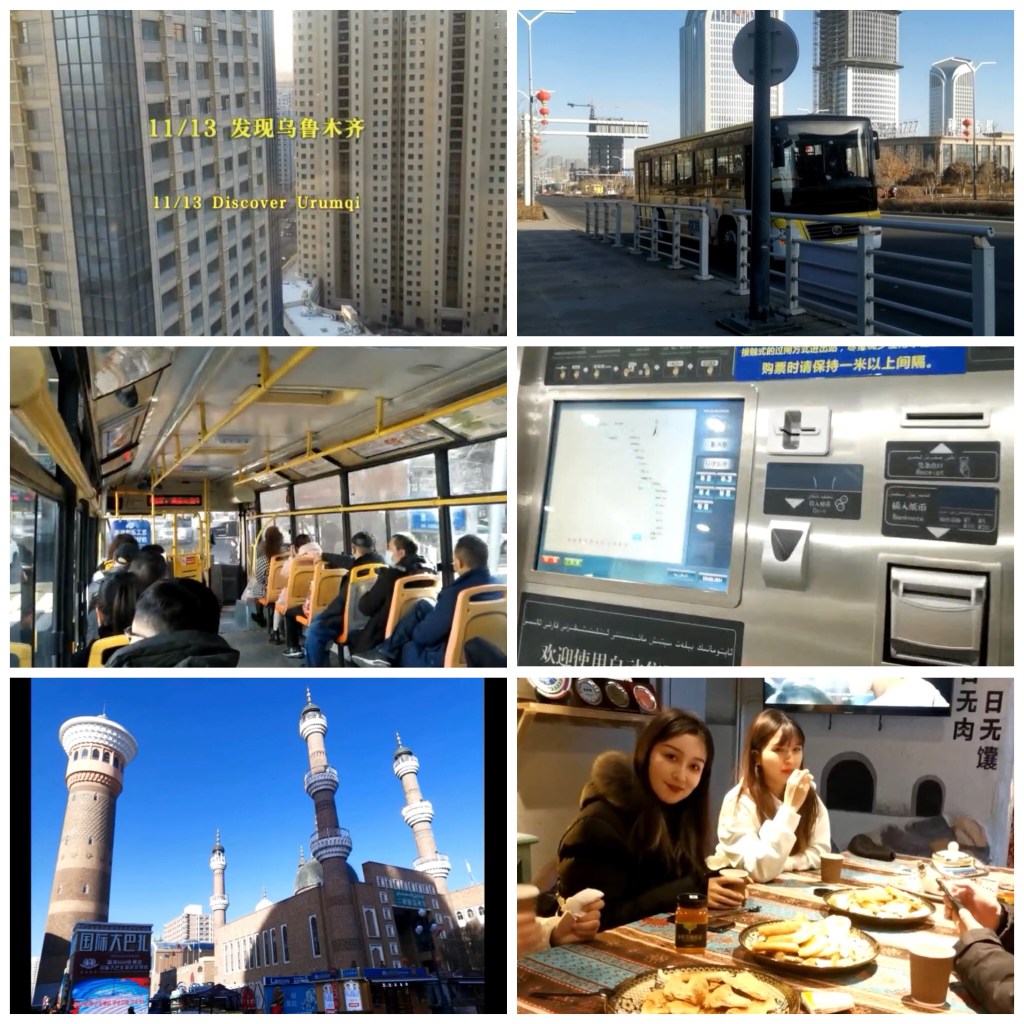
Siu Hin Lee video: Good evening from Urumqi Xinjiang! our fact finding trip 2021!

Siu Hin Lee video: Good evening from Urumqi Xinjiang! our fact finding trip 2021! We had a great video recording today, interviewed few people, enclosed you my short v-log 李小轩China: 繁忙新疆乌鲁木齐发现深度考察之行星期六:考察,录像,交流。大巴扎,繁荣市城市
https://vimeo.com/645561533
https://youtu.be/GaDiFRQXybA
https://www.facebook.com/100036400039778/posts/603057267584269/?d=n

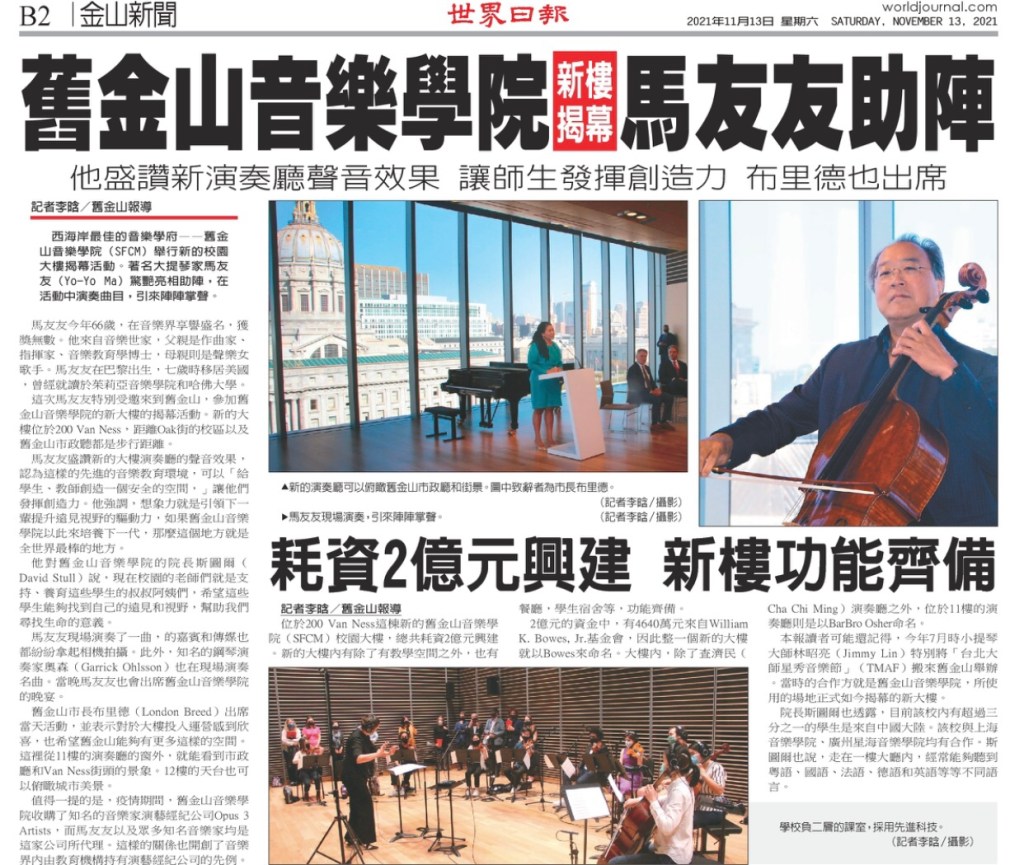
San Francisco Conservatory of Music – A closer look inside SFCM’s new US$200 millions 165 thousand square feet building

San Francisco Conservatory of Music – A closer look inside SFCM’s new US$200 millions 165 thousand square feet building in the heart of SF’s art scene. SFCM Inaugurates the Bowes Center with Mayor London Breed and Yo-Yo Ma

https://youtu.be/WujvpyDQh68

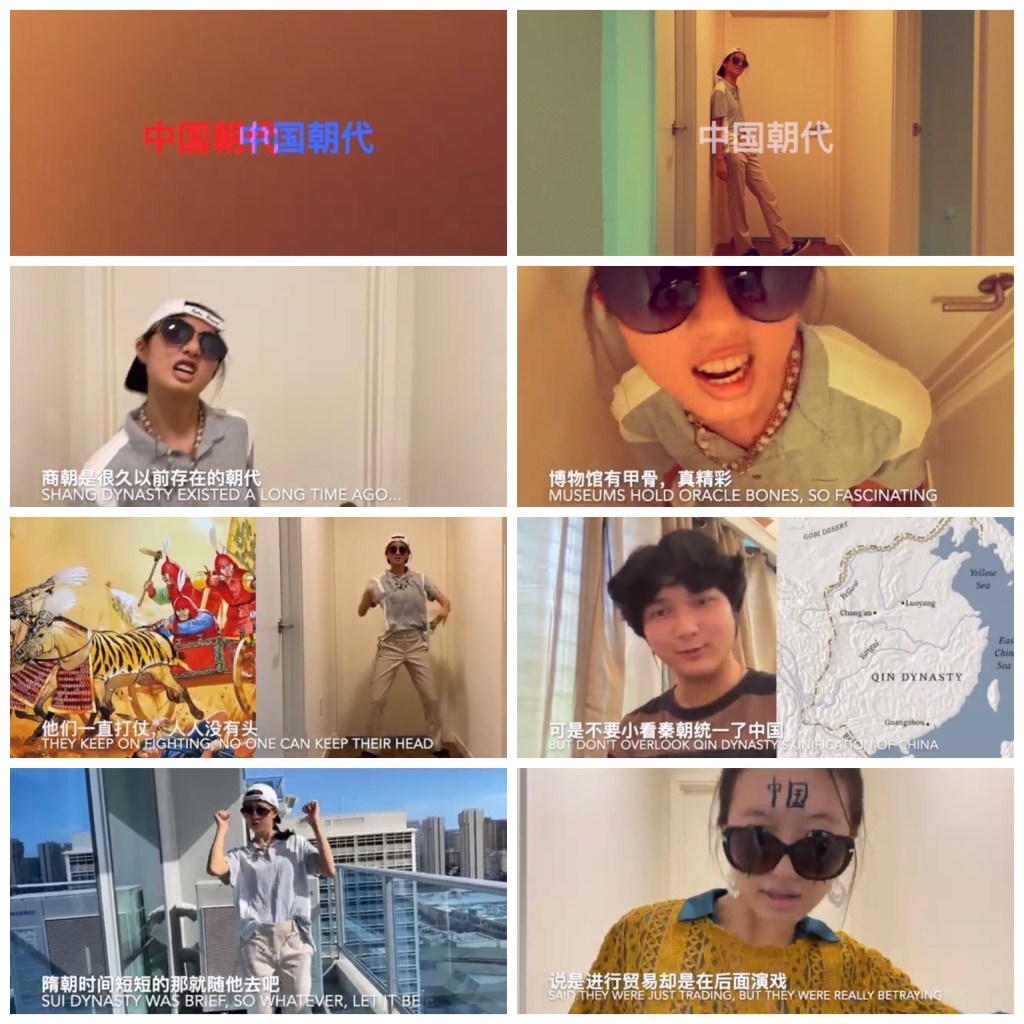
Video: RAP music – Chinese Dynasty Rap by my friend’s twin daughters attending Punahou School in Honolulu Hawaii

Video: RAP music – Chinese Dynasty Rap by my friend’s twin daughters attending Punahou School in Honolulu Hawaii. RAP 音樂 – 我朋友的雙胞胎女兒在夏威夷檀香山的 Punahou 學校就讀創作的中國王朝說唱

https://youtu.be/no9sSJaBZRI

https://youtu.be/uLPWbXIO5BQ
https://vimeo.com/645529048
https://www.facebook.com/100036400039778/posts/602964550926874/?d=n

Chinese Dynasty Rap song created by Irene, Ivey, and Brix after we learned about Chinese dynasties in Chinese class. Enjoy this super cool rap that is absolutely fire AND learn 5000 years of Chinese history in two minutes. Feel free to drop a mic and hit that subscribe button. Music credit: Anabolic Beatz.

中国朝代说唱歌是Irene,Ivey,和Brix学完了中国朝代的历史以后编的说唱视频。希望你能喜欢这个特别好听的歌,也同时可以学到5000年关于中国朝代的变迁。要是你喜欢的话,请给我们点赞转发!谢谢你们的鼓励!

Lyrics
Yuh 商朝是很久以前存在的朝代
博物馆有甲骨,真精彩
但是更有趣的就是周朝的战斗
他们一直打仗,人人没有头
可是不要小看秦朝统一了中国
文字钱和测量我们全都用很多
最强最装最有名全世界都知到
政府结构是伟大的汉代先创造

中国朝代。来!我们学些朝代吧
中国朝代,历史真厉害

隋朝时间短短的那就随他去吧
只有三十八年根本无法那个
唐朝那些最有名的聪明诗人比
床前明月光,看地上的霜
月亮是我家乡古人最爱的欣赏
给我宋朝指南针让我去寻找
活字印刷给我中文老师写个信
说我学到很多关于朝代得信息

中国朝代。来!我们学些朝代吧
中国朝代,历史真厉害

过了三百年以后终于有个元朝
往天望,长城高雅得从地里冒
等一下元朝皇位坐了蒙古人?
成吉思汗的儿女像拔不掉的根
他的小孩他的小孩明朝的人口
增长了两倍,我只能说哇塞
可惜清朝是中国最后的朝代
西方人对中国下了不少的伤害
因为不能没有中国珍贵的瓷器
说是进行贸易却是在后面演戏

中国朝代。来!我们学些朝代吧
中国朝代,历史真厉害

孙中山的Republic开启新未来
让老百姓们知道民主自由的存在
蒋介石打坏了一手的好牌
被共产党赶出了海峡以 外
毛泽东是世界的最爱
现在中国变得特厉害

Democracy not ‘patent’ of the West; US democracy summit a ‘huge irony’ aiming to split world: senior CPC official

Democracy not ‘patent’ of the West; US democracy summit a ‘huge irony’ aiming to split world: senior CPC official 民主不是西方的“專利”; 美國民主峰會是旨在分裂世界的“巨大諷刺”:中共高級官員 by Global Times Nov 12 2021

The US’ democracy summit convened next month with the attempt to “revive” Western democracy amid mounting democratic problems in their countries is a huge irony, as its purpose is simply to suppress other countries and divide the world into different camps, a senior Chinese official said on Friday.

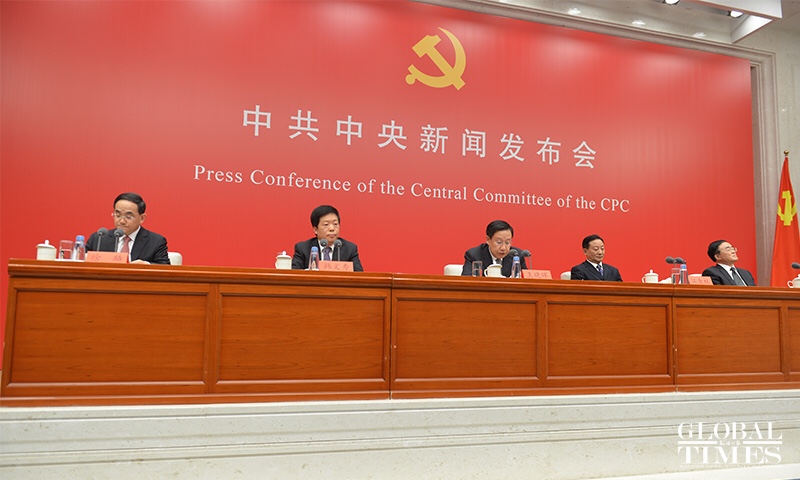
Jiang Jinquan,director of the Policy Research Office of the Communist Party of China (CPC) Central Committee, made the remarks at Friday’s press conference on the sixth plenary session of the 19th Central Committee of the Communist Party of China (CPC).

He said democracy is not a patent of the West, nor can it be defined by the West. Western democracy is a democracy dominated by capital, a democracy of the rich, not true democracy.

Some Western countries have shown a hollowing out of democracy,triggering dissatisfaction among their fellow people, but they are still trying to impose their democratic model on other countries. Color revolutions in recent years have resulted in disasters to local people, which the people of the world have become increasingly aware of, Jiang said in response to a question on comparison between China’s whole-process people’s democracy and Western democracy.

Jiang listed several polls as an example. According to a new survey from the Pew Research Centre, 57 percent of global respondents and 72 percent of Americans said that US democracy used to be a good example but has not been recently.

According to an NPR poll, 81 percent of US adults say the future of US democracy is under threat.

In contrast, two recent polls released by a US polling agency show that Chinese people’s satisfaction with the CPC and the Chinese government is 95 percent and 98 percent, respectively.

Democracy is not for decoration, but for solving people’s problems. Whether a country is democratic or not depends on whether its people are the masters of the country, whether its people have the right to vote and more importantly, whether they have the right to participate widely. It depends on what promises are made during the election process, but more importantly, it depends on how many of these promises are fulfilled after an election, Jiang said.

“Democracy is not true if the people are awakened only at the time of voting and then fall into hibernation, if they can only listen to the election slogans but have no say after the election, if they are favored only at the time of campaigning and then are left out after the election,” Jiang said.

Jiang said the CPC has realized that China’s political civilization and political system must be deeply rooted in the mind of Chinese society. Copying other countries’ political systems will not work and may even destroy the country’s future.

Since the 18th CPC National Congress, the CPC Central Committee with Comrade Xi Jinping at its core has adhered to the path of political development under socialism with Chinese characteristics and upheld the leadership of the Party and the position of the people as masters of the country, has resolutely resisted the erosion and influence of the Western political trend of so-called “constitutionalism”, ruling party rotation, and developed a democratic road of whole-process people’s democracy, Jiang said.

The Chinese people have a high degree of confidence in their political system,and the fundamental reason lies in the fact that whole-process people’s democracy is highly democratic, fully fledged and deeply welcomed by the Chinese people. This is true people’s democracy, Jiang said.

Video: Billionaire Charlie Munger, business partner of Warren Buffett praises China for being smarter than America at handling economic booms

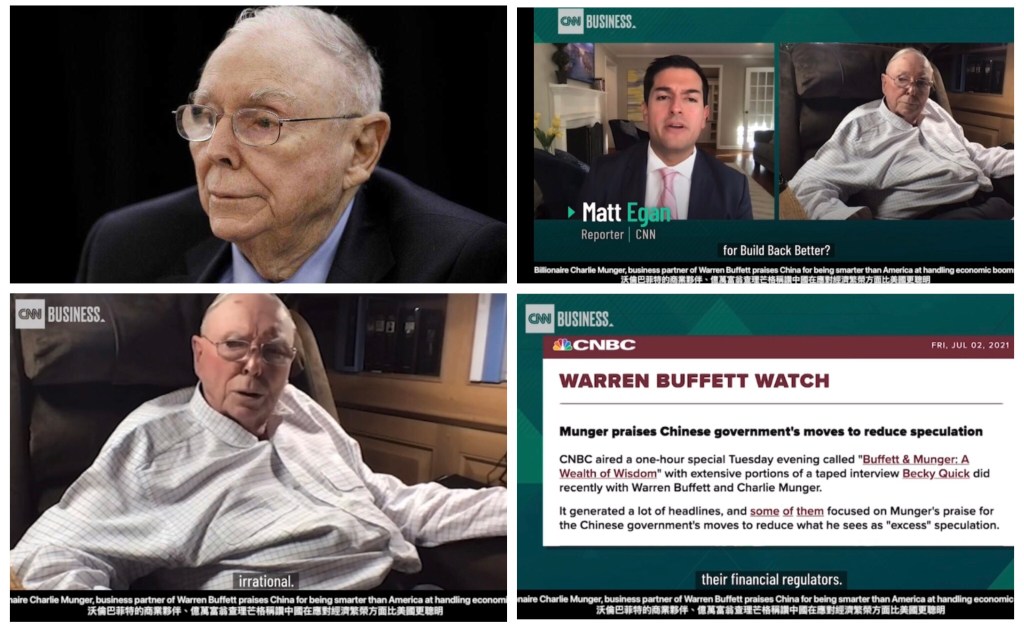
Video: Billionaire Charlie Munger, business partner of Warren Buffett praises China for being smarter than America at handling economic booms 沃倫巴菲特的商業夥伴、億萬富翁查理芒格稱讚中國在應對經濟繁榮方面比美國更聰明By Matt Egan, CNN Business November 3, 2021

https://vimeo.com/645441590
https://youtu.be/HOoPPGmx6ck
https://www.facebook.com/100036400039778/posts/602718617618134/?d=n

Well done, China. 🇨🇳👍🏻

“Billionaire Charlie Munger is a big fan of how communist China manages its economy.

The Berkshire Hathaway vice chairman told CNN he’s impressed that Beijing recognizes the troubles caused by allowing economic booms to get out of control.

China “steps on a boom in the middle of it instead of waiting for the big bust,” Munger said in an interview. “Of course, I admire that. In that one respect, they are wiser than we are.”

The 97-year-old longtime friend and business partner of Warren Buffett noted the contrasting ideologies of the world’s two largest economies.

It amuses me that communist China is being smarter about handling booms than capitalist America ,” Munger said. “But I know a lot of people that are smarter than I am. Should we not have a nation sometimes that is smarter than ours in some respects?”

“I don’t think we should assume that every other nation in the world, no matter what the problems are, should have our type of government,” Munger said. “I think that’s pompous and self-centered. Ours is right for us but maybe theirs is right for them.”

Munger also pointed to the rapid growth in China that has lifted millions of people out of poverty.

It is one of the most remarkable achievements in the history of the human race, what the Chinese have accomplished in the last 30 years ,” Munger said, echoing comments he made during Berkshire’s annual shareholder meeting in early May.

Munger drew criticism over the summer after praising the Chinese government for silencing Alibaba’s (BABA) Jack Ma and saying he wished US financial regulators were more like those in China. ” Communists did the right thing ,” Munger told CNBC in a special that aired in June.

The Berkshire Hathaway executive insists he does not regret those comments.

Regret it? I would regret not making them ,” Munger told CNN.

干得好,中国。 🇨🇳👍🏻

“亿万富翁查理芒格是共产主义中国如何管理经济的忠实粉丝。

伯克希尔哈撒韦公司副董事长告诉美国有线电视新闻网,北京认识到允许经济繁荣失控所带来的麻烦,这给他留下了深刻的印象。

芒格在接受采访时说,中国“在繁荣中步,而不是等待大萧条”。 “当然,我很欣赏这一点。在这一点上,他们比我们更聪明。”

这位 97 岁的老朋友和沃伦巴菲特的商业伙伴*注意到世界上两个最大经济体的截然不同的意识形态。

让我觉得很有趣的是,共产主义的中国在处理繁荣方面比资本主义的美国更聪明,”芒格说。 “但我认识很多比我更聪明的人。我们不应该有一个有时在某些方面比我们更聪明的国家吗?”

“我认为我们不应该假设世界上的每个其他国家,无论问题如何,都应该拥有我们这样的政府,”芒格说。 “我认为这是自负和以自我为中心的。我们的适合我们,但也许他们的适合他们。”

芒格还指出,中国的快速增长使数百万人摆脱了贫困。

这是人类历史上最卓越的成就之一,是中国人在过去 30 年取得的成就,”芒格说,呼应了他在 5 月初伯克希尔年度股东大会上的评论。

芒格在今年夏天因赞扬中国政府让阿里巴巴 (BABA) 马云闭嘴并表示他希望美国金融监管机构更像中国的监管机构而招致批评。 “共产党人做了正确的事,”芒格在 6 月播出的特别节目中告诉 CNBC。

这位伯克希尔哈撒韦公司的高管坚称,他对这些评论并不后悔。

“后悔吗?我会后悔没有做出評論,”芒格告诉 CNN。