Video: US troops training separatist on island of Taiwan for at least one year! Will US tolerate if China training separatists in California? 美軍在台灣島訓練分裂分子至少一年!如果中國在加州訓練美國分裂分子,美國會容忍嗎?
US marines have been training troops in Taiwan Province for almost a year. Former UK MP George Galloway and President of the Phyllis Schlafly Eagle Forum Ed Martin join a panel to discuss.
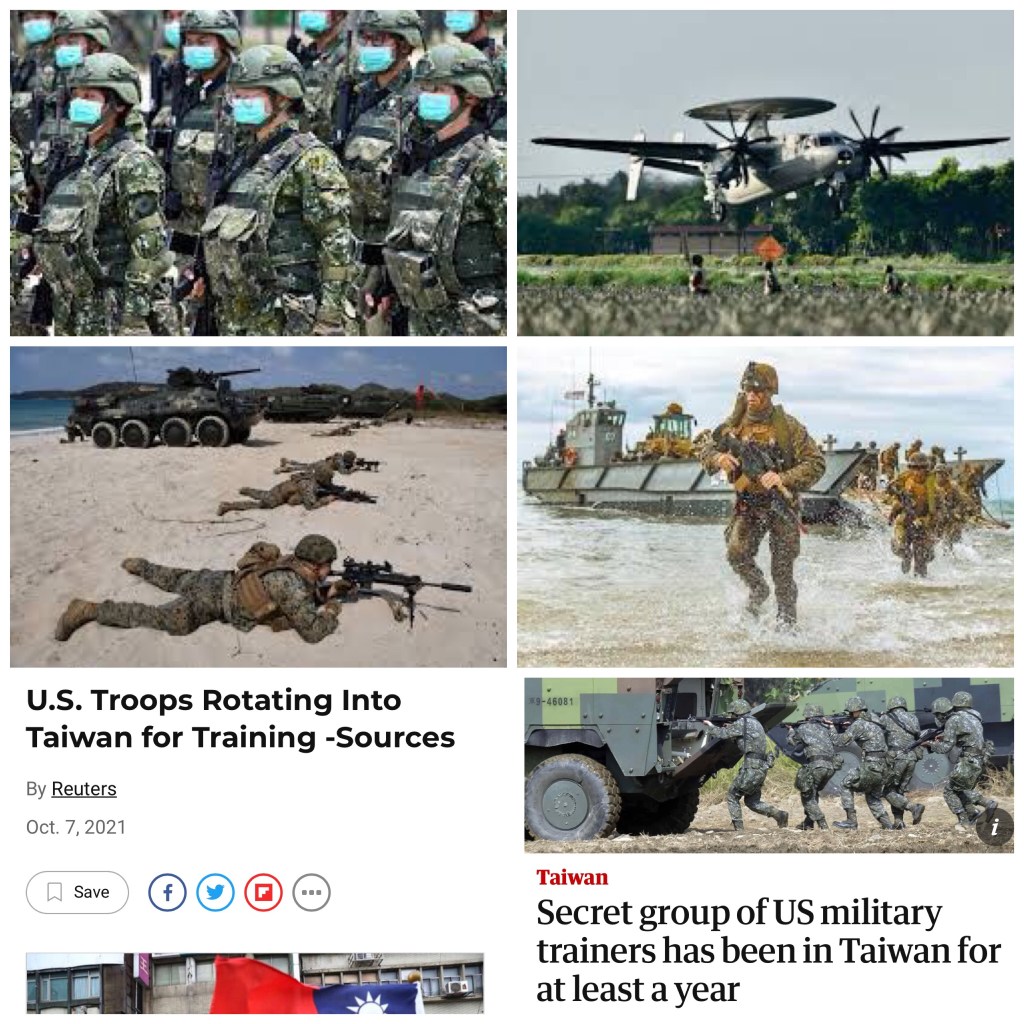
Military Newspapers are carrying it, so it’s an officially sanctioned leak. ASIA-PACIFIC – U.S. troops deployed to Taiwan to train local forces amid growing tensions with China, BY COREY DICKSTEIN • STARS AND STRIPES • OCTOBER 7, 2021
Members of Taiwan’s armed forces wearing protective masks stand atop military vehicles during a military exercise in Hukou, Hsinchu County, Taiwan, on Jan. 19, 2021.
Members of Taiwan’s armed forces wearing protective masks stand atop military vehicles during a military exercise in Hukou, Hsinchu County, Taiwan, on Jan. 19, 2021. (I-Hwa Cheng/Bloomberg photo)
U.S. troops have been deployed to Taiwan for at least the last year to train local military forces to bolster the island’s defenses amid increasing tensions with mainland China, The Wall Street Journal reported Thursday.
Some two dozen U.S. special operators and a small contingent of Marines are deployed in Taiwan, according to the newspaper, which cited unnamed U.S. officials. The special operators have worked with Taiwanese ground troops and the Marines have worked with maritime forces on small-boat operations, according to the Journal.
The Pentagon neither confirmed nor denied the report. A spokesman said American support for Taiwan has remained consistent and is grounded in ensuring “peace, security and stability in the Indo-Pacific — including in the Taiwan Strait.”
“I don’t have any comments on specific operations, engagements, or training, but I would like to highlight that our support for and defense relationship with Taiwan remains aligned against the current threat posed by the People’s Republic of China,” Pentagon spokesman John Supple said in a statement Thursday after The Wall Street Journal report was published. “We urge Beijing to honor its commitment to the peaceful resolution of cross-Strait differences.”
The news report comes as China has increased its pressure on Taiwan and also invested heavily in recent years to modernize its military. Taiwanese officials said this week that nearly 150 Chinese military planes, including fighter jets and bombers, passed through Taiwan’s air defense zone between Friday and Monday.
“I would note, the [People’s Republic of China] has stepped up efforts to intimidate and pressure Taiwan and other allies and partners, including increasing military activities conducted in the vicinity of Taiwan, East China Sea, and South China Sea, which we believe are destabilizing and increase the risk of miscalculation,” Supple said.
Taiwan Defense Minister Chiu Kuo-cheng on Wednesday warned reporters in Taipei that relations with China had reached a 40-year low and Beijing could be preparing to invade Taiwan by 2025.
While Taiwan has its own democratic government, Beijing considers it a renegade province that must, and eventually, be unified politically with the mainland, perhaps by force.
The deployment of American forces to Taiwan is on a rotational basis, meaning troops regularly cycle in and out of Taiwan to replace one another, The Wall Street Journal reported. While the U.S. presence is small, it is designed to boost Taiwanese confidence that it could fend off Chinese aggression, according to the newspaper.
The White House declined comment on the report. It announced Wednesday that President Joe Biden and Chinese President Xi Jinping had agreed to hold a virtual summit to address issues between the two nations before the end of the year.
Biden and Xi said earlier this year that they had agreed to abide by the “one China” policy forged in the 1970s, in which the United States officially recognizes China instead of Taiwan. That pact lets the U.S. unofficially support Taiwan, including with arms sales to defend itself.
In May, Christopher Maier, assistant secretary of defense for special operations and low-intensity conflict, told senators during his confirmation hearing for that position that the United States should strongly consider deploying American troops to improve Taiwan’s defenses.
Taiwanese media last year reported some American forces, including Green Berets and Navy SEALs, had participated in training events on Taiwan in recent years, but those deployments were never confirmed by the Pentagon, which has not acknowledged the presence of American troops on the island for 40 years as part of the “one China policy.”
Some of the operations that American forces are conducting in Taiwan might be classified, but the Pentagon also did not seek to disclose their presence there because of political sensitivities with China, especially amid the growing tensions in the region and between Beijing and the United States, the U.S. officials told The Wall Street Journal.
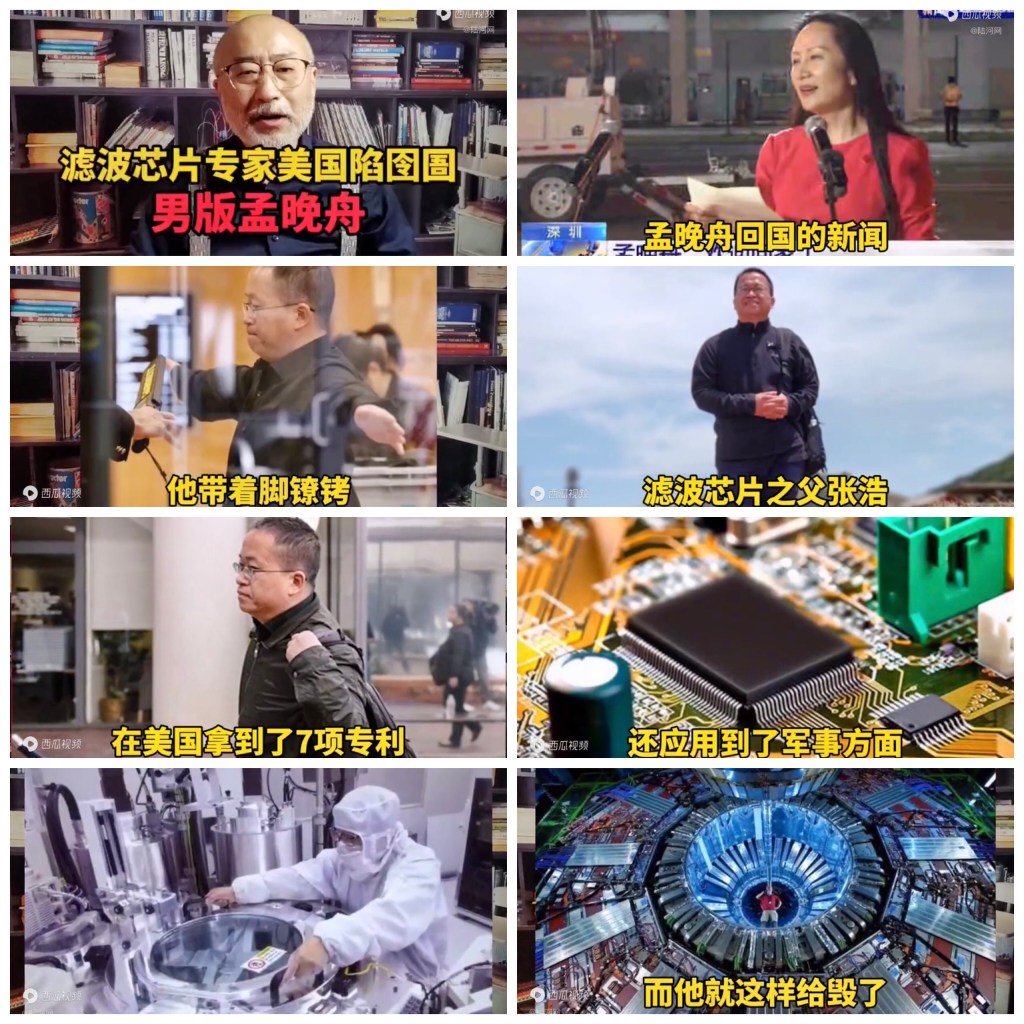
I was surprised that the US government asked chip manufacturers such as TSMC, Samsung Electronics, SK Hynix and Intel to submit confidential information on November 8 to find out the reasons for the global chip shortage. Why? 驚聞美國政府要求台積電、三星電子、SK海力士和英特爾等晶片製造商在11月8日提交機密資料,以找出造成全球晶片短缺的原因,憑什麼?
Reminds me of the 1980s when Japan’s semiconductor market was the world’s largest. The US government forced Japan to open up its intellectual property rights and successfully suppressed Japanese industries. It also joined forces with Britain, France and Germany, signed a plaza agreement with the Japanese government, and jointly intervened in the yen’s devaluation. After 20 years of being lost, the United States has won! 讓我想起1980年代,日本半導體市占曾是全球第一,慘遭美國政府逼迫日本開放知識產權,成功打壓日本產業,並聯合英法德,與日本政府簽下廣場協議,聯合干預日圓重貶,墜入迷失的二十年,美國贏了!
In September 1997, Yang Binyan, the founder and chairman of Taiwan’s leading tape leader Siwei company, went to the US to visit the US Open tennis tournament. He was arrested by the FBI at the airport and accused of stealing business secrets from the US firm Avery Dennison. In 2000, the US court sentenced Siwei to The company should be paid 60 million U.S. dollars, and Yang Dong was also detained for six months. The truth of this case is that the U.S. businessmen cannot beat Taiwan, so they set a trap and convict, and the U.S. won again!! 1997年9月,台灣的膠帶龍頭四維企業創辦人兼董事長楊斌彥赴美參觀US Open 網球賽,在機場被FBI逮補,被控竊取美商Avery Dennison營業機密,2000年美國法院判四維公司應支付該公司六千萬美元,楊董也被拘留六個月。本案真相其實是美商打不過台灣,就設陷阱入罪,美國又贏了!!
In the 2010s, my country’s panel industry was vying with South Korea and Japan for the world’s number one position. The US Department of Justice accused Chi Mei, AUO, and Huaying for violating Anti Trust (anti-trust laws). A group of industry executives and elites were jailed by Luo Zhi: 2010年代,我國面板產業正與韓日爭奪世界第一,美國司法部控告奇美電、友達、華映等違反Anti Trust (反壟斷法),一群產業高管菁英紛紛被羅織入獄:
Chi Mei Electronics He Zhaoyang (the then deputy director) was sentenced to 14 months in prison and 369 days in prison in the United States; Guo Zhenlong, vice president of operations, Yang Zhuxiang, director, and Huang Wenhong, general manager of Chi Mei Logistics, each sentenced to 9 months, and the company paid a fine of NT$7.1 billion.
AUO Jian pleaded not guilty and was fined 500 million US dollars. Deputy Dong Chen Xuanbin was imprisoned in the United States for 2,343 days (6 and a half years), and Xiong Hui, the former general manager of Jiasda, also served 30 months in jail.
Huaying pleaded guilty and negotiated and fined 2.1 billion Taiwan dollars. Former chairman Lin Zhenhong, special assistant Liu Zhijun, and vice premier of business Li Xuelong were sentenced to 9, 7, and 6 months.
華映認罪協商,罰21億台幣,前董事長林鎮弘、特助劉治軍、營業副總理李學龍各被判關9、7、6個月。
Wu Ruihong, the former marketing director of HannStar, was accused of manipulating LCD panel prices and sentenced to 7 months in prison.
瀚宇彩晶前營銷主管吳睿紘被控操縱LCD面板價格判刑7個月。
In 2013, Sabre Lee, an American auto parts dealer, sued the three car light factories of Dibaodi Weixi Longfeng for violation of Anti Trust because it was unable to beat Taiwan. As a result, Dibao President Xu Xujun pleaded guilty to 9 months in jail, and the family lost 2.5 billion Taiwan dollars.
All of the above are unjust cases, only because technology or business threatens American manufacturers. Each case brings great and long-term pain to the parties, their families, and the company. 以上全部是冤獄,只因技術或業務威脅到美國廠商,每一個案子都帶給當事人與其家庭以及公司很大很久的傷痛。
Taiwan’s HTC is the pioneer of smart phones, and Apple is still behind. In 2011, Apple initiated a smart property lawsuit against HTC. After 32 months, the US market was banned, and the European market was also banned (much like Huawei). 台灣的宏達電HTC是智能手機的開創者,蘋果還居其後,2011年蘋果對HTC發起的智慧產權訴訟,經過32個月,美國市場被禁,歐洲市場也跟進禁止(很像華為)。
VIA is an IC company in Taiwan. It used to be the world’s largest independent chip design company. In 2000, it challenged Intel successfully and won 50% of the global market. However, in 2008, the US Department of Justice found that VIA assisted the mainland government in monitoring Falun Gong as an excuse. , Initiated a lawsuit, fined, and as a result the market was snatched by Intel, and talent was drained. 威盛是台灣的IC公司,曾經是世界最大的獨立晶片片設計公司,2000年挑戰英特爾成功,拿下全球市場的50%,卻在2008年美國司法部以查到威盛協助大陸政府監控法輪功為藉口,發起訴訟,罰款,結果市場被英特爾搶走,人才流失。
Again, U.S. still the sole winner!!!! 美國還是贏!!!!
Alstom, an excellent energy company in France, threatened GE in the United States. As a result, Frédéric Pierucci, the director of the Group’s boiler division, was arrested at the New York Airport in 2013. He was charged with bribery in Indonesia (even if Really, what does it matter to you in the United States?), facing 125 years in prison, the US Department of Justice imposed a huge fine of 772 million U.S. dollars. The core business was also “forcibly acquired” by its main competitor, General Electric of the United States. The United States obtained control of the French nuclear power plant. The current President Macron was at the time the Minister of Finance and Economics, and he was helpless. The U.S. has won again!!!!! 法國曾經有一家卓越的能源公司Alstom,威脅到美國GE,結果集團鍋爐事業部總監弗雷德里克‧皮耶魯齊(Frédéric Pierucci) 2013年在紐約機場被捕,罪名居然是在印尼行賄(就算是真的,關你美國何事?),面臨125年的監禁,美國司法部處以7.72億美元的巨額罰款。核心業務也被主要競爭對手美國通用電氣「強制」收購,美國獲取了法國核電站的控制權,現任總統馬克宏當時擔任財經部長,也是無可奈何。美國又贏了!!!!!
Pieruzzi took his own painful lessons and published the book «Le Piège américain», which was translated into “The American Trap” in English, and the subscript was My battle to expose America’s secret economic war against the rest of the world. The title of the Chinese version of the book “American Trap”, the subscript was translated into “How the United States Use Non-Economic Means to Disintegrate Other Countries’ Commercial Giants”, which aroused enthusiastic responses in mainland Europe and Taiwan. 皮耶魯齊將他親身慘痛的教訓,出版 « Le Piège américain » 一書,英文翻成”The American Trap”,副標是My battle to expose America’s secret economic war against the rest of the world。中文版書名《美國陷阱》,副標翻成《美國如何透過非經濟手段瓦解他國商業巨頭》,在歐洲大陸及台灣引起熱烈迴響。
He found that some unscrupulous lawyers in the United States had colluded with the Department of Justice. Many of these lawyers were former officials of the Department of Justice, who specialize in helping American companies fight their competitors and earn huge attorney fees. 他發現在美國有一些不肖律師和司法部勾結,這些律師很多是司法部的前官員,專門幫助美國的公司打擊競爭對手,賺取巨額的律師費。
From the selfish perspective of the US bandit government, suppressing competitors is the only way to be the boss forever. Although immoral, the bandits will not follow the right path. What is disgraceful is weaving a high-sounding disguise, carrying the sheep’s head of democracy, freedom, human rights and justice, and fooling the world. It is ridiculous that some people choose to sell their souls and become slaves to bandits. 站在美國土匪政府自私角度,打壓競爭對手是唯一的手段,只為了永遠當老大。雖然不道德,但是土匪不會走正道。令人不齒的是編織冠冕堂皇的僞裝,提著民主自由人權正義的羊頭,愚弄世人。可笑的是居然有人選擇出賣靈魂當土匪的奴隸。
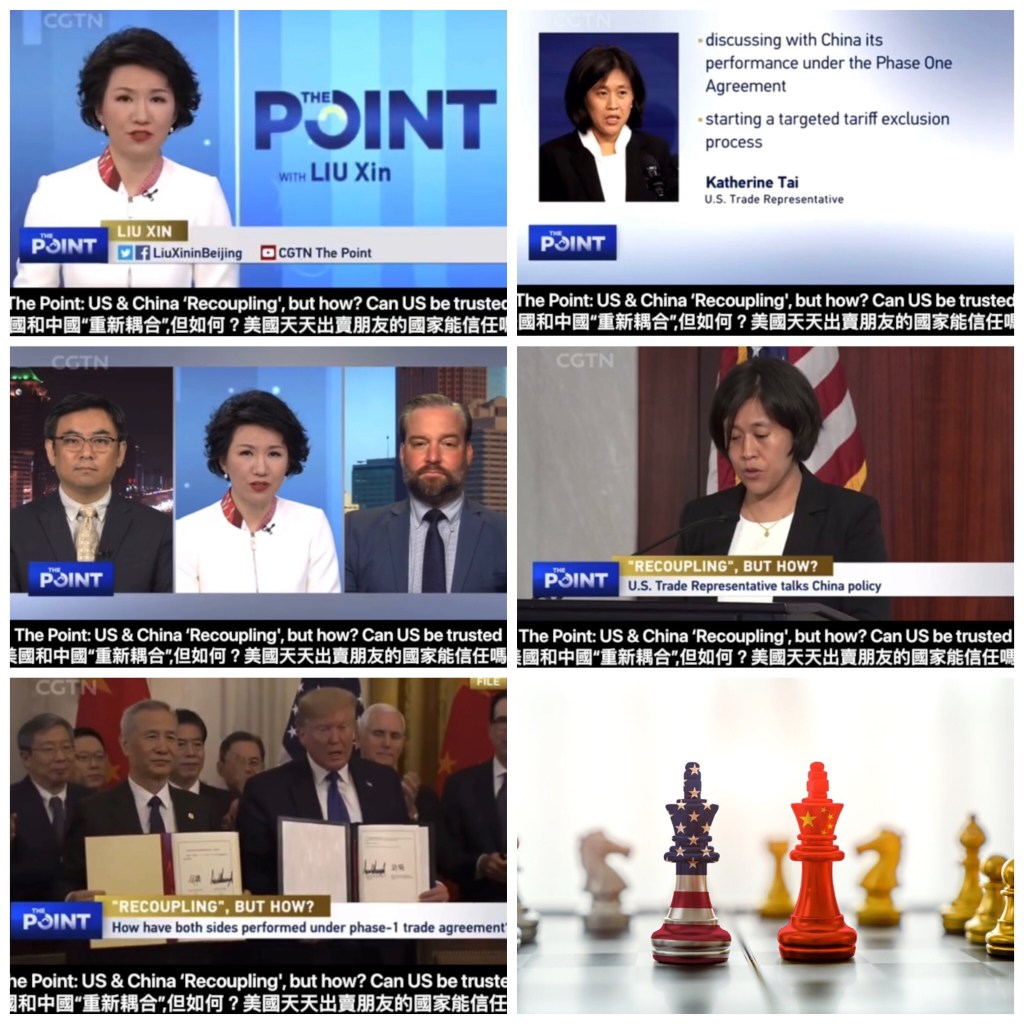
U.S. Trade Representative Katherine Tai gave a preview of the Biden administration’s China trade policy on October 4, ruling out decoupling of the two biggest economies and saying “recoupling” is a distinct possibility. Does it mean an end to the Trump trade war on China? And what are the likely implications?
Guests: Brandon Blackburn-Dwyer, president of Grasshopper Strategies; Zhao Hai, research fellow at Chinese Academy of Social Sciences.
I was surprised that the US government asked chip manufacturers such as TSMC, Samsung Electronics, SK Hynix and Intel to submit confidential information on November 8 to find out the reasons for the global chip shortage. Why? 驚聞美國政府要求台積電、三星電子、SK海力士和英特爾等晶片製造商在11月8日提交機密資料,以找出造成全球晶片短缺的原因,憑什麼?
Reminds me of the 1980s when Japan’s semiconductor market was the world’s largest. The US government forced Japan to open up its intellectual property rights and successfully suppressed Japanese industries. It also joined forces with Britain, France and Germany, signed a plaza agreement with the Japanese government, and jointly intervened in the yen’s devaluation. After 20 years of being lost, the United States has won! 讓我想起1980年代,日本半導體市占曾是全球第一,慘遭美國政府逼迫日本開放知識產權,成功打壓日本產業,並聯合英法德,與日本政府簽下廣場協議,聯合干預日圓重貶,墜入迷失的二十年,美國贏了!
In September 1997, Yang Binyan, the founder and chairman of Taiwan’s leading tape leader Siwei company, went to the US to visit the US Open tennis tournament. He was arrested by the FBI at the airport and accused of stealing business secrets from the US firm Avery Dennison. In 2000, the US court sentenced Siwei to The company should be paid 60 million U.S. dollars, and Yang Dong was also detained for six months. The truth of this case is that the U.S. businessmen cannot beat Taiwan, so they set a trap and convict, and the U.S. won again!! 1997年9月,台灣的膠帶龍頭四維企業創辦人兼董事長楊斌彥赴美參觀US Open 網球賽,在機場被FBI逮補,被控竊取美商Avery Dennison營業機密,2000年美國法院判四維公司應支付該公司六千萬美元,楊董也被拘留六個月。本案真相其實是美商打不過台灣,就設陷阱入罪,美國又贏了!!
In the 2010s, my country’s panel industry was vying with South Korea and Japan for the world’s number one position. The US Department of Justice accused Chi Mei, AUO, and Huaying for violating Anti Trust (anti-trust laws). A group of industry executives and elites were jailed by Luo Zhi: 2010年代,我國面板產業正與韓日爭奪世界第一,美國司法部控告奇美電、友達、華映等違反Anti Trust (反壟斷法),一群產業高管菁英紛紛被羅織入獄:
Chi Mei Electronics He Zhaoyang (the then deputy director) was sentenced to 14 months in prison and 369 days in prison in the United States; Guo Zhenlong, vice president of operations, Yang Zhuxiang, director, and Huang Wenhong, general manager of Chi Mei Logistics, each sentenced to 9 months, and the company paid a fine of NT$7.1 billion.
AUO Jian pleaded not guilty and was fined 500 million US dollars. Deputy Dong Chen Xuanbin was imprisoned in the United States for 2,343 days (6 and a half years), and Xiong Hui, the former general manager of Jiasda, also served 30 months in jail.
Huaying pleaded guilty and negotiated and fined 2.1 billion Taiwan dollars. Former chairman Lin Zhenhong, special assistant Liu Zhijun, and vice premier of business Li Xuelong were sentenced to 9, 7, and 6 months.
華映認罪協商,罰21億台幣,前董事長林鎮弘、特助劉治軍、營業副總理李學龍各被判關9、7、6個月。
Wu Ruihong, the former marketing director of HannStar, was accused of manipulating LCD panel prices and sentenced to 7 months in prison.
瀚宇彩晶前營銷主管吳睿紘被控操縱LCD面板價格判刑7個月。
In 2013, Sabre Lee, an American auto parts dealer, sued the three car light factories of Dibaodi Weixi Longfeng for violation of Anti Trust because it was unable to beat Taiwan. As a result, Dibao President Xu Xujun pleaded guilty to 9 months in jail, and the family lost 2.5 billion Taiwan dollars.
All of the above are unjust cases, only because technology or business threatens American manufacturers. Each case brings great and long-term pain to the parties, their families, and the company. 以上全部是冤獄,只因技術或業務威脅到美國廠商,每一個案子都帶給當事人與其家庭以及公司很大很久的傷痛。
Taiwan’s HTC is the pioneer of smart phones, and Apple is still behind. In 2011, Apple initiated a smart property lawsuit against HTC. After 32 months, the US market was banned, and the European market was also banned (much like Huawei). 台灣的宏達電HTC是智能手機的開創者,蘋果還居其後,2011年蘋果對HTC發起的智慧產權訴訟,經過32個月,美國市場被禁,歐洲市場也跟進禁止(很像華為)。
VIA is an IC company in Taiwan. It used to be the world’s largest independent chip design company. In 2000, it challenged Intel successfully and won 50% of the global market. However, in 2008, the US Department of Justice found that VIA assisted the mainland government in monitoring Falun Gong as an excuse. , Initiated a lawsuit, fined, and as a result the market was snatched by Intel, and talent was drained. 威盛是台灣的IC公司,曾經是世界最大的獨立晶片片設計公司,2000年挑戰英特爾成功,拿下全球市場的50%,卻在2008年美國司法部以查到威盛協助大陸政府監控法輪功為藉口,發起訴訟,罰款,結果市場被英特爾搶走,人才流失。
Again, U.S. still the sole winner!!!! 美國還是贏!!!!
Alstom, an excellent energy company in France, threatened GE in the United States. As a result, Frédéric Pierucci, the director of the Group’s boiler division, was arrested at the New York Airport in 2013. He was charged with bribery in Indonesia (even if Really, what does it matter to you in the United States?), facing 125 years in prison, the US Department of Justice imposed a huge fine of 772 million U.S. dollars. The core business was also “forcibly acquired” by its main competitor, General Electric of the United States. The United States obtained control of the French nuclear power plant. The current President Macron was at the time the Minister of Finance and Economics, and he was helpless. The U.S. has won again!!!!! 法國曾經有一家卓越的能源公司Alstom,威脅到美國GE,結果集團鍋爐事業部總監弗雷德里克‧皮耶魯齊(Frédéric Pierucci) 2013年在紐約機場被捕,罪名居然是在印尼行賄(就算是真的,關你美國何事?),面臨125年的監禁,美國司法部處以7.72億美元的巨額罰款。核心業務也被主要競爭對手美國通用電氣「強制」收購,美國獲取了法國核電站的控制權,現任總統馬克宏當時擔任財經部長,也是無可奈何。美國又贏了!!!!!
Pieruzzi took his own painful lessons and published the book «Le Piège américain», which was translated into “The American Trap” in English, and the subscript was My battle to expose America’s secret economic war against the rest of the world. The title of the Chinese version of the book “American Trap”, the subscript was translated into “How the United States Use Non-Economic Means to Disintegrate Other Countries’ Commercial Giants”, which aroused enthusiastic responses in mainland Europe and Taiwan. 皮耶魯齊將他親身慘痛的教訓,出版 « Le Piège américain » 一書,英文翻成”The American Trap”,副標是My battle to expose America’s secret economic war against the rest of the world。中文版書名《美國陷阱》,副標翻成《美國如何透過非經濟手段瓦解他國商業巨頭》,在歐洲大陸及台灣引起熱烈迴響。
He found that some unscrupulous lawyers in the United States had colluded with the Department of Justice. Many of these lawyers were former officials of the Department of Justice, who specialize in helping American companies fight their competitors and earn huge attorney fees. 他發現在美國有一些不肖律師和司法部勾結,這些律師很多是司法部的前官員,專門幫助美國的公司打擊競爭對手,賺取巨額的律師費。
From the selfish perspective of the US bandit government, suppressing competitors is the only way to be the boss forever. Although immoral, the bandits will not follow the right path. What is disgraceful is weaving a high-sounding disguise, carrying the sheep’s head of democracy, freedom, human rights and justice, and fooling the world. It is ridiculous that some people choose to sell their souls and become slaves to bandits. 站在美國土匪政府自私角度,打壓競爭對手是唯一的手段,只為了永遠當老大。雖然不道德,但是土匪不會走正道。令人不齒的是編織冠冕堂皇的僞裝,提著民主自由人權正義的羊頭,愚弄世人。可笑的是居然有人選擇出賣靈魂當土匪的奴隸。
You want to be a back seat driver or the driver? 你想成為後座司機還是司機?Johnson Choi, Oct 7, 2021
Endless debates and meetings, comments, proposed solutions, projected outcomes and what will that produced? It makes us feel good, thought we accomplished something but in fact closed to nothing. 無休止的辯論和會議、評論、提議的解決方案、預計的結果以及會產生什麼?這祇讓我們感覺良好,以為我們完成了一些事情,但實際上幾乎一無所獲。
Contrary, our opponents are doing exactly the same thing but in reverse making a lot of money and getting their messages across successfully. 相反地, 我們的對手正在做完全相同的事情,但反過來賺了很多錢並非常成功地傳達了他們的信息。
My argument is not the money part, but results and getting our messages across. 我的論點不是金錢部分,而是結果和傳達我們的信息。
It is obvious our opponents are getting their messages across as all polls indicated their successes and high acceptance rates on their messages. 很明顯,我們的對手非常成功地傳達他們的信息,因為所有民意調查都表明他們的成功和高接受率。
It maybe time for us to change our positions as back seat drivers to drivers. 也許是時候讓我們從後座司機的位置改變為司機了。
It is s not for everyone and we don’t need everyone. All we need is .1% of the 50 millions overseas Chinese to participate. 它並不適合所有人,我們也不需要所有人。我們只需要5000萬華僑的0.1%參與。
Who are they? 他們是誰?
1) Like our friends Peter Lee, MD and Nancy Lee Ph.D.. in San Francisco Who gives 10s of thousands each year to help educate poor children at China’s 4th tiered cities to prepare them to enter China universities. They have been doing it for more than 12 years. 就像我們在舊金山的朋友 Peter Lee, MD 和 Nancy Lee Ph.D. 每年捐贈數以萬計的資金來幫助中國四線城市的貧困兒童為他們進入中國大學做準備。他們已經這樣做了超過 12 年。
2) Like Qian Xuesen (錢學森) who helped started CalTech returned to China to develop atomic bomb and space program. Today China need Overseas Chinese experts in computer chips, AI, Weaponry and space technology to return to China. 像幫助創辦加州理工學院的錢學森一樣,回到中國發展原子彈和太空計劃。今天,中國需要計算機芯片、人工智能、武器裝備和航天技術方面的海外華人專家回國。
3) Like the Chun in Hawaii who are willing to give up their well paying job and comfortable life to return to China in the early 1950s to help Chairman Mao. 像夏威夷陳氏夫婦, 他們願意在1950年代初期放棄高薪工作和舒適的生活,回到中國幫助毛主席。
4) For those has 1-5 millions or more, why give it to your children or grandchildren who (if they are any good) do not need your money. Help new Chinese immigrants to go to University to obtain technical skills with the promise that they will return to their motherland (China) for at least 10 years (similar to those offered by the Singapore Government, but use the same model on a personal level). 對於那些有 1-5 百萬或更多的人,為什麼要把它給你的孩子或孫子們(如果他們是長進的話) 他們跟本就不需要你的錢。幫助新中國移民上大學獲得技術技能,他們要承諾大學畢業後返回祖國(中國)至少10年(與新加坡政府模式的類似,但在個人層面使用) .
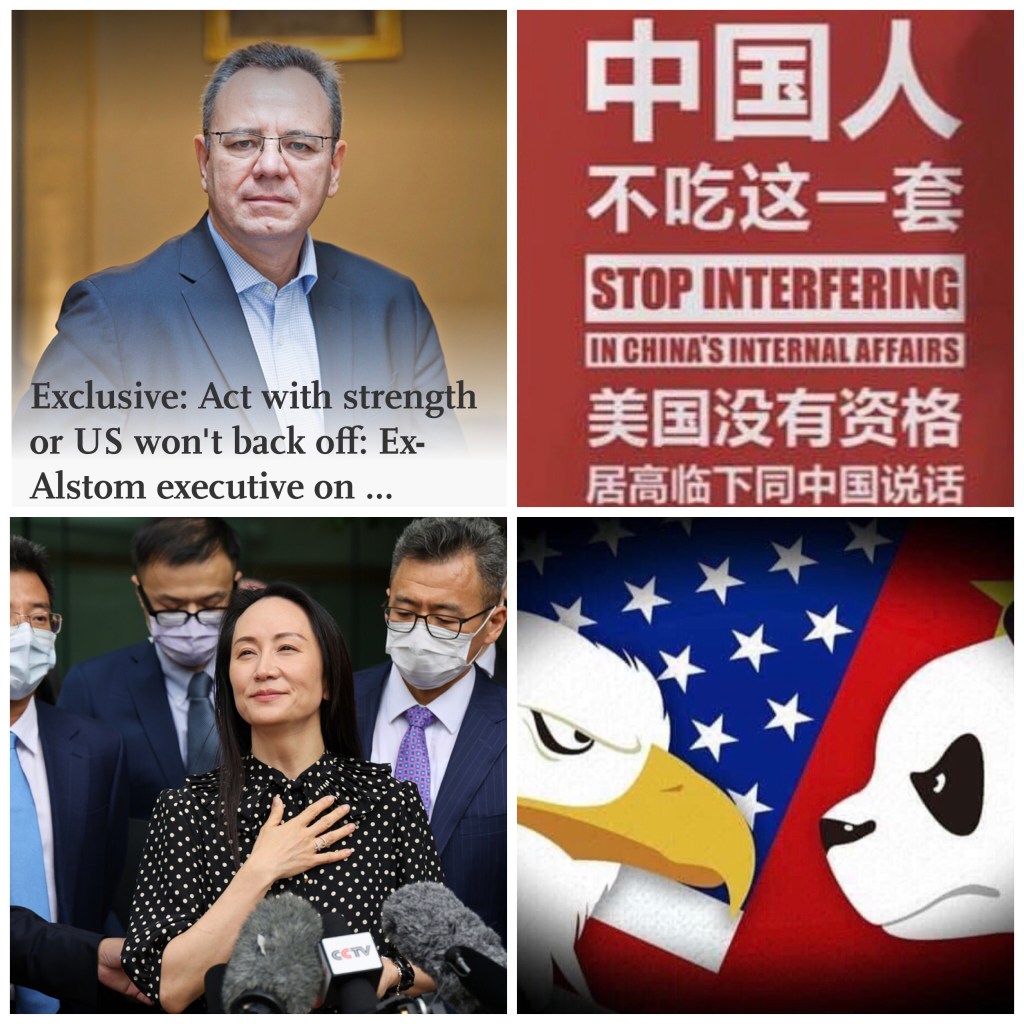
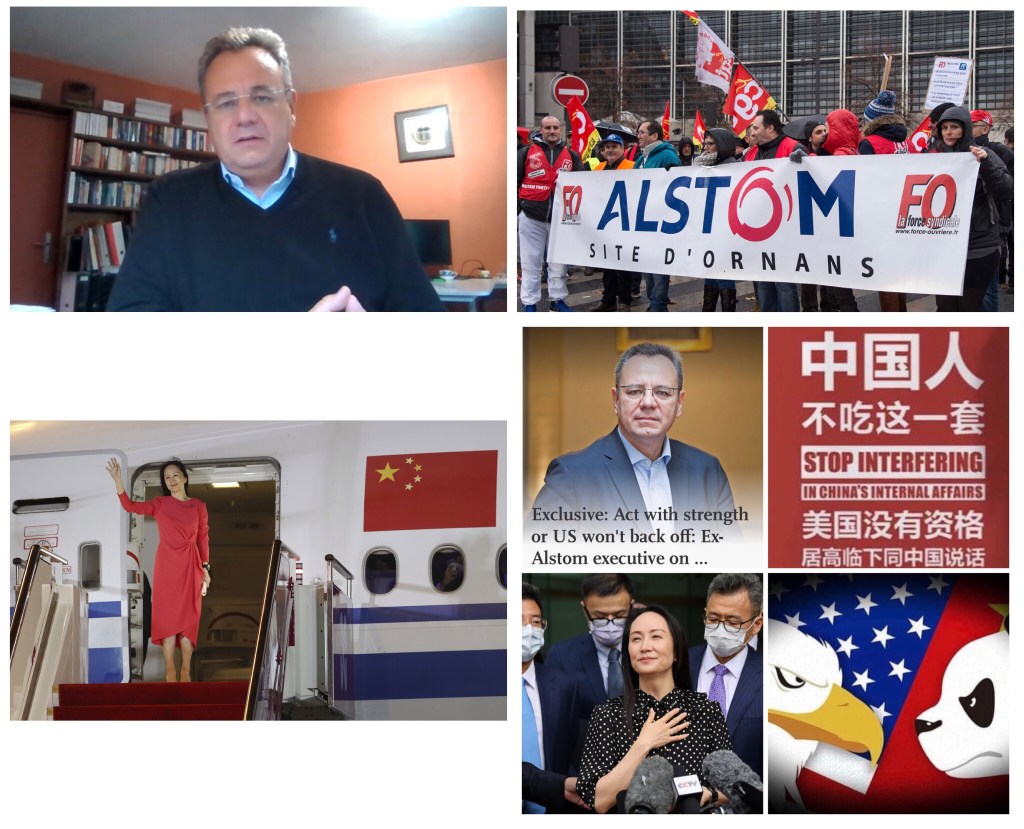
Exclusive: China must act with strength or US won’t back off: Ex-Alstom executive Frederic Pierucci on China’s victory in Meng Wanzhou’s case 獨家:中國必須以實力行事,否則美國不會退縮:前阿爾斯通高管弗雷德里克·皮耶魯奇談中國在孟晚舟案中獲勝by Chen Qingqing Oct 07 2021
Meng Wanzhou, chief financial officer of Huawei, recently signed a deferred prosecution agreement with the US and returned to China after being detained in Canada for over 1,000 days. Meng’s story reminds many of a similar incident that occurred years ago when the US used its long-armed jurisdiction powers to strike down a senior executive from the French energy and transport company Alstom. Former Alstom executive Frederic Pierucci, who told this story in his book titled Le Piège Américain (The American Trap), talked with the Global Times (GT) reporter Chen Qingqing in the latest interview, sharing his thought on the Meng incident and its significance, especially concerning counteracting the US’ use of its legal system to wage an economic war.
GT: What was your first reaction when you heard about Meng Wanzhou’s deal with the US Department of Justice (DOJ) and that she could finally return to China? Was the result within your expectation? How did you feel about that?
Pierucci: When I learned about it, I was in Paris and someone called me and asked if I had seen the news. At the beginning the deferred prosecution agreement (DPA) had not yet been signed. When I heard that there would be a DPA to be signed, I was quite surprised and a little worried because nothing is done until it’s done. So I waited until it had been done and downloaded the DPA from the internet to see it with my own eyes, because I couldn’t believe that it was happening.
For me, it was a big surprise. The agreement is unique, which is really a very special deal that has been made.
Huawei CFO Meng Wanzhou waves as she steps out of a plane upon arrival following her release, in Shenzhen, South China’s Guangdong Province on September 25.
GT: Why do you call it “the unique deal”?
Pierucci: Because usually when an individual is basically under investigation or indicted by the US, the prosecution from the DOJ does not offer the alternative of a DPA with the person who is being indicted. It’s either the person goes to trial and wins or loses. Or they make the person sign a guilty plea. So it’s very unusual for them to offer a physical person to sign a DPA where the person does not have to admit guilt, not a plea agreement.
In fact, this kind of DPA usually is used for companies, not for individuals. So it’s very unique.
GT: Although Meng admitted that she misled the global financial institution, she did not pay a hefty fine or plead guilty, which some legal experts consider a good result. What’s your thought on that? Do you think it’s a good result for Meng? Will Huawei face more challenges in future lawsuits in the US?
Pierucci: It’s an excellent result for Meng, because in these kinds of DPAs, you admit to some stipulated facts at the same time. The person and the prosecutor agreed that the person did not commit any federal state or local crime.
In the case of Huawei, it’s much better for Huawei that Meng signed a DPA rather than signing a plea agreement. Nobody can predict what will happen now in the case against Huawei. But this does not strengthen the DOJ. This is really much more to do with a prosecution against Huawei as it could have been much worse. So it’s a good result.
While the statement of fact could be used against Huawei, and that’s what they probably will try to do, I think it’s not a surprise that Huawei is facing a big battle in the US but it could have been much worse for Huawei if Meng had signed a plea agreement.
GT: In your book The American Trap, your story indeed exposed the secret economic war that the US has tried to wage against foreign entities and individuals. Do you think there are similarities and differences between your story and that of Meng, especially the results you reached as you think it’s an unfair sentence in your case? Could you tell us what you have learned from your past experiences?
Pierucci: It’s clear that the US has been using its along-arm jurisdiction for quite a long time by targeting specific companies in specific sectors, which are strategic sectors most of the time. They started with Toshiba in the 80s and 90s, then Alstom, then Huawei and so on. You see a similarity of cases where you have the US jurisdiction being applied to foreign companies in order to achieve an economic goal.
The difference between, obviously, my case and that of Meng is that I was arrested while I was in the US. Therefore, I didn’t have the chance to really fight back before I was incarcerated. The fact that she was arrested in Canada made a huge difference. The other huge difference is that she had the full support of Huawei and the Chinese government as they understood very rapidly this was not a legal case as usual. It was a very specific legal case. I think the Chinese government and Huawei understood very rapidly, this was part of an economic war.
On my side, the case dated back in 2013 and 2014. At that time, at least in Europe, we didn’t know too much about this use of the legal system to target specific companies. So I didn’t get support from my company nor the support of the French government. Now, I think the world understands how this works and we can react much better.
I think the case of Huawei is going to hopefully start to slow down the US’ long-arm jurisdiction practices. For the first time, a country is really standing up and is keeping some of its citizens from US jails and protecting its companies in such a way. Maybe it’s not going to stop the US, but at least it’s a victory.
GT: Do you think such a victory will inspire other countries or companies to stand up in fighting against the US’ long-arm jurisdiction in the future?
Pierucci: Yes, some countries have started to react. I think the first country that really reacted was the UK where they enacted their own anti-corruption law in 2010 – the UK Bribery Act 2010 – to also counteract the extraordinary application of the US law. As the US went after one of the biggest British companies, British Aerospace, and made it pay for millions in fines, the British understood this was used to target their companies, so they enacted their own law to protect them.
In France, in 2016, following the Alstom case, we enacted the French anti-corruption law, called the Sapin II, to protect French companies. In China, after the ZTE and Huawei cases, China started to enact some new laws including the export control law and a countersanctions law. Different countries started to react to such extraterritorial reaches [of US laws.] Russia also started to react.
Alstom employees protest in front of the Economy Ministry in Paris, to call for measures to preserve jobs in France on November 30, 2017.
GT: You mentioned that in a recent interview with another Chinese media outlet, CGTN, that this was the first time that a country’s will has successfully fought back against the long-arm jurisdiction of the US, but you are not as lucky as Meng. Could you tell us what your company and your country could have done more for you at that time?
Pierucci: It happened in 2013, and I think the company and the government were not ready to stand up against the US. And they just saw it as a legal case instead of looking at it as an economic case. They could have done what they later did after the Sapin II was enacted in France.
To protect French companies, there are two examples. One was with the Société Générale and the other with Airbus. We are able to settle those cases in France, mainly, and the fines being paid in France mainly and nobody has been arrested. But they took Alstom in part before we were able to react in such way.
GT: Some countries, such as Canada and Mexico, have introduced legislation to block the “long-arm jurisdiction” of the US, prohibiting their nationals from submitting to US laws and punishing companies and personnel who violate the “blocking laws.” Do you think Europe should be more like those countries? Is it fair that the US – a country advocating for the free market – competes with its rivals while at the same time it could rule others by its own so-called law?
Pierucci: Of course it’s not fair. Looking back in the history, when a country had a military supremacy, it would try to impose its laws to the rest of the world, for example, the Romans imposed their laws when they invaded the others, and the Napoleon imposed French law in all the territories that he concurred, while the British did the same. Now it’s up to us to accept it or not. Now countries are reacting to this.
It’s nice to establish a law, but it’s much better if the law would be applied. For instance, in France, we have blocking statute law which also prohibits French companies from transferring information to another foreign jurisdiction in case they are under investigation. The problem is that the law had not been applied and therefore, because there were no real punishments for companies doing it. Companies prefer to transfer documents outside of France to the US in the hope of lowering the fines that they will pay in the US.
Since they were not paying a fine in France for infringing a French blocking law, culpability was not a problem. It’s nice that Mexico, Canada, France, and other countries, and now China, have also set up a kind of blocking law. Now let’s see which country really applies it.
GT: While it’s the first time that China has fought against the US’ long-arm jurisdiction and gained a victory so far, do you think the legal and economic war between China and the US has already started? What do we need to do as a government, company, or individual to win this war?
Pierucci: Now the US and China are at economic war like the US was at war with Japan in the 80s and 90s, and the US had been at war with the Europe before. One of the issues is that if you don’t show that you are strong, they will not consider you in a positive way. Therefore, they will continue to do what the US has been doing.
Only if you take strong measures and sometimes retaliatory measures, only then shall they begin to back off.
For instance, in Europe, in the 80s, the US had started to attack French companies on antitrust issues. Therefore, they put a lot of fines onto the French and European companies on antitrust issues. At that time, Europe also reacted and put a lot of fines on US companies for antitrust as well. And then, there was an equilibrium which created itself.
You need to show that you are strong because otherwise you’re not going to be considered as a worthy opponent. And then you are going to be laminated. So you have to react with strength, obviously.
GT: Did you see China changing its way of interacting with the US in recent years? Have you seen more in terms of a reaction or countermeasures from the Chinese side in recent years, especially since the trade war started?
Pierucci: Yes, of course. It’s been like playing ping pong between the two countries. From 2020 to 2021, China enacted different decrees and laws to basically protect its economic interests. The legal framework is currently being built in China to counteract this.
Regarding Europe, the problem is that Europe is not really one, with 27 countries having different interests. Some are much closer to the US while some want a more independent Europe from a military and economic point of view. For example, now we started to discuss protecting data for companies, avoiding the transfer of data from Europe to the US. We have a new decree called Schrems II which prohibits the transfer of personal data to the US, and we started to react but it will take time.
But we need member countries to agree before enacting the laws, and the US is very good at playing one against the other in Europe and therefore it takes more time.
GT: Do you think Europe is also in a certain kind of legal or economic war with the US? Do you think the European multinational companies are facing the same challenges as the Chinese firms do and what needs to be done in fighting such unilateral moves?
Pierucci: It’s clear that some actions are targeting specific technologies but some are not targeting technologies but some companies and some banks. For example, the biggest fine that was paid in Europe was paid by the French bank BNP Paribas for export control issues similar to the Huawei case by paying $8.9 billion. In fact, Europe was hit before China by the extraterritoriality of the US law on sanctions, embargos, and export control and on corruption cases.
What you see in China could be only the beginning of the problems, as the US has enacted decrees that FBI agents now need to focus on Chinese company competing against American companies for infringement of the Foreign Corrupt Practices Act, so you could expect more cases against Chinese companies.
GT: There’s another recent book by a French entrepreneur, Marc Lassus, published in Chinese that reveals how the US security services persecuted him and seized control of his tech firm. But he said he hesitated to write such a book, worried about US retaliation, fighting alone (without state support). Did you hesitate before publishing the book The American Trap ? Did you later suffer retaliation from relevant US authorities?
Pierucci: I know Lassus very well and he’s a good friend of mine, and his story is similar to mine. In fact, he mentioned that he waited for me to write the book so that he could feel free to write his book many times. His story happened about 20 years ago. And there’s nothing new, it’s just China has been hurt after us in Europe on those issues.
There’s a risk in writing and there’s a risk in not writing. I felt that duty to put it in my writing, because I want to protect French companies against this. I also want to warn employees of large corporations, because what happened to me could happen to others. And it fact, it happens all the time, In many countries, there are a lot of “Meng Wanzhou”s and “Frederic Pierucci”s in US prisons. I published the book as soon as I came out of prison.
GT: For Chinese companies and also for European companies, what should they do during this prolonged legal and economic war with the US? What is your suggestion?
Pierucci: I set up my own constituent company in 2015 after this happened, because I felt that the number one thing to do in companies is the need to put processes in place to minimize this kind of risk.
You need to put anti-corruption processes in place in the company, to write down the code of conduct, to write processes, appoint consultants and agents, as well as intermediaries. You need to do a risk map to identify where you’re potentially at risk of corruption, either interpersonal or company-client. You need to put a kind of whistle blowing outline inside your company to detect signals and you need to carry out due diligence on your partners because if your partner, which means your distributors or agents, pay a bribe that you benefit from, you are also responsible. So you need to put all those policies in place inside the company and to protect management.
That’s what we’re doing. Basically, we are doing it on anti-corruption. We’re doing it on export control and trade compliance. It’s important to have a set of internal rules to minimize service.
If something were to happen, you can always defend yourself by saying I did all I could do to prevent it inside the company by implementing all the processes and policies. It’s also important to train the management and staff who are the most exposed to those risks, which is what we could do at the company level. At the country level, you need to do exactly what France has been doing or China is doing now by setting up your own set of laws to protect the companies as well.
GT: After the Meng Wanzhou incident, will similar incidents happen again? Will there be another Meng Wanzhou in China?
Pierucci: I don’t know. There may be some less high profile people who could be prosecuted because Huawei is not the only company to have been targeted. Every year, there are new companies, maybe smaller ones and with less high profile cases, which are under scrutiny or indicted or have to face this kind of problem. So this is not going to stop. What could stop this is to minimize it if the country puts in place laws and tries the cases inside your own country. Unlike what was done in France with the cases of Société Générale and Airbus. If China treats those cases in the country, companies will not be subject to US jurisdiction. It is going to be a different situation.
GT: If you were asked to use one word to describe the practice of the US, which word would you choose?
Pierucci: Very pragmatic. The US is the superpower, and they’re defending their interest and they’re using all the means to defend their interests. The US is not going to change whether it’s Democrats or Republicans. They are always going to fight for the economic interests of the US.
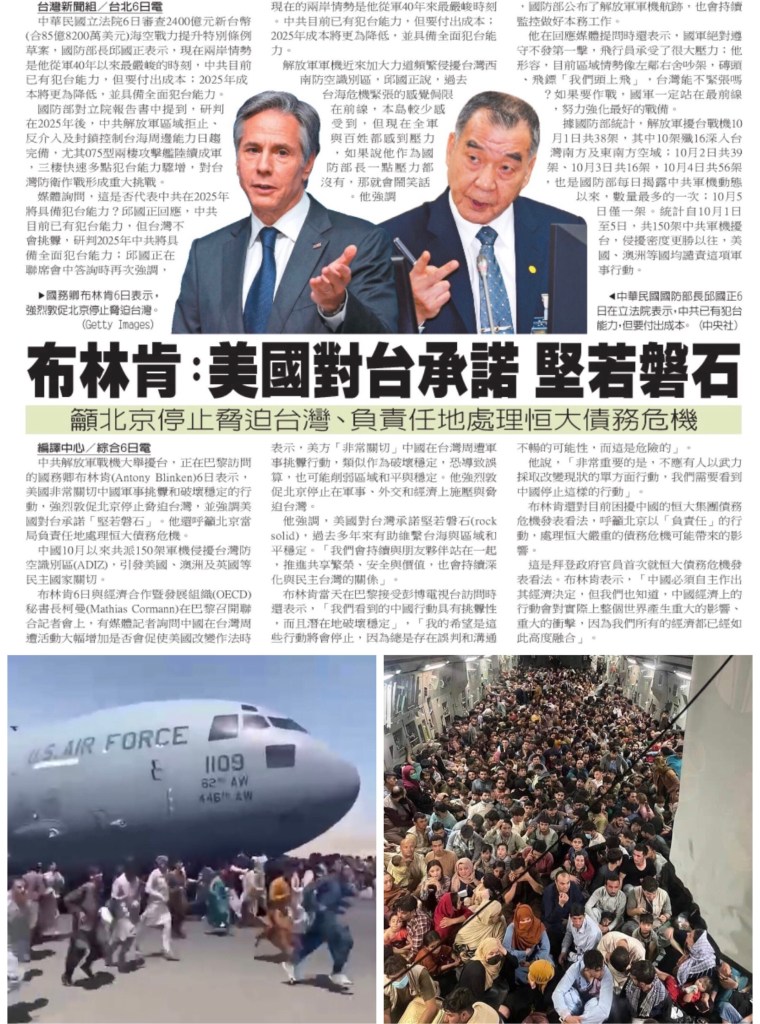
US Secretary of State Antony J. Blinken said US promise to Taiwan Province is just like Afghanistan solid like a rock 美國加州舊金山世界日報 World Journal Newspaper San Francisco, Oct 7 2021
The Mounting Confusion of President Biden’s National Security Policy BY MELVIN GOODMAN, OCTOBER 6, 2021
It has been nearly 70 years since the United States elected a president with the foreign policy and national security experience that rivaled Joe Biden’s. His only rival in this category, President Dwight D. Eisenhower, placed troglodytes in key positions such as the Dulles brothers (John Foster at State and Allen at the Central Intelligence Agency) and Vice President Richard Nixon, who were ideologically opposed to dealing diplomatically with the Soviet Union. As a result, Eisenhower missed a significant opportunity when the death of Joseph Stalin opened the door to possible negotiations with the new leadership in the Kremlin.
Not even Eisenhower had the experience that Biden accumulated over nearly 50 years in government that included 20 years on the Senate Foreign Relations Committee (12 of those years as chairman or ranking member) in addition to eight years in the White House as vice president. During the campaign of 2019-2020, Biden frequently cited his trips to more than 60 countries and his one-on-ones with more than 100 national heads of state. Biden privately boasted about his ability to dominate the national security bureaucracy, stressing that not even the “military will fuck with me.”
Now, we are nine months into his administration, and there is no comprehensive picture of Biden’s priorities in foreign policy, let alone a Biden doctrine or strategy. Biden has proclaimed an end to “forever wars,” but U.S. forces remain active in Iraq and Syria, where there are more than 3,000 U.S. combat forces. Elsewhere, the United States is conducting shadowy operations and drone strikes in such places as Libya, Somalia, and Yemen. So there is no reason to believe that U.S. forever wars will actually end.
U.S. forces are active in Kenya, Mali, and Nigeria, conducting counterterrorist training or operations in dozens of additional countries. There is no indication that Biden will be reducing these activities despite the significant civilian casualty rates from drone strikes. These strikes received little attention until a “righteous strike” killed an aid worker from Kabul and nine members of his family. Meanwhile, the list of groups that are susceptible to drone strikes remains classified, and there is no word of the new policy to govern drone strikes and commando raids outside conventional war zones. Biden’s national security team promised the release of such a policy more than a month ago.
The pathetic handling of the withdrawal from Afghanistan and the Australian nuclear submarine deal beg serious questions about the professionalism of Biden’s national security team as well as the direction of Biden’s foreign policy. Our European allies with forces in Afghanistan had reason to be angry about the chaotic departure from Kabul, and presumably will be far less willing to increase their investment and their level of risk in support of U.S. military missions. These allies anticipate that the U.S. “pivot” to Asia will be at the expense of European security, and expect U.S. demands for greater European defense spending.
The exclusion of France from the submarine deal with Australia made a mockery of Biden’s efforts to rebuild the transatlantic alliance, which was the focus of his trip to Europe in June. Like former president Charles de Gaulle, French President Emmanuel Macron got a rude lesson in U.S. favoritism toward Britain, notwithstanding Britain’s departure from the European Community and the moronic behavior of its Prime Minster, Boris Johnson. In view of France’s longstanding enmity with Britain, Macron was particularly infuriated.
Meanwhile, there is no indication that the Cold War atmospherics that developed in U.S. relations with Russia and China in the Trump administration are being addressed, let alone alleviated. Biden’s constant references to a campaign of “democracies vs. authoritarians” suggests continued polemics with the term “authoritarians” substituting for the “communists” of an earlier Cold War. Last month, the Department of Defense quietly removed the deputy assistant secretary of defense for nuclear and missile defense, which leaves the Biden administration without a serious arms and disarmament expert at a time when it is finalizing its Nuclear Posture Review. Biden once warned President Barack Obama not to get “boxed in” by the military, but he has certainly been boxed in on the issue of disarmament. Any downgrading of disarmament serves to block a key path to serious diplomatic dialogue with the Kremlin.
A “group think” approach is in place vis-a-vis China, with hard-liners occupying key posts. National Security Adviser Jake Sullivan and his number one deputy, Kurt Campbell, are hard-liners on China, and the director of the China office at the National Security Council, Rush Doshi, strongly believes that China is trying to “displace” the United States in the global community. Secretary of Defense Lloyd Austin has no background on Asia generally or China specifically, and he has been assigned another hard-liner, Ely Ratner, a Sullivan acolyte, as the Assistant Secretary of Defense for Indo-Pacific Security Affairs.
The Australian nuclear submarine deal, which roiled the European community and violated the spirit of the Non-proliferation Treaty of 1969, is a classic sign of containment regarding China. Containment worked against the Soviet Union because of the political and economic irrelevance of the Soviet Union; China is relevant internationally. Only Britain has received such nuclear technology for its submarine force, and that was over 60 years ago.
Biden has missed an opportunity to enforce non-proliferation by not returning to the Joint Comprehensive Plan of Action, the Iran nuclear accord. In the meantime, an election in Iran has moved the country further to the right, which complicates any revival of the accord. Similarly, Iran’s aggressive enrichment activities and limitations on inspection by the International Atomic Energy Agency also hinders a return to the JCPOA. The Biden administration also has been ignoring the importuning of the South Koreans to revive bilateral talks with North Korea.
The chaos in Afghanistan and the submarine deal are leading European officials to question the intentions and credibility of the United States. A high-ranking German official remarked that the major difference between Trump and Biden is the absence of tweets. The French are trying to interest the European states in forming their own peacekeeping force in order to have greater strategic autonomy. Macron, like de Gaulle in the wake of the Cuban missile crisis, has been questioning the U.S. commitment to Europe, and several years ago declared that NATO was “currently experiencing…brain death.”
The U.S. “pivot” to the Pacific that was declared ten years ago to distract from the sudden withdrawal from Camp Freedom in Iraq marks the militarization of U.S. policy toward China, when the actual challenge is economic in nature. Washington never should have walked away from the Trans-Pacific Partnership, which was the perfect vehicle for competing with China in East and Southeast Asia. Building a policy toward China around a submarine deal seems particularly bizarre in view of the fact that these ships won’t be operational for 10-15 years. Last month, the Chinese even applied for membership in the TPP, which points to Xi Jinping’s sense of humor and the inadequacy of U.S. policy.
President Biden is preoccupied with serious domestic challenges at this particular point in time, so it is essential that his National Security Council and the Department of State fill the current void in national security policy. Two Republican Senators—Ted Cruz and Josh Hawley—have contributed to the weakness of the Department of State by blocking confirmation of key deputies and assistant secretaries. Only one U.S. ambassador has been confirmed since the inauguration of Joe Biden.
The Pentagon is clearly exploiting this vacuum in decision making by exaggerating the threat of China as well as terrorism in its briefings on the Hill, which have been parroted verbatim by the mainstream press. The Chairman of the Joint Chiefs of Staff, Mark Milley, has used briefings to warn about the renewal of al Qaeda’s prominence in the wake of the U.S. withdrawal from Afghanistan. If anything, al Qaeda appears to be particularly dysfunctional at this point in time, and the Taliban government in Kabul will have its hands full dealing with ISIS-K in the near term. The Pentagon, well known for its worst case analysis of international events, seems off base in anticipating that the Taliban will serve as the headquarters of international terrorism.
Donald Trump certainly made a bad national security situation worse, but there is little indication that Joe Biden is willing to address those international problems that are susceptible to diplomatic intervention. Otto von Bismarck once remarked that “God has a special providence for fools, drunkards, and the United States of America.” We can only hope so.
Melvin A. Goodman is a senior fellow at the Center for International Policy and a professor of government at Johns Hopkins University. A former CIA analyst, Goodman is the author of Failure of Intelligence: The Decline and Fall of the CIA and National Insecurity: The Cost of American Militarism. and A Whistleblower at the CIA. His most recent book is “American Carnage: The Wars of Donald Trump” (Opus Publishing), and he is the author of the forthcoming “The Dangerous National Security State” (2020).” Goodman is the national security columnist for counterpunch.org.
I am one of the approximately 70 million Chinese living outside China, most of us are not even born in China and yet we are caught between trying to be good citizens of our adopted country and the realization that non-Chinese will always see us as Chinese whenever we conduct ourselves not in line with their accepted set of behaviour and agree with their thinking and values. It is a conditional acceptance.
Before I went to England for my studies, I never felt like a Chinese in Singapore. I felt that I am a Singaporean, as I was born there. I don’t even feel much attachment to the land that my father came from. It was only in England that I realized that people sees me as Chinese. I began to explore my ancestral roots and became very proud of my culture and history of the Chinese Civilization.
However, it is sad to read about the history of overseas Chinese, so many were discriminated, killed, bullied, just because they have Chinese roots. To me, God made the human race and there should be only one race, irregardless of the colour of our skin. Our blood are all red and souls that God loves equally.
Let us join in prayer that the non-Chinese will be able to accept those of Chinese roots as just a member of the human race. Let us pray that one day, racial discrimination will be a thing of the past.
Received from Tony Pang Esq., and edited by E. Cheong:
My thoughts on migration and dilemma of the Chinese diaspora
Malaysian Chinese are children of migrants who were escaping from abject poverty and a crumbling social order arising from feudalism and colonialism.
We were a colonised, displaced and uprooted people; our way of life, culture, religion and language disrupted and in some cases supplanted by the colonialists.
Although the colonialists have left us, the legacies linger on. They are still in control of our minds, believes and financial systems through their media and world financial institutions. It would take generations for to break free and to heal.
The Chinese diaspora have suffered oppressions, discriminations and outright massacres in many countries.
The Kiwis and Aussies white occupier -colonialists have a history of oppressing Chinese who were initially brought to NZ and Australia to work in the gold mines. When the Whites saw the skills and diligence of the Chinese, they feared that the Chinese will overtake them financially and numerically. To sabotage and preempt the hardworking Chinese, the political masters of the whites introduced special poll taxes and restrictions on migration and on the Chinese. In recent years, due to the rising power of China, the ruling class of Australia & NZ have resurrected the ”yellow peril” bogey to consolidate their power.
The Yankee treatment of the Chinese in America was even worse. From the 1860s, Chinese labour was imported on a massive scale to build the 3,077km long American transcontinental railway line. On completion of the railway in 1869, Chinese communities had sprung up along the corridor of the western railway line. James Bradley, the author of “China Mirage” said that a more accurate portrayal of the American West countryside scene of that time would be John Wayne in his movies, going to Chinese hardware stores to buy guns and bullets, then stayed at Chinese operated motels and had meals in Chinese restaurants.
The American Congress then introduced the Page Act in 1875, which banned Chinese women from emigrating from China to the United States. This was followed by the Chinese Exclusion Act in 1882, prohibiting Chinese migration to American soil. The hatred whipped up by American politicians and media prior to and in the aftermath of the Act resulted in White Americans persecuting, beating, torturing, murdering, and driving Chinese out of America.
In 1949, Chairman Mao defeated America’s lackey and proxy, Chiang Kai-Shek during China‘s great Civil War. In the 1950s, Field Marshall Lin Biao fought Gen MacArthur and brought his ambition to colonize the Korean Peninsular to a halt. During the Korean war 1950-53, hostilities against the Chinese in particular were heightened by Senator Joseph McCarthy. The era of McCarthyism involved witch hunts and malicious accusations against prominent Chinese American scientists and engineers. That led to the detention and imprisonment of a top Chinese rocket scientist, Qian Xuesen. Qian was detained when he wanted to return to China and he was under house arrest imprisoned for 5 years from 1950 to 1955.
Chinese Premier Zhou Enlai managed to secure the freedom and return to China of Qian in exchange for 11 American Prisoner of War, who were captured by the Chinese during the Korean war. On his return to China, Qian led China in developing the nuclear bombs, missiles and sending satellite into space (in Chinese, they are popularly referred to as 两弹一星 ”指 的是原子弹、氢弹和人造卫星). The fate of Overseas Chinese in some Asian countries were no better :
The Philippines, Year 1603, 1639, 1662 – on each occasion, tens of thousands Chinese were massacred by the Spanish and their Filipino allies for fear they were plotting rebellion against the colonialist.
India, year 1962 – during and in the aftermath of Sino-Indo border clash, 7,500 Chinese were forced to leave India and at least 10,000 Chinese who have settled in India for generations were detained, persecuted and properties confiscated. https://en.wikipedia.org/wiki/Sino-Indian_War
Indonesia, year 1740 – thousands of ethnic Chinese were killed by Dutch colonialists and natives due to economic rivalry..
Indonesia, year 1965 – in a coup de tat instigated and backed by the CIA, 500,000 to one million ethnic Chinese were murdered by Suharto’s henchmen. Chinese schools closed and properties confiscated.
Indonesia 1998 – thousands of ethnic Chinese killed and properties looted and burned by Indonesian natives and soldiers instigated by Suharto last gasp effort to stay in power.
Malaysia 1969 – thousands of ethnic Chinese killed in anti-Chinese riots master mind by the young turks in the Malay political party, UMNO who seized power and the rights to the country’s coffer. In the aftermath of the rioting, institutionalised discriminatory policies against non Malays were enacted into law.
Vietnam circa 1975, up to a million ethnic Chinese were harassed, persecuted and forced to flee South Vietnam in rickety boats to neighbouring countries.
Mexico, Peru Latin America – Chinese faced varying degrees of discriminations and persecutions.
In my opinion, no matter where we are, it’s important to be in touch with our cultural roots, language and values.
The Taoist-Confucian-Buddhist values of filial piety, integrity, modesty should always be cultivated and retained. Always be guided by the Confucius dictum : 修身,齐家,治国,平天下 (Cultivate self, establish family, govern the country well before spread peace to the world ).
Also integrate into the society of the country we live in. Cultivate friendship with native people and contribution to the community and country. Those who are capable and have the resources should participate in the development of the country by taking up public office.
At times there are conflict of interests and loyalty between one’s country of residence and our ancestors’ land. In this respect, we have to look the matter from the position based on principles. As an example, when the western governments are ganging up to demonise, smear and spread lies about China, it’s our duty and role to correct the misrepresentations.
Currently, we can see clearly the main contradiction in the world is the struggle of China against Imperialist USA.
Chinese legitimate right to develop their country, bring peace and prosperity to themselves and the World should be supported by all the peace loving people in the world…
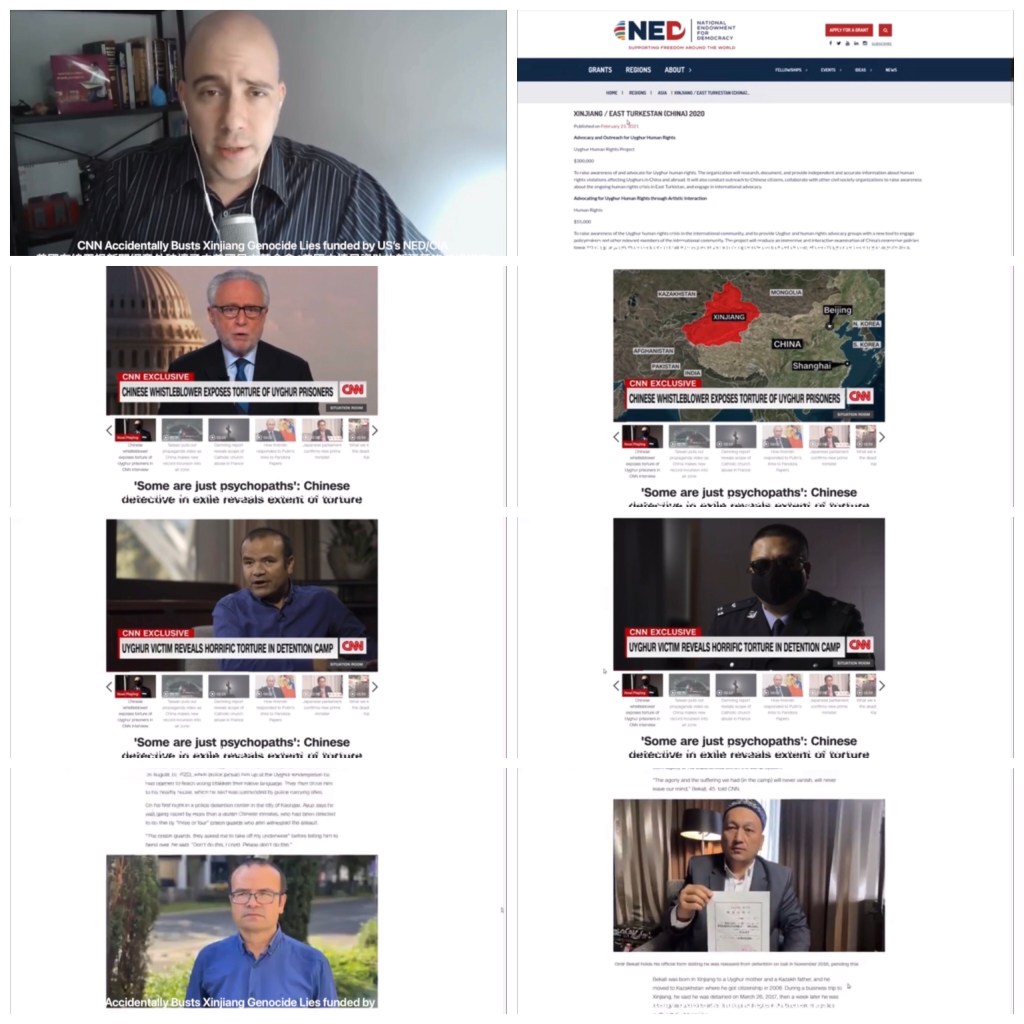
CNN admits it cannot independently verify an alleged former Chinese police officer who claims to have partaken in interrogations involving torture and witnessing sexual abuse in China’s Xinjiang region against its Uyghur population.
However, CNN could have easily cross referenced his spoken and written statements from June 7, 2021 as part of the so-called “Uyghur Tribunal” where he completely contradicts the claims he made to CNN.
Worse still, CNN never mentions that the alleged former police officer and others they interviewed took part in the tribunal, or that the tribunal even took place…

 Johnson Choi Biz