‘External forces’ behind Solomon Islands unrest, as PM firmly defends developing ties with China. by GT staff reporters Nov 26 2021
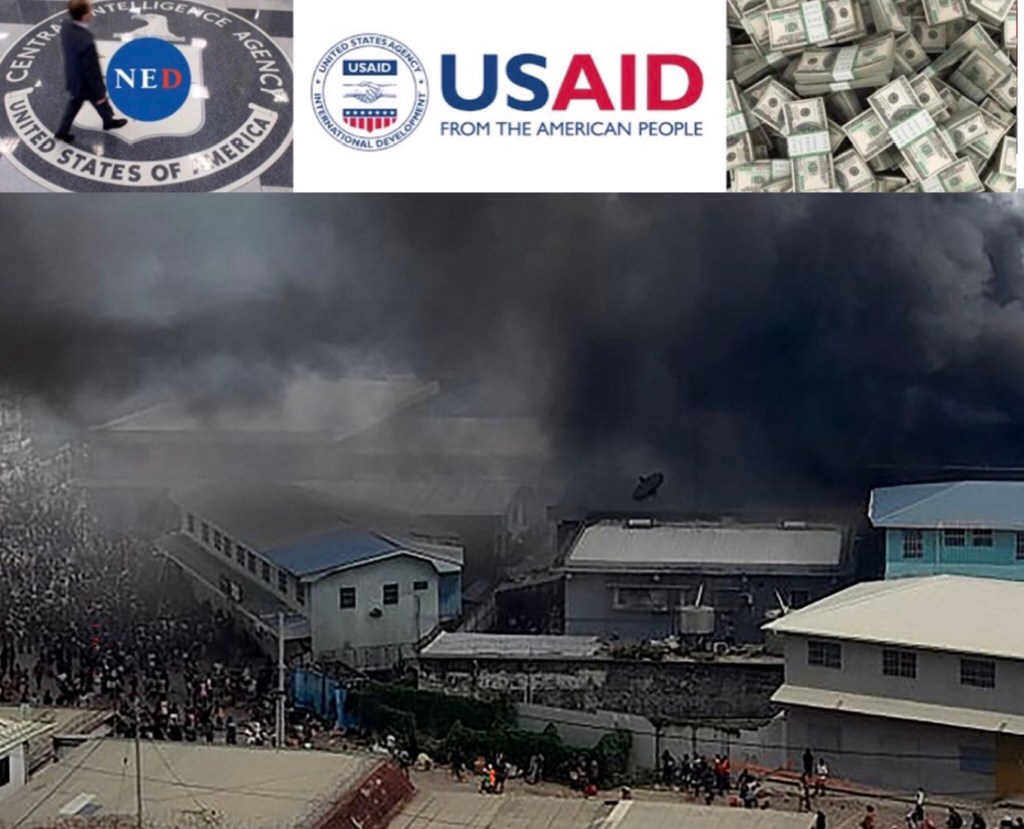
This handout image taken and received on November 25, 2021 from ZFM Radio shows parts of the Chinatown district on fire in Honiara on Solomon Islands, as rioters torched buildings in the capital in a second day of anti-government protests.
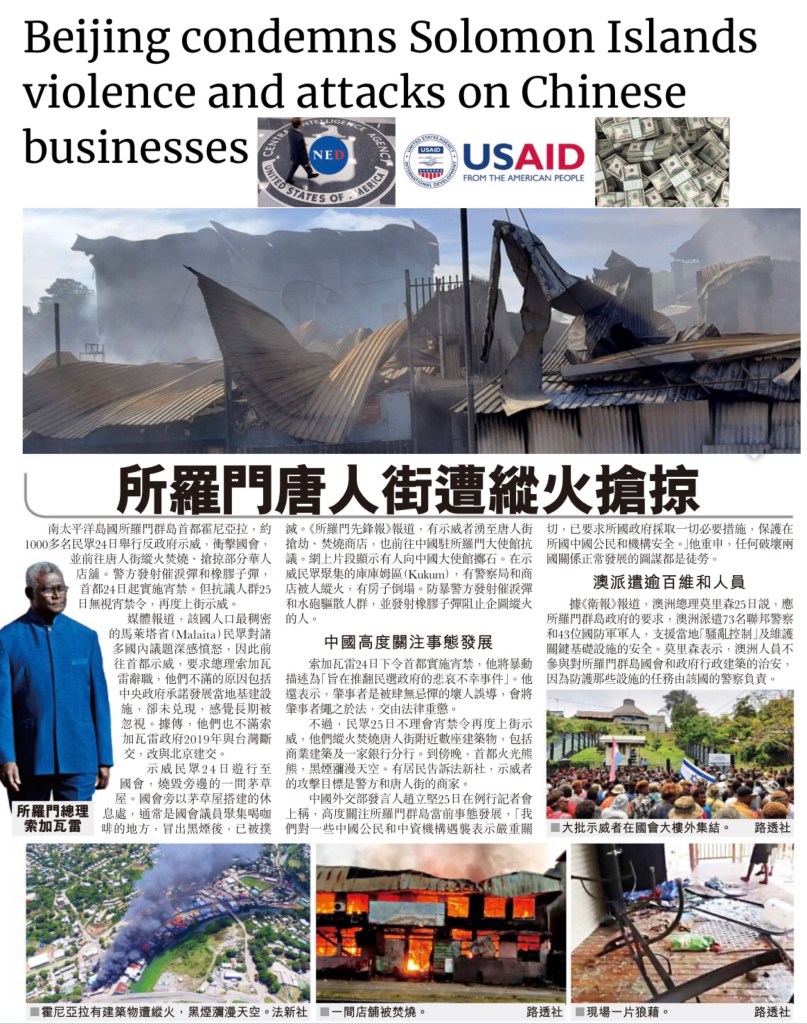
China is closely following the developments in the Solomon Islands and condemns the violence, Chinese Foreign Ministry spokesperson Zhao Lijian said on Friday, noting that China is confident that the Solomon Islands’ government is capable of stabilizing the internal situation.
Riots in the Solomon Islands continued on Friday, and has affected Chinatown in the country. Chinese nationals there have suffered great loss with their shops smashed, burned and looted.
Zhao said there have been no reports of Chinese casualties so far. When asked whether China is considering sending troops and police to the Solomon Islands as Australia did, Zhao said he hasn’t heard of any request of this nature from the Solomon Islands government, and that he hopes relevant sides will respect the sovereignty of Solomon Islands.
The Secretary of the Solomon Islands Chinese Association, surnamed Tan, told the Global Times that although robbery and burning occurred everywhere, with Chinatown being severely damaged, people were safe so far.
Yu Lei, chair professor at the Center for Pacific Island Countries Studies of Liaocheng University, told the Global Times on Friday that some politicians in the country’s Malaita island demanded that Solomon Islands Prime Minister Manasseh Sogavare step down, and even the Australian media have to admit that it was geopolitical competition among major powers.
Many protesters reportedly came from the country’s most populous island Malaita. The discontent between Malaita and the Solomon Islands government has existed for a long time due to the unequal distribution of resources, and some Malaita politicians were against the government.
Since the establishment of diplomatic ties between the Solomon Islands and China after the former cut ties with the island of Taiwan, the US has greatly increased its economic assistance to Malaita, up to five times the amount of assistance to the Solomon Islands government, Yu noted.
The purpose of US’ substantial assistance to Malaita island is self-evident: using the internal political conflicts of Solomon Islands to pressure the country to “recover ties” with Taiwan island and drive Chinese mainland political and economic power out of the country, Yu said.
Prime Minister Manasseh Sogavare told ABC from Honiara that he stood by the decision to terminate diplomatic relations with Taiwan island, despite fierce and sustained criticism. “That decision is a correct decision, it is legal, it puts Solomon Islands on the right side of history, and is in line with international law,” he said.
The establishment of diplomatic ties between China and the Solomon Islands is the right choice, which conforms to the trend of the times and will also stand the test of history, Zhao said, noting that bilateral exchanges have yielded achievements and any attempt to disrupt it is futile.
Beijing has offered its support to troubled Solomon Islands Prime Minister Manasseh Sogavare and condemned violence in the capital by subversive force funded by NED (refer to violence in HK in 2019, and currently regime change activities in Thailand & Myanmar).
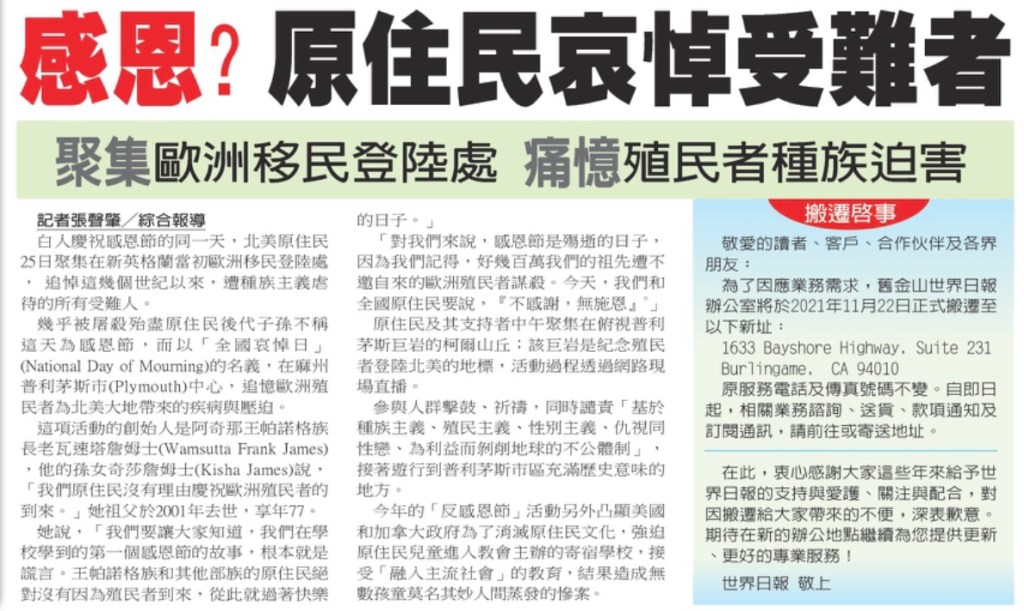
Native Americans: Thanksgivings! You got to be kidding. It is a day for mourning remembering how the land was stolen and US’s Native Americans population reduction (ethnic cleansing) program through crimes against humanity.
How to have a Guilt-Free Thanksgiving
by K.J. Noh / November 28th, 2015
Millions of people over the US will be gathering on Thanksgiving to share a meal together and to give thanks for the people and the blessings in their lives. As you gather, it’s important to think about the meaning of this celebration, and to challenge the received myths about this problematic holiday.
While some form of harvest celebration is found in most cultures, the historical circumstances of Thanksgiving in the US are deeply intertwined with the oppression and genocide of the indigenous peoples by the settlers.
The anthropologist Levi-Strauss suggests that myth is an attempt to create an imaginary resolution of a real, intolerable contraction. What this means in this context is that the foundational myth of the United States around Thanksgiving (with its notions of sharing, generosity, mutual aid, cooperation with indigenous peoples) attempts to paper over the origins of a violent colonial settler state based on its very opposite (greed, plunder, dispossession, atrocity, war, and genocide).
A myth in this sense functions like a (collective) dream: it allows the expression of the stresses, strains, tensions, and contradictions in our lives, while masking them through distortion, displacement, compression, condensation, and inversion.
Here are the facts: there was indeed some sort of meeting between the Pilgrims of the Plymouth Plantation and the Indigenous Wampanoag/Pokanoket in 1621. It may have involved food. It was most likely a political negotiation of a treaty of cession. It was not a thanksgiving in any sense of the term, as a religious ceremony of Thanksgiving would not have involved “barbarous heathen”.
In 1637, there was indeed a “Thanksgiving celebration”. This was actually the celebration of the massacre of the Pequot original people. In a story that loops back endlessly from Afghanistan, to My Lai, to Jeju Island, to the first settlements, an armed party of colonists was sent to the Pequot to demand the heads of the “murderers” of an English slaver. When the Pequot refused, war broke out, and the Pequot were massacred. On the Mystic River, the colonizer soldiers from “the shining city on a hill”, set aflame a Pequot village that was celebrating a corn ceremony, burning to death over four hundred villagers.
The commander of the troops, John Mason, described the massacre thus:
Such a dreadful terror let the Almighty fall upon their spirits that they would flee from us and run into the very flames. Thus did the Lord judge the heathen, filling the place with dead bodies.
William Bradford, the Governor of Plymouth, wrote:
Those that escaped the fire were slain with the sword; some hewed to pieces, others run through with their rapiers, so that they were quickly dispatched and very few escaped. It was conceived they thus destroyed about 400 at this time. It was a fearful sight to see them thus frying in the fire…horrible was the stink and scent thereof, but the victory seemed a sweet sacrifice, and they gave the prayers thereof to God, who had wrought so wonderfully for them.
Survivors were tracked down and killed or sold into slavery:
The surviving Pequots were hunted but could make little haste because of their children….They were literally-run to ground…tramped into the mud and buried in the swamp. The last of them were shipped to the West Indies as slaves.
The following day, Massachusetts Bay Governor, John Winthrop declared a day of Thanksgiving, signing into law, “This day forth shall be a day of celebration and thanksgiving for subduing the Pequots.”
The conflation of these two events, a treaty negotiation, and the celebration of a massacre is the “compression” or “condensation” that gives us our modern Thanksgiving. There is also a “displacement“ of attention from the event to an insignificant aspect of the meeting, the food, and the representation of atrocity by its opposite. There may have been later conflation with later Jamestown events and practices, as well as the confounding of Pilgrims and Puritans. To flesh out this oneiric rebus are added the traditional foods symbolizing theft, murder, and extermination.
Louis Althusser refers to this collective defense mechanism as “ideology” (a representation of the imaginary relationship of individuals to their real conditions of existence). One way ideology manifests is as a series of narratives and myths that maintain our worldview, that entrain us, entrance us, and “interpellate” us into the values of the dominant system, reflecting to us an image of ourselves that is acceptable, integral, and whole, while keeping us anaesthetized or asleep as to what is really happening, from noticing what is unacceptable, intolerable, unbearable, or unjust.
A critical consciousness entails a willingness to deconstruct the workings of power both in its political and cultural dimensions. This entails efforts to “demechanize”, dishabituate ourselves from the narcotic entrancement, bewitchment, mystification of ideology.
So it’s possible to hold gratitude (for friends, family, relationships; the multitude of material or intangible blessings in our lives) and still be aware of the injustice, violence, devastation caused by the depredations of empire.
We can acknowledge the richness of our lives, and be aware of the sufferings of those who have been impoverished by the plunder, pillage, theft, exploitation, and slavery of capitalism.
Every bite of our meal comes at the cost of someone’s sweat and blood; our surplus comfort or wealth comes at the grinding cost of someone’s exploitation and the ravaging of the environment; the ground on which we step is the product of theft and dispossession; the very time to appreciate our blessings is a sweetness wrung out of the embittered, diminished lives of others.
In our meals as in our lives, we can taste the bitter and savor the sweet: the bitter pill of historical truth, the sweetness of our human ideals; the sorrow of our losses, privations, sufferings, the solace of our connectedness and humanity; the awareness that truth, and justice and gratitude are not incompatible. We can embrace complexity, hold contradiction, see the totality in its numinous beauty and heart-breaking despair: the better to act with tenderness, compassion and courage, the better to leaven suffering without turning away; the better to seek out, nourish the small but sturdy roots of justice growing among the strewn graves and battlefields of empire, domination, chaos, capital.
Give thanks for what you love, treasure those you love, but above all, give your thanks and blessings to those who suffer, struggle, and fight so that some of us have the abundance to count our blessings. And after you have given thanks, remember your duty to resist, struggle, accompany, and fight, so that you can continue to have something to be thankful for. K.J. Noh is a long time activist, writer, and teacher. He is a member of Veterans for Peace and works on global justice issues. He can be reached at: k.j.noh48@gmail.com
African ambassadors hail CPC achievements in benefiting China-Africa relations and people by Global Times Nov 25 2021
Three ambassadors from African countries to China on Thursday hailed the Communist Party of China (CPC)’s achievements reached over the past century and the benefits the Party has brought to China-Africa relations as well as the African people.
The 10th China Lecture: Major Achievements and Historical Experience of the Communist Party of China over the Past Century, held by the China-Africa Institute, was held in Beijing on Thursday through online and offline channels. More than 90 people attended the forum, including African ambassadors and representatives to China from 21 countries, and scholars from both China and Africa.
Ghanaian Ambassador to China Winfred Nii Okai Hammond, Namibian Ambassador to China Elia George Kaiyamo and Zimbabwean Ambassador to China Martin Chedondo sent their congratulations on the CPC’s great achievements over the past 100 years.
The three ambassadors said that the CPC was established 100 years ago to save the working class, eliminate exploitation and realize the country’s unification. They said the CPC still pursues the development concept of putting people first, develops whole-process people’s democracy and realizes people’s all-round development and common prosperity.
The ambassadors agreed the Chinese economy has undergone tremendous changes and development, Chinese people have gained tangible benefits in economic development, and such an achievement would be impossible to achieve without socialism with Chinese characteristics.
The ambassadors said that through arduous work, the CPC and Chinese people have demonstrated that reform is an important way for China to reach its achievements today. Socialism with Chinese characteristics is the right path to achieve development and prosperity and China has responded effectively to the challenges of the times, and therefore the CPC is still a very important leading force, they said.
With the steady development of China-Africa relations, the scale of China-Africa economic and trade cooperation has been increasing and this has brought real benefits to African people, the ambassadors said.
The three ambassadors also expressed gratitude for the assistance China has provided to African countries and people. They hoped the CPC can continue to lead the Chinese people to greater achievements and that China-Africa friendly relations will reach a new level.
China released a landmark resolution on major achievements and historical experiences of the CPC at the sixth plenary session of the 19th CPC Central Committee. Xin Xiangyang, Party secretary of the Academy of Marxism at the Chinese Academy of Social Sciences (CASS), gave a speech on the resolution during the forum.
During his speech, Xin highlighted the CPC’s important experience of putting people first, as said in the resolution: “We will remain committed to the Party’s fundamental purpose of wholeheartedly serving the people… Any attempt to divide the Communist Party of China from the Chinese people or to set the Chinese people against the Communist Party of China is bound to fail.”
Lin Jianhua, deputy director of the Academy of Marxism at CASS, said during the forum that the resolution embodies the whole Party’s consciousness to respect the laws of history and guides us to work hard to achieve a modern and powerful socialist country.
China issues white paper on China-Africa cooperation in new era by Global Times Nov 25 2021
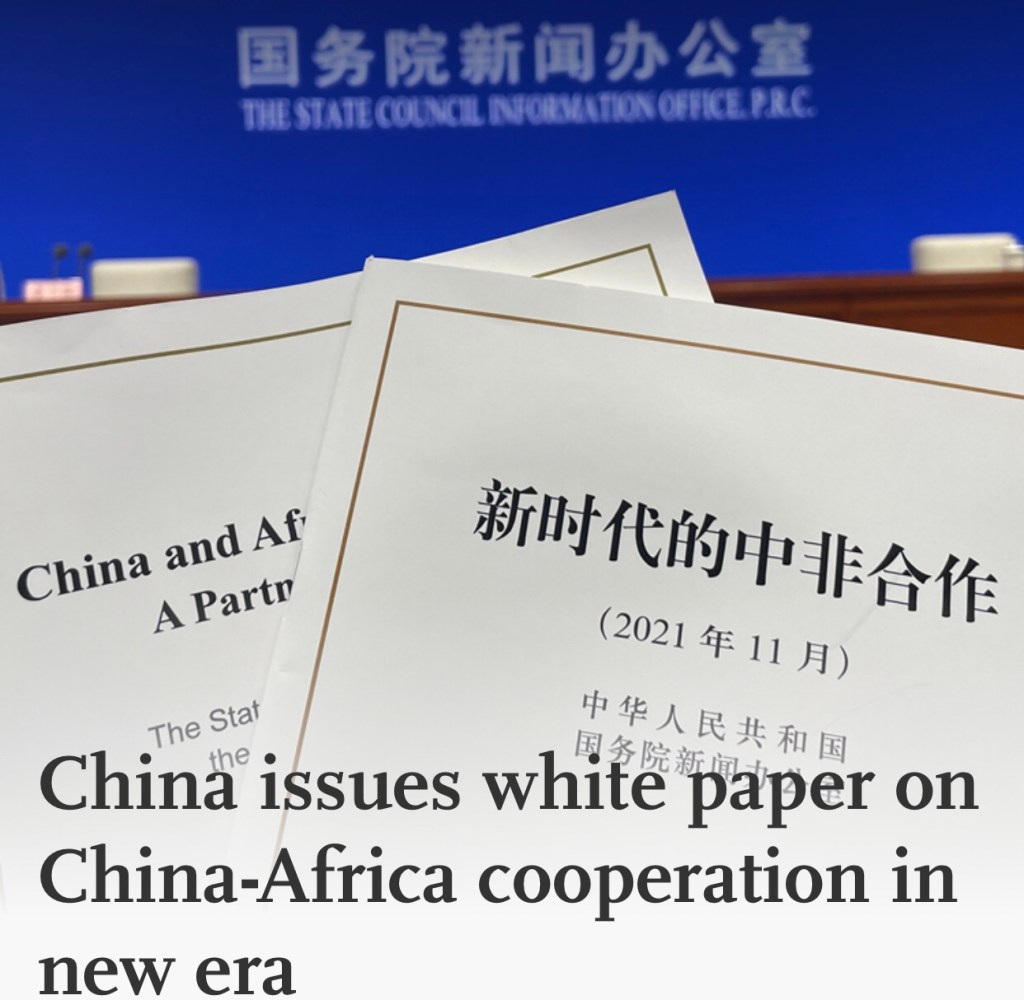
China on Fri released a white paper, making an overall review on its cooperation, mutual support with Africa in the past years and offering a perspective on future cooperation. It stressed that China and Africa will always be a community of shared future.
‘US spy Mark Simon ordered the attack,’ says convicted attacker of former GT reporter in HK by Global Times Nov 25 2021
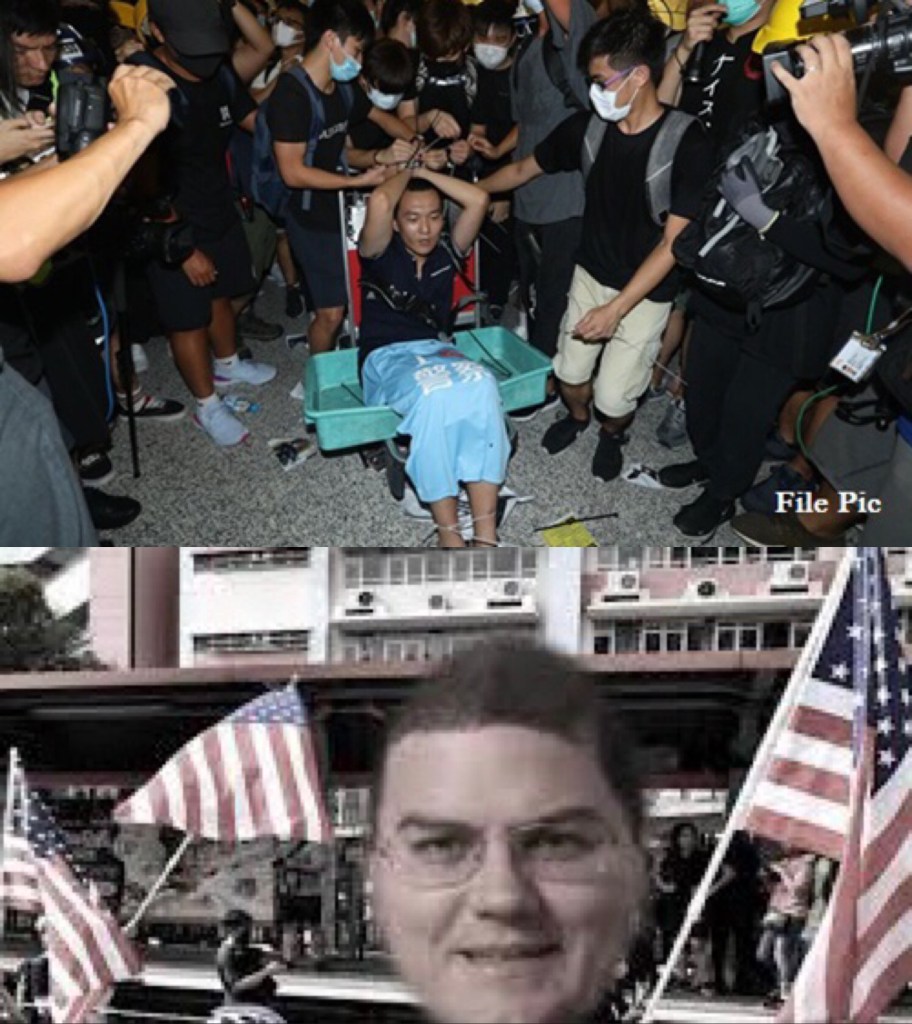
Hong Kong rioters tied Global Times reporter Fu Guohao to an airport trolley and beat him after falsely claiming he was a fake reporter.
The attack on former Global Times reporter Fu Guohao in 2019 was “ordered by US spy Mark Simon,” the convicted attacker told the Hong Kong High Court on Thursday.
Amy Pat Wai-fan and Lai Yun-long, attackers of then-Global Times reporter Fu Guohao at the Hong Kong International Airport in August 2019, were found guilty of rioting and other crimes, and were sentenced to 51 months and 63 months in prison, respectively, in January. Later, the two appealed the conviction to the Hong Kong High Court.
On Thursday, Lai withdrew his appeal, but shouted, “I was ordered to do it by US spy Mark Simon! I have wronged Fu Guohao! I apologize to the 1.4 billion Chinese people!”
Pat admitted to assault and forced detention, but wanted a lighter sentence. She told the appeal judge that she had simply followed others in committing the crime and that she had never thought about its seriousness, and regretted her actions.
After hearing the arguments, the judge rejected her appeal.
Mark Simon, a top aide of imprisoned Hong Kong media tycoon Jimmy Lai, worked as a submarine analyst in the US Naval Intelligence from 1987 to 1991. He went to Hong Kong in 2000 and gained permanent residence there in 2008.
Simon was also chairman of the GOP’s branch in Hong Kong. During the 2008 US presidential election, he organized a campaign with the US Chamber of Commerce and wrote a letter to an American broadcasting company seeking sponsorship, in which he identified himself as the branch’s chairman.
Media reports also revealed that Lai’s interactions with US senior officials during the 2014 illegal Occupy Central movement and the social turmoil in the summer of 2019 were arranged by Simon.
Lai and Simon invested at least HK$13.7 million in a scheme aimed at forcing the government to accede to protesters’ demands, according to the court. Lai has been serving multiple jail terms for national security offenses, among other crimes.
Simon has left Hong Kong and is wanted by the Hong Kong police.
Biden’s real challenge not China but an antiwork generation by Ding Gang Nov 24 2021
When Washington set Beijing as the US’ “most serious competitor,” think tankers in the White House failed to anticipate that a domestic problem, lurking under the surface of US society, finally started to erupt.
Due to the epidemic, the challenge has come earlier and more fiercely. More and more young Americans do not want to become “captive” to their works. Their attitude toward job is completely different from that of their predecessors. An antiwork storm is coming.
Unfortunately, this storm occurred just when the $1 trillion infrastructure bill was about to be implemented. US President Joe Biden is facing a generation of young Americans who are rethinking the significance of work. In May, Business Insider published an article entitled, “The truth behind America’s labor shortage is we’re not ready to rethink work.”
Imported goods continue to flow into US ports and airports. However, the country, which does not lack highways, is now unable to deliver gifts for Christmas to homes due to lack of drivers and stevedores.
The US transportation industry is confronting its worst labor shortage in four years, with a shortage of around 60,000 drivers.
This is not only a problem of a certain industry. According to the US Department of Labor, 4.3 million people quit their jobs in August, leaving the number of open jobs at more than 10 million, slightly lower than the 11.1 million in July. And the number of people quitting in September reached 4.4 million in September. This is the highest number in 20 years.
The desire to obtain a higher-paid job is apparently not the only reason. Two years ago, while hiring truck drivers, Walmart offered them a salary of nearly $90,000 a year. A friend of mine who used to be a truck driver explained the “mystery” behind such a generous offer: Who from today’s young Americans wants to do this kind of hard work?
There are also many other reasons. Some people want better health insurance, and some older employees who had lost their jobs during the epidemic decided to retire early. Many people prefer a flexible work schedule and remote work. Some employees haven’t got used to the fixed work schedule after coming back to work after the epidemic.
In an article “Even with a dream job, you can be antiwork” published in the New York Times in October, the author Farhad Manjoo argued that “in its sudden rearrangement of daily life, the pandemic might have prompted many people to entertain a wonderfully un-American new possibility – that our society is entirely too obsessed with work, that employment is not the only avenue through which to derive meaning in life and that sometimes no job is better than a bad job.”
The young American generation’s view on work is obviously changing. While the older generation treats work as the foundation of life and family happiness, the new generation sees working for the paycheck as a “prison for the mind and soul” and such a mental prison must be broken.
The result of the change of the mindset is that on the one hand, there has appeared a labor shortage, but on the other, a large number of Americans are waiting for a job that is more suitable for them. According to a September survey by the National Federation of Independent Businesses (NFIB), the largest small business association in the US, a record 51 percent of small business owners reported job openings they were unable to fill.
There is nothing wrong with pursuing the joy of work and seeking a “meaningful” job. However, when such an atmosphere is permeating the whole society, who is going to fulfill President Biden’s infrastructure plan? Will there be more young Americans who are willing to engage in boring, repetitive low-paid jobs in logistics, catering, manufacturing and other industries, or do heavy physical work?
The US antiwork movement constitutes a sharp contrast with the scene in China, where tens of thousands of Chinese workers are sticking to work in construction, transportation, epidemic prevention and manufacturing amid the COVID-19 epidemic.
The development of a country depends to a large extent on the work spirit of its people. Whether the goals of institutions and the government to boost the economy can be achieved also depends on people’s willingness to make efforts to this end. If there really is a competitive relationship between China and the US, what’s important next is how the young people of the two countries treat their jobs respectively.
Dear readers, do you really believe this US problem can be solved by making China a major competitor?
The author is a senior editor with People’s Daily, and currently a senior fellow with the Chongyang Institute for Financial Studies at Renmin University of China. dinggang@globaltimes.com.cn. Follow him on Twitter @dinggangchina




 Johnson Choi Biz