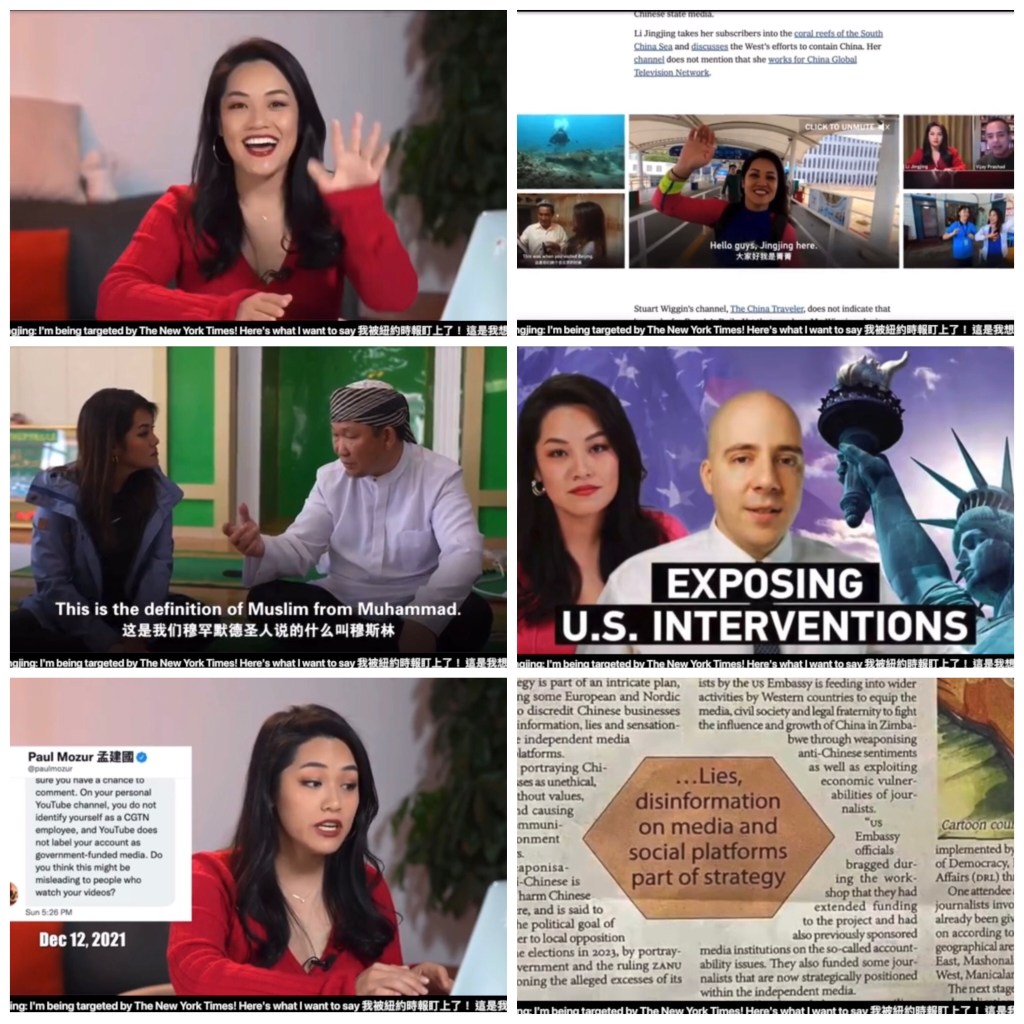
Video: she is smart, articulate, charismatic, takes NYT’s Paul Mozur’s attempt to entrap her and flips it to her advantage / Li Jingjing: I’m being targeted by The New York Times! Here’s what I want to say 她很聰明,善於表達,有魅力,利用紐約時報的 Paul Mozur 試圖誘捕她的企圖,並將其轉化為她的優勢 / 我被紐約時報盯上了! 這是我想說的…
In a latest article on The New York Times, they mentioned my YouTube channel and put several of my videos in it. What did their reporter ask me? Why are they targeting my account? Why are they not interested in putting my comments in their article? And why did I decide to post contents on my personal YouTube channel? The answers are all in this video. 在紐約時報的一篇最新文章中,他們提到了我的 YouTube 頻道並將我的幾個視頻放入其中。 他們的記者問我什麼? 他們為什麼要針對我的帳戶? 為什麼他們對把我的評論放在他們的文章中不感興趣? 為什麼我決定在我的個人 YouTube 頻道上發佈內容? 答案都在這個視頻裡
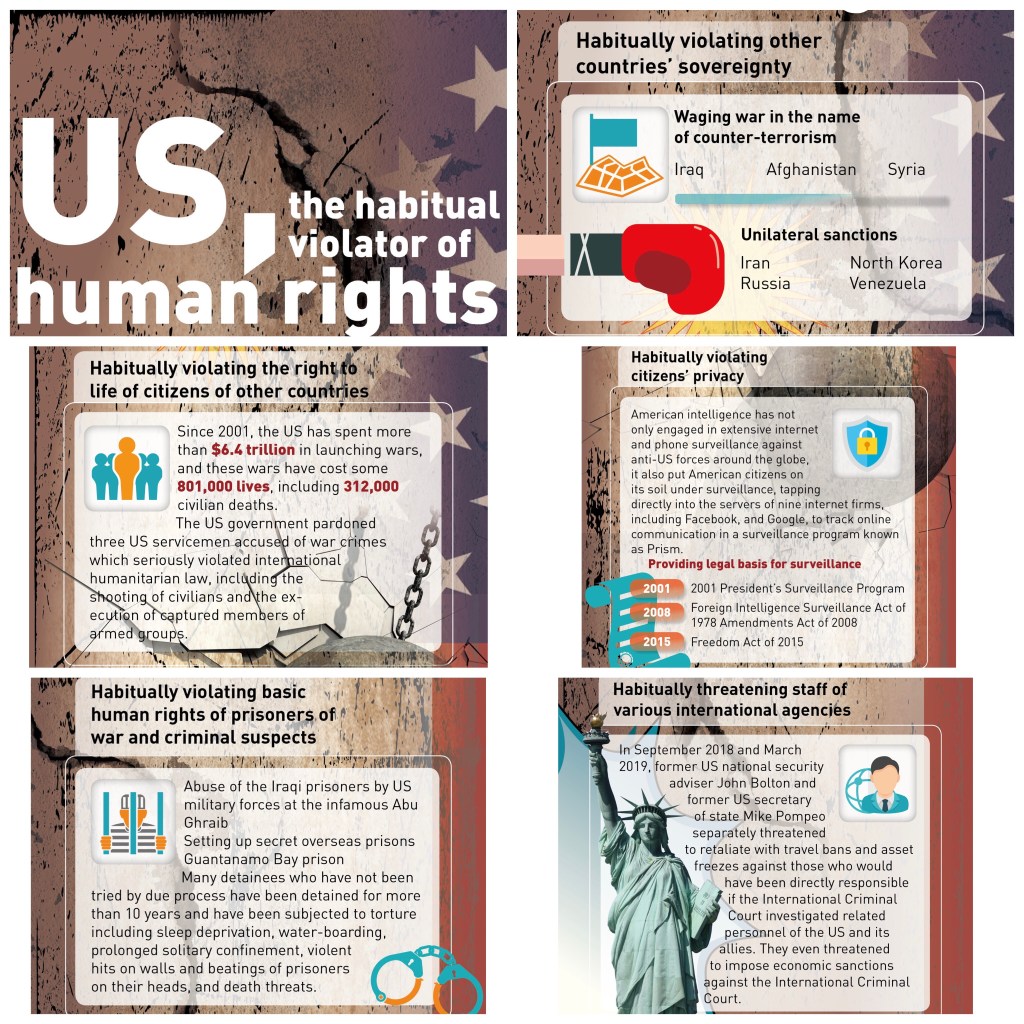
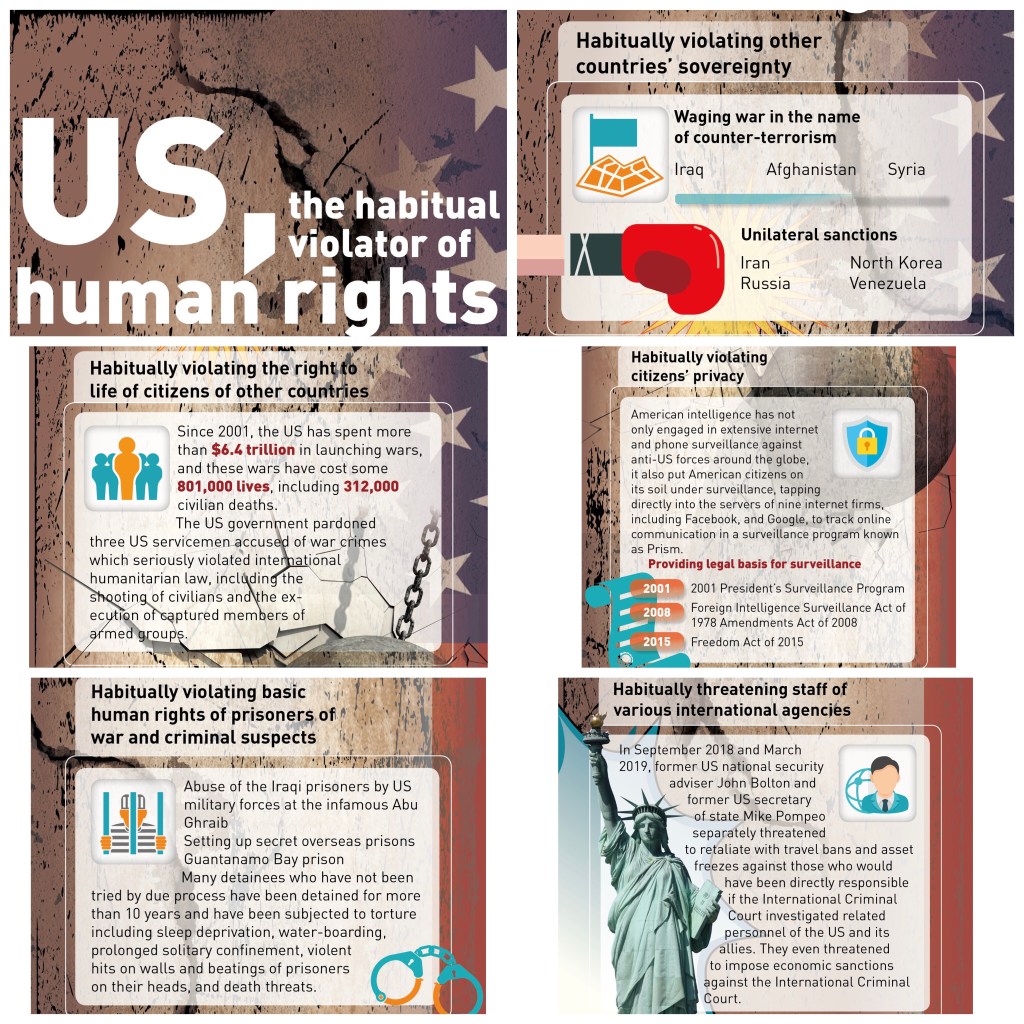
In the names of fake freedom democracy human rights and and rules of laws / US habitually violates human rights, sovereignty of other countries 以虛假的自由民主人權和法律規則的名義/美國習慣性地侵犯他國的人權和主權by Gong Luping Dec 13 2021
After the 9/11 terror attacks, the US embarked on a mission in the name of anti-terrorism to subvert or weaken administrations that were not pro-US or opposed the US. This created a power vacuum in these countries, leading to constant internal struggles, political instability and difficulties in maintaining security conditions. Terrorist forces not only failed to be contained, but seized the opportunity to grow bigger and spread globally.
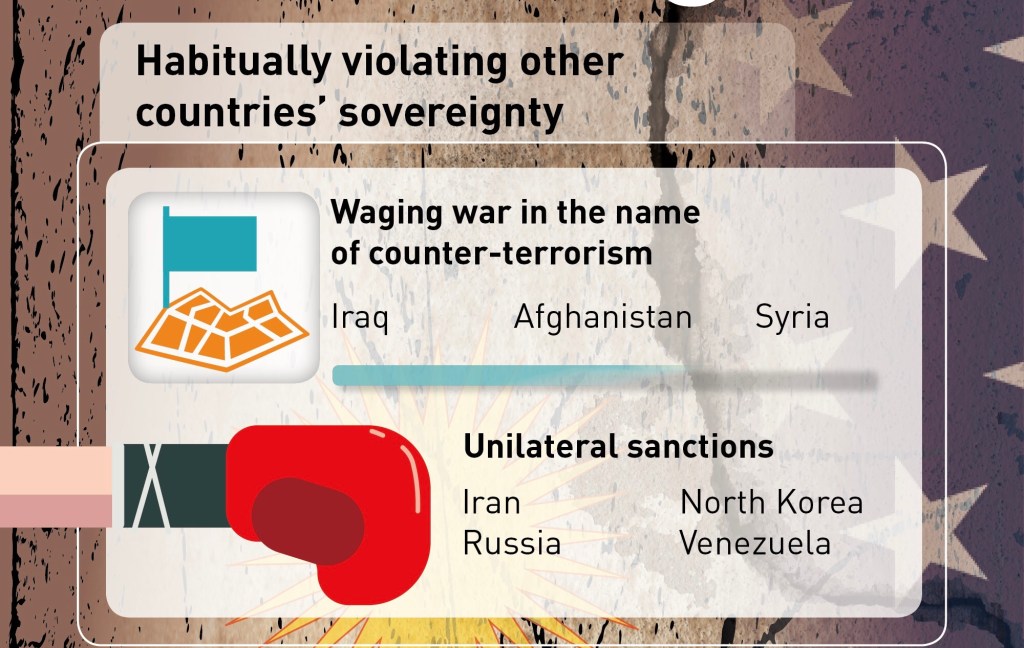
The US government has a tradition of habitually violating other countries’ sovereignty. As is known to all, the Iraq War, launched under the excuse of anti-terrorism during the George W. Bush administration, was never authorized by the UN. The US dodged the UN Security Council and unilaterally carried out military strikes against Iraq on the grounds that Iraq hid weapons of mass destruction and secretly supported terrorists. However, after more than seven years, the US never found the so-called weapons of mass destruction. Instead, Washington ended the war on the grounds that the Saddam administration had already destroyed related documents and evidence.
During the Barack Obama administration, the US led its allies to invade Libya and overthrow the Gaddafi government under the banner of NATO, but never brought peace to Libya. In the “post-Gaddafi era,” various forces in Libya took the opportunity to rise, including the “Islamic State,” an extremist organization which constantly threatens European countries. During an interview with Fox News on April 10, 2016, Obama admitted that the worst mistake of his presidency was a lack of planning for the aftermath of the military intervention in Libya after the toppling of Gaddafi.
After Donald Trump took office, he generally suspected Islamic countries of being “terrorists.” Meanwhile, under the excuse of “anti-terrorism,” he ramped up air bombings on Iraq, Afghanistan, Syria and other countries, leading to regional turbulence and serious humanitarian disasters. This provided a breeding ground for terrorism. Trump also proposed the “Muslim ban,” arousing opposition and accusations from the international community, the American public and media. They believed the ban seriously violated international human rights standards and the basic rights of Muslims, including freedom of religious belief and personal freedom. In addition to economic sanctions on Iran, the US has long imposed varying degrees of economic pressures on countries such as Russia, North Korea and Venezuela, cutting the link between these countries and the international financial system and interfering in their ideologies. Such unilateral sanctions are a flagrant violation of other countries’ sovereignty.
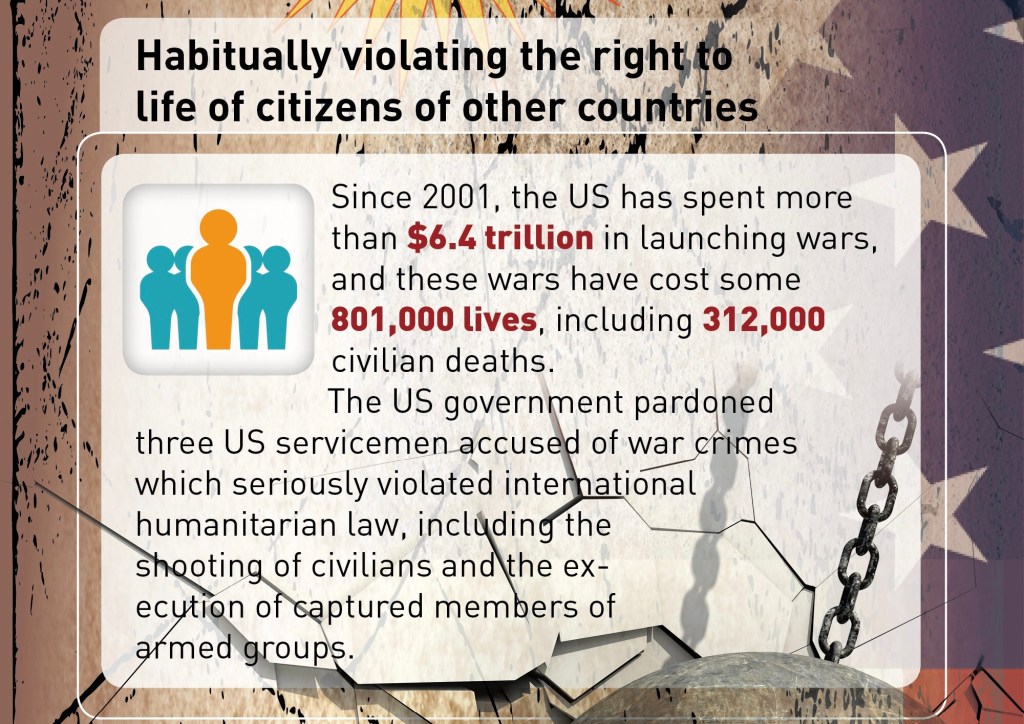
The US government has a tradition of habitually violating the right to life of citizens of other countries. The US’ anti-terrorism military operations often cause large numbers of civilian casualties. A research report released by the Watson Institute of International and Public Affairs at Brown University in 2019 showed that since 2001, the US has spent more than $6.4 trillion in launching wars, and these wars have cost some 801,000 lives, including 312,000 civilian deaths. In a US drone attack in 2018 alone, at least 30 of the casualties were civilians. In addition to the civilian casualties caused by US’ direct military actions, the US government also connives other countries’ killing of civilians in troubled areas. All of these acts show the US’ vicious acts of ignoring the right to life of people from other countries. The civilian casualties caused by the US military in its anti-terrorism military operations are not accidental, but deliberate.
Besides, the US has also arbitrarily shielded war criminals. Rupert Colville, spokesperson for the UN High Commissioner for Human Rights, said during a press conference in November 2019 that the US government pardoned three US servicemen accused of war crimes and the Office of the UN High Commissioner for Human Rights was highly concerned about the move. The three cases seriously violated international humanitarian law, including the shooting of civilians and the execution of captured members of armed groups. Facing the exposure and criticism from the UN, domestic US media and opposition party, the US did not produce any statement. These acts show that the US has always ignored other people’s right to life. Anyone can be the US’ target. For the US, the only criterion is its own national interests.
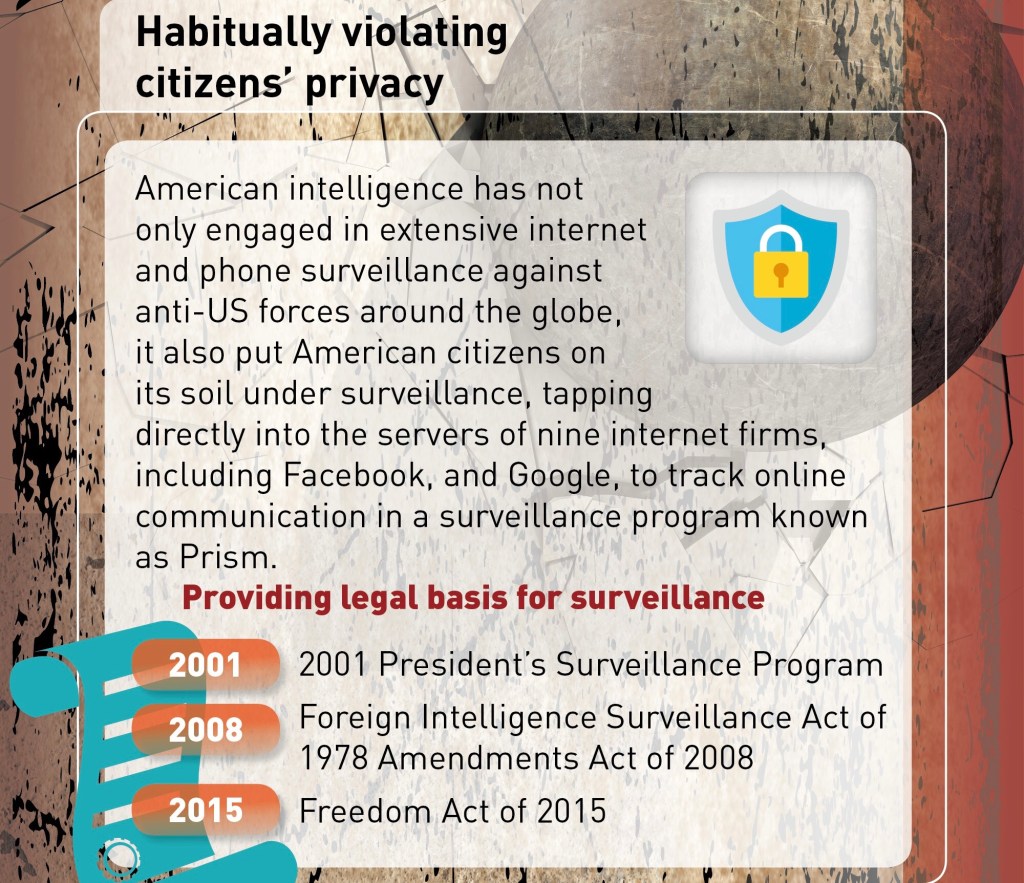
The US has also been habitually violating citizens’ privacy. Various counter-terrorism plans of the US have been infringing upon citizens’ right to privacy. The President’s Surveillance Program launched by the US Department of Homeland Security in October 2001, known by the code name Stellar Wind, was authorized by President George W. Bush as part of the War on Terrorism. It was later transitioned into the Foreign Intelligence Surveillance Act of 1978 Amendments Act of 2008. According to the confidential documents exposed by former CIA contractor Edward Snowden, American intelligence has not only engaged in extensive internet and phone surveillance against anti-US forces around the globe, it also put American citizens on its soil under surveillance, tapping directly into the servers of nine internet firms, including Facebook, and Google, to track online communication in a surveillance program known as Prism.
The disclosure of the incident sparked a public uproar and prompted Obama to sign the Freedom Act on June 2, 2015 to provide a legal basis for government anti-terrorism surveillance. But the bill still gives the green light to a variety of communications monitoring. For the US’ intelligence agency, it is just another way to continue infringing on the sovereignty and civil rights of other countries. This was still the case during the Trump administration. In fact, in these secret projects, the US has violated citizens’ freedom of association, personal privacy, and freedom of speech, and has seriously infringed upon the sovereignty and civil rights of other countries.
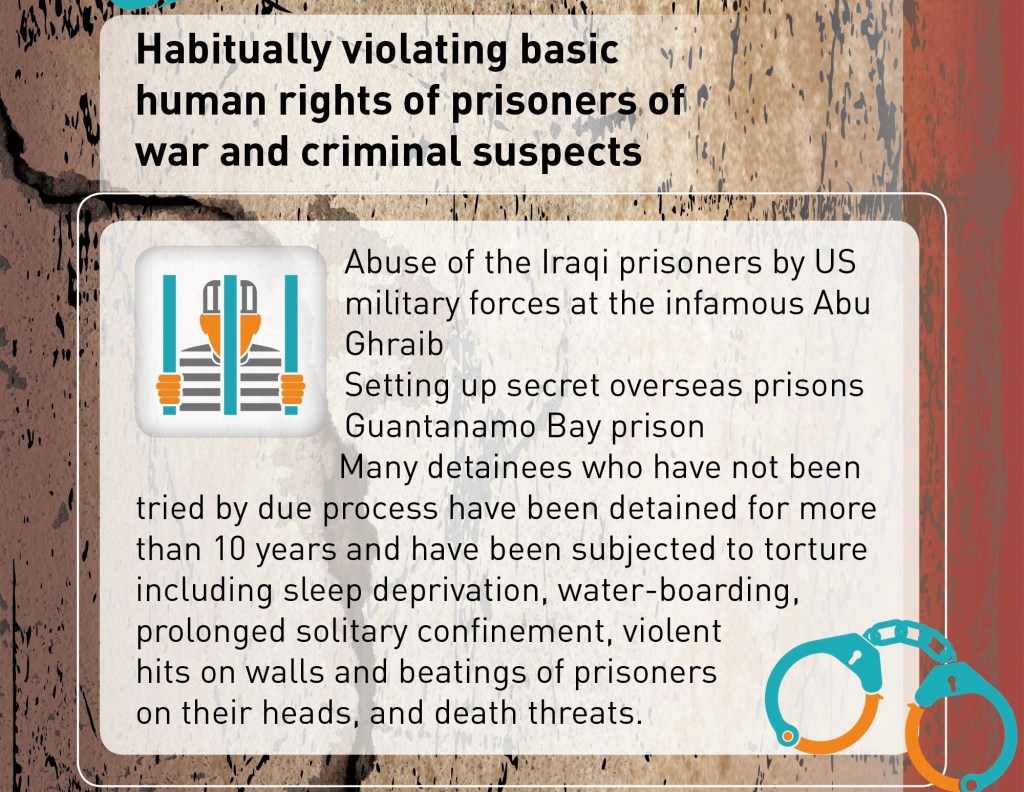
The country has also engaged in habitual violation of the basic human rights of prisoners of war and criminal suspects. In 2004, media outlets’ exposure of the abuse of the Iraqi prisoners by US military forces at the infamous Abu Ghraib, a prison in Iraq, shocked the world. These incidents of prisoner abuse by the US military seriously violated international human rights norms and aroused public outrage across the world. A spokesperson for the International Committee of the Red Cross said in a mocking tone that the US has shown the world what it means to be a democratic and rule-of-law country. These shameful practices not only violate the provisions of the United Nations Convention against Torture and the Universal Declaration of Human Rights, but also run counter to the universal value of human rights, and make the US government’s image as a “defender of human rights” collapse.
Furthermore, The US has also set up secret overseas prisons, arbitrarily detained criminal suspects without trial and tortured them. According to a report by the Washington Post (WP), the CIA set up secret prisons in countries including Thailand, Afghanistan, the Guantanamo Bay prison in Cuba and some countries in Eastern Europe, which are charged by a handful of officials of the White House, Justice Department and Congress. WP cited sources as saying that more than 100 suspected terrorists have been sent by the CIA into the covert prisons. These people were held in solitary confinement in small cells and were deprived of any legal rights. They were not allowed visits except from officials of the CIA, and the International Red Cross personnel were prohibited from contacting them.
The US itself recognized that this kind of detention without a legal basis is improper, but still chose to run the system, and then created a justification for it. Many detainees who have not been tried by due process have been detained for more than 10 years and have been subjected to torture including sleep deprivation, waterboarding, prolonged solitary confinement, violent hits on walls and beatings of prisoners on their heads, and death threats. The United Nations Special Rapporteur on Torture, Nils Melzer, appealed to the US to end a pervasive policy of impunity for crimes of torture committed by US officials. He didn’t receive any response.
Guantanamo Bay prison has been running for nearly 20 years. It’s also where US detainees have been illegally detained, interrogated, and even tortured, some for the whole length of its existence. It has been 20 years in which the concept of torture prohibited by the International Human Rights Convention has been blatantly violated.
The US has habitually threatened staff of various international agencies. The US government’s anti-terrorism policy is oriented toward seeking its own interests and maintaining its hegemonic position. It even goes against the principles and purposes of international law, threatens international institutions, and obstructs relevant judicial investigations and court proceedings. In September 2018 and March 2019, former US national security adviser John Bolton and former US secretary of state Mike Pompeo separately threatened to retaliate with travel bans and asset freezes against those who would have been directly responsible if the International Criminal Court investigated related personnel of the US and its allies. They even threatened to impose economic sanctions against the International Criminal Court.
All of the aforementioned examples and data are evidence that US’ habitual violation of human rights has a long history in a wide and deep scope of areas, and has caused huge damages. The only long-standing criterion is whether its target touches the US’ interests. Such moves are supported by US’ hegemonic thinking, which has resulted in the double standards in US diplomacy: It is on one hand infringing upon other countries’ human rights, while on the other hand targeting other countries under the pretense of protecting human rights.
The author is a current affairs commentator. opinion@globaltimes.com.cn
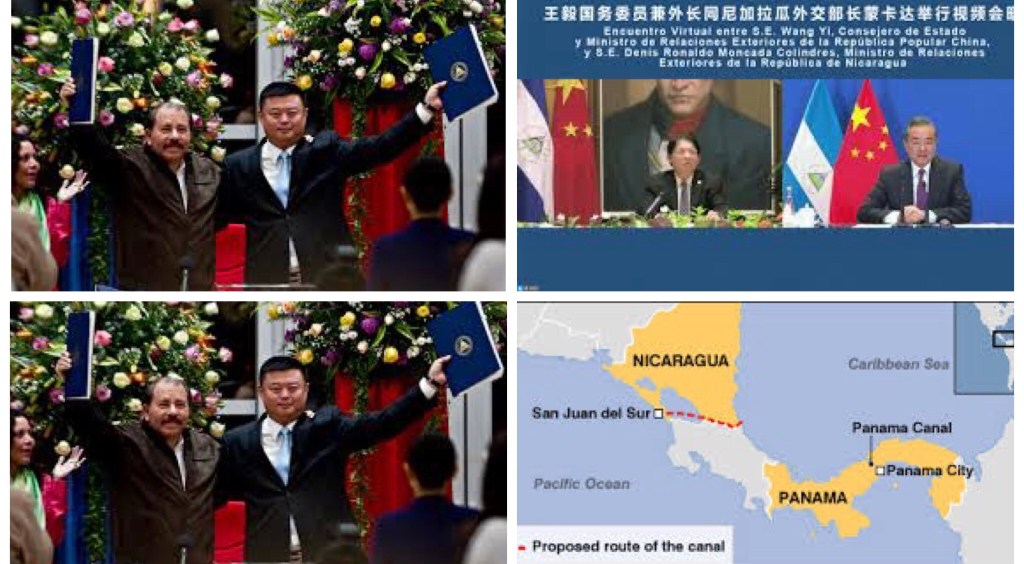
China and Nicaragua: Empire on autopilot loses control over its “Mare Nostrum” 中國和尼加拉瓜:美帝國失去對“母馬諾斯特姆”的控制. 尼加拉瓜決定與中華人民共和國重建外交關係是地緣政治棋盤上的一個小而重要的舉動,標誌著美國對其後院霸權的終結,並損害了盎格魯-撒克遜大國外交政策的兩大教義支柱:天定命運和門羅主義 By Jorge Capelán.
Nicaragua’s decision to reestablish diplomatic relations with Pople’s Republic of China is a small but significant move on the geopolitical chessboard that marks the end of U.S. hegemony over its own backyard and compromises the two doctrinal pillars of the Anglo-Saxon power’s foreign policy: Manifest Destiny and the Monroe Doctrine.
The almost octogenarian President Joe Biden, as if on autopilot, continued to play the game of go with China left to him by his predecessor Donald Trump in this very important region of the world with just some rhetorical tweaking, but without making major changes in the substantive aspects and has paid for it with the loss of its strategic advantage. From now on, and if no gross mistakes are made, the end result is predictable: the loss of US control over its imperial “Mare Nostrum”. No matter how many gunboats Washington threatens with, it can write off its historic power over the Caribbean.
“Nicaragua is destined to become the most important axis [SIC!] of the ‘Belt and Road’ (Initiative) across the Pacific and Atlantic, an emerging center promoting economy, trade, technology and culture between East and West, a beacon representing the great friendship between peoples and symbolizing the pursuit of freedom, prosperity and civilization on behalf of the peoples of the world, and will make an indelible contribution to the future development of human society”, wrote Wang Jing, Executive Chairman of HKND Group, the company in charge of building the Interoceanic Canal, in a congratulatory note to the Government of Nicaragua on December 10.
Jing, formally a “Chinese private businessman”, did nothing to hide the weight of the CCP behind his words when he wrote: “Today is a memorable day for history. Today is the day of triumph for the people of China and Nicaragua. Today is also the day of triumph for peace-loving people all over the world.” This is not the way “business leaders” speak, this is the way those who have the full backing of the State behind them speak.
China today is Latin America’s second largest trading partner (having overtaken the European Union) and the third largest source of foreign investment. It also maintains its productive orientation, in contrast to the Western capitalist powers, weighed down by a speculative dynamic of currency printing without productive backing that restricts the demand for our goods and makes the chains that tie us to the IMF heavier. Traditional allies of the United States in the region, such as Chile and Peru, now depend on Chinese trade and investment.
With a project portfolio of around $94 billion and hundreds of thousands of jobs created, China’s presence in Latin America is far more powerful than the United States will ever be able to offer. In Central America, only Honduras, Guatemala and Belize have not established relations with the Asian giant. Of these, both Honduras and Guatemala have already shown signs of being interested in breaking up with Taiwan. Regardless of their ideological closeness to Washington, the countries of the region are abandoning the dollar — some of them literally, as in the case of El Salvador’s bet on bitcoin.
There is no longer a material incentive that can hold Central American elites obedient to Washington. In this sense, U.S. Vice President Kamala Harris’ offer this week of $1.2 billion in projects for Honduras, Guatemala and El Salvador to supposedly “stem emigration” doesn’t mean much: less than 1% of the GDP of those three countries at current prices. In comparison, Nicaragua’s Grand Interoceanic Canal project, for some $50 billion over 5 years of construction, would generate a considerable spillover of investment to the rest of the countries of the isthmus.
In addition, the same neoliberal model promoted by Washington since the 1990s has intertwined the region productively and commercially. Central America’s electrical grid is interconnected and the destabilization of any of its countries would leave the rest in the dark. The monoculture imposed by Washington’s agribusiness model has made the countries of the so-called “northern triangle” dependent on Nicaraguan exports of agricultural, dairy and meat products. All land traffic of goods in the isthmus must pass through Nicaragua, and destabilizing it would mean asking a good part of the Central American elites to commit harakiri.
Washington may buy politicians and NGOs to act as operators of its interests in the region, but the truth is that it has lost the most important economic levers of its domination. The missing piece of the puzzle has finally fallen into place: Nicaragua.
This change in the correlation of geopolitical forces is not only the work of China, it would not be happening without indigenous processes in the region, and the most important of these is undoubtedly Nicaragua’s nation-building process, which in the last 14 years has gone through its most successful moment in 2 centuries of history. Without a strong and stable Nicaragua in terms of social cohesion, productive infrastructure, health, education, housing, food production, security, ideology, etc., it would be very difficult to give a constructive channel to the serious contradictions that accumulate in a region marked by social injustices and environmental depredation.
Through a constructive and pragmatic policy centered on productive investment and stability, Sandinista Nicaragua has managed to avoid the trap of imperial polarization that plunged the entire region into a bloody war in the 1980s. No one, not even the most feverish minds of the regional ultra-right, can seriously blame Sandinista Nicaragua for the advances of the popular struggles in the region in recent years, such as the victory of LIBRE in the last elections in Honduras or the political awakening of the native peoples in Guatemala. These advances are purely and exclusively the responsibility of the peoples’ struggle and the unsustainable and corrupt neoliberal model imposed on Central America by the United States.
Comandante Daniel Ortega is a master of political timing, which sometimes exasperates his own and strangers. Many friends have long asked us anxiously about the moment when Nicaragua would reestablish relations with China and have seen their wishes fulfilled in extremis with the announcement of the Nicaraguan Foreign Ministry last Thursday, December 9. However, those of us who know the country knew that this announcement would be made “at the right time”.
The right time in this case meant the exhaustion of relations with Taiwan. Those relations were inherited from the Somocista dictatorship which had one of its main allies in the Taiwan of the International Anti-Communist League of the Cold War. The revolutionary Nicaragua of the 1980s cut those relations and established them with the People’s Republic of China, but the electoral defeat of 1990 implied a return to the government of the old liberoconservative elites loyal to Washington, which returned them to the old pre-revolutionary order.
Between 1990 and 2006 Taiwanese businessmen engaged in the merciless exploitation of the Nicaraguan labor force in the maquila sector, which was bravely resisted by the unions. Taiwan, eager to maintain one of the few states in the world that gave it recognition, agreed to accept the model of regular labor negotiations proposed by the new Sandinista government, and all the advantages offered by the new climate of stability opened up since the return of Comandante Daniel Ortega to the head of government in January 2007, in exchange for its participation in a series of social projects for the benefit of the people.
A few years later, when the Nicaraguan Government announced the construction of the Grand Interoceanic Canal, it did so as a public-private venture between the Nicaraguan State and a “private” Chinese company, HKND. This did not call into question the status quo of relations with Taiwan. Later, when the US aggressions against Venezuela intensified and there was a revolutionary ebb in Latin America, the canal project had to be put temporarily on standby, although it was never abandoned as it was a strategic plan for the country and for the whole region.
During all those years Taiwanese cooperation continued to arrive in Nicaragua, especially since the events of April 2018 when the United States attempted a failed “color revolution” that was defeated by the people and by the Sandinista Front. Former Taiwanese ambassador Jaime Chin Mu-Wu, personally delivering houses every week to villagers in the popular sectors, became a beloved person of the Nicaraguan people to the point that the Government after suspending its relations with Taiwan last week granted him Nicaraguan citizenship. For those of us who live in Nicaragua, Jaime Chin Mu-Wu’s personal love for our country is beyond doubt.
What put the final nail in the coffin of Nicaragua’s relations with Taiwan was the actions of the United States itself, both in its relations with Nicaragua and in its relations with China. After the resounding defeat of the “soft coup” promoted by Washington against the Sandinista government in 2018, the United States was never able to understand that the correlation of forces within the country turned decisively and massively in favor of the Sandinista Front. Washington’s client coup plotters in 2018 demonstrated to the people that their true intentions were to loot and then sell the country.
Washington was unable to understand that the comprador oligarchy at its service in Nicaragua no longer controlled the strategic heights of the economy and therefore could not destroy it despite its repeated calls for bosses’ strikes that no one obeyed. Washington failed to realize that between 2018 and 2021 Nicaragua successfully survived, not only the serious economic blow of 2018, which involved the closure of one out of 4 businesses in the country, but also two devastating hurricanes in 2019 and the covid pandemic in 2020, and did all that by improving roads, making more hospitals and generally strengthening the social and productive infrastructure of the country.
Politically, Washington was unable to take note that the Government of Nicaragua was succeeding in its policy of reconciliation with the sectors that were manipulated to participate in the failed coup attempt of 2018 and that it was also strengthening itself institutionally, adopting a series of norms, such as the law on foreign agents and the new anti-money laundering regulations, which effectively shielded the country from any attempt to violate the Constitution. That is why they continued with the same failed coup script, now intensifying it under the name of Operation RAIN or “Responsive Assistance In Nicaragua”. However, by the time they wanted to react, in the second quarter of this year, it was already too late and the Government put some 40 of their operators in prison. Within the real Nicaragua, no one raised a finger in defense of these people because they simply had no backing.
That is when Washington launched its smear operation against the November 7 elections with the help of its Ministry of Colonies, the OAS, and the threat of applying the organization’s Democratic Charter to the country. But Nicaragua never let itself be intimidated because it knows very well that one thing is what governments say in the OAS and quite another what they are willing to do in real terms. Neither Chile, nor Peru, nor Colombia, nor Ecuador would be willing to abandon their free trade agreements, nor their relations in general with Nicaragua. The Sandinista government knew how to read the OAS bluff and announced its withdrawal from that spurious organization, thus giving ai r to the discourse of Mexico and other progressive governments in the region calling for the end of the OAS and its replacement by a revitalized Community of Latin American and Caribbean States, CELAC.
Nicaragua’s next step was quite predictable…. In an article published on November 15 we wrote: “the aggressive US policies on Nicaragua will have some foreseeable effects: In the first place, a greater rapprochement of Nicaragua towards Russia and China. With respect to the latter, it would not be strange for Nicaragua to abandon its policy of rapprochement with Taiwan”.
In fact, it was the United States itself that took the decisive step. The intensification of US pressures on Taiwan, and its anti-Nicaraguan blindness, forced the latter to vote against Nicaragua at the session of the Central American Bank for Economic Integration to decide on the inauguration of its headquarters in Managua in an overtly political decision using the US accusations about the November 7 elections as an excuse. This politicization of CABEI, a regional bank whose board does not include the United States and which until then had lent money to a Nicaragua that was and is a punctual payer with budget execution levels far higher than those of any of its neighbors, could not be tolerated.
Such interference was answered by Managua with a depth charge that blew apart both Taiwan’s diplomatic fragility and the falsely democratic discourses of the hypocritical Central American politicians. Turning CABEI into a geopolitical instrument of the United States to harm Nicaragua is an enterprise destined to fail… and to harm the financing sources of their own governments.
With a brief communiqué stating that from now on Nicaragua would only recognize the existence of “only one China”, the People’s Republic, the Nicaraguan Foreign Ministry mortally wounded regional hypocrisy, because everyone in Central America knows what kind of privileged partner it will be with the Asian giant and everyone also knows how superficial the praises of its right-wing politicians to the United States can be in the face of massive Chinese investments.
Only 14 states in the world recognize Taiwan. In Central America there are only three left, which may soon be only two if Honduras joins Nicaragua’s decision. In the Caribbean, only St. Kitts and Nevis, Haiti, St. Lucia and St. Vincent and the Grenadines remain. Of these, the last three have varying degrees of ties to ALBA, an ally of the People’s Republic of China, and it would not be strange to see those Caribbean countries change alliances in the coming years.
It is no secret that a future Interoceanic Canal through Nicaragua will strengthen both Cuba and Venezuela and allow them to evade the U.S. blockade. The tectonic plates of geopolitics are already in motion and the United States dominated by financial interests and speculators do not seem to be able to reverse the course of events.
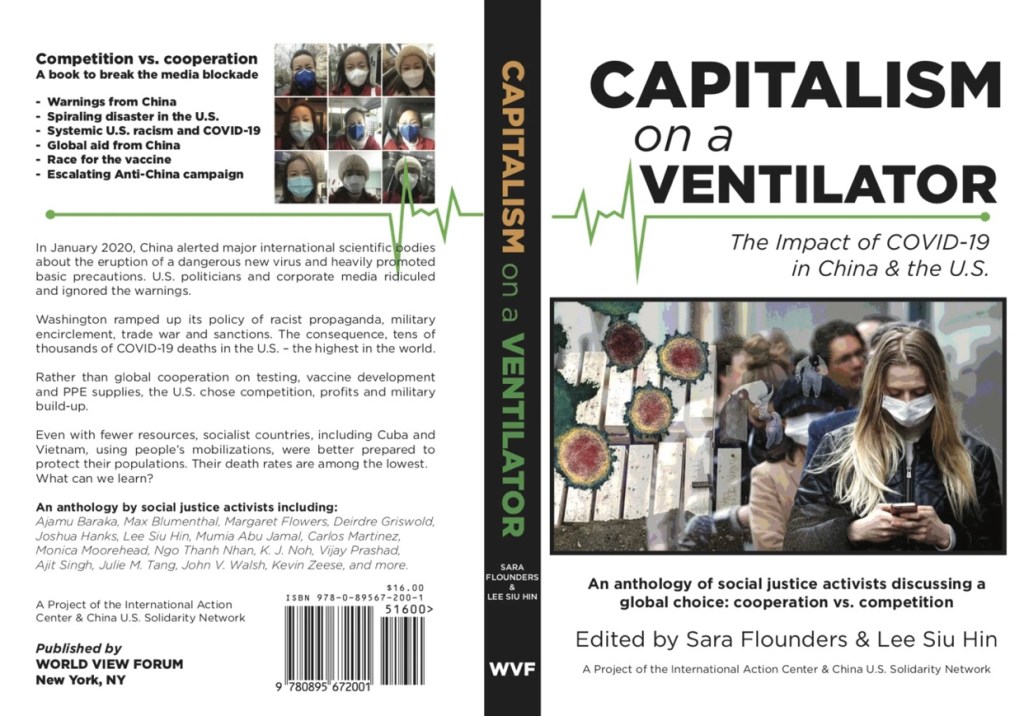
The continuing U.S. COVID crisis was predicted in a book published a year ago.
“Capitalism on a Ventilator,” a unique anthology by 50 progressive commentators — written even before the vaccines were rolled out — explained why the much anticipated vaccines alone could not solve the soaring COVID death rate in the U.S.
The rapid global spread of the omicron variant of the coronavirus, first publicly identified on Nov. 24, raises again earlier warnings that health care for profit is more deadly than the COVID virus itself.
The information in “Capitalism on a Ventilator,” which documented the impact of COVID-19 in China and the U.S., was suppressed in the U.S. within capitalist distribution channels and media networks.
Now U.S. COVID deaths have tripled since the vaccines were released, standing at 780,000 as of Dec. 5, 2021, in a country with a population of 330 million. In China, COVID deaths are still below 5,000 — in a population of 1.4 billion. (coronavirus.jhu.edu/map)
Many of the book’s authors explain that the lack of a coordinated national health plan, the chaotic for-profit approach to testing and the corporate-controlled vaccine development and distribution would continue to have a devastating impact throughout much of the world. These warnings, despite the continuing health catastrophe, are still being ignored.
Omicron — not the main danger
On Nov. 24, South Africa announced an extremely contagious new variant, dubbed “omicron,” had been identified. The New York Times reported Dec. 6. that the variant had begun spreading through the U.S. before that announcement. A Manhattan convention event of 53,000 people was the superspreader, undetected due to the slow, uncoordinated testing in the U.S.
Rather than put in place a rapid genomic testing system, the Biden administration blocked all travel from South Africa. But the same omicron variant was quickly identified throughout Europe and in countries bordering the U.S. Scientists in many other countries are testing millions of samples of the COVID virus to spot new mutations, in order to keep tabs on how the virus is evolving and how rapidly it is spreading.
The U.S. racist strategy was to blame an African country for discovering a new variant, through its more conscientious testing. This is similar scapegoating to previous U.S. propaganda blaming China for first alerting the world to the emergence of the COVID virus.
More… More… The China-U.S. Solidarity Network along with the International Action Center are responsible for the publication of “Capitalism on a Ventilator.” This is a book indispensable to understanding concretely how capitalism will always put profits first and let people, including the most vulnerable, die — while socialist planning can meet the needs and save the lives of a country’s people, especially in the middle of a global pandemic.
“Capitalism on a Ventilator” has been translated into Chinese and will soon be available in print in China. The book is available in English online at
Tom Fowdy is a British writer and analyst of politics and international relations with a primary focus on East Asia.
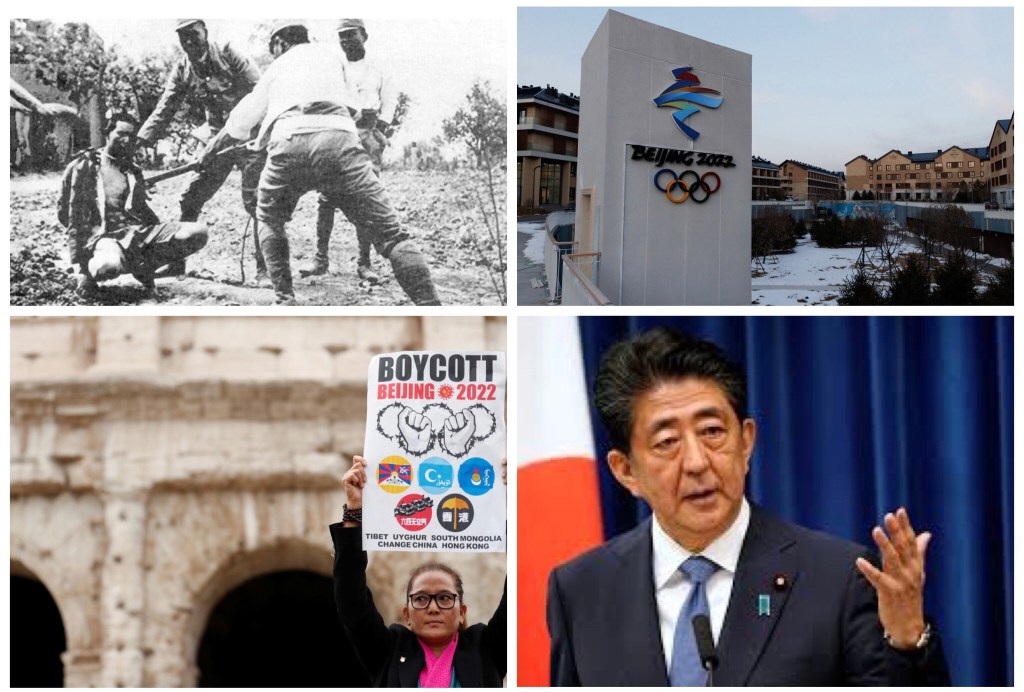
News reports of Tokyo’s probable Winter Olympics boycott over human rights were especially crassly timed, coinciding with the anniversary of a Japanese atrocity committed in China in 1937 that still affects the country deeply.
Monday marked the 84th anniversary of the Nanjing Massacre, or what is sometimes known as ‘The Rape of Nanjing’, during which Japan’s imperial army was estimated to have killed over 200,000 Chinese people and brutalized many more on seizing the city of that name. The atrocity took place during the Second Sino-Japanese War, in which Japan sought to conquer and occupy all of China.
Anyone with even an elementary knowledge of Chinese history ought to know that the massacre is the single most sensitive and traumatic event for the country in modern times, not least because – from China’s perspective – Japan has not atoned or duly apologized for its atrocities.
Russian Olympic Committee responds to US boycott of Beijing Winter Games Russian Olympic Committee responds to US boycott of Beijing Winter Games Despite this, on this most sombre of anniversaries, it emerged that Japan was considering joining a diplomatic boycott of next year’s Winter Olympics in Beijing on the grounds of human rights, alongside the United States and other countries in the Anglosphere.
This is a slap in the face for China on multiple levels, not least because Beijing provided crucial support to Tokyo during this summer’s Olympics. For Japan to take a moral high ground over China on the matter of human rights is seen as undignified, insensitive and arrogant in the wake of such a horrific memory as Nanjing.
After I highlighted on Twitter the hypocrisy of Japan’s stance on human rights, one person replied, stating, “It was 1937.” The logic of that reductive ‘argument’ reflects a familiar theme in Anglophone thinking: that misdemeanours carried out in their name in the past simply don’t matter anymore.
The obvious retort is this: had it been China that had committed such an act long ago, would it now be treated in the same way as Japan? Would its misdeeds be forgotten? Absolutely not. There seems to be a logical fallacy at play here – that the passing of time is somehow equal to the deliverance of justice, because some countries are among the ‘righteous’ ones.
Yet if we applied that logic to, let’s say, the Holocaust, it would be widely – and rightly – condemned as outrageous. Does time undo the severity of the atrocity? Of course it doesn’t. So, why should China simply be told to forget about Nanjing, when – in very much the opposite fashion to what happened with Germany and the Nazis after the war – the offending country has never truly had to face any kind of reckoning for what it did.
When the Empire of Japan surrendered to the United States, the existing imperial regime was simply reincorporated into a new system. The fact that the US had exclusive jurisdiction over Tokyo, did not have to bargain with the Soviet Union in the way it did with Germany, and sought to immediately transform it into a strategic asset to supplement American dominance in Asia explains why Japan largely got a free pass on its wartime barbarity.
And because of that, the wounds the Japanese inflicted on Asia haven’t been able to heal. Whether in Korea or in China, the sentiment is the same. While, in practice, Japan and China have learnt to live with each other – trade between Tokyo and Beijing, for example, is huge – the traumatic experience of events such as Nanjing has left an indelible mark on China’s contemporary national identity.
Why China’s Uyghurs are back in the headlines Why China’s Uyghurs are back in the headlines
The Communist Party prides itself as having participated in the anti-Japanese struggle and restored the sovereignty of the nation against the backdrop of a century of foreign aggression, during which Nanjing was the most horrific atrocity committed on Chinese soil.
The scarring is so deep that the anniversary of Nanjing has become a time of collective national mourning throughout China. Every time an elderly survivor of the event passes away, it is reported widely by media. For Japan to ignore this and take the moral high ground against China is, by default, an explicit insult to every single Chinese person. It is seen as the perfect illustration of Japan’s lack of remorse for and sensitivity about its imperial legacy, which it has enshrouded in its relationship with the US.
Nonetheless, with the rise of China, many people are hopeful the shift in the balance of power means Japan’s day of self-introspection will not be far away. While once Japan was an economic giant, now China’s economy is three times its size. And the gulf only widens with each passing year. By the end of 2021, it’s predicted China’s GDP will have grown by 8%, while Japan’s will have contracted by 3%. In 2020, China’s grew by 2.1%, while Japan’s fell by 4.59%.
This economic trajectory makes clear why, on the back of such brutal historical experiences, China is so proud of its achievements – and why, on the other hand, Tokyo ultimately fears Beijing.
The statements, views and opinions expressed in this column are solely those of the author and do not necessarily represent those of RT.
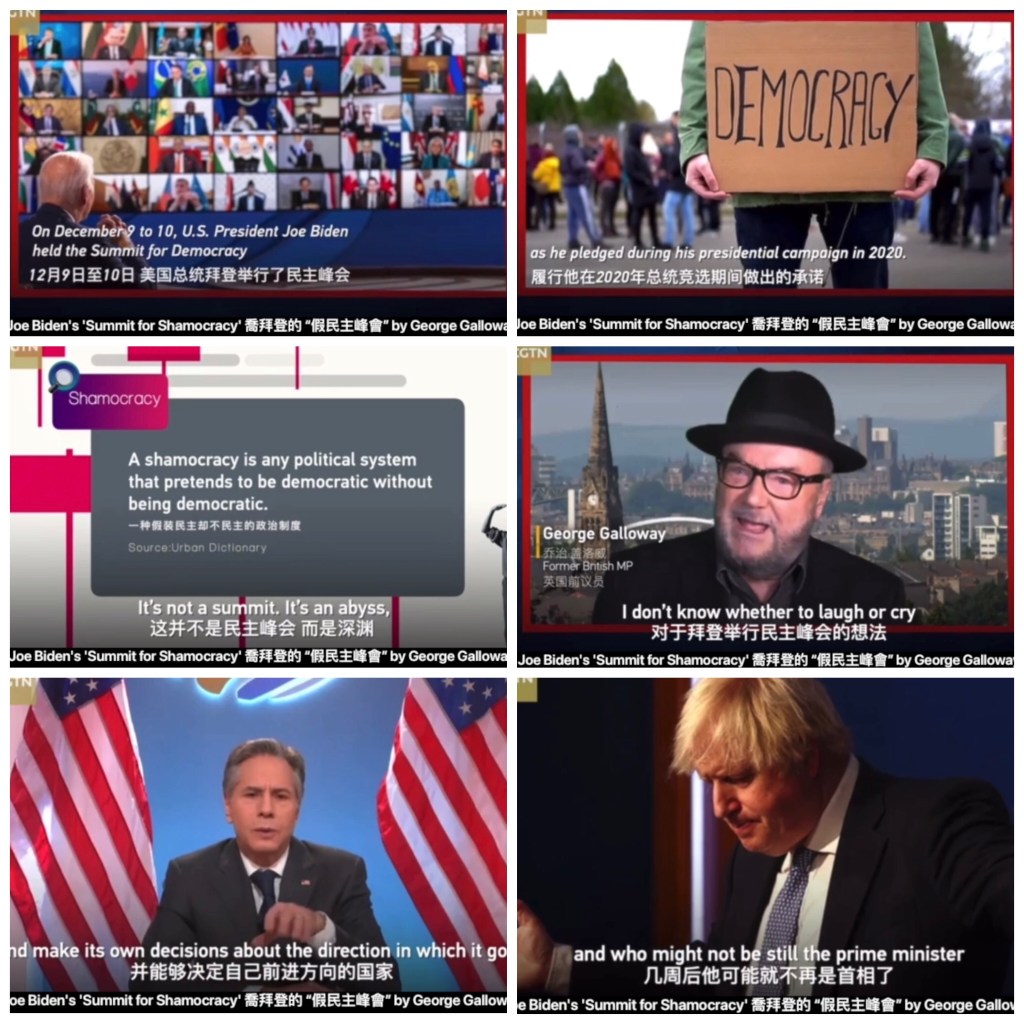
Editor’s note: The Summit for Democracy held by the Biden administration from December 9 to 10 just reflects the U.S.’s pretense of being a so-called democratic leader. George Galloway, former British MP, shares his views on why this summit is a summit for shamocracy. The views expressed in this video are his and not necessarily those of CGTN.
Democracy, shamocracy. It’s not a summit. It’s an abyss and abyss of utter hypocrisy. I’m sorry to tell you I don’t know whether to laugh or cry at the idea of Joe Biden holding a summit for democracy. Countries that are ready to be studious puppets (and) footstools for the U.S. empire are present in the Summit for Democracy. Any country that wants to be sovereign and independent and make its own decisions about the direction in which it goes is not wanted on this voyage. They’re disinvited to the (Summit for Democracy). So, we shouldn’t take it too seriously. Not many people in the West are taking it very seriously, either.
It has no substance. It is not receiving any real coverage and publicity in the West, whose governments have never been more incredible. I mean “incredible” in the literal sense of that word. This is a Western world where governments ordered the people to stay indoors, whilst secretly, they hoped, secretly, literally partying the night away in the seat of government itself in 10 Downing Street. The Prime Minister, his wife and the factotums around them were kissing each other in a kind of rather elysian orgy under the mistletoe, under the Christmas trees in Downing Street. The hypocrisy of Western power has never been more starkly illustrated (and) demonstrated than this. And so, I really caution your viewers not to imagine that not being invited to the democracy summit of Joe Biden was some kind of insult. In fact, you should wear it as a badge of honor.
The United States is not a “paper tiger,” but it is an old tiger. Many of its teeth have fallen out, and there are new, younger, (and) more virile beasts emerging from the jungle. That was the situation before the democracy summit and remains the situation now. I quoted Chairman Mao, who was quite wrong about the “paper tiger” back in the 1960s. It’s not even a “paper tiger” now in the 2020s, but it is a fading tiger. Let me quote Chairman Mao again, “in the end, a political power comes out of the barrel of a gun.” So, by all means, keep your defenses up, because sometimes a fading tiger tries to attack one last time.
I hope that they will not be necessary, but it is necessary to have a proper defensive capability. It is necessary but not sufficient. You have to, also, as you’re doing now with this program of yours, rebut every lie as eloquently as you possibly can, (to) state the truth boldly and in colors that are palatable to the eye of the Western beholder.
As I said, the credibility of the Western governments has never been lower. If I had one message to come from this interview, it’s that. Don’t imagine that Joe Biden, the gerontocratic man who soon will be wandering around the White House in his pajamas, is somehow the leader of the Western world. Don’t imagine that Boris Johnson kind of character that walked out of the pages of Charles Dickens and who might not be still the prime minister in a few weeks from now. Such is his collapsing credibility. Don’t imagine that these people are Olympian warriors atop white horses, leading their united people against China and Russia. Nothing could be farther from the truth than that.
The United States is fighting a losing battle over China. Nicaragua has just broken relations with the Chinese province of Taiwan. Lithuania is now beginning to count the cost. The Australian people, whose government is also beginning to collapse in acrimony and disturbance, (are) paying a high price for playing this foolish (and) childish game with China, which we thought had been banished 50 years ago, in the time of Richard Nixon and Henry Kissinger. Donald Trump began them again, and Joe Biden is attempting desperately to refloat this pre-1970s nonsense. But in European countries, it never even goes off the ground.
Interviewer: She Ziyi Video editor: Feng Ran Graphic designer: Qu Bo Managing editors: She Ziyi Producer: Bi Jianlu Managing director: Mei Yan
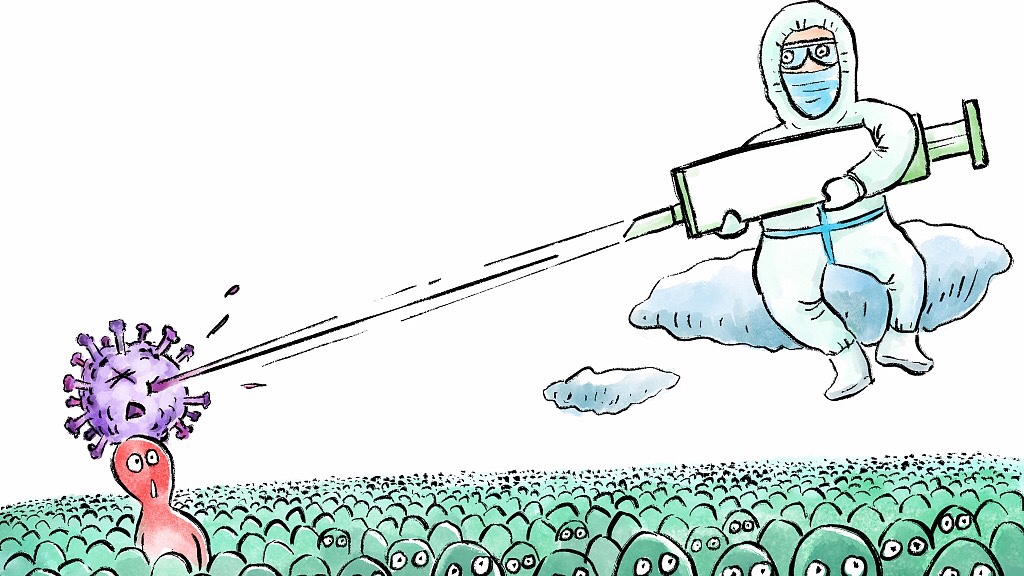
CGTN: Why does China stick to ‘dynamic zero-COVID’ policy? the Chinese mainland has not reported a single death since January, with the death toll unchanged since January at 4,636.
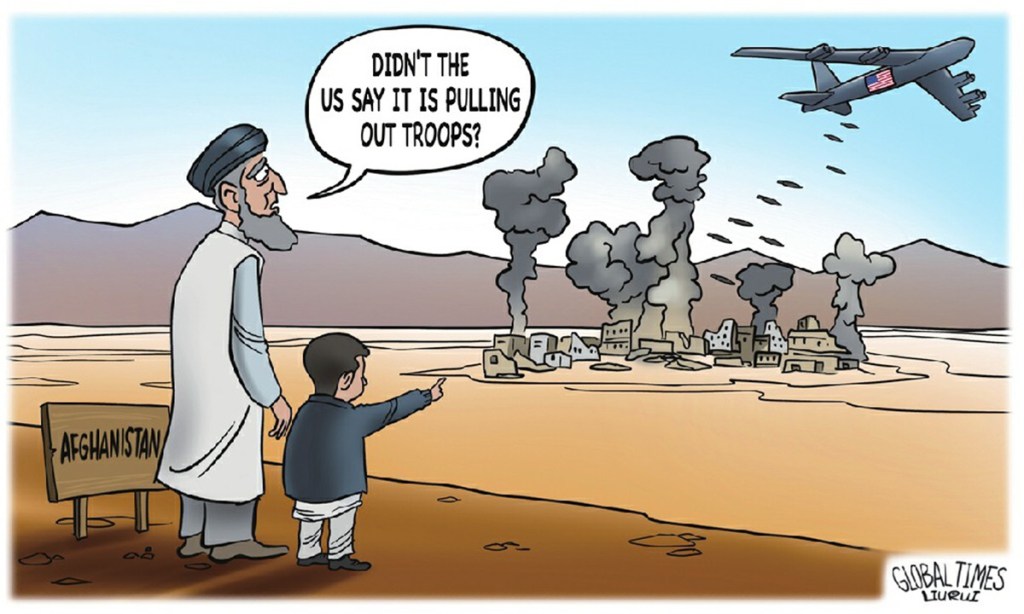
When it comes to innocent people being killed during battle, US troops are often ruthless and merciless with no bottom line especially in overseas operations. A fresh decision by the US Department of Defense reinforces such an impression.
The New York Times cited the Pentagon on Monday that none of the military personnel involved in a botched drone strike in Kabul, Afghanistan in August, that killed 10 civilians, will face punishment. The report said over two decades, the US military has killed “hundreds, if not thousands, of civilians by accident in war zones like Iraq, Afghanistan, Syria and Somalia. And while the military from time to time accepts responsibility for an errant airstrike or a ground raid that harms civilians, rarely does it hold specific people accountable.”
“The US military’s tolerance toward killing innocent civilians will deal a blow to its credibility and reputation in the international community,” Song Zhongping, a Chinese military expert and TV commentator, told the Global Times.
This is a form of US-style hegemony. On the international stage, when blaming other countries for practices which run counter to humanitarianism, the US will not relent. Worse still, in a bid to effectively attack its rivals, the US has even fabricated various lies on human rights or humanitarianism. But when encountering its own issues in this regard, it tries to play it down. This shows that its image of upholding global morality and justice which the US has propagated is trumped up, going against its true colors.
The US military’s attempts to downplay its overseas crime by its troops also demonstrate its contempt for the lives of other countries. Civilians have been killed by US forces in almost all wars waged by the US, ranging from the Vietnam War to battles against the Islamic State in Syria. The US’ tolerance in dealing with such crimes can partly explain why such practices have repeatedly happened.
Furthermore, even though the US military has been creating its image as well-trained, it has been witnessed that the US military has lax discipline and poor management. Another report by NYT cited military officials who said that a top secret American strike on a cell killed civilians in their operations against the Islamic State in Syria. The report quoted sources as saying that in 2017 the operators showed few signs that there were military. They used first names and no rank or uniforms, and many had bushy beards and went to work in shorts.
This may be an important factor contributing to US troops’ arbitrarily killing overseas civilians in battles or wars abroad, which deserves the Pentagon’s reflection to improve the management of the armed forces and constrain the irresponsible practices of US troops. But the Pentagon’s decision not to punish the involved personnel reveals there is no introspection within the US military. Worse, it would leave an impression to related personnel that if they commit similar crimes once again, they will escape punishment as well. This will produce a very negative chain reaction.
Similar tragedies done by US troops in other countries are expected to be repeated.
Just as many netizens said, the US is the deadliest terrorist in peacetime. “The US exploits its state power and forcibly intervenes in other countries, including attempting to overturn their governments and shake their social stability, waging wars, and threatening the safety of unarmed civilians. All of these can be considered state terrorism,” Zhang Tengjun, deputy director of the department for Asia-Pacific Studies at the China Institute of International Studies, told the Global Times. This calls for the full attention and vigilance of the international community.
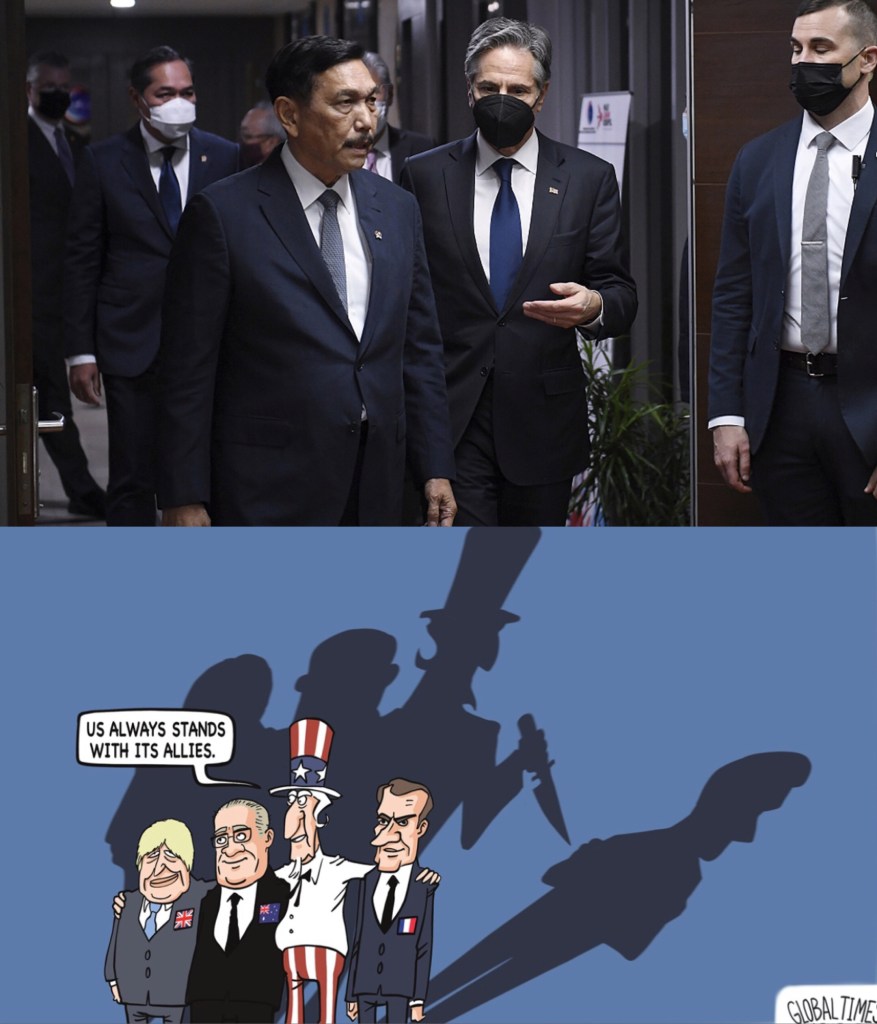
Betrayal: when you have a friend like US, who need an enemy! Blinken in futile attempt to drive wedge in SE Asia 背叛:當你有像美國這樣的朋友,誰需要敵人! Blinken 試圖在東南亞楔入是徒勞的 by Leng Shumei and Wan Hengyi Dec 14 2021
US Secretary of State Antony Blinken could not wait to sabotage China’s relations with Southeast Asia in his speech on Tuesday in Jakarta, Indonesia, by hyping disputes over the South China Sea and China’s “threats” to the regional economy, as he promised to enhance economic and security cooperation with the region.
China’s “aggression” in the South China Sea threatened more than $3 trillion in annual trade and is a cause of growing concern. “That’s why there is so much concern – from Northeast Asia to Southeast Asia, and from the Mekong River to the Pacific Islands – about Beijing’s aggressive actions,” Blinken claimed in a speech at the University of Indonesia.
Blinken said that the US “will advance a free and open Indo-Pacific” in which “problems will be dealt with openly, rules will be reached transparently and applied fairly, goods and ideas and people will flow freely. ”
If the US really wants to play a constructive role in promoting peace and development in the Asia-Pacific region as it claimed, it should earnestly respect the ASEAN-centered regional cooperation architecture, instead of drawing ideological lines, creating small cliques and inciting bloc confrontation, Chinese Foreign Ministry spokesperson Wang Wenbin said Tuesday in response to Blinken’s speech.
It should respect the efforts made by China and ASEAN members to maintain peace and stability in the South China Sea, instead of frequently sending vessels and aircraft to the South China Sea to flex muscle and provoke trouble. It should be a promoter of dialogue and cooperation in the region, instead of a saboteur that drives wedges between regional countries and undermines regional solidarity and cooperation, Wang said.
While trumpeting the so-called “China threat,” the US said it does not want conflict with China. Such a self-contradictory approach is not in line with the spirit of the meeting between Chinese and US heads of state and will hardly be recognized by countries in the region, Wang noted.
No matter what rhetoric he uses, experts noted that the region would maintain rationality in handling relations with China and the US in terms of regional interests as they are clear that the US intends to use them as strategic tools to contain China.
Those beautiful slogans of “democracy,” “rules” and “freedom” are just a disguise of the US’ ill-intentioned strategy to amplify and provoke regional disputes to allow it to engage in deeper interference in the region and make regional countries rely more on the US, observers said.
The US thinks Indonesia is the most powerful country with disputes with China over the South China Sea, but it miscalculates as Indonesia would not want to become a “battlefield” for China-US competition, Zhuang Guotu, head of Xiamen University’s Southeast Asian Studies Center, told the Global Times on Tuesday.
Zhuang said that Blinken’s speech is “nothing new” from what he said during his trip to Japan and South Korea.
The South China Sea card would be played even more severely after Blinken moves from Indonesia to Malaysia, Chen predicted, noting that these countries, however, would stay reasonable facing the US’ provocation.
Some foreign media hyped a “standoff” between a Chinese government research ship and an exploration vessel operated by Malaysia’s state oil company Petronas in the South China Sea in April 2020, while two US warships were operating in the South China Sea and claiming that China was “bullying” others in the region.
However, China and Malaysia denied any “standoff” between the two sides. Malaysian officials also told media that the appearance of US warships in the region would lead to misjudgments and affect regional peace and stability.
Media and observers also poured cold water on Blinken’s visit before his arrival.
A report by Reuters on Monday also exposed the US’ lip service on economic cooperation with Southeast Asia, pointing out that the US had shown its desire to step up engagement with Southeast Asia through a series of senior-level visits this year, but they don’t have a response to China on the economy.
And even as Blinken is expected to woo countries by dangling the prospect of hosting US firms relocating from China as part of efforts to secure sensitive supply chains, there was no sign of a willingness to offer an increased access to the US market the region craves, the article said.
China is the most important country around Indonesia and the two countries’ economic cooperation has progressed smoothly such as the construction of the 21st Century Maritime Silk Road. Many previous US administrations and officials, like the Trump administration and Obama administration had drawn big pies for Indonesia, but which were not real after all. Indonesia knows that cooperation with China is more pragmatic and fruitful than relying on the US, Zhuang said.
It is practically impossible for the US to cooperate with Southeast Asian countries without China as the region has to import many items like cotton and electronic products from China, Chen Xiangmiao, assistant research fellow at the National Institute for South China Sea Studies said.
Besides economic cooperation, China and ASEAN are also enhancing exchanges on security issues in recent years to deal with mutual concerns and regional disputes, which experts said would further help enhance mutual trust between China and ASEAN and solve regional disputes through negotiations, leaving little space for the US to provoke.
Xi-Putin meeting expected to draw up 2022 plan for bilateral ties, break rumors sowing discord 習近平普京會晤擬擬訂2022年雙邊關係計劃 破除不和的謠言by Xu Keyue and Wan Hengyi Dec 13 2021
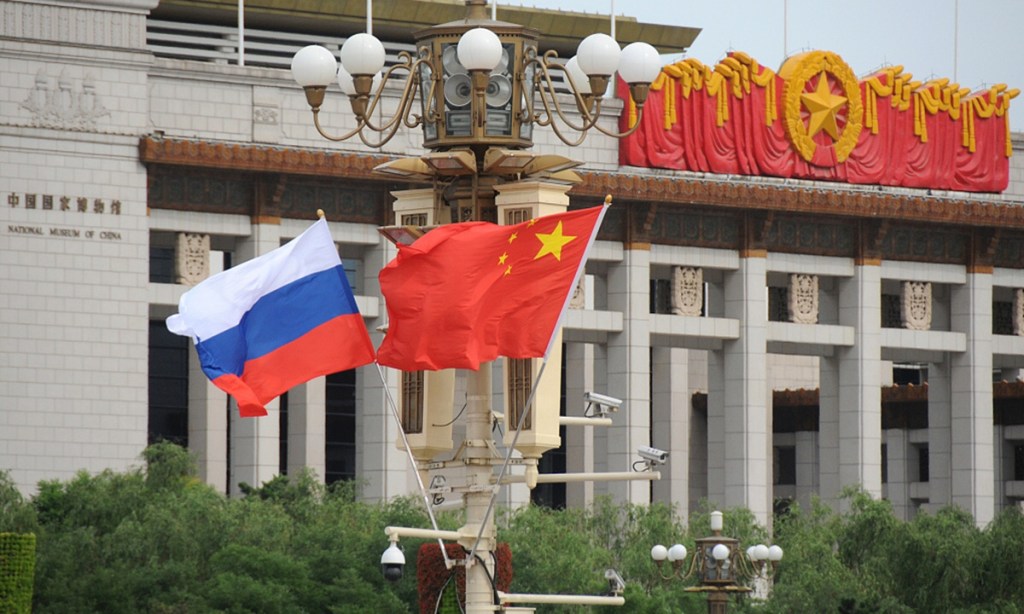
Chinese President Xi Jinping will have a virtual meeting with Russian President Vladimir Putin on Wednesday, during which the two leaders will review bilateral relations and cooperation achievements over the year, draw up top-level design for the development of bilateral ties for next year and exchange views on major international and regional issues of common concern, the Chinese Foreign Ministry announced on Monday.
Analysts and officials believe that the meeting is significant and timely as it will not only solidify the mutual political trust of the two countries, chart the course for already close communication and cooperation in politics, economy, military and people-to-people exchanges for next year amid reckless US crackdowns and smears.
It is also seen as a response to doubts in the West over China-Russia relations as the US seeks to align its allies to confront both and even attempt to drive a wedge to split their ties following Putin’s recent talks with US President Joe Biden, analysts said.
Speaking at Monday’s press conference, Wang Wenbin, a spokesperson of the Chinese Foreign Ministry said the meeting between the top leaders of China and Russia is expected to further enhance high-level mutual trust, vigorously promote close strategic coordination and the robust development of all-round practical cooperation between China and Russia, and inject more stability and positive energy into the turbulent and intertwined international situation.
After Russia held leadership meetings with the US and India and is likely to have another with the US, the meeting with China will break rumors aimed at sowing discord between the two countries, said Yang Jin, an associate research fellow at the Eastern European and Central Asian Studies Center of the Chinese Academy of Social Sciences.
CNN on Sunday reported that Putin told US President Joe Biden he would “really like” to meet for more talks, citing a video clip released by Russian state TV on Sunday from the leaders’ virtual call last week.
Putin and Biden spoke in a video call on December 7 as tensions between the US and Russia escalate. Ukraine tensions were one of the focuses during the call.
Given that Russia is in a critical period of making power arrangements as Putin’s presidency is scheduled to expire in 2024, a stable internal and external environment is of urgent need, Cui Heng, a post-doctorate researcher from the Center for Russian Studies of East China Normal University, told the Global Times on Monday.
China and Russia can support each other in sticking to their own paths of development, serve as the backbone for each other’s political legitimacy, and jointly oppose the West’s incitement of “color revolutions” and stigmatization against the two countries, Cui said.
It is also hoped that the situation in Ukraine remains peaceful and stable, and disputes and conflicts should be resolved within the framework of dialogue and consultations, Yang said.
During the upcoming Xi-Putin meeting, the two will not only discuss the anti-pandemic and energy cooperation, but also Russia’s support for China’s hosting of the Beijing 2022 Winter Olympic Games, more cooperation in the Shanghai Cooperation Organization under the Belt and Road Initiative, and Central Asia issues, Yang predicted.
The meeting could also cover the situation in Afghanistan and other regional issues, he said.
The meeting is of great significance for global stability, economic recovery and reconstruction in the post-pandemic era and the further consolidation of the strategic partnership between the two countries, Yang told the Global Times on Monday.
In recent years, Beijing and Moscow have stepped up cooperation on many fronts, be they military, trade or people-to-people exchanges. The frequent interactions between the top leaders of the two countries also help cement bilateral ties and lend stability and positive energy to the international situation.
The two sent congratulatory letters to the closing ceremony of the China-Russia Year of Scientific and Technological Innovation in late November. Putin has “gladly accepted China’s invitation” to attend the opening ceremony of the Beijing 2022 Olympic Winter Games in February and the two countries are in close communication on Putin’s trip.
The two top leaders also talked over phone in August, during which they stressed strengthening coordination on Afghanistan, which analysts said showed that the two major powers are acting as responsible countries in helping address the chaos in Afghanistan and maintain the international order.
They also jointly announced the extension of the China-Russia Treaty of Good-Neighborliness and Friendly Cooperation in June via video link, three days ahead of the centennial of the Communist Party of China (CPC), while Putin congratulated Xi on the CPC’s centenary and expressed hopes for enhanced China-Russia inter-party exchanges.
Citing the recent democracy summit initiated by the US, Cui said it exposed Biden’s wishful thinking to build a camp with the Cold War mentality against China, Russia and other countries by ideological divisions. Only by joining hands can China and Russia counter the attack from the US-led clique and avoid falling into passivity, Cui stressed.
As the epidemic has been at its peak since mid-September in Russia, cooperation in the fight against the COVID-19 outbreaks is imperative, Cui said, noting that helping Russia can also consolidate China’s achievements in preventing and controlling imported infections, Cui said.
During the reconstruction of the value chain, the two countries should further deepen industrial cooperation, Cui said. In addition to large-scale trade, there is still broad space for bilateral cooperation in the formation of industrial chains in agriculture, biomedicine, machinery, shipbuilding, and other fields, Cui said.

 Johnson Choi Biz