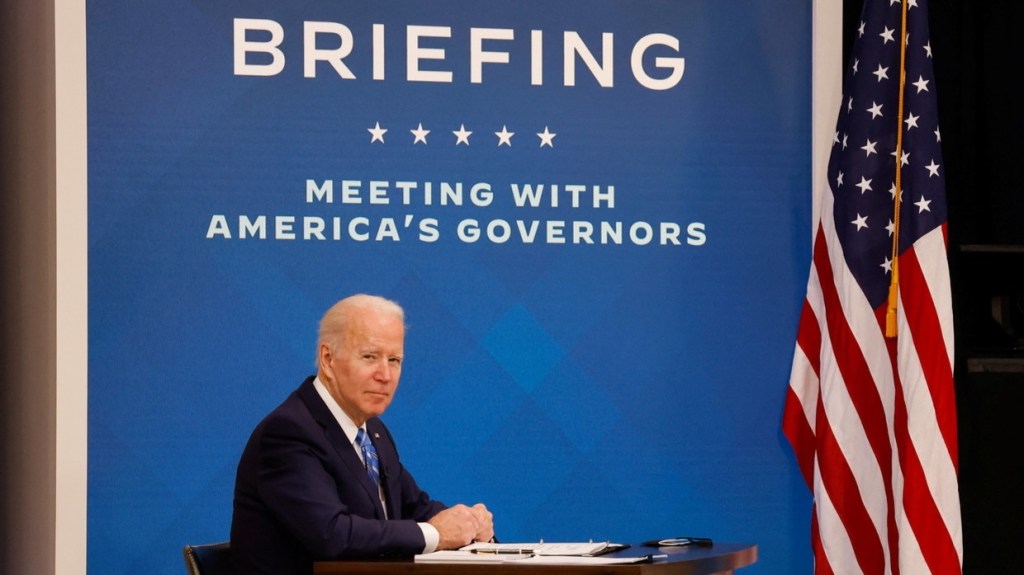
Biden above face on diplomatic boycott. Like the Chinese saying: “when you fell down, in order to save face, you said I fell to pick up sands 拜登在外交抵制問題上退宿 ”就像中國人說的:“摔倒了但為了面子,你說我摔倒是為了撿沙子”
If they could do it to Hawaii, imagine what they could have done to the 800 US military bases around the world! 如果他們能對夏威夷做這件事,想像一下他們會對全世界 800 個美國軍事基地做些什麼!
Hawaii Hearing Officer Calls For Closing Red Hill Fuel Facility To Avert ‘Imminent Threat’ – Calling the Navy’s water contamination crisis a “humanitarian and environmental disaster” that puts the public in imminent peril, a Hawaii health department hearing officer on Monday recommended upholding the state’s emergency order to drain the Red Hill fuel tanks.
“The weight of the evidence establishes that the Red Hill Facility, as currently situated, is a metaphorical ticking timebomb located 100 feet above the most important aquifer on Hawaii’s most populous island,” DOH Hearings Officer David Day wrote in a proposed decision and order released on Monday.
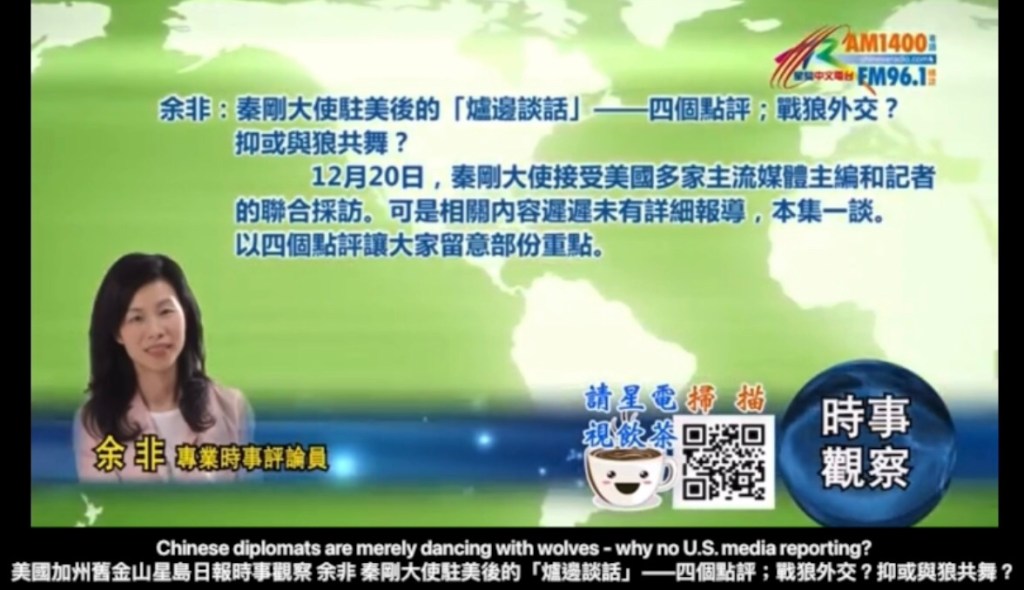
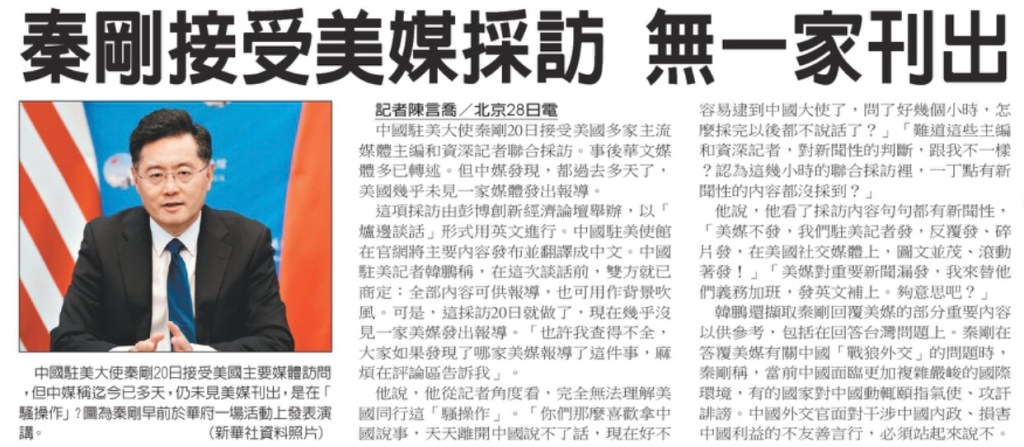
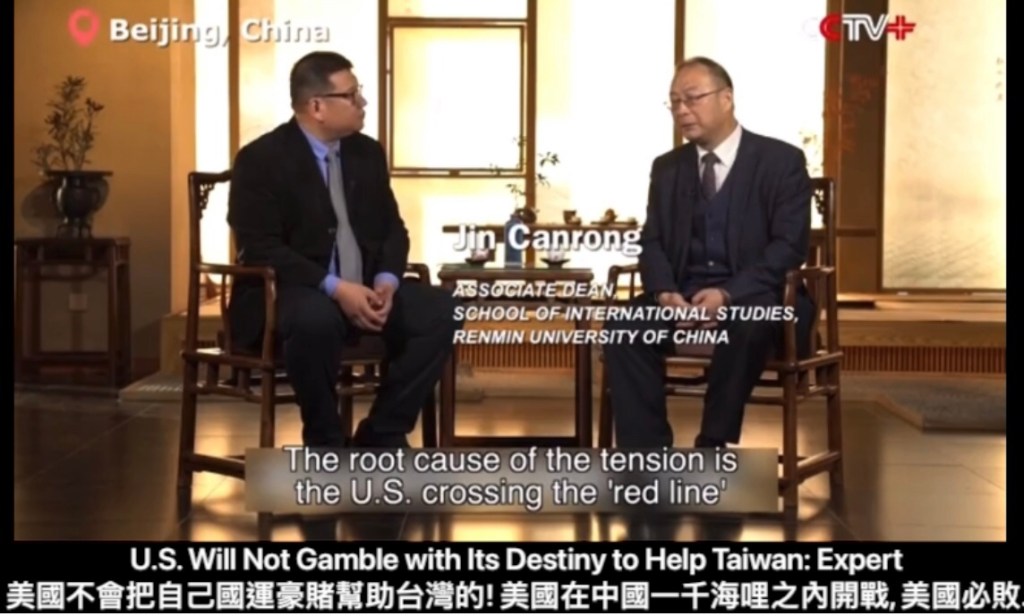
Video: Chinese diplomats are merely dancing with wolves – why no U.S. media reporting fire side chats? 美國加州舊金山星島日報時事觀察 余非 秦剛大使駐美後的「爐邊談話」——四個點評;戰狼外交?抑或與狼共舞?
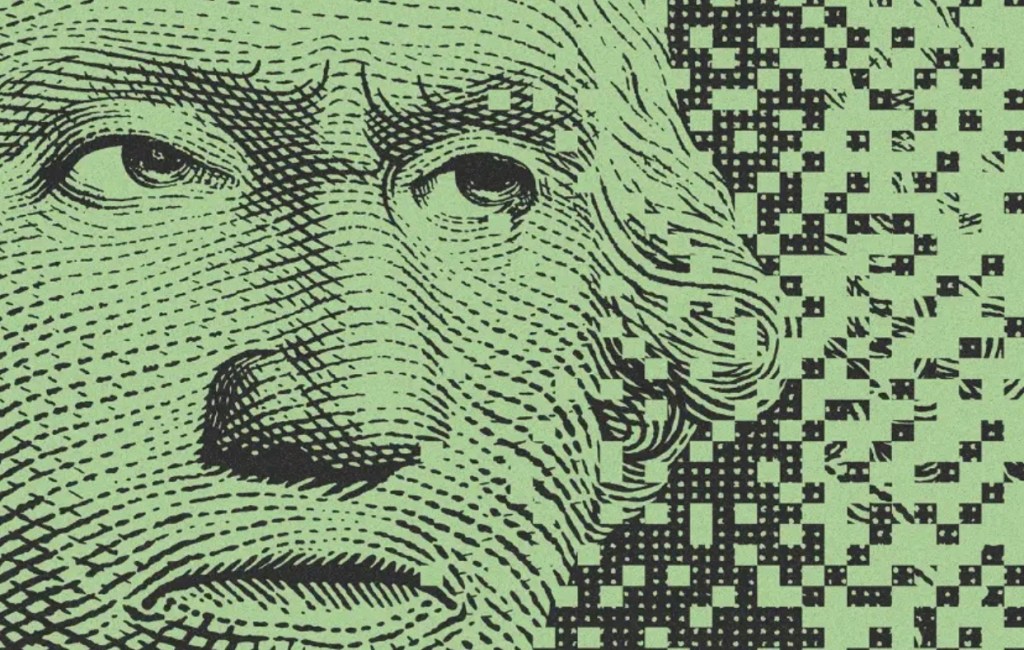
In cities across China, the country’s central bank has begun rolling out the e-renminbi—an all-digital version of its paper currency that can be accessed and accepted by merchants and consumers without an internet connection, credit or even a bank account.
Already having conducted more than $5 billion in e-renminbi transactions, China has opened its digital currency up to foreigners. Next year, when Beijing hosts the Winter Olympic Games, authorities are expecting to let the world test drive its technological achievement.
The U.S., by contrast, is having trouble even concluding its multi-year exploration into the possibility of an e-dollar. In fact, an upcoming Federal Reserve paper on a potential U.S. digital currency won’t take a position on whether the central bank of the United States will, or even should, create one.
Instead, Federal Reserve Chair Jerome Powell said in recent testimony to Congress, this paper will “begin a major public consultation on central bank digital currencies…” (Once planned for July, the paper’s release has since been moved to September.)
Once the world leader in digital payments and technological innovation, the U.S. is being outpaced by its top global adversary as well as much of the industrialized and the developing world.
The Bahamas recently announced the integration of its digital Sand Dollar into a stock exchange, while Australia, Malaysia, Singapore and South Africa are moving forward with the world’s first cross-border central bank digital currency exchange program led by the Bank for International Settlements (BIS), which is known as the central bank of central banks.
Such developments have been somewhat outshined by El Salvador’s recent decision to make bitcoin a legally accepted currency, which few expect to make significant impact in the payment space. But outside of the cryptocurrency space, nations around the globe are making significant strides in the development of the digital future of money — supported by governments and backed by powerful central banks.
Leadership in this space will have implications for more than just payments: geopolitical ambitions, economic growth, financial inclusion and the very nature of money could all be dictated by who leads the charge and how.
“I don’t think the U.S. is aware there is a race”
Digital currencies are the next wave in the “evolution of the nature of money in the digital economy,” Hyun Song Shin, economic adviser and co-leader of the Monetary and Economic Department at the Bank for International Settlements, tells TIME.
As more of our world migrates from physical brick-and-mortar to wireless and cloud-based, the way we pay for things is changing as well. A central bank digital currency would operate just like cash, but instead of having to carry it in a physical wallet or put it into a bank account, it would be stored and accessed digitally. Not only could U.S.-backed digital currency facilitate easier, modern banking, it could prove vital in protecting American international influence.
Late to the party, the U.S. is “stepping up its research and public engagement” on digital currencies, the Federal Reserve says, including forming working groups on cryptocurrency and other kinds of digital money, and experimenting with technology that would be central to producing a digital dollar. The Fed’s regional Boston branch is overseeing these efforts with the Massachusetts Institute of Technology on what’s known as Project Hamilton.
But the path towards a digital U.S. dollar has met many challenges, skeptics and outright opponents. All while China, and other countries, push forward.
Lagging behind the world
Just how far behind is the U.S. in the development of a central bank-issued digital currency (CBDC)? According to global accounting firm PwC’s inaugural CBDC global index, which tracks various CBDCs’ project status from research to development and production, the U.S. ranks 18th in the world. America’s potential efforts trail countries like Sweden, South Korea and China but also countries like the Bahamas, Ecuador, Eastern Caribbean and Turkey.
China, with its government’s hyperfocus on maintaining control and overseeing data, has been working to develop a CBDC for almost a decade.
And the U.S. is probably not close to catching up. Analysts like Harvard economics professor Kenneth Rogoff, who study monetary policy and digital currencies, estimate that the U.S. could be at least a decade away from issuing a digital dollar backed by the Fed. In that time, Rogoff argued in an op-ed earlier this year, the modernization of China’s financial markets and reduction or removal of its currency controls “could deal the dollar’s status a painful blow.”
China has already largely moved away from coin and paper currency; Chinese consumers have racked up more than $41 trillion in mobile transactions, according to a recent research paper from the Brookings Institution, with the lion’s share (92%) going through digital payment processors WeChat Pay and Alipay.
“The reason you could say the U.S. is behind in the digital currency race is I don’t think the U.S. is aware there is a race,” Yaya Fanusie, an Adjunct Senior Fellow at the Center for a New American Security, and a former CIA analyst, tells TIME in an interview. “A lot of policymakers are looking at it and concerned…but even with that I just don’t think there’s this sense of urgency because the risk from China is not an immediate threat.”
Not only is the U.S. running significantly behind in the development of a CBDC, we are trailing the rest of the world in digital payments broadly.
Kenya, for example, has almost fully digitized its economy through its digital currency and payment system MPESA, making transactions free and almost instantaneous. India’s Unified Payments Interface (UPI) allows users to transfer money instantly between bank accounts with no cost. Brazil’s PIX facilitates the transfer of money between people and companies in up to 10 seconds.
All of these programs work through and are overseen by the countries’ central banks rather than commercial banks or other private companies.
What’s holding the U.S. back?
Critics argue CBDCs are simply a solution in search of a problem and potentially harmful. Many see support from the banking sector as vital to the success of a digital U.S. dollar, however commercial banks in the U.S. have taken a largely adversarial stance.
“The proposed benefits of CBDCs to international competitiveness and financial inclusion are theoretical, difficult to measure and may be elusive,” the American Bankers Association said in a statement at a recent congressional hearing on digital currencies. “While the negative consequences for monetary policy, financial stability, financial intermediation, the payments system, and the customers and communities that banks serve could be severe.”
The Bank Policy Institute, which lobbies on behalf of the country’s largest banks, went so far as to argue that neither the Fed nor the U.S. Treasury even has the constitutional authority to issue a digital currency.
Commercial banks dominate the U.S. financial system to such a degree that unraveling them would be ostensibly impossible, experts say, they also would be a powerful adversary. Former Goldman Sachs managing director Nomi Prins notes banks have clearly seen the writing on the wall.
“Banks are centralized middlemen with respect to financial transactions,” Prins, author of Collusion: How Central Bankers Rigged The World, tells TIME. “The more popular cryptocurrency or digital currency becomes, the fewer profits the banking system can reap from traditional services and verification methods that allow them to hold, take or use their customers’ money, and the more financial power they stand to lose as a result.”
Even disruptive financial technologies like PayPal, Venmo and Zelle work through the banking system, rather than around it, thanks in large part to the banks’ power.
Central bankers also generally have concluded that commercial banks are a necessary piece of a potential CBDC ecosystem, thanks to their pre-existing regulatory guardrails and ability to move money.
Top policymakers at the Fed, including influential Vice Chair for Supervision Randal Quarles, have joined the banking industry in arguing that a digital dollar “could pose significant and concrete risks” and that the potential benefits “are unclear.”
Fed Governor Christopher Waller said in August he was “skeptical that a Federal Reserve CBDC would solve any major problem confronting the U.S. payment system,” in a recent speech he titled “CBDC: A Solution in Search of a Problem?”
Further, there’s no central U.S. authority with direct oversight or responsibility for any of this.
In addition to the Fed, the Office of the Comptroller of the Currency, the Securities and Exchange Commission, the Federal Trade Commission, the Consumer Financial Protection Bureau, the Federal Deposit Insurance Corporation, Office of Thrift Supervision, Financial Stability Oversight Council, Federal Financial Institutions Examination Council and the Office of Financial Research would all have some stake in the development of a digital currency backed by the central bank, to say nothing of state and regional authorities.
“The U.S. has an active congressional debate, which is beneficial and very important,” Federal Reserve Governor Lael Brainard tells TIME in an interview. “But the U.S. also has a diffusion of regulatory responsibility with no single payments regulator at the federal level, which is not as helpful. That diffusion of responsibility is part of what creates the lags that our system is working through.”
None of this exists in China where the Chinese Communist Party oversees the central bank, commercial banks and their regulators and is unconcerned with privacy.
How a downgraded dollar could hamstring U.S. influence
An American CBDC could have lasting geopolitical impact and curb a longstanding international effort to reduce reliance on the mighty U.S. dollar.
“Why we should care about this is that the U.S. financial system is not intrinsically dominant,” Fanusie says. “Other countries, both allies and adversaries, are sincerely interested in finding ways to decrease their dependence on the dollar.”
With the U.S. dollar as the world’s reserve and primary funding currency, the U.S. can restrict access to funding from financial markets, limit countries’ ability to sell their natural resources and hinder or block individuals’ access to the banking sector.
“Other countries, both allies and adversaries, are sincerely interested in finding ways to decrease their dependence on the dollar”
While dollar dominance has rankled much of the world for decades, there has been no suitable replacement for the U.S., with its massive economy, sophisticated banking system and sprawling international presence.
China is in the midst of a long-term push to simultaneously grow its financial markets and internationalize its currency. Both have the end goal of allowing China and its allies to limit the ability of the U.S. to enforce its will through economic actions like sanctions.
Fanusie wrote in a January report that being the first major economy to roll out a digital currency is “part of China’s geopolitical ambitions.”
However, the renminbi will not become the world’s reserve currency — at least, not any time soon. But what China has done by being in the forefront of CBDC development is put itself in position to take the lead on development and implementation of rules and regulations for digital currencies on a global scale.
“While America led the global revolution in payments half a century ago with magnetic striped credit and debit cards, China is leading the new revolution in digital payments,” writes Brookings’ economic studies fellow Aaron Klein.
Why should central banks offer digital currencies?
Over the past decade, digital currencies, including cryptocurrency and “stablecoins,” have sprung up like weeds. Some purport to be just as safe as dollars, but are backed by questionable assets. In a crisis regulators worry they could fluctuate wildly in value or lose their value altogether.
Having central banks, which are responsible for the printing and circulation of coins and paper money, issue digital currencies is in part a reaction to this private sector activity, Shin says, “accelerated by the potential encroachment of private digital currencies, and the need to preserve the role of money as a public good.”
“The status quo is not an option”
Notably, a U.S. digital currency could provide benefits to everyday people. It could increase financial inclusion and fix flaws in current payments systems, Shin adds, citing findings of a recent BIS study.
For example, transferring money between U.S.-based bank accounts, even those held by the same person, can take days. The process can be even longer when crossing international borders. Credit and debit card transactions similarly don’t settle for days and come with significant fees for merchants, who sometimes pass them on to customers.
CBDCs could grant universal access to the banking sector and quickly facilitate the distribution of paychecks and government funds, reducing the need for costly bank workarounds like check cashing and payday loans.
Championing CBDCs
Brainard has been pushing the Fed to move on a digital currency for years, but there was little urgency from others at the Fed or in Congress. Companies developing their own currencies, consumers investing in cryptocurrency and the COVID-19 pandemic making paper notes anathema to many Americans changed that.
Before COVID-19, Facebook’s Libra project (now known as Diem) showed lawmakers and central bankers the potential for a private company to step in and fill the void by effectively minting its own currency that could be spent by users around the world.
“The status quo is not an option,” Diem co-creator David Marcus said at the International Monetary Fund’s 2019 fall meeting. “Whether it’s Libra or something else, the world is going to change in a profound way.”
Brainard, for one, has taken notice.
“My own thinking is that stablecoins and related private sector initiatives are moving very rapidly, which makes it incumbent on us to move more rapidly,” she tells TIME. “That is why I have been pushing to advance outreach, cross-border engagement, and policy and technology research for several years now.”
So-called stablecoins — unregulated digital currencies created by private companies that purport to represent dollars but are completely unregulated — have become a significant worry for lawmakers and shown the importance of considering tying currency to a central bank.
“It’s getting harder and harder for community banks to compete for new customers when big tech companies can afford to spend billions on marketing and technology,” Sen. Sherrod Brown, who chairs the Senate Banking Committee, tells TIME. “But many of these new ‘fintech’ products don’t come with the consumer protections, federal backing or customer service and relationships with the community that small banks and credit unions provide.”
During a hearing on digital currencies in June, Sen. Elizabeth Warren, the ranking member of the Subcommittee on Financial Institutions and Consumer Protection, compared stablecoins to worthless “wildcat notes” that were issued by speculators in the 19th century.
Her expert at that hearing, Lev Menand, an Academic Fellow and Lecturer in Law at Columbia Law School, went further in his testimony, calling stablecoins “dangerous to both their users and … to the broader financial system.”
With private companies pushing deeper into the digital currency space, rival countries seeking to seize leadership and a public that is moving further away from physical currency, the U.S. is facing a world in which it may not control or even lead the world’s payment systems.
That would make the future of money look very different from the past.
Video China: “Time of Xi” documentary – how President Xi Jinping manage China and substantially improving Chinese lives. 最近,美国探索频道的纪录片《习近平治国方略:中国这五年》(China:Time of Xi),又火了!
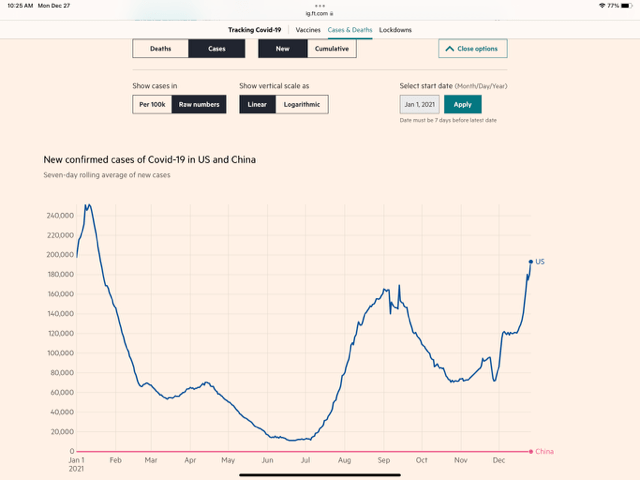
770 billions for US military, the killing machines, but ‘No federal solution’ for pandemic, Biden concedes. No longer vowing to ‘shut down’ Covid-19, the president says states will need to solve the crisis on their own (money over Americans’ lives) 拜登承認,7700 億美元用於美國軍隊,即殺人機器比救美國人重要, 但“沒有聯邦解決方案”可以幫助美國各州應對大流行病。 總統不再發誓要“關閉”Covid-19,他說各州將需要自己解決危機(金錢對美國人的生命重要).
Professor John V Walsh, MD in San Francisco: In Wuhan and elsewhere all the China national resources were poured in to help the provinces. 舊金山醫學博士 John V Walsh 教授:在武漢和其他地方,中國所有的資源都傾注於幫助各省.
Here the states are now on their own! Same day as Biden signs a $770 billion military budget. 在這裡,美國各州祇可以自生自滅了. 但同一天,拜登簽署了 7700 億美元的軍事預算。
Biden says he has the backs of the states – leading from behind once again. 拜登說他支持各州 – 再次是廢話連篇.
Professor John V Walsh, MD, in San Francisco: This is what happens when the fundamental value of a society is to put human life first (China) and not the economy (USA). (From the very conservative Financial Times) 當一個社會的基本價值是將人的生命放在首位 (中國) 而不是經濟 (美國)時,就會發生這種情況
Re: Trevor Noah’s slander on China refuted by US scholars at Johns Hopkins and even at CISS(!!!)
I guess it was monstrous to bring 800 million people out of poverty, get rid of absolute poverty, contain the pandemic with only 5000 deaths (still none in 2021), provide an alternative to the exploitation of the US Empire for the Global South, change the status of women overnight at the time of liberation and bring 20% of humanity out of poverty and humiliation into the 20th Century.
Now China finds itself encircled by US bases and warships, the target of sanctions and propaganda of the type that has been used to launch wars and on Korea, Vietnam, Iraq, Afghanistan, Libya, Syria and so many more covert wars. Now that is superpower ugliness of the first order. And you dare to put China in the same category? China is far from perfect.
But to compare it to the US reveals a very sick mentality indeed.
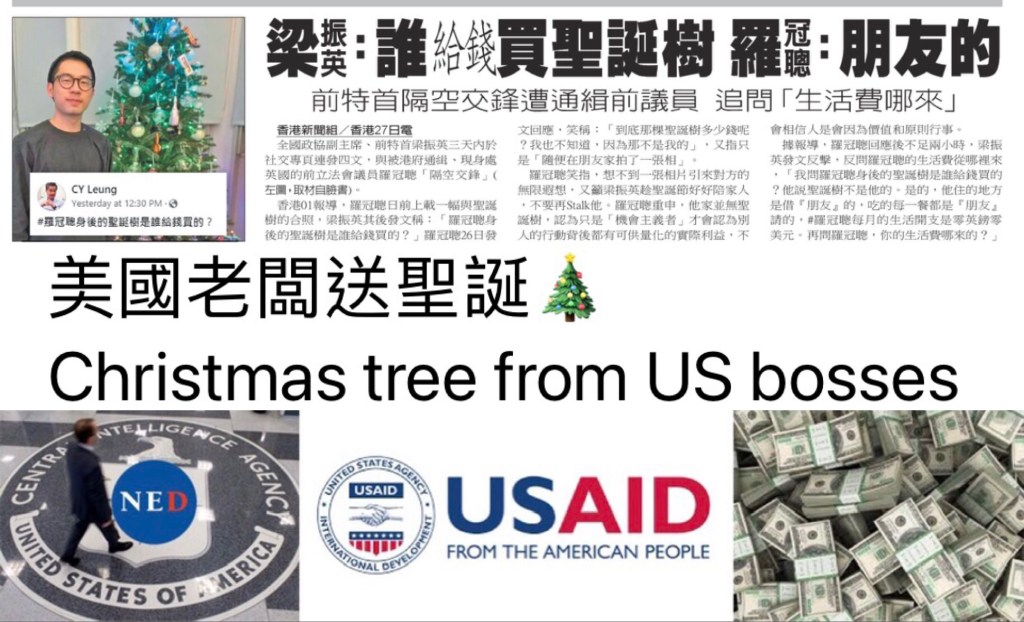
US foreign agents escaped from HK got free Christmas tree, but majority not so lucky, many sleeping in the streets in US, UK and Canada 從香港逃出來的美國香港特工得到了免費的聖誕樹,但大多數人沒有那麼幸運,許多美國香港特工睡在美國、英國和加拿大的街頭, 被用完即棄.
When its (US) own democracy fails, why still try to sell it to HK? Senior Chinese policy advisor fights back against Western countries’ criticism over HK election 既然(美國)自己的民主失敗了,為什麼還要賣給香港呢? 中國高級政策顧問反擊西方國家對香港大選的批評by Chen Qingqing Dec 26 2021



 Johnson Choi Biz