People tends to joke about seeing these headlines news daily, stop laughing, it could be you or your family members next time, rich or poor, you have one life, absolutely not safe in US! 每天看到這些頭條新聞,人們往往會開玩笑,不要再笑了,下一次可能是你或你的家人,無論貧富,你祇有一條命! 在美國絕對不安全!

People tends to joke about seeing these headlines news daily, stop laughing, it could be you or your family members next time, rich or poor, you have one life, absolutely not safe in US! 每天看到這些頭條新聞,人們往往會開玩笑,不要再笑了,下一次可能是你或你的家人,無論貧富,你祇有一條命! 在美國絕對不安全!
In God’s name? In God we trust? Why we lied about Xinjiang slave labors? Why we kept refugees created by Western Empires away? Why do we lied to our children? Why no Medicare for all? 以上帝的名義? 我們信靠上帝嗎? 為什麼我們對新疆的奴工撒謊? 為什麼我們要把西方帝國製造的難民拒之門外? 我們為什麼要對孩子撒謊? 為什麼沒有全民醫療?


Video: The Point: U.S. and modern slavery 美國和現代奴隸制
https://youtu.be/wLsgkYshdJA
https://vimeo.com/660828709
https://www.facebook.com/100036400039778/posts/629598804930115/?d=n
The U.S. signed a “Uyghur Forced Labor Prevention Act,” but what’s the U.S. record concerning modern slavery? What’s wrong with its policies? There’s still rampant human trafficking and violation of rights in the U.S. Is it the “messiah state” or the “modern slavery state”? And does it have the right to bully others when it has failed to ratify most international labor conventions?
美國簽署了《維吾爾強迫勞動預防法》,但美國在現代奴隸制方面的記錄如何? 它的政策有什麼問題? 美國人口販賣和侵權依然猖獗,是“彌賽亞國家”還是“現代奴隸制國家”? 當它未能批准大多數國際勞工公約時,它是否有權欺負他人?
Guests:
Max Blumenthal
Editor, The Grayzone
Victor Gao
Chair Professor, Soochow University

US Navy is putting 800,000 Honolulu residents lives at risk! ‘We Can Take On This Goliath’: Oahu Water Chief Ready To Fight Navy Over Red Hill, the water utility is prepared to fight to protect the aquifer underneath it. 美國海軍正在將 800,000 名檀香山居民置於危險之中! “我們可以對付這個巨人”:瓦胡島水務主管準備在紅山上與海軍作戰,自來水公司準備戰鬥以保護其下方的含水層.
The Honolulu Board of Water Supply’s manager and chief engineer said on Tuesday that if the Navy refuses to drain its Red Hill fuel facility, the water utility is prepared to fight to protect the aquifer underneath it.
Ernie Lau, whose longtime warnings about the fuel facility’s threat to drinking water were realized this year, said at a press conference that the Navy should follow an order from the Hawaii Department of Health to empty its fuel tanks.
“The Board of Water Supply will not give up,” Lau said

The Guardian: The US is “closer to civil war than any of us would like to believe”, a member of a key CIA advisory panel has said. 衛報:美國中央情報局一個關鍵顧問小組的成員表示,美國“比我們任何人都願意相信的更接近內戰”。
US ‘closer to civil war’ than most would like to believe, new book says. Academic and member of CIA advisory panel says analysis applied to other countries shows US has ‘entered very dangerous territory’
Robert Reich: Beware the big lie, big anger and big money. Rioters try to break through a police barrier at the Capitol in Washington on 6 January.
Martin Pengelly in New York
Mon 20 Dec 2021
President Trump Holds Departure Ceremony Before Florida Travel, Joint Base Andrews, Maryland, USA – 20 Jan 2021
Mandatory Credit: Photo by REX/Shutterstock (11718428f) U.S. President Donald Trump speaks during a farewell ceremony at Joint Base Andrews, Maryland, U.S.,. Trump departs Washington with Americans more politically divided and more likely to be out of work than when he arrived, while awaiting trial for his second impeachment – an ignominious end to one of the most turbulent presidencies in American history. President Trump Holds Departure Ceremony Before Florida Travel, Joint Base Andrews, Maryland, USA – 20 Jan 2021
Why Trump appears deeply unnerved as Capitol attack investigation closes in
The analysis by Barbara F Walter, a political science professor at the University of California at San Diego who sits on the Political Instability Task Force, is contained in a book due out next year and first reported by the Washington Post.
At the same time, three retired generals wrote in the Post that they were “increasingly concerned about the aftermath of the 2024 presidential election and the potential for lethal chaos inside our military”.
Such concerns are growing around jagged political divisions deepened by former president Donald Trump’s refusal to accept defeat in the 2020 election.
Trump’s lie that his defeat by Joe Biden was caused by electoral fraud stoked the deadly attack on the US Capitol on 6 January, over which Trump was impeached and acquitted a second time, leaving him free to run for office.
The “big lie” is also fueling moves among Republicans to restrict voting by groups that lean Democratic and to make it easier to overturn elections.
Such moves remain without counter from Democrats stymied by the filibuster, the Senate rule that demands supermajorities for most legislation.
In addition, though Republican presidential nominees have won the popular vote only once since 1988, the GOP has by playing political hardball stocked the supreme court with conservatives, who outnumber liberals 6-3.
All such factors and more, including a pandemic which has stoked resistance to government, have contributed to Walter’s analysis.
Last month, she tweeted: “The CIA actually has a taskforce designed to try to predict where and when political instability and conflict is likely to break out around the world. It’s just not legally allowed to look at the US. That means we are blind to the risk factors that are rapidly emerging here.”
The book in which Walter looks at those risk factors in the US, How Civil Wars Start, will be published in January. According to the Post, she writes: “No one wants to believe that their beloved democracy is in decline, or headed toward war.”
But “if you were an analyst in a foreign country looking at events in America – the same way you’d look at events in Ukraine or Ivory Coast or Venezuela – you would go down a checklist, assessing each of the conditions that make civil war likely.
“And what you would find is that the United States, a democracy founded more than two centuries ago, has entered very dangerous territory.”
Walter, the Post said, concludes that the US has passed through stages of “pre-insurgency” and “incipient conflict” and may now be in “open conflict”, beginning with the Capitol riot.
Citing analytics used by the Center for Systemic Peace, Walter also says the US has become an “anocracy” – “somewhere between a democracy and an autocratic state”.
The US has fought a civil war, from 1861 to 1865 and against states which seceded in an attempt to maintain slavery.
Estimates of the death toll vary. The American Battlefield Trust puts it at 620,000 and says: “Taken as a percentage of today’s population, the toll would have risen as high as 6 million souls.”
Sidney Blumenthal, a former Clinton adviser turned biographer of Abraham Lincoln and Guardian contributor, said: “The secessionists in 1861 accepted Lincoln’s election as fair and legitimate.”
The current situation, he said, “is the opposite. Trump’s questioning of the election … has led to a genuine crisis of legitimacy.”
With Republicans’ hold on the levers of power while in the electoral minority a contributing factor, Blumenthal said, “This crisis metastasises, throughout the system over time, so that it’s possible any close election will be claimed to be false and fraudulent.”
Blumenthal said he did not expect the US to pitch into outright civil war, “section against section” and involving the fielding of armies.
If rightwing militia groups were to seek to mimic the secessionists of the 1860s and attempt to “seize federal forts and offices by force”, he said, “I think you’d have quite a confidence it would be over very, very quickly [given] a very strong and firm sense at the top of the US military of its constitutional, non-political role.
“… But given the proliferation of guns, there could be any number of seemingly random acts of violence that come from these organised militias, which are really vigilantes and with partisan agendas, and we haven’t entered that phase.
“The real nightmare would be that kind of low-intensity conflict.”
The retired generals who warned of conflict around the next election – Paul Eaton, Antonio Taguba and Steven Anderson – were less sanguine about the army.
“As we approach the first anniversary of the deadly insurrection at the US Capitol,” they wrote, “we … are increasingly concerned about the aftermath of the 2024 presidential election and the potential for lethal chaos inside our military, which would put all Americans at severe risk.
“In short: We are chilled to our bones at the thought of a coup succeeding next time.”
Citing the presence at the Capitol riot of “a disturbing number of veterans and active-duty members of the military”, they pointed out that “more than one in 10 of those charged in the attacks had a service record”.
Polling has revealed similar worries – and warnings. In November, the Public Religion Research Institute asked voters if they agreed with a statement: “Because things have gotten so far off track, true American patriots may have to resort to violence in order to save our country.”
The poll found that 18% of respondents agreed. Among Republicans, however, the figure was 30%.
On Twitter, Walter thanked the Post for covering her book. She also said: “I wish I had better news for the world but I couldn’t stay silent knowing what I know.”

The Table is set for the economic collapse of the US. [1] US has no REAL democracy; [2] US Believes that it owns 1/3 of the world; [3] US is a Military Empire where war is an every-day event; … [5] The wealthy has sucked America bone dry. 該表是為美國的經濟崩潰而設置的。 [1] 美國沒有真正的民主; [2] 美國認為它擁有世界的1/3; [3] 美國是一個軍事帝國,戰爭是家常便飯; … [5] 富人已經把美國吸乾了
Complete Story: https://metallicman.com/putin-xi-running-circles-around-bidens-hybrid-war/

US has 25% of World’s prison population / Using forced US prisons labor in 110 factories getting paid as little as 23 cents per hour. 美國擁有世界 25% 的監獄人口/在美國 110 家工廠使用強迫美國監獄勞工,每小時工資低至 23 美分. by Daryl Guppy
The U.S. Capitol building sits in the background of a traffic sign in Washington, D.C., the United States, May 28, 2021.
Editor’s note: Daryl Guppy is an international financial technical analysis expert. He has provided a weekly Shanghai Index analysis for Chinese media for more than a decade. Guppy appears regularly on CNBC Asia and is known as “The Chart Man.” He is a national board member of the Australia China Business Council. The article reflects the author’s opinions and not necessarily those of CGTN.
U.S. President Joe Biden signed into law a ban on imports from Xinjiang over Washington’s concerns about forced labor. This is a fine example of the U.S. imposing dual standards purely for political purposes. It’s also an example of the U.S. leadership believing its own propaganda generated by U.S. State-funded bodies that have relentlessly painted a negative picture of Xinjiang.
Targeting Xinjiang ignores the widespread use of forced prison labor within the U.S. prison system. The U.S. imprisons more people per capita than any country in the world. With less than 5 percent of the world population, U.S. imprisons house more than 25 percent of all people imprisoned in the world, and thousands of prisoners are deployed in forced labor.
U.S. government-owned UNICOR, previously known as Federal Prison Industries (FPI), has 110 factories in at least 79 federal prisons across the country. This for-profit corporation is run by the Bureau of Prisons and is now the U.S. government’s 39th largest contractor.
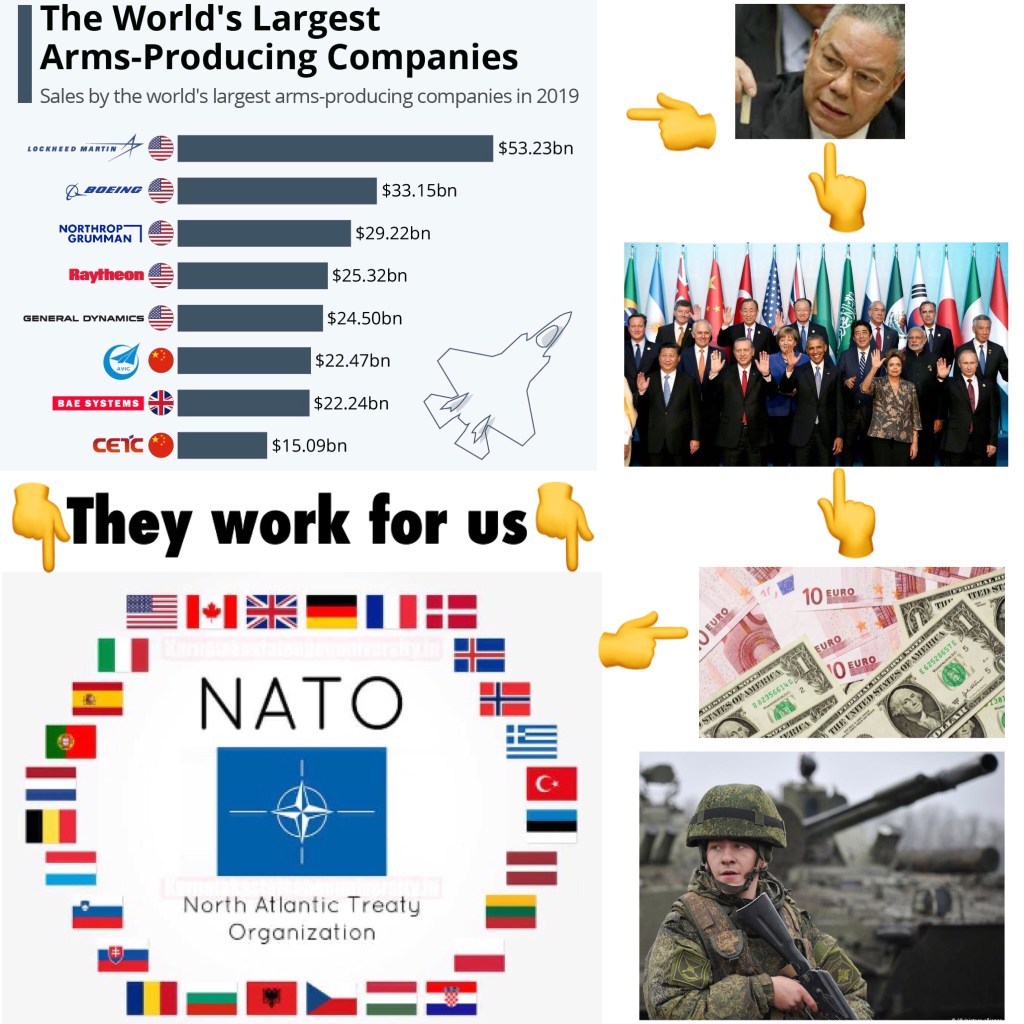
Raytheon, Boeing and Lockheed Martin directly benefit from prison labor, which produces electronic components, including Patriot surface-to-air missile parts. Prisoners work for as little as 23 cents per hour. The factories’ operator discloses on its website that prison authorities can withhold some, or even all, of those wages from prisoners to pay fines and other debts.
UNICOR supplies advanced electro-optical equipment for the BAE Systems Bradley Fighting Vehicle. Cisco Systems and Microsoft used prisoner-staffed marketing call centers.
U.S. federal convict labor is not voluntary. Inmates are compelled to work on factory production lines. A U.S. Federal Government report on prison labor states “all able-bodied sentenced prisoners” are required to work.
In a number of U.S. States, prisoners who refuse to work are put in solitary confinement. This practice also extends to some immigration detention centers where detainees are placed in solitary confinement for refusing to participate in forced work programs.
State prisons using forced prison labor on plantations, in laundries and on highway chain gangs increasingly seek to sell this cheap prison labor to corporations. In several U.S. States, up to a third of the fresh fruit and vegetables available in local supermarkets are harvested by forced prison labor.
Activists calling for jail and prison reforms rally outside the Brooklyn Criminal Court in New York City, December 10, 2021.
The Centre for Research on Globalization (CRG) is an independent research organization based in Montreal. Their research reports document systematic abuse, beatings, prolonged isolation and sensory deprivation, and lack of medical care which they say make U.S. prison conditions among the worst in the world.
They write that the prison work is often dangerous, toxic and unprotected. At a federal prison on an old U.S. airbase, prisoners clean, overhaul and reassemble tanks and military vehicles returned from combat which were coated in toxic spent ammunition, depleted uranium dust and chemicals.
In a CRG report, Sara Flounders notes major corporations profiting from the forced labor of prisoners, include Motorola, Compaq, Honeywell, Revlon, Chevron, Trans World Airlines, Victoria’s Secret and Eddie Bauer. International Business Machine, Texas Instruments and Dell get circuit boards made by Texas prisoners.
Tennessee inmates sew jeans for Kmart and JCPenney. Tens of thousands of young people working for minimum wage at McDonald’s wear uniforms sewn by prison workers, who are forced to work for a few cents in the hour.
In California, as in many states, prisoners who refuse to work are moved to disciplinary housing and lose canteen privileges as well as “good time” credit, which slices time off their sentences.
A 2012 federal lawsuit by prisoners, food service workers and family members at a minimum security women’s prison in Florida, cited that toxic dust containing lead, cadmium, mercury and arsenic poisoned those who worked at UNICOR’s computer and electronic recycling factory. Prisoners there worked covered in dust, without safety equipment, protective gear, air filtration or masks.
Georgia inmates went on strike in 2010 and refused to leave their cells at six prisons for more than a week. This was one of the largest prison protests in U.S. history. Prisoners spoke of being forced to work seven days a week for no pay. Prisoners were beaten if they refused to work.
This American use and commercialization of forced labor is not enough to prevent the U.S. initiating a forced labor boycott of China. U.S. allies, often with their own versions of forced labor and exploitative conditions in relation to agricultural workers and indentured labor are quick to join the U.S.
Dual standards were a feature of 19th century colonialism, and this has not changed. When the United States, and its allies talk of boycotts against the use of forced labor, they should first start by applying those sanctions to companies in their own backyards.
(If you want to contribute and have specific expertise, please contact us at opinions@cgtn.com.)

Hawaii Supreme Court say no to lawmakers cater to special interests fooling voters / Hawaii Lawmakers Grapple With Ruling That Bars Last-Minute Bill Changes By Kevin Dayton
A state Supreme Court ruling last month has upended a longtime legislative tactic known as “gut-and-replace.”
For decades, the Legislature has swapped out the entire contents of bills almost at the last minute.
But that’s now prohibited after the state Supreme Court’s rejection.
Ahead of the upcoming legislative session, lawmakers are trying to determine what changes they must make in the flow of legislation to comply with the court decision.
The court ruling apparently reaches beyond that narrow gut-and-replace tactic and potentially affects any bill that lawmakers amend late in the session to include material that is “non-germane” to the content of the earlier drafts of the bill.
Find out more about the implications of the ruling in this story by reporter Kevin Dayton.


Asia Times: Belt & Road Phase 2 moves beyond infrastructure – Interview with Professor David Arase of The University of Hong Kong and the Hopkins-Nanjing Center By SCOTT FOSTER DEC 26, 2021
The $60 billion China-Pakistan Economic Corridor is a major part of China’s Belt and Road Initiative.
Keep an eye on China’s Belt & Road Initiative in the new year. There is more going on than is generally realized.
Belt & Road is not only the construction of land and sea transport “corridors” across and around Asia to Africa, Europe and beyond to facilitate trade; not just Chinese-built ports and harbors along the coasts of Asia, Africa and Latin America that might be turned into naval bases; not just “debt-trap diplomacy” aimed at roping developing nations into an emerging Chinese international order.
David Arase, honorary professor at the Asia Global Institute at The University of Hong Kong and resident professor of international politics at the Hopkins-Nanjing Center of the Johns Hopkins University School of Advanced International Studies, addresses these points in great detail.
More than enough detail to disabuse us of the notion that – its methods and purposes having been called out by vociferous American diplomacy – Belt & Road is on the back foot.
In a published essay, Arase writes that the Chinese have been aware of the shortcomings of the original physical infrastructure-focused Belt & Road Initiative (BRI) – including credit, environmental and reputational risk – for some time and are dealing with them in a comprehensive, forward-looking manner:
By the second Belt and Road Forum (BRF) in 2019, China had reacted to the negative risk-reward prospects of the initial cooperation phase by announcing a new “green and sustainable” era for the Belt and Road …
Less noticed but perhaps more significant was a new focus on harmonizing disparate legal, policy and technical standards regimes among connected BRI countries. In his speech at the 2019 BRF, [Chinese President] Xi emphasized that “we need to promote trade and investment liberalization and facilitation, say no to protectionism and make economic globalization more open, inclusive, balanced and beneficial to all.” In concrete terms, this meant promoting uniform standards for free trade zones, intellectual property protection, technology transfer rules, tariff reduction, exchange-rate stabilization, trade treaty enforcement and trade and investment dispute resolution ….
While heavy infrastructure project cooperation would still be needed to upgrade corridor connectivity, BRI cooperation has expanded into technology – knowledge-intensive digital backbone technologies (the “digital silk road”), health-related industries (the “health silk road”) and complex 5G-based internet-of-things (IoT) projects such as smart cities (“innovation cooperation”).
With this as background – and unable to meet due to the virus – I interviewed the professor from Tokyo by email. Here’s Part 1 of the two-part edited interview:
Q: You’ve talked before about China’s Belt & Road being not just a matter of promoting trade through infrastructure, but a comprehensive geostrategy with a military component. Could you elaborate?
Belt & Road infrastructure projects create a bridgehead for Chinese commerce, investment, finance, technology and logistics to enter much smaller developing country economies and to modernize and dominate sectors where they can profitably operate.
If the modernized economy of a country reaches a point where it cannot be maintained without Chinese firms and access to Chinese finance, trade and technology, governments put in this situation would be satisfied, bribed or compelled to follow Chinese requests and preferences to ensure their own interest in economic and political stability.
They could even be persuaded to request cooperation with the People’s Liberation Army and Chinese civilian security ministries to protect and defend their joint investments in infrastructure and Belt & Road connectivity with China.
If this kind of situation becomes widespread across the Belt & Road footprint, with their future economic and political prospects at stake, governments across Eurasia will have no choice but to cooperate with China’s economic, political and security governance agendas even if these undermine and replace those of the United States and its allies.
BRI advances this kind of geo-economic strategy by providing “hardware,” or physical plant, equipment, transportation, power and digital infrastructure financed by state-owned banks and built and operated by Chinese state-owned enterprises.
These party-state flagship entities bring a whole ecosystem of Chinese exporters, subcontractors, labor service providers, private enterprises and petty entrepreneurs everywhere Belt & Road projects are built.
Q: But doesn’t this process create more and more overseas assets that China needs to protect?
Exactly. When a state accumulates overseas vested interests it must arrange for their protection. The rules-based [international] order has established multilaterally agreed and legally binding norms that govern the acquisition and protection of overseas interests.
But for the system to work in the absence of a world government, all contracting parties have to respect the norms they have pledged to uphold.
Under the current order, there are two different reasons to develop armed capabilities and recruit allies to defend your overseas interests. One is to defend your lawful rights under the rules-based order. The other is to forcefully claim new rights and impose new governance norms to enhance your own interests at the expense of existing norms and rights of other actors.
The accumulation of overseas interests is what the Belt & Road Initiative does in a big way across and around Eurasia. As China builds ports, plantations, mines, railways, industrial parks and trade zones, new markets, new transportation routes and communities of overseas citizens, it cannot be faulted for seeking ways to protect them.
Q: Meaning that what started as economic outreach is now linked to China’s national defense?
On the contrary, it has been from the beginning.
The Belt & Road Initiative was launched in autumn 2013 together with complementary diplomatic, political and institutional initiatives to build a new kind of China-centered international order. These partner initiatives included “periphery diplomacy,” building a “community of common destiny” and the Asian Infrastructure Investment Bank.
Belt & Road infrastructure must be built in accordance with China’s formal legal and policy mandates that implement military-civilian integration or fusion. The 2010 National Defense Mobilization Law mandates that civilian infrastructure projects “which are closely related to national defense shall meet the national defense requirements and possess national defense functions,” and must be surrendered for military use when needed.
The 13th Five Year Plan (2017-21) calls for integrated civilian-military development projects in overseas maritime regions. The 2015 defense white paper calls for infrastructure development that accommodates both civilian and military use that is “compatible, complementary, and mutually accessible.”
And the 2017 National Transportation Law requires “planning, construction, management and use of resources in transportation fields such as railways, roads, waterways, aviation, pipelines and ports for the purpose of satisfying the national defense requirements.”
Chinese state-owned enterprises designing and building BRI infrastructure must act in accordance with these laws.
Q: And this, I presume, leads inevitably to the expansion of Chinese security-related activities overseas?
Yes. China acknowledges no formal connection between Belt & Road and the People’s Liberation Army. But in fact, the extension of overseas investment interests via Belt & Road requires that the overseas protection roles and missions of the army keep pace.
According to the army’s strategic planners, “where national interests expand the support of the military force must follow.” Thus, China’s geopolitical influence advances with the Belt & Road Initiative in the vanguard and with the People’s Liberation Army bringing up the rear to secure Belt & Road investments and trade routes from potential threats.
In performing its Belt & Road overseas protection missions, the People’s Liberation Army should find Belt & Road partner governments willing to accept military education, training and equipment that enhances their own national security as well as the security of Chinese investments.
The People’s Liberation Army should also find Belt & Road port and transportation infrastructure accessible, familiar and easy to operate in emergencies if necessary.
With the start of the Belt & Road Initiative from 2013, it is not accidental that the 2015 anti-terrorism law authorized the People’s Armed Police to perform overseas counter-terror missions and that the 2015 defense white paper added safeguarding the security of China’s overseas interests and maintaining regional and world peace to the strategic missions of the People’s Liberation Army.
The 2019 defense white paper describes “overseas interests” as improved overseas military operations and support, overseas logistical facilities, vessel protection operations, strategic sea lane security and overseas evacuation and maritime rights protection operations.
In 2020, the National Defense Law was revised to add “safeguarding China’s overseas interests” and authorized the People’s Liberation Army to “mobilize its forces” to “defend its national interests and development interests, and resolve differences with the use of force” as additions to the “missions and tasks” of the army.
Belt & Road assets and follow-on commercial investment and trade interests obviously constitute overseas development interests, so now the People’s Liberation Army, aided by Chinese diplomacy, must develop cooperation and capabilities to defend these interests if ordered to do so by the Chinese Communist Party.
It is not as if the Chinese military has been caught unprepared. The Chinese navy will complete a third (and new-model) aircraft carrier by summer 2021 and has started building a fourth. It also has developed a counter-terrorism force capable of overseas deployment, an expeditionary marine corps and a paratrooper corps with large new types of maritime and air troop transport vessels to deploy these forces.
With only one officially acknowledged overseas base in Djibouti, overseas protection of Belt & Road development interests will require the negotiation of agreements with host countries to transition ports, airports and development zones that heretofore have been exclusively civilian into dual or parallel use facilities available to support an enhanced level of People’s Liberation Army strategic presence to secure jointly vested Chinese and Belt & Road partner country development interests.
Q: How does this change the calculus of Belt & Road geostrategy?
Besides securing support for People’s Liberation Army operations, dividends include agenda-setting in regional governance forums; the capture of markets and critical resource supplies; Belt & Road partner cooperation with party-state military and police agencies to secure interests and grow influence with partners; and political influence via education and training of politicians, government officials, soldiers and policemen and youth in partner countries. For a party-state dedicated to the Chinese Dream agenda, such political and strategic gains may far outweigh the financial cost of Belt & Road project loan write-offs.
Next: Beyond Eurasia
Scott Foster, a graduate of the Johns Hopkins University School of Advanced International Studies in Washington, DC, is an analyst with LightStream Research in Tokyo. Follow him on Twitter: @ScottFo83517667
Video: Despite fake news propaganda by western medias, Christmas is not cancelled in 🇨🇳 China. 儘管西方媒體假新聞宣傳來妖魔化中國, 但🇨🇳中國並沒有取消聖誕節.
https://vimeo.com/660664221
https://youtu.be/UErfKoVEAzQ
https://www.facebook.com/100036400039778/posts/629247981631864/?d=n