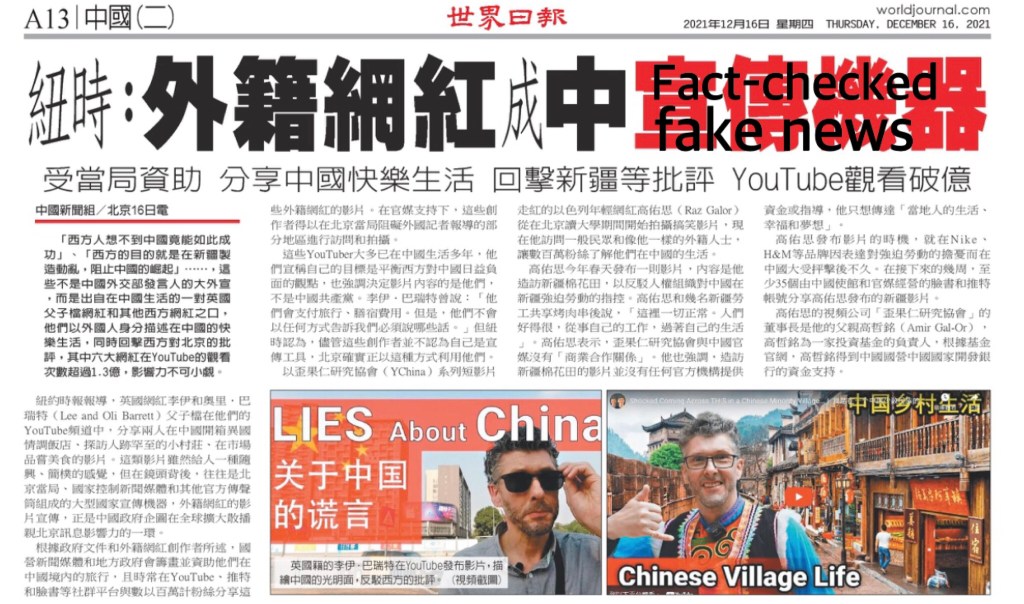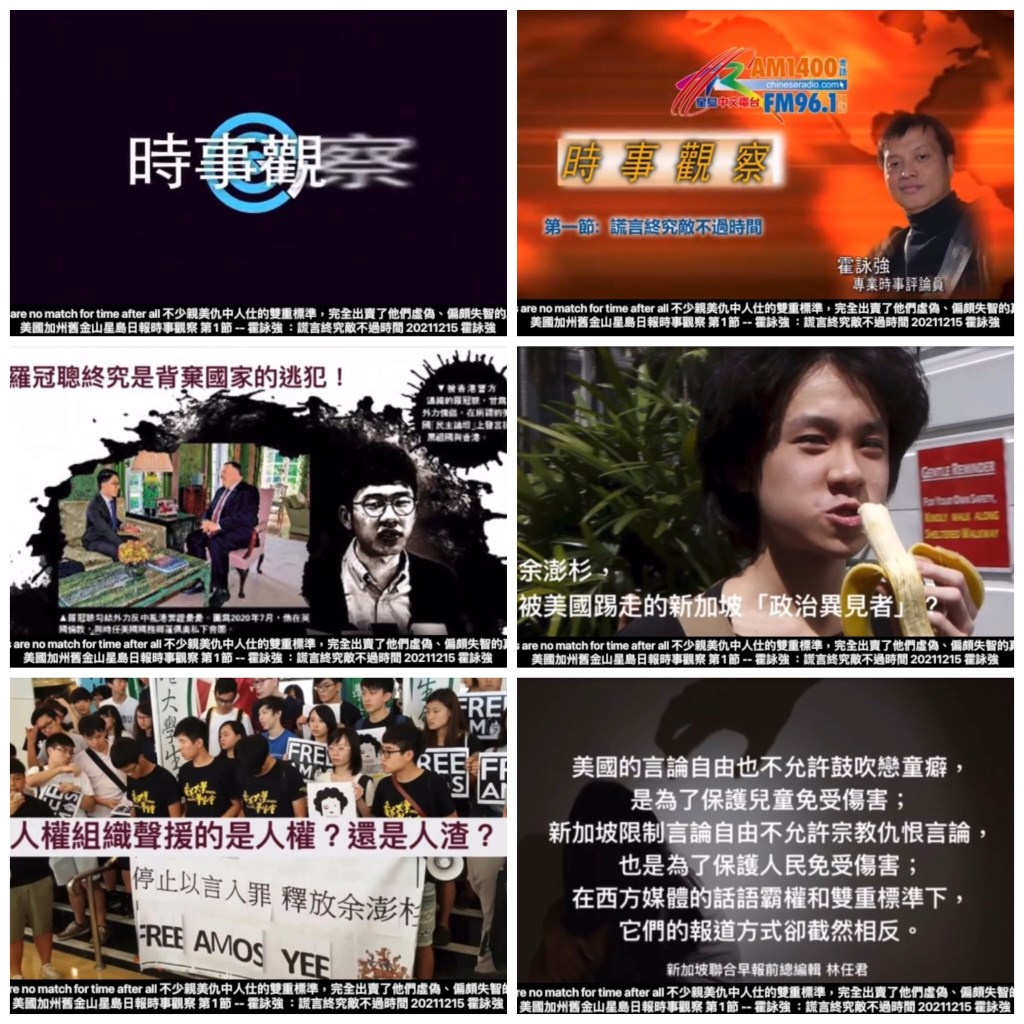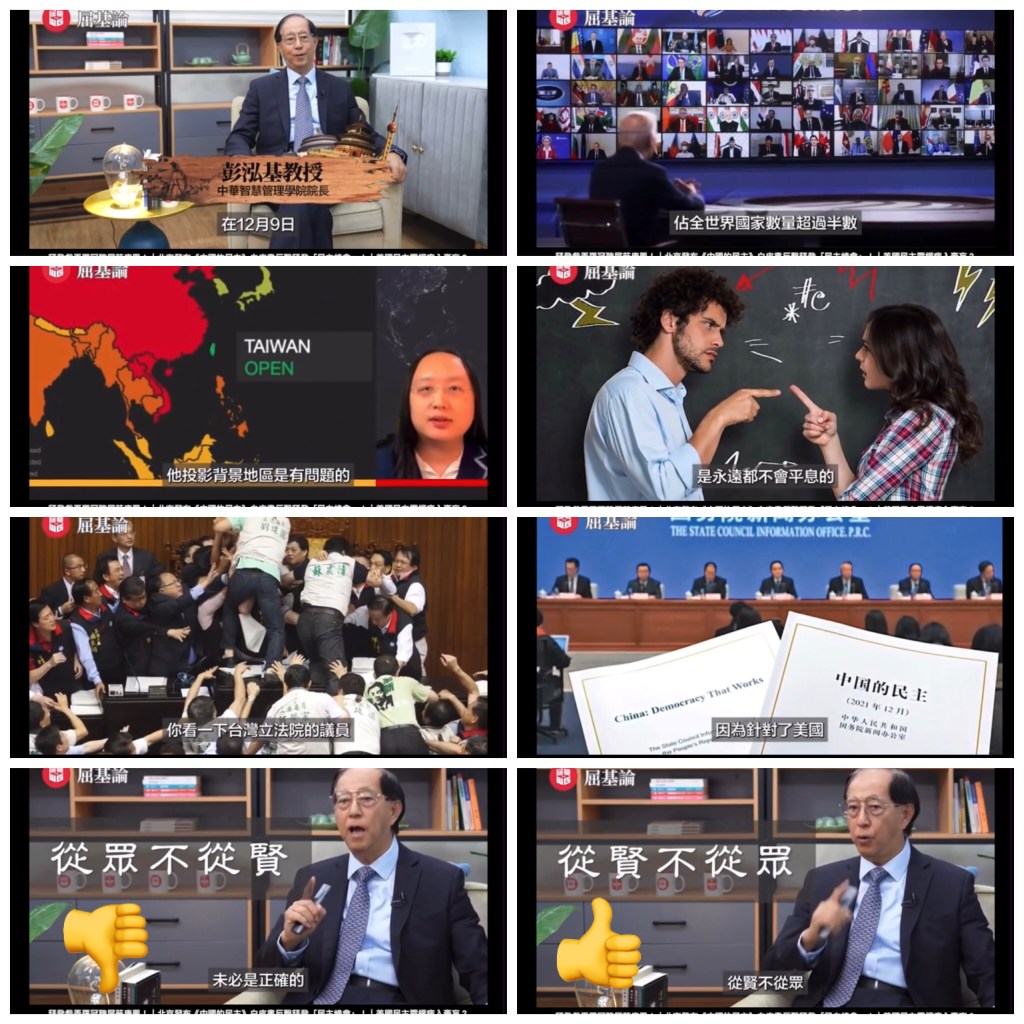
how the U.S. developed the chip industry and how it destroyed it via liberal greed capitalism

This eetimes article describes clearly how the U.S. developed the chip industry and how it destroyed it via liberal greed capitalism. And now, the capitalists are all begging for more handouts to enrich the 1%.

EE Times: With CHIPS Act, US Risks Building a White Elephant. By Alan Patterson 12.07.2021

The U.S. Senate has approved $52 billion for the CHIPS for America Act, aimed at reviving the American semiconductor industry over the next decade. While the Act awaits approval in the House of Representatives, we should examine whether it is the most effective way to encourage investment in domestic manufacturing.

One of the key goals of the CHIPS Act is to encourage renewed investment in manufacturing. But the conditions that have caused the U.S. to fall behind are not addressed by the Act. The US incentive structure is skewed because there’s a stronger impetus for executives to choose stock buybacks over reinvesting in operations.

Several U.S. tech companies now lobbying for the CHIPS Act have squandered past support from the U.S. government while instead showing more appetite for share buybacks to boost company stock prices. Among the Semiconductor Industry Association (SIA) corporate signatories of a recent letter to President Biden, Intel, IBM, Qualcomm, Texas Instruments, and Broadcom did a combined $249 billion in buybacks over the decade 2011-2020, according to William Lazonick, Professor of Economics Emeritus at the University of Massachusetts.

Intel lags behind TSMC and Samsung in process technology in part because of a swing toward buybacks, according to Lazonick. While Intel spent $50 billion on capital expenditures and $53 billion on R&D during the past five years, it also lavished shareholders with $35 billion in stock buybacks and $22 billion in cash dividends, which altogether used up 100 percent of Intel’s net income. Intel’s distributions to shareholders have been far greater than those made by either Samsung or TSMC, according to Lazonick.

Like Intel, IBM also decades ago focused on maximizing shareholder value. After drastically cutting headcount during the 1990s, IBM began distributions to shareholders in the form of buybacks, even as from 1996 through 2020 the company increased its annual dividend payouts. IBM did $51.4 billion in buybacks (79 percent of net income) in 1995-2004 and $119.7 billion (93 percent) in 2005-2014.

IBM could have invested those funds in state-of-the-art chip facilities, but, in 2015 sold its semiconductor fabs to GlobalFoundries. From 2010 through 2014, IBM did $70 billion in buybacks (92 percent of net income) which followed $50 billion in buybacks in 2005-2009 (93 percent of net income).

Let’s face it. It’s impossible to buy a toaster that’s made in the U.S., but now the aim is to quickly ramp up production of American-made leading-edge chips? Is the U.S. about to make a multi-billion mistake in much the same way that the Chinese government has by funding a national fab capacity buildup that has largely been a flop?

Despite such warnings, the CHIPS Act has no shortage of cheerleaders.

The Semiconductors in America Coalition (SIAC) was formed in May 2021 to lobby Congress for the passage of the CHIPS Act. Members include Apple, Microsoft, Cisco and Google. These firms spent a combined $633 billion on buybacks during 2011-2020, according to Lazonick. That’s about 12 times the $52 billion in government subsidies earmarked under the CHIPS Act.

The SIA warns that the U.S. share of global semiconductor manufacturing capacity has plunged to 12 percent largely because the governments of U.S. competitors offer significant incentives and subsidies to semiconductor manufacturing.

In September 2020, the SIA’s Government Incentives and US Competitiveness in Semiconductors report warned that over the next decade only 6 percent of the new global fab capacity will be located in the U.S. while China will become the largest fab site in the world. The report “estimated that a $50 billion [government] incentive program would enable the construction of 19 advanced fabs in the U.S. over the next ten years, doubling the number expected if no action is taken and increasing the capacity located in the U.S. by 57 percent.”

Without a doubt, no matter whether it’s from China or the U.S., government funding has played a key role in the development of microelectronics technology.

With huge tech programs such as NASA, U.S. government funding has been integral since the creation of the microelectronics industry seven decades ago. Between 1987 and 1992, the U.S. provided $500 million in matching funds to Sematech, a nonprofit consortium of 14 semiconductor firms for the purpose of supporting the competitiveness of U.S. semiconductor equipment producers. In 2001, the U.S. launched the National Nanotechnology Initiative with budgets totaling $12.1 billion for 2001-2010 and $16.9 billion for 2011-2020, with proposed 2021 spending of $1.7 billion.

Despite this largesse, the U.S. loss of global semiconductor leadership suggests an overemphasis on financial engineering at U.S. companies where a number of senior executives, as SIA directors, have signed their recent letter to President Biden in support of the CHIPS Act.

The U.S. government has played a central role in investments that have enabled the nation to be a global leader in advanced technology. Yet, government investments only succeed when major businesses join in. The investments necessary to build a national chip industry are far larger than $52 billion and probably far more than any one government can afford. The U.S. government should be wary of building a white elephant.

Government-business collaborations have the best chance of success when the relevant companies are engaged in a “retain-and-reinvest” mode. The companies retain corporate profits and reinvest in their productive capabilities. Yet many tech companies today are in a “dominate-and-distribute” mode, according to Lazonick. Based on past strength, they dominate their industries but prioritize shareholders in the allocation of earnings.

In passing the CHIPS Act, Congress faces the difficult task of exacting a pledge from the SIA and the SIAC that its member corporations will halt stock buybacks for the next 10 years.

Longer term, Congress should repeal Securities and Exchange Commission Rule 10b-18 to discourage buybacks. The practice allows companies with plenty of cash to buy back their shares and cancel them. The reduction of outstanding shares gives a strong boost to the stock price.

Lazonick calls the rule a “license to loot.”

Rule 10b-18 gives a company a “safe harbor” against charges of stock-price manipulation in doing stock buybacks as open-market repurchases (OMRs) if, on any given trading day, OMRS are no more than 25 percent of the average daily trading volume (ADTV) over the previous four weeks. The safe harbor means that there is no automatic presumption that, if the company does OMRs in the range of 25 percent of ADTV, it will be charged with stock-price manipulation.

Senior corporate executives have this insider information and hedge-fund managers have ways of knowing when a company is doing OMRs, according to Lazonick. Both corporate executives and hedge-fund managers are positioned to time the buying and selling of the shares that they hold to boost their realized gains, Lazonick says.

Billions of dollars in government funding to build fabs is no guarantee of success. It’s more about creating an environment that’s conducive to investment. The recent joint venture between the Japanese government, TSMC and Sony to build a fab is a better approach that spreads out the huge investment risk. Providing subsidies to companies that have failed to invest in their future is a poor idea.

Alan has worked as an electronics journalist in Asia for most of his career. In addition to EE Times, he has been a reporter and an editor for Bloomberg News and Dow Jones Newswires. He has lived for more than 30 years in Hong Kong and Taipei and has covered tech companies in the greater China region during that time.

Video: US was built on selling Opium illegally to China treated Chinese as half-human for more than a century till today!

Video: US was built on selling Opium illegally to China treated Chinese as half-human for more than a century till today! 美國建立在向中國非法出售鴉片的基礎上,一個多世紀以來美國一直將中國人視為不是人, 直到今天!
https://vimeo.com/654684421
https://youtu.be/u0Y_Sjj3oSw
https://www.facebook.com/100036400039778/posts/617672856122710/?d=n
Every country has disturbing secrets. However, this evil information which is being blacked-out in the mainstream may explain WHY Western media wants to silence all people who speak about REAL China. You have to wonder why trolls on the internet always call people like us “wumao”. I think it’s becoming clear that they use these attacks in order to silence the truth which is absolutely despicable. 每個國家都有令人不安的秘密。 然而,這種在主流中被屏蔽的邪惡信息可以解釋為什麼西方媒體想要讓所有談論真實中國的人閉嘴。 你一定想知道為什麼網絡上的巨魔總是稱我們這樣的人為“五毛”。 我認為很明顯,他們使用這些攻擊是為了掩蓋絕對卑鄙的真相

How Democracy is defined? Maybe we should first asked how “love” is defined?

https://www.scmp.com/news/china/article/3158834/joe-bidens-summit-democracy-convenes-questions-arise-about-how-democracy

How Democracy is defined? Maybe we should first asked how “love” is defined? “Love” by parents verses “Love by rapist”? What kind of “love” would you preferred? Think about it. What kind of “love” “democracy” US is talking about? 如何定義民主? 或許我們應該先問一下“愛”是如何定義的? 父母的“愛” 對比 強姦犯的”愛”? 你喜歡那一種的”愛”? 想想! 美國在談什麼樣的“愛”什麼樣的”民主”?

How US love Korea, Vietnam, Ukraine, Iraq, Syria, Libya, HK, Thailand, Myanmar, African Slaves, Native Americans? You think these people felt they are loved? 美國有多麼的愛韓國、越南、烏克蘭、伊拉克、敘利亞、利比亞、香港、泰國、緬甸、非洲奴隸、美洲原住民? 你認為這些人覺得他們感受到美國”民主”的”愛”嗎?

Response to Roland Li Business Reporter of SF Chronicle on What exodus?

Response to Roland Li Business Reporter of SF Chronicle on What exodus? Facebook, LinkedIn, Tesla and Apple deals show Silicon Valley still top place for tech roland.li@sfchronicle.com

LinkedIn withdraw from China, Tesla produced more car in Shanghai than California, Apple products made in China with top research team stationed in China, Facebook for old folks not appealing to 40 years and below. Dozen of companies I know left Silicon Valley for Texas and Washington States. No Silicone Valley Company does well without China market.

I wish SF well because we live and work in SF.

SF is at least better than Hawaii, a banana republic with absolutely no future for young smart and educated.

Johnson Choi
Hawaii & SF

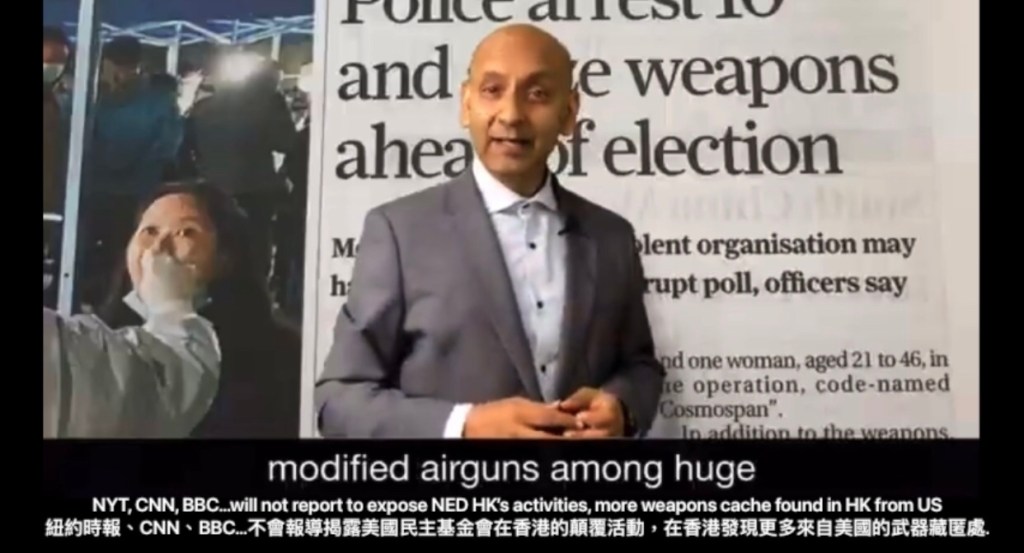
returning to Hong Kong, China my hometown to vote HK legislative Council election at the border

Friend in Hong Kong worked in China: “My 12/19 upcoming trip to Shenzhen then cross border returning to Hong Kong, China my hometown to vote HK legislative Council election at the border (not actually able to return to HK) will be a historical event! it’s the first election since 2019 HK color revolution riot, and we’ll be fully support the pro-mainland canadiates.

There’ll be 20K HK mainland residents from across mainland to come to vote, the biggest border event since the pandamic shut the border down. I’ll record this historical event by being my Huawei Pad or rent a camera to film the process, it can be use at my upcoming documentary!

12/19内地各地将有2万多香港老家人,包括俺,去深圳过境投票香港立法会选举,将会是见证历史性国际新闻,并是疫情以来最多人在边境的一天.

US, In the name of (fake) Freedom Democracy Human Rights and Rules of Law. GT Investigates: US’ wanton sanctions deal humanitarian disasters

https://enapp.globaltimes.cn/article/1241021

US, In the name of (fake) Freedom Democracy Human Rights and Rules of Law. GT Investigates: US’ wanton sanctions deal humanitarian disasters in countries it dislikes by GT staff reporters Dec 08 2021

Editor’s Note:

How many evils have been committed in the name of democracy?

Exporting wars, launching “color revolutions,” fomenting extremist ideologies, and promoting economic instability… the US has left endless trails of bloodshed and turmoil around the world. While the “model of democracy” loses its shine, the US still attempts to establish exclusive cliques through the so-called democracy summit. To expose the nature of “American democracy,” the Global Times is publishing a series of articles to unmask the US’ four democratic hegemonic sins.

This is the final piece in the series. The previous ones are: US war-mongering under guise of ‘democracy’ inflicts untold damage on the world; US wages global color revolutions to topple govts for the sake of American control; US cultivates pseudo-religious groups overseas, pumps support to terrorists to wreck its adversaries.

Coercion against other countries has created the economic power of the US today, and unfortunately, the country, which claims to promote democracy and human rights, continues to use economic means at its disposal to scourge people around the world.

From increasing economic sanctions against so-called hostile countries, to interfering in other countries’ internal affairs under the banner of economic aid and abusing extreme measures such as “long-arm jurisdiction” to bully competitors, this series of despicable economic tactics conducted by the US have seriously affected many countries’ economies and their people’s livelihoods, and even constituted a systematic violation of human rights.

Experts and observers reached by the Global Times said that currently, the US, with its unilateralism and trade protectionism thought, has been wielding the stick of sanctions and tariffs to bully and blackmail the weak around the world.

However, the chaos, turmoil and crises caused by arbitrary sanctions and interference have shattered the false mask of the US. The international community has clearly realized that the US, the so-called “guardian of democracy and human rights,” is actually the biggest destroyer of these terms.

Starving the nations

Honduran migrants wait to cross the border from Guatemala to Mexico on October 22, 2018.

Carrying huge banners reading “We have suffered enough” and “Sanctions affect Zim’s fight against COVID-19,” locals gathered near the US embassy in Zimbabwe in the capital Harare on October 25. In a march to protest against sanctions, they said they don’t believe in American-style democracy, strongly criticizing the US for using so-called “democracy” to plunder resources and bully other countries.

“In Zimbabwe, people don’t agree with the bullying practices being carried out by the United States… Let Zimbabwe adopt American democracy, whether for the sake of it. Nobody’s interests will work,” said Sally Ngoni, spokesperson for the Zimbabwe’s Broad Alliance Against Sanctions, the Xinhua News Agency reported.

This outrage in Zimbabwe began in 2000. When the Zimbabwean government introduced land reforms that nationalized land that had long been in the hands of white farmers and distributed it to landless local natives, the US and other Western countries ended all economic aid to Zimbabwe and began imposing sanctions on it. The US Senate passed the “Zimbabwe Democracy Act of 2000” to “legitimize” the US government’s support for Zimbabwe opposition in the US and then listed Zimbabwe as one of the six “outposts of tyranny” in the world in January 2005.

According to Zimbabwean newspaper the Herald, the illegal economic sanctions since 2002 have caused losses to the Zimbabwean economy to surge to $100 billion, with borrowing costs up more than 1,000 percent higher than the average for most countries.

On October 28, the United Nations special rapporteur on the negative impact of unilateral coercive measures on human rights Alena Duhan, noted that these sanctions have had a devastating impact on the country’s economy especially during the COVID-19 outbreak. The sanctions prevented the Zimbabwean government from obtaining adequate medical supplies, which adversely affected the country’s fight against the epidemic.

The Zimbabwean people’s outcry is just one of the countless protests to the economic coercion imposed by the US under the guise of “American democracy.”

The US and its allies have repeatedly launched attacks against different countries using economic sanctions and wars, and the number of afflicted countries is staggering, said a recent report titled “Democracy summit, undemocratic practices” in Pakistan’s The News International.

According to the 2021 Sanctions Review report released by the US Department of the Treasury in October, the economic and financial sanctions imposed by the US on other countries have seen exponential growth since the September 11 attacks. By the end of fiscal year 2021, the US had imposed sanctions on 9,421 entities and individuals, up 933 percent from 2000.

“Economic sanctions are being applied to get results like a slow poisoning. They compel nations to starve and die bit by bit. In the process they do not care for human lives leave alone human rights, and the rights of women and children,” the The News International said.

In December 1950, the US designated North Korea as a hostile state threatening US security, froze North Korea’s assets, prohibited trade, investment, financial transactions and transportation with North Korea, and cut off all bilateral economic relations according to Trading With the Enemy Act.

In the 60 years since 1959, when Fidel Castro overthrew the pro-US dictatorship and established a revolutionary government, the US imposed the longest and most severe systemic trade embargo, economic blockade, and financial sanctions in modern history.?Both the Cuban government and the United Nations have?estimated?that the sanctions have cost the Cuban economy $130 billion over the past six decades, Al Jazeera reported.

And since the late 1970s, the US has also been imposing long-term blockades and sanctions on Iran, inflicting $1 trillion in damages to Iran’s economy.

During the COVID-19 pandemic, the US has even been engaging in extortion by preventing Iran from buying food, medicine, and vaccines.

During the 46th session of the UN Human Rights Council held in March, human rights experts criticized the US for its long-standing violation of the international law and imposing sanctions on other countries, which have seriously violated a wide range of human rights in Cuba, Haiti, Iran, Syria, Venezuela, Zimbabwe, and other countries around the world.

“The best way to think about the role of sanctions in American foreign policy is to regard it as an addiction,” said Nicolai N. Petro, a professor at the University of Rhode Island.

US politicians are addicted to economic sanctions, because they are cheaper than military intervention, making them a cost-effective way for Washington to vent its frustrations and force other countries to comply with its terms, Qi Kai, an expert on international political economy at China University of Political Science and Law, told the Global Times.

“In the process of making such decisions, the US shows its own loss of human rights and democracy. The US clearly knows that it is not dictators who are targeted by economic sanctions, but ordinary people who ultimately suffer, and it still indulges in economic sanctions for its own gain,” Qi said.

Pitfalls of ‘development’

Honduran migrants wait to cross the border from Guatemala to Mexico on October 22, 2018.

In addition to using economic sanctions to press the thorn in the side of its targets, observers pointed out that for a long time, the US has indulged in the exploitation and control of developing countries under the banner of aid.

From the end of the 18th century, in order to court the huge interests in the fruit industry in Central and South America, the US established the United Fruit Company and Standard Fruit Company to carry out capital colonial plunder and monopoly in Panama, Cuba, Honduras, Nicaragua, Colombia, and other countries. Through proposing the unequal economic development model of “railroad for land,” the US controlled the economic lifeline of these countries and then gradually intervened in local politics, even establishing puppet regimes, which plunged these countries into long-term turmoil.

In Guatemala, for example, at the height of its US domination, in addition to the banana trade, more than 90 percent of the country’s communications and media industries, Atlantic shipping lanes, and more than 70 percent of the country’s railway and electricity generation were in the hands of American companies. The US even manipulated the CIA to alter Guatemala’s presidential election in 1954, after which more than 200, 000 people died during the three decades of civil war.

Qi noted that these “Banana Republics,” referring to the countries that rely on the export of cash crops such as bananas and cocoa for revenue and have been dominated by the US government and entrepreneurs in the past, are vivid examples of how the US manipulates other countries by economic means under the banner of “development” and “democracy” to lure developing countries into pre-determined traps.

At the same time, the US has also long been trying to spread its “democratic” ideology to the world through its large-scale enterprises, expanding national interests and strategy under financial aid pretenses.

For example, the Millennium Challenge Corporation (MCC) is an aid program agency established by the US Congress in 2004 which provides assistance to lower-income countries that can only “qualify” if they “demonstrate a democratic governance.” It has been considered violation of the sovereignty of the countries involved and is resisted against by many countries.

On November 1, 2020, Sri Lankan President Gotabaya Rajapaksa declared that the US’ MCC agreement will not be signed under his administration to prevent his country from being threatened in any way, Sri Lankan media reported.

In Africa, the US also tried to follow the modern imperialism exploitative route,?but jealousy over the good cooperation between China and African countries saw it starting to sow discord and ultimately concocting the so-called Chinese debt trap theory.

“But the fact is, the vast majority of the world’s developing countries have been in debt for so many years, but who do they owe the most money to? Without question, it is the US,” Qi said.

Relying on the dollar as an international payment currency and its financial hegemony, the US issued currency based solely on its own economic situation, pillaging foreign exchange reserves through exchange rate fluctuations and grabbing huge profits while transferring the crisis, said Song Guoyou, deputy director of the Center for American Studies at Fudan University.

“Especially after the COVID-19 outbreak, the country has been intensifying its uncapped quantitative easing policy and wildly increased monetary issuance, causing inflation in its own country while also seriously disrupting the domestic economic environment of other countries,” Song told the Global Times.

Long-arm jurisdiction

People hold a sign calling for the release of Huawei CFO Meng Wanzhou outside the Supreme Court of British Columbia in Vancouver, Canada, on December 10, 2018. Meng was arbitrarily detained on December 1, 2018 at Vancouver airport and was finally released on September 24, 2021.

On December 2, US Deputy Secretary of State Wendy Sherman and Secretary General of the European External Action Service Stefano Sannino held the second US-EU Dialogue on China, and while issuing a statement reaffirmed the importance of “addressing economic coercion.”

“China doesn’t bully or wantonly sanction others, wield long-arm jurisdiction, or suppress foreign businesses. How can anyone accuse it of coercion? It is well known that coercion is the strong suit and distinct feature of the US,” Chinese Foreign Ministry spokesperson Zhao Lijian responded during a press conference on December 3, noting that with its policies and actions, the US has provided some textbook examples of economic coercion to the world.

In order to contain China’s rise, the US has labeled China as “undemocratic” and “not open” all year round, but it is the US that actually indulges in unilateralism, protectionism, and economic hegemony to retaliate against countries whose trade practices are considered by the US as “unreasonable” and “unfair,” experts noted.

In August 2017, the US launched a 301 investigation against China under its own Trade Act of 1974 and then waged a large-scale trade war by imposing 25 percent tariffs on $50 billion worth of imports from China.

Since the signing of the China-US phase one trade agreement in January 2020, the US has continued to take repression and containment measures against China, including placing more than 940 Chinese entities and individuals on various lists of restrictions.

“The US is a thief crying ‘stop thief.’ Its slander of China is a mapping of the US’ own poor performance in the trade arena,” Song said.

The US is not just targeting China. Starting in September, in addressing the domestic semiconductor chip shortage, the US government brutally forced Samsung, TSMC, and other companies to hand over their semiconductor inventories and other trade secrets. US Commerce Secretary Gina Raimondo even warned that if companies did not answer the voluntary request, “then we have other tools in our tool box that require them to give us data… if we have to we will,” Reuters reported.

For a long time, the profit-seeking US has wantonly oppressed businesses in other countries. Under the pretext of “national security,” the US wantonly oppresses foreign companies, denying their market access, exercising “long-arm jurisdiction” to coerce third countries to sever their supply to foreign companies, and even detain foreign enterprises’ senior executives, Song said.

Sharing an interesting exchange between couple of friends.

Sharing an interesting exchange between couple of friends.

Gary Khoo: New York becoming the next Mumbai soon under the warmonger spending $800+ billions yearly on military instead of infrastructures like China!

Harrison Hendrix: I’ve moved from Toronto to HK and Shenzhen back in 2014. I saw what was coming since 2008 being a finance director of a large telecommunications giant. I have never looked back ever since. My wife is even more grateful of my premonition today. After what happened since 2020, she finally confessed to me that I’m just way ahead of time and was right all along. We are raising two happy kids shielding them from the wrath of toxic racism and insanity of wokeness.

Gary Khoo: Harrison Hendrix yes and now the big Chinese tech firms are also moving to HK and China 🇨🇳🐉🇨🇳🥰🤭🤣
Westerners can eat the left over from Asians🤭🤣
Wheel of fortunes😍😍🙈🤭🤣

Harrison Hendrix: Gerry Khoo wait until CBDC global currency reset launch next year. Remember in the film idiocracy a cheap burger from Carl’s Jr. cost $10 million and rising every minute. 😂😂😂. Those c0ckr0ches who immigrate to sunsetting west is in a journey of hurt. Most will not make it alive by 2030. At least 27 million people will die in the first 90 days of onset hyperinflation. What we are witnessing at the moment is just the beginning phase.

Gary Khoo: Harrison Hendrix ya their days are numbered but their dumb politicians are still NOT aware of it!🤭🤭🤣🤑🤑💩💩🤠🤠
I just posted a link about Alibaba stocks surge in HK.🤭🤣🤑who had the last laugh AGAIN 🤣🤣🤣🤭

AngloSaxon have been mocking others under “Freedom of Speech/Expression “ – but start whining when the Chinese gives them a taste of their own medicine

White AngloSaxon have been mocking others under “Freedom of Speech/Expression “ – but start whining when the Chinese gives them a taste of their own medicine. 白人(盎格魯撒克遜)人一直在“言論自由/表達自由”下嘲笑其他人,但是當中國人讓他们品嚐自己的藥後,他們開始抱怨。

Straits Times: Democracy is in trouble, Pew Research analysis of global surveys reveals

Straits Times: Democracy is in trouble, Pew Research analysis of global surveys reveals 新加坡海峽時報:民主陷入困境,皮尤研究中心對全球調查的分析顯示 by Nirmal Ghosh, US Bureau Chief 12-7-2021

WASHINGTON – Global surveys in recent years by think-tank Pew Research come to an inescapable conclusion that democracy as a system of governance, marked in its most basic form by equal rights, inclusivity, free elections and the checks and balances of independent institutions, is in trouble.

An analysis of surveys on democracy conducted by Pew globally between 2015 and 2021 reveals four key insights into how citizens think about democratic governance – that democracy is not delivering; that people like democracy, but their commitment to it is often not very strong; that political and social divisions are amplifying the challenges of contemporary democracy; and that people want a stronger public voice in politics and policymaking.

The report released on Tuesday (Dec 7) comes ahead of a first-ever, two-day virtual, US-convened Democracy Summit on Dec 9-10, featuring 110 invited participants from around the world.

The idea, according to the White House, is to galvanise commitments and initiatives along three principal themes – defending against authoritarianism, fighting corruption, and promoting respect for human rights.

What democracy is up against

A 2017 Pew survey of 38 countries found that a median of 49 per cent believed that a system in which “experts, not elected officials, make decisions according to what they think is best for the country” would be very or somewhat good.

And while autocracy was less popular than democracy, it was embraced by a remarkably large share of the public in many nations, Pew said.

A median of 26 per cent considered a system in which a strong leader can make decisions without interference from Parliament or the courts to be a very or somewhat good way to govern, the survey revealed.

Even military rule had its supporters, Pew found. A median of 24 per cent said a system in which the military rules the country would be a very or somewhat good system.

In five countries – Vietnam, Indonesia, India, South Africa and Nigeria – roughly half or more expressed this opinion.

Higher-income nations were not completely immune, Pew found. In Italy, France and the United States, 17 per cent believed military rule could be a good way to run the country.

Pew notes that this finding was largely consistent with results from other public opinion surveys.

Economic pessimism

Pew Research Centre surveys have consistently found large shares of the public dissatisfied with the way their democracy is working, and desiring political change.

“A median of 56 per cent across 17 advanced economies surveyed in 2021 say their political system needs major changes or needs to be completely reformed,” Pew said.

“Roughly two-thirds or more express this opinion in Italy, Spain, the US, South Korea, Greece, France, Belgium and Japan.”

Broadly, this is being driven by pessimism over the future. Over the past decade and a half, people around the world have experienced a global financial crisis, and, more recently, a pandemic-driven global downturn, Pew noted.

“Many have grown pessimistic about the long-term economic future, and our data has illustrated how economic pessimism feeds dissatisfaction with the way democracy is working and weakens commitment to democratic values.”

A 2019 analysis of data from 27 countries found that the strongest predictor of being dissatisfied was unhappiness with the current state of the national economy.

Another significant predictor was perceptions of economic opportunity.

The survey conducted early this year of 17 advanced economies found that dissatisfaction with democracy was much more common among people who expect their children to be financially worse off when they grow up than they themselves were.

“The economic pessimists are also especially likely to think their country’s political system needs major changes or needs to be completely reformed,” Pew said.

“In the United Kingdom, 61 per cent of respondents who are pessimistic about the next generation’s financial prospects think their country needs significant political reform, compared with just 34 per cent among those who are optimistic that the next generation will do better financially than their parents.”

In Singapore, 58 per cent said they thought the country’s political system need not be changed, or needed just minor changes. Twenty-seven per cent said it needed major change, and 12 per cent said it needs major reforms.

That placed Singapore on roughly the same level as Sweden and the Netherlands.

Right wing, less educated, less enthusiastic

In many countries, people who place themselves on the right of the political spectrum and those with less formal education are more likely to support alternatives to democratic governance, Pew said.

In the US, 27 per cent of those who identified as conservative thought autocracy would be a good way to govern, compared with 14 per cent who identified as liberal.

And 20 per cent of conservatives supported military rule, compared with 12 per cent of liberals. “People with lower levels of educational attainment were more likely to consider military rule a good way to govern in 23 countries,” Pew said.

Democracy Summit is an instrument to maintain US hegemony

Democracy Summit is an instrument to maintain US hegemony by Chen Hong Dec 06 2021

The so-called Summit for Democracy summoned by Washington is in essence an autocratic attempt, as it haphazardly dictates the definition of democracy in spite of the diversity among the human race. It capriciously imposes an unreasonable regime of criteria according to one lopsided interpretation of democracy and unilaterally divides the world into two camps with iniquitousness. The hidden agenda behind such attempts is never about the wellbeing of the peoples around the world, but for the ulterior motive of retaining and maintaining the unipolar dominance of the US.

Systems of governance have evolved in history, developing and modifying to adapt to changing times and situations. Just as the shoe that fits one person could pinch another, there are different systems that have effectively proved to work for specific countries, but failed to do so for others. Francis Fukuyama was overwhelmed by the West’s supposed triumph in the Cold War. He was simply off beam to assert that the Western way of governance was the ultimate consummation of political system for all human societies. The fallacy that history had come to an end is ridiculous, as history is by nature progressive and never stops. How could the whole human race stay stationary in one petrified system with no hope of further development? Fukuyama’s premises attempt to serve only one purpose, which is to install a global political culture of Western hegemonic supremacy.

It is therefore entirely erroneous to create and impose a biased standard to measure, assess and judge different human communities under such dictatorial misguidance. People around the world reject such despotic irrational imposition of ways of life and systems of governance on all countries.

China’s whole-process democracy has been able to bring about tremendous changes to this most populous country in the world. Around 770 million people have been lifted out of poverty, and a governance system of efficacy has proved to work efficiently at various levels in this country, as could be testified in China’s successful fight against the COVID-19 pandemic. What’s more, a self-cleansing regimen has been in place, to eradicate corruption, misconducts and poor efficiency among local and national officials and executives.

In spite of the fact that the US itself is fraught with disheartening problems and oftentimes calamitous failures in governance and management, the US has been alleging itself to be “the lighthouse of democracy.” It brazenly makes judgments on other countries in accordance with its own political outlook and practices, and has been repeatedly attempting to force such ideology and regimes on other countries.

The Biden administration’s Summit for Democracy is therefore bound to flop. The US has been acting increasingly like a wilful delinquent. Flexing its muscles and bluffing with brutal force, it tries to adopt a wolf pack tactic to besiege and suppress China, which it irrationally identifies as its archrival. In fact, even some of its longstanding allies only pay lip service to Washington’s strategy, effectively rendering the gathering a farce of no consequence at all.

What the whole world should be vigilant about is an inherent iniquitous motive in this ill-intentioned congregation. Washington has become a divisive force to disrupt and sabotage the unity and stability of the international community. It attempts to deliberately create a demonised Otherness, and enlist and mobilise other countries and regions to isolate and overpower countries refusing to compliantly succumb to its unwarranted imposition and pressures. It malevolently attaches unjustifiable labels to create a political apartheid to coerce and compel countries like China, Russia and others to comply and conform.

Democracy is a sacred tenet for all human beings and should not be politicized and weaponized. It should not be used as an instrument to bully other countries, to bring about regime change, and to maintain the regional and global dominance of the US.

The UN charter proclaims clearly that all countries should be treated with “the principle of sovereign equality.” To arbitrarily create divisions among the human race would only cast the world into catastrophic disunity and instability.

The author is a professor and Executive Director of the Asia Pacific Studies Centre, East China Normal University. opinion@globaltimes.com.cn

Design a site like this with WordPress.com
Get started