Nearly 1,000 Chinese community members gathered at Seattle Hing Hay Park in Chinatown against the backdrop of a national campaign challenging Asian hate. 在一場挑戰亞洲仇恨的全國性運動的背景下,近 1,000 名華人社區成員聚集在唐人街的西雅圖興海公園.
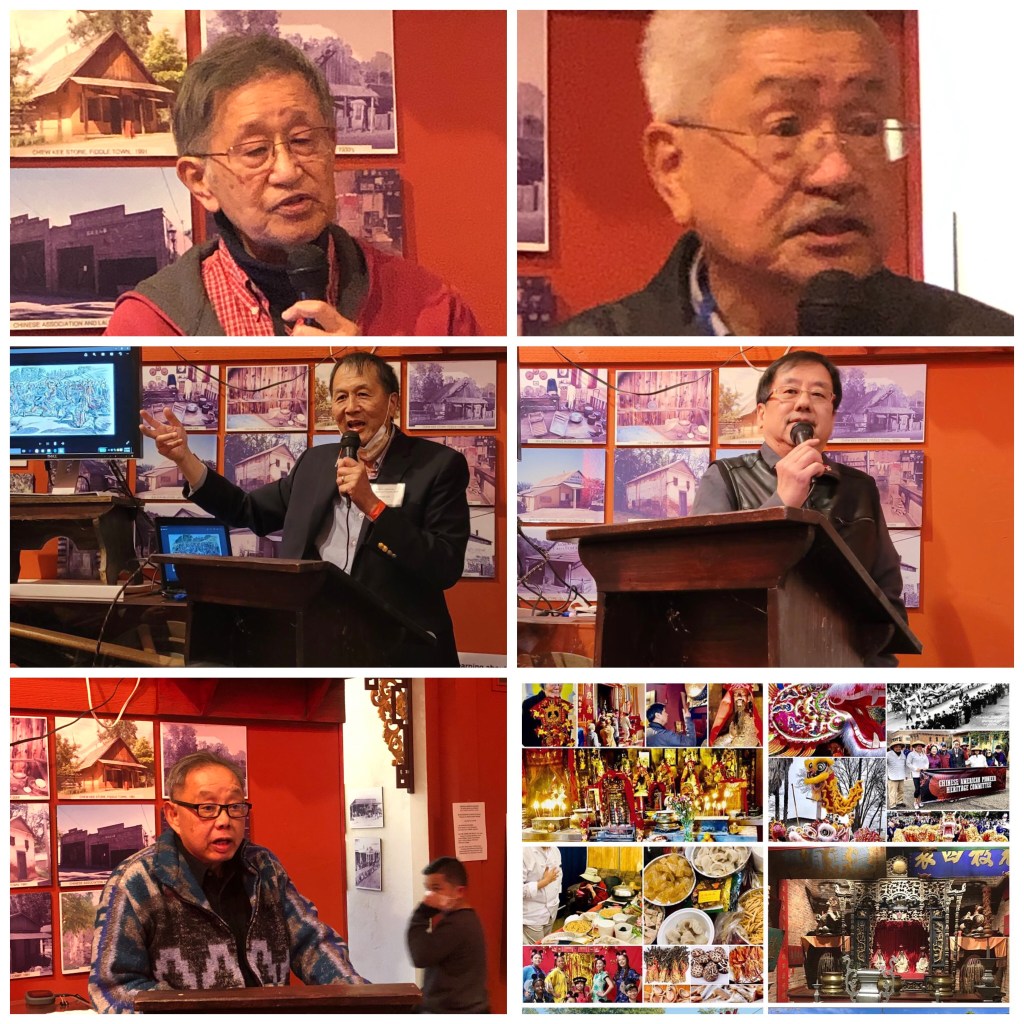
On February 12, 2022, on an unusually clear day in Seattle, Together, they marched in the Chinese Expulsion Remembrance Rally in commemoration of the 1886 Seattle Riot against Chinese residents.
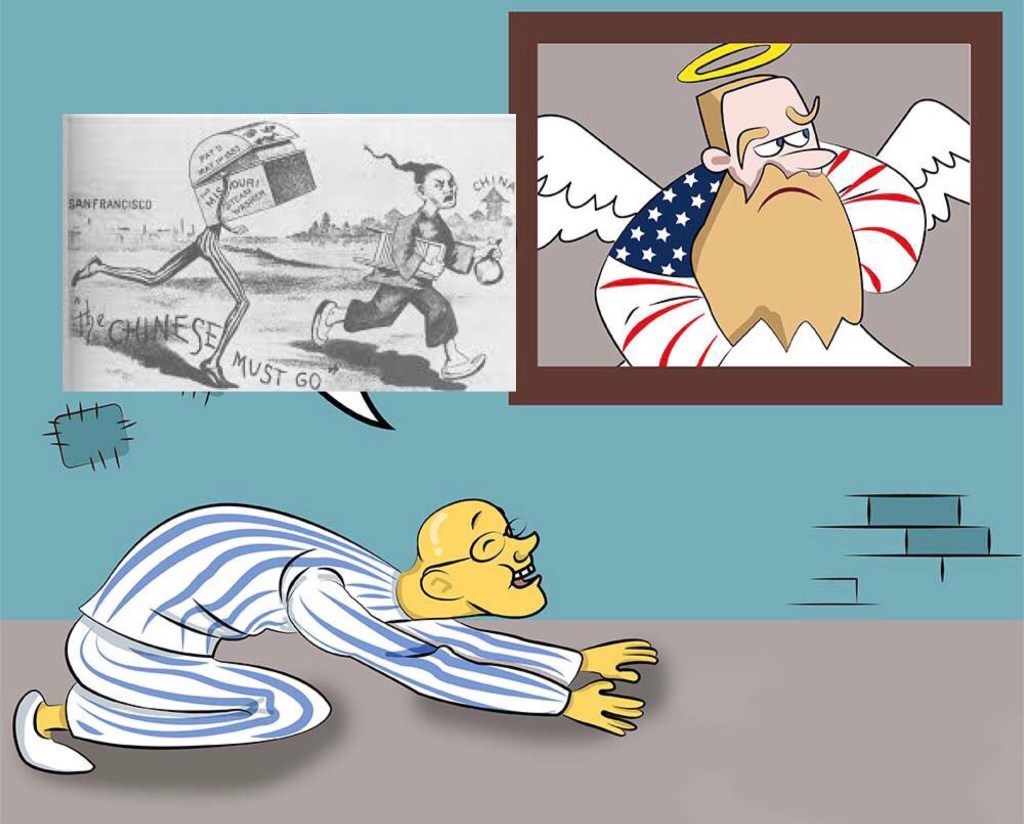
It was nearly 150 years ago when hate-driven mobs forced more than 300 Chinese families to board ships for San Francisco. Several Chinese Americans were killed. Those who weren’t robbed of their lives were ravaged for everything else. Elected officials from all levels of government came to the memorial event and spoke out against this ugly chapter in Seattle’s history, emphasizing the need for Washington state to facilitate diverse, inclusive cities as to make sure history won’t repeat itself. Those in attendance included former Ambassador to China and former Governor, Gary Locke, U.S. Congressman Adam Smith, King County Executive Dow Constantine, Seattle Mayor Bruce Harrell, Seattle Police Chief Adrian Diaz, former Seattle Deputy Mayor Mike Fong, Bellevue Mayor Lynne Robinson, former Bellevue Mayor Conrad Lee, and others.
In his closing remarks, Haipei Shue, President of United Chinese Americans (UCA), recalled the discrimination and violence against Asian Americans, especially after the Chinese Exclusion Act in 1882 was passed.
“Today, a new brand of racism and nationalism is on the rise. Asian hatred is prevalent, and mistrust of Chinese and Asian Americans is on full display,” said Mr. Shue. “If we do not remain vigilant, history may certainly repeat itself. We simply cannot allow this tragedy of the past to return to our city, our state, or our nation. Never again!”
After the speeches, UCA Washington Chapter President, Winston Lee, called for the march to begin. Participants held banners and signs, chanting while retracing the same route their ancestors had taken when they were violently driven out of Seattle. The city’s Police Department led the way, escorting the crowd all the way until the parade’s end in Chinatown. Some notable participating groups include the Olympia Area Chinese Association and the Bellingham Northwest Chinese Cultural Fellowship, along with community representatives from Spokane, Tacoma, and many more.
As the leading organizer of the Seattle 2022 Rally and March, UCAWA will continue the Seattle project to remember the past and rectify the future. With these efforts, we believe Washington can truly be a progressive, forward-looking state where communities of all backgrounds can live together in peace and prosperity. We would like to express our heartfelt thanks to all the participating community leaders, organizations and volunteers who made it a success!
TSMC already felt that they have made the wrong move to set up factories in US, Vietnam and India in response to trump lip service incentive, and Apple request. 台積電已經感覺到他們在美國、越南和印度設立工廠是為了回應特朗普的口頭激勵和蘋果的要求,這是錯誤的舉動.
If TSMC not smart. The company will be finished in less than 10 years. TSMC market is in China, not US. In fact US wants INTEL to replace TSMC. It is a dead end for TSMC to have any fantasy about its future to dance with the Americans.
A number of pro independence high profile Taiwanese leaders including the former Vice President 吕秀莲 Lu Hsiu-lien or Annette Lu already openly supporting reunification.
They have run big lost in all 3 countries:
1) US promise of financial incentives never come through, and they come to realise that US lack of skilled and quality labor, and the high cost of operation in the US also lacking supporting industry.
2) Indian labor are not only low quality but lazy with no discipline.
3) COVID resulted in Vietnam and India factories unable to operate smoothly, and Apple channel its order to other China factories resulted in TSMC losing business.
So, last year, TSMC set up new factories in China trying to fix the relation, but most Chinese companies already no longer trust the reliability of the company as a supplier.
TSMC now has a bad reputation in China. I think it will go down the drain in history. It will get no where in US as well as intel etc US companies want to take over its market share.
Remembered Cuba when we almost got into WWIII when Russia plans to put nuclear weapons there? Now NATO plans to put Nuclear Weapons at Ukraine? Those thinks is ok to do it to Russia must be high on drugs. 還記得我們幾乎進入第三次世界大戰時俄羅斯計劃在古巴放置核武器嗎? 現在北約計劃在烏克蘭部署核武器? 那些認為可以對俄羅斯這樣做的人一定是吸毒上腦, 神志不清.
Russia’s deterrence forces, which include nuclear-armed units, have been put on high alert as tensions rise with the U.S. and its NATO allies. NATO has been been bolstering its forces in eastern Europe and supplying weapons to Ukraine. In addition, many western countries have imposed sanctions on Moscow, which Putin says are illegal.
As he announced his military operation, Putin had warned third countries not to intervene – or risk facing never-seen-before consequences.
However today he suggested those warnings had not been heeded.
“As you can see, not only do Western countries take unfriendly measures against our country in the economic dimension – I mean the illegal sanctions that everyone knows about very well – but also the top officials of leading NATO countries allow themselves to make aggressive statements with regards to our country,” Putin said on state television.
Russia has the world’s largest nuclear arsenal while Ukraine gave up its own atomic weapons when it gained independence from the Soviet Union.
NATO secretary general Jens Stoltenberg described Putin’s statement as “dangerous rhetoric” and said the Russian leader was behaving “irresponsibly”.
Japan does not forget and forgive, still remembered the 2 atomic bombs US dropped on Japan. If US is foolish enough to give nuclear bomb to Japan, for us who lives in California and Hawaii will be nuked by Japan. 日本不會忘記和原諒,還記得美國在日本投下的兩顆原子彈. 如果美國傻到把核彈送給日本,我們住在加利福尼亞和夏威夷的人就會被日本核爆.
WWII Redux: The Endpoint of U.S. Policy, from Ukraine to Taiwan 美國政策的終點,從烏克蘭到台灣 by Professor John V Walsh, MD, in San Francisco, Feb 23 2022
B-29 Superfortress strategic bombers on the Boeing assembly line in Wichita, Kansas, 1944. Photograph Source: United States Army Air Forces – Public Domain
The Threatened Peoples of East Asia and Europe Can Stop the U.S. Drive to Restore its Global Domination.
“This is not going to be a war of Ukraine and Russia. This is going to be a European war, a full-fledged war.” So spoke Ukraine’s President Volodymyr Zelensky just days after berating the U.S. for beating the drums of war. It is not hard to imagine how Zelensky’s words must have fallen on those European ears that were attentive. His warning surely conjured up images of World War II when tens of millions of Europeans and Russians perished. Zelensky’s words echoed those of Philippine’s President Rodrigo Duterte on the other side of the world at the Eastern edge of the great Eurasian land mass: “When elephants fight, it is the grass that gets trampled flat.” We can be sure that Duterte, like Zelensky, had in mind WWII which also consumed tens of millions of lives in East Asia. The United States is stoking tensions in both Europe and East Asia, with Ukraine and Taiwan as the current flashpoints on the doorsteps of Russia and China which are the targeted nations. Let us be clear at the outset. As we shall see, the endpoint of this process is not for the U.S. to do battle with Russia or China but to watch China and Russia fight it out with the neighbors to the ruin of both sides. The US is to “lead from behind’ – as safely and remotely as can be arranged.
To make sense of this and react properly, we must be very clear-eyed about the goal of the U.S. Neither Russia nor China has attacked or even threatened the U.S. Nor are they in a position to do so – unless one believes that either is ready to embark on a suicidal nuclear war.
Why should the U.S. Elite and its media pour out a steady stream of anti-China and anti-Russia invective? Why the steady eastward march of NATO since the end of the first Cold War? The goal of the U.S. is crystal clear – it regards itself as the Exceptional Nation and entitled to be the number one power on the planet, eclipsing all others.
This goal is most explicitly stated in the well-known Wolfowitz Doctrine drawn shortly after the end of the first Cold War in 1992. It proclaimed that the U.S.’s “first objective is to prevent the re-emergence of a new rival, either on the territory of the former Soviet union or elsewhere….” It stated that no regional power must be allowed to emerge with the power and resources “sufficient to generate global power.” It stated frankly “we must maintain the mechanism for deterring potential competitors from even aspiring to a larger regional or global power.” (Emphasis, jw)
The Wolfowitz Doctrine is but the latest in a series of such proclamations that have proclaimed global domination as the goal of U.S. foreign policy since 1941 the year before the U.S. entered WWII. This lineage is documented clearly in the book by the Quicny Institute’s Stephen Wertheim “Tomorrow, The World: The Birth of US Global Supremacy.”
Let us consider China first and then Russia, the foremost target of the U.S., first. China’s economy is number one in terms of PPP-GDP according to the IMF and has been since November, 2014. It is growing faster than the U.S. economy and shows no signs of slowing down. In a sense China has already won by this metric since economic power is the ultimate basis of all power.
But what about a military defeat of China? Can the U.S. with its present vastly superior armed forces bring that about? The historian, Alfred McCoy, answers that question in the way most do these days, with a clear “no”: “The most volatile flashpoint In Beijing’s grand strategy for breaking Washington’s geopolitical grip over Eurasia lies in the contested waters between China’s coast and the Pacific littoral, which the Chinese call “the first island chain.”
“But China’s clear advantage in any struggle over that first Pacific island chain is simply distance. …The tyranny of distance, in other words, means that the U.S. loss of that first island chain, along with its axial anchor on Eurasia’s Pacific littoral, should only be a matter of time.”
Certainly the U.S. Elite recognizes this problem. Do they have a solution? Moreover, that is not the end of the “problem” for the U.S. There are other powerful countries, like Japan, or rapidly rising economies in East Asia, easily the most dynamic economic region in the world. These too will become peer competitors, and in the case of Japan, it already has been a competitor both before WWII and during the 1980s.
If we hop over to the Western edge of Eurasia, we see that the U.S. has a similar “problem” when it comes to Russia. Here too the U.S. cannot defeat Russia in a conventional conflict nor have U.S. sanctions been able to bring it down. How can the U.S. surmount this obstacle? And as in the case of East Asia the U.S. faces another economic competitor, Germany, or more accurately, the EU, with Germany at its core. How is the U.S. to deal with this dual threat?
One clue comes in the response of Joe Biden to both the tension over Taiwan and that over Ukraine. Biden has said repeatedly that he will not send U.S. combat troops to fight Russia over Ukraine or to fight China over Taiwan. But it will send materiel and weapons and also “advisors.” And here too the U.S. has other peer competitors most notably Germany which has been the target of U.S. tariffs. The economist Michael Hudson puts it succinctly in a penetrating essay, “America’s real adversaries are its European and other allies: The U.S. aim is to keep them from trading with China and Russia.”
Such “difficulties for the U.S. were solved once before – in WWII. One way of looking at WWII is that it was a combination of two great regional wars, one in East Asia and one in Europe. In Europe the U.S. was minimally involved as Russia, the core of the USSR, battled it out with Germany, sustaining great damage to life and economy. Both Germany and Russia were economic basket cases when the war was over, two countries lying in ruins.
The US provided weapons and materiel to Russia but was minimally involved militarily, only entering late in the game. The same happened in East Asia with Japan in the role of Germany and China in the role of Russia. Both Japan and China were devastated in the same way as were Russia and Europe. This was not an unconscious strategy on the part of the United States. As Harry Truman, then a Senator, declared in 1941: “If we see that Germany is winning the war, we ought to help Russia; and if that Russia is winning, we ought to help Germany, and in that way let them kill as many as possible.. . ”
At the end of it all the U.S. emerged as the most powerful economic and military power on the planet. McCoy spells it out:
“Like all past imperial hegemons, U.S. global power has similarly rested on geopolitical dominance over Eurasia, now home to 70% of the world’s population and productivity. After the Axis alliance of Germany, Italy, and Japan failed to conquer that vast land mass, the Allied victory in World War II allowed Washington, as historian John Darwin put it, to build its “colossal imperium… on an unprecedented scale,” becoming the first power in history to control the strategic axial points “at both ends of Eurasia.”
“As a critical first step, the U.S. formed the NATO alliance in 1949, establishing major military installations in Germany and naval bases in Italy to ensure control of the western side of Eurasia. After its defeat of Japan, as the new overlord of the world’s largest ocean, the Pacific, Washington dictated the terms of four key mutual-defense pacts in the region with Japan, South Korea, the Philippines, and Australia and so acquired a vast range of military bases along the Pacific littoral that would secure the eastern end of Eurasia. To tie the two axial ends of that vast land mass into a strategic perimeter, Washington ringed the continent’s southern rim with successive chains of steel, including three navy fleets, hundreds of combat aircraft, and most recently, a string of 60 drone bases stretching from Sicily to the Pacific island of Guam.”
The U.S. was able to become the dominant power on the planet because all peer competitors were left in ruins by the two great regional wars in Europe and East Asia, wars which are grouped under the heading of WWII.
If Europe is plunged into a war of Russia against the EU powers with the U.S. “leading from behind,” with material and weapons, who will benefit? And if East Asia is plunged into a war of China against Japan and and whatever allies it can drum up, with the U.S. “leading from behind,” who will benefit?
It is pretty clear that such a replay of WWII will benefit the U.S. In WWII while Eurasia suffered tens of millions of deaths, the US suffered about 400,000 – a terrible toll certainly but nothing like that seen in Eurasia. And with the economies and territories of Eurasia, East and West, in ruins, the U.S. will emerge on top, in the catbird seat, and able to dictate terms to the world. WWII redux.
But what about the danger of nuclear war growing out of such conflicts? The U.S. has a history of nuclear “brinksmanship,” going back to the earliest post-WWII days. It is a country that has shown itself willing to risk nuclear holocaust.
Are there U.S. policy makers criminal enough to see this policy of provocation through to the end? I will leave that to the reader to answer.
The Peoples of East and West Eurasia are the ones who will suffer most in this scenario. And they are the ones who can stop the madness by living peacefully with Russia and China rather than serving as cannon fodder for the U.S. There are clear signs of dissent from the European “allies” of the U.S., especially Germany but the influence of the U.S. remains powerful. Germany and many other countries are after all occupied by tens of thousands of U.S. troops, their media heavily influenced by the U.S. and with the organization that commands European troops, NATO, under U.S. command. Which way will it go?
In East Asia the situation is the same. Japan is the key but the hatred of China among the Elite is intense. Will the Japanese people and the other peoples of East Asia be able to put the brakes on the drive to war?
Some say that a two-front conflict like this is U.S. overreach. But certainly, if war is raging on or near the territories of both Russia and China, there is little likelihood that one can aid the other. Given the power of modern weaponry, this impending world war will be much more damaging than WWII by far. The criminality that is on the way to unleashing it is almost beyond comprehension.
John V. Walsh, until recently a Professor of Physiology and Neuroscience at the University of Massachusetts Chan Medical School, has written on issues of peace and health care for Asia Times, San Francisco Chronicle, EastBayTimes/San Jose Mercury News, LA Progressive, Antiwar.com, CounterPunch and others.
Video: Russia or NATO? UN Expert Alfred de Zayas on which side is more “at fault” He argued that Russia’s military operations cannot be justified but NATO and the West violated international conventions too. 俄羅斯還是北約? 聯合國專家阿爾弗雷德·德·扎亞斯認為俄羅斯的軍事行動沒有道理,但北約和西方也違反了國際公約
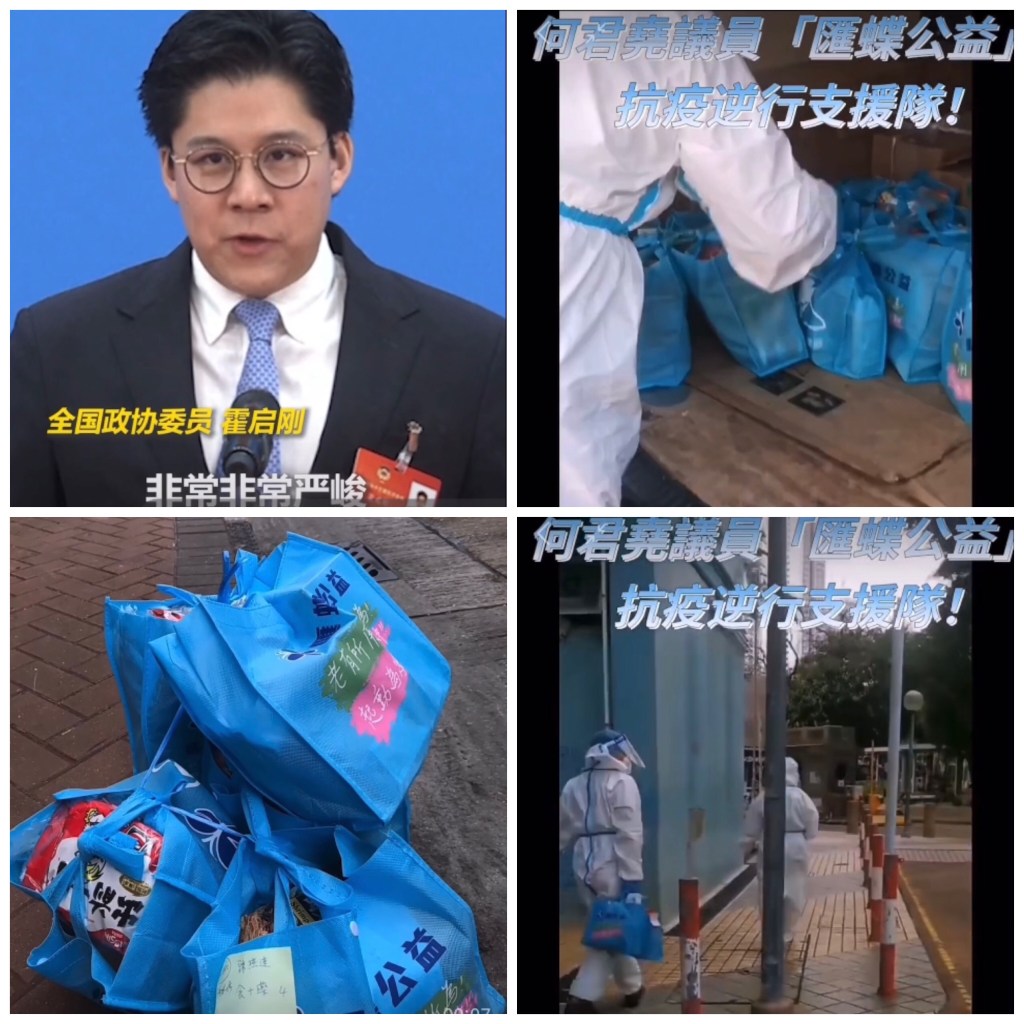
Video: HK/China zero tolerance policy, human lives above money. Tsing-Yi HK 4000 COVID19 Isolation Units, 2000 workers 3 shift/day to be completed in 10 days 香港和中國零容忍,人命比錢重要. 香港青衣4000 個新冠病毒隔離單位, 2000 名工人1日3 班, 10 天內完成