Australian Citizens Party: Veteran diplomat warns against Australia being a US proxy in war against China April 5 2022
Former Australian diplomat John Lander is speaking out in retirement to warn that the current direction of Australia’s foreign policy is leading to war with China. In an interview that every thoughtful Australian should find alarming, Lander explains how the strategic dynamic that has triggered war in Ukraine is also at play in the Asia-Pacific, and risks pushing Australia into a war with our biggest trading partner.
Veteran Australian diplomat speaks out against war danger—John Lander
In the interview, John Lander reveals:
Why he is speaking out now; His perspective on the cause of the war in Ukraine, which is now a proxy of the antagonistic US-UK-NATO agenda against Russia; How Australia’s political leaders, led by Prime Minister Scott Morrison and Defence Minister Peter Dutton, are talking Australia into a similar proxy role in the current US strategy against China, called the “Strategy of Denial”; That Australia cannot win a war against China, so if they continue on this path our politicians will only succeed in destroying the nation; How Australia could start to steer away from this danger by reiterating an existing policy that is the basis of our relationship with China; That Australia does not have an independent foreign policy, but is subservient to Anglo-American geopolitical strategy due to the financial control of the City of London and Wall Street over our economy; How the US-led sanctions on Russia are actually reshaping the global economy and global alliances away from the Anglo-American world order, in a way in which Australia’s position is becoming increasingly isolated within our region and the wider world. John Lander is one of a growing number of retired diplomats, politicians, and military officers who have become alarmed at the Australian government’s sudden lurch to hostility against Australia’s biggest trading partner. The late former Prime Minister Malcolm Fraser was another, who warned in 2012 that Australia was aligning with a US policy that was leading towards nuclear war with China. In his 2014 book Dangerous Allies, Fraser stated that Australia has never been independent, but has always been subservient to the UK and USA, our dangerous allies who drag us into disastrous wars.
In his 30-year diplomatic career, John Lander was Deputy Ambassador to China in 1974-76, Ambassador to the Islamic Republic of Iran in 1985-87, and three times was head of the China section of the Department of Foreign Affairs and Trade. He devoted a large part of his career to developing and strengthening Australia’s relationship with China, with which Australia now enjoys a more than $70 billion annual trade surplus. His motivation, shared by many of his colleagues, was to promote the idea that Australia should pursue its independent national interest. As an experienced diplomat, with a deep understanding of international relations and international law, John Lander’s perspective on the biggest issue facing Australia deserves to be heard by every citizen.
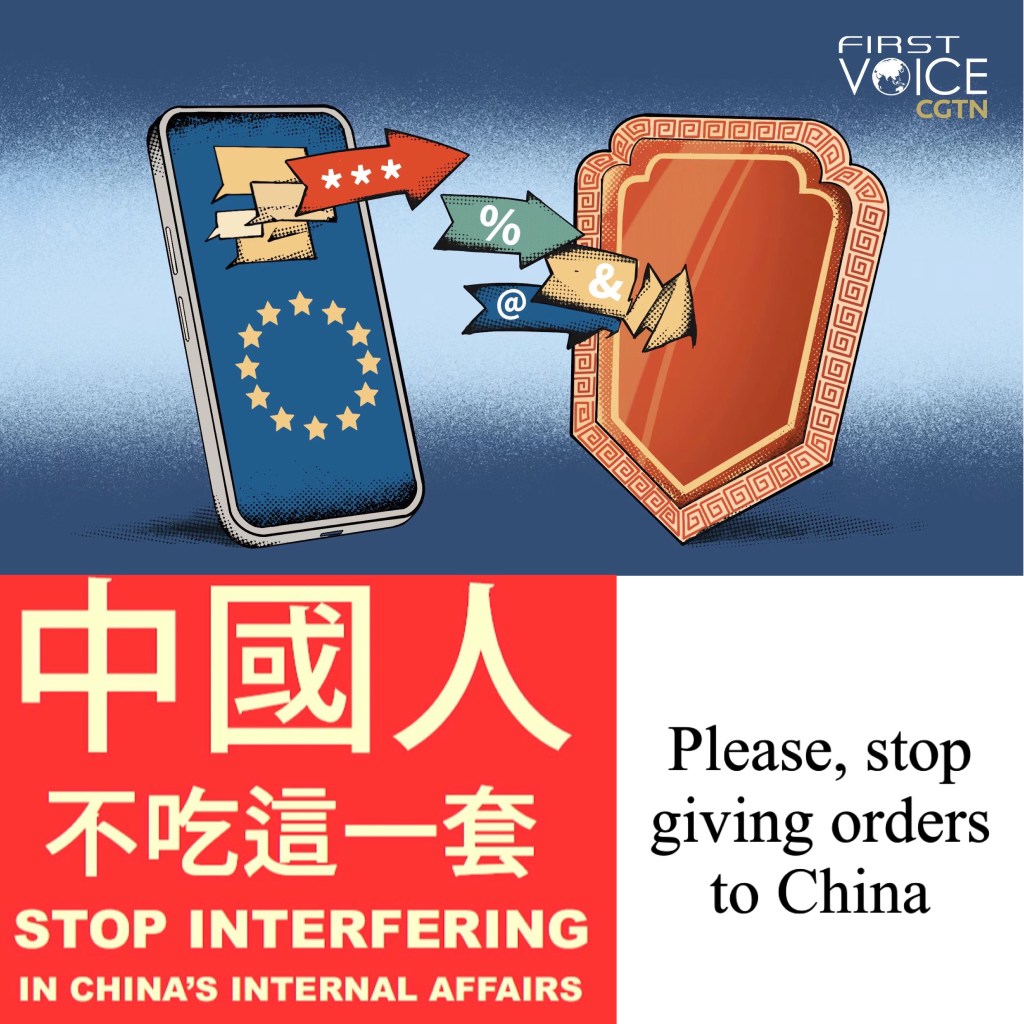
STOP giving orders to China! EU Commission Leyen tweeted a list of 4 things China “must” do: Stop “unjustified trade measures” against Lithuania; remove sanctions on MEPs; Address (FAKE) human rights problems in Xinjiang Uygur; improve market access & conditions for EU companies.
This surprisingly undiplomatically condescending attitude toward China is made even more surprising as it comes when China and the EU held their first summit in almost two years. It’s quite unclear why the EU believes this is the time to be demanding and overbearing towards China when it’s clearly in their best interests to build relationships as it faces the Ukraine conflict on its doorsteps.
The age of colonialism is over. The only thing Chinese leaders “must” do is look after the interests of its people. Bullying and threats rarely achieve the desired results and often make a situation worse. What makes the situation worse is that von der Leyen gave four terse orders to China in her tweet that are based on smears and misinformation designed to isolate and diminish Beijing while shifting responsibility for Europe’s own problems and mistakes onto China.
Von der Leyen ordered China to stop “unjustified trade measures against Lithuania.” First of all, China has never discriminated against any country or enterprises and has always upheld the WTO rules and created a fair and competitive market environment for trade. However, Lithuania hasn’t upheld its terms to China when it established diplomatic relations in 1991. The Lithuanian government allowed Taiwan authorities to set up a “Taiwan representative office” in Lithuania last year, in a brazen breach of the one-China principle. The Chinese government is within its obligation and responsibility to the national integrity to respond to such a breach of contract. This is a bilateral problem. The European Union as a whole should be very careful in assessing its participation in this bilateral relationship.
The tweet also said China “must” lift its sanctions against members of the European Parliament who have spread lies and disinformation alleging the mistreatment of Uygurs in Xinjiang. This conveniently leaves out the fact that China’s sanctions are responding to sanctions the European Union first arbitrarily placed on China. The EU cannot expect to be able to freely sanction Chinese officials without a response, especially when the EU’s sanctions on Chinese officials may have been politically convenient, but they had no factual basis and constituted gross interference in China’s internal affairs.
The tweet stated that China “must” address “global concerns on human and labor rights, especially in Xinjiang.” First of all, these so-called “global concerns” about Xinjiang are not global at all, but spread from shady disinformation coming from questionable U.S.-government-backed think tanks and Uygur separatist groups whose stated aim is breaking away from China. The clamor about so-called human and labor rights notably is not coming from the Islamic world, but the West, which has a notoriously poor track record on caring about the human rights of Muslims.
The U.S. government has put tremendous pressure on international corporations to pull out of Xinjiang, but strikingly no corporation has ever said it witnessed any human rights violations there. The U.S. and some politicians in the EU have made grave accusations about “genocide” in Xinjiang. Yet not one of them have been able to make a convincing case about it. Perhaps it’s time to recognize that the reason why there’s no convincing case is because there’s no case at all, but rather the lies spread by media-attention-grabbers like Adrian Zenz.
The final demand of the tweet is that China “must” improve access and conditions for EU companies in its market. This is disingenuous because China and the EU have comprehensively dealt with these issues in their Comprehensive Agreement on Investment. This deal reached on December 30, 2020, after seven years and 35 rounds of negotiations, addresses both sides’ concerns about market access and conditions.
It is Europe, not China, that’s putting this deal on ice. It is ridiculous for the EU to demand random concessions from China simply because it has chosen not to sign a diligently negotiated trade deal that both sides agree would level the playing field between Chinese and European firms.
Although many people in the West still don’t realize it, the age of colonialism is over. Treating other nations in an arrogant manner or without basic respect or consideration of their concerns get nothing done. The European Union “must” see that it bears responsibility for its own problems, instead of instructing others on how they “must” behave.
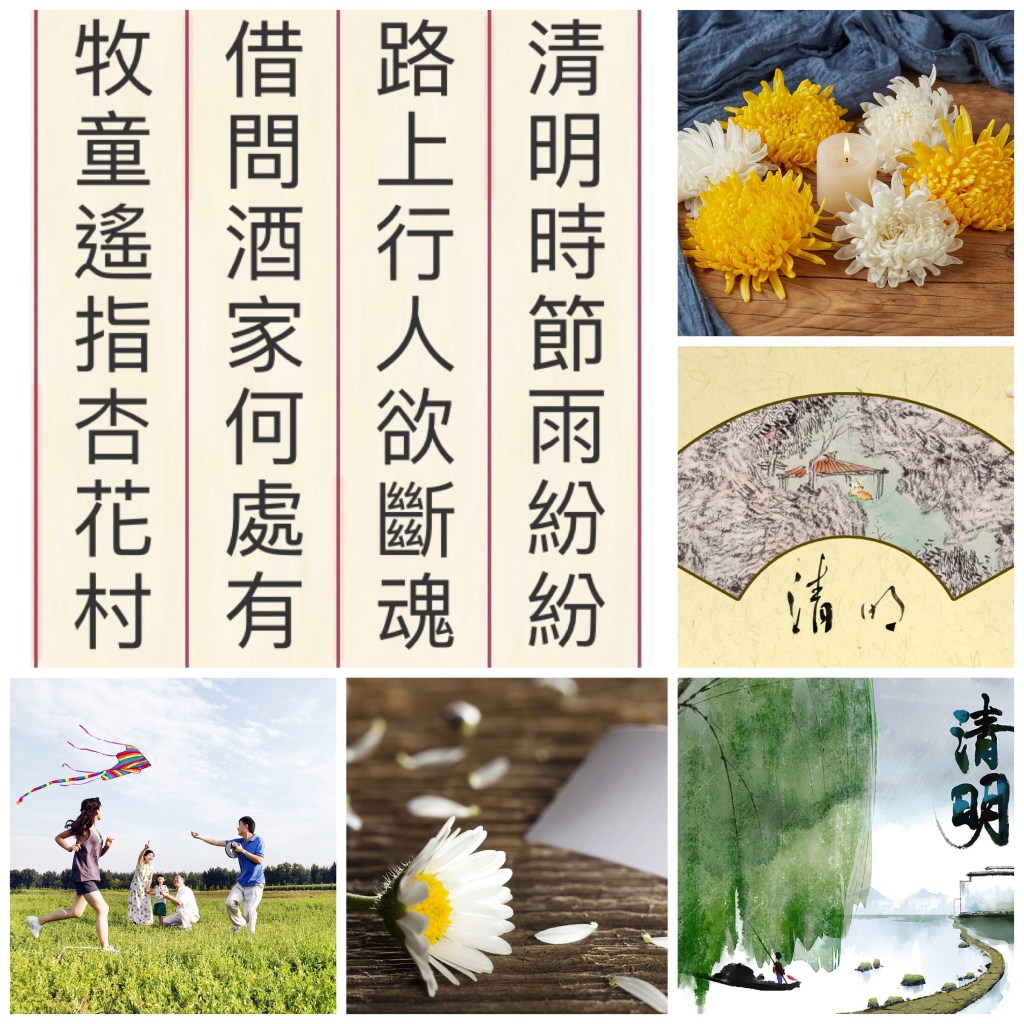
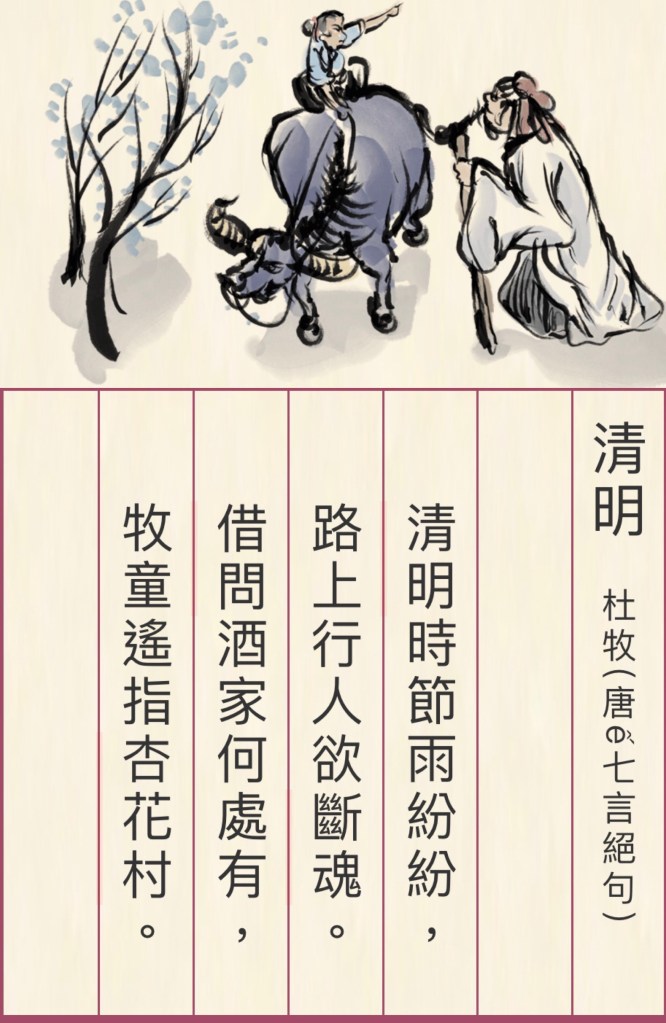
Ching Ming Festival April 5 2022 Chinese Traditional Annual Tomb Sweeping to pay respects to our Ancestors 今年四月五日是中國傳統年度掃墓祭祀祖先. 語譯: 清明時節一直下雨,過路行人因此心情壞透。碰上放牛的小牧童,問他哪裏有酒店,牧童指向遠處的杏花村
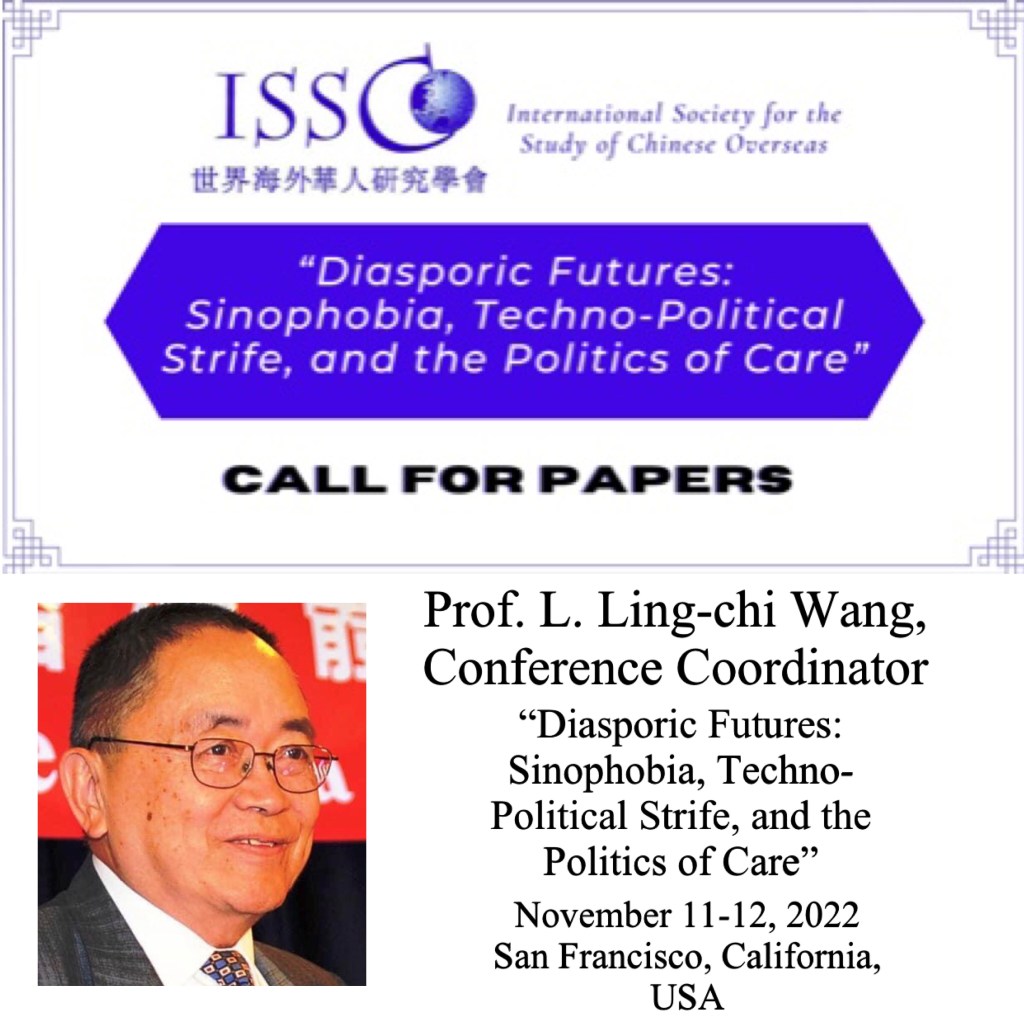
“Diasporic Futures: Sinophobia, Techno-Political Strife, and the Politics of Care” November 11-12, 2022 San Francisco, California, USA
The 30th Anniversary Conference of the International Society for the Study of Chinese Overseas (ISSCO) – Call for Papers
Asian American Research Center (AARC) Asian American and Asian Diaspora Studies (AAADS) University of California, Berkeley
Present
The 30th Anniversary Conference of the International Society for the Study of Chinese Overseas (ISSCO) 世界海外华人研究学会
Call for Papers
“Diasporic Futures:
Sinophobia, Techno-Political Strife, and the Politics of Care”
DATE: November 11-12, 2022 PLACE: San Francisco, California, USA
Official Languages of the Conference: English, Chinese, and Spanish
We emerge from the COVID-19 pandemic forever changed. The dramatic rise of anti-Chinese animus globally has shaken many diasporic communities to the core. The politicization of “the Chinese virus” has reignited Sinophobia and anti-Chinese racism, causing rampant and random cyber-bullying, verbal assault, and physical violence against Chinese and Chinese-looking people in the U.S. and in many countries throughout the world in magnitude and frequency not seen since the height of the Chinese exclusion period in the 19th century. This, in turn, has heightened social awareness among diasporic Chinese and revitalized political and cultural engagement on an unprecedented scale that crosses generations and national, linguistic, and class boundaries.
At the same time, the competition for economic and technological hegemony between a declining US and a rising China has reached new levels of intensity and, indeed, hostility that is forcing a planetary geopolitical realignment of nation-states that is reminiscent of the Cold War period, leading some political scientists to wonder if China and the U.S. have already reached the inevitable “Thucydides Trap.” This geopolitical. Struggle between the US and China has had dire consequences on ethnic Chinese in the U.S. and across the globe. In an era when China once again is perceived as more threat than opportunity, ethnic Chinese—especially scientists, researchers, and entrepreneurs—have come under sweeping government surveillance and overzealous prosecution, undermining global collaboration legitimate international academic exchange and collaboration, and faith in democracy, racial equality, and the very system of justice.
Indeed, since the founding ISSCO conference in November 1992, we have witnessed many sweeping changes that have transformed the conditions of Chinese living in diaspora, including China’s rapid and formidable entry into global economics, the shifting perception of China from being a potential market for the West to an enemy of the West, and the increased emigration from China to different regions of the world, especially Africa, Latin America, Europe, and Oceania. All of this have unfolded within an emergent digital-technological world order that has dramatically transformed our habits of sociality and knowledge production. Indeed, the explosion of globalized media and digital platforms has expanded the possibilities for global communication, transnational meaning-making, and the proliferation of publics. All provide ample encouragement for diasporic cultural creativity and translocal social-political engagement, even as it makes possible the danger of misinformation and ideological manipulation.
Under these circumstances how are diasporic Chinese experiencing and responding to the global pandemic and the international tensions? How are they imaging their possible futures under these changed conditions? What can we learn from previous moments of international engagement and Sinophobia in order to address the widespread uptick of anti-Chinese/anti-Asian hate and systemic racism, more broadly? What established forms and strategies of mutual aid can we modify, adapt, and forward in this current context? What kinds of trans-racial, trans-gender, trans-generational, and transnational collaborations, dialogues, and solidarities must we advance to create a future that is not just sustainable but full of possibilities? What kinds of histories, narratives, and imaginaries must we put forward to build our capacity for resilience, compassion, and care so that we can thrive collectively?
We invite proposals for panels and individual papers that address any of these themes, broadly construed above. Deadline for submitting paper proposals is set for April 24, 2022. The Program Committee of the conference will review the proposals and announce its decisions on May 21, 2022.
A website for the conference with all relevant information regarding the November 11-12, 2022 conference will be set up soon. The current plan is to hold an in-person conference in a hotel in San Francisco. However, if the current pandemic persists in November, we will modify the conference with the aid of technologies. Hopefully, we will have a clearer picture of what to expect during the summer.
In the mean time, please direct all communications to Prof. L. Ling-chi Wang, conference coordinator at lcwang@berkeley.edu.
Prof. Lok Siu, Chair, ISSCO 30th Anniversary Conference & Director of AARC
Prof. L. Ling-chi Wang, Conference Coordinator
Asian American Research Center (AARC), 2420 Bowditch Street #5670, University of California, Berkeley, CA 94720-5670.
Hi, Everyone:
Below is a “Call for Papers” and an invitation to take part in an international conference on the future of Chinese Diaspora in November here in San Francisco. The conference will have scholars on the Chinese diaspora and leaders from Chinese communities throughout the world. It will also be an opportunity to share, exchange, and even debate ideas about the status and future of Chinese in countries throughout the world, especially Chinese in the U.S. The total number of Chinese Overseas, by various estimates, is about 50-55 million, distributed among virtually all counties in the world..
The conference will also be the 30th anniversary conference of the International Society for the Study of Chinese Overseas (ISSCO), a scholarly organization devoted to the teaching and research on the Chinese diaspora. The 2022 conference is being sponsored by both Asian American Research Center (AARC) and Asian American and Asian Diaspora Studies (AAADS) at UC Berkeley, an institution to which I devoted more than 50 years of service. It will be held at Hotel Kabuki in Japantown, San Francisco, the same hotel, known as Miyako Hotel back November 1992. In fact, ISSCO emerged out of that conference, the first non-government-sponsored international conference after the Cold War and after the 1992 Cross-Strait Consensus (九二共识) between Mainland China and Taiwan. Prior to 1992, scholars of Chinese diaspora from countries on both sides of the Iron Curtain and both sides of the Taiwan Strait could not meet and exchange their shared interest in doing research on the Chinese diaspora because there was no opportunity nor forum through which they could legally and openly confer and exchange their research due to mutual hostility between the two sides and the prohibition of such activities by the governments on both sides. In other words, the 1992 conference was an ice-breaker and the dawn of a new era of research on the Chinese diaspora. Asian American Studies of UC Berkeley was the organizer and sponsor of the conference with the generous support of both the University and the Chinese American community in SF. The conference brought together over 200 scholars from all five continents and both sides of the Taiwan Strait.
Free and open scholarly exchange is what ISSCO stands for. Since then, ISSCO has been holding annual conferences with the support of universities and Chinese communities in different countries in the world and in Beijing and Taipei. It also publishes a scholarly journal, Journal of Chinese Overseas (JCO), contributing to a growing body of knowledge of Chinese Overseas throughout the world.
ISSCO conferences are always held under open and respectful atmosphere without political interference. However, as you all know, beginning in 2008, President Barack Obama abruptly changed the relatively balanced and stable policy of engagement and cooperation with China after President Nixon’s historic trip to Beijing in 1972, ushering in a new period of growing tension and belligerence between the two superpowers and causing some scholars and foreign policy experts to conclude that a new Cold War had emerged. President Obama called his new policy, “Pivot to Asia,” which turned out to be an euphemism for the containment of China by political, economic, and military means. His successor, President Donald Trump expanded the Obama policy and heightened the tension with his unilateral declaration of a trade war against China and initiated a series of aggressive internal security policies aimed at creating a domestic consensus around China threat to the U.S. and indiscriminately targeting Chinese businesses, scientists, and students, irrespective of their nationality and citizenship status in the U.S. As expected, China responded in kind with less fanfare. Taking cues from the administration and the U.S. Congress, anti-Chinese and anti-Asian violence quickly spread across the U.S. and in many countries.
This was followed by the sudden appearance of a previously unknown virus, Covid-19, which spread rapidly across China and in many countries across the world. In the U.S., the virus quickly spinned out of control in 2020 and 2021, made worse by Trump’s failure to acknowledge the serious nature of the pandemic and take timely and effective public health measures to control its spread. Not surprisingly the U.S. quickly became No. 1 in the number of people infected, hospitalized, and dead in the world to this date. By any measurement, it was an unprecedented global human tragedy accompanied by a devastating global recession. Worse, after the 2021 election, the country did not return to normalcy. The U.S. became even more polarized and divisive and anti-China and anti-Chinese sentiment even more intense as China became the No. 1 enemy of the U. S. And China and Chinese Americans became convienant scapegoats.
Against this background, the 2020 ISSCO Conference scheduled to take place in Bangkok,Thailand had to be canceled and the 2021 conference had to vastly scaled back and hold its conference online by Zoom. It is our hope that the 2022 conference will take place as planned in San Francisco and the conference will become a platform for exchange of ideas and development of solutions.
I have been asked by Berkeley to volunteer my service in organizing the ISSCO Conference in November as I did in 1992, even though I had retired in 2006. The theme of the conference, “Diasporic Futures: Sinophobia, Techno-Political Strife, and the Politics of Care,” is very timely and familiar to people in this forum. (See the “Call for Papers” below). I want to invite and encourage you to consider attending the conference and presenting your thoughts in papers with scholars and community leaders from throughout the world, and take part in all conference activities in November 10-11, 2022. The registration fee include meals, receptions, and coffee breaks, and conference materials.
I have cut off all my activities and involvements in order to concentrate on planning the conference with the help of my colleagues and volunteers. It will be an important conference. Hopefully, it will help shed light on and help chart the future of Chinese in the diaspora and help make a peaceful and better world.
NATO’s global history of reaction – NATO is the greatest purveyor of violence and we cannot be silent. By Sara Flounders posted on April 4, 2022
The U.S.-commanded military alliance called the North Atlantic Treaty Organization – NATO, was founded April 4, 1949. Its initials describe its early geographic reach but obscure NATO’s intent, and how NATO has acted, first from 1949 to 1991, and later from 1991 to the present.
From its founding moment, NATO was an aggressive military apparatus to coordinate the police and military and intelligence apparatus among the ten founding West European member countries(plus U.S. and Canada) under U.S. command. NATO’s past 30 years of steady expansion is tied to its original purpose as an imperialist weapon against the working class.
The 1991 broken promise by Secretary of State Baker, echoed by many other Western politicians, to Soviet Prime Minister Gorbachev that if the reunification of Germany went forward “NATO would expand not one inch to the East” is often quoted today in discussing the encirclement of Russia and the root of the war in Ukraine.
What needs to be understood is why did NATO expand? Why was NATO’s expansion inevitable?
NATO expanded because the capitalist markets expanded. The defeat of socialism in Eastern Europe and the dismemberment of the Soviet Union and the auctioning off of formerly nationalized public property and industries was only possible with an enforcement organization.
Just as the U.S., as the center of finance capital, is held together by the largest repressive state apparatus, the largest internal police force, and the largest prison system in the world.
NATO’s founding principle was to ensure a strong U.S. military, political and economic presence in Europe. There was no plan to end the U.S. military occupation of Europe. Its stated purpose from its inception was a military alliance against the Soviet Union.
NATO claimed to be a collective security arrangement against Soviet expansion, even though the Soviet Union was hardly expanding. It was devastated by World War II and had suffered the overwhelming majority of the losses in human life (27 million) and in industrial capacity. Over 700 cities and towns lay in total ruin. Refugee camps and rationing dominated daily life.
The border between two social systems
But the fact that the Soviet Union had survived was threatening to the capitalist class.
In all the countries liberated by the Red Army from Nazi Germany’s occupation in Eastern Europe workers organizations were attempting to reorganize society. Only by organizing on a non-capitalist basis could they defend their countries from absorption by Western imperialism.
Former British Prime Minister Winston Churchill had spoken in Missouri in 1946 denouncing this development and labeling it an Iron Curtain dividing Europe. His speech was a rallying cry to wall off all economic trade and technological assistance to the entire region the Red Army had liberated.
Socialism in Western Europe?
Capitalist domination of Western Europe was in question. What was labeled as Soviet expansion, imminent Soviet invasion, the Red Scare (with a media frenzy that matches today’s against Russia), was the growing influence of workers’ movements in Western Europe.
The organized power of the working class and of Communist parties was rapidly growing in national parliaments, city councils and powerful unions in war-torn Western Europe, especially in Italy and France. Communists had been the largest force in resistance to the Nazis during the years of German occupation.
In Greece the Communist Party, who had led the anti-fascist resistance, was openly contending for state power. From 1945 to 1949, U.S. and British active intervention in the Civil War in Greece, equipping and helping to coordinate the weak rightwing and monarchist forces, was crucial for defeating the Greek workers’ movement.
This Civil War helped convince the West European ruling class to follow the U.S. into a continent-wide military organization of the capitalist class.
A security umbrella for capitalism
NATO was understood as a security umbrella of Western European imperialist countries. It had, from its founding, a consolidated command structure, with the U.S. military on top.
U.S. General Dwight D. Eisenhower, the first Supreme Allied Commander Europe (SACEUR), was the commander of this new military alliance. U.S.-commanded NATO and the Marshall Plan of U.S. loans and investment funds together stabilized capitalism in Western Europe and assured U.S. corporate domination.
The pre-World War II industrial capacity of much of the world was in ruins. Military security was the essential glue in Western Europe, binding the economic and political dominance of capitalist rule.
For decades NATO and the CIA operated throughout Western Europe, in tandem with the U.S. State Department, disrupting communist-led unions, financing interventions in elections and even using terror attacks against communists and socialist organizations and against the masses.
Operation Gladio was the codename for this ruthless capitalist subversion in Italy, some of which was revealed by Christian Democrat Prime Minister Giulio Andreotti in October 1990.
Impact of nuclear stalemate
The second event in 1949 that consolidated the NATO military alliance was the Soviet Union’s detonation of an atomic bomb on Aug. 29, years ahead of what U.S. intelligence predicted. President Harry Truman immediately called for a re-evaluation of U.S. policies, as the U.S. could no longer simply threaten to wipe out Soviet cities without consequences.
NATO absorbed Greece and Turkey in 1952. Turkey’s membership in NATO meant that NATO had military control of the Bosporus Straits – the essential navigational waterway from the Mediterranean Sea into the Black Sea – a choke point for the Soviet ports of Odessa and Sevastopol.
It was only after West Germany’s acceptance into NATO that the Soviet Union and the Eastern European countries formed the Warsaw Pact in 1955 in self-defense. The Soviet leaders saw West Germany’s military and industrial leaders as a continuation of the ruling class that backed the Nazis.
World’s largest military
Although the mass U.S. military during World War II had demobilized by 1949, with NATO U.S. troop presence in Europe tripled by 1950 and reached over 450,000 in 1957. In 1987 U.S. troops surged again to 340,000. (Stars and Stripes, March 15)
Today there are 100,000 U.S. troops in Europe. They are 1/35 of the 3.5 million NATO military force, among its 30 members, with another 2 million reservists and paramilitary forces. But U.S. officers still command this alliance – the largest military force in the world under a single command.
NATO has a permanent, integrated military command structure, composed of both military and civilian personnel from all member states. These forces are trained to follow a strict command structure, use the same equipment and deploy to whatever battlefront the U.S. commanders order them to, including Iraq, and Afghanistan. Each country is forced to pay for the maintenance of their own forces. (shape.nato.int)
Cold War leads to bankruptcy
The Cold War was a relentless war of military expenditures calculated to bankrupt the Soviet Union, which had less wealth and which did not exploit subject nations in the Global South.
According to a NATO report, “The Soviet Union was spending three times as much as the United States on defense with an economy that was one-third the size.” (nato.int) This policy of expanding military costs was enormously profitable to U.S. military industries.
The Soviet Union had to match each U.S./NATO escalation. The 1980 U.S. strategy to deploy nuclear-capable Pershing II and ground-launched cruise missiles in Western Europe aimed at bankrupting the Soviets.
Reagan’s 1983 Strategic Defense Initiative known as “Star Wars,” called for enormous new military expansion. The Soviet Union, starting in the mid-1980s, devoted 15-17% of its gross national product to military spending.
Concessions, enacted with great U.S. and Western applause by Mikhail Gorbachev, who became the Soviet leader in 1985, led to the complete unraveling and dismemberment of the Soviet Union by 1991.
U.S. victory opens endless war
Instead of the Cold War’s end ushering in the promised era of peace and stability, U.S. imperialism, now dominant, opened a new era of endless war and colonial reconquest. The targets were in Eastern Europe and a collapsed Russia, and in the energy-rich southwestern Asia and North Africa.
The Federal Republic of Germany annexed the German Democratic Republic in 1990 and both populations were absorbed into the NATO Alliance. A new era of open capitalist markets meant that major western corporations seized control of socially owned industries and resources in Eastern Europe and Russia.
Any country resisting complete takeover was targeted. Iraq in 1991 and then Yugoslavia in 1995 and 1999 were early victims of colonial style reconquest.
The corporate media bragged about the level of destruction of these modern, developed countries that had high levels of education, health care and infrastructure. But since they were countries that had no weapons capable of matching U.S. bombers they were destroyed with impunity. They were to serve as an example to others.
Pentagon document for world domination
What was in store for the world was discussed at the highest levels of the U.S. establishment.
In a 1992 article in Workers World newspaper, then WWP chairperson Sam Marcy wrote: “On March 8,1992, the New York Times published excerpts from a 46-page secret Pentagon draft document, (written by Paul D. Wolfowitz), that it said was leaked by Pentagon officials. This document is truly extraordinary.
“It asserts complete U.S. world domination in both political and military terms, and threatens any other countries that even ‘aspire’ to a greater role. In other words, the U.S. is to be the sole and exclusive superpower on the face of the planet. It is to exercise its power not only in Europe, Asia, the Middle East and Latin America, but also on the territory of the former Soviet Union….
“‘Our first objective,’ it states, ‘is to prevent the re-emergence of a new rival, either on the territory of the former Soviet Union or elsewhere, that poses a threat on the order of that posed formerly by the Soviet Union. It is of fundamental importance to preserve NATO as the primary instrument of Western defense and security, as well as the channel for U.S. influence and participation in European security affairs.’
“But then it adds: ‘While the United States supports the goal of European integration, we must seek to prevent the emergence of European-only security arrangements which would undermine NATO, particularly the alliance’s integrated command structure.’ The latter, of course, is led by the U.S.” https://www.workers.org/marcy/cd/sam92/1992html/s920319.htm
April 4 is a day to remember not only the founding of NATO but the famous condemnation of the Vietnam War made by Dr. Martin Luther King Jr. on April 4, 1967: “The greatest purveyor of violence in the world is my own government. I cannot be silent.”
NATO is the greatest purveyor of violence and we cannot be silent.
Ching Ming Festival April 5 2022 Chinese Traditional Ancestors Annual Tomb Sweeping to pay respects 語譯: 清明時節一直下雨,過路行人因此心情壞透。碰上放牛的小牧童,問他哪裏有酒店,牧童指向遠處的杏花村 。
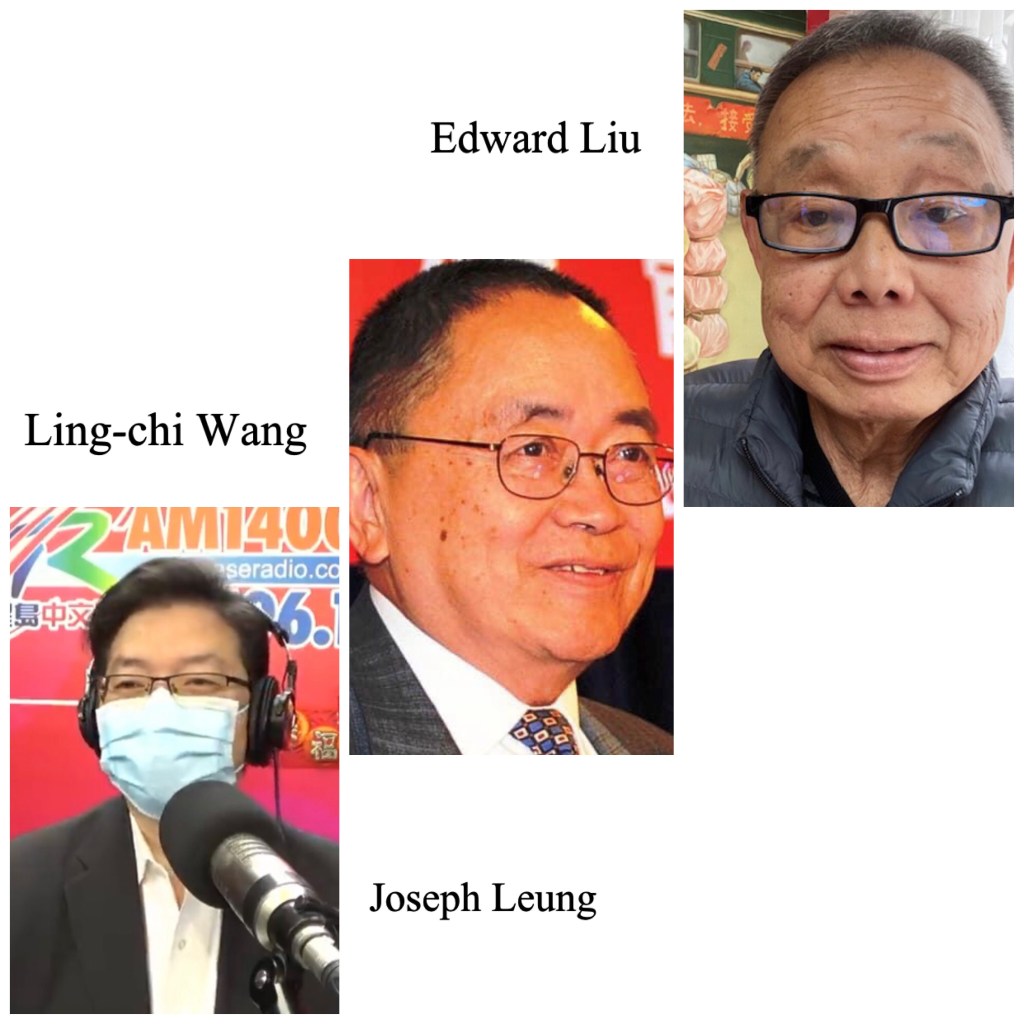
Live-cast Apr 5 2022 Singtao San Francisco 9:00am Chinese Americans Identity Issues 直播 – 早上九點 美國加州舊金山星島日報時事觀察集結號 :華人身份認同問題 主持 :梁建鋒 Joseph Leung 主講 :王靈智教授 Professor Ling-chi Wang of UC Berkeley 主講 :劉文貽律師 Edward Liu, Attorney at Law https://youtu.be/ZXXMZCxGzJg
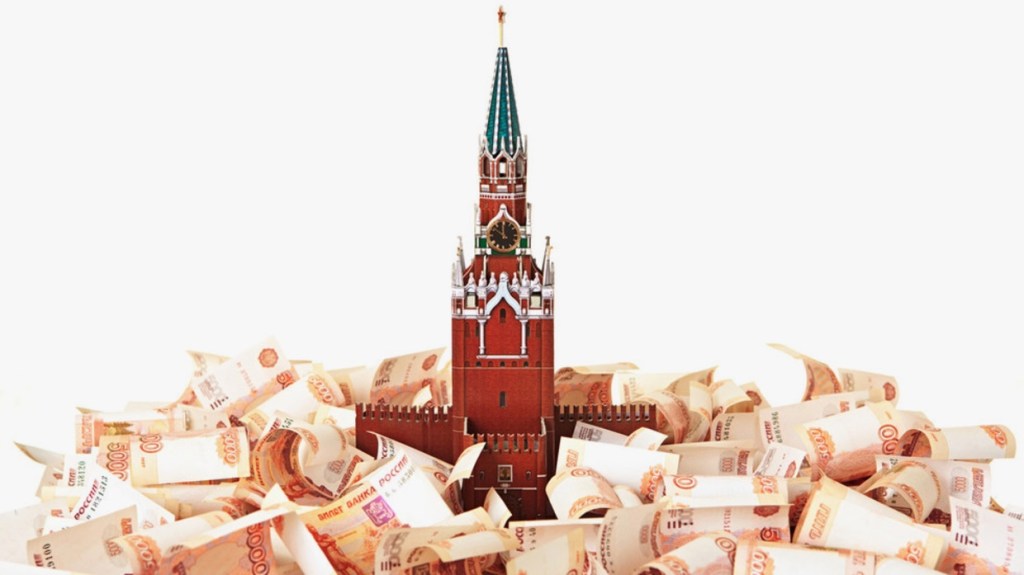
Can’t do it without help from US! Russia’s balance of payments surplus could hit a historic high this year, amounting to $200-$300 billion, business news outlet RBC reported on Monday. Economists polled by RBC have predicted record capital inflows into the country.
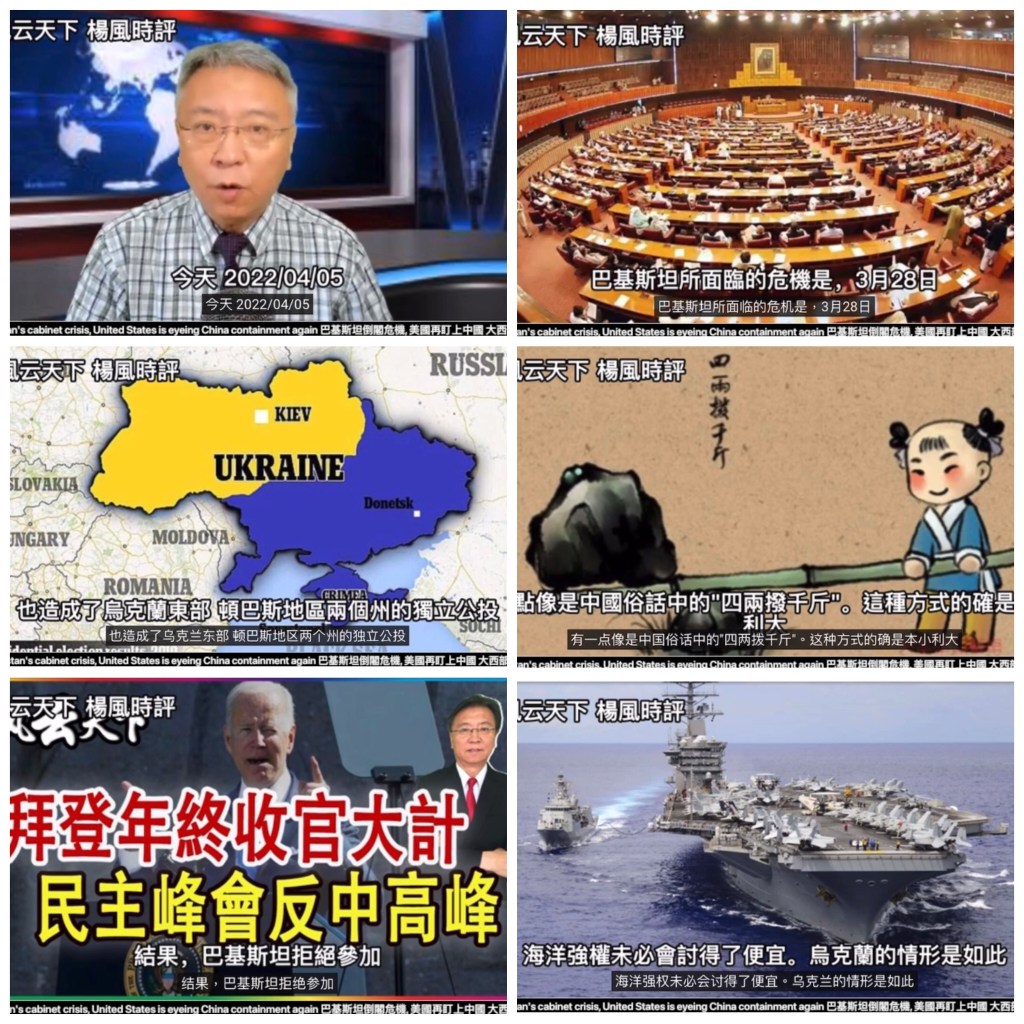
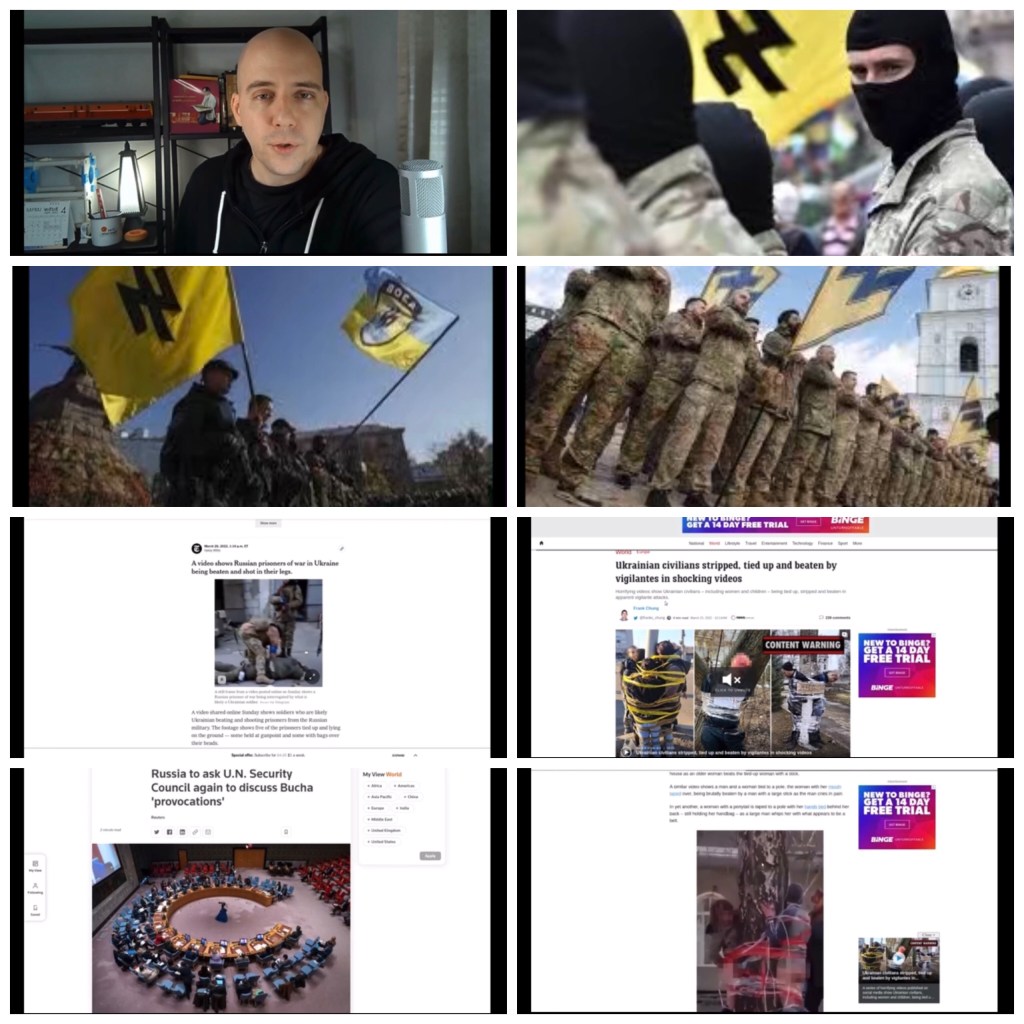
Video: The fake Xinjiang propaganda used by US to demonize China now being recycled in Ukraine. Why Ukraine’s “Bucha Massacre” Story Isn’t Adding Up, even western medias like Washington Post, Reuters & Guardian disputing it 美國重斯故技使用假新疆宣傳妖魔化中國現在正在烏克蘭片地開花. 為什麼烏克蘭的“布查大屠殺”故事缺乏可信性, 甚至華盛頓郵報、路透社和衛報等西方媒體也對此表示質疑
The “Bucha Massacre” is being squarely blamed on Russia before any investigation can take place.
Despite no likelihood of a real investigation taking place, there remains the question of why Russia would occupy and live side-by-side Ukrainians in Bucha but kill them during their otherwise orderly withdrawal?
Or why Ukrainian forces who have tortured and killed prisoners of war, deliberatley used the civilian population as shields during combat, and have nationwide tortured and taped its own civilian population to posts for infractions during the war would not immediately see the population of Bucha as “collaborators” and punish them accordingly.

 Johnson Choi Biz