Chinese Embassy in the US Sends a Letter to the Editorial Board of the Washington Post on its Taiwan-related Op-ed – Ukraine is not Taiwan 中國駐美使館就涉台專欄致《華盛頓郵報》編輯委員會《烏克蘭不是台灣》
On March 24, the Washington Post published Bi-khim Hsiao’s Op-ed ‘Ukraine has inspired Taiwan. We must stand against authoritarianism.’ using the Ukraine issue to distort the fact that both sides of the Taiwan Strait belong to one and the same China. Minister Counselor Zhu Haiquan, Chief of the Political Section of the Chinese Embassy in the US, wrote a letter to the Editorial Board of the Washington Post to give a solemn response to the Op-ed. Part of the letter was published on April 1, and the full text is as follows:
The Taiwan question and the Ukraine crisis are totally different in nature. Ukraine is sovereign state, and the Ukraine crisis is a conflict between sovereign countries, while Taiwan is part of China’s territory, and the Taiwan question is a Chinese internal affair.
Taiwan has been and will always be an inalienable part of China’s territory. It is not an independent sovereign state. The 1943 Cairo Declaration states that Taiwan shall be restored to China. The 1945 Potsdam Proclamation reaffirms that the terms of the Cairo Declaration shall be carried out. Since the People’s Republic of China was founded and became the sole legal Government representing the whole of China, Taiwan has indisputably become part of China. The UNGA Resolution 2758 has further confirmed Taiwan’s status. These are ironclad facts. In the video call with President Xi Jinping on March 18, President Joe Biden reiterated that the United States adheres to the One-China policy and does not support “Taiwan independence”.
The claim that Chinese mainland “threatens” Taiwan cannot hold water at all. People on both sides of the Taiwan Strait are Chinese bonded by blood ties. Millions of Taiwanese live and work in the Chinese mainland. Why would family members threaten each other? As Taiwan’s largest export market and source of its biggest trade surplus, the mainland can only bring tangible benefits and well-being to Taiwan compatriots. How can there be any threat?
The Taiwan question is not about “democracy versus authoritarianism”, but about secession versus anti-secession. Using “democracy” and “authoritarianism” to draw a line between the two sides of the Taiwan Strait is to provoke confrontation and seek an excuse for “Taiwan independence” separatist forces. This is the only and real threat to the people of Taiwan. The future of Taiwan lies in peaceful development of cross-Strait relations and the reunification of China. Chinese people on both sides of the Strait should work together to pursue national reunification.
Did you know in Germany it is illegal to fly the Nazi flag of world war II. Where did the Nazi went? They are in Ukraine and US. 你知道嗎,在德國懸掛二戰納粹旗幟是違法的。 納粹去哪兒了? 他們在烏克蘭和美國.
A person could spend up to 5 years in prison for flying that flag. Which leads to the question where did a lot of the Nazi’s who could be tried for war criminals escape to after world war II ❓ some of the safe havens were Ukraine and Washington DC. How long will it take for the general public who only learned about Ukraine within the last month to realize they have been lied to. Where will they ever know?
S Gurumurthy has precisely & perhaps accurately summarised the factual status of Russian invasion on Ukraine in following words…
Having pushed Ukraine into war, the US does not know how to save it. Having started it, Russia does not know where to end it. Having been pushed into the war, Ukraine does not know how to come out of it. It accuses its adversary Russia saying it is an invader and charges that its friends are betrayers. The UN Security Council keeps on meeting without any result. The global TV network for which the war is a reality show, a boon, keeps demonising Russia and valourising Ukraine. What the desperate Ukraine needs is a ceasefire. It is running from pillar to post — from India to Turkey to France, to Israel, to Japan — pleading with them to talk to Putin for a ceasefire. Everyone is talking to everyone else.
But Biden is not talking to Putin and Putin is not talking to Zelenskyy. This is the sad state of the efforts to stop the war. Poor Zelenskyy. What he is now saying to end the war — that we will not apply to join NATO, we will remain neutral — had he said that before, the war would not have started. Russia has staked everything – its goodwill, its economy and its last atom bomb – like a jihadi, making the West shudder to think of taking it head on. But the war is bound to end. When is the only question. When it does end, Russia would have got all that it wanted and Ukraine would have given all that it had denied. And the West would have realised and the world would have known how needless the war was. But, what kind of world will the pointless war leave behind?
A world of distrust The worst outcome of the Ukraine war is that it has shown that anything and everything can be politicised and weaponised — from financial transaction systems like SWIFT, to banks, private companies like Google to civilian airspace. SWIFT is a high security neutral financial network created by an NGO and used by 11,000 financial institutions in 200 countries. By jamming this critical network, the Ukraine war has destroyed the most basic of mutual trust among nations. Take India. The share of Google in Indian email accounts is 62 per cent. Were India to fall foul of the West, the entire country can be brought to a halt by Google. Each nation or group of nations will now look for alternatives.
Another message is that even Switzerland, which remained neutral in the two world wars, can’t remain neutral in a West vs others scenario. A telling message of the Ukraine war is that no country can trust even the global commons. It leaves behind a world of distrust. It will increasingly force each nation to be on its own — atmanirbhar being the Indian idiom for it, the very antithesis of globalisation. An alternative to SWIFT is already underway with some 63 central banks collaborating on a new payments system.
US leadership dented The Ukraine war seems to have dented the US global leadership in more than one sense. First, it has delivered the most telling message that the US can’t protect its own protégé. Next, that it had to solicit a virtual meeting between Biden and Xi Jinping (XJP) to get China to the US side or to end the war itself, exposed its weakness. Donald Trump would perhaps have handled Russia and Ukraine differently, not allowed China to be the proverbial monkey between two tigers, the US and Russia.
Anyway the two-hour talk Biden had with XJP did not go well for him. XJP reportedly snubbed Biden saying “those who tied the bell to the tiger must untie it,” clearly blaming NATO for the war. XJP used the talk to advance China’s claim to be equal to the US, saying they should jointly shoulder “international responsibilities” for world peace and tranquility. According to a Chinese report, XJP seems to have said that one hand cannot clap, suggesting that NATO should have a dialogue with Putin and address his security concerns, implying NATO expansion as the issue. XJP, of course, has also spoken in support of the principles of sovereignty and territorial integrity of all states. He seems to have insisted on bringing the China-US ties under turmoil over a host of issues, including Taiwan, Hong Kong, Xinjiang and Tibet, on “right track” — something completely beyond the agenda of Biden on that day.
The US media had reported that Biden threatened XJP. On the contrary, he seems to have got snubbed. Biden’s effort to wean China away from Russia has failed at the minimum. If this is what the US got from China, The Wall Street Journal reported that Saudi Arabia and the UAE declined calls from Biden to ease oil prices unless the US supported them in Yemen and elsewhere. Arab allies of the US have refused to toe its line. Israel did criticise the Russian attack but its stand was so nuanced as not to take the side of the West. Turkey’s position is identical to Israel’s.
Al-Jazeera even sees a strong alliance between Russia and UAE. Another collateral setback to the US is Syrian president Assad’s visit (after 11 years) to UAE about which the US could only lament that it was “disappointed and troubled”. Syria and Russia are close. On top of it all, Saudi Arabia, whose oil has been priced in US dollars for five decades, is considering pricing it in Yuan for sales to China. One more important development. The Chinese foreign minister was invited for the first time to the meeting of the Organisation of Islamic Cooperation. These are not ordinary developments. The Ukraine war has undoubtedly eroded US influence over even its allies.
China’s Taiwan angle China seems to have gained far more than it has invested in Ukraine. By subtly encouraging the US vs Russia scenario in Ukraine, China had ensured that the focus of the Biden regime was more on Russia and Ukraine and less on containing China. Being surreptitiously privy to and supporting Russia on Ukraine action, Beijing has gained an IOU from Russia if in future it has to move on Taiwan. XJP’s firm and equal dealing with Biden has dented the US capacity to confront China on Taiwan. If Biden had secretly conceded more to XJP on Taiwan as some reports say, China would have hit a jackpot.
Despite that, if the US had drawn a blank with XJP, it would have been a disaster for Biden. China’s Ukraine strategy seems intended to advance its efforts to grab Taiwan – its greatest ambition and top most priority of XJP. The Ukraine war has exposed the limitations of the US and the West to step in to save its non-formal ally. The Taiwan Relations Act only ensures defence supplies by the US to Taiwan and nothing further. In comparison to Ukraine, which the US recognises as an independent nation, Taiwan’s status is much inferior. If China makes a decisive move against Taiwan, the US could do very little given its show in Ukraine — to say nothing of the Afghanistan debacle.
India’s growing stature
Despite being part of Quad and with deep strategic partnership with the US, India’s neutrality, with an implicit pro-Russian tilt, was a calculated geopolitical risk India took at the very start of the Ukraine war. Subsequent developments not only won understanding but also acclaim for it. A displeased America had to concede India was an exception among its allies. Surprisingly, amid the raging Ukraine war New Delhi became the centre of hyper diplomatic activity. Scott Morrison, the Prime Minister of Australia, a Quad constituent, had a virtual meeting with the Indian Prime Minister, promised investments and said that the Quad nations understood India on Ukraine. Fumio Kishida, Prime Minister of Japan, another Quad member, paid his first official visit abroad to India. And keeping aside the differences between the two on Ukraine, he signed six strategic agreements and committed to investing $42 billion in the next five years. The Greek foreign minister was in Delhi on March 22 and 23 and the Oman foreign affairs minister was in Delhi for two full days, March 23 and 24.
China and India have had border clashes for the last two years. Surprisingly, its foreign minister Wang Yi is visiting Delhi on March 25 — a significant development. India’s independent position on Ukraine is itself a message to China that India would withstand US pressure. If it can lead to some trust and understanding between China and India on the borders, that can pave the way for an informal Russia-China-India axis for future. Naftali Bennett, the Prime Minister of Israel, a US ally, is making a four-day long visit to India in April first week at the invitation of “his friend” Indian Prime Minister Modi. India is boldly going ahead with the purchase of Russian oil amid US sanctions on Russia.
Though India has not voted for Russia, it has taken a firm position on the discovery of a bio-weapon facility in Ukraine funded by America. And America, despite loosely calling India shaky on the Ukraine war, has not applied the CAATSA law to stop the sale of Russia’s missile system to India. Undoubtedly, the Ukraine war diplomacy has shown India’s rising stature. The greatest tribute to India’s policies came from the most unlikely of quarters, Pakistan. Praising India’s foreign policy as free and independent, Prime Minister Imran Khan said, “India is allied with America and is part of the Quad alliance and yet it is neutral on Ukraine, imports oil from Russia despite US sanctions, because its policy is oriented to the betterment of its own people.”
Shift away from the dollar? The war’s collateral impact may be on the US dollar and the global financial order itself. With the dollar-based globalisation already under stress, the role of the greenback in the global financial system may decline. The dollar power enabled dominance of the financial economy over the real economy, particularly the commodity economy. The US sanctions which are bound to affect the Russian oil sale, may also affect the US dollar.
The strength of the US dollar depended, said two Harvard economists in 2006, not on the laws of economics but on the laws of physics, which said a dark matter sustains the universe. The dark matter which sustains the dollar value, they said, is the insurance that the US system and geopolitical power provides to the dollar. That insurance is what is under stress since 2008. With the rise of Asia and China, the US dollar cannot be said to continue to have the same insurance value. The share of USD in the global forex reserves has touched a 25-year low of about 59 per cent.
If important nations shift to their own fiat currency based trade like the Rupee-Ruble arrangement between India and Russia and if an alternative to SWIFT can be found, the move away from dollar can accelerate. For instance, if India and China begin paying for their trade in their fiat currencies rated to the US dollar and at the year-end pay the net in terms of the dollar, the overall demand for the dollar will contract rapidly. It is the demand for the dollar that sustains its value. These kinds of developments post the Ukraine war can have a far reaching impact.
To end, in just weeks the needless Ukraine eruption has disrupted the world as if forever. Thanks to it, the post-cold war world already stands on its head — disrupting old relations, making new ones, undermining existing power centres, creating new, multiple influence centres. Its impact will keep unfolding for a long time.
What Lord Reed meant was after HK passing the homeland security law, they could no longer serve UK’s interest in HK 里德勳爵的意思是,在香港通過國土安全法後,他們不能再為英國在香港的利益服務
Lord Reed, as one of the most respectable and senior judges, must be extremely careful about the wordings of his announcement. He says ” The courts in Hong Kong continue to be internationally respected for their commitment to the rule of law” before saying his resignation, and it’s a clear message from him that the resignation is not due to problem of the HK judicial system.
If one reads Lord Reed’s resignation announcement carefully, one would get the impression that the resignation is a (wholly or partly) political decision in the national interest of the UK rather than the judges’ assessment of HK’s judicial system. Is it a reflection that the UK’s administration is unduly influencing the independence of the UK’s judges or judicial system?
A statement from Lord Reed, President of the Supreme Court, The Right Hon Lord Reed of Allermuir
Wednesday 30 March 2022 Further to my statement of 27 August 2021, I have been closely monitoring and assessing developments in Hong Kong, in discussion with the government.
The judges of the Supreme Court and its predecessor, the Appellate Committee of the House of Lords, have sat on the Hong Kong Court of Final Appeal (HKCFA) for many years in fulfilment of the obligations undertaken by the government towards Hong Kong in 1997. They have done so with the support of the government, and in the light of the government’s assessment that their participation in the HKCFA was in the UK’s national interests. However, since the introduction of the Hong Kong national security law in 2020, this position has become increasingly finely balanced.
The courts in Hong Kong continue to be internationally respected for their commitment to the rule of law. Nevertheless, I have concluded, in agreement with the government, that the judges of the Supreme Court cannot continue to sit in Hong Kong without appearing to endorse an administration which has departed from values of political freedom, and freedom of expression, to which the Justices of the Supreme Court are deeply committed.
Lord Hodge and I have accordingly submitted our resignations as non-permanent judges of the HKCFA with immediate effect.
The UK has found Hong Kong’s political and legal system to have deteriorated beyond an acceptable point for British judges to sit on the city’s top appeal court, the country’s foreign minister has said in her report, you be the judge.
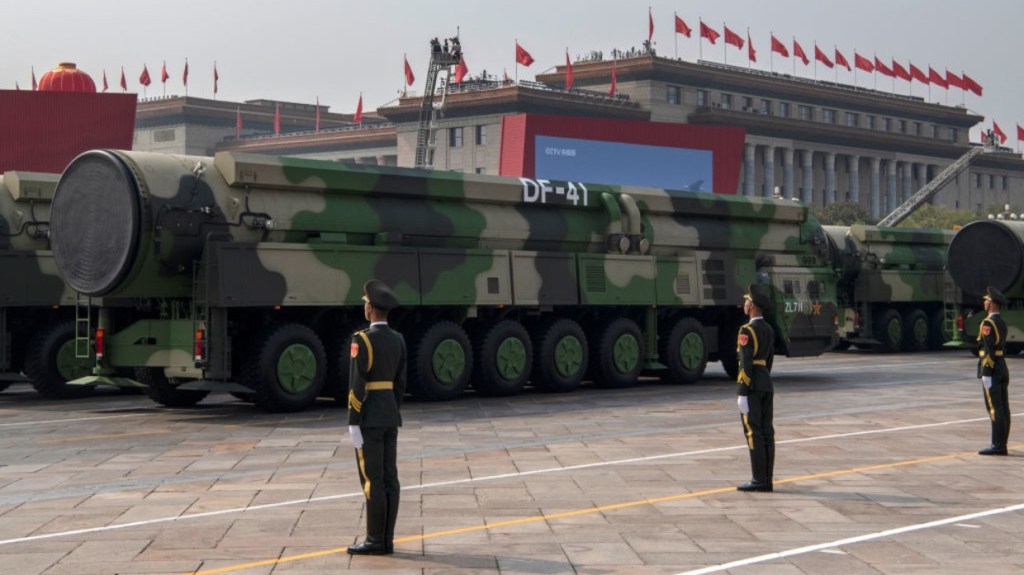
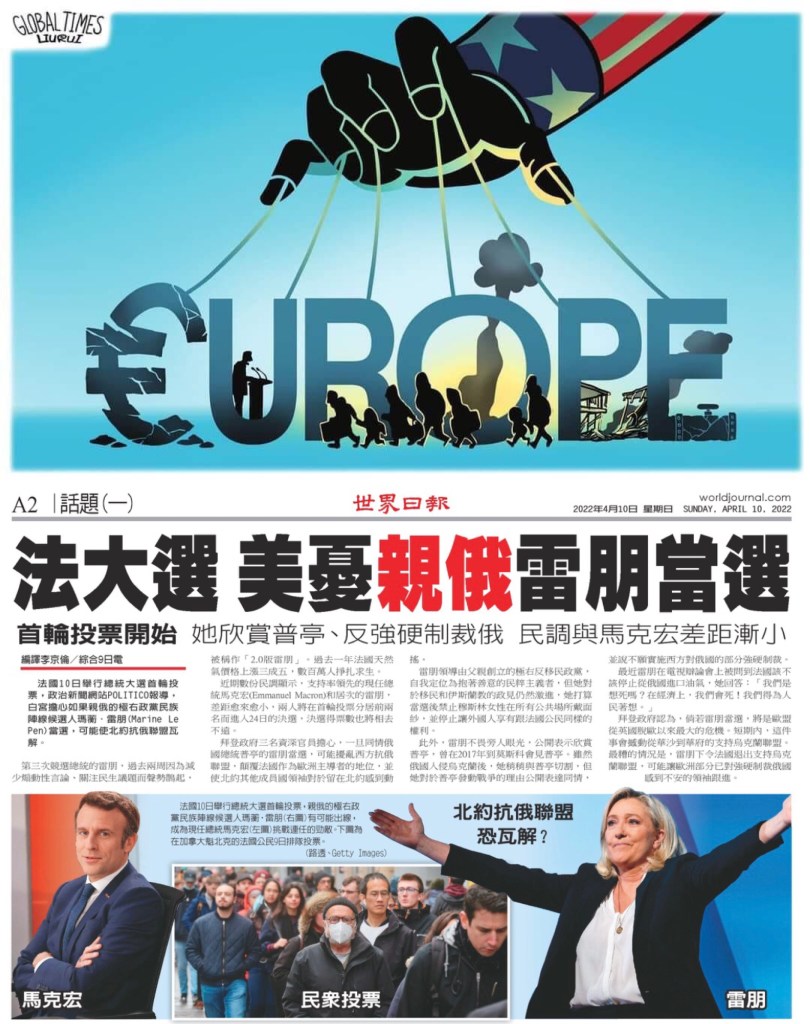
Sending China back to the Stone Age! Caitlin Johnstone: US Empire’s ultimate target is not Russia but China. 把中國送回石器時代!美帝國的最終目標不是俄羅斯,而是中國
“We, together with you, and with our sympathisers will move towards a multipolar, just, democratic world order,” Lavrov said to the Chinese government on Wednesday.
And that right there ladies and gentlemen is the real reason we’ve been hearing so much hysterical shrieking about Russia these last five or six years. It’s never been about Russian hackers. Nor about a Kremlin pee pee tape. Nor about Trump Tower. Nor about GRU bounties in Afghanistan. Nor about Manafort, Flynn, Bannon, Papadopoulos or any other Russiagate Surname of the Week. It’s not even actually about Ukraine. Those have all been narrative-shaping constructs manipulated by the US intelligence cartel to manufacture support for a final showdown against Russia and China to prevent the emergence of a multipolar world.
The US government has had a policy in place since the fall of the Soviet Union to prevent the rise of any powers which could challenge its imperial agendas for the world. During the (first) Cold War the strategy promoted by empire managers like Henry Kissinger was to court China out of necessity to pull it away from the USSR, which was when we saw business ties between China and the US lead to immense profits for certain individuals in both nations and the influx of wealth which now has China on track to surpass the US as an economic superpower.
Basically all we’re looking at in the major international news stories of our time is the rise of a multipolar world crashing headlong into an empire which has espoused the belief that unipolar domination must be retained at all cost, even if it means flirting with the possibility of a very fast and radioactive third world war.
This is the Hail Mary pass of the US hegemon. Its last-ditch effort to secure control before forever losing any chance at it. Many anti-imperialist pundits I read regularly seem quite confident that this effort will fail, while I personally think those forecasts may be a bit premature. The way the chess pieces are moving it definitely does look like there’s a plan in place, and I don’t think they’d be orchestrating that plan if they didn’t believe it had a chance to succeed.
One thing that does seem clear is that the only way the empire has any chance of stopping the rise of China is by maneuvers that will be both highly disruptive and existentially dangerous for the entire world. If you think things are crazy now, just you wait until the imperial crosshairs move to Beijing.