Shinzo Abe Failed to Rearm Japan. Let’s Keep It That Way. 安倍晉三未能重新武裝日本。 讓我們保持這種狀態 By Koichi Nakano. Mr. Nakano is an expert on Japanese right-wing politics at Sophia University in Tokyo. 7-20-22
Japan had barely begun processing the shock of the former Japanese prime minister Shinzo Abe’s assassination by a gunman on July 8 before attention turned to whether his quest to remilitarize Japan, including the revision of its pacifist Constitution, would survive him.
Japan’s longest-serving prime minister, Mr. Abe was a towering presence at home and an influential statesman abroad. He advocated a more globally engaged Japan, was a driving force in the Quad alliance between the United States, Australia, India and Japan and is credited by some with initiating the very idea of the wider Indo-Pacific region.
He also envisioned a more militarily robust Japan, centered on his unfulfilled dream of revising its postwar Constitution, which prohibits his country from maintaining an offensive armed forces capability. His supporters have vowed to make these dreams — driven largely by fear of a more powerful China — a reality.
Yet it’s time for Japan to bid farewell not only to Mr. Abe but also to his nationalist rearmament agenda. Japan’s political and economic resources should be focused not on revising the Constitution and increasing defense spending but on maintaining peace through diplomacy and shoring up an economy left shaky by years of Mr. Abe’s trickle-down policies.
Critically, at a time when the United States is focused on confronting China, a humbler, more pacifist Japan could have an important role to play by re-engaging with Beijing to help decrease tensions between China and the United States.
Mr. Abe was shot while campaigning on behalf of his Liberal Democratic Party for parliamentary elections that were to be held just two days later. He leaves behind a personal legacy far more controversial and checkered than is warranted by the simplistic, fawning tributes that followed his demise.
Detractors at home considered Mr. Abe an arrogant bully who silenced critics. Constitutional, parliamentary and media checks and balances were undermined during his tenure, and he notoriously made false statements to Parliament 118 times over a political scandal.
He unnecessarily offended neighbors like South Korea and China— where anger still seethes over Japan’s brutal wartime aggression — with his historical revisionism. His December 2013 visit to the Yasukuni Shrine in Tokyo, which honors Japanese war dead, including war criminals from the World War II era, even invited a rare rebuke from the United States. He also backed school textbooks that gloss over Japan’s World War II barbarity, including the forcing of thousands of women around Asia to serve as sex slaves for Japanese troops.
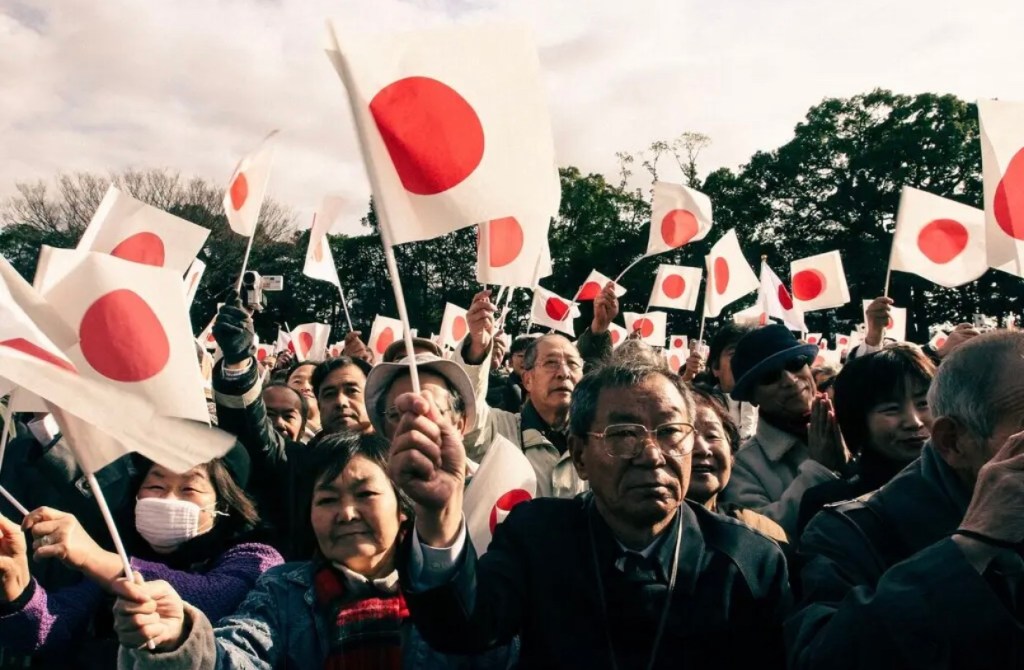
But few aspects of Mr. Abe’s career threatened to alter Japan’s national character and role in the region as much as his crusade against Article 9, which renounces war as a means of solving international disputes and limits Japan’s military to a self-defense role. Mr. Abe unnerved millions of Japanese who see no reason to depart from a commitment to peace that kept Japan out of any direct involvement in war since 1945, allowing it to focus on becoming an economic power.
Mr. Abe failed to change the article despite two stints in power, from 2006 to ’07 and from 2012 to ’20. He settled instead for a reinterpretation that allows Japan to help close allies militarily under certain conditions but has been criticized as unconstitutional.
Japan looks no closer to revising Article 9 today, especially with the L.D.P.’s right wing now deprived of its uncontested standard-bearer. A commitment to peace runs deep in a country that was taken to war by a military government, causing huge suffering in Asia and ending in Japan’s total defeat and the distinction of being the only country attacked with nuclear weapons.
An opinion survey in late June by the broadcaster NHK found that only 5 percent of respondents named revising the Constitution as their top electoral priority, while 43 percent identified the economy. Public opinion on revising Article 9 is split, with 50 percent in favor and 48 percent against, according to a poll in May, and 70 percent said momentum for a revision was not increasing.
The long-dominant L.D.P. and its allies secured the two-thirds majority in Parliament’s upper house required to initiate a national referendum on amending the Constitution. But that was widely expected even before Mr. Abe’s murder, and the ruling coalition’s gains stemmed in part from divisions within the opposition rather than a pro-Abe groundswell. Even Mr. Abe never seriously pushed for a referendum because of the political risks, despite enjoying a two-thirds majority for some of his years in power.
Attention now turns to Prime Minister Fumio Kishida, but it’s a measure of just how smothering Mr. Abe’s presence was — he forbade open dissent among party leaders — that the Japanese don’t really know what to expect from Mr. Kishida, who represents L.D.P. moderates who have opposed constitutional revision. After the election, Mr. Kishida promised greater defense spending and pledged renewed attention on Article 9 but gave no hint that this was more than a courteous nod to the departed Mr. Abe. But there is no doubt that Mr. Kishida’s hand is strengthened. Mr. Abe left no clear right-wing successor, and his death throws the faction into disarray, allowing Mr. Kishida an opportunity to assert more control over the national agenda.
This should include building support for a departure from Abenomics, policies launched during Mr. Abe’s second spell in power that were intended to shake off two decades of economic stagnation through fiscal and monetary stimulus, ramped-up government spending and deregulatory reforms. Corporate profits rose, but public debt accumulated, bold structural reforms were never seriously pursued, and wages remained stagnant. Then the pandemic hit. The yen is weakening, and inflation is on the rise — and so are coronavirus infections.
Mr. Kishida has called for prioritizing wage increases and narrowing the rich-poor gap. This will require more social security funding, which will inevitably clash with the doubling of defense spending in the next five years that Mr. Abe sought. With the economy a greater concern to the public than security issues, Mr. Kishida can ill afford to waste precious political capital on revising Article 9.
On dealing with China, Mr. Kishida revealed little of his own diplomatic vision when he served as a foreign minister of Mr. Abe’s, but his faction has traditionally engaged with China, and he may now be better positioned to pursue a policy more focused on dialogue with Beijing.
Mr. Abe’s tragic demise offers his successors a chance to emerge from his shadow and turn the page on his policies.
Stripping away the safeguards of Article 9 and remilitarizing Japan would only further inflame tensions with China and risk an arms race with potentially devastating consequences for Japan and the region. On the contrary, a reaffirmed commitment to peace would allow domestic resources to be focused on the economy and open the door for better relations with Japan’s neighbors founded on peace through diplomacy. It’s time to beat Mr. Abe’s swords into plowshares.
Asia Times: Sputnik moment isn’t what it used to be. The first one in 1957 spurred the US on to technological greatness; now, China’s progress spurs stagnation and indolence 亞洲時報: 人造衛星的時刻已經不是過去的樣子了. 1957 年的第一次推動美國走向技術偉大; 現在, 中國的進步引發了停滯和怠惰 by George Koo 7-21-22
An artist’s impression of Sputnik 1 in orbit, created in 2007 to mark the 50th anniversary of the launch of Sputnik. Image: Gregory R Todd via Wikipedia When China successfully tested a hypersonic weapon system in October 2021, General Mark A Milley, chairman of the US Joint Chiefs of Staff, said this was very close to a “Sputnik moment.”
The first Sputnik moment took place on October 4, 1957, when the Soviet Union surprised Washington by sending aloft the world’s first man-made satellite, called Sputnik 1.
All of a sudden, the heretofore assumed technological superiority that Americans thought they had over the Soviets vanished overnight. Public panic fueled by fear and loathing became a national crisis.
For the rest of that October, The New York Times talked about the Soviet satellite, on average, in 11 articles every day.
The US under president Dwight Eisenhower responded promptly to the Sputnik moment. He ordered the formation of the Defense Advanced Research Projects Agency (DARPA) in February 1958 to develop emerging technologies for the military.
In July, he signed the National Aeronautics and Space Act to create NASA.
Response to Sputnik challenge
Congress quickly followed by passing the National Defense Education Act to pour billions of dollars into the American education system and raise the quality and quantity of university graduates in science, mathematics and engineering.
By the time the USSR sent Yuri Gagarin into orbit on April 12, 1961, the US was ready for the space race and set putting man on the moon as the goal. The culmination was the worldwide televised moon landing of astronauts Neil Armstrong and Buzz Aldrin from Apollo 11 in July 1969.
DARPA and the National Aeronautics and Space Administration generated many noteworthy technological breakthroughs, and many of those were spun off into civilian uses. Some directly or indirectly became home-run investments that nurtured an emerging venture-capital industry.
The budget appropriations for the National Science Foundation created by Congress in 1950 were boosted every year to encourage scientific research in academia and research institutes.
The 1970s were undoubtedly the golden decade for America. Then-president Richard Nixon went to China in 1972, which later led to normalization of relations between the two countries. The endless war ended in Vietnam. America led in virtually every field of science and technology. The fruit orchards south of San Francisco became the now famous Silicon Valley.
The US claimed ownership of most of the top universities in the world. International students all over the world aspire to do postgraduate studies in America. A flood of the best and brightest from China began in the 1990s.
US won the rivalry over Soviet Union
America had risen to the challenge of the Sputnik moment, and it was easy to be a proud American.
The American people celebrated the collapse of the Soviet Union in 1991 and looked forward to a forthcoming “peace dividend” with enthusiasm and anticipation. Tragically, the dividend never materialized.
Instead, the draft of the Wolfowitz Doctrine in 1992 became the guiding framework for future White House administrations. Paul Wolfowitz, undersecretary of defense at the time, was the principal author of the doctrine.
As summarized by the documentary program Frontline, the essential points of the doctrine were:
The No 1 objective of the US post-Cold War strategy is to prevent the emergence of a rival superpower. Another major objective is to safeguard US interests and promote American values.
If necessary, the United States must be prepared to take unilateral action. The legacy of this doctrine has been America’s unilateral action in Iraq, Libya and many other less publicized overthrows or interference of regimes not to US liking. The price was the loss of millions of innocent lives.
“Safeguard our interests and promote American values” are invariably part of Secretary of State Antony Blinken’s remarks supporting his justification for the threat of and actual unilateral action.
China became the next designated adversary
The doctrine needed a rival to warrant actions to “prevent emergence.” The US branded China as its next threat. To justify the American position, it declared a unilateral trade war and accused China of massive intellectual-property theft. And the US increased its military surveillance off the coast of China and justified increasing its naval presence in the South China Sea as based on “freedom of navigation.”
A litany of US provocations succeeded in getting China to respond. One result was the hypersonic weapon system. But this was hardly a Sputnik moment. General Milley’s comment was meant to motivate increase budget allocation for weapon development.
However, Washington and the mainstream media seem oblivious that the deliberate provocations have created a formidable opponent. Since the US declared China as an adversary, it has surpassed the US in many technical fields.
One response was to deny China access to advanced semiconductor manufacturing technology in order to kneecap its semiconductor industry and cripple its manufacturing that depends on advanced chips.
But as David Goldman observed in a recent Asia Times article, “The Biden administration’s belated attempt to suppress China’s semiconductor industry appears to have backfired. China has found workaround technologies that bypass the aging American IP that Washington has embargoed.”
By concentrating its national energy and attention on stifling China’s advance, the US has neglected to invest in solutions and remedies that would have raised the well-being of America.
We Americans could have raised the living standard of the poor. We could have made universal health care affordable for everyone. We could have repaired our old bridges and highways. We could have strengthened our law and order and made it fair to all regardless of race. We could have invested in our education and in scientific research to ensure our future.
We could have done all that and more. Instead, we experienced more than 30 years of stagnation and indolence because of the US determination to rule the world.
George Koo retired from a global advisory services firm where he advised clients on their China strategies and business operations. Educated at MIT, Stevens Institute and Santa Clara University, he is the founder and former managing director of International Strategic Alliances. He is currently a board member of Freschfield’s, a novel green building platform. Follow him on Twitter @george_koo.
Risks on coming to America: daily gun violence, racism against Asians especially Chinese, hate crimes & demonize Chinese Americans encourage by US politicians in the name of “fake” freedom democracy and human rights.
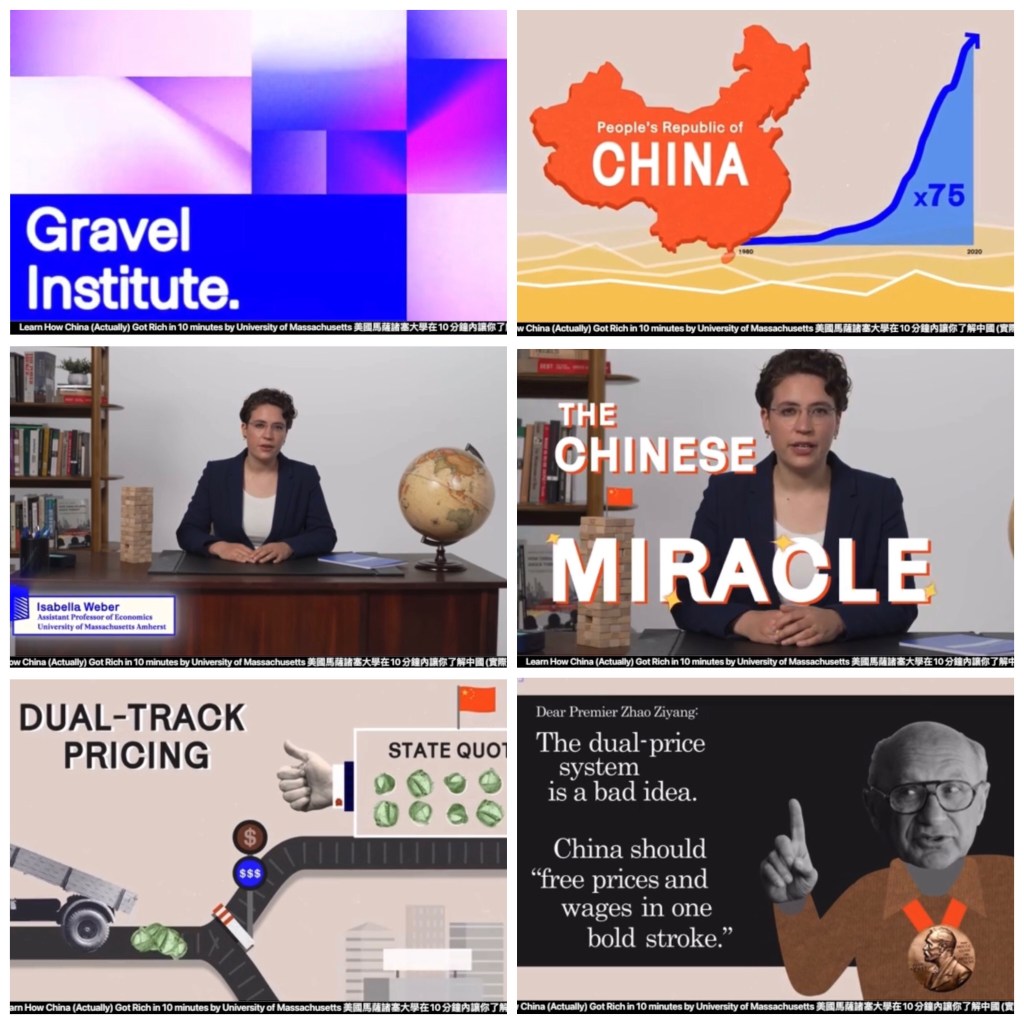
The economic rise of China is usually painted as a simple story: it was poor, it implemented “the free market,” and now it’s rich. But that picture is a simplistic one – and it’s not accurate. China’s rise is a reflection of its NOT implementing the ideological dictates of “shock therapy,” but in its pursuing a state-led policy of industrialization. Russia’s decline can be attributed largely to Western economists steering it in the exact opposite direction in the 1990s. Isabella Weber, professor of economics at the University of Massachusetts, Amherst, explains.
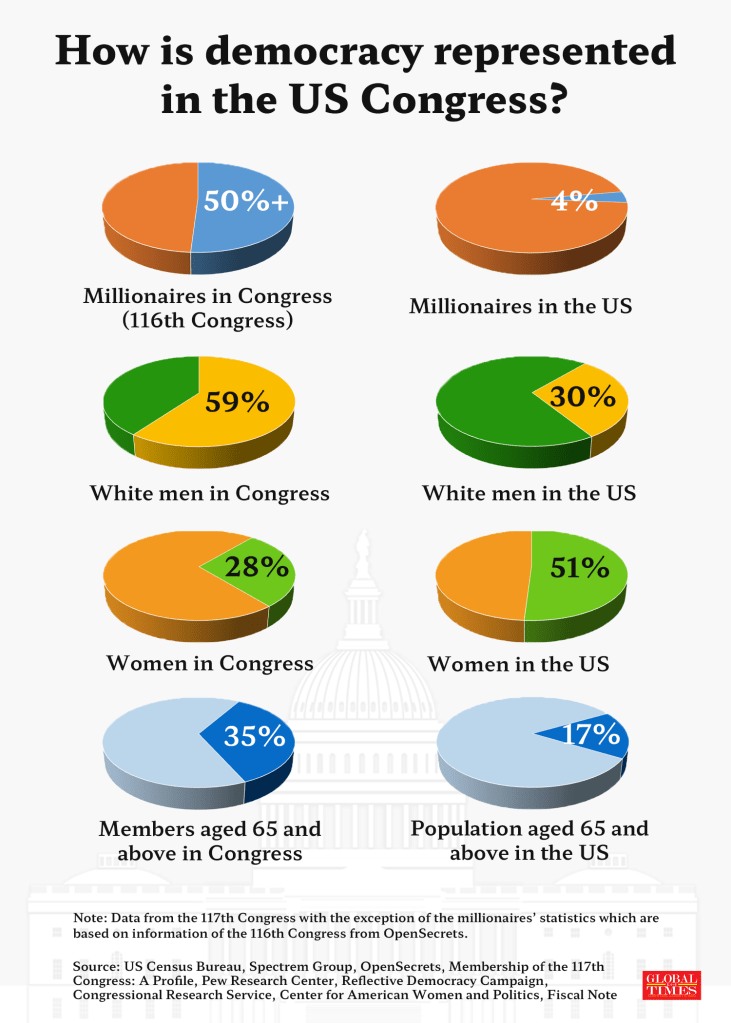
US democracy, what it claims to be could not pass fact-checked, it failed both “real” fact-checked and “fake” fact-checked / How is democracy represented in the US Congress? 美國民主,它聲稱的不能通過事實核查,它既沒有通過“真實”的事實核查,也沒有通過“假”的事實核查/美國國會如何代表民主? By Global Times Jul 20 2022