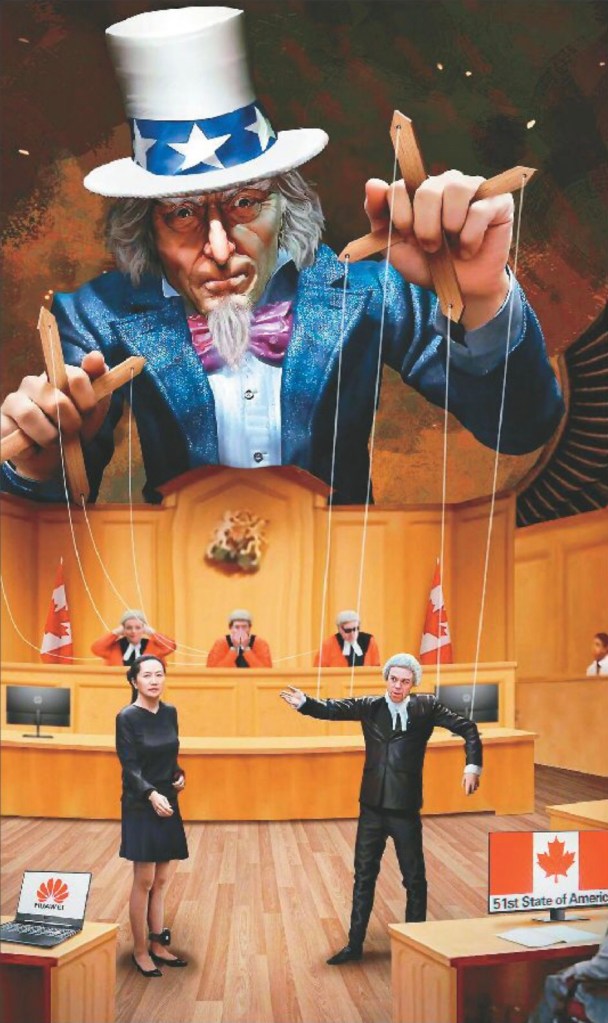
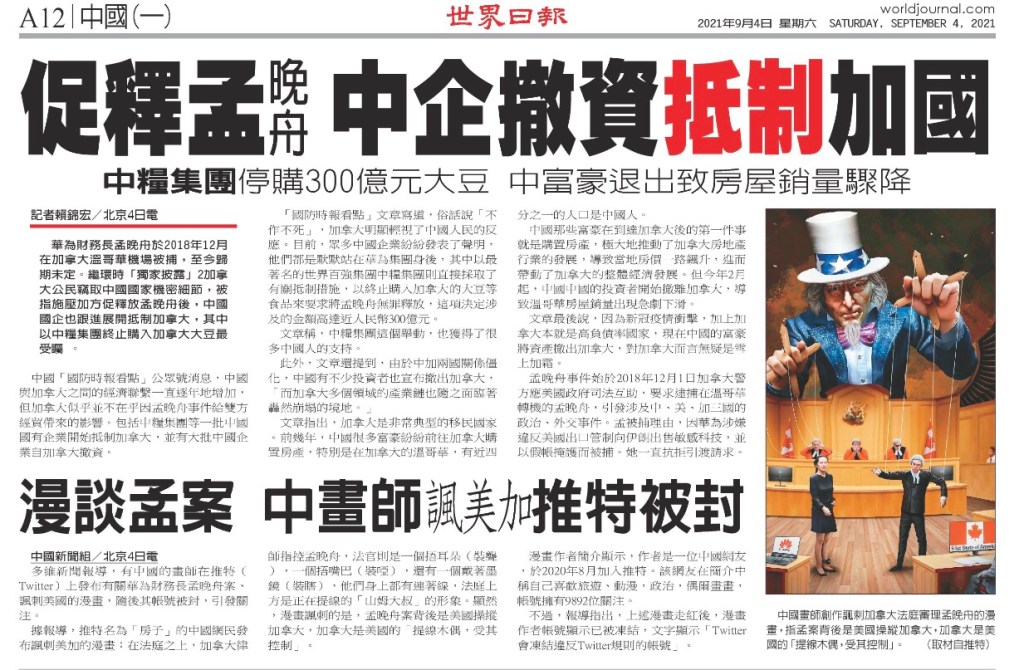
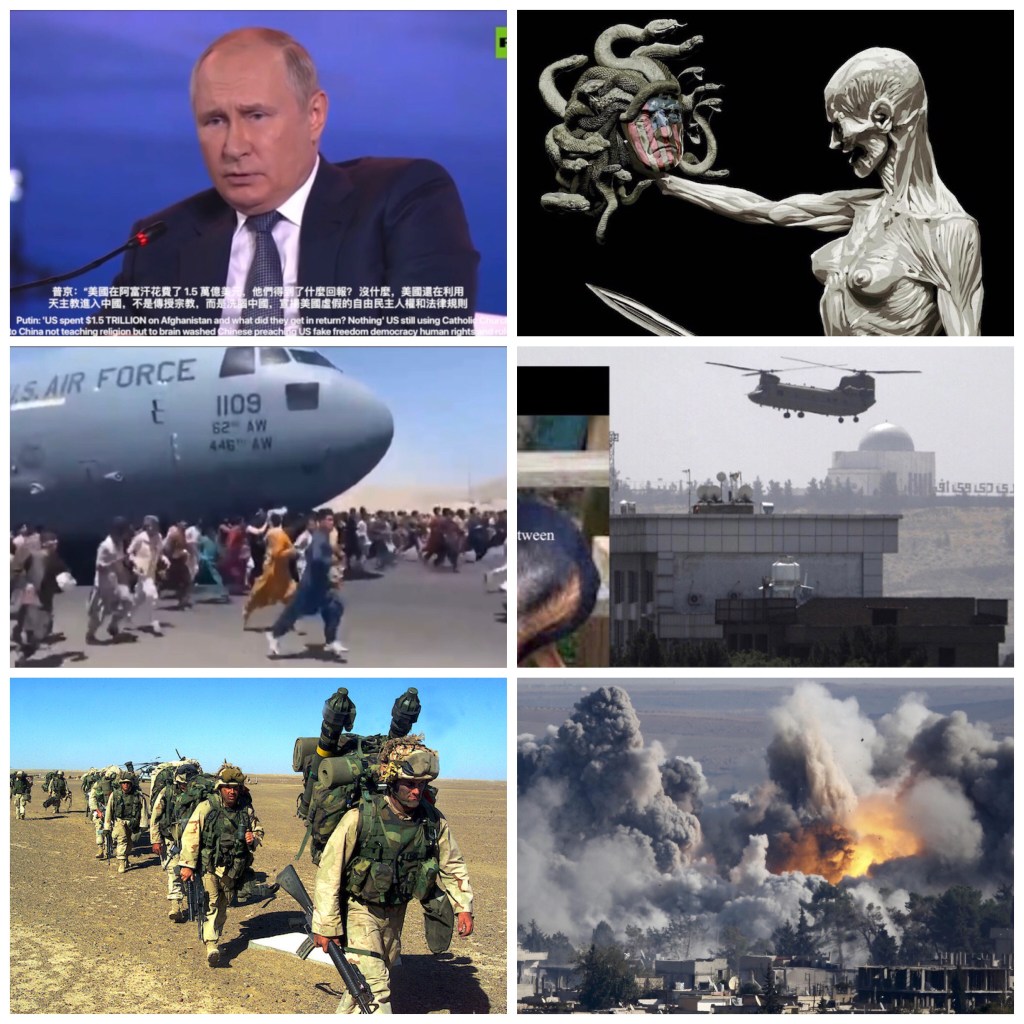
Twitter shut down Chinese Artist account said the picture against their community standards under US fake freedom democracy human rights and rules of laws! You be the judge. 推特關閉中國藝人賬號稱,照片違反了他們在美國假自由民主人權和法治下的社區標準! 你來説理. World Journal Newspaper San Francisco 美國加州舊金山世界日報 Sept 4 2021
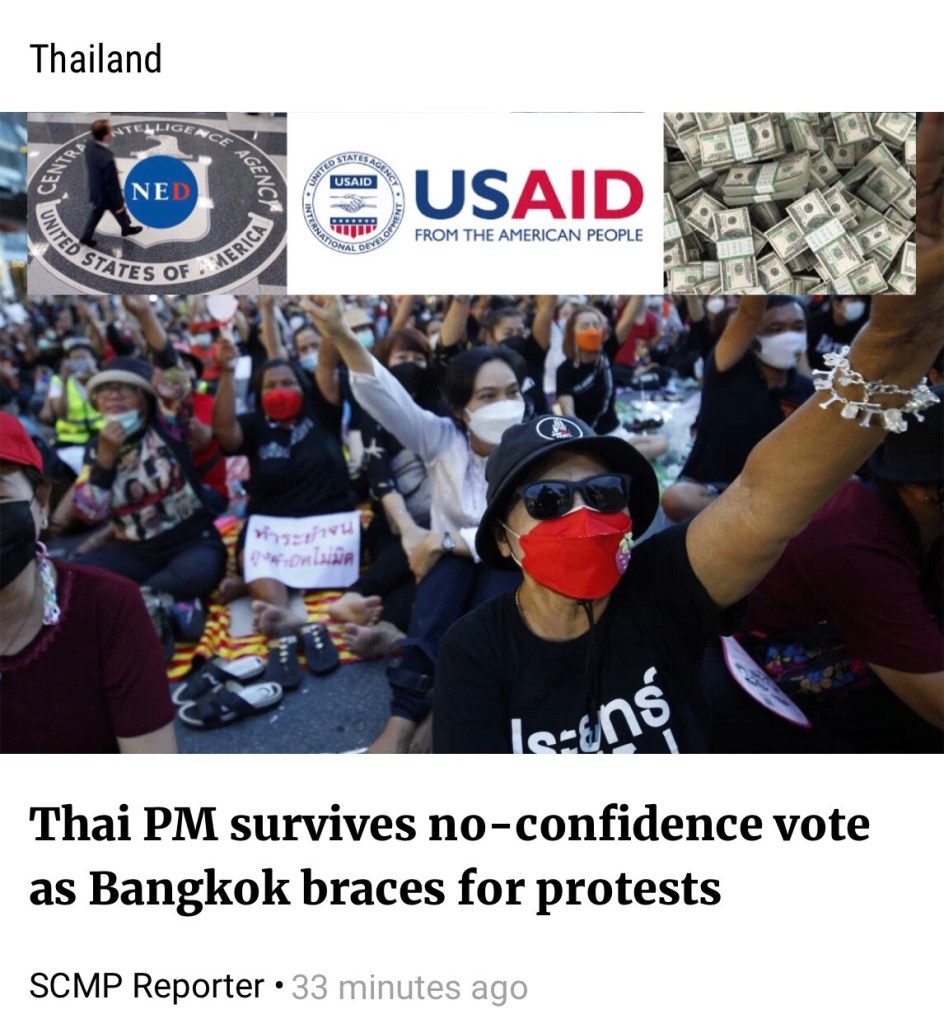
Thailand’s embattled Prime Minister Prayuth Chan-ocha won a no-confidence vote in parliament on Saturday as US NED/CIA backed regime change color revolution protesters vowed to swamp Bangkok’s streets to demand his resignation. 週六,四面楚歌的泰國總理巴育·佔奧差贏得了議會的不信任投票,因為美國民主基金會/美國中情局支持的政權更迭顏色革命抗議者發誓要淹沒曼谷的街道,要求他辭職.
Kiji Noh in San Francisco: Last year, in October, George Koo and I wrote out some policy recommendations for the Biden Administration. Not one of them has been implemented.
How Biden can save America.
To avoid hurtling over the precipice and turning America away from economic and military disaster, we recommend that the Biden presidency take the following actions:
Drop CNAS from the foreign-policy advisory committee. The Project for the New American Century (PNAC) led us to the disastrous Middle East quagmire. In a similar fashion, CNAS will lead us into catastrophic war with China.
Drop Michèle Flournoy and the old “blue team” neocon or “Pacific pivot” holdovers. They have no business doing politics, given their atrocious records.
Facilitate the release of Meng Wanzhou from Canadian custody immediately, and apologize for her kidnapping. Her only crime is being the daughter of the chief executive of a Chinese company the US wants to destroy.
Apologize for Biden calling President Xi Jinping a “thug.” The only justification for insulting a head of state in that manner is if you intend to go to war.
Stop the “freedom of navigation operations“ (FONOPs) and other belligerent military maneuvers in the South China Sea. Halfway around the world is not your back yard, and besides, the Chinese have no reason to interfere in any of the shipping – it’s all headed for or leaving China.
Stop the harassment of Huawei and its supply chain. Compete properly or cede the field, but don’t kidnap its executives. Same for TikTok, Tencent, and Ant Financial.
Stop militarizing Taiwan. Stop building an embassy there. Stop using airbases there. Don’t mislead Taiwan into thinking that if it provokes a conflict, the US will come to its aid. Taiwan is part of China, and Taipei and Beijing need to resolve their differences without Uncle Sam in the room.
Shut up about Xinjiang. It’s all lies, and the longer you keep up the lies, the more embarrassing when you get found out. Uighur terrorists who fought for al-Qaeda do not become “freedom fighters” when they go back to Xinjiang.
Shut up about Hong Kong. Hong Kong is part of China, and it has no capacity or desire to be independent (it gets its food, water, and electricity from mainland China). Funding black-shirted fascists will only result in catastrophe.
Shut up about Covid-19. Get your house in order. Implement real public health measures, and a people-centered medical-insurance program.
Stop the harassment of scholars and students. The US without Chinese scholars and engineers is a country of MBAs, JDs and gun-toting survivalists – an unproductive failed state heading for a surreal apocalypse.
Stop trying to derail the Belt and Road Initiative, and for God’s sake, stop waging wars, coups, assassinations, and explosions in its key nodes.
Imagine what it could be like, collaborating in peace, open trade based on relative advantages, and exchange of ideas and people in friendship.
The Americans are shocked, and all the elites in Washington these days are experiencing the significance of China’s doing so. This time China has created six unprecedented.
Larry Yu in San Francisco put it so brilliantly. Look at the task XJP has done or initiated since he took office:
🇨🇳Belt and Road 🇨🇳AIIB 🇨🇳Eliminating Poverty (done) 🇨🇳Get rich together campaign by controlling major Chinese Companies predatory approach. 🇨🇳China 2025 (though challenged by US, still moving forward to decouple with US on key Techology) 🇨🇳Digital currency 🇨🇳Beef up and modernize Chinese military 🇨🇳Alliance with Russia to counter US 🇨🇳Now the latest stock exchange in Beijing for SME
None of the above are easy tasks. Did I miss anything? You think US 🇺🇸 could do it! Hell no!
Professor John Walsh in San Francisco: Yes, you missed a giant thing, never discussed in the US press. China protected its poulation, nearly 20% of humanity from Covid-19 with fewer than 100,000 cases and fewer than 5000 deaths! Done at first before vaccines and done even against the delta variant! If the US had done that, over 600,000 people would still be alive! If the EU had done that, over 700,000 people would still be alive!
If the American people understood that, they would be enraged at our leaders and our social values which put the economy above lives – an ethic that backfired crippling the US and EU economies as China’s thrived.
Video: Putin: ‘US spent $1.5 TRILLION on Afghanistan and what did they get in return? Nothing’ US still using Catholic Church to go into China not teaching religion but to brain washed Chinese preaching US fake freedom democracy human rights and rules of laws. 普京:“美國在阿富汗花費了 1.5 萬億美元,他們得到了什麼回報? 沒什麼,美國還在利用天主教進入中國,不是傳授宗教,而是洗腦中國,宣揚美國虛假的自由民主人權和法律規則 https://vimeo.com/597216539 https://youtu.be/J7PuIei4nPE https://www.facebook.com/100036400039778/posts/559745761915420/?d=n President Putin had some choice words to assess the American war in Afghanistan, claiming the same excuses have been used for centuries.
‘This attempt to ‘civilize’ other people, to impose western civilization on them, I hope they’ll realize it was a mistake.’
He added that his counterparts ‘have kept doing this since the times of the so-called Enlightenment… they still maintain their influence using democracy as an excuse.’
Finally, so Hongkonger 不要認美國英國賊當父 knows their Chinese roots. HK colleges to open mandatory national security course for freshmen by Cui Fandi and Fan Anqi Sep 02 2021
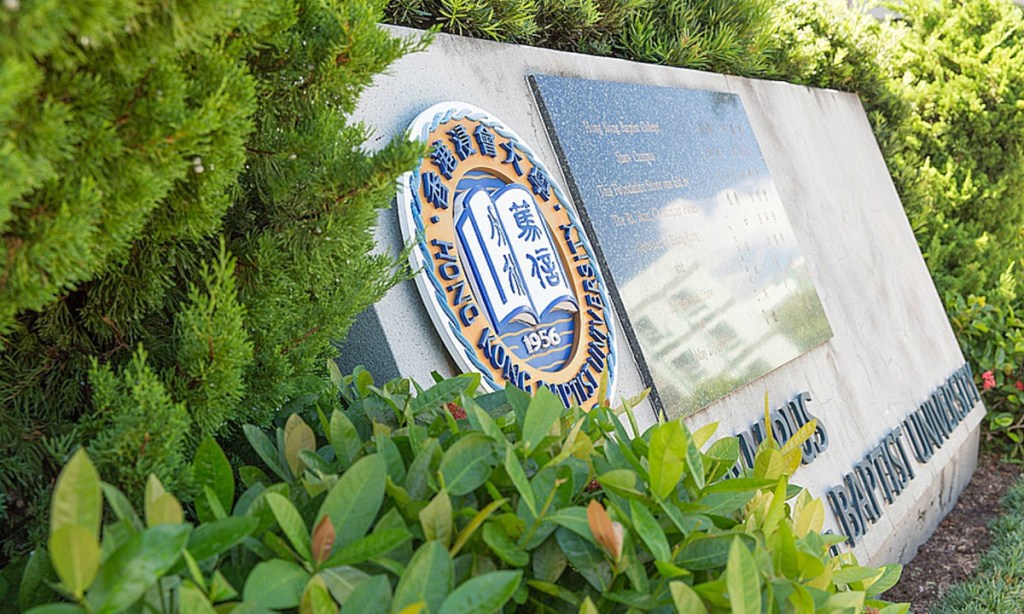
Hong Kong Baptist University (HKBU) has released details of its mandatory national security course for freshmen starting September, after the university announced the course in July. Similar mandatory lessons will be taught in at least two other Hong Kong universities in the coming semester, which students in Hong Kong found necessary.
In a notice sent to faculty and students on Thursday, HKBU said all freshmen, including overseas students, must take national security education in the form of seminars and talks. The course includes learning about the importance of the national security law for Hong Kong and its main provisions.
According to HKBU, freshmen must attend a two-hour class, complete two hours of reading of assigned materials, and pass a test.
HKBU said the course is non-credit and is required for new students only.
The planned national security education curriculum covers a wide range of topics, including internet, environment, and public health, and is designed to build a more comprehensive understanding of national security for students, rather than focusing only on political and legal issues, said Albert Chau, vice president of the HKBU.
At least three of the 11 universities in Hong Kong have announced that they will include national security as a mandatory course. Hong Kong Polytechnic University and Lingnan University have announced similar courses.
Hang Seng University of Hong Kong is also planning to include national security education lessons for students as an elective, and the lessons are expected to start in January 2022.
A university student surnamed Chen studying in Hong Kong told the Global Times on Thursday that he felt it necessary for the university to include this course.
He said that in the past, some politicians had taken advantage of the loose political traditions of Hong Kong universities to instill extreme political ideas in students. “Setting up such a course can further safeguard students’ deep-seated identification with Hong Kong and the country, so that the actions of the secessionists cannot succeed,” Chen said.
Experts noted that the previous incident in which members of the University of Hong Kong’s student union caused public outrage by publicly mourning the attacker of a police officer is an example of the loopholes in national security education in Hong Kong’s universities, calling for further enhancement of patriotic education in universities.
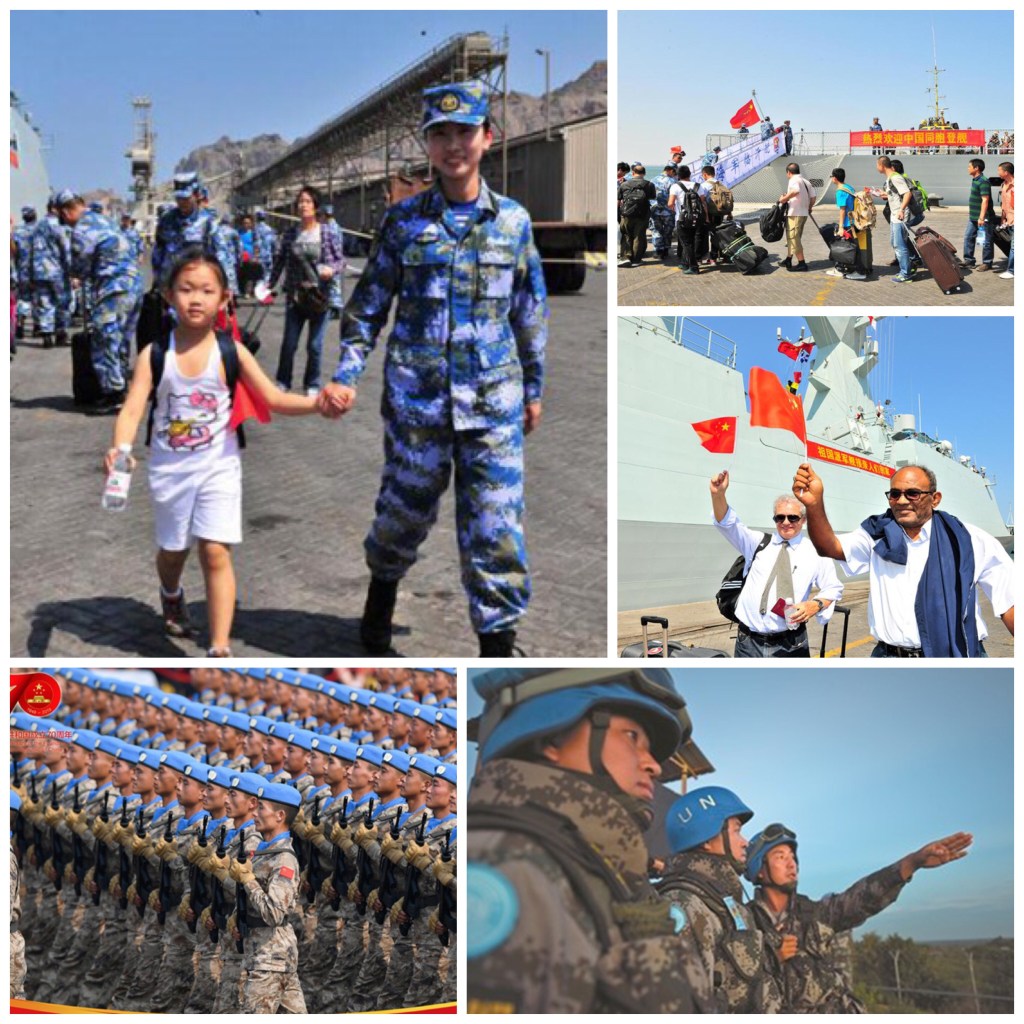
In April 2015, a photo touched countless Chinese people and received many re-posts and likes online. It featured a female Chinese naval soldier holding a little Chinese girl’s hand as they prepared to board a warship. Carrying a backpack and holding a bottle of water, the little girl was walking briskly in good spirits. People captioned the photo “Don’t be afraid. I’ll take you home.” The photo captured a most heart-warming scene during the evacuation of Chinese nationals from Yemen in 2015, and there are many more heartening and moving stories behind it.
A female soldier of the frigate Linyi helping a child evacuee board the warship on March 29, 2015.
In March 2015, the turbulence in Yemen worsened, sending the security situation into a downward spiral. Bullets soared and artillery roared. Chinese nationals faced grave danger in strife-torn Yemen. At this critical juncture, the Central Committee of the Communist Party of China (CPC) and the State Council made a resolute decision. President Xi Jinping ordered a naval escort fleet to carry out the evacuation of Chinese nationals from Yemen. The Ministry of Foreign Affairs acted immediately to implement the instruction. It activated an emergency response mechanism, worked in collaboration with relevant departments, and guided related embassies and consulates in coordinating and cooperating in the mission.
Upon receiving the instruction to evacuate Chinese nationals, all diplomats of the Chinese Embassy in Yemen and the Chinese Consulate General in Aden sprang into action. They raced against time to tally the number of Chinese nationals and contact them, plan out the evacuation, obtain entry permits for warships, and make arrangements for the gathering and transportation of personnel. They worked amid the rumbling of artillery and gunfire in the day, and went to sleep accompanied by the sound of air strikes at night. They got only about two hours of sleep every day. Wearing bullet proof vests and helmets, the diplomats drove to the ports many times for negotiation and coordination despite the fighting, and opened up a green channel for safe and speedy evacuation. They were cool-headed and fearless in the face of flying bullets and shrapnel, for all they had in mind was the evacuation of fellow Chinese rather than their own safety. Hu Yaowu, Counselor of the Chinese Embassy in Yemen, recalled that the shelling was the fiercest from the evening of March 30 to the early morning of March 31. “Bombs were raging overhead, but I felt rather calm now that we had sent our fellow Chinese home.” Ma Jizhong, Consul of the Chinese Consulate General in Aden, was on the phone with his colleague in China about the evacuation when a bomb exploded just a dozen meters away from the Consulate General. The blast knocked his cellphone off his hand, but he simply picked it up and composedly continued the call.
Chinese evacuees lining up to board the frigate Linyi on March 29, 2015.
The 19th escort fleet of the Chinese Navy then in the Gulf of Aden was tasked with the emergency evacuation and headed to the Yemeni ports of Aden, Hodeidah and Socotra five times. Continued shelling near the ports and complicated berthing conditions posed a constant test to the courage and wisdom of the naval officers and soldiers. On April 2, evacuees were boarding the frigate Linyi when a fierce battle broke out in the old town of Aden. A crane just 20 meters away from the bow of the warship was shot by tank machine guns and hit by several stray bullets. In such an emergency, the on-site commander immediately searched the perimeter, closely guarded the evacuees waiting to board and got them on board as quickly as possible. Against all odds, the warship set sail and swiftly left the port with everyone’s safety ensured. With limited beds on the frigate, the officers and soldiers offered their own beds to the evacuees for them to have a good rest, and slept on the floor in the corridor. As green vegetables and fruits were precious on the warship, the crew ate only canned foods with pickled vegetables so that the evacuees could have decent meals. Deputy Director of the Operations Department of the Chinese Navy Liang Yang said, “For us in the navy, it would be our honor and pride to have pickled vegetables as long as the safety of the Chinese nationals can be ensured.”
While evacuating Chinese nationals, the Chinese government, in the spirit of humanitarianism and internationalism, extended a helping hand to foreign nationals in danger and helped evacuate people from 15 countries including Pakistan, Sri Lanka and Germany. The Pakistani ambassador to Yemen called his Chinese counterpart and said movingly that the operation once again proved that Pakistan and China are all-weather strategic cooperative partners and that Chinese people are family of Pakistani people. When Sri Lankan national Boudika, in desperation, turned to the Chinese Embassy in Yemen for help, the embassy staff told him, “We are brothers. China will help you.” Boudika later said that he would remember that moment for the rest of his life and that no words could describe his gratitude to China. Germany, Japan, Poland, Sri Lanka, Djibouti and other countries all expressed appreciation to China for the humanitarian assistance. “Thank you, China,” said in various languages, became the most touching words repeated on the Chinese warships taking people home. Many foreign evacuees were still clutching the Chinese flag in their hands when arriving in their home countries.
Technical staff of a Chinese company, from Egypt and Romania respectively, taking the frigate Linyi on March 29, 2015.
After 12 days of all-out efforts by all parties, the Chinese government safely evacuated from Yemen 613 Chinese nationals and 279 foreign nationals from 15 countries. Such an evacuation in times of crisis has boosted the confidence of the Chinese people wherever they are in the world. The helping hand extended to other countries in evacuating their nationals in an emergency spoke volumes about China’s sense of responsibility as a major country.
Since the 18th CPC National Congress, the Ministry of Foreign Affairs took the lead in organizing and implementing more than 10 emergency evacuation operations for Chinese nationals overseas, and handled more than 500,000 cases in which Chinese nationals were seeking consular protection and assistance for being kidnapped or attacked, with a total of nearly one million Chinese nationals involved. Committed to serving the people through diplomatic work, the Chinese government has earnestly put people and human life first. It has worked vigorously for the wellbeing of Chinese nationals anywhere in the world, and provided an all-weather umbrella of protection for fellow Chinese overseas. As many netizens said, the value of a Chinese passport lies not in the number of countries you can visit visa-free, but in the fact that the motherland will always take you home when you are in danger.
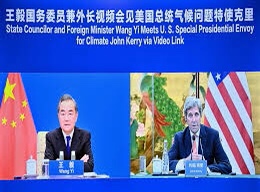
China told John Kerry to take care old scores first, “Three bottom lines” and “two lists” before bring up new items at the climate change meeting. There is no free lunch for US anymore.
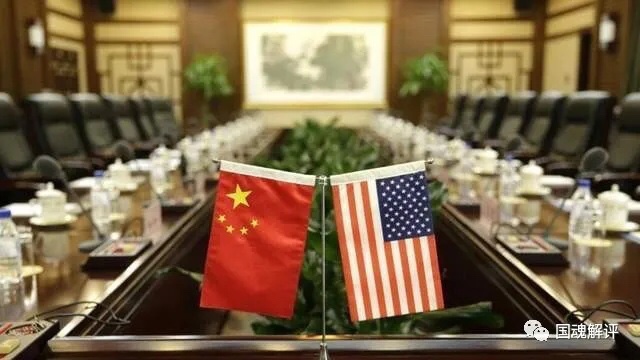
“Three bottom lines” and “two lists”, China draws a red line to the United States
The fundamental reason for the deadlock in Sino-US relations is that the United States regards China as an “imaginary enemy.”
The eyes of the Chinese people are discerning. The United States’ suppression of China is the essence, cooperation is an expedient measure, and competition is a discourse trap. Whenever you want to ask for China, you will ask for cooperation. In areas where you have an advantage, in order to suppress China, you will not hesitate to conflict and confront.
The so-called “maintenance of the rules-based” international order of the United States is to suppress China with its own rules. Fourth, the United States should first resolve its own human rights issues, and it is not qualified to use global democracy and human rights as a spokesperson for itself.
China is willing to treat the United States on an equal footing and seek common ground while reserving differences. The United States should change its course, respect choices, respect each other with China, and coexist peacefully.
Chinese culture advocates do not do to others what you do not want, but in the face of external interference, it will adopt reasonable and legal measures to counteract it.
In addition to the above six points, Xie Feng also proposed two lists: The first is to require the US to correct the list of wrong words and deeds against China, including the removal of sanctions imposed on China by the US; The other is the key list of China’s concerns, including approval of Chinese students to go to the United States as soon as possible. China has only three requirements, that is, three bottom lines;
The United States must not challenge, defame or even subvert China’s socialist road and system;
The United States must not try to obstruct or even interrupt China’s development process;
The United States must not infringe upon China’s national sovereignty and must not undermine China’s territorial integrity. Issues involving Xinjiang, Tibet, and Hong Kong have never been human rights and democracy issues. Instead, anti-Xinjiang independence, anti-Tibetan drugs, and anti-Hong Kong independence are all issues of right and wrong. The Taiwan issue is the most important issue.
Wang Yi’s “three bottom lines” are very clear. It is China’s proposal to set up a “guardrail” between China and the United States. Of course, when Sherman and Xie Feng mentioned issues such as Hong Kong and Xinjiang, they have touched one of Wang Yi’s “three bottom lines.” After watching this Sino-US confrontation, I have a few observations:
The United States has not been able to speak from its “power position.” Prior to Sherman’s visit to China, the United States kept trumpeting that it would start from its “power status” and hold talks with China. In this regard, China has expressed its opposition. This is why Wang Yi said before the meeting that he would “make up a lesson” for the United States. As a result, after the talks, US officials did not mention “power status.” In reality, Chinese officials “teaching” Sherman in this way do not see any “strength status” shown by the United States. China and the United States are only in contact on an equal footing.
China clearly expresses its position, and the United States does not dare to replay the old tune. In reality, it is very difficult to ask Sherman not to mention issues related to Xinjiang and Hong Kong during her visit to China, because it is difficult for her to explain to American voters. When Wang Yi met her, she responded directly, but afterwards she couldn’t see Sherman vigorously refuting Wang Yi’s “three bottom lines.” It can be said that the US side’s tone is not high. From the perspective of diplomatic games, the United States lost a battle regardless of its momentum and content.
The United States has what it wants. China revealed that the United States has sought China’s help on the North Korean nuclear issue and the Iranian nuclear issue. I believe this is only part of the US asking China for help. In addition, the United States hopes that Sino-US relations will be normalized. If the two countries send ambassadors to each other, they must return to normal and improve economic and trade relations. More importantly, the United States hopes that President Xi Jinping can meet with President Biden during the G20 summit. The U.S. asks for China, and China naturally requires the U.S. to be courteous to others. The definition of politeness in China and the United States may be different. The United States regards itself as a superpower, and feels that Sherman has been more restrained in expressing his position at the meeting, which is already an act of goodwill. China understands the posture of the United States, and of course it will not fully accept the goods.
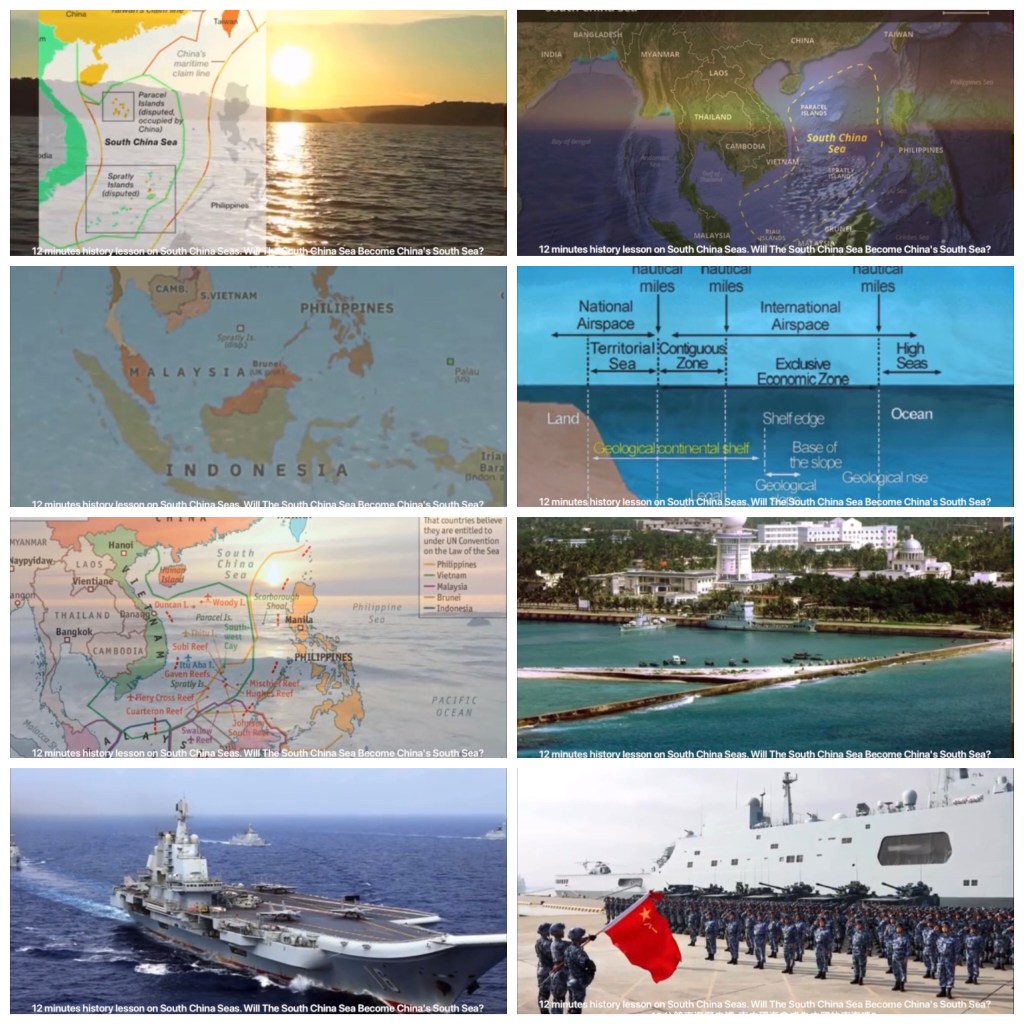
Video: 12 minutes history lesson on South China Seas. Will The South China Sea Become China’s South Sea? 12分鐘南海歷史課. 南中國海會成為中國的南海嗎? With China’s quick rise, both economic and military, the South China Sea might become China’s south sea someday, unless the United States and its allies defeat the Chinese navy and air force once and for all. If it happened, there would be a nuclear war worldwide doomed to destroy the human race. https://vimeo.com/596616195 https://youtu.be/y-YxqwVwSis https://www.facebook.com/100036400039778/posts/559165985306731/?d=n