The Wuhan lab conspiracy theory: American capitalism’s “big lie” – Statement of the World Socialist Web Site International Editorial Board 武漢實驗室陰謀論:美國資本主義的“大謊言” – 世界社會主義網站國際編委會聲明May 29 2021
Over the past week, the US print and broadcast media, the Biden administration and the US intelligence agencies have launched a furious propaganda campaign aimed at resurrecting the narrative that COVID-19 originated in a Chinese laboratory.
This lie defies overwhelming scientific evidence and the findings of a World Health Organization (WHO) investigation released in late March. It will go down as one of the greatest falsehoods in human history—a colossal untruth that eclipses even the Bush administration’s perjured claims about Iraq’s “weapons of mass destruction.”
There is no factual or scientific foundation for the claim that the virus originated in a Chinese laboratory. To date, the only evidence presented by the White House, the US intelligence agencies and the media to support the claim is that employees at the Wuhan Institute of Virology became ill in late 2019 with symptoms that a State Department report acknowledged are “consistent with … common seasonal illnesses.”
The illnesses at the Wuhan institute had previously been cited by the Trump administration to claim that China was responsible for deliberately spreading the pandemic—using a “weaponized virus” to inflict mass death on populations throughout the world. It has now been picked up by major media outlets and legitimized by the Biden administration.
On Thursday, the US Director of National Intelligence wrote that America’s “intelligence community” has “coalesced around two likely scenarios: either it emerged naturally from human contact with infected animals, or it was a laboratory accident.” If COVID-19 had not “emerged naturally,” the disease was, as the Trump State Department asserted in January, created through biological engineering.
As the WHO’s inquiry into the origins of COVID-19 made clear, countless viruses similar to COVID-19 have been identified in bats, including one, RaTG13, that is 96.2 percent similar to Sars-COV-2, the virus that causes COVID-19. Sars-COV-1 was a bat-derived coronavirus that caused the 2003–2004 SARS outbreak.
In order for the claim that COVID-19 is biologically engineered to have any credibility, there would have to be something about the disease or its origins that is inconsistent with other naturally occurring viruses. But there is nothing to indicate this. As the WHO report on the origins of the disease stated, the “deliberate bioengineering” of COVID-19 has been “ruled out … following analyses of the genome.”
The promotion of the lab-origin theory is driven by political conditions and social interests, motivated by two interrelated purposes.
First, it aims to divert attention from the actions of the US and other governments in implementing policies that led to deaths on a massive scale. As the public begins to recover from the overwhelming shock of the pandemic, there will be demands for explanations for why so many people died, along with accountability for those responsible.
From the beginning, the governments of all the major capitalist powers subordinated the response to the pandemic to the profit interests of the corporations, the greed of the capitalist oligarchs and the geopolitical objectives of imperialism. The measures that all scientists and epidemiologists agreed were necessary—including the shutdown of nonessential production with financial assistance to all those affected—were rejected because they threatened to undermine the financial markets and the interests of the rich.
As a direct consequence, more than three million people have died throughout the world, according to official figures, including more than 600,000 in the United States alone.
This week’s testimony by Dominic Cummings, the former advisor for the UK government of Boris Johnson, made clear that the government carried out a “herd immunity” strategy, with advisors advocating the holding of “chicken pox parties” to spread the disease throughout the public. The government calculated that this policy would lead to the deaths of as many as 800,000 people.
In Brazil, Senate inquiries into the pandemic have further demonstrated that the government of Jair Bolsonaro deliberately pursued a policy of allowing the virus to spread without restraint, anticipating that the death toll could reach as high as 1.4 million (it is currently at 450,000).
In the United States, after initial partial restraints in March of 2020 that were implemented following an upsurge of social unrest, the Trump administration spearheaded the campaign to get workers back to work under the slogan “the cure can’t be worse than the disease.” While this homicidal policy was most clearly articulated by Trump, it received the support of the media and was implemented by state governments run by both Republicans and Democrats.
The leaders of the capitalist governments have blood on their hands, and they are looking for a scapegoat: China.
Second, the Wuhan lab lie seeks to drum up nationalist hatred to support the Biden administration’s central strategic aim: the preparation for economic and potentially military conflict with China.
Since coming into office, the Biden administration has declared that the United States is at an “inflection point,” and that it must carry out a struggle to “win the 21st century” against China. The US media has tried, unsuccessfully, to interest the public in the claim, stoked by the intelligence agencies, that China is carrying out genocide against its Uighur Muslim population. But the campaign has not had its intended effect to date.
It is therefore necessary to concoct a far more visceral and dangerous lie, that China is responsible for a deadly pandemic that has killed so many people that nearly every American knows one of its victims.
The most direct precedent for the promotion of the Wuhan laboratory lie is the Bush administration’s fabricated claims that Iraq was hiding “weapons of mass destruction,” which served as the pretext for the invasion of Iraq. The method was exactly the same. Ambiguously worded findings from the US intelligence agencies, funneled through “anonymous sources” by the media, together with openly perjured statements by administration officials, concocted a pretext for a war that has killed over a million people.
The structure and methods of the “Wuhan lab” conspiracy theory are highly similar to other conspiracy theories promoted for political purposes, with which the propagandists in Washington and other world capitals are very familiar. In December 2017, the New York Times published an article, “Fingerprints of Russian Disinformation: From AIDS to Fake News,” which claimed that Soviet and East German intelligence agencies manufactured a conspiracy theory about the origins of HIV.
“Called Operation Infektion by the East German foreign intelligence services,” the Times wrote, “the 1980s disinformation campaign seeded a conspiracy theory that the virus that causes AIDS was the product of biological weapons experiments conducted by the United States.”
In 1985, an Internal KGB document noted that the Soviet intelligence agency was seeking to spread the view “that this disease is the result of secret experiments by the USA’s secret services and the Pentagon with new types of biological weapons that have spun out of control.” The KGB placed an article in an Indian newspaper titled “AIDS May Invade India: Mystery Disease Caused by U.S. Experiments,” claiming the disease originated in a US military laboratory in Fort Detrick, Maryland.
As a result of this disinformation campaign, a 2005 study by the RAND Corporation and Oregon State University revealed that nearly 50 percent of African Americans thought AIDS was man-made. The prevalence of this conspiracy theory around the world made it more difficult to launch a scientific response to the AIDS epidemic—including in the Soviet Union itself.
The Times quotes historian Thomas Boghardt to explain the disinformation technique: “Throw enough dirt, and some will stick.”
The Times, the Washington Post, and the other major media outlets, along with the Biden administration, are using this technique to spread the Wuhan Lab lie. While the Times article was intended to promote the “fake news” narrative of “Russian meddling,” the fact is that the American ruling class is now the biggest propagator of “fake news.”
The legitimization of the Wuhan Lab lie will have incalculable political consequences within the United States. If the “weaponized virus” claim promoted by the extreme right is now legitimate, what about the other lies and conspiracies promoted by the Trump administration: Trump’s “birther” claim that Obama was not an American citizen, the “pizzagate” conspiracy theory that high-level Democratic Party operatives were engaged in a child prostitution ring, and, above all, the claim that the 2020 election was stolen, which underlay the January 6 fascistic insurrection.
Significantly, the media is now hailing the “sophisticated” fascist Tom Cotton, senator from Arkansas, as an important voice in the “debate” over the origins of the coronavirus. The “history books will reward” Cotton for promoting the Wuhan lab theory, declared the Washington Post’s lead fact-checker Glenn Kessler.
Cotton infamously published an op-ed in July 2020 calling on Trump to “send in the troops” to suppress mass protests against police violence. He is a leading proponent of the lie that Donald Trump won the 2020 presidential election, and he objected to the certification of election votes on January 6 in coordination with the mob that stormed the Capitol.
Domestically, this lie will have the effect of delegitimizing popular opposition and preparing the grounds for mass censorship, with all those who criticize government policy being painted as agents of China. Already, an article by the World Socialist Web Site exposing the Washington Post’s promotion of the Wuhan Lab conspiracy theory was censored on Facebook for two months, leading to the suspension of the accounts that tried to share it. Facebook, meanwhile, has announced that it will no longer limit posts promoting the conspiracy theory that the virus was manufactured in a Chinese laboratory.
Once this lie enters the political bloodstream of America, it will have poisonous and uncontrollable effects. It will trigger witch-hunts, threats and violent intimidation against scientists and all those who call for a scientific response to the raging pandemic. Already, incidents of anti-Asian violence are on the rise.
The Chinese government, for its part, cannot but interpret the promotion of this lie as preparation for war, responding in a way that will make escalation more likely, creating a deadly cycle of militarization. A military conflict between the United States and China—the largest economies and militaries in the world—would have catastrophic consequences for all of humanity.
The World Socialist Web Site calls on all workers, scientists and intellectuals to oppose the colossal lie being propagated by the US government and media. Scientists have a duty to educate the public and oppose the xenophobic perversion of science. Journalists must seriously investigate and expose the efforts to promote and disseminate this lie.
Working people must counter the lie of the capitalist oligarchs with the demand for true accountability. Those responsible for the “herd immunity” policy, along with the corporate executives who profited off of it, must be held to account.
We call on workers to reject the efforts by the ruling classes to lay the blame for the crimes of American capitalism at the feet of China. If workers are to stop the pandemic that has killed so many, they must reject the capitalists’ efforts to incite nationalist hatred, ignorance and violence through the struggle to unite the world’s working class on the basis of a socialist perspective.
Video: Tianzhou-2 cargo craft completes rendezvous, docking with China’s space station core cabin at record speed by Deng Xiaoci May 29 2021
China’s Tianhe space station core cabin received its first “visiting guest” – the Tianzhou-2 cargo spacecraft early Sunday, about 8 hours after the latter’s launch, setting a new record in China’s space history. https://youtu.be/lQaGIdGxUpE https://vimeo.com/556699125 https://www.facebook.com/100036400039778/posts/501187854437878/?d=n According to the China Manned Space Agency, the rendezvous and docking of the Tianzhou [Heavenly Vessel] cargo spacecraft with the Tianhe core cabin took around eight hours after the former was launched from Wenchang spaceport from South China’s Hainan Province via a Long March 7 carrier rocket at 8:55 pm Saturday.
The first spaceship launched in the space station construction phase, Tianzhou-2 weighed 13.5 tons at launch, and is capable of sending a payload of 6.9 tons for supply missions. Its in-orbit service is at least one year, said Feng Yong, commander-in-chief of the Tianzhou-2 mission from the project contractor China Academy of Space Technology (CAST).
The 10.6-meter-long, 3.35-meter-diameter Tianzhou-2 cargo spaceship has two components – a totally enclosed cargo cabin and a propelling cabin, according to CAST.
The carry-on onboard the Tianhe spacecraft includes consumables that are designed to support three astronauts on their space missions for three months, space suits for missions outside cabin and other supplies, Feng revealed, adding that during its docking with the space station core cabin, it will also carry out multiple in-orbit experiments.
Tianzhou-2 will also deliver propellants to refuel the Tianhe core cabin, Mu Guoxin, a CAST publicity official said.
“Next, the Shenzhou-12 manned spaceship will dock with the core cabin at the front, and altogether the three sections will form the first linear structure for China’s space station,” Mu noted.
There were 6.8 tons of supplies onboard the Tianzhou-2, including some 160 parcels of goods and two tons of propellants, according to CAST. “The load to total mass ratio is over 50 percent, indicating its world leading capacity.”
The two space suits for the astronauts’ outside-cabin activities weigh more than 100 kilograms each, it disclosed.
The Saturday mission also witnessed a substantial improvement in the Tianzhou spacecraft’s fast docking capability. Compared to the Tianzhou-1’s rendezvous and docking with Tiangong-2 in 2017, which took about two days, it took a mere six hours to achieve the feat.
Lei Jianyu, deputy director designer of the Tianzhou-2 spacecraft, said that there are only two cargo spaceships in active service in the world that are capable of sending payloads of more than five tons, and Tianzhou is one of them, and has the “world class capability.”
The reason behind such progress lies in the fact that all the information for the docking maneuver had been installed in software with the Tianzhou-2, saving the time needed to transfer such instructions from ground tracking and monitoring facilities, which was the case for Tianzhou-1 in executing the same move.
“Such a fast rendezvous and docking process not only shortens the stay of astronauts in the relatively narrow space in the spaceship, saving their energy, but also ensures that the transfer of fresh goods [such as biological agents] is conducted in a timely fashion,” CAST developers said.
The Tianzhou-2 adopted a new long-distance guiding technology, as it was able to use the location information provided by the country’s BeiDou Navigation Satellites System, or BDS, to automatically navigate itself for the rendezvous and docking with the space station, whereas the Tiangong-1 version needed artificial assistance to lead the craft to approach Tiangong-2 for the move.
In an ideal situation, the time for the rendezvous and docking of Tianzhou-2 would be reduced to some four hours, CAST announced.
In the event of an emergency, this kind of fast rendezvous and docking technology will also facilitate quick responses by providing all kinds of urgently needed materials to the space station and rescue the trapped astronauts, according to the academy.
Yang Sheng, the cargo spacecraft system’s chief designer, disclosed that ground logistics technology has also been adopted for the spacecraft. For example, astronauts can obtain the location and further information of specific goods by scanning a QR code, and the inventory information is recorded in a dynamic manner so that astronauts can keep track of changes of goods.
Full Text: Slanderer Adrian Zenz’s Xinjiang-related Fallacies Versus the Truth by Xinhua Apr 30 2021
The Xinjiang Development Research Center on Friday released a report refuting so-called Xinjiang-related “research reports” concocted by Adrian Zenz, a so-called German scholar.
The report is titled “Slanderer Adrian Zenz’s Xinjiang-related Fallacies Versus the Truth.”
From forced labor to ethnocide, anti-China scholar Adrian Zenz made up so many lies about Xinjiang. They are debunked by a think-tank report released on Friday. Check out the infographic to learn more.
Slanderer Adrian Zenz’s Xinjiang-related Fallacies Versus the Truth Xinjiang Development Research Center
Recently, Adrian Zenz, a so-called scholar, under the guise of academic study, has concocted a series of so-called “research reports” related to Xinjiang, and wantonly discredited Xinjiang. Hence he has got a title of an “expert in China studies”. However, evidence suggests that he is not a scholar at all, let alone an “expert in China studies”, but a member of the so-called Victims of Communism Memorial Foundation in the United States, and a right wing religious extremist. He is also a core member of the so-called “research institutions” established and manipulated by U.S. intelligence agencies, and much of an accomplice and sinister partner of the “East Turkistan” terrorist organizations. The so-called “research reports” written by Zenz based on such an identity and purpose are of sinister political motives and full of fallacies, leading to extremely absurd conclusions. However, inconceivably, some Western politicians and media regarded Zenz’s reports as priceless treasure, wantonly quoting groundless and inflammatory conclusions and identified the content of the reports as facts without any verification. The so-called “exiles” and “human right defenders”, who are funded and supported by the U.S. government, gave false testimony to Zenz’s claims, and shamelessly served as “actors and actresses”, and have reduced themselves into puppets and tools manipulated by anti-China forces. The paper provides a systematic review on the lies and fallacies from Zenz’s so-called Xinjiang-related “research reports” and refutes them one by one with hard facts, so as to thoroughly expose his despicable behavior to the world.
Fallacy One: Xinjiang imposed forced contraception and mandatory sterilization on Uygur women
Zenz claimed in his report Sterilizations, IUDs, and Mandatory Birth Control: The CCP’s Campaign to Suppress Uyghur Birthrates in Xinjiang that the Chinese government imposed contraceptive surgery on the Uygur women with one child and sterilization on the Uygur women with three children. He cited the cases that Zumrat Dawut, Mihrigul Tursun, Tursunay Ziyawudun and other people underwent compulsory sterilization in the vocational education and training centers, claiming that in 2018, 80% of added IUD placements in China were performed in Xinjiang, and the new IUD received by Xinjiang women per capita every year is between 800 and 1,400.
In fact, the reproductive technology service in Xinjiang has always been based on the principle of combining state guidance with individual voluntariness, and people of all ethnic groups including the Uygurs have the right to make informed choice of contraceptive methods. Late-term abortion, forced contraception, forced pregnancy test and other illegal practices are prohibited in Xinjiang. It is entirely up to individuals to decide whether or not to take contraceptive measures and what kind of contraceptive methods to take. No organization or individual can interfere. Forced contraception has never happened in Xinjiang and there are no such problems as “forced sterilization” at all. Tulanisa Rehman, a woman from Lop County in Hotan Prefecture, said at a press conference on Xinjiang-related issues in Xinjiang Uygur Autonomous Region on February 1, 2021, “the government cares about the reproductive health of ethnic minority women like me, and the female civil servants in our village often share with us information on pre-pregnancy health care. Women can get free folic acid and other health care products when they are pregnant, and they also enjoy medical insurance after childbirth. In our village, many families, like mine, have two or three children. If we had gotten ‘forced contraception’ or ‘forced sterilization’, there would not have been so many lovely children in our village.”
As for Zumrat Dawut, Mihrigul Tursun, Tursunay Ziyawudun and those people mentioned in the report, actually they are “actresses” employed by Western anti-China forces and they make a living on discrediting Xinjiang abroad. Investigation reveals that Zumrat Dawut had never studied in a vocational education and training center. In March 2013, when she gave birth to her third child in the Urumqi Maternal and Child Health Care Hospital, she signed a consent form voluntarily, firmly requesting “to have a cesarean section and tubal ligation.” The center subsequently conducted the operation as she requested. She was never sterilized, nor did she undergo a “uterus removal” as she claimed. On April 21, 2017, Mihrigul Tursun was detained by the Public Security Bureau of Qiemo County for inciting ethnic hatred and discrimination. Considering her situations and the fact that she was carrying infectious disease, the Public Security Bureau of Qiemo County lifted the compulsory measures taken against her on May 10, 2017. During her stay in China, she was completely free except for the 20 days of criminal custody. She has never been sentenced, she has never studied in a vocational education and training center, and she has never been forced to take drugs. No record shows she has received birth control surgery and her parents said that she is fertile. As for another “actress” Tursunay Ziyawudun, there is no record revealing that she has ever received contraceptive surgery. What’s funnier is that Zenz used a photo of two Uygur women receiving physical examination in a hospital in order to prove that “forced sterilization” exists in Xinjiang. However, after verification, the photo is from people.cn. The caption of the photo says, “several young women of ethnic minorities from the rural area of Hotan Prefecture, Xinjiang, are enjoying their first free health check-up in the Hospital of the 29th Regiment of the Second Division of the Xinjiang Production and Construction Corps.”
In Zenz’s report, the content about new IUDs is full of absurdities. According to 2019 China Health Statistics Yearbook released by the National Health Commission, the number of new IUD placements in Xinjiang was 328,475 in 2018 and the number of the increase in the country was 3,774,318. Actually, the increase in Xinjiang only accounted for 8.7% of the national total increase, and the figure included Han women. Zenz’s claim that the women in Xinjiang receive 4 to 8 IUD placements every day obviously is against the common sense. He fabricated the figures in order to create a false impression that most women in Xinjiang are forced to receive contraceptive surgery.
On the issue of violating family planning policy mentioned in Zenz’s report, the law on family planning stipulates that citizens who violate relevant provisions shall pay social maintenance fees. The Xinjiang government website published an article pointing out that for residents who are temporarily unable to pay social maintenance fees due to financial difficulties can delay payment, or make installation payments. It can be seen that there are clear legal provisions and judicial procedures on how to deal with violations of family planning policy. There is no such situation in which those who have violated family planning policy are forced into the vocational education and training centers, as spread by Zenz.
Fallacy Two: Xinjiang increases Han population in order to accelerate “Han settler colonialism”
Zenz claimed in his report Sterilizations, IUDs, and Mandatory Birth Control: The CCP’s Campaign to Suppress Uyghur Birthrates in Xinjiang that there is a significant difference in the natural population growth rate between the rural areas of Hotan County, which are mainly inhabited by the Uygurs, and the suburban areas of Hotan City, which are mainly inhabited by Han population. He said that in 2018, the natural growth rate of Han population in Gulbagh sub-district of Hotan City is 15.17% (151.7‰), while the natural growth rate of population in Hotan County is 2.22‰. The natural growth rate of Han population in this sub-district is eight times that of Hotan County, which shows that Xinjiang is accelerating “Han settler colonialism”.
However, according to statistics from relevant departments in Hotan Prefecture, the natural growth rate of Han population in Gulbagh sub-district of Hotan City in 2018 is only 1.2 ‰, while the natural growth rate of population in Hotan County is 5.29 ‰. Contrary to Zenz’s conclusion, the natural growth rate of population in Hotan County is 4.4 times that of Han population in Gulbagh sub-district of Hotan City. There is no academic value in comparing the natural population growth rate of a sub-district with that of a county. As a matter of fact, if we compare the changes in 2017 and 2018 in the number of Han population and that of Uygur population in Hotan Prefecture, it is not difficult to find that the total number of Han population was decreasing, while the total number of Uygur population was increasing. Zenz’s claim of “Han settler colonialism” is a lie without any factual basis.
Fallacy Three: The population policy implemented in Xinjiang has led to “genocide”, and the population growth of Uygur and other ethnic minorities is stagnant
Zenz claimed in his report Sterilizations, IUDs, and Mandatory Birth Control: The CCP’s Campaign to Suppress Uyghur Birthrates in Xinjiang that the natural population growth rate in Xinjiang has drastically dropped since 2015 and that the natural population growth rate in Kashgar Prefecture and Hotan Prefecture is just 2.58‰. He also cited 2020 Budget of Health Commission of Kizilsu Kirgiz Autonomous Prefecture, and concluded that a population growth objective close to zero (1.05‰) in 2020 has been set in the prefecture. Based on the claim, he discredited the population policy of ethnic equality in Xinjiang as “genocide.” However, according to 2019 Xinjiang Statistical Yearbook released by the Bureau of Statistics of Xinjiang Uygur Autonomous Region, in 2018, the natural population growth rate in Kashgar Prefecture is 6.93‰, and 2.96‰ in Hotan Prefecture . Obviously, his data is completely out of fabrication. Meanwhile, from the documents issued by the health commission of Kizilsu Kirgiz Autonomous Prefecture, the ratio used in the natural population growth rate is percentage, namely, the objective of natural population growth rate of Kizilsu Kirgiz Autonomous Prefecture in 2020 is 1.05%, and thousandth ratio is 10.5‰. Zenz deliberately falsified the figures in the documents and completely violated research norms and methods.
The family planning policy in China has been carried out in an orderly process. It first started in the inland provinces and then moved to the frontier provinces, in the urban areas first and then to the rural areas, and on the Han population first and and then on the ethnic minorities. The Chinese government has implemented a relatively loose family planning policy on the ethnic minorities. In 1975, Xinjiang started the implementation of the family planning policy in Urumqi and other cities where the Han population was relatively concentrated. In 1981, the Interim Provisions on Some Issues of Family Planning was issued, and the family planning policy was implemented in an all-round way among the Han population. In 1992, the Family Planning Measures of Xinjiang Uygur Autonomous Region was issued, and the family planning policy on ethnic minorities was implemented more leniently than that on the Han population in Xinjiang. One couple of the Han people in cities and towns were encouraged to have one child, and in rural area, they could have two children. However, one couple of ethnic minorities in the urban areas were encouraged to have two children, and in rural areas, they could have three children. In 2017, with economic and social progress and the convergence of the child-bearing wishes of all ethnic groups in Xinjiang, the region revised the Regulations on Population and Family Planning of Xinjiang Uygur Autonomous Region, stipulating that all ethnic groups should implement a unified family planning policy, that is, a couple in the urban areas can have two children, and a couple in the rural areas can have three children. It can be seen that the implementation of family planning policy on ethnic minorities in Xinjiang is not only 17 years later than that on the Han population, but also relatively looser than that in the inland provinces.
The population of ethnic minorities in Xinjiang including the Uygurs has steadily increased. According to official data, from 2010 to 2018, the number of permanent residents in Xinjiang grew from 21.8158 million to 24.8676 million, representing an increase of 3.0518 million and 13.99%. Among them, the population of ethnic minorities grew from 12.9859 million to 15.8608 million with an increase of 2.8749 million and 22.14%; the Uygur population grew from 10.1715 million to 12.7184 million, with an increase of 2.5469 million and 25.04%; the Han population grew from 8.8299 million to 9.0068 million, with an increase of 176,900 and 2.0%. The growth rate of the Uygur population is not only higher than that of the whole Xinjiang population, but also higher than that of ethnic minorities in Xinjiang and obviously higher than that of the Han population. We cannot help but ask Zenz, is the population of ethnic minorities including the Uygurs undergoing a stagnant growth at all?
It must be pointed out that the so-called “genocide” in Xinjiang spread by Zenz is extremely absurd and has been widely questioned and opposed by the legal, academic and media circles of the international community. Many believe that the United States and some Western countries have failed to produce any evidence to prove the so-called “genocide,” and the excuses they listed are also weak. They only rely on the comments of a few so-called “experts” and “witnesses” to identify China’s policies in Xinjiang as “genocide,” which lacks objectivity and authenticity. The U.S. periodical Foreign Policy disclosed that the U.S. State Department’s Office of the Legal Advisor concludes that there is insufficient evidence to support the genocide claim.
Fallacy Four: The vocational education and training centers are internment camps where one million Uygur people have been held in detention
In one of his report, Zenz claimed that the vocational education and training centers are internment camps with tight security measures. However, he claimed that he got the security information from witnesses. Zenz claimed that according to the oral account of so-called witnesses, in the vocational education and training center, there is a wall too high for people outside to see what is inside the wall and there is also “barbed wire”. He continued that a permanent task force composed of 60 armed guards is stationed on the campus. Since people outside the wall can not see what is inside, how can they see a permanent task force composed of 60 armed guards stationed on the campus and count out the exact number of the guards? Obviously, Zenz really has an amazing imagination.
In his report, Zenz claimed that he believes that 900,000 to 1,800,000 people have been systematically held in detention in Xinjiang. Where are the data from? On December 21, 2019, The Grayzone pointed out in an article that the theory of one million Uygurs are held in detention by the Chinese government was first proposed and spread by the so-called Chinese Human Rights Defenders (CHRD). The CHRD is a nongovernmental organization headquartered in Washington, D.C. and supported by the U.S. government. The organization came to the ridiculous conclusion that 10% of 20 million people in Xinjiang are held in detention in the “reeducation camps” and that 20% of the population are forced to participate in the reeducation programs held in villages or townships, only through interviews with eight Uygurs and a rough estimate. But Zenz wantonly fabricated the data of trainees at the vocational education and training centers without any verification. In view of Zenz’s fabrication, The Grayzone pointed out in an article that Zenz inferred that the number of the people held in detention in “reeducation camps” is over one million through a questionable article and pure conjecture, and that he himself also acknowledged the uncertainty of his estimate.
Actually, the vocational education and training centers in Xinjiang, set up in accordance with the law, are not much different from the DDP (Desistance and Disengagement Programme) established in the UK and the de-radicalization centers in France. They are both preventive efforts against terrorism and extremism, fully in line with the principle and spirit of the UN Global Counter Terrorism Strategy and the UN Plan of Action to Prevent Violent Extremism. By October 2019, all the trainees who studied in the centers had completed their studies. With the help of the government, they have achieved stable employment, improved the quality of their life and led normal lives. The white paper The Fight against Terrorism and Extremism and Human Rights Protection in Xinjiang and a special documentary released by China Central Television provide specific and vivid information. Which “internment camp” can provide dozens of vocational skill training courses? Which “internment camp” can provide diverse and nutritious food? Which “internment camp” can be staffed with bilingual teachers, counselors, medical workers and logistics service and management staff in line with the standard for a school? Which “internment camp” can allow the “detainees” to return home regularly, ask for leave, and communicate freely? Which “internment camp” can organize and carry out a variety of recreational activities? Is there any “internment camp” like this in the world?
Fallacy Five: The aiding and education measures for deradicalization is a kind of political re-education movement in Xinjiang
Adrian Zenz stated in the report that the aiding and education measures for deradicalization is a kind of political re-education movement in Xinjiang. He said in the report that the vocational education and training center is to brainwash trainees and he listed so-called “evidence”: the training includes military drills, singing patriotic songs, learning criminal law, marriage law, watching patriotic videos; all trainees felt encouraged greatly in the end. He claimed all these activities are designed for political education, and they easily make people associate it with the period of Chairman Mao.
In fact, the vocational education and training centers established in Xinjiang in accordance with the law are schools, which are not essentially different from the Desistence and Disengagement Programme set up in the UK and the de-radicalization centers in France. They are both preventive efforts against terrorism and extremism, aiming to eliminate terrorism and religious extremism from the source. The vocational education and training center follows the concept of providing education and economic opportunities for violent extremist group members and encouraging them to break away from the groups, which is fully in line with the principles and spirit of the UN global counter terrorism strategy, and is also an important measure for deradicalization.
Adrian Zenz regarded singing patriotic songs, learning criminal law, marriage law and watching patriotic videos in the education and training center as the brainwashing and political transformation. People may want to ask him that which country’s citizens do not love their motherland, do not learn about their own laws, and do not learn their own national language? For example, the United States, since the end of the 19th century, has required students to read or recite the Pledge of Allegiance, which has become a tradition in American primary and secondary schools. According to relevant media reports, an 11-year-old American boy, in February 2019, was arrested for refusing to pledge allegiance to the national flag. According to Adrian Zenz’s logic, is the United States a country that implements political education transformation?
The effectiveness of deradicalization is confirmed by the personal experience and feelings of the trainees who have graduated from the vocational education and training centers, including Mettursun Memet from Hotan vocational education and training center, Almire Ablet from the vocational education and training center of Wensu County, Aksu Prefecture. At a press conference on October 29, 2020, they explained how they studied the Constitution, criminal law, anti-terrorism law, religious affairs regulations and other laws and regulations, and learned what is legal, what is illegal, what can be done and what cannot be done, so as to avoid breaking the law. Alimjan Yuwup, a graduate of the vocational education and training center of Akto County, Kizilsu Kirgiz Autonomous Prefecture, said that he had learned husbandry, mechanical maintenance, computer and other skills in the vocational education and training center. Because of his good proficiency of mandarin and good command of knowledge and skills, he was elected the deputy director of a villagers’ committee after graduation.
A large number of people from abroad have expressed the same views after on-the-spot visits to the vocational education and training centers. Djauhari Oratmangun, Indonesian ambassador to China, said that the vocational education and training centers gave him a very good impression. Students can not only learn laws and vocational skills, but also learn their ethnic culture. They are in good condition, said Kabaziyev Manarbek, counselor of the Kazakhstan Embassy in China. He saw some people learning sewing skills and hoped they will try their best to learn all kinds of new knowledge and skills. He visited several vocational education and training centers in Kashgar and Hotan, and saw that the Chinese government and the regional government have created excellent learning conditions for these students. There are various food choices and opportunities for students to engage in various sports. Students acquire employment skills through training and they will make a living on these skills after returning to society. The Chinese government really cares about these students, he said.
Fallacy Six: “Forced labor” in vocational education and training centers
In the so-called report Thoroughly Reforming Them Towards a Healthy Heart Attitude: China’s Political Re-education Campaign in Xinjiang, he claimed that the trainees in the vocational education and training centers had been placed to do “mandatory work” and that the trainees were arranged to work at factories adjacent to the vocational education and training centers. His intentions were to smear them as forced labor, accuse them of violating the human rights of the trainees and to negate the legitimacy of the vocational education and training work in Xinjiang.
In his report Beyond the Camps: Beijing’s Long-term Scheme of Coercive Labor, Poverty Alleviation Social Control in Xinjiang, he depicted a so-called detailed procedure as to how the vocational education and training center implemented the “forced labor” in the following order: detainment in the vocational education and training center–compulsory work in the factories on the sites or in adjacent factories–compulsory work at satellite factories in their hometowns (or other factories and plants). In his report, he also listed some cases from the industrial parks of Xinhe County, Aksu Prefecture and claimed that all of the company’s workers are said to be from Xinhe County, and the government provides police forces and special instructors so that the factory is run in a “semi-military” style management. The key information he wanted to send was that all the workers were from the vocational education and training centers in Xinhe County, while his information sources were just hearsay. In his report, he didn’t give any explanation, illustration or note.
In another report, he quoted Gulzira Auelhan’s statement saying that she spent 437 days in 5 different forms of internment. In fact, she is a dishonest and decadent person. In 2013, she was granted a loan of 40,000 yuan from the rural credit cooperatives of Yining County through the policy of “joint guarantee of 5 people”. However, when the loan was due, she deliberately defaulted on the loan and has not paid interests so far. Therefore, she was put on the bank blacklist. She once was interviewed by the Globe and Mail. In the interview, she claimed that her ideal was to raise her children well. The truth is she has not given birth to a child at all. She was indifferent to her three step-children after marrying the third husband. She attempted to persuade her step-daughter Kuniduz Tursunjan to pay her debts. Moreover, according to the statements of her two ex-husbands, she committed adultery during their marriage and was morally corrupted.
In fact, the courses in the vocational education and training centers were to help the trainees master practical skills. The finished goods they made were not merchandise. The personal experiences of many trainees can prove it.
Shireli Emerjan, a graduate of vocational education and training center of Moyu County in Hotan Prefecture, said at the press conference on November 27, 2020, “all the special fields of study we had chosen require that we learn theoretical courses first, and then enter the practical training stage. The students who studied food processing didn’t sell the cakes they have made, and they usually gave them to other classes to taste. Students who studied sewing skills use some leftover materials to practice, and they didn’t make clothes. Students who studied hotel management did make products either because their classroom is a simulated hotel environment. The home decoration works I designed belonged to me, and the school never asked me for them. Some overseas media groundlessly deemed our practical training as forced labor.” Tusonnisa Eli, another graduate, has the same feeling. She said: “if I don’t put the sewing skills that I have learned into practice, I will never learn the skill of sewing well, and will never be able to make beautiful clothes.We are actively practicing the skills in order to have a good life in the future. How can this become forced labor?”
Fallacy Seven: Xinjiang is a place of involuntary labor dispatch with massive forced labor
Adrian Zenz, in one of his report, has tried every means to distort the poverty alleviation policy in Xinjiang and the policy of paired assistance, and made unreasonable connection with “forced labor,” thus leading to various fallacies.
Zenz said in the report that industry-based poverty alleviation is not voluntary but mandatory. He said that those who resist being alleviated from their poverty are subjected to ideological education so that their thinking aligns with the state’s goals. Adrian Zenz made a basic mistake here. It is the urgent desire of the masses of all ethnic groups to live a happy life through hard work. Who would like to live a poor life without enough to eat or wear, or drink unclean water? Work is the way that human beings survive, and it is only by work that people can create a better life. The government helped poor households find jobs, earn money, and live a good and comfortable life free from the worries of food and clothes, and has been praised by the people of all ethnic groups. “By working in the village decoration firm, I have got stable income, and I’m happy seeing the smile on my family members’ faces,” said Abduheber Jappar, from Moyu County at a news conference on January 7, 2021. Whether such poverty alleviation efforts are voluntary or forced should be determined by people of all ethnic groups in Xinjiang instead of Adrian Zenz.
In the report, Zenz claims that the poverty alleviation plan in Xinjiang is a large-scale plan specifically designed and carried out for Muslim minorities. On the other hand, he also states that the poverty alleviation requirements of Xinjiang are accurate and require full coverage, and no one is left behind. His points of views are contradictory. As we all know, Xinjiang has been a multi-ethnic area since the ancient times. All the poor people, no matter which ethnic group they belong to, whether they believe in religion or not, have equal access to poverty alleviation policies. Through the joint efforts of all ethnic groups, 3 million rural poor people under the current poverty line in Xinjiang are all out of poverty, 3,666 poor villages are removed from the poverty list, and 35 poor counties have eliminated absolute poverty, which show that the centuries-old problem of absolute poverty has been solved historically.
Zenz said in the report that poverty alleviation is an extremely intrusive combination of forced or at least involuntary training and labor, inter-generational separation and social control over family units. He also selected screen shots of a “targeted poverty alleviation” app to demonstrate and say it consists of a large number of spreadsheets that contain the employment status of each adult citizen, the education and training status of the underemployed and children, and personal information of the elderly who live in welfare houses and nursing homes. He added that according to the documents he received from the Xinjiang government, it did show the ability and status of employment of each adult, and also included the reasons for the poverty of family members and the poverty alleviation program developed by the state for everyone. Whether the document Adrian Zenz showed is true or not, it is necessary to collect various information and formulate effective measures to help the people of all ethnic groups get rid of poverty. This exactly reflects the characteristics of seeking truth from facts, precision and scientific implementation of poverty alleviation in Xinjiang. What is the relationship between this and intrusion?
Adrian Zenz claims in the report that the whole of Xinjiang is covered by forced labor and the Chinese government forces mandatory relocation of large numbers of minority workers from Xinjiang to companies in eastern China in order to change their identity and world view. This is just Zenz’s imagination and surmise. In Xinjiang, workers of all ethnic groups choose their jobs according to their own wishes, sign labor contracts with enterprises or other employers on an equal and voluntary basis and get corresponding remuneration according to the labor law and other related laws and regulations, and they also enjoy full freedom in choosing the place to work. For example, governments at all levels actively build all kinds of employment information platforms to provide information services for workers’ voluntary employment. On these platforms, workers of all ethnic groups can learn about the recruitment information, including the climate of the places where they are employed outside Xinjiang, as well as the types of work, accommodation conditions, wages and benefits. After learning the basic information, they will sign up based on their own situation. Xinjiang strictly abides by the relevant national laws and regulations, vigorously promotes the rule of law, constantly enhances the law awareness of the employers and workers, carries out inspection on labor law enforcement, earnestly brings the whole process of the establishment, operation, supervision and mediation of labor relations into the orbit of the rule of law, and resolutely prevents and combats all forced labor behaviors. People of all ethnic groups’ rights to remuneration, rest and vacation, labor safety and health protection, social insurance and welfare are protected according to law. In Xinjiang or other provinces, their rights and interests in religious belief, ethnic culture, language and writing are also respected and protected according to law. In recent years, Xinjiang has implemented a series of positive employment policies, which have significantly improved the income level of people of all ethnic groups, especially the poor areas in southern Xinjiang. Statistics show the per capita annual income of Xinjiang migrant workers who are employed outside Xinjiang is about 40,000 yuan, which is equivalent to the disposable income of local urban residents. The per capita annual income of the workers who are employed in Xinjiang is about 30,000 yuan, which is much higher than that of local farmers. People of all ethnic groups have gone from having enough to eat to having better food to eat, and from wearing warm to wearing beautifully. Many commodities are affordable and, and their quality of life has been greatly improved.
Adrian Zenz claims in the report that there was “forced labor” in Shache Xiongying Textile Co., Ltd. According to our survey, the workers of the enterprise applied for the job by themselves. After seeing the recruitment information, the migrant workers voluntarily go to the enterprise for employment. There is no phenomenon that graduates were transferred to labor in industrial parks as Adrian Zenz said. The factory attaches great importance to the protection of workers’ rights. There are no restrictions on workers’ personal freedom and no “forced labor” problems.
Adrian Zenz said in the report that 19 cities and provinces from the nation’s most developed regions are pouring billions of Chinese Yuan (RMB) into the establishment of factories in minority regions. Paired assistance to Xinjiang is China’s national strategy, reflecting the advantage of the socialist system with Chinese characteristics. With the strong support from all sides, the amount of investment, the number of participants, and the coverage of aiding Xinjiang are unprecedented. Building schools, hospitals, factories, and introducing experts, teachers, and technology into Xinjiang, the paired assistance has produced tangible benefits. During the 13th Five-Year Plan period, 19 provinces and cities have invested over 76.677 billion yuan in aid to Xinjiang, implemented 8,540 aid projects in Xinjiang, and over 80% of the aid funds have been invested in improving people’s livelihood and grassroots units. A large number of key livelihood projects greatly improved the infrastructure and people’s production and living conditions . With more medical and educational experts going to Xinjiang, the comprehensive benefits of aid to Xinjiang have been continuously improved, and the people of all ethnic groups in Xinjiang have more deeply felt the warmth of the country. Every cent of the aid fund is for the local people of all ethnic groups to live a better life, which is not used in so called “forced labor” as Zenz said.
Fallacy Eight: Forced labor in cotton production in Xinjiang
Adrian Zenz said in his report that hundreds of thousands of ethnic minority workers in Xinjiang have been forced to pick cotton by hand through the national compulsory labor transfer and poverty alleviation program. He said that about 70 percent of the region’s cotton fields had to be picked by hand and cotton picking in Xinjiang continues to rely strongly on manual labor. But in fact, cotton production in Xinjiang has already achieved a high degree of mechanization, and even in the busy picking season, there is no need for a large number of cotton pickers. According to the data released in 2020 by the Xinjiang regional department of agriculture and rural affairs, the mechanical cotton-picking rate in Xinjiang has reached 69.83%. Adrian Zenz’s claim that 70% of cotton in Xinjiang is picked by hand is inconsistent with the fact.
Zenz said in the report that the government has also implemented a large-scale plan to replace cotton pickers of Han ethnic group with ethnic minority cotton pickers. He claimed that labor transfer involves coercive mobilization through local work teams, transfer of pickers in tightly supervised groups, and intrusive on-site surveillance by government officials and (in at least some cases) police officers. This statement is also out of his imagination. It is not only the basic right of the masses of all ethnic groups in Xinjiang, but also the wish of the masses to make better living. There is no compulsory mobilization at all. A few years ago, every autumn when cotton was ripe, many migrant workers from Henan Province, Sichuan Province and other places went to Xinjiang by train to pick cotton. Although it is very hard to pick cotton, some ethnic minorities are willing to join in the work because of the high income and free accommodation offered by those cotton growers. On the basis of equality, voluntariness and consultation, these cotton pickers signed labor contracts with cotton growers to obtain corresponding remuneration. For example, Memet Mettursun from Yutian County, Xinjiang, and his wife went to Qiemo County to pick cotton in 2018. In less than two months, they picked 11.5 tonnes of cotton, with an income of 23,000 yuan. It is understood that in nearly 50 days of cotton-picking season, each picker can earn over 10,000 yuan on average. In such a short period of time, people can earn so much money, why don’t they join the work? As for the decline in the number of Han cotton pickers in recent years, this is mainly due to the continuous increase in the income of rural labor outside Xinjiang and the continuous decrease in the number of cotton pickers going to Xinjiang, which has nothing to do with Adrian Zenz’s imagination of “the government forcing local labor”.
Adrian Zenz’s claim that a Withhold Release Order should be put on any product containing cotton from any part of Xinjiang angered many cotton farmers in Xinjiang. Cotton is an important industrial crop in Xinjiang. For the whole Xinjiang, especially for the ethnic minority families in southern Xinjiang, planting cotton is an important source of income. “We invite people to pick cotton, and they can earn more than 10,000 yuan in more than two months, and they all rush to the job. How dare they call it ‘forced labor’ while we are planting in our own land and collecting our own cotton?” Baikel Suwur, a cotton planter from Kuqa City in Xinjiang, said at a press conference on February 1, 2021. “Those who make rumors do not want to protect our rights at all. They want to smash the bowls of our farmers and make us lose job or food. We firmly say no to them!”
Adrian Zenz said in the report: if it is assumed that most cotton production in Xinjiang is affected by forced labor, any cotton industry in Xinjiang may involve forced labor in the absence of meaningful and independent review of actual working conditions, and “the possibility of forced labor is very high.” Thus, the international community should issue temporary sanctions against any production containing cotton from Xinjiang. These “conclusions” show how absurd Adrian Zenz is, and these “conclusions” have become the basis for Western anti-China forces to identify and sanction the existence of “forced labor” in Xinjiang cotton textile industry. Aksu Huafu Color Textile Co., Ltd. is one of the sanctioned enterprises. But in fact, there is no “forced labor” problem in the company. In October 2020, envoys and diplomats from 20 Arab countries and the Arab League in China visited the Aksu Huafu Color Textile Co., Ltd. Kadar Robleh Kadieh, Djibouti’s counselor to China, said that “the enterprise is run very well. These employees work and live happily here and enjoy legitimate rights. We should learn from the Chinese government who always thinks about the people and actively helps the people.” A Yemeni diplomat said the factory reminded of the textile factories in Sanaa and Aden, Yemen. He looks forward to the Huafu company helping them resume factories after the end of the civil war in Yemen. The staff of Huafu enjoy a comfortable and stable life and are well treated in terms of clothing, food, housing and training.”
Adrian Zenz slandered this as “forced labor” in Xinjiang’s cotton textile industries, aiming to incite the United States and other Western anti-China forces to sanction, restrict and suppress Xinjiang’s cotton industry, deprive Xinjiang’s cotton farmers and cotton pickers of their legitimate labor rights, and disrupt Xinjiang’s social stability and prosperity.
Fallacy Nine: The Chinese government carries out religious repression against Muslims
“Up to 1.5 million predominantly Turkic minorities (notably Uyghur and Kazak) were swept into different types of political re-education, detention and ‘training’ camps,” Zenz said in his so-called report Break their Roots: Evidence for China’s Parent-Child Separation Campaign in Xinjiang. In the report titled The Karakax List: Dissecting the Anatomy of Beijing’s Internment Drive in Xinjiang, Zenz said the Communist Party of China has incorporated its inherent fear of religious belief and ethnic differences into a set of complex standards about detention and release, and that in Xinjiang, 25.3% of the people are detained due to religion-related reasons. In fact, the fight against terrorism and de-radicalization efforts in Xinjiang are in strict accordance with the provisions of China’s Counterterrorism Law, insisting on not being linked to specific regions, ethnic groups and religions, respecting citizens’ freedom of religious belief and ethnic customs, and resolutely preventing the violation of the basic rights of the people of all ethnic groups. For example, Muladil Mohetair, a graduate of Kashgar vocational education and training center, said at a news conference on Xinjiang related issues on June 19, 2020, “during my study in the vocational education and training center, I could participate in normal religious activities in the mosque when I went home every week.” Zenz said in a report Beyond the Camps: Beijing’s Long-Term Scheme of Coercive Labor, Poverty Alleviation and Social Control in Xinjiang, that factories and educational environments are basically controlled by the state, conducive to sustained political indoctrination, while religious activities are prohibited. The so-called suppressing of the customs and religious beliefs of minority workers doesn’t exist anywhere in China. According to our survey, enterprises both inside and outside Xinjiang fully respect the habits of Muslim employees and set up restaurants to serve Halal food for employees in need; the right of Muslim employees to freedom of religious belief is protected by law and will not be affected by geographical changes. There are mosques in many provinces and municipalities besides Xinjiang. They can decide whether to participate in religious activities on their own, and no organization or individual can interfere. For example, Yusupjan Yasenjan, a migrant worker from Akto County, Xinjiang, said at the press conference on February 1, 2021, “I was introduced by my friends to work in Nanchang O-Film Tech Co., Ltd. During my work there, the company respected our religious beliefs very much. We all know that there is a mosque in Nanchang. After work or on Saturdays or Sundays, religious colleagues will go to the mosque. No one has ever interfered.”
Zenz said in the report Thoroughly Reforming Them towards a Healthy Heart Attitude: China’s Political Re-Education Campaign in Xinjiang, that the detainees were expected to distinguish illegal religious activities from normal cultural customs after education. Some reports say that they were forced to give up any religious beliefs, and in order to prevent the spread of these religions in the next generation, religious people are prohibited to teach religious activities to their children. In fact, through the study and training, the trainees of the vocational education and training center have comprehensively and accurately understood the national policy on freedom of religious belief, deeply understood what religious activities are legal and what are not, and what religious extremism is, recognized the evil nature and serious danger and harm of terrorism and religious extremism, and broke free from these heavy spiritual shackles.
Fallacy Ten: De-radicalization is to promote secularism and eradicate religious customs
In his so-called report The Karakax List: Dissecting the Anatomy of Beijing’s Internment Drive in Xinjiang, Zenz wrote that in May 2013, Xinjiang Uygur Autonomous Region issued “No.11 document of Xinjiang Uygur Autonomous Region Party Committee, which played a vital role in providing the ideological guidance and administrative basis for expanding re-education campaign.
The document advocated an intrusive and stringent method for remaking social culture on the basis of “a tough educational guidance” towards customs and religious beliefs with the aim of promoting secular humanism and eradicating religious customs. Based on relevant information, the No.11 document of Xinjiang Uygur Autonomous Region Party Committee put its focuses on the dealing with illegal religious activities and curbing the infiltration of religious extremism. The local government sets a clear line between religion and minorities’ customs related to religion, between normal religious activities and religious extremism. The freedom to have religious beliefs and customs of all ethnic groups are fully guaranteed in Xinjiang. For example, on November 3, 2020, the report On the Freedom of Religious Belief in Xinjiang released by the Islamic Association of Xinjiang Uygur Autonomous Region pointed out that governments at all levels in Xinjiang fully respect traditional religious customs, such as naming, funeral pray, burial and holding Nazer (memorial activities). Religious activities like fasting, pray, and citing the Koran are conducted by their own wish. No one nor any force ever intervened.
Fallacy Eleven: “The Karakax list” demonstrates that the Chinese government established the ideology and governing system aiming to eradicate certain cultures
In the so-called report The Karakax List: Dissecting the Anatomy of Beijing’s Internment Drive in Xinjiang,Zenz speculated that the so-called “Karakax list” in PDF format was likely generated from an excel spreadsheet or a word table. For the incomplete data in the PDF file, he explained: “this conversion was done unprofessionally and caused a (relatively minor) amount of data loss,” making a ridiculous statement that “errors like these make it in fact more likely that the document is authentic as attempts to create a forgery would have aimed for a more perfect look.” Zenz made a fuss over a list which he can’t be sure of its authenticity. It’s not difficult to measure the credibility of his conclusions. On February 18, 2021, website The Grayzone published an article pointing out that Zenz’s report was the result of speculation and doubtful media reports. As revealed by the investigation of relevant departments, the so-called “List” on which Zenz’s research was based was forged by collusion between the “East Turkistan” forces in China and abroad.
In the report, Zenz claimed that all the 311 people on the list from Moyu County were detained at vocational education and training centers. According to the investigation of the relevant departments, the vast majority of the 311 people on the so-called “Karakax List” are residents of Bostan sub-district, Moyu County. They have been working and living normally there. Only a few of them who were influenced by religious extremism or committed minor crimes have received vocational education and training in accordance with the law. The despicable behavior of Zenz using the identity information of the residents on the “List” to spread rumors and make accusations made them so indignant that they all volunteered to dispel the lies. For instance, Haibir Maihesut, who is on the list, said: “I’m 31 years old and have been living in Bostan sub-district , Moyu County. I have a family of four and we are living a good life. I have never been to the vocational education and training center all my life. But someone with ulterior intentions has been using our identity information to make lies. I have to make a clarification. His scheme has to be stopped.”
In the report, Zenz listed the reasons why the trainees were “detained in the vocational education and training center”, claiming that violation of the family planning policy was the most common reason. However, three reasons related to the participation in the training were given by the white paper titled Vocational Education and Training in Xinjiang issued by the State Council Information Office in August, 2019, and none of it has to do with family planning. We have read official documents at all government levels in Xinjiang through the websites provided in Zenz’s report, and found that there is no wording regarding the claim that violators of family planning policy will be sent to vocational education and training centers.
Fallacy Twelve: Promotion of the standard spoken and written Chinese language is to eliminate ethnic minorities’ language and brainwash people of ethnic minorities
Zenz smeared the Chinese government in many reports, saying that the promotion of the standard spoken and written Chinese language in Xinjiang was to cut off the cultural roots of the minorities. This is a groundless lie. In recent years, according to the stipulations of the Education Law of the People’s Republic of China, the teaching of the standard spoken and written Chinese language has been carried out all over Xinjiang, and remarkable results have been achieved. The result of quality assessment of compulsory education in the region shows that the teaching quality of the whole region has been significantly improved, especially for the first and second graders of primary school, laying a solid foundation for the growth and progress of youth of all ethnic groups. At the same time, based on the requirements of the national curriculum, Xinjiang has set up courses including Uygur, Kazak, Kirgiz, Mongolian and Xibe languages in primary and secondary schools, which fully guarantees the rights of minority students to learn their own languages and words, and effectively promotes the inheritance and development of minority language and culture.
Zenz criticized Xinjiang government for promoting “highly coercive” Chinese language education many times saying that this was to brainwash people of ethnic groups so as to realize the goal of changing the cultures of ethnic minorities through compulsory social reconstruction. What cannot be denied is that learning standard spoken and written language well is crucial for the acquisition of modern scientific and cultural knowledge, improvement of employment opportunity, increase of family income as well as incorporation into the modern society. For example, a former trainee at the vocational education and training center, Abulaja Abulat, said that “because of the training at the center, my Chinese language proficiency improved a lot. After the training, with the Mandarin learned at the center, I work as an interpreter for business personnel purchasing agricultural products. I made 30,000 yuan per year from interpreting alone. My family is living a better life.” Meanwhile, the rights to use and develop their own minorities’ languages and characters are protected in accordance with the law. Languages and characters of different ethnic minorities are widely used in fields such as education, jurisdiction, administration and public affairs. As another example, public services in different languages and characters can be seen in places like postal and telecommunication department, health care system department, stores and traffic signs. Government agencies at all levels can use national standard spoken and written Chinese language as well as the languages and characters of the autonomous region when performing their duties. For example, the Xinjiang People’s Broadcasting Station has 12 sets of broadcasting programs in 5 languages, which are Chinese, Uygur, Kazak, Mongolian and Kirgiz. It has 12 sets of television programs in 4 languages of Chinese, Uygur, Kazak and Kirgiz. All these arrangements have brought substantial conveniences to people of all ethnic groups.
Fallacy Thirteen: Forcing ethnic minorities to change traditional cultural value is ethnocide
In his so-called report Beyond the Camps: Beijing’s Long-Term Scheme of Coercive Labor, Poverty Alleviation and Social Control in Xinjiang, Zenz denounced the policies and measures implemented by the Chinese government to promote the employment of ethnic minorities and eliminate poverty in the poverty-stricken areas of southern Xinjiang, regarding them as ethnocide targeted at ethnic minorities, and accusing these measures as wiping out traditional, religious and family life of ethnic minorities. As a matter of fact, the Chinese government attaches great importance to the protection and development of fine traditional culture of all ethnic groups, and guarantees that all ethnic groups fully enjoy the freedom to maintain or reform their own customs according to law. In recent years, Xinjiang has been actively collecting, protecting and rescuing classical books of various ethnic groups. For example, it has translated and published the endangered Kutadgu Bilig (Wisdom of Fortune and Joy), Mongolian epic Jangar and other folk literature works, and established three national productive protection and demonstration bases for intangible cultural heritage projects, including Uygur musical instruments, carpets and Etles silk. Uygur Muqam art, Kirgiz epic Manas and others have been listed on the “UNESCO Representative List of the Intangible Cultural Heritage of Humanity” and “List of Intangible Cultural Heritage in Need of Urgent Safeguarding”.
In his so-called report Beyond the Camps: Beijing’s Long-Term Scheme of Coercive Labor, Poverty Alleviation and Social Control in Xinjiang, Zenz claimed that the ethnic minority women from rural areas in Xinjiang involuntarily “transferred from stove to machine.” However, Zenz didn’t know about their real thoughts at all. On Jan. 7, 2021, at a news conference in Xinjiang Uygur Autonomous Region, migrant worker Dilinur Aimaniyaz from Lop County, Hotan Prefecture, said that “what’s wrong with us making a better life with our own hands? Why cannot women go out to work after having children? If we don’t go to work, will you raise the kids for us?” All these examples are compelling evidence that people of ethnic minorities have a strong desire to work. And it is by no means the result of the so-called “forced labor” or “brainwash”. On the contrary, it is the result of their disdain for religious extremism and longing for a better life.
Fallacy Fourteen: Xinjiang government monitors ethnic minorities through the campaign of “Visit the People, Benefit the People, and Bring Together the Hearts of the People” and digital social governance
In his so-called The Karakax List: Dissecting the Anatomy of Beijing’s Internment Drive in Xinjiang, Zenz said the working teams of “Visit the People, Benefit the People, and Bring Together the Hearts of the People” aim to penetrate into the Uygur communities and families, and their main purpose is to collect information, investigate and monitor the minority residents in order to provide support for the detention movement. In fact, since 2014, Xinjiang has carried out the campaign of “Visit the People, Benefit the People, and Bring Together the Hearts of the People” in villages for seven consecutive years. Every year, 12,000 working teams and more than 70,000 cadres are selected from government organizations at all levels to work at the villages, pastoral areas and local communities. They have done a great deal of good and practical deeds for the people and are warmly supported and welcomed by people of all ethnic groups.
Zenz also claimed in his report that through administrative management and technological innovation, Xinjiang has carried out large-scale surveillance or grid management specifically targeted at the ethnic Muslims to collect information. As we all know, it is a common practice in the international community to use modern scientific and technological products and big data to improve social governance. In Xinjiang, these measures have greatly enhanced the sense of security and won the support of the masses of all ethnic groups. It should be emphasized that these measures are not targeted at any particular ethnic group, and the monitoring facilities cannot automatically identify or target a particular ethnic group. They deter the vile and protect the good. At the same time, we attach great importance to the protection of citizen’s privacy, strictly implement the Civil Code of the People’s Republic of China, Cybersecurity Law of the People’s Republic of China, and the decision of the Standing Committee of the National People’s Congress on strengthening the protection of cyber-information among others, follow the principles of legitimacy, justice and necessity in the collection, usage and protection of personal information
Fallacy Fifteen: The purpose of setting up boarding schools is to implement “large-scale detention movement”
In his so-called report Break Their Roots: Evidence for China’s Parent-Child Separation Campaign in Xinjiang, Zenz assumed that boarding schools and preschool education in Xinjiang were the guarantee for the so-called “internment campaign” and claimed that boarding school system is used to contain and manage the consequences brought about by the large-scale internment campaign.
In fact, the establishment of boarding schools in Xinjiang has nothing to do with de-radicalization. Xinjiang covers a spacious land area, and villages and towns are remotely situated, bringing inconveniences for students to attend school and causing a heavy burden for parents to pick up their children to and from school. In order to solve the problem, nearly 400 boarding primary and secondary schools were built in Xinjiang as early as the 1980s. In recent years, the country has strengthened the construction of boarding schools. According to the requirements, Xinjiang has made rational planning in combination with the development of new urbanization, the implementation of rural revitalization strategy, and taking into account the changing trend of local school-age children as well as factors such as geography, transportation, environment, and safety. Boarding school construction strictly abides by the relevant national and regional construction standards, and all kinds of learning and living facilities are complete. The teaching staff in boarding schools are guaranteed through recruitment, training, aids from inland provinces, and government purchase of services. The funds for running boarding schools are entirely covered by the government. In the stage of compulsory education, students in boarding schools are exempt from tuition and textbook fees, just as students in other schools. Rural students are free of boarding and lodging fees, and enjoy special living subsidies. Each student in primary school can get 1,250 yuan per academic year, and 1,500 yuan per academic year for junior school students. These policies have relieved the economic burden of students’ families substantially. As for whether to choose boarding school or not, it is entirely up to the students and their parents. There is no such a thing as “forced boarding”.
As practice has told us, the implementation of boarding school is beneficial for the popularization and improvement of compulsory education and balanced development. It also plays a significant role in the centralization of qualified educational resources, letting more children enjoy advanced teaching equipment, high-level teaching staff and a better campus environment. In addition, it is advantageous for the students to acquire scientific and cultural knowledge and raise learning efficiency. Boarding school system also helps reduce the economic burden for impoverished families, which made it deeply welcomed by parents of all ethnic groups.
Fallacy Sixteen:Militarized boarding school system serves as a potent tool in assimilating Uygur people
In his report, Zenz claimed that “the large number of security requirements and regulations apply to all of Xinjiang’s public and private education facilities,” “the security measures … seem to rival those of its internment camps”, and the state “preempts any possibility on the part of Uyghur parents, relatives or community members to forcefully recover their children.” These arguments are completely calling black white. The equipment of security system for schools and kindergartens in Xinjiang was determined by the severity of frequent violent and terrorist activities within a period of time. The purpose is to protect the right to life and health for children of all ethnic groups in Xinjiang. The management of all primary and secondary schools in Xinjiang, including boarding schools, is based on the Education Law of the People’s Republic of China, the Compulsory Education Law of the People’s Republic of China and other laws and regulations. The schools attach great importance to the students’ personal safety. When they leave school, the teaching staff either see to it that the parents themselves come to school to pick up their kids, or send home by school bus. So far, no students have ever been injured in boarding schools in Xinjiang.
Fallacy Seventeen: Militarized preschool education and boarding education created “inter-generational separation”
In many of his fabricated reports, Zenz claimed that the boarding schools and the political reeducation and detention movement caused inter-generational separation, which was a manifestation of compulsory social transformation and the core mechanism of the practice of long-term cultural extinction. The fact is that students of all ethnic groups in Xinjiang go to the schools close to their homes. If the school and their homes are not remotely located, they can commute from home to school every day. If the school is far from their homes, they can choose to board at school. At the same time, boarding schools in Xinjiang have never restricted the contact between students and their parents. Boarding school students arrive at school every Monday morning, finish the week’s study on Friday afternoon, and go home on weekends, holidays and festivals as well as in winter and summer vacations. If an emergency occurs, they can ask for leave at any time. In order to facilitate the contact between parents and students, each dormitory building at the school is equipped with a telephone, and students can call their parents at any time. The head teacher’s cellphone number is made public to all the students’ parents. They can call the teacher if they deem necessary. For example, the parent of a boarding school student, named Busaremu Wubul from Lop County, Hotan Prefecture said at the Stories of the Communist Party of China–specialized conference of Xinjiang that “my husband and I are running a tire store at the Lop County. As our home is far from school and we don’t have enough time to take care of the child, we signed the child for boarding school in No.1 Middle School in the county. The school provides healthy diets, comfortable living conditions and teaches the students well so that we can concentrate on our work. We are living a wonderful life.”
As has been said, the data and cases used by Zenz in his so called “research reports” are the results of fabrication and falsification, out-of-context quotation, and arbitrary combination. The “witnesses” selected are the scums of the society without any moral principles. The reasoning methods used are absurd logic which is full of flaws and difficult to be self-justified. The website The Grayzone and many insightful people such as the French journalist Maxime Vivas have exposed and denounced such false reports. At present, unprecedented achievements have been made in socioeconomic development and people’s livelihood in Xinjiang. Xinjiang has taken on a new look, featuring social stability and improvement of sense of fulfillment, happiness and security for people of all ethnic groups. The international community bears witness to the progress, which can never be discredited by slanderers like Adrian Zenz.
Video: 一百多年前把中國人引入美國用華人作苦力建鐵路開金礦, 為感謝中國人美國送中國人一份大禮《1882年排華法案》More than 100 years ago Chinese was brought over to America to be laborers to build the transpacific railway and open up gold mines. US expressed the appreciation by passing the 1882 Chinese Exclusion Acts. 那麼今天美國對華人有沒有改變呢? Has US changed their attitudes towards Chinese? 今天美國不需要中國人的奴力,祇要中國人的大腦, 幫助美國建立人工智能, 飛機飛彈瞄準華人在中國的家人朋友親戚城市, 隨時把他們送到西方極樂世界. Today US does not need Chinese physical labor, only Chinese brains for building advance AI, airplanes and missiles of which many are aiming at Chinese towns and cities where the Chinese brains’ families, friends and relatives lives 跟一百多年前沒有多大分別, 在美國國內妖魔化華人説我們是《中國病毒》鼓勵美國人對華人打駡殺, 數千華人成為受害者. 這樣還不夠毒, 如果美國華人和中國有任何交往, 隨時送你一個莫需有罪名把你關起來. It is no difference from more 100 years ago, demonize Chinese Americans as “Chinese Virus”. Encourage Americans to engaged in racial attacks towards Asians and Chinese Americans. As a result 1,000s got attacked has became victims of hate crimes. If you think that is enough, think again. Any Chinese maintained any ties with China could be accused as spies under US homeland security laws solely at the pleasure of the US Government. 美國這個寄養家庭從前不歡迎今天也不歡迎中國人. 其實自1776年美國建國, 一直到有色人種作風一樣, 永遠是美國二等公民. The US foster homes never welcomed Chinese. Actually since the founding of the America in 1976, America attitudes towards people of color has never changed. People of Color has always been 2nd class citizens, always has been always will be. 今天有腦的華人其實是有選擇的. Today, Chinese has brains got options. https://youtu.be/g8PgQ9FITsE https://www.facebook.com/100036400039778/posts/465883567968307/?d=n
中國金一南將軍 Video: Those Anti-Sinocism practitioners at Washington Post through lies, repeated lies said want China to pay for COVID19 but they are afraid to ask US Government or even the Russia Government to pay for it, why? It is because China had paid a lot of money in the past 2 centuries through blackmail and extortion by the Western powers. China say enough is enough, no more. 華盛頓郵報的那些反華主義者謊言說,希望中國為新冠病毒付款,但他們害怕要求美國政府甚至俄羅斯政府為此付款,為什麼? 這是因為在過去的兩個世紀中,中國被西方列強勒索付出了很多錢。 中國說夠了,你去發你的春秋大夢吧. “Repeat a lie often enough and it becomes the truth”, is a law of propaganda often attributed to the Nazi Germany Joseph Goebbels now used by US against China by Anti-Sinocism®️ practitioners “經常重複撒謊變成事實“ 這是一項宣傳法則,通常歸因於現在由反華運動的美國從業者對中國和中國人使用的二戰時德國納粹黨宣傳部官員約瑟夫·戈培爾的同一手法. Video: What is Anti-Sinocism®️ “hostility toward or discrimination against Chinese as a cultural, ethnic, or racial group.” Anti-Sinocism®️是什麽意思? “對華人的文化, 種族和種族羣的敵視或歧視”
The first attempts by US now we known as “Color Revolution” “Regime Change” subversive activities by NED (CIA) in China that failed. 美國1989年在中國進行的首次嘗試由美國民主基金会(美國中情局)今天被稱為的“色彩革命”,“政權更迭”顛覆活動,但失敗了。World Affairs – Objective, Nonpartisan and Insightful – Tiananmen Square Massacre – Facts, Fiction and Propaganda世界事务: 客观、无党派和有洞察力 – 天安门广场大屠杀——事实、小说和宣传 “As far as can be determined from the available evidence, NO ONE DIED that night in Tiananmen Square.” What?! Who would make such a blatant propagandist claim? China’s communist party? Nope. It was Jay Mathews, who was Washington Post’s Beijing Bureau Chief in 1989. He wrote this for Columbia Journalism Review. “从现有证据可以确定,当晚天安门广场没有人去世。”什么?!谁会做出如此明目张胆的宣传者主张?中国共产党?不。杰伊·马修斯是1989年《华盛顿邮报》北京分社社长。他为《哥伦比亚新闻评论》写了这篇文章。
One thing is for sure: if Americans became violent as it happened in the last few days of Tiananmen Square protests, the US police and the military will ruthlessly kill thousands of people. 有一点是肯定的:如果美国人像天安门广场抗议活动的最后几天那样变得暴力,美国警察和军队将无情地杀死数千人。
Here are a few more examples of what western journalists once said about what happened in Tiananmen Square in June 1989:
CBS NEWS: “We saw no bodies, injured people, ambulances or medical personnel — in short, nothing to even suggest, let alone prove, that a “massacre” had occurred in [Tiananmen Square]” — thus wrote CBS News reporter Richard Roth.
Tinanmen CBS BBC NEWS: “I was one of the foreign journalists who witnessed the events that night. There was no massacre on Tiananmen Square” — BBC reporter, James Miles, wrote in 2009.
NY TIMES: In June 13, 1989, NY Times reporter Nicholas Kristof – who was in Beijing at that time – wrote, “State television has even shown film of students marching peacefully away from the [Tiananmen] square shortly after dawn as proof that they [protesters] were not slaughtered.” In that article, he also debunked an unidentified student protester who had claimed in a sensational article that Chinese soldiers with machine guns simply mowed down peaceful protesters in Tiananmen Square.
REUTERS: Graham Earnshaw was in the Tiananmen Square on the night of June 3. He didn’t leave the square until the morning of June 4th. He wrote in his memoir that the military came, negotiated with the students and made everyone (including himself) leave peacefully; and that nobody died in the square.
But did people die in China? Yes, about 200-300 people died in clashes in various parts of Beijing, around June 4 — and about half of those who died were soldiers and cops.
WIKILEAKS: A Wikileaks cable from the US Embassy in Beijing (sent in July 1989) also reveals the eyewitness accounts of a Latin American diplomat and his wife: “They were able to enter and leave the [Tiananmen] square several times and were not harassed by troops. Remaining with students … until the final withdrawal, the diplomat said there were no mass shootings in the square or the monument.”
But what about the iconic “tank man”? Well, if you watch the whole video, you can see that the tanks stopped and even let the tank man jump on the tank. He eventually walked away unharmed. In fact, there are almost no pictures or videos of soldiers actually shooting at or killing people (doesn’t mean it didn’t happen, but it’s a point to keep in mind).
Propaganda involves not only exaggeration, but also omission. Western media rarely show pictures of tanks and military vehicles burned down, because this will demonstrate how restrained the military was.
Here’s a slideshow of military buses, trucks, armored vehicles, and tanks being burned by the “peaceful” protesters:
OLYMPUS DIGITAL CAMERA Sometimes the soldiers were allowed to escape, and sometimes they were brutally killed by the protesters. Numerous protesters were armed with Molotov cocktails and even guns.
In an article from June 5, 1989, the Wall Street Journal described some of this violence: “Dozens of soldiers were pulled from trucks, severely beaten and left for dead. At an intersection west of the square, the body of a young soldier, who had been beaten to death, was stripped naked and hung from the side of a bus.”
Wait, how could the protesters kill so many soldiers? Because, until the very end, Chinese soldiers were unarmed. Most of the times, they didn’t even have helmets or batons.
Unarmed Soldiers with protesters Here is one more picture of unarmed Chinese police and military hanging out with the public. Compare these pictures to what’s happening in the USA during the Black Lives Matters protests.
And here’s a video of the Chinese military and the protesters singing songs to one another in a friendly duel. This was the climate for many weeks. The Chinese government and most of the protesters never expected the situation to escalate.
So what exactly happened in Beijing in 1989?
To understand the chaos, let’s start with the two most important people in this story: Hu Yaobang and James Lilley.
Hu Yaobang was the Chairman & General Secretary of the CCP. He was a “reformer” and was liked by young people. And he died on April 15, 1989. Without his death, there would probably have been no drama in China that year! College students initially gathered at the Tiananmen Square only to mourn his death.
Within a day or two after Yaobang’s death, the US realized that hundreds of thousands of young people would be congregating in Beijing. It was the perfect time for a coup, since the rest of the world was dismantling communism that year! Thus, on April 20, 1989 – five days after Yaobang’s death – James Lilley was appointed as the US Ambassador to China. He was a 30-year veteran from the CIA.
An article from Vancouver Sun (17 Sep 1992) described the role of the CIA: “The Central Intelligence Agency had sources among [Tiananmen Square] protesters” … and “For months before [the protests], the CIA had been helping student activists form the anti-government movement.”
To help the US intelligence, there were two important people: George Soros and Zhao Ziyang. Soros is legendary for organizing grassroots movements around the world. In 1986, he had donated $1 million – which was a lot of money in China in those days – to the Fund for the Reform and Opening of China. Over the next three years, Soros’ group had cultivated and trained many pro-democracy student leaders, who would spring into action in 1989. The National Endowment for Democracy (NED) also opened offices in China in 1988. NED is also another regime-change organization.
And who would allow all these western fake NGOs? Zhao Ziyang, who was the Premier of China and the General Secretary of the Communist Party. He was a big fan of privatization and Milton Friedman. His close advisor, Chen Yizi, headed China’s Institute for Economic and Structural Reform, an influential neoliberal think tank. By the way, after the protests, Soros and his NGO were banned in China; Zhao Ziyang was purged and placed under house arrest for the rest of his life; and Chen Yizi escaped to America.
Another westerner who played a significant role in the Tiananmen Square agitations is Gene Sharp, who’s the author of Color Revolution manuals and the subject of an acclaimed documentary called “How to Start a Revolution.” He was in Beijing for nine days during the protests and wrote about it. Of course, he didn’t reveal his role, but it’s not hard to imagine. Gene Sharp worked closely with the Pentagon, the CIA, NED etc. for decades and fomented uprisings all over the world — here’s an in-depth article on him.
The influence of westerners in Tiananmen Square is obvious, looking at all the large signs in English, expressing American ideals:
Tiananmen English Two more facts to be noted are that the Chinese government did not impose a martial law until May 20, and there were no major clashes between the military and the people until the very end. Here’s a picture of protesters giving food to the Chinese soldiers:
Tiananmen peace As for the students, they were not a monolithic group. They fell under a few different categories:
Those who came to mourn Hu Yaobang, the beloved communist leader. In the beginning, these entirely comprised the group at Tiananmen Square. These students and workers were communists who loved Mao. They were not looking to be rescued by America.
Then there those who just came out to hang out, socialize and have fun.
Those who suffered from economic malaise. Inflation was going through the roof in China in the 1980s. In 1988, prices of consumer goods and food went up 26%. College tuition was also going up, and many graduates couldn’t find good jobs. Ironically, all these were the result of liberalization and rapid transition to western-style economy.
Idealistic young people who really wanted democracy, free speech, free press etc. Student leaders who were unscrupulous. Most top student leaders escaped from China – the CIA called it “Operation YellowBird” – right after the protests, came to the US, and went to Yale, Harvard, Princeton etc., thanks to generous help from the US government.
Provocateurs and thugs who were in the minority, but could significantly escalate tension. This strategy based on mob-rule psychology works very effectively all over the world. Very few people, for example, realize that some of these provocateurs also had guns.
One of the student leaders of Tiananmen protests, Chai Ling, said during an interview, “I wanted to tell them [students] that we were expecting bloodshed, that it would take a massacre, which would spill blood like a river through Tiananmen Square, to awaken the people. But how could I tell them this? How could I tell them that their lives would have to be sacrificed in order to win?” She escaped from China a couple of days before June 4, 1989. Listen to her — it’s quite ruthless and psychotic:
A massacre was needed to bring down the communist party. When it didn’t happen, the narrative of massacre was created. Because perception is reality. History is written by winners. And the people with the best narratives are winners. It’s a feedback loop.
China’s leaders may not be very good in the art of soft-power, but they understand that the Chinese history in the last two hundred years is filled with devastation from colonialism and civil wars. Stability and unity are not only core Confucian principles, but are paramount to China’s economic progress now. Furthermore, the geopolitical reality is that the US is trying to stop the rise of China. The endless American propaganda about Tiananmen “massacre” only reinforces the Chinese government’s fear about the West’s intentions.
Will China be better off with more free speech, more free press and more transparent government? Absolutely. However, that’s a journey that the Chinese society has to take in its own terms. Only China can decide the speed and direction of its reforms. While the Tiananmen events are tragic, there’s no doubt that the Chinese people appreciate the incredible progress the country has made since 1989.
[Updates from June 2020]
While Americans ritually cry crocodile tears for the victims of Tiananmen Square protest every June, compare how the American government is violently attacking its own people using heavily armed police and even the military, during the protests of 2020. No tanks in the US yet, but Humvees, Predator drones, military helicopters, National Guard, active US military, privatized military like Blackwater, FBI, tear gas, pepper spray, rubber bullets and guns are all being deployed against Americans.
As seen before, nothing happened to the “tank man,” because the tanks stopped. Guess what happens in the USA, the land of freedom, when a person stands before a police vehicle? Watch the clip below:
Here is a quick slideshow on how heavily-armed US police and military are occupying American cities to crush the Black Lives Matter protests:
One thing is for sure: if Americans became violent as it happened in the last few days of Tiananmen Square protests, the US police and the military will ruthlessly kill thousands of people.
Nazi Propaganda Chief Joseph Goebbels tactics being adopted by US to stop China’s rise: “If you tell a lie big enough and keep repeating it, people will eventually come to believe it.” “It thus becomes vitally important for the State to use all of its powers to repress dissent, for the truth is the mortal enemy of the lie, and thus by extension, the truth is the greatest enemy of the State.” 納粹宣傳部負責人約瑟夫·戈培爾(Joseph Goebbels)被美國採用阻止中國崛起的策略:“如果撒謊的程度足夠大並不斷重複,人們最終會相信它.” “因此,對於國家來說,運用其所有力量來壓制異議就變得至關重要,因為事實是謊言的致命敵人,因此,事實是,事實是國家的最大敵人.”
World Affair Video: Uyghur-Xinjiang Explained – The extremely complex and controversial topic of Uyghurs in China is quickly demystified below. Basically, it’s about three things: separatism, terrorism, and geopolitics. 世界事務視頻: 維吾爾族-新疆解釋- 中國維吾爾族這個極其複雜和有爭議的話題在下面迅速變得神秘。 基本上,它涉及三件事:分離主義,恐怖主義和地緣政治。 The crux of the matter is about separatism A tiny fraction of Uyghurs demand their own country. They call it “Turkistan” and want it to be created out of China’s Xinjiang province. No country in world history has tolerated separatism and secession. Separatist demands are not reasonable. Uyghurs are 0.7% of China’s population. And the separatists want Xinjiang, which is four times the size of Germany or 16% of China’s land area! Not gonna happen. Uyghurs in urban areas like Urumqi are secular and they definitely don’t want to live in an Islamic state run by religious extremists. 問題的癥結在於分離主義 一小部分維吾爾人要求他們自己的國家。 他們稱其為“突厥斯坦”,並希望在中國的新疆省以外創建它。 世界歷史上沒有哪個國家容忍分裂主義和分裂國家。 分離主義的要求是不合理的。 維吾爾族佔中國人口的0.7%。 分離主義者想要新疆,新疆的面積是德國的四倍,佔中國國土面積的16%! 不會發生。烏魯木齊等城市地區的維吾爾人是世俗的,他們絕對不希望生活在由宗教極端主義者經營的伊斯蘭國家。 Finally, Uyghurs aren’t even half the population of Xinjiang. The US bombs Uyghurs and other Muslims, while demonizing China. 其實(最後),維吾爾族人甚至不到新疆人口的一半。 美國轟炸維吾爾人和其他穆斯林,同時妖魔化了中國。 There are thousands of Uyghur terrorists in Afghanistan. And guess what? The U.S. bombs and kills them! Oh, the US also captures Uyghurs and sends them to Guantanamo to be tortured. Are those actions better than China sending the jihadists to education and job-training programs. 阿富汗有成千上萬的維吾爾族恐怖分子。 你知道嗎(猜怎麼著)? 美國轟炸並殺死它們! 哦,美國還抓捕了維吾爾族,並將其送往關塔那摩進行酷刑。 這些行動是否比中國更好地將聖戰分子送入教育和職業培訓計劃? The U.S. spent $6 trillion bombing numerous Muslim countries and created 50 million Muslim refugees over the last 20 years. And the U.S. is crying about Uyghur human rights? Good Jihadists, Bad Jihadists. 在過去的20年中,美國花費了6萬億美元轟炸了許多穆斯林國家,並造就了5000萬穆斯林難民。 美國竟說要爭取維吾爾人的人權? 好聖戰分子,壞聖戰分子。 Uyghur jihadists in Afghanistan or Syria are bad when they threaten NATO/U.S. military. However, when these jihadists go back to China, they are portrayed by the West as freedom fighters or innocent victims. Sheer hypocrisy. 當阿富汗或敘利亞的維吾爾聖戰分子威脅北約/美國時,他們就是壞人。 但是,當這些聖戰分子回到中國時,西方將他們描繪成自由戰士或無辜的受害者。多麼( 純粹)的偽善! U.S. role in creating Uyghur jihadists In the 1980s, the U.S. recruited, funded, trained, and armed Islamic militants (“Mujahedeens”) from all over the world to fight the USSR in Afghanistan. Not surprisingly, thousands of Uyghurs joined this jihad, since Afghanistan shares a border with Xinjiang. 美國在創建維吾爾聖戰分子中的作用 在1980年代,美國從世界各地招募,資助,訓練和武裝了伊斯蘭激進分子(Mujahedeens),以與阿富汗的蘇聯作戰。 毫不奇怪,由於阿富汗與新疆接壤,成千上萬的維吾爾人加入了聖戰。 Uyghur militants colluded with Bin Laden and created a group called “East Turkistan Islamic Movement” or ETIM, which is designated as a terrorist group by the U.N Uyghur terrorism in China and outside gets whitewashed by western media. Uyghur Mujahideens have carried out hundreds of terrorist attacks in China since 1990. These vary from knife attacks and car attacks to massive riots and terrifying suicide bombings. 維吾爾激進分子與本·拉登合謀,成立了一個名為“東突厥斯坦伊斯蘭運動”或ETIM的組織,該組織被聯合國指定為恐怖組織。西方媒體卻粉飾了中國境內外的維吾爾恐怖主義。 自1990年以來,維吾爾聖戰者組織在中國發動了數百次恐怖襲擊。這些襲擊的範圍從用刀砍人﹑汽車襲擊﹑到大規模騷亂和可怕的自殺炸彈襲擊。 Tens of thousands of Uyghurs went to Syria and joined ISIS and Al Qaeda. They want to come back to China and destabilize the country. 成千上萬的維吾爾族人前往敘利亞,加入了ISIS和基地組織。 他們想回到中國並破壞國家穩定。 However, the only current narrative in the West is that China, the big bad wolf, oppresses Uyghurs for no reason. 然而,西方目前唯一的敘述是,中國這頭大灰狼無緣無故地壓迫維吾爾人。 China’s anti-terrorism methods are working After 25 years of struggling, China cracked down on Uyghur separatists and terrorists. The result is that there hasn’t been a terrorist attack since 2017. 中國的反恐方法正在奏效 經過25年的努力(奮鬥),中國成功化解了維吾爾族的分離主義分子和恐怖分子。 結果是,自2017年以來沒有發生過恐怖襲擊。 BTW, the World Bank and 50+ Muslim countries sent representatives to evaluate these rehabilitation camps and praised China’s efforts. BTW,世界銀行和50多個穆斯林國家派遣代表評估了這些“再教育營地”,並對中國的努力表示讚賞。 Combating jihadism is not easy No country has found an easy solution to combat jihadism or change the minds of radicalized jihadists. 打擊聖戰不容易 沒有哪個國家找到與聖戰主義鬥爭或改變激進聖戰分子思想的簡便解決方案。 While China could do a better job with due process and transparency, the overall efforts are reasonable. Muslims and Islam are not oppressed in China 中國可以通過適當的程序和透明度來做得更好,但總體努力是合理的。 穆斯林和伊斯蘭教在中國沒有受到壓迫。 Xinjiang alone has 20,000+ mosques; and all major cities in China have large mosques, some built one thousand years ago. There are also 20 million Hui Muslims in China, but they don’t feel oppressed. 僅新疆就有20,000多個清真寺。 中國的所有主要城市都有大型清真寺,其中一些建於一千年前。 中國也有2000萬回族穆斯林,但他們並沒有感到被壓迫。 Uyghurs are moderate Muslims – Uyghurs have traditionally followed Sufism, a very moderate version of Islam that’s totally different from Saudi Arabia’s Wahhabism. Uyghur women wear beautiful colorful clothes, love dancing and singing, and don’t wear burqas. Uyghur tradition even includes mild alcoholic drinks (called Museles). 維吾爾族是溫和的穆斯林- 維吾爾族傳統上遵循蘇非派,蘇非派是一種非常溫和的伊斯蘭教版本,與沙特阿拉伯的瓦哈比教派完全不同。維吾爾族婦女穿著漂亮的色彩鮮豔的衣服,熱愛跳舞和唱歌,並且不穿睡袍。 維吾爾族的傳統甚至包括溫和的酒精飲料(稱為Museles)。 But if you watch the Uyghur separatist women, they are always covered up like the ultra-orthodox sects. That tells you who’s funding these radicals. 但是,如果您看到的維吾爾分離主義婦女,她們總是像超正統教派那樣被掩蓋。 這可以告訴您是誰資助這些極端分子。 China has helped Uyghurs prosper – Uyghur population has doubled in the last 40 years. Xinjiang’s GDP has grown 10 times in the last 20 years. 中國幫助維吾爾人繁榮發展- 在過去40年中,維吾爾族人口增加了一倍。 在過去的20年中,新疆的GDP增長了10倍。 There are many popular Uyghur actors, dancers, singers, athletes, politicians etc. China wants Uyghurs to be happy, prosperous, and loyal citizens. 維吾爾族有很多出名的演員,舞蹈家,歌手,運動員,政客等。中國希望維吾爾族成為快樂,繁榮和忠誠的公民。 This is all about geopolitics – Xinjiang is a crucial part of China’s Belt and Road Initiative. Every month, more than 1,000 freight trains go through Xinjiang while transferring goods between China and Europe. Disrupting Xinjiang means disrupting Chinese economy. 地緣政治因素- 新疆是中國“一帶一路”倡議的重要組成部分。 每個月有1000多列貨運火車經過新疆,同時在中歐之間轉運貨物。 破壞新疆意味著破壞中國經濟。 The U.S. just wants to contain the rise of China and thus is waging hybrid wars. From stirring up internal chaos in Hong Kong and Xinjiang to external chaos via Taiwan and India and to stifling Chinese tech companies like Huawei and TikTok, America’s playbook is just ruthless geopolitics. 美國祇是想遏制中國的崛起,因此發動了混合戰爭。 從煽動香港和新疆內部的混亂到台灣和印度的外部混亂,以及扼殺華為和TikTok等中國科技公司,美國的劇本簡直就是殘酷的地緣政治。 https://worldaffairs.blog/2020/09/20/uyghur-xinjiang-explained-in-four-minutes/ https://youtu.be/1sCZ8osXk7g https://www.facebook.com/100036400039778/posts/341909880365677/?extid=Pb6esPaBROdYWwiz&d=n



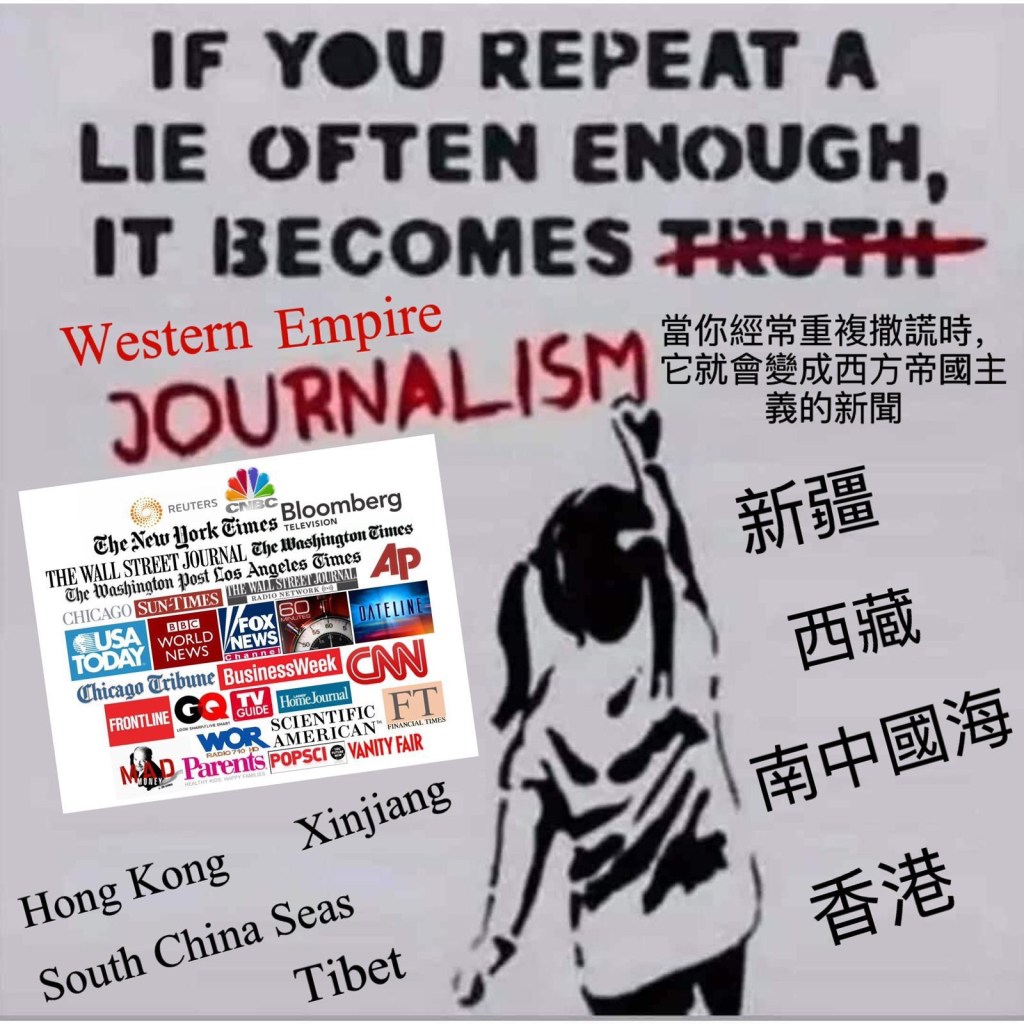
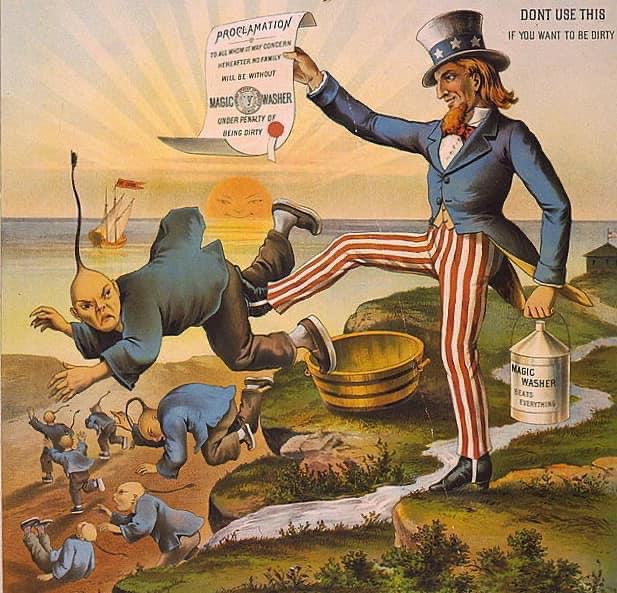
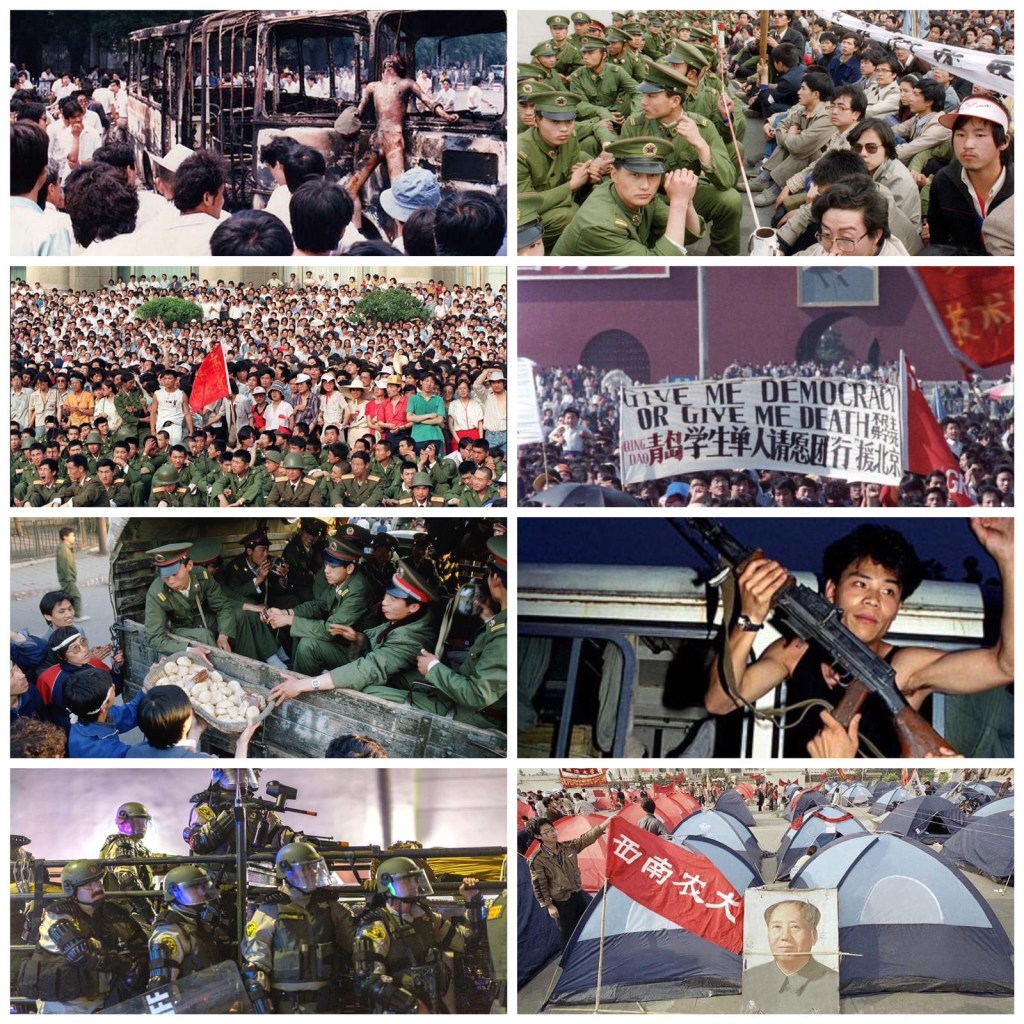
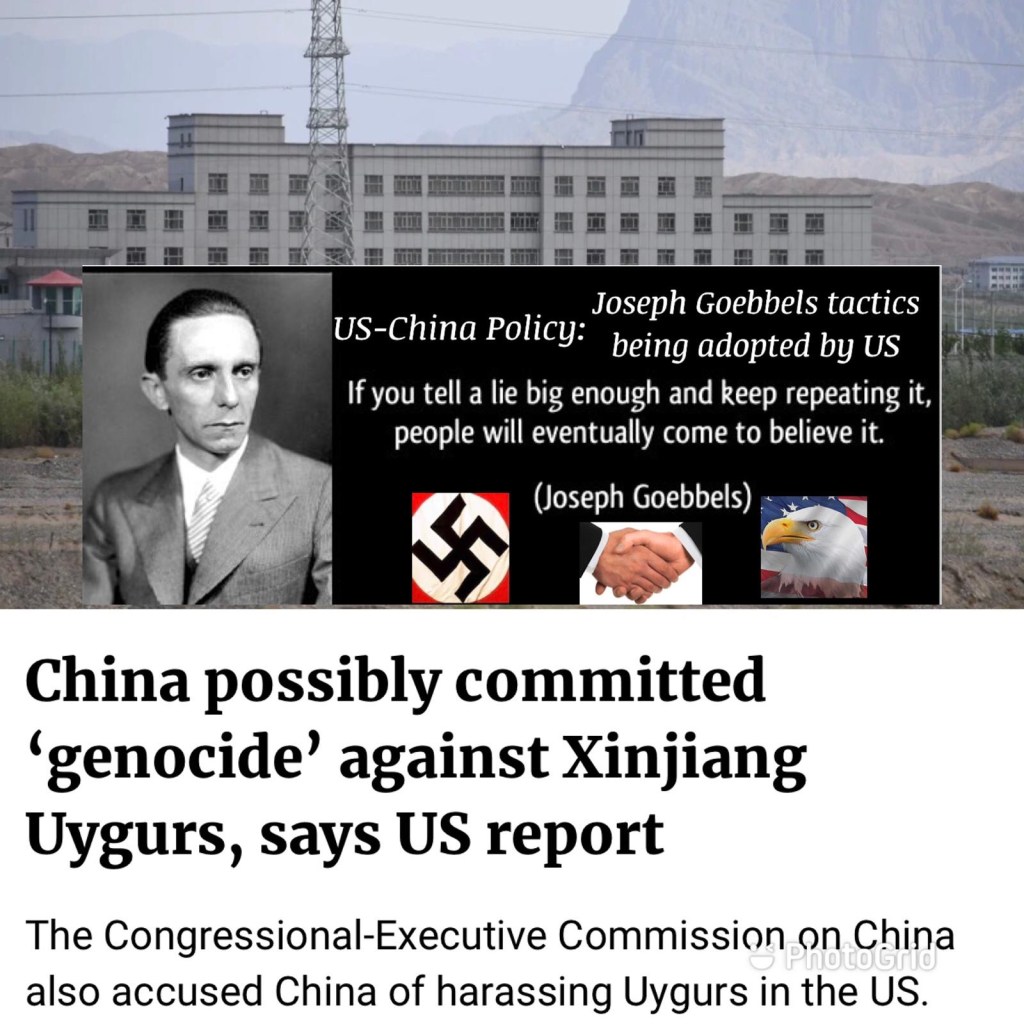
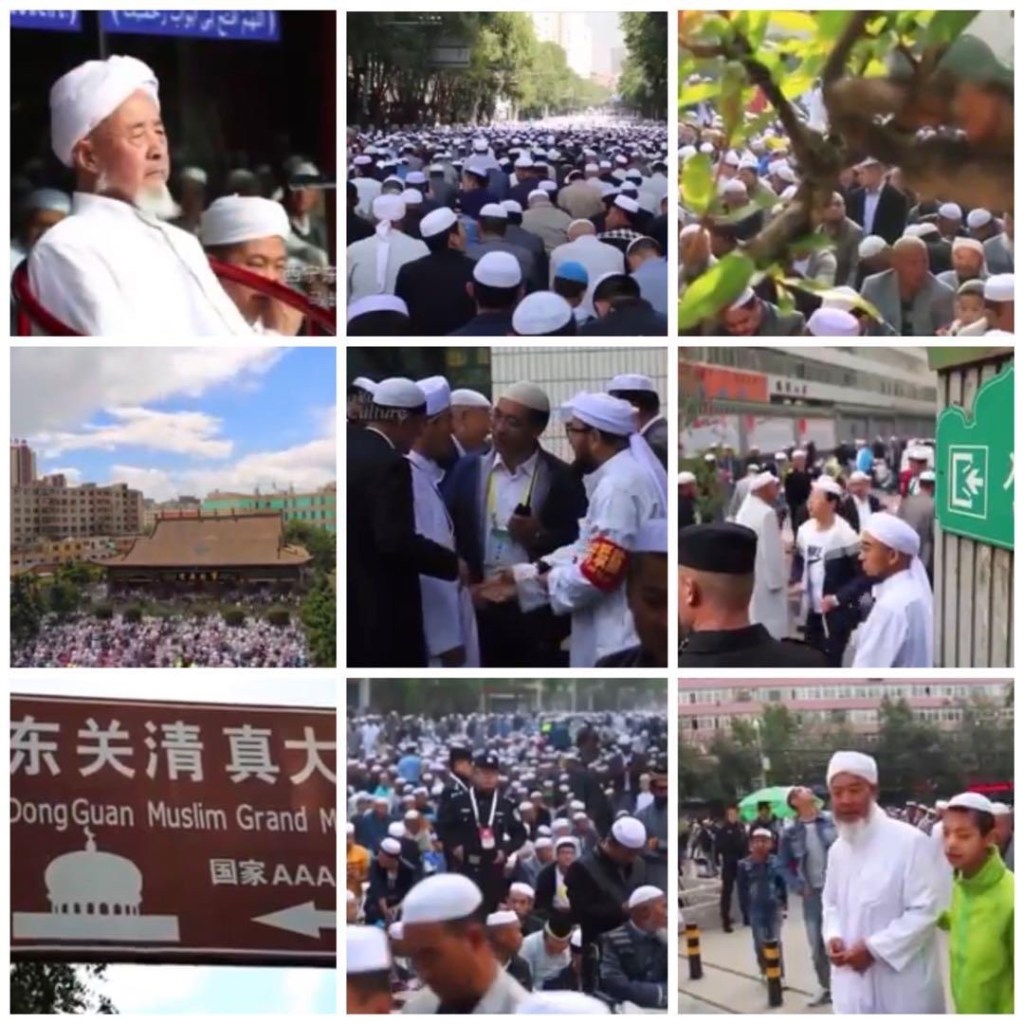
 Johnson Choi Biz