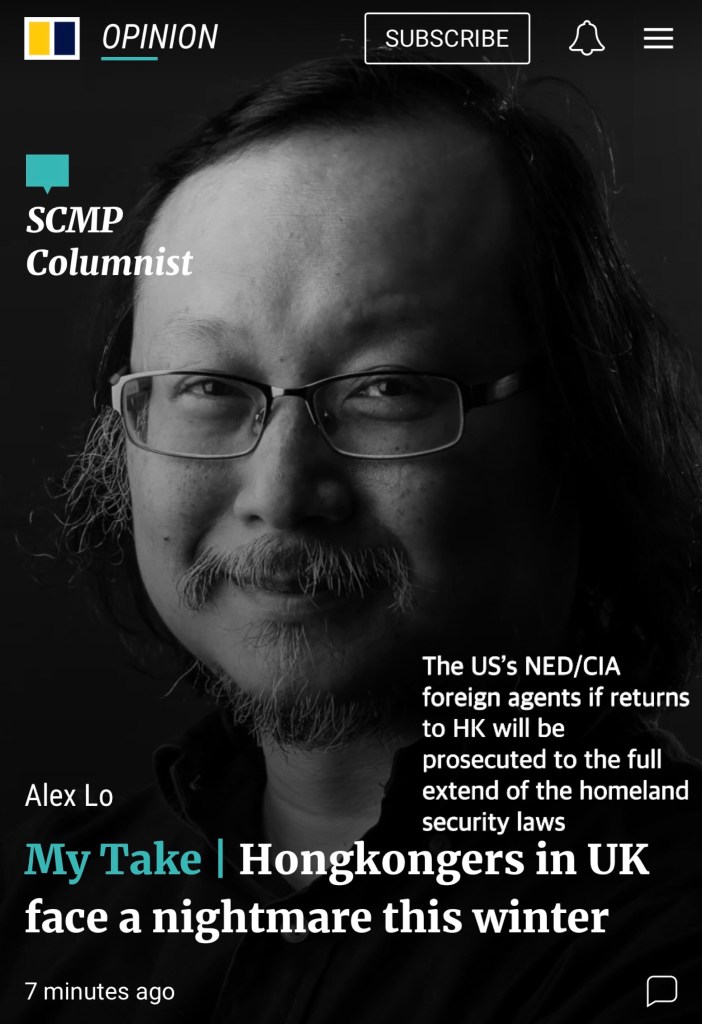
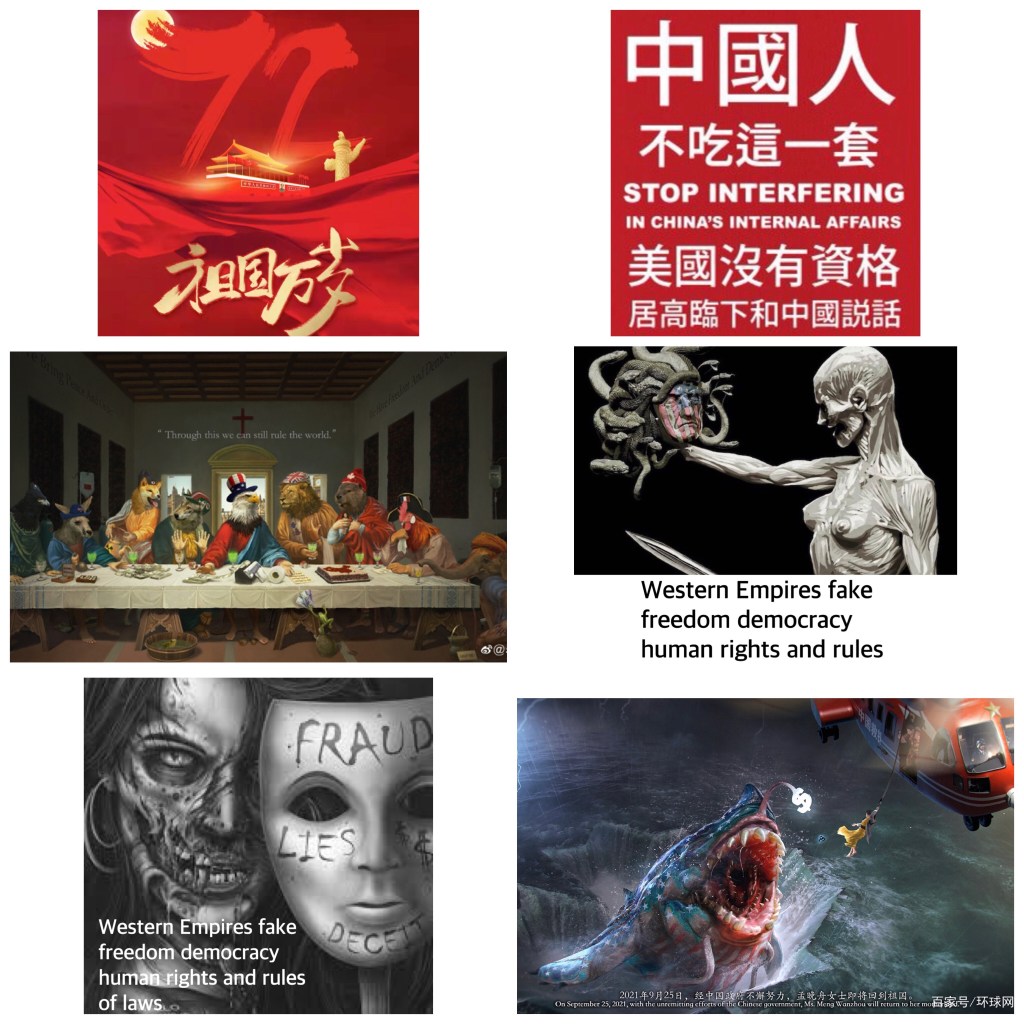
Many Hongkongers who fantasise about life in the West will now get a real taste of it in Britain this winter. Perhaps by early next year, more will come to their senses – at least those who are not fugitives fleeing justice. Maybe it’s not too late to come home.
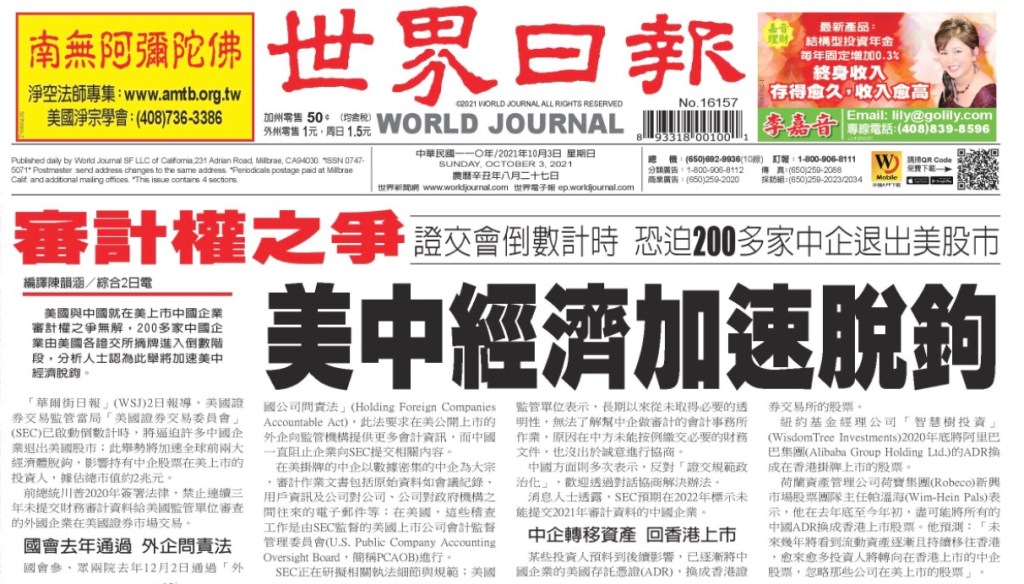
US-China decoupling to accelerate, 200+ companies to leave NYSE to list their companies in Hong Kong and China. World Journal SF 10-3-21 美國加州舊金山世界日報 Oct 3 2021
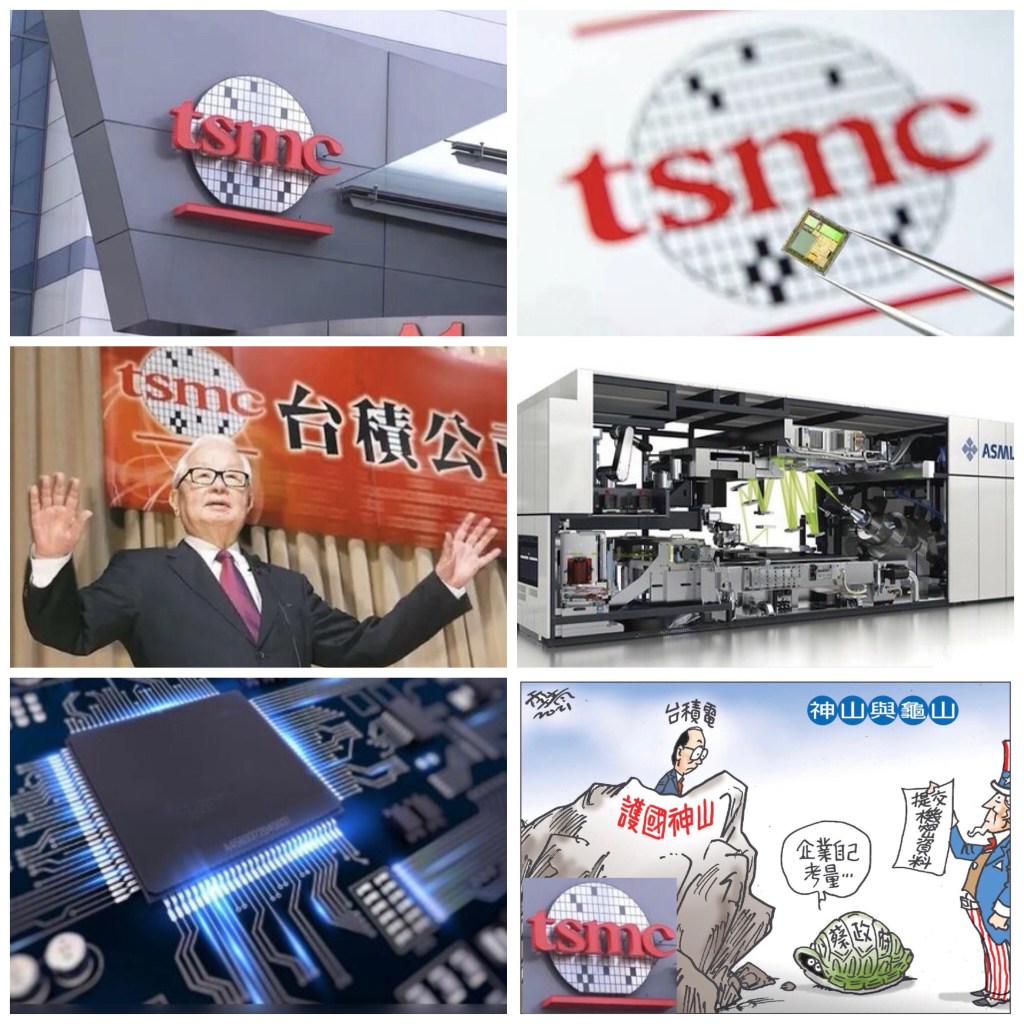
United States: The showdown is to make TSMC the “next Alstom” and “next Toshiba”! TSMC: After listening to your words, believing in your evil, and building the factory you want, in the end you still blackmail me? 美國:攤牌是讓台積電成為“下一個阿爾斯通”和“下一個東芝”! 台積電: 聽了你的話,相信你的邪惡,建你想要的工廠,你到底還是要勒索我?
01 From “going to the United States to build a factory” to “blocking”, what has TSMC experienced?
02 United States: Supply chain and advanced technology, I want them all
03 Enlightenment: Abandon fantasy and prepare for battle
In the past two years, TSMC seems to have done a lot of incredible things. Not only did it abandon its second largest customer and spend a lot of money to go to the United States to build a factory, the factory was built and built, and it was blocked by others. The plot of the future must be a little bit in mind for the big guys, after all, this is not the first time the United States has done this. So, why is TSMC so “obedient” but still can’t escape the fate of being blacked out? Will TSMC be the next Toshiba & Alstom? Next, Xiaogang will discuss with everyone.
Competition in the global chip industry has become fierce. It can be clearly felt from the European Union’s support plan of up to 145 billion euros and China’s strong support for domestic chip design and manufacturing. More and more countries are beginning to focus on chip R&D and production. Of course, this also includes the United States.
In terms of chip production, in order to improve the level of domestic chip production, the United States has tried to attract the leading chip production company TSMC to set up factories in the United States. Naturally, the United States has also issued many preferential policies to TSMC, including a $6 billion subsidy for plant construction and the use of more. Taiwan Semiconductor Manufacturing Co., Ltd. also hopes to use American talents and technological progress to improve the level of local chip manufacturing. Coupled with the pressure of the development of advanced process chips, TSMC finally chose to build a factory in the United States.
At present, TSMC’s chip factory in Arizona has officially started in May 2021, and it is expected to achieve mass production in 2024. In addition, according to Reuters news, TSMC will spend tens of billions of dollars to build a 3nm and even 2nm process chip factory in Arizona, while TSMC’s management also plans to produce 2nm and more advanced process chips in Phoenix. About TSMC’s expansion plan in Arizona has been confirmed by TSMC CEO Wei Zhejia, who stated that TSMC’s “progressive expansion is possible” in Arizona.
In fact, it is not only TSMC, but South Korean semiconductor giant Samsung also plans to build another factory near Austin, Texas. It is reported that this factory may become the first fab in the United States to use the 3nm process.
The United States obviously wants to “further”, and pulling TSMC and other chip manufacturers to build factories in the United States is more than just allowing them to increase the production capacity of domestic chips in the United States. What’s more, the special geographical location of TSMC’s headquarters makes TSMC occupy a large share of the global chip production market. Obviously, it also makes some people in the US government feel uneasy. For this reason, the United States has directly thrown out the “legal stick” and included TSMC and other semiconductor companies in the “national security risk list.”
Speaking of this, some people may ask the question at the beginning of the article: TSMC is so “obedient”, why does the United States want to block it? Before discussing why the United States blocked TSMC, we need to know the strength of TSMC.
TSMC is currently the world’s largest and most technologically advanced chip foundry. Its market share has exceeded 50%. It has more than 50 advanced EUV lithography machines and once occupied more than 50% of the 7nm foundry market. According to the revenue ranking forecast of the top ten global wafer foundries released by TrendForce in 2021 Q1, a single TSMC’s market share reached 56%, far surpassing Samsung (18%), UMC (7%), and Grid. Core (7%).
Although the United States has strong chip design capabilities, according to a report from the Semiconductor Industry Association (SIA), the United States accounts for only 12% of the global chip manufacturing market, and TSMC’s companies alone account for more than 50% of the market. At the same time, TSMC can earn money every year. US companies amounted to RMB 189.2 billion.
For such a powerful chip foundry leader headquartered in Taiwan, the United States is naturally “tickled” but knows that it cannot be overly dependent and trusted. The “core lack of core” that has swept the world over the past two years has strengthened the United States’ commitment to Its determination to transfer the chip industry supply chain in China can only be a good strategy to deepen the binding of TSMC and the United States. In this way, not only can the declining domestic manufacturing industry be boosted, the high domestic unemployment rate can also be eased.
For the United States, forcing TSMC to set up factories in the United States is only the first step, and then slowly and for various reasons to firmly hold these advanced process chip factories in their hands to obtain core technologies, accelerate the development of local chip manufacturers in the United States, and advances to squeeze the development of TSMC. After space subverts its advantages, TSMC kicks away. By then, it will form a monopoly in the field of global chip design and manufacturing, and its radiation will affect fields ranging from aerospace and military manufacturing to the production of scientific and technological products.
Anything that is at the forefront of innovation is very likely to become a market in the future. To seize the “high ground” of cutting-edge technology is to seize the future market, or the right to speak.
Xiaogang felt that whether the United States blocked TSMC or not has nothing to do with whether it is obedient. After all, as far as the United States is concerned, there are good things that can be “snatched over” even by allies. Before TSMC, France’s Alstom and Japan’s Toshiba had been “single care” by the United States. The former French “Pearl of Industry” and the glory of Japanese semiconductors have been defeated by the “Faining Foreign Corrupt Practices Act” and the long-arm jurisdiction of the United States.
Even if TSMC insists on manufacturing on Taiwan’s own island and keeping advanced technology on the island, things have developed to this point, and TSMC has basically lost its initiative.
First of all, TSMC itself has a large share of US capital. Foreign capital holds 80% of the shares, and the largest shareholder is Citigroup’s special depositary account for TSMC, with a shareholding ratio of 20.54%.
Secondly, TSMC founder Zhang Zhongmou is already naturalized in the United States. After graduating from university, he worked for Texas Instruments for a long time, and then returned to Taiwan to establish TSMC.
Finally, and the most core point: Most of TSMC’s customers are American companies, and the largest market is also in the United States. According to data compiled by Bloomberg and Digitimes, TSMC’s main customers accounted for the largest revenue contribution from Apple, and the rest were Qualcomm, Broadcom, and Texas Instruments. At the same time, according to TSMC’s 2020 financial report data, the United States is still TSMC’s largest market, accounting for 61.07%.
Combining the above three points, coupled with the coercion and temptation of the United States, even if TSMC is unwilling to go to the United States to build a factory due to various factors, in the end, it has to cooperate with the United States and “transport” its advanced technology to the United States. The road of Toshiba & Alstom went further and further. Even Liu Deyin, chairman of TSMC, told the US in the form of telling the truth that the cost of forcibly transferring the industrial chain is high, the productivity is low, and the subsequent semiconductor innovation is affected. But the United States does not care about these: the success of the plan is happy, and the failure of the plan is “cannon fodder” by TSMC .
First forced TSMC to build a factory in the United States, and then offered a “legal weapon” to block TSMC. TSMC had the intention to resist, but was “powerless” to contend, and finally had to be forced to accept it. The reason is that, in addition to the initial team error, the most fundamental thing is that there are many key technologies and equipment in the hands of the opponent .
The first thing to know is that the entire chip manufacturing process cannot be separated from lithography, and the entire chip supply chain cannot be separated from the lithography machine. To manufacture excellent chips, a photolithography machine is required to “print” the circuits and functional areas designed by the technicians into the wafer. The more advanced the performance of the lithography machine is to create the more complex and highly integrated chips. The production of 5nm chips is generally speaking, the lithography machine uses the light ten thousand times thinner than the hair to map the circuit diagram on the same small chip. When the chip information is etched up, the difficulty can be imagined. It can be seen that it is almost impossible to produce more precise, lower energy consumption, and higher performance chips without a high-performance EUV lithography machine.
But before TSMC, Samsung and other friends are “pressing every step”, and Intel and other companies are “looking forward”. Naturally, it is also under great pressure and wants to achieve mass production of more advanced technology chips as soon as possible. This can be seen from TSMC’s advancement of its 4nm chip trial production plan for Q4 this year to Q3 for risk production.
Advanced chip production is on the line. Wouldn’t it be embarrassing if the US gets stuck on the “neck” of the advanced EUV lithography machine at this time. In addition to lithography technology, TSMC will also use many patented technologies from European and American countries in the chip manufacturing process, which will inevitably become an important factor restricting its development in the future.
From Alstom, Toshiba to TSMC, these “bloody” lessons all remind us to abandon our illusions and prepare for battle. Only by mastering the core technology and cutting-edge technology in one’s own hands can others not make irresponsible remarks . Fortunately, good news has spread in China’s lithography machine, photoresist and other fields, and the country has also begun to vigorously support the development of the semiconductor industry. It is believed that in the near future, domestic semiconductor companies can also use the high-end EUV lithography machine produced in the country, and China’s chip industry is bound to take off.
Rebecca Chan: Did you know that the Nazis studied how the Americans handled the “Indian problem” and then modelled their “solution” on what the Americans did… and continue to do?
Excerpt: || In his law review article, Krieger discussed a wide array of issues regarding American Indians’ U.S. citizenship and their rights, the discriminatory treatment of Indians and Indian nations by the United States, and myriad federal Indian laws and policies. After all this research and analysis, he concluded that United States Indian law was racial law, and that the United States discriminated against and treated Indians and Indian nations differently from other American citizens based on their alleged racial differences from white Americans. (“the Indian law is exactly what its name indicates: a racial law; and there is no way out of the extra-constitutional situation …” Emphasis in original.) Krieger also concluded: “The proper nature of the tribal Indians’ status is that of a racial group placed under a special police power of the United States.” It appears certain that what Krieger learned from his intensive study of federal Indian law and the state laws that discriminated against Indians, and what he emphasized to Nazi officials, was that the United States discriminated against its Indian citizens because of their race and had always done so. Thus, he concluded that Nazi Germany should be justified in doing the same against German Jews.| https://indiancountrytoday.com/opinion/nazi-germany-and-american-indians
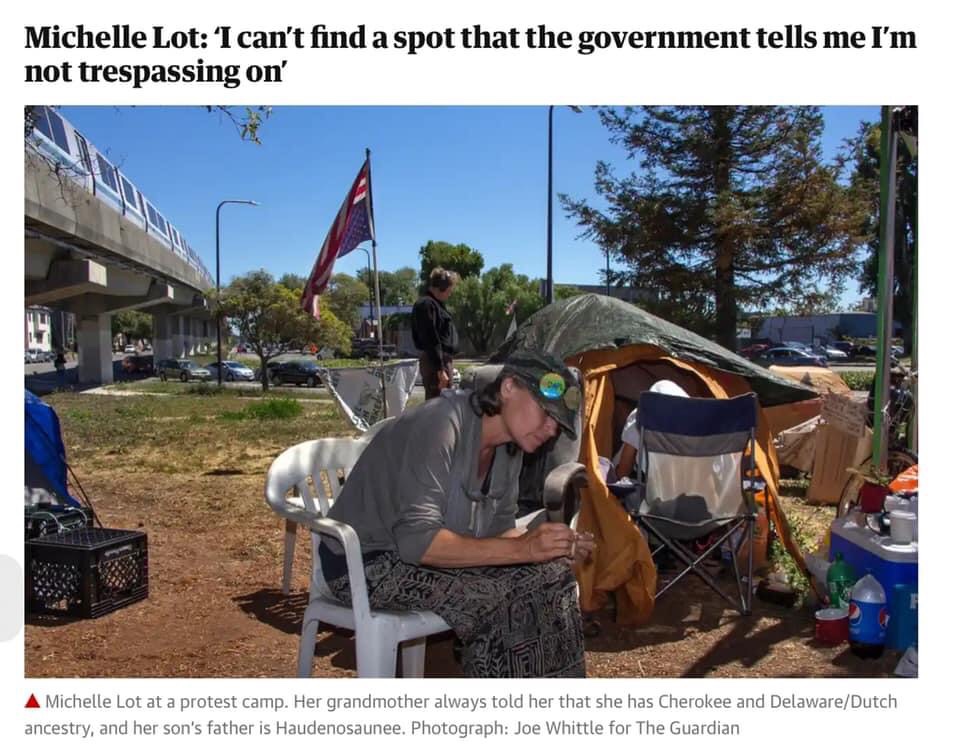
Excerpt: || When she was 17, Star found a way to travel to the Standing Rock protest camp with a bunch of strangers. She was on the Backwater Bridge when over 150 people contracted hypothermia from police water cannons spraying them in below-freezing temperatures. Countless injuries were sustained from police armaments, including the near losses of an eye and an arm for two young women not much older than Star (my own daughter was shot at with rubber bullets while kneeling on the ground praying).
“We gotta stick together, because there’s not very many of us,” Star says with a chuckle. “We’re supposed to stick together, and be unified. That’s why when I went to Standing Rock, it was amazing. Over 300 tribes came together just to protect water! We stood our ground. It felt really empowering. People went to Standing Rock with little or no money and just the clothes they had on their back to stand up for what’s right.” || https://www.theguardian.com/us-news/2017/sep/04/native-americans-stories-california
Naturally, all people in the Anglo-American sphere care about today is the “Chinese problem”.
Who is the big loser? The Meng Wanzhou case is finally settled, and many people will ask, who is the big loser? The United States failed to coerce China, let go of the hostages, and lost face in front of many allies. It must be a loser.
The hostages are on the enemy’s side, and China has thrown a rat-fighting weapon, and has endured more than two years of suffering. It cannot be said to be a winner. But the biggest loser is definitely Canada, because it lost the rule of law.
Why would you ask? First of all, we must talk about the basic legal basis for the extradition of criminals. Regardless of international law or the model provisions on the transfer of suspects enacted by the United Nations resolution in 1990, the most important conditions for successful legal extradition are two: 1. Regardless of the charges, the background of the accused, or the facts of the crime, no political factors may be involved; 2. , The crime involved must also be a serious crime of extradition to the local area.
The US sanctions on Iran are undoubtedly political actions. The accusation of others for breaching sanctions is undeniably political. The most basic prerequisites are not met, how can the extradition procedure be initiated? Equally important, as listed in Annex A of the so-called deferred prosecution agreement, it only accuses Meng Wanzhou of concealing part of the facts; but the concealment of facts alone did not cause losses, and it does not constitute a crime of fraud anywhere, including Canada and the United States. Since it is not a crime and political factors are involved, what about extradition?
Regardless of factual disputes or Meng Wanzhou’s reasons for defense, for the two points mentioned above, no country that respects the rule of law will accept extradition applications. Canada disregards internationally recognized legal principles and its own legal requirements, allowing it to be manipulated by the United States as its political tool. What else does it talk about the rule of law? How can Canada convince international investors that their judicial system will not be subject to political interference? In this battle, Canada really lost badly!
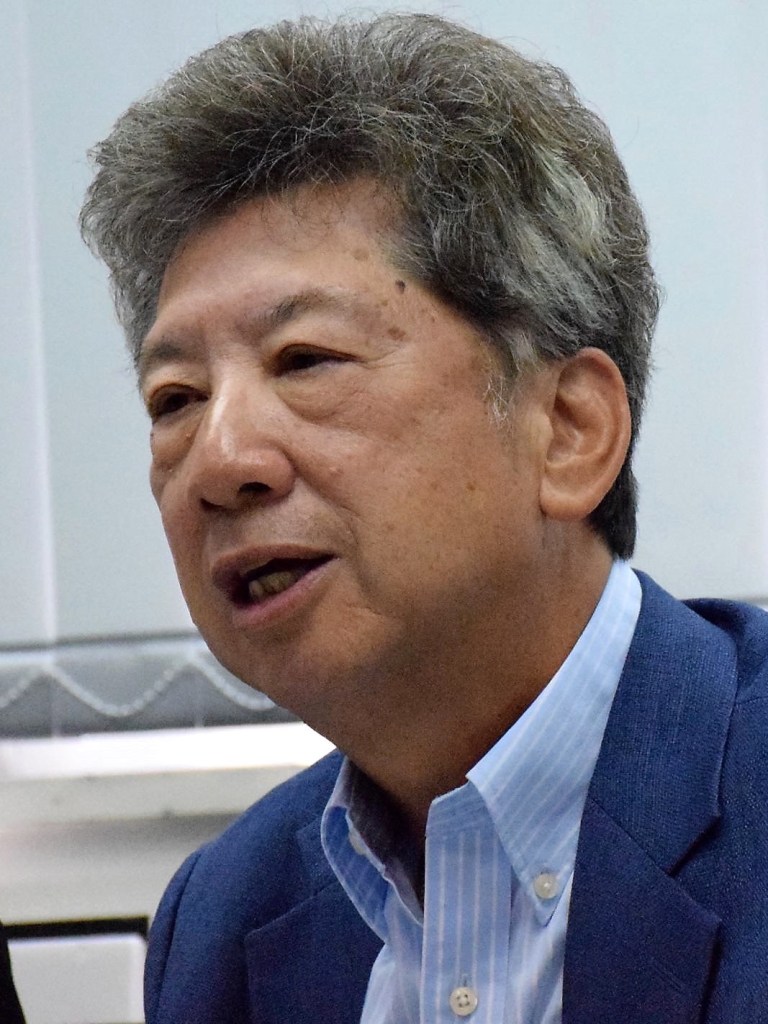
Written by: Ronnie Tong Member of the Hong Kong Executive Council
Ronny Tong Ka-wah, SC is a Hong Kong Senior Counsel and politician. He is a current non-official member of the Executive Council of Hong Kong.
(Above Chinese to English Translation via Google Translate)
Exclusive: China’s victory on Huawei Meng Wanzhou’s case to curb use of US long-arm jurisdiction: ex-Alstom exec by Chen Qingqing Oct 02 2021
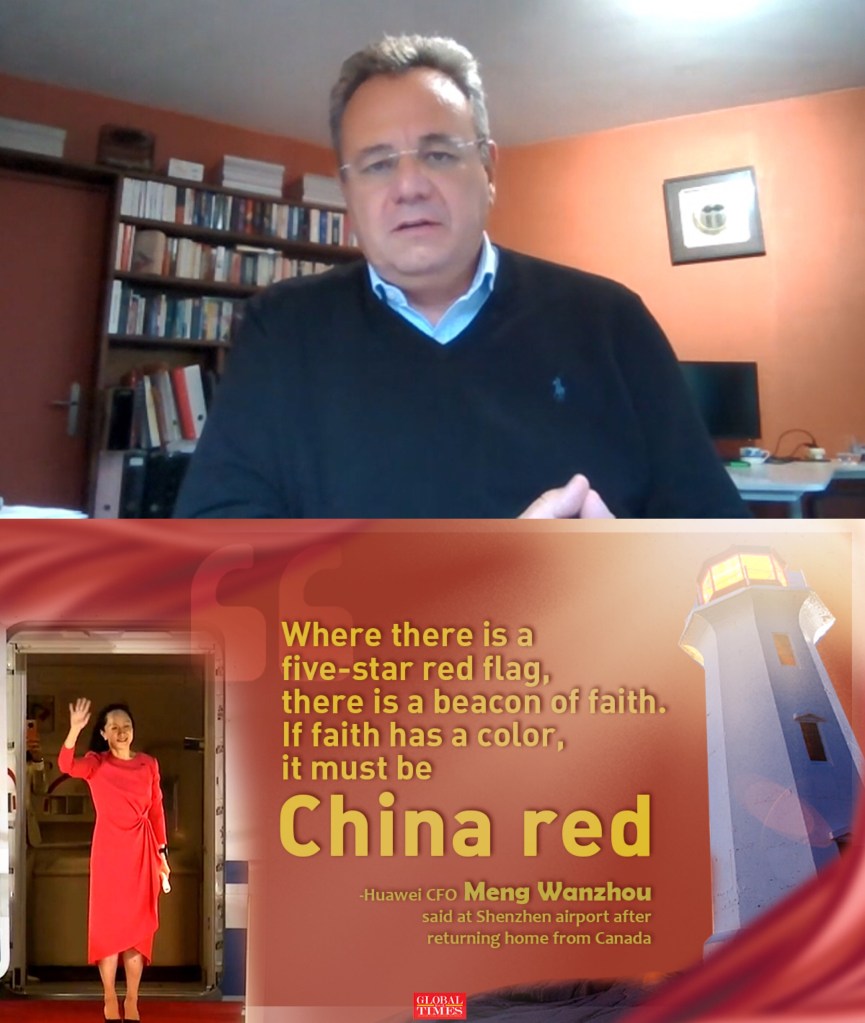
China’s victory on the incident of Huawei’s Meng Wanzhou could help slow down the process during which the US uses its legal system to wage an economic war against specific companies and inspire more countries to stand up in counteracting the long-arm jurisdiction of the US, former Alstom executive Frederic Pierucci told the Global Times in an exclusive interview on Friday.
“It’s clear that the US has been using it [such tactic] for quite a long time,” Pierucci said during a video interview with the Global Times, as the country often targets companies’ strategic sectors by applying US laws onto foreign companies in order to achieve their economic goals.
The story of Pierucci has been widely described as the French version of Huawei’s recent incident. As a co-author of a book titled Le Piège Américain (The American Trap), the French businessman who used to work at the French energy and transport giant Alstom, told a story about how the US uses its long-arm jurisdiction as a weapon to strike down competitors.
Though there were some similarities between the two cases, they ended differently. Pierucci was arrested in New York in 2013 on the charges of breaching US Foreign Corrupt Practices Act, which eventually led to a partial acquisition of Alstom by General Electric and jail time for him; while Meng was detained in Canada at the request of the US amid the US-launched trade war against China, but she later returned home without a guilty plea.
“One huge difference is that she had the full support of Huawei and the Chinese government as they understood rapidly that this was not a legal case as usual … it was part of an economic war,” he said.
Pierucci pleaded guilty and spent two years in prison in the US after being arrested, while Alstom was fined $772 million in 2014, which forced the company to sell its assets, and the French businessman says its collapse was plotted by the US, which has been using a similar strategy against Huawei.
Meng reached a landmark deal with the US Justice Department on September 24 that allowed her to return to China, under which the senior executive of the Chinese company did not plead guilty.
Where there is a five-star red flag, there is a beacon of faith. If faith has a color, it must be China red.” -Huawei CFO Meng Wanzhou said at Shenzhen airport after returning home from Canada
I think the case of Huawei is going to slow down the extraterritorial reach of US laws, as it was the first time that a country really stood up in protecting its citizens from US jails and protecting its company in such way, Pierucci said.
An economic war between the US and China now reminds him of a trade war US waged against Japan decades ago, and the former executive of Alstom said it’s important to take strong countermeasures to make the opponent “back off.”
For instance, in Europe, in 1980s, the US started to attack French companies on antitrust issues. Therefore, they put a lot of fines on French and European companies on antitrust, Pierucci noted. At that time, Europe also reacted and put a lot of fines on US companies for antitrust as well. “And then, there was an equilibrium which created itself,” he said, noting that a strong reaction is needed to prevent domestic companies from being “laminated” by the US.
Now it’s more like “playing ping-pong” between China and the US, Pierucci said, as China has come up with stronger measures over the past few years to protect its economic interest while advancing the establishment of legal framework to counteract the US long-arm jurisdiction.
China’s top legislature passed the law on export control in October 2020 and it took effect on December 1, 2020, which authorizes the Chinese government to take countermeasures against any country or region that abuses export-control measures and poses a threat to China’s national security and interests.
Some experts said the legislation could be used to break up the US long-arm jurisdiction on a growing list of Chinese companies in an increasingly brutal face-off between China and the US.
Also, top lawmakers in China voted to pass the Anti-Foreign Sanctions Law in June, providing a comprehensive legal basis for blocking illegal foreign sanctions and preventing Chinese individuals and entities from suffering the damage resulting from such illegal sanctions.
While Pierucci thinks that the victory of the Chinese government on the incident of Meng will inspire more countries to fight the US long-arm jurisdiction, some countries have already started to react, for example the UK and France both implemented laws such as anti-corruption law and blocking statute law to protect their companies from extraterritorial reach of any foreign country.
Even though more countries are setting up certain kinds of laws to obstruct the US long-arm jurisdiction, the outcome depends on how those laws can be effectively applied, he said.
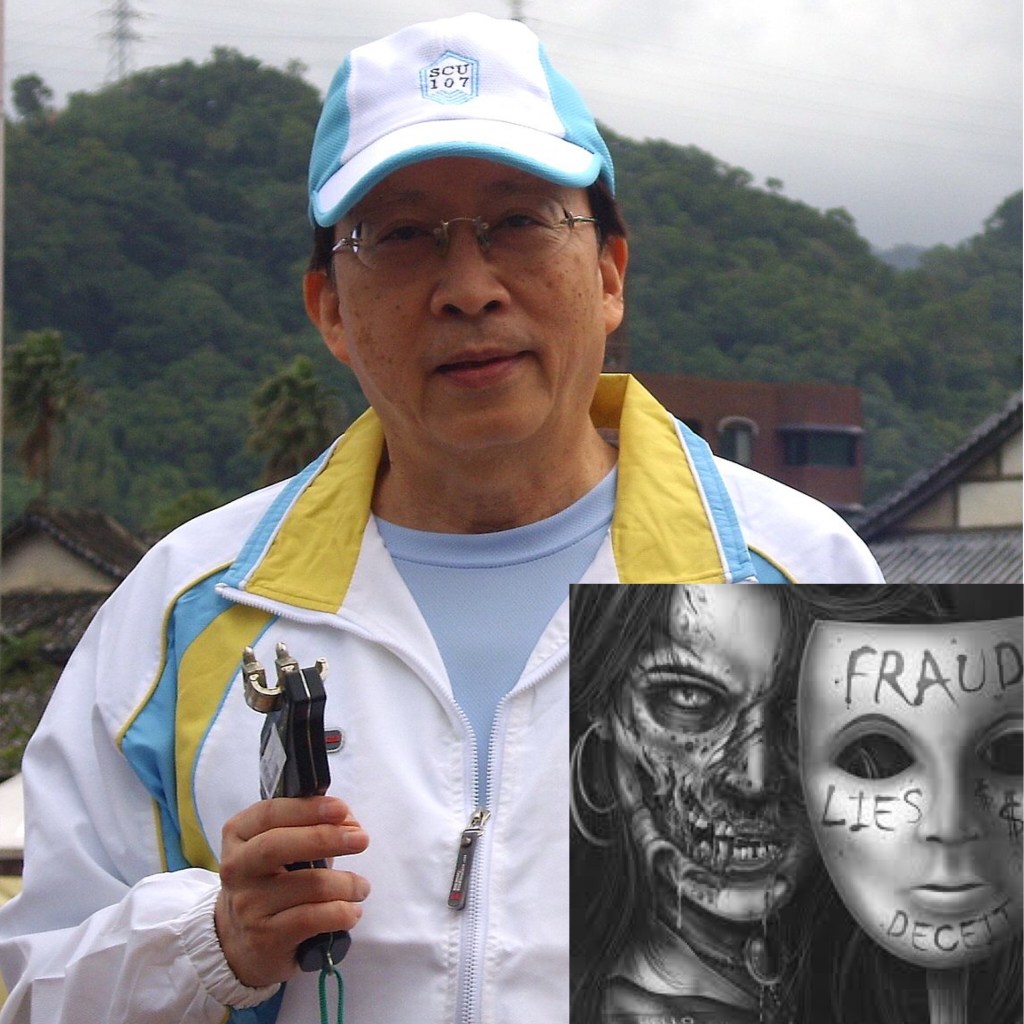
AngloSaxon, especially the elites usually wear mask. The purpose is very mysterious. What it shows outside is democracy, freedom, and human rights, and it is the universal value, but in reality just the opposite including crimes against humanity.
Masks and Masks United Daily News – Taiwan by Liu Zhaoxuan 2021-01-19
Liu Chao-shiuan is a Taiwanese educator and politician. He is a former president of the National Tsing Hua University and Soochow University and a former Premier of the Republic of China.
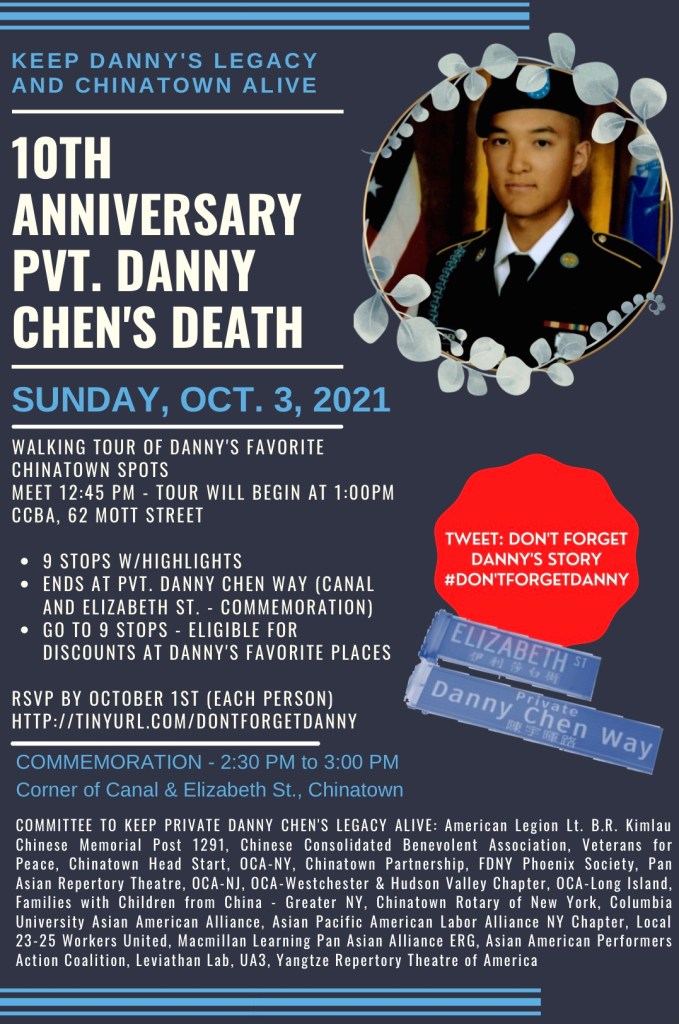
10th anniversary of the death of U.S. Army Pvt. Danny Chen in Kandahar Province, Afghanistan. At age 19 after being bullied, subjected to ethnic slurs and insults, and physically attacked by racists in his own unit (C Company, 3rd Battalion, 21st Infantry Regiment, 1st Stryker Brigade Combat Team, 25th Infantry Division) Danny took his own life.