Video: Remembered your roots and Chinese heritage – foreign passport does not change you into white, red or black. With money you can practically buy any passports you wanted. 記住你的根和中國傳統 – 外國護照不會把你變成白、紅或黑。 有了錢,你幾乎可以買到任何你想要的護照.
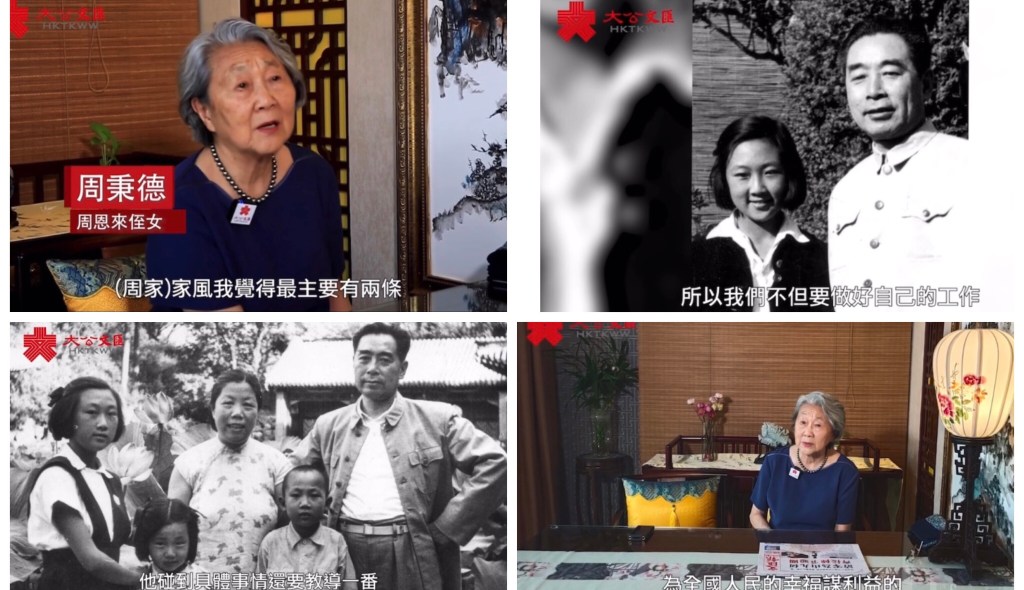
One hundred years since the founding of the CPC party | Zhou Enlai’s niece: Recognize that you are a common people. Do things from the China’s national interest. 建黨百年|周恩來侄女:認清自己是老百姓 做事從國家利益出發.
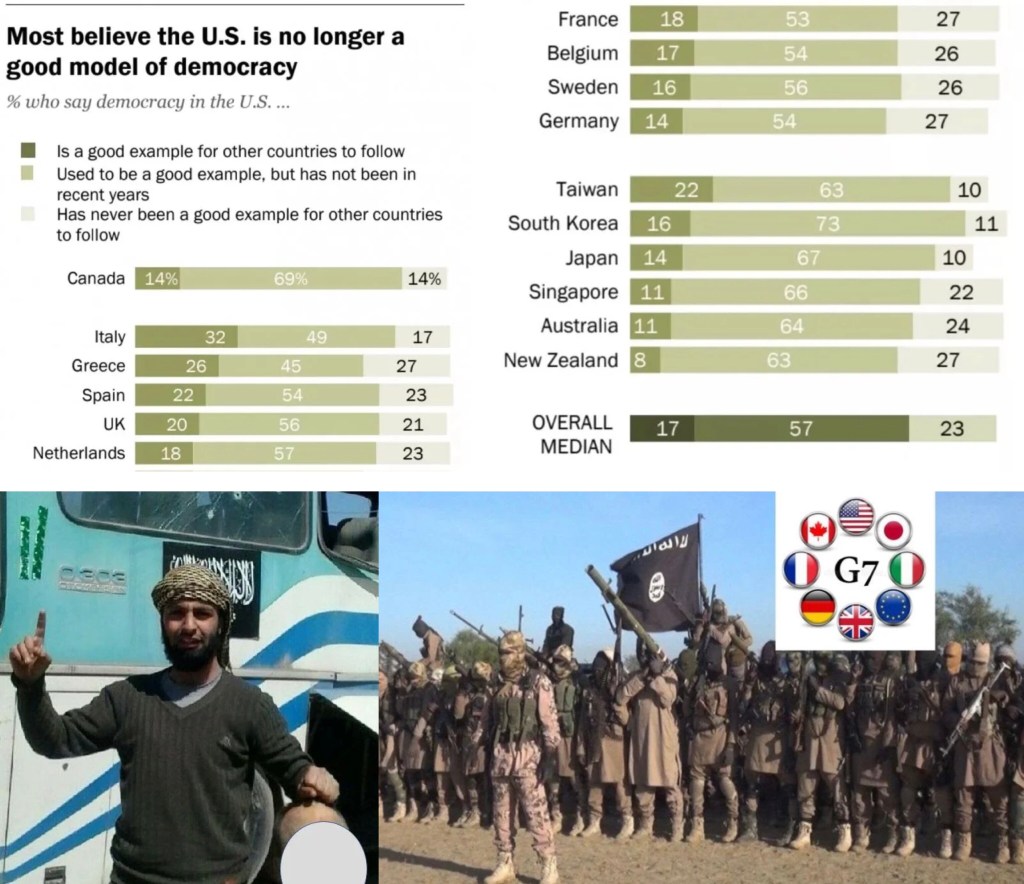
America has plutocracy instead of real democracy ! The funny-tragic thing is that the U.S. is not even democratic. The elite 1% rules over the rest 99% ! G7: Joe Biden’s Tour of “Democracy Jihadism” 美國是由富豪統治,而不是真正的民主! 可笑可悲的是,美國甚至不民主。 1%的精英統治著其餘的99%! G7:喬拜登的“民主聖戰主義”之旅 By Chris Kanthan
Joe Biden wrote an op-ed in Washington Post about his Europe/G7 trip. The op-ed had 12 paragraphs and 16 mentions of the words “democracies” or “democratic.” This is the new religion of America, which cannot offer prosperity or economic freedom to its own people, let alone to others. The subliminal message about the word “democracy” is that it is the opposite of China and Russia, which were mentioned 7 times. In a nutshell, the core message is warmongering — how to contain the two nuclear-powered geopolitical rivals. These are very dangerous times.
In my new book on China, I use the phrase “democracy jihadism” to describe America’s perpetual aggression and endless wars that are are justified by a fake obsession with democracy. Democracy jihadism has no tolerance of other systems.
Just like how jihadists show one finger for one God, the Western military-corporate-banking complex warns the world that there is only system. Both the normal jihadist and democracy jihadist demand total submission. One jihadist destroys churches and Shiite mosques; and the democracy jihadist destroys entire economies through sanctions. One jihadist chops off heads, while the other is more sophisticated — uses coups, color revolutions, propaganda, and wars.
The funny-tragic thing is that the U.S. is not even democratic. Researchers at Princeton University studied how 1700+ policy issues fared in the U.S. Congress between 1981 and 2002. And they found that the rich and powerful got what they wanted; and the average citizen basically got nothing! In technical terms, this is what they concluded: “Economic elites and organized groups representing business interests have substantial independent impacts on U.S. government policy, while mass-based interest groups and average citizens have little or no independent influence.” The paper is titled “Testing Theories of American Politics: Elites, Interest Groups, and Average Citizens.”
The USA is an oligarchy, fooling the masses into believing that they have a democracy. And the reason that elections don’t matter is because the political system has “vetocracy” — a term coined by Francis Fukuyama. What this means is that the corporate interest groups may not always get what they want, but they can always block what they don’t want. This is rule by veto. We can already see this in Biden’s term — his tax raise on corporations got blocked, his $2.5 trillion infrastructure bill has gotten cut by 60% even before reaching the debate, the student loan forgiveness is kaput, and so on.
It shouldn’t be surprising. Candidates who spend more are almost always likely to win. And who funds them? The oligarchs and corporations. While the elites openly fund both parties, Americans are fooled into thinking that Republicans and Democrats represent two different parties. No, they represent one party — party of $$$$$$.
Around the world, “democracies” mean countries who are plugged into the same system as the U.S. and Europe. All the media in those countries parrot the same talking points. Go to Brazil, Singapore, Germany, Japan, India, Saudi Arabia … they are all under the same system. Facebook, Twitter, CNN (localized versions), what’s being taught and discussed about foreign policies, world affairs, global financial system in schools and colleges … there’s astonishing uniformity. “Smart” and “educated” people in those countries read localized versions of Wall Street Journal, NY Times, BBC etc.
People in developing countries don’t even wonder why their countries need loans from the World Bank and the IMF, while the US, EU, and Japan can print as much money as they want.
This is just worldwide ignorance and serfdom. This is the global brainwashing in the “democracies” that Biden loves so much for obvious reasons!
Who benefits from wars on China and Russia?
There is only one country that benefits from containing Russia and China. And that’s the USA, which wants to stay Numba One. The interesting part is that the USA wants to contain Europe as well. If Europe gets along with Russia and China, there will be a prosperous Eurasia, whose combined GDP will be 3x as big as the US economy.
However, the average European is clueless and Europe’s leaders are all compromised. The EU has had ZERO growth in the last 12 years. China just surpassed the EU in GDP in 2020. The simple reason is that the EU fell into the housing bubble Ponzi scheme during 2000-2008. And Europe never developed its own versions of American internet giants like Facebook, Google, Amazon, Uber, Netflix etc. Instead, Europeans just sat on their asses and enjoyed American democracy. (And don’t even ask about Japan, which has had 0% GDP growth in 25 years!!!)
So, rather than fighting the status quo, the G7 will embrace “democracy jihadism.” At least, this will allow the leaders to give sanctimonious and self-righteous speeches about human rights, Western values, and democracy. I am sure they will cry for Xinjiang and Uyghurs on TV, while plotting behind doors how to divide and conquer the Middle East further. Maybe, during sumptuous dinners, they will discuss how to start a new Mujahideen program to fund, arm, train ETIM and TIP — the Uyghur terrorist groups.
Demonizing China and Russia is awesome for the military-industrial complex. NATO will get billions of dollars/Euros to fight the Democracy Kuffars — Russia and China.
Maybe all these democracy jihadists will fight Russia and China. And maybe they will die like suicide bombers to maintain America’s primacy. Never underestimate the group think and mob mentality in democracies.
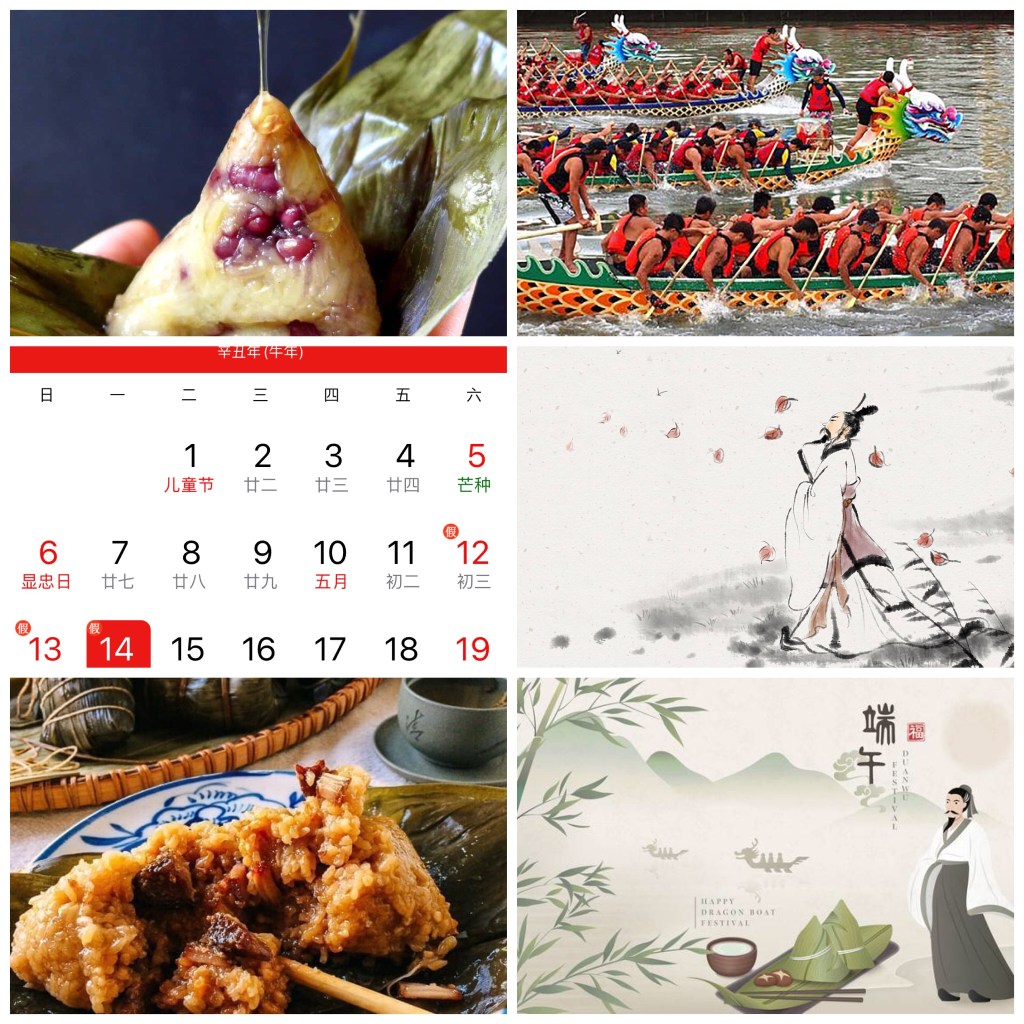
Professor Ling-chi Wang of UC Berkeley: Happy Dragon Boat Festival (端午节)! Yes, we observe this and other Chinese festivals. For this one, we make Zongzi (粽子) every years and give them to our children’s families. We actually had a Zongzi-making party over the weekend. Our children and some of our grandchildren participated in making them. To my parents’ generation, the process is a piece of cake. But for us, it is a challenging job. We made about 30. It took one day to assemble and prepare the ingredients and another day to wrap them in large bamboo leaves. But, the reward, consuming them, is well worth the trouble! (In case you would like to eat this once-a-year delicacy, you can buy a very good one at the Clay Pot Restaurant on Clement and 11-th Avenue in the Richmond District of SF. I strongly recommend it. You can also ge authentic Taishan Clay Pot rice in this restaurant owned by the Liu family from Taishan).
Needless to say, the ritual of making Zongzi always reminds me of my school days in China when we had to memorize the famous Chu Ci (楚词) Chu poem, by Qu Yuan (屈原), entitled, “Li Sao (离骚), An Energy of Encountering Sorrows,” the most difficult poem to understand and memorize I had ever tried to master. The 3rd century B.C. poet/martyr, Qu Yuan, is the celebrated patriot commemorated nationwide each year in this annual festival and immortalized by this poem.
Your road trip through five Western states sounds great. I have yet to make one to the Rocky Mountain states. (I toured Nevada, Utah, Arizona, New Mexico, and Colorado, but not Wyoming, Idaho, Motana, Idaho and the Dekotas. I would like to visit them before I kick the bucket).
I noticed you called your upcoming trip, 西游记 “Journey to the West,” named after one of the four best known novels in the history of Chinese literature. For Chinese Americans making your trip, I would call it “Journey to the Far West,’ the title I borrow from a long revolutionary ballet, composed by the late Chinese American jazz saxophonist and jazz composer. It is an ambitious musical epic of Chinese American struggles in western states of the U.S. in the 19th century. I was fortunate to have a chance to attend the performance of this long piece. Among all the Asian American jazz musicians, I consider him the most talented and best. He was also a Marxist, writer, playwright, and political activist. Tragically, he died young ten years ago.
For those interested in the history of Chinese immigrants in the West, I recommend Chinese on the American Frontier, edited by my late friend, Arif Dirlik (Rowman Littlefield, 2001). Chinatowns once dotted many frontier towns and cities in the Rocky Mountain states. Most have disappeared.
By the way, in case you are going by Bozeman, Montana, see if Robert Vrooman, the former head of Counterintelligence at the Los Alamos National Laboratory, Los Alamos, New Mexico. He bravely told the U.S. Senate, in a public hearing, that there was not “a shred of evidence” that Dr. Wen Ho Lee was ever a spy for China. He called the charges against him to be racist. In my book, he is a hero.
Have a nice and safe journey to the Far West!
Edward Liu: June 14, 2021 Good morning….,buen dia!
As I start to gear up for my upcoming exploratory road trip across 5 Western States, I am cautiously reminded that 2021 this year is a very different America.
西游记 One of the reasons why I am doing this road trip is to feel the pulse of America’s heartland outside of major big cities.
There are many Americas now…. and the cultural-political-ideological- economic divide is a subject that I seek to understand and write about.
On this road trip, I will try to post my blogs if there is wifi signals… some remote parts of the destinations I will travel to may have no or weak signals and broadband.
I will try to do my best.
Some of my good friends have reminded me to be extraordinarily careful and stay safe, given the rise in unprovoked violent anti-Asian attacks all over America in this climate of Asian and China-bashing hysteria.
I have my pepper spray and jungle machete. But I do not want to pack an assault rifle because I do not want to escalate any confrontation in any rage-hate outbreaks.
It is not the four-legged wildlife like grisly bears that I worry about; but the two-legged racist bigots that I worry about the most.
Almost daily now, outbreaks of violent mass killings and mayhem are erupting all across American cities. In rural America, the peace remains stable.
I don’t mind bigotry stemming from ignorance and lack of contact. In Montana, Wyoming, Idaho, some of the ultra-right conservative redneck cowboys can be rough…. but talking it out and connecting on a one-on-one human level is something which can de-escalate confrontation.
It is the southern rednecks, not the western rednecks that is more dangerous. The Trumpist “Crusaders for Jesus” I call them.
To these folks, the rage formed around China bashing and anti-Asian bigoted hate has a fanatical religious component. It is the misguided perception that we Chinese are “anti-Christ.”
These are the Mike Pompeo and Mike Pence types. Billy Graham’s son, Franklin, is also part of this class of “China haters.” They demonize the Chinese as “ungodly.”
Today I followed the news of Fuddy-Duddy Joe Biden on his meeting with the NATO military honchos in Brussels. This one day before the looming “gunfight at Geneva Corral.”
It will be a shoot-out between a 78 year old POTUS with memory lapses against a much younger “Killer,” Vladimir Putin.
I hear Turkey’s Tayio Erdogan, also a mistrusted member of NATO, also wants to meet Biden… to get a first-hand measure of Fuddy-Duddy Joe!
He will be disappointed because the old man is 90% “spin,” and only 10% “substance.”
Worse, Biden’s Secretary of State Anthony Blinken is worse. He is a rabid liberal Zionist ideologue… one of the 5,000 idiots who now formed the Corp of America’s foreign policy “experts”… the CFR- Council on Foreign Relations.
These folks are dis-connected from the real America of youths and the bottom 60%.
These young Americans and working class are opting out. The shifts are most remarkable as more and more of them are resigning and getting out of the treadmill of “rude, brutal, unfriendly, unkindly” work life in corporate and tech America!
There is a new wave of urban escapees today towards less populated states like Montana, Wyoming, Idaho.
Ever heard of Provo, Utah? Or Boulder, Colorado? Or Boise, Idaho?
This domestic transmigration is something that I will study and learn about in my road trip…. in addition to exploring “the yellowing and browning of America’s racial-ethnic demographics.” Yah!
Nury Vittachi: WHEN EUROPEAN LEADERS refused to back the US’s anti-China campaign, internet connections were shut down to ensure no outside heard the discussion, a report from the site said. . It happened during the Saturday evening discussion at the G-7 meeting in Cornwall, UK. . . TOUGH LINE The problem: All parties agreed that China (like France, Indonesia and others) was taking a tough line on violent Islamist radicalism. . But America is using “Uyghur rights groups” financed by the CIA’s regime change unit to exaggerate the process into a horrific “worse than the Holocaust” narrative in a bid to get the world on its side in an economic war against the Chinese, who are working to rise above their “developing nation” status. . As part of the strategy, US leader Joseph Biden wanted the G7’s joint communique to mention a recent chapter of the US-penned narrative, which is to paint entrepreneurs who employ Uyghur staff as monsters who run slave camps. The UK’s Boris Johnson and Canada’s Justin Trudeau said they would back it, but European countries declined, knowledgeable sources said. . . COINCIDENTAL TIMING It is worth noting that Amnesty International and the New York Times both “coincidentally” released “unverified” reports of atrocities in Xinjiang, presented as fact, to bolster Biden’s claim. . The NYT report repeated Adrian Zenz’s IUD statistics, omitting to note that they had long been debunked, and contained an absurd reference to “the destruction of Hong Kong”, despite the fact that Hong Kong is now statistically the world’s healthiest and one of the world’s wealthiest cities. . . SECRET CENSORS After the meeting, a Biden spokesman tried to make the fight sound trivial. “There is a little differentiation, I think I would say, within—within, I think, the spectrum of how hard they would push on some of these issues,” reporters were told. . But insiders told reporters that the quarrel over the US narrative got so heated that censors snapped into action. . “The disagreements, aired during a session that at one point became so sensitive that all internet was shut off to the room, pitted European nations against the United States, Britain and Canada,” according to a CNN report. . It was unthinkable that the people of the world should hear the discussion and be enlightened. . . VAGUE REFERENCES
And what happened in the end? The anti-China hawks lost, the Europeans won. The communique, when it was published, made only vague references to Hong Kong and Xinjiang, and no mention of slave labor. . Even with Amnesty International and the NYT backing them up, the US State Department lost this round. . . NOT FOOLED In related news, a classic idiom has been updated: “You can’t fool all the people all the time, even if you are richest country in the world spending hundreds of millions of dollars to try to make people hate a developing country.” . That’s good news for people everywhere, including Americans, many of whom are no fans of covert US activities overseas. . . Peace.
How century-old CPC appeals to youth today by Zhao Yusha, Chen Qingqing and Cao Siqi Jun 14 2021
Editor’s Note: The Communist Party of China (CPC) is preparing to celebrate its centenary anniversary on July 1, but it still shines with young vitality, as more than a third of its 92 million members are under 40. How did the centenarian Party, founded by young people, still manage to engage in young people? How do Chinese youth today, who grew up in peace, showered by the country’s booming economic and social development, and who are the cohort most exposed to the West, view the Party differently from their parents or grandparents? Does the passion for contributing to the Party remain strong in those youngsters?
This is second in a series of reports to decode why the CPC is the destined choice for the Chinese people, why it can rise above the challenges and tests over a century, and what is its secret code to success in governing such a vast country and implementing effective economic policies that have created an economic miracle for China and the world. The first explored how the CPC withstood storm after storm and overcame crisis after crisis and how firm leadership became the key to the CPC’s success.
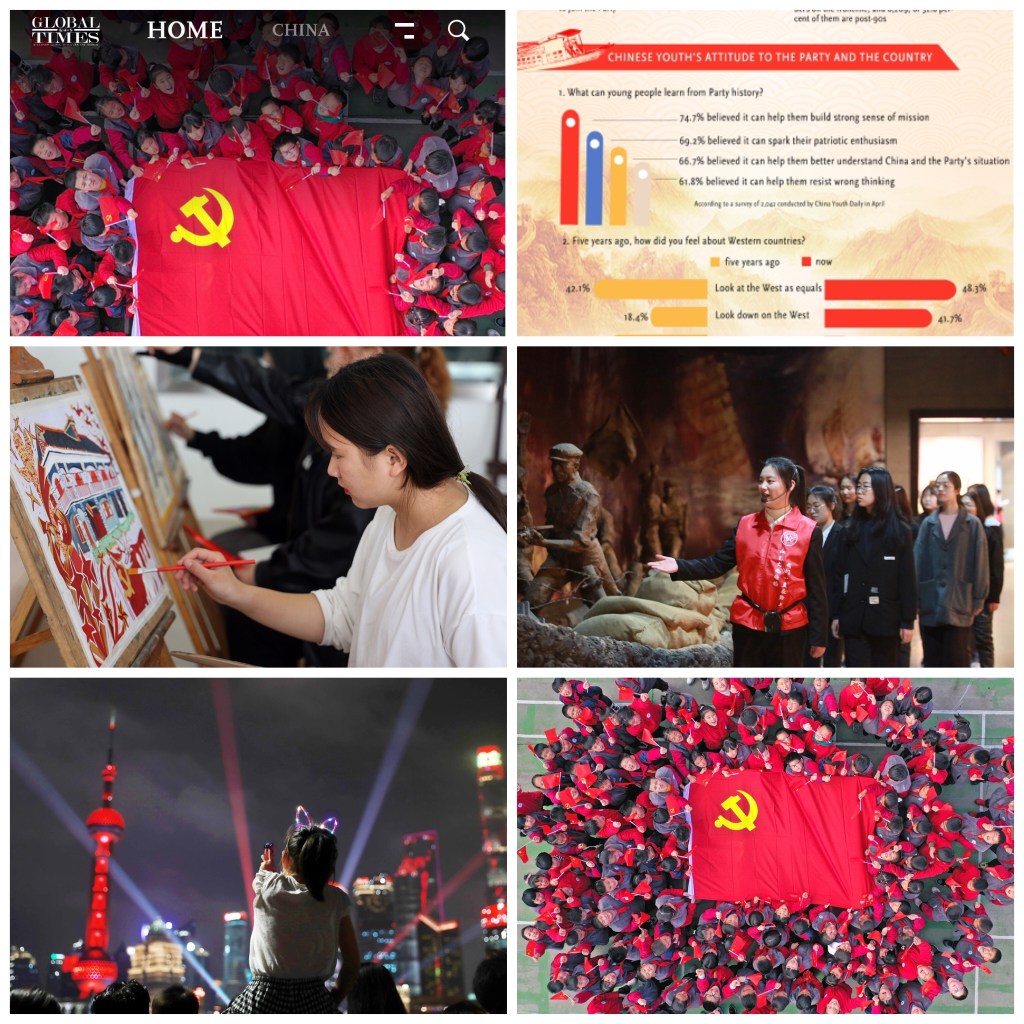
School children take a photo with the flag of the Communist Party of China at an elementary school in Taizhou, East China’s Zhejiang Province on February 28.
It was just a normal Thursday in early June, except for the long line, made up mostly of young people, formed in front of Tiananmen Square at 2 am. They were waiting for the daily sunrise flag raising ceremony held at the Square. Two hours later, the moment the Square was opened, the chirpy crowd of youngsters raced against each other to get to the front, eager for the best angle to take selfies with the gleaming national flag in the background.
A dozen or so university students, all members of the Communist Party of China (CPC), said they were there to pay tribute to the Party before its centenary anniversary, which falls on July 1, as they were worried the square would become more crowded as the big day approached.
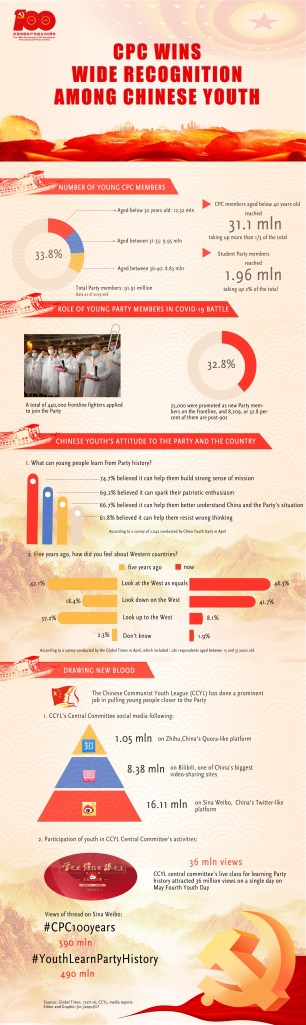
The CPC recorded nearly 92 million members at the end of 2019, more than one-third below 40 years of age, while student Party members accounted for 2 percent of the total number, making the CPC a relatively young ruling party globally.
However, the current generation of Chinese youth is facing a great deal of scrutiny. Youngsters in China, most of whom are the only child in the family and carry their family’s hopes on their shoulders, grew up enjoying the country’s booming development, and are the best-educated generation who are more connected to the world than their parents. They are also labeled as xiaohuangdi, the “spoiled little emperor” of the family, and the “lying flat” group, a buzzword recently used by young people as to take pause to breathe in this fast-paced and highly-competitive society..
As the CPC prepares to mark its 100th birthday, there has been new scrutiny of Chinese youth, and especially young Party members: Does the 100-year-old Party still have appeal to the young cohort? Do they, like their parents, still hold the purest belief that the CPC is the “only savior of China?” And do they still possess the passion, the righteous ardor, as their predecessors did, of serving the people and the country?
Firsthand lesson
Twenty-five-year-old Wuhan native Luo Ning submitted her application to join the Party this year. She said it was her father, a CPC member and grass-roots official who fought on the frontline of the city’s COVID-19 battle, who gave her the impetus to become a Party member.
“I saw my father sitting in front of a strictly cordoned off community compound, with his scarf covering his face, and trash bags used as PPE wrapped around his body. It was during the hardest time in February and March last year when Wuhan was being ravaged by the coronavirus and lacking in essential protective materials, such as masks and protective suits,” Luo said.
Luo said her father was among the first group of people to volunteer to serve on the frontline of the city’s COVID-19 fight. “I am a Party member, I should be up first,” was her father’s explanation.
“Party members should be up first. That’s what I heard him saying all the time when I grew up and became used to this slogan… But seeing him and so many other Party members risk their lives during the city’s arduous COVID-19 battle, and risk their lives to fulfill their promise of serving the people was a wake-up call for me. I also want to be the first to stand up in a crisis,” Luo said.
Statistics suggest some 29 million Party members fought on the frontline of China’s COVID-19 battle. A total of 25,000 frontline staff were promoted to become the Party member, and 8,209, or 32.8 percent of them, are jiulinghou, meaning people born in 1990 or after.
The year 2020 gave Chinese youngsters a chance to witness how the Party led a country of 1.4 billion in successfully keeping COVID-19 at bay in a short time through its strong leadership, and also to see how Party members put people first with real actions, Su Wei, a professor at the Party School of the CPC Chongqing Municipal Committee, told the Global Times. “Comparing the CPC’s success and responsibility with some Western political parties’ infighting, selfishness, or even using the pandemic to fight for political gains, has further consolidated Chinese youth’s admiration of our Party,” Su said.
Su pointed to the significance that role models, or frontline fighters during the pandemic battle, have had on young people. Examples of people who sacrificed their lives for the people have never been rare in the Party’s history, and many young people grow up hearing those heroic stories, Su told the Global Times, noting the devotion many frontline medical workers, Party members and others showed in order to beat the pandemic has further consolidated young people’s beliefs, because “it is an arduous fight that they lived themselves.”
Li Wenliang was among the frontline doctors whose lives were taken by the coronavirus. In late December 2019, Dr Li, an eye doctor working in Wuhan, Central China’s Hubei Province, shared his concerns about an unknown, SARS-like infectious disease with colleagues in a WeChat social media chat group. Only two months later, Li died after having contracted the virus, breaking the hearts of many Chinese people.
Li, who was a CPC member, was declared a martyr in April 2020. However, some Western media and politicians have never ceased exploiting Li’s death to attack China’s initial handling of the COVID-19 outbreak.
In a rebuttal to US lawmakers’ push to rename the street in front of the Chinese embassy in Washington “Li Wenliang Plaza,” Fu Xuejie, Li’s wife, said in a statement that her husband was a CPC member who loved his country deeply and would never allow anyone to use his name to harm China.
More than a year has passed since his death, but netizens continue to leave comments under the top post of Li’s Sina Weibo account posted on February 1, 2020, on which day he revealed he was confirmed positive for the virus. One of the most recent comments reads: “Dr Li, when I read the Party’s history, which is embellished by our national heroes, I thought of you. Less and less we talk about COVID-19, but we will never forget about you. I wish for the people and the country you loved and fought for to be better off!”
On June 13, the last day of Dragon Boat Festival national holiday in China, a girl is among a throng of tourists who came to Shanghai to watch a light show celebrating the 100th anniversary of the founding of the Communist Party of China. Photo: IC On June 13, the last day of Dragon Boat Festival national holiday in China, a girl is among a throng of tourists who came to Shanghai to watch a light show celebrating the 100th anniversary of the founding of the Communist Party of China. Photo: IC
Unfading passion
The special bond between youth and the Party can be traced back to the anti-imperial political movement of the 1910s. CPC founders Chen Duxiu and Li Dazhao, as well as many of the Party’s early members, were among the Chinese intellectuals who were influential in the 1919 student protests, better known as the May Fourth Movement.
It was a time when young people put their personal safety and even lives aside to help the country when its existence was on a cliff edge. In today’s China, young people, especially the jiulinghou, as the country’s best-educated group and often the only child in their family who grew up in a time of prosperity, are described as “spoiled and lacking in belief” and face doubts about whether they still have the passion that their predecessors had to serve the people and the country.
“Since I chose to be a soldier, I know what my responsibility is. If no one picks up the gun, who will protect our country, our homeland?” Xiao Siyuan wrote in his diary in September 2016, the first Mid-Autumn Festival he spent in the military.
Four years later, 24-year-old Xiao sacrificed his life at the China-India border clash in June of 2020, along with battalion commander Chen Hongjun and two other soldiers, Chen Xiangrong and Wang Zhuoran. Their deaths ignited torrents of condolences from Chinese society, thanking them for safeguarding the country’s territory.
Jun Yixiao (pseudonym), a 30-year-old Beijing resident who joined the Party seven years ago, paid tribute at Wang Zhuoran’s tomb in Central China’s Henan Province in April. “Our generation has become used to a comfortable life, or even chosen to ‘lie flat.’ So as a Party member, I always question if the spoiled jiulinghou are capable of contributing to the country and to society, like their predecessors did in the May Fourth Movement,” said Jun.
But Jun said the sacrifice of the young soldiers, and her strong emotions when standing in front Wang’s tomb made her believe that no matter how long they have become used to comfort, or how long they choose to lie flat, the passion inside Chinese youngsters and CPC members will always remain.
“When the country faces a crisis, we spoiled young generation will still stand up without hesitation. Just like one of the soldiers who sacrificed in the China-India border skirmish last year Chen Xiangrong once wrote, ‘Pure love, exclusively for China.'”
Unlike their parents and grandparents, who were born and grew up at a time of poverty, plague and ideological struggles, and held the simplest belief that only the CPC can save China, young CPC members reached by the Global Times said they see the CPC as a “lighthouse” that guides them to become better people.
Knowing the Party’s history, one can see that it was born during the darkest of times, when a group of people at young age tried hard and even sacrificed their lives to find a suitable path for China’s development. “A Party built by such great patriotism will never lose its appeal for young people,” 27-year-old Zeng Qing, a Chengdu resident who just filed her application to join the Party in early June, told the Global Times.
“For me, the Party is an organization with high standards and high requirements, so people will have higher expectations of its members,” said Zeng, noting that she believes the CPC has stuck to its original mission since its founding, which has led Chinese people to live better lives with dignity and have access to education.
Zeng said the Party has illuminated her path of growth. “Belief in the Party has prevented me from being influenced by the voices of gongzhi (pro-Western intellectuals), which dominated the internet when I grew up, and made me reflect on myself when I saw some CPC members going against their original mission and committing some wrongdoings.”
A university student and museum guide leads a group of vistors and explains the hostory behind the exhibits at the Cemetery of Revolutionary Martyrs in Yangzhou, East China’s Jiangsu Province on March 24.
Most confident generation
Some people seek for the Party’s roots for their mission in life, while certain youngsters find the Party’s history and guidance further fuels their patriotism and offers them confidence about modern China.
Cheng Ke, a Chongqing resident in his 30s who joined the Party four years ago, said he has studied Party history regularly. “Each time I can learn something new. Only if we know our Party’s history, can we be aware of the fundamental questions: Where we came from and where we are heading to. When we keep these in mind, we can withstand the temptations and influences from outside, especially during this time of radical change we’re experiencing right now,” said Cheng.
By radical change, he means that China is in a complicated international environment where the US and certain other countries are going all out to suppress a rising China, which is at a key stage of development.
According to a survey of 2,042 young people conducted by China Youth Daily in April, 74.7 percent believe that learning history can help them better understand China’s status quo and build strong sense of mission.
As the generation that has been immersed in imported pop culture, many of whom have studied abroad for years, young Chinese now are more willing than ever to defend China’s achievements, more vocal about their loyalty to the Party and the country, and more willing to voice opposition toward those who crossed the “red line” of their patriotism.
The latest case involves foreign retail giants Nike and H&M, who faced a boycott in China after they expressed concern about the alleged use of Uygur forced labor in the cotton production in Xinjiang.
Chinese analysts said that along with China’s success in tamping down the COVID-19 pandemic, US suppression of China in recent years, and the turmoil in Hong Kong in 2019, together offer Chinese youth “valuable lessons of patriotism.” As their national confidence is boosted by the CPC’s people-oriented approach, its effective and strong leadership, the once favorable impression toward the West has been shattered by its short-termism, selfish individualism, hypocrisy and partisan squabbling.
According to a survey of young people conducted by the Global Times in April, which included 1,281 respondents aged between 15 to 35 years old, 42.1 percent said they look at the West as equal; and 18.4 percent said they look down on the West.
“The CPC has won wide recognition among Chinese youth as they see their country is growing more and more prosperous under the Party’s leadership, and they are angry about certain countries, especially the US, who try to snuff out China’s rapid development,” Zhang Yiwu, a professor at Peking University, told the Global Times.
What the US did has exposed its hypocrisy in front of Chinese. They see how a country who advocates freedom, openness and upholds multilateralism has suddenly abandoned its values in order to crackdown on China’s development and maintain its hegemony, Zhang said.
During his last year in office, former US president Donald Trump targeted all CPC members, ordering that travel to the US by members of the CPC and their immediate families should be curtailed.
Chengdu-based Zeng studied in the Netherland for a few years. “I’ve seen how some people in the West defame the CPC, but I also saw how life in the West really is, they live just like us.”
Zeng’s grandmother was a doctor, and she was sent by the Chinese government to help Mozambique in the 70s. When she returned two years later, she brought back two kilos of sugar, which was rare in China at the time.
“That contrast, the shock can easily sway their [her grandmother’s generation] personal choices. But for my generation, there’s not much gap between China and Western countries, we even outstrip them in certain areas, such as telecommunications, logistics and so forth,” Zeng said.
Working as a scientific researcher, Zeng said she never has deliberation on any impact the US sanction may bring to herself. “We even jokingly said the US sanctions on any group or individual are solid proof they are the top-notch in their field,” Zeng said, noting that “nothing really matters when I made up my mind to dedicate my knowledge to my country.”
A student from a college in Nantong, East China’s Jiangsu Province, paints a picture with a CPC revolutionary theme on April 28.
Draw young ‘blood’
Experts noted that it is true that some Chinese youth see the Party as a place to hone their skills and polish their beliefs, and attracting young people also helps keep the vitality and energy of the centenarian Party.
Among those organs, the Chinese Communist Youth League (CCYL) has done a prominent job in pulling youth closer to the Party. The organization’s Central Committee has 16.11 million followers on China’s Twitter-like platform, more than 8.38 million users follow it on Bilibili, one of China’s biggest video-sharing sites and an online home for fans of anime, comics and games (ACG), and it has 1.05 million fans on Zhihu, China’s Quora-like platform.
Cheng Yuan, who is an editor of the league’s new media center told the Global Times that the CCYL has accounts on more than 20 social media platforms, even on some music apps. On Bilibili for example, the CCYL posted cartoons to illustrate the Party’s iconic events and stories, which gained active participation among platform users, Cheng said.
To commemorate the Party’s 100th birthday, the league initiated a discussion on Weibo under the hashtag: Why do you join the CPC? The hashtag has attracted 364,000 clicks. Cheng said most people commented under the topic said they want to do good things for the country and its people, and many netizens resonated with this opinion.
Aside from the internet, young people are actively engaged in bonding with the Party via other novel ways, including role-playing board games and plays. Some internet companies have developed online games featuring historic events of the CPC.
A Shanghai resident surnamed Huang said she had participated in a role-playing game set in 1948, a year before the founding of People’s Republic of China (PRC), when CPC members and members of the Kuomintang (KMT) wrestled with each other not only on the battlefield but also in the field of information service.
“I played this game because I know little about history before the founding of the PRC, and reading books bores me,” said Huang, noting that the immersive way has pulled her closer to history as she could identify with the role she played.
“There was an oath-taking ceremony as the game ended. I was still immersed in the role I played, an underground CPC member who was finally able to welcome the light of hope. As I read the oath, I found myself instilled with the determination to serve the country, the people; and ready to devote my life for the CPC,” said Huang, who shed tears after the ceremony.
The Party’s education campaign has been boosted by a slew of TV series, the latest and popular of which is Juexing Niandai (lit: Awakening Age), which illustrates the history from 1915 to 1921, including the New Culture Movement, the May Fourth Movement and eventually the establishment of the CPC.
Twenty-six-year-old Xiao Qing (pseudonym) rushed into her workplace’s Party committee office and expressed her willingness to join the CPC after watching the TV show. And she also joined the crowds to watch the flag raising ceremony on Thursday, to “revere the Party, the country on site.”
“I used to think the history before the founding of the PRC was too humiliating that I was reluctant to learn. But the show made the history come alive, and through the feeling that I’m in touch with all those historical figures, I got a deeper understanding of our Party. Even during that dark time, there were passionate youth struggling to find light for the country,” Xiao said.
Xiao ended up getting a “meaningful” selfie of herself and the national flag. Behind them is the portrait of China’s late leader Mao Zedong, who once said “The world is yours as well as ours. But in the last analysis, it is yours. You young people… are like the sun at eight or nine in the morning… We put our hopes in you,” in paying tribute to Chinese youth.
CPC wins wide recognition among Chinese youth Infographic
Qu Yuan has been regarded as the totem of Chinese culture for 2300 years. When China experiences difficulties, his patriotic spirit encourages countless people to love and protect their motherland. It was especially true when the country faces disasters. When the Mongols defeated the last troop of Sung Dynasty, more than 100 thousand soldiers, generals and officials jumped into the sea, choosing to die with their emperor and prime minister, and not even one person surrendered. China is invincible, as national pride and dignity are the country’s backbone. Not only does it have over 90% Han people as the mainstream nationality, but it also has 55 other ethnic groups identifying themselves as Chinese, not merely Mongols, Huis, Tibetans, Uyghurs, and so on.
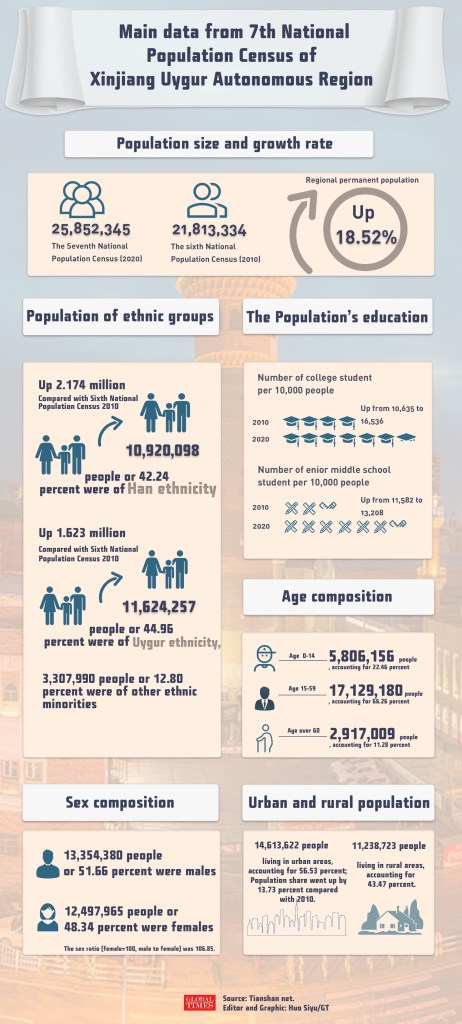
Main data from 7th National Population Census of Xinjiang Uygur Autonomous Region by Huo Siyu Jun 14 2021 From 2010 to 2020, total population in Xinjiang Uygur Autonomous Region consistently grew, and education and urbanization level continued to improve. Have the Native Americans rise by the same percentage between 2010-20 in US and Canada? 2010年至2020年,新疆維吾爾自治區總人口持續增長,教育和城鎮化水平不斷提高。 2010-20 年間,美國和加拿大的美洲原住民是否以相同的百分比增長
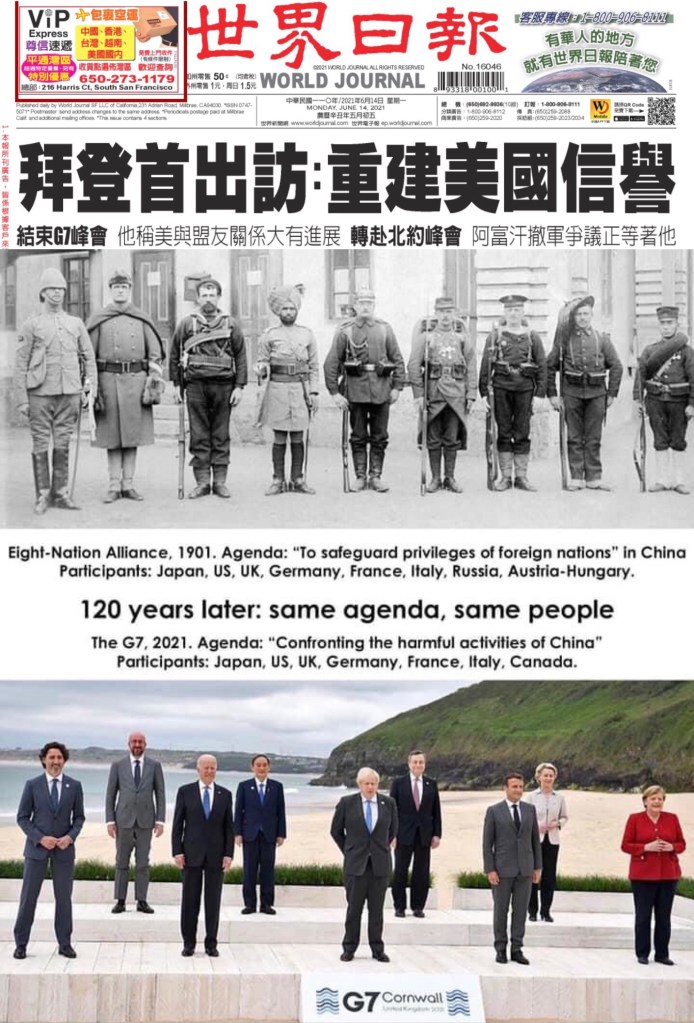
US President Biden want to repeat what the league of 8 nations had done to China 120 years ago. He said that will help to reaffirm US Internatiional reputation on how freedom, democracy and human rights supposed to work. Really! 美國拜登總統想重複八國聯盟120年前對中國所做的搶劫強x殺人事情。 他說,這將有助於重申美國在自由、民主和人權應該如何運作方面的國際聲譽。 真的嗎? World Journal Newspaper San Francisco 美國加州舊金山世界日報 June 14 2021
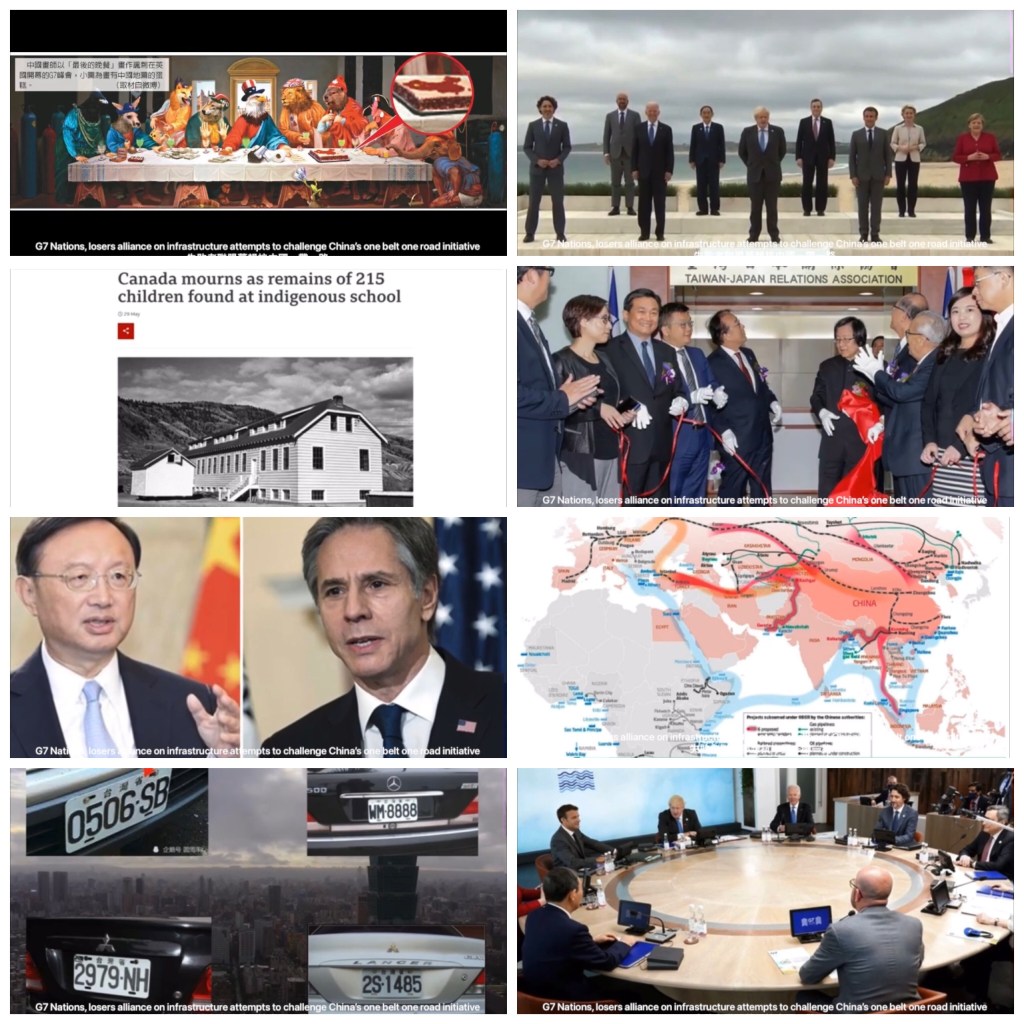
Video: G7 Nations, losers alliance on infrastructure attempts to challenge China’s one belt one road initiative 失敗者聯盟夢想抗中國一帶一路 The video mentioned | China-Africa Relationship: https://youtu.be/0X0MU6FZUfs Published on Jun 13, 2021 https://vimeo.com/562700504 https://youtu.be/yvtym3Lxeo0 https://www.facebook.com/100036400039778/posts/510526616837335/?d=n China’s Belt and Road initiative is an infrastructure program launched in 2013 by President Xi Jinping involving development, port, road, rail and digital projects in Asia, Africa and Europe. According to Refinitiv, China had more than 2,600 projects at the cost of $3.7 trillion, linked to the Belt and Road Initiative as of mid-2020. However, due to the covid 19 Pandemic, 20% of the projects have been affected seriously.


 Johnson Choi Biz