SCMP: A most egregious abuse of state power by United States you have never heard of

SCMP: A most egregious abuse of state power by United States you have never heard of 南華早報:你從未聽說過的最惡劣的美國濫用國家權力的行為 by Alex Lo, June 13, 2021

Since June last year, Venezuela’s special envoy, Alex Saab, has been fighting extradition to the United States while being detained with untreated cancer in the island nation of Cabo Verde, off the coast of West Africa. Under apparent pressure from the US, neighbouring African countries denied landing to his plane and forced it to refuel on the archipelago where he was arrested.

Since June last year, Venezuela’s special envoy, Alex Saab, has been fighting extradition to the United States while being detained with untreated cancer in the island nation of Cabo Verde, off the coast of West Africa. Under apparent pressure from the US, neighbouring African countries denied landing to his plane and forced it to refuel on the archipelago where he was arrested.

The US has charged Saab with money laundering. Last week, the United Nations’ Human Rights Committee issued a decision demanding that Saab’s extradition be suspended and that he be given proper medical treatment. This follows another decision by the Economic Community of West African States Court of Justice, based in Nigeria, to free him in March.

The Republic of Cabo Verde doesn’t have an extradition treaty with the US. Instead, it claims it was responding to an Interpol arrest notice but the notice was only issued after Saab’s arrest. Cabo Verde’s own court has ruled that Saab can be extradited, an order currently being appealed by his legal team. The US Navy has stationed the cruiser USS San Jacinto off the island state since December, ostensibly in response to Venezuela’s threat to rescue Saab. But it looks more like intimidation to make sure Cabo Verde doesn’t get cold feet and release Saab.

When Belarus last month forced the landing of a Ryanair flight in its capital Minsk to arrest dissident journalist Roman Protasevich, the West was outraged. Many people thought it was unprecedented.

But some mainstream news outlets recalled a precedent when the United States, with the help of European allies, forced the official plane of Bolivia’s then-president Evo Morales to land in Vienna in July 2013 because US intelligence suspected, mistakenly, that it was carrying Edward Snowden. The American whistle-blower left Hong Kong and arrived in Moscow the same time Morales was on a Russian visit.

But few media groups mentioned the forced landing of Saab’s plane. Why? Whenever the US accuses another country of doing a terrible thing, you can be sure it has already done much worse. Here’s extradition as foreign policy: Julian Assange, Meng Wanzhou and now Saab. All that time, the US has been out to destroy the WikiLeaks founder, Huawei and the Maduro regime.

‘The Last G7’: Satirical cartoon mocking bloc’s attempt to suppress China goes viral by Global Times

‘The Last G7’: Satirical cartoon mocking bloc’s attempt to suppress China goes viral by Global Times Jun 13 2021

A Chinese cartoonist’s political satire, which mocked the Group of Seven (G7) members that attempt to suppress China, went viral on Chinese social media on Sunday, when the G7 summit was underway in Cornwall, the UK.

Titled The Last G7, the illustration, published by its author “Bantonglaoatang” on Sina Weibo on Saturday, was painted based on the renowned religious mural The Last Supper. This G7 summit is widely seen as an attempt by the US to rally allies against China.

Similar to the final meal Jesus shared with his apostles before his crucifixion that The Last Supper depicted, Bantonglaoatang painted a vivid picture of nine animals – respectively representing the US, the UK, Italy, Canada, Japan, Germany, France, Australia and India – sitting around a table with a Chinese-map-shaped cake on it. On top of the painting is the words in quote: Through this we can still rule the world.

These animals have different facial expressions and gestures, implying that each side of the G7 actually has its own axe to grind on the common conspiracies of suppressing China and upholding the Western hegemony, analyzed some observers and Chinese netizens.

Wearing a bowler hat with an American flag on it, a bald eagle sits in the middle like Jesus in The Last Supper, obviously the convenor of the meal. In front of the bald eagle there is a small banknote printing machine and a bill on the table. The machine is printing toilet paper into dollars, and the number on the bill gets bigger and bigger – from $2 trillion to $8 trillion.

There is also an iron hook under its feet, and two pieces of cotton with blood near its hands on the table, suggesting “the US’ capital accumulation was built on racial oppression,” a vlogger nicknamed “sharp-tongued pumpkin” said in his latest video analyzing the illustration, which has gained over 700,000 views on video streaming platform Bilibili within a day after he uploaded it on Saturday afternoon.

The bald eagle image shows today’s aggressive yet feeble US is trapped in its growing debt crisis and racial conflicts, but still points fingers at China, “sharp-tongued pumpkin” pointed out.

Sitting on the left of the bald eagle is a grey wolf, wearing a cap with an Italian flag on it. The wolf waves its hands as the apostle Andrew in The Last Supper, as if saying “No” to the US’ suggestions of jointly cracking down on China. The grey wolf image shows Italy, the first European country that joined China’s Belt and Road Initiative (BRI), is reluctant to collaborate with the US in suppressing China, commented “sharp-tongued pumpkin.”

Next to the wolf is an Akita dog that represents Japan. Without a seat, it is busy serving the others a “drink” – pouring green radioactive water into the glasses of the other animals. On Weibo some users said the green water is the contaminated water that Japan plans to release to the Pacific from the destroyed Fukushima nuclear plant.

Sitting next to the dog is a kangaroo, which is stretching its left hand to the banknotes that the US is printing, while grasping a bag in its right hand. The kangaroo symbolizes the double-faced Australia which actively cooperates with the US in containing China, but is also eager to earn money from China, its largest trading partner, according to “sharp-tongued pumpkin.”

On the left corner stands a black hawk, which obviously represents Germany as its pose is almost the same as that of the German Chancellor Angela Merkel in a widespread photo in the G7 summit in 2018. Germany, similar to the rooster (representing France) sitting in silence on the right side, seems more interested in its own European issues and shows less enthusiasm on the US’ propaganda, netizens found.

On the right side of the table also sits a lion and a nutria, respectively representing the UK and Canada, both the US’ close Five Eyes allies. The nutria, wearing a red coat with images of marijuana on it, holds a doll in its hand. Many netizens believe the doll represents Huawei’s chief financial officer Meng Wanzhou, who is still unreasonably detained in Canada.

On the right corner of the table sits an elephant (representing India) that is on a drip like a patient.

Under the table there is a frog holding banknotes in its hands, trying to jump as high as possible to reach the table and give the money to the US. The little frog symbolizes the separatist authority from the island of Taiwan, which is always subservient to the US, some netizens pointed out.

The illustration caused a stir on Weibo on Sunday, with numerous users praising the author for vividly and straightforwardly revealing the evil intentions of the West that tries to lay a siege to China. “But this is perhaps their ‘last supper,’’’ one user mocked. “With different positions, for various interests of their own, these countries and regions can’t form a real league against China.”

Video: After passing the HK homeland security law, NED backed activities have been seriously curtailed.

Video: After passing the HK homeland security law, NED backed activities have been seriously curtailed. 警察公共關係科人員在旺角一帶現場直播最新情況
https://youtu.be/PyRK_pByfK8
https://www.facebook.com/100036400039778/posts/509555223601141/?d=n

The happy secret next door – 120,000 + 2 (you and your love ones) Hong Kong people have retired to Guangdong

The happy secret next door – 120,000 + 2 (you and your love ones) Hong Kong people have retired to Guangdong 隔壁的幸福秘密 – 12萬+2(你和你的愛人)港人已退休到廣東

By FRIDAY WRITERS 10 Jun 2021

OLDSTERS: WOULD YOU like a comfortable, safe, city-center apartment for just HK$5,000 a month? No, you haven’t died and gone to heaven. You’ve moved to Guangzhou.

More than 120,000 Hong Kong people aged 60 plus have already moved to that city or elsewhere in Guangdong province.

Others will follow. A lot of older people in Hong Kong are willing to retire to other Greater Bay Area cities, a study by the One Country Two Systems Youth Forum revealed. Popular destinations include Guangzhou and Foshan.

The northward migration will likely rise in the coming years. By 2069, nearly 40 per cent of Hong Kong’s population will be seniors, the Census and Statistics Department says, and literally millions of people will be looking for retirement destinations.

Dong Shan Hu Park in Guangzhou; picture by Lychee Art/ Unsplash

WHAT’S ON OFFER?

What’s so attractive up there? Guangdong offers larger homes at much lower prices, plus a lower cost of living and well-established cross-boundary transportation links. Furthermore, there are affordable elderly care homes across the border.

Even in super-pricey Shenzhen, where prices have soared, the average home is less than half the price of a Hong Kong equivalent. A leading property consultant CBRE survey last year listed Shenzhen property as averaging US$783 (RMB 5,006) a square foot, compared to US$1,987 (RMB 12,705) per square foot in Hong Kong.

Property ads for Hong Kong style Guangzhou apartments from Joanna Real Estate

BUY YOUR OWN

Good relations between the two governments means that Hong Kong people have the right to buy a flat in Shenzhen. And in recent years, Shenzhen flats have proved to be good investments, rising 88% since 2015.

The low prices mean that middle or even low-income families in Hong Kong are exploring the wider Greater Bay Area for their next property investment, either for a holiday home or a place for retirement.

Zhaoqing and Jiangmen have the lowest home prices among Greater Bay Area cities. Homes in those two locations are about one eighth of the equivalent price in Shenzhen.

In some residential complexes in the region, neighbourhoods have become infused with Hong Kong culture, so you’ll find your favorite foods and familiar product brands too. Cha-siu faan? Macaroni soup? Ham and egg sandwich? You’ll find them on the menu.

TOP FACTORS

What are the key factors to help Hong Kong people decide to move north? Presence of relatives in the bay region is the main criterion for getting the early adopters to make the switch, said 57.9% per cent of the retirees who responded to the survey.

About 40% of respondents said they would retire in the bay region if they could access welfare services from the mainland, while 33% said they would move to the region if they could get access to quality healthcare services.

For 24% of respondents, the key was whether they could receive social welfare from Hong Kong. Transport issues were a key consideration for 17%, and 9% were looking at property purchase issues.

Senior citizens often prefer village life to the city bustle. Picture by Jaddy Liu/ Unsplash

CASH FROM HONG KONG

You can move over the border and still get Hong Kong government cash. About 20,000 Hong Kong elderly people have benefited from the SAR government’s schemes in which monthly welfare payments, ranging from HK$1,400 to HK$3,800, are sent across the border to Guangdong and Fujian.

The number of participants would be larger, except for the fact that elders who join the Guangdong and Fujian schemes need to surrender their public housing flats in Hong Kong—and many would rather not do that.

Also, Hong Kong seniors in the mainland can only use their home city’s medical vouchers at The University of Hong Kong – Shenzhen Hospital. Because of this, some will travel back to Hong Kong when suffering from serious illnesses.

The University of Hong Kong’s Shenzhen Hospital and International Medical Center

SMOOTHING THE PATH

But there’s room for improvement. It may be worthwhile for the SAR authorities to consider streamlining procedures to allow local elderly people to access social welfare cash, without the need to surrender public housing, or to reside in the mainland for at least 60 days a year.

Guangzhou looks like older Hong Kong: Lychee Art/ Unsplash

Above all, elderly people should be allowed to use medical vouchers in top-notch “AAA” hospitals in the Greater Bay Area cities. Through qualification mechanisms, Hong Kong and Mainland authorities should ensure that at least one hospital in each GBA city could accept the voucher, thus providing more medical options.

It would be great for retirees to be able to live their final years more comfortably and less expensively – and if they move out of Hong Kong, they’d help free up space in our crowded home. Everybody wins.

Video: Craig Murray – former UK Ambassador discuss how UK used fake news to fool her people to start Iraq war, why US invaded Afghanistan…

Video: Craig Murray – former UK Ambassador discuss how UK used fake news to fool her people to start Iraq war, why US invaded Afghanistan… 克雷格默里 – 前英國大使討論英國如何利用假新聞愚弄她的人民發動伊拉克戰爭,為什麼美國入侵阿富汗….
https://vimeo.com/562202352
https://youtu.be/jT-uHOgocb4
https://www.facebook.com/100036400039778/posts/509459706944026/?d=n

International order is not based on a so-called system and order advocated by a handful of countries: Chinese Embassy in the UK

International order is not based on a so-called system and order advocated by a handful of countries: Chinese Embassy in the UK by Global Times Jun 12 2021

(From L to R, Front) Canadian Prime Minister Justin Trudeau, U.S. President Joe Biden, British Prime Minister Boris Johnson, French President Emmanuel Macron, German Chancellor Angela Merkel, (From L to R, Rear) European Council President Charles Michel, Japanese Prime Minister Yoshihide Suga, Italian Prime Minister Mario Draghi, and European Commission President Ursula von der Leyen, stand for a family photo during the Group of Seven (G7) Summit in Carbis Bay, Cornwall, Britain, on June 11, 2021.

Genuine multilateralism is based on the principles of the UN Charter and international order, not pseudo-multilateralism serving the interests of a small clique or political bloc, a spokesperson from the Chinese Embassy in the UK said while refuting the so-called rules-based international system advocated at the G7 Summit held in Cornwall, UK.

“We always believe that countries, big or small, strong or weak, poor or rich, are equals, and that world affairs should be handled through consultation by all countries. The days when global decisions were dictated by a small group of countries are long gone,” the spokesperson was quoted as saying in a statement published on the embassy’s website on Saturday.

His remarks were made in response to the US seizing this opportunity in the G7 in the hope of bonding with other Western countries and safeguarding the so-called rules-based international system.

There is only one system and one order in the world, that is, the international system with the United Nations at its core and international order based on international law, not a so-called system and order advocated by a handful of countries.

There is only one set of rules for the world, that is, the basic norms of international relations based on the principles of the UN Charter, not the so-called rules formulated by a small number of countries, said the spokesperson.

He said that there is only one kind of multilateralism, that is, the genuine multilateralism based on the principles of the UN Charter and international law, featuring equal treatment, cooperation and mutual benefits, not pseudo-multilateralism serving the interests of a small clique or political bloc.

It is our hope that relevant countries will take concrete steps to uphold the principles of the UN Charter, take the initiative to safeguard the core role of the UN, and make real efforts for an early victory over the coronavirus, to respond effectively to climate change and to work for a robust global economic recovery, the spokesperson noted.

GT Voice: External forces in no position to interfere in China-EU deal by Global Times

GT Voice: External forces in no position to interfere in China-EU deal by Global Times Jun 09 2021

The president of the European Council, Charles Michel, defended the EU’s efforts to negotiate a Comprehensive Agreement on Investment (CAI) with China by calling the investment deal “a huge step in the right direction,” according to an AFP report on Tuesday.

“For the first time we are making a step to facilitate investment by European companies,” Michel told reporters.

His comments could be seen as an expression of support for the high-profile investment deal, and the timing is both delicate and intriguing. This is because US President Joe Biden on Wednesday embarked on his first trip abroad since taking office.

It can be expected that in the coming week the eyes of the world will be on Biden’s intensive arrangement of summit meetings with European leaders, seeking hints for both future political and economic changes. On Friday, G7 leaders will get together in person for the first time since 2019. On Monday, Biden will meet NATO allies at their first summit meeting since 2018. On Tuesday, he will be the US president for the first US-EU Summit since 2014.

While the eight-day trip seems aimed at repairing ties with traditional allies and partners, there is a growing recognition that no matter how friendly Biden will be, the US will not miss the opportunity to once again exert influence on Europe when it comes to China-related topics. Hindering any progress of the CAI may be high on its anti-China task list.

It is true that the China-EU economic ties has been undergoing complicated situation, but that’s not the excuse for the US to put its finger in the pie. Neither the EU nor China wants to see US interference making things worse and less predictable. The US has no standing to intervene in China-EU economic and trade cooperation. And it is believed that Europeans would not like to lose their policy independence and become a pawn in Americans’ containment against China.

In the past many years, the EU and China have benefited greatly from closer economic partnership. China overtook the US as the EU’s largest trading partner in 2020, which saw trade in goods and services between China and European countries reach nearly $1 trillion, with two-way cumulative investments exceeding $250 billion.

Moreover, a survey released by the European Union Chamber of Commerce in China showed on Tuesday that nearly 60 percent of European companies plan to expand their businesses in China this year, an increase of nearly 10 percentage points from the 51 percent surveyed last year.

Based on the foundation of thriving economic and trade exchanges, the CAI is mutually beneficial and is in line with interests of both sides, which should not be easily dismissed due to some political friction.

In short, politicization should be avoided in China-EU economic ties, let alone the role of any outside forces.

Nearly 60% of European companies plan to expand their businesses in China this year: survey by Global Times

Nearly 60% of European companies plan to expand their businesses in China this year: survey by Global Times Jun 08 2021

Although the EU has increased its ideological friction with China, European countries have maintained their enthusiasm for expanding economic cooperation with China. Nearly 60 percent of European companies plan to expand their businesses in China this year, an increase of nearly 10 percentage points from the 51 percent surveyed last year, a survey released by the European Union Chamber of Commerce in China showed on Tuesday.

After a rapid recovery from last year’s epidemic, China has become a more important source of European economic growth and profit and European companies have increased their investment in the country.

About half of the surveyed companies said that their profit margins in China are higher than the global average, which is much higher than the 38 percent in last year’s survey.

The study is made by the chamber, in cooperation with Roland Berger, to measure the confidence of European businesses in China. The annual survey was completed by 585 companies registered with the EU Chamber of Commerce.

The report said the resilience of the Chinese market provides European companies with much needed shelter during the pandemic. As China quickly contained the COVID-19 outbreak at the beginning of last year, it became the driving force for global economy in 2020.

The report said that 73 percent of the interviewed companies said they achieved profitability last year, while another 14 percent said they reached a brake-even point. About 68 percent of respondents are optimistic about the business prospects of their industry in the next two years, up from 48 percent last year.

Approximately one quarter of the interviewed companies indicated that they are realizing the localization of their supply chains by moving their production lines to China or switching to suppliers that produce in China.

Commitment to the China market remains strong with a mere 9 percent of respondents considering shifting any current or planned investment out of China, the lowest share on record according to the report.

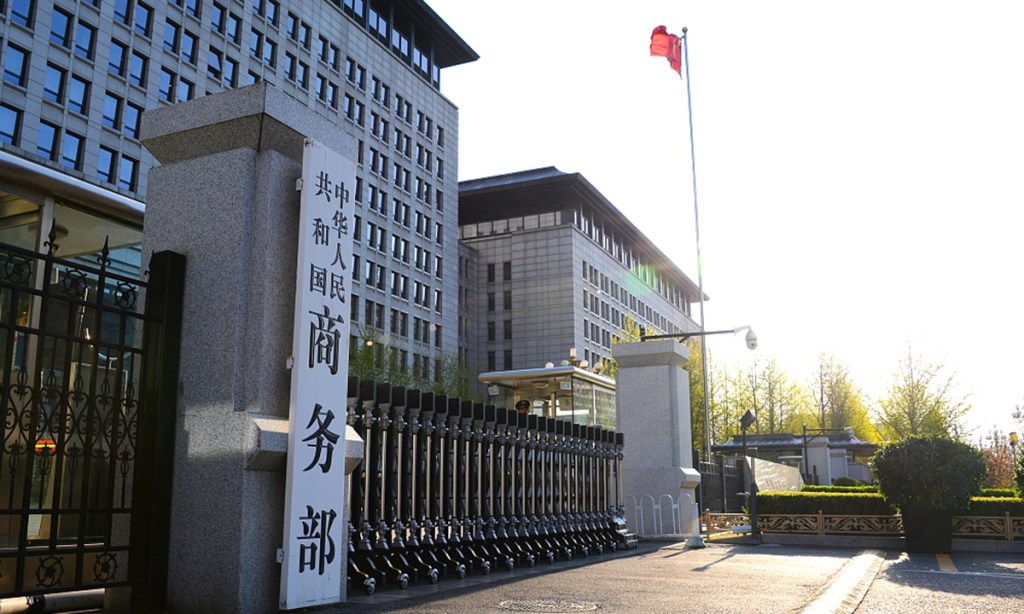
China-EU trade reached $250.3 billion in the first four months of this year, up 42 percent year-on-year. In the same period, the EU’s actual investment in China reached $1.95 billion, an increase of 12.4 percent, while China’s direct investment in the EU reached $1.69 billion, up 70.8 percent, according to data from the Ministry of Commerce.

Design a site like this with WordPress.com
Get started