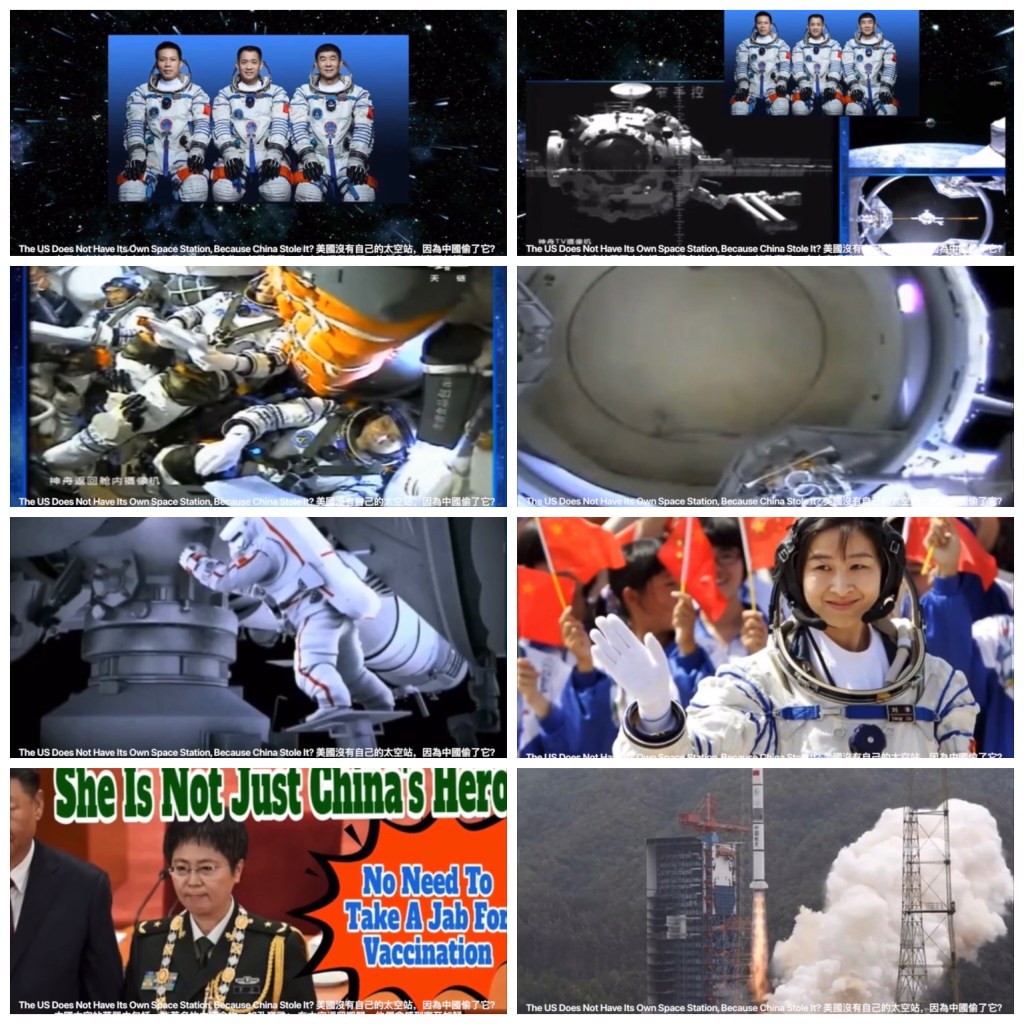
Video: The US Does Not Have Its Own Space Station, Because China Stole It? Some famous Chinese foods like Kongbao Chicken are included in the menu; they will feel at home during the stay in space. 美國沒有自己的太空站,因為中國偷了它?中國太空站菜單中包括一些著名的中國食物,如孔寶雞; 在太空逗留期間,他們會感到賓至如歸
Outspoken Chinese envoys stick to ‘self-defense’ diplomacy for ‘lovable’ national image by Liu Xin and Zhao Yusha Jun 18 2021
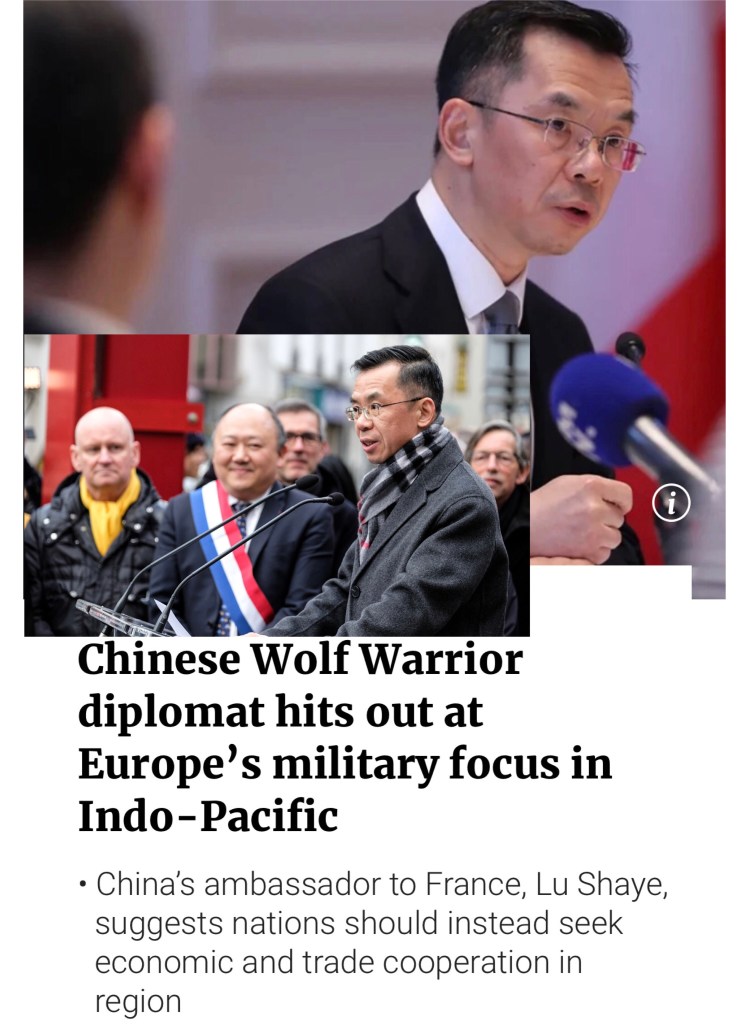
Outspoken Chinese ambassador to France Lu Shaye has drawn attention recently for being the first Chinese diplomat to justify China’s “self-defense” diplomacy amid foreign media’s groundless speculation that making a “lovable” China would mean abandoning the so-called “wolf-warrior” diplomatic style.
Analysts said Lu’s remarks signal the country is not reversing its “self-defense” diplomacy and that it will not give up in actively defending itself against the smear campaign of the West.
It is malicious for Western countries to call Chinese diplomats “wolf warriors” in order to portray an aggressive image of China in the global narrative battle, experts said. Amid the anti-China campaign led by the US, China has to respond to the slander and smears to earn respect and an equal position, which doesn’t contradict the Chinese leader’s message of fostering an image of China that is trustworthy and respectable.
In an interview with French newspaper L’Opinion on Tuesday, Ambassador Lu talked about his idea of “wolf warrior diplomacy,” saying that “wolf warrior” is a positive term in China which refers to warriors who fight for the country.
Since there are so many “mad dogs” attacking China, “I am honored to be awarded the title. We are fighters who stand in front of the motherland and fight for her, and we want to stand in the way of ‘mad dogs’ that attack China.”
This is the second time Lu talked about “wolf warrior diplomacy” in public in two weeks, making him the first Chinese diplomat to publicly endorse China’s current diplomacy after many foreign media, such as Deutsche Welle, misinterpreted Chinese President Xi Jinping’s message on May 31 and claimed China was “abandoning” wolf warrior diplomacy.
When addressing the group study session of the Political Bureau of the Communist Party of China Central Committee on May 31, Xi urged the creation of an image of China as “reliable, admirable and respectable.”
Foreign media interpreted that China seeks to make “lovable” image globally.
“Saying that China will reverse from ‘wolf warrior diplomacy’ to building a lovable image is some Western media’s wishful thinking, as the phrase ‘wolf warriors’ they made for China out of malicious purposes did not fit the fact – China has never taken the initiative to attack them,” said Zheng Ruolin, a senior Chinese media professional and European studies expert based in France.
Lu also told L’Opinion that China has never been the one that made provocations, and it just defends itself to safeguard national interests, image and dignity.
“Why do media in the West accuse China’s diplomacy as ‘aggressive’ or ‘wolf warrior diplomacy?’ China has never been an aggressor, yet in the past year, has been criticized on multiple fronts,” Lu said. “Don’t we have the right to fight back and defend ourselves? This is not fair!”
Instead of being aggressive, China’s current diplomacy is more defensive and assertive, which doesn’t contradict with being “reliable, admirable and respectable,” analysts said.
Zheng noted that China has always been committed to being a “reliable, admirable and respectable” country, but it does not mean it will kneel and raise its hands when facing smears and attacks. “If we give an inch to those who groundlessly attack China, they will want a yard. Only a justified fight-back can help earn equality and respect.”
In the face of the US and Western allies’ rampant smears and attacks against China on topics like Xinjiang, Hong Kong, Tibet, Taiwan and origins of COVID-19, Chinese ambassadors, spokespersons of the Foreign Ministry and embassies have spoken out or released statements to refute rumors.
For example, since June 1, the majority of the releases published on the website of the Chinese Embassy to Canada are about refuting rumors as well as opposing the Canadian government’s political farce on China topics. Soon after news on Budapest mayor’s wrong remarks on China’s human rights situation, the Chinese Embassy in Hungary on June 6 expressed opposition and dismissed the misinformation.
“Only by striking a blow to those who smear China can they feel the pain and rethink their moves that have poisoned bilateral ties. This is also the way to ensure that true information about China would not be blocked by the West,” Li Haidong, professor at the Institute of International Relations of the China Foreign Affairs University, told the Global Times.
“We Chinese always say that we treat friends with delicious food and wine, and we treat jackals and wolves with guns,” Li said, noting that building a lovable image in the majority of the people in the world should be China’s main focus.
Lu also said although China was accused by the French media, it was also supported by the French people. And that the French people can access an alternative source of information on our publication, not just following the mainstream French media’s distorted reports on China.
“China will continue to defend itself from untenable smears and attacks. It is China’s right and also shows China’s efforts to improve its image while living peacefully with other countries. But this should not be an excuse for certain countries to stigmatize it,” Wang Wen, a professor and executive dean of the Chongyang Institute for Financial Studies at Renmin University of China, told the Global Times.
Setting up Wi-Fi, unboxing deliveries – Chinese Taikonauts busy ‘housewarming’ on their 1st day in space by Deng Xiaoci Jun 18 2021
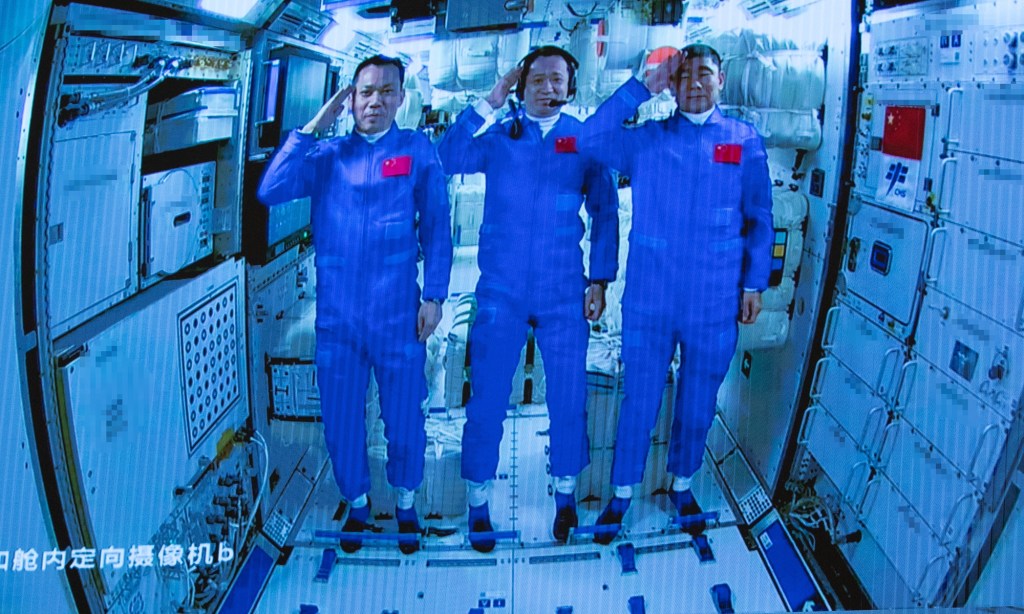
Three Shenzhou-12 astronauts, Tang Hongbo, Nie Haisheng and Liu Boming (from left) salute after entering the Tianhe core module on Thursday.
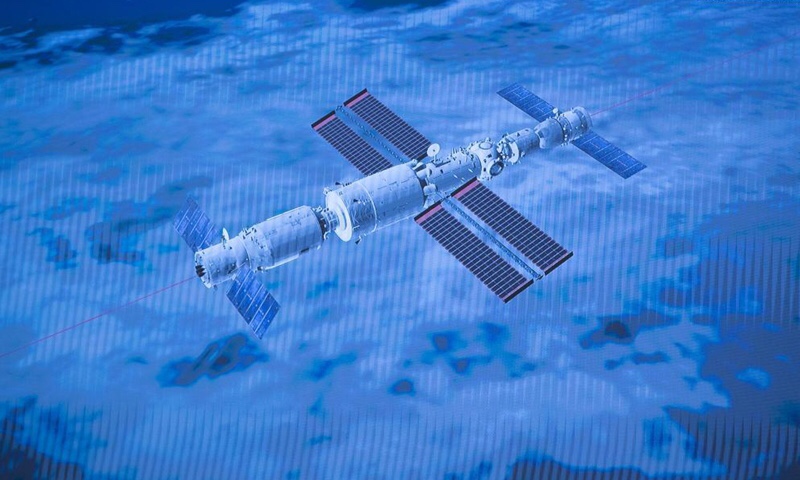
Setting up Wi-Fi, unboxing supplies delivered from Earth… the taikonauts are busy engaged in housewarming at their new home – China’s Tianhe space station core module about 400 kilometers above Earth, where they will stay for three months.
According to the China Manned Space Agency (CMSA), Nie Haishang, Liu Boming, and Tang Hongbo will keep a synchronized work and rest schedule between space and Earth. The Global Times learned from sources from the Beijing Aerospace Flight Control Center at around 9 am Friday morning that the crew just had their first breakfast in space.
Nie and his roommates also set up the Wi-Fi for their new home on Friday morning. CCTV said on Thursday the three are also expected on Friday to open the gate of the Tianzhou-2 cargo craft and unbox supplies that have arrived in advance.
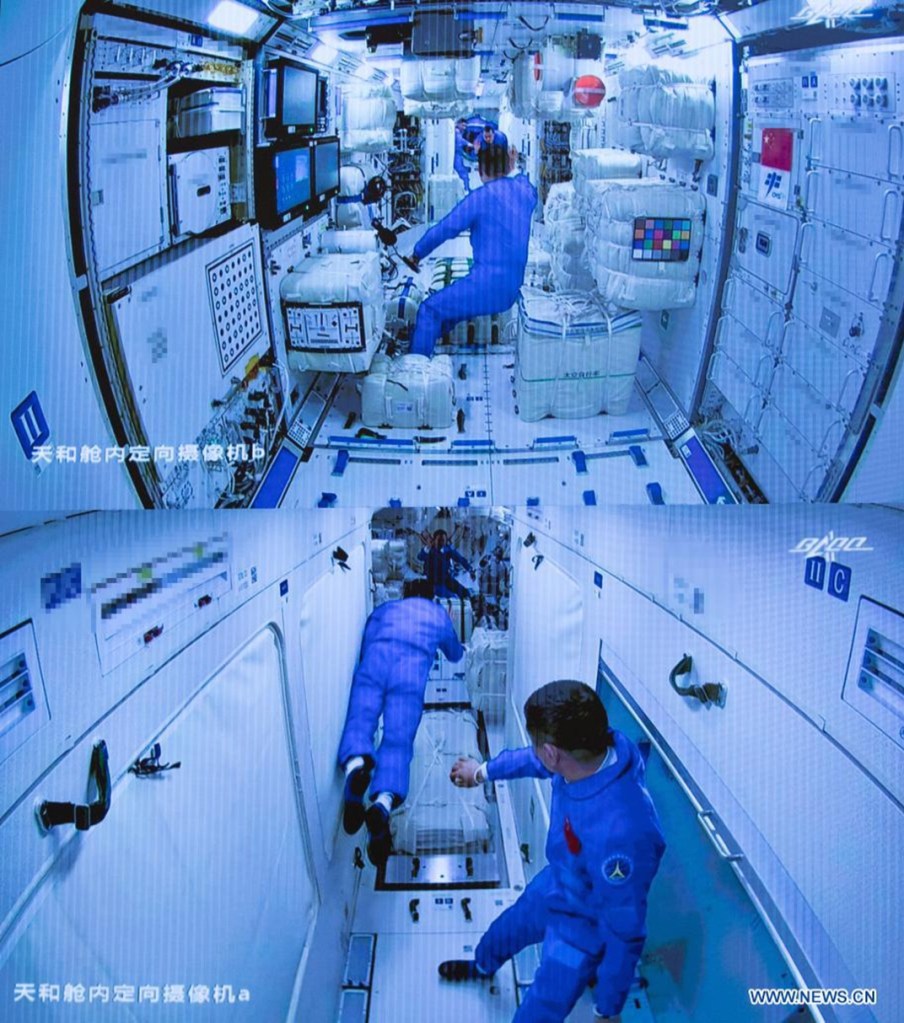
Screen image captured at Beijing Aerospace Control Center in Beijing, capital of China, June 17, 2021 shows three Chinese astronauts onboard the Shenzhou-12 spaceship entering the space station core module Tianhe.
Unprecedented challenges
Huang Weifen, chief designer of the Chinese astronauts training system, noted in a group interview before the three set sail to space on Thursday morning that as the taikonauts are required to stay three to six months in orbit at the space station construction and key technology verifications phase, they will face unprecedented challenges.
Previously, the longest stay in space recorded by taikonauts was set by Jing Haipeng and Chen Dong during their Shenzhou-11 mission. The crew traveled 33 days in space.
Such challenges would range from how to maintain good physical health and overcome the adverse effects such as long-term stay in a weightless environment, among others such as strong vibration and loud noise in space, to how to deal with negative emotions that could be easily caused by a long separation from family and familiar places, according to Huang.
Furthermore, Huang said, the highly complex mission requirements including building and running a sophisticated space station would also pose challenges to astronauts’ professional knowledge and skills.
Screen image captured at Beijing Aerospace Control Center in Beijing, capital of China, June 17, 2021 shows China’s Shenzhou-12 manned spaceship having successfully docked with the space station core module Tianhe.
Bigger room
To tackle such challenges, the taikonauts have undertaken thousands of hours of special training. In addition, mission planners have also tried their best to make the taikonauts’ stay in space as comfortable as possible.
The upgraded supporting system for the crew’s work and life in space is another manifest of China’s wisdom.
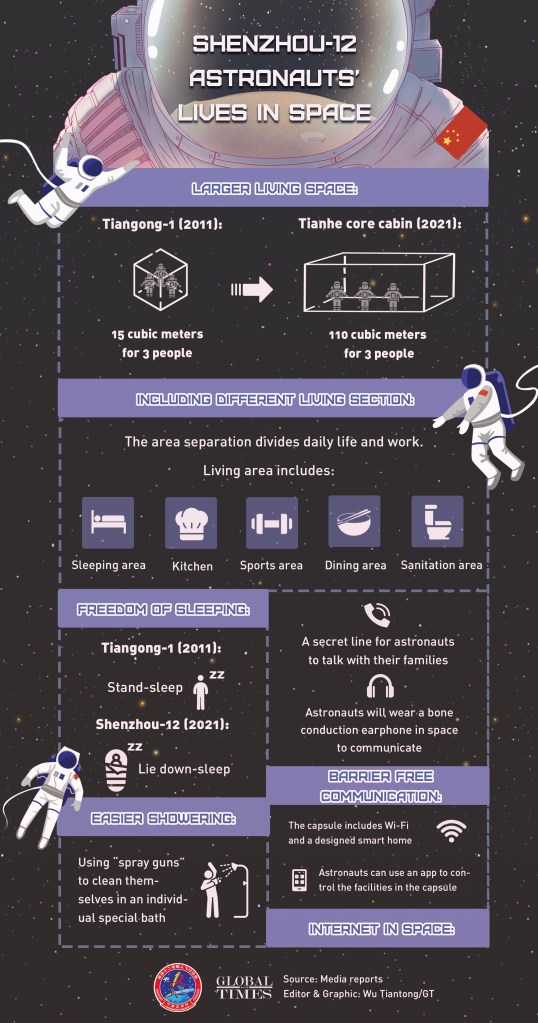
The room for in-cabin activities in China’s space station has expanded greatly compared to that in China’s previous manned orbiting spacecraft Tiangong 1 and 2, which is six times larger, from 15 cubic meters to 110 cubic meters when completed, the Global Times learned from the space station program contractor China Aerospace Science and Technology Corporation (CASC).
About 50 cubic meters is available inside the core module alone for occupants’ living and work activities – much more room than in all previous crewed Chinese spacecraft, according to the CASC.
Seeing CCTV footage in which the crew was floating with ease in the spacious Tianhe cabin in awe, a great sense of pride was aroused among millions of Chinese netizens.
Even Yang Liwei, director of the China Manned Space Engineering Office and the country’s first astronaut who visited space in the Shenzhou-5 mission in 2003, said with humor that he envied a lot to see his fellow spacemen now have such a big new home, which shows how China’s space industry has advanced in the past 18 years.
With many recalling how Yang was literally crouching during his some 20 hours of space ride 18 years ago, netizens proudly nicknamed Tianhe a villa featuring three separate deluxe bedrooms, a broad living room, a bathroom, and even a gym for exercise.
Ji Qiming, CMSA spokesperson, revealed that such space gym is equipped with a bicycle and running platform to assist taikonauts’ daily physical training.
Yang revealed that the Chinese station will grow even bigger when two lab cabins connect to the core module in the future.
Shenzhou-12 astronauts’ lives in space
Innovative solutions
A number of new technologies have also been applied on the core cabin, including information technology that allows broader bandwidth between space and Earth, and one-on-one private connections, as well as smart home applications that can be controlled by phone apps, providing a cozier living environment for taikonauts. Wireless communication is also equipped using Wi-Fi and Bluetooth technologies.
According to Bai Linhou, deputy chief designer of the Tianhe core module, the Wi-Fi system onboard Tianhe, enabling taikonauts’ communication with ground, can reach speeds of up to 100 million bytes per second.
“That is to say, they can browse websites just as we can on the ground, and make phone calls with ground also… there would be no difference for them to use such services,” Bai said.
Mission planners have also set up a private voice call channel for astronauts, which they can use to “talk secrets” with their families and share their feelings with people on the ground.
Prior to the crew’s arrival on Thursday, the Tianzhou-2 cargo spacecraft shipped 6.8 tons of supplies, including some 160 parcels of goods and two tons of propellants, to the Tianhe core module, the Global Times learned from the craft developer CAST.
Ground logistics technology has also been adopted for the spacecraft. For example, astronauts can obtain the location and further information of specific goods by scanning a QR code, and the inventory information is recorded in a dynamic manner so that astronauts can keep track of the goods, Yang Sheng, the cargo spacecraft system’s chief designer, disclosed.
Over 120 kinds of space food are available on the station with balanced nutrition, a rich variety, and good taste, CMSA said, among which are the celebrated Chinese favorites, Kung Pao Chicken and Yuxiang Shredded Pork.
China Aerospace Science and Industry Corporation (CASIC) told the Global Times on Friday that the firm has also offered a variety of high-tech solutions to support the lives of taikonauts in orbit, such as helping them build a space kitchen, space hospital as well as space air conditioning system.
CASIC has developed a food warmer that is installed on the Shenzhou-12, enabling astronauts to heat their food.
Taikonauts would also be carrying their space hospital devices which are also developed by the CASIC and come in the size of a cigarette pack. Such devices can record physical vitals such as body temperature, heart and breathing data in a real-time fashion and transmit data back to ground for further analysis.
CASIC has also contributed to the space air conditioner system with their products including the liquid circuit valve and gas flow control valve, components of the system, which allow the taikonauts to have a suitable working temperature environment.
Another key technology that will be brought to space on board is the urine processing and regenerative systems, said Li Jiandong, senior engineer in charge of the system.
“As a major breakthrough in the recycling of water resources in space, it is a crucial step to enable the long-term stay for astronauts in orbit, which serves as a key support role in the construction and operation of China’s space station,” a senior official at CASIC told the Global Times.
Six liters of urine can extract 5 liters of distilled water, and the maximum water production rate is 2.5 liters per hour, according to CASIC.
Shenzhou-12 manned spaceflight is the fourth mission in the key technologies verification phase, and also the first manned mission in the space station phase.
As the first batch of space residents in China’s own space station, the three taikonauts are projected to achieve main mission objectives including verification of key technologies for the construction and operation of the space station such as taikonauts long-duration in-orbit stay, regenerative environment control and life support, and goods and materials resupplies.
Extravehicular activities and operations and in-orbit maintenance will also be highlight events for the crew’s three-month stay, during which they will conduct for the first time a long-duration operation outside the cabin, with the support of robotic arms, according to Ji the CMSA spokesperson.
According to mission planners, there would be two spacewalk events in the mission period. Liu, who had participated in the country’s first spacewalk together with Zhai Zhigang during the Shenzhou-7 mission, is expected to play a crucial guiding role during outside cabin operations.
After a stay of three months, the astronauts will return to the Dongfeng landing site located in the desert of North China’s Inner Mongolia Autonomous Region onboard the re-entry capsule.
Throughout the mission period, the Xi’an Satellite Control Center will work together with the Beijing Aerospace Control Center to track and monitor the mission, the Xi’an center told the Global Times.
Deploying its stations in over 10 regions across the country, including Kashi, Weinan, Qingdao, Xiamen and Hetian, the Xi’an center will track the real-time status of in-orbit taikonauts throughout their three-month stay.
When the CPC government decides to do something, it gets it done. Not mentioned is also the fact that China has donated 350M vaccines to the rest of the world–mostly the global south. The US has pledged a tiny fraction of that (20M). 當中共政府決定做某事時,它就做到了。 未提及的還有一個事實,即中國已向世界其他地區(主要是全球南方)捐贈了 3.5 億支疫苗。 美國祇承諾了其中的極小部分(2000 萬) https://bridgebeijing.com/our-publications/our-publications-1/china-covid-19-vaccines-tracker/
Note the complete erasure in the BBC, the UK Government mouthpiece 請注意 BBC 英國政府喉舌新聞網完全擦除,隻字不提https://www.bbc.com/news/world-55795297
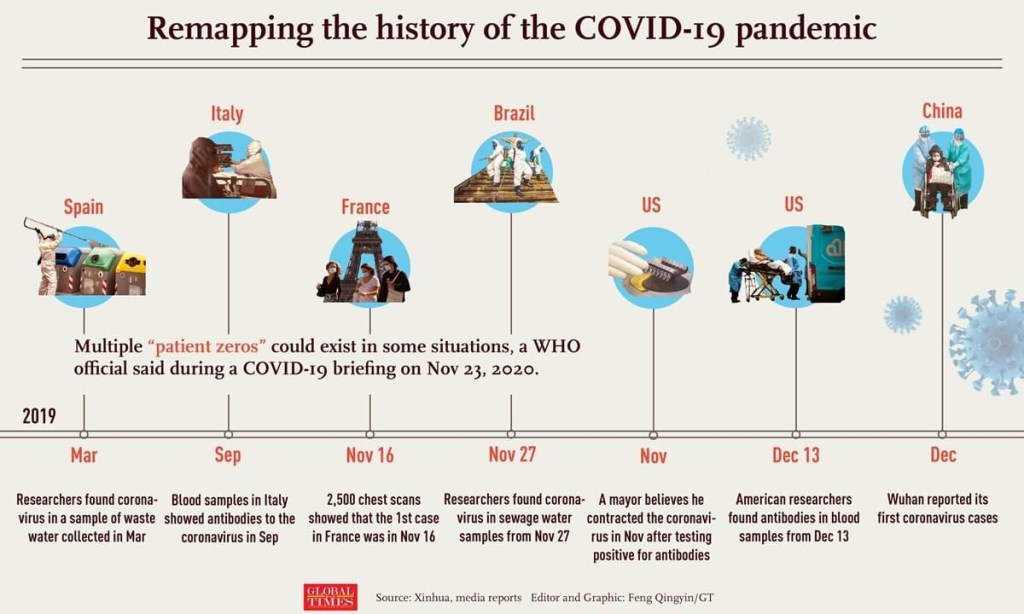
US scientists report earliest known COVID-19 case a solid proof; next stage should be focused especially on the US: Chinese epidemiologist
More scientific evidence in countries such as the US and #France has emerged to suggest that those countries may have had #COVID-9 cases way before they officially confirmed.
A #US government study suggested that the coronavirus may have already been circulating among people one month earlier than it was officially confirmed, and French scientists also presented scientific evidence that the country’s cases were caused by an indigenous virus strain prevailing before 2020.
Chinese scientists urged that such evidence should not go unnoticed, and should serve as evidence that the next-stage virus-tracing investigations should be focused on countries which reported cases earlier than they previously identified, especially the US.
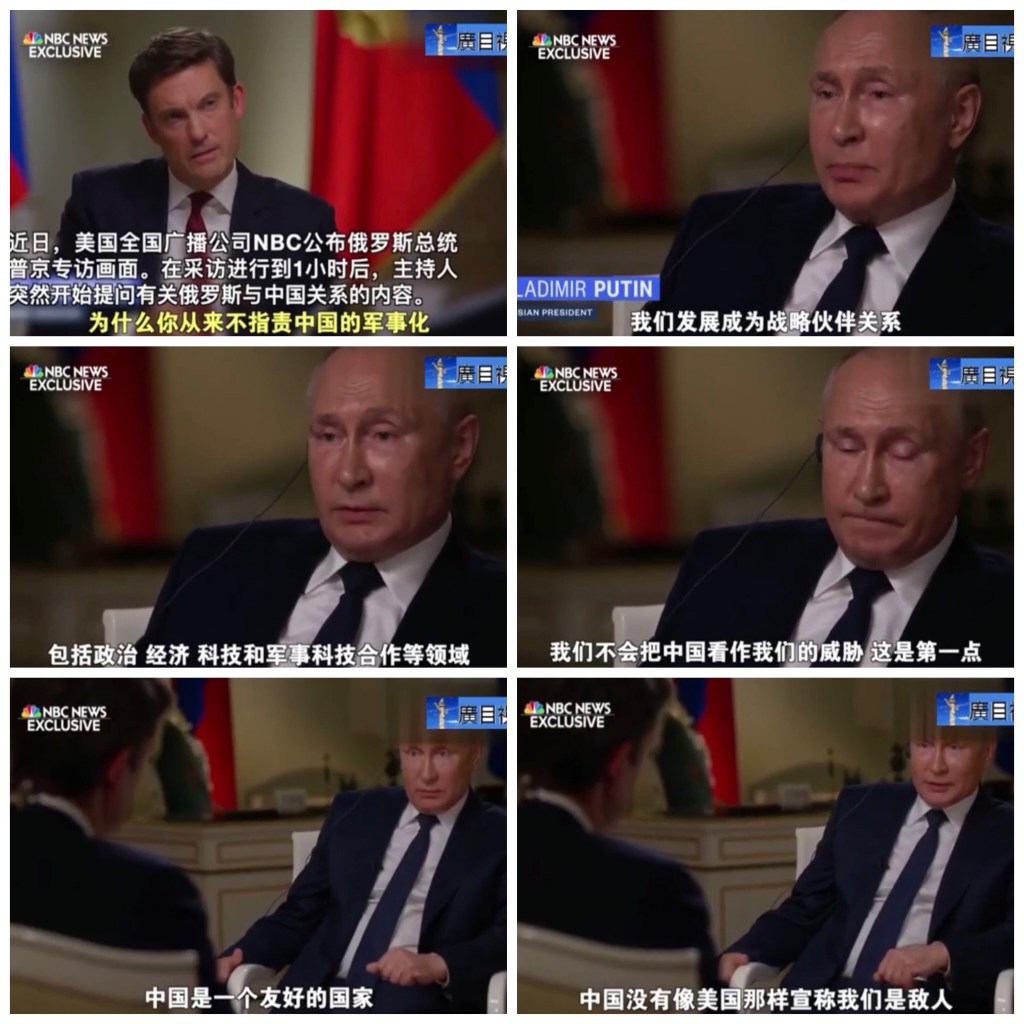
English Video with Chinese subtitles 英文有中文字幕視頻: Putin exclusive interview with NBC on Sino-Russian relationship. Putin said the relationship is at its best, China and Russia are neighbors. 普京就中俄關係接受NBC專訪。 普京表示,兩國關係處於最佳狀態,中俄是鄰國. And US has declared Russia the enemy. 美國已經宣布俄羅斯為敵人. https://vimeo.com/564628345
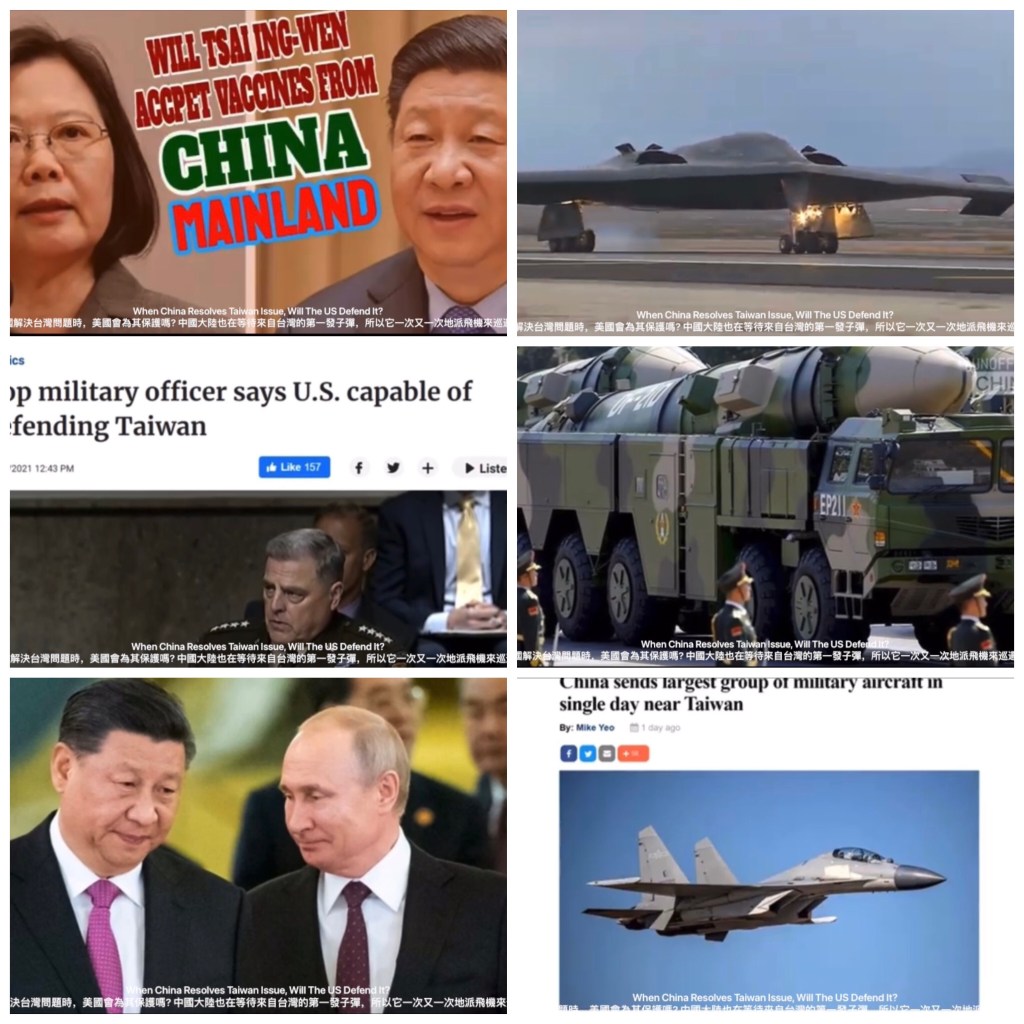
Video: When China Resolves Taiwan Issue, Will The US Defend It? 當中國解決台灣問題時,美國會為其保護嗎? China Mainland is also waiting for the first bullet from Taiwan, so it sends its airplanes to patrol Taiwan time and again. 中國大陸也在等待來自台灣的第一發子彈,所以它一次又一次地派飛機來巡邏台灣.
On June 15, China’s people’s liberation army sent 28 airplanes to Taiwan’s “air defence identification zone ” to respond to the G7 communique that appeals to maintaining the Taiwan Strait’s status quo. 6月15日,中國人民解放軍向台灣“防空識別區”派出28架飛機,響應G7呼籲維持台海現狀的公報.
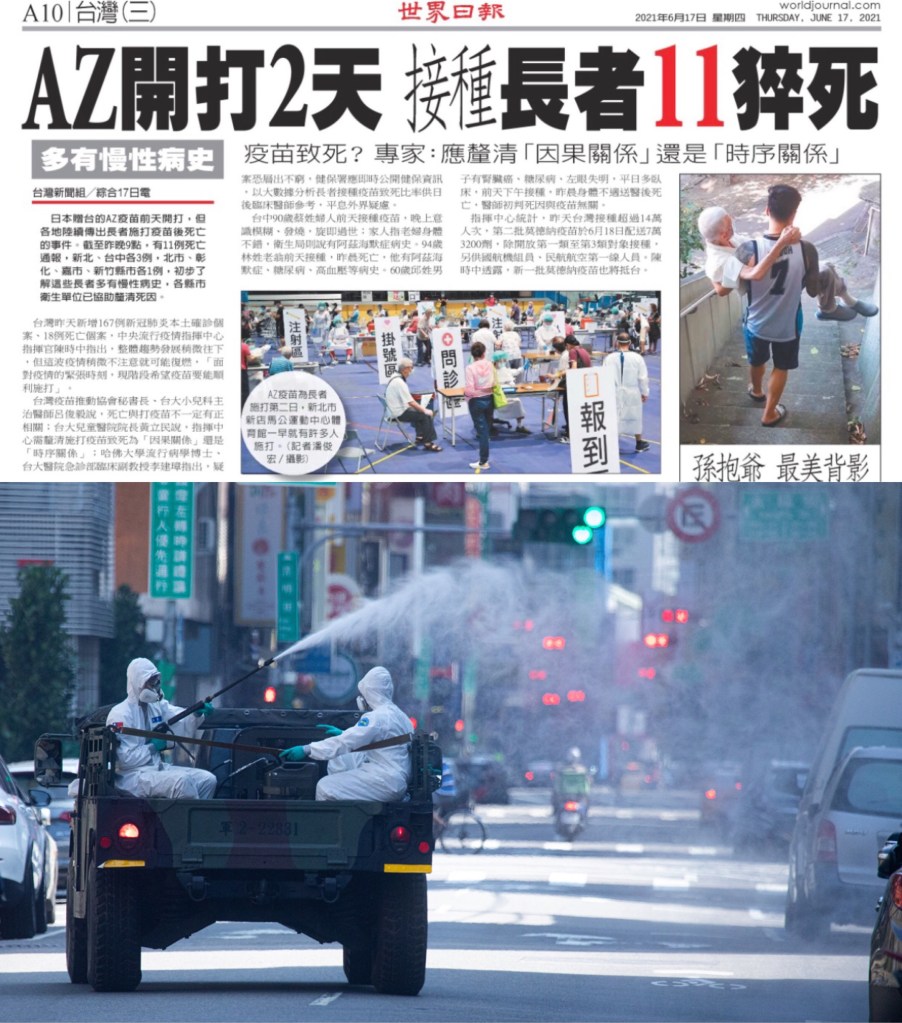
Update: More post-AZ injection deaths reported in Taiwan, shedding light on true face of DPP: experts by Liu Caiyu Jun 18 2021
Disinfection workers sanitize the streets in Taipei on the island of Taiwan on Sunday amid mounting COVID-19 epidemic control pressure, as the island registered 335 cases on Monday following 207 the previous day.
Deaths among those who had received the AstraZeneca (AZ) COVID-19 vaccine in Taiwan have increased hesitation among the public to get jabs, with some criticizing the politically driven policy made by the secessionist Democratic Progressive Party (DPP) authority as a shame to the virus-hit island.
Two days after Taiwan started inoculations with the AZ vaccine that was delivered from Japan, the island recorded at least 13 deaths, although local authorities were reluctant to classify those deaths as being related to the vaccine, local media said.
As of Friday, 29 post-injection deaths have been reported.
Most of those who died were aged between 60 and 90, and some had a history of chronic diseases. The sudden deaths after vaccination made many elder people and their relatives worried, and they feared that it would be all right if they did not get vaccinated, but there would be a danger to life if they did.
Kaohsiung on Thursday reduced the vaccination venues from the planned 34 to 27, and some sites had more medics than patients, local media reported.
A Beijing-based immunologist told the Global Times on Thursday that some European nations such as Denmark had stopped using the AZ vaccine, although the European Medicines Agency listed the blood clots with low blood platelets that were strongly associated with the AZ vaccine, as a rare side effect.
Canada on Thursday local time suspended the use of AstraZeneca for people who are waiting for a second dose due to blood clot risks, and suggested people receive vaccines in other technical routes, such as mRNA vaccines by Pfizer. The country had already stopped AstraZeneca for first-dose vaccinations earlier, media reported.
The immunologist suggested that Taiwan should suspend administering the AZ vaccine for the sake of public health, to allow more detailed investigations and evaluations of its safety.
The deaths may not be directly related to the vaccine, but still some Taiwan netizens worried that Japan was just dumping the “questionable” vaccine on Taiwan. The AZ vaccine is not included in the inoculation plan in Japan.
Wang Jianmin, a senior cross-Straits expert at Minnan Normal University, told the Global Times on Thursday that the deaths showed that Japan’s offer of the AZ vaccine was more of a humiliation to the island.
Japan is considering a second donation to the island after it sent 1.24 million AZ doses to Taiwan earlier this month, local media said.
Chen I-hsin, a politician from the opposition camp Kuomintang, said on Facebook on Thursday that he had foreseen the incident last week and asked the DPP authority to take precaution before the AZ vaccine was dispatched. However, the DPP did not buy it, resulting in those deaths among the elderly.
Some Taiwan residents blamed the DPP, which would rather take the risk of questionable vaccines than accept vaccines offered by the Chinese mainland. Some are seeking other solutions, including flying to the mainland for vaccinations, amid an infection surge and vaccine shortage.
Wang said that the DPP’s reluctance to take vaccines from the mainland was not only politically driven but also was probably economically driven, as accepting vaccines from the mainland would strike against its home-grown vaccine that is still waiting for approval.
Some Taiwan internet users said they believed that the vaccine and inoculation fiasco had answered the question “Are the DPP’s political interests more important than Taiwan residents’ lives?”


 Johnson Choi Biz