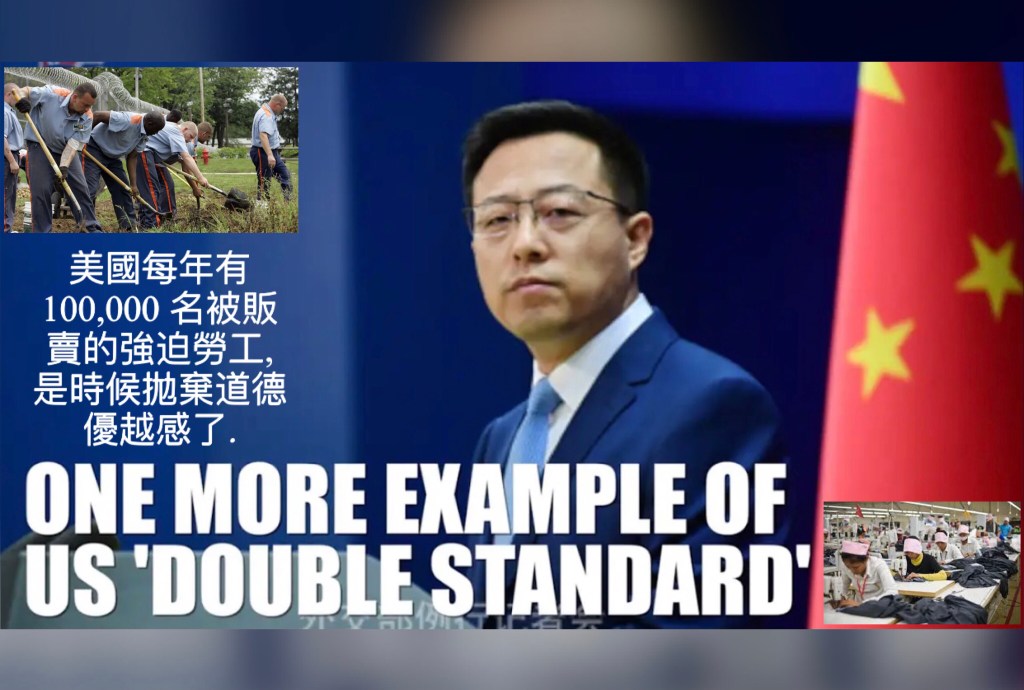
Video: Time for US to discard moral superiority with its 100,000 trafficked forced laborers annually. 美國每年有 100,000 名被販賣的強迫勞工, 是時候拋棄道德優越感了. https://vimeo.com/566600843 https://youtu.be/mZa6aCT-JQc https://www.facebook.com/100036400039778/posts/516158236274173/?d=n China urges the United States to discard its moral superiority and stop practicing double standard in the labor problem, said Foreign Ministry spokesman Zhao Lijian at a routine press briefing in Beijing on Monday. 外交部發言人趙立堅週一在北京舉行的例行新聞發布會上表示,中國敦促美國放棄其道德優勢,停止在勞工問題上實行雙重標準.
Zhao’s comment comes after the United States said at the 109th session of the International Labor Conference that every abuser of forced labor and user of child labor should be held responsible for their actions. 趙的評論是在美國在第109屆國際勞工大會上表示,每一個強迫勞動的施虐者和使用童工的人都應該為他們的行為負責之後發表的.
“Over the past five years, all 50 states in the United States and Washington D.C. had reported cases of forced labor and human trafficking. Up to 100,000 people trafficked from abroad are engaged in forced labor in the United States every year, half of whom are sold to sweatshops or subjected to household slavery,” Zhao said. “過去五年,美國50個州和華盛頓特區都報告了強迫勞動和人口販賣的案件。每年有多達10萬人從國外被販賣到美國從事強迫勞動,其中一半是 賣給血汗工廠或淪為家庭奴隸,”趙說.
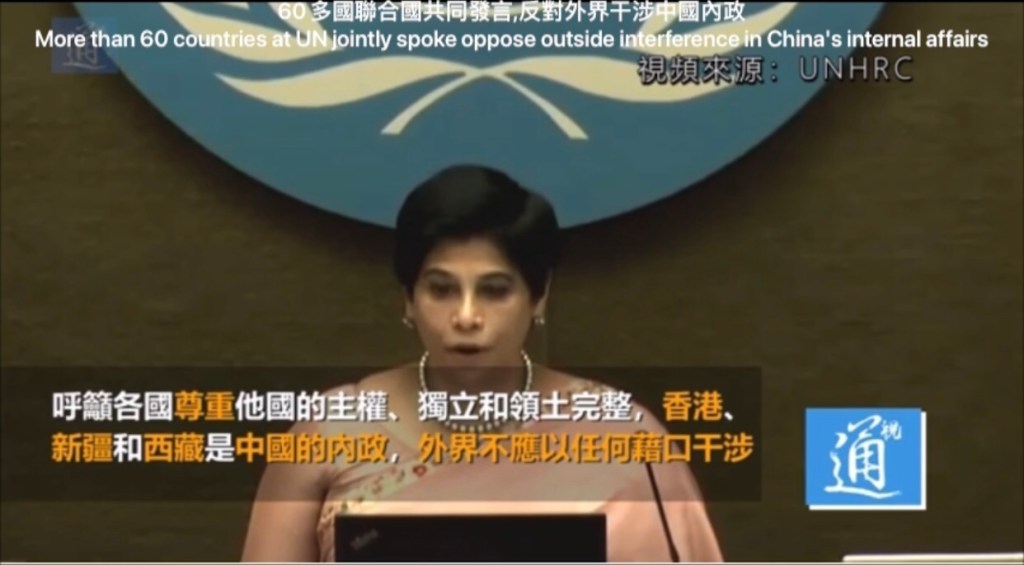
Video: More than 60 countries at UN jointly spoke oppose outside interference in China’s internal affairs 60多國聯合國共同發言 反對外界干涉中國內政
On June 22, at the 47th session of the UN Human Rights Council in Geneva, Belarus made a joint speech on behalf of more than 60 countries, calling on all countries to respect the sovereignty, independence and territorial integrity of other countries. Hong Kong, Xinjiang and Tibet are China’s internal affairs. , The outside world should not interfere with any excuse 6月22日,在日內瓦舉行的聯合國人權理事會第47屆會議上,白俄羅斯代表60餘個國家作共同發言,呼籲各國尊重他國的主權、獨立和領土完整,香港、新疆和西藏是中國的內政,外界不應以任何藉口干涉。https://vimeo.com/566462423 https://youtu.be/zD3gW1tbIsI https://www.facebook.com/100036400039778/posts/515949536295043/?d=n
PLA on alert during US warship’s latest Taiwan Straits provocation by Liu Xuanzun Jun 22 2021
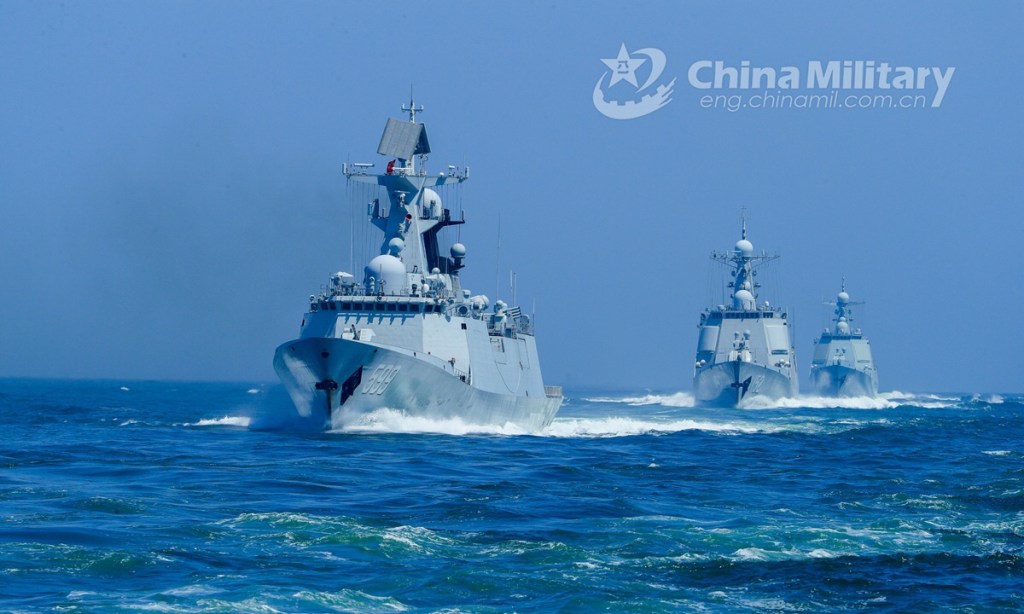
Warships attached to a destroyer flotilla with the navy under the PLA Eastern Theater Command steam in astern formation in waters of the East China Sea during the realistic training on April 23, 2021.
The Chinese People’s Liberation Army (PLA) Eastern Theater Command tracked and monitored a US warship as it sailed through the Taiwan Straits with the aim of stirring up trouble in the region on Tuesday, the command’s spokesperson said on Wednesday.
As its only aircraft carrier based in the Asia-Pacific region leaves for the Middle East, the US is trying to register its presence as it attempts to fill the void and contain China, analysts said.
The PLA Eastern Theater Command organized maritime and aerial forces, tracked and monitored on high alert the USS Curtis Wilbur guided missile destroyer through its entire course when it made a transit in the Taiwan Straits on Tuesday, said Senior Colonel Zhang Chunhui, spokesperson of the Command, in a statement released on Wednesday.
This is the sixth time a US warship has sailed through the Taiwan Straits since Joe Biden assumed US presidential office on January 20, media on the island of Taiwan said. The last time the USS Curtis Wilbur sailed through the Straits was on May 18, a move that was also closely monitored by the PLA Eastern Theater Command.
Zhang said the US is again playing the old trick and stirring up trouble in the Taiwan Straits and intentionally sabotaging regional security, threatening the peace and stability in the Taiwan Straits. It clearly shows that the US is the biggest security risk maker in the region. “We are resolutely against this.”
The provocations from US warships along the Taiwan Straits are aimed at creating trouble between the Chinese mainland and the island of Taiwan, in order to lend support to Taiwan secessionists, Wei Dongxu, a Beijing-based military expert, told the Global Times.
Chinese mainland military observers also noted that each time a US warship sailed through the Taiwan Straits, the PLA monitored and tracked its movement with warplanes and warships, showing that the PLA has complete control over the region.
While the US 7th Fleet said in a statement on Tuesday that the latest Taiwan Straits transit by the USS Curtis Wilbur was routine, it could be an attempt to make up for the current situation of the lack of a US aircraft carrier in the Asia-Pacific region, analysts said.
The USS Ronald Reagan, the only US aircraft carrier based in the Asia-Pacific, left the South China Sea on Friday on a mission to evacuate US troops from Afghanistan, according to the monitoring of the South China Sea Strategic Situation Probing Initiative (SCSPI), a Beijing-based think tank.
Before the US military sends another carrier to the region, it would want to use its other vessels and aircraft to register its presence as it tries to fill the void left by the USS Ronald Reagan, a Chinese mainland expert who requested anonymity told the Global Times on Wednesday.
Increased US warship activities and warplane close-in reconnaissance operations near China should be expected, the expert predicted.
Last time, after the USS Curtis Wilbur sailed through the Straits on May 18, it went on and intruded Chinese territorial waters in the South China Sea two days later, and was driven away by the PLA.
The troops of the PLA Eastern Theater Command are on high alert all the time, so as to deal with all threats and provocations at any time and resolutely safeguard national sovereignty and territorial integrity, Zhang said.
5G-equivalanet network speeds in space empower taikonaut’s unimpeded video call with ground by Global Times Jun 22 2021
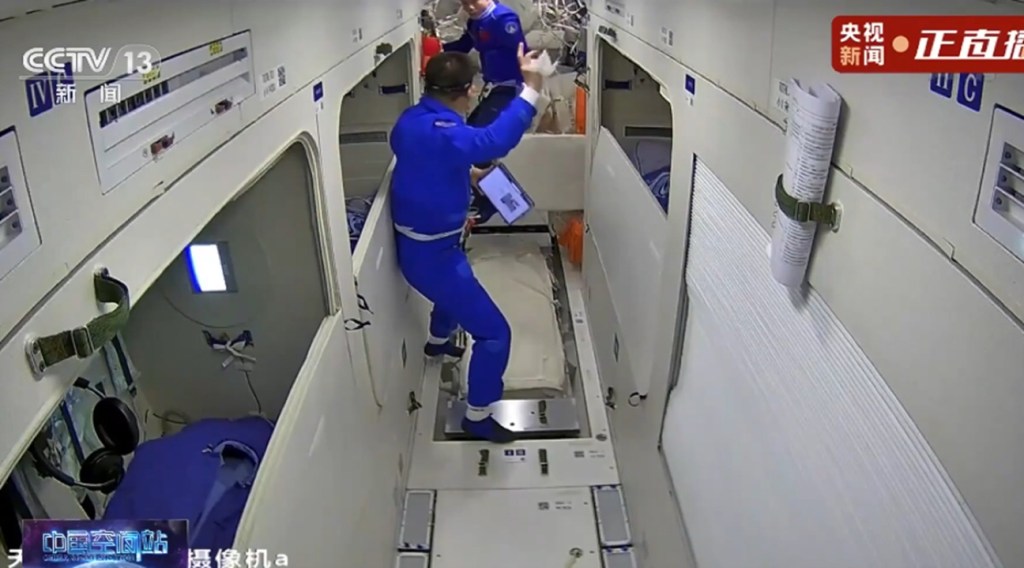
The three taikonauts aboard China’s Tianhe space station core module some 400 kilometers above the Earth received the first video call from Chinese President Xi Jinping at the control center in Beijing on Wednesday morning, impressing many with the high-resolution images, loud-and-clear voices, and a ground-space connection with almost zero time delay. What empowered such a smooth connection?
A “space network” composed of three homegrown Tianlian satellites guaranteed the unimpeded communication between the ground and space, according to China Space News, the newspaper co-hosted by two state-owned space giants, the China Aerospace Science and Technology Corporation and the China Aerospace Science and Industry Corporation.
Tianlian satellites are China’s data tracking and relay communication satellites that fly in geostationary orbit. They are mainly tasked to provide data relay, measurements and control, and transmission services for the in-orbit spacecraft on a global scale.
The downlink rate of the station’s network is 1.2G, which is equivalent to the ground’s 5G communication speed. Its time delay is within merely one second, the system developer told CCTV News.
Yi Yusheng, chief designer of the space station’s measurement, control and communication subsystem at the China Academy of Space Technology, introduced that the taikonauts could hold video calls, receive e-mails, and even watch online TV programs via the station’s telecommunication network during their three-month stay.
“They can also have private phone calls with their families using a special telephone, which will not be heard by any of the ground control staff,” Yi said.
Jing Zheng, deputy commander in chief of the space station, further added that the Wi-Fi in space feels the same as the ground, supporting taikonauts’ daily communications on WeChat and video calls.
Over 10 cable and wireless network cameras, Bluetooth headsets, mobile phones, PADs, and laptops had been brought to the Tianhe core cabin to guarantee its connection with the ground through various means.
These terminals will upload the images and voice messages to the space station’s Ethernet switcher, which will then transmit the data to the ground via a high-speed relay antenna.
A major breakthrough has been made for the relay antenna in that the updated version could be repaired and maintained, with the aim of extending its lifespan to support the space station’s operation needs for 15 years, a system developer said.
Yi added that the ground-space connection will not be interfered with, as the three Tianlian satellites and the space station’s relay antenna could achieve a coverage rate of more than 90 percent, meaning that the telecommunications signals can reach the craft for over 90 percent of its time in orbit. Once the two other laboratory modules are docked with the core cabin and the three-module complex is formed, there will be another two relay antennas that will realize a 100 percent coverage rate of ground-space connection.
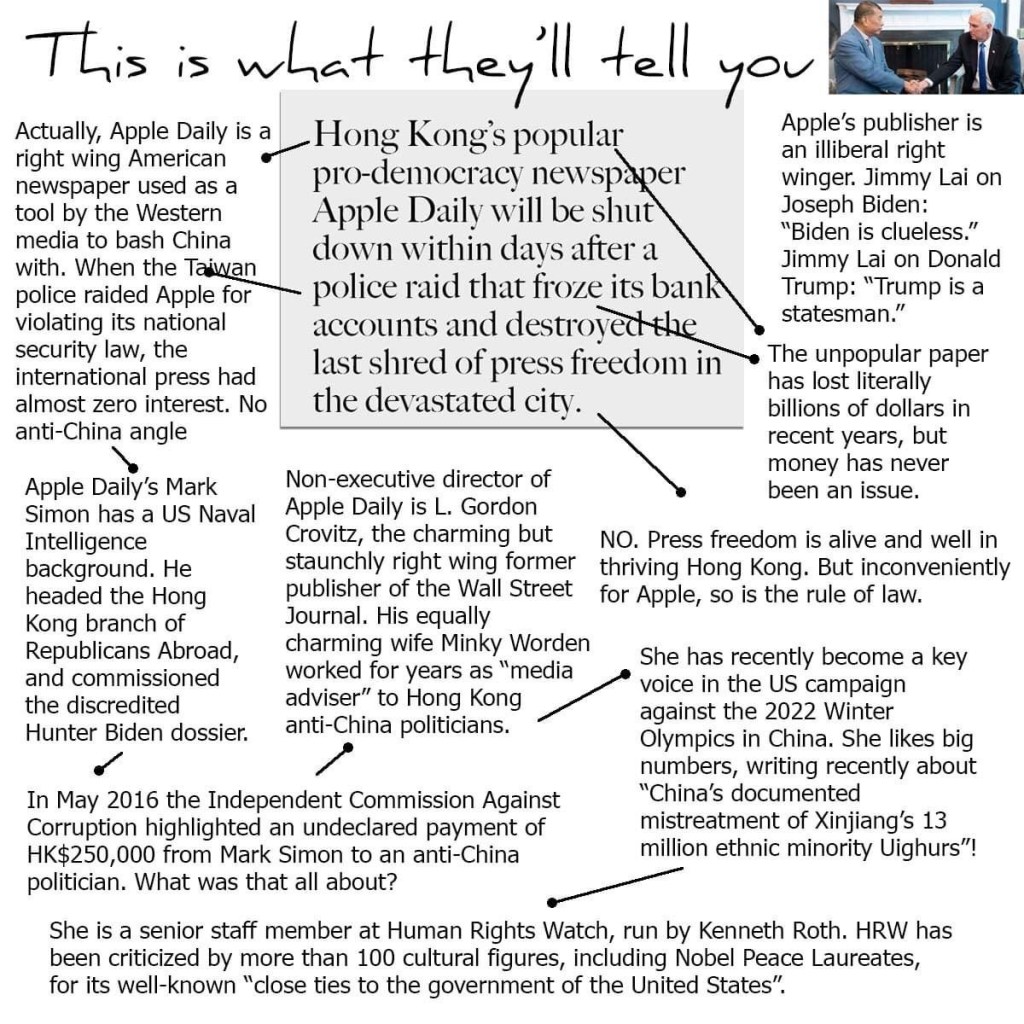
Nury Vittachi: I smile and shake my head. Most reporters still don’t understand that for more than 40 years, the CIA has been locating pro-USA groups around the world and re-branding them “pro-democracy”. The majority are far right, pro-US and anti-left. Apple Daily is a good example. There’s just waaaay too much American stuff going on in the background. In Taiwan, fully 80 percent of supporters of the anti-China party presently in power are anti-China self-declared Trumpites. I actually don’t blame reporters: I missed all this in my younger days: was friends/ fans of most of the folk mentioned in this graphic until their hostility level to the Chinese made me uncomfortable
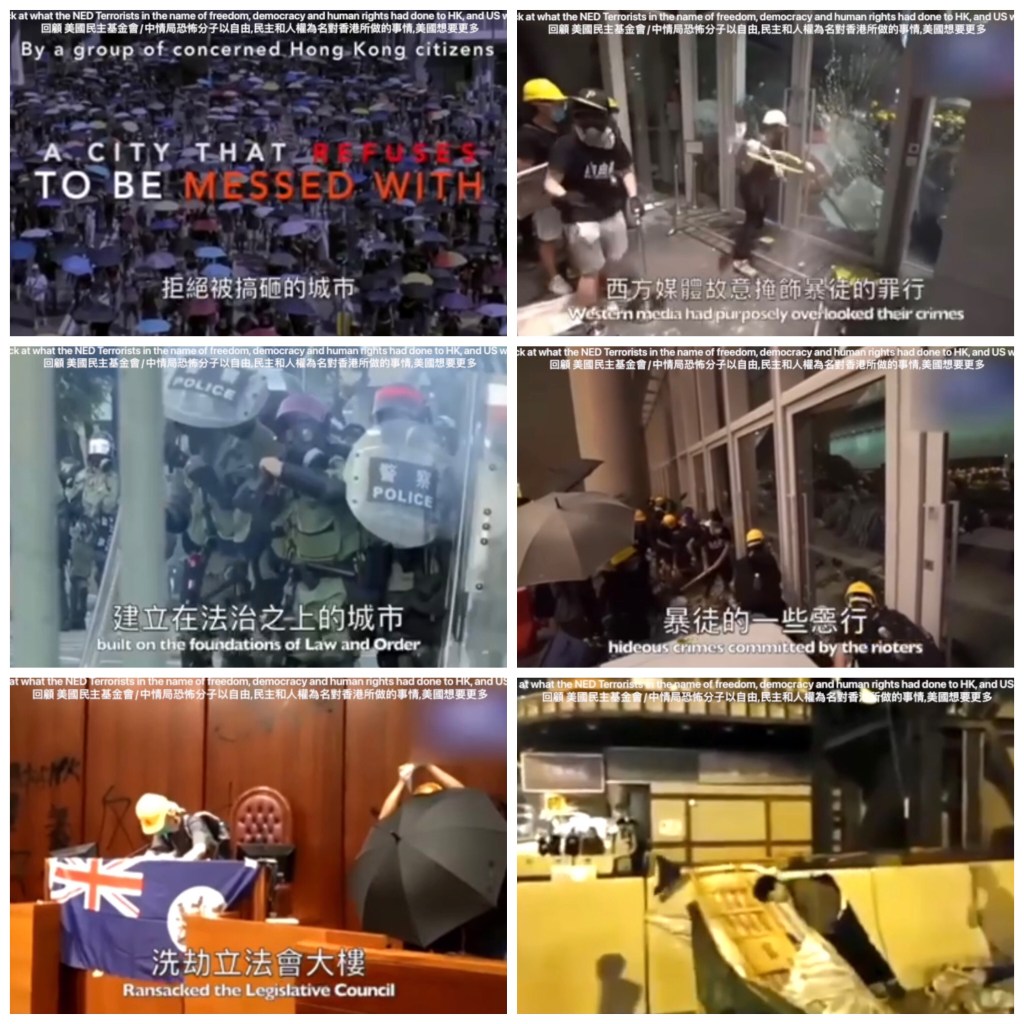
Video: Look back at what the NED supported Terrorists in the name of “fake” freedom, democracy and human rights had done to HK. HK is still standing tall. US is not finished, want to do more, don’t let your guard down. 回顧美國民主基金會和中情局支持的恐怖分子以”假”自由,民主和人權為名對香港所做的事情, 可是香港還是站起來強而不倒, 美國要玩殘香港, 不會罷手, 不要掉以輕心. https://vimeo.com/566268240
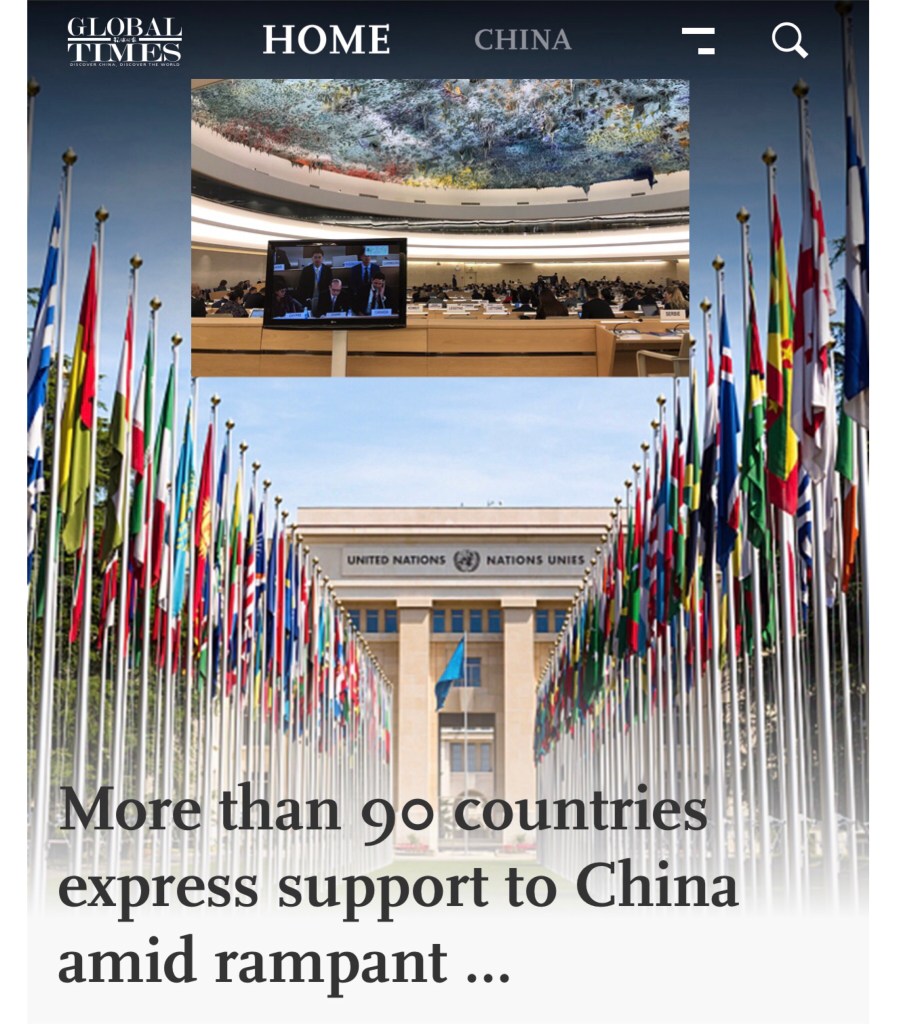
More than 90 countries express support to China amid rampant anti-China campaign at UN human rights body by Liu Xin Jun 22 2021
Ambassador Chen Xu, permanent representative of China to the United Nations office in Geneva and other international organizations in Switzerland, speaks during the 43rd session of the UN Human Rights Council.
More than 90 countries expressed their support and understanding to China’s stance and 65 of them clearly opposed interference with China’s domestic affairs on its Xinjiang Uygur Autonomous Region, Hong Kong Special Administrative Region and Tibet Autonomous Region under the excuse of human rights.
This happened on the second day of the 47th session of the United Nations Human Rights Council on Tuesday after Canada led a group of Western countries to release a joint statement to make groundless accusations of China on Xinjiang related topics.
The confrontations displayed at the UN human rights body show the battle between the truth about Xinjiang and rumors and lies made by the anti-China campaign led by the US and a small group of Western countries including Canada, analysts said.
On behalf of 65 countries, the representative of Belarus made a joint statement on Tuesday, stressing that respecting the sovereignty and integrity of each country is the basic code of international relations, and affairs on Hong Kong, Xinjiang and Tibet are China’s domestic affairs, which should not be interfered by outside forces.
The statement by the representative of Belarus also opposed double standards or politicalizing human rights issues. It opposes groundless accusations against China based on disinformation or political purpose; or using human rights as an excuse to interfere in China’s domestic affairs.
Aside from the 65 countries, six countries from the Gulf Cooperation Council also sent a message to support China. More than 20 countries plan to deliver separate speeches to support China, making the total number to express understanding and support to China surpassing 90.
The number of countries that have expressed support to China was compared to the joint statement made by Canada on behalf of a group of Western countries, in which it urged China to allow the UN human rights chief to access Xinjiang to look into reports of “more than a million people being unlawfully detained” and some “subjected to “forced labor.”
China has refuted rumors on “one million people” being “detained” or the existence of forced labor in its Xinjiang region, calling them a “total lie.”
The so-called “genocide” and “forced labor” in Xinjiang are nothing but rumors with ulterior motives and downright lies. Its real purpose is to restrict and contain the development of relevant sectors and companies in China, Chinese Foreign Ministry spokesperson Zhao Lijian told a press conference on Tuesday.
In contrast to the West’s evidence-free accusation, people from Xinjiang also appeared at the Tuesday session to make their voices heard.
Gulnar Wuful, vice-chairperson of the Xinjiang Association for Science and Technology, also gave a video speech at the session of the UNHRC on Tuesday. She said that there have been no violent attacks in Xinjiang for more than four years and the region has enjoyed better economic and social development.
“As a Uygur scholar who has witnessed changes in Xinjiang in recent years, the development of human rights in the region has been witnessed by the international community. No anti-China force can undermine the stability of Xinjiang,” said Gulnar.
On behalf of a group of countries, Ambassador Chen Xu, China’s Permanent Representative to the UN Office in Geneva and other International Organizations in Switzerland, also said in a joint statement on Tuesday that “We are gravely concerned about baseless accusations by certain countries using human rights as a means to interfere in the internal affairs of other countries, severely violating the purposes and principles of the Charter of the United Nations, while turning a blind eye to their own serious human rights problems.”
Chen noted that some countries, under the pretext of democracy and human rights, want to impose their own values and models on others, and even use human rights as an excuse for military intervention and unilateral coercive measures, which has brought untold sufferings to the people of other countries.
“We also hope that the UN High Commissioner for Human Rights and the Office of the United Nations High Commissioner for Human Rights (OHCHR) will keep functioning in accordance with GA resolution 48/141 and within the framework of the Charter of the United Nations, the Universal Declaration of Human Rights, including respecting the sovereignty and territorial integrity of states,” said Chen.
There will be more battles against disinformation on China’s Xinjiang at this session as the US is coming back to the UNHRC and is wielding its influence to pressure other countries to attack China and to hype related topics to smear China while trying to label China for “genocide,” Zhu Ying, deputy director of the National Human Rights Education and Training Base of Southwest University of Political Science and Law, told the Global Times.
Zhu is scheduled to attend a sideline activity at the 47th session in the coming days and together with other Chinese scholars, they will share the truth on China’s human rights situation with international experts.
Analysts also noted that under the pressure from the West, the High Commissioner, Michelle Bachelet, talked about China’s Xinjiang and Hong Kong topics at the council on Monday, saying that she hopes to visit Xinjiang this year.
Liu Yuyin, spokesman for China’s mission to the UN in Geneva, said on Monday that her visit should be a “friendly one” aimed at promoting cooperation “rather than making the so-called ‘investigation’ under the presumption of guilt.”



 Johnson Choi Biz