Chinese FM meets U.S. deputy secretary of state, urging rational China policy by Xinhua 2021-07-27

Chinese FM meets U.S. deputy secretary of state, urging rational China policy by Xinhua 2021-07-27

Chinese State Councilor and Foreign Minister Wang Yi (R) meets with U.S. Deputy Secretary of State Wendy Sherman in north China’s Tianjin on July 26, 2021.

TIANJIN, July 26 (Xinhua) — Chinese State Councilor and Foreign Minister Wang Yi on Monday met with U.S. Deputy Secretary of State Wendy Sherman, urging the United States to drop arrogance and prejudice and steer back to a rational and pragmatic China policy.

In face of severe difficulties and challenges in China-U.S. relations, Wang said it requires serious consideration for the U.S. side to make correct choices as to whether the bilateral ties will head to confrontation or improvement.

Calling Sherman’s visit a part of mutual contact and dialogue, Wang said the two sides should enhance mutual understanding, erase misunderstanding, avoid misjudgment and better manage differences via constant dialogues.

As the new U.S. administration has in general continued its predecessor’s extreme and erroneous China policy, constantly challenged China’s bottom line, and stepped up containment and suppression on China, Wang said China is firmly opposed to such U.S. practices.

Noting the U.S. attempt to impede and disrupt China’s modernization drive, Wang said “such an attempt is doomed to fail for now, and is even more so in the future.”

China’s development, driven powerfully from within, is a trend of historical evolution, Wang said, adding that socialism with Chinese characteristics totally fits China’s national realities.

“The great rejuvenation of Chinese nation has entered an irreversible historical process, which cannot be held back by any force or country.”

He said China sticks to the path of peaceful development and follows an open strategy of win-win cooperation. China will never tread the beaten track of big powers in seeking hegemony, and is willing to realize common development and prosperity with all countries including the United States, Wang added.

Wang also said that China’s development is aimed at seeking happiness for all Chinese people, rather than challenging or replacing the United States. “We take no interest in betting winnings or losses of the U.S. side. China’s development is not based on the premise of U.S. decline.”

To prevent China-U.S. relations from further deteriorating or even getting out of control, Wang underlined three basic demands as bottom lines that China firmly upholds.

He said the first is that the United States must not challenge, slander or even attempt to subvert the path and system of socialism with Chinese characteristics.

Chosen by history and the Chinese people, China’s path and system are matters of Chinese people’s welfare and Chinese nation’s future, as well as core interests that China must firmly uphold, Wang said.

The second, Wang said, is that the United States must not attempt to obstruct or interrupt China’s development process.

Chinese people have their rights to live better lives and China has its right to achieve modernization, said Wang, adding that modernization is not an exclusive right of the United States.

China urges the United States to remove all unilateral sanctions, high tariffs, long-arm jurisdiction and technology blockade it has imposed on China as soon as possible, Wang said.

Wang said the third is that the United States must not infringe upon China’s state sovereignty, or even damage China’s territorial integrity.

He said issues regarding Xinjiang, Tibet and Hong Kong have never been about “human rights” or “democracy,” but about fighting against “Xinjiang independence,” “Tibet independence” and “Hong Kong independence.”

No country will allow its national sovereignty and security to be compromised, Wang added.

As for the Taiwan question, Wang said it’s even more important. He said the fact that both sides of the Taiwan Strait belong to one and the same China and Taiwan is part of China has never changed and will never change.

If “Taiwan independence” forces dare to provoke, China has the right to take any necessary measure to stop it, Wang said, urging the U.S. side to honor its commitment on Taiwan question and act prudently.

China is the largest developing country and the United States is the largest developed country, and neither side can replace or defeat the other, Wang said. “We have a clear view on where China-U.S. relations are headed, that is, to find a way for two major countries with different systems, cultures and stages of development to coexist peacefully on this planet through dialogue.”

It would be even better if it could be mutually beneficial, Wang said, adding that this is a good thing for both China and the United States, and a great boon for the world. “Otherwise, it would be a catastrophe.”

“It is hoped that the U.S. side will have an objective and correct understanding of China, abandon arrogance and prejudice, stop acting as a preacher, and return to a rational and pragmatic China policy,” Wang said.

Noting the U.S.-China relationship is the most important bilateral relationship in the world, Sherman said the United States is willing to continue to have open and candid contacts and dialogues with China.

The United States also hopes that the two countries can coexist peacefully. It has no intention of restricting China’s development, nor does it want to contain China, but would like to see China’s development, Sherman said.

The two sides can engage in healthy competition, cooperate on climate change, drug control and international and regional hotspot issues, strengthen crisis management capacity, and avoid conflicts, Sherman said.

Sherman said as two major countries, the United States and China can communicate and discuss in a responsible way even if they have differences, in the hope that both sides will take joint actions to improve bilateral relations.

Sherman reiterated that the United States adheres to the one-China policy and does not support “Taiwan independence.”

The two sides also exchanged views on international and regional issues of common concern.

China urges US to be ‘rational’ as US envoy explores way forward. Professor Ling-Chi Wang of UC Berkeley: Judging from the piece from the Yahoo News, the U.S. and China sides did not have a dialogue in Tianjin. Instead, they talked passed each other

China urges US to be ‘rational’ as US envoy explores way forward. Professor Ling-Chi Wang of UC Berkeley: Judging from the piece from the Yahoo News, the U.S. and China sides did not have a dialogue in Tianjin. Instead, they talked passed each other, each side stated its bottomline positions with Wendy Sherman regurgitating the same tired United States’ rhetoric of “commitment to healthy competition, protecting human rights and democratic values.”

I for one do not consider unilateral imposition of surprised and unfair trade tariffs and artificial barriers to be “healthy competition.” With a long history of Native American genocide, black slavery and racial discrimination, colonization of Mexican land from Florida to California, and racial exclusion and exploitation of Asian immigrants, not to mention the rampant killing of about 30,000 Americans by guns and assault weapons each year and 90,000 of drug overdose, and 2 million Americans in prison, most of whom are racial minorities and poor, who is going to listen to the American gospel of ‘protecting human rights? As for the so-called “democratic values,” we should take a look at our paralyzed, broken democratic system of government before we even wish them on other countries of the world. Our political system is a laugh stock worldwide. I think it is time for American political and intellectual leaders to sit up and listen, for change, to what Wang Yi said American government should and should not do.

https://sg.news.yahoo.com/china-urges-washington-stop-demonising-030138758.html

Kiji Noh in San Francisco: Yes, Ling-chi, China and US are definitely on different wavelengths.

Sherman, Blinken/State Dept’s approach to US-China relations encompasses a range of “can, should, must”:

“… collaborative where it can be, competitive where it should be, and adversarial where it must be.” Within that range, the imperative “must” is “adversarial”.

Furthermore the fundamental POV is advancing US “interests and values.”

China calling for US to ” to drop arrogance and prejudice” ain’t gonna happen with Sherman, Blinken/State Dept’s fundamental POV. US “interests and values” are rooted in preserving global hegemony in which the US makes the rules and everyone else knows their place in the pecking order.

Blinken, Sullivan, Campbell will not willingly surrender American Exceptionalist privilege just because China tells them to “drop arrogance and prejudice”!

The only positive that I see coming out of this is the desire for “guardrails” that would avoid a hot war.

Video: In less than 24 hours, 1,000s of Chinese military personnel entered Henan to engage in disaster rescue mission to uphold China’s freedom, democracy, human rights and rules of law.

Video: In less than 24 hours, 1,000s of Chinese military personnel entered Henan to engage in disaster rescue mission to uphold China’s freedom, democracy, human rights and rules of law. It is a 180 degree different from US only good at empty talks including treating their own citizens especially citizens of colors as 2nd class citizens. Unlike US, there are no looting, stealing or killings in China. Chinese are helping each other during this difficult times. 在不到24小時的時間裡,數1000名中國軍人進入河南執行救災任務,維護中國的自由、民主、人權和法治。 它與美國有180度不同,美國只擅長空談,包括將自己的公民尤其是有色人種的公民視為二等公民. 與美國不同,中國沒有搶劫、偷竊、殺人。 在這個困難時期,中國人正在互相幫助.
https://vimeo.com/579685111
https://youtu.be/j5pyNB9OCWo
https://www.facebook.com/100036400039778/posts/536285904261406/?d=n

Video: Cheung Ka-long wins 1st Olympic fencing gold medal for China’s Hong Kong at Tokyo Games – HK is proud of you!

Video: Cheung Ka-long wins 1st Olympic fencing gold medal for China’s Hong Kong at Tokyo Games – HK is proud of you! 張家朗在東京奧運會為中國香港奪得第一枚奧運擊劍金牌-香港為你感到驕傲
https://vimeo.com/579680696
https://www.facebook.com/100036400039778/posts/536273407595989/?d=n

Beijing thrusts long lists of demands at Biden administration. China shows no sign of toning down the harsh rhetoric with the U.S. during the visit of Deputy Secretary of State Wendy Sherman, who on Monday held “frank and open” talks with Foreign Minister Wang Yi and one of his deputies in the Chinese city of Tianjin

Beijing thrusts long lists of demands at Biden administration. China shows no sign of toning down the harsh rhetoric with the U.S. during the visit of Deputy Secretary of State Wendy Sherman, who on Monday held “frank and open” talks with Foreign Minister Wang Yi and one of his deputies in the Chinese city of Tianjin. 北京向拜登政府提出了一長串要求。 在副國務卿溫迪·謝爾曼訪問期間,中國沒有表現出緩和對美強硬言論的跡象,謝爾曼週一在中國天津市與外交部長王毅及其一名副手進行了“坦率和公開”的會談. By Stuart Lau

Underscoring an increasingly adversarial relationship between the world’s two richest superpowers, Chinese officials accused the U.S. of “coercive diplomacy,” questioned the moral high ground with which the U.S. has mustered a coalition of international partners against it and warned the U.S. to stop meddling in Taiwan or Xinjiang issues.

They also presented Sherman with two lists of action — the lists included revoking sanctions on Communist Party officials, lifting visa bans for students, making life easier for state-affiliated journalists and reopening the door for Confucius Institutes — in the hope that Washington, D.C., will follow through.

“The U.S. side is in no position to lecture China on democracy and human rights,” Vice Foreign Minister Xie Feng told Sherman, adding that the U.S. was once “engaged in genocide against Native Americans.”

China has not yet released details of Wang’s meeting with Sherman, which took place in a hotel compound modeled on millenia-old Chinese architecture in Tianjin, a coastal city not far from Beijing.

U.S. attempts to separate climate change cooperation from economic competition or human rights criticisms wouldn’t work, according to Chinese officials.

“Chinese people look at things with eyes wide open. They see the competitive, collaborative and adversarial rhetoric as a thinly veiled attempt to contain and suppress China,” Xie said. “They feel that the real emphasis is on the adversarial aspect.”

“U.S. policy seems to be demanding cooperation when it wants something from China; decoupling, cutting off supplies, blockading or sanctioning China when it believes it has an advantage; and resorting to conflict and confrontation at all costs,” Xie said.

The strong response came despite Sherman’s attempt to reassure her Chinese interlocutors that the U.S. was trying to prevent confrontation.

“The Deputy Secretary and State Councilor Wang had a frank and open discussion about a range of issues, demonstrating the importance of maintaining open lines of communication between our two countries,” State Department spokesperson Ned Price said in a statement. “They discussed ways to set terms for responsible management of the U.S.-China relationship. The Deputy Secretary underscored that the United States welcomes the stiff competition between our countries — and that we intend to continue to strengthen our own competitive hand — but that we do not seek conflict with the PRC.”

Sherman raised several human rights issues with Wang, according to Price. Those included Hong Kong, Xinjiang, Tibet, as well as “concerns about Beijing’s conduct in cyberspace; across the Taiwan Strait; and in the East and South China Seas.”

She also raised the sensitive issue of the World Health Organization’s ongoing probe into Covid-19 origin, which Beijing is blocking on the grounds of politicization and stigmatization.

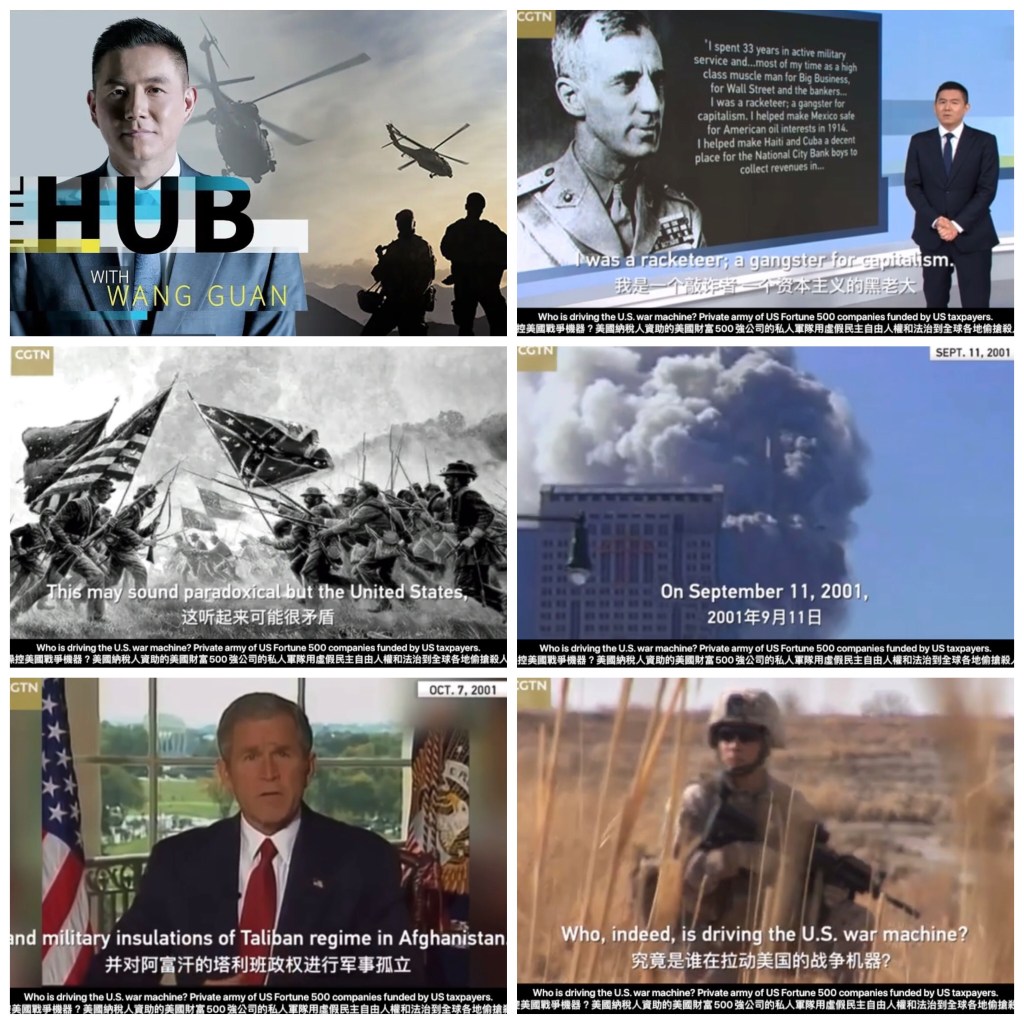
Selling War, Fake Freedom, Democracy, Human Rights and Rule of Law only in US Favor as ‘Smart Power’

Selling War, Fake Freedom, Democracy, Human Rights and Rule of Law only in US Favor as ‘Smart Power’ 以“聰明力量”的名義兜售戰爭、虛假自由、民主、人權和法治,只為美國青睞.

Professor John Walsh in San Francisco: PEN, the “free speech organization,” gets into China bashing. Another brick in the Whole of Society Anti-China Edifice.

PEN is now headed by Suzanne Nossel, formerly in the State Dept and author of the book “Soft Power.” PEN does not defend Julian Assange or even raise the issue. But as you can see they are very interested in China’s “encroachments on free expression well beyond its own borders.”

And though they mention free speech on campuses, they have had nothing to say about the abolition of Confucius Institutes, harassment of Chinese students, academics, scientists and fellows.

See the following link and the quote below from the link.

https://pen.org/press-release/ayad-akhtar-to-assume-presidency-of-pen-america/

“PEN America is positioned at the vanguard of defending free expression in the U.S. and globally, work poised to grow under Akhtar’s leadership. In recent years, the organization has defended traditional arenas of free expression—press freedom, censorship, protest rights, and digital freedom—and put new free expression issues on the map, in particular infringements on speech on university campuses, online harassment, fake news and disinformation as a threat to free expression, the crisis in local news coverage, and China’s encroachments on free expression well beyond its own borders.”

The link to the phrase “China’s encroachments on free expression” is this:
https://pen.org/report/made-in-hollywood-censored-by-beijing/

Pic of opening to this article is below.

Part of the “Whole of Society” assault on China which has taken over or increased its influence in a lot of progressive organizations as we have discussed before: The Guardian, The Bulletin of the Atomic Scientists, The Nation – some to a greater degree than others. For PEN the takeover is total and long-standing now.

Kiji Noh in San Francisco: PEN has always been deeply comprised organization, a relic of the cold war.

However, to criticize the film industry, they are stepping way out of their lane.

They are also violating their own charter:

PEN CHARTER
LITERATURE knows no frontiers and must remain common currency among people in spite of political or international upheavals.

IN ALL CIRCUMSTANCES, and particularly in time of war, works of art, the patrimony of humanity at large, should be left untouched by national or political passion.

MEMBERS OF PEN should at all times use what influence they have in favor of good understanding and mutual respect between nations and people; they pledge themselves to do their utmost to dispel all hatreds and to champion the ideal of one humanity living in peace and equality in one world.

PEN STANDS FOR the principle of unhampered transmission of thought within each nation and between all nations, and members pledge themselves to oppose any form of suppression of freedom of expression in the country and community to which they belong, as well as throughout the world wherever this is possible.

PEN DECLARES for a free press and opposes arbitrary censorship in time of peace. It believes that the necessary advance of the world towards a more highly organized political and economic order renders a free criticism of governments, administrations and institutions imperative. And since freedom implies voluntary restraint, members pledge themselves to oppose such evils of a free press as mendacious publication, deliberate falsehood and distortion of facts for political and personal ends.

This is their tax form. Suzanne Nossel, the PEN CEO, is paid $423,500/yr*, an obscene amount for an artistic non-profit.
https://pen.org/wp-content/uploads/2020/11/2019-Form-990.pdf (see page 9)

Their largest single program is “Free expression”–a $2.4M budget, of which we can assume a large part is China-bashing, as it is named specifically in 2019.
This was not mentioned in 2018.

Also, Nossel received a $50,000 salary hike the same time PEN started naming China explicitly in its tax declaration (2019). Its revenues also abruptly increased by $3M.
https://pen.org/wp-content/uploads/2019/12/2018-Form-990.pdf

*ADP reports that the highest non-profit compensation in NYC for a CEO–a medical industry CEO–was only 60% of Nossel’s salary.
https://www.ziprecruiter.com/Salaries/Nonprofit-CEO-Salary–in-New-York
This may or may not be a representative sample, however, it is clear that Nossel’s is not a reasonable compensation for a non-profit charity organization.
It is more in line with the compensation you find at soft power NGO’s, that are appendages of the government.
https://www.501c3.org/nonprofit-executive-compensation/

Cheung Ka-long wins 1st Olympic fencing gold medal for China’s Hong Kong at Tokyo Games by Xinhua Jul 26 2021

Cheung Ka-long wins 1st Olympic fencing gold medal for China’s Hong Kong at Tokyo Games by Xinhua Jul 26 2021

CHEUNG Ka Long Wins Gold in Tokyo 2020! It was the fourth Olympic medal for Hong Kong and only the fencing Olympic medal in the history of local sport – following Lee Lai-shan’s historic windsurfing gold medal at the Atlanta 1996 Olympic Games, the silver medal by Li Ching and Ko Lai-chak in the men’s doubles in table tennis at the Athens 2004 Olympic Games, and the bronze medal by Sarah Lee Wai-sze in the Women’s Keirin race at the London 2012 Olympic Games .

Chinese mainland athletes snatch seven medals on Day 3 by Cui Fandi in Beijing and Zhou Yang in Tokyo Jul 26 2021

Chinese mainland athletes snatch seven medals on Day 3 by Cui Fandi in Beijing and Zhou Yang in Tokyo Jul 26 2021

Xu Xin (left) receives his silver medal from teammate Liu Shiwen during the mixed doubles table tennis medal ceremony at the Tokyo Metropolitan Gymnasium during the Tokyo 2020 Olympic Games  in Tokyo on Monday.

On the third day of the Tokyo Olympics , despite missing gold in a number of traditionally strong events, Chinese mainland athletes have bagged seven medals, raising the total to 18, and defending the delegation’s lead position in the medal ranking by total with gold medal tally ranking the third after Japan, the US.

Meanwhile, foil fencer Cheung Ka-long from China’s Hong Kong made history when he defeated Italy’s Daniele Garozzo 15-11 to win the men’s foil individual gold at the Tokyo Olympics  on Monday.

Cheung Ka Long (right) of China’s Hong Kong and Daniele Garozzo of Italy react during the ceremony for the men’s foil individual gold medal match at the Tokyo 2020 Olympic Games  in Tokyo, Japan, on Monday.

The competition has become fiercer with traditional powerhouse US and home court advantage-holding Japan catching up in the standings.

On Monday night, two straight direct matches between Team China and Team Japan in the gymnastics and table tennis pushed the tension to the extreme. After two close matches, the Chinese gymnastics men’s team took the bronze medal, while the pair of Xu Xin/Liu Shiwen were upset in the first table tennis mixed doubles final in Olympic history, claiming the silver medal.

Team Japan now leads the gold medal list with eight in three days.

Although the delegation did not win a gold medal on Day 3, the outstanding performance of many athletes further ignited the Olympic atmosphere in the country. On Monday night, Chinese netizens congratulates Edgar Cheung, foil fencer for Team Hong Kong, China, as he bagged a historic gold medal for the region.

The 24-year-old snatched the city’s first Olympic gold medal since 1996, after beating 2016 Rio Olympics  gold medalist Daniele Garozzo of Italy, 15-11.

Carrie Lam, Chief Executive of the HKSAR, also sent out congratulations  to Cheung, calling him “pride of the city.”

Cao Yuan and Chen Aisen missed out on the chance to win China’s fifth successive Olympic gold medal in the men’s synchronized 10m platform.

China’s Chen Aisen and Cao Yuan won silver in the men’s 10 metres synchronised platform diving at Tokyo 2020 Olympics 

Despite the absence of crowds, excitement about the games was no less.

Global Times reporters noticed that Canadian, British, Mexican, South Korean, Japanese and other flags were visible in the stands, while the Ukrainian delegation used a loudspeaker.

Wearing red and holding the five-star red flag, the Chinese “cheerleaders” also formed a spectacular landscape.

Britain’s Thomas Daley was popular with the crowd, gaining the loudest cheers in the room with his teammate Matty Lee. The duo was also the strongest challenge to China’s Cao and Chen, both former Olympic winners.

Cao and Chen secured a lead with strong performances in the first three rounds, but lost in Round 4. However, they did not panic, and delivered convincing performances in the next two rounds.

Cao and Chen bagged a silver, losing by 1.23 points. Chinese fans cheered them for their calmness, resolve and professionalism.

There have been moments of regret for Team China in other events on Monday. One of the top gold medal hopefuls, Zhang Yufei, narrowly missed a gold by 0.05 seconds in the women’s 100m butterfly event, and China’s Sun Yang-less swimming team has not yet bagged a gold medal as of Monday.

Li Bingjie claimed a bronze in the women’s 400 freestyle, while Yan Zibei placed 6th in men’s 100m breaststroke.

Despite setting a new qualification Olympic record with 124 of 125, Chinese shooter Wei Meng only bagged a bronze medal in the women’s skeet on Monday afternoon. Wei Meng is the younger sister of China’s famous shooter Wei Ning, who had won two Olympic silver medals and expected Meng to claim a gold.

Later on Monday, China’s Liao Qiuyun placed 2nd in the women’s 55kg weightlifting, losing by a total of 1 kg.

In fencing, China’s only entry, Huang Mengkai, narrowly lost to Mexico’s Diego Cervantes, 14-15.

However, behind these moments of regret, the Chinese public also see a ray of hope.

After Zhang Yufei missed the gold, she shouted “add oil” to cheer herself up. “I had a lot of mental pressure before the final, and now I can say ‘I did it!'” Zhang said after the match. Another swimmer, Yan Zibei, was the only Asian athlete in the finals. The Chinese women’s swimming relay team also broke the Asian record again.

In skateboarding, which is new to the Olympics , 16-year-old Zeng Wenhui successfully made the final and ranked 6th. The Chinese women’s 3×3 basketball team won three straight as the girls won the hearts of many fans. The previously unsatisfying men’s 3×3 basketball team also bounced back and collected two straight wins on Monday to keep their hopes of qualifying alive.

“No matter what the results are, I will be proud of them because they have shown sportsmanship,” wrote many netizens on China’s Twitter-like Sina Weibo.

The Chinese were also impressed with many foreign athletes and their outstanding performances. Many congratulated 13-year-old Momiji Nishiya of Japan, who won the women’s street skateboarding event, making the Japanese teenager one of the youngest gold medal winners in Olympic history.

As the US men’s basketball team led by NBA stars swallowed their first Olympic loss since 2004 on Sunday against France, many fans said online that “maybe the US could still claim the NBA represents the highest level of basketball, but they should now be aware that the world is catching up fast and the gap is closing sooner than they would have imagined.” “It is time to wake up from their undefeatable dream.”

On Tuesday, the Tokyo Olympics  will enter its fourth day. However, many outdoor events may be overshadowed by the impending tropical storm that will hit Tokyo.

According to reports, a tropical storm named Nepartak could threaten the Games. The Japan Meteorological Agency said there is a possibility of heavy rainfall of “more than 50 millimeters per hour” in some areas, which could be bad news for many other outdoor sports, including softball and beach volleyball. Nonetheless, a number of surfers said they are excited over the storm for it would “allow the surfers to get more opportunities.”

Rowing competitions originally scheduled to take place Monday were moved to Sunday, and Tuesday’s rowing final was also postponed.

The Committee said on Monday that the tropical storm is expected to have a “limited impact” on the Games, without ruling out the possibility of further changes to the schedule.

Previously, the Committee has repeatedly reminded media to pay attention to heat and typhoons.

K.J. Noh: The 5 most common “arguments” that conspiracy theorists make are

K.J. Noh: The 5 most common “arguments” that conspiracy theorists make are:

  1. Unusual or anomalous features show engineering:

unusual Furin cleavage site and codon sequence (double CGG) that signal engineering/lab work (Nick Wade; BAS: “The Wade Wank”; “Deigin Deceit”)–but it’s not at all unusual, so not a sign of engineering. Another proponent of this is Francis Boyle ( The Francis F*ckup)

  1. Gain of Function/serial passage: engineered, but engineered to hide traces of engineering (Sam Husseini, Salon “The Husseini Hustle”):

It was naturally engineered (passage through animals) to hide signs of engineering.

studies show a) it couldn’t be GOF because i) there is no backbone from which to do the GOF (argument made in Nature Medicine article (Kristian Andersen)) ii) standard GOF techniques do not preserve the Furin cleavage site iii) from the closest known progenitor, it would take a Manhattan-project level effort–and decades of passaging

  1. Virus looks like a “pre-adapted” virus (Alina Chan; MIT/Broad; “The Chan Chicanery”), hence engineered to attack humans:

Actually covid is not pre-adapted to (i.e. engineered to attack) humans: a) it is pantropic–it infects a wide variety of animals, as might be expected if it evolved naturally through many species b) it continues to evolve and improve its infectivity, so it’s clearly not engineered for maximal human infection c) there are further adaptations that could happen and seem to be happening

  1. 3 sick lab workers in November (Michael Gordon: WSJ; “The Gordon Grift”):

a) it’s not usual to be sick in winter
b) all workers at the lab tested seropositive
c) it’s impossible for three lab workers to get inadvertently sick without having a larger (hundreds of) asymptomatic population (remember, Covid transmits asymptomatically for up to 14 days).

  1. Live Leak (NYT: “The Ebright Error”)
    Ebright argues that they had a live sample that was already SARS-Cov-2–that they didn’t record, classify, publish, but simply leaked.

a) This is unlikely, first because, if it’s already in nature, you can’t leak it out to nature. It’s already out there.
b) Second, there are millions of people who have frequent interactions with Coronavirus carrying bats–it’s much more likely that they would have been a vector rather than highly trained lab scientists taking precautions. Note also that Bats constitute 25% of all mammalian species. Coronavirus carrying bats are found all over the world, including Europe (northern Italy).
c) Third, it also doesn’t explain why the early outbreaks were at the market 17 miles away across a river, and why there were no outbreaks at the lab, unless you assume that the researcher got infected and then took a beeline to the market.
d) Fourth, Ebright knows as well as they do, that WIV, as a well-regarded scientific institution, any relevant studies would have been previously published.

The argument for a Chinese lab leak theory boils down to this: begged assumption + no evidence + tautological reasoning:

  1. The Chinese did it [begged assumption]
  2. [although there is no evidence that withstands scientific scrutiny–only innuendo]
  3. if we can’t find definitive proof that they did it, it’s because they are covering up [tautology].

Proponents often argue that it’s on the Chinese to disprove this by opening up their labs–as if a negative can be proved. It can’t.

Some people seem to think, it’s fine to attack science–and logic–if it helps us to attack China, that’s a cost worth it.
(This is what corporations did on tobacco, on global warming).
A very dangerous road to go down.


If you want to dig into the scientific details:

Scientific Article by some of the top virologists in the world (the selections are from the article)
https://zenodo.org/record/5075888#.YOnnFehKg2x

Weren’t there Covid cases at WIV? (Michael Gordon allegation, WSJ)
Despite extensive contact tracing of early cases during the COVID-19 pandemic, there have been no reported cases related to any laboratory staff at the WIV and all staff in the laboratory of Dr. Shi Zhengli were reported to be seronegative for SARS-CoV-2when tested in March 2020. During a period of high influenza transmission and other respiratory virus circulation reports of illnesses would need to be confirmed as caused by SARS-CoV-2 to be relevant. Epidemiological modeling suggests that the number of hypothetical cases needed to result in multiple hospitalized COVID-19 patients prior to December 2019 is incompatible with observed clinical, genomic, and epidemiological data

Did the WIV have SARS-Cov-2 or culture it through GOF? (Sam Husseini Allegation)
The WIV possesses an extensive catalogue of samples derived from bats and has reportedly successfully cultured three SARSr-CoVs from bats, all of which are genetically distinct from SARS-CoV-230–32. These viruses were isolated from fecal samples through serial amplification in VeroE6 cells, a process that consistently results in the loss of the SARS-CoV-2 furin cleavage site. It is therefore highly unlikely that these techniques would result in the isolation of a SARS-CoV-2 progenitor with an intact furin cleavage site.

Gain-of-function research would be expected to utilize an established SARSr-CoV genomic backbone, or at a minimum a virus previously identified via sequencing. However, past experimental research using recombinant coronaviruses at the WIV has used a genetic backbone (WIV1) unrelated to SARS-CoV-2and SARS-CoV-2 carries no evidence of genetic markers one might expect from laboratory experiments. There is no rational experimental reason why a new genetic system would be developed using an unknown and unpublished virus, with no evidence nor mention of a SARS-CoV-2-like virus in any prior publication or study from the WIV, no evidence that the WIV sequenced a virus that is closer to SARS-CoV-2 than RaTG13, and no reason to hide research on a SARS-CoV-2-like virus prior to the COVID-19 pandemic. Under any laboratory escape scenario SARS-CoV-2 would have to have been present in a laboratory prior to the pandemic, yet no evidence exists to support such a notion and no sequence has been identified that could have served as a precursor

However, early SARS-CoV-2 isolates were unable to infect wild-type mice While murine models are useful for studying infectionin vivo and testing vaccines, they often result in mild or atypical disease. These findings are inconsistent with a virus selected for increased pathogenicity and transmissibility through serial passage through rodents.

If SARS-CoV-2 resulted from attempts to adapt a SARSr-CoV for study in animal models, it would likely have acquired mutations like N501Y for efficient replication in that model, yet there is no evidence to suggest such mutations existed early in the pandemic. Both the low pathogenicity in commonly used laboratory animals and the absence of genomic markers associated with rodent adaptation indicate that SARS-CoV-2 is highly unlikely to have been acquired by laboratory workers in the course of viral pathogenesis or gain-of-function experiments

SARS-CoV-2 was pre-adapted for optimal human (ACE-2) transmission, thus implicating engineering (Alina Chan allegation)

Evidence from genomic structure and ongoing evolution of SARS-CoV-2
Considerable attention has been devoted to claims that SARS-CoV-2 was genetically engineered or adapted in cell culture or “humanized” animal models to promote human transmission. Yet, since its emergence, SARS-CoV-2 has experienced repeated sweeps of mutations that have increased viral fitness. The first clear adaptive mutation, the D614G substitution in the spike protein, occurred early in the pandemic. Recurring mutations in the receptor binding domain of the spike protein, including N501Y, K417N/T, L452R, and E484K/Q—constituent mutations of the variants of concern—similarly enhance viral infectivity, and ACE2 binding, refuting claims that the SARS-CoV-2 spike protein was optimized for binding to human ACE2 upon its emergence.

Further, some pangolin-derived coronaviruses have receptor binding domains that are near-identical to SARS-CoV-2 at the amino acid level40,64and bind to human ACE2 even more strongly than SARS-CoV-2, showing that there is capacity for further human adaptation65. SARS-CoV-2 is also notable for being a host generalist virus, capable of efficient transmission in multiple mammalian species, including mink, tigers, cats, gorillas, dogs, raccoon dogs, ferrets, and large outbreaks have been documented in mink with spill-back to humans67and to other animals68. Combined, these findings show that no specific human “pre” adaptation was required for the emergence or early spread of SARS-CoV-2, and the claim that the virus was already highly adapted to the human host57, or somehow optimized for binding to human ACE2, is without validity.

What about the suspicious Furin Cleavage Site and unusual Codon sequence that shows engineering? (Nicholas Wade allegation)

The genesis of the polybasic (furin) cleavage site in the spike protein of SARS-CoV-2 has been subject to recurrent speculation. Although the furin cleavage site is absent from the closest known relatives of SARS-CoV-240, this is unsurprising as the lineage leading to this virus is poorly sampled and the closest bat viruses have divergent spike proteins due to recombination15,16,18. Furin cleavage sites are commonplace in other coronavirus spike proteins, including some feline alphacoronaviruses, MERS-CoV, most but not all strains of mouse hepatitis virus, as well as in endemic human betacoronaviruses such as HCoV-OC43 and HCoV-HKU169–71.

There is no logical reason why an engineered virus would utilize such a poor furin cleavage site, which would entail such an unusual and needlessly complex feat of genetic engineering. The only previous studies of artificial insertion of a furin cleavage site at the S1/S2 boundary in the SARS-CoV spike protein utilized an optimal ‘RRSRR’ sequence in pseudotype systems. Further, there is no evidence of prior research at the WIV involving the artificial insertion of complete furin cleavage sites into coronaviruses; recurring P681H/R substitution in the proline (P) residue preceding the SARS-CoV-2 furin cleavage site improves cleavage of the spike protein and is another signature of ongoing human adaptation of the virus. The SARS-CoV-2 furin site is also lost under standard cell culture conditions, as is true of HCoV-OC4373. The presence of two CGG codons for arginines in the SARS-CoV-2 furin cleavage site is similarly not indicative of genetic engineering. Although theCGG codon is rare in coronaviruses, it is observed in SARS-CoV, SARS-CoV-2 and other human coronaviruses at comparable frequencies. Further, if low-fitness codons had been artificially inserted intothe virus genome they would have been quickly selected against during SARS-CoV-2 evolution, yet both CGG codons are more than 99.8% conserved among the >1,800,000 near-complete SARS-CoV-2 genomes sequenced to date,

What about Occam’s Razor (the principle of parsimony) of Lab leak theorists?
For the vast majority of human viruses, the most parsimonious explanation for the origin of SARS-CoV-2 is a zoonotic event. The documented epidemiological history of the virus is comparable to previous animal market-associated outbreaks of coronaviruses with a simple route for human exposure. The contact tracing of SARS-CoV-2 to markets in Wuhan exhibits striking similarities to the early spread of SARS-CoV to markets in Guangdong, where humans infected early in the epidemic lived near or worked in animal markets. Zoonotic spillover by definition selects for viruses able to infect humans.

There is currently no evidence that SARS-CoV-2 has a laboratory origin. There is no evidence that any early cases had any connection to the WIV, in contrast to the clear epidemiological links to animal markets in Wuhan, nor evidence that the WIV possessed or worked on a progenitor of SARS-CoV-2 prior to the pandemic. The suspicion that SARS-CoV-2 might have a laboratory origin stems from the coincidence that it was first detected in a city that houses a major virological laboratory that studies coronaviruses. Wuhan is the largest city in central China with multiple animal markets and is a major hub for travel and commerce, well connected to other areas both within China and internationally. The link to Wuhan therefore more likely reflects the fact that pathogens often require heavily populated areas to become established

K.J. Noh is a journalist, political analyst, educator, and peace activist. A veteran of the Republic of Korea (the South Korean Army or ROK) Army and a member of Veterans For Peace in the U.S., he is special correspondent on Asia for KPFA’s Flashpoints, and does political analysis for Loud & Clear, Critical Hour, and other progressive news shows. He also writes for Dissident Voice, Counterpunch, Black Agenda Report, Popular Resistance, MROnline, and the Asia Times. FFI: peacepivot.org