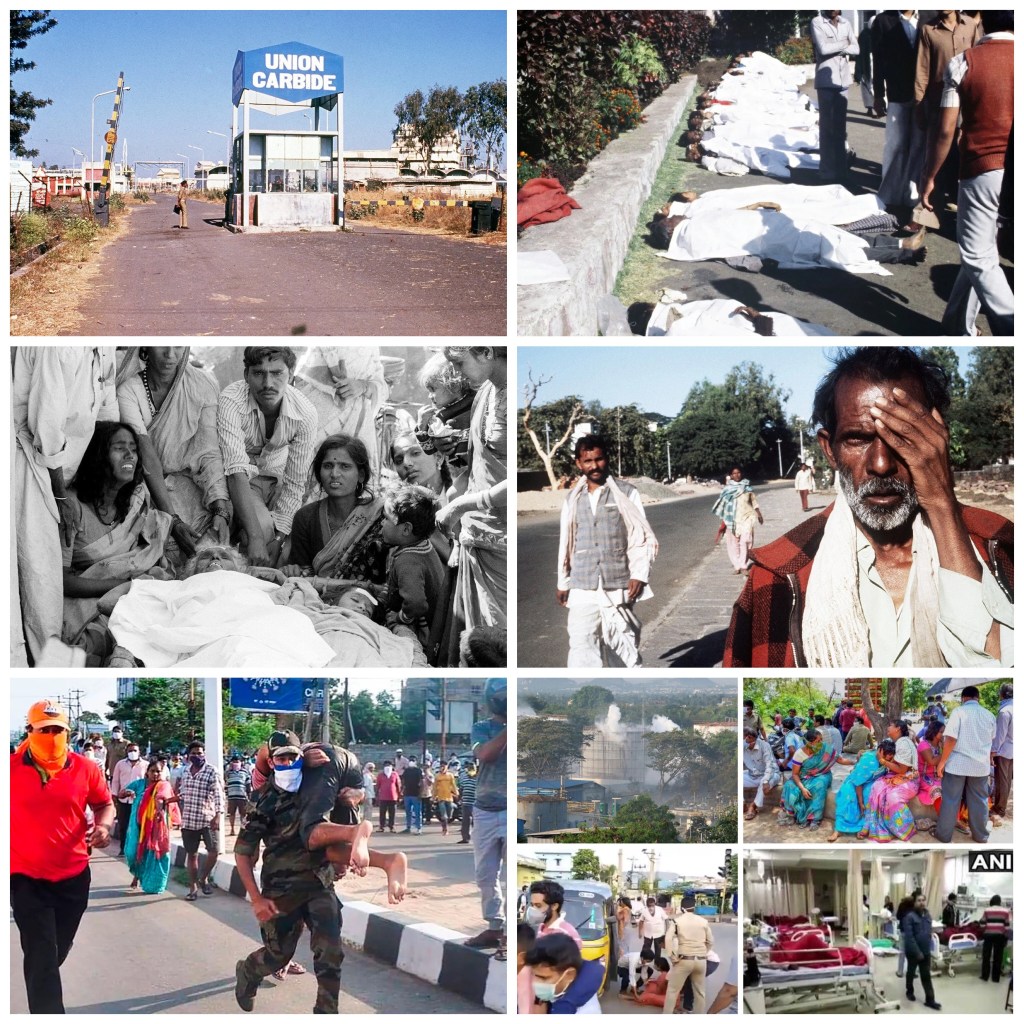
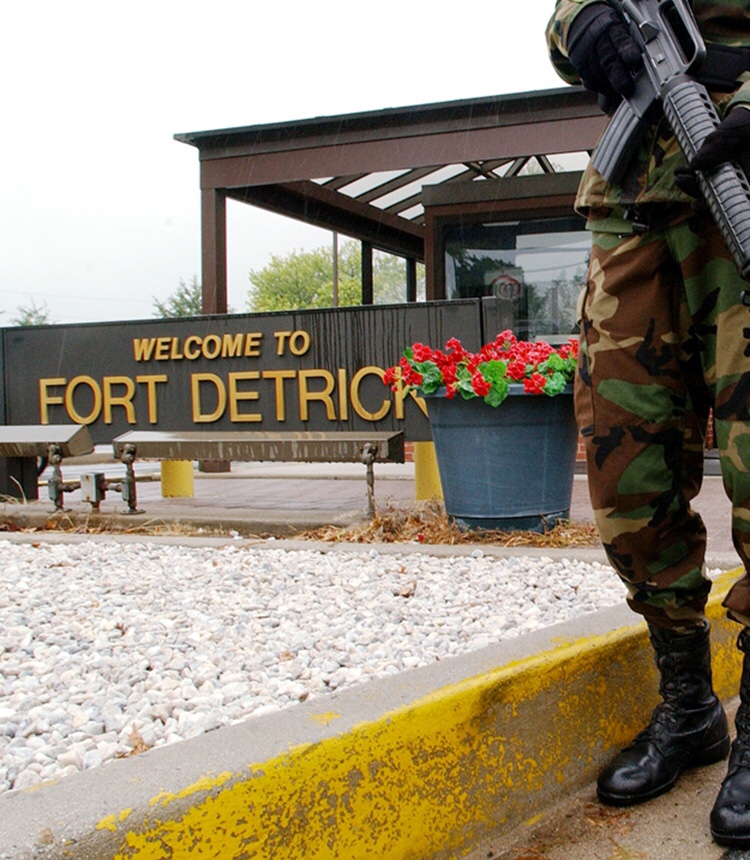
What did a US Fortune 500 company done in India? Bhopal India: The World’s Worst Industrial Disaster – 1984 gas leak at a Union Carbide pesticide plant in the Indian city of Bhopal, which left nearly 4,000 dead and a half million poisoned. Civil and criminal cases filed in the United States against UCC and Warren Anderson, UCC CEO at the time of the disaster, were dismissed.
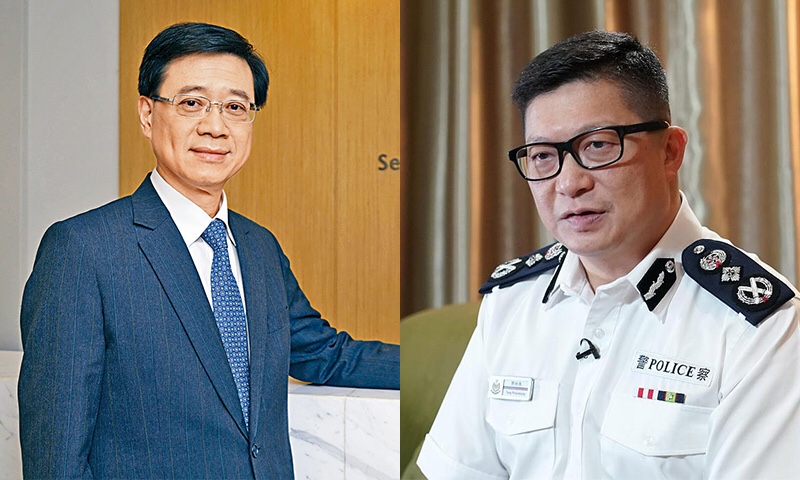
China’s State Council appoints new security chief and chief secretary for HKSAR govt by Chen Qingqing and Zhang Han Jun 24 2021
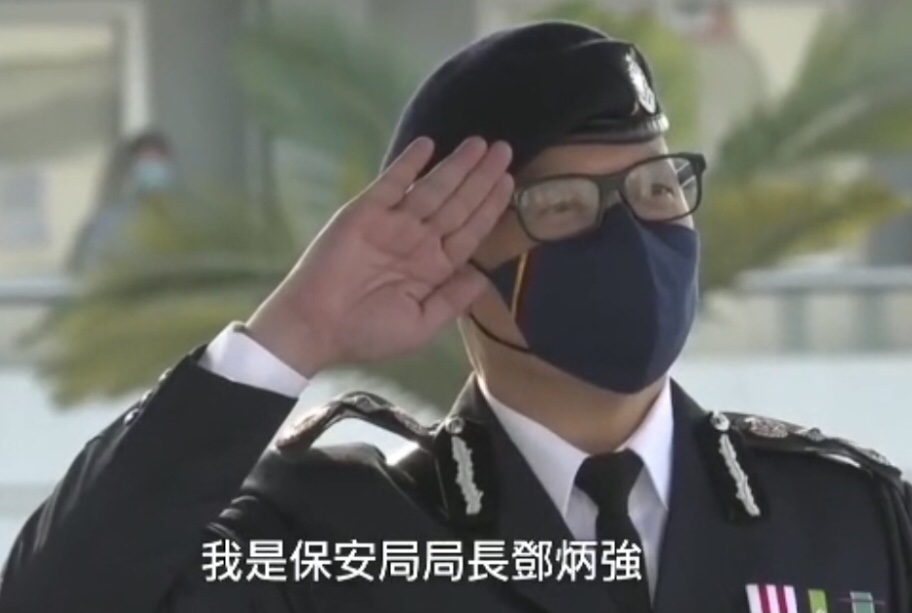
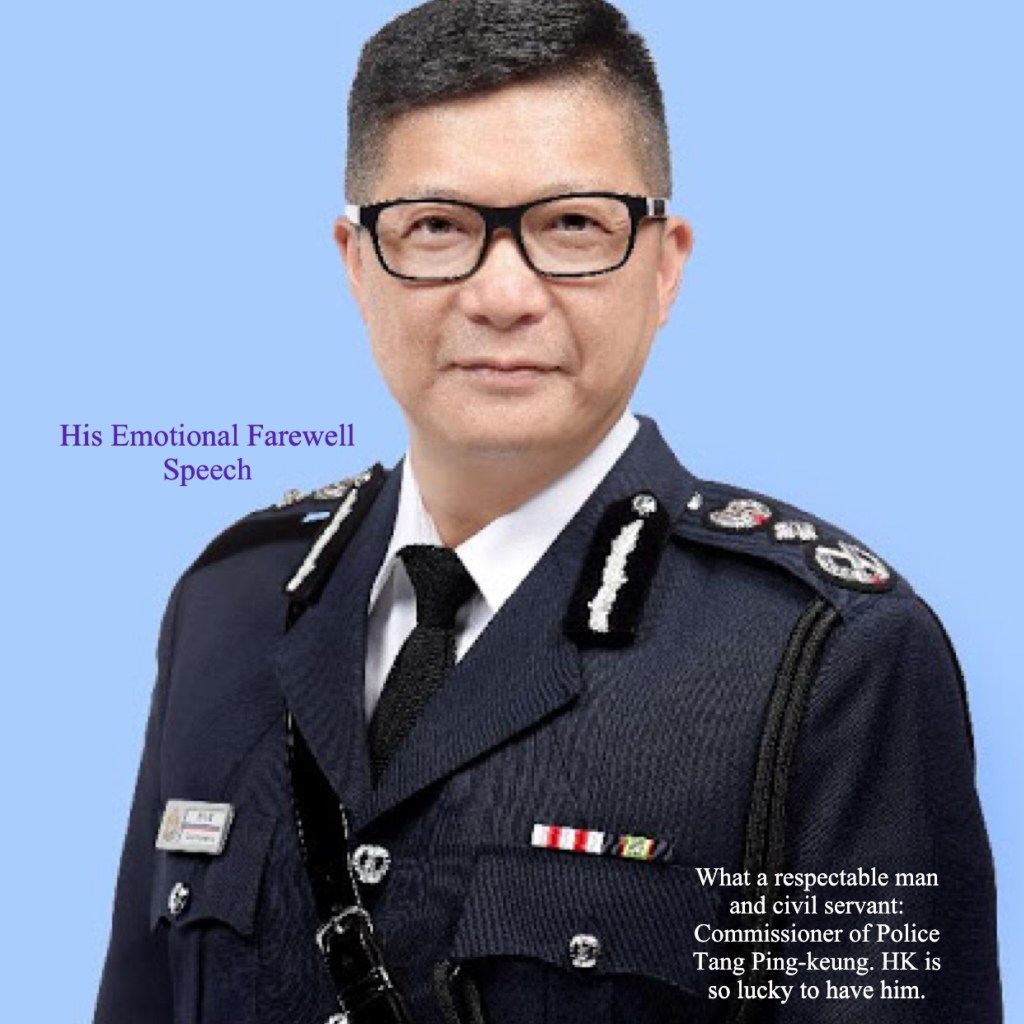
China’s State Council appointed former Hong Kong security chief John Lee as Chief Secretary for Administration of the HKSAR, former commissioner of police Chris Tang Ping-keung as new Secretary of Security.
Kenneth Hammond – Professor – New Mexico State University: US doesn’t have a pure, true democracy By Global Times Published: Jun 24, 2021 05:35 PM
Editor’s Note:
The global fight against the COVID-19 is still going on. But the US “lab-leak fiasco” has once again emerged as Biden and US bi-partisan sickening subterfuge. Why are the US politicians and media obsessed with such conspiracy? What has contributed to the stark contrast between China and the US in terms of handling the pandemic? Global Times (GT) reporter Wang Wenwen talked to Kenneth Hammond (Hammond), professor of East Asian and global history at New Mexico State University, over these issues. Hammond also works with the organization Pivot to Peace to push back against the aggressive words and actions of American politicians and media. He shared his views on the current China-US relations and the notion of the “community with shared future for mankind.”
GT: The lab leak theory has been regarded as a conspiracy theory by US mainstream media in the past. But without any new evidence, it says this is the reason for the pandemic. Why is this?
Hammond: The new Biden administration has obviously decided that they’re going to continue the policies and the posture of hostility toward China that was characteristic of the Trump administration; this really began back in 2011 with the Obama administration with what they call the pivot to Asia and repositioning of American defense policies or strategic policies toward containment of China. There was some hope when the Biden administration came in that they might move away from these confrontational policies. But clearly, that’s not what’s happening.
As the US is beginning to come out of this COVID-19 period, a lot of people are reflecting on the experience what we’ve gone through. There’s one basic fact that people should be paying attention to, which is that China with 1.4 billion people had fewer than 5,000 deaths and controlled and contained this in 72 days, whereas the US, which has a much smaller population, has had almost 600,000 deaths, and it’s gone on and on for almost a year and a half.
Why is there such a stark difference? Why has it been so terrible here when China was able to handle it so effectively? Obviously, the political leaders and the media don’t want to answer that question. So instead of talking about that, they go back to this question of the origins. Because those are questions that probably can never be absolutely definitively answered in a way that satisfies every single possible question.
That’s a way in which the American elites can deflect the responsibility that they hold for what happened here for all these deaths and deflect it away from themselves on to China, which has been their basic strategy.
GT: Some attributed the failure of the US handling of the pandemic to its systematic faults -namely democracy doesn’t usually work in America anymore. What is your analysis?
Hammond: That’s exactly right. I think that the contrast between the experience that China had and continues to have and the experience that we have had here in the US, most particularly, but in much of the West certainly in Europe as well, is based upon the fundamental differences in the social and political and economic systems of these societies. China has a system in which public health is considered a priority and a human right. In the United States and in the Western in general, health, medicine, medical science, medical technology, and drugs are commodities. These are things to be bought and sold in the market. The purpose of all that is to make profits for businesses.
We have a healthcare system that isn’t designed to meet the needs of people; it is designed to make money for corporations, for businesses, for hospitals, for pharmaceutical companies, and for insurance companies. It’s not geared up to mobilize the kind of social response that would have been necessary if we were going to try to contain and control the virus in the same way that China did.
So the contrast between the systems is stark. And again, that’s why the leaders here don’t want to talk about that. They don’t want to talk about the successes of China. They only want to focus on how they can blame China for something.
I’m not sure if democracy is to be blamed. I think at the heart is the economic system. Now, what we have as a political system – we like to call it democracy – but it’s democracy that is run by the same things. It’s run by money, the corporations, and wealthy people that dominate the elections. We don’t have a pure, true democracy.
GT: You once said that to manage China relations, the US should understand what is taking place in China and the wider world, and this may not be possible under existing capitalist social and political arrangements. What prompted you to say so? Do you expect any changes to the existing capitalist social and political arrangements?
Hammond: Not in the short term. We’re in a very interesting period here in the US. Politically, a lot of people are questioning, despite all the media and all the blame game, why this has been so bad and the economic effects of the pandemic. More people are starting to question some of the fundamental principles and ways in which our society has functioned. This isn’t just as a result of the pandemic.
Back in 2016, the previous presidential election Bernie Sanders first ran for the democratic nomination, and again, in 2020. I don’t entirely agree with Senator Sanders on all issues, but he did something very important, which is that he brought the word “socialism” back into the American political vocabulary. Many young people, especially in America now, are interested in socialist thinking about solutions and they want to learn about it. We’re in a period where there’s a greater possibility for conversation, discussion, new and different ideas that haven’t been acceptable in the US for a long time.
I don’t think that we’re going to have significant, profound changes in our system right away and in the next few years. But I do think the long-term trends are building in that direction, and I certainly hope so. Because one of the basic problems in the United States, especially in our relationship with China, is that people here don’t know what China is like. They don’t know what life is like there.
That’s something that those of us who do have some knowledge of China try to do, which is to educate people and talk to people about what the truth is and what the realities are, because that’s certainly not what they hear in the media and from the mouths of politicians.
GT: You do research of Chinese history and contemporary China. What is your understanding of the China-proposed, “community with shared future for mankind”? What are the different political philosophies behind it and the “America First” doctrine that is actually being practiced now by the Biden administration? What role will it play in post-pandemic country-to-country relations?
Hammond: That’s exactly the vision of the future that I think should be shared by both Chinese and American people. Why not look at the world and think about how can we work together to improve things for everybody? Unfortunately, the people who hold power in America, the American political elite and the economic elite and the media put this other message out.
Their view is that China’s rise, as they say, has to be a bad thing for America, and if China becomes more prosperous and plays a greater role in the world, that must mean the US is going to become less prosperous and lose its leadership. They have a very what we call a zero sum mentality. That’s a very mistaken way to approach things.
The US has been the dominant power in the world for a long time. Some people, not most people, have become very secure in that. They fear a loss of that power and that dominance. They want to continue to run things, not just in America, but all over the world. They’re anxious, and that’s why they’re so hostile and so aggressive toward China. They really want to try to stop the developments that are taking place in China. But that vision of a shared future, a sort of planetary community, seems to me just to be the natural trend of history.
When we look at the long, long centuries of modern history, it’s better when the world is a community of different centers. The idea that there’s only one center and we’re going to hold on to everything and control it is not a good thing and has never been.
China is more influential, and it doesn’t mean the US cannot continue to pursue its own path and course. Europe, as the European Union grows, is going to play a greater role. I personally, and the political people I work with, would like to see better world development. Why try to hang onto the past? Why not find a path in which Chinese people, American people and European people and those in Africa, India and Latin America all benefit through future development?
My complaints to the Hawaii Governor’s office and Hawaii Congressman Ed Case last week on COVID19 vaccines taken in Mainland USA not recognized in the State of Hawaii seems to payoff.
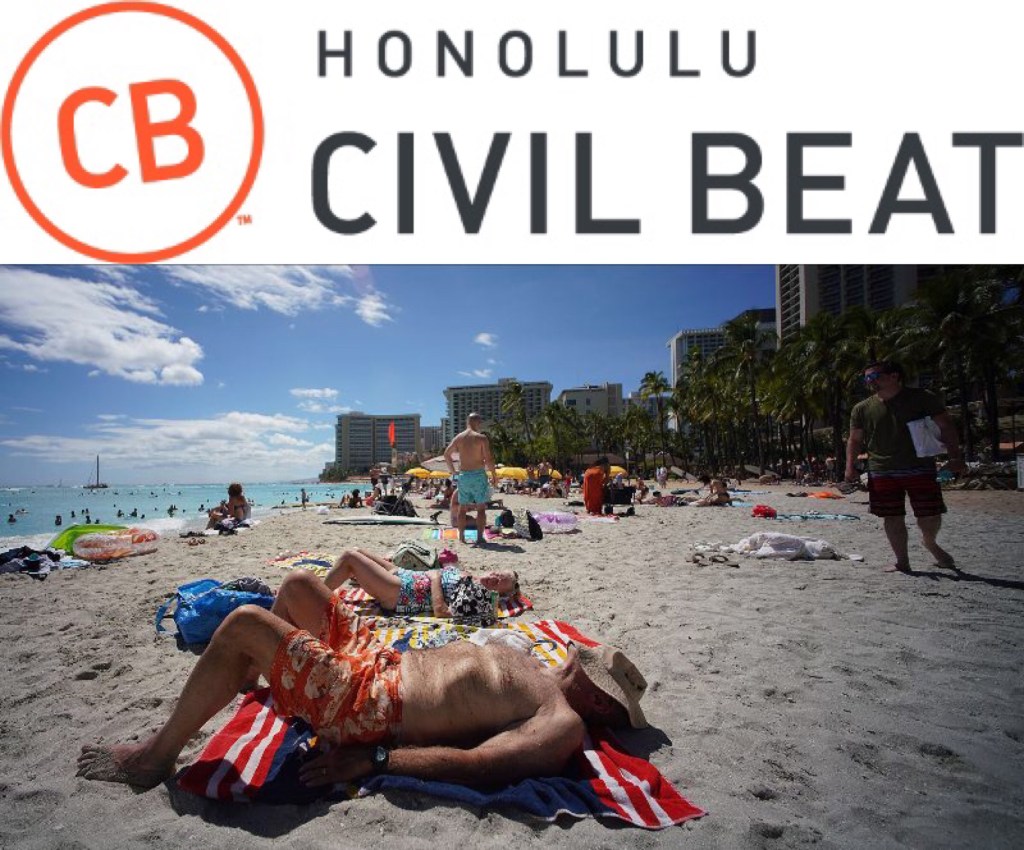
Hawaii Will Lift Restrictions For Vaccinated U.S. Travelers On July 8 2021 By Stewart Yerton
Hawaii will lift quarantine and pre-travel testing requirements for travelers from the mainland who can show proof of receiving a COVID-19 vaccination early next month, Gov. David Ige said Thursday.
The governor also announced he would ease restrictions on social gatherings and restaurants.
In a move designed to let businesses prepare for the change, Ige set a firm date of July 8 for the changes.
The changes come as Hawaii’s number of new COVID-19 cases drops and the rate of people who have been vaccinated statewide inches toward 60%. The state’s pandemic curve meanwhile has flattened to an average of 39 new cases per day, compared to a peak of more than 300 new cases per day last summer.
People vaccinated in Hawai have been able to fly freely from the mainland since June 15. The new change now extends that policy to all travelers from the mainland, no matter what state they were vaccinated in.
Ige also said the maximum number of people allowed at social gatherings will increase from 10 to 25 indoors and from 25 to 75 outdoors. Restaurants will be able to operate at 75% capacity, with parties of 25 indoors and 75 outdoors. People still must wear masks for indoor gatherings, Ige said.
“This milestone is truly something to celebrate,” the governor said.
To sidestep the quarantine by using vaccination records, travelers must upload their vaccination records onto the state’s COVID-19 “Safe Travels” website and bring a hard copy of their vaccination record with them, Ige said.
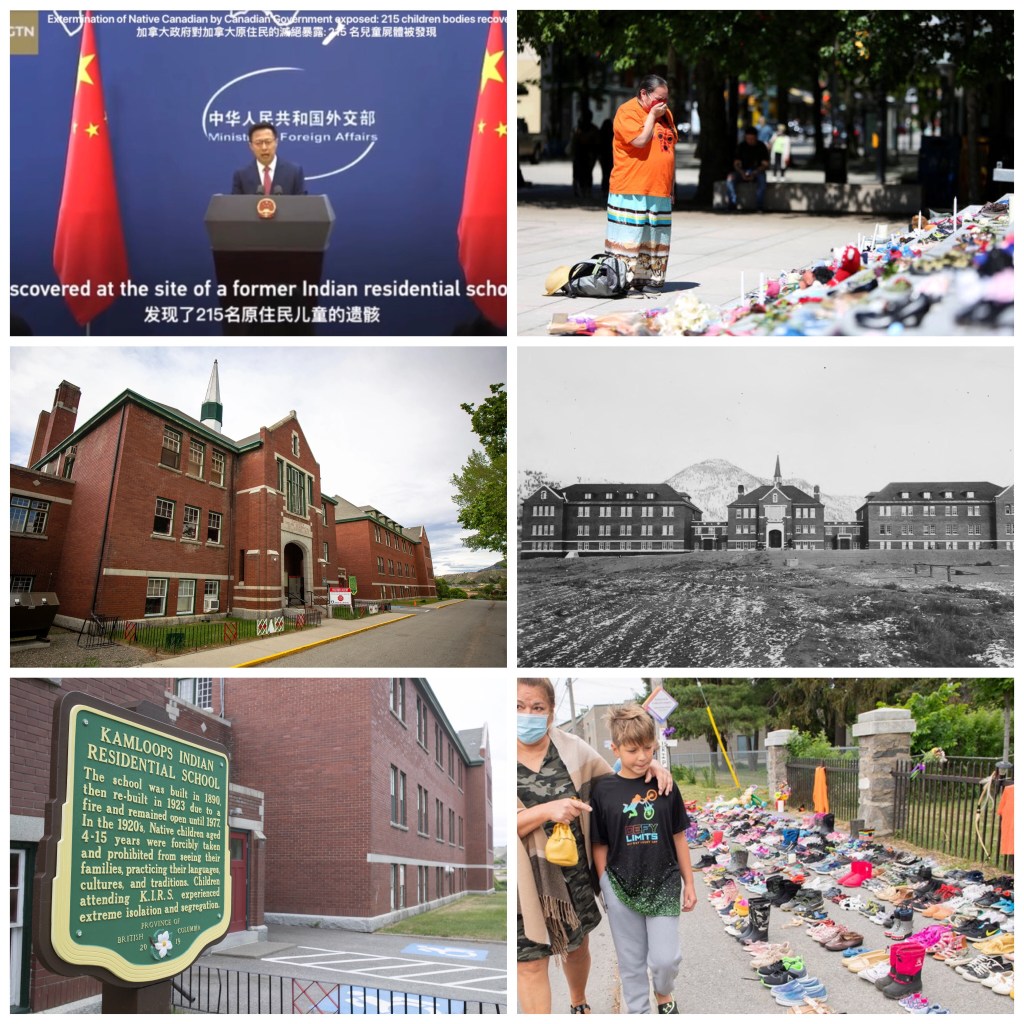
Video: Extermination of Native Canadian by Canadian Government exposed: 215 children bodies recovered. 加拿大政府對加拿大原住民的滅絕暴露: 215 名兒童屍體被發現
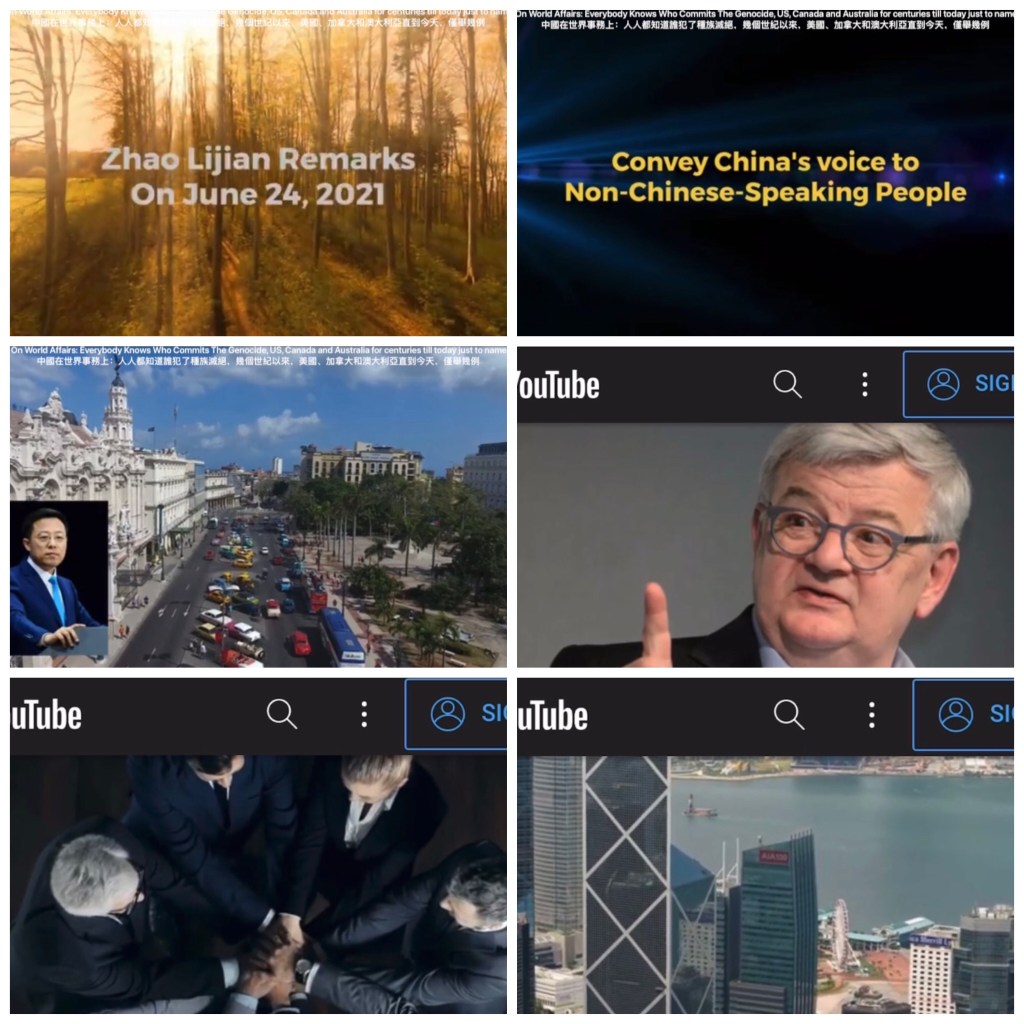
Canada’s shortage of honesty and courage to face its own human rights abuses under fake freedoms and democracy has been reflected by the recent discovery of the remains of 215 indigenous children at the site of a former boarding school, Chinese foreign ministry spokesperson Zhao Lijian said at a press briefing on Wednesday. Chinese foreign ministry: Canada should reflect on its poor track record on human rights
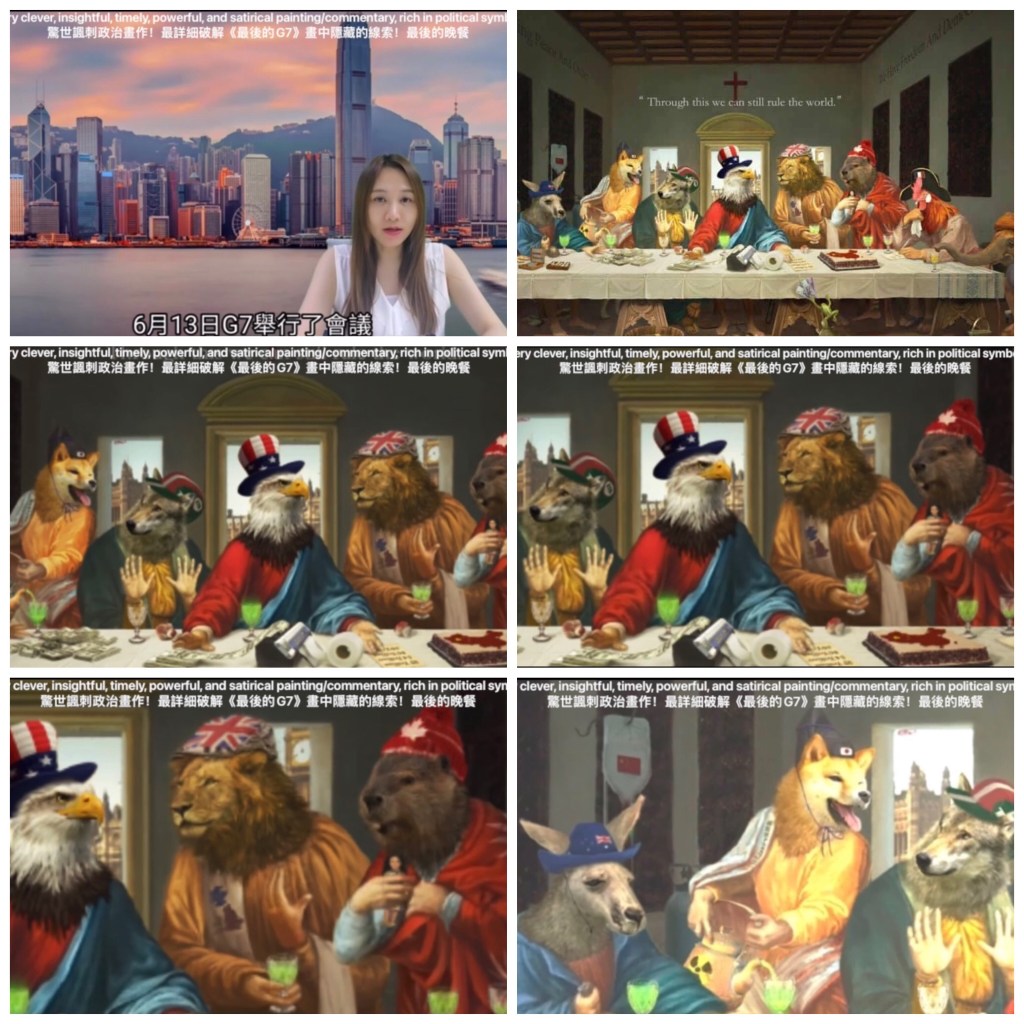
Mandarin language Video: Professor Ling-chi Wang of UC Berkeley: “The Last G-7,” by ‘Bantonglaoatang,” a Chinese artist in Mainland China. It is very clever, insightful, timely, powerful, and satirical painting/commentary, rich in political symbolism. 驚世諷刺政治畫作!最詳細破解《最後的G7》畫中隱藏的線索!最後的晚餐 It shows the G-7 badly divided, even with the two compliant countries, India and Australia, and a clown,Taiwan, represented by a “green frog” (DPP) at the bottom of the table, desperately begging for recognition and acceptance by G-7.
The title of the painting is “The Last G-7.” Even before the meeting of the G-7 in England, several commentators had already declared the “irrelevance” of G-7, because they no longer represent the most powerful and influential economies of the world. None of the BRIC nations are represented. In spite of Biden’s valiant effort to round up G-7 against China, he came out of the summit long on same-old-tired rhetorics and short on substance and actionable policies. As the painting correctly depicted, each of G-7 had its own interests and agenda. They are down but not out.
It will be interesting to see if the Mainstream Media in the West will publish the painting without biased commentaries.
In the mean time, I came across the following article on the painting in the Month Review Online a well-establish leftist journal. Not bad. But, it is not as good as the Cantonese analysis and commentary on YouTube.
The Last G7’: Satirical cartoon mocking bloc’s attempt to suppress China goes viral
Political Economy Angola Newswire the Group of Seven (G7) members Originally published: Global Times June 13, 2021
A Chinese cartoonist’s political satire, which mocked the Group of Seven (G7) members that attempt to suppress China, went viral on Chinese social media on Sunday, when the G7 summit was underway in Cornwall, the UK.
Titled The Last G7, the illustration, published by its author “Bantonglaoatang” on Sina Weibo on Saturday, was painted based on the renowned religious mural The Last Supper. This G7 summit is widely seen as an attempt by the U.S. to rally allies against China.
Similar to the final meal Jesus shared with his apostles before his crucifixion that The Last Supper depicted, Bantonglaoatang painted a vivid picture of nine animals–respectively representing the U.S., the UK, Italy, Canada, Japan, Germany, France, Australia and India–sitting around a table with a Chinese-map-shaped cake on it. On top of the painting is the words in quote:
Through this we can still rule the world.
These animals have different facial expressions and gestures, implying that each side of the G7 actually has its own axe to grind on the common conspiracies of suppressing China and upholding the Western hegemony, analyzed some observers and Chinese netizens.
Wearing a bowler hat with an American flag on it, a bald eagle sits in the middle like Jesus in The Last Supper, obviously the convenor of the meal. In front of the bald eagle there is a small banknote printing machine and a bill on the table. The machine is printing toilet paper into dollars, and the number on the bill gets bigger and bigger–from $2 trillion to $8 trillion.
There is also an iron hook under its feet, and two pieces of cotton with blood near its hands on the table, suggesting “the U.S.’ capital accumulation was built on racial oppression,” a vlogger nicknamed “sharp-tongued pumpkin” said in his latest video analyzing the illustration, which has gained over 700,000 views on video streaming platform Bilibili within a day after he uploaded it on Saturday afternoon.
The bald eagle image shows today’s aggressive yet feeble U.S. is trapped in its growing debt crisis and racial conflicts, but still points fingers at China, “sharp-tongued pumpkin” pointed out.
Sitting on the left of the bald eagle is a grey wolf, wearing a cap with an Italian flag on it. The wolf waves its hands as the apostle Andrew in The Last Supper, as if saying “No” to the U.S.’ suggestions of jointly cracking down on China. The grey wolf image shows Italy, the first European country that joined China’s Belt and Road Initiative (BRI), is reluctant to collaborate with the U.S. in suppressing China, commented “sharp-tongued pumpkin.”
Next to the wolf is an Akita dog that represents Japan. Without a seat, it is busy serving the others a “drink”–pouring green radioactive water into the glasses of the other animals. On Weibo some users said the green water is the contaminated water that Japan plans to release to the Pacific from the destroyed Fukushima nuclear plant.
Sitting next to the dog is a kangaroo, which is stretching its left hand to the banknotes that the U.S. is printing, while grasping a bag in its right hand. The kangaroo symbolizes the double-faced Australia which actively cooperates with the U.S. in containing China, but is also eager to earn money from China, its largest trading partner, according to “sharp-tongued pumpkin.”
On the left corner stands a black hawk, which obviously represents Germany as its pose is almost the same as that of the German Chancellor Angela Merkel in a widespread photo in the G7 summit in 2018. Germany, similar to the rooster (representing France) sitting in silence on the right side, seems more interested in its own European issues and shows less enthusiasm on the US’ propaganda, netizens found.
On the right side of the table also sits a lion and a nutria, respectively representing the UK and Canada, both the US’ close Five Eyes allies. The nutria, wearing a red coat with images of marijuana on it, holds a doll in its hand. Many netizens believe the doll represents Huawei’s chief financial officer Meng Wanzhou, who is still unreasonably detained in Canada.
On the right corner of the table sits an elephant (representing India) that is on a drip like a patient.
Under the table there is a frog holding banknotes in its hands, trying to jump as high as possible to reach the table and give the money to the U.S. The little frog symbolizes the separatist authority from the island of Taiwan, which is always subservient to the U.S., some netizens pointed out.
The illustration caused a stir on Weibo on Sunday, with numerous users praising the author for vividly and straightforwardly revealing the evil intentions of the West that tries to lay a siege to China. “But this is perhaps their ‘last supper,’’’ one user mocked.
With different positions, for various interests of their own, these countries and regions can’t form a real league against China.

 Johnson Choi Biz