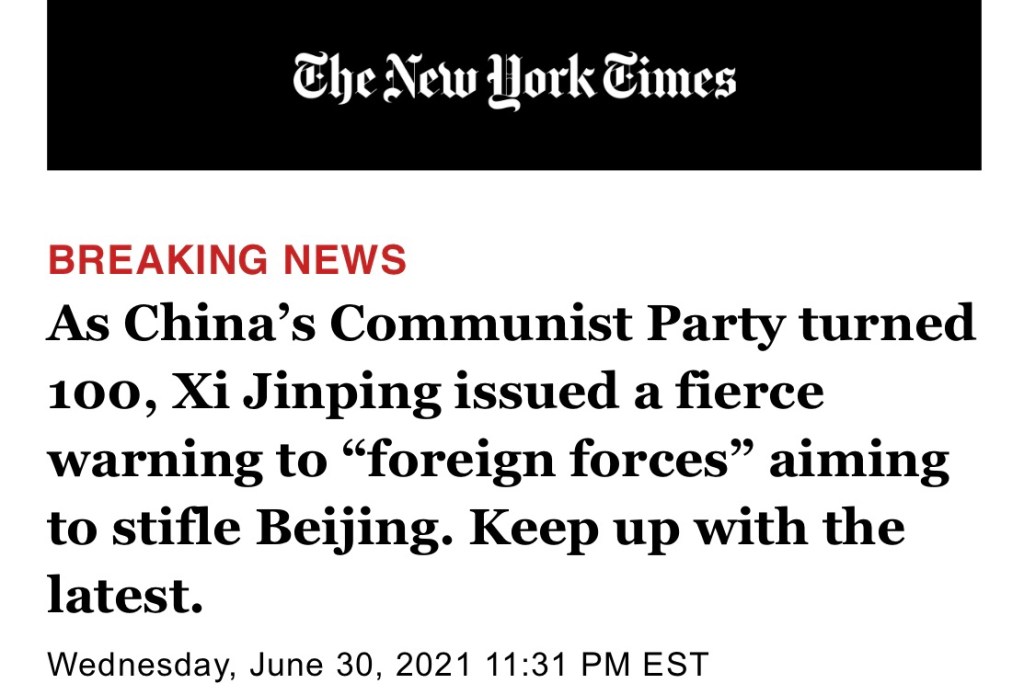
US and Western Empires death wish on China are being warned, using fake freedom, democracy and human rights propaganda campaigns against China have failed. 美國和西方帝國對中國的死亡願望正在被警告,使用虛假的自由、民主和人權宣傳運動對中國失敗了. New York Times BREAKING NEWS: As China’s Communist Party turned 100, Xi Jinping issued a fierce warning to “foreign forces” aiming to stifle Beijing. Wednesday, June 30, 2021 In a speech that cast the Communist Party as a savior successfully containing COVID19 when Western Countries especially US failed miserably, Mr. Xi said, “the Chinese people will never allow foreign forces to bully, oppress or enslave us. Whoever nurses delusions of doing that will crack their heads and spill blood on the Great Wall of steel built from the flesh and blood of 1.4 billion Chinese people.” 在西方國家特別是美國慘遭失敗的情況下,習近平在一次將共產黨作為救世主成功遏制新冠病毒的演講中說,“中國人民決不允許外國勢力欺壓、壓迫、奴役我們。誰抱有這樣的幻想 他們的腦袋會被打爆,血灑在用14億中國人民的血肉築成的鋼鐵長城上。”
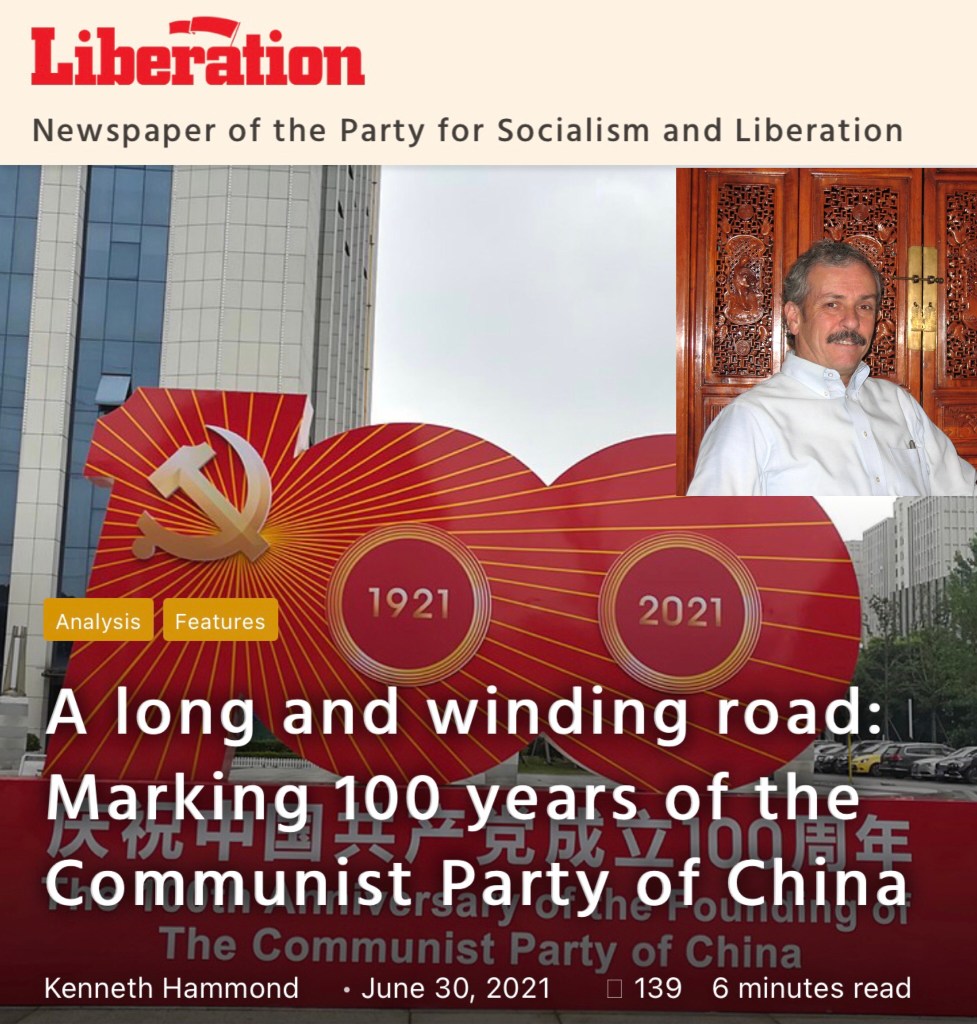
A long and winding road: Marking 100 years of the Communist Party of China 漫漫長路:中國共產黨建黨100週年 by Professor Kenneth Hammond – June 30, 2021
Massive celebrations are being held across China July 1 to mark the centenary of the foundation of the Communist Party of China. The handful of visionary leaders who came together in 1921 to form the CPC soon saw their organization grow to become the leading force representing the revolutionary struggle of the Chinese people to be free of oppression and imperialist rule. The anti-China, anti-working class corporate media outlets in the United States and other western countries are using this occasion to slander the Communist Party and the Chinese Revolution. But around the world many are taking this moment to reflect on the historic accomplishments of the Party.
Resistance in the “Century of Humiliation”
For a thousand years China was most populous and the wealthiest and most technologically sophisticated place on earth. Traders and adventurers from the rest of Asia, from Europe and Africa, and later from the Americas, came to China seeking their fortunes in the products of Chinese farms and workshops — from silk, cotton, and tea to ceramics, metalworks, and paper. Travelers like Ibn Battuta and Marco Polo brought news of the power and prosperity of China to readers in the West and Islamic world, further fueling the desire for the wealth of Asia. By the 16th century Europeans began to come to China in a steady stream, not as conquerors or colonizers, but as profit-seeking participants in a global economic system with China as its key driver.
At the beginning of the 19th century the long-established relations between Europe and China began to change rapidly as the Industrial Revolution gave the British and later other Western powers the ability to produce manufactured goods in great volume at low prices, and the military capacity to impose their domination on other peoples across the planet. European capitalism reconfigured global relations into a division of labor within which the colonies provided raw materials and served as outlets for industrial products forged in the factories of England, Germany, France, or the United States.
China became a top target of the imperialist drive to dominate and exploit the labor and resources of the world. First through the massive drug trade in opium of the early 19th century, then through the Opium War of 1839-42, Britain subordinated China to its capitalist quest for profits. This ushered in what in China is referred to as the Century of Humiliation, in the course of which China’s domestic economy was wrecked and its people subjected to the racist oppression of the combined forces of the imperialist powers.
The old dynastic system proved totally incapable of defending the country, and in 1912 the last emperor abdicated. But efforts to create a bourgeois democratic republic foundered, and the country fell into an anarchy of warlord domains. Meanwhile, the country was facing new threats from Japan, a rising imperialist power following the steps of its Western mentors.
Many Chinese began to search for ways to transform and modernize their country. The New Culture Movement rejected many aspects of China’s traditional political culture, and sought to bring literacy and education to the masses. The Bolshevik Revolution in 1917 inspired Chinese activists, and many took up the study of the writings of Marx and Engels, along with Lenin. Reading groups sprang up around the country, and began a process of coordination and cooperation in the hopes of finding a path to China’s revolutionary transformation.
In 1919 the victorious powers in World War One betrayed China at the Versailles Peace Conference, handing the former German concession at Qingdao over to Japan rather than returning it to Chinese sovereignty. Demonstrations broke out in Beijing on May 4 which grew into a nationwide protest and boycott of Japanese goods. The May 4th Movement was a turning point as the bankruptcy of Western capitalist democracy was exposed.
The communist movement in China is born
Thus, at the beginning of the 1920s, the stage was set for the launch of a great revolutionary movement in China. Drawing on the inspiration of the Bolshevik Revolution, and deploying the theoretical tools of Marxism, Chinese activists sought for create a political organization which could lead the anti-imperialist struggle and chart a path to a new economic and social order for the people. The Bolsheviks, who were fighting a civil war in Russia for the survival of their own revolution, sent assistance to the Chinese via the newly established Communist International, also known as the Third International or Comintern. Advisors from the International worked with the reading groups and other activists with the goal of establishing a Communist Party in and for the Chinese revolution.
This objective was fulfilled 100 years ago when the decision was made to hold a first Congress of the Communist Party of China. The Congress opened on July 23, but July 1 has come to be celebrated as the anniversary of the founding of the Party as a date which roughly accords with the call to local units to send delegates to attend the inaugural gathering. Only 12 members were present at these initial sessions, held in two phases. The first was in a quiet residential block in Shanghai, which today is the Museum of the First Congress of the CPC. After several days of meetings, the group moved to a houseboat on a lake near Hangzhou, south of Shanghai, for security reasons. The 12 delegates represented a total membership of only about 55, but that number grew dramatically in the months and years following the founding of the Party.
The history of China over the century since the founding of the CPC has been largely shaped by the revolutionary struggle which the Party has led. It was not a simple or straightforward process, and there were twists and turns along the way as the course of political affairs navigated the challenges and opportunities of the times. The Party had to deal with the successes and the failures of theory and practice. The initial focus on an alliance with the bourgeois Nationalist Party was betrayed by Nationalist leader Chiang Kai-shek in 1927. The CPC grappled with the difficulties of adapting their revolutionary goals to the realities of Chinese circumstances, but by the early 1930s developed a strategy of relying on the masses of rural workers, the poor peasants and day laborers of what Mao Zedong came to call the agricultural proletariat. They would be the main force of the revolution, working in alliance with the small urban industrial working class.
The CPC and Red Army established revolutionary base areas in different remote parts of the country, where they could work to develop policies of land reform, economic development, and social policy in preparation for their ultimate victory. They constantly fought the extermination campaigns aimed at them by the Nationalist Party government, having to abandon the Jiangxi base area in the south in 1934 to undertake the Long March. The Long March was an epic journey that brought the Party leadership to its new headquarters at Yan’an, in northern Shaanxi province, which became the center of the revolution until 1945.
The War of Resistance to Japanese Aggression saw another period of tactical alliance with the Nationalists, but when Japan surrendered in August 1945 the revolutionary struggle resumed. Through the Civil War from 1945-49 the corrupt and dysfunctional Nationalists under Chiang Kai-shek were defeated and fled to the island of Taiwan. The People’s Republic was proclaimed in Beijing on October 1, 1949.
Building a socialist society
Since the victory of the revolution, the Communist Party has been the guiding force in the development of the People’s Republic. It led the campaign of Land Reform which destroyed the lingering power of the old landlord class in the countryside and created the basis to begin the building of a modern industrial economy. It brought in the Marriage Law of 1950, which abolished arranged marriages and became the basis for a society of gender equality. The Party oversaw the processes of economic development over the following decades, during which there were serious divisions over policy and procedure, and intense clashes over how best to pursue to goals of socialist development.
There was a major reorientation in policy with the transition from the leadership of Mao Zedong after his death in 1976 and the emergence of Deng Xiaoping as the guiding force from 1979 until his death in 1997. The Party undertook the policies of reform and opening in order to accelerate the rate of growth and raise the material standards of living for the masses. These have remained the guiding ideas into the present moment.
The history of the Communist Party of China is one of revolutionary struggle, of victories and defeats, of successes and failures, of correct choices and of errors of judgement. It is a process of economic and social transformation which is still underway. The ultimate outcome and the efficacy of the course chosen by the Party’s leadership remain to be seen. But the work of building better lives for peoples of China has been the mission of the Party from its inception, and there have been great achievements. Life expectancy has been dramatically extended; infant mortality dramatically reduced. There is universal literary and educational opportunity. Public health is seen as a human right, not a profit-generating commodity. Hundreds of millions of people have been lifted out of poverty.
Much work remains to be done, and many challenges need to be faced. But the centennial of the founding of the CPC is a moment for reflection and, indeed, celebration. The historic achievements of the Communist Party stand as testament to the possibility of the revolutionary transformation of the world.
It’s hard to tell if US President Joe Biden’s position on China is his true conviction or he’s just going along with the heavy anti-China sentiment in Washington, but his China team has made it official now: no more engagement with China, just competition from here on.
The nature of competition the Biden team has in mind, mind you, is not your gentlemanly sort of sporting contest where my one-upping you will incentivize your one-upping me, and we both in the end are better for competing.
No, all indications point to all-out, below-the-belt, eye-gouging, anything-goes tactics to attack the other party, namely China. Two ongoing developments point to this conclusion.
Winding its way through the US Congress is the so-called Strategic Competition Act of 2021. It has not been enacted as yet, so we don’t quite know all the provisions. My understanding is that as much as $300 million has been allocated to blacken China’s image around the world.
In this era of fake news, assassination of one’s character (or a country’s reputation) via innuendo, exaggeration and even outright lies is easy to do. August members of the US mainstream media, such as The New York Times or The Washington Post, are not above purveying or contributing misinformation, sometimes with malice of aforethought and sometimes simply being too lazy to authenticate questionable sources.
Consistent with all this is Biden’s recent call to reopen an investigation into whether the virus that causes Covid-19 could have originated in a research lab in Wuhan, China. The task force was given 90 days to report its findings.
Biden to revisit origin of Covid
A definitive investigation leading to conclusive understanding of the origin of Covid-19 is a good thing, important to protecting the future health of the world. Provided, of course, that the work is above-board, science-based and conducted by a scientifically qualified team of people of impeccable honesty and integrity.
A team of investigators that includes the likes of a Peter Navarro or Mike Pompeo would not pass the smell test. Furthermore, to be completely comprehensive, some of the other speculations besides the Wuhan lab theory deserve to be included in the investigation.
For instance, the biological laboratories at Fort Detrick in Maryland were shut down by the US Centers for Disease Control and Prevention for violations of safe practices more than six months before the outbreak in Wuhan.
Around that time there were unexplained deaths caused by respiratory failures. A full account was never made public, but the issue was swept under the carpet by blaming the fatalities on excessive vaping, that is, inhalation of fruit-flavored smoke.
There were also reports in cyberspace that there was evidence of the coronavirus being found in European sewage systems, again months before the Wuhan outbreak. What happened to all those rumors? If the Biden task force is not just for the purpose of pinning the blame on China, but to perform a thorough and credible investigation, 90 days may not be enough.
Secretary of State Tony Blinken’s approach to competing with China is to recruit and reorganize former allies to band together against China. These former allies were offended and turned off by former president Donald Trump and his go-it-alone approach. But what does Blinken have to offer to entice the allies to join the fray?
A recent tally indicates that 165 countries now consider China their No 1 trading partner, as compared with 13 countries that regard the US as their No 1 trading partner. More than 100 countries are participants of China’s Belt and Road Initiative in more than 2,600 projects with a total value of US$3.7 trillion. As his only counter, Blinken goes around the world warning the countries to beware of debt traps.
Obviously, the US does not have the ability to compete with China when it comes to doing business via trade or provide assistance in erecting infrastructure. Countries are asked to choose sides with no clear idea of the benefits of aligning with the US.
The only alternative is to slander China and turn world opinion against Beijing.
The US as ‘model of democracy’
Thus Blinken has to trot out the usual tropes, that China is not democratic, has no human rights etc, ad nauseam. All of the prospective allies are urged to be freedom-loving democracies like America.
So how does the US stack up as a “model” democracy? Let’s count the ways.
The losing candidate of the last presidential election, Donald Trump, still claims to have won. Members of his political party, the Republicans, have gone to great lengths to shield him from going to jail, even for violating the statutes of the US constitution. As part of the debacle, the Republican Party at the state level is busy devising ways to deny certain citizens the right to vote. In its view, democracy is not for everybody in America and winning by hook or crook is everything. Mass shootings in America have become a nearly daily occurrence. In America, the right to carry an assault weapon is an human right more important than a human life. The US with just 4.4% of the world’s population has 22% of world’s prison population, far and away the most of any country. China with about 4.5 times the US population has fewer people incarcerated, and yet we Americans accuse China of abusing human rights. Furthermore, the US prisons house a disproportionate share of black and brown people. Young children torn away from their refugee parents at the southern border, and still unaccounted for, is yet another blot on our human-rights record. Because of concerted efforts by the central and local governments, China has lifted all of its people out of poverty. In America, conditions in the ghettos have not changed much and they are still mostly populated by black and brown people. One out of eight Americans lives below the poverty line. Government officials in China are given rotating assignments and graded on their performance. They get promoted if they show they are capable of taking on increasing responsibility. In the US, the most important requirement for those aspiring to public office is to be able to raise a lot of money, or be already wealthy. By any objective measure, would any potential allies find the US a worthy model of democracy to follow? Blinken has a tough sell ahead of him.
The Biden administration is also planning to compete with China by investing in and subsidizing the development of new technologies. The Endless Frontier Act, surprisingly enough, has bipartisan support for dedicating $120 billion to focus on artificial intelligence, superconductors and robotics.
Biden bets $52 billion on semiconductors
Supposedly, Biden will throw $52 billion at the American semiconductor industry to build new manufacturing facilities in the US, known as fabs. I am doubtful that this will work.
The US used to be the world’s leading maker of semiconductor chips. But as the design of the chips became more complex, the cost of the fabs increased geometrically, and soon Silicon Valley companies gave up manufacturing and just concentrated on designing proprietary chips, relying largely on Taiwan Semiconductor Manufacturing Corporation to make them.
Today, Intel is the only US company that still owns fabs, and it has publicly admitted that they are two to three generations behind TSMC’s. Morris Chang, founding chairman of TSMC, has openly questioned whether US companies would still have engineers with the experience and skills needed to run a state-of-the-art fab.
China also does not own state-of-the-art fabs because the US will not allow the sale of advanced manufacturing equipment to China. Therefore, regardless of whether the $52 billion will be well spent, China will not catch up for some time.
But if Beijing needs skilled engineers to run an advanced fab, it can always recruit from Taiwan to supplement its own staff. Many are already working in China.
To attain the most advanced fab, China will need to buy lithographic machines from ASML, based in Netherlands. Already, Peter Wennink, chief executive of ASML, is fretting that the US export control measures will prevent his company from selling the most advanced machines to China, each with a $1 billion+ price tag.
The loss of the China market would mean the loss of more than one-third of ASML’s revenue, and therefore funds for further research and development, necessary in order to maintain the company’s technological lead. Wennink is worried that the export restriction will force China to develop its own technology and soon not only ASML will lose a major customer but will face a new competitor.
You’d have to wonder how long the European company will go along with the Washington ban on exports to China.
Another aspect of disengaging China is to discourage the enrollment of STEM (science, technology, engineering and mathematics) graduates from that country in US universities. US Senator Tom Cotton, for one, thinks Chinese students are here just to steal American knowhow.
But without the infusion of the best and brightest international students – and students from China make up more than one-third of them – elite schools such as the Massachusetts Institute of Technology (MIT) would wither and shrivel if they had only America’s own graduates, trained by a faltering K-12 system, to draw from.
One anecdotal story will illustrate my point. At a recent international math competition among high-school students, the US team beat the team from China for first place. But the “upset” win can be attributed to the fact that every member of the US team was ethnic Chinese, students whose parents had immigrated to the US from China.
The quality of China’s universities is improving; many are already among the world’s top 50 schools. China’s elite schools may not yet on par with their US counterparts but Beijing believes in investing in human capital. If its graduate students can’t come to the US, they can go elsewhere, or simply stay home and learn from the best professors recruited from around the world.
The loser in the long run would be the US.
Engagement has been good for America
All along, we Americans have been acting like the 40+ years of engagement has been a one-way boon for China at our expense. That’s hardly the case.
Collaboration enabled Apple to “design in California and assemble in China,” a strategy so successful that the company is now worth more than $2 trillion. Had Apple designed and assembled in the US, the high costs would have limited its sales and stunted the profitability and growth of the company.
With much fanfare, Trump announced that Foxconn, which had been the principal assembler of Apple products, would build a big plant in Wisconsin. He chalked that win up to his “persuasive” personality. Yet the plant has not materialized because the labor rates of China are just too far apart from those of the US. Even Trump can’t wring water out of a rock.
And that was at the high end. On the low end of the economy, low-cost imports filled the shelves of Walmart and American consumers continued to enjoy their standard of living and not face rising prices. As much as 60% of China’s trade surplus with the US was due to goods made by American companies in China.
Because China’s economy grew at a remarkable rate, doubling every eight to 10 years, American companies that initially went there to source their products began to expand their investments in order to participate in the Asian country’s growing middle class as the size of China’s market became comparable to their home market.
America’s leading technology companies soon saw the wisdom of designing in China for the world. They set up R&D centers to take advantage of the technical talents in China, which produces eight times the number of STEM university graduates as the US.
Sadly, our leaders in Washington only know that might makes right and we have the strongest military in the world. They are banking on the premise that we can outcompete with China on the basis that we can wreak more death and destruction.
Otherwise, disengaging and competing with China will be at best a mutually diminishing outcome. It won’t help Washington solve our deteriorating infrastructure, failing school system, deaths by random shootings, and widening gap in income between the super-rich and the have-nots.
We need leaders with the vision and political courage to see and tell the American people what’s good for America and that competing with China is not the way. In fact, as we continue on the Biden trajectory, we could be on a downward spiral that spells the end of the American empire.
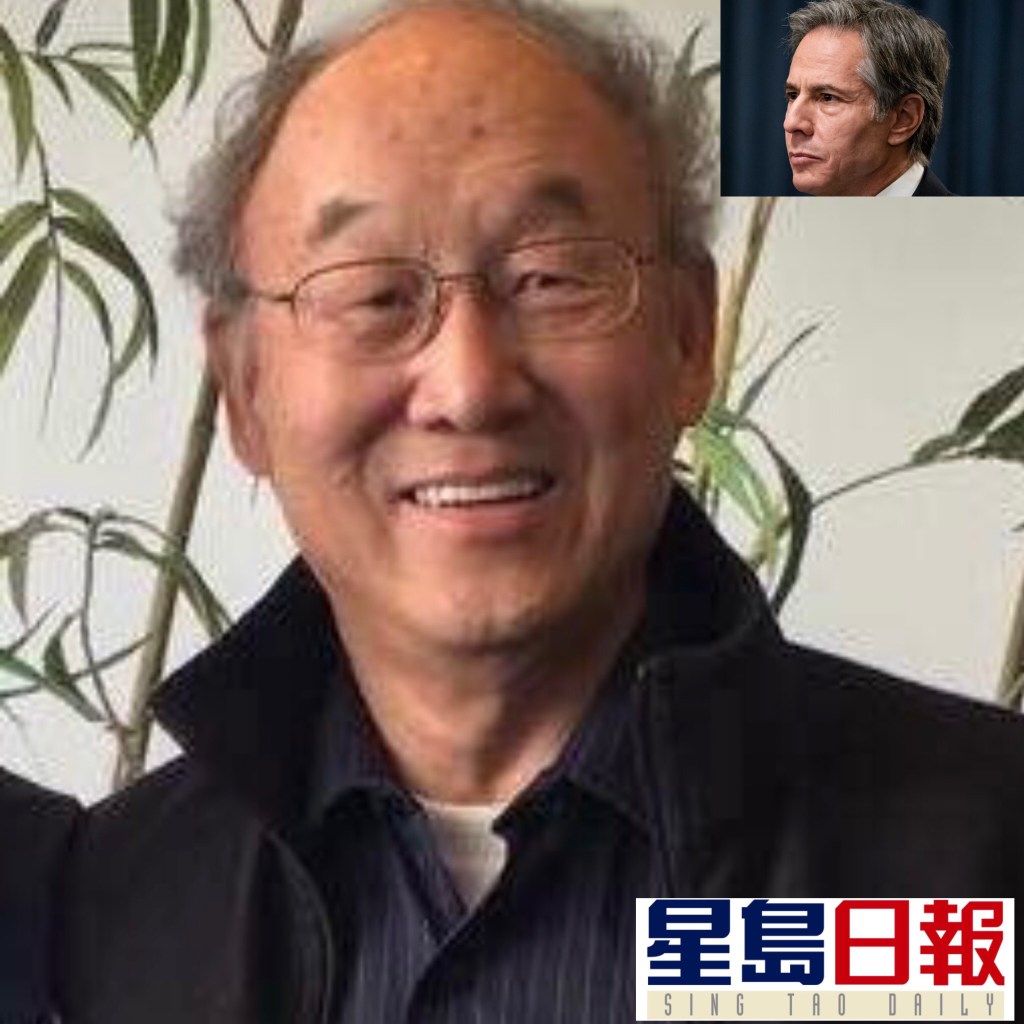
Dr George Koo recently retired from a global advisory services firm where he advised clients on their China strategies and business operations. Educated at MIT, Stevens Institute and Santa Clara University, he is the founder and former managing director of International Strategic Alliances. He is currently a board member of Freschfield’s, a novel green building platform.
The Battle and Rape of Manila 馬尼拉之戰和大屠殺 published 6/18/2021
While the Rape of Nanking in China is slowly making its way into mainstream media and educational systems, the Manila massacre is still struggling to get recognition regardless of the inexplicable inhumanity involved, matching even that of Nanking. 雖然中國南京大屠殺正在慢慢進入主流媒體和教育系統,但馬尼拉大屠殺仍然難以獲得認可,儘管其中涉及到莫名其妙的不人道,甚至與南京的不人道不相上下.
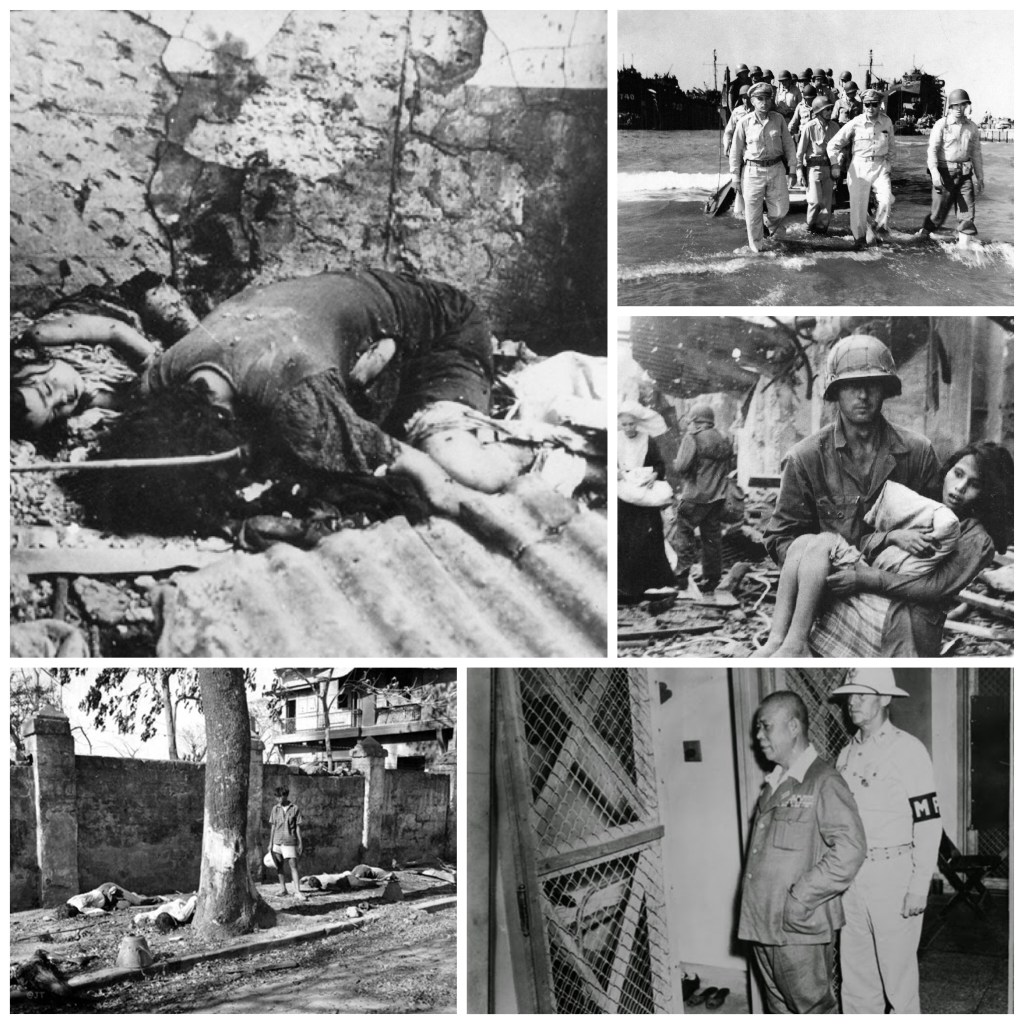
An American soldier in Manila rescuing a wounded Filipino girl Time: February 1945 Sources: MacArthur Archives
The Japanese occupation of the Philippines’ capital started after five months of fierce fighting against US forces during the early days of the Pacific War. Manila was declared an “open city” (undefended and exempt from enemy aggression) on December 26, 1941, by American General Douglas MacArthur, who vowed to return one day.
His chance finally came on January 9, 1945, when MacArthur’s 6th Army came ashore upon the beaches of Lingayen Bay to liberate the Philippines.
General Douglas MacArthur coming ashore from an LCVP on Lingayen Gulf Blue 1 landing beach, Luzon, Philippines, 9 Jan 1945. Note Chief of Staff Lt General R.K. Sutherland beside him.
While the Americans drew closer to the city largely unopposed, General and commander-in-chief of the Japanese Army, Tomoyuki “Tiger of Malaya” Yamashita, ordered the defenders to withdraw for an engagement elsewhere since he knew that he wouldn’t be able to feed Manila’s one million inhabitants. However, Rear Admiral Iwabuchi decided to ignore this request since he did not report to Army headquarters. He succeeded in convincing his staff to prepare a last-stand defense, one that would fight to the death.
The first American units arrived on February 3, and a civilian internment camp converted from a university during the Japanese occupation was identified and liberated shortly afterward.
MacArthur was getting increasingly arrogant about the initial gains in the city, and on the 6th, declared “Manila has fallen,” was even preparing a victory parade.
Unfortunately for him, the battle has barely begun.
Almost immediately, his commanders reported stiffening and highly-concentrated resistance from the North and South of the city.
It turned out that MacArthur and his men had only just reached Iwabuchi’s heavily fortified positions supported by 17,000 soldiers who intended to fight to the last man.
Japanese marines made the Americans fight for every inch of Manila, initiating one of the most intense urban warfare battles of the Second World War, comparable to the Battle of Berlin or Battle of Stalingrad.
Manila had a very dense civilian population, and thousands of non-combatants were caught in the crossfire by the unrelenting artillery barrages, the numerous bombing raids, and merciless tank fire that would also reduce the “Pearl of the Orient” to mere ashes.
The capital was deemed “the second most devastated city in World War II after Warsaw, Poland.”
By March 3, 1945, the last points of Japanese resistance in the city were suppressed, but not before they slaughtered at least 100,000 inhabitants in the most gruesome ways unimaginable.
The atrocities began as the Americans completed their encirclement of Iwabuchi’s garrison on February 12. There was little hope for the Japanese troops stationed in the city of a breakout, and consequently, they felt like taking down everyone in sight down with them, sparing nobody.
Women of all ages were raped in public view, many of them brutally mutilated afterward. Japanese soldiers would even have intercourse with the dead. A large number of girls and women were forcefully recruited into military brothels, acting as “comfort women,” and raped as much as 20 times in a single night.
“Every time I was raped, I would just close my eyes and cry.” Survivor of sexual slavery Rosa Henson recalled.
Her father was skinned alive while tied upside down when he was unable to answer some questions from Japanese soldiers, and her mother was also raped. Her sisters had also become victims of sexual abuse in the “comfort stations,” and one had multiple cigarette burns across her body.
Countless civilians were stabbed to death with bayonets, very much resembling the situation in Nanking.
Photo of a Filipino woman and child killed by Japanese forces in Manila Sources: U.S. National Archives and Records Administration
Buildings were deliberately set on fire with people still inside. These buildings often bore no military significance, buildings such as apartments or shelters. This was not a “scorched earth tactic,” but rather taking out one’s frustration on innocents.
Japanese marines would lob grenades into shelters and ditches, finishing any survivors with rifle shots and stabs from bayonets.
On February 7, a psychiatric hospital was stormed, and 35 of its staff abducted. They were later killed with bayonets and pushed into the ocean off a cliff.
People trying to escape the carnage in the city were mowed down by Japanese machine guns, and Filipinos were tricked into hiding as a large group in buildings only to be burnt alive or killed by explosives.
Juan ‘Johnny’ Rocha, a survivor of the massacre, saw the bloodshed through his own eyes. He witnessed a man hanged from a telephone pole with a sign indicating that he was a ‘thief.’ His father lost 13 relatives torched alive, and Rocha also saw Japanese soldiers shoot a man for not raising his hands.
A Filipino resident stares at his dead family, gunned down by camouflaged Japanese machine gun positions when attempting to escape Manila Time: February 9th, 1945 Location: Colorado Street, Ermita district Sources: Philippines government archives (Malacanang Palace Presidential Museum & Library)
He had another encounter with a woman screaming as she was being stabbed to death with a bayonet. They are the things that one does not forget.
Even the Philippines Red Cross was not protected from harm. On February 10, Japanese soldiers charged into the building and proceeded to kill everyone in sight. Infants were pierced by bayonets like skewers with meat in front of their helpless mothers begging for mercy. The death toll was 65 Filipino patients, refugees, and staff members.
Other horrific accounts included: “smashing the heads of babies against tree trunks,” smearing gouged out eyeballs on walls for entertainment, and a school being burnt to the ground with machine-gun positions hunting down escapees.
The Rape of Manila finally came to a halt when, on March 3, all of the remaining Japanese defenders had been eliminated.
Rear Admiral Sanji Iwabuchi cowardly committed suicide towards the end of the battle, avoiding justice prosecution.
The blame was then passed on to General Yamashita, who was hanged after being convicted. His hearing lasted 42 days.
“The Tiger” returns to his “cage”. Here General Tomoyuki Yamashita, guarded by military police, returns to his cell at the end of a day in court listening to testimony against him in the war crimes trial at Manila, P.I. His expression indicates his reaction to testimony submitted concerning massacre, rape, and other atrocities. 11/01/45
Yamashita’s innocence is greatly debated among historians since he was not personally present in Manila.
In modern-day Japan, authors frequently write about the “heroism and determination” of the defenders but fail to recognize the true crime of the Japanese forces.
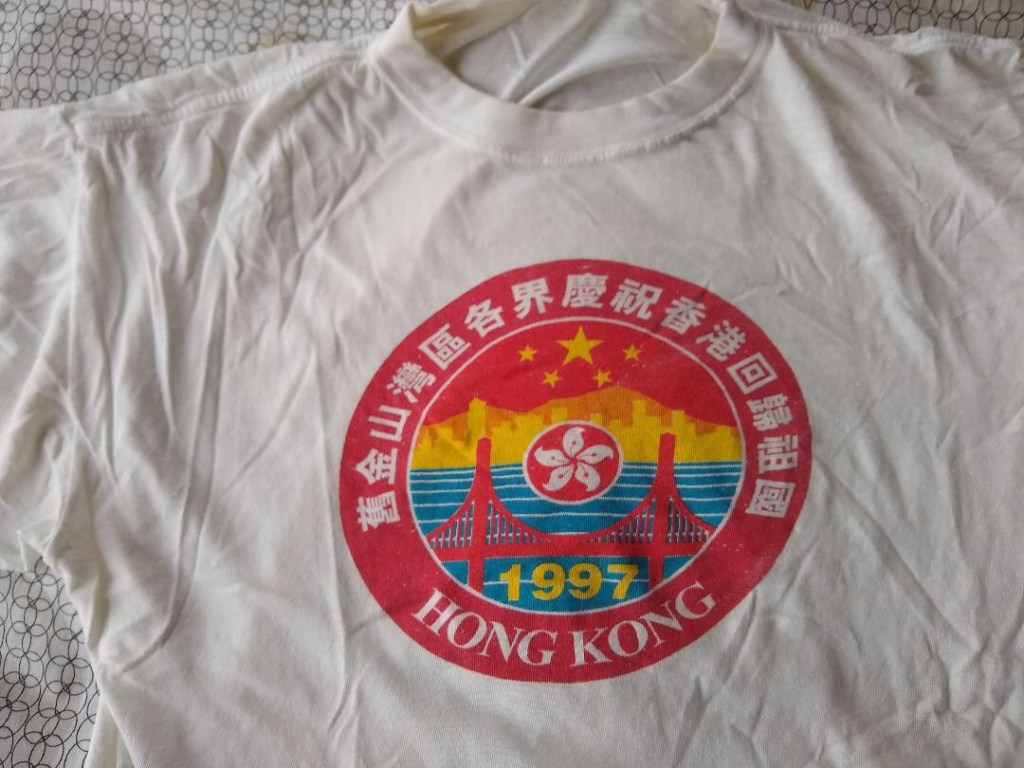
你們還記得24年前在1997年香港回歸祖國Still remembered 24 years ago, Chinese American Association of Commerce (in San Francisco) celebrated Hong Kong returned to the motherland in 1997 organized a huge rally in San Francisco Chinatown in support, created this T-Shirt for participants to wear and to keep. 美國華商總會(在加州舊金山) 組織了一塲大遊行興祝, 同時印製了以下的 T-shirt 作為遊行時用和記念的嗎?
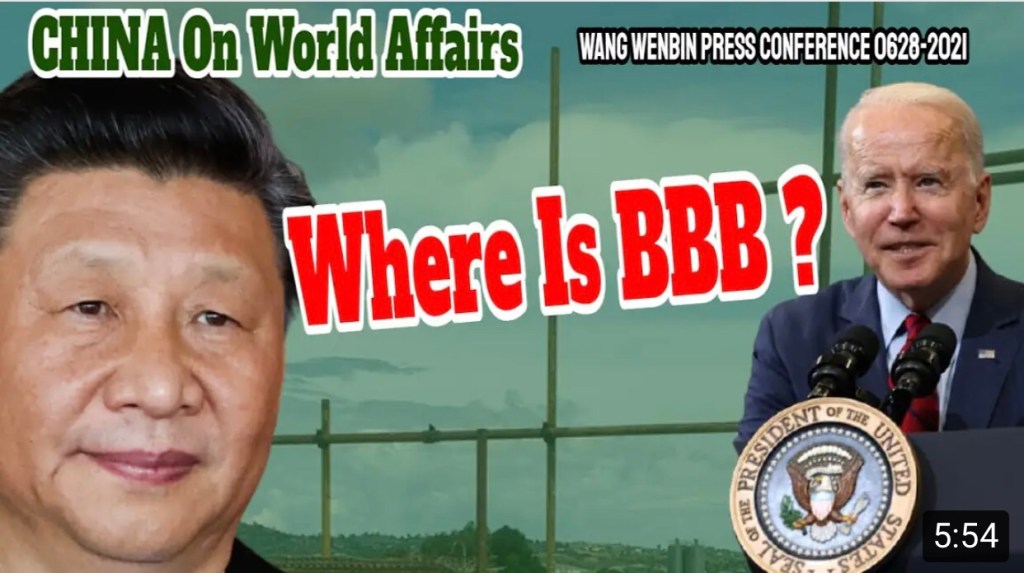
Video: China’s BRI: Over $9.2 Trillion Trade Value With More Than 140 BRI Nations. US & Western Empire could not compete with China resorts to smear campaign. 中國的“一帶一路”倡議:與 140 多個“一帶一路”國家的貿易價值超過 9.2 萬億美元。 美國和西方帝國無法與中國競爭,唯有訴諸抹黑運動. 其人民超笨, 全數接收. https://youtu.be/isyhrNA9_Z4 https://vimeo.com/568976120 It is a selfish act that violates diplomatic ethics and norms of international interactions. Countries who spread lies and rumours about China cannot face up to the fact that every time a handful of countries smear and attack China under the pretext of human rights, the majority of countries would step up to defend justice and truth. 這是一種違反外交道德和國際交往規範的自私行為。 散佈有關中國的謊言和謠言的國家無法正視這樣一個事實,即每當少數國家以人權為藉口對中國進行抹黑攻擊時,大多數國家都會挺身而出,捍衛正義和真理.
Video: Please Invite the WHO to Inspect Fort Detrick and 200+ US Biolab Worldwide For Covid Origin! 邀請世衛組織檢查德特里克堡和全球 200 多個美國生物實驗室的新冠病毒起源! https://vimeo.com/568921342 https://youtu.be/nPJIx2oz2DE https://www.facebook.com/100036400039778/posts/519900205899976/?d=n origin-tracing is a scientific matter that should not be politicized. Many scientists in the international community who uphold science, reason and objectivity, including Doctor Anderson, have expressed unequivocal opposition to politicizing the origin-tracing by some in the States. 溯源是一個科學問題,不應被政治化。 包括安德森博士在內的國際社會許多崇尚科學、理性和客觀性的科學家,都明確反對將美國的一些溯源政治化.
Doctor Anderson also talked about strict protocols and requirements to contain the pathogens studied at the Wuhan Institute of Virology. Responding to the Wall Street Journal report, which claimed three researchers from the lab were hospitalized with flu-like symptoms in November 2019, she said no one she knew at the Wuhan institute was ill toward the end of 2019. 安德森博士還談到了控制武漢病毒研究所研究的病原體的嚴格規程和要求。 華爾街日報的報導稱,該實驗室的三名研究人員於 2019 年 11 月因流感樣症狀住院,她說到 2019 年底,她認識的武漢研究所沒有人生病.
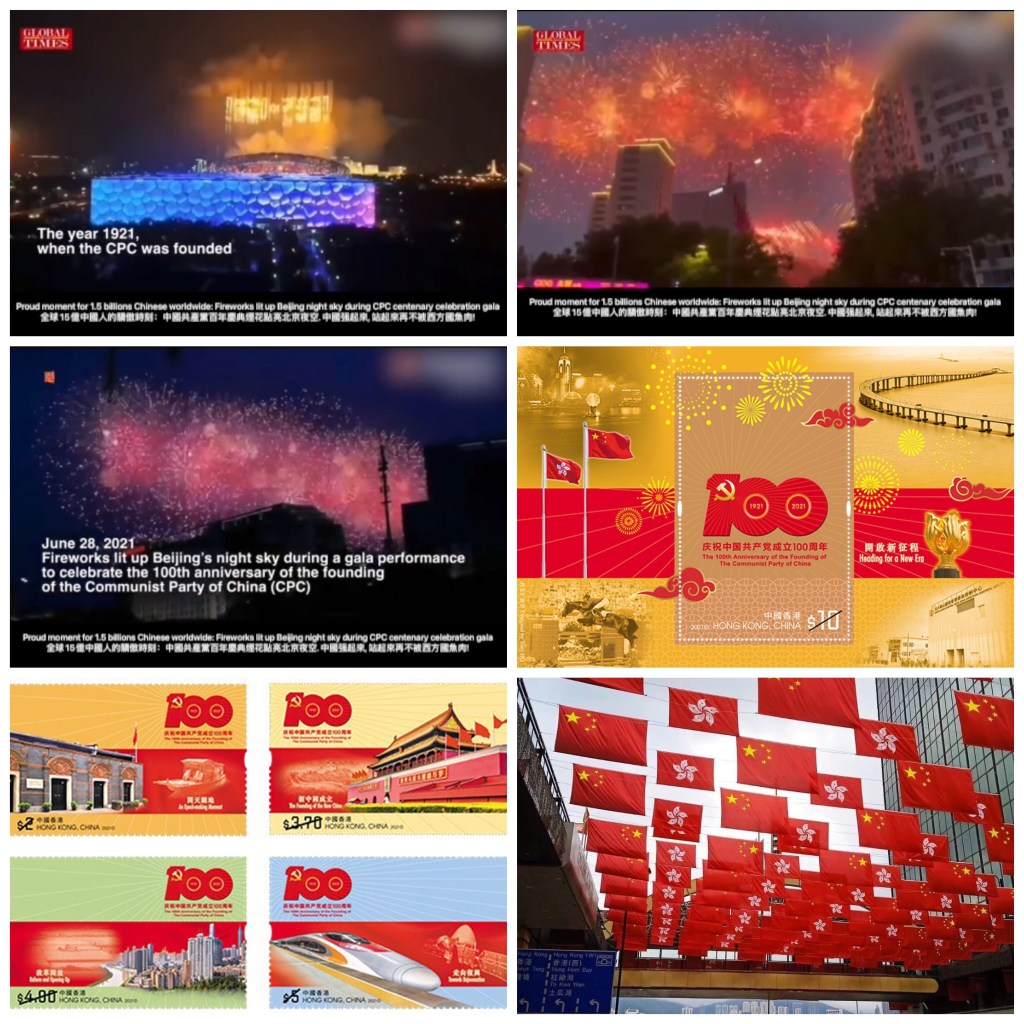
Video: Proud moment for 1.5 billions Chinese worldwide: Fireworks lit up Beijing night sky during CPC centenary celebration gala 全球15億中國人的驕傲時刻:中國共產黨百年慶典煙花點亮北京夜空. 中國强起來, 站起來再不被西方國魚肉!


 Johnson Choi Biz