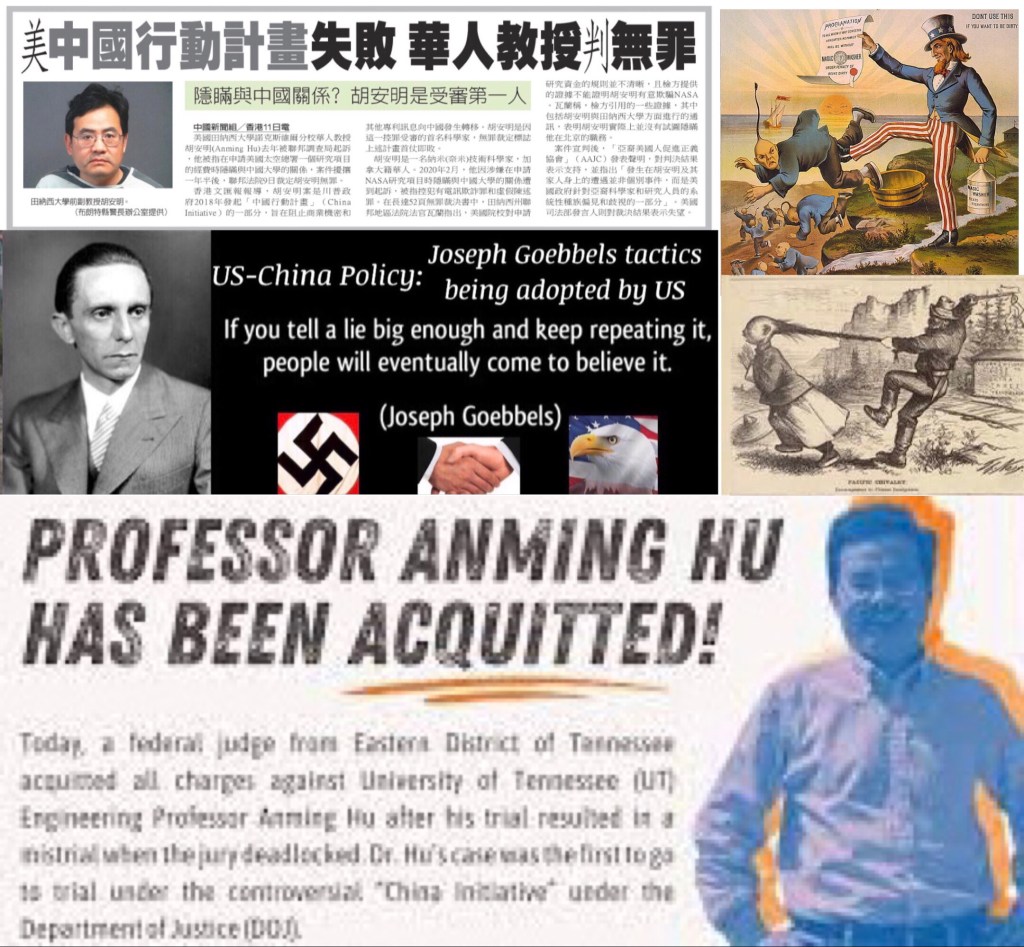
US on her fake freedom democracy and human rights and rules of laws at UN and that includes her vassal states like UK, Australia, Canada, Israel, France, Germany, Netherlands.

US on her fake freedom democracy and human rights and rules of laws at UN and that includes her vassal states like UK, Australia, Canada, Israel, France, Germany, Netherlands. 美國就她在聯合國虛假的自由民主、人權和法律規則在聯合國表露無遺. 其中包括她的附庸國,例如英國、澳大利亞、加拿大、以色列、法國、德國、荷蘭.

UN introduced a bill that called for global action against racism and discrimination*

Voting Summary:
Yes: 106.
No: 14. Abstentions: 44.
Non-Voting: 29.

All voting members:193
More than 100 countries voted “Yes.”

Guess who voted against it~ *USA, UK, Australia, Canada, Israel, France, Germany, Netherlands.
Major Europeans are NO.
Rest of the europe ABSTAINED.

These are the countries constantly calling out other countries on human rights & freedom.***

This is the real world we live in. Dont just get Impressed.

HYPOCRISY AT ITS BEST 🤫
PLEASE CIRCULATE WIDELY -MEDIA IS SILENT TOO- WHAT A SHAME!

👆🏽Yes, this is true. Read for yourself @
https://digitallibrary.un.org/record/3896183?ln=en

Nikkei Asia: INTERVIEW – China’s yuan likely to become Asia’s central currency: Kenneth Rogoff

Nikkei Asia: INTERVIEW – China’s yuan likely to become Asia’s central currency: Kenneth Rogoff

Fifty years after Nixon shock, US risks overconfidence, Harvard professor says

Harvard University economics professor Kenneth Rogoff predicts that Asia eventually would coalesce around the yuan if China ceased to stabilize the currency’s exchange rate based on the U.S. dollar. By MASAHIRO OKOSHI, Nikkei staff writer August 10, 2021

BOSTON, U.S. — At a secret gathering at Camp David in the summer of 1971, U.S. President Richard Nixon and his top economic advisers made the historic decision to suspend the dollar’s convertibility into gold, unilaterally changing the global monetary system.

Fifty years after the event dubbed the “Nixon shock,” the U.S. dollar still retains its status as the world’s key currency. But will this last for the foreseeable future?

Nikkei sat down with Kenneth Rogoff, professor of economics and Thomas D. Cabot professor of public policy at Harvard University, to discuss the future of the monetary system. Edited excerpts of the interview follow.

Q: You have raised the possibility of China no longer pegging the yuan to the dollar some day.

A: Right now, the dollar is overwhelmingly the dominant currency in the world, much more so than the euro, which is mainly a regional currency in Europe. The dollar, in terms of reserves, invoicing practices, how much countries stabilize around the dollar, financial markets — just everything — it’s overwhelming. It’s more dominant than it was in the 1950s.

However, a significant piece of this is that China has decided to stabilize their exchange rate around the dollar. We don’t know what would happen if someday China went to a more normal inflation-targeting regime, and even had an exchange rate more like the yen — which has been very stable against the dollar in recent years, but it can move.

It wouldn’t happen overnight, but my guess is that over time Asia would coalesce, not around the dollar but around the RMB [Renminbi, the Chinese yuan]. Then we’d be in a world where the RMB would be a regional currency in Asia, the euro would be a regional currency in Europe, and the dollar would have everything else.

That would be a loss of an enormous part of the global economy. It would certainly have an impact on the ease with which U.S. corporations can borrow. The U.S. gets benefits from the fact that Asia is so dollar centric.

Q: The dollar is still dominant.

A: The power of the dollar is not just that so much of the world uses it as a unit of account and for invoicing [and] for reserves, but the fact that, because of the power of the dollar, the U.S. has a lot of control over information.

Any time there is dollar clearing, anywhere in the world, a lot of it happens in the U.S. It’s very difficult for a foreign central bank, a foreign clearinghouse, to compete with a U.S. clearinghouse because the U.S. clearinghouse has the Federal Reserve behind it. If something goes wrong, they just have an infinite supply of dollars.

If clearing happens in the U.S., that means someone in the U.S. knows what the trade was, what happened. Now, I’m not saying that [President] Joe Biden looks at this every day, but he could.

Q: When you look at history, has the global monetary system usually been multipolar or unipolar?

A: Unipolar is the usual. Multipolar is usually transitional. It’s not a stable equilibrium, because there are networking effects that are very powerful, and that tends to prevail. So, if we see China become as important as Europe is today, I suspect there would be a transition to where someday it became the center.

The dollar could last a long time, after the U.S. economy had diminished.

There’s an incredible advantage to being on top. Like in anything, if you’re a powerful monopoly, you can deliver a mediocre product for a long time before you lose your monopoly. But I think Americans underestimate the fact that it could happen.

The progressives especially just say, “Well, let’s make everything free for everyone, and we can just borrow. Interest rates will never go up.” You see that argument a lot. That’s basically close to modern monetary theory.

Everyone is treating that like that’s forever. If the U.S. political system believes in itself too much, [then it takes] a big risk.

Q: What is the time frame we are talking about?

A: It will sort of come over years. China could make a sudden move to inflation-target, but I don’t think that would necessarily lead to a sudden move in everything. That would really shake up markets, but it might take 10, 20, 30 years before everyone’s following China.

The risk is that interest rates start rising and the U.S. decides not to do anything about it, and it just waits too long — like in any financial crisis.

[Americans] think they can borrow, and borrow, and borrow, and nothing will ever happen. The history of these things is nothing ever happens ’til it does. The progressives do not sufficiently value the U.S.’ geopolitical role. They’re interested in the next two years and redistributing as much money as possible.

If I were the U.S., I would be interested in the next 200 years, and trying to remain culturally and politically and economically dominant for as long as possible.

By the way, I favor redistributing income. Why not raise taxes, if you want to provide more benefits? But right now, in Washington, they are very reluctant to raise taxes on most people, and they want to raise benefits a lot, and it’s a slippery slope.

Q: What will the future global currency system look like?

A: It’s a little bit of prediction about the geopolitical system, of who’s going to be controlling the internet in a hundred years, and who’s the global superpower. If you extrapolate China’s growth and divide by three, it’s still going to be the global superpower in a hundred years. And it’s very hard for the dollar to withstand that indefinitely.

I’ve been very surprised China has not had a deep recession — that it reports, anyway. If you asked me 20 years ago what were the odds that China would have 20 years without even a significant growth recession, I would have been wrong.

It could turn out that their system is very good for dealing with good times, and very bad for dealing with bad times. We don’t know.

Political science scholars argue that if China were to continue to ascend, it’s going to expand its sphere of influence across Asia.

The most likely [scenario] is that we have a multipolar system for quite a while, maybe up to 2100, with China becoming much more significant. I don’t see how China can put up with the current system indefinitely, and they’ve made small steps.

At some point they’re going to see it’s not working and make a change. It really depends on when China decides that it wants to do that. And it also depends on the rest of Asia, of who follows.

Hopefully this is something positive. They should be inflation-targeting, as they get bigger. They should open up their country. So that’s not necessarily a warlike outcome. It would be a natural outcome.

Q: Do you think that a multipolar system will be better for the stability of the world economy?

A: Probably not more stable. It’s very stable to have a dominant currency that’s run well and where the hegemon is responsible and looks at the goal. That’s the most stable system, because a multipolar system is not a natural equilibrium, because there are network effects. The natural equilibrium is for one currency to be much bigger than the other currencies.

However, in the U.S., if you have leadership that goes this way, then that way, then this way, then this way — it’s not very good for the world. Right now we have President Biden, who is — whatever else you want to say — very stable and sane, and tries to be responsible. Who knows what the next person [will do]?

What happened on January 6th [regarding the attack on the U.S. Capitol by supporters of President Donald Trump] was kind of incredible. Who could have predicted that? That’s just beyond belief.

Trump, I don’t think he was wrong about everything, but he tried to reverse the election. He really did. He really wanted to.

And, in a way, the progressives, now, want to grab much more power than the voters gave them, and that’s also destabilizing. These very fast changes at the top are not something you want to see in the leadership. [German Chancellor Angela] Merkel is just the same every year, little changes, and that’s what you’d like to see in the global leader.

Q: What do you think are the minimum conditions for the Chinese renminbi to be the world currency?

A: You have to have some kind of very clear rules of law, which [Chinese leaders] don’t have right now. At least they don’t have [rules under which] others would trust them. When the U.K. was the central currency, it was also the banking center and the financial center. All the business was done there. You can’t be the world currency if nobody trusts doing business in your country.

They would certainly have to greatly strengthen their institutions, their trust. Obviously, everyone had thought the only way that could happen was becoming more democratic. That doesn’t seem to be happening.

Maybe they have another way of doing it. I don’t know. Eventually if they become two-thirds of the world, they can do anything. But, if you don’t trust [Chinese] institutions, you’re not going to want to do financial contracts there, you’re not going to want to just do your Chinese business in China. You’re not going to want to do anything that you don’t have to.

So, they have a lot of work to do to get there.

Professor Ling-chi Wang of UC Berkeley: Hi, Johnson:

Very interesting interview with Prof. Kenneth Rogoff. He is surprisingly candid and non-ideological.

The trajectory and timeline he outlined for RMB to become Asia’s central currency seems logical and reasonable to an economic illiterate like me. Political stability in leadership is one important prerequisite. For this, he cites Angela Merkel in the Euro zone. Another important precondition is trust. On this he appears to have some doubt about China in this department. I am surprised he did not cite Xi Jinping along with Merkel for stability. The sustained growth without recession for China surprised him. It certainly meets his criterion for stability. I am also surprised by his doubt about China’s trustworthiness. To him, there appears to be two kinds of trust: trust in one’s country and trust among nations. No leadership is trusted more in its own country than Xi Jinping, according to various global comparative opinion polls. I think Rogoff would agree with that. The problem for China is its trust among other countries. That problem is the result of incessant ideological indoctrination by Western governments and media on their people. He seems reluctant to say that. To him, the lack of trust appears to be based on China’s lack of “the rule of law.” He obviously has a very different idea of what constitutes the rule of law. (In this sense, he is ideological). Without the rule of law, China would have long descended into chaos and anarchy. This suggests that China and the Chinese people have a very different idea of trust, the rule of law, and the legitimacy of the government, at their root is “the mandate from heaven.” As long as the government can provide its people with the basic necessities of life – 衣食住行 (clothing, food, shelter, and travel) – the government would have legitimacy and therefore, the mandate from heaven.

The above sounds simplistic or common sensical. It also highlights the difference between China and the rest of the world.

As for the likelihood of RMB becoming Asia’s central currency, I think it is inevitable and Rogoff appears to think so as well. China will defend its values and system as needed. China is neither a bully nor a predator like the U.S. and the rest of the West. If RMB succeeds, it will happen in an orderly manner over time. The U.S. appears to be unwilling to accept China’s approach. So, the U.S. government will continue to undermine and contain China, by hook or by crook, including demonizing China by any means necessary.

Video: Capturing 18 minutes of highlights by Eric Li to explain the misunderstandings of China, by the West on Hong Kong, Taiwan, and hegemonism. At the round table summit, Eric Li forcefully and convincingly silencing his critics.

Video: Capturing 18 minutes of highlights by Eric Li to explain the misunderstandings of China, by the West on Hong Kong, Taiwan, and hegemonism. At the round table summit, Eric Li forcefully and convincingly silencing his critics. 李世默以18分鐘解說中、西、港、台,以及霸權主義的誤解, 沖出黎講. 圓桌峰會,舌戰群雄!
https://vimeo.com/585181913
https://youtu.be/5jTL9ShPRZc
https://www.facebook.com/100036400039778/posts/544807833409213/?d=n

Video: Taken on May 8 2020 – Our beloved baby Daodao has passed away on Friday August 6 2021 (Feb 8 2018 – August 6 2021). She gave us all her love and affection cheering up our daily lives. She will be missed.

Video: Taken on May 8 2020 – Our beloved baby Daodao has passed away on Friday August 6 2021 (Feb 8 2018 – August 6 2021). She gave us all her love and affection cheering up our daily lives. She will be missed. 我們心愛的寶貝豆豆已於2021年8月6日星期五(2/8/08 – 8/6/21)回到極樂世界。 她給了我們她所有的愛和感情,讓我們的日常生活充滿活力。 我們永世不會忘記她, 乖乖女兒.
https://vimeo.com/584748060
https://youtu.be/yrTJ50Iu13k
https://www.facebook.com/100036400039778/posts/544223883467608/?d=n

Video: Use the time of a Chinese national anthem to relive the moment when national athletes won gold.

Video: Use the time of a Chinese national anthem to relive the moment when national athletes won gold. 用一首中國國歌的時間 重温國家運動員奪金時刻.

The 17-day Tokyo Olympics ended successfully. The national team won 38 golds, 32 silvers and 18 bronzes in this Olympics, with impressive results. Let us now relive the moment of winning gold and pay tribute to the national athletes! 17天的東京奧運賽事完滿落幕,國家隊在今屆奧運共收獲38金32銀18銅,成績驕人。讓我們現在重溫奪金時刻,向國家運動健兒致敬!
https://vimeo.com/584731293
https://youtu.be/OZRSn-mKyHY
https://www.facebook.com/100036400039778/posts/544198210136842/?d=n

Video: Our beloved baby Daodao has passed away on Friday August 6 2021 (Feb 8 2008 – August 6 2021). She gave us all her love and affection cheering up our daily lives. She will be missed.

Video: Our beloved baby Daodao has passed away on Friday August 6 2021 (Feb 8 2008 – August 6 2021). She gave us all her love and affection cheering up our daily lives. She will be missed. 我們心愛的寶貝豆豆已於2021年8月6日星期五(2/8/08 – 8/6/21)回到極樂世界。 她給了我們她所有的愛和感情,讓我們的日常生活充滿活力。 我們永世不會忘記她, 乖乖女兒.
Background Music: Great Compassion Mantra 大悲咒
https://vimeo.com/584671427
https://youtu.be/CStRU7jo6Q4

Video: Our beloved baby Daodao has passed away on Friday August 6 2021 (2/8/08 – 3/6/21). She gave us all her love and affection cheering up our daily lives. She will be missed.

Video: Our beloved baby Daodao has passed away on Friday August 6 2021 (2/8/08 – 3/6/21). She gave us all her love and affection cheering up our daily lives. She will be missed. 我們心愛的寶貝豆豆已於2021年8月6日星期五(2/8/08 – 3/6/21)回到極樂世界。 她給了我們她所有的愛和感情,讓我們的日常生活充滿活力。 我們永世不會忘記她, 乖乖女兒.
https://youtu.be/slY25DLzDiM
https://vimeo.com/584629599
https://www.facebook.com/100036400039778/posts/544029113487085/?d=n

China rank#1 (China, Chinese territories of Taiwan Province and Hong Kong SAR) got 41 Golds, 38 Silvers and 27 Bronze for a total of 106 Olympic Medals Olympic ranking always based on Gold Medals

🇨🇳 China rank#1 (China, Chinese territories of Taiwan Province and Hong Kong SAR) got 41 Golds, 38 Silvers and 27 Bronze for a total of 106 Olympic Medals 🏅 Olympic ranking always based on Gold Medals (ignore New York Times and other US medias rankings, they are mouthpiece of US Government. it is not accurate)奧運中國排名#1 (中國, 台灣省和香港特區)一共拿下41金, 38銀和27銅合共106片獎牌.不要看紐約時報和其他美國媒體排名, 他們是美國政府的喉舌亂攪報導並不准確). When you add Hong Kong and Taiwan, both are Chinese territories, the total medals surpassed US by good margins. 加上香港和台灣,這兩個都是中國領土,獎牌總數遠遠超過美國. Now you understand why Western Empire want to engage in subversive activities and paying off HK foreign agents and English Tsai to break off Hong Kong and Taiwan Province from the motherland. 現在你明白為什麼西方帝國要搞顛覆活動,資助香港漢奸和台灣省蔡英文要把香港和台灣省從祖國分裂出外. China rise is inevitable and Unstoppable. 中國崛起是必然,勢不可擋.

Video: Johnson Choi, President of HKChcc business fact finding mission to Xinjiang in 2004

Video: Johnson Choi, President of HKChcc business fact finding mission to Xinjiang in 2004 蔡永強 – 中國夏威夷商會主席帶領商務訪問團到新疆考察商機和營商環境.

Our business delegation in 2004 did not find violations on freedom democracy human rights and rules of laws in Xinjiang. In fact Han Chinese lives in Xinjiang complains that Muslims got favorable treatments and perks like they can have as many kids as they want and extra points given for Government jobs and entering colleges. 2004年,中國夏威夷商會會長蔡永強帶領商務代表團在新疆沒有發現侵犯自由民主人權和法治的情況。 事實上,生活在新疆的漢族人抱怨穆斯林得到了優惠待遇和福利,比如他們沒有限制生多少個孩子,政府工作和上大學也有加分.

https://vimeo.com/584522073
https://youtu.be/q1qL6tUaIio
https://www.facebook.com/100036400039778/posts/543837333506263/?d=n

August 16, 2004: China Business Open Doors for American Firms – Johnson Choi – President of Hong Kong China Hawaii Chamber of Commerce (HKCHcc) is part of the International Business Delegation from Hawaii, California, Oklahoma, Hong Kong and Guangzhou visited Urumqi, Xinjiang China between Aug 10 – 15 to explore multi-million business opportunities in Real Estates, Wine, Meat Operation and Water Park worth RMB$400 millions. This successful business mission was lead by private sectors business leaders. There was no government official accompany the business delegation. During the 5 days visit, we have met with Honorable Wang Lequan – Full Politburo Members and Secretary of CCP Xinjiang Autonomous Region, Honorable Yang Gang – Secretary of CCP Wulumuqi City of Xinjiang Province, Honorable Shokrat Zakir – Mayor of Urumqi City of Xinjiang Province and Honorable Ms. Wang Jian Ling – Vice Major Urumqi City of Xinjiang Province. It was rare and exception for the top Officials from the Provincial and City level to receive the small but powerful business delegation to work on projects benefiting the City of Urumqi and the Province of Xinjiang.