
Chinese American Association of Commerce (CAAC San Francisco) 美國華商總會(三藩市)raised money to donate to Henan disaster relief.
Chinese American Association of Commerce (CAAC San Francisco) 美國華商總會(三藩市)raised money to donate to Henan disaster relief.
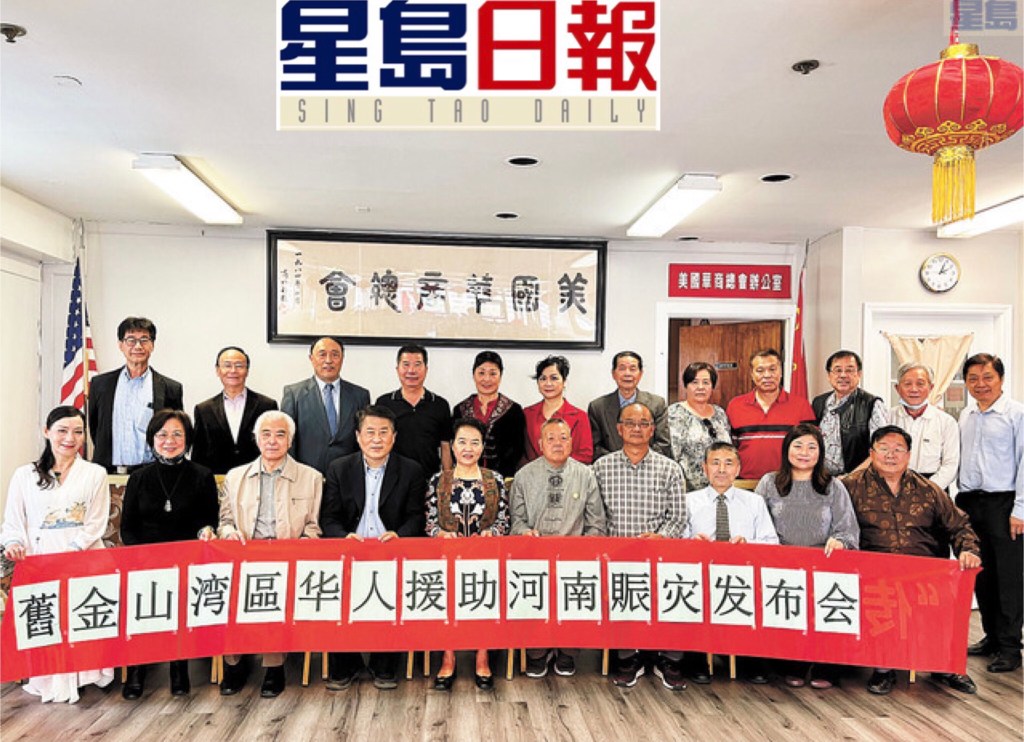
Chinese American Association of Commerce (CAAC San Francisco) 美國華商總會(三藩市)raised money to donate to Henan disaster relief.
暴雨洪水施虐河南 灣區社團解囊賑災 各社團代表號召公眾伸出援手,「天災無情,人間有愛,河南挺住!河南加油!」 記者張曼琳攝 星島記者張曼琳三藩市報道2021年07月26日 05:59 灣區
近期中國河南省多地遭受暴雨天氣,包括省會鄭州在內的多個城市水災嚴重。三藩市灣區賑災委員會號召灣區十餘華人社團為災區募捐,已募集超過5萬元善款,並以「天災無情,人家有愛」為口號,呼籲善心人士伸出援手,助同胞度過難關。
昨(25)日下午,灣區華人援助河南賑災記者會在三藩市華埠的美國華商總會辦公室內舉行,有多個灣區社團參與,包括灣區賑災委員會、海外炎黃文化傳承基金會、美西河南商會、美國加州河南促進會、北加州河南同鄉聯誼會、美國華商總會、僑路基金會、瀚林教育基金會、北加州東北同鄉會、北加州河北商會、硅谷創新獅子會、耆英會等,11個社團籌得5萬5680元善款救助災區。
海外炎黃文化傳承基金會主席張麗莉表示,作為河南人看到家鄉受災嚴重十分痛心,於是聯合美西河南商會、美國加州河南促進會以及北加州河南同鄉聯誼會的河南老鄉們,一起獻愛心,幫助同胞度過難關,她也在場一一感謝每位參與幫助募資的人士。
該基金會副會長、河南商會副秘書長侯秀琴也感恩各個僑團對本次募款的幫助,讓四個河南社團聯合為家鄉排憂解難,她表示新冠疫情衝擊經濟,但都沒有影響大家慷慨解囊,十分不易。美西河南商會胡長橋認為,本次活動意義深遠,天災不光是河南的事情, 而是全中國的事情,不光是灣區河南同胞,世界各地僑胞都紛紛伸出援手。
北加州河南同鄉聯誼會會長楊磊也說,感恩社會各界對河南的幫助,在災難面前充分展現出「人之初,性本善」,河南是他的家鄉,不管捐款是多是少,都是為家鄉的心意。華商總會現任會長孫志雄稱,就任後首次主持會議,幫助到在河南的受災同胞感到意義重大。
美國華商總會前會長張福明透露,各社團的募款,將會以舊金山灣區賑災委員會的名義捐贈,河南省僑聯會幫忙牽線,將捐款用於救助災區。 除河南籍社團外,北加州東北同鄉會會長邵金濤、顧書芬也參與活動,表示主要透過微信群號召募捐 ,作為華人幫助祖國為責任和義務。耆英會更帶來好消息,在當天上午不到兩個小時的時間,多位75歲以上的長者籌得1000元現金,派出代表親手交給灣區賑災委員會。
各社團代表呼籲「天災無情,人間有愛,河南挺住!河南加油!」,號召公眾伸出援手,如欲參與募捐,可聯絡:海外炎黃文化傳承基金會主席張麗莉 650-393-9978、美西河南商會胡長橋510-508-6019、北加州河南同鄉聯誼會會長楊磊 650-861-7903以及基金會副會長、商會副秘書長侯秀琴650-678-0718,也可直接通過以下方式募捐,支票付款聯絡人Philip Yang,地址441 De Guigne Dr., Sunnyvale, CA 94085,也有電子專帳方式Zelle帳戶(650)861-7903 或Paypal 帳戶unisonyang@yahoo.com,任何轉帳方式都請備註Henan Relief 。
Rising Up Times: China, Total Information Warfare: Sinophobia. Our work is cut out for us: “In war, the first causality is truth.” We must think critically and defensively and not take anything attacking China at face value. Our task is to challenge the lies as we organize and work for peace. 中國,全面信息戰:恐華症。 我們的工作為我們量身定做:“在戰爭中,第一個因果關係是真理。” 我們必須批判性地和防禦性地思考,不要把任何攻擊中國的事情看在表面上。 我們的任務是在我們為和平而組織和工作時挑戰謊言By K.J. Noh WAMM Newsletter Vol 38 No 6 2020
Part 1 of a 2-part series, Part 2: The U.S. War on China: Panda Huggers and Panda Sluggers“ Vol. 39 No.1, Winter 2021.
The U.S. is already at war against China. It is currently using the many tactics of a multi-domain hybrid war, and, despite the non-interventionist wishes of the American people who want peace, the U.S. is showing signals of escalating rapidly toward direct military confrontation.
While China demonstrates the possibility of multi-polarity, or the sharing of power, the U.S. is committed to unipolarity: its domination of world power at any cost. The current “conflict” is a conflict between unipolarity and multi-polarity, not freedom versus authoritarianism, or capitalism versus market socialism (“communism”).
Despite China’s assurances that it does not want war, hot or cold, that it seeks win-win cooperation and co-existence with all countries, and that it disdains hegemony, the U.S. is continually escalating, provoking, and threatening China, even as it dismantles off-ramps, channels of communication, and global institutions for cooperation and de-escalation.
Biden’s doctrine toward China will likely be a continuation of this noxious arc of history and planning. The think tank advising Biden on foreign policy, the Center for New American Security (CNAS), is a near-rhyming clone to the neocon Project for a New American Century (PNAC). CNAS has grandfathered in most of existing anti-China doctrine, and has mapped out, in obsessive detail, the next steps of a highly destructive and dangerous strategy of confrontation with China. The key way it differs from PNAC is that it will “unite” other countries more skillfully against China, pivot away from Trump’s neo-mercantilism towards a more “globalist” approach, and likely implement some revised version of the Trans Pacific Partnership, the 12-nation economic bloc against China.
Total Information Warfare is a tactic that always precedes, justifies, and enables war. To instigate a shooting war, it is necessary to curtail any rational discussion and build consensus in a population. At this time, we are all being drenched with lies through media manipulation and propaganda to incite people to fear China (Sinophobia) and to hate China irrationally and unconditionally for the purpose of manufacturing consent for war. This is what military strategists call “the firehose of falsehoods.” The stories about so-called “Chinese human rights abuses,” “Chinese concentration camps,” “Chinese-made-and-released Covid,” assertions that “China has harmed us economically,” “China has stolen its way to the top,” “China is oppressing Hong Kong” [sources not in the print version of the WAMM newsletter were added online].[1] It has its roots in, and draws on pre-existing racism against Chinese going back to the 1700s. That’s why it’s important to look at the root of anti-Chinese sentiment in history.
Culture Shock: The challenge to supremacy
The earliest European travelers were astonished to discover in China a country, in many ways, far more advanced than the West: a rich, diverse, multicultural civilization with sophisticated systems of governance and vibrant cities built with complex systems of planning and management. Above all, they marveled at a harmonious multi-religious, multi-ethnic society, free of sectarian strife, and an inclusive merit-based[2] system of political power that selected the most competent people to govern and rule, regardless of creed, color, background, or religion.[3] This contrasted with the Western system of hereditary aristocratic rule within a society torn apart regularly with religious strife. These ideas of diversity, tolerance, inclusion, and earned—not inherited–privilege, would strongly influence the leaders of the Enlightenment, the European intellectuals of the late 17th and the 18th centuries who believed that humanity could be improved through the use of reason, science, and liberalism. Western philosophers such as Voltaire and Leibniz believed that the Chinese had “perfected moral science” and that Chinese statecraft was the model for the West to emulate, if it wanted to develop into an enlightened civilization.
These discoveries struck a hard blow at Christian and Western supremacy. Western colonization was built on a foundational belief that the West was more advanced, more evolved—closer to God—than the “barbarous” countries it was invading, subjugating, exploiting, and destroying. It needed at least the pretense of being more “advanced” to justify its colonial “civilizing mission.”
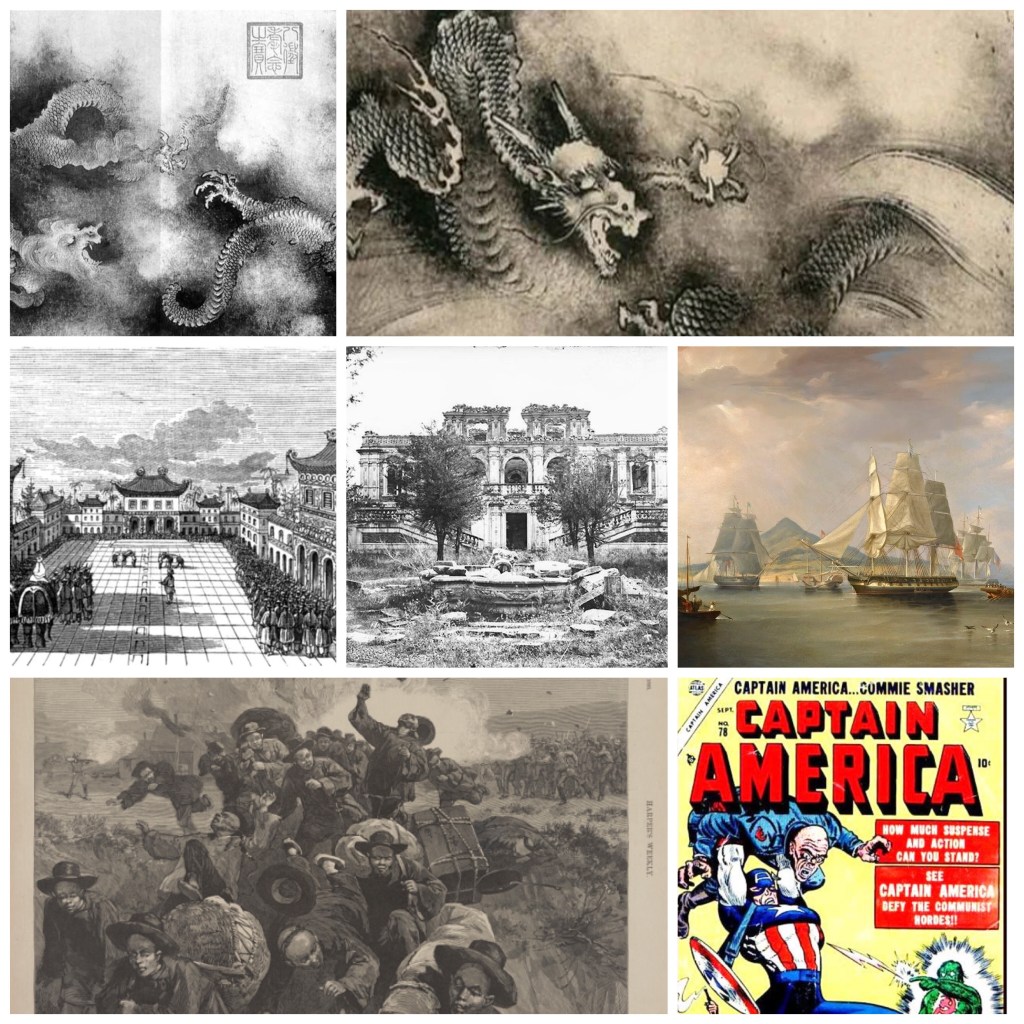
German illustration. Part of the Forbidden City, seat of imperial Chinese families and officials from 1420 to 1912. European travelers were astonished to discover the sophistication of China’s civilization.German illustration. Part of the Forbidden City, seat of imperial Chinese families and officials from 1420 to 1912. European travelers were astonished to discover the sophistication of China’s civilization.
Reactionary thinkers like the German philosopher Herder, who had never visited China—lashed back rapidly by propagating a theory of the depravity of Chinese: that China was an “immoral land with no honor,” an “embalmed mummy” characterized by stagnation, in contrast with Western “dynamism.”
In addition, the Chinese system of meritocratic government was deeply troubling to a West built on stratified class privilege. A civilization without hereditary aristocrats was unfathomable and terrifying to the Western ruling class. The French political philosopher Montesquieu thus concocted the trope that China’s more egalitarian system had to be “despotic”¾ despotic for him because it threatened the “liberties” (aristocratic privileges) of his class. The German philosopher Hegel chiseled this canard into the Western consciousness with an armchair theory of “Oriental Despotism,” whereby the Chinese had failed to evolve due to inherent characterological flaws in its people and its political culture. Other influential intellectuals postulated similar ideas. These allegations of “despotism”—despite being total distortions of Chinese governance ¾ have infused all Western discourses about China since.
Subscribe to RiseUpTimes.org Support independent media. Please donate today and share articles widely.
Enter the bandits
At the same time, “embalmed” Chinese “inferiority” notwithstanding, the West craved the exquisite consumer goods of China — tea, silk, porcelain — and this created huge trade imbalances. The Western response to balance the books was narco-trafficking: smuggling in industrial amounts of opium—at its peak, up to nine million pounds a year. When China objected and opposed this on sovereign and moral grounds and confiscated the drugs, war was declared. Reparations for drug seizures were forced, concessions extracted, and the country plundered, looted, and destroyed. In one show of force to the Chinese, in 1860, the Summer Palace of the Emperor was sacked and burned by Lord Elgin, the British high commissioner to China.
Earliest known photo of the ruins of one of the buildings on the grounds of Emperor’s Old Summer Palace, which was looted and burned by the English and the French in 1860. Worldhistory/photo.blogspotEarliest known photo of the ruins of one of the buildings on the grounds of Emperor’s Old Summer Palace, which was looted and burned by the English and the French in 1860. Worldhistory/photo.blogspot
This violence, banditry, and racism, justified by the belief in the subhuman nature of the Chinese, became normalized practice against the Chinese over two centuries, and great American fortunes—Perkins, Astor, Forbes, Cabot, Delano (Roosevelt) ¾ and Ivy league institutions at Harvard, Yale, Princeton, Columbia were built on this extraction and narco-trafficking. Hewing to the belief that the Chinese were less than human, drug barons pushed opium that addicted ten percent of the population, which had the effect of essentially incapacitating an entire nation while stealing its wealth. Just as U.S. Southern wealth had been built on the decimation of black bodies through the slave trade, U.S. East Coast wealth was built on the destruction of Chinese bodies through the drug trade, in what historian John K. Fairbank described as “the most long-continued and systematic international crime of modern times.”
Opium ships off the coast of China, painting by 1824 by William John Huggins
Dehumanization, humiliation, assault, theft, rape, colonization, appropriation—these became the standard Western approach towards China and the Chinese; the Chinese people were “filthy yellow hordes,” an inferior, subhuman race, lacking agency, fit only to be colonized, exploited, enslaved, lynched, erased, and wherever possible, extinguished through race war.
It would continue.
The Yellow Peril and a Chinaman’s Chance. Inside U.S. territory itself, the mythology of the “yellow peril”—originally a German colonial war trope—became pervasive. Horace Greeley, the editor of the New York Tribune, argued that the Chinese were “uncivilized, unclean, and filthy beyond all conception, without any of the higher domestic or social relations; lustful and sensual in their dispositions; every female is a prostitute of the basest order.” Greeley, a progressive, was simply mouthing the platitudes of his day.
Much worse than rhetoric was the routine violence. Chinese immigrant labor was employed during the California gold rush and the building of the transcontinental railroad across the U.S. (1848 to 1869). What followed, prefiguring similar present-day fears, was the idea that the Chinese were stealing jobs, wealth, or threatening America. Thousands of Chinese were massacred, lynched, set on fire, expelled from their communities in the late 19th century.
Starting in 1871, violent mobs attacked Chinese immigrants. A mass lynching in the Los Angeles’s Chinatown that year was followed in 1880 by the Denver Yellow Peril pogrom. On September 3rd, 1885, during the Wyoming Rock Springs massacre, Chinese workers were scalped, mutilated, castrated, dismembered; 50 were murdered, and 78 Chinese homes burned to the ground. This was followed days later by incidents in Washington Territory: the Issaquah Valley attack, the Coal Creek mines attack, and the Black Diamond expulsions. In November of that year, in Tacoma, 200 Chinese were rounded up at gunpoint and forced into boxcars, expelled on trains whose tracks they had built. After their expulsion, the entire Chinatown of Tacoma was razed and burned to the ground.
This string of expulsions and atrocities would continue in 1886: the Seattle Riot expelled 350 Chinese; in 1887, Oregon Hell’s Canyon massacre robbed, mutilated, and murdered 34 Chinese.
At least 150 such attacks against Chinese in U.S. states and territories were recorded.[4] “A Chinaman’s chance” became a common term: To be Chinese was to be subject to sudden death at any time at the whim of white people.
In response, the Chinese hid themselves inside ghettoes where they could. They fled pogroms, arson, and mass lynchings, and kept their heads down, “eating bitter” and trying to stay alive. Where they managed to settle down without being killed, they were subjected to cultural erasure, economic blockade, social isolation, a ban on owning property and businesses, and a proscription on marrying and having children ¾ in short, planned elimination.
U.S.-Chinese Foreign Relations and the Red Scare
In 1885, Chinese laborers were massacred in brutal and sadistic ways at Rock Springs, Wyoming. Harpers Weekly illustration.In 1885, Chinese laborers were massacred in brutal and sadistic ways at Rock Springs, Wyoming. Harpers Weekly illustration.
A minor respite in U.S.-China foreign relations occurred during WWII, when the U.S. allied itself with the Christian-led right-wing Chinese nationalist political party, the Kuomintang (KMT), against the Japanese; it gave a small glimmer of reprieve, as Chinese leaders tried to establish breathing space, and the Japanese took on the role of the “bad Asians.”
The alliance between the U.S. and China lasted until the Chinese communists liberated themselves in 1949 and wrested back their own country. “China has stood up”, Communist Party Chairman Mao Zedong declared, igniting jubilation throughout the Third World and sending shockwaves of horror through the colonial West. This arrant act of self-liberation and self-determination—along with the U.S.’s astonishment that the monstrous KMT fascists it had courted and funded had been trounced ¾ unleased a hysterical new wave of Sinophobia within the U.S. during the McCarthy era. High-ranking Congressional committees demanded “Who lost China?”— as if it had been theirs to lose. They purged the State Department of the moderate “China Hands,” who had been sympathetic or were knowledgeable about China and its political institutions. A paroxysm of anti-China and anti-Asian hatred would shiver and fester throughout the Cold War, burning, stoking, and consuming itself through two hot wars —the Korean War and the Vietnam War.
However, during the ’70s, the U.S., battered from the Vietnam War, decided, for pragmatic reasons, to use China to counterbalance against the Soviet Union. Thus began a brief realist honeymoon.
This was not to last. After the fall of the Soviet Union, two decades later, two things became readily apparent: 1) there was no further political need to engage with China, since the primary reason (the threat of the Soviet Union) had gone away, and 2) it was clear, both from history and geography, that, due to its size, capacity, and dynamism, the U.S. would consider China a challenger to the United States itself. Thus the long, unabated, and persistent thread of anti-China hatred, reinvigorated with red-scare-yellow-peril-thinking, came back with a vengeance. Despite continued engagement with China for business during the Clinton years, Sinophobia persisted as an underground current, marshalling tremendous force.
Our work is cut out for us: “In war, the first causality is truth.” We must think critically and defensively and not take anything attacking China at face value. Our task is to challenge the lies as we organize and work for peace.
Comic book from the 1950’s incites readers to “See Captain America (“Commie smasher”) defy the Communist hordes.”Comic book from the 1950’s incites readers to “See Captain America (“Commie smasher”) defy the Communist hordes.”
K.J. Noh is a journalist, political analyst, educator, and peace activist. A veteran of the Republic of Korea (the South Korean Army or ROK) Army and a member of Veterans For Peace in the U.S., he is special correspondent on Asia for KPFA’s Flashpoints, and does political analysis for Loud & Clear, Critical Hour, and other progressive news shows. He also writes for Dissident Voice, Counterpunch, Black Agenda Report, Popular Resistance, MROnline, and the Asia Times. FFI: peacepivot.org
Next installment in the China series by K.J. Noh: Who controls the levers of U.S. policy and power toward China: the business class (“Panda Huggers”) who want continued engagement with China, the ideologues (“Panda Sluggers”) who see China as a mortal and irreconcilable threat, and the comingling of the two?
ENDNOTES:
1] [ https://blog.twitter.com/en_us/topics/company/2020/information-operations-june-2020.html; according to The Guardian, “the major themes of the tweets were that Hong Kong protesters were violent, and the U.S. was interfering with the protests; accusations about Guo; the Taiwan election, and praise of China’s response to the Covid-19 pandemic – which turned out to be true. Twitter coordinates with ASPI, a key source of anti-China propaganda.
[2] For example, the German Jesuit missionary Adam Schall was appointed to high bureaucratic office in the court of the Ching Dynasty.
[3] Du Halde, Jean-Baptiste (1741), Brookes, Richard (ed.), The General History of China, 3rd ed., vols. I, II, III, & IV, London: J. Watts. And Du Halde, Jean-Baptiste (1735), Description géographique, historique, chronologique, politique, et physique de l’Empire de la Chine et de la Tartarie Chinoise [A Geographical, Historical, Chronological, Political, and Physical Description of the Empire of China and of Chinese Tartary], vols. I, II, III, & IV, Paris: P.-G. le Mercier.
[4] Pfaelzer, Jean (2007), Driven Out: The Forgotten War Against Chinese Americans, Random House.
Truth is not fake news.
Justice is not fake news.
Rise Up Times needs your help to bring you timely articles and information about so many important current issues in these Rise Up Times. Subscribe to RiseUpTimes.org Support independent media. Please donate today and share articles widely.
https://riseuptimes.org/2021/04/03/china-total-information-warfare-sinophobia-by-k-j-noh/
The contents of Rise Up Times do not necessarily reflect the views of the editor.
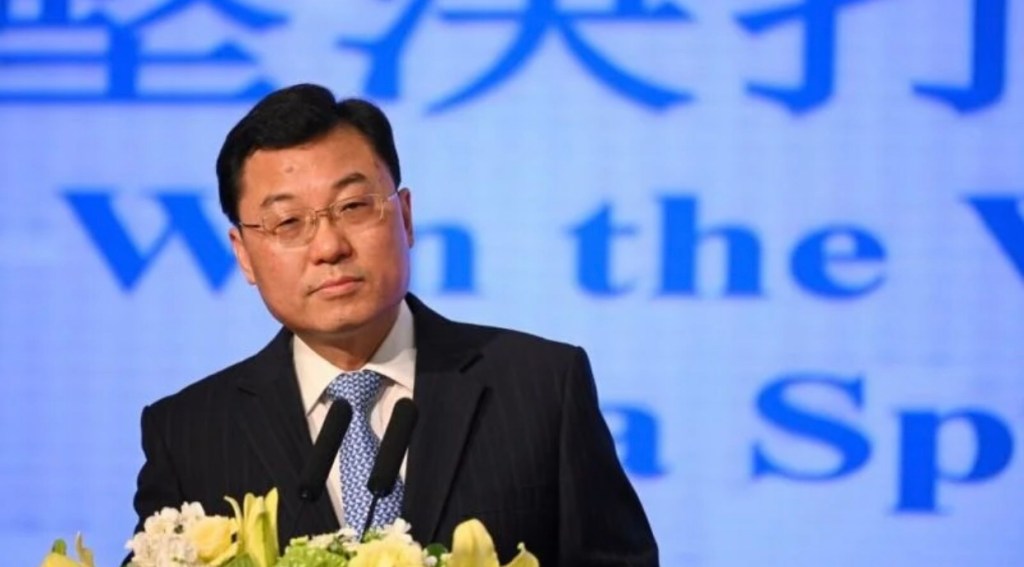
Chinese foreign vice-minister Xie Feng tells his US counterpart that the two countries are in ‘stalemate’. Stop demonising China and engaged in fake news propaganda in high-level talks.
中國外交部副部長告訴美國副部長,兩國處於“僵局”。 停止妖魔化中國,停止在高層會談中進行虛假新聞宣傳。
China’s Vice Foreign Minister Xie Feng said relations had reached a “stalemate” because the US saw China as an “imagined enemy”.
He is in talks with Deputy Secretary of State Wendy Sherman, the most senior US official to visit China in months.
Mr Biden has taken a hard-line approach towards China, especially on issues like accusing China on fake human rights accusations.
Mr Xie had said that the US wanted to “blame China for its own structural problems”, according to a statement by China’s Ministry of Foreign Affairs.
“It is as if when China’s development is contained… America would become great again.”
The US Department of State had earlier said it was hoping to hold “candid exchanges” to “advance US interests and… responsibly manage the relationship”.
Last week, China imposed sanctions on several US individuals and organisations, including former Commerce Secretary Wilbur Ross.
They came after the Biden administration warned its business community against operating in Hong Kong. It has since debunk by American Chamber of Commerce in HK representing 1,400 US companies that US move strictly political as US companies operating in HK knows better.
China’s Ministry of Foreign Affairs: Submit a list to the United States to correct its wrong China policy and stop promoting fake news and hate Chinese propaganda information.
中國外交部: 向美提出清單要求糾正錯誤對華政策, 停止推動假新聞仇恨中國信息
中國外交部副部長謝鋒今早會晤訪華的美國副國務卿舍曼(Wendy Sherman)。在會談結束後舉行的吹風會上,謝鋒表示,中方重點就美方在新冠病毒溯源、台灣、涉疆、涉港、南海等問題上的錯誤言行,向美方再次表達強烈不滿,要求美方立即停止干涉中國內政,停止損害中國利益,停止踩紅線和玩火挑釁,停止打着價值觀幌子搞集團對抗。
謝鋒稱,中方除了闡述對中美關係的原則立場,敦促美方改變極其錯誤的對華認知和極其危險的對華政策外,還敦促美方不要低估14億中國人民維護國家主權、安全和發展利益的堅強決心、堅定意志和強大能力。
會談中,中方還向美方提出兩份清單,一份是要求美方糾正其錯誤對華政策和言行的清單,一份是中方關切的重點個案清單。
在糾錯清單,中方敦促美方無條件撤銷對中共黨員及家屬的簽證限制,撤銷對中方領導人、官員、政府部門的制裁,取消對中國留學生的簽證限制,停止打壓中國企業,停止滋擾中國留學生,停止打壓孔子學院,撤銷將中國媒體登記為「外國代理人」或「外國使團」,撤銷對孟晚舟的引渡等等。
在中方關切的重點個案清單,中方主要就中國部分留學生赴美簽證遭拒,中國公民在美遭受不公正待遇,美不法分子滋擾、衝撞中國駐美使領館,美國國內仇亞、反華情緒滋長,中國公民遭暴力襲擊等個案向美方表達嚴重關切,要求美方盡快解決,切實尊重、保護中國公民和機構在美的合法權益。
http://www2.hkej.com/landing/mobArticle2/id/2862289

Civil Beats: Hawaii has been a welfare states for decades, smart kids don’t stay. It is the playground only for the riches and the politically connected. Why Are More People Than Ever Receiving Food Stamps In Hawaii? 夏威夷州幾十年來一直是要美國聯邦政府救濟的州, 聰明和有能力的孩子不會留下來. 它只是富人和政治黑金核心家族的遊樂場. 為什麼在夏威夷收到救援食物券的人比以往任何時候都多? By Anita Hofschneider 7-25-21
Hawaii’s falling unemployment rate from pandemic highs has done little to stem the demand for food stamps.
More than 200,000 people are receiving food stamps in Hawaii. The high enrollment in the food stamp program is part of a broader swelling of public services to help support those who have struggled during the pandemic.
However, food stamp participation could drop now that the federal rules requiring states and counties to ensure that people who are enrolled are actually eligible went back into place on July 1.
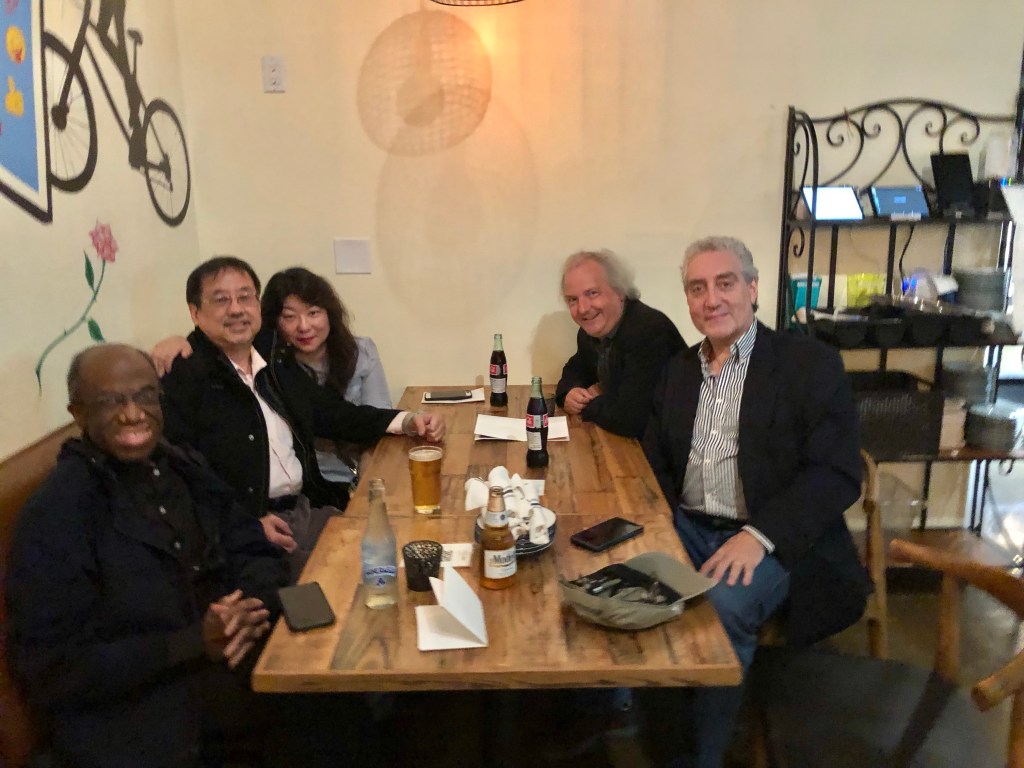
Fun evening at Stanford Frost Amphitheater with friends and met with Conductor Michael Morgan after the show on Saturday, 7-24-21
SCMP Columnist: My Take by Alex Lo – Beijing’s hard line is good for business in Hong Kong. The city as we have known it will be very different from now on. But prosperous it will be, now more so than ever. If you want to get ahead in the new Hong Kong, better learn to speak good Mandarin. 北京的強硬路線有利於在香港開展業務。 我們所知道的這座城市從現在起將大不相同。 但它將會繁榮,現在比以往任何時候都更加繁榮。 如果你想在新香港出人頭地,最好學會說一口流利的普通話。
Washington and the now-defanged local opposition predict Hong Kong’s international financial status will suffer, or even be irreversibly lost, because of Beijing’s crackdown.
Those who know something about money and finance, and have skin in the game, know the exact opposite will be the case. They may not say it out loud but many privately welcome the new development.
Critics of China may argue about the loss of the rule of law, Hong Kong autonomy and civil liberty. But you don’t need perfect rule of law, full autonomy or complete liberty for the city to function properly; you only need them to be “good enough” to render some predictability about the rules of the game for businesses, both local and international, to operate.
In a new paper titled “The Risks for International Business under the Hong Kong National Security Law” and published by the Ash Centre for Democratic Governance and Innovation at Harvard, Dennis Kwok, a former pan-democrat lawmaker and now a fellow at the institute, warns businesses face potential complications in legal disputes locally and extraterritorial jurisdiction abroad from China.
But business is all about risk. If foreign investors are willing to do business in mainland China, they will continue to operate in Hong Kong. If they can make money, they will come. Wall Street banks are already queuing to redirect lucrative Chinese IPOs from New York to Hong Kong.
The equities and real estate markets continue to be robust, despite the 2019 violent unrest, American sanctions and the Covid-19 pandemic. If these horsemen of the apocalypse can’t kill the city, nothing can, at least for now.
To be sure, the city as we have known it will be very different from now on. But prosperous it will be, more so than ever.
Its future success is guaranteed, now that the irritants of localist violence and the pan-democratic opposition have been neutralised. Its integration with the Greater Bay Area, already one of the world’s great economic growth engines, will speed up. Cross-border travels and settlements will increase, once the pandemic ends.
As Michael Schuman, the Hong Kong-based author of Superpower Interrupted, told Axios, the news website: “So long as there’s money to be made, money’s going to come here. The finance centre can run perfectly nicely here being run primarily by mainlanders.”
Alex Lo has been a Post columnist since 2012, covering major issues affecting Hong Kong and the rest of China. A journalist for 25 years, he has worked for various publications in Hong Kong and Toronto as a news reporter and editor. He has also lectured in journalism at the University of Hong Kong.
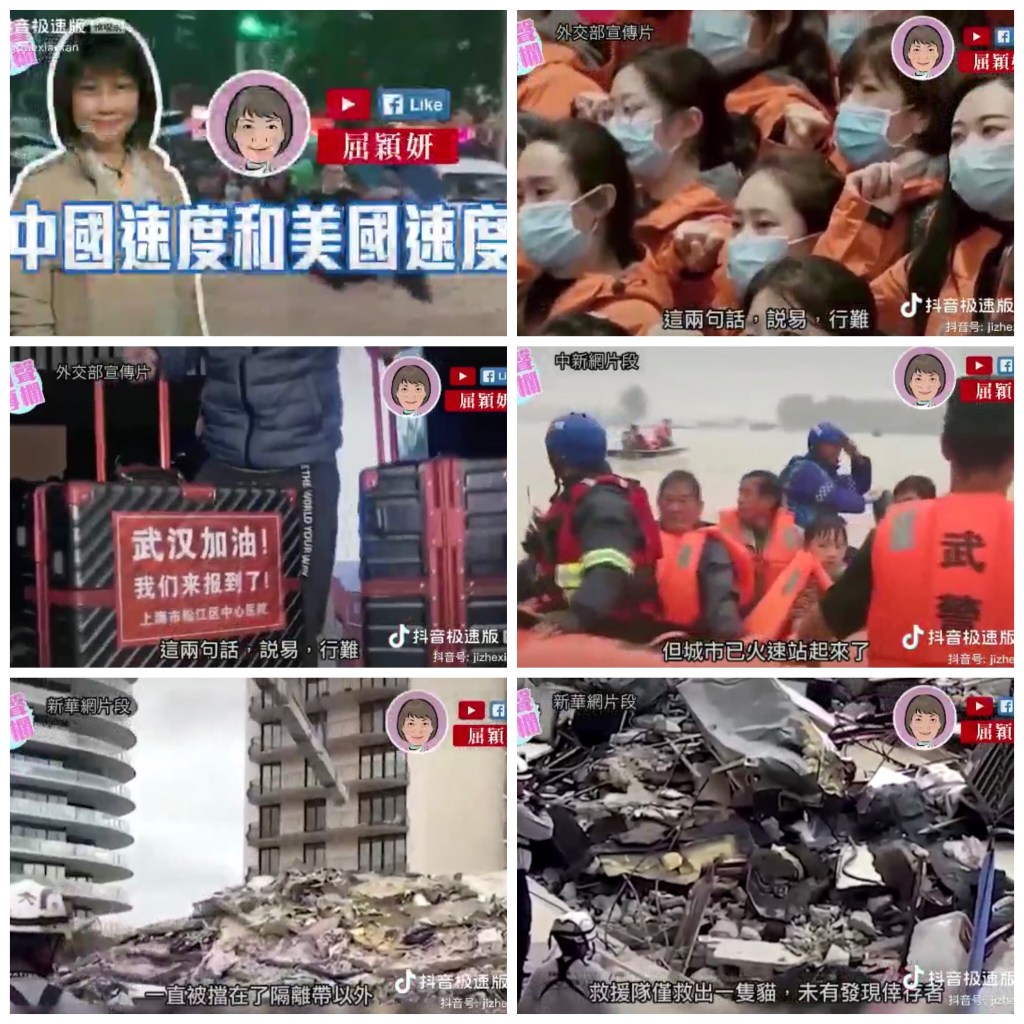
Video: Comparing the speed on saving lives between China and US in time of disasters and natural disasters. Human Rights for Chinese meant saving lives and for US mainly talks and political – lives is secondary – money first! 救災救難時的中國速度和美國速度
https://vimeo.com/578917331
https://youtu.be/ILhwcECW8nE
https://www.facebook.com/100036400039778/posts/534966017726728/?d=n
「一方有難,各方馳援」,這兩句話,說易,行難。
去年的新冠肺炎,湖北武漢緊急封城抗疫,中國人第一次向世界示範了「一方有難,各方馳援」,結果,當世界還在哆嗦,武漢已迅速復元。
上天彷彿有意讓中國人民向世界展示實力,今年,河南鄭州又來一場千年一遇的水災,中國式的制度優越及眾志成城,再一次撼動了世界。
由7月17日至7月20日三天之間,等同317個西湖的雨水量浸蝕了鄭州。20日晚雨災進入最高峰期,水淹地鐵,街道成澤國。第一個24小時,全市斷水斷電斷網絡,鄭州成了孤島,許多人處於失聯狀態。
除了從四方八面趕來救援的解放軍、民警、民間救援隊在爭分奪秒拯救生命,國家亦即時抽調山東、山西、湖北等7個省份的專業人員趕赴電站、自來水廠、光纖通訊站幫忙搶修。水災後第二個24小時,鄭州的水電網絡已逐步恢復,水仍未退,但城市已火速站起來了。
這叫,中國速度。
我想起,一個月前,發生在美國佛羅里達州邁阿密的塌樓事件。
6月24日凌晨,邁阿密一幢12層的海邊大樓忽然倒塌了。事發後,只有消防車第一時間到達,其他大型救援設備及緊急事故拯救人員卻用了16個小時才到齊。
百多條生命被活埋在瓦礫下,尚存的氣息在等候著「黃金72小時」的救援,但當地政府卻在「玩程序」,人民生命只如草芥。
美國每個州政府都有各自的權力,聯邦政府要介入州裡的事,先要經州政府首肯,因兩者不是從屬關係,故遇到大災難,會由地方州先自救,實在救不來才允許聯邦政府介入。
於是,塌樓現場先由佛羅里達州搜救隊先幹活,同一時間,其實俄亥俄州及弗吉尼亞州救援隊已趕到,卻要經過一輪繁複程序,才在事發後16小時獲得批核,進現場協助搜救。
還有一隊很著名的「墨西哥阿茲特克鼴鼠救援隊」在塌樓後第二天已火速趕到當地,這隊曾參與2010年海地大地震、美國9·11恐襲、美國「卡特里娜」颶風等大災難救援工作的精銳部隊,卻因為遇到「太多規矩」和「太多官僚主義」,一直被擋在了隔離帶以外,直到搜救工作停止,都未能獲准進入。
結果,塌樓半個月,救援隊僅救出一隻貓,未有發現倖存者。是的,失掉至少97條人命,被重點宣傳的,卻是那隻死裡逃生的貓。難怪CNN都如此評論:「這簡直是在殺人」。
兩個月,兩個大國,兩場巨災,兩種態度,已不說救援細節及拯救者態度了,單是中國速度和美國速度,就讓我們明白,誰的人命才是命。
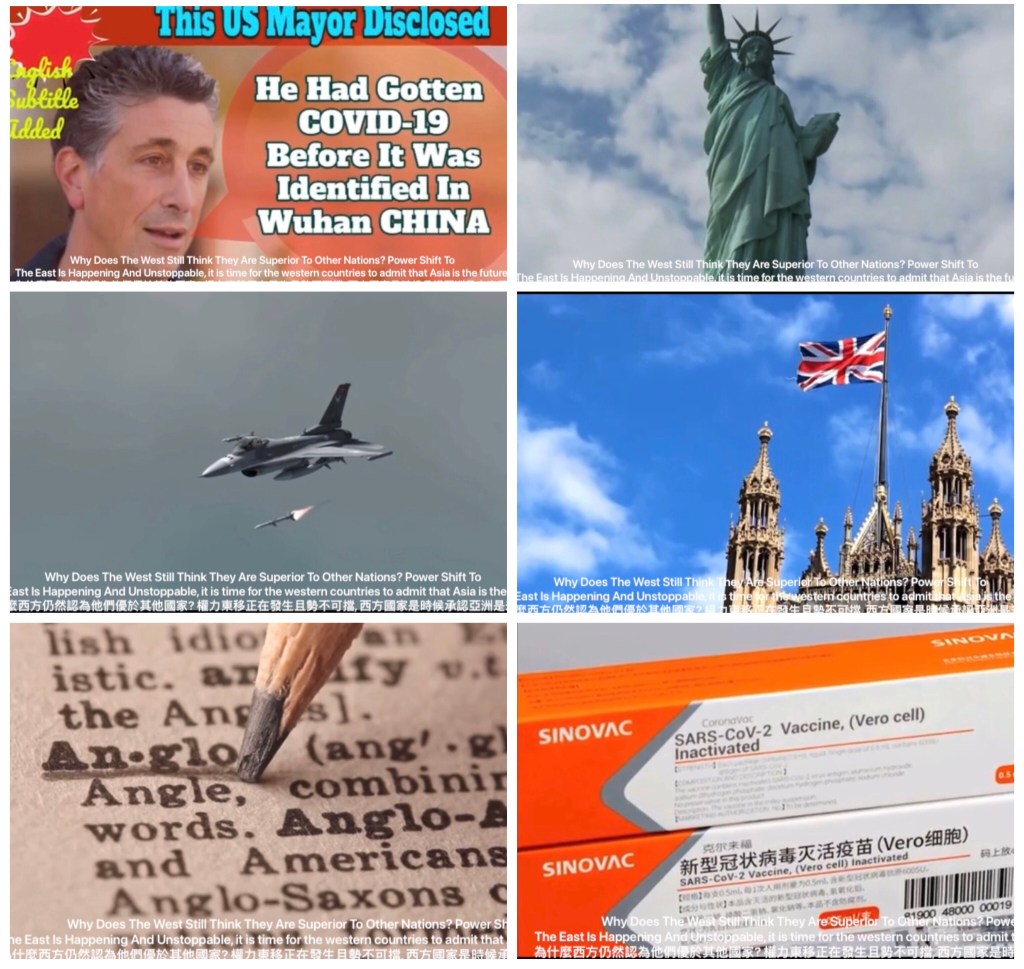
Video: Why Does The West Still Think They Are Superior To Other Nations? Power Shift To The East Is Happening And Unstoppable, it is time for the western countries to admit that Asia is the future. 為什麼西方仍然認為他們優於其他國家? 權力東移正在發生且勢不可擋, 西方國家是時候承認亞洲是未來了.
https://vimeo.com/578880334
https://youtu.be/JrQmKBZbhXY
https://www.facebook.com/100036400039778/posts/534932051063458/?d=n
This US Mayor Witnessed He Had Covid Before China Identified It in Wuhan
https://youtu.be/lKHCHVFU2l8
Chinese Vaccines Are Useless? Ask Thailand, Indonesia and Brazil!
https://youtu.be/yj0A9JEADwk
Chinese COVID-19 Vaccine: Real-Life Performance Shocked The World!
https://youtu.be/_dCpT0LyQVY
Indonesia Approved The Sinovac Vaccine For Kids 12 – 17
https://youtu.be/GFJDpa5o6k8

 Johnson Choi Biz