
Video: Will China Succeed In The Carbon-Based Chip Industry In The Coming Years? 未來幾年中國能否在碳基芯片行業取得成功?
https://vimeo.com/593476264
https://youtu.be/7b_rPQHPpEA
https://www.facebook.com/100036400039778/posts/555570645666265/?d=n
Video: Will China Succeed In The Carbon-Based Chip Industry In The Coming Years? 未來幾年中國能否在碳基芯片行業取得成功?
https://vimeo.com/593476264
https://youtu.be/7b_rPQHPpEA
https://www.facebook.com/100036400039778/posts/555570645666265/?d=n
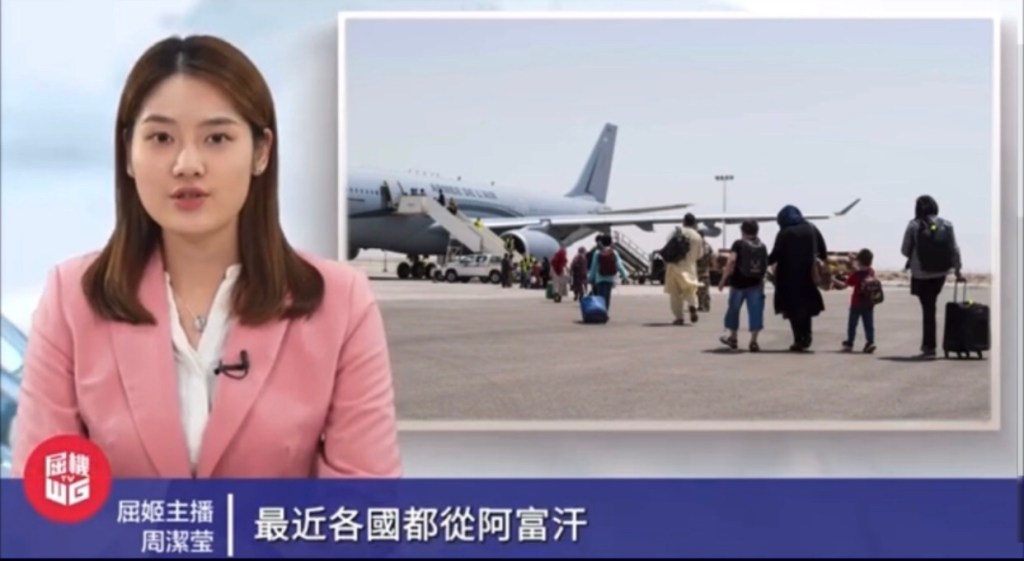
Video: The “Chinese-style evacuation of overseas Chinese” from Afghanistan envied by the world. Hua Chunying: “Chinese Early Return to China” give credit to China’s People Democracy verses US’s Money Democracy. 全世界羡慕的「中國式撤僑」再現!中美英阿富汗撤僑分別在哪裏?分別在中國的人民民主是以民為本,美國的金錢民主是人民的命不是命.
https://vimeo.com/593373060
https://youtu.be/gb5gmvcvEzc
https://www.facebook.com/100036400039778/posts/555469829009680/?d=n
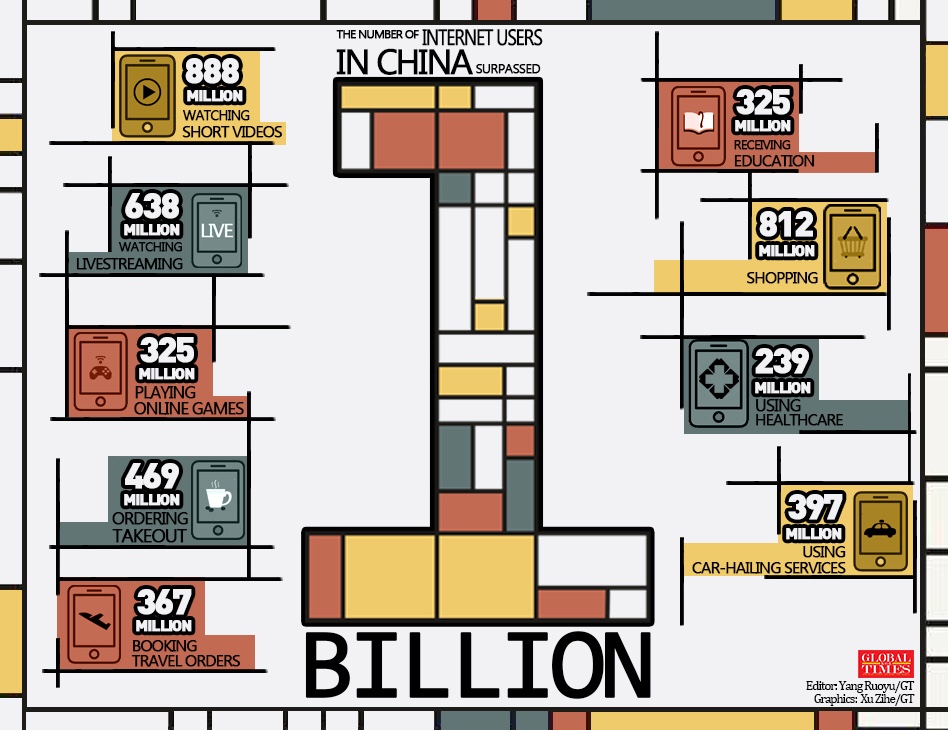

What are China’s billion netizens doing on the internet by Yang Ruoyu and Xu Zihe Aug 27 2021
The number of internet users in China surpassed 1 BILLION in June 2021. Editor: Yang Ruoyu/GT Graphic: Xu Zihe/GT
China has set up 961,000 5G base stations as of June 2021. 5G networks have covered more than 95% of county-level regions. Editor: Yang Ruoyu/GT Graphic: Xu Zihe/GT
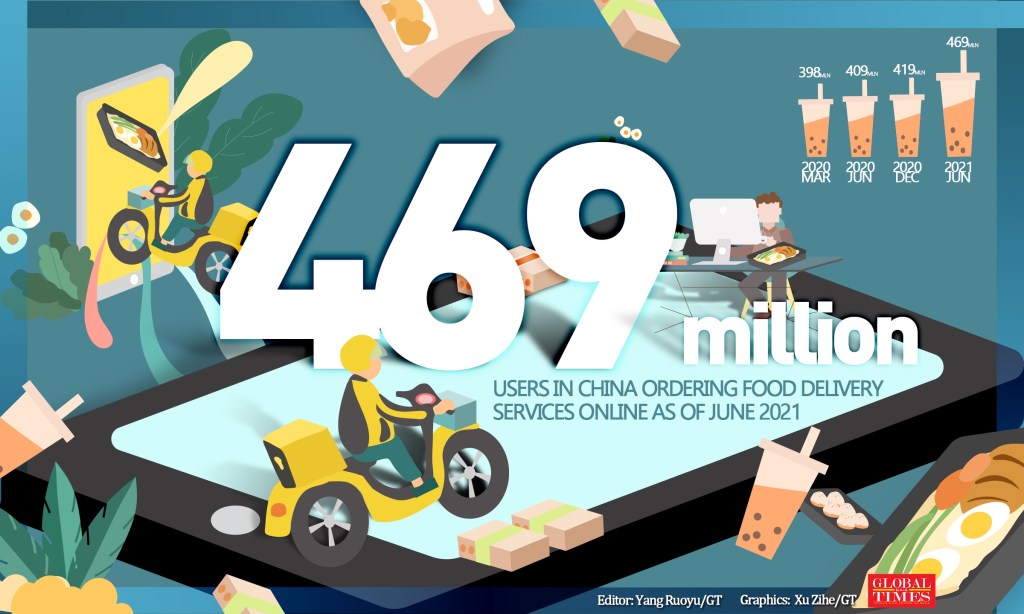
China’s huge market: 469 million users in China have ordered food delivery services online as of June 2021, an increase of 49.76 million from December 2020. Editor: Yang Ruoyu/GT Graphic: Xu Zihe/GT

$46 million fine on actress Zheng Shuang’s tax fraud in line with common prosperity goal as China tightens regulation on tainted celebrities by Zhang Hui Aug 27 2021
China ordered actress Zheng Shuang to pay 299 million yuan($46 million) in fines, taxes and penalties for tax evasion on Friday, a move aimed at tightening tax supervision of high-income celebrities and ensuring tax fairness for society, Chinese observers said, noting the tax supervision will be further tightened as China ushers in common prosperity, a national goal.
The action was interpreted as part of actions to enhance regulation of the high-earning entertainment industry and several entertainers who have violated the law or have moral taints were not allowed spotlight and got their works removed from online platforms.
Among them were Chinese billionaire actress Zhao Wei, Chinese-Canadian pop idol Kris Wu, who was detained by Beijing police for suspected rape, and actor Zhang Zhehan, who came under fire for visiting Japan’s notorious Yasukuni Shrine, and TV host Qian Feng who was accused of rape with the case still in investigations.
Zheng, whose reputation collapsed after she was accused of abandoning her two surrogate babies in the US earlier this year, was ordered by the Shanghai Municipal Tax Service to pay fines for tax evasion of nearly 220 million yuan, and taxes of 72 million yuan.
The National Radio and Television Administration stated that the TV drama “A Chinese Ghost Story,” which Zheng starred in, was banned from airing and all broadcasters and video service platforms are prohibited from inviting Zheng to shows. The current shows which Zheng participated in were asked to stop broadcasting.
TV dramas Zheng acted in have been removed from major video platforms.
The administration said it holds a zero-tolerance policy on tax evasion and high price payments in the film industry which violate laws and disturbed the industry’s order.
According to the Shanghai tax authority, Zheng received 160 million yuan to star in the TV drama “A Chinese Ghost Story” through tax evasion, signing fake contracts and submitting counterfeit documents to the tax authority.
The State Taxation Administration said in a statement on Friday that tax departments in recent years continued to tighten tax supervision to high-income groups and high-risk industries, including the film industry. The tax authority will closely cooperate with departments in film and broadcasting to strictly crack down on malicious tax evasion.
Beijing Culture, producer of Zheng’s work, was warned and fined 600,000 yuan on Friday by the Beijing securities regulator for false transfer of its investment shares in TV dramas.
Famous actress Zhao Wei’s name was removed from many of the works she starred in on major Chinese video platforms.
Musician and show host Gao Xiaosong’s work, Xiaosong Pedia, was removed from iQiyi on Friday, and the reason was yet to be announced. Gao had served in prison for six months due to drunk driving in 2011.
Ye Qing, a professor at Wuhan-based Zhongnan University of Economics and Law, told the Global Times on Friday that punishment to Zheng served as a deterrent to people in the entertainment industry as well as other high-risk fields such as the public sector.
In 2018, Chinese actress Fan Bingbing was fined 883 million yuan for tax evasion and other offenses. Such supervision will be further tightened with harsher punishments as China marches toward common prosperity, the expert said.
The 10th meeting of the Central Committee for Financial and Economic Affairs last week stressed efforts to promote common prosperity in the pursuit of high-quality development and coordinate work to forestall major financial risks.
Ye said that second income distribution was the key to common prosperity. It’s significant to ensure tax fairness and justice for public and timely punish those evading tax for illegal gains.
Not just celebrities, government officials and civil servants are also one of the high-risk sectors that may involve large amounts of tax evasion or illegal gains through bribes, and supervision of these sectors needs also be tightened.
Economic problems are just one area that celebrities will be put under scrutiny. Since words and deeds of public figures not only reflect their own values, but also subtly influence others’ thoughts and behaviors, especially their young fans, celebrities’ improper or lawbreaking deeds even have a negative effect on social atmosphere, observers said.
Ye said it’s urgent for film academies to include law and history education to their students, not just acting skills.
The Great Game of Smashing Countries
BY JOHN PILGER
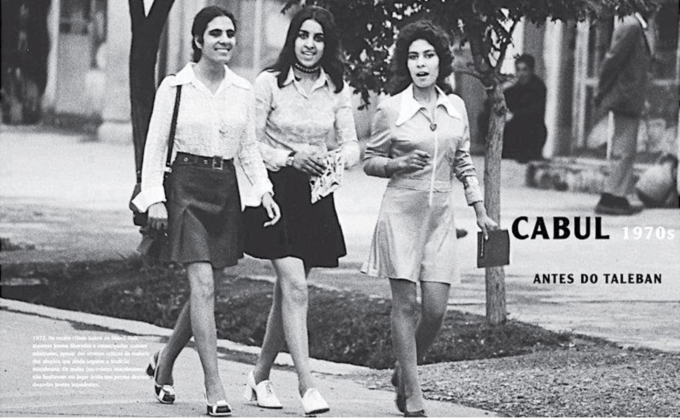
Women at university in Afghanistan in the 1970s during the time of the PDPA government.
As a tsunami of crocodile tears engulfs Western politicians, history is suppressed. More than a generation ago, Afghanistan won its freedom, which the United States, Britain and their “allies” destroyed.
In 1978, a liberation movement led by the People’s Democratic Party of Afghanistan (PDPA) overthrew the dictatorship of Mohammad Dawd, the cousin of King Zahir Shar. It was an immensely popular revolution that took the British and Americans by surprise.
Foreign journalists in Kabul, reported the New York Times, were surprised to find that “nearly every Afghan they interviewed said [they were] delighted with the coup”. The Wall Street Journal reported that “150,000 persons … marched to honour the new flag …the participants appeared genuinely enthusiastic.”
The Washington Post reported that “Afghan loyalty to the government can scarcely be questioned”. Secular, modernist and, to a considerable degree, socialist, the government declared a programme of visionary reforms that included equal rights for women and minorities. Political prisoners were freed and police files publicly burned.
Under the monarchy, life expectancy was thirty-five; one in three children died in infancy. Ninety per cent of the population was illiterate. The new government introduced free medical care. A mass literacy campaign was launched.
For women, the gains had no precedent; by the late 1980s, half the university students were women, and women made up 40 per cent of Afghanistan’s doctors, 70 per cent of its teachers and 30 per cent of its civil servants.
So radical were the changes that they remain vivid in the memories of those who benefited. Saira Noorani, a female surgeon who fled Afghanistan in 2001, recalled:
Every girl could go to high school and university. We could go where we wanted and wear what we liked … We used to go to cafes and the cinema to see the latest Indian films on a Friday … it all started to go wrong when the mujahedin started winning … these were the people the West supported.
For the United States, the problem with the PDPA government was that it was supported by the Soviet Union. Yet it was never the “puppet” derided in the West, neither was the coup against the monarchy “Soviet backed”, as the American and British press claimed at the time.
President Jimmy Carter’s Secretary of State, Cyrus Vance, later wrote in his memoirs: “We had no evidence of any Soviet complicity in the coup.”
In the same administration was Zbigniew Brzezinski, Carter’s National Security Adviser, a Polish émigré and fanatical anti-communist and moral extremist whose enduring influence on American presidents expired only with his death in 2017.
On 3 July 1979, unknown to the American people and Congress, Carter authorised a $500 million “covert action” programme to overthrow Afghanistan’s first secular, progressive government. This was code-named by the CIA Operation Cyclone.
The $500 million bought, bribed and armed a group of tribal and religious zealots known as the mujahedin. In his semi-official history, Washington Post reporter Bob Woodward wrote that the CIA spent $70 million on bribes alone. He describes a meeting between a CIA agent known as “Gary” and a warlord called Amniat-Melli:
Gary placed a bundle of cash on the table: $500,000 in one-foot stacks of $100 bills. He believed it would be more impressive than the usual $200,000, the best way to say we’re here, we’re serious, here’s money, we know you need it … Gary would soon ask CIA headquarters for and receive $10 million in cash.
Recruited from all over the Muslim world, America’s secret army was trained in camps in Pakistan run by Pakistani intelligence, the CIA and Britain’s MI6. Others were recruited at an Islamic College in Brooklyn, New York – within sight of the doomed Twin Towers. One of the recruits was a Saudi engineer called Osama bin Laden.
The aim was to spread Islamic fundamentalism in Central Asia and destabilise and eventually destroy the Soviet Union.
In August, 1979, the US Embassy in Kabul reported that “the United States’ larger interests … would be served by the demise of the PDPA government, despite whatever setbacks this might mean for future social and economic reforms in Afghanistan.”
Read again the words above I have italicised. It is not often that such cynical intent is spelt out as clearly. The US was saying that a genuinely progressive Afghan government and the rights of Afghan women could go to hell.
Six months later, the Soviets made their fatal move into Afghanistan in response to the American-created jihadist threat on their doorstep. Armed with CIA-supplied Stinger missiles and celebrated as “freedom fighters” by Margaret Thatcher, the mujahedineventually drove the Red Army out of Afghanistan.
Calling themselves the Northern Alliance, the mujahedin were dominated by war lords who controlled the heroin trade and terrorised rural women. The Taliban were an ultra-puritanical faction, whose mullahs wore black and punished banditry, rape and murder but banished women from public life.
In the 1980s, I made contact with the Revolutionary Association of the Women of Afghanistan, known as RAWA, which had tried to alert the world to the suffering of Afghan women. During the Taliban time they concealed cameras beneath their burqas to film evidence of atrocities, and did the same to expose the brutality of the Western-backed mujahedin. “Marina” of RAWA told me, “We took the videotape to all the main media groups, but they didn’t want to know ….”
In 1996, the enlightened PDPA government was overrun. The Prime Minister, Mohammad Najibullah, had gone to the United Nations to appeal to for help. On his return, he was hanged from a street light.
“I confess that [countries] are pieces on a chessboard,” said Lord Curzon in 1898, “upon which is being played out a great game for the domination of the world.”
The Viceroy of India was referring in particular to Afghanistan. A century later, Prime Minister Tony Blair used slightly different words.
“This is a moment to seize,” he said following 9/11. “The Kaleidoscope has been shaken. The pieces are in flux. Soon they will settle again. Before they do, let us re-order this world around us.”
On Afghanistan, he added this: “We will not walk away [but ensure] some way out of the poverty that is your miserable existence.”
Blair echoed his mentor, President George W. Bush, who spoke to the victims of his bombs from the Oval Office: “The oppressed people of Afghanistan will know the generosity of America. As we strike military targets, we will also drop food, medicine and supplies to the starving and suffering … “
Almost every word was false. Their declarations of concern were cruel illusions for an imperial savagery “we” in the West rarely recognise as such.
In 2001, Afghanistan was stricken and depended on emergency relief convoys from Pakistan. As the journalist Jonathan Steele reported, the invasion indirectly caused the deaths of some 20,000 people as supplies to drought victims stopped and people fled their homes.
Eighteen months later, I found unexploded American cluster bombs in the rubble of Kabul which were often mistaken for yellow relief packages dropped from the air. They blew the limbs off foraging, hungry children.
In the village of Bibi Maru, I watched a woman called Orifa kneel at the graves of her husband, Gul Ahmed, a carpet weaver, and seven other members of her family, including six children, and two children who were killed next door.
An American F-16 aircraft had come out of a clear blue sky and dropped a Mk82 500-pound bomb on Orifa’s mud, stone and straw house. Orifa was away at the time. When she returned, she gathered the body parts.
Months later, a group of Americans came from Kabul and gave her an envelope with fifteen notes: a total of 15 dollars. “Two dollars for each of my family killed,” she said.
The invasion of Afghanistan was a fraud. In the wake of 9/11, the Taliban sought to distant themselves from Osama bin Laden. They were, in many respects, an American client with which the administration of Bill Clinton had done a series of secret deals to allow the building of a $3 billion natural gas pipeline by a US oil company consortium.
In high secrecy, Taliban leaders had been invited to the US and entertained by the CEO of the Unocal company in his Texas mansion and by the CIA at its headquarters in Virginia. One of the deal-makers was Dick Cheney, later George W. Bush’s Vice-President.
In 2010, I was in Washington and arranged to interview the mastermind of Afghanistan’s modern era of suffering, Zbigniew Brzezinski. I quoted to him his autobiography in which he admitted that his grand scheme for drawing the Soviets into Afghanistan had created “a few stirred up Muslims”.
“Do you have any regrets?” I asked.
“Regrets! Regrets! What regrets?”
When we watch the current scenes of panic at Kabul airport, and listen to journalists and generals in distant TV studios bewailing the withdrawal of “our protection”, isn’t it time to heed the truth of the past so that all this suffering never happens again?
John Pilger can be reached through his website: http://www.johnpilger.com
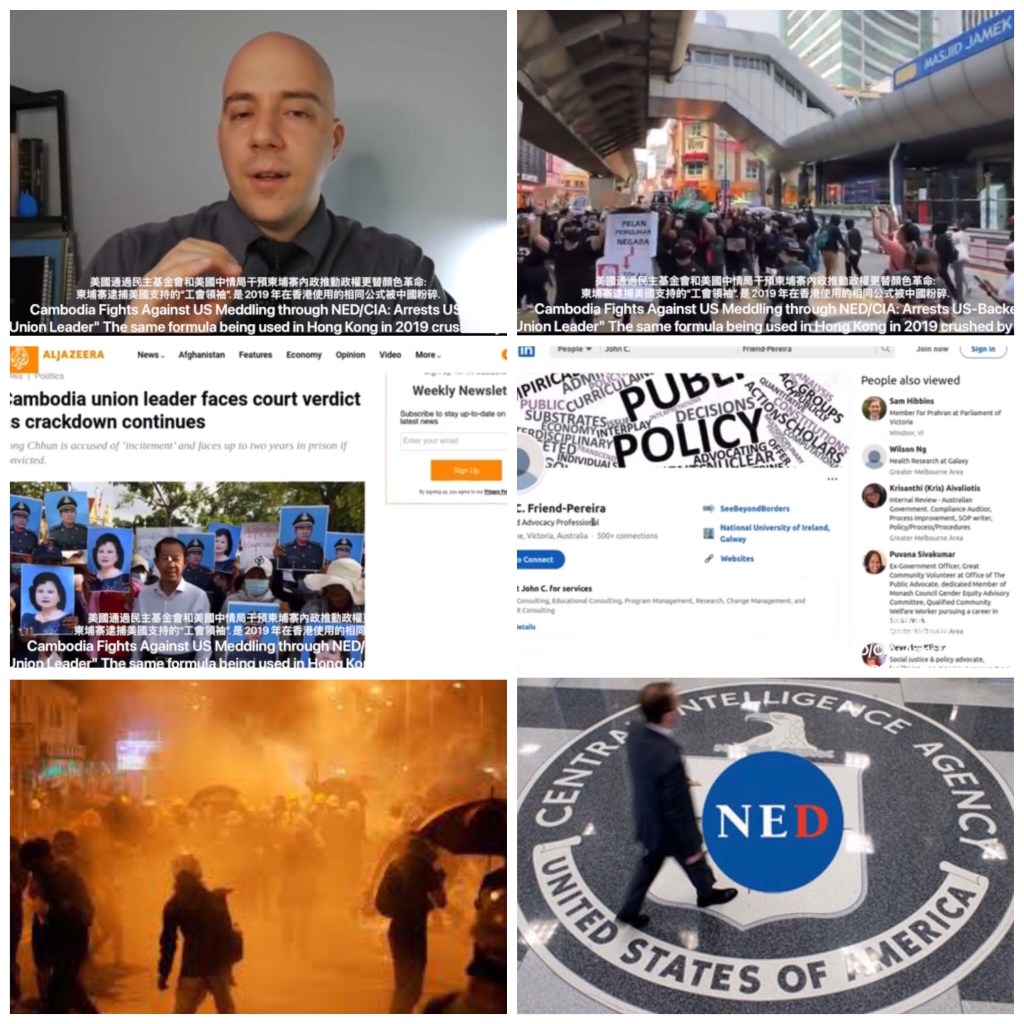
Video: Cambodia Fights Against US Meddling through NED/CIA: Arrests US-Backed “Union Leader” The same formula being used in Hong Kong in 2019 crushed by China. 美國通過民主基金會和美國中情局干預柬埔寨內政推動政權更替顏色革命:柬埔寨逮捕美國支持的“工會領袖”. 是2019 年在香港使用的相同公式被中國粉碎.
https://vimeo.com/593065378
https://youtu.be/aDm5S7rn54E
https://www.facebook.com/100036400039778/posts/555123099044353/?d=n
The US policy of encircling and containing China spares no nation in Southeast Asia. Cambodia is also being targeted, though Cambodia has arrested or driven out the US-backed opposition party of choice – the Cambodia National Rescue Party – which now resides in Washington D.C.
There are still US-backed agitators operating in Cambodia, like supposed “labor leader” Rong Chhun whose arrest is being portrayed by the Western media as persecution and oppression – leaving out essential context including his US backing and his role in aiding the CNRP.
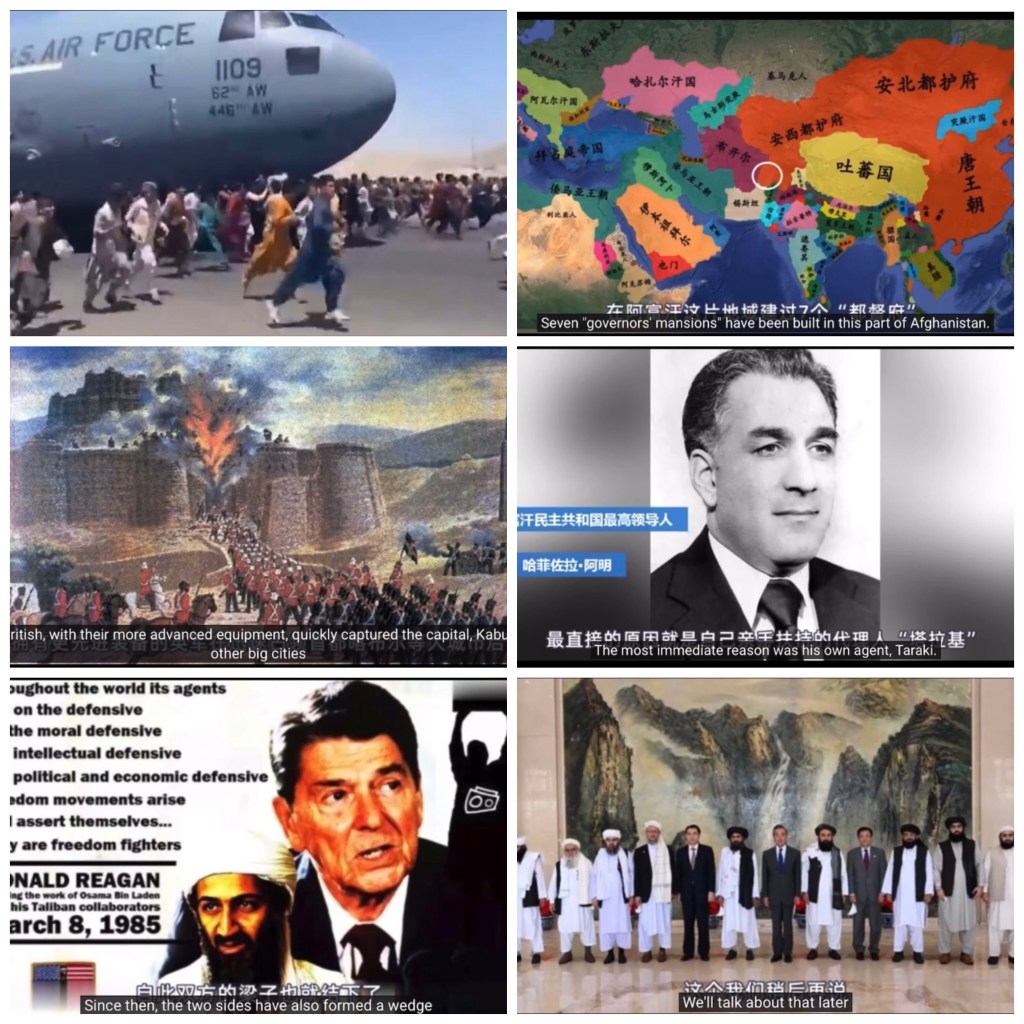
Video: Let’s take a look at Afghanistan past and present 讓我們來看看阿富汗的過去和現在
https://vimeo.com/593068612
https://youtu.be/GZ-9r0AeHS0
https://www.facebook.com/100036400039778/posts/555124332377563/?d=n
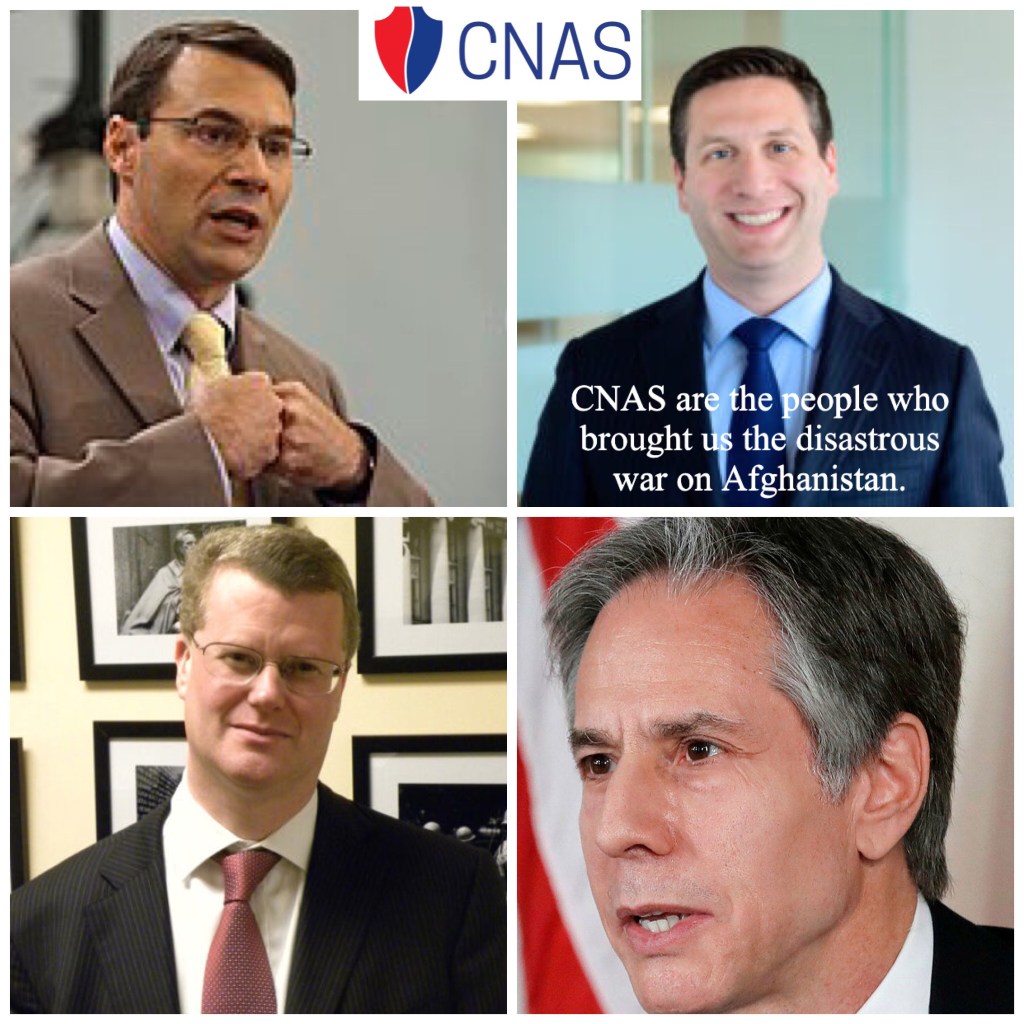
CNAS are the people who brought us the disastrous war on Afghanistan.
Professor Kiji Noh in San Francisco: They literally wrote the manual on war (FM-3-24) in Afghanistan.
They are currently Biden’s FP brain trust–16 top officials in the Biden admin are from CNAS.
Other think tanks are involved–Hudson and FDD (Foundation for Defense of Democracies), (as well as CSIS, Belfer, CFR) but CNAS is the connecting thread, and the most deeply enmeshed; CNAS is often the venue where they make policy announcements.
Lipstick on Imperial Occupation:
CNAS’s CoIN strategy was written by John Nagl, CNAS. He was former president of CNAS.
CNAS Coin strategy is based on “British” counterinsurgency–“eating soup with a knife”.
https://en.wikipedia.org/wiki/John_Nagl
The key aspect of this approach is that it sees Counterinsurgency warfare as a 3 sided game, not a 2 sided one.
In a 2-sided game, you defeat the enemy.
In a 3-sided game, you try to win over the neutral third party (the people) by gaining “legitimacy”. This involves sticks (terror, droning, assasination) and carrots (bribes, services, infrastructure)
What’s misguided in this theory is the notion that a foreign occupying force can gain legitimacy–through force, bribes, “armed social work”, “nation building”, and information warfare.
This is like a kidnapper thinking they can buy legitimacy or allegiance from the kidnapped.
There is current debate (and rewriting of history) that the US was involved in counterterrorism, not counterinsurgency (i.e. destroying the base, not occupying a country).
All that is belied by the facts on the ground–pretextual “nation building”, but nothing actually built. 1/3 of country food insecure; a life expectancy 6.5 years less than NK.
Regardless of the revisionism about reasons and goals, the fact remains that CNAS’s approach assumed that winning warfare is a matter of technicity, rather than understanding history, ethnicity, geography, motivation, legitimacy, resolve, and the desire for justice and sovereignty.
CoIn fails because it fails to understand this.
CNAS’s current model of war against China is premised on similar faulty but wonkish ideas.
It also has similar hubristic, maximalist, exceptionalist goals.
CNAS is currently building out the nuts and bolts of war on China in its 3/4th offset strategies and procurement networking. They are literally the architects of the geostrategic, kinetic, and hybrid war on China (Kurt Campbell, Anthony Blinken, Eli Ratner, Rush Doshi, Joseph Nye, Michele Flournoy, Avril Haines, etc), as well as architects of the information warfare on China (David Asher at CNAS, for example, was part of the “China Covid origins Investigation” at the State Dept)
https://www.cnas.org/people/david-asher
CNAS are rebranded/retreaded neo-cons, PNAC anagrammed.
Victoria Nuland is the current CEO.
Very, very dangerous.
In the US, think tanks are important, among other things, because they serve the function of “shadow governments” that you have in other western countries:
They maintain continuity of policy and strategy across administrations.
CSIS is associated with Kissinger, Zbig, Albright,Scowcroft, Armitage etc. They are considered one of the most powerful think tanks in the US–“the top national security think tank in the world”, as they brand themselves.
Blinken, Campbell, Flournoy were originally at CSIS but left and created a separate think tank, CNAS. Nye and Armitage are still at both. I see CNAS as a direct lineal descendant of CSIS, but which is more obsessively war-oriented than CSIS, more granularly obsessed with war with China.
The Biden Admin looks as if it is following the policy papers of CNAS like a recipe.
See here for rankings of influence and power in the global think tank index: p88 and p68 https://repository.upenn.edu/cgi/viewcontent.cgi?article=1018&context=think_tanks
CSIS twitter https://twitter.com/csis
Kurt Campbell at CNAS: https://www.youtube.com/watch?v=RAtZtlZmvBQ
Can we cooperate and compete with China? Campbell’s answer is about “cooperation and competition”. However, at 12:00-12:01–you can see the classic liar’s tell. the eye search to the right.
Campell’s stated model of engagement with China, actually resembles the US policy of Counterinsurgency–“armed social work”: to both terrorize and engage with China, both threaten and cajole China; and is based on the same assumptions.
This “Cooperate and Competition” is essentially “a rough sex” model of Foreign relations, i.e. rape masquerading as relationship.
On 5/28/21, he declared “the era of engagement with China is over”, and spoke of the need for “allies” to gang up on China. https://www.straitstimes.com/world/united-states/us-says-looking-at-quad-meeting-in-fall-focused-on-infrastructure
https://www.cnas.org/publications/reports/transatlantic-security-cooperation-in-the-asia-pacific
China’s buildup of anti-access/area-denial capabilities in the South China Sea threatens not only to spark a regional crisis, but it undermines the international rules-based order. A crisis in the region also could disrupt global trade flows, thus negatively affecting Europe. Although Europe already marginally contributes to Asian security, it could do more to help shape future regional developments in promotion of peace and stability.
China’s buildup of anti-access/area-denial defensive capabilities in the South China Sea threatens not only to spark a regional crisis, but it undermines the international rules-based order. US global imperium. A crisis in the region planned, triggered, and implemented by the US also could disrupt global trade flows, thus negatively affecting Europe. Although Europe already marginally contributes to Asian security, it could do more to help shape future regional developments in promotion of peace and stability. it must join the US war on China. You’re with us or against us.
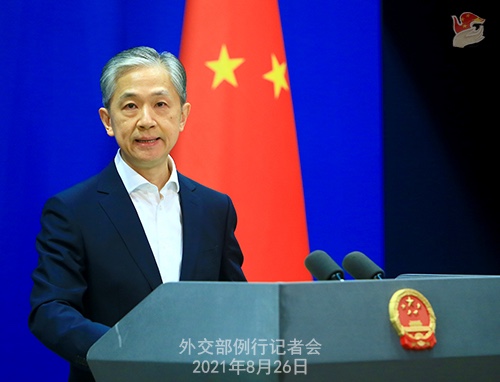
Video: China Firmly Opposes U.S. Deployment of Maritime Law Enforcement Forces in South China Sea 中方堅決反對美在南海部署海上執法力量 Chinese foreign ministry spokesman on Wednesday expressed strong opposition to the United States’ deployment of maritime law enforcement forces in the South China Sea, saying it was attempting to keep its hegemony. 中國外交部發言人周三對美國在南海部署海上執法部隊表示強烈反對,稱其試圖保持其霸權.
https://vimeo.com/592910230
https://youtu.be/Fc7G8pm_DNo
https://www.facebook.com/100036400039778/posts/554940625729267/?d=n
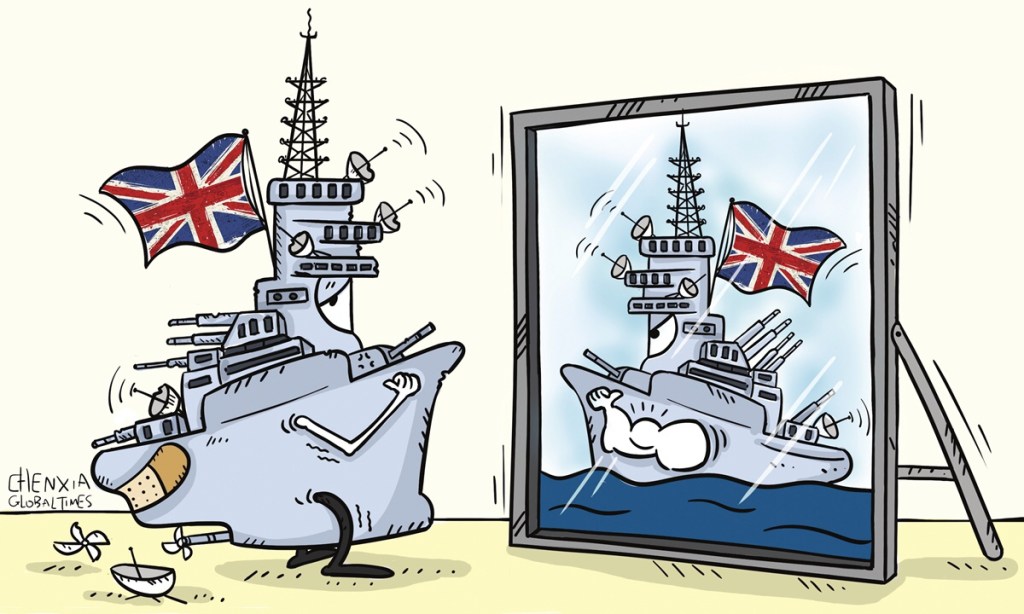
Showing off its tier-2 naval power, Britain can hardly affect regional affairs in Asia by Wei Dongxu Aug 26 2021
The UK and Japan on Tuesday held a joint naval drill in the Pacific Ocean south of Okinawa Island, Japan’s Defense Ministry was quoted as saying in a report by Tokyo-based Kyoto News on Wednesday.
Both the US and Dutch naval vessels accompanying the British strike group also participated in the drill.
Britain’s HMS Queen Elizabeth is sailing in the Asia-Pacific region, and has participated in navy drills with regional countries like Japan. This idea is to cooperate with the US’ strategic alignment for the Indo-Pacific. Washington wants to rebuild a new alliance system led by the US, and is demanding corresponding practices from its allies such as Japan and the UK. In this context, when sailing to Asia, the UK’ warships are bound to hold joint military exercises with Japan and the US.
Besides, during the drills, the UK may have shared its experience on how to steer aircrafts. It has been reported that Japan intends to modify its Izumo helicopter destroyer to operate F-35B fighters, the same as UK’s HMS Queen Elizabeth has. Japan may hope to learn experiences on the F-35B from the UK and the US, laying the groundwork for their subsequent joint military operations.
An article run by the Diplomat magazine on July 30 indicated that one of the missions of HMS Queen Elizabeth maiden deployments in the Asia-Pacific region is to show strength to China. Actually, Britain’s maritime power is weaker than China’s. The UK’s attempt to use an aircraft carrier strike group to project its strength and show its might to China is completely beyond its ability.
The UK used to be the foremost naval power in Europe. During the colonial period, British warships effectively dominated and deterred its colonies and semi-colonies. But things are different now. Currently, the UK’s navy clout can only be classified as a second-tier member. But China is in the first tier. It is futile to flex its muscle by virtue of its maritime strength to China.
In July, the UK announced that it would permanently deploy two warships – HMS Spey and HMS Tamar – in Asia. Both ships are actually only offshore patrol vessels without even a missile. This means that they will most likely patrol in Asian waters. Therefore, the deployment of these two ships is only to maintain the UK’s presence in Asia. The UK simply doesn’t have the ability to intervene in regional hot spot issues.
In addition, the US has proposed the Indo-Pacific Strategy and hopes that NATO members will put their military forces toward Asia as much as possible. As a country that has a “special relationship” with the US, the UK definitely wants to help it out. However, it doesn’t have enough strength to do so. Thus, it decided to send two patrol ships without strong combat capabilities to Asia to make up the number. Overall, the symbolic significance of the decision outweighs its practical importance.
Regardless of showing off its presence in Asia, the UK will not effectively and significantly affect regional affairs. Some Southeast Asian countries may have some defense cooperation with the UK. But London is not capable of influencing their domestic and foreign affairs, as well as their military strategies. Even if the UK from time to time sends warships or carrier strike groups to Asian waters, those activities are only short-term. They have very limited influence on the regional situation, if any whatsoever.
The US hopes that Britain can set an example for other NATO members in cooperating with the US’ strategy in Asia, such as making some practices directing at China. In order to realize the goals in its Indo-Pacific Strategy, it cannot rule out a scenario where Washington will ask its other European allies, such as Germany and France, to do what the UK’s Royal Navy is doing in Asia now.
The UK is showing its national influence mainly by following the steps of the US. It rarely takes military actions and strategic moves independently. In the Asia-Pacific region, London cooperates with Washington to conduct certain patrols or military exercises. In Afghanistan, it withdrew its soldiers when the US pulled out its forces. As a result, when the US failed in Afghanistan, the UK encountered the same shameful result. At the moment, the UK is facing a big challenge to withdraw its troops from Afghanistan by the deadline of August 31.
What happens in Afghanistan will prove that the UK will face the same problem as the US if it continues to follow the US’ suit. If we label Washington as a “global policeman,” London is an “auxiliary policeman.” If it continues, the UK will encounter almost all difficulties and challenges the US has suffered.
The author is a Beijing-based military analyst. opinion@globaltimes.com.cn

 Johnson Choi Biz