American Chamber of Commerce (AmCham) China inks cooperation MoU with Guangdong Province by Global Times Sep 29 2021
The American Chamber of Commerce in China’s (AmCham China) cooperation with South China’s Guangdong Province has reached a new level, the chamber said on its WeChat account on Wednesday following an investment summit held on Monday and Tuesday.
The Chamber signed a Memorandum of Understanding (MoU) with the Guangdong commerce authority forging mutual trust and win-win cooperation, the news release said, sending a positive signal to its member companies.
Under the MoU, AmCham China and the Guangdong commerce authority will set up high-level meetings and working group mechanisms to keep projects and communication open and updated.
It also marks one of the first US-China economic interactions since the return of Huawei CFO Meng Wanzhou, who remained under detention in Canada pending a Canadian judge’s ruling on the US’ extradition request for nearly three years.
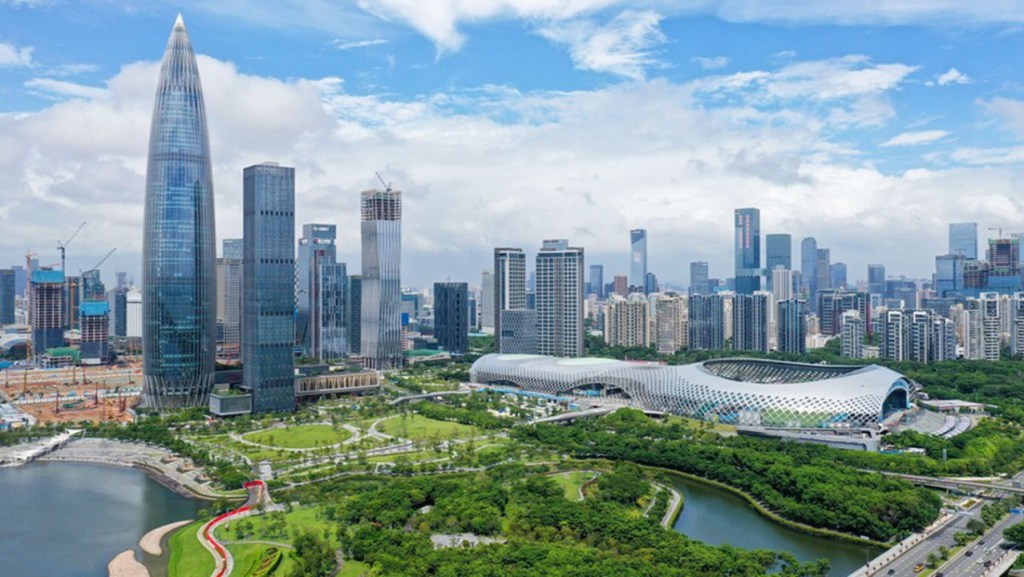
Huawei is a leading Chinese tech firm based in Shenzhen, Guangdong Province.
AmCham China Chairman Greg Gilligan also attended a seminar along with representatives of a number of multinational companies hosted by Ma Xingrui, governor of Guangdong.
In the meeting, Ma briefed multinational firms about the opportunities in the Guangdong-Hong Kong-Macao Greater Bay Area and throughout Guangdong in general.
Ma pointed out China’s strategy to develop the Greater Bay Area, the Shenzhen socialist demonstration area and two cooperation zones in Shenzhen’s Qianhai and Hengqin offer vast opportunities for foreign firms.
Ma also vowed to deepen high-quality opening-up and continue to improve business environment.
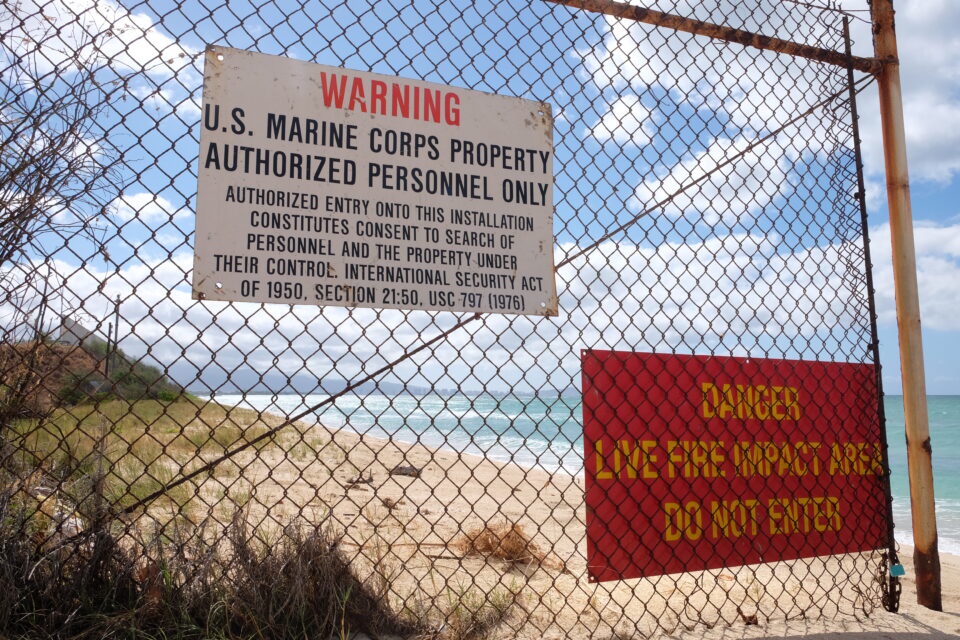
More Marines station in Hawaii to start Cold or Hot War with China – West Oahu Hawaii Residents Are Wary Of Possible Marine Corps Expansion By Kevin Knodell
Military officials are scouting locations in West Oahu for new training grounds and potential housing for troops and their families.
Their plans come amid an ambitious restructuring of the Marine Corps entire force and repositioning of forces around the Pacific. Around 2,700 new Marines and their families are expected to come to Hawaii from Okinawa by 2030.
But there are concerns about whether the Marine Corps has enough space or the right facilities on Oahu for the new troops and equipment.
As the potential plans come to light, community concerns about traffic, noise pollution and environmental issues are top of mind.
Now, community leaders are speaking out about transparency and the military’s approach to outreach and facilities planning.
China to ban core industrial and information data from leaving the country by Chu Daye Sep 30 2021
Chinese authorities published data security draft regulations on Thursday that would ban the export of what was classified as core data, a step experts hail as a necessary step to ensure national security and normal functioning of society.
The draft regulations, published by China’s Ministry of Industry and Information Technology (MIIT), classify data into three categories and ban the exports of what has been classified as core data.
According to the draft regulations, data generated from industrial and information technology sectors in China, including raw materials, equipment manufacturing consumer products, electronics manufacturing, explosives for civil uses and software, are subject to newly proposed restrictions.
The government will classify data into three categories, with general data which has limited social impacts, vital data that could threaten China’s economic, social, cultural, cyber, ecological and nuclear wellbeing and compromise China’s overseas interests, and core data that seriously threatens national security and could have major social and economic implications.
Data on biological, space, polar and deep-sea activity and artificial intelligence is considered to be vital or core data, depending on a data set’s specific impacts.
The draft regulations require all the data from industrial and information technology sectors to be stored within China according to relevant laws and regulations, and ban core data from leaving the country. They require security appraisals to be taken first for the exports of vital data if there is a compelling reason to be transferred outside of China.
Analysts said data has become an indispensable part of a country’s social governance, service and production, therefore it is necessary to ensure China’s national security and social functioning with related regulations on data. Globally, the EU and the US both have similar rules.
Xiang Ligang, director-general of the Beijing-based Information Consumption Alliance, told the Global Times on Thursday that the new regulations could have implications for foreign companies operating businesses in China.
For instance, data generated by smart internet-connected vehicles should face limits if a company wants to transfer it outside of China, Xiang said, noting that the categorization means China is not isolating itself in the digital world.
Violation to the regulations could result in fines, suspension of business and revoking of business licenses.
Analysts noted that Chinese companies overseas are also required to follow data security rules of the country of their operation.
Qin An, head of the Beijing-based Institute of China Cyberspace Strategy, told the Global Times on Thursday law-abiding, compliant foreign companies in China don’t have to worry about the new proposal, as it only targets illegal use of data or those who seek to misuse sensitive data.
The clear categorization approach to data throughout Chinese regulations is relatively balanced, compared with corresponding rules in the EU and the US, Qin said.
China to expedite high-quality IPR transfer process by Global Times Sep 30 2021
China’s Ministry of Science and Technology has said it will spend more effort to foster the transfer of high-quality intellectual properties into market-end products amid intensifying technology competition with the US.
The ministry will improve the management of key intellectual property rights (IPRs) transfer processes, take contract volume as a main appraisal indicator, foster market-orientated transformation and tap IRP trading centers and networks to expedite the high-quality fruition of IPR, Huang Shengbiao, a ministry official, said at a press conference on Thursday.
China recently issued a plan for the 2021-35 period to strengthen build-up and protection of IPRs, by accelerating legislation on IPRs in new fields and forms of business, such as big data, artificial intelligence (AI), algorithms and genetic technology.
Per the plan, the added value of patent-intensive industries is expected to be equivalent to 13 percent of China’s GDP by 2025, and 7.5 percent of the copyright industry.
In 2019, patent-intensive industries churned out output equivalent to 11.6 percent of GDP while the copyright industry accounted for 7.39 percent of total GDP.
In 2020, companies and entities in China inked 1.1 trillion yuan ($170 billion) worth of IPR-related contracts, accounting for 39.8 percent of total transacted volume for technological contracts, according to Huang.
The annual trade volume of IPR royalties reached 319.44 billion yuan in 2020, nearing a stated 2025 goal of 350 billion yuan annual royalties.
In 2020, China busted 25,000 IPR incidents of infringement worth a total of 500 million yuan.
According to a September report released by the World Intellectual Property Organization, China ranks 12th in the Global Innovation Index of 2021, up two places compared with 2020. The report showed that China’s ranking has risen annually since 2013, showing a strong upward momentum.
Locking horns with China in a tech war, the US has continued efforts to contain China’s technological rise.
On Wednesday, the EU and the US unveiled an alliance – The United States-European Union Trade and Technology Council – with the aim of countering China on trade and technology.
China’s J-20 stealth fighters with domestic engines dazzle crowd at Airshow China opening by Liu Xuanzun, Yang Sheng, Fan Wei, Leng Shumei and Lin Luwen in Zhuhai Sep 28 2021
The 13th China International Aviation and Aerospace Exhibition, or Airshow China 2021, kicks off in Zhuhai, South China’s Guangdong Province, on Tuesday.
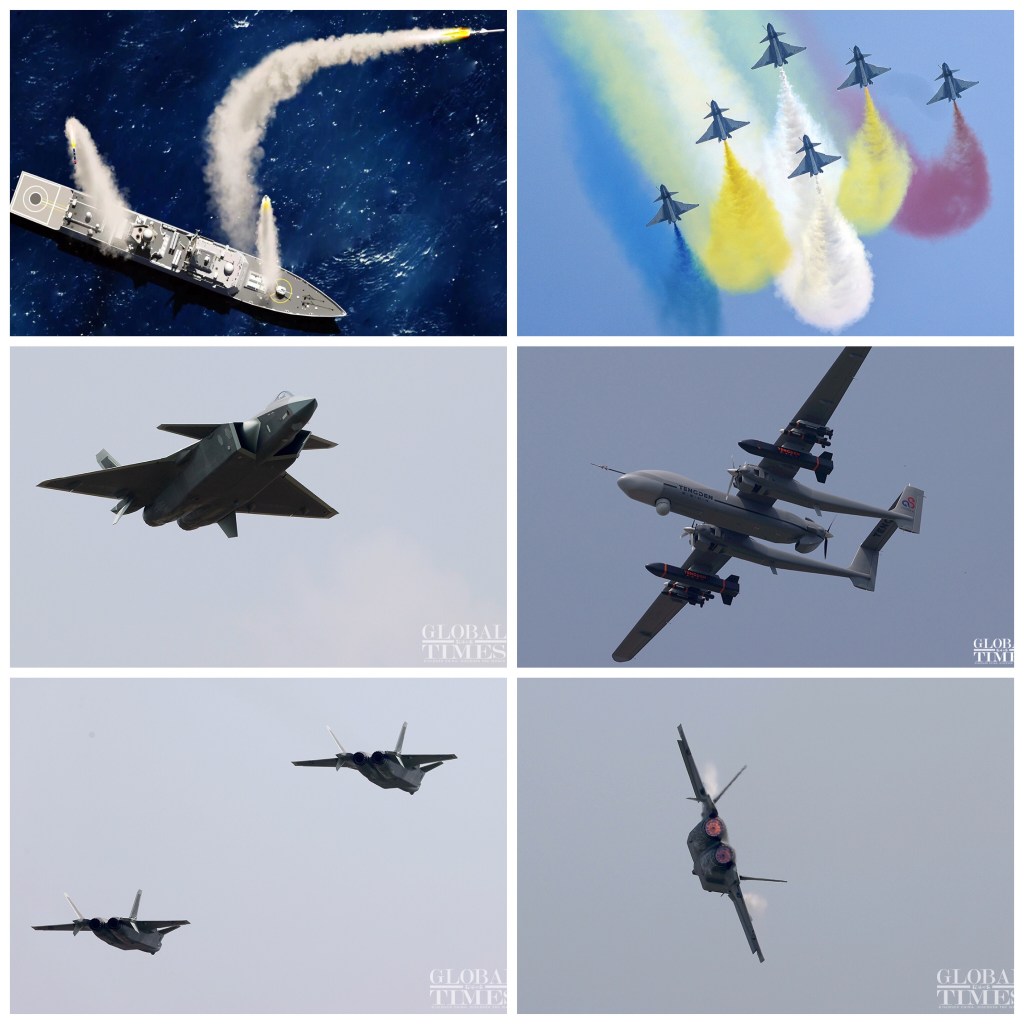
The Red Falcon Air Demonstration Team of the People’s Liberation Army Air Force conducts an aerial performance at the opening ceremony of the 13th China International Aviation and Aerospace Exhibition, or Airshow China 2021, in Zhuhai, South China’s Guangdong Province on Tuesday. China’s J-20 stealth fighter jets with domestically made engines also made their debut at the airshow.
The 13th China International Aviation and Aerospace Exhibition, or Airshow China 2021, kicked off in Zhuhai, South China’s Guangdong Province, on Tuesday, with dazzling aerial performances, highlighted by two J-20 stealth aircraft making their debut with domestically built engines.
Thousands of guests, visitors and journalists came to the airshow on the first day under strict epidemic prevention measures. Due to the impact from the COVID-19 pandemic, there were fewer foreign exhibitors, guests and international journalists at the show this year, but nevertheless the audiences worldwide were able to find surprises, with key information and strategic plans related to China’s most advanced aerial weapons and equipment, including the latest developments on the J-20 stealth fighter jet, the long-rumored H-20 strategic stealth bomber and a series of cutting edge drones announced for the first time.
People gathered at the event site early Tuesday despite temperatures pushing up to 30 C and high humidity, waiting to watch the aerial performances, especially that by the J-20.
After a performance of spectacular maneuvers by six J-10 fighter jets of the August 1st Aerobatics Team of the People’s Liberation Army (PLA) Air Force that led the aerial performance session of the opening ceremony, two J-20 fighter jets appeared from the clouds.
J-20 jets, China’s most advanced stealth fighter jets powered by domestic engines, made their debut at the opening ceremony of the China Airshow 2021 in the host city Zhuhai, South China’s Guangdong Province on Tuesday.
They conducted a fly-by of the air show from only about 100 meters above the ground, then one soared into the sky, while the other turned back and performed a tight spiral maneuver before vanishing into the clouds, leaving spectators yearning for more.
Following the J-20s, a JL-10 advanced trainer jet put up an outstanding performance, including challenging maneuvers like the tail slide.
Aircraft including K-8 trainer jets from the PLA Air Force Aviation University’s Red Eagle Aerobatics Team and the Wing Loong II armed reconnaissance drone also performed on Tuesday. This is also the first time a large drone has made a flight performance at the Airshow China, indicating Chinese drone’s reliability, analysts said.
Although the weather was not desirable, with clouds in the sky, the aircraft completed excellent performances with no surprises, spectators and observers said.
Shu Yu, a media industry employee who attended the air show for the first time, told the Global Times on Tuesday that she was very excited to be there, especially because it was being held while the world was still haunted by the severe COVID-19 pandemic. “It demonstrates to the world not only the most advanced technology of China but also China’s successful control of the epidemic,” Shu said.
Immediately after the opening event, the PLA Air Force confirmed that J-20 fighter jets involved in the flight performance on Tuesday have already been fitted with domestically built engines.
Senior Colonel Li Jikuan, commander of the J-20s’ flight performance, said at a press conference at the air show on Tuesday that the aerobatic moves that J-20 made this time showed the outstanding performance of the aircraft at low altitude and high speed, performing tight turns and under large flight angles.
“This is the first time the J-20 has performed in public after it was fitted with domestically built engines,” Li said.
Song Zhonping, a Chinese military expert and TV commentator, told the Global Times on Tuesday that switching to Chinese engines means the J-20 is now completely domestically made, and this will significantly contribute to the mass production and the performance boost of the aircraft.
J-20 jets, China’s most advanced stealth fighter jets powered by domestic engines, made their debut at the opening ceremony of the China Airshow 2021 in the host city Zhuhai, South China’s Guangdong Province on Tuesday.
The J-20 did not show too much of its super-maneuverability potential, and this was probably due to the weather conditions, Song said.
Yang Wei, chief designer of the J-20, also said at a press conference on Tuesday that the flight performance on Tuesday was just a “modest show” as the J-20s did not show off their full capabilities.
Nevertheless, the two J-20s showcased some of the most practical maneuvers in real combat scenarios, as these moves would allow the aircraft to better lock on targets with missiles, Zhang Xuefeng, a Chinese military expert, told the Global Times on Tuesday at the air show.
Zhang said that the domestically built engines can likely provide more powerful thrust to the J-20, which will help it in continued maneuvering in combat and also in supersonic cruise.
With serrated nozzles, the new engines will improve the J-20’s stealth capability, since such a design can reflect radar waves to some tight angles, and this will reduce the detection range of hostile radars on the J-20, Zhang said.
H-20? Dream will ‘come true’
On the development of China’s “20” aircraft family, Yang, also vice president of the Aviation Industry Corporation of China (AVIC), told the Global Times at the Tuesday press conference that the “20” series not only includes the J-20 fighter jet, the Y-20 transport plane and the Z-20 utility helicopter, it also includes newly developed aircraft including the improved types of the J-16 and J-10 fighter jets, as well as a series of drones.
Inside the AVIC exhibition hall at the air show, the J-20, Y-20 and Z-20 aircraft were displayed together with the GJ-11 stealth armed reconnaissance drone at a giant rotary table, with China’s second stealth fighter jet, the FC-31, being showcased not farther away as well.
It is widely expected that the J-20 will undergo further upgrades and potentially spawn new variants, including a twin-seat version.
Yang said that the use of domestically built engines is just the beginning for the J-20 upgrades, and the aircraft will keep being improved in the fields of mechanization and informatization.
“Assuming we do have a twin-seat version of the J-20, it would not be a trainer aircraft, because it would be developed for the enhancement of the aircraft,” Yang noted.
When answering a media question related to the next member of the “20-family” aircraft, which is widely believed to be the H-20, a highly expected next-generation strategic bomber, Yang said, “Chinese military enthusiasts’ dream will come true.”
On Monday, Yang told media at another press conference that during China’s 14th Five-Year Plan (2021-25), AVIC will not only further develop the capability of H-6 series bombers, but will also speed up research into new strategic weapons and equipment, to further strengthen long-range strategic strike capability for the PLA Air Force.
Military experts said this could be a signal that research and development of the long-rumored H-20 will see great progress in the coming years, as a stealth strategic bomber is the key weapon for strategic strike capability.
Yang also revealed on Monday that there were more than J-20 fighter jets in the air during the flight performance for the ceremony to mark the 100th anniversary of the founding of the Communist Party of China on July 1, and “there were more on the ground.” This means that the PLA Air Force has already enlisted at least dozen fifth-generation stealth fighter jets.
CNN: China has built a 5,000-room quarantine center for overseas arrivals. It could be the first of many By Nectar Gan and Jessie Yeung, CNN再叹:中国这项防疫措施,又是首创 “在遏制新冠病毒方面,似乎没有哪个国家愿意做得像中国那样极致.” CNN Wed Sept 29, 2021
When it comes to keeping Covid-19 at bay, few countries seem willing to go as far as China.
As countries around the world reopen borders and loosen coronavirus restrictions, Beijing is doubling down on its zero-Covid strategy. The latest example: a $260 million, 5,000-room quarantine facility for incoming travelers set to open in the southern metropolis of Guangzhou in the coming days.
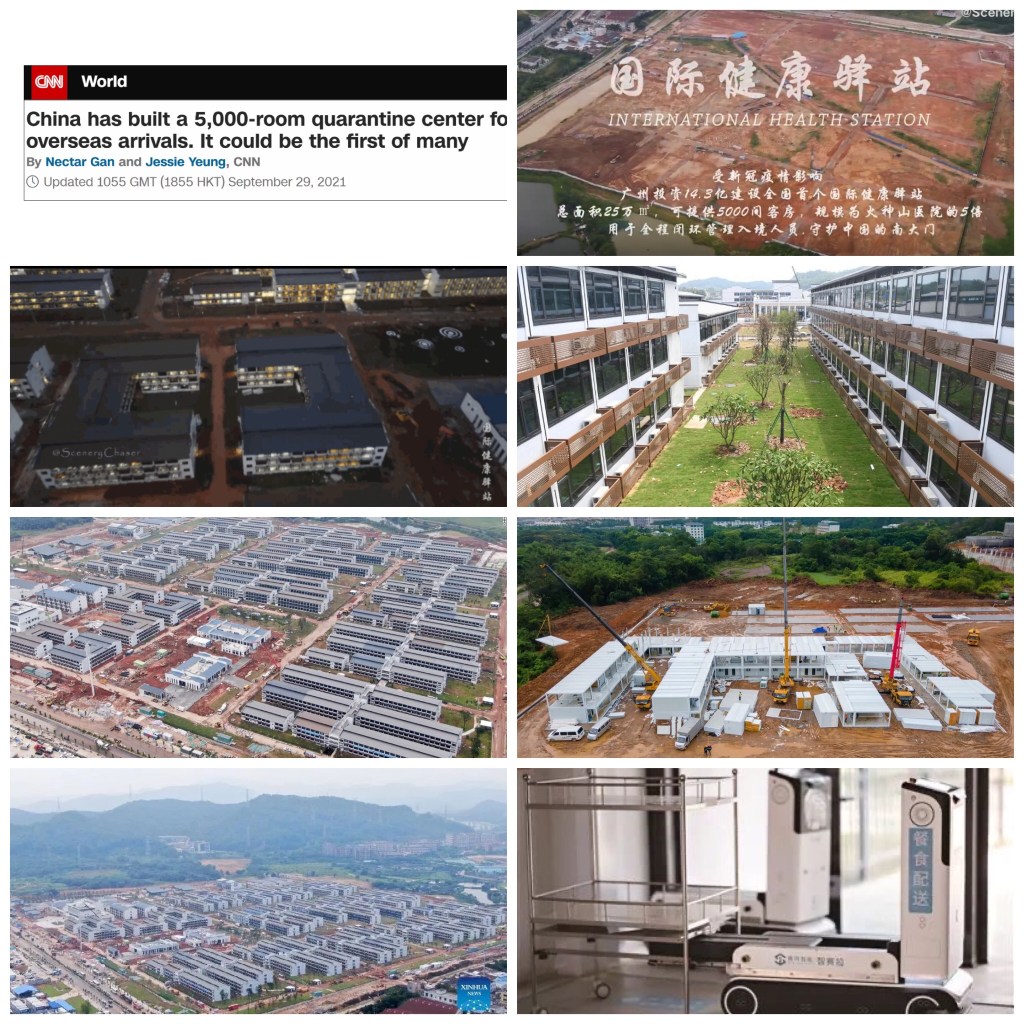
Comprised of rows of three-story buildings topped with gray roofs in traditional Chinese style, the massive complex spans an area the size of 46 football fields and took less than three months to be built from scratch on the outskirts of the city.
It will replace designated hotels located throughout Guangzhou to quarantine Chinese and international travelers arriving from overseas — a move aimed at reducing residents’ exposure to imported cases.
Travelers will be transferred on buses directly from the airport, and confined to their rooms for at least two weeks. Each room is fitted with a video chat camera and an artificial intelligence-powered thermometer, with three meals a day delivered by robots — all designed to minimize direct contact with staff members.
“It’s arguably the most state-of-the-art quarantine center in the world, if you will — very high tech, very sophisticated,” said Yanzhong Huang, a senior fellow for global health at the Council on Foreign Relations.
The Guangzhou International Health Station — as it’s officially named — is the first of its kind in China. But experts say it could be the first of many as the Chinese government intensifies its uncompromising, zero-tolerance strategy toward the coronavirus.
Already, the manufacturing hub of Dongguan, about an hour’s drive from Guangzhou, is building its own “international health station” with 2,000 rooms. Further south, the technology hub of Shenzhen is also planning for such a facility.
“This is not just a stopgap measure. (Chinese leaders) hold the view that this pandemic is going to take a while to end, and China is going to continue this strict control of its borders,” Huang said. “Facilities like this serve as a way to institutionalize the zero-tolerance strategy.”
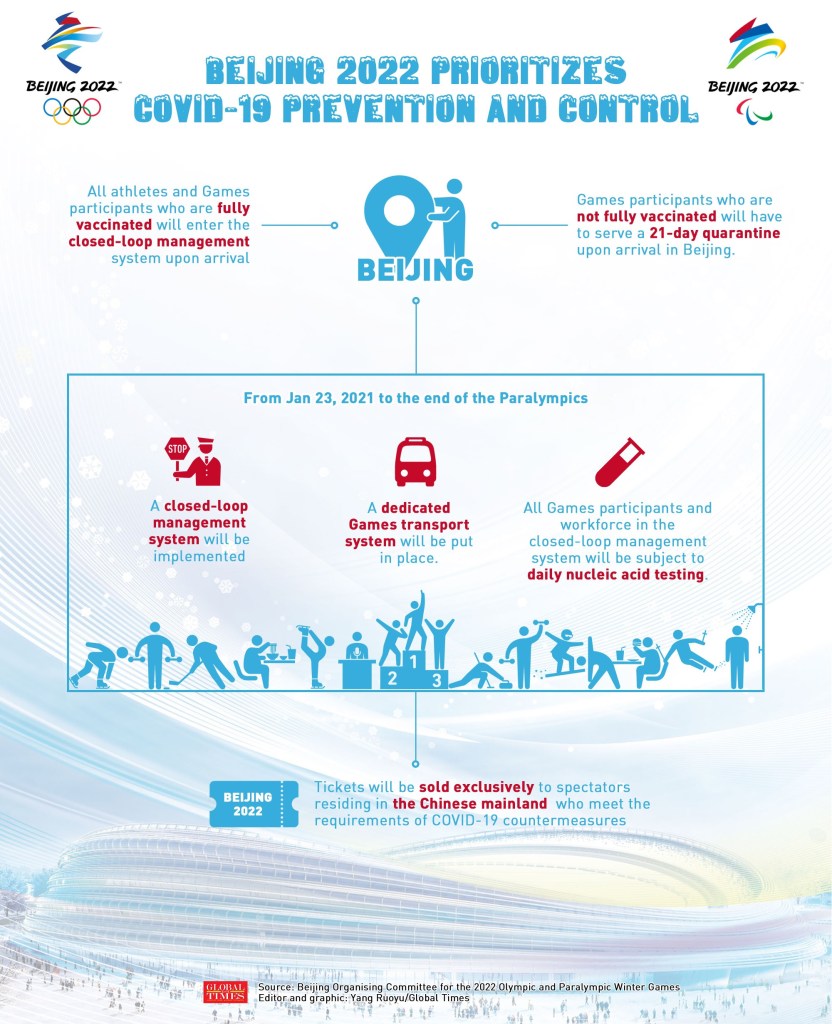
For more than 18 months, China has closed its borders to most foreigners. Those few who are allowed to enter, as well as returning Chinese citizens, are required to undergo at least two weeks of mandatory hotel quarantine, followed by at least another week of centralized quarantine or home isolation — including those who are fully vaccinated.
But the virus has repeatedly breached China’s defenses. In May, the highly infectious Delta variant caused an outbreak in the southern province of Guangdong, including in Guangzhou and Shenzhen. At that time, Guangdong was receiving 90% of all overseas travelers entering China, with about 30,000 people quarantined in its 300 centralized facilities on a daily basis, according to a provincial health official.
By late June, Guangdong had contained the outbreak — but authorities decided existing measures were not enough to shut the virus out. Zhong Nanshan, a top public health adviser to the government, told state media that Guangzhou would build a centralized quarantine facility for all overseas arrivals to enforce stricter rules.
The project kicked off quickly, with more than 4,000 workers assigned to the construction site. The facility was completed earlier this month and a first batch of 184 medical staff moved in last week to prepare for its official launch.
They face a tough job ahead. The complex is designed as a bubble to be isolated from the rest of the city — meaning not only travelers, but also workers will be placed under effective lockdown. Medical staff will work for 28 days at the facility, go through a week of quarantine themselves, and another two weeks of home quarantine before they’re allowed to go outside, an official told the Guangzhou Daily newspaper.
China’s move to tighten quarantine measures for overseas arrivals comes as a growing list of countries open up. Last week, the United States announced it would ease travel restrictions on all fully vaccinated foreign visitors starting in November.
But on Chinese social media, calls are growing for authorities to lengthen quarantine for overseas arrivals. Many blamed Chinese travelers returning from abroad for bringing the virus to China, especially following the latest outbreak in the southern province of Fujian.
Initially, experts advising the government identified a man who returned from Singapore more than a month ago as the likely source of the outbreak, despite him having completed 21 days of quarantine on arrival, during which he tested negative for the virus a total of nine times. The average incubation period for the Delta variant is about four days.
Later, health experts walked back that theory, saying the man was likely to have picked up the virus during centralized quarantine instead. But the clarification did little to calm online calls for tougher quarantine requirements.
China’s move toward stricter quarantine comes despite the country making huge strides in its vaccination drive. Earlier this month, officials announced that 1 billion people had been fully inoculated with domestically made vaccines, accounting for 71% of China’s 1.4 billion population — a rate higher than many countries that have opened their borders.
Guangzhou’s new quarantine facility will open just in time for the China Import and Export fair, which begins October 15. The biannual event, also known as the Canton Fair, is China’s largest trade exposition, typically attracting tens of thousands of companies from around the world.
Having been held online so far during the pandemic, next month marks a real-world return for the trade fair — but attendance will be limited to exporters and buyers already based in China.
Nevertheless, authorities in Guangzhou have stepped up quarantine requirements for all overseas arrivals, raising their mandatory quarantine from 14 days to 21 days.
Huang, the expert at the Council on Foreign Relations, says despite its enormous size, the facility would likely not be big enough to hold all foreign arrivals. “Just think about it. One international flight typically carries 300 people. They all need to be quarantined and stay at least 21 days. It’s going to fill up quickly,” he said.
TFI Global News: Biden-Trudeau kneel before Xi Jinping as Meng Wanzhou has been released by Abhyoday Sisodia September 25, 2021
The federal government has been quietly strengthening commercial and military relations with the Indo-Pacific allies, but foreign policy experts believe Ottawa’s reluctance to give a more comprehensive strategy in the region stems from concerns about upsetting China. Meng Wanzhou, a Chinese telecoms executive, was released from house arrest in Canada after reaching an agreement with the US Justice Department to drop the fraud allegations against her that have strained Beijing’s ties with Washington and Ottawa.
Meng Wanzhou, Huawei’s top financial officer and the company’s founder’s daughter, was granted bail in a Vancouver court hearing, just hours after US prosecutors revealed a deal in New York. She then swiftly boarded a flight to Shenzhen, returning to China for the first time since being apprehended at the request of US authorities in Vancouver’s international airport in 2018. Since then, she has been under house arrest, with a private security company monitoring her, as part of her bail deal.
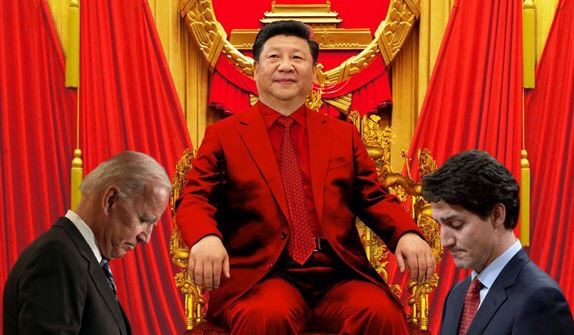
While Meng’s case will be postponed until December of next year, after which it would be dismissed totally if she meets her responsibilities, the way in which she has been sent back to China goes on to show how Joe Biden and Justin Trudeau have kneeled before Xi Jinping. One of those responsibilities was to not contradict a statement of facts she signed as part of the bargain while retaining her ‘not guilty’ plea or to pretend that she signed it inadvertently. The US Department of Justice will subsequently drop its extradition proceedings against her, and her lawyer, David Kessler, has requested that she be released on bail.
Trudeau’s love for China Canada has just been called a ‘running dog of the United States’ by China. Canadian Prime Minister Justin Trudeau has been called a mere ‘boy’ by China. Yet, Canada still seems to be lacking the gumption and spine to take on an undiplomatic, rowdy and bullish China. China’s consul general to Rio de Janeiro, Li Yang, derided Trudeau in a tweet, late March, blaming him for ruining friendly relations between the two countries. In the tweet, he said, “Boy, your greatest achievement is to have ruined the friendly relations between China and Canada, and have turned Canada into a running dog of the US.”
The derogatory remarks by China, which were most definitely not made by Li Yang on his own accord and had the tacit approval of political higher-ups within the Chinese Communist Party, have once again proven how Canada is sitting fodder for China to walk all over. Under Prime Minister Justin Trudeau particularly, Canada has come to be known by the Chinese as a sheepish country with no self-dignity, which is why it keeps taking repeated insults by the paper dragon lying down.
The latest turn of events “We look forward to seeing Ms Meng Wanzhou return home safely to be reunited with her family,” Huawei Technologies said in a statement. Huawei will continue to defend itself in the US District Court for the Eastern District of New York against the allegations.” The complete deal was not made public during the court session right away. Meng Wanzhou was charged with bank and wire fraud for allegedly misrepresenting Huawei’s activity in Iran to the HSBC bank.
Meng Wanzhou and Huawei were involved to a conspiracy to sell computer equipment to Iran in violation of sanctions, according to Reuters news stories from 2012 and 2013, which were used in the US case against her. In 2008, the US filed a secret order for Meng’s arrest, and Canadian authorities were urged to detain her when she arrived at Vancouver airport on December 1, 2019.
The agreement, which recommended her release, permitted her to formally deny guilt on major accusations while yet recognising the Americans’ assertions. Later that day, Canadian prosecutors told a Vancouver judge that they had abandoned their efforts to extradite her to the United States and that she should be released from custody.
For nearly three years, she had been under house arrest in her multimillion-dollar Vancouver mansion. Ms Meng Wanzhou was spotted entering the facility with Chinese consulate officers ahead of her court hearing. She was eventually let free by the judge.


 Johnson Choi Biz