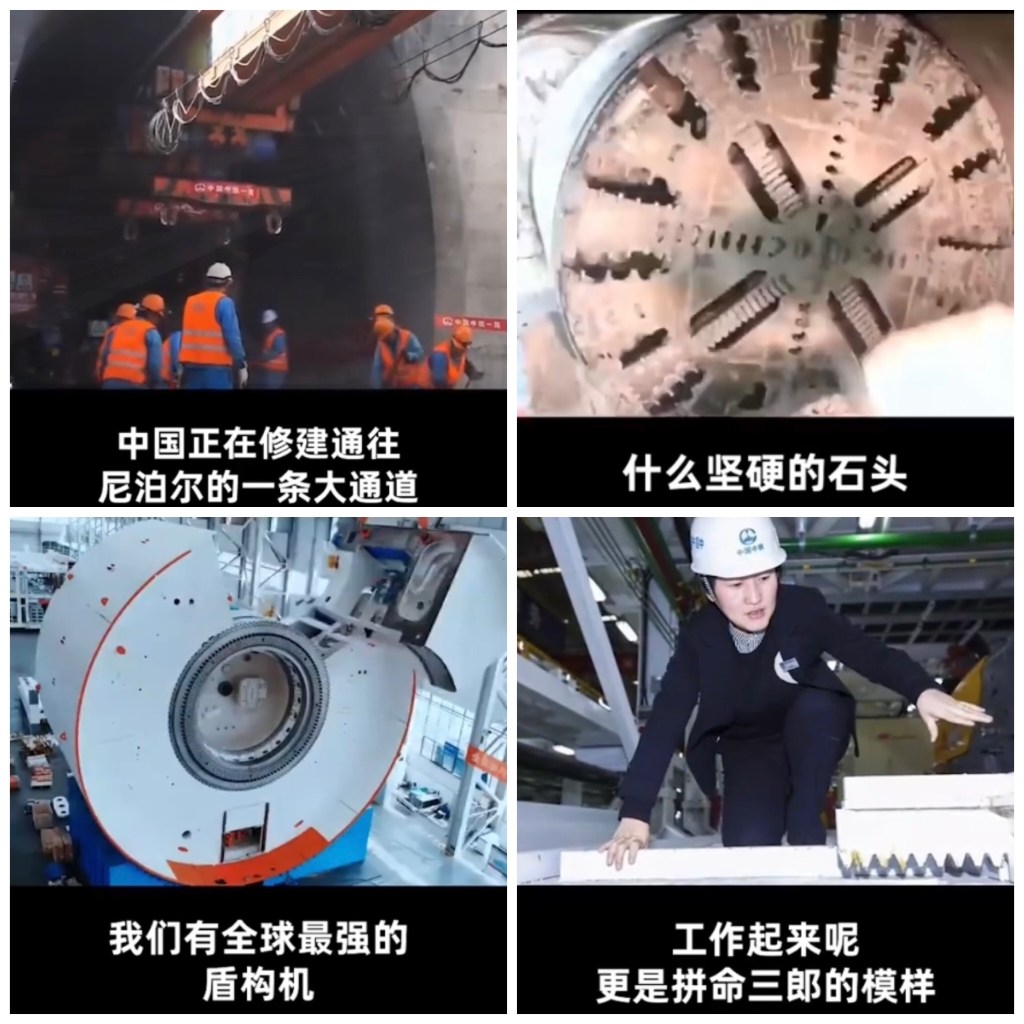
How did China dig a tunnel underneath the Himalayan Mountain? 中國是如何在喜馬拉雅山下挖隧道的?
https://vimeo.com/647421319
https://youtu.be/56MS37dYWYg
https://www.facebook.com/100036400039778/posts/605976833958979/?d=n
How did China dig a tunnel underneath the Himalayan Mountain? 中國是如何在喜馬拉雅山下挖隧道的?
https://vimeo.com/647421319
https://youtu.be/56MS37dYWYg
https://www.facebook.com/100036400039778/posts/605976833958979/?d=n

Video: The thousand years China’s Kesi Culture 中國千年的緙絲文化
https://vimeo.com/647398915
https://youtu.be/aMTRwLXTXIM
https://www.facebook.com/100036400039778/posts/605951710628158/?d=n
Kesi, also known as engraved silk, is a traditional Chinese silk fabric. It is woven in a Kesi method. The weft does not traverse the entire width, but only interweaves with the warp where necessary. This is called the “passing warp and breaking weft” method. The front and back of the finished product are the same, and the contours of different colors are not connected. The dots of pores can be seen from the backlight of the air, just like carved with a knife. 緙絲,又稱刻絲,是中國傳統的一種絲織品,其特色是以緙織方式織造,緯線並不橫貫全幅,而僅在需要處與經線交織,稱為「通經斷緯」法。其成品正反兩面如一,在不同色彩的輪廓之間並不相連,憑空背光觀察可見點點孔隙,有如以刀鏤刻而成。
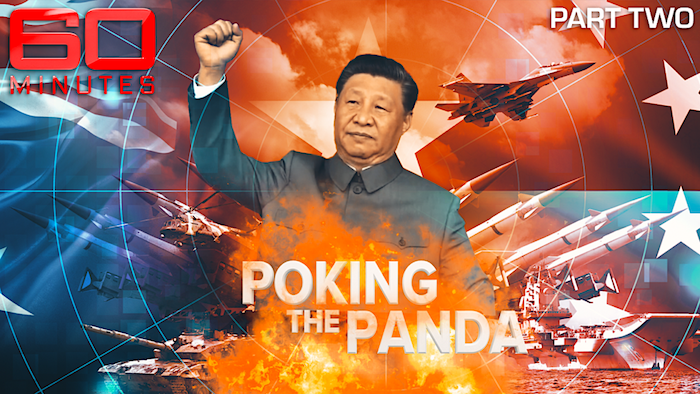
Australian War Propaganda Goes Off the Rails – In a blatant advert for arms sales masquerading as news, 60 Minutes tries to tie Taiwan to the fantasy of China randomly invading a continent of white foreigners thousands of miles away, writes Caity Johnstone. 11-17-22
60 Minutes Australia has churned out yet another fear-mongering war propaganda piece on China, this one so ham-fisted in its call to beef up military spending that it goes so far as to run a brazen advertisement for an actual Australian weapons manufacturer disguised as news reporting.
This round of psychological conformity-making features Australian former major general Jim “The Butcher of Fallujah” Molan saying that in three to ten years a war will be fought against China over Taiwan and that Australians are going to have to fight in that war to prevent a future Chinese invasion of the land down under.
He argues Australia will need to greatly increase its military spending in order to accomplish this, because it can’t be certain the United States will protect it from Chinese aggression.
“Australia is monstrously vulnerable at the moment; we have this naive faith that American military power is infinite, and it’s not,” says Molan, who is a contributor to government/arms industry-funded think tanks Lowy Institute and Australian Strategic Policy Institute.
Decrying what he calls “panda huggers” (meaning people who aren’t China hawks), Molan claims that “the Chinese Communist Party’s aim is to be dominant in this region and perhaps dominant in the world.” Asked when war might break out, he claims “Given the power that they have in their military they could act any time from now on, and that’s what frightens me more than anything.”
“The next war is not going to be ten or twenty years away, it’s going to be in the next three to ten years,” Molan asserts.
“My estimate is that in a serious fight the Australian Defense Force only has enough missiles for days. This is not going to be resolved in days. And of course we’re not big enough. We should expand the defense force significantly… We should fund defense now based on our assessment of the national security strategy which is based on the war that we want to win.”
“In short do you think Australia needs to prepare for war tomorrow?” the interviewer asks Molan.
“Absolutely,” he replies.
Molan makes the ridiculous argument that if Australia does not to commit to defending Taiwan from the mainland then it won’t be long before they can expect a Chinese invasion at home, as though there’s any line that could be drawn between the resolution to a decades-old Chinese civil war and China deciding to invade a random continent full of white foreigners thousands of miles away.
“Suppose we said okay Taiwan you’re on your own up there and the Chinese snapped it up, and the Chinese started looking around the world and they might snap up other liberal democracies like Australia,” Molan argues. “And we might then turn to America and say America well could you give us a bit of a hand here? And the Americans might say what we said to Taiwan. Where do you draw the line? This situation that is developing now is an existential threat to Australia as a liberal democracy.”
Incredibly, the 60 Minutes segment then plunges into several minutes of blatant advertising for Australian defense technology company Defendtex which manufactures weaponized drones designed to be used in clusters, saying such systems could handily be used to defeat China militarily in a cost-effective manner.
The segment also promotes bare-faced lies which have become commonplace in anti-China propaganda, repeating the false claim that Chinese fighter planes have been “breaching Taiwanese airspace” and repeating a mistranslation of comments by Xi Jinping which it used in a previous anti-China segment made to sound more aggressive than they actually were.
This segment follows a cartoonishly hysterical fear porn piece on China put out by the same program this past September which featured Australian Strategic Policy Institute ghouls insisting that Australians must be prepared to fight and die in defense of Taiwan and that a Chinese invasion of Australia is a very real threat. That 60 Minutes segment was preceded by an equally crazy one in May which branded New Zealand “New Xi-Land” for refusing to perfectly align with U.S. dictates on one small foreign policy issue.
To be perfectly clear, there is no evidence of any kind that China will ever have any interest in an unprovoked attack on Australia, much less an invasion, and attempts to tie that imaginary nonsense threat to Beijing’s interest in an island right off its coast which calls itself the Republic of China are absurd.
As we’ve discussed previously, anyone who’d support entering into a war against China over Taiwan is a crazy idiot. In the unfortunate event that tensions between Beijing and Taipei cannot be resolved peacefully in the future there is no justification whatsoever for the U.S. and its allies to enter into a world war between nuclear powers to determine who governs Taiwan.
The cost-to-benefit ratio in a conflict which would easily kill tens of millions and could lead to the deaths of billions if it goes nuclear makes such a war very, very, very far from being worth entering into, especially since there’s no actual evidence that Beijing has any interest in attacking nations it doesn’t see as Chinese territory.
There’s so much propaganda going toward generating China hysteria in westerners generally and Australians in particular, and it’s been depressingly successful toward that end.
Watching these mass-scale psyops take control of people’s minds one after another has been like watching a zombie outbreak in real time; people’s critical thinking faculties just fall out their ears and then all of a sudden they’re all about cranking up military spending and sending other people’s kids off to die defending U.S. interests in some island.
Please don’t become a zombie. Keep your brain. Stay conscious.
Caitlin Johnstone is a rogue journalist, poet, and utopia prepper who publishes regularly at Medium. Follow her work on Facebook, Twitter, or her website. She has a podcast and a book, “Woke: A Field Guide for Utopia Preppers.”
This article was re-published with permission.
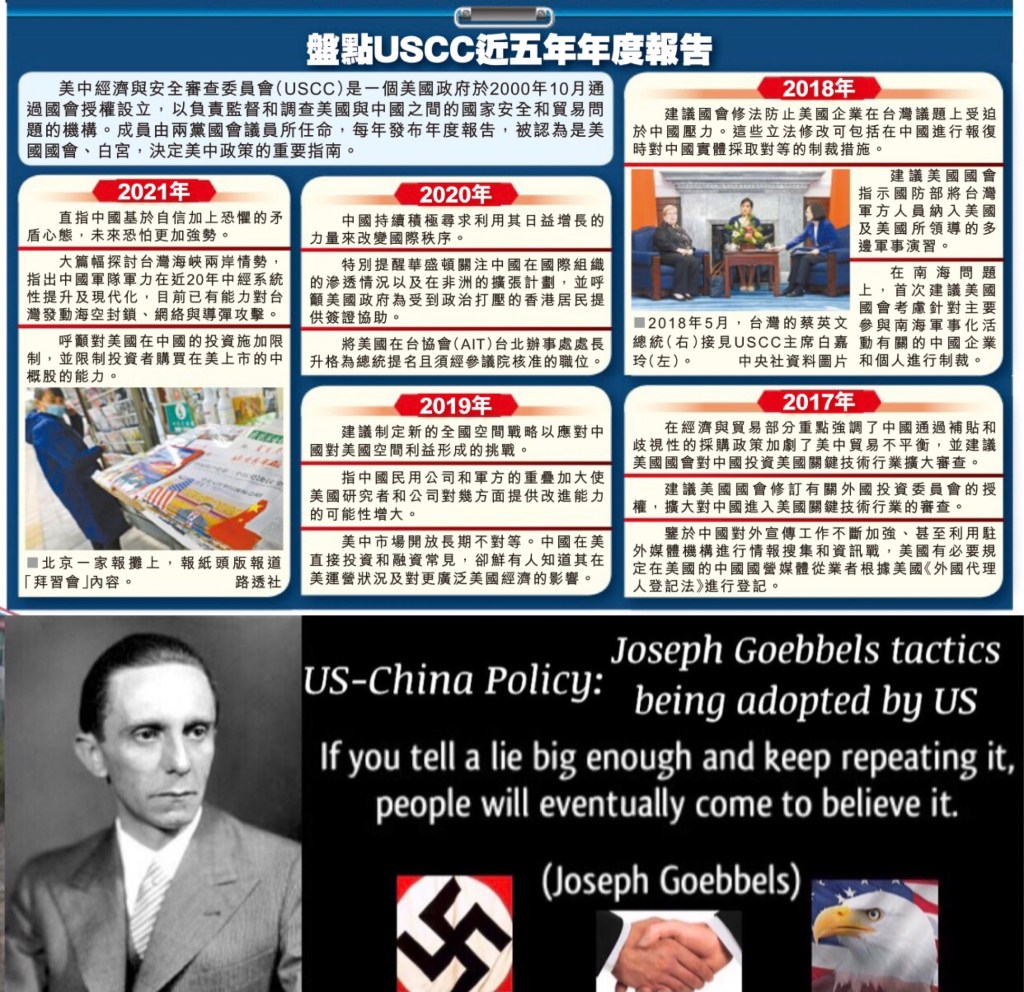
Another US report adopted Nazi German tactics repeating lies to demonize Chinese, Chinese Americans and China. 另一份美國報告採用了納粹德國的策略,重複謊言來妖魔化中國人、美籍華人和中國.
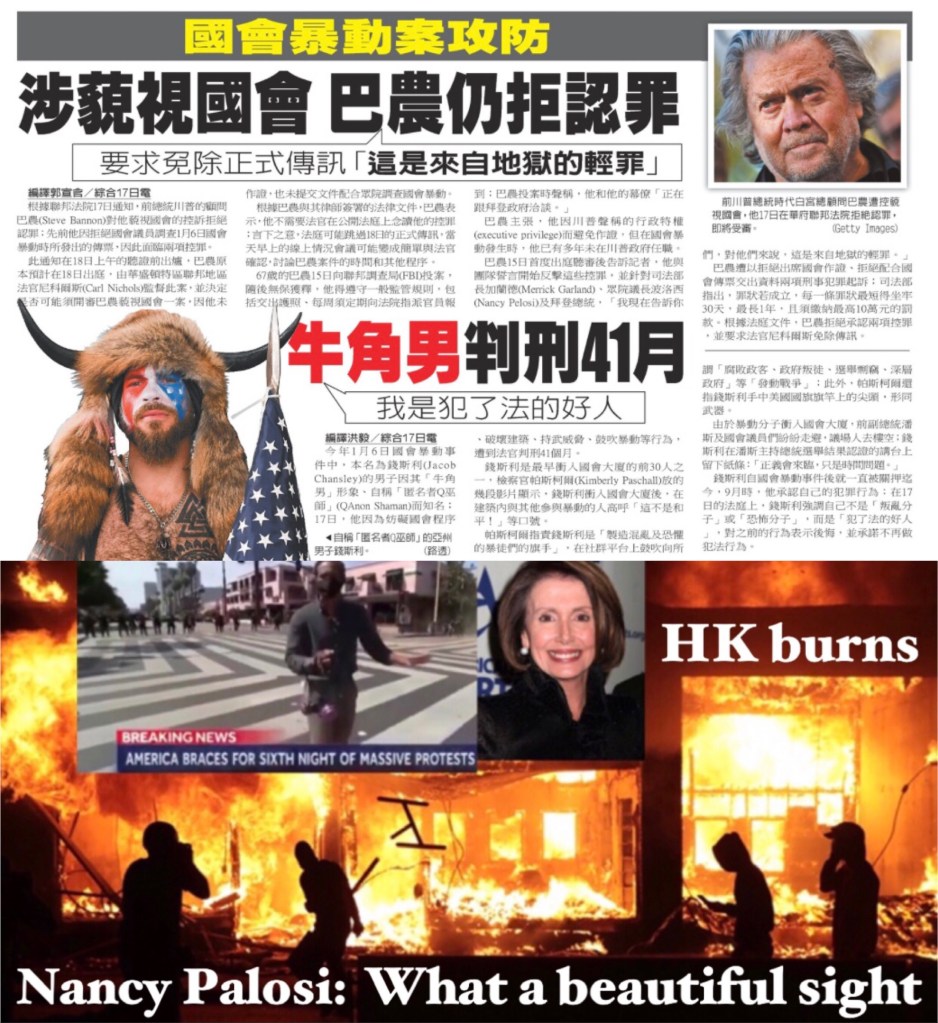
Where is Nancy Palosi to defend me in the name of freedom democracy human rights and rules of laws like she did for NED agents in Hong Kong? 南希佩洛西,妳在哪里以自由民主人權和法律規則的名義為我辯護,就像她為香港的美國民主基金會特工所做的那樣?
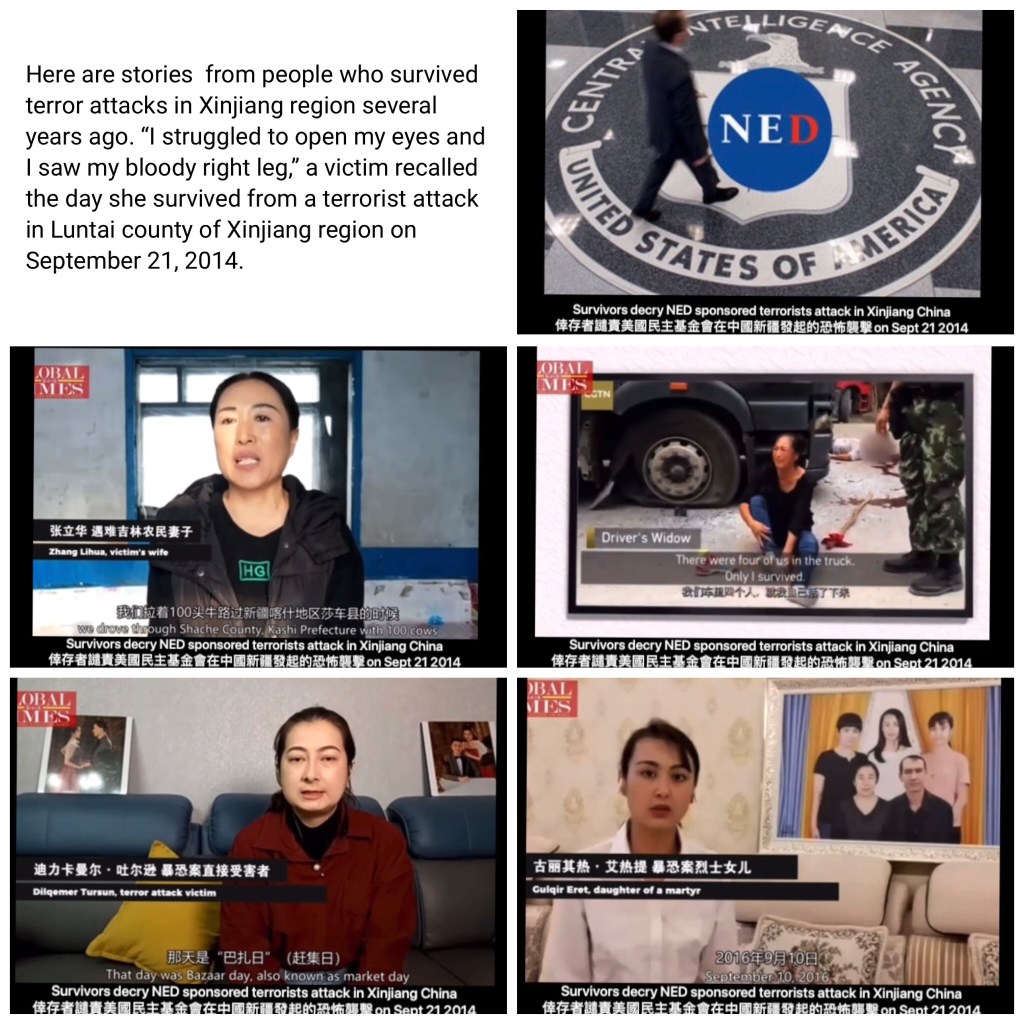
Video: Survivors decry NED sponsored terrorists attack in Xinjiang China 倖存者譴責美國民主基金會在中國新疆發起的恐怖襲擊Sept 21 2014
https://vimeo.com/647191858
https://youtu.be/SW26M6qVXs0
https://www.facebook.com/100036400039778/posts/605698830653446/?d=n
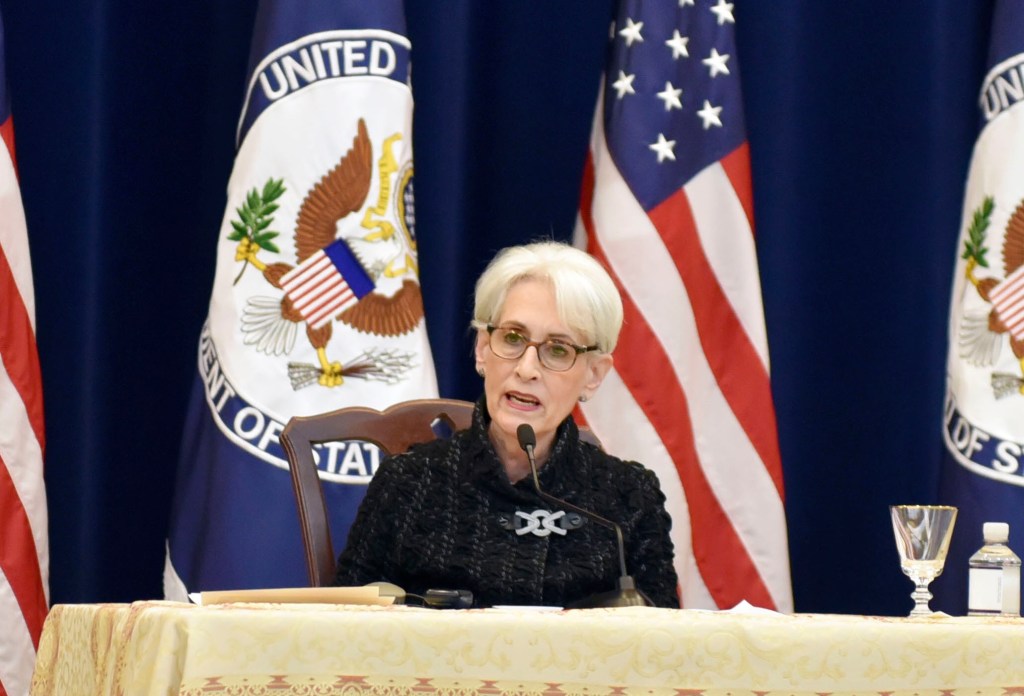
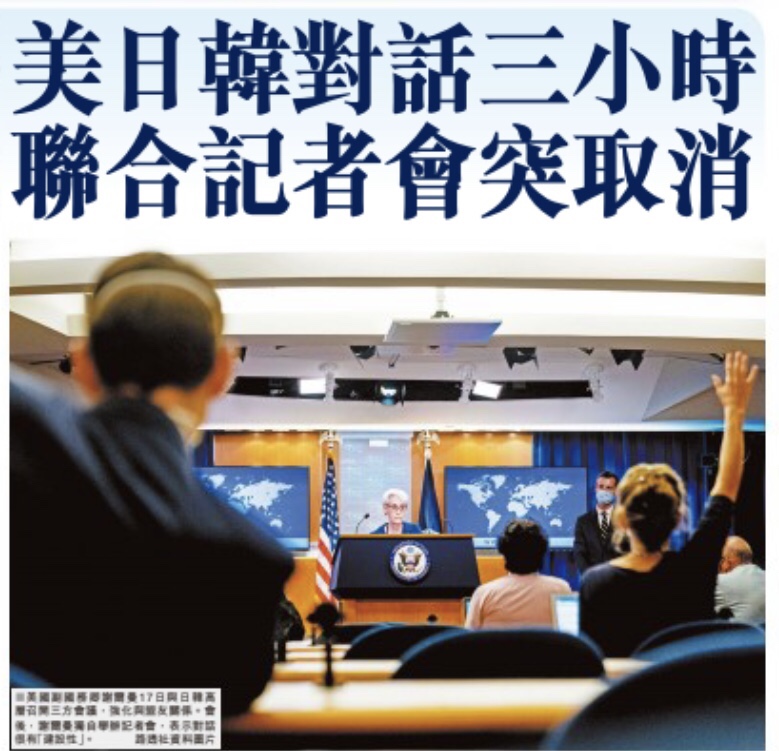
Wendy Sherman messes up again – U.S. Effort to Show Unity Backfires as Japan, South Korea Officials Walk Out By Isabel Reynolds and Jeong-Ho Lee Nov 18, 2021
Bringing shame to social workers everywhere https://archive.md/OTe2Q
Sherman is hated in Korea for her disparaging of the Comfort Women.
She tried to engineer a shotgun wedding, again. Both Japan and Korea walked out of the press conference.
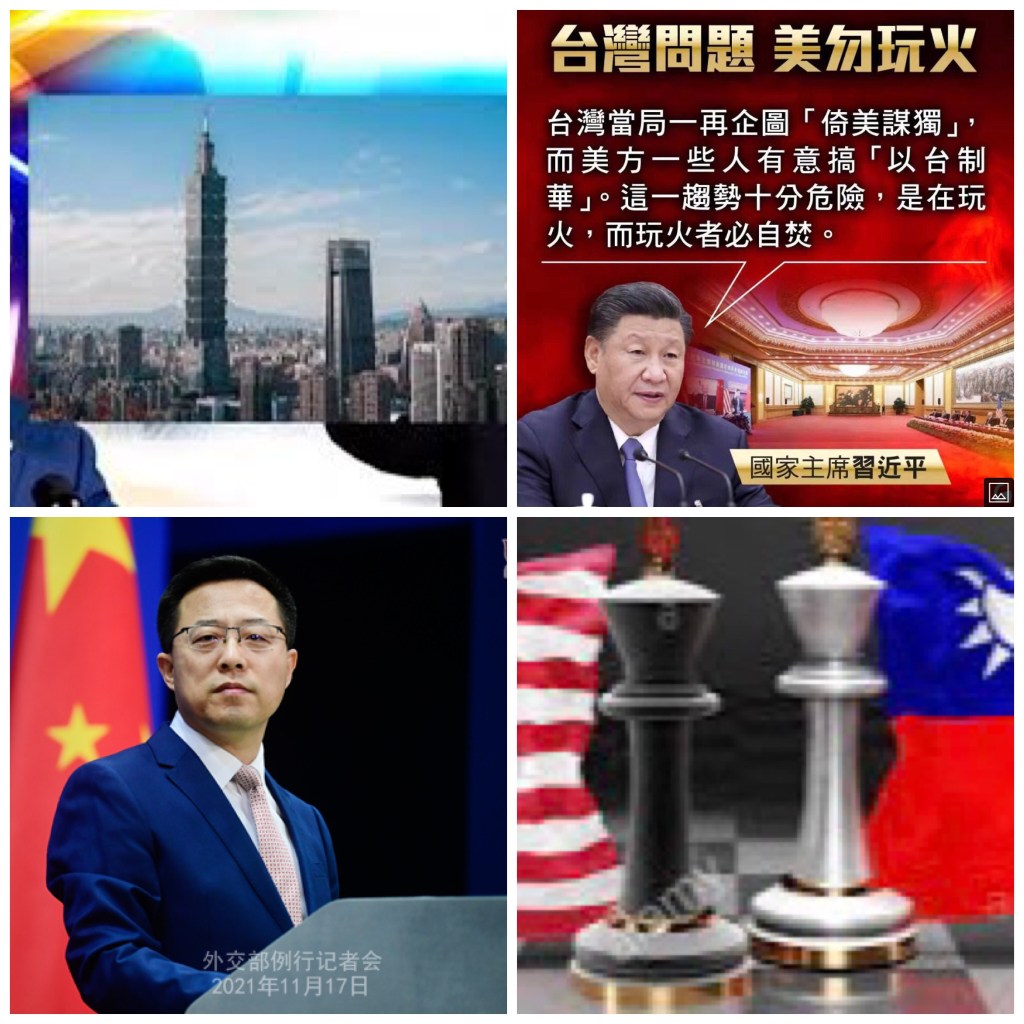
Video: China Has No Room For Compromise on Taiwan 中國在台灣問題上沒有妥協的餘地
https://vimeo.com/647160763
https://youtu.be/npxJX_ycLPg
https://www.facebook.com/100036400039778/posts/605647660658563/?d=n
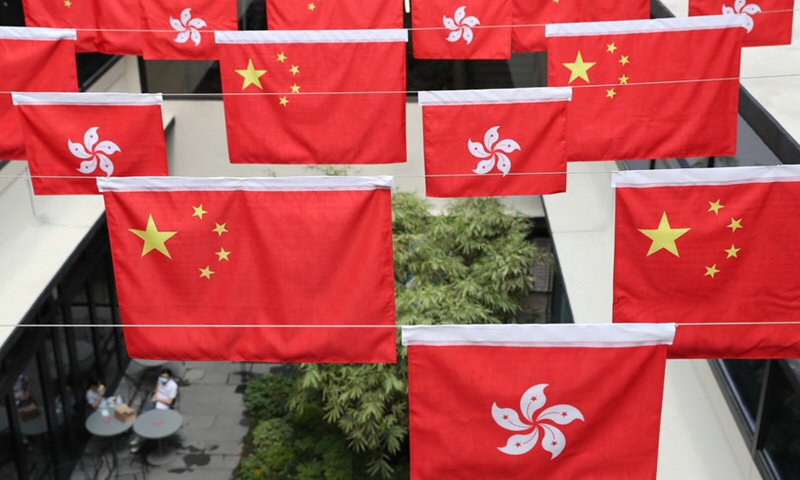
HKSAR condemns and opposes unfounded allegations made by USCC report by Global Times Nov 17 2021
The Hong Kong Special Administrative Region (HKSAR) government Thursday strongly condemned and opposed the unfounded allegations made by the United States-China Economic and Security Review Commission (USCC), saying any attempts to interfere in the internal affairs of China through Hong Kong will not succeed.
In a statement in response to a report released by the USCC, which made unfounded allegations about Hong Kong, a Hong Kong government spokesman urged the US to respect the international law and basic norms governing international relations. The spokesperson also said any attempts to interfere in the internal affairs of China through Hong Kong will not succeed.
Following the implementation of the Hong Kong National Security Law (NSL), chaos has been stopped and stability restored in Hong Kong. The four categories of offences endangering national security clearly stipulated under the Hong Kong National Security Law are narrowly defined. There is no question of law-abiding persons inadvertently violating the law, said the spokesman.
The HKSAR government strongly opposes the USCC’s recommendation concerning reporting on Hong Kong’s compliance with WTO rules. “As a separate customs territory, our rights as a WTO member in the name of ‘Hong Kong, China’ are not subject to unilateral determination by any country.”
The USCC report’s allegations against the improvement to the electoral system are unfounded, the spokesperson pointed out.
To ensure that the electoral system of the HKSAR accords with the principle of “one country, two systems” and the actual situation of the HKSAR, and that the principle of “patriots administering Hong Kong” can be fully implemented, the improvement to the electoral system of the HKSAR is both timely and necessary.
The allegation made in the USCC report regarding a HKSAR Government Circular on national security education directed at the universities is false. The relevant circular is only applicable to secondary and primary schools as well as kindergartens, the spokesperson said.
In addition, the spokesperson also said no one should interfere with independent prosecutorial decisions which are carried out strictly in accordance with the law.
US dictatorship Government by two waring fractions controlled by 1% elites and military industrial complex. Ai Weiwei’s ‘authoritarian’ comment on US hypocritically not welcomed by US elites 美國獨裁政府由 1% 精英和軍工聯合體控制的兩個黑幫控制。 艾未未虛偽評論美國“專制”不獲美國精英歡迎
by Mu Lu Nov 17 2021
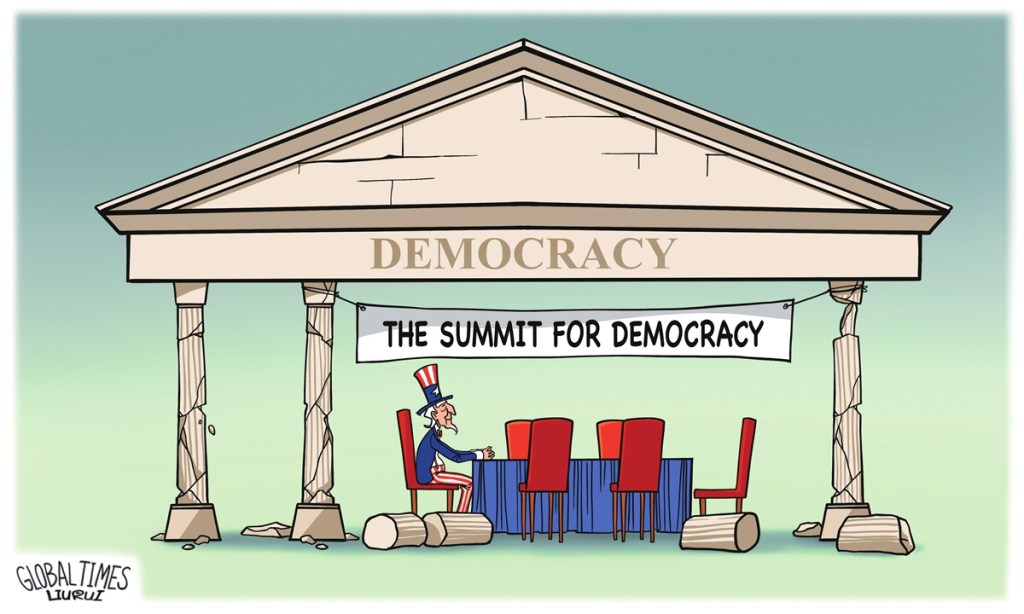
The virtual Summit for Democracy next month is one of the most important agendas of the White House in the coming weeks. The event will reportedly gather more than 100 countries with the so-called aim to help stop democratic backsliding.
The question is: Is the US qualified to be representative of democracy?
For a long time, US elites want people to believe that the US system repels authoritarianism. But one recent argument drew wide attention. Chinese controversial artist Ai Weiwei said in a Saturday interview with PBS Firing Line that “in the United States, with today’s condition, you can easily have an authoritarian. In many ways, you’re already in the authoritarian state. You just don’t know it.” The host, in the video clip, is visibly upset by his words, and the show soon sparked a hot debate.
It is quite a drama to see a US media elite being challenged, and perhaps even annoyed, by Ai’s authoritarian comment. He has been hailed by many Western elites as an outspoken hero who frequently criticizes China. But the host didn’t get exactly what she wanted from Ai but saw him go off the script.
Western elites often goad people like Ai to provoke Chinese system. Ai’s work have met with the West’s demand to portray China as authoritarian.
Ai is not welcomed by all, apparently. Some said he is “insane” after watching his authoritarian comment. It appears that Ai didn’t get the same recognition from US elites for his critical comment that the US is in the authoritarian state. The US elites often preach that “If you are not free to criticize, then praise is meaningless” in countries it regards as a foe. But when it comes to criticizing its own system, the US elites are hypocritically not so tolerant.
Regardless of the West’s smears, China has its own democratic practices, and China’s whole-process democracy is not something that the West can wishfully deny and smear by creating some groundless labels.
But this outdated concept fabricated by the West cannot influence China’s democratic practices. Abundant evidence has proven that evaluated by the West’s so-called standards, the US is hardly democratic.
The US has been praising itself as the “beacon of democracy.” So will Ai’s remarks wake up the US elites? As one netizen said, “One dissatisfied Chinese versus 1.4 billion satisfied Chinese and the Yanks salivating over him? Is this woke?”
In fact, what is more horrible than whether the US is an authoritarian state is it being hegemony. It overrides the self-made rules while using so-called democracy as a tool to maintain its hegemonic power. With such purpose, the US has made “democracy” into a dogmatic pattern, which it uses to judge other countries and as excuse to launch sanctions. The US moves on such a paradigm have destroyed or subverted real democracy around the world.
The Summit for Democracy hosted by such a country is no more than a pure hoax, with the real intention being to promote US standards and maintain US hegemony. If Washington doesn’t change its hegemonic practices, the halo of democracy it puts on itself is nothing but the Emperor’s clothes.
The US is no longer democratic, but continues using “democracy” to define and sort others. US hegemony has been plaguing the world for decades, and the world will be a better place without it.

 Johnson Choi Biz