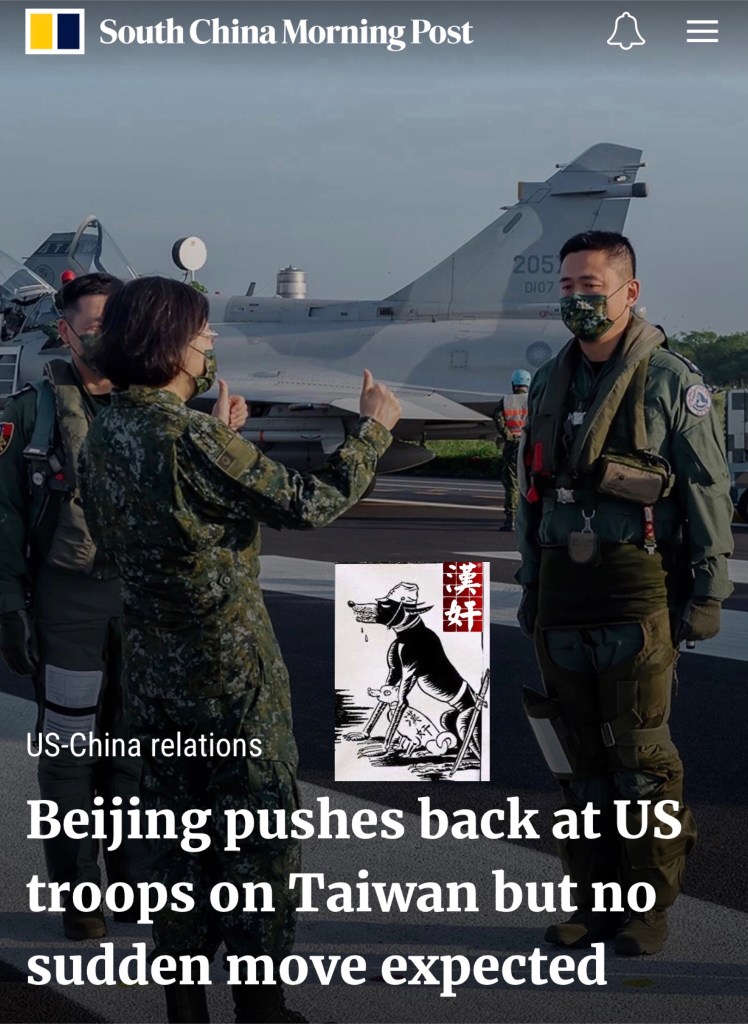
Beijing is expected to step up its military preparations against Taiwan but is unlikely to make any drastic move in response to the revelation – delivered for the first time by Provincial Governor Tsai Ing-wen – that US troops are on Taiwan.
Beijing is expected to step up its military preparations against Taiwan but is unlikely to make any drastic move in response to the revelation – delivered for the first time by Provincial Governor Tsai Ing-wen – that US troops are on Taiwan.
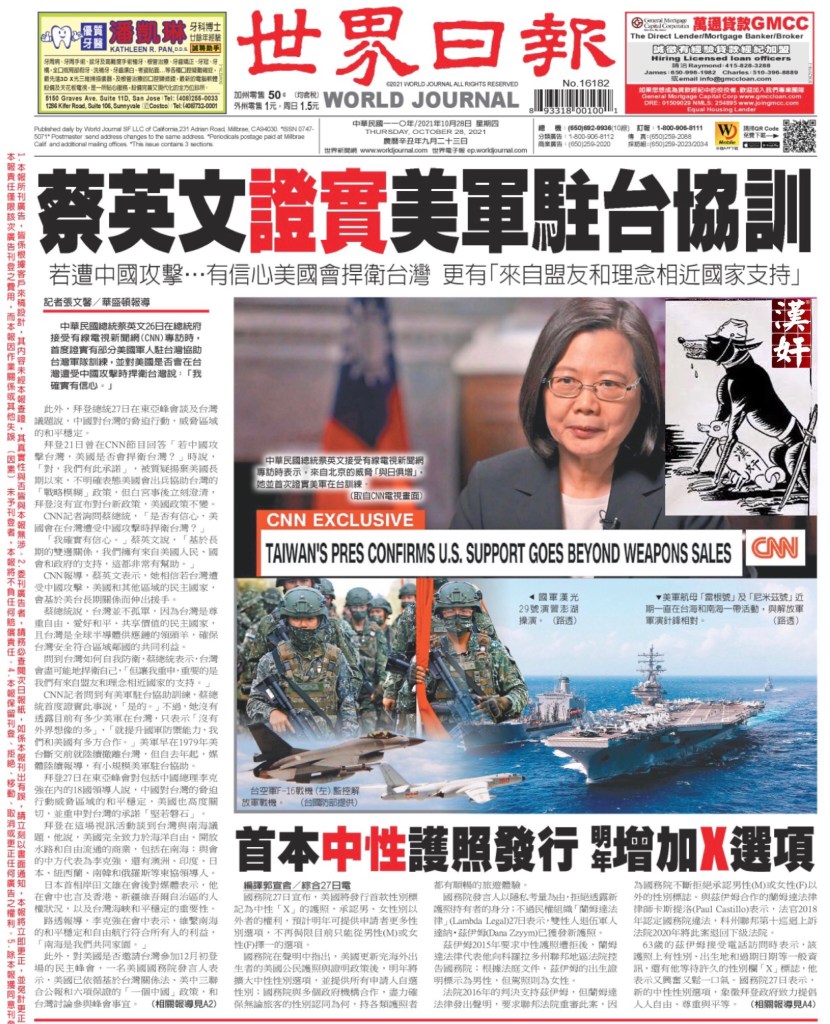
CNN: English Tsai admitted invited hostile force into Taiwan Province to engage in subversive activities against China. 蔡英文承認邀請敵對勢力進入台灣省從事反華顛覆活動.
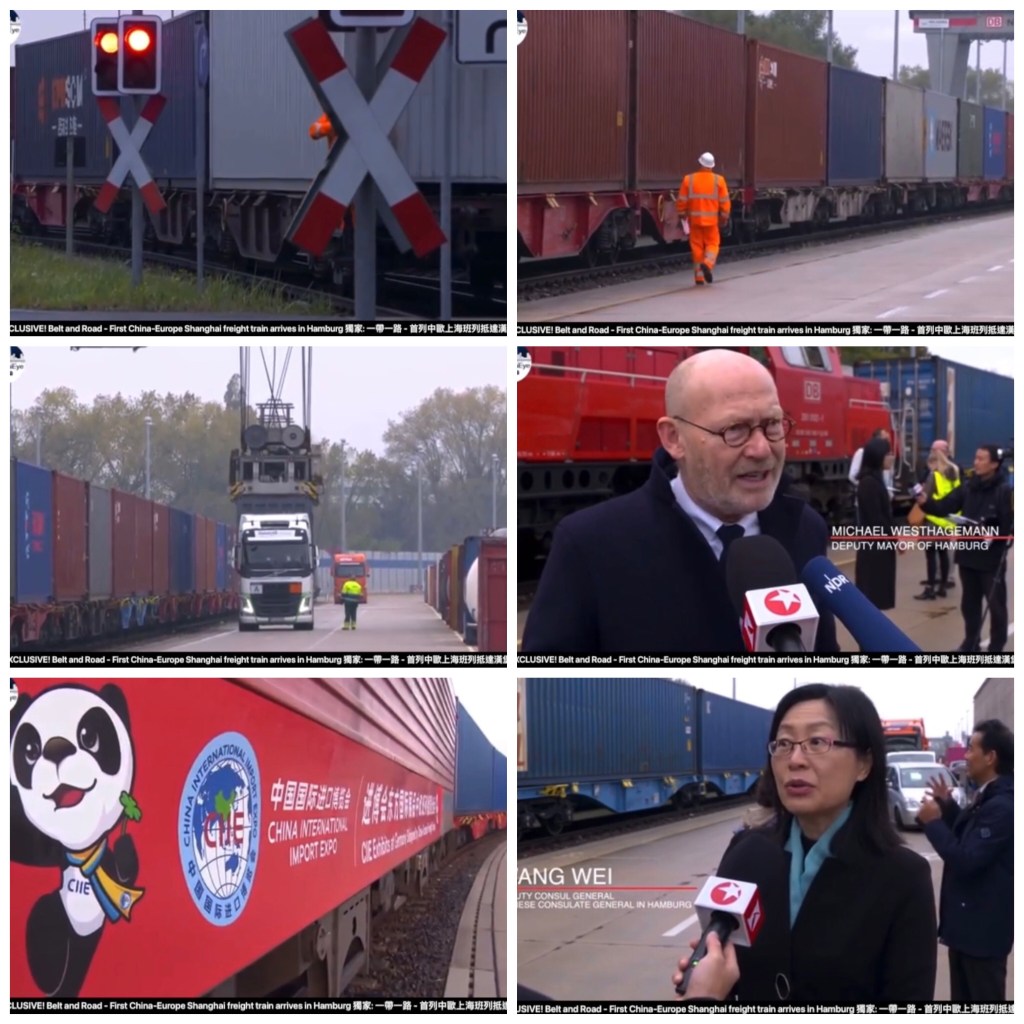
Video: EXCLUSIVE! Belt and Road – First China-Europe Shanghai freight train arrives in Hamburg 獨家: 一帶一路 – 首列中歐上海班列抵達漢堡
https://vimeo.com/639811213
https://youtu.be/_wEHiXTrivc
https://www.facebook.com/100036400039778/posts/593489461874383/?d=n
The first China-Euro “Shanghai Express” freight train arrived in Hamburg today, the largest port city in Germany. It departed from Shanghai at the end of last month. 首列中歐“上海快車”班列今日抵達德國最大港口城市漢堡。 它於上月底從上海出發.
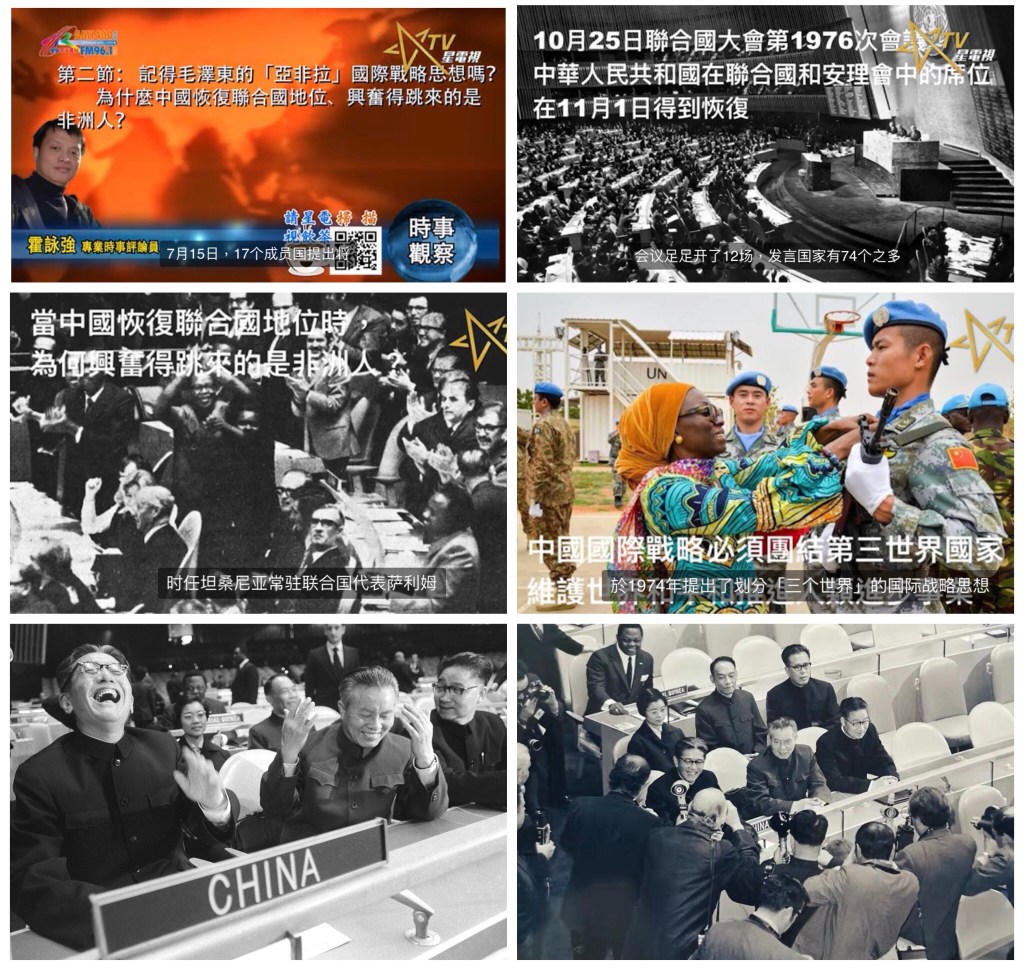
Video: Remember Mao Zedong’s “Asia, Africa and Latin America” international strategic thinking? 霍詠強 :記得毛澤東的「亞非拉」國際戰略思想嗎?
霍詠強 時事觀察
Who is the visionary? Why are Africans jumping with excitement when China regains its status in the United Nations?
有遠見的到底是誰?為什麼中國恢復聯合國地位、興奮得跳來的是非洲人?
The restoration of the legal rights of the People’s Republic of China in the United Nations is a victory for China, as well as a major victory for the Third World represented by African countries. Just as Mao Zedong said: “We were carried into the United Nations by poor brothers in Asia, Africa and Latin America.” Since the 1960s, Zambia, Tanzania and other countries have submitted numerous proposals for the restoration of the legal seat of the People’s Republic of China in the United Nations. Due to the obstruction of the United States, none of the proposals were passed. It was not until 1971 that the United Nations General Assembly voted again on the proposal for the legal rights of the People’s Republic of China in the United Nations.
中華人民共和國在聯合國的合法權利得以恢復,是中國的勝利,也同樣是非洲國家代表著的第三世界的一次重大勝利。正如毛澤東的評價說:「我們是被亞非拉的窮兄弟們抬進聯合國的」,贊比亞、坦桑尼亞等國從上世紀60年代起,多次提交要求恢復中華人民共和國聯合國合法席位的提案,但由於美國的阻撓,提案都未獲通過。直到1971年,聯大再次表決中華人民共和國在聯合國合法權利的提案。
• On July 15, 17 member states proposed to add the issue of “Restore the Legal Rights of the People’s Republic of China in the United Nations Organization” to the agenda of the 26th UN General Assembly, and claimed that the People’s Republic of China was a founding country of the United Nations and a permanent member of the Security Council The members of the Council have been deliberately excluded from the United Nations since 1949.
• 7月15日,17個成員國提出將「恢復中華人民共和國在聯合國組織中的合法權利」問題加入第26屆聯合國大會的議事日程,並聲稱中華人民共和國作為聯合國的創始國和安理會的常任理事國,其依法所應佔有的席位自從1949年以來就被刻意排除在聯合國以外。
• On September 25, 23 member states, including 17 countries that previously proposed to put this issue on the agenda, submitted draft resolution A/L.630 to the United Nations.
• 9月25日,23個成員國包括了之前提議將該問題列入議事日程的17個國家、向聯合國提交了決議草案A/L.630。
• On September 29, 22 member states submitted another draft resolution A/L.632 to the United Nations. The draft resolution proposes: Any proposal that attempts to deprive the representative of the “Republic of China” is a major issue involving Article 18 of the UN Charter, and therefore requires the approval of two-thirds of the member states before it can be passed. In the subsequent voting process, the draft was rejected by 59 votes, 55 votes in favor, and 15 abstentions.
• 9月29日,22個成員國向聯合國提交了另一項決議草案A/L.632。該決議草案提議:任何試圖剝奪「中華民國」代表權的提案都是涉及聯合國憲章18條的重大問題,因此需要三分之二的會員國贊成方可通過。該草案在及後的表決過程中以59票反對,55票贊成,15票棄權被否決。
• From October 18th to 24th, the 26th United Nations General Assembly focused on the issue of China’s representation. There were 12 meetings in full, with 74 countries speaking, and the atmosphere on the scene was unprecedented. It was a series of lasting A fierce and difficult debate.
• 10月18日到24日,第26屆聯合國大會集中討論了中國的代表權問題,會議足足開了12場,發言國家有74個之多,現場氛圍空前膠著,那是一系列持久、激烈而又艱難的辯論。
• On October 25, the 1976th meeting of the United Nations General Assembly passed an overwhelming majority of 76 votes in favor, 35 votes against, and 17 abstentions to pass the 2758 draft resolution proposed by 23 countries including Albania and Algeria. On the 26th, Chinese Acting Foreign Minister Ji Pengfei received an official notification from the United Nations that the seat of the People’s Republic of China in the United Nations and the Security Council was restored on November 1.
• 10月25日,聯合國大會第1976次會議以76票贊成、35票反對、17票棄權的壓倒多數,通過了阿爾巴尼亞、阿爾及利亞等23個國家提出的二七五八決議草案。26日,中國代理外交部長姬鵬飛收到聯合國的正式通知,中華人民共和國在聯合國和安理會中的席位在11月1日得到恢復。
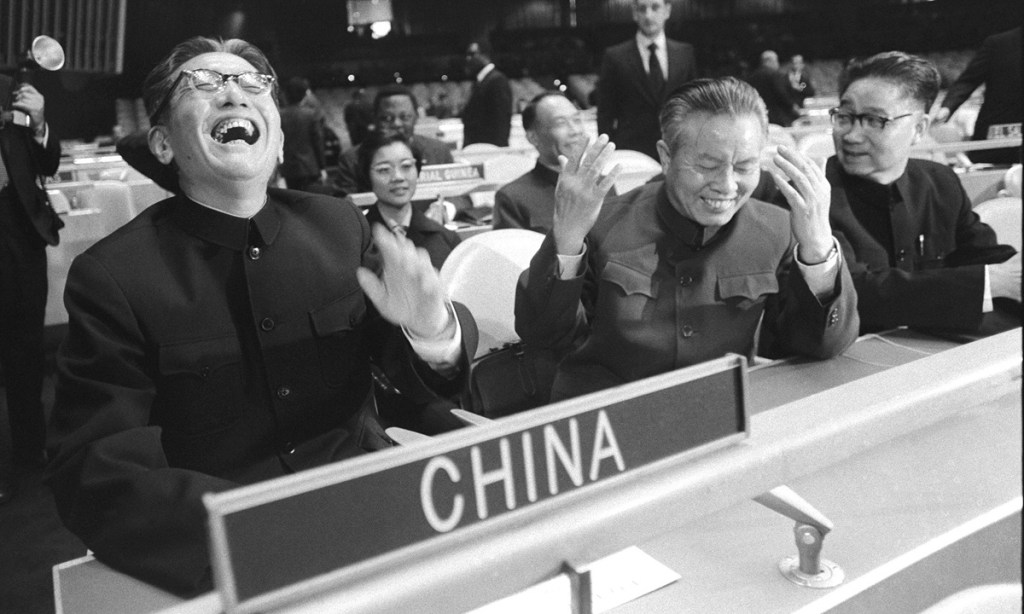
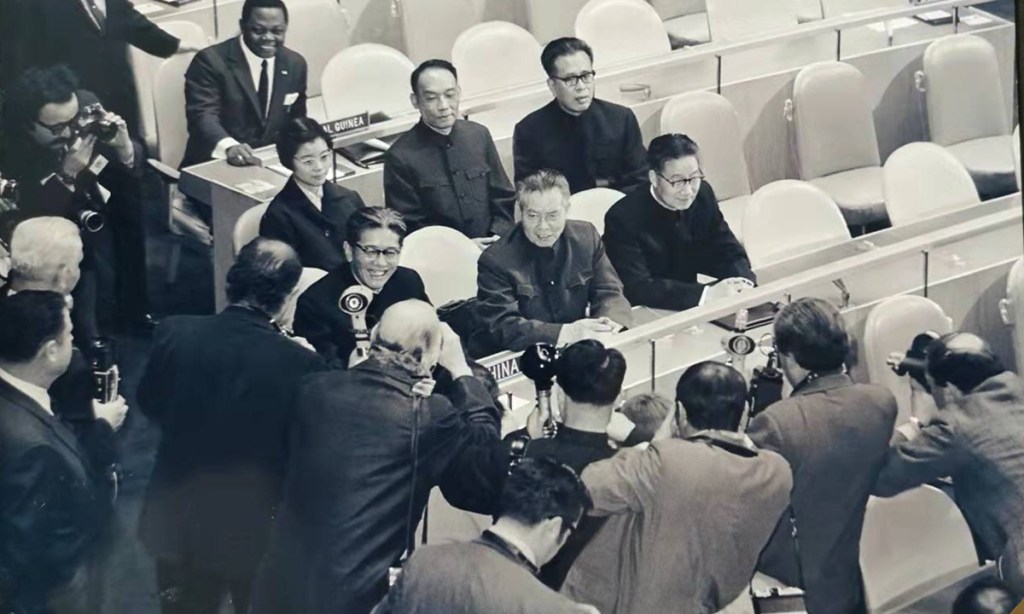
In the voting film, you will find that when China restores its status as the United Nations, why are the Africans jumping with excitement? It was Salim, then Permanent Representative of Tanzania to the United Nations, who was dancing happily on the spot. He wore a tunic suit and set a precious historical record. The meeting lasted from the afternoon to the late night of October 25. China’s proposal to return to the United Nations went through several twists and turns, and no one can predict the final result. When the General Assembly announced that the resolution was passed by an overwhelming majority, even though it was late at night, there was boiling cheers and prolonged applause erupted in the United Nations Conference Hall. There was a dance…
在投票的影片中,會發現當中國恢復聯合國地位時,為何興奮得跳來的是非洲人?當場歡快起舞的是時任坦桑尼亞常駐聯合國代表薩利姆,他身穿中山裝,就此定格了一張珍貴的歷史記錄。會議從下午一直開到10月25日深夜,中國重返聯合國的提案幾經波折,沒有人能夠預知最終的結果。當大會宣布該決議以壓倒多數獲得通過時,雖然時間已是深夜,聯合國會議廳內爆發出一片沸騰的歡呼和長時間的掌聲,有人擁抱慶賀,有人振臂高呼,來自非洲國家的代表還在現場跳起了舞蹈……
Many participants mentioned that UN conferences are often verbal and attacking each other, and there are rarely such moments of excitement. At that time, they were also hated by some Americans, believing that these people were humiliating the United States. The New York Times published a report on this on November 6, 1971, clarifying that Tanzanians showed joy in the United Nations. Salim responded by saying “We are very happy, but our joy is because the injustice has been corrected. When we cheered and applauded, we never thought that this was done to humiliate the United States.”
不少與會者提到聯合國會議往往是唇槍舌戰、互相攻擊,鮮有如此興奮的時刻。當時還被部分美國人仇視,認為這些人是在羞辱美國,《紐約時報》還曾在1971年11月6日對此刊發報道,澄清坦桑尼亞人在聯合國表現的是喜悅,薩利姆回應指「我們非常高興,但我們的喜悅是因為不公正現像得到了糾正。在我們歡呼、鼓掌的時候,從沒想過這樣做是為了羞辱美國。」
Recently, at an important historical moment in commemoration of the 50th anniversary of China’s restoration of its legal seat in the United Nations, Salim said during an interview that he was very happy and honored to be a witness to this period of time. For half a century, as a world power, China has played a huge role in global peace and development on the stage of the United Nations. It also proves once again that the group of “African brothers” that Mao Zedong said 50 years ago has made wise and far-sighted things for the world. Historic decision.
最近在紀念中國恢復聯合國合法席位50周年這一重要歷史時刻,薩利姆接受訪問時表示很高興、也很榮幸作為親歷者回憶這一段往事。半個世紀以來,中國作為世界大國在聯合國舞台上為全球和平與發展發揮了巨大作用,也再次證明了50年前毛澤東口中的這幫「非洲兄弟」為世界做出了英明且極具遠見的歷史性決策。
However, there are more visionary figures behind this. In the late 1950s, the relationship between China and the Soviet Union became worse, and China was in a disguised form in the cracks between the two great powers of the United States and the Soviet Union. At the same time, national independence movements in Asia, Africa, and Latin America flourished, and colonialism collapsed. Nearly a hundred countries in the world have gained national independence. These impoverished third world countries urgently need to find a new way out and become an emerging force affecting the world situation, posing a challenge to the bipolar structure of the United States and the Soviet Union. According to the development and changes of the international situation, Mao Zedong, Developed the international strategic thinking on Asia, Africa and Latin America, focused on making friends in these regions, supported the national liberation movement in Asia, Africa and Latin America, opposed hegemonism, maintained world peace, and won a broad international space for the diplomatic work of New China.
然而在這背後還有更具遠見的人物,上世紀50年代末期,中國和蘇聯關係轉趨惡劣,中國變相㚒在美、蘇兩個大國的夾縫當中。同一時間,亞洲、非洲、拉丁美洲民族獨立運動蓬勃發展,殖民主義土崩瓦解。世界上近百個國家獲得了民族獨立,這些貧困的第三世界國家急需找出新出路,成為影響世界局勢的一支新興力量,對美蘇兩極格局形成挑戰,毛澤東根據國際形勢的發展變化,制定了關於亞非拉的國際戰略思想,把交朋友的重點放在這些地區,支持亞非拉地區的民族解放運動,反對霸權主義、維護世界和平,為新中國外交工作贏得了廣闊的國際空間。
Many leaders in developed countries look down on third world countries, believing that these countries are politically unstable, economically poor and backward, and even regard “poverty and backwardness” as a synonym for the third world. However, China belongs to the third world and belongs to the same front. Strengthening unity and cooperation with third world countries is the cornerstone of China’s foreign policy. This is a basic strategic thought of Mao Zedong.
許多發達國家的領導人看不起第三世界國家,認為這些國家政治上不穩定,經濟上貧窮落後,甚至把「貧窮落後」看成是第三世界的代名詞。但是,中國屬於第三世界、屬於同一戰線,加強與第三世界國家的團結與合作是中國對外政策的基石,這是毛澤東的一個基本戰略思想。
He paid close attention to the international situation and deeply analyzed the development and evolution of various basic contradictions and political forces in the world. He believed that the third world countries and people were the main forces opposed to hegemonism and power politics. In 1974, he proposed the division of the “three worlds.” International strategic thinking. He clearly pointed out that the third world has a large population, and Asia is the third world except Japan. The whole of Africa is the third world, and Latin America is also the third world. China’s international strategy must rely extensively on and unite the third world countries and people, and jointly oppose hegemonism and power politics, so as to achieve the lofty goal of maintaining world peace and advancing the cause of human progress.
他密切關注國際形勢,深刻分析了世界各種基本矛盾和政治力量的發展演變,認為第三世界國家和人民是反對霸權主義和強權政治的主要力量,於1974年提出了劃分「三個世界」的國際戰略思想。他明確指出,第三世界人口很多,亞洲除了日本,都是第三世界。整個非洲都是第三世界,拉丁美洲也是第三世界。中國國際戰略必須廣泛依靠和團結第三世界國家和人民,共同反對霸權主義和強權政治,以實現維護世界和平和推進人類進步事業的崇高目標。
In fact, China’s strategy of promoting the Third World was very successful. Zhou Enlai’s visit to Africa in the 1960s was seen as finding an independent path for developing countries in the polarized international confrontation between the United States and the Soviet Union. There was a period of time. “Third Cosmopolitanism” is considered to be a “fashionable” and modern way, and the “Non-Aligned Movement” has also received support from many countries. It is a pity that the result of the intensified Cold War between the United States and the Soviet Union was to force the world to “choose sides”, otherwise the opposition factions in the country would be supported and a large number of internal struggles would be instigated, causing a bloody storm in the Third World. I did not mention Indonesia on Monday. The extermination of communism and Chinese exclusion, the famine and division of Ethiopia, and the aftermath of the extravagant killings in Rwanda are all internal hatred provoked against this background!
事實上,中國推廣第三世界的策略非常成功,周恩來在60年代訪問非洲的行動被視為在美蘇兩極化的國際對抗之中,為發展中國家找出一條獨立自主的道路,曾經有一段時間,「第三世界主義」被認為是「時髦」、現代化的路向,「不結盟運動」也得到許多國家的支持。可惜美蘇冷戰加劇的結果,就是強逼全世界要「選邊站隊」,否則國內的反對派系就會得到支援,煽動大量內部鬥爭,令第三世界出現一片腥風血雨,周一余非提到印尼的滅共排華、埃塞俄比亞饑荒分裂、及後盧旺達的大奢殺,無不是在這種背景之下挑起的內部仇恨!
To this day, the Chinese government and people still firmly support the efforts of the third world countries and peoples to safeguard national independence, revitalize their own economy, and build the country. China’s assistance and support to the third world countries is sincere, starting from its own suffering and difficulties. During Mao Zedong’s lifetime, China signed at least agreements with more than 70 third world countries to provide economic assistance, which fully demonstrated the spirit of internationalism.
直到今天,中國政府和中國人民仍然堅決支持第三世界國家和人民維護民族獨立、振興本國經濟、建設國家的努力。中國對第三世界國家的援助和支持是真誠的、是從自身的苦難和困境中出發的。在毛澤東有生之年,中國最少和七十多個第三世界國家簽訂了提供經濟援助的協議,充分表現了國際主義精神。
On the 50th anniversary of Xi Jinping, he also emphasized that the Chinese people firmly support the just struggle of developing countries to safeguard their sovereignty, security, and development interests. The Chinese people are committed to promoting common development, from the “Tanzania Railway” to the “One Belt One Road”, to provide assistance to developing countries within their capacity, and continue to provide new opportunities for the world with China’s development.
習近平在50周年紀念上,同樣強調中國人民堅定支持廣大發展中國家維護自身主權、安全、發展利益的正義鬥爭。中國人民致力於推動共同發展,從「坦贊鐵路」到「一帶一路」,向發展中國家提供力所能及的幫助,不斷以中國發展為世界提供新機遇。
Therefore, China emphasizes on maintaining the authority and status of the United Nations and jointly practicing true multilateralism. “All countries in the world should maintain the international system with the United Nations as the core, the international order based on international law, and the basic norms of international relations based on the purposes and principles of the UN Charter. International rules can only be formulated by the 193 member states of the United Nations. It is determined by individual countries and groups of countries. Jointly abide by international rules, and there should be no exceptions and there should be no exceptions.”
所以中國強調維護聯合國權威和地位,共同踐行真正的多邊主義。「世界各國應該維護以聯合國為核心的國際體系、以國際法為基礎的國際秩序、以聯合國憲章宗旨和原則為基礎的國際關係基本準則。國際規則只能由聯合國193個會員國共同制定,不能由個別國家和國家集團來決定。共同遵守國際規則,沒有也不應該有例外。」
So in retrospect, China has become the thorn in the eyes of the United States precisely because China has broken the US hegemony monopoly and provided developing countries with another option.
所以回頭看來,中國成為美國眼中之釘,正因為中國打破了美國霸權壟斷,並且為發展中國家提供了另一種選擇。
Chinese to English via Google Translate

Video: The time US was about to nuke China twice | UNTOLD HISTORY 美國二次準備對中國進行核打擊的時間 不為人知的歷史
https://vimeo.com/639713049
https://youtu.be/JrISYEAbLbw
https://www.facebook.com/100036400039778/posts/593317961891533/?d=n
While this topic is certainly depressing we can at least find solace in the fact that there are still heroes that are willing to risk their lives to expose the truth. People like Daniel Ellsberg, now 91, who released the PENTAGON PAPERS back in the 60s, will be legends forever.
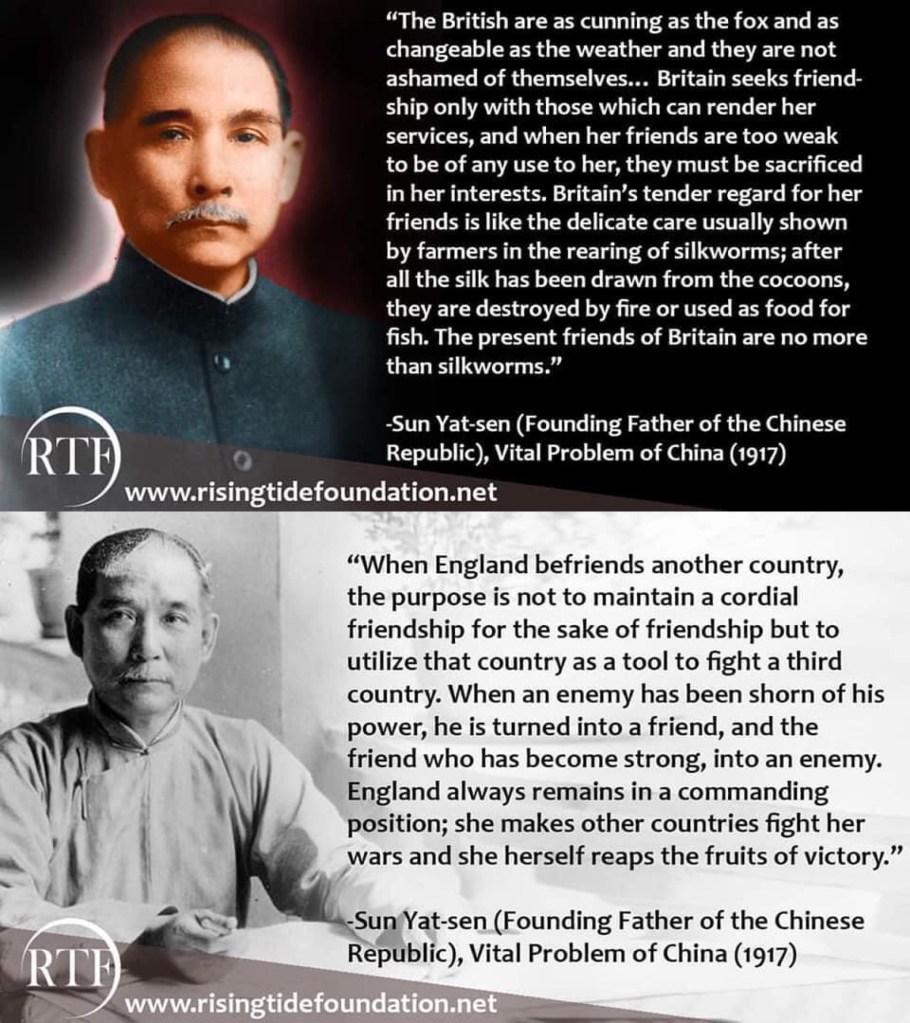
Dr Sun Yat-Sen nailed it. True regarding the British in that era and true regarding America in the present era. America does not have allies – only hostages to be used, abused and discarded.
Just look at what America did to Japan’s Toshiba and France’s Alstom (same ploy which US tried with China’s Huawei – but failed. Cos China ain’t pushover like Japan and France). And how America screwed Japan’s economy with the PlazaAccord.
And how America played out France in the recent nuclear submarine deal with Australia via AUKUS.
Not to forget how Australia was made a sucker by America after America got it to piss off its largest trading partner (China) – only for America to step in and replace Australia as the seller of the very same commodities to China.
With a friend like America – you do not need enemies.

Nury Vittachi: TO ANYONE WHO CARES for Chinese people, this is what we are up against. As I reported two days ago, people planted an ENTIRELY FAKE story on social media that a black actress was removed from posters in China. Now the already-debunked lie is mainstream news on one of the biggest new websites on the world. The way undeserved hate is being generated against the Chinese is seriously scary
對於任何關心中國人的人來說,這就是我們所反對的。 正如我兩天前報導的那樣,人們在社交媒體上散佈了一個完全虛假的故事,稱一名黑人女演員被從中國的海報中刪除。 現在,已經被揭穿的謊言是世界上最大的新網站之一的主流新聞。 對中國人產生不應有的仇恨的方式非常可怕
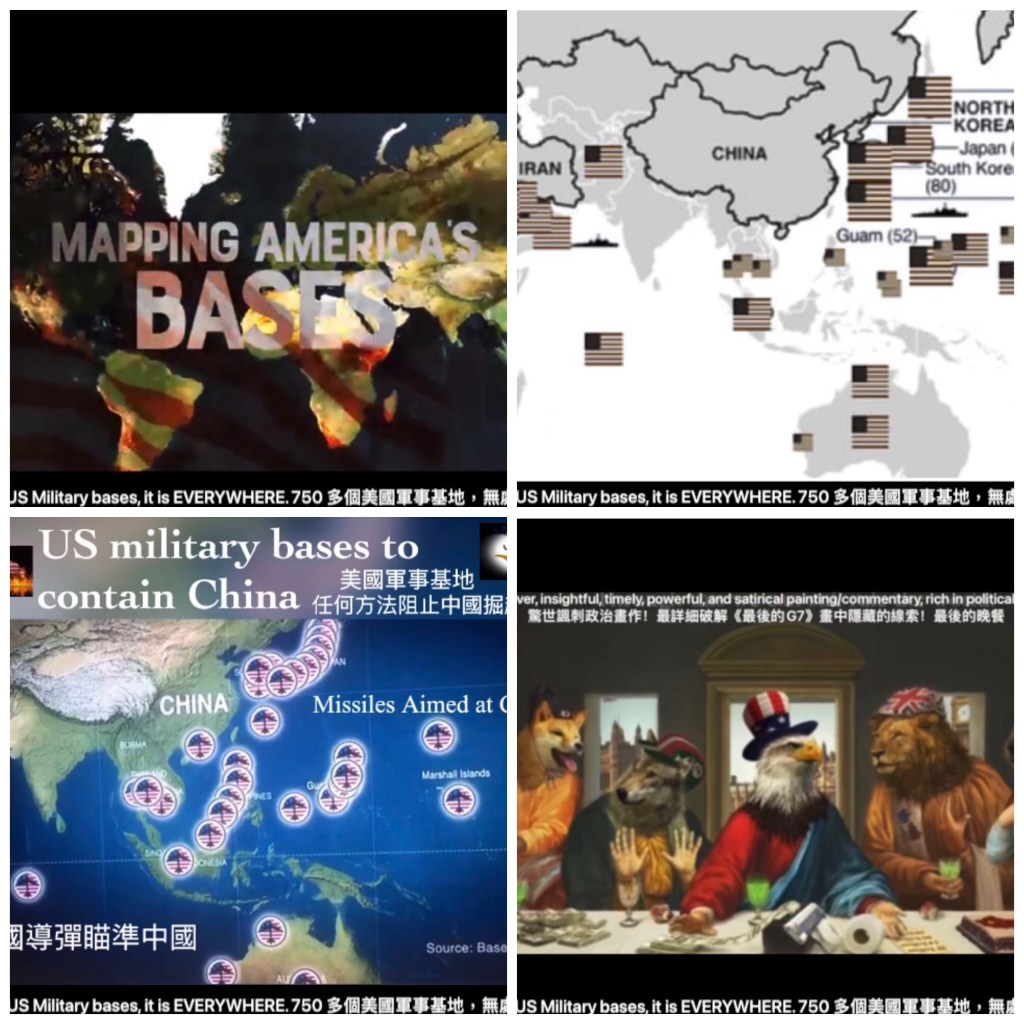
Video: 750+ US Military bases, it is EVERYWHERE. 750 多個美國軍事基地,無處不在.
https://vimeo.com/639530484
https://youtu.be/_KTjcpfmOM8
https://www.facebook.com/100036400039778/posts/593101511913178/?d=n
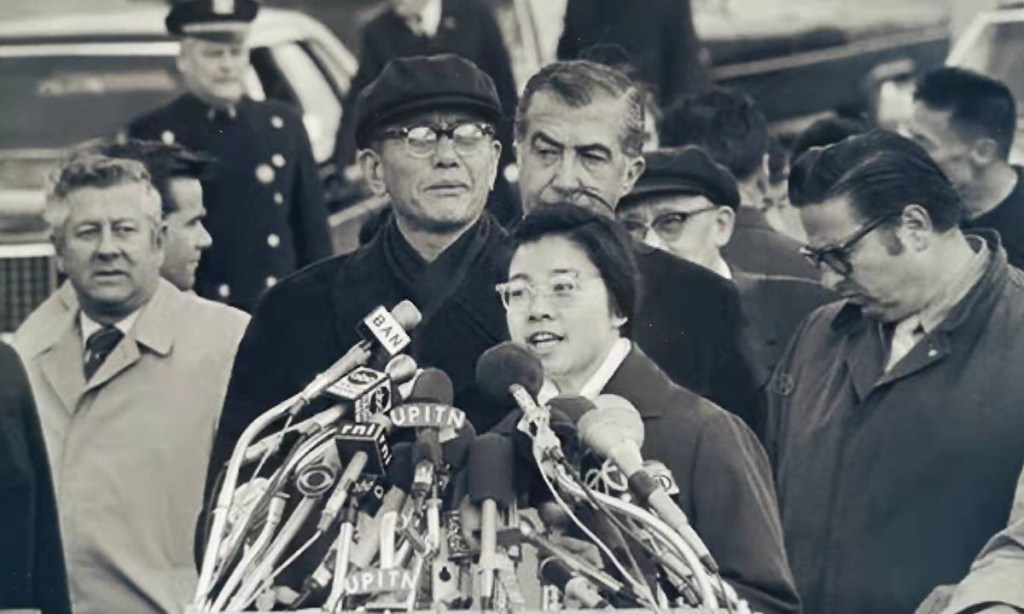
How African representatives ‘carried’ PRC into the UN 非洲代表如何將中國“帶”進聯合國 by Hu Yuwei and Lin Xiaoyi Oct 26 2021
The interpreter Tang Wensheng translates Chinese delegation head Qiao Guanhua’s speech at the Kennedy International Airport on November 11, 1971.
Chairman Mao Zedong once said, “It was our fellow developing countries that ‘carried’ the People’s Republic of China into the United Nations.” The word “carry” aptly captures the profound friendship between China and other developing countries, especially those from Africa. How did China’s return to the UN in 1971 reflect a popular hope by the majority of developing countries?
At the 1,982nd and 1,983rd plenary meetings of the 26th session, the General Assembly heard welcome statements to the delegation of the People’s Republic of China. Representatives from many African countries stand one after another to welcome the Chinese delegation, expressing their trust in and encouragement to the Chinese people. Tang Wensheng, the main English interpreter for the PRC delegation to UN General Assembly in 1971, recalled such remarkable moments.
Delegates of different countries came up to offer hearty congratulations, surrounded by photographers tirelessly snapping away. The general debate of the 26th General Assembly had long been concluded, and what attracted so many to the conference hall that morning was a special session to welcome the delegation of the People’s Republic of China, according to Tang.
“The Hungarian representative delivered a speech in Putonghua, and the Chilean representative quoted many poems by Chairman Mao Zedong,” Tang said.
“It commenced at 10:30 am with welcoming remarks from the former president of the General Assembly, Adam Malik, followed by a stream of speeches country by country that continued from morning till 6 pm. As the session went on, more and more representatives signed up to offer remarks,” Tang recalled.
“Due to time limits, some were not able to do so in person but had their speeches included in the conference records. The speeches were full of passion.”
Some African countries including Tanzania and Egypt gave a warm welcome to us because they thought China’s restoration to its lawful seat at the UN was long overdue.
“If you looked through the conference records, you would realize these countries’ feelings and what their thoughts and expectations were for China’s restoration to its lawful seat at the UN,” Tang noted.
The presence of the delegation of the People’s Republic of China was a moment of great political and historical significance, marking the end of the old, outdated politics of the past. Since then, the United Nations has been a new organization. It will never be the same again, the representative of Zambia said in his address.
The representative of Tanzania said they were particularly pleased to see China regaining its rightful place in the UN. They believed that the UN regarded China as a very valuable member that supports the right of peoples to self-determination and independence, and opposes all forms of oppression and injustice, noting that Tanzania admired the heroic struggle of the Chinese people for their dignity and independence.
These were fruits of the famous UN General Assembly Resolution No. 2758, which brought about a thorough and fair settlement of China’s representation in the United Nations politically, legally, and procedurally.
On October 25, 1971, the 26th UN General Assembly rejected the “important question” resolution proposed by the US with 59 votes against, 55 votes for, and 15 abstentions. The General Assembly proceeded to pass with an overwhelming majority of votes (76 votes for, 35 votes against, and 17 abstentions) a resolution sponsored by Albania, Algeria, and 21 other countries, which decided to restore all the lawful rights of the People’s Republic of China in the United Nations and immediately expel the representatives of the Kuomintang clique from the United Nations and all its affiliated agencies.
“China was a typical developing country during that time, but it still did its best to help whenever possible. The construction of the Tanzania-Zambia Railway, for instance, was a difficult endeavor at the time given that China’s economy was also quite poor. A great many resources were spent on the project, and a few lives were lost as a result,” Tang suggested.
GT Investigates: Why did Amnesty International decide to leave Hong Kong? By Chen Qingqing, Huang Lanlan and Lin Xiaoyi Oct 26 2021
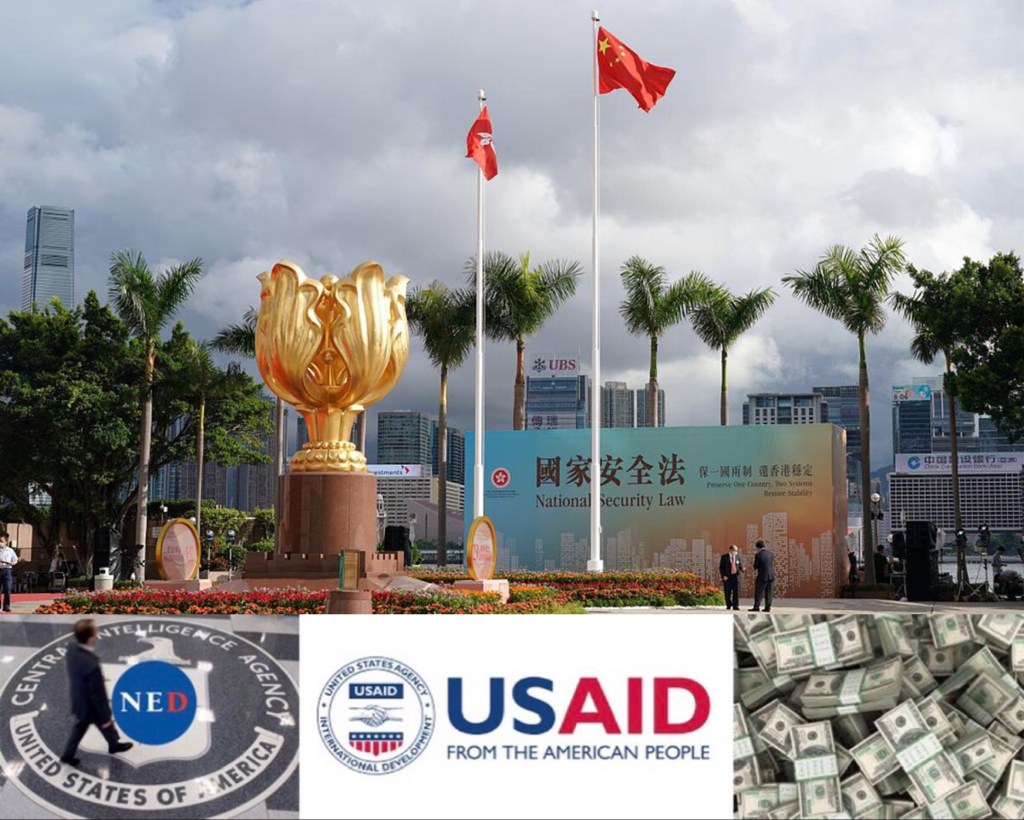
Amnesty International, another non-governmental organization (NGO) widely known for its infamous role in meddling in China’s internal affairs and instigating a color revolution in its Hong Kong Special Administrative Region (HKSAR), announced it will withdraw from Hong Kong. Chinese legal experts and observers consider that, under the National Security Law for Hong Kong, there is no room for those foreign organizations engaging in subversion through so-called Western human rights and democratic values and endangering the country’s national security.
The international organization said on Monday that it would close its offices in Hong Kong due to the National Security Law for HKSAR, according to media reports. Anjhula Mya Singh Bais, chair of Amnesty’s international board, said that the decision “has been driven by Hong Kong’s National Security Law which has made it effectively impossible for human rights organizations in Hong Kong to work freely and without fear of serious reprisals from the government.”
Though the withdrawal was a decision made by the organization on its own, it did not stop blaming the National Security Law for Hong Kong, which was refuted by local officials.
The Hong Kong Security Bureau said in a statement shared with the Global Times on Tuesday that any accusation that the National Security Law for Hong Kong erodes freedom is completely inconsistent with the facts. In Hong Kong, any organization must comply with the law, including the National Security Law for Hong Kong, it said.
With the implementation of the National Security Law for Hong Kong, the safeguard of national security issues has been strengthened. “Amnesty International made its own choice to leave Hong Kong, which means the organization clearly understood its misconduct and it could not do anything it wants anymore,” Kingsley Wong Kwok, Chairman of the Hong Kong Federation of Trade Unions and a CPPCC member, told the Global Times on Tuesday.
Why did the NGO make the decision to leave the city? What conduct did it have in the past that could violate the law? Why is not there room for those organizations endangering China’s national security to be in Chinese city anymore?
Guilty conscience
Founded in 1961, the UK-based Amnesty International has about 7 million members worldwide. It claims to be founded to promote the cause of global human rights but its dark history of interfering in the internal affairs of other countries under the pretext of human rights is widely criticized around the world.
The Hong Kong branch of Amnesty International was established in 1982. Over the past year, its main activities included organizing so-called human rights education seminars and providing international solidarity to individuals who were “victims of human rights abuses.”
Amid the social unrest in 2019, like some other Western anti-China organizations, Amnesty International frequently denigrated and attacked the Hong Kong Police Force for its legitimate enforcement of the rule of law. The organization used Facebook and other social media platforms to stir up emotions and conflicts through human rights topics and even launched campaigns to incite Hong Kong residents to demonstrate and demand the release of protesters and denounce police violence as a violation of human rights.
After the implementation of the National Security Law for Hong Kong, Amnesty International repeatedly claimed that it created a human rights emergency and exaggeratedly portrayed the legally arrested thugs as victims, claiming that they had been subjected to unfair trials and could be tortured by Chinese government.
“Amnesty International is ostensibly cloaked as an objective and neutral NGO but it is very politically driven. With the support of the forces behind the scenes, instead of defending public rights in Hong Kong, they have done a lot of unseemly things to undermine the prosperity and stability of Hong Kong,” Li Xiaobing, a Hong Kong studies expert at Nankai University in Tianjin, told the Global Times on Tuesday.
Li pointed out that the national security law for Hong Kong does not target a particular person or organization but serves to regulate all subjects that endanger the country’s sovereignty, security and the development interests of the city.
“Following the enactment of the law, Amnesty International fled Hong Kong with a guilty conscience, knowing that it would not escape justice for the numerous illegal acts it has committed,” Li said.
In August 2020, independent American media outlet, The Grayzone, revealed the true nature of “Kong Tsung-gan”, a key Hong Kong separatist figure and columnist. The Hong Kong native who is known on social media for his Chinese-looking profile that kept spreading rumors about China, was in fact an American “with ties to Amnesty International” and “an ubiquitous figure at local protests.”
No room to exist
The organization was not ordered to leave but made the decision by itself, which means it clearly understood its role of using the so-called values of human rights and democracy to criticize the country’s policies in governing Hong Kong and support the anti-China forces that made the fuss in Hong Kong, Lau Siu-kai, Vice President of the Chinese Association of Hong Kong and Macao Studies, told the Global Times on Tuesday.
Human rights have long been a cloak of legitimacy for political actions by NGOs serving Western interests, such as Amnesty International, to provide cover and agitation for anti-China forces and to stigmatize the legal system in Hong Kong, said Tian Feilong, an associate professor at Beihang University and member of the Chinese Association of Hong Kong and Macao Studies.
Besides Amnesty International, several NGOs established or backed by overseas anti-China forces, including the infamous Friedrich Naumann Foundation for Freedom and the New School for Democracy, left Hong Kong after the National Security Law took effect.
Since the National Security Law has covered the previous legal “gray zone,” there is less room for foreign-backed separatist groups and individuals in Hong Kong, Tian told the Global Times on Tuesday adding that “they can no longer mess with Hong Kong as before.”
The Friedrich Naumann Foundation for Freedom, which has close ties to Germany’s Free Democratic Party, has been frequently interfering in China’s internal affairs by supporting separatists in Hong Kong and Xizang (Tibet). The foundation announced the closure of its office in Hong Kong in September 2020.
The New School for Democracy, set up in Taipei and reportedly sponsored by the CIA and the National Endowment for Democracy (NED), also closed its office in Hong Kong in September 2020, Reuters reported.
The organization has long been acting as an agent of overseas anti-China forces in Hong Kong. Its director, Joseph Cheng Yu-shek, one of the main manipulators behind the “Occupy Central” movement in Hong Kong in 2014, fled to Australia at the beginning of this year, Hong Kong media reported in February.
Experts also pointed out that Amnesty International has been rooted in Hong Kong for 40 years during which time they have interacted and colluded closely with other local organizations or individuals in the SAR and the island of Taiwan that also aim to undermine Hong Kong’s peace and stability.
In November 2020, Amnesty International teamed up with the now defunct Hong Kong Professional Teachers’ Union to organize an online lecture titled “Human rights education” with Chiu Han-shih, a so-called “human rights teacher” from the island of Taiwan. According to Hong Kong-based Ta Kung Pao, the content of this lecture was to instruct Hong Kong teachers on how to evade criminal responsibility and teach students to fight for rights in schools, and instill values in teachers and indirectly encourage schools to empower students to participate freely in social movements.
Strong deterrence
With a robust legal system to safeguard national security, China has also taken a series of strong countermeasures targeting overseas secessionists and anti-China forces which effectively deter those who attempt to destabilize China, observers noted.
For instance, according to the Anti-Foreign Sanctions Law, China imposed sanctions in July against six individuals and one entity from the US, including former US Secretary of Commerce, Wilbur Louis Ross, China Director at Human Rights Watch, Sophie Richardson, and the Hong Kong Democratic Council.
In response to the US sanctions against a number of Chinese officials over the National Security Law for Hong Kong, the Chinese Foreign Ministry also imposed countermeasures in last August against 11 US lawmakers and NGO chiefs who performed badly on Hong Kong-related affairs.
The chiefs of alleged NGOs, namely Carl Gershman, President of NED, Derek Mitchell, President of the National Democratic Institute, Daniel Twining, President of the International Republican Institute, Kenneth Roth, Executive Director of Human Rights Watch, and Michael Abramowitz, President of Freedom House, were also put on the sanctions list.
Under the National Security Law that helped Hong Kong restore stability and fix the systematic loopholes, there is no room for those NGOs with the intention of subverting power through Western values, experts said.
Lau noted that if those NGOs hope to continue operating in Hong Kong, they must abandon their purpose of changing the political system by exporting values and endangering the national security of the country.
“Only organizations that respect China’s sovereignty, fully understand the ‘one country, two systems’ principle and comply with the National Security Law can seek a space in Hong Kong,” an expert said.

 Johnson Choi Biz